
The story behind the OnePlus 9 prototype on eBay
A COLUMN of Nils Ahrensmeier  on January 01, 2021, 14:15 pm | Write a comment | Note: Column - More

Anyone who actively reads our blog will have noticedthat the OnePlus 9 through the blog PhoneArena leaked became. They got the pictures and information from a source that originally wanted to remain anonymous - or not. The story behind it.
Smartphone leaks come from several places. Either directly within the company, outside the company or at the last place, the dealers. The dealers cannot have the prototype of the OnePlus 9 yet because it is still a bit early. However, since the screenshots in the article linked above were in English, I tended towards option 2. So they were pictures of a prototype that were taken outside the company. This is not unusual, as manufacturers like OnePlus send devices to employees all over the world to test the smartphones with the mobile networks. Devices are also sent to the mobile operators or software companies like Google to adapt their software to the devices. In fact, my theory was confirmed, as a little research revealed.
I had first closed with this leak after the PhoneArena article. Such leaks happen all the time and the companies probe based on such articles to determine the "traitor". More or less successfully. But last night I saw a tweet from an editor from XDA-Developers in my timeline, which one Ebay entry linked. The ad showed exactly the OnePlus 9 prototype that was shown in the pictures from PhoneArena. The seller asked for a whopping $3.000 for the device. He wrote in the info text that he would finish testing the device and then write a review.
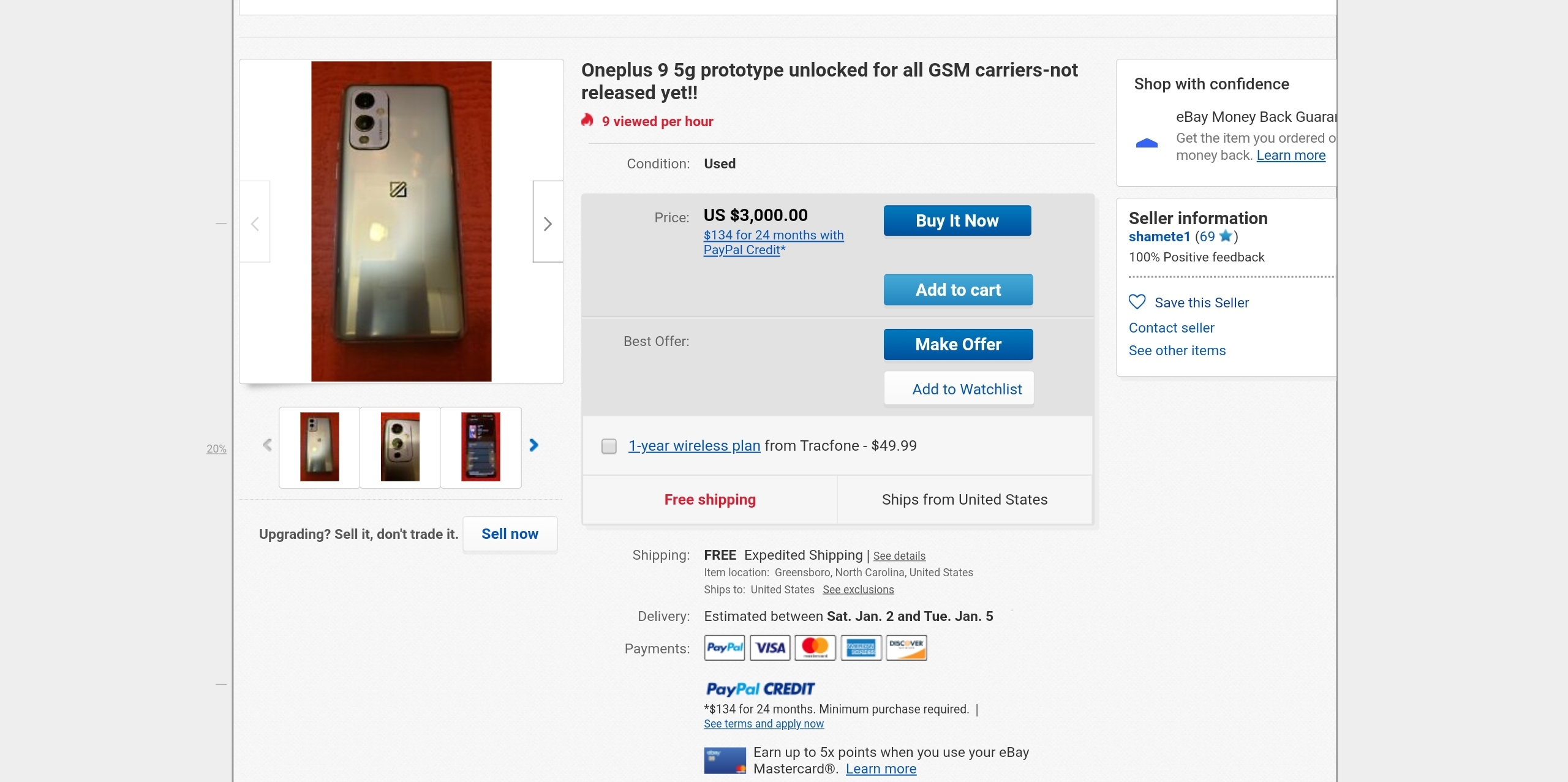
The prototype of the OnePlus 9 was briefly sold for $3000, but revealed the identity of the owner. (Screenshot: TechnikNews)
Greed created karma
From here, the disaster for the dear seller really took off. He took pictures of the device and forgot to black out a code in the software. Now OnePlus could easily find out who the prototype belonged to and where exactly it was located. I also saw straight away that an approximate address was stored on eBay. So I wrote to this person to ask how he got the prototype and why he wanted to sell it. It turned out that this person bought the prototype from the above-mentioned environment and at first he did not know that the device was not yet on the market. So he offered to sell the "story" to PhoneArena, which PhoneArena refused. So he wanted to make as much profit from the device as possible. According to journalistic principles, it is not allowed to pay "sources" because this violates the objectivity of both sides and could lead to even more serious consequences for the source (including us at TechnikNews follow this baseline and have not yet paid any of our sources with money for their information).
PhoneArena finally got the story for free and the article was a huge hit. The story could have ended well for him, but he seemed to have been too greedy. He set himself a trap with the eBay listing because he had no idea about the ID number of the prototype and didn't black it out like PhoneArena did. I pointed this out to the seller and he reacted relatively quickly, but it was already too late. The pictures quickly went around the world and the original owner of the device and he are now in big trouble because both knowingly broke contracts.
And the moral of the story'? Being greedy takes revenge (and rather leave the handling of such information to the people who have a clue about such things)!