
Samsung: The (former) problem with the Exynos
of Kenneth Fritsch  on February 01, 2021, 14:31 | Write a comment
Samsung has changed. From the brand that used to give everything and became one of the most popular brands ever to a brand that is sometimes less popular than you ever thought possible. I did a poll the other day and 70 out of 130 people said they were not eligible for Samsung. Today I would like to go into this and clarify what exactly happened and how it came about.
Let's start from the beginning to understand how Samsung got so big in the first place. Samsung means three stars, and the company is the world's largest manufacturer of smartphones and a few other things. But Samsung was founded in 1938 as a food company in South Korea. Not North Korea, Samsung comes from a free country. To get a better idea of how powerful Samsung is: if Samsung gets into trouble, it could endanger the whole of South Korea. But Samsung Electronics is only one part of the group of companies. Theoretically, you could build your entire life on Samsung, there's not a single part missing - just to put into perspective how far-reaching Samsung's corporate branches are. And that's not all, even the Burj Khalifa comes from Samsung. But how can a company of this size lose so much reputation?

Image: stern.de
Displays
First of all: the displays are not the problem. Samsung builds incredibly good displays. Almost every smartphone on the market has a Samsung display. And even though I don't have more precise information, I could imagine that all the smartphones I currently own have Samsung displays. And Samsung have always had the best displays. That hasn't changed to this day. You can see that in the manufacturer's latest flagships too. Even though the S21 displays are controversial, at least the S21 Ultra sets new standards. Or compare a Galaxy A51 display with the panel of an Oppo A73 5G. The Oppo really doesn't have a bad display, but Samsung is in a class above. Samsung has also learned from the iPhone 6's BendGate and developed a robot that sits on Galaxy smartphones all day long to test their robustness. So Samsung takes security seriously.
Software
It's not the software's fault either. Alongside Google, Samsung is the most exemplary company when it comes to software updates and the hardware itself isn't the problem either, even if the problems are slowly starting to arise here. Samsung builds its own processors for most of its European devices. That makes sense in itself, something we also see with Huawei and Apple. However, since the Galaxy S10, there has been the problem that their Exynos processors cannot keep up with the chips that are used in the USA. But that wasn't a problem back then, because in previous years it was mostly the other way around.
It is due to the Exynos SoC
But with the Note10, it was already apparent, and with the S20, it finally became a reality. While the battery life of the US devices was phenomenal, the European devices looked kind of stupid. It even got to the point where I abandoned my decision to buy a Galaxy S20+ 5G. And from then on, it became cool to complain about Samsung. It started with the launch of the S20, when many people gradually turned away from Samsung. The S20 Ultra in particular received the most criticism. It was often said that it wasn't advanced enough. The autofocus had problems, Huawei had a better camera, Oppo had a better display, and Apple had better battery life. The performance was worse than the Snapdragon chip and inconsistent on top of that. The list seems to go on forever. But Samsung is smart, admits the worse performance, apologizes, and everything is okay... right? No! They made it worse and claimed that both processors were equally good. This is a blatant lie, as some comparison tests have shown. The well-known technology YouTuber Mrwhosetheboss made a video about the topic. And lo and behold, the Exynos is 25 degrees warmer and at the same time 20% slower. That's the kind of difference you notice in everyday life. And heat is energy. When something gets warm, that's energy that doesn't become power - it becomes unusable. So more energy is needed to get to a destination, and that's exactly what you see here.
Why not just use the Snapdragon?
So let's try to understand why Samsung doesn't commit to one of the processors. Let's start with the Snapdragon, because that's pretty self-explanatory. Qualcomm builds this chip, or rather has it built by Samsung. This means that if Samsung wants a Snapdragon chip, they have to go to Qualcomm and buy some. And that costs Samsung. If roses grew in your garden, you wouldn't buy roses from the flower shop. And to save on that, they use the Exynos in many regions, for which they only have to pay for development and production. However, they can't use it everywhere, for a simple reason. If you want to send an SMS, here in Germany and in many other regions, it is regulated by the GSM standard. The Exynos processor supports that. But in the USA a protocol called CDMA is used. The Exynos doesn't handle that so well, while Qualcomm makes their SoCs with CDMA in mind. Why Samsung doesn't add it, you're probably wondering - I am too.
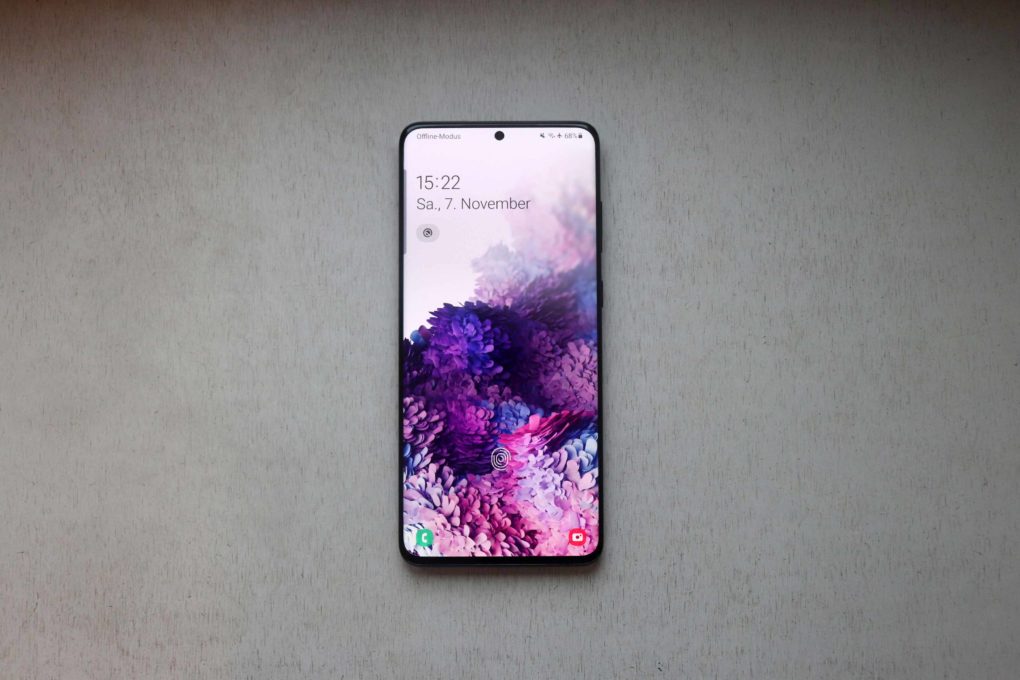
Image: © 2020 TechnikNews
An agreement?
I have come to the conclusion that there must be some kind of agreement. Qualcomm lets Samsung build their processors, which means that Samsung can have first access to the new Snapdragon generation if they want to. However, if Samsung stops buying chips from Qualcomm, they will simply have their chips built by TSMC or something like that. That would cause Samsung to incur heavy losses.
The solution
This year, however, it seems as if Samsung is getting a grip on this. They have stopped building their Moongoose CPUs themselves and have instead decided to buy prefabricated ones and use them to manufacture their Exynos SoCs. Next year, the processors will also get AMD graphics and perhaps Samsung will then have the courage and know-how to deliver really good Exynos everywhere and finally make their smartphones more attractive again. The Galaxy S21, which has already been released, is a good step in the right direction. As soon as TechnikNews was able to test the devices, you can of course find the test reports here.