Blocking ads removes funding from us! Researching and writing articles takes a lot of time. Running our infrastructure costs money. All of this is financed through advertising revenue. We don't like advertising either – that's why we avoid annoying banners and pop-ups. Please give us a chance and disable your ad blocker! Alternatively, you can support us here voluntarily.
A test report
Motorola Edge 40 neo review: (Almost) no weaknesses
The Motorola Edge 40 neo is a mid-range smartphone with very interesting features.
It has an OLED display with a smooth refresh rate of 144 Hertz, a 5.000 mAh battery, IP68 certification, 12 GB RAM and a 50 megapixel dual camera. For around 300 euros, the Edge 40 neo is an almost perfect smartphone on paper, but can it also impress in everyday life?
In conclusion, I have to say that the Motorola Edge 40 neo convinced me across the board and even surprised me positively with the camera. The delicate design and the bright OLED display with 144 Hertz are the absolute highlights in my opinion, but I also really liked the performance, the software and the battery life. For a mid-range smartphone, it has no significant weaknesses - apart from the vibration motor - which is why I can recommend it across the board. Currently the price is about 300 euros, which is extremely attractive for the hardware offered.
We would like to thank Motorola Germany for providing the Motorola Edge 40 neo!
Design and display
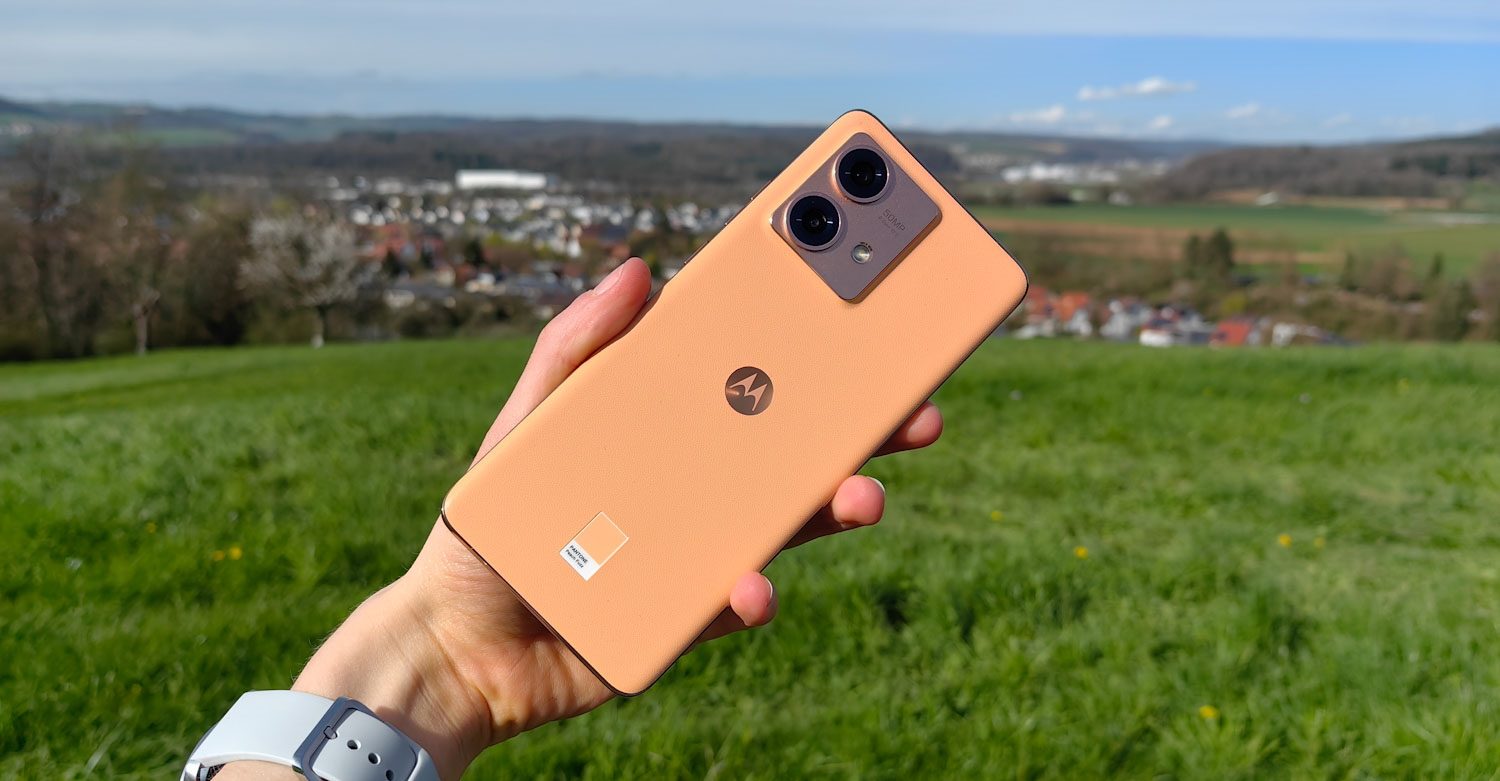
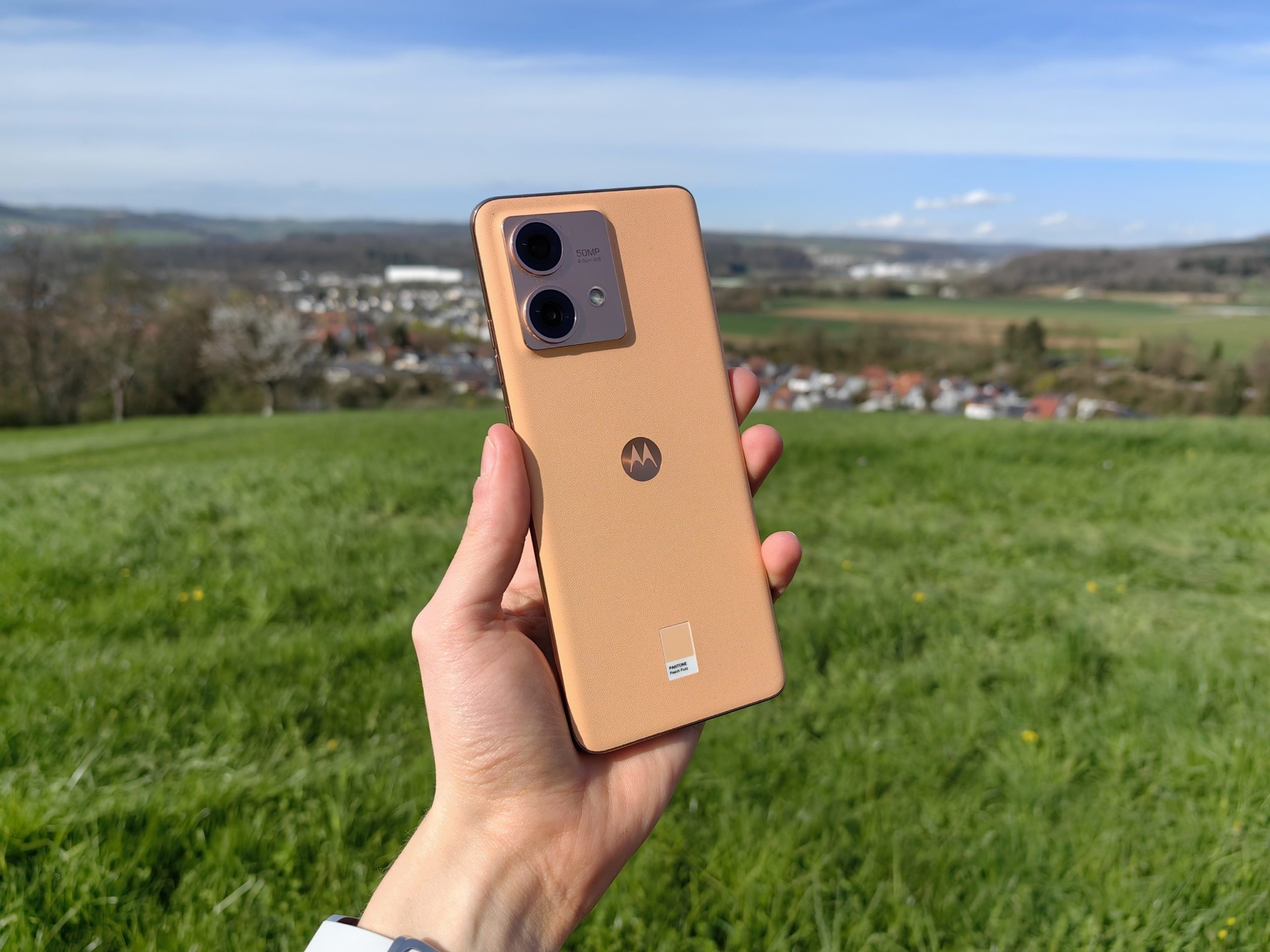
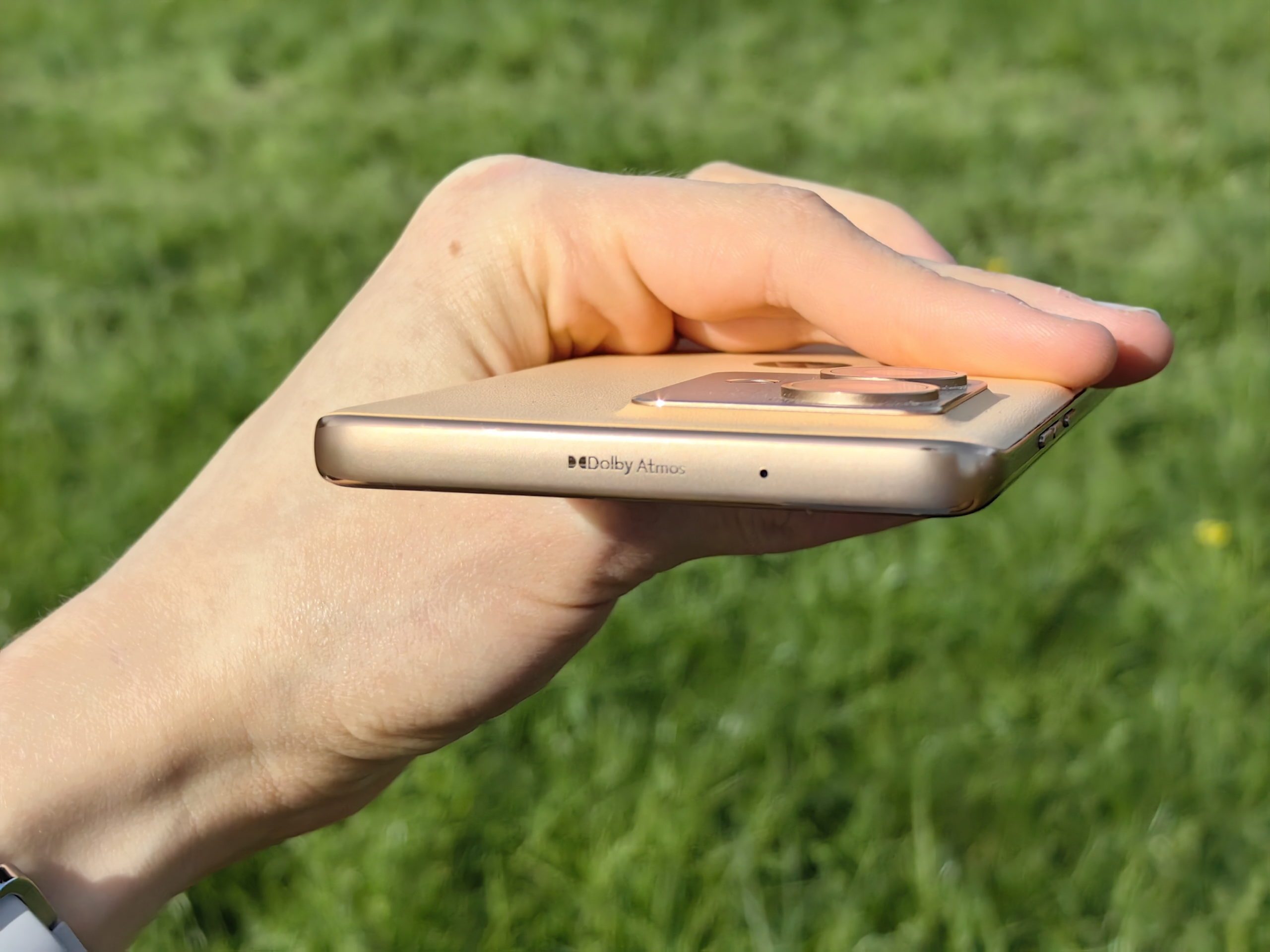
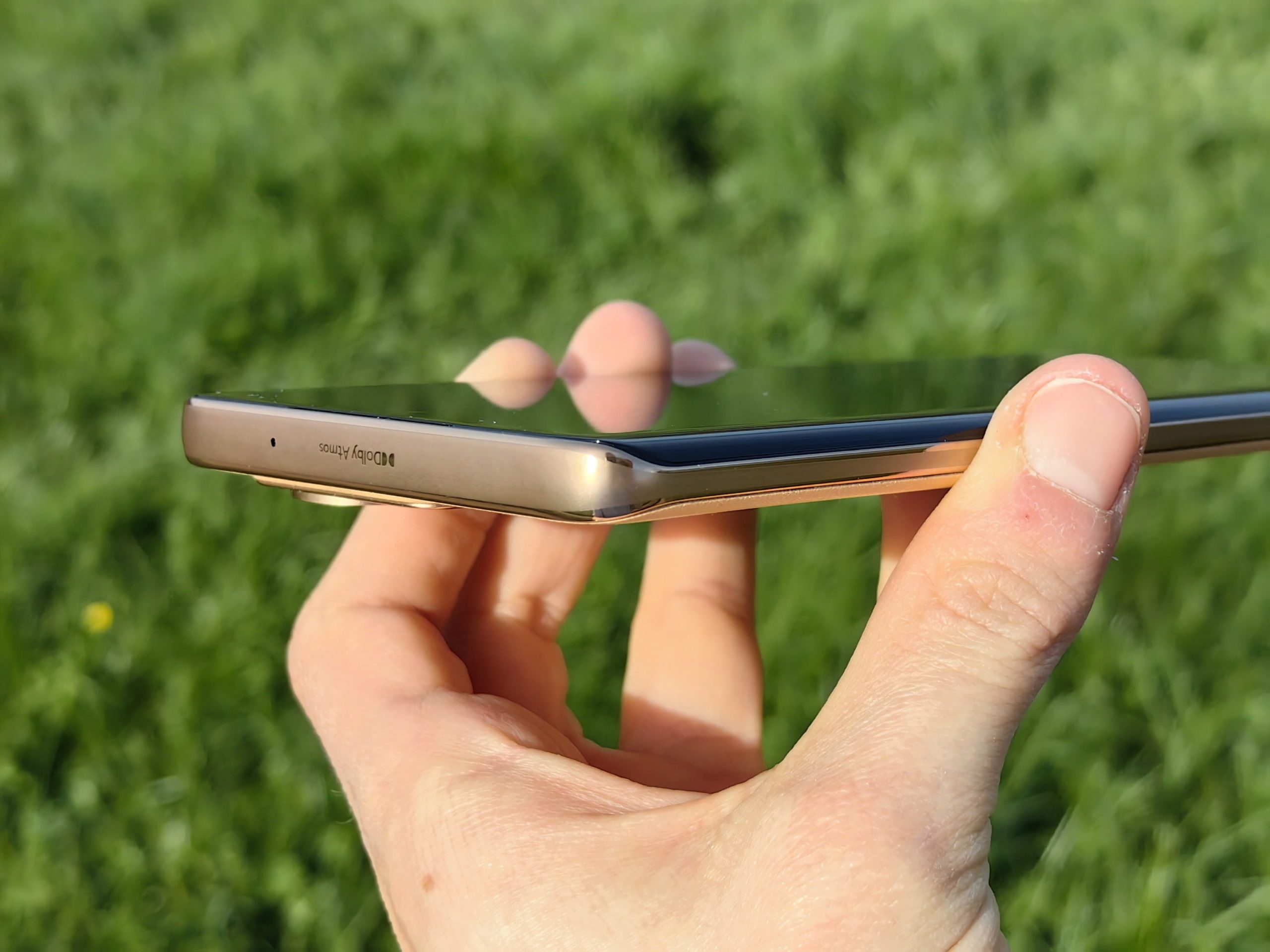
From the outside, I really like the Motorola Edge 40 neo. Despite the huge 5.000 mAh battery, it only weighs 173 grams and, at 7,7 millimeters, is currently one of the thinnest smartphones on the market. The dimensions of 159,6 millimeters in height and 71,9 millimeters in width are also completely acceptable, so I can still use the Edge 40 neo reasonably well with one hand. The rounded edges also contribute to good handling.
Picture: TechnikNews
Picture: TechnikNews
Picture: TechnikNews
Picture: TechnikNews
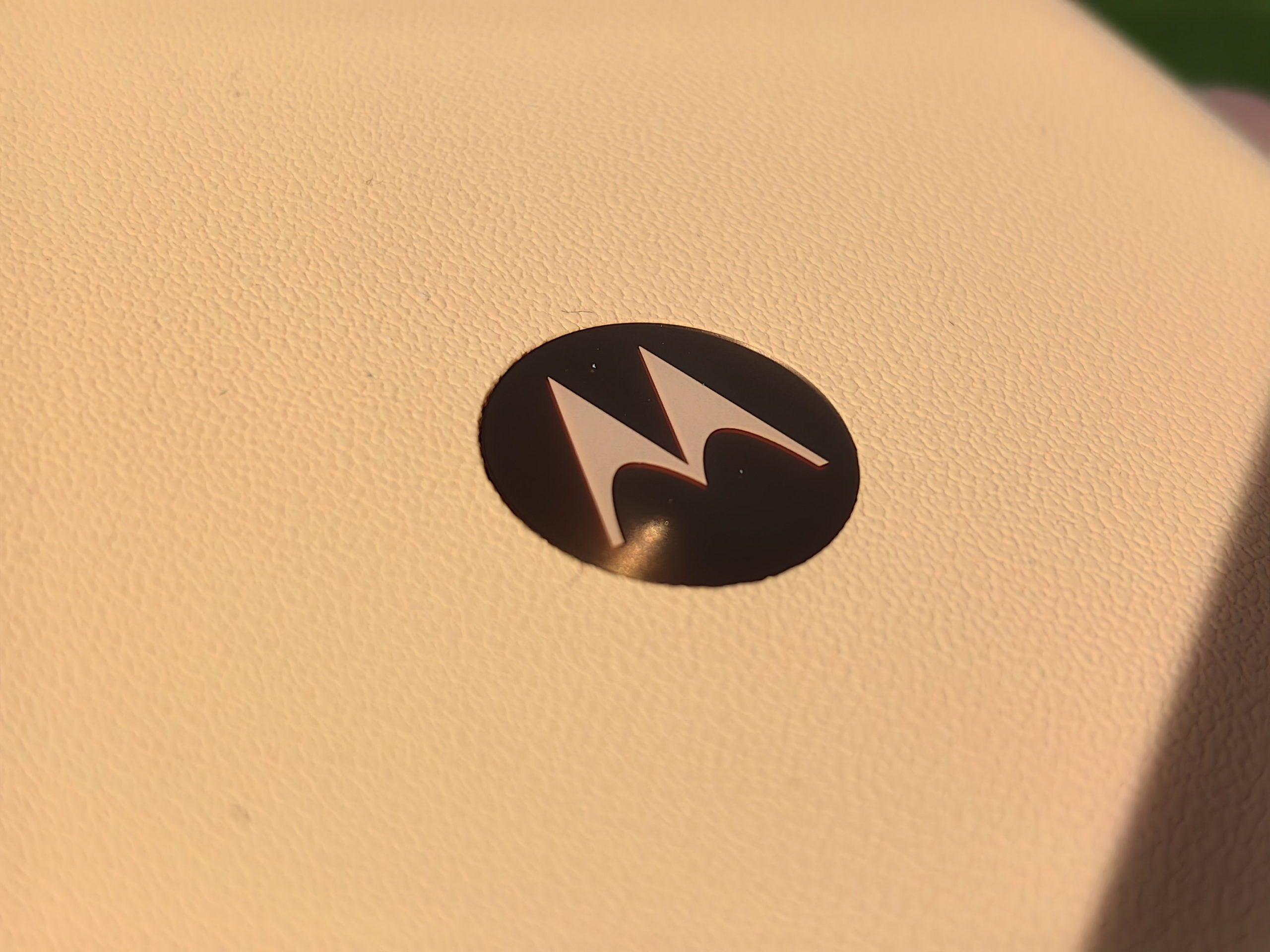
The back is made of vegan leather and immediately catches the eye due to the bright and eye-catching colors. I tested the model in the color “Pantone Peach”, which doesn't suit my taste, but provides variety in the otherwise visually boring smartphone market.
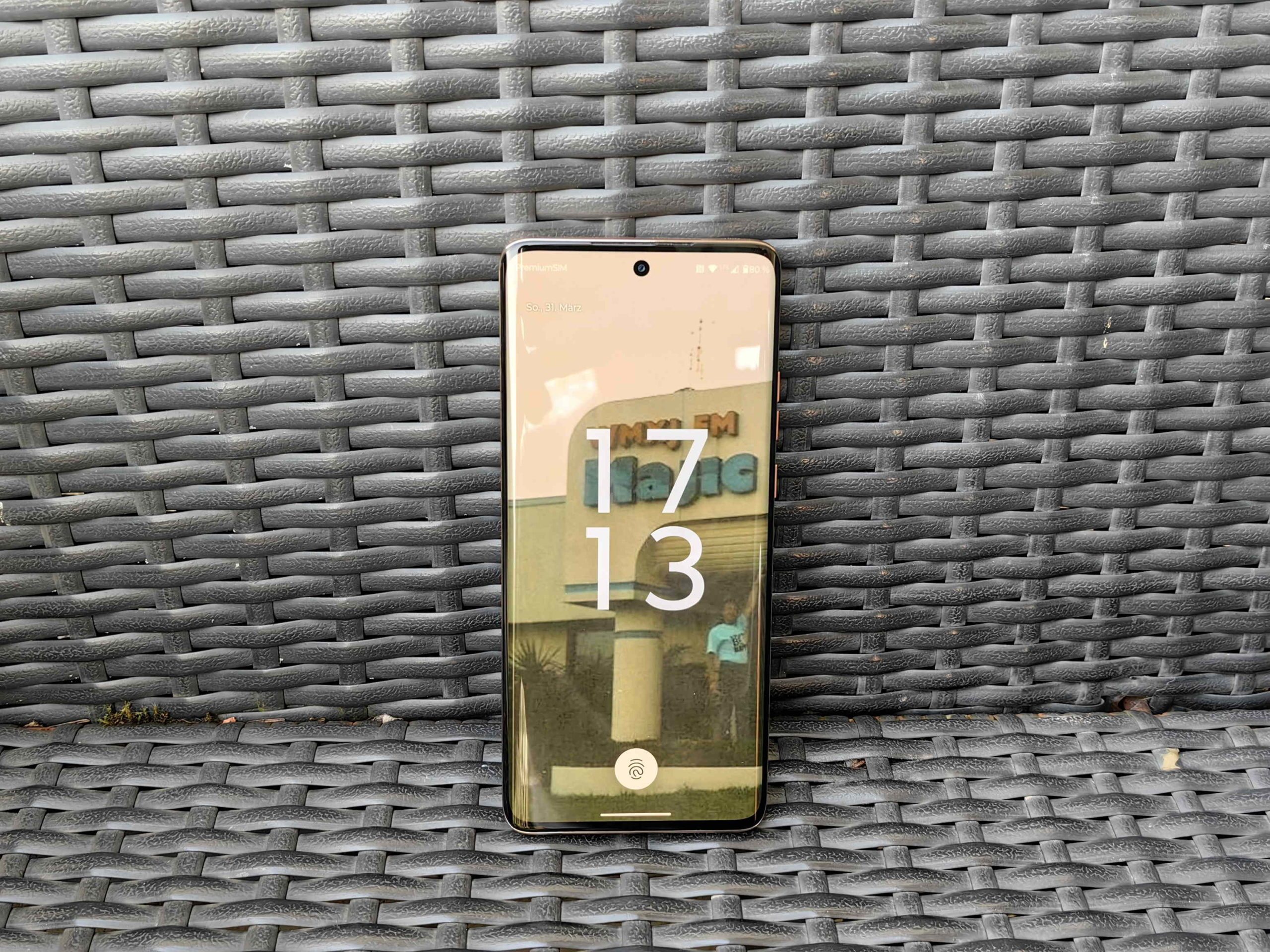
A beautiful OLED display with a diagonal of 6,55 inches is used on the front. The edges above and below the panel are pleasantly thin - for a mid-range device - and on the sides they appear even thinner than they actually are due to the rounding. I never had any incorrect entries.
Picture: TechnikNews
Colors are reproduced crisply, but sufficiently realistically, as is typical for OLEDs. Of course, the color representation doesn't come close to that of flagships, but that's not to be expected for around 300 euros. The maximum brightness is just under 1.000 nitsprochen, so that even on sunny days I had no problems with readability. There is also no reason for criticism in terms of viewing angle stability. The real highlight, however, is the 144 Hertz refresh rate, which makes animations and scrolling appear as smooth as butter.
Software, performance & battery life
The Edge 40 neo uses an almost unchanged version of stock Android - unfortunately still Android 13 and not 14. As usual, the software is very simple, which I like very much. Nevertheless, the smartphone comes with a few useful additional functions, such as the typical Moto gestures, which I like to use. What mine compared to mine Google Pixel 8 I like the control panel much better, because the Edge 40 neo has two separate control panels for “WLAN” and “Mobile Data”. On the positive side, it is provided with security updates for three years.
Under the hood is the MediaTek Dimensity 7030, which is supported by a whopping 12 GB of RAM and 256 GB of flash storage, which is really commendable in this price range. The everyday performance is great. Apps start and close quickly and there are rarely any stutters or delays. The smooth refresh rate of 144 Hertz naturally also contributes to the good performance. I just noticed that the Edge 40 Neo sometimes gets noticeably warm for a mid-range smartphone. However, it never gets alarmingly warm.
A 5.000 mAh battery inside is designed to ensure long battery life, and it can be fully charged in around 68 minutes using the included 45-watt power pack. With the 144-hertz refresh rate activated, I always managed to get through a day, but I would have expected a little more. At the end of the day, with a screen-on time of three to five hours, I still had at least 23 percent and a maximum of 65 percent battery left. That's good in principle, but more should actually be possible here. In my opinion, the Dimensity 7030 is not really efficient.
camera
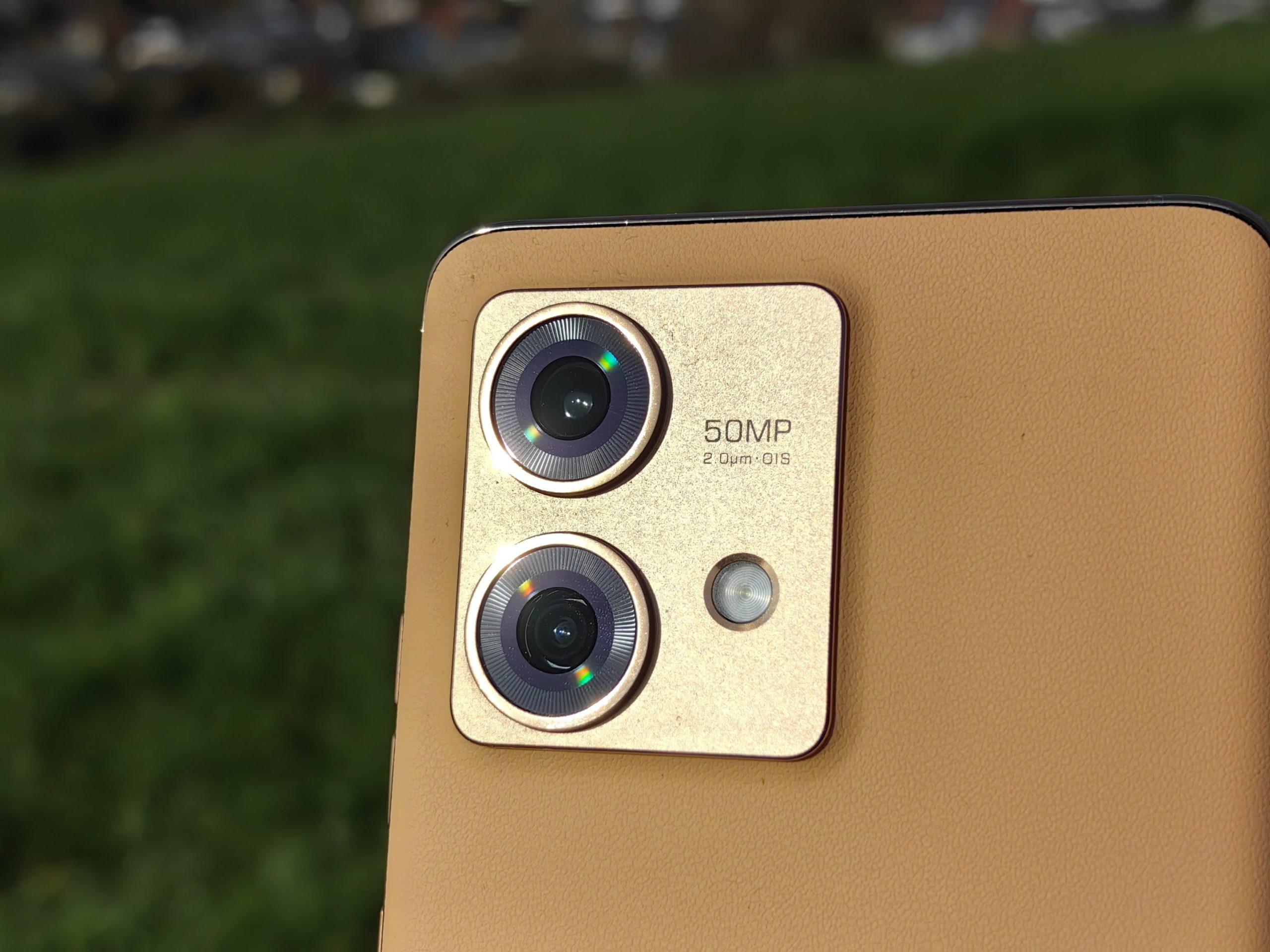
Motorola installs a dual camera on the back, which is set up as follows:
50 megapixel main camera, f/1.8
13 megapixel ultra wide angle camera, f/2.4
There is a 32 megapixel front camera on the front.
Picture: TechnikNews
Even though the focus of the Motorola Edge 40 neo is not on the camera, I surprisingly like the shots. The main camera proproduces mostly realistic images with good sharpness and a decent dynamic range. However, some of the recordings are a bit too cold for me. The ultra-wide-angle camera, on the other hand, takes visibly warmer photos, which I personally like better. Unfortunately, the sharpness can't quite keep up here and it's only of limited use even in lowlight. The main camera takes significantly better photos in low light, which are slightly over-sharpened, bright and true to color.
Selfies and videos are standard fare. Here the Edge 40 neo stands out neither positively nor negatively.
Other – Vibration Motor, Speaker & Fingerprint Sensor
I was a little disappointed by the built-in vibration motor, which gives an inferior feeling in the hand. Fortunately, it is neither loud nor annoying, but Xiaomi is in a completely different league when it comes to vibration motors.
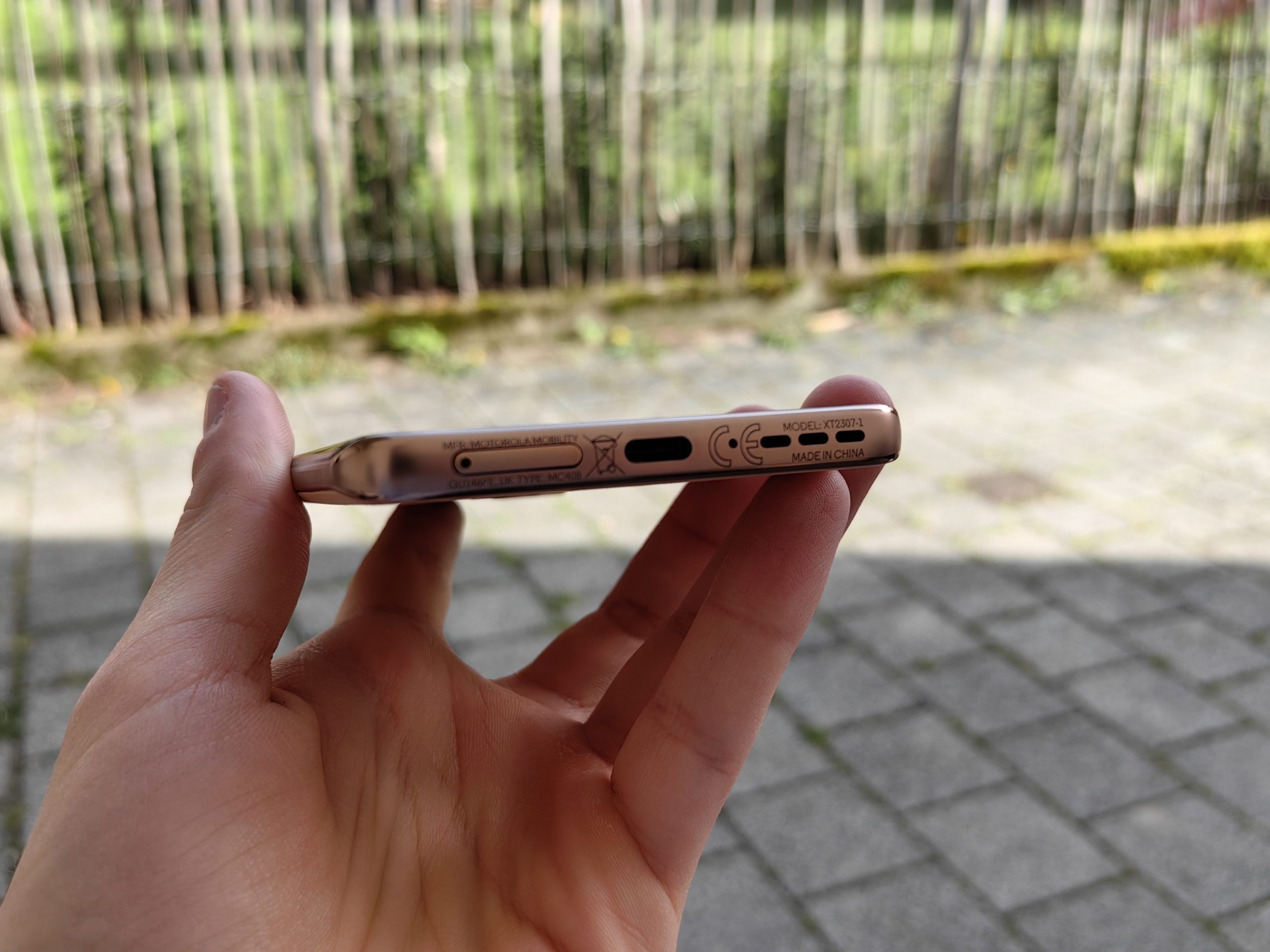
I like the stereo speakers much better, they are loud enough and have a good sound, especially at low/medium volume. Compared to high-end smartphones, they lack bass and depth, but for around 300 euros, you can't complain.
Picture: TechnikNews
Picture: TechnikNews
Picture: TechnikNews
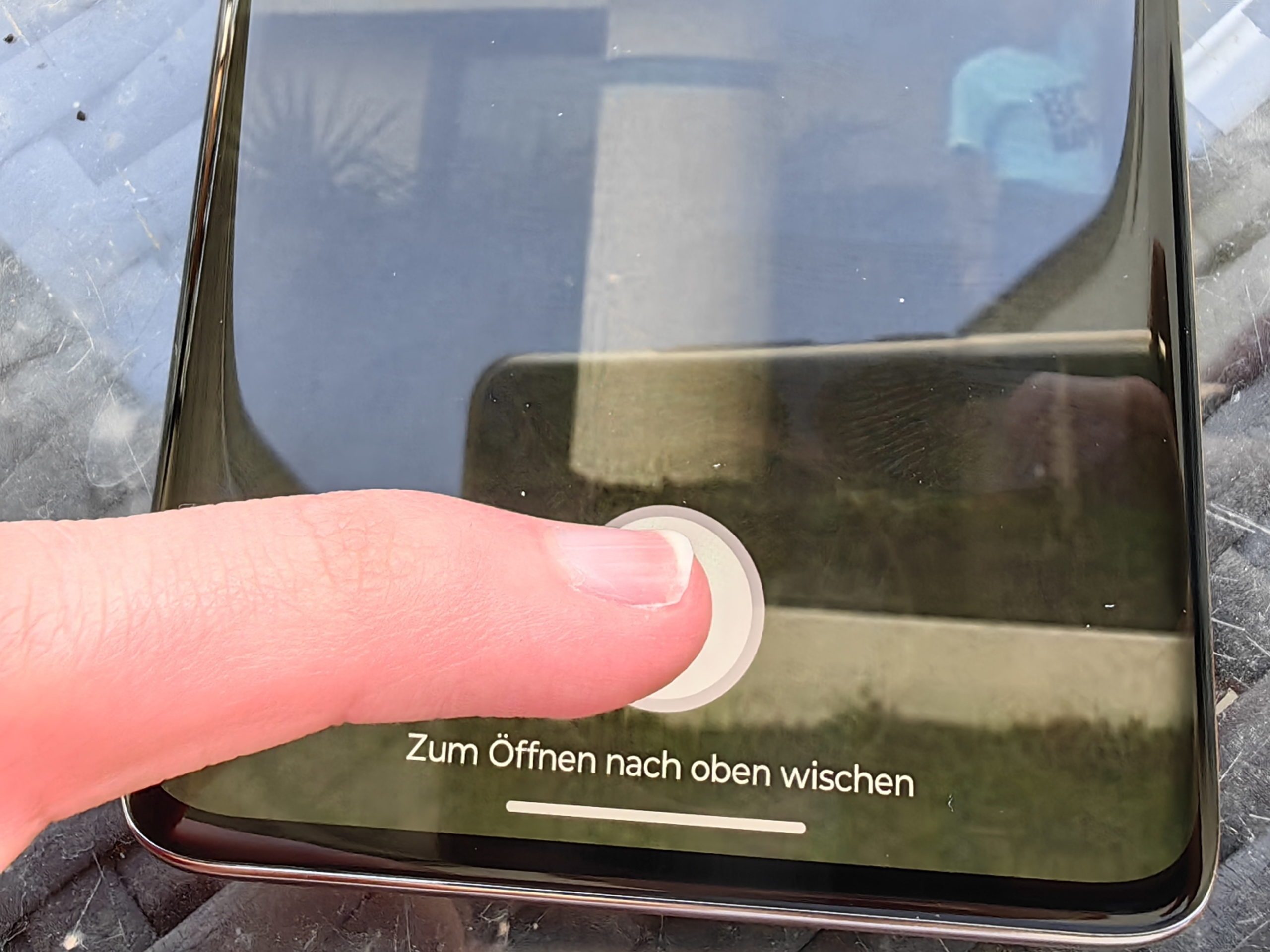
The fingerprint sensor is located in the display and unlocks the smartphone quickly and reliably. For my taste, however, it could be positioned a little higher up so that I can reach it better with my thumb.
Last but not least, I would like to positively emphasize that the Motorola Edge 40 neo is protected according to IP68 - against the ingress of water and dust. This is an absolute rarity in this price range.
Fabian has been part of since mid-September 2020 TechnikNews He regularly updates the site with various news items, as well as some smartphone reviews. He enjoys it immensely and is extremely grateful to have such a great team by his side. In his free time, he likes to listen to music and occasionally takes photos with his Google Pixel 9 Pro.
Fabian has already written 331 articles and left 24 comments.
I really have a difficult choice between this and the 50 fusion. From what I see I get android 14 (and a year or so longer security updates) and double storage (512gb) for 80€ more for the 50 fusion. (262 € for the 40 neo and 344,,€ for 50 fusion.
Any advice/input? (I am not very interested in camera difference btw. Don't use it much and some difference I don't notice means nothing to me!
Basically my biggest “desire” is that it works fast for as long as possible! I have a G100 now and I would have kept it, but I need a phone with eSIM due to I live outside my country and they don't send sim abroad. Also I think my g100 is not working as a 5g device as there is no option to “turn it on” (may be a network proproblem but I can only choose between 3g and 4g in setup and I don't connect with 5g even if local cooperative network provider has it..)



I really have a difficult choice between this and the 50 fusion. From what I see I get android 14 (and a year or so longer security updates) and double storage (512gb) for 80€ more for the 50 fusion.
(262 € for the 40 neo and 344,,€ for 50 fusion.
Any advice/input? (I am not very interested in camera difference btw. Don't use it much and some difference I don't notice means nothing to me!
Basically my biggest “desire” is that it works fast for as long as possible! I have a G100 now and I would have kept it, but I need a phone with eSIM due to I live outside my country and they don't send sim abroad. Also I think my g100 is not working as a 5g device as there is no option to “turn it on” (may be a network proproblem but I can only choose between 3g and 4g in setup and I don't connect with 5g even if local cooperative network provider has it..)