
Google Pixel 6 review: Great smartphone with small weaknesses
A TEST REPORT from Fabian Menzel  on February 21, 2022, 6:00 | 1 comment
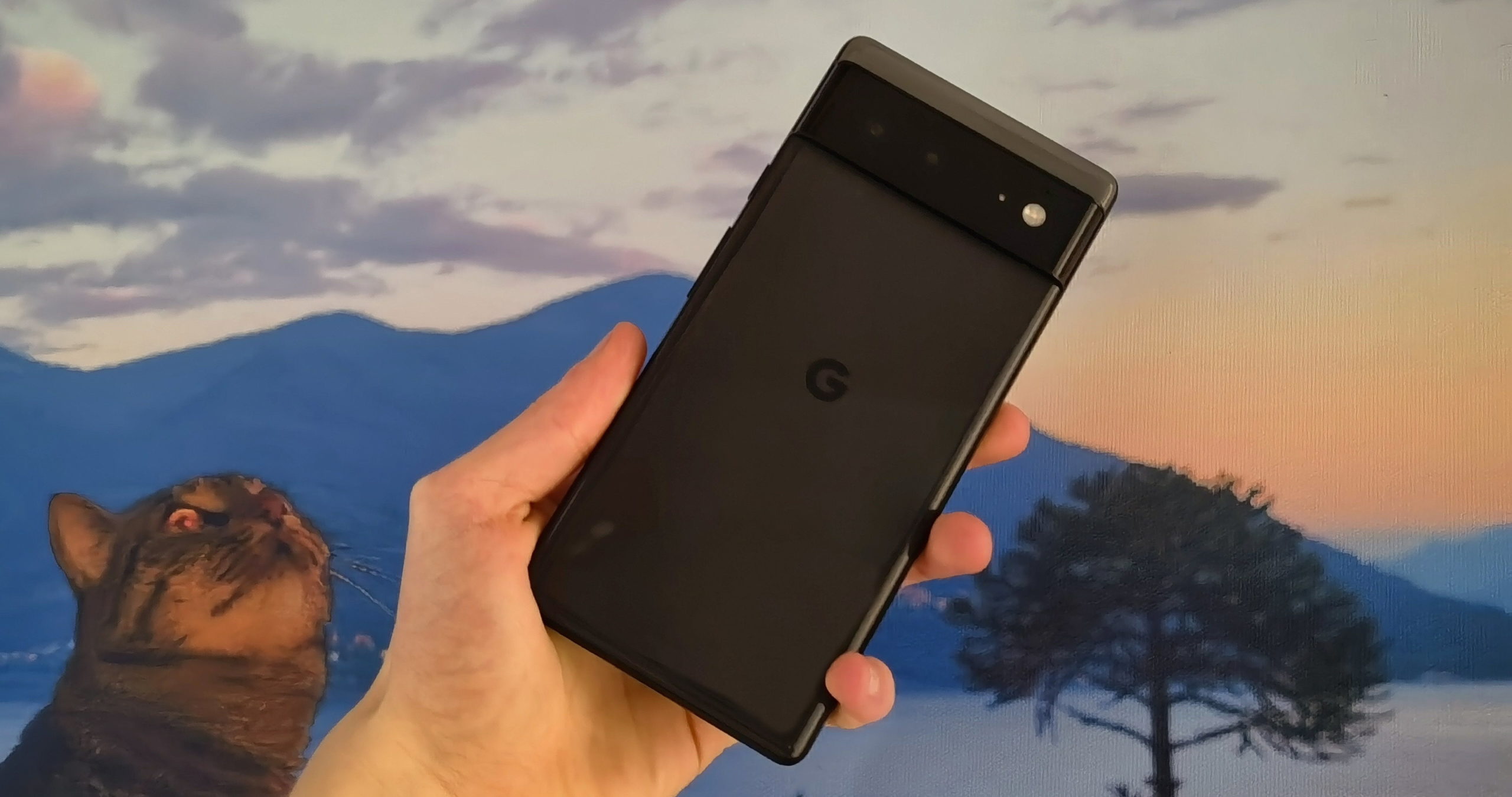
The first four generations of Pixel smartphones all belonged to the high-end class, which by no means had to hide from Samsung, Apple and Co. The cameras in particular have always been among the best on the market, despite the same sensors. The year before last, Google went with the Pixel 5 However, they took a slightly different approach and placed it in the upper class in terms of both hardware and price (629 euros). Last year they said goodbye to this and brought both the Google Pixel 6 and the 6 Pro onto the market, which differ slightly in some respects.
The biggest difference is certainly the price, because while the Pro version costs a whopping 899 euros, the regular Pixel 6 is significantly cheaper with a recommended retail price of 649 euros. For this price difference, slight compromises have to be made, especially in terms of the zoom and the display. Otherwise, you also get a new 50 megapixel main camera, the in-house Google Tensor SoC, stereo speakers and 30 watt fast charging. We have tested the Google Pixel 6 extensively over the last few days and you will now find out in the following lines whether it is worth buying.
Haptics, design & processing
With the exception of the XL devices, the Pixel smartphones were always among the handiest on the market and could still be operated easily with one hand, which was a huge advantage compared to the competition. Unfortunately, Google is now taking a different approach with the new Pixel 6 by installing a fairly large display in a large housing, which is clearly illustrated by the dimensions of 158,6 millimeters in height and 74,8 millimeters in width. In addition, there is a thickness of 8,9 millimeters and a significantly increased weight of 207 grams compared to its predecessor, which is one of the lightest smartphones at 151 grams and is only 144,7 millimeters high and 70,4 millimeters wide. Since the Pixel 6 Pro comes with extremely similar dimensions, I don't understand why the normal, inexpensive Pixel 6 also has to be so big. A Galaxy S22 Ultra or iPhone 13 Pro Max are even larger, but even the Pixel 6 can no longer be operated with one hand in many situations.
-
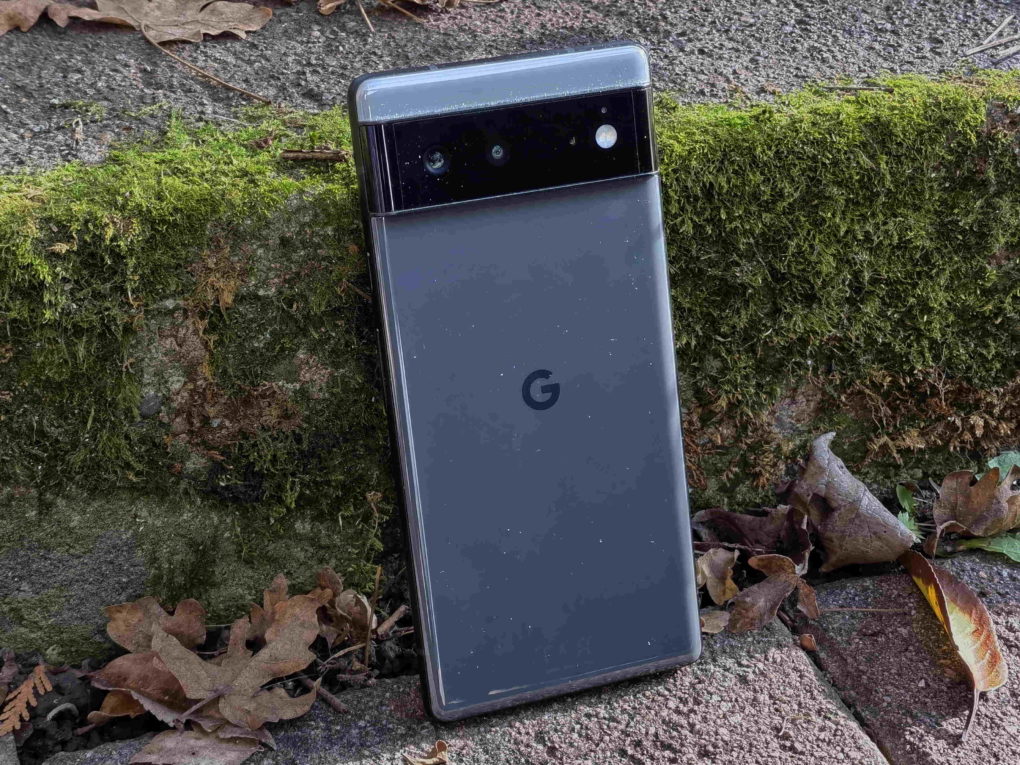
- The black color of the Google Pixel 6. (Image: TechnikNews)
-
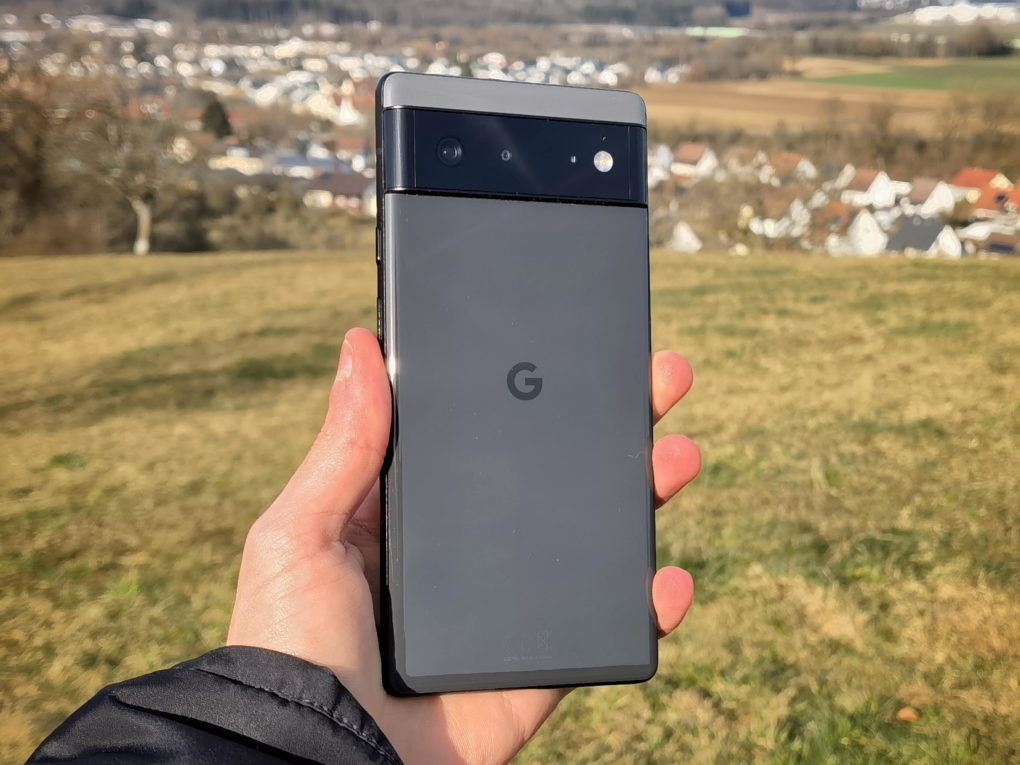
- The area above the camera bump is slightly lighter than the rest of the back. (Image: TechnikNews)
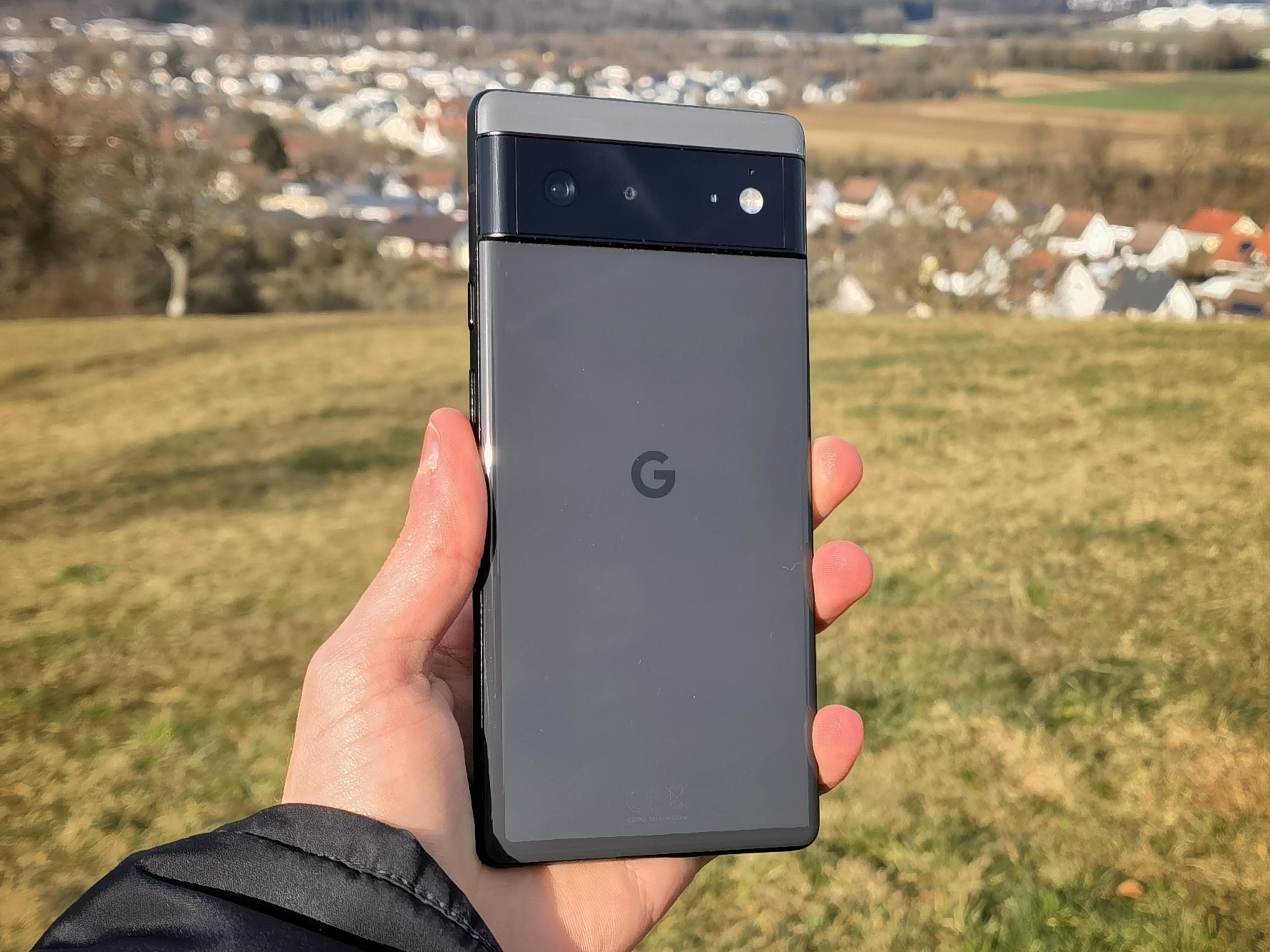
-
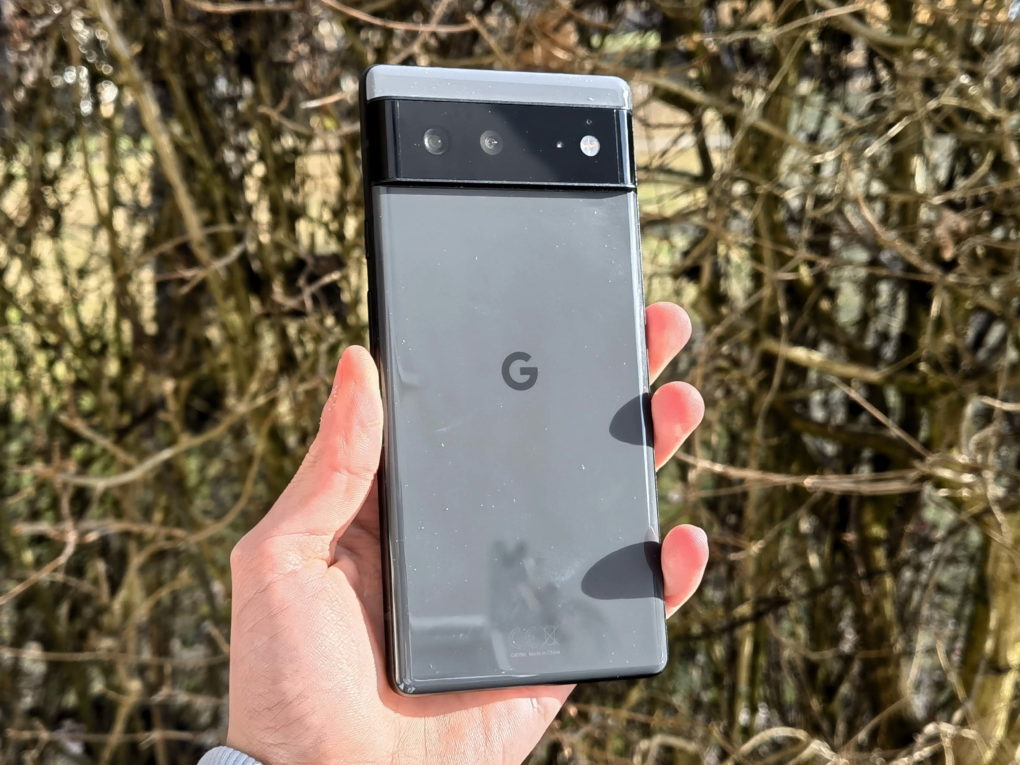
- The color could be described as gray rather than black. (Image: TechnikNews)
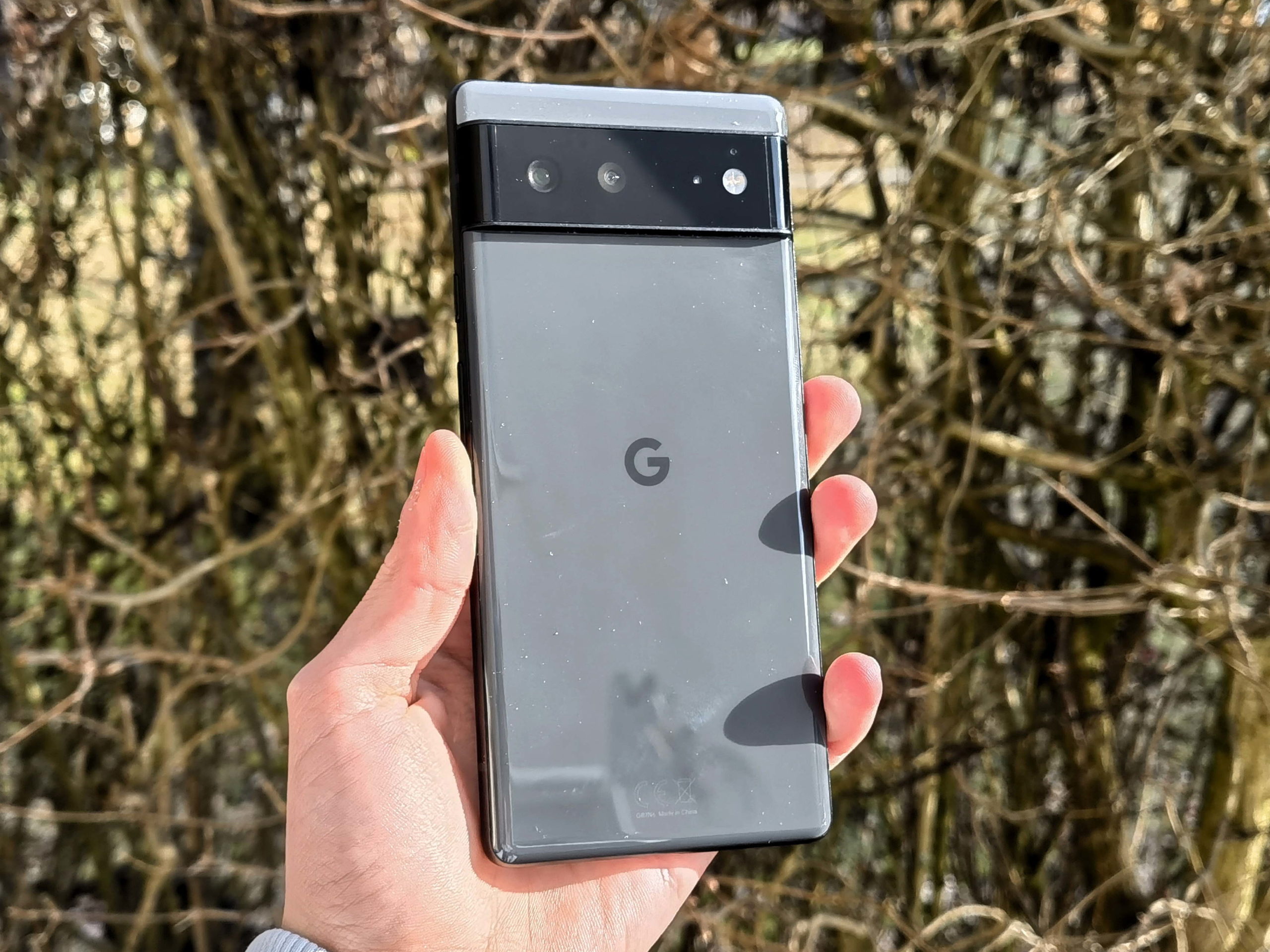
-
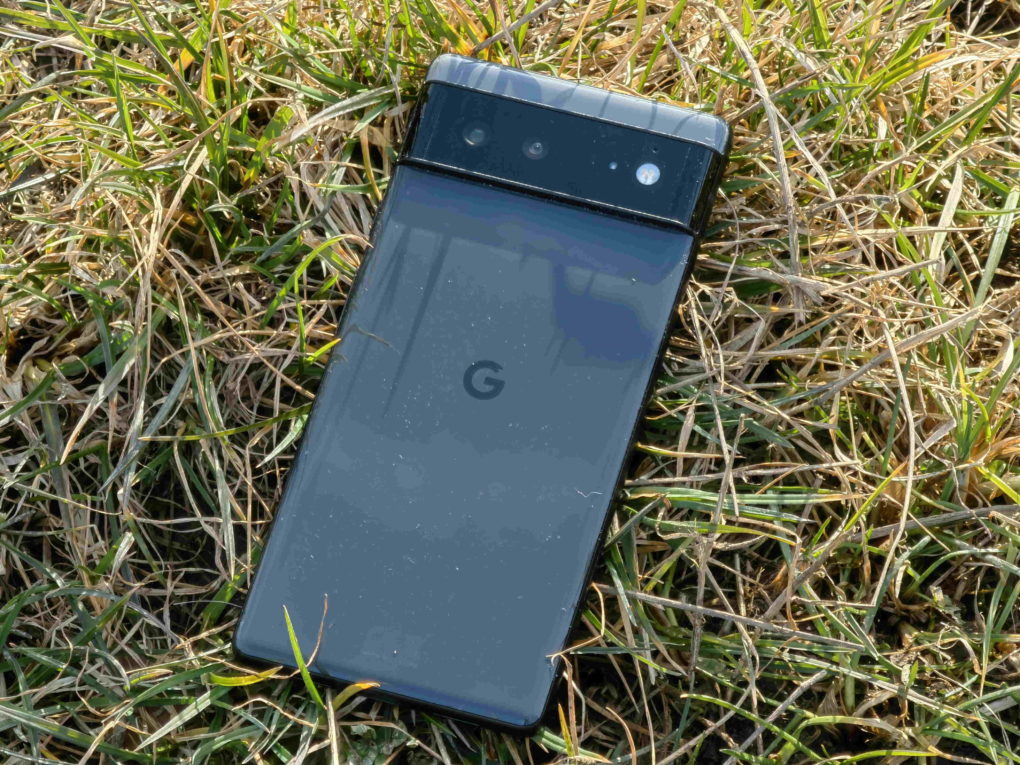
- Personally, I'm not the biggest fan of this black color. (Image: TechnikNews)
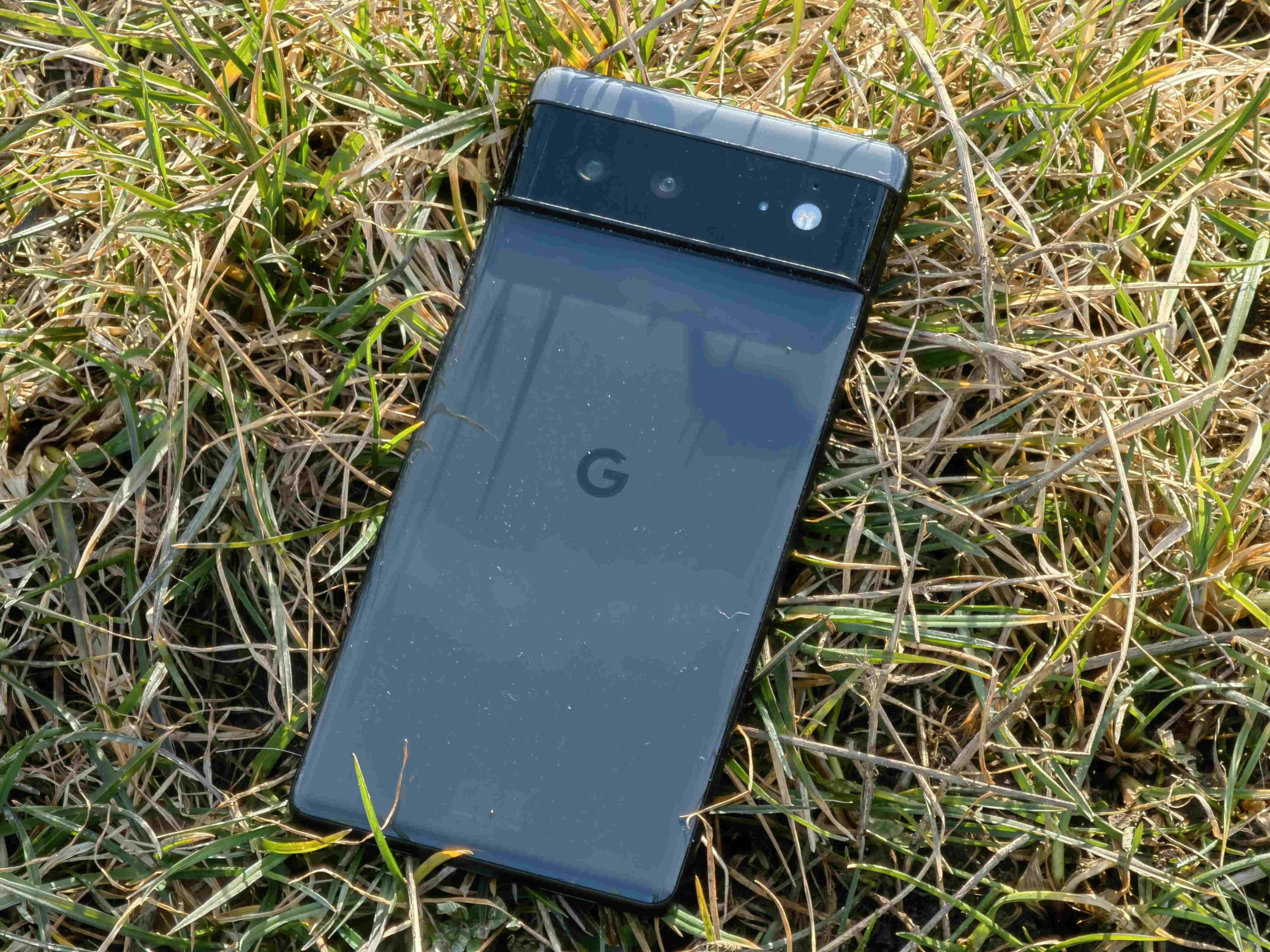
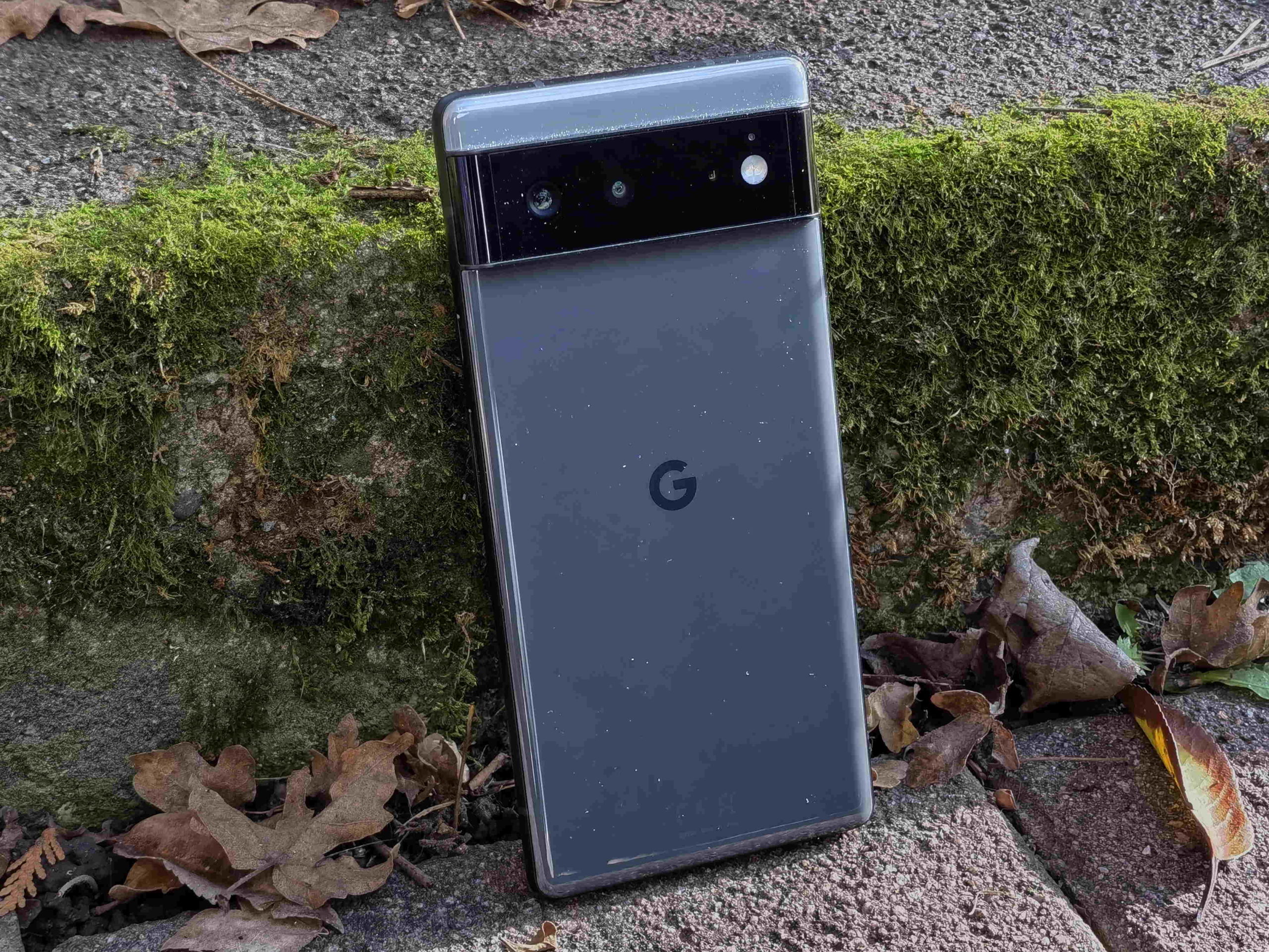
The frame is made of aluminum with a matt surface, which means that fingerprints are hardly noticeable. In addition, it leaves a very chic and high-quality impression, but especially in cold weather it does not offer particularly good grip and is therefore very slippery. The back is made of glass, which is why it feels very high-quality, but due to the high-gloss finish, fingerprints are almost magically attracted, which is particularly noticeable on the black model. The green and pink/orange versions should be much more grateful to fingerprints. I really liked the slightly rounded edges, which leads to pleasant handling.
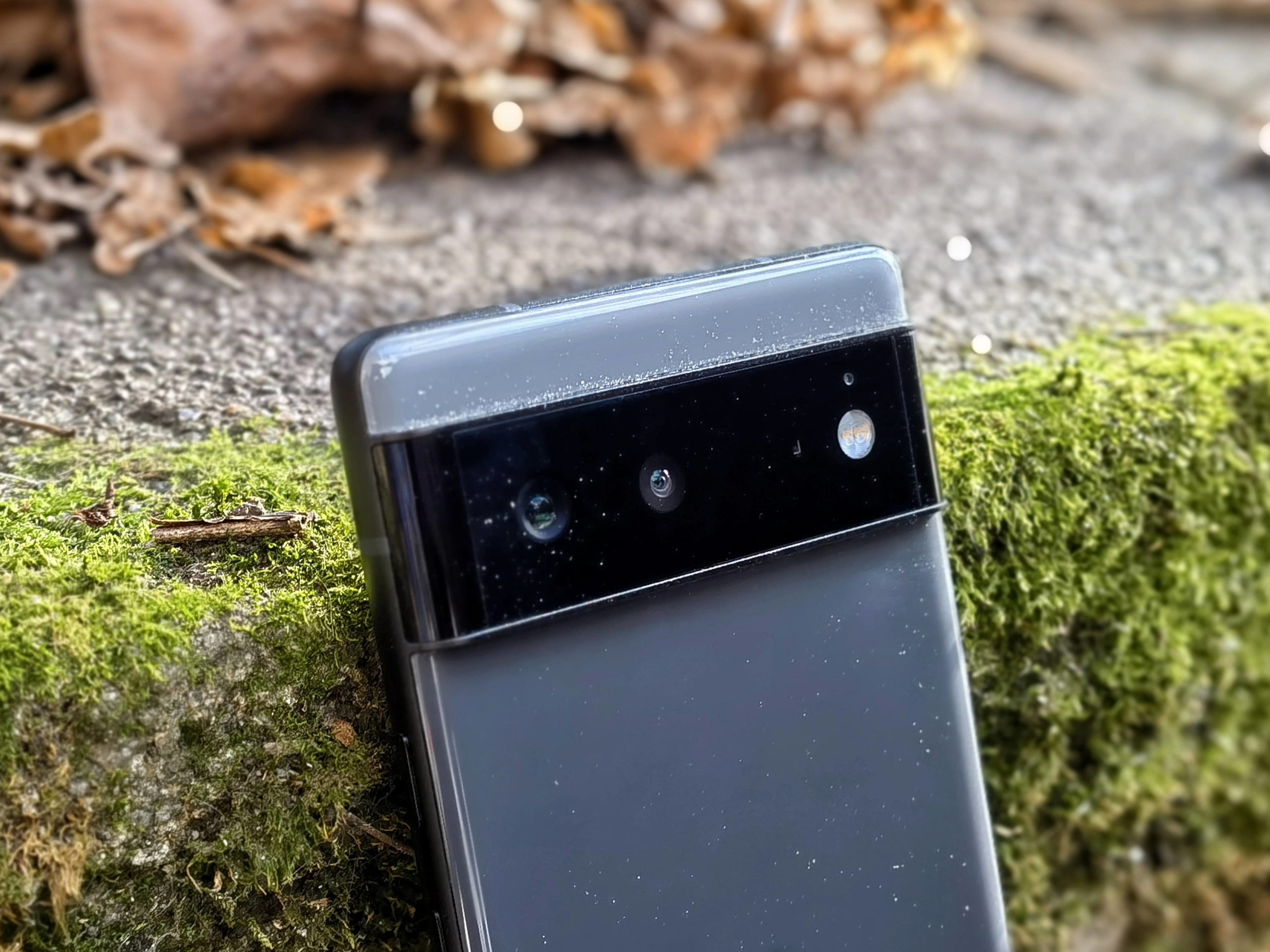
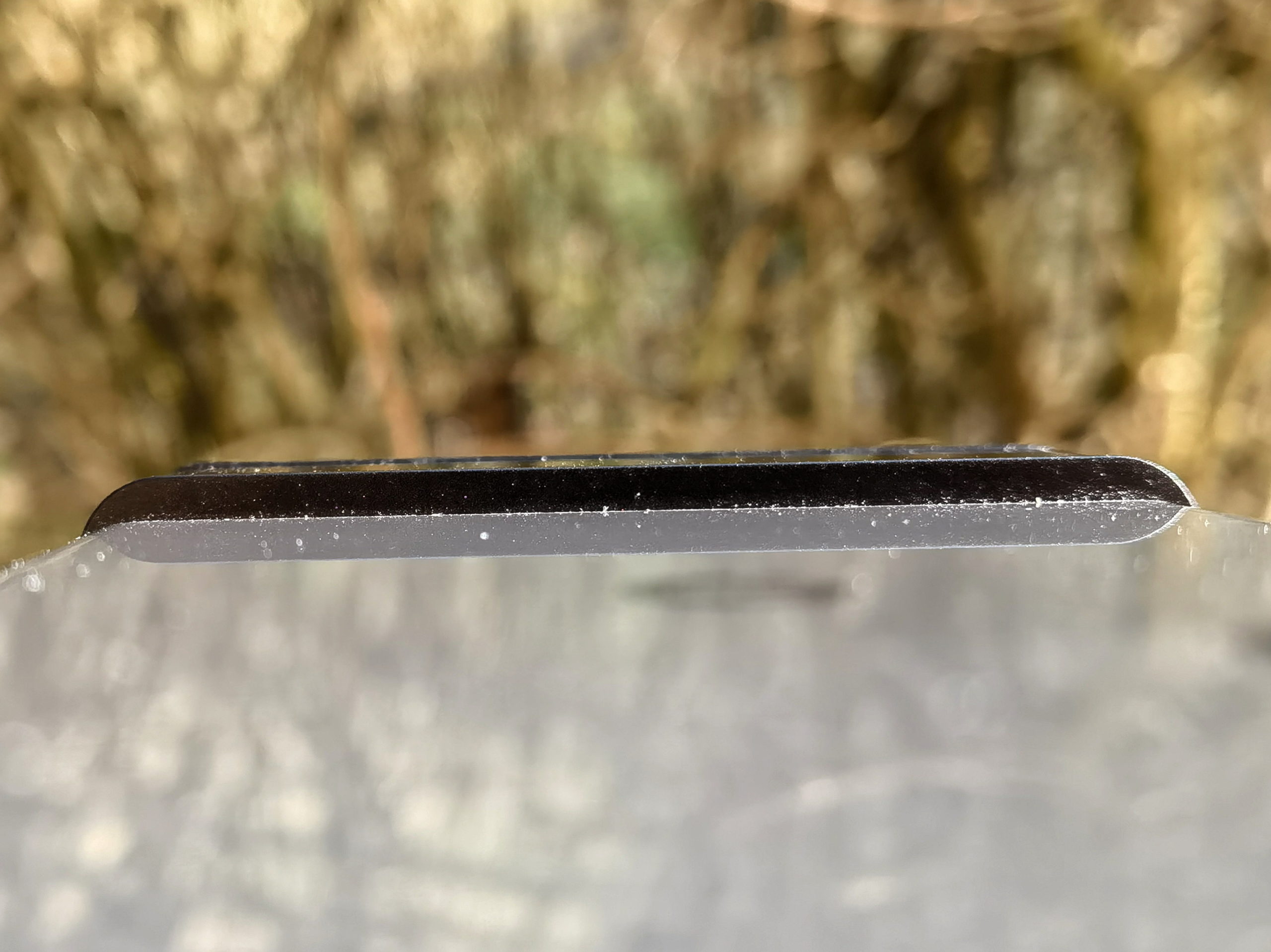
In addition to the Google logo placed in the middle, the new camera design also catches the eye, which I have never seen on any other smartphone in this way. A long black stripe is placed in the upper third, which is slightly rounded towards the frame on both sides. There is space for two cameras, a few sensors, a microphone and an LED flash. Although the camera bump protrudes quite a bit from the case, the smartphone hardly wobbles at all when it is operated lying on the table. A disadvantage that results from this is that dust accumulates very heavily above and below the camera bar and is not easy to get rid of, which the following pictures also show very well.
-
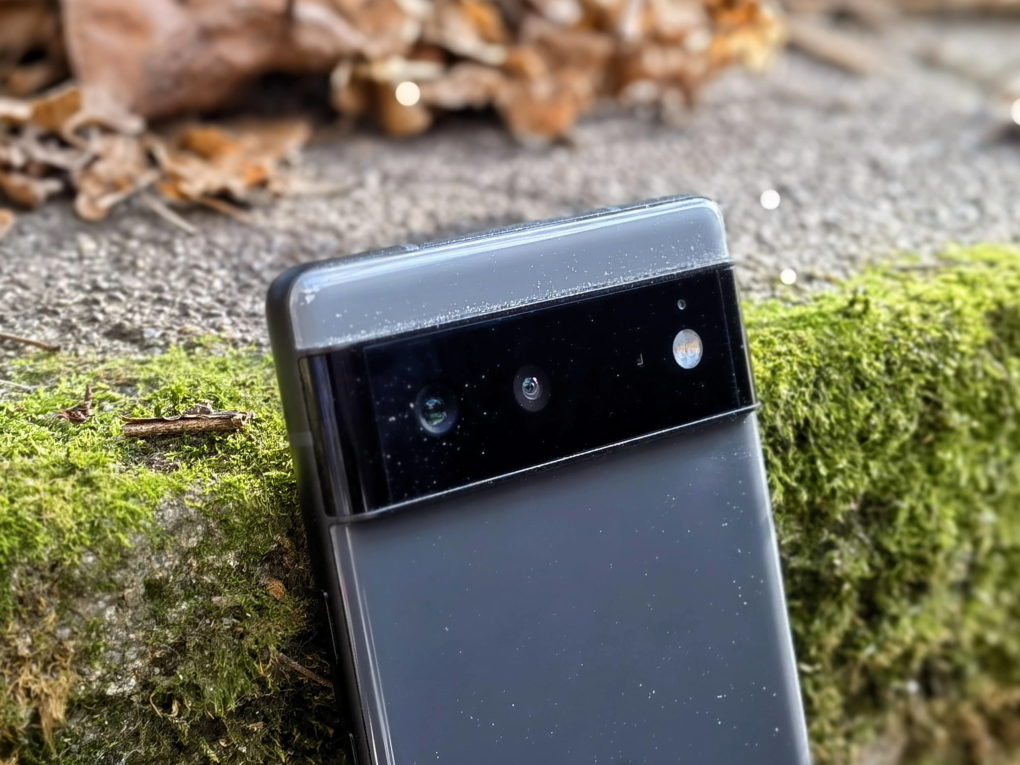
- The camera design has been fundamentally changed on the Pixel 6, which I really like. (Image: TechnikNews)
-
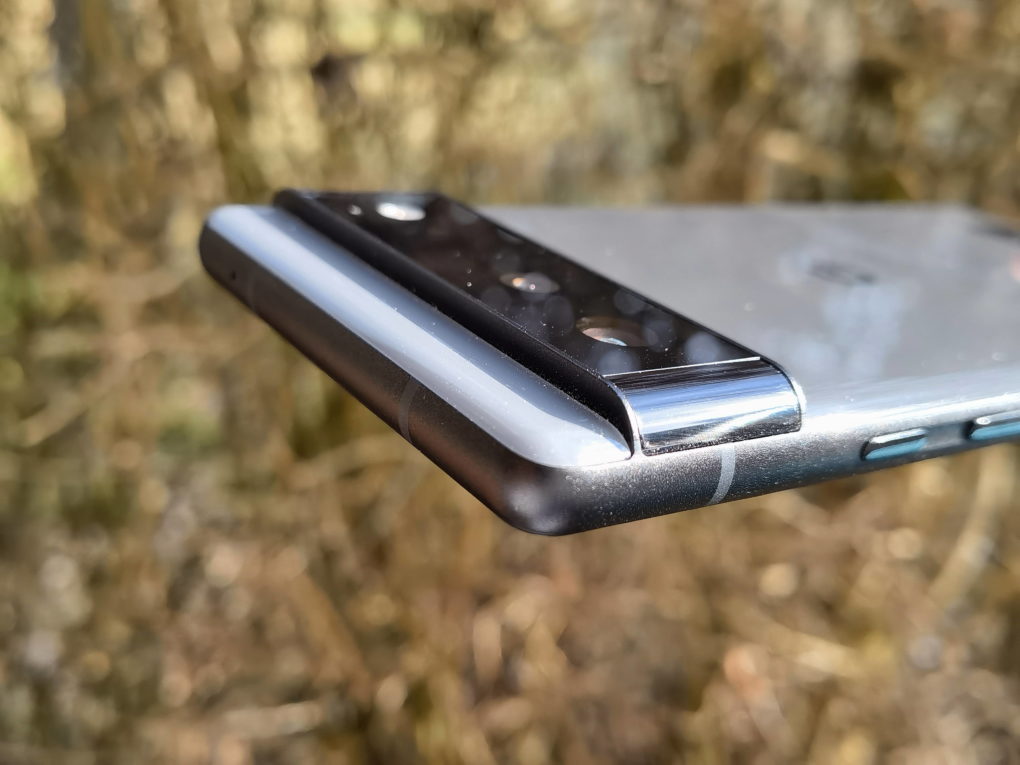
- The camera bar is rounded left and right towards the frame. (Image: TechnikNews)
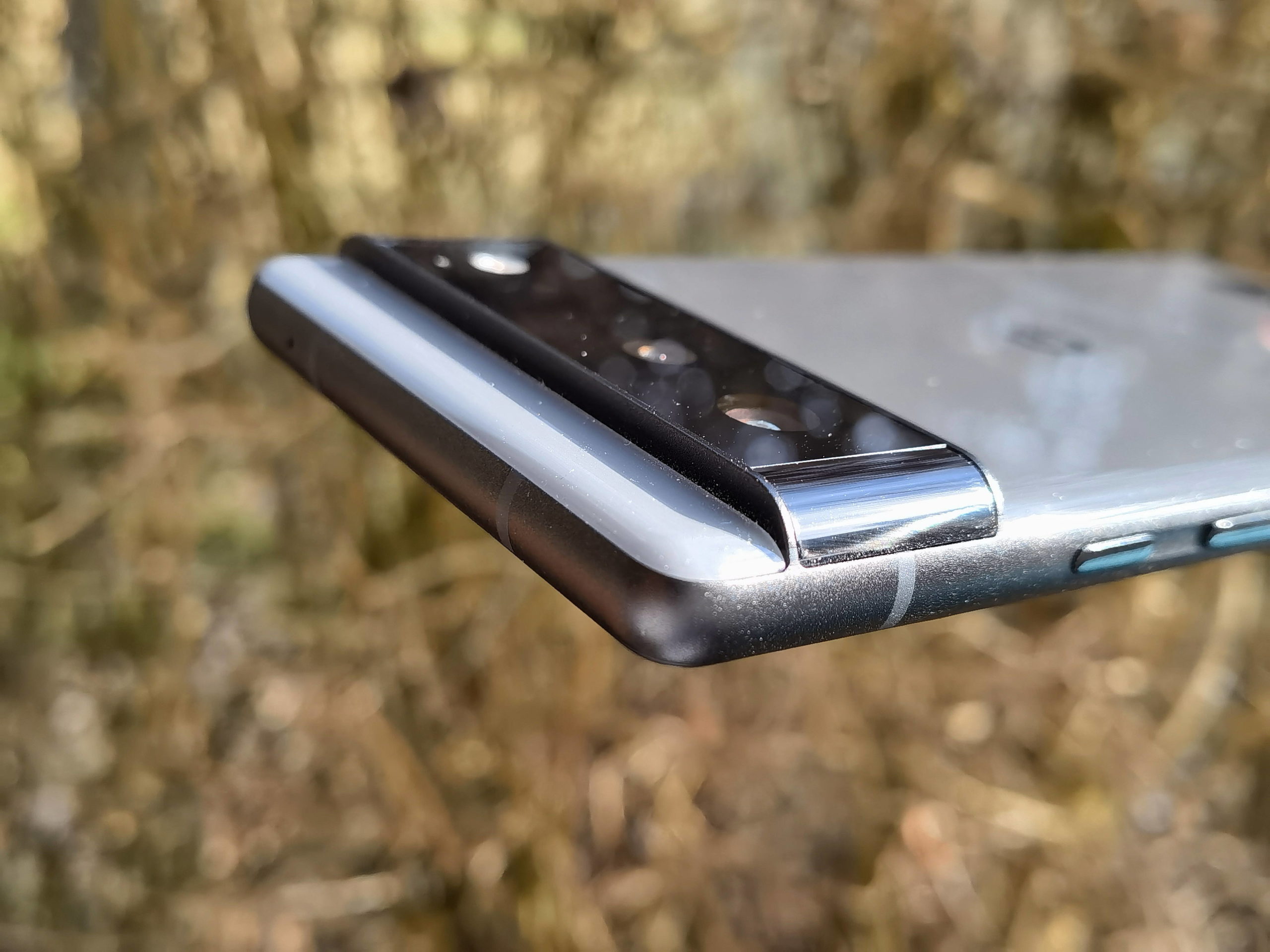
-
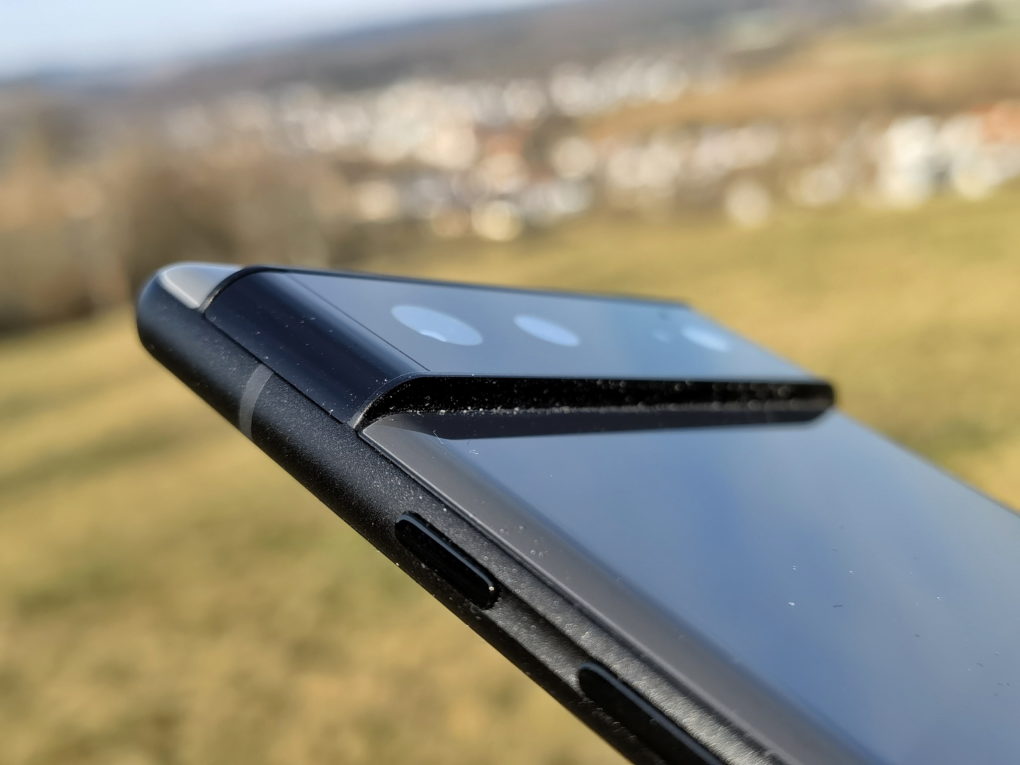
- The camera bump protrudes clearly from the housing. (Picture: TechnikNews)
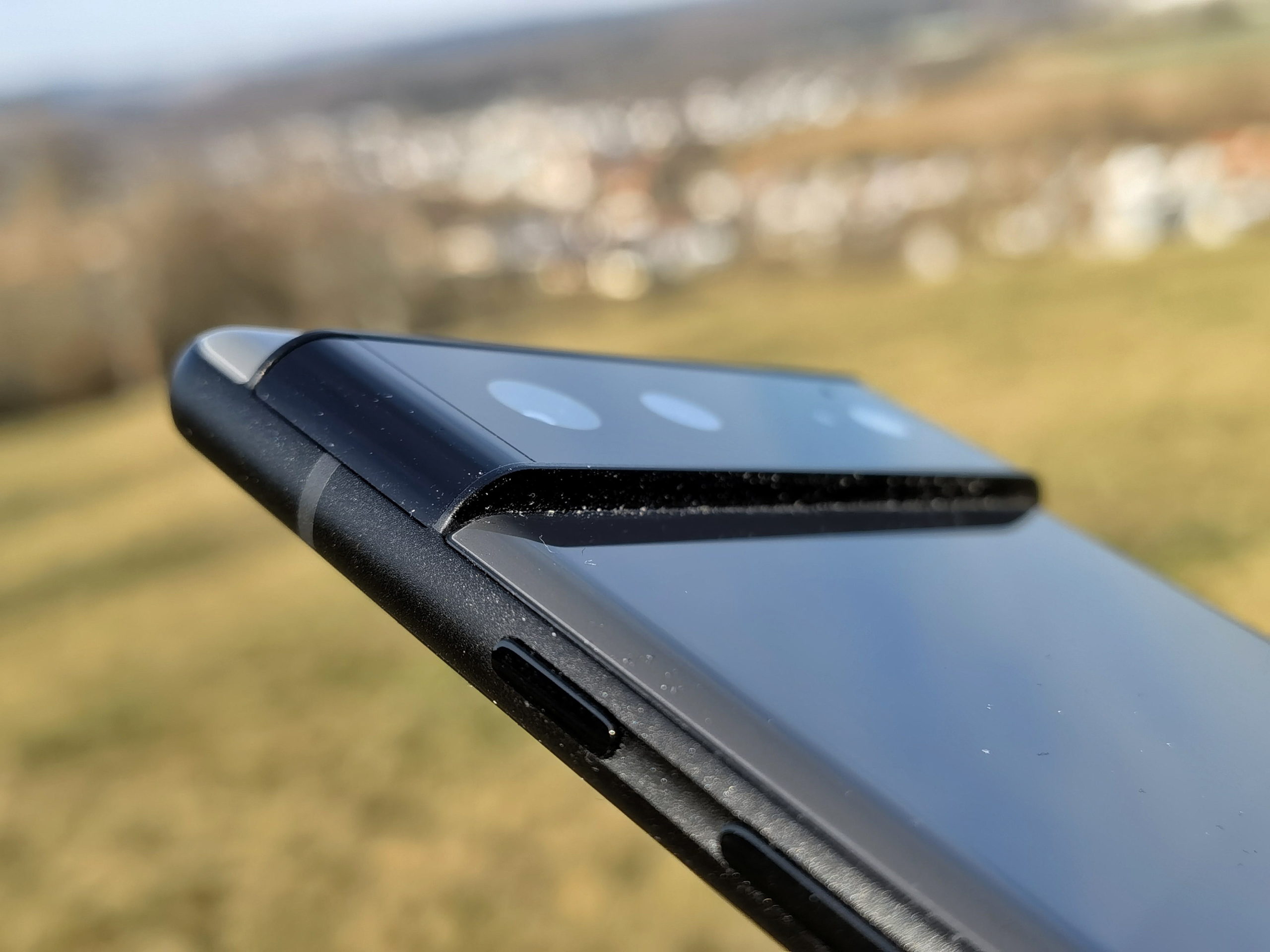
-
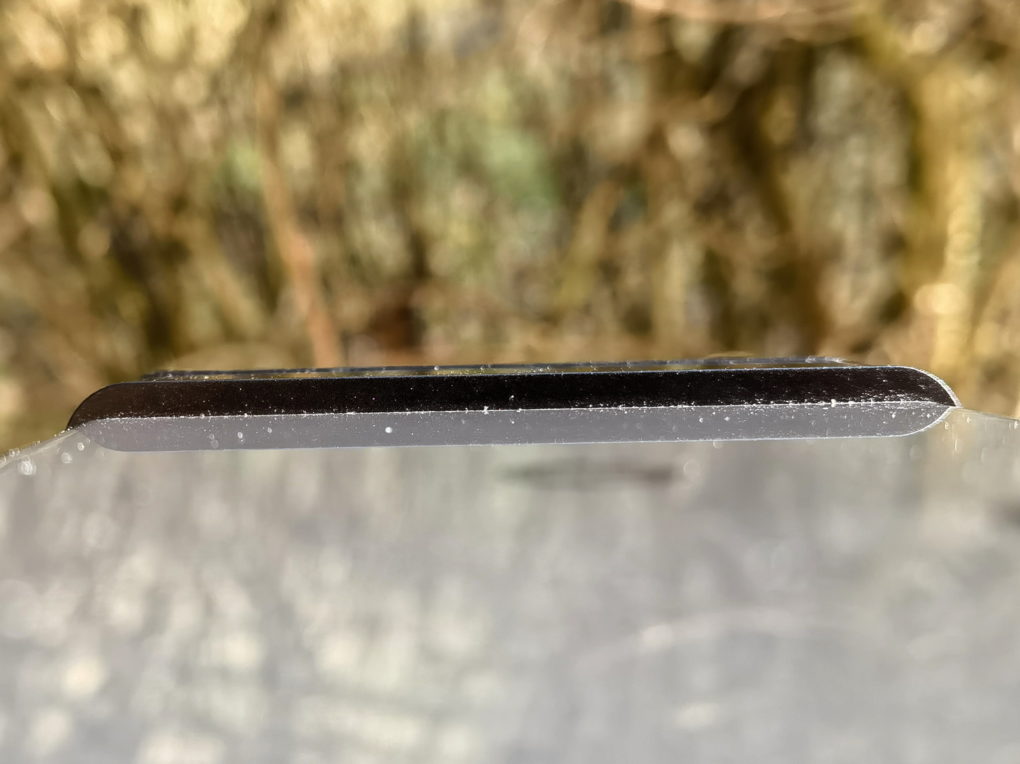
- Annoying dust accumulates extremely quickly around the camera bar. (Image: TechnikNews)
If we take a look at the front, we unfortunately see a visible step backwards compared to the predecessor. While the Pixel 5 was almost the only Android smartphone with symmetrically thin edges around the display when it was released at the time, the Pixel 6 unfortunately comes with an asymmetrical front again. The bottom edge of the screen is visibly thicker than the top, as well as the side edges, which are also anything but thin. For 649 euros that's still okay in my opinion, but a Realme gt, Huawei nova 9 and Xiaomi 11 Lite 5G look visibly more modern and I don't understand why Google has taken a step backwards compared to its predecessor. The front camera sits in a central recess in the display, which is never disturbing during use.
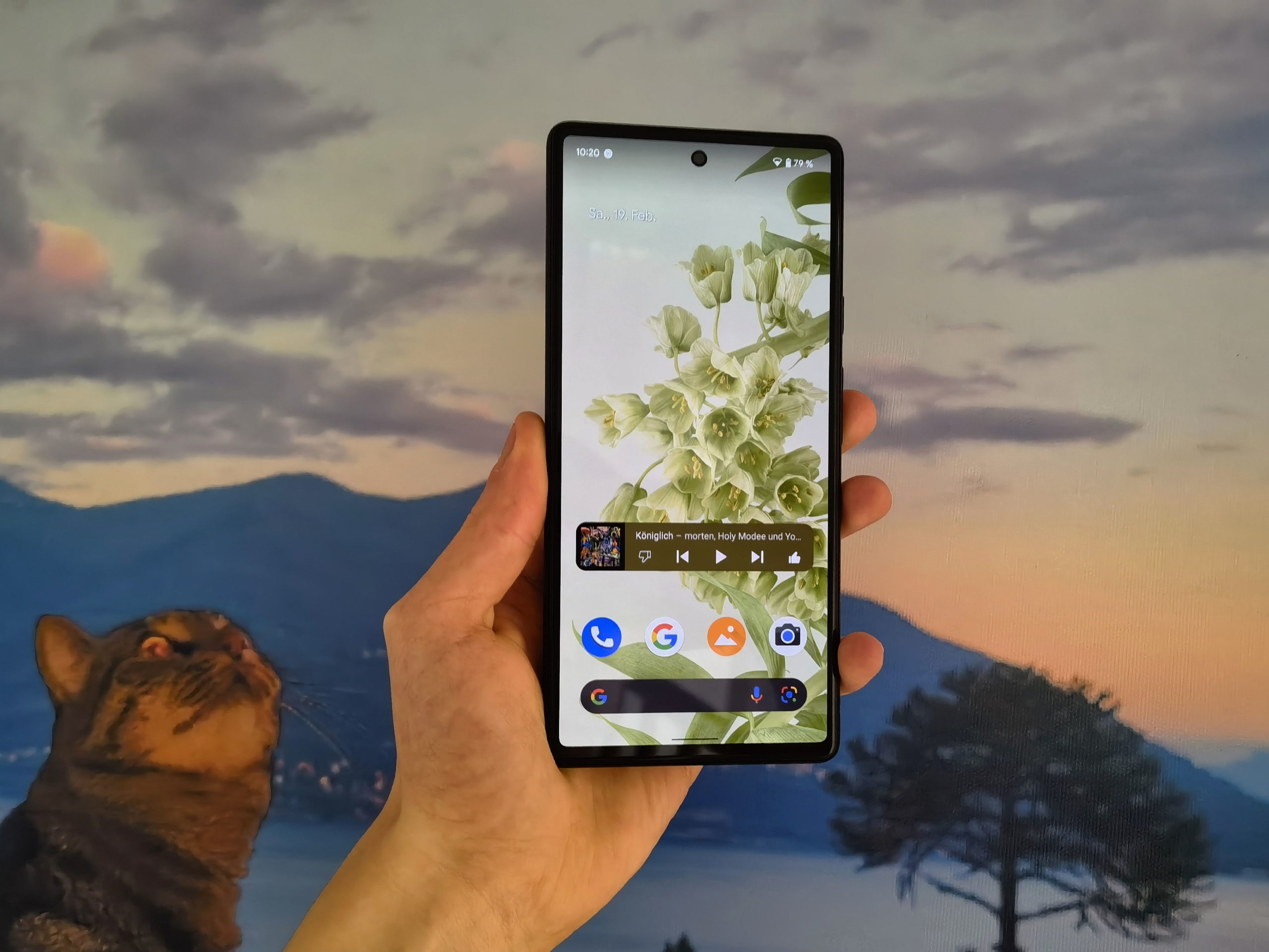
The design of the front is okay for 649 euros, but the predecessor had a nicer front in my opinion with its symmetrically thin screen bezels. (Image: TechnikNews)
processing and buttons
Overall, the processing of the Pixel 6 is extremely good. The case never creaks, the back doesn't dent, the keys sit firmly in the case and have an exceptionally good (and loud) pressure point, but the keys are placed incorrectly for my taste. Google should have done like all other manufacturers by placing the on/off button under the volume up/down button. The only thing I don't like about the workmanship is the visible gap on my test device on the right side between the display and the frame, but that could just be an isolated case for me.
Display - solid
With a diagonal of 6,4 inches, the OLED panel has a resolution of 20 x 9 pixels in the elongated 2.400:1.080 aspect ratio, which gives us 411 pixels pro inches and brings about a pleasantly sharp display of the content. Individual pixels can never be seen in everyday use. Furthermore, the screen supports a smooth refresh rate of 90 Hertz, which means that 90 frames pro second can be played back. Thus, all animations and scrolling appear nice and smooth, but the difference to 120 Hertz is still easy to determine and, to be honest, for 649 euros I expect 120 Hertz, because most of the competitors are a step ahead in this respect. For comparison, the Real GT Master Edition, which is always available for 250 euros, comes with a 120 Hertz OLED display. Nevertheless, you can of course get along well with the 90 Hertz of the Pixel 6.
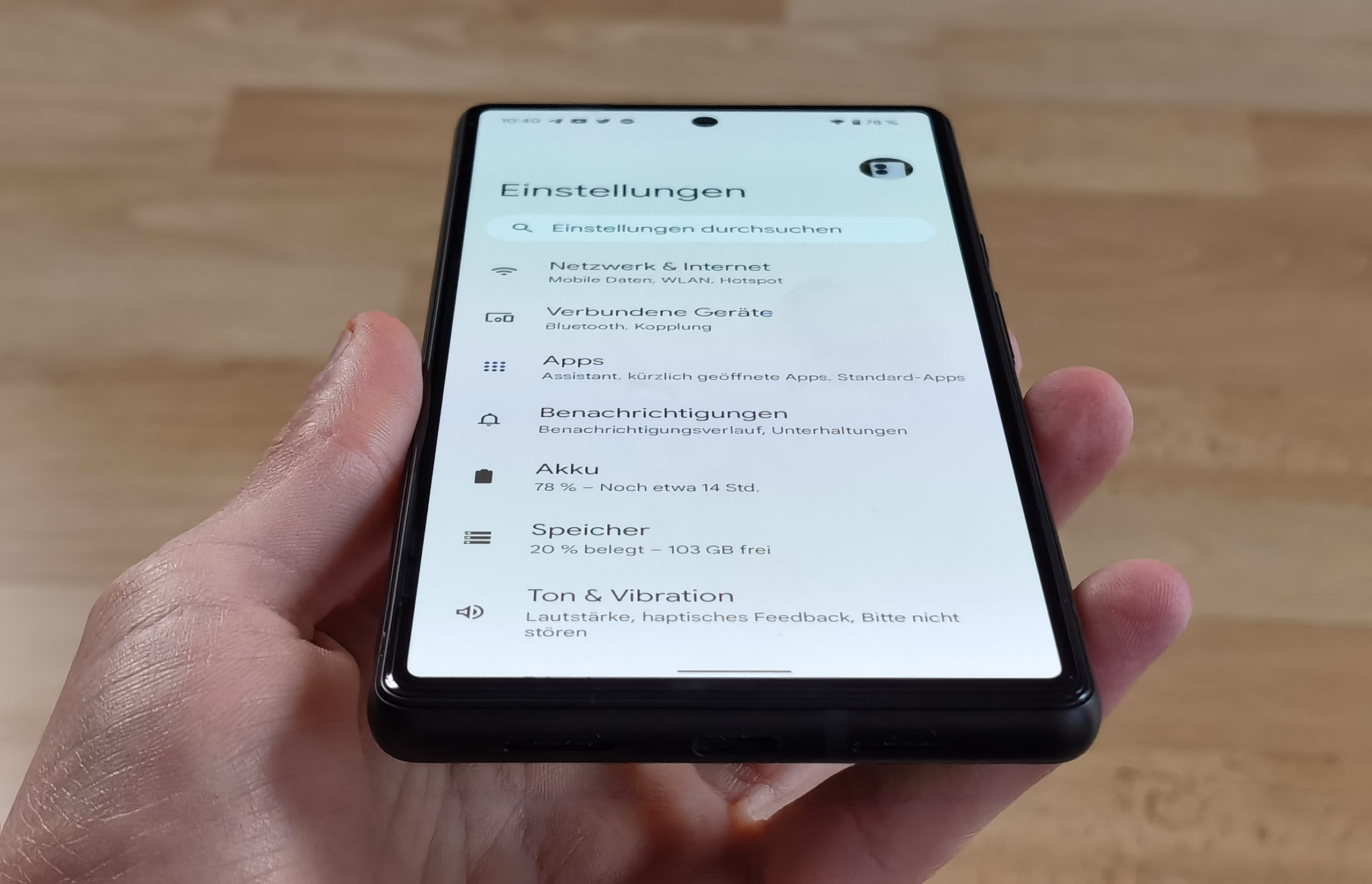
The viewing angle stability is by no means bad, but it could still be a bit better for 649 euros. (Image: TechnikNews)
Colors are reproduced naturally and the white value is decent, although there is still room for improvement here. The black value should also be a little better with an OLED display, but it's by no means bad. When viewed from the side, white colors in particular only change color at extreme viewing angles, which is the case with a Realm GT Neo 2 is not better, but for 649 euros you can definitely criticize this point. The maximum brightness is really satisfactory, so that you don't have any problems with readability even in direct sunlight.
Software - Material You
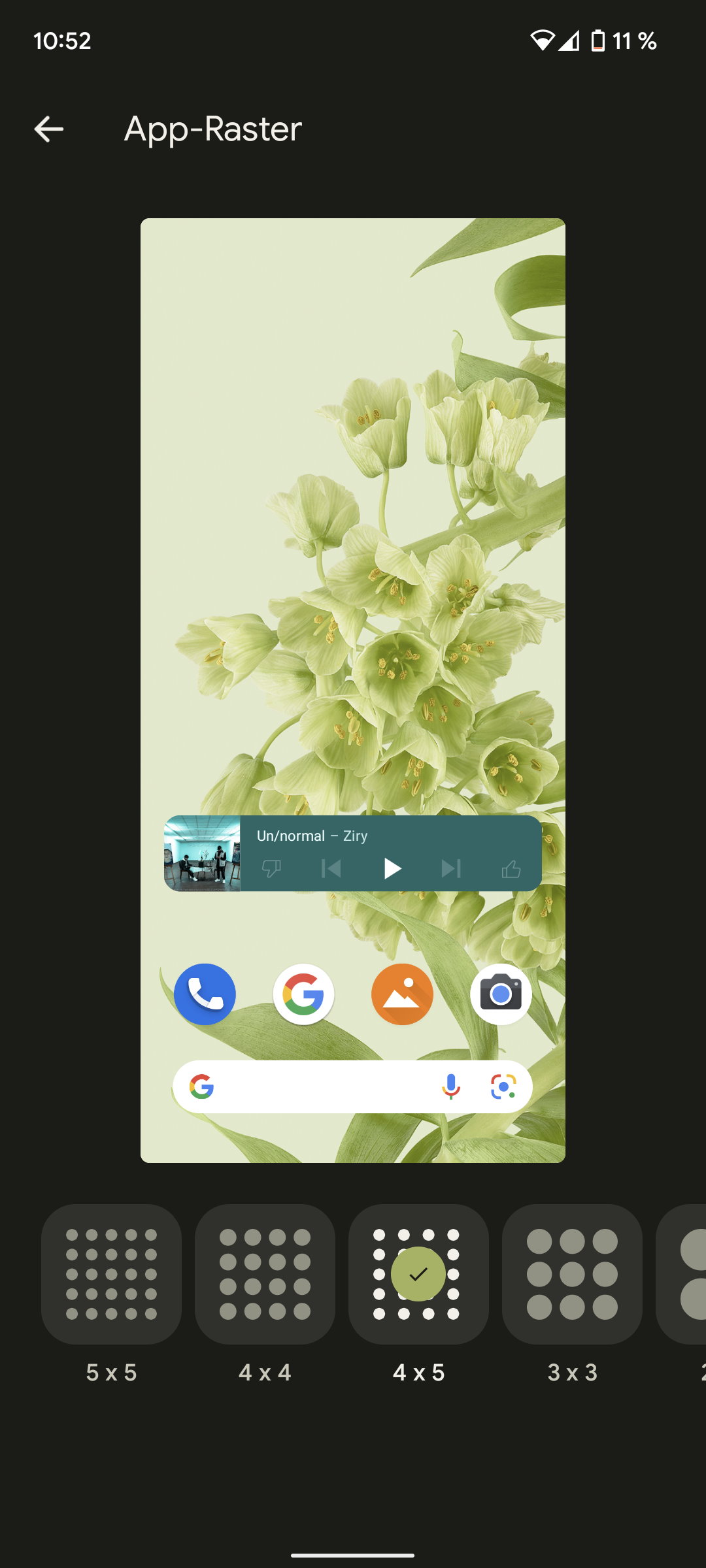
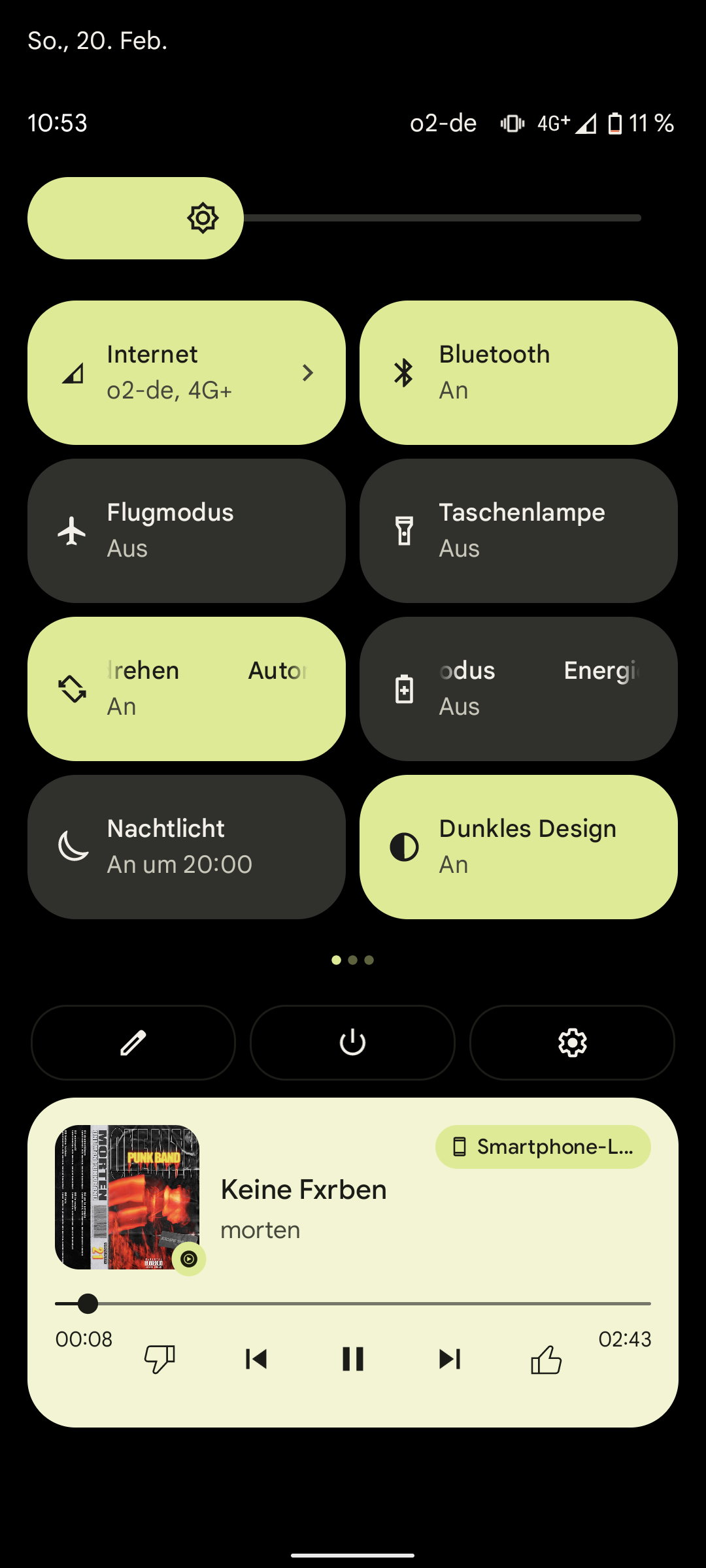
The new Material You based on Android 12 is used as the software. I wasn't a big fan of it at first, but after a few hours of use I got used to it and actually think it's pretty good now. The biggest change compared to stock Android 11 is certainly the new notification bar. The buttons for the controls (e.g. bluetooth, internet or flashlight) are now much larger and can be colored to match the background image used, which I'm a big fan of. Furthermore, you can finally freely configure the app grid, which I have always criticized before. The settings have also been changed slightly and Google has decorated the gesture control and the entire system with even nicer animations.
-
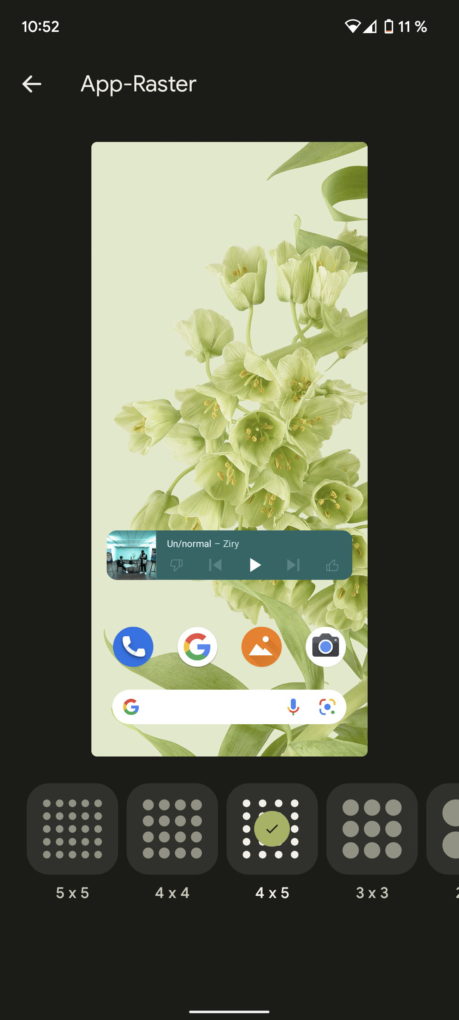
- Finally, as with (almost) all manufacturers, there are app grids that I always missed on pixel smartphones. (Image: TechnikNews)
-

- The notification bar has been fundamentally changed. (Image: TechnikNews)
-
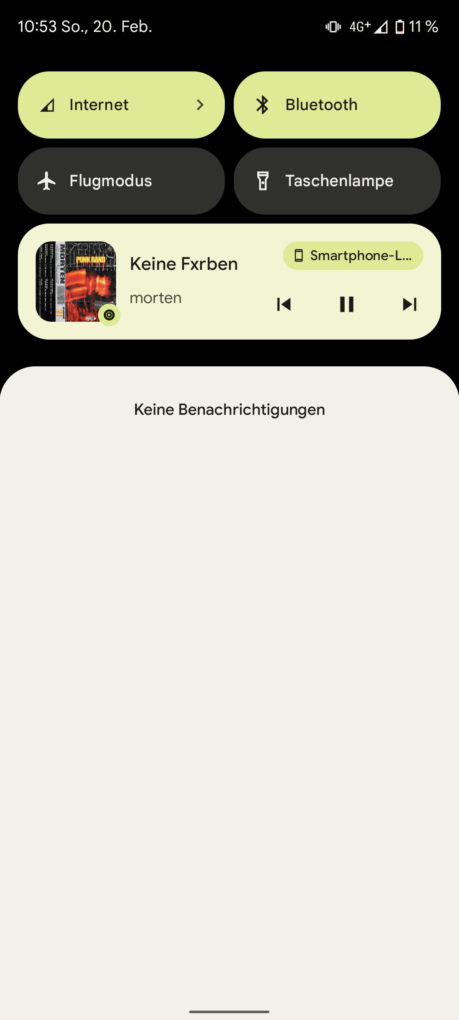
- Even though night mode is disabled, the top area is still black. (Image: TechnikNews)
-
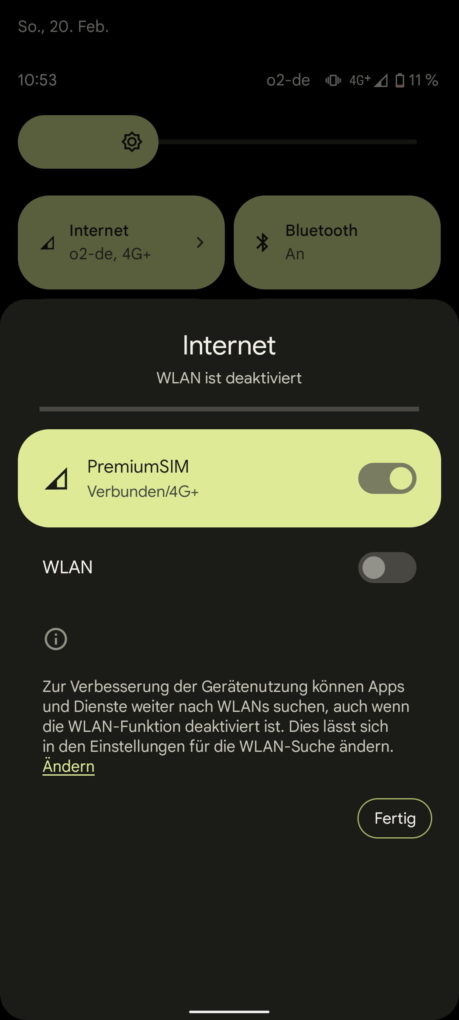
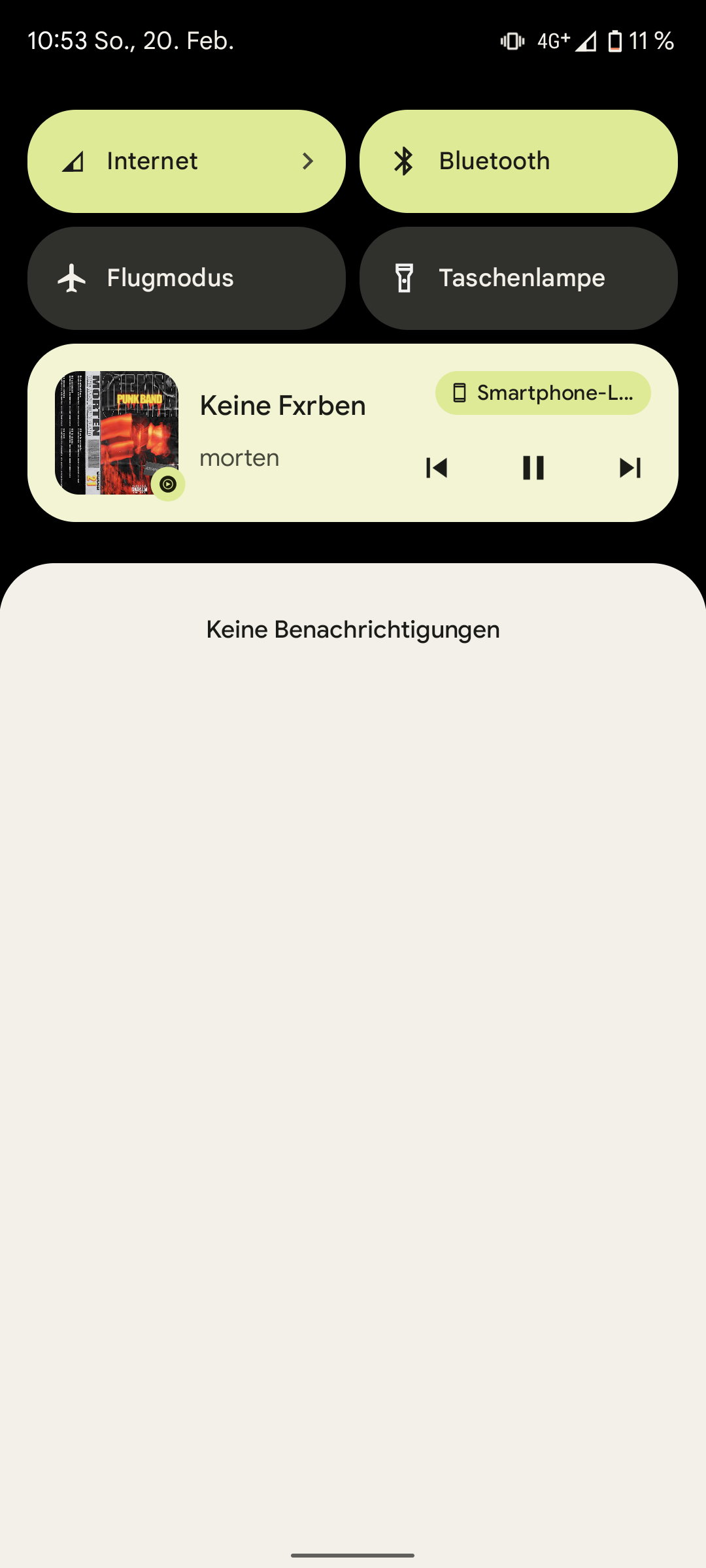
- The "Internet" control panel contains both the WLAN and the mobile network. (Image: TechnikNews)

Unfortunately, there are also a few points about Material You that I think are completely illogical. If you disable dark mode, the control panel area (above the notification panel) remains black. Also, the brightness slider is way too high up so I have to constantly reach for it, and the Internet panel includes both Wi-Fi and cellular, which I find a bit awkward. As with all other smartphones, I would have liked to see two separate control fields for this.
Performance - fast and fluid
The in-house Google Tensor SoC, which is supported by 8 GB of RAM and 128 GB of internal storage, is at work for the first time under the hood. Unfortunately, the memory cannot be expanded via a MicroSD card and there is no version with 256 or even 512 GB available. Google should have offered either a memory expansion or a larger version, because 128 GB might not be enough for some.
On paper, the Tensor chip can't quite keep up with the Snapdragon 888, 8 Gen 1 or even the Apple A15 Bionic, but that doesn't change the fact that the everyday performance of the Pixel 6 is really good. Apps start and close extremely quickly and stuttering or delays only occurred very rarely during my test period. Only the camera app could run a little faster and more smoothly, but it's still completely fine. If you like to play games on your smartphone, you'll be very happy with the Pixel 6, but I wouldn't necessarily buy it just because of the processor, because other smartphones, such as the OnePlus North 2, Realme GT Neo 2 or Xiaomi 11t are also equipped with very powerful processors.
When it comes to heat development, the Tensor SoC does a good job. During normal everyday use, it never got noticeably warm on me and when it is heavily used, you don't notice a big difference compared to the competition. Smartphones with the Snapdragon 888 get noticeably warmer.
Battery – decent runtimes, but…
The built-in battery with a capacity of 4.600 mAh ensures fairly satisfactory running times. At the end of the day, with a screen-on time of 5 to 6 hours, I still had between 10 and 35 percent of battery left, which is more than enough for the average user to get through a relaxed day. For heavy users, however, it might be tight and I think that's a bit of a shame, because for 4.600 mAh with an in-house processor and only 90 Hertz, I would have expected a little more.
While the battery life is anything but bad, the Pixel 6 gets a lot of criticism when it comes to charging, because it only supports wired charging with a maximum of 30 watts and the appropriate power supply unit is unfortunately not included. Almost all of the competition is a clear step ahead here. For comparison, the EUR 250 expensive Real GT Master Edition is with the included 65 watt power supply in good 30 Minutes fully charged. At least wireless charging is supported, which is commendable for the price on offer.
Camera - excellent main sensor
The Google Pixel 6 is one of the very few new smartphones that only comes with a dual camera. A huge 50 megapixel sensor is used as the main camera, which is supported by a 12 megapixel ultra wide-angle camera. An 8 megapixel front camera is responsible for selfies and does a decent job.
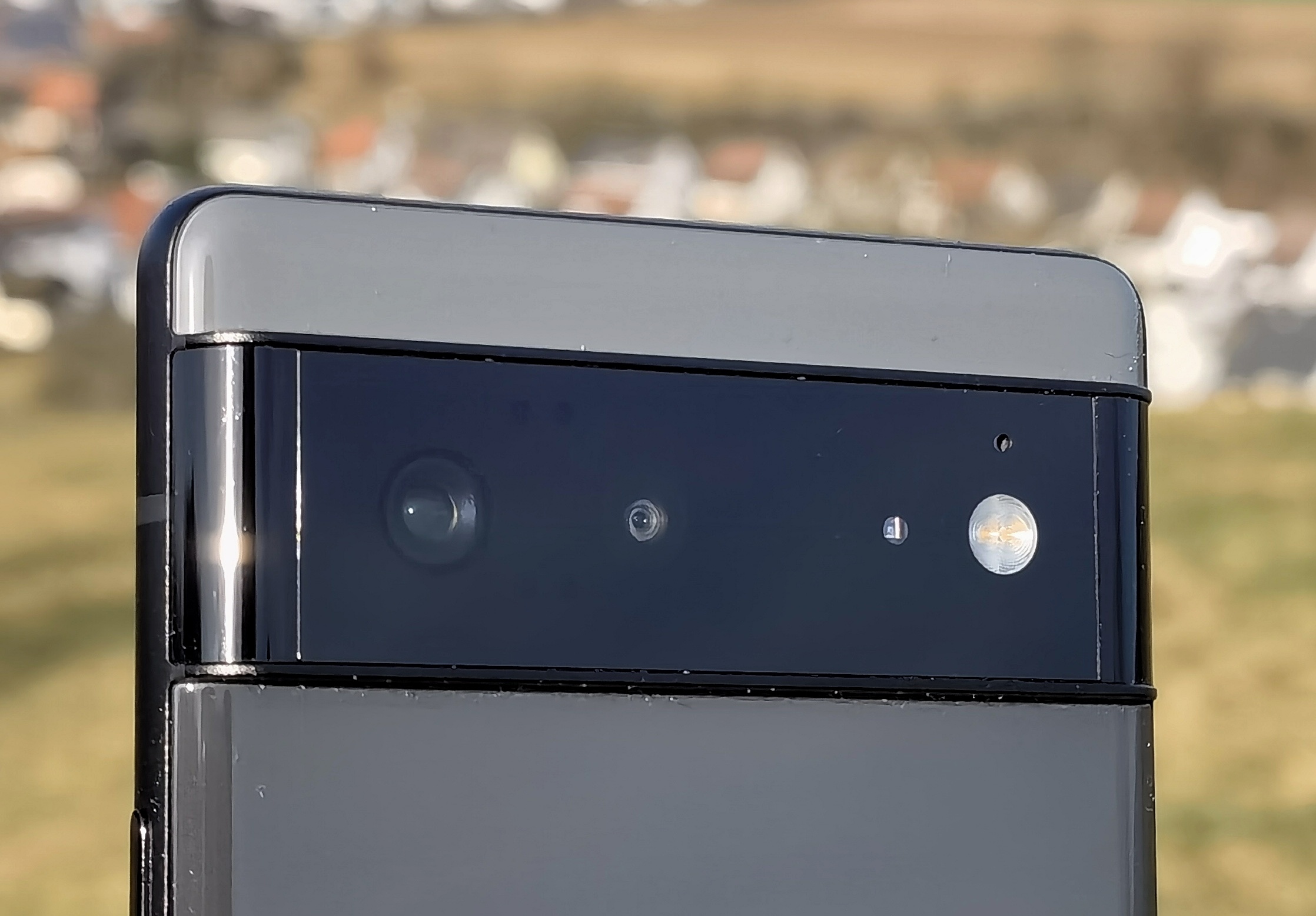
The dual camera of the Google Pixel 6. (Picture: TechnikNews)
My only real criticism of the main camera is the white balance, which is often off, especially indoors. This means that food no longer looks really tasty and is unfortunately displayed quite unrealistically. However, as soon as you take photos outdoors in good lighting conditions, the white balance does not cause any major problems. Colors are then reproduced beautifully and naturally and the dynamic range has been (fortunately) greatly improved compared to the predecessor. The sharpness is also at an extremely high level and beats the Galaxy s21 ultra clear. With a Huawei P50 Pro and iPhone 13 Pro can easily keep up. Great job Google!
As soon as it gets darker, the night mode is automatically activated, which exposes the image for a few seconds. The resulting images are really sharp and impress with mostly accurate color reproduction. However, every now and then the white balance is not quite right even in low light, but fortunately this problem can be fixed directly in the camera app. In conclusion, it can be said that the main camera of the Pixel 6 is above average for 649 euros and can actually keep up with smartphones costing over 1.000 euros, which is pretty impressive.
I would describe the ultra-wide-angle camera as decent. In good lighting conditions, it takes sufficiently sharp pictures with great dynamic range and realistic colors. As soon as it gets darker, the quality obviously visibly decreases, but every now and then you can still get quite passable pictures with the night mode and compared to a Xiaomi 11T Pro, Huawei nova 9 or Realme GT Neo 2, the ultra-wide-angle camera performs visibly better. However, it is not all that wide-angle, which was strangely different with the predecessor.
Test photos
Let's take a look at a few test photos. As always, the following images are absolutely unprocessed, but compressed without loss in order to keep loading times and memory consumption of the website low.
-

- Picture: TechnikNews

-

- Picture: TechnikNews

-

- Picture: TechnikNews

-

- Picture: TechnikNews

-

- Picture: TechnikNews

-

- Picture: TechnikNews

-

- Picture: TechnikNews

-

- Picture: TechnikNews

-

- Picture: TechnikNews

-

- Picture: TechnikNews

Comparison with the Huawei P50 Pro
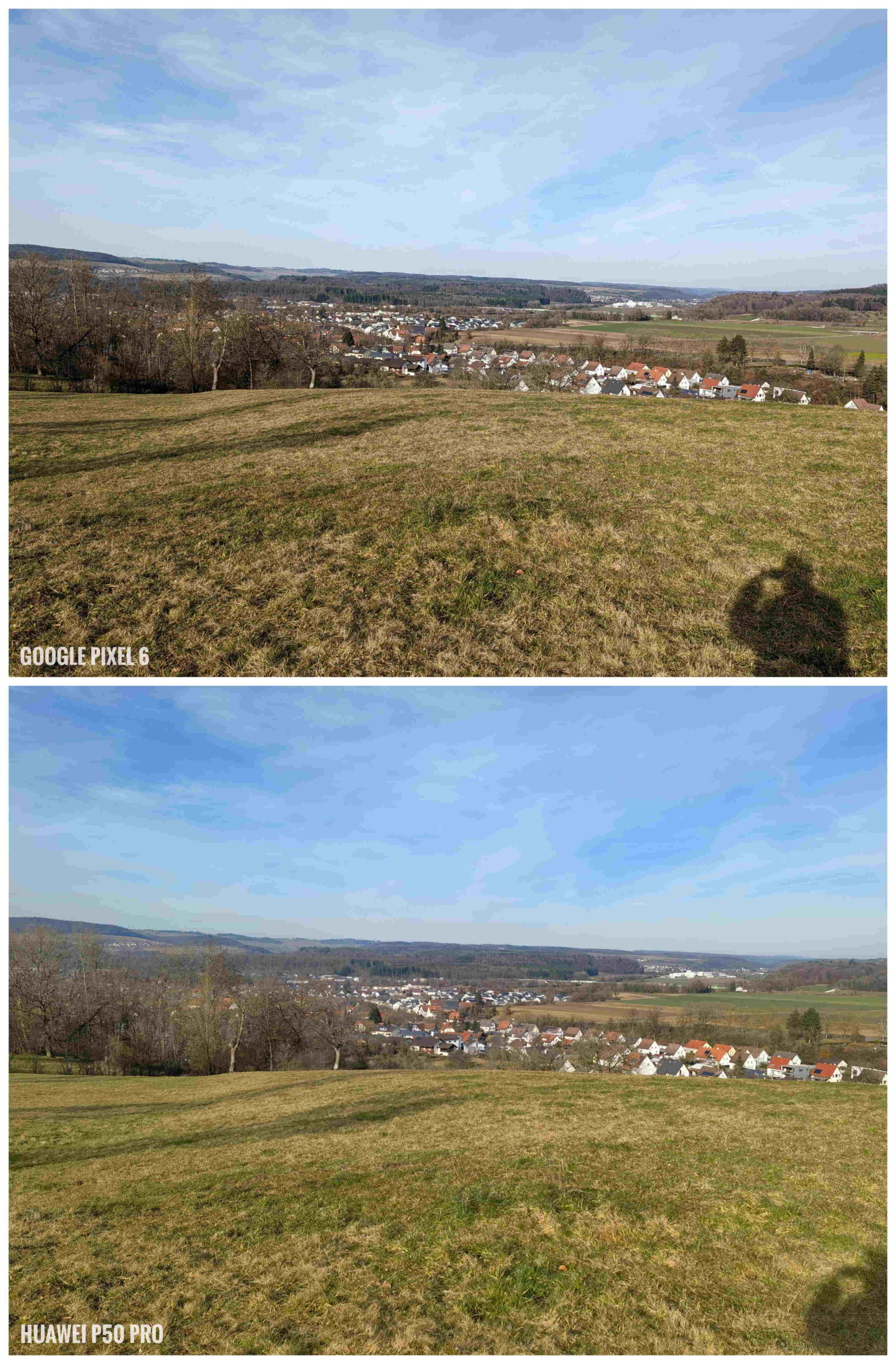
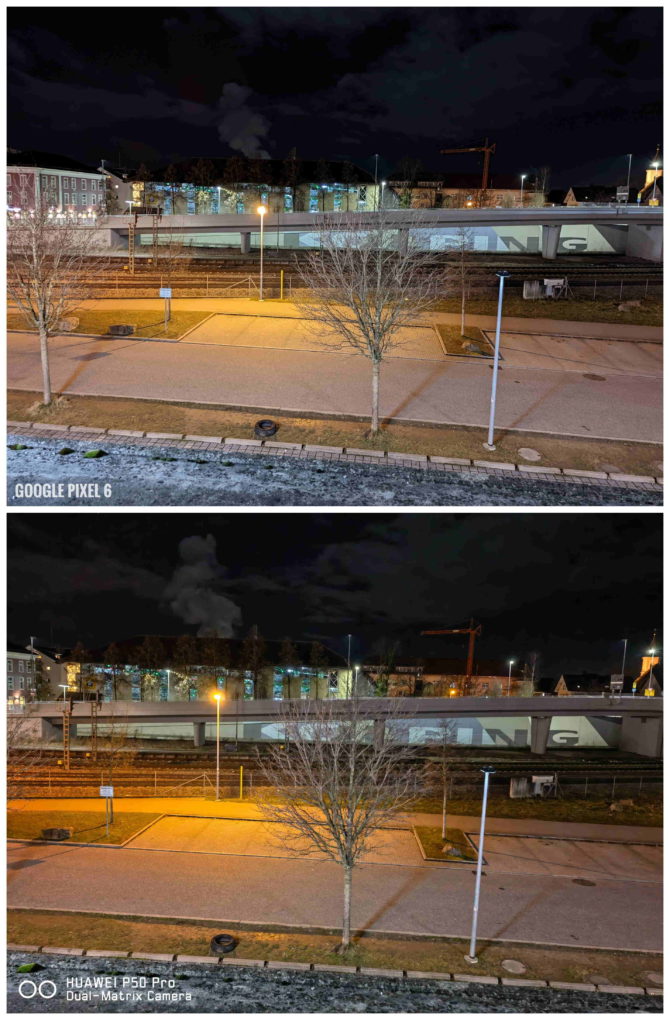
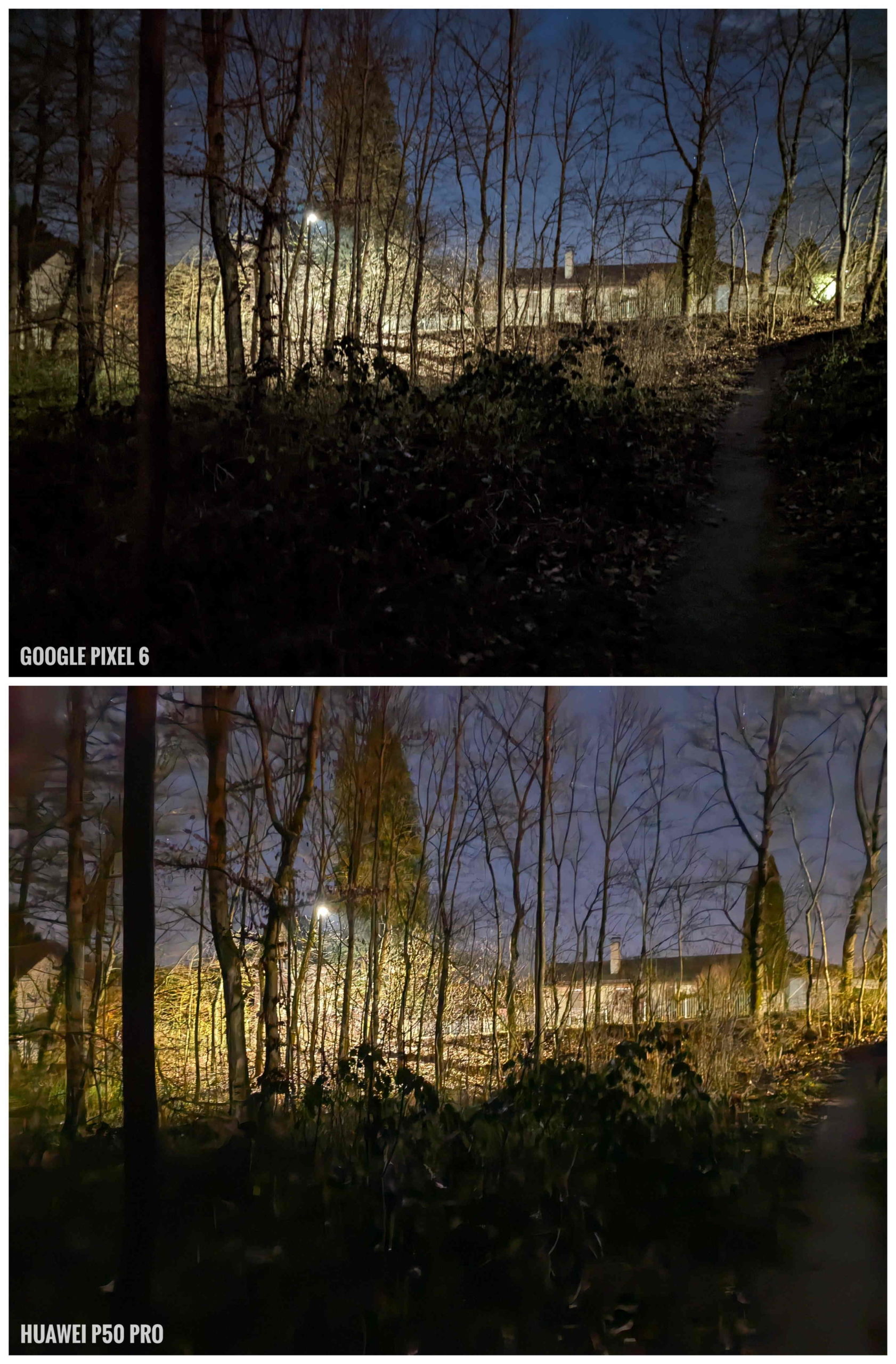
Finally, we want to compare the cameras in different situations with those of the Huawei P50 Pro I am of course aware that the P50 Pro is almost twice as expensive as the Pixel in this country, but since the normal 6 has the same main and ultra-wide-angle sensors as the more expensive Pixel 6 Pro and these cameras are among the best, I think a comparison is very appropriate.
All results are under the respective pictures.
-
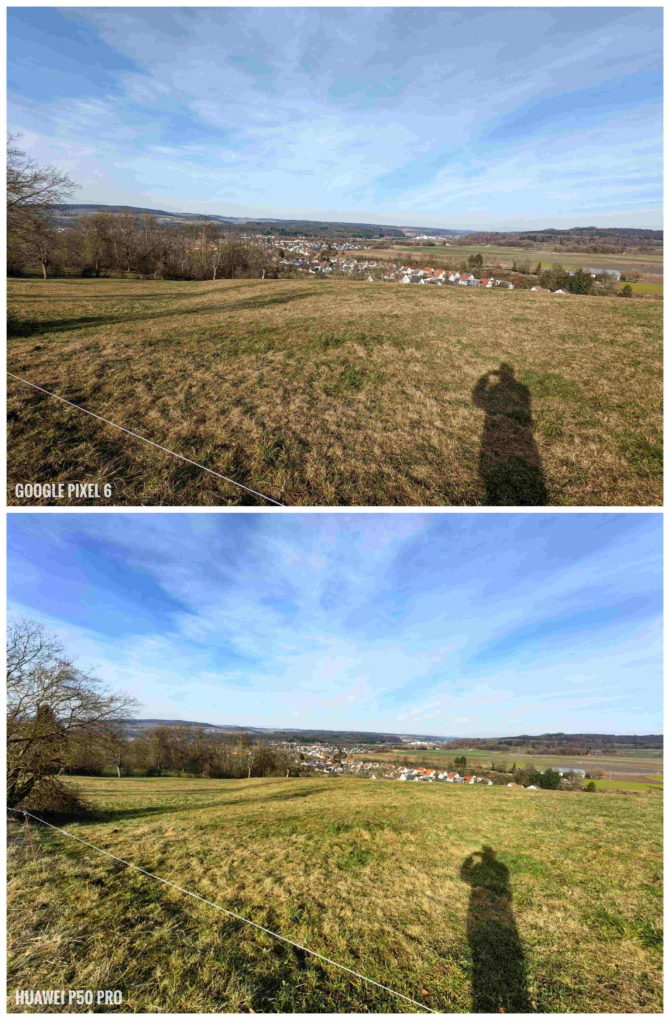
- Google takes the more natural photo with the ultra wide-angle camera and since the image is not too wide-angled either, the Pixel also wins in terms of sharpness. (Image: TechnikNews)
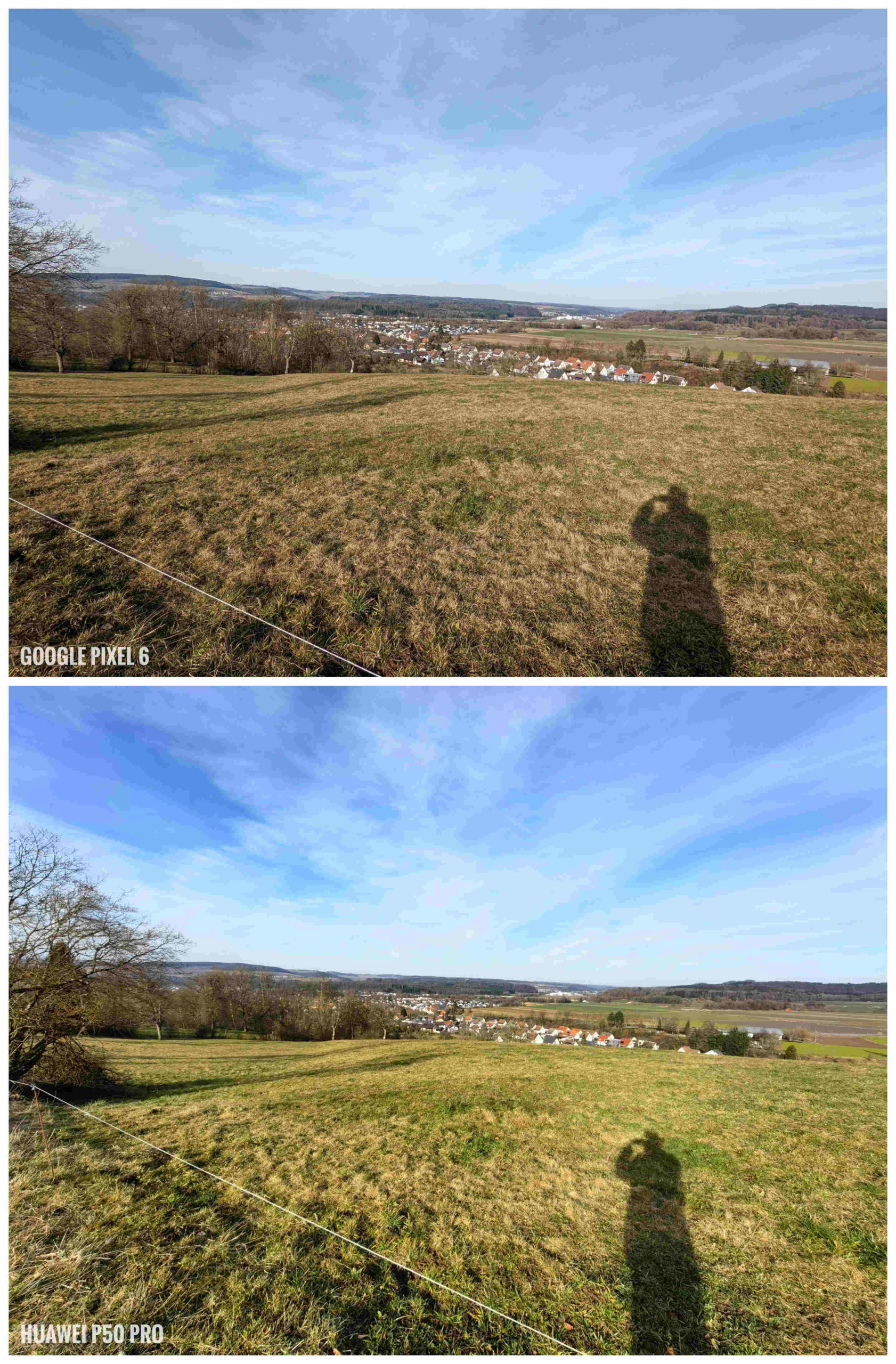
-

- If we switch to the main camera, no differences in sharpness are noticeable, but the pixel still shoots the somewhat more natural photo. (Image: TechnikNews)
-

- Here, too, I like the colors of the Pixel 6 a little better, but you have to accept a fair amount of noise, which is not noticeable on the P50 Pro. (Image: TechnikNews)

-

- The P50 Pro's shot looks a little washed out, which is why some details are lost. (Image: TechnikNews)

-
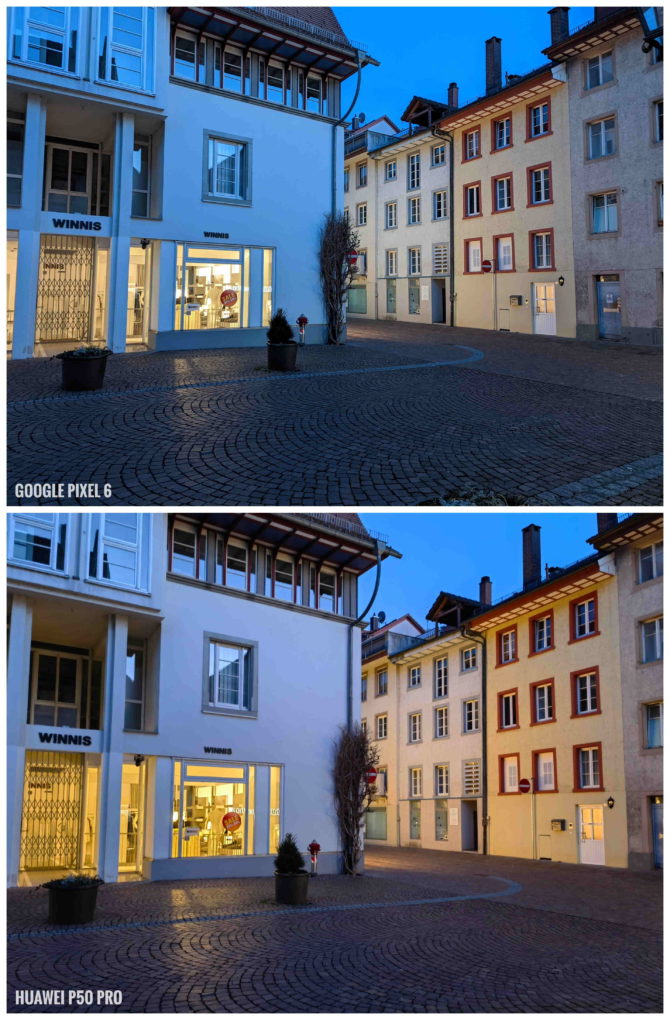
- The Pixel may be a bit off with the white balance, but it delivers noticeably higher sharpness than the P50 Pro. (Image: TechnikNews)
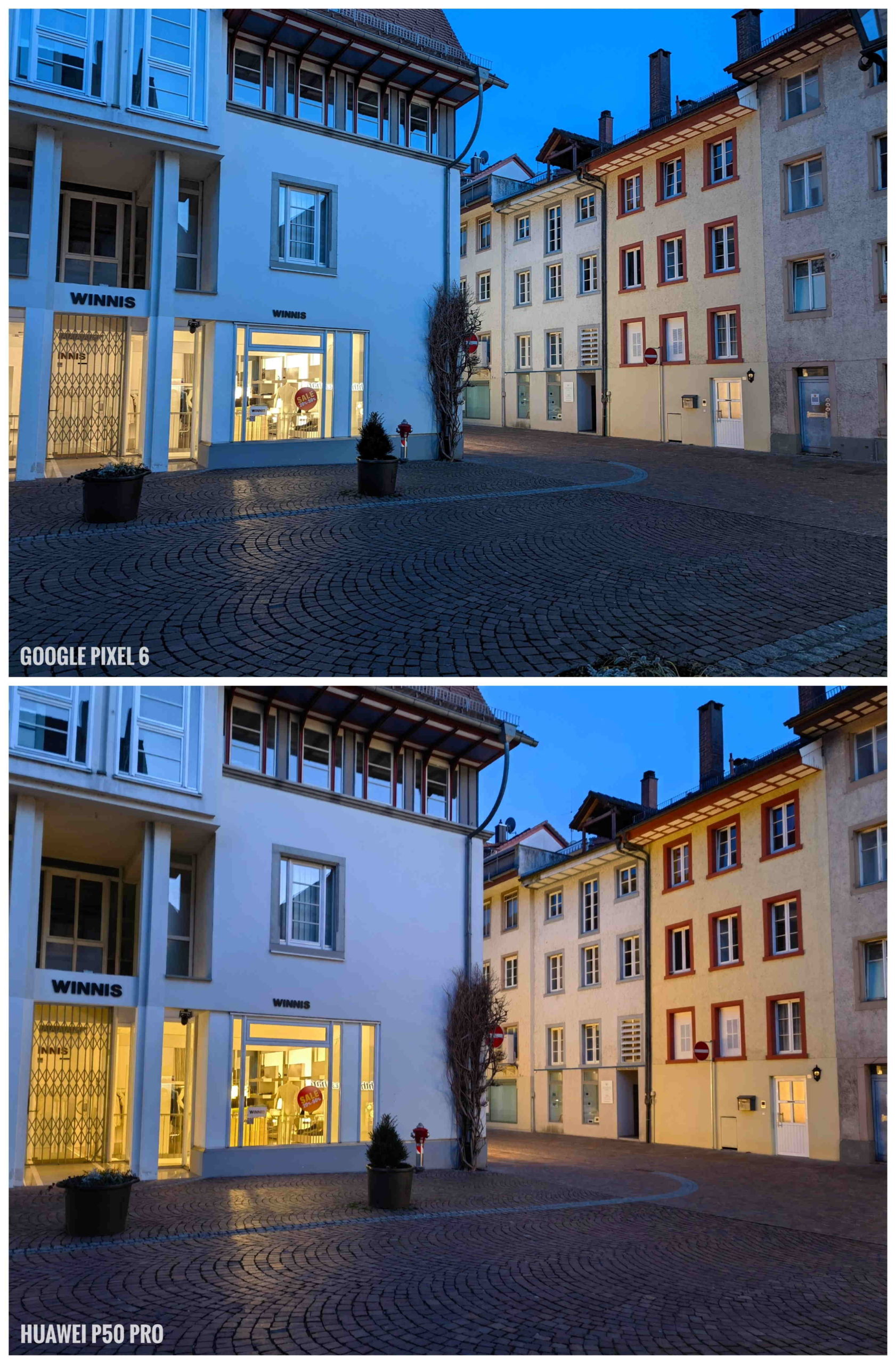
-
- Here, the Huawei P50 Pro has the edge in terms of color reproduction and minimal sharpness. (Image: TechnikNews)
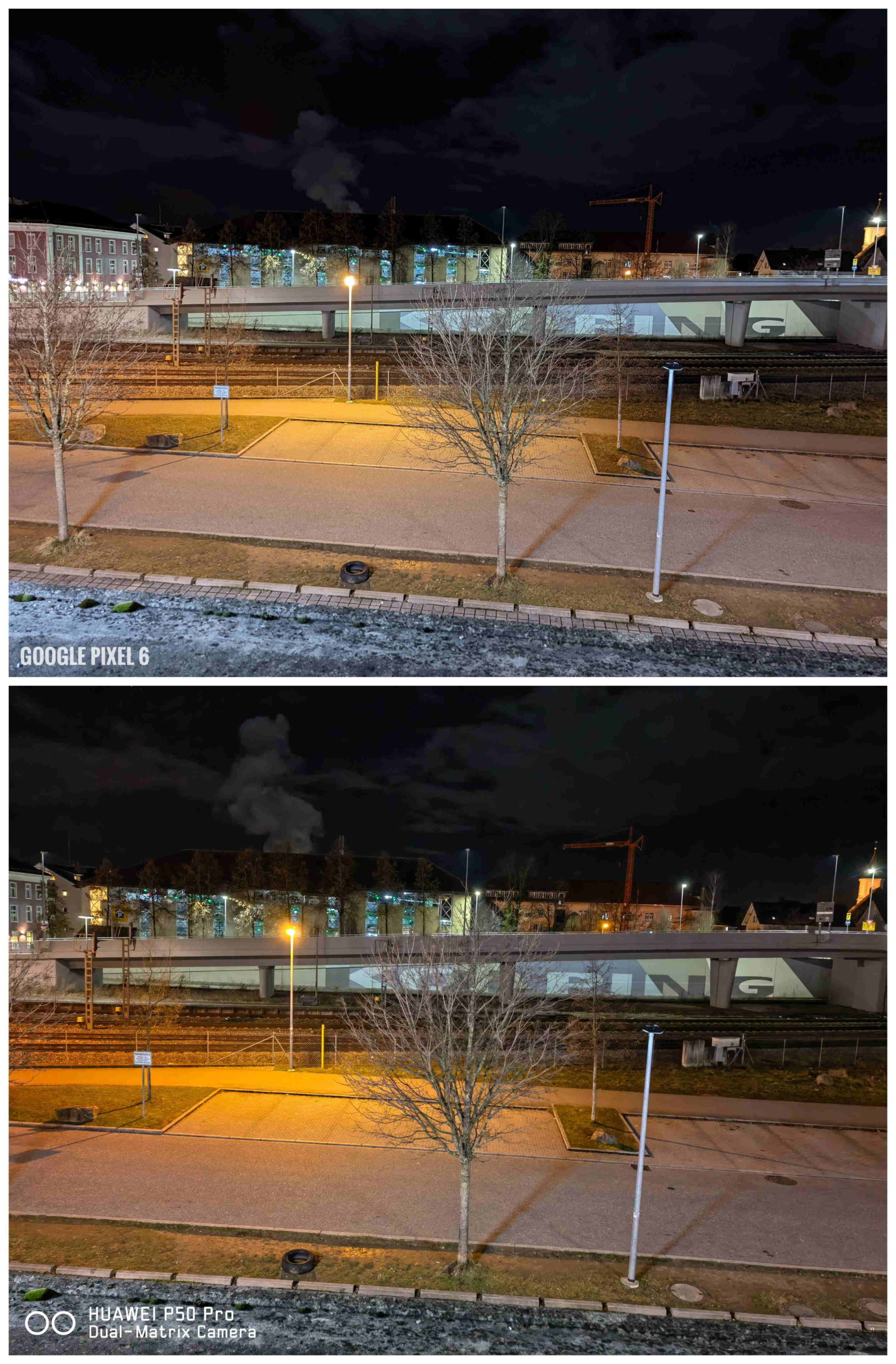
-
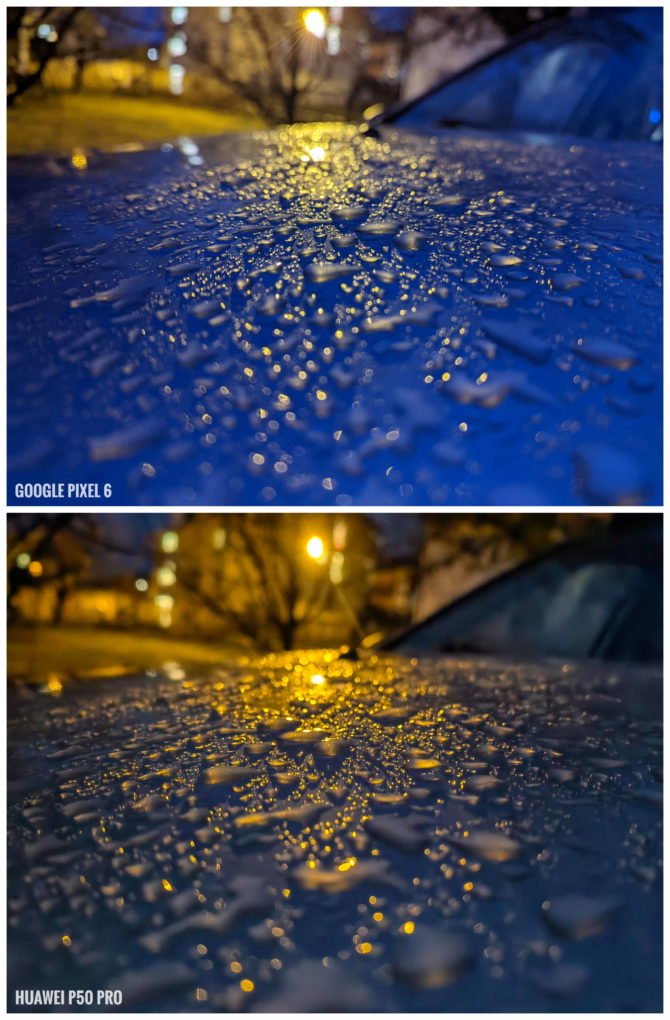
- The Pixel 6's white balance is off the mark here. (Image: TechnikNews)
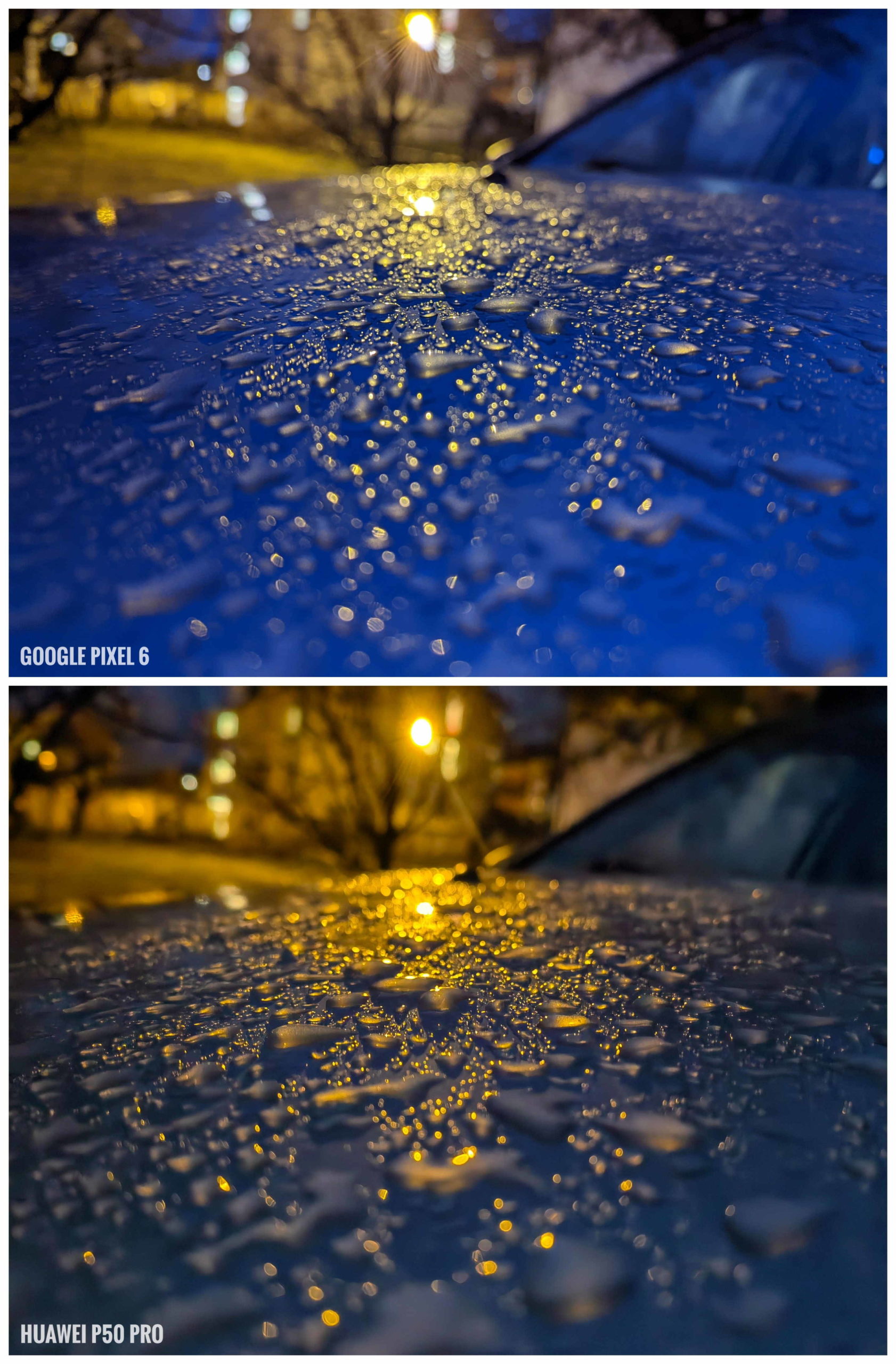
-
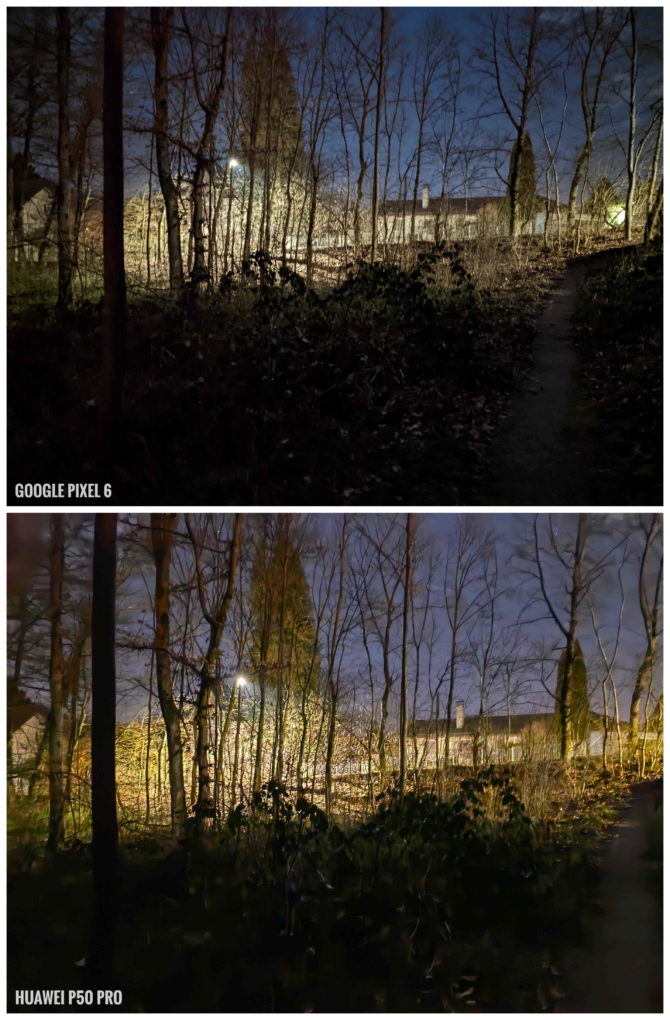
- Huawei proproduces the slightly brighter photo. In terms of sharpness, there's little difference in the center of the image, but the Pixel 6 retains more detail around the edges and especially on the bottom. (Picture: TechnikNews)
Other - excellent vibration motor, average fingerprint sensor and more
So far, all Pixel smartphones of the last few years have been equipped with an excellent vibration motor, which played at the top and this is of course also the case with the Pixel 6. The vibrations are subtle, but still convey an extremely high-quality feeling in the hand. The vibration motor is extremely good, especially for 649 euros.
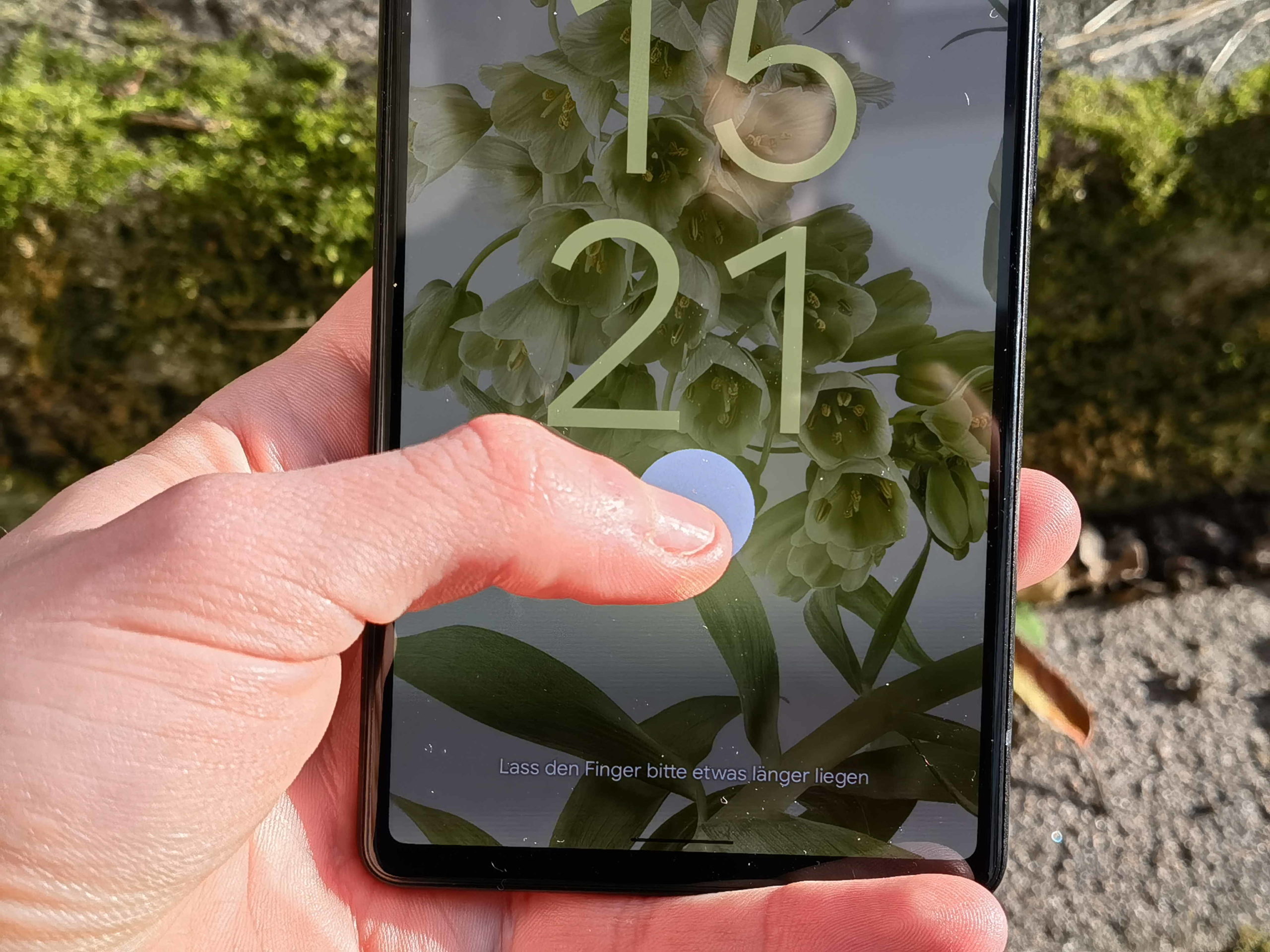
The smartphone can be unlocked via the fingerprint sensor integrated into the display, which, unlike Huawei or Realme, is excellently placed. Unfortunately, the speed is not quite at the top level, whereas the reliability is completely satisfactory. Overall, you can definitely get by with the sensor, but with many competitors, unlocking is definitely more fun.
-
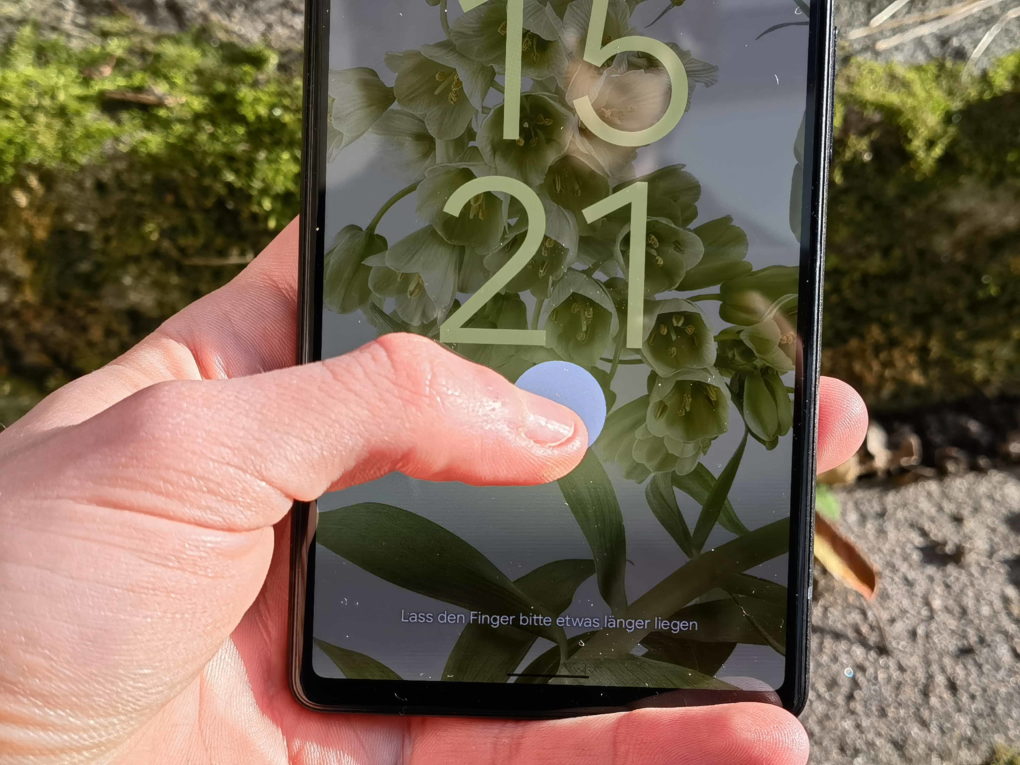
- The fingerprint sensor under the display is in a great position, but it could do with unlocking the smartphone a little faster. (Image: TechnikNews)
-
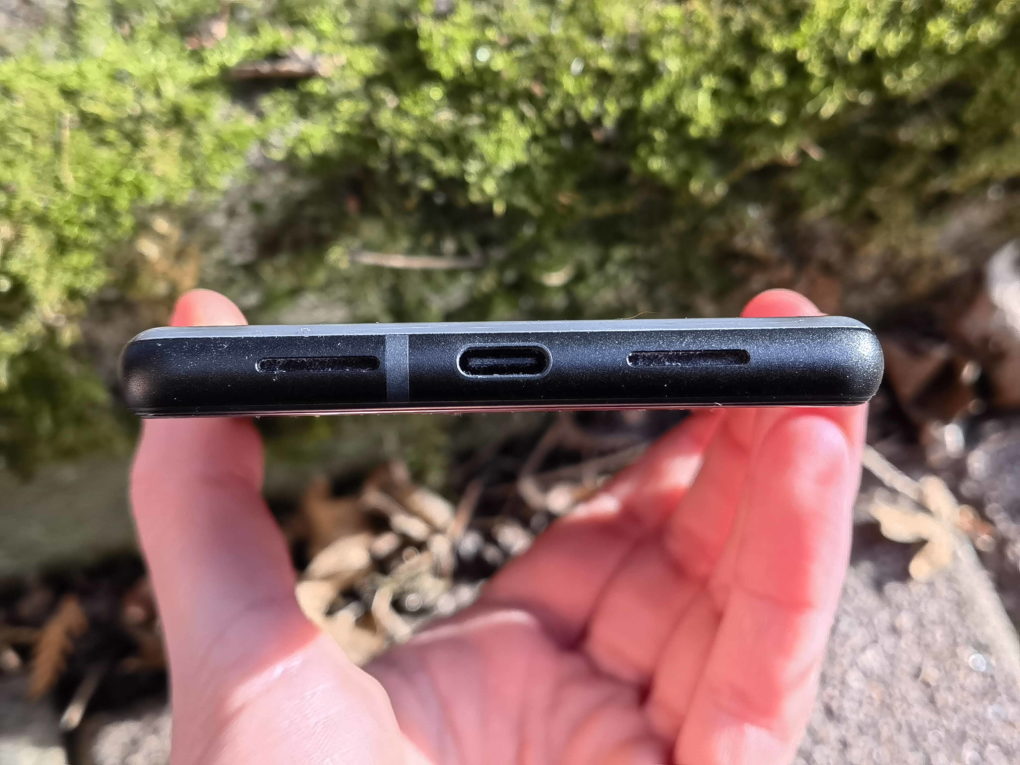
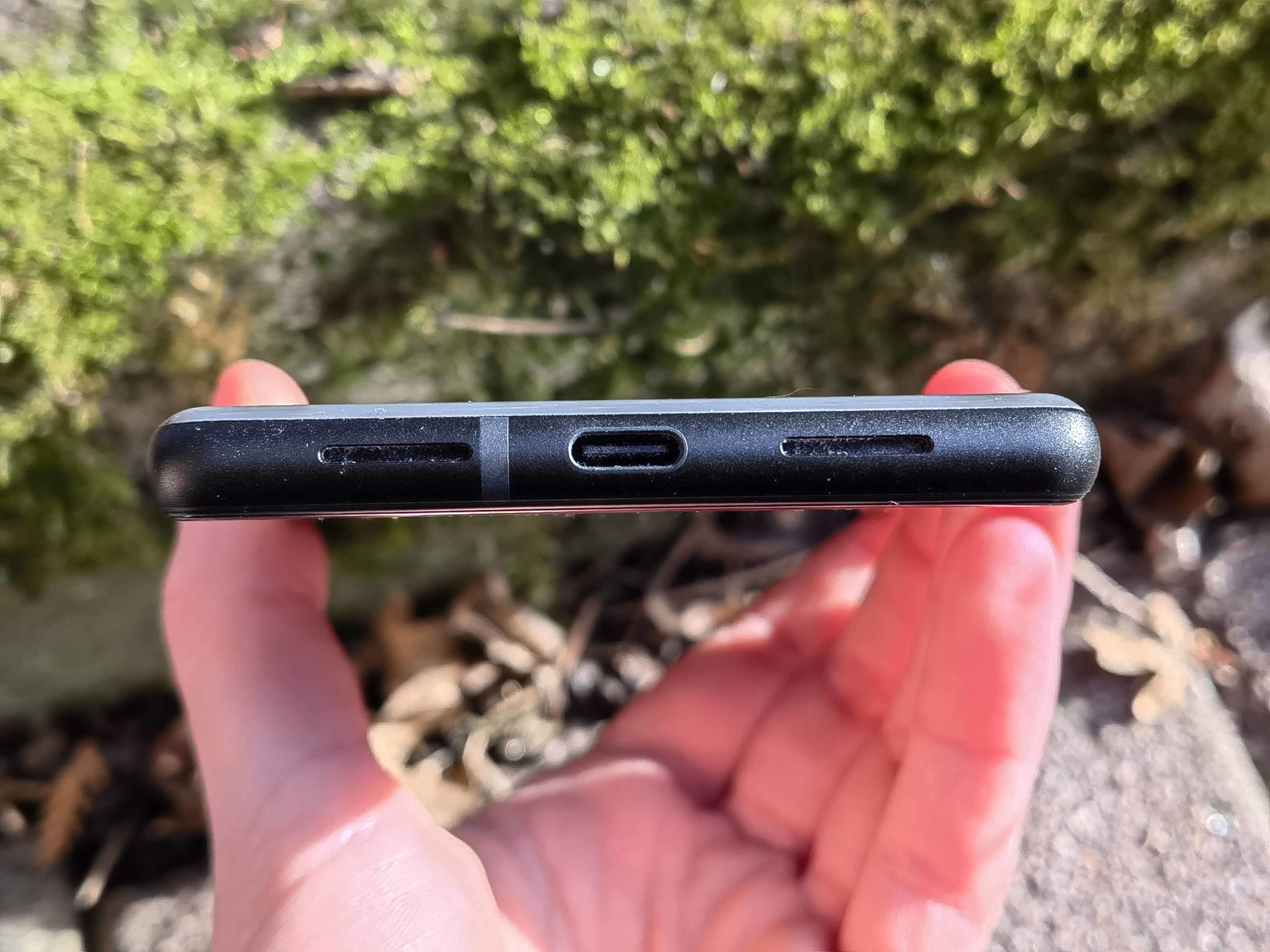
- Google installs a loudspeaker on both the underside and in the auricle. (Image: TechnikNews)
-
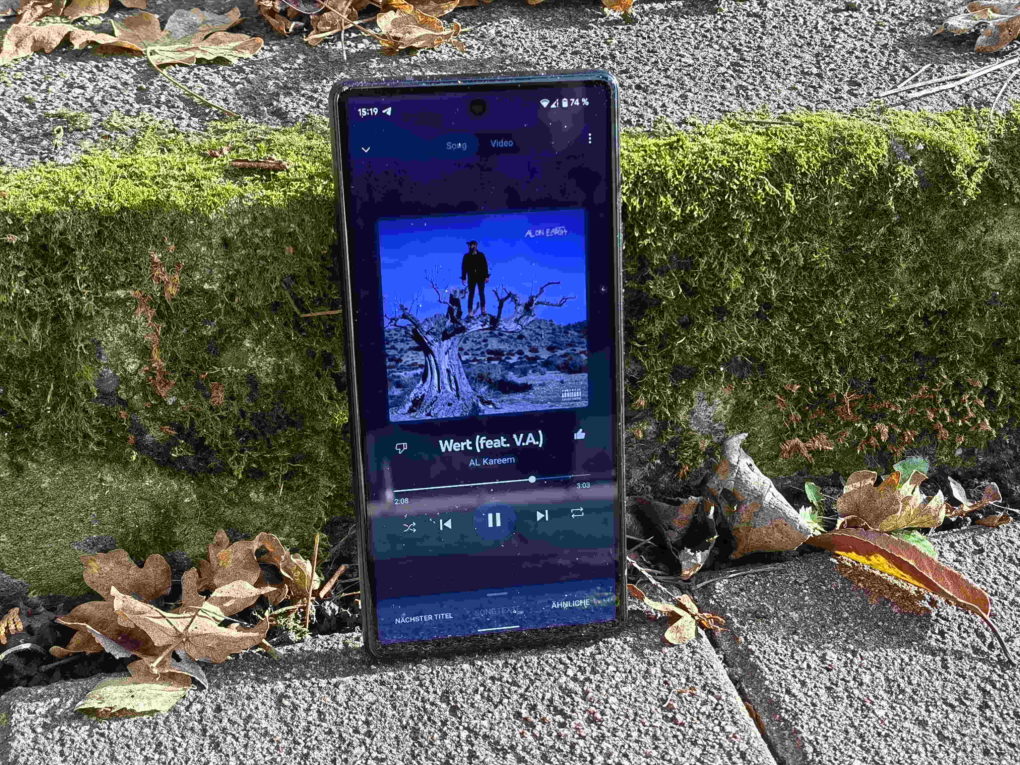
- The sound quality of the speakers is solid, but nothing more. (Image: TechnikNews)
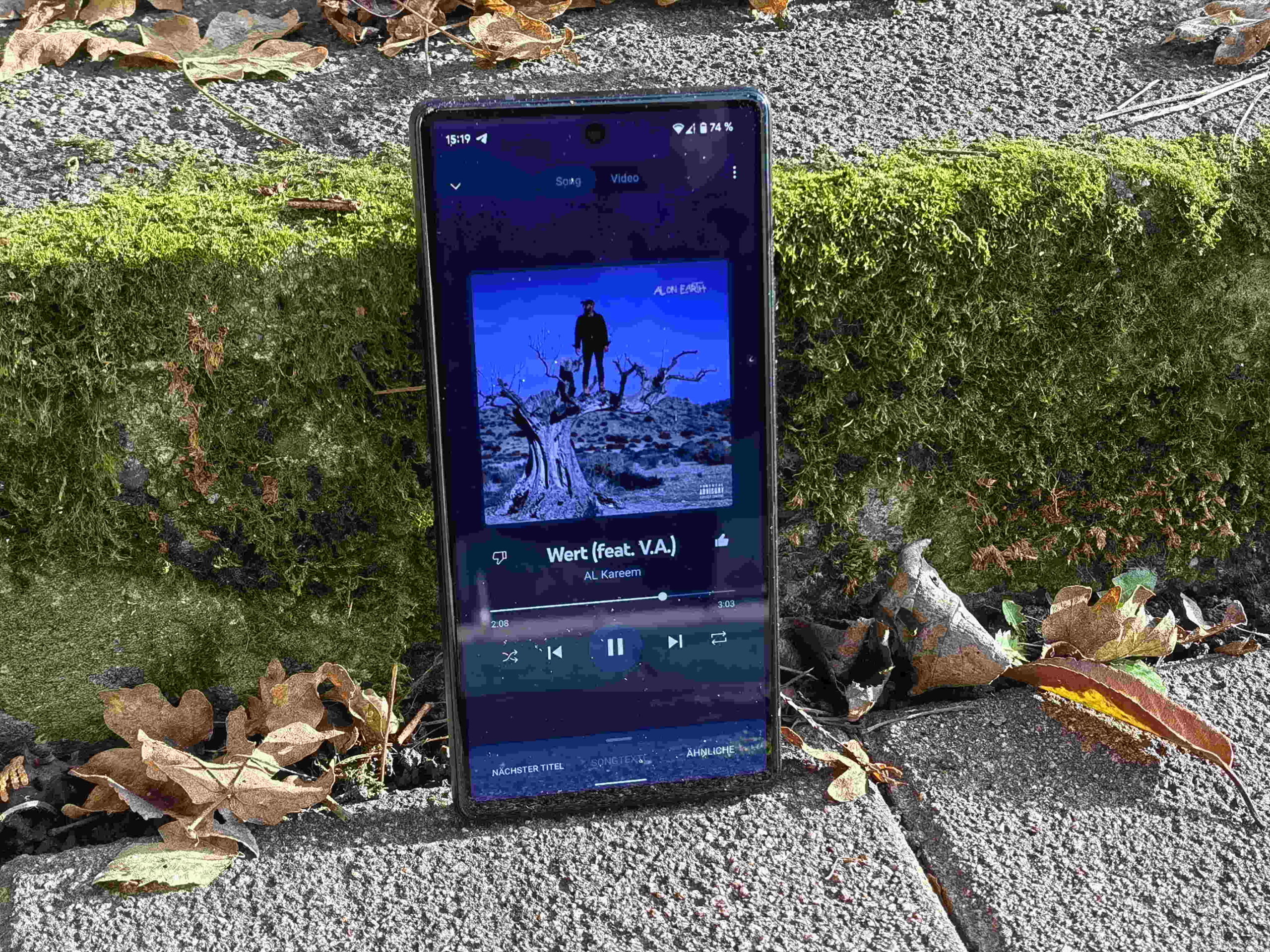
Google installs stereo speakers that are okay. They get loud enough, but sound a bit thin for my taste.
Last but not least, I would like to mention that the Google Pixel 6 is protected against the ingress of water and dust according to IP68, which is anything but a matter of course in this price range.
Conclusion
The Google Pixel 6 is an extremely successful smartphone that has no major weaknesses for 649 euros. Of course, a few competitors are even better when it comes to the display, fingerprint sensor and charging, but the Pixel 6 offers an outstanding main camera, wireless charging, very smooth and refreshing software, a high-quality housing made of glass and aluminum and official water protection. which is unfortunately not the case with many competitors. The performance, the battery life, the speakers and the vibration motor are completely appropriate for the price and not really inferior to other comparable smartphones.
Anyone who values the camera, finds the new software stylish and practical, uses wireless charging and is looking for an all-round successful smartphone will probably be very happy with the Google Pixel 6. However, if these points are not so important to you, you should definitely do so OnePlus 9 See which one comes out on top in ultra-wide camera, charging and display. Otherwise, it is also worth taking a look at the Realme GT Neo 2, OnePlus Nord 2 and Poco F3, all of which cannot keep up in terms of features and camera, but for around 300 euros less in terms of display, performance, battery life and fingerprint sensor are even slightly better than the Pixel 6.
It's a pity that the tests never mention that it's still not possible with Pixel phones to use different ringtones when using 2 SIM cards pro Set SIM card. It may not be that important for many, but it is for me. Therefore, unfortunately, a bad buy.