
Redmi Note 11 Pro Plus in review: Flagship specs for under 400 euros
A TEST REPORT from Yinan Xia  on May 16, 2022, 8:00 am | Write a comment

If you're talking about a successful mid-range lineup that has consistently maintained a good reputation over the years, then the Redmi Note series feels very appealingproIt has been with us on the European market since the Note 8 Pro and the Pro models in particular have been able to convince us with a good price/performance ratio right from the start.
Of course, Redmi does not want to give up this good reputation and is bringing this year's representative to the market with the Redmi Note 11 Pro Plus. If you look at the hardware, we get 120 watts of charging and a 108 megapixel camera for only 369 euros. You can find out how the device performs in the individual areas in the following lines.
Design: Surprisingly solid
Given my initially low expectations, the design of the Redmi Note 11 Pro Plus actually surprised me a bit, especially from a visual point of view.
The front does not rely on overly thin edges, but with symmetry and harmoniously coordinated corners it looks quite pleasant. The cutout at the top for the front camera is very small, much smaller than on the Xiaomi 12, which makes you think the screen/surface ratio is higher than it actually is.
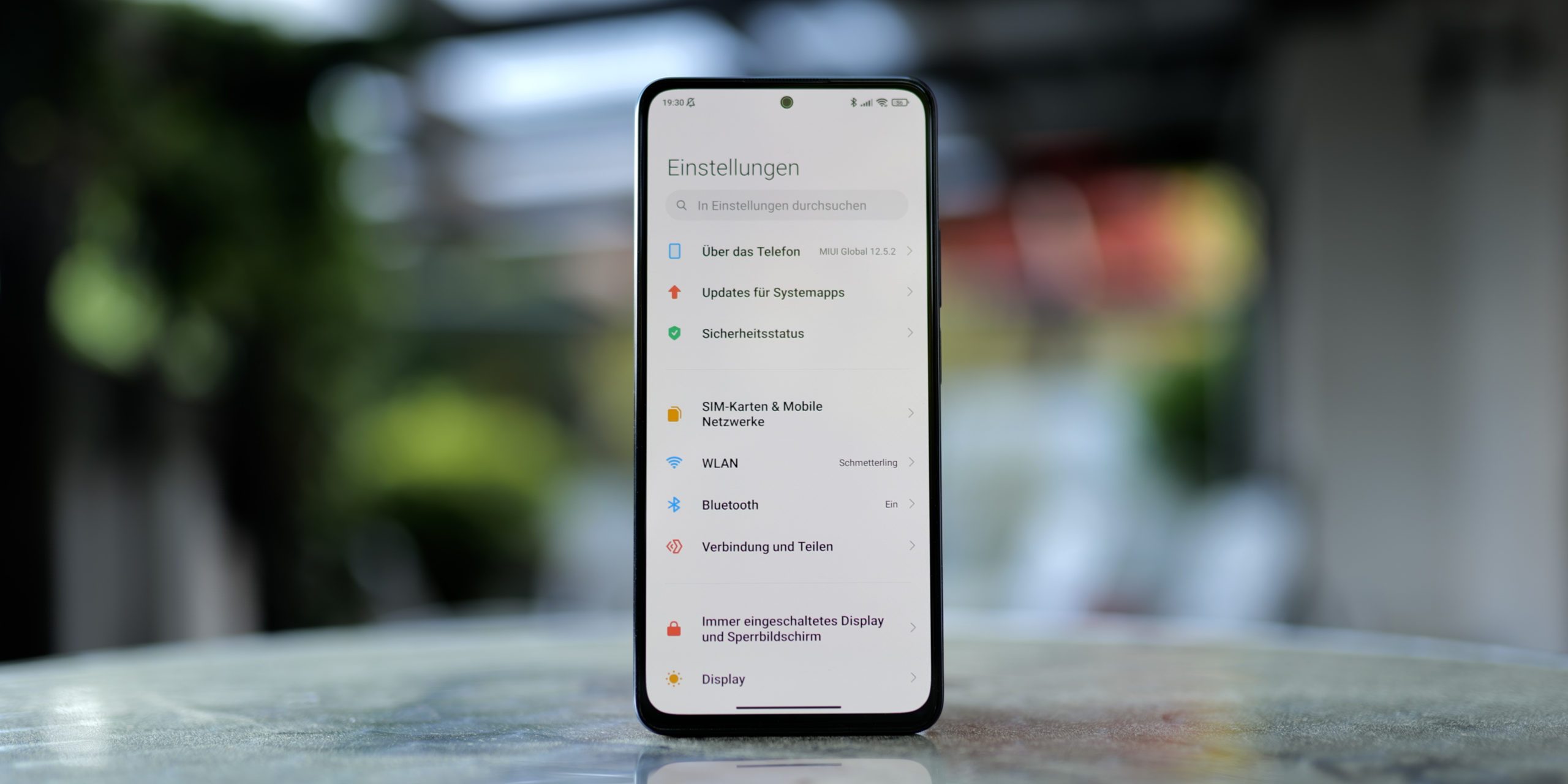
Front (Picture: TechnikNews)
The back is absolutely no problem with its matte glass back, I actually find the gray color in my hand quite stylish. It has been kept much simpler and depending on the light, there is a matte spot as a reflection, which is quite pleasant. The cameras at the top are arranged in a typical matrix camera. It looks pretty nice, except that they protrude quite far from the housing.
-
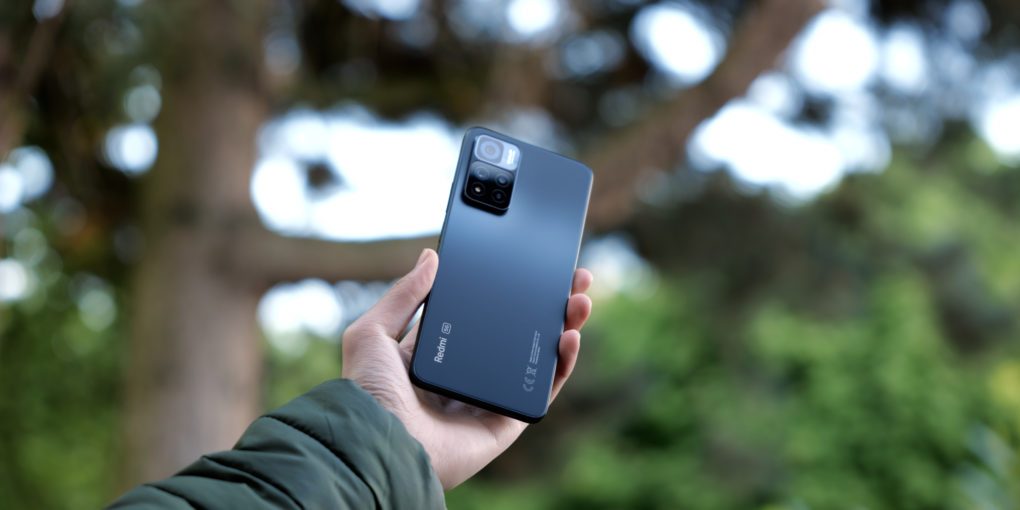
- Picture: TechnikNews
-
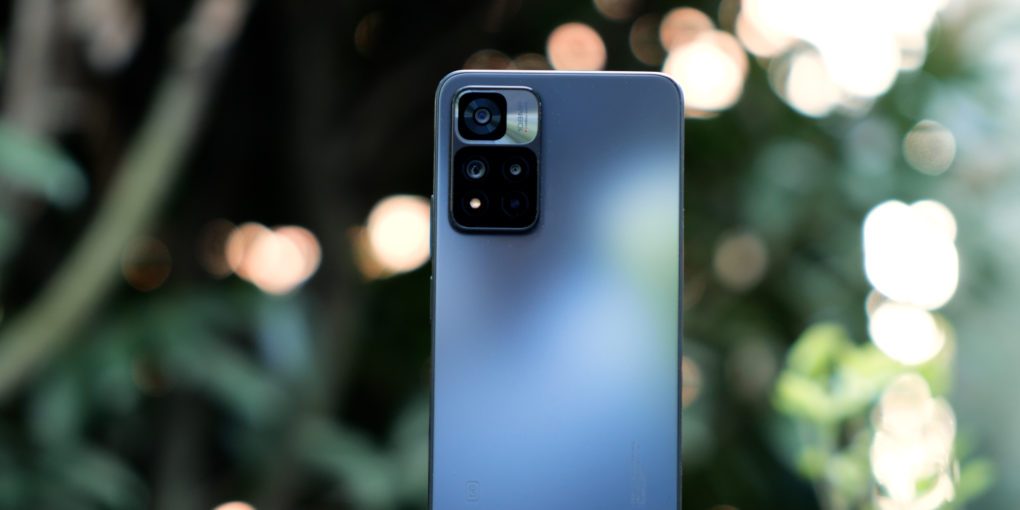
- Picture: TechnikNews
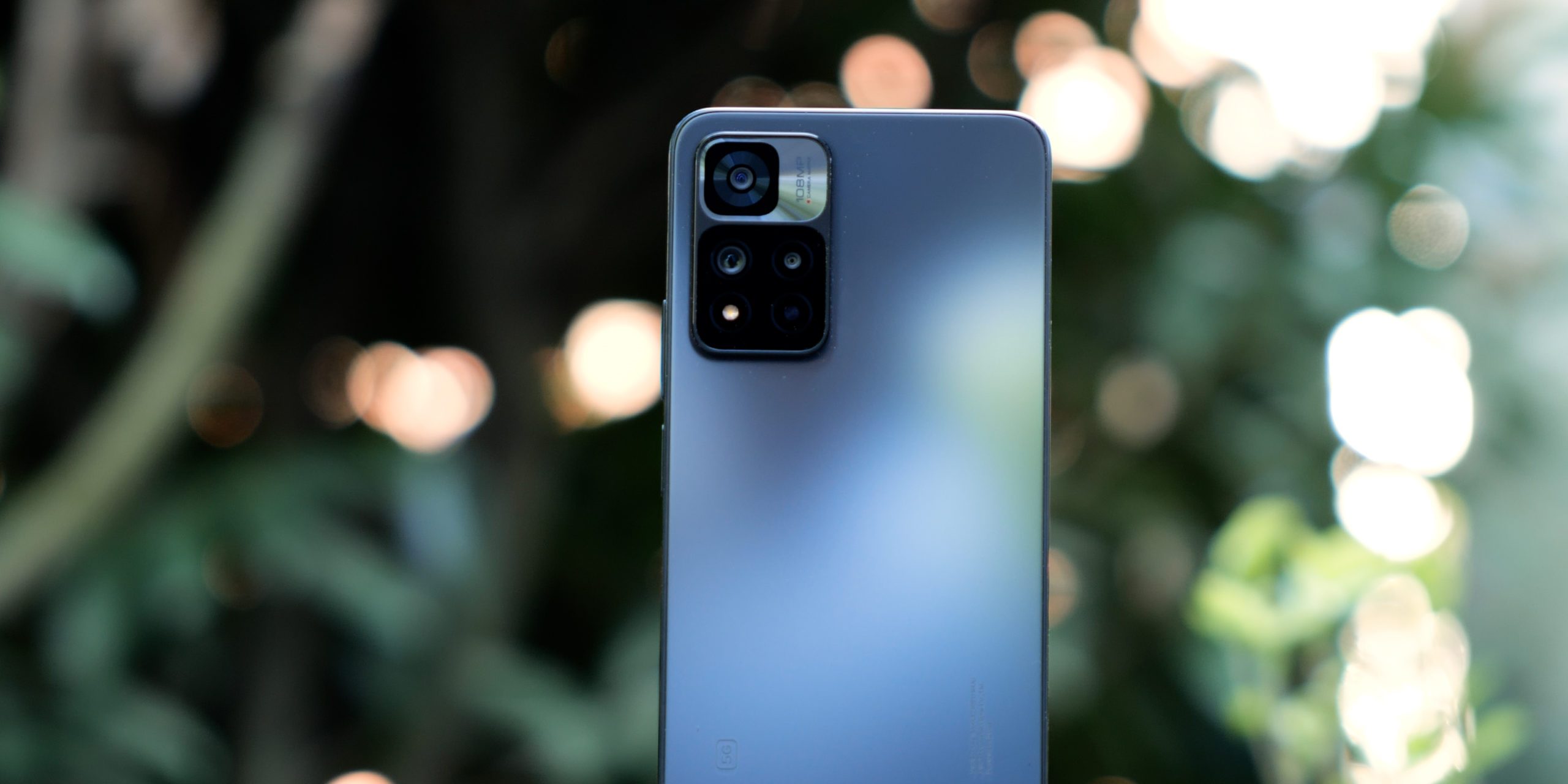
The frames in the Redmi Note 11 series are all completely flattened for the first time for Xiaomi, while the back is just a flat piece of glass, which, like the iPhone, was not rounded off to the sides. This makes for a chunkier feel.
When you hear Redmi Note, you probably won't associate the smartphone with the word "compact". That's right, because the design and dimensions actually make it feel like a very large smartphone with a correspondingly large display area.
Display & consumer experience: Outstandingly good
The consumer experience consisting of a screen, loudspeaker and vibration motor has rightly become a specialty for Xiaomi smartphones in recent years. This also continues in the low price range, for example with the Redmi Note 11 Pro Plus.
Two symmetrical loudspeaker units, supported by JBL, ensure an excellent, differentiated sound. It is probably the smartphone under 500 euros with the best speakers, some of which can even keep up with much more expensive smartphones, even if you have, for example Xiaomi 12X hear a difference. But regardless of whether you are listening to loud music on the go or watching a short video in the office, this loudspeaker system will convince you.
In comparison, the screen is much less surprising, but of course it is also an AMOLED with a high refresh rate, as has become common for this price range. The material is a Samsung E2 Pro, but it also shows the typical weaknesses of a non-flexible display: rainbow-colored discoloration when viewed from the side. Overall, you can still say that it is good for the price asked, ultimately you will not find a better choice and compared to the Google Pixel 6 I see no difference.
The side fingerprint sensor on Xiaomi is a good way to place it. It keeps the beautiful look of the back while still being practical enough. You only have to place your finger once and you are in the software.

Fingerprint sensor on the side (Image: TechnikNews)
Xiaomi hasn't even forgotten about the X-axis vibration motor, which can provide pleasant haptic feedback supporting the lively MIUI user interface.
Redmi Note 11 Pro Plus: User experience & software
The processor is an interesting choice this year, namely the MediaTek Dimensity 920. With around 470 thousand points in the Antutu benchmark, it is positioned slightly below a Snapdragon 780G and is therefore in the lower range when compared to mid-range processors. Of course, I don't associate the smartphone with playing complex 3D games, such as the newly advertised "Genshin Impact", but it is still powerful enough to ensure good everyday performance. Jerks and crashes are rarely seen in the MIUI software, which makes the user experience good and in the long term definitely better than with the Snapdragon 695 of its little brother.
The processor's weak performance, however, means that there are a few small limitations in the MIUI software, which cannot quite reach its full potential. For example, the blurred background has been removed in some interfaces, animations when closing apps have lost their second level and are not as dynamic overall, and movements such as in the weather app are also less lively.
But there are no restrictions in terms of functionality, all features are there as they should be. Unfortunately, a similar problem has to be noted here as with the Xiaomi 12X, namely that the Redmi Note 11 Pro Plus still starts with MIUI 12.5 Enhanced and Android 11 and to date, as of the end of April, there is still no update to MIUI 13. Hopefully Xiaomi will soon be able to expand their range of devices with the guarantee of three Android updates, which would increase the competitiveness of this smartphone many times over.
120W charging: the ultimate feature
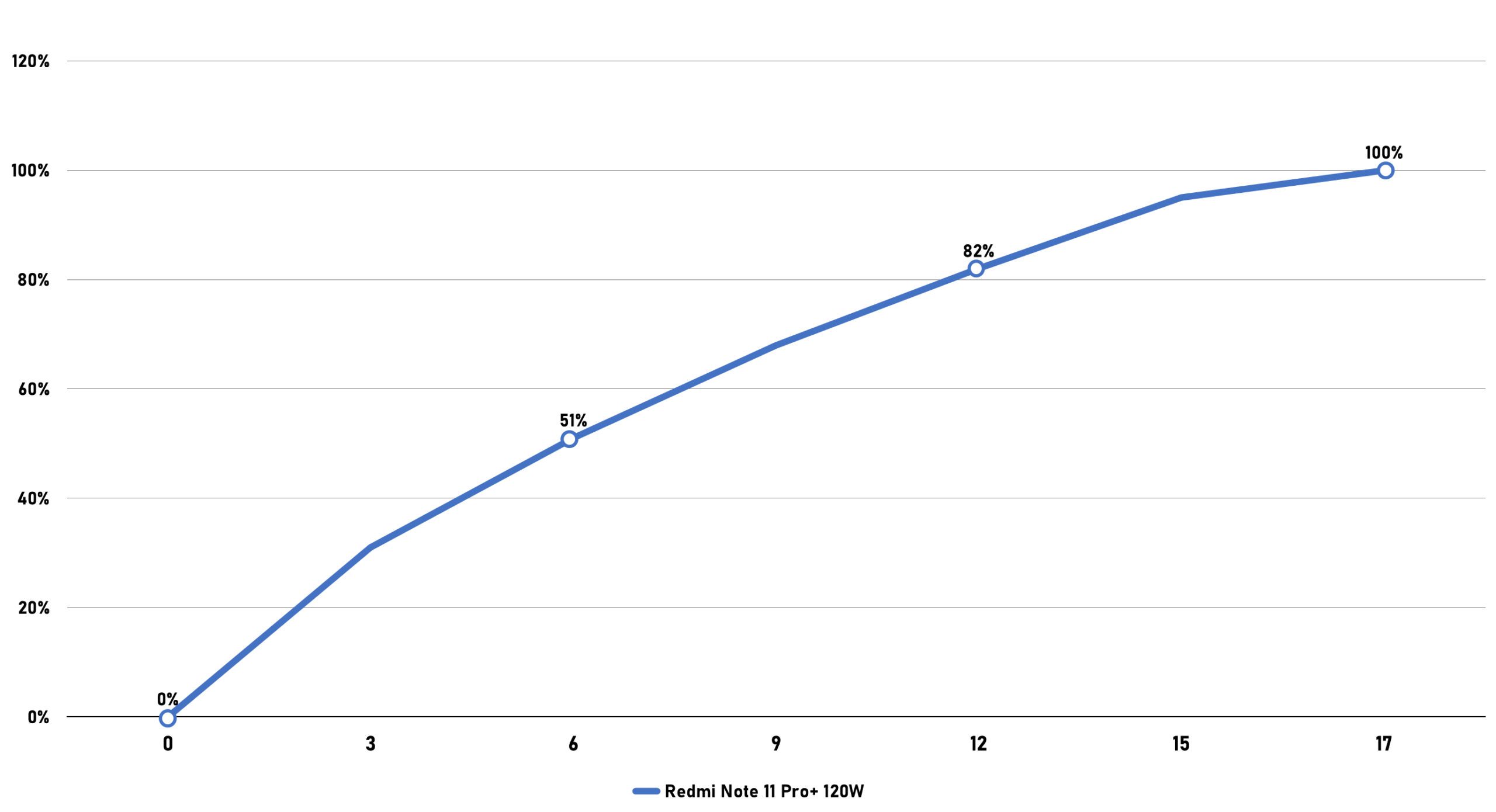
If the smartphone has "Plus" in its name, then it must have something special to offer. In this case, it is charging at a speed of 120 watts. According to real-world testing, the Redmi Note 11 Pro Plus needs around 17 minutes to fully charge from 0 to 100 percent with the included power adapter, with the battery being almost half full in five minutes. This speed gives the user a pleasant sense of security in everyday life, namely that the percentage at the top doesn't really matter, since you can fully charge it again in just a few minutes anyway.
Picture: TechnikNews
One argument against fast speeds has always been battery health. However, according to the manufacturer's official information, the Redmi Note 11 Pro Plus still has 800 percent of its full capacity after 80 charging cycles, i.e. two years of daily fast charging. In my opinion, this is very usable, as you don't have to use the maximum speed every time. If you have a slow power adapter at your desk, for example, you can just leave the smartphone there and save the battery, but in emergency situations, fast charging can be worth its weight in gold.
Camera system: Unfortunately very disappointing
The component in last year's Notes redmi 10 Pro The camera system is definitely what stuck in my mind the most, because with a 108 megapixel sensor in the price range of less than 300 euros, they undoubtedly delivered a very good image quality. This year, the Redmi still relies on the same sensor, but the image processing should have evolved.
The problem with this fact is that we are already Xiaomi 11t last year, we found that image processing with MediaTek processors, which in a smartphone contain not only processor, graphics card, but also image processingprocessors included, is significantly more immature.
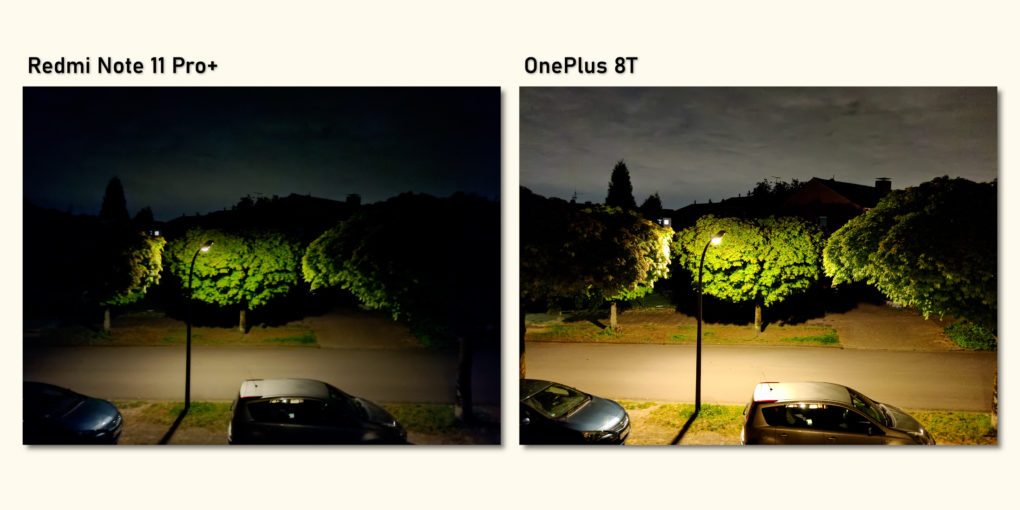
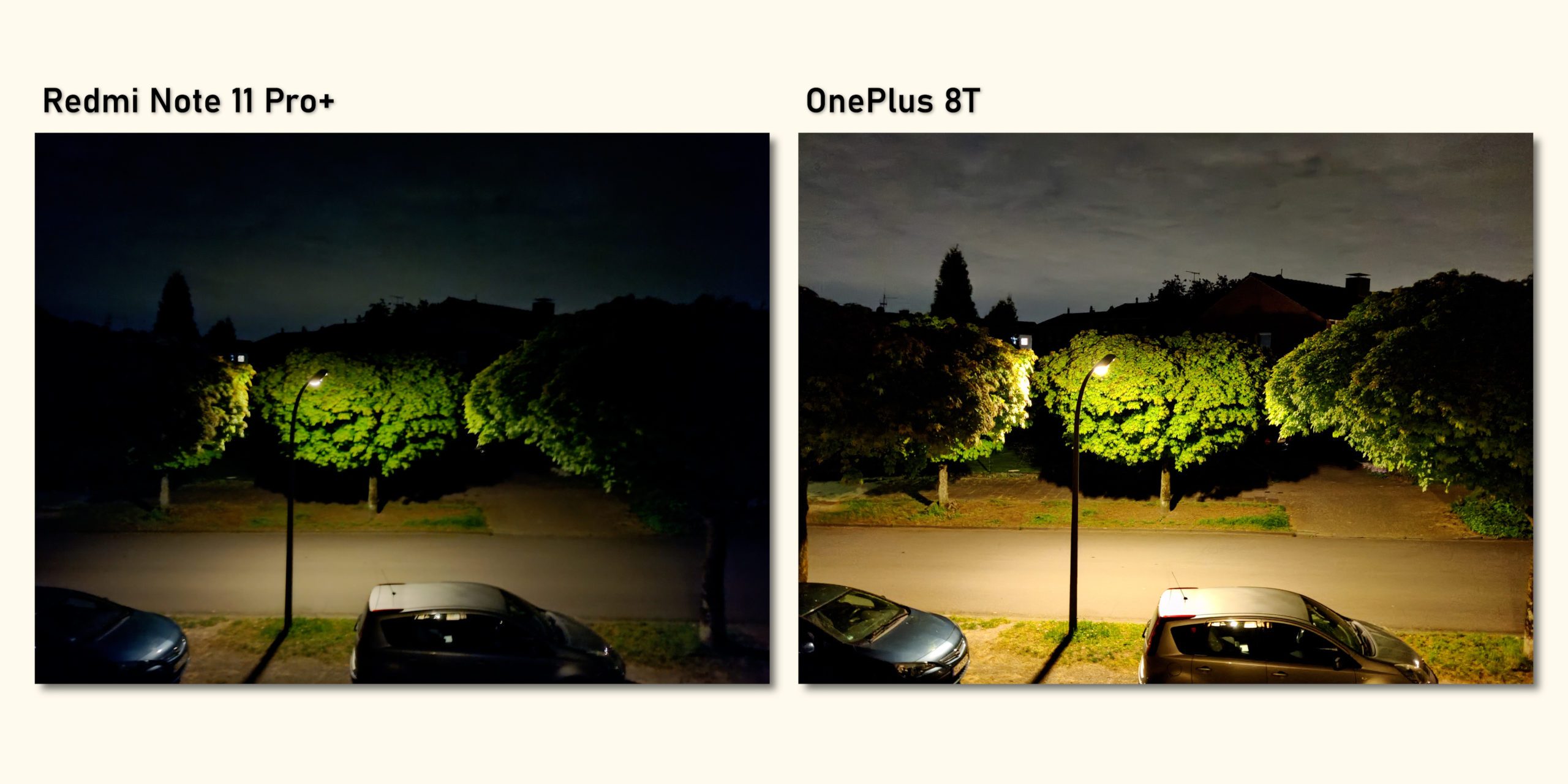
Unfortunately, this is also reflected in the Redmi Note 11 Pro Plus, the results are actually worse than those of the Redmi Note 10 Pro last year, and even a Redmi Note 11S 5G with a sensor that is more than twice as small manages to deliver similarly good results. The problem is very similar to the 11T, images at night are often too dark and lack details, while the results during the day are often oversaturated.
-

- Picture: TechnikNews

-
- Picture: TechnikNews
-

- Picture: TechnikNews

Another step backwards compared to other Xiaomi smartphones is the telemacro camera. Unfortunately, in the Redmi Note 11 Pro Plus it has been replaced by a miserable 2 megapixel macro camera, which you can basically imagine not having. Again, you have to get very close to the subject to get a rather poor quality image.
Overall, the camera system of the Redmi Note 11 Pro Plus is very disappointing, especially because my expectations were very high due to the very good hardware and good results of the Redmi Note 10 Pro. Those who place more value on a good main camera will probably be more satisfied with the Realme 9 Plus be, and it would have to be at least at the level of a Poco F3 for currently 230 euros, so that one can say that it is not a point of criticism.
Redmi Note 11 Pro Plus: Conclusion
The Redmi Note 11 Pro Plus, with a price of 379 euros, faces many strong competitors such as the OnePlus North 2, but for significantly less money there is also a Poco F3 from the same company. However, if you compare the real behavior, you will see that, apart from the fast charging, you have to give up many other relevant specifications. So this year with the Redmi Note 11 Pro Plus I would wait until the price has dropped to around 300 euros, like last year, before you can really snap it up. Compared to the Redmi Note 10 Pro, you get a pretty complete upgrade, unlike with the Redmi "regular" Note 11 Pro 5G or 4G.
As the successor to the surprising Redmi Note 10 Pro, this year's Note 11 series again aims to impress with a stable overall package. With a processor that is more powerful on paper, it retains the advantages of its predecessor, such as the large battery, while at the same time justifying the price increase to the Pro Plus with fast charging. But even though the Pro models in the Note series at Redmi have always performed consistently well, this year's lineup has become much too confusing due to too many models. On the official Xiaomi website, the Note 11 Pro Plus costs only 10 euros more than the Note 11 Pro 5G, which is weaker in every respect, with the same memory configuration. So the Pro Plus is obviously the most worthwhile model in the lineup.
We would like to thank Xiaomi Germany for providing the Redmi Note 11 Pro Plus!