
Volvo XC90 Plug-in Hybrid (2026) review: The flagship impresses
A TEST REPORT from Kasimir Hupe  on February 02, 2026, 11:01 p.m. | Write a comment
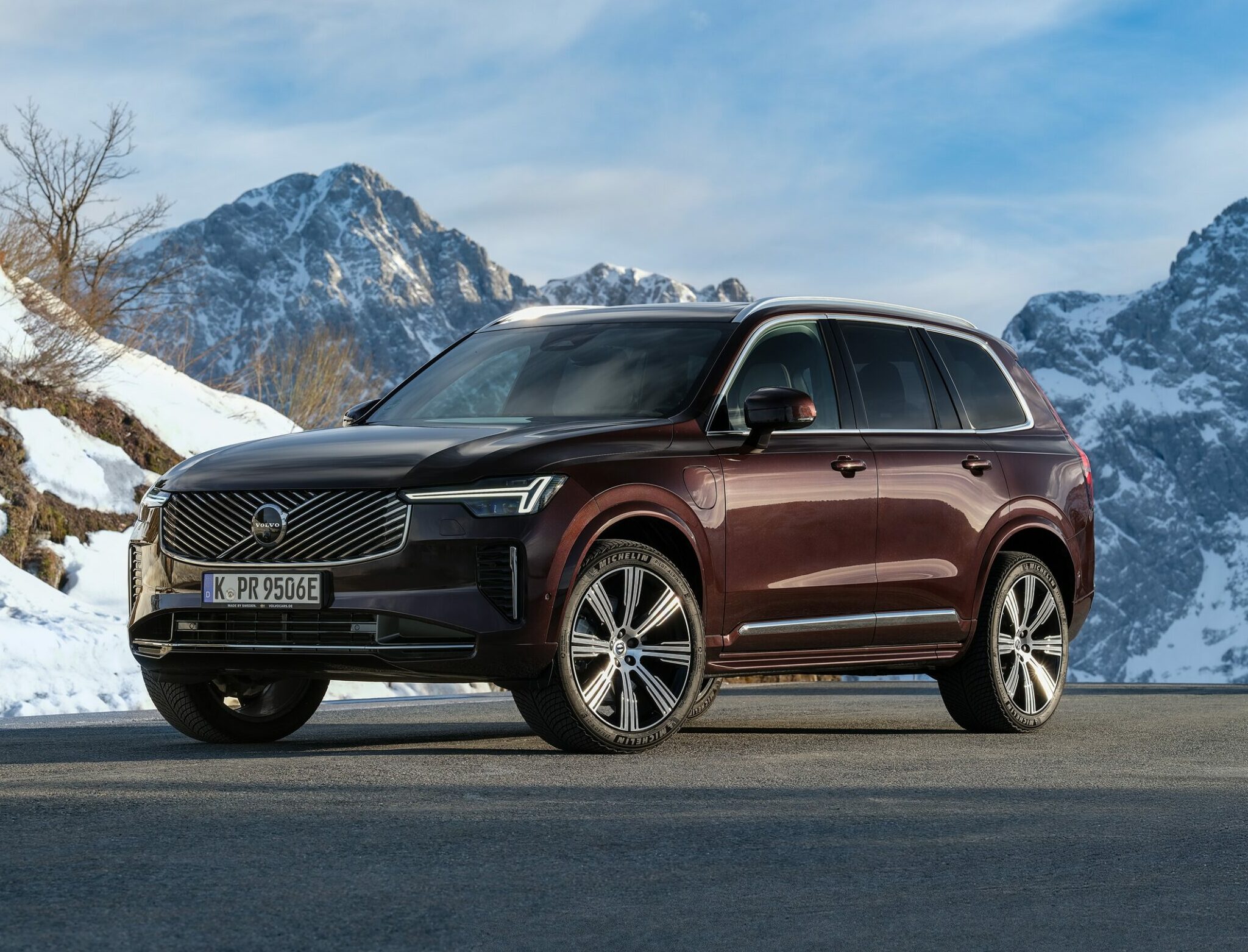
The Volvo XC90 has stood for Swedish premium values in the SUV segment for over two decades. With its comprehensive facelift for the 2025 model year, however, the seven-seater proves that it's far from obsolete. We have the plug-in hybrid variant Extensively tested with 455 hp system output and seven seats.
The Volvo XC90 is more than just a large SUV; it's an icon. It premiered in 2002 and definitively established Volvo in the premium SUV segment. With the second generation debuting in 2015, the Swedes ushered in a new era. The XC90 was the first model based on the Scalable Product Architecture (SPA) and marked the beginning of a consistent electrification strategy. Now, in the 2026 model year, the premium SUV, following its initial facelift in 2019, presents itself with a comprehensive second facelift. This update not only visually but also technologically bridges the gap to Volvo's all-electric models.
We extensively tested the Volvo XC90 Plug-in Hybrid T8 AWD in the "Ultra" trim level during the cold winter months and compared it to the competition in this test report: the BMW X5 xDrive50e, the Chinese GWM Wey 05 Luxury and the Audi Q7 3.0 TFSI e. In a market that is increasingly focused on electrification, the Swede has to prove himself – against established German premium rivals as well as new challengers from the Far East.
Conclusion (tl;dr) on the Volvo XC90 Plug-In Hybrid: Flagship status well-deserved.
The Volvo XC90 T8 Ultra AWD is an impressive overall package, combining Scandinavian design, the highest safety standards, luxurious comfort, and modern drive technology. The facelift breathes new life into the now ten-year-old model generation and bridges the gap to the brand's electric models. Particularly compelling are its distinctive appearance, the spacious and high-quality interior, the exemplary amount of room with seven full-size seats, the comprehensive safety features, and the successful plug-in hybrid technology. The intuitive Android infotainment system and the outstanding Bowers & Wilkins sound system further underscore its premium aspirations.
Less appealing are the lack of DC charging capability, the limited all-electric range, and the somewhat sluggish heating in sub-zero temperatures. In comparison to its competitors, the XC90 excels in safety, spaciousness, and comfort. The BMW X5 xDrive50e offers more dynamic driving characteristics and a sportier feel, the Audi Q7 TFSI e impresses with its technical sophistication, and the BMW Wey 05 stands out with its electric range and low price.
The Swedish flagship scores points overall with its balanced design, Scandinavian charm, and a philosophy that puts people first. Anyone looking for a large, comfortable, and safe premium SUV with a plug-in hybrid drive and seven seats, and who values minimalist yet elegant design, will find the Volvo XC90 a compelling companion.
Strengths and weaknesses of the Volvo XC90 Plug-in Hybrid:
✅ Strengths:
- Distinctive, timeless design
- Spacious, high-quality interior with excellent workmanship
- Seven seats with good variability
- Exemplary, comprehensive safety equipment
- Powerful 455 hp plug-in hybrid drive with superior driving performance
- One-pedal driving possible
- Excellent Bowers & Wilkins sound system with 1.410 watts
- Intuitive Android infotainment system with Google integration
- High comfort thanks to air suspension and excellent noise insulation
❌ Weaknesses:
- No DC fast charging capability
- Only 180 km/h top speed
- Higher fuel consumption when the battery is discharged (9,5-11 liters)
- Steering could offer more direct feedback
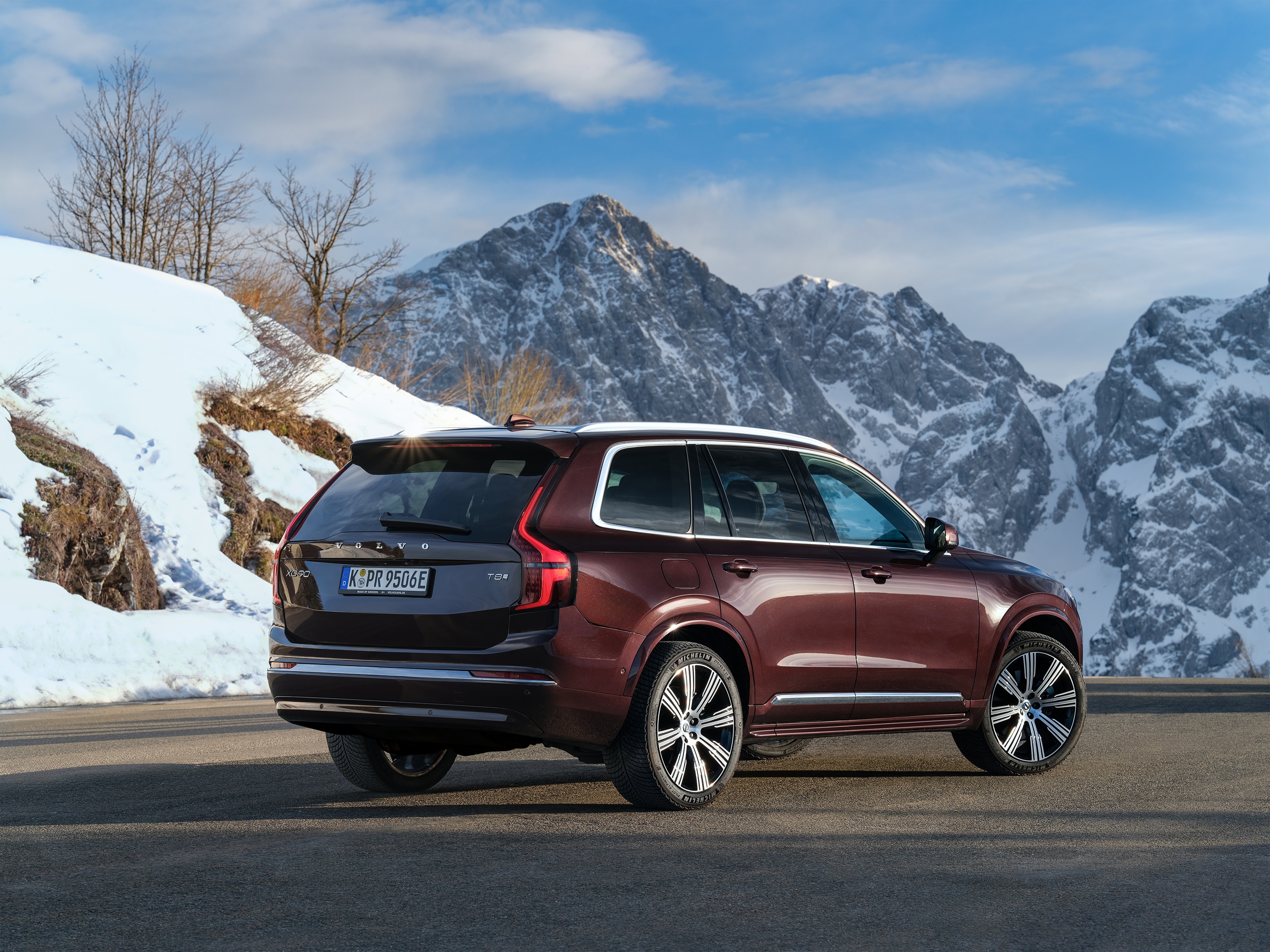 Image: Volvo Germany
Design and exterior of the Volvo XC90 Plug-In Hybrid:
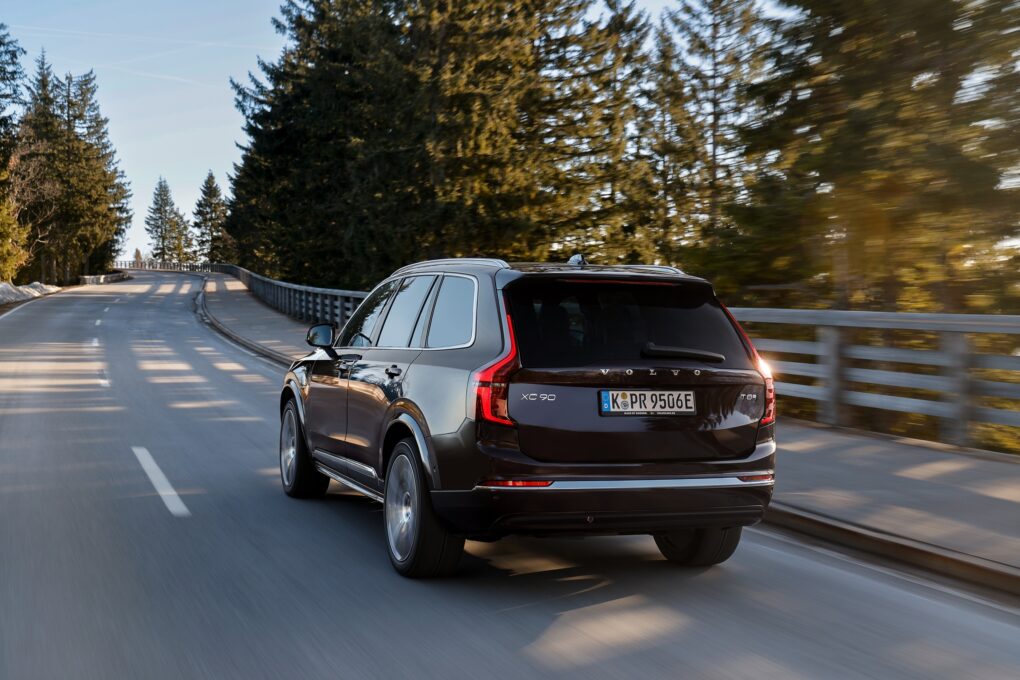
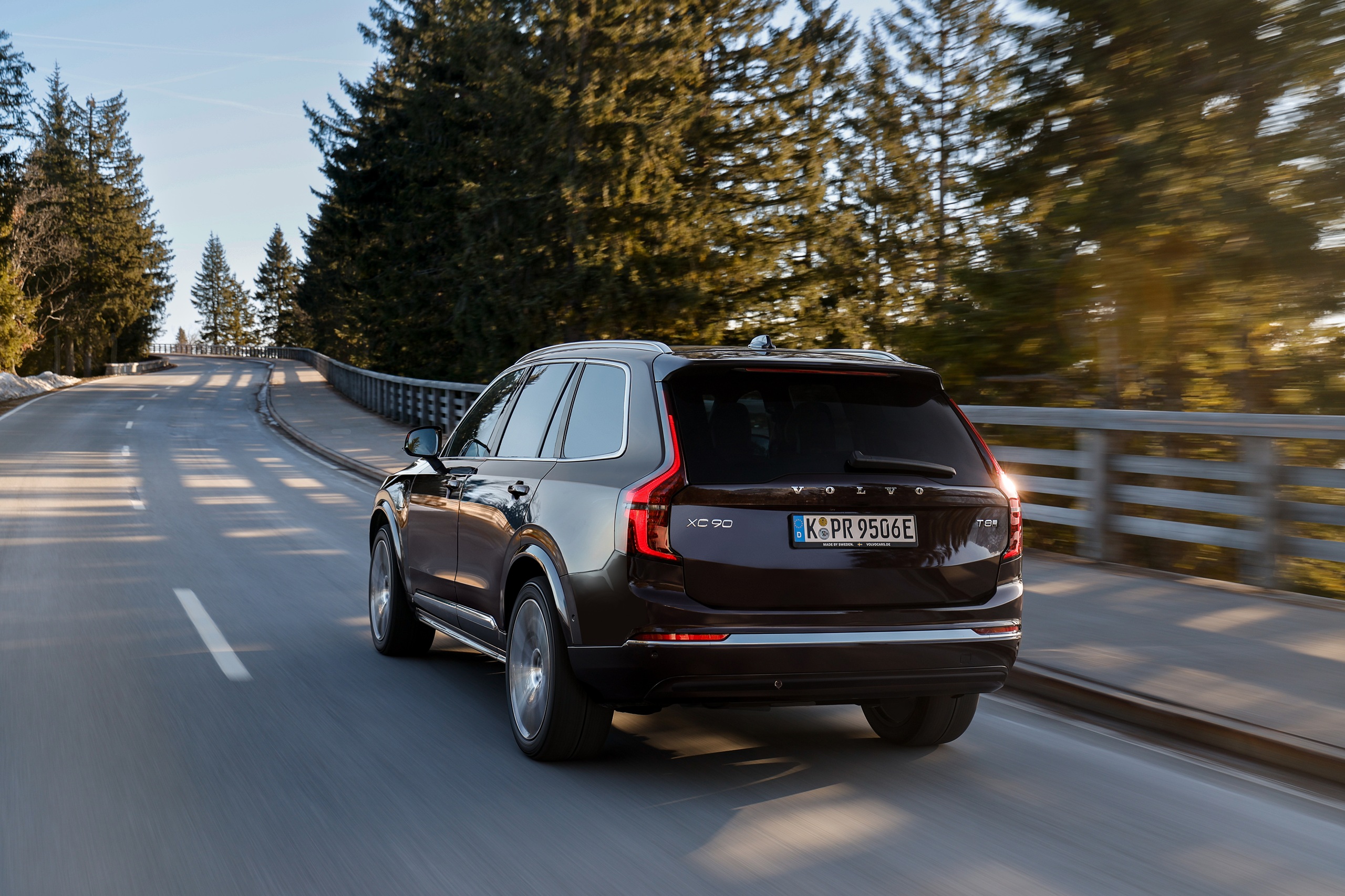
The new XC90 presents itself with more confidence than ever. The redesigned front end is particularly striking, clearly drawing inspiration from the design language of Volvo's all-electric models like the EX90. The grille features a more graphic pattern, with diagonally opposing inserts replacing the classic waterfall design. In the Ultra trim level tested, the frame and inserts are chrome-plated, lending the 4,95-meter-long Swedish SUV a particularly luxurious touch. The characteristic “Thor’s Hammer” light motif The LED daytime running lights have been retained and combined with new matrix LED headlights consisting of 15 individual segments. The headlights now extend more slenderly into the grille, giving the XC90 a bright, modern look. The matrix LED technology is particularly impressive: individual segments can be selectively deactivated to avoid dazzling oncoming traffic while ensuring optimal illumination of the road.
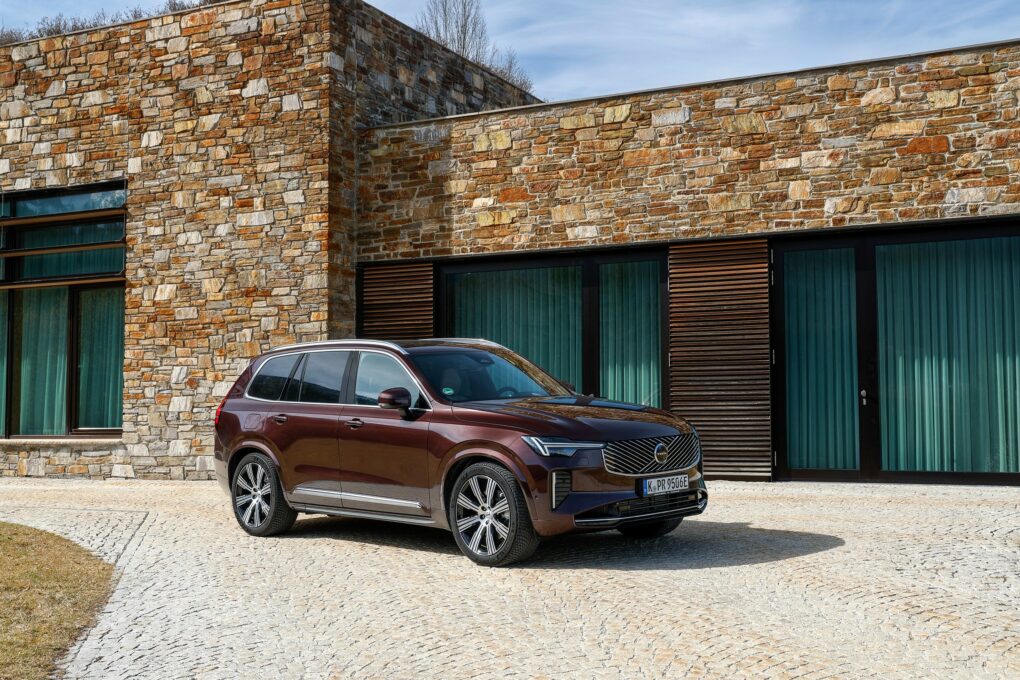
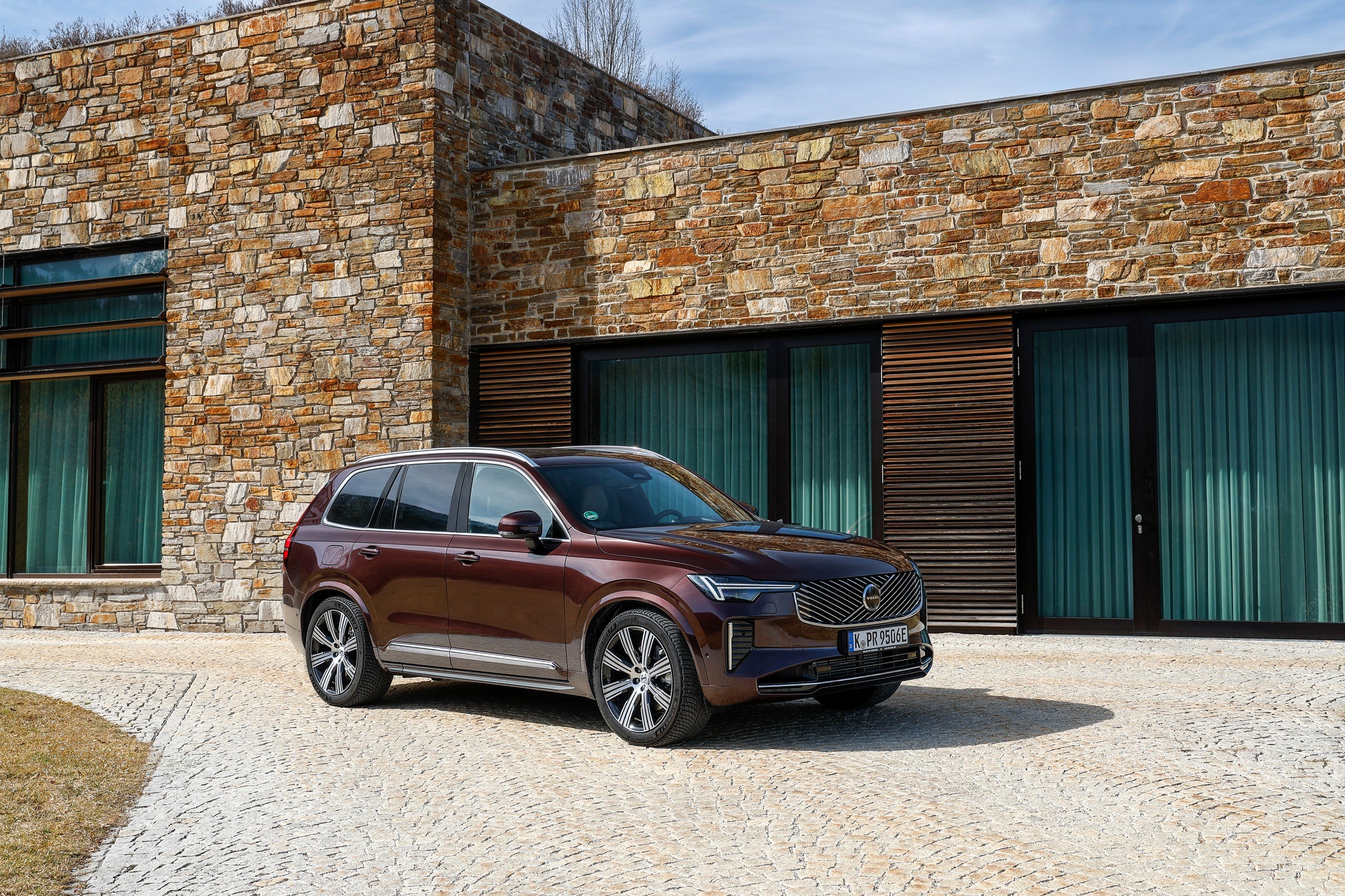
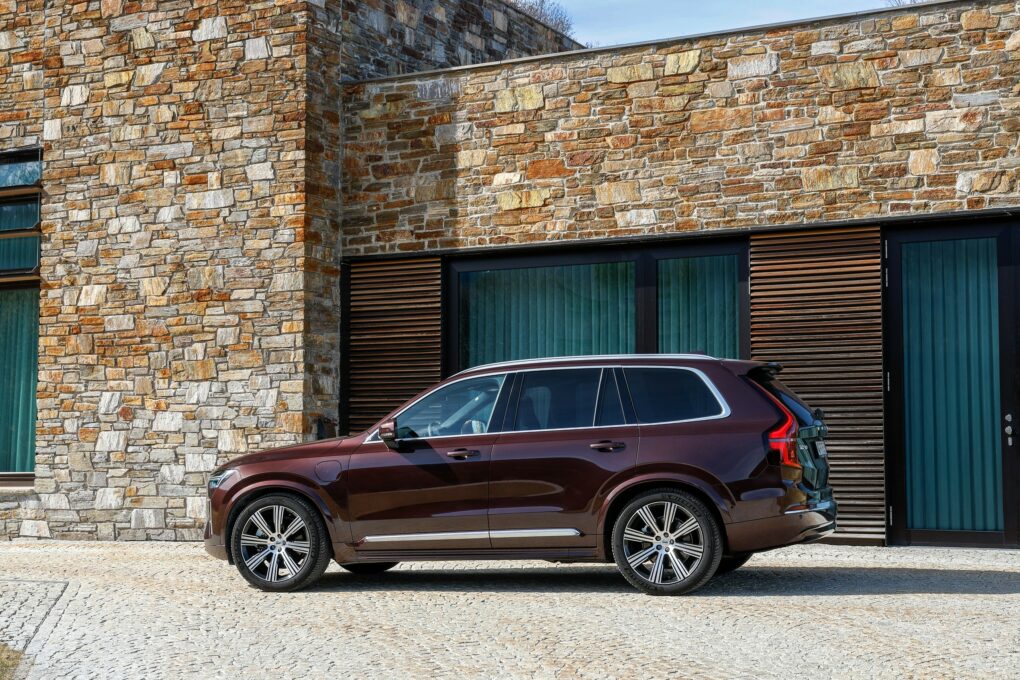
Our test vehicle was finished in the exclusive Mulberry Red paint. This new color, inspired by the autumnal hues of Scandinavia, gives the XC90 an exceptional presence. Depending on the light, the color shifts between a deep red and a warm burgundy tone, perfectly accentuating the sculpted lines of the body. Compared to its competitors, the XC90 appears less muscular, yet undeniably confident. It doesn't have the futuristic look of some other new SUVs, but it scores points with its elegance and timeless design. The distinctive line spanning the entire side, the generous window area, and the integrated aluminum roof rails emphasize the SUV character in the Bright trim level, without compromising its sporty appeal. proto appear stylish. The harmonious overall look is rounded off by the 22-inch diamond-cut alloy wheels.
-
- Image: Volvo Germany
-
- Image: Volvo Germany
Space: First-class
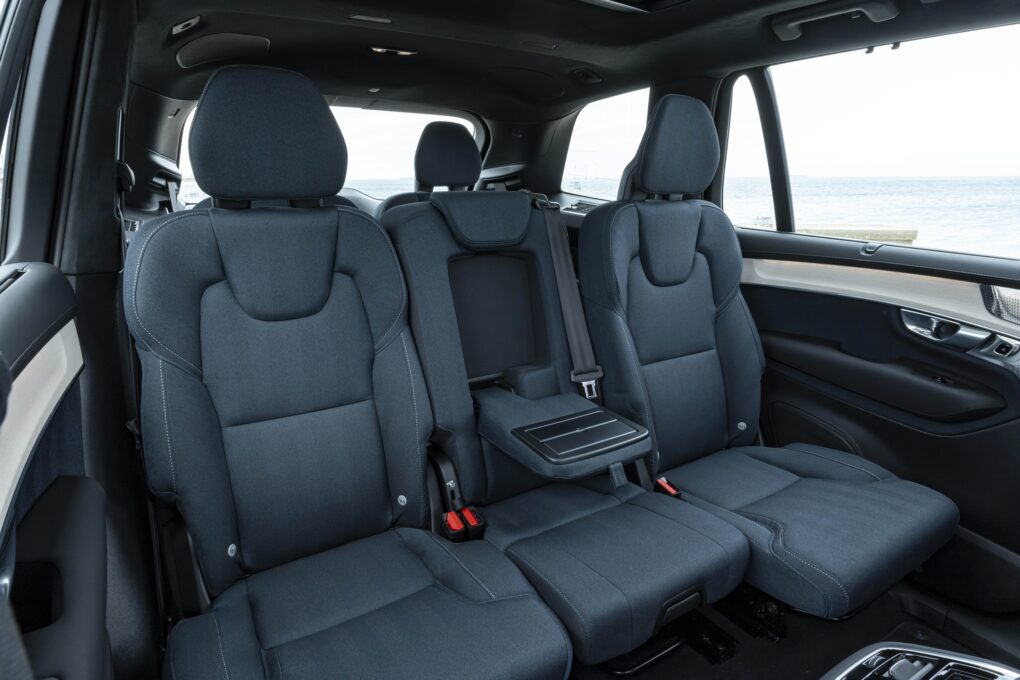
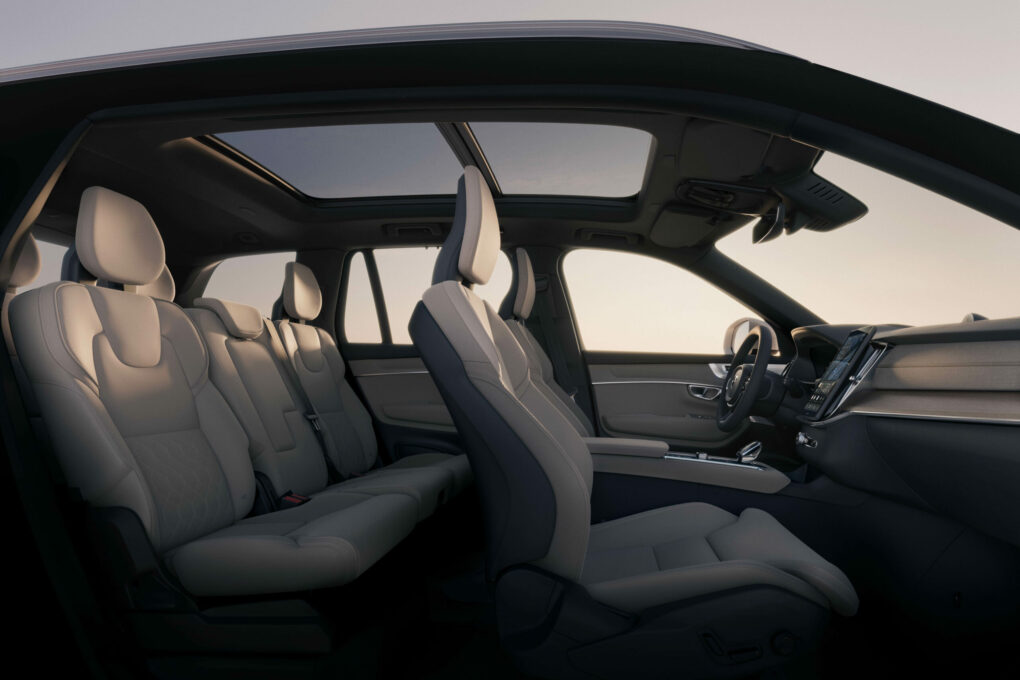
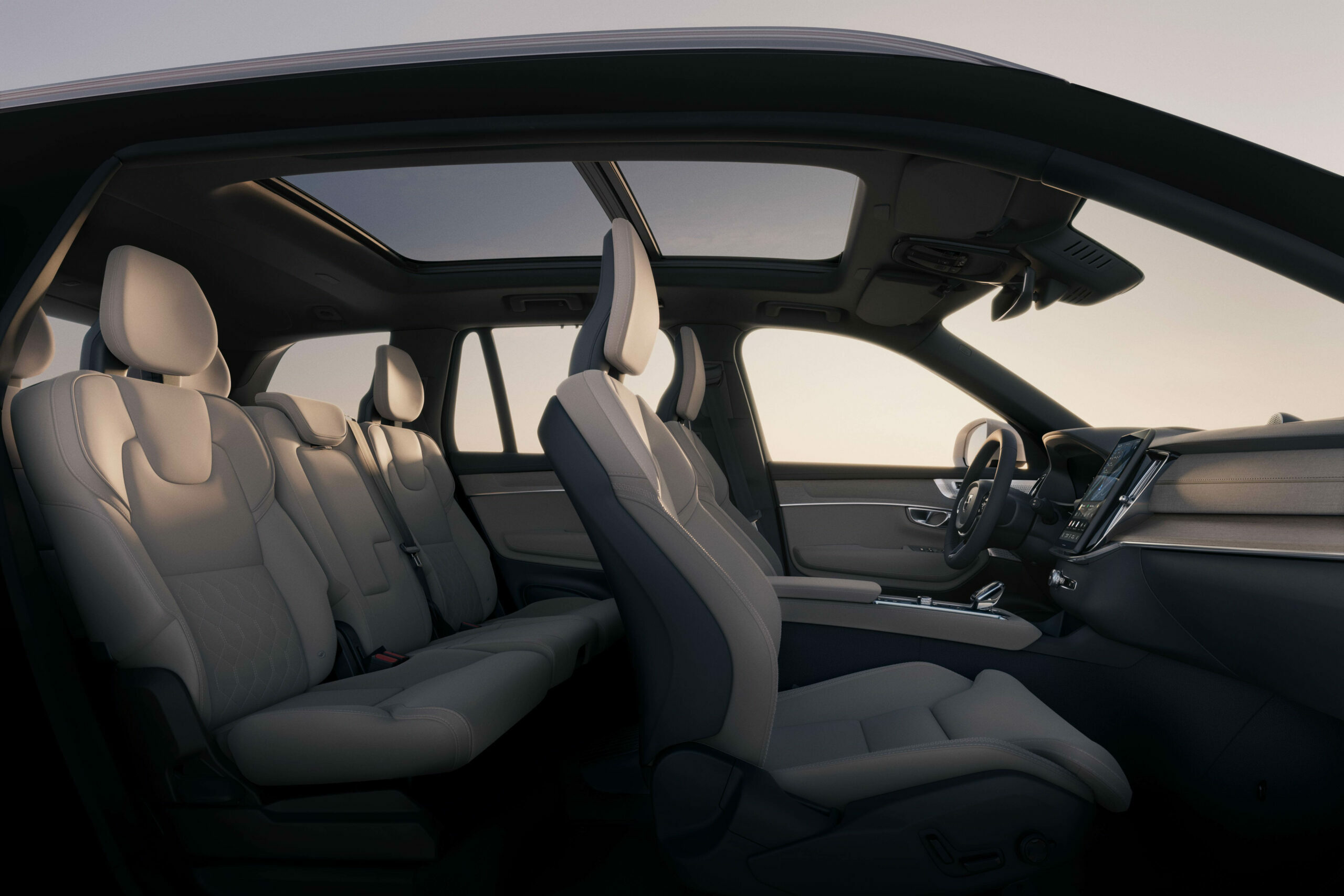
This is where the XC90 demonstrates one of its greatest strengths. The premium SUV offers seven seats in three rows as standard, which is not a given in this class. The front axle, positioned far forward on the SPA architecture Based on this platform, it allows for a long wheelbase of 2,98 meters. This translates directly into generous interior space. Even people over two meters tall will find comfortable seating in the front row. The seats offer a wide range of adjustment in both length and depth, as well as numerous electric adjustment options. The second row is also extremely spacious. The three individual seats can be moved independently lengthwise to customize legroom. A clever detail is the electrically folding headrests in the second row, controlled via touchscreen, which expand the rearward field of vision when the seats are unoccupied.
With approximately 94 centimeters of legroom, the XC90 is on par with the BMW X5 and slightly surpasses the Audi Q7. The third row of seats is more generously sized than in many competitors. Passengers up to 170 centimeters tall will find genuinely usable space here. The seats are staggered and slope upwards towards the rear, allowing for a comfortable seating position. The footwell under the second-row seats provides additional comfort. By comparison, the BMW X5 also offers seven seats as an option, but the third row is really only suitable for children. The Audi Q7 offers similar legroom in the third row to the Volvo, while the BMW X05 does not offer a seven-seat option.
-
- Image: Volvo Germany
-
- Image: Volvo Germany
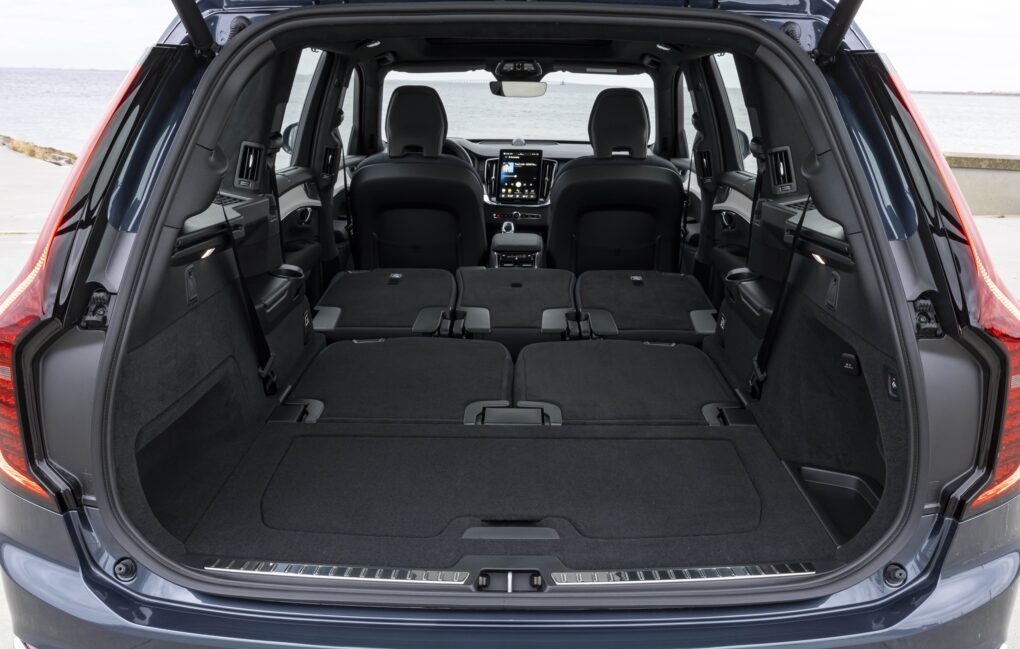
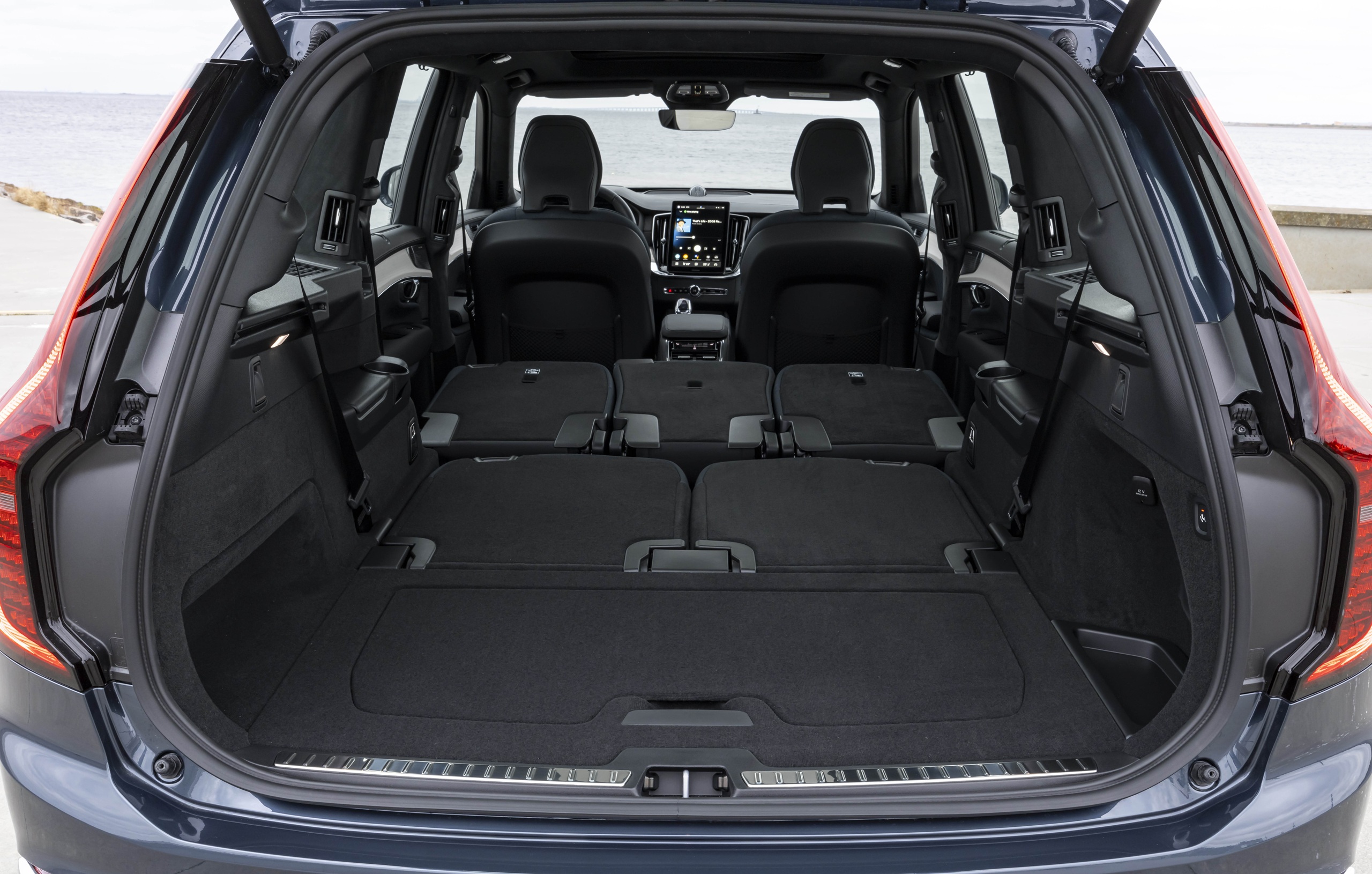
Trunk: Practical volume
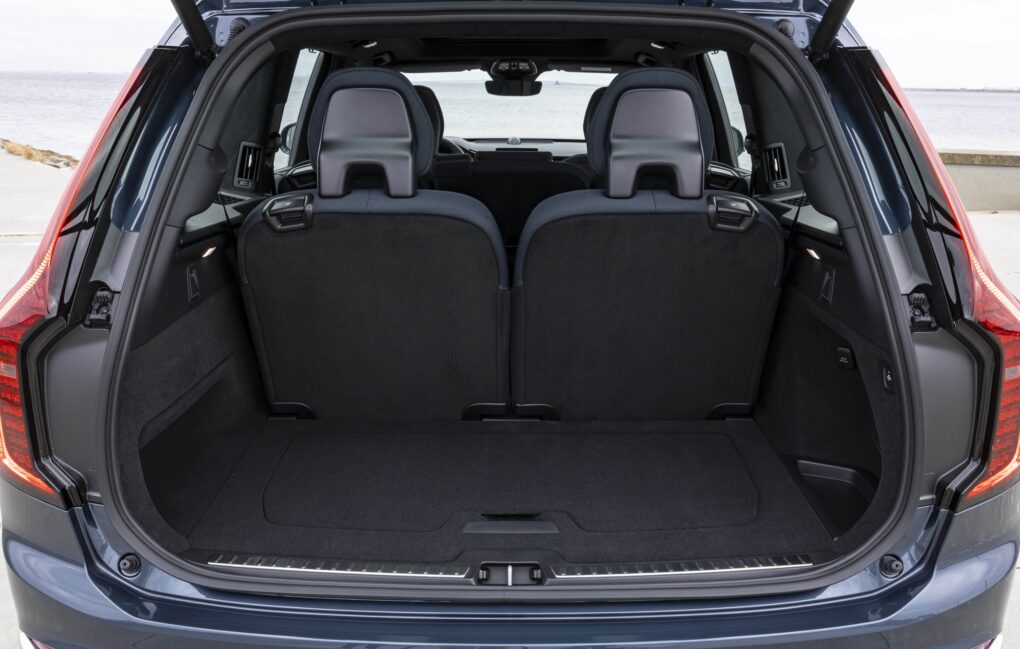
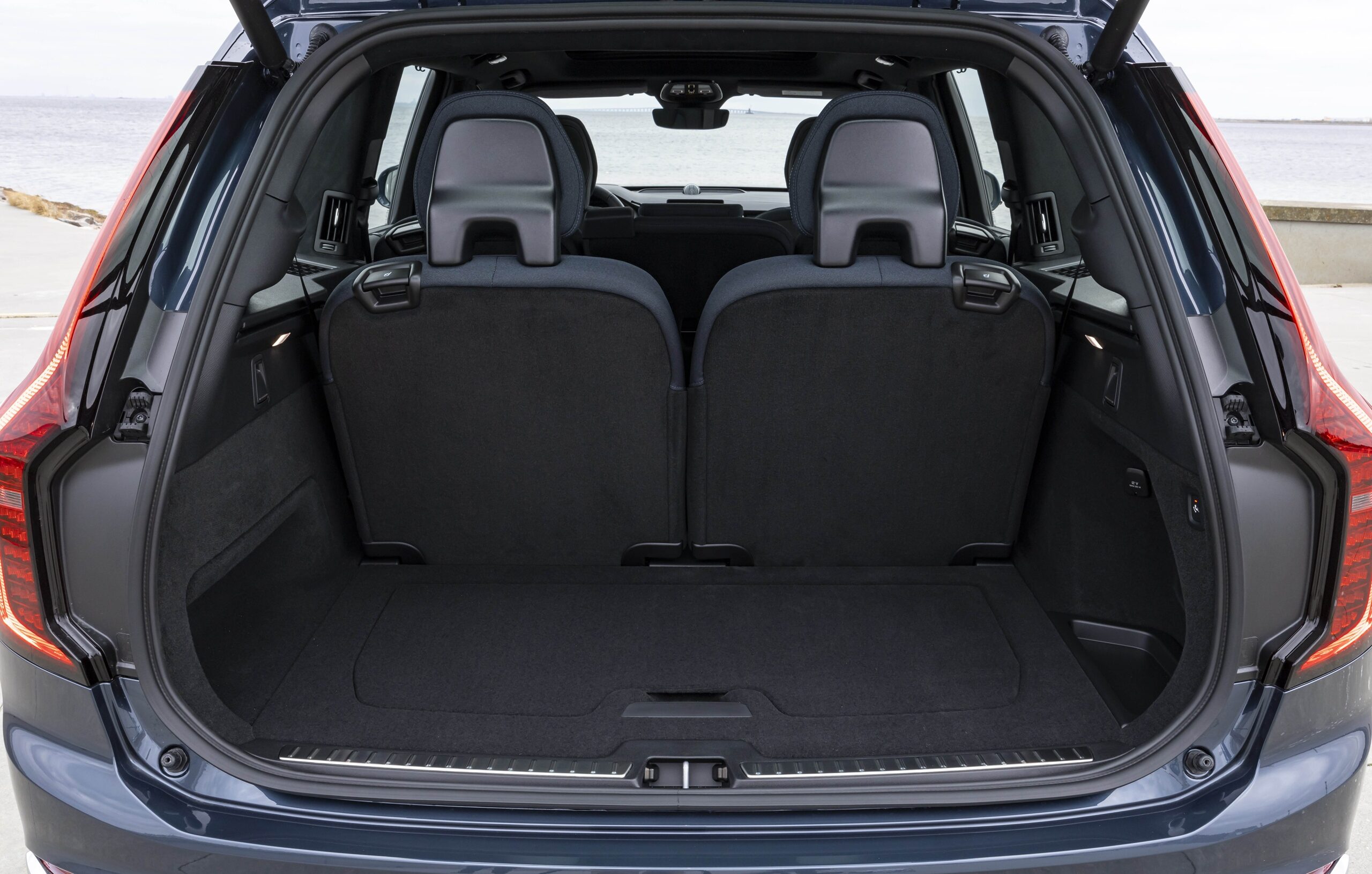
The typical characteristics of the car are evident in the boot capacity.proThe cargo space of a plug-in hybrid with a seven-seater configuration is measured. With all seats in place, there are 262 liters of cargo volume, which is sufficient for shopping but not particularly generous. Folding down the third row of seats increases the volume to Practical 640 liters. Folding down the second row of seats creates a nearly flat loading area with an impressive 1.816 liters of capacity. For comparison, the BMW X5 xDrive50e and the GWM Wey 05 offer only 500 liters in their five-seater configuration, while the Audi Q7 TFSI e manages 563 liters.
The load compartment width between the wheel arches is 113 centimeters. The electrically operated tailgate with sensor-controlled opening function also makes loading and unloading considerably easier. The additional 145-liter compartment in the trunk floor is also practical, providing storage for valuables or the Type 2 charging cable. With the optional air suspension, the rear can be lowered by four centimeters. This is very helpful when loading or hitching a trailer (maximum 2.400 kg for the plug-in hybrid).
-
- Image: Volvo Germany
-
- Image: Volvo Germany
Driver assistance systems of the Volvo XC90 Plug-In Hybrid:
Volvo has traditionally been a pioneer in safety and driver assistance systems. The XC90 impressively underlines this claim. Advanced Driver Assistance Systems (ADAS)A sensor platform with a front camera, radar sensors, and ultrasonic sensors forms the basis for a comprehensive suite of driver assistance systems. The automatic emergency braking system detects vehicles, motorcycles, cyclists, pedestrians, and even large animals such as deer or wild boar, day and night, and operates at speeds as low as 4 km/h. If a collision is imminent and the driver fails to react, the system initiates emergency braking. The intersection braking assistant prevents collisions with oncoming traffic when turning left. Another function mitigates collisions with oncoming vehicles that veer into the driver's lane while overtaking.
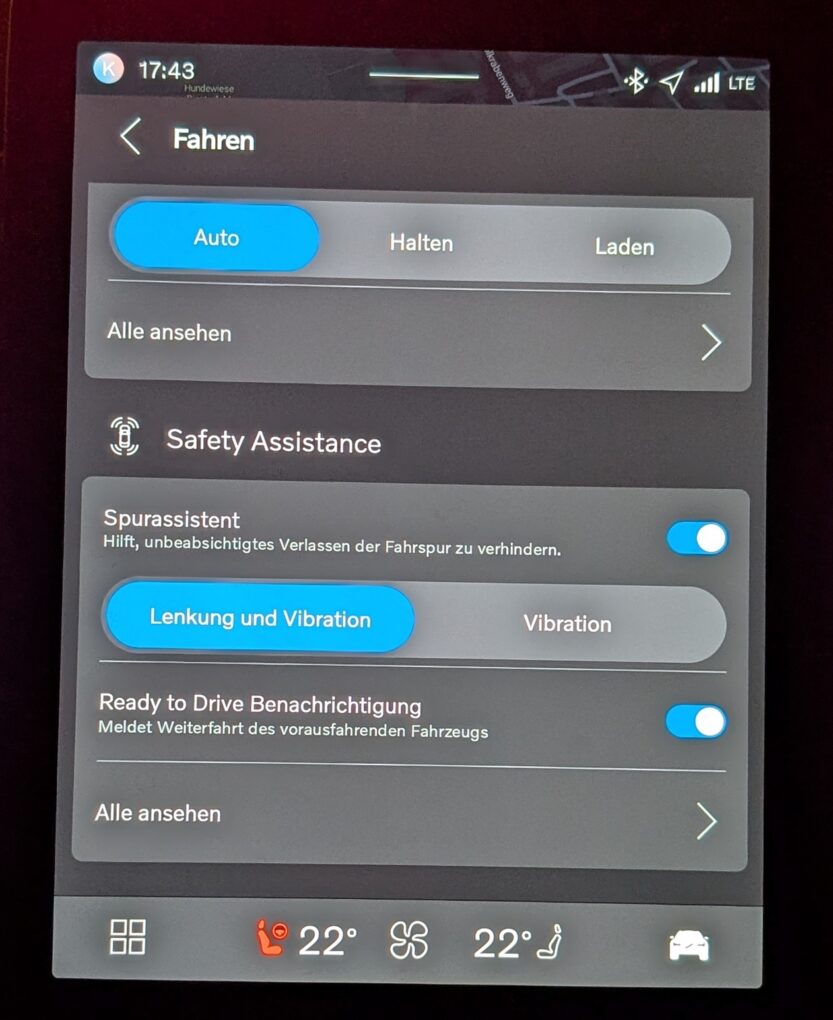
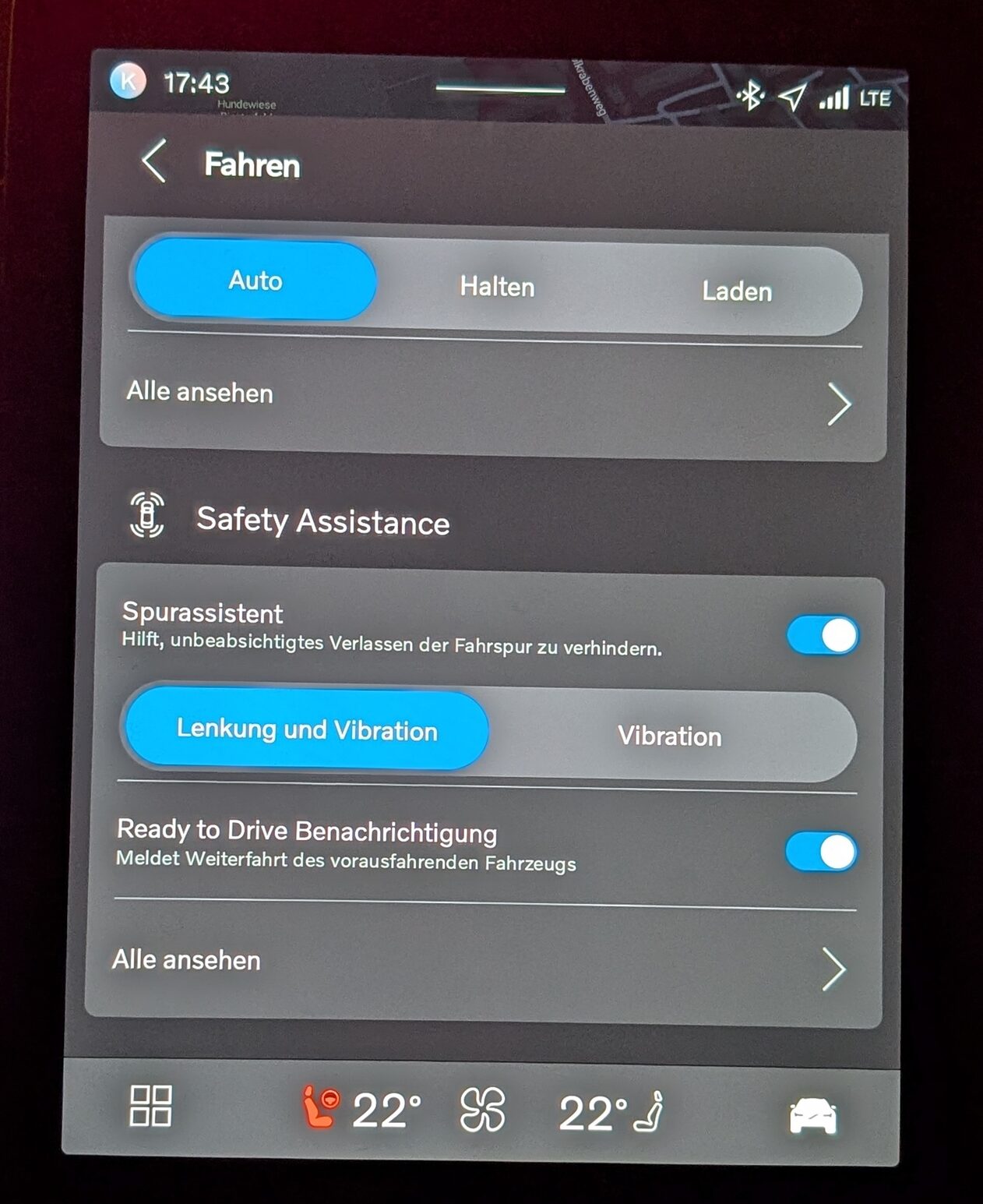
The "Oncoming Lane Mitigation" intervenes between 60 and 140 km/h when the vehicle crosses the center line and oncoming traffic is imminent: Active steering input guides the XC90 back into the correct lane. "Road Edge Detection" prevents unintentional lane departures through gentle steering and braking interventions. The Run-off Road Protection is particularly innovative: If the vehicle leaves the road, it proactively tightens the seatbelts and activates energy-absorbing elements in the seats to prevent spinal injuries. The BLIS (Blind Spot Information System) with Lane Change Merge Aid also monitors up to 70 meters behind the vehicle and warns of vehicles in the blind spot. If the warning is ignored, active steering intervention occurs. The Cross Traffic Alert with emergency braking function reliably detects cross traffic within a radius of up to 30 meters when reversing.
Cloud-based systems also warn of slippery roads and hazards by exchanging information with other nearby Volvo vehicles. Traffic sign recognition additionally uses Google Maps navigation data to improve accuracy. Compared to its German competitors, Volvo is at least on par and in some areas, such as animal detection and run-off-road protection, even superior. The GWM Wey 05 also offers comprehensive driver assistance systems, but it cannot quite match their level of sophistication.
- Picture: TechnikNews
Autonomous driving: Pilot Assist impresses
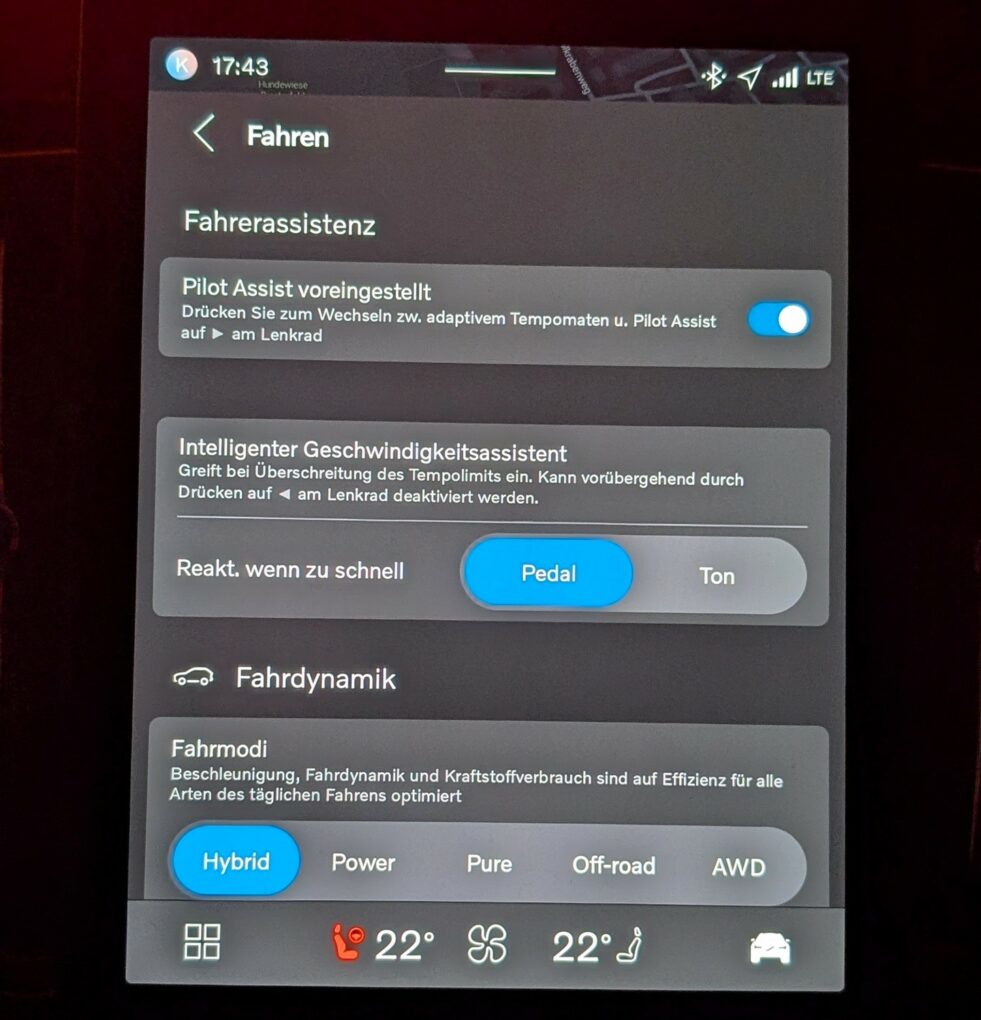
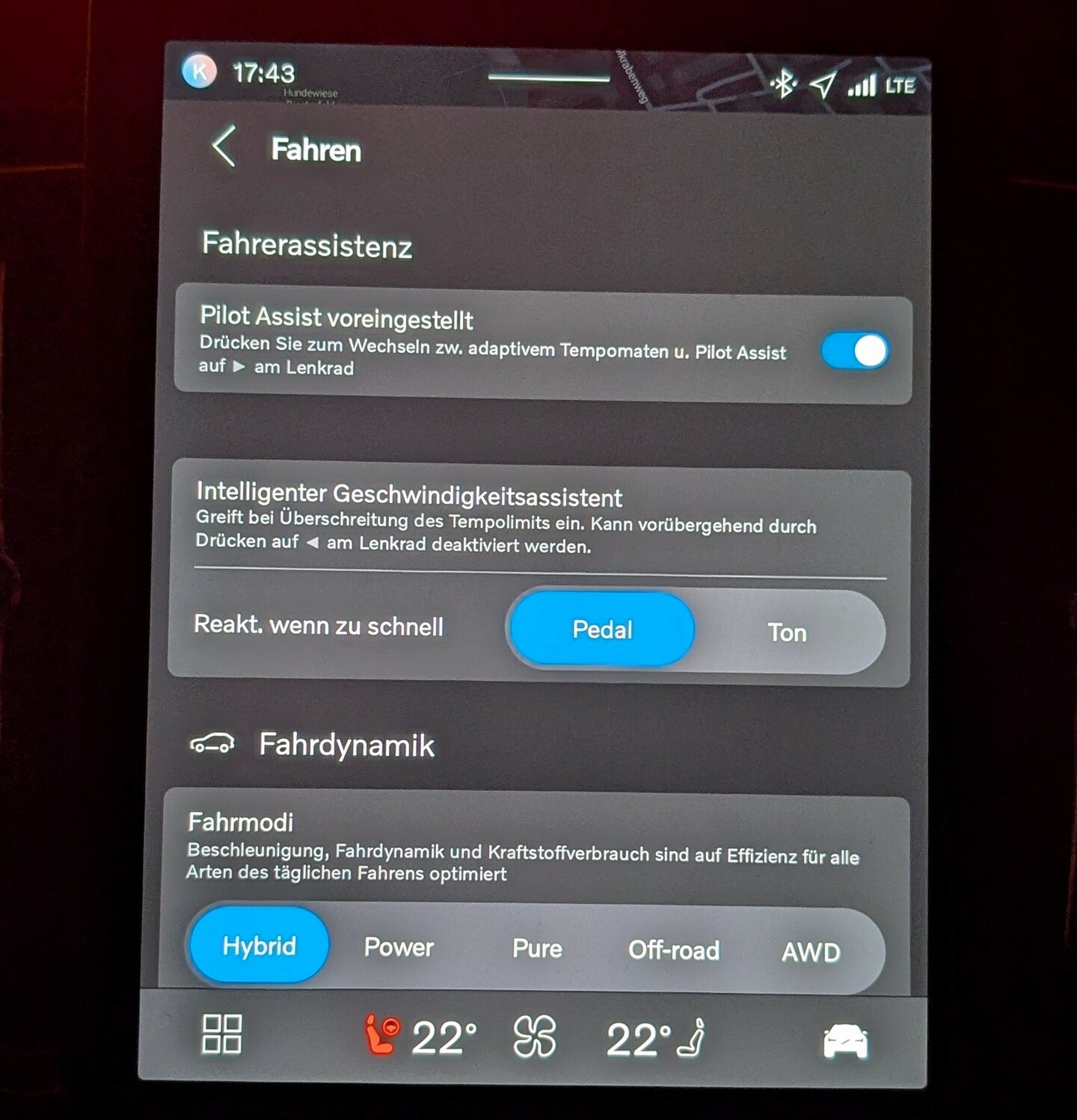
Pilot Assist enables semi-autonomous driving at a speed of up to 130 km / hEven without a vehicle ahead, the system combines adaptive cruise control with active steering assistance to reliably keep the XC90 in its lane. It utilizes not only camera and radar data, but also map data from Google Maps, including road layouts, curves, and gradients. Emergency Stop Assist activates if the system detects no steering, braking, or acceleration activity from the driver for an extended period and the driver fails to respond to warnings. In this case, the vehicle is automatically braked to a standstill, and the hazard warning lights are activated.
In practice, Pilot Assist performs convincingly: On highways and multi-lane expressways, the system precisely centers the vehicle in its lane, smoothly adjusts the speed to the flow of traffic, and confidently handles even moderate curves. The driver must keep their hands on the steering wheel, as this is continuously monitored by a sensor. Compared to BMW's Driving Assistant Professional or Audi's Adaptive Cruise Control, the Volvo delivers a similarly sophisticated experience, although the German systems are marginally more precise in very tight bends.
- Picture: TechnikNews
Safety: The DNA of Volvo
Safety is and always will be in Volvo's DNA. The XC90 features a safety cage made of hot-formed boron steel, one of the toughest steels available. This extremely rigid passenger cell protects occupants in all types of collisions, while front and rear crumple zones effectively dissipate impact energy. The comprehensive airbag system includes front and side airbags, head and shoulder airbags for all three rows of seats, and a driver's knee airbag.
All seats are equipped with three-point seat belts with pretensioners and load limiters. The patented Whiplash Protection System (WHIPS) in the front seats also reduces the risk of whiplash in rear-end collisions. Child safety is particularly exemplary. Volvo recommends rear-facing car seats until the age of four and offers specially designed child car seats with a slimmer profile and breathable wool padding. The standard emergency call system, "Volvo on Call," automatically contacts emergency services and transmits the GPS location when the airbags are deployed.
- Picture: TechnikNews
Interior of the Volvo XC90 Plug-In Hybrid:
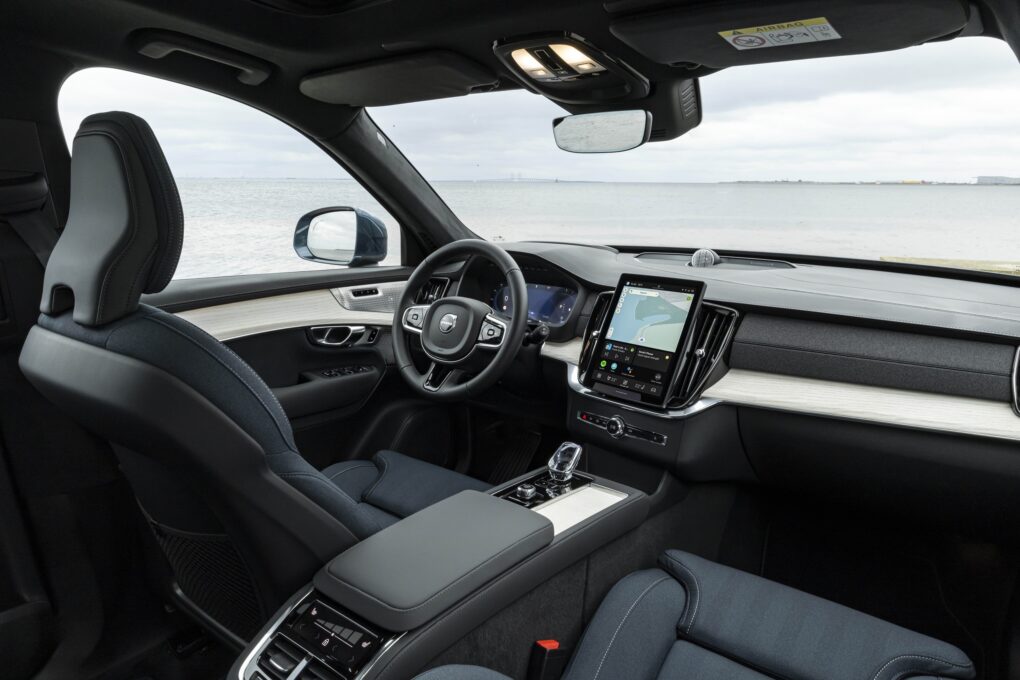
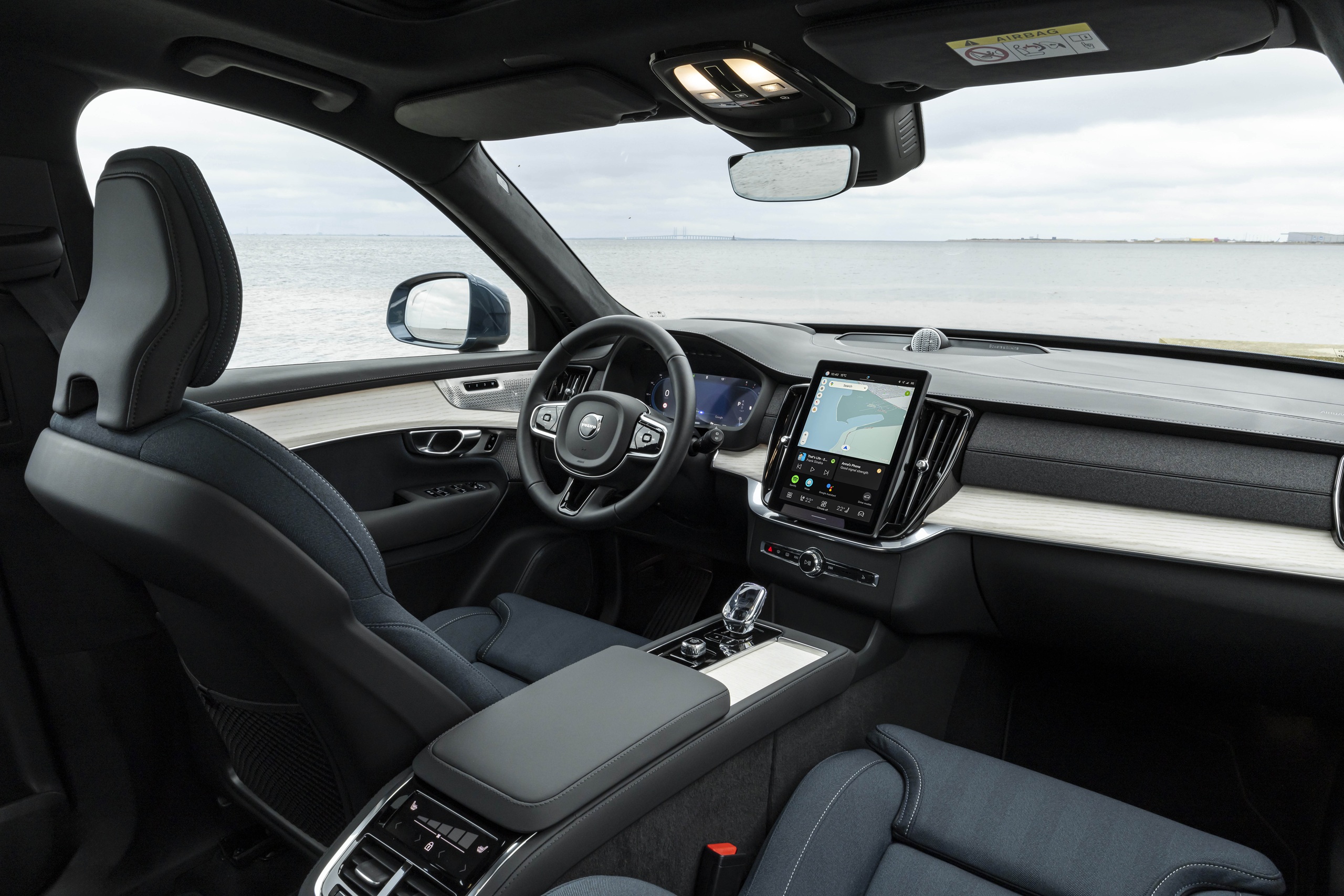
Upon opening the door, one is greeted by an interior that... Scandinavian design philosophy Perfectly embodied: clean lines, high-quality materials, and meticulous attention to detail. The redesigned, horizontally oriented dashboard enhances the feeling of spaciousness. It's covered in grained, anthracite-colored vinyl, conveying an exclusive look. The illuminated decorative inlays in "Grey Ash" real wood in our test vehicle are particularly impressive. The slightly concave inlays are subtly illuminated in the dark, creating a pleasant atmosphere. The extended ambient lighting bathes the dashboard and door panels in warm light.
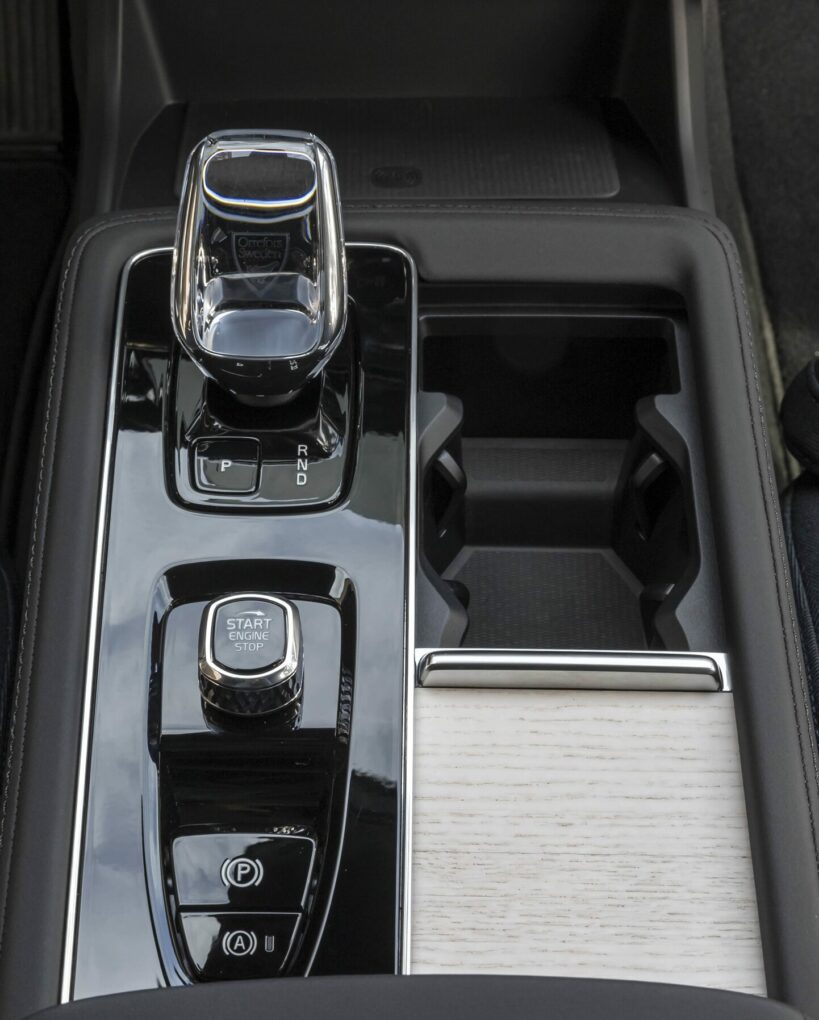
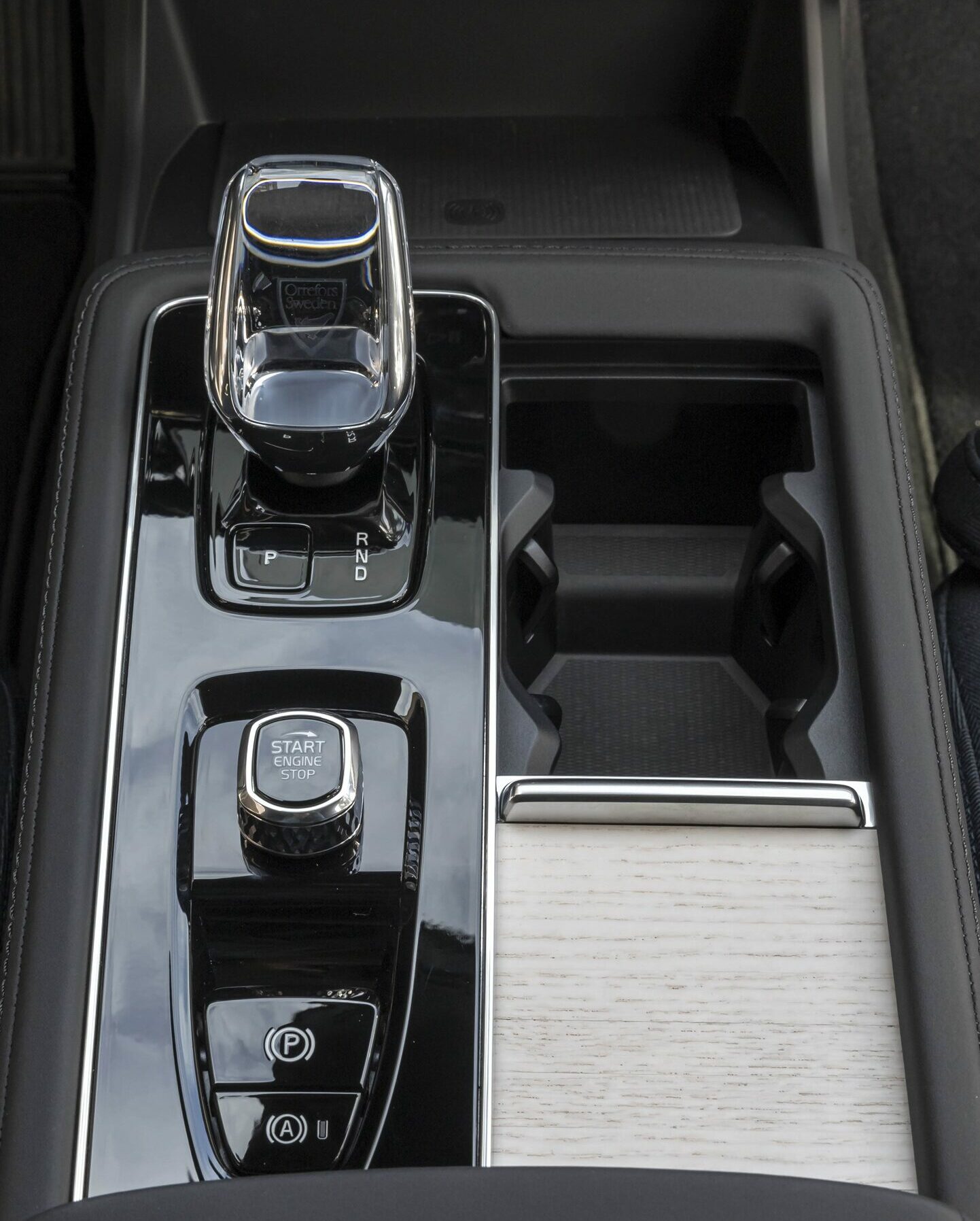
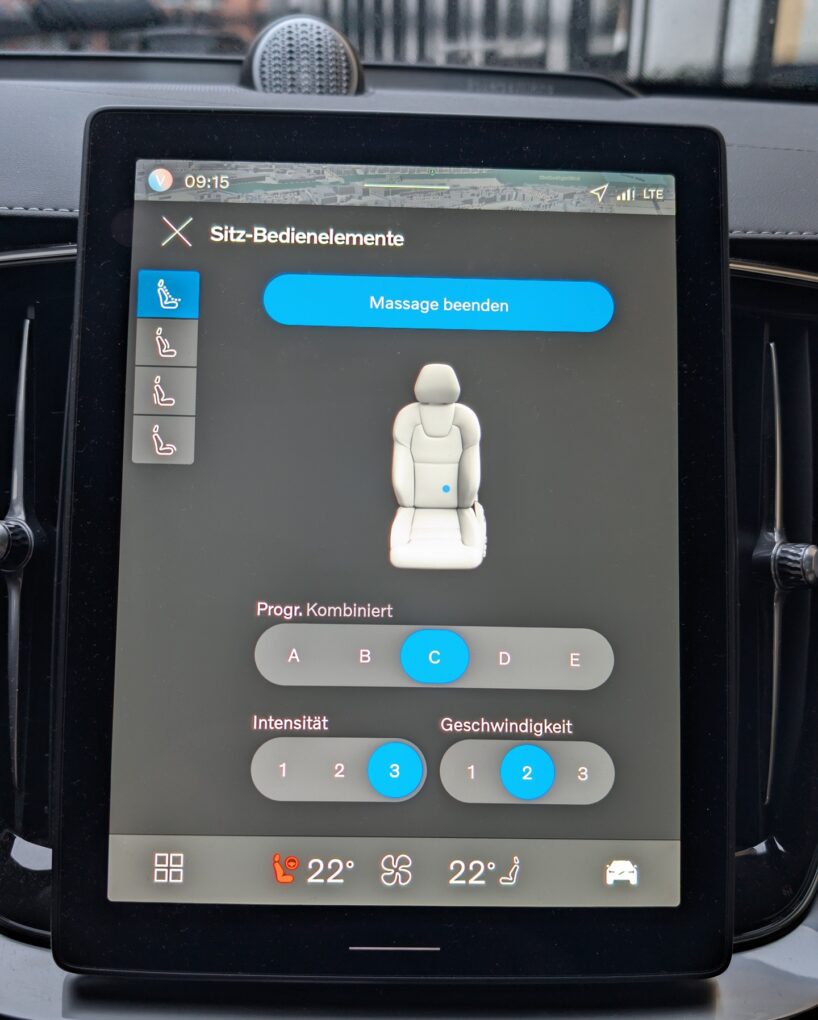
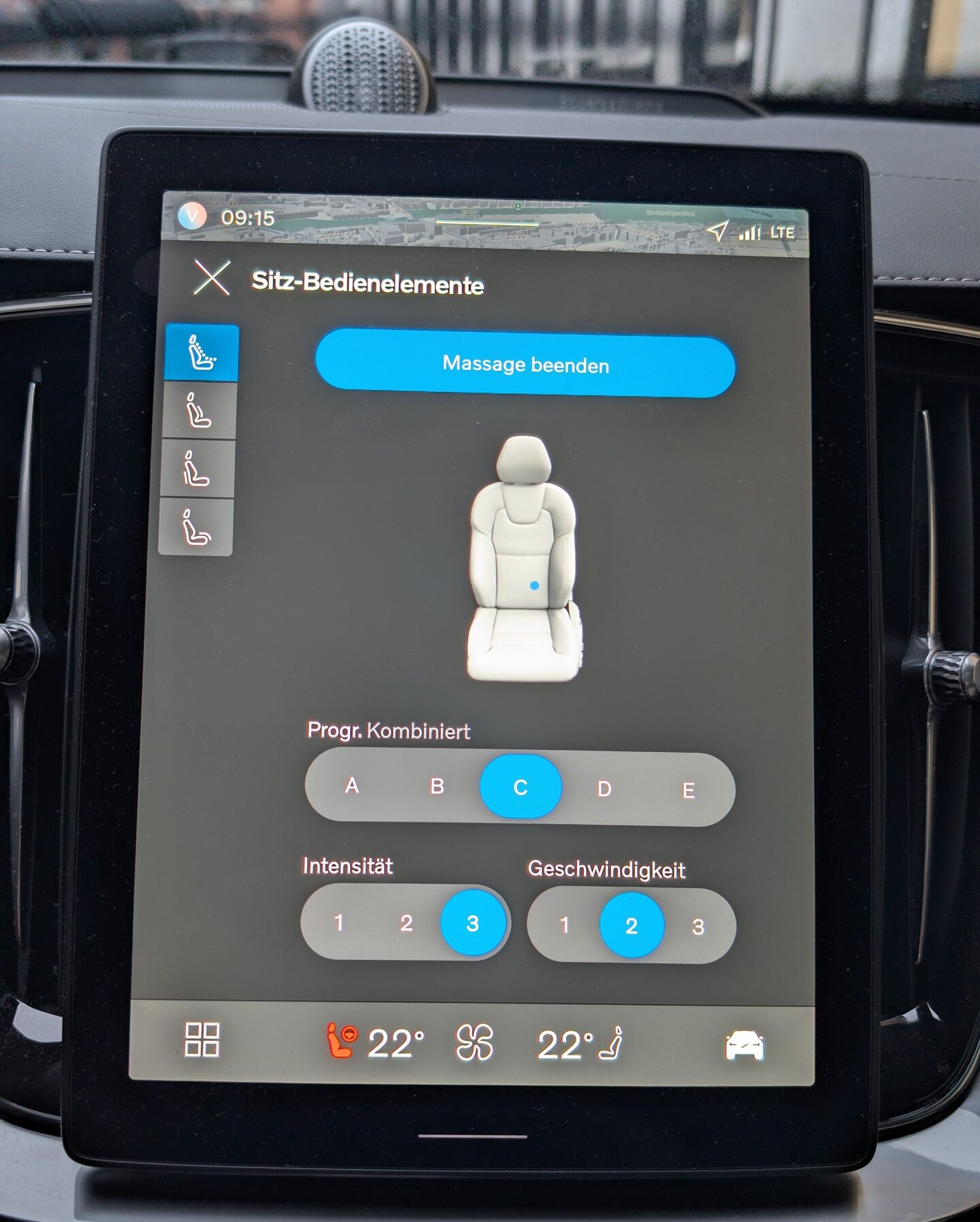
The seats deserve praise: they are ergonomically designed and, with their shape resembling the human spine, offer excellent long-distance comfort. In the Ultra trim level, they are also upholstered in ventilated Nappa leather and feature a massage function with various programs. The massage function works very effectively. and noticeably contributes to relaxation. The electrically adjustable leg rests and the four-way lumbar support also enhance comfort. The redesigned center console now offers more storage space. The new 2+1 cup holder accommodates not only standard cups but also narrower cans. The workmanship is of the highest standard, and the look and feel of the materials are consistently impressive.
-
- Image: Volvo Germany
-
- Image: Volvo Germany
Comfort: Very quiet interior
The Volvo XC90 T8 Ultra redefines premium comfort. The optional adaptive air suspension with active Four-C technology (Continuously Controlled Chassis Concept) ensures exceptionally smooth handling. Up to 500 times pro Sensors analyze the driving conditions every second and adjust the damper settings accordingly, effectively minimizing pitch, dive, and roll movements. The new FSD (Frequency Selective Damping) technology allows the 2,2-ton SUV to glide smoothly over bumps in our test. Longitudinal waves are absorbed gently without the vehicle feeling spongy. The air suspension maintains a constant ground clearance and automatically lowers the vehicle by one centimeter at speeds above 110 km/h to improve aerodynamics.
The interior noise level is remarkably low. Acoustic foam in the pillars, sound-absorbing material in the firewall, and standard acoustic glazing in the side windows effectively block out wind, engine, and road noise. At highway speeds, the atmosphere is like a library. An optional head-up display (standard in the Ultra trim level) further enhances the experience. proIt projects speed and navigation instructions directly into the driver's field of vision. It appears as if the information is floating two meters in front of the vehicle. Over-the-air updates keep the system and software up-to-date and install new features without requiring a visit to a workshop.
-
- Image: Volvo Germany
-
- Picture: TechnikNews
Climate: Four zones for ultimate comfort
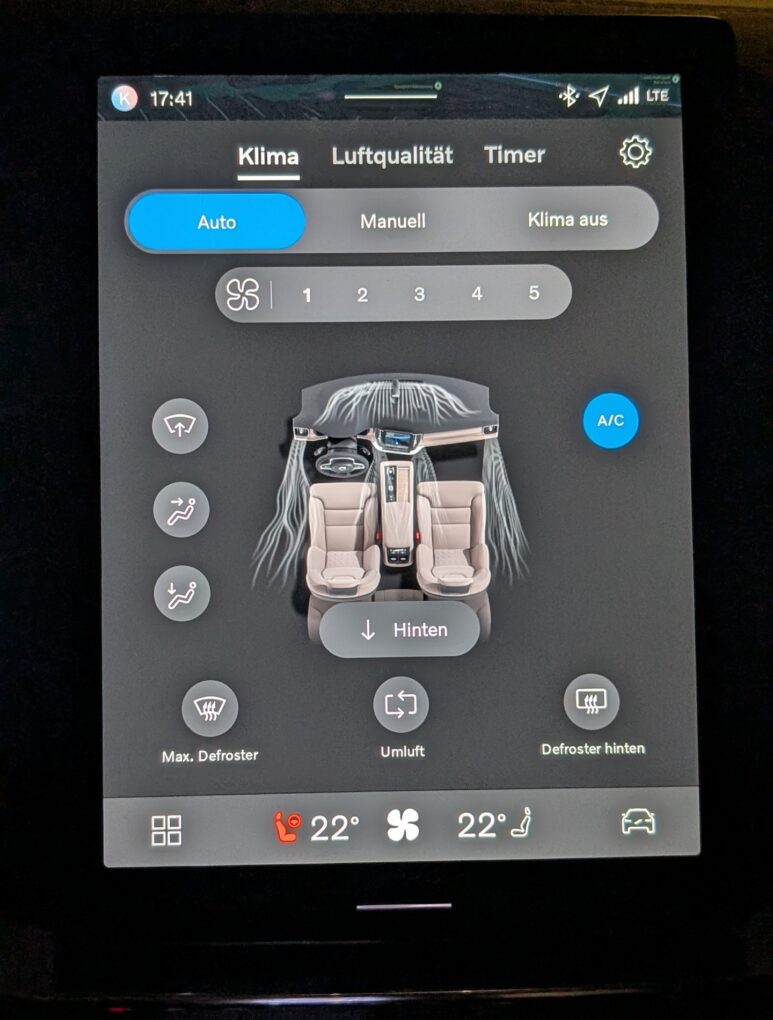
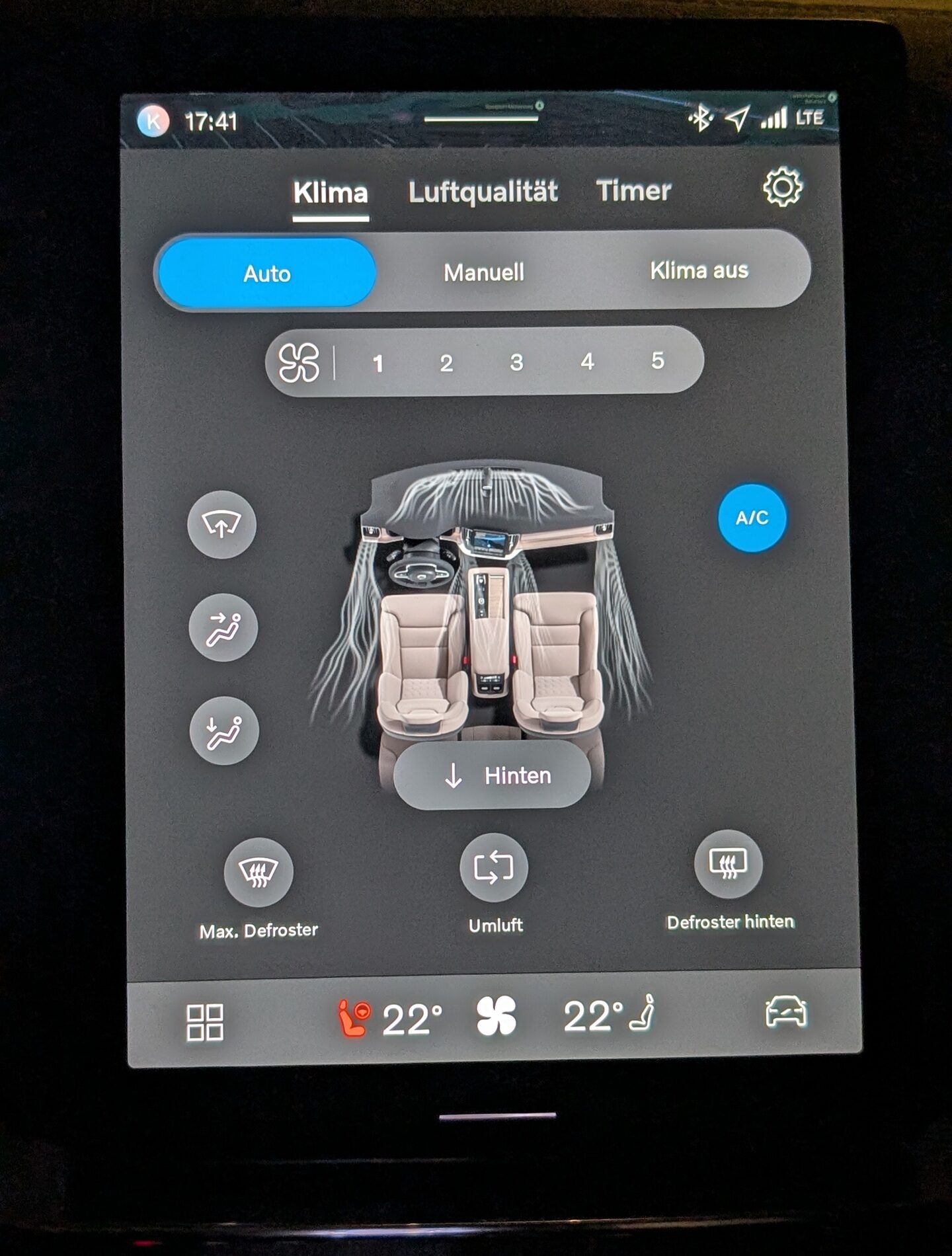
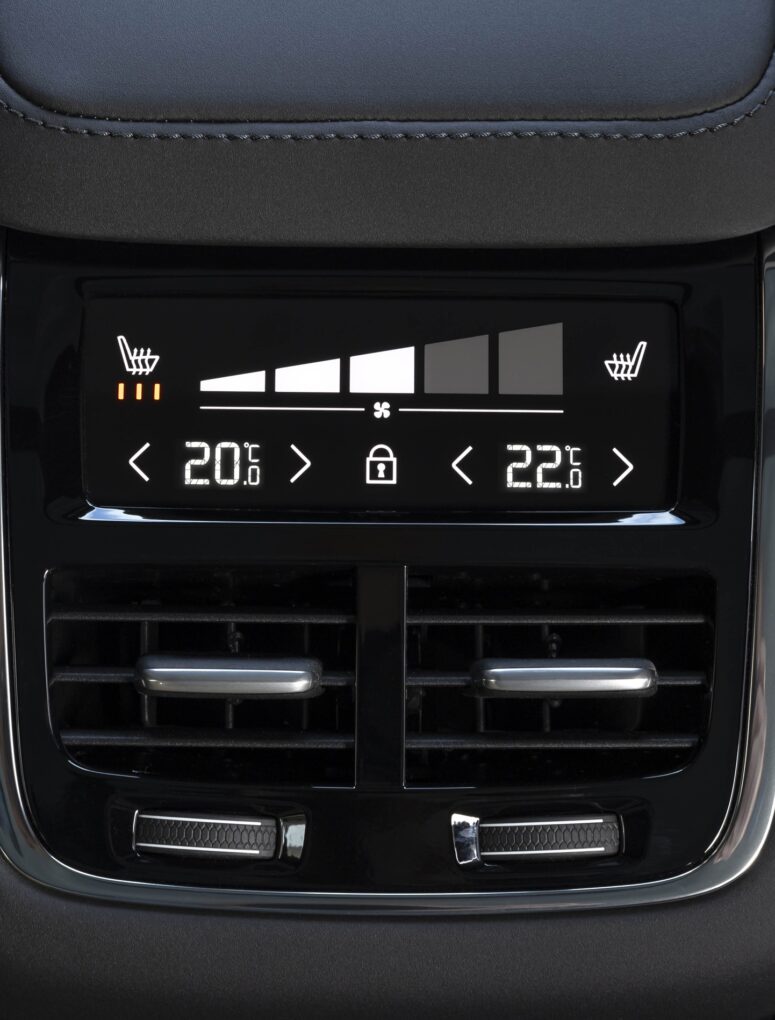
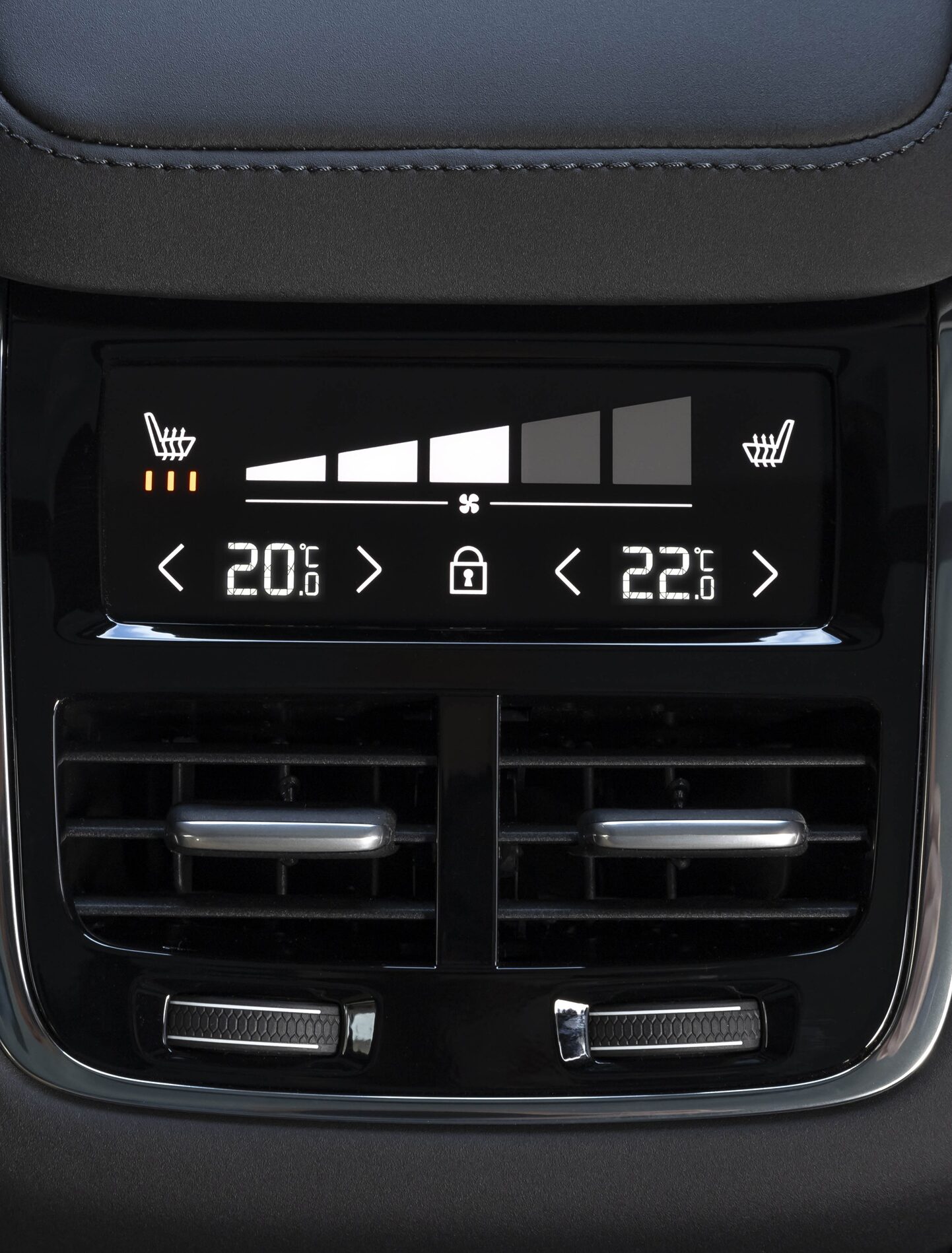
The four-zone automatic climate control allows for individual temperature settings for the driver, front passenger, and the two outer seats in the second row. The third row of seats is also climate-controlled. The enhanced air purification system with PM2,5 fine dust filtration removes up to 95 percent of microscopic particles from the air. This system is particularly effective in urban areas. However, during testing, it was noted that the heating system takes somewhat longer to warm the interior to a comfortable temperature in sub-zero temperatures.
However, this is well compensated for by the heated seats for the first two rows, the heated steering wheel, and the heated windshield. The standard panoramic glass roof with electric sunshade floods the interior with light and further enhances the airy feeling of spaciousness. A practical detail is that the sunshade closes automatically when parked at temperatures above 25 degrees Celsius to prevent overheating.
-
- Picture: TechnikNews
-
- Image: Volvo Germany
Infotainment of the Volvo XC90 Plug-In Hybrid:
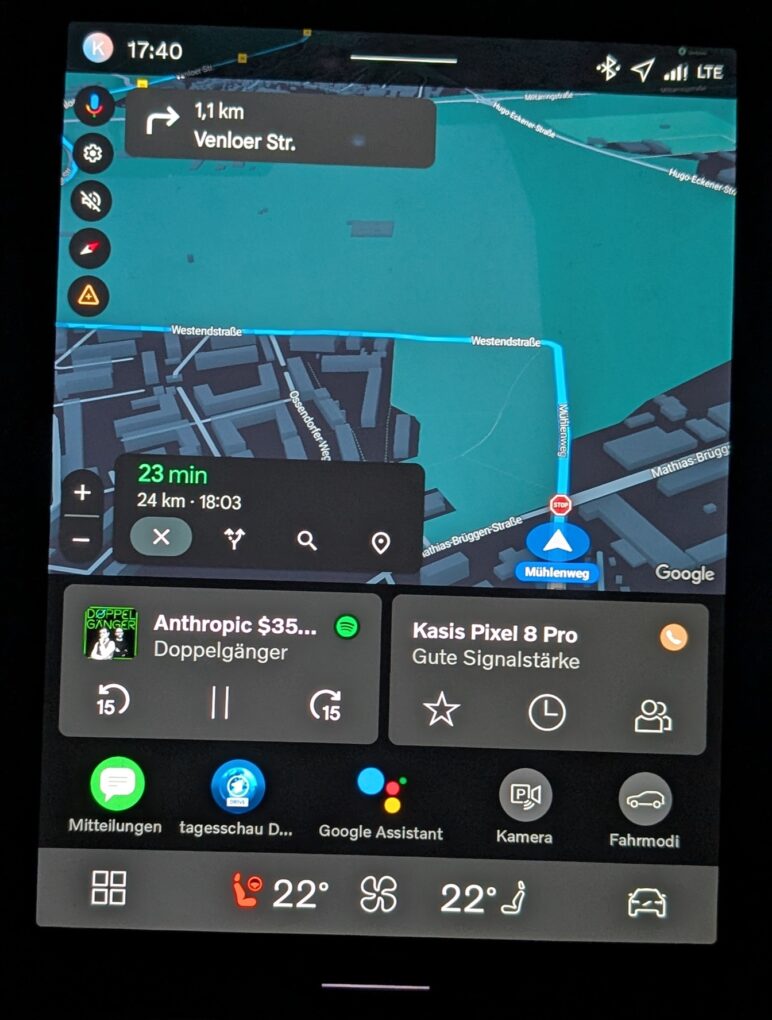
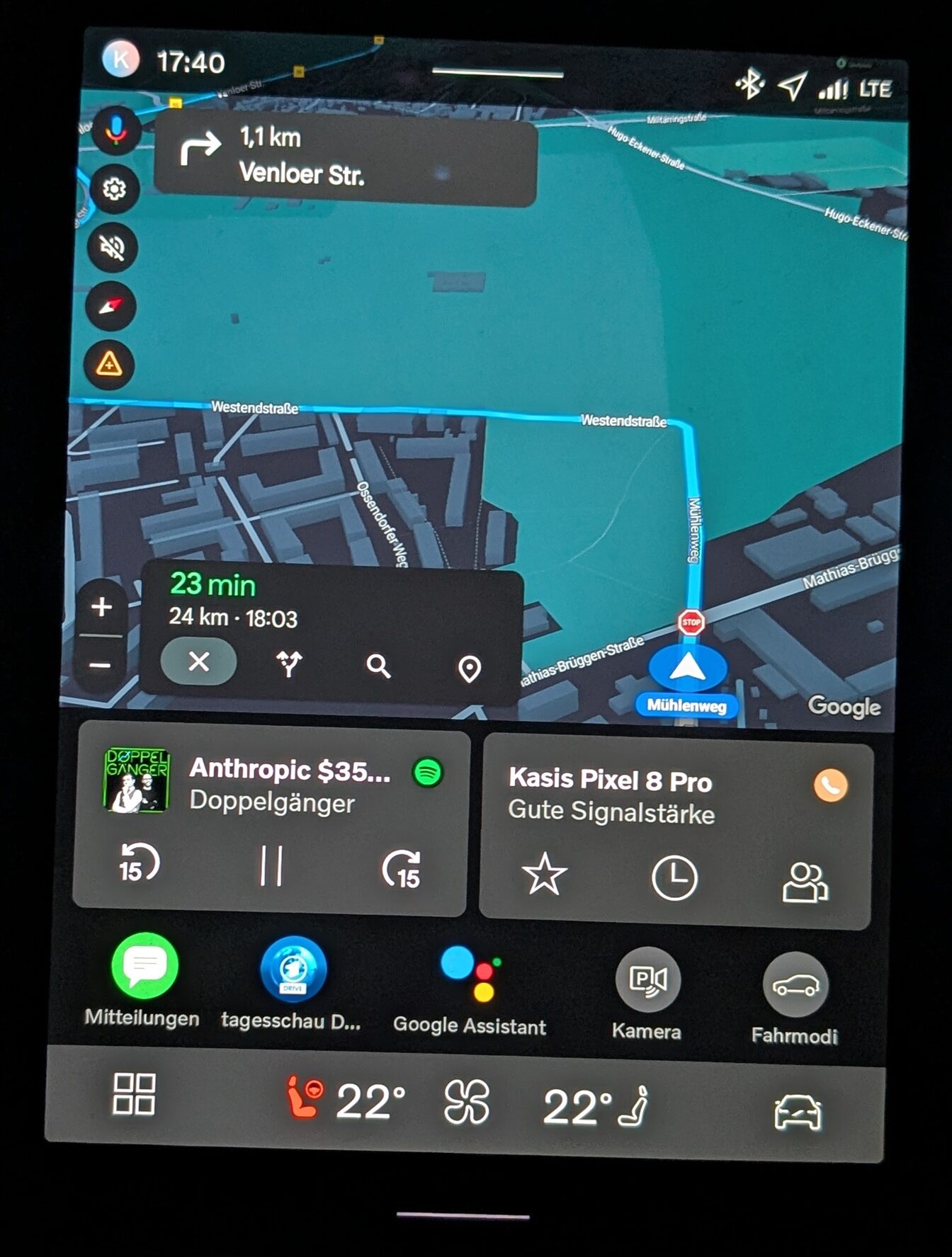
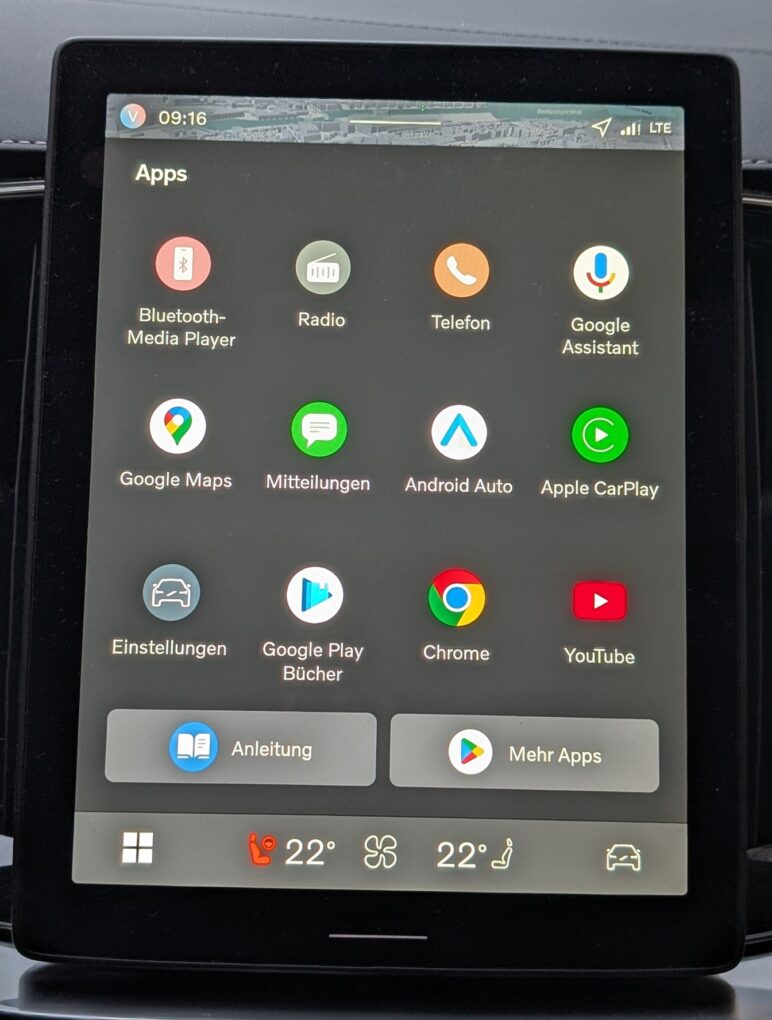
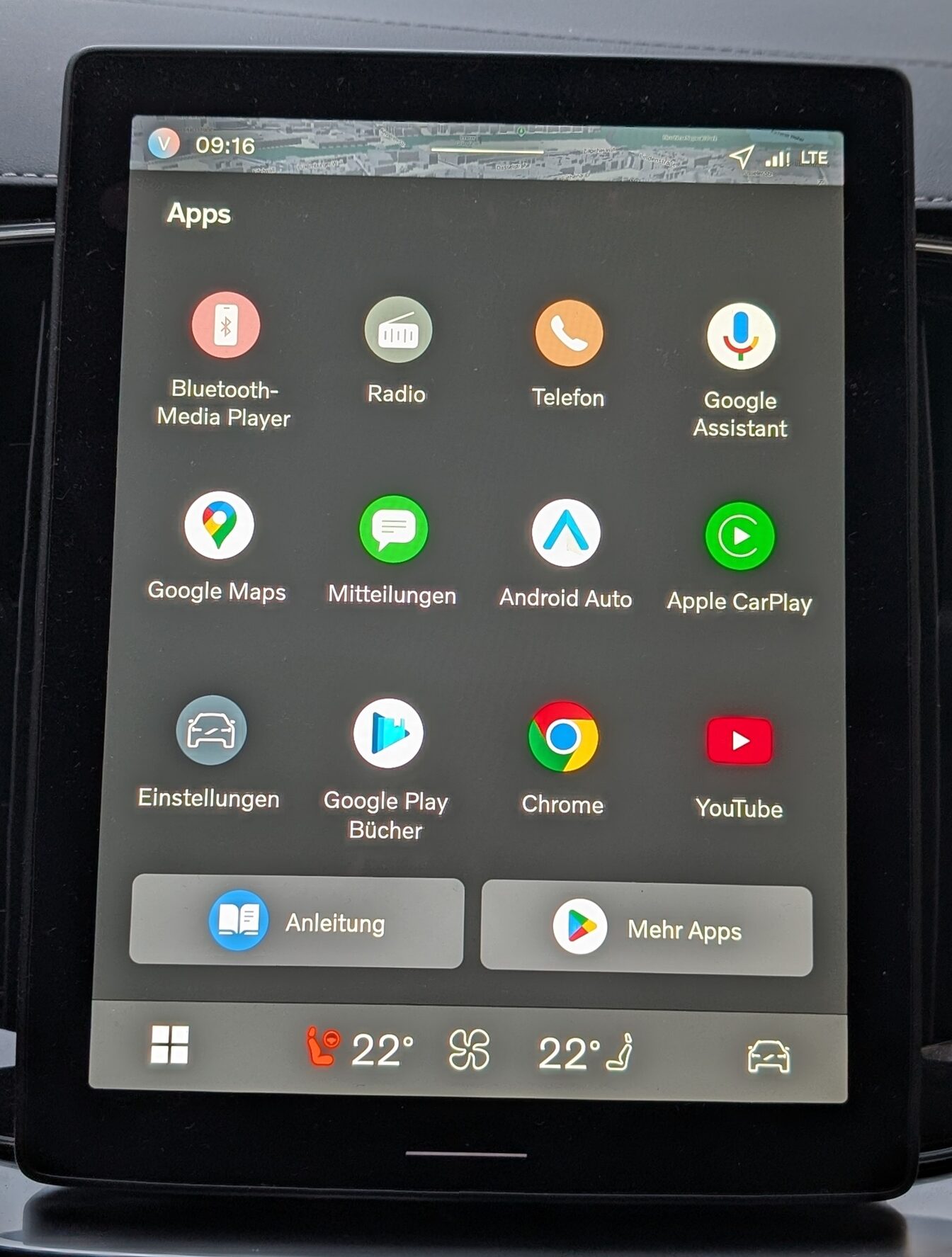
The new Volvo XC90 features the advanced infotainment system familiar from other Volvo electric vehicles. At its heart is the new... 11,2-inch portrait touchscreen, Its pixel density is 21 percent higher than its predecessor. Based on Android Automotive, the system offers extremely intuitive operation, similar to a smartphone. The integration of Google services is seamless: Google Maps provides a sophisticated navigation system with real-time traffic information and updates the map data every two weeks. The Google Assistant also enables voice control for navigation, music playback, climate control, and even smart home devices. Vehicle-optimized apps like Waze, Spotify, and YouTube can be downloaded from the Google Play Store. In the future, the Google Assistant is even slated to be replaced by Google's Gemini AI, making it even smarter.
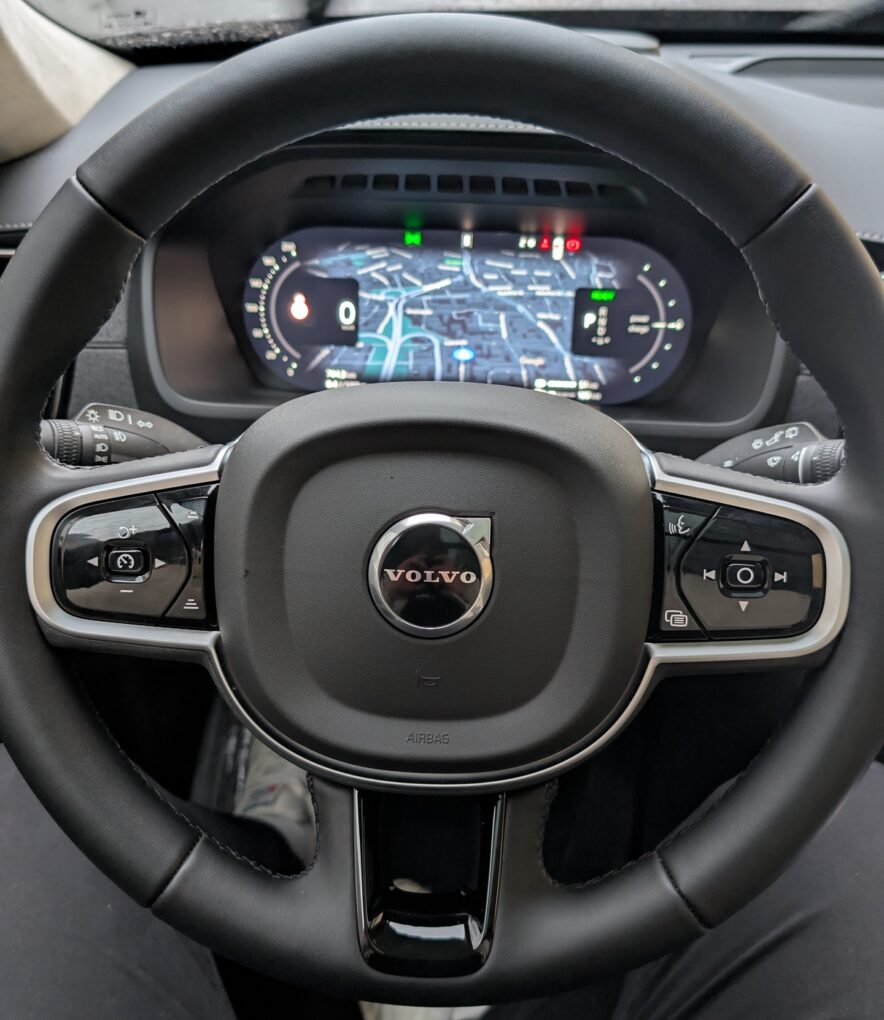
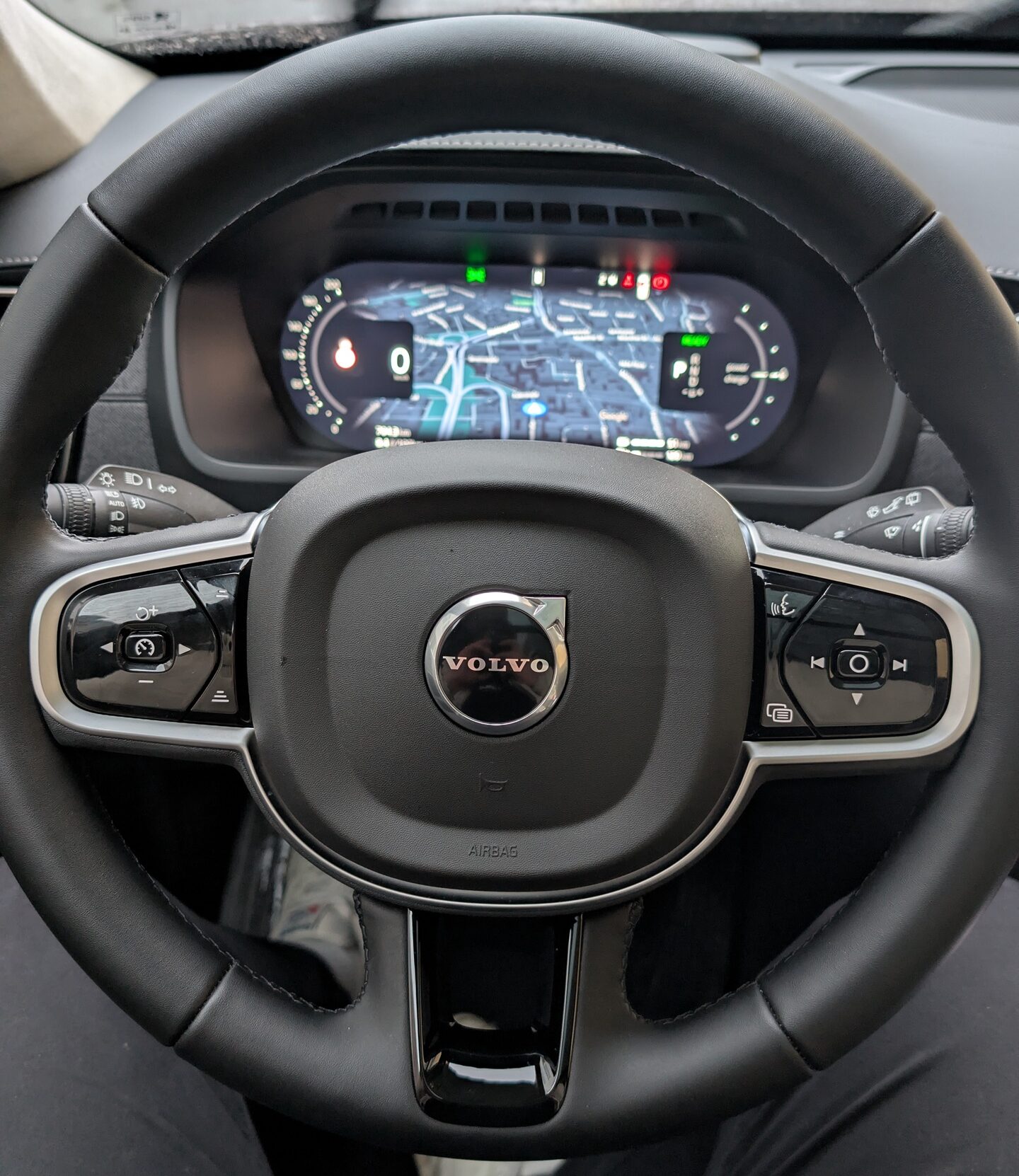
The menu system is logically structured. A fixed bar at the bottom of the screen provides direct access to the main functions. Above this, a context-sensitive bar appears with situation-relevant options. The 360° camera button, for example, is only displayed at low speeds. While parked, you can pass the time with pre-installed games – a nice feature that demonstrates how much Volvo is embracing the digital world. Streaming videos via Prime or YouTube is also possible while parked. iPhone users can connect their devices wirelessly via Apple CarPlay. 12,3-inch driver display behind the steering wheel It displays all important information in high resolution. Two modes are available: "Calm" with classic round instruments or "Navi" with a large navigation map section.
-
- Picture: TechnikNews
-
- Picture: TechnikNews
Connectivity: The app offers everything you need.
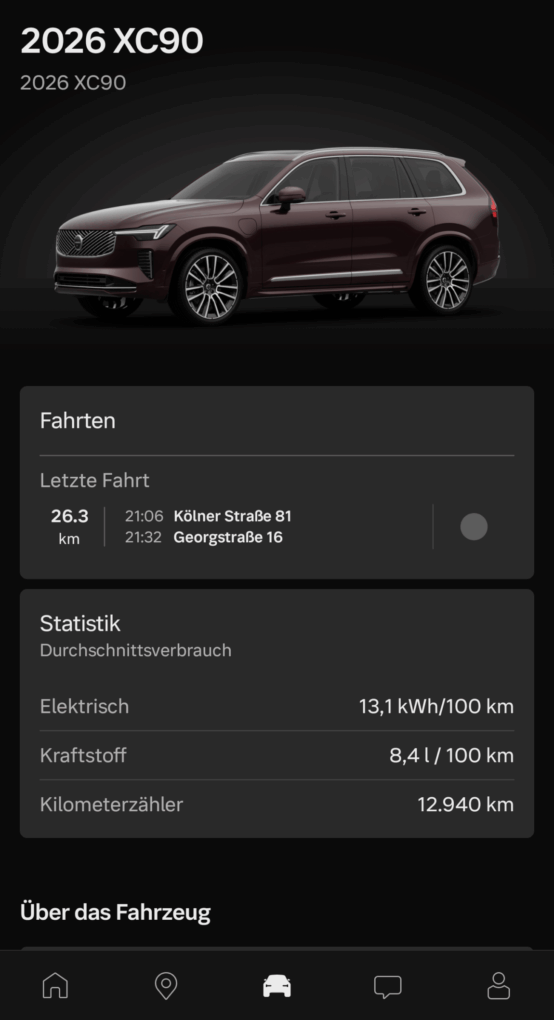
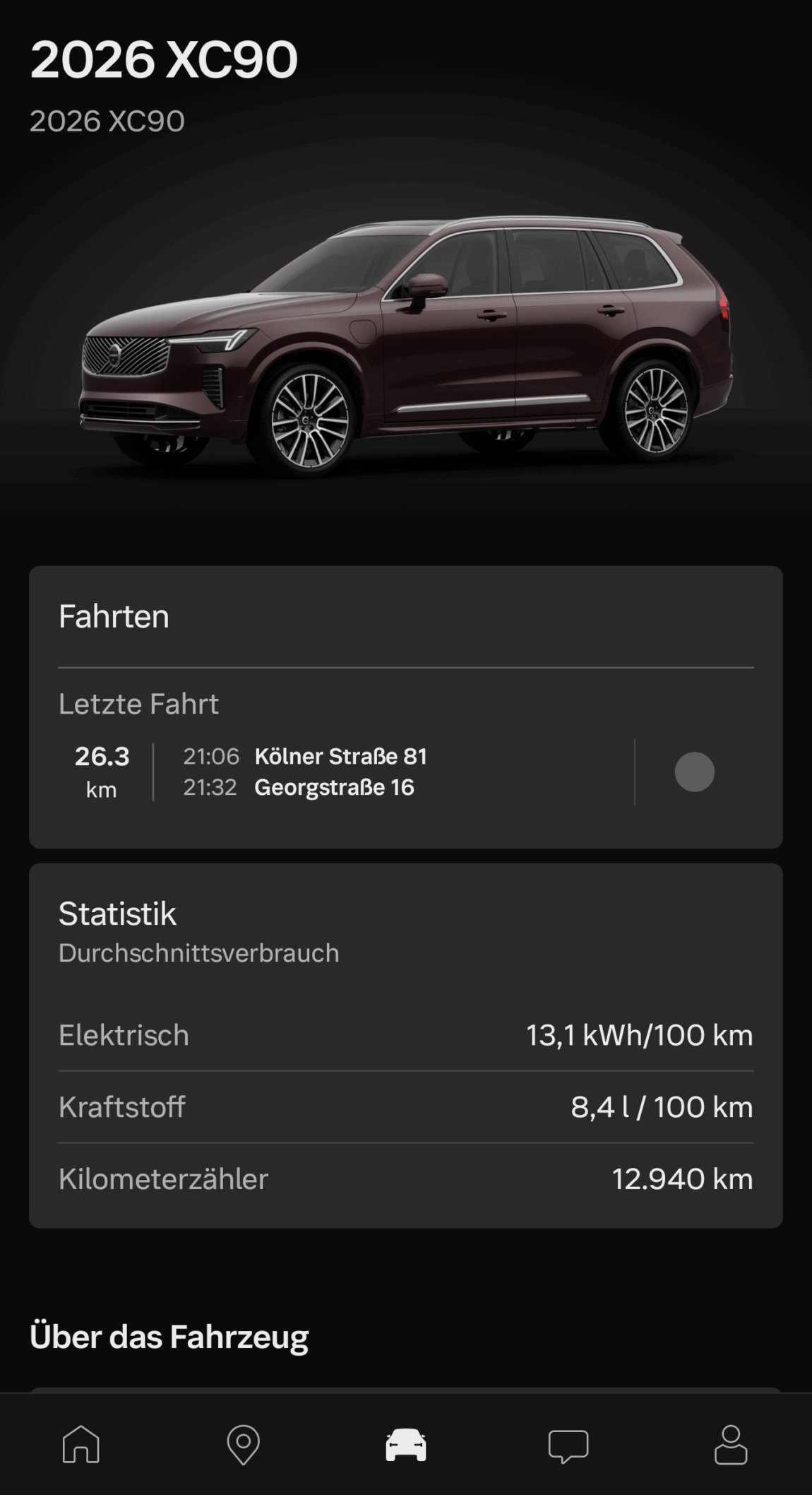
The Volvo Cars App It enables comprehensive remote control: pre-conditioning, charging timer, vehicle tracking with horn and lights, retrieval of consumption data, and verification of whether doors and windows are locked. The car's pre-conditioning via the app is particularly reliable. The interior is heated or cooled to the desired temperature, even without any loss of range when the charging cable is connected. Push notifications inform the driver about error messages or maintenance requirements. The standard Volvo On Call emergency call system automatically contacts the emergency services in the event of airbag deployment and transmits the GPS position with an accuracy of ten meters. An emergency call can also be placed manually at any time using the SOS button.
An unlimited data connection is included for four years; no additional SIM card is required. All common smartphones are compatible with the system, including devices without the Android operating system. The wireless charging pad for smartphones has been relocated to the front of the center console. Unfortunately, there is only one wireless charging pad, which would be preferable for a vehicle in this price range. Two USB-C ports are located in the front of the center console, with two more in the rear for the back passengers.
-
- Picture: TechnikNews
-

- Picture: TechnikNews

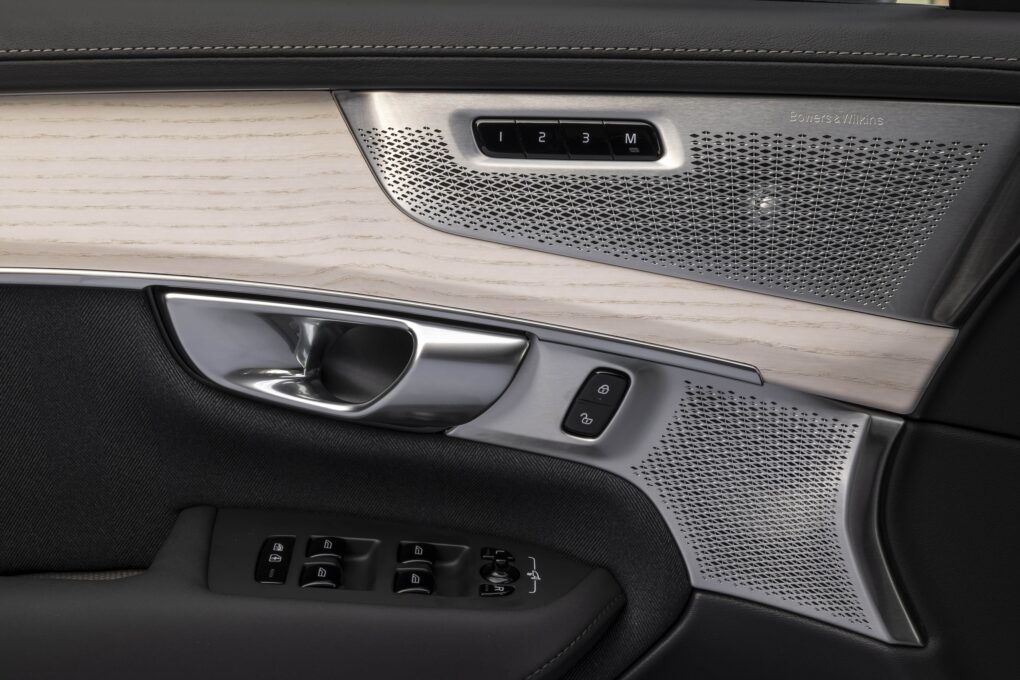
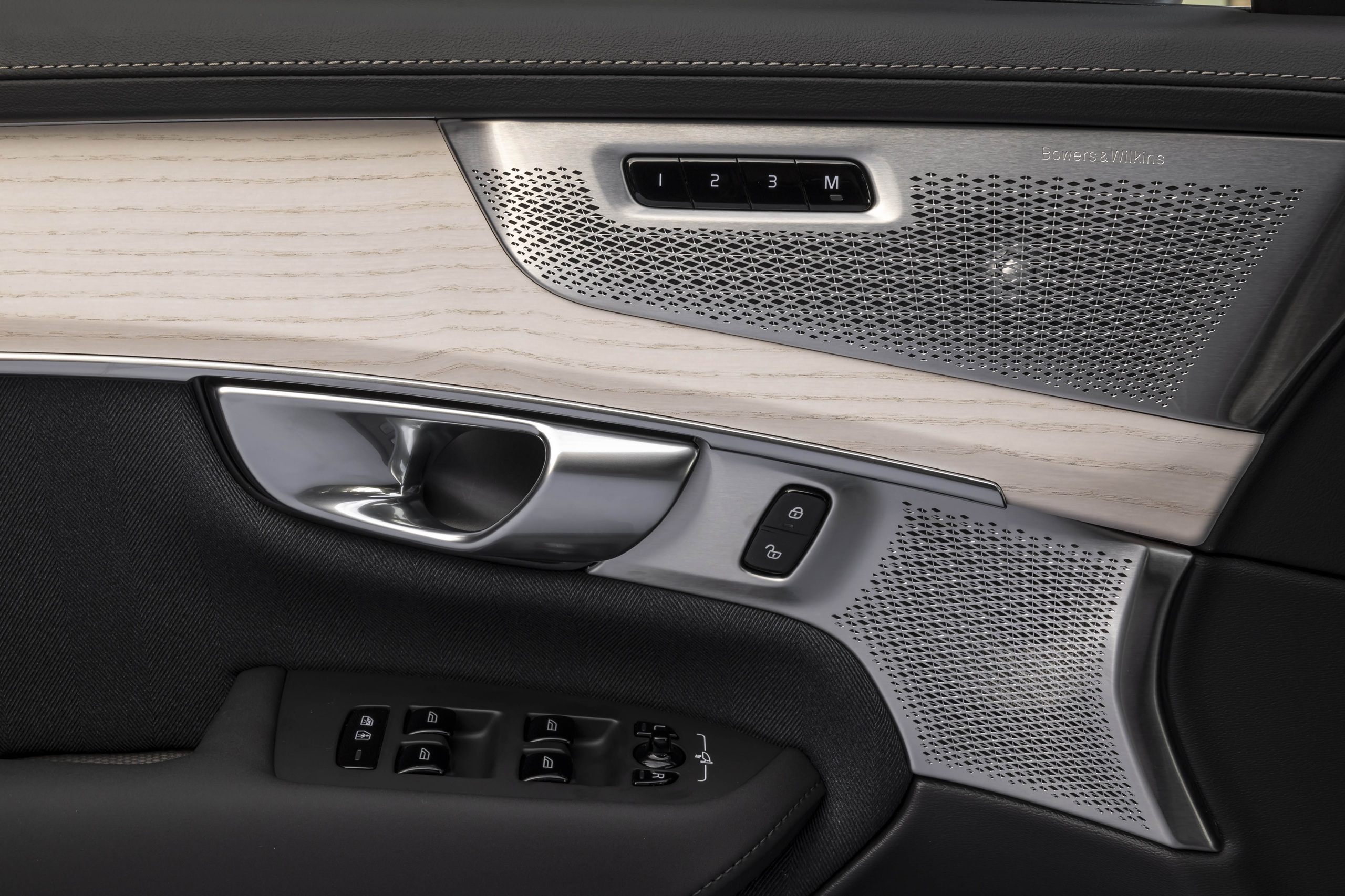
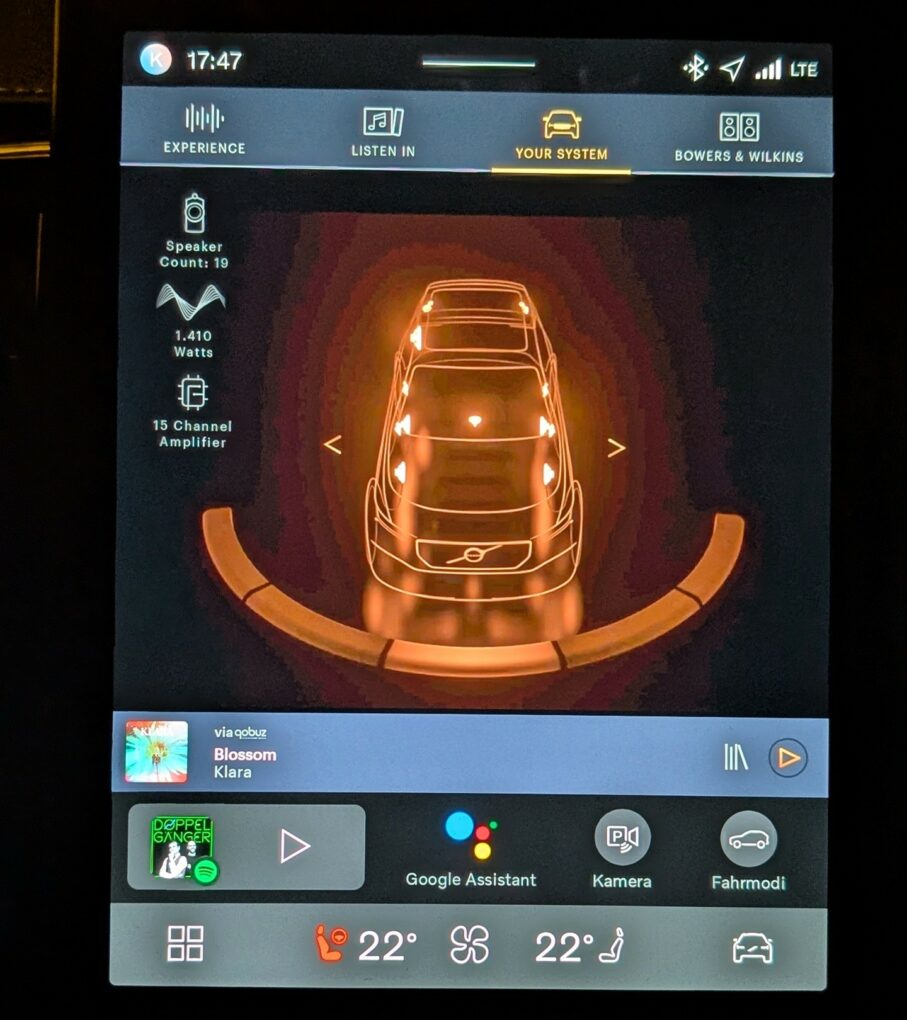
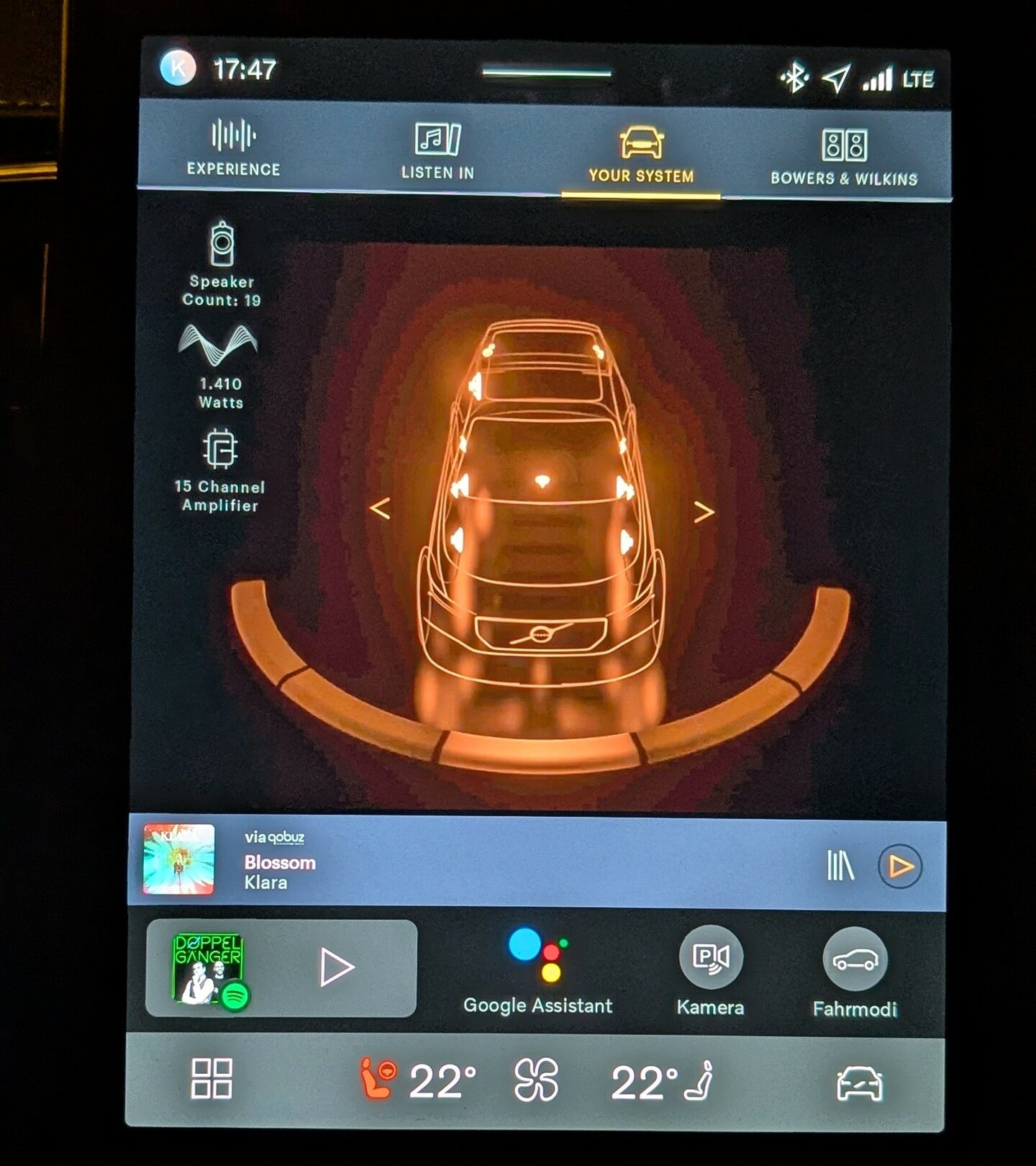
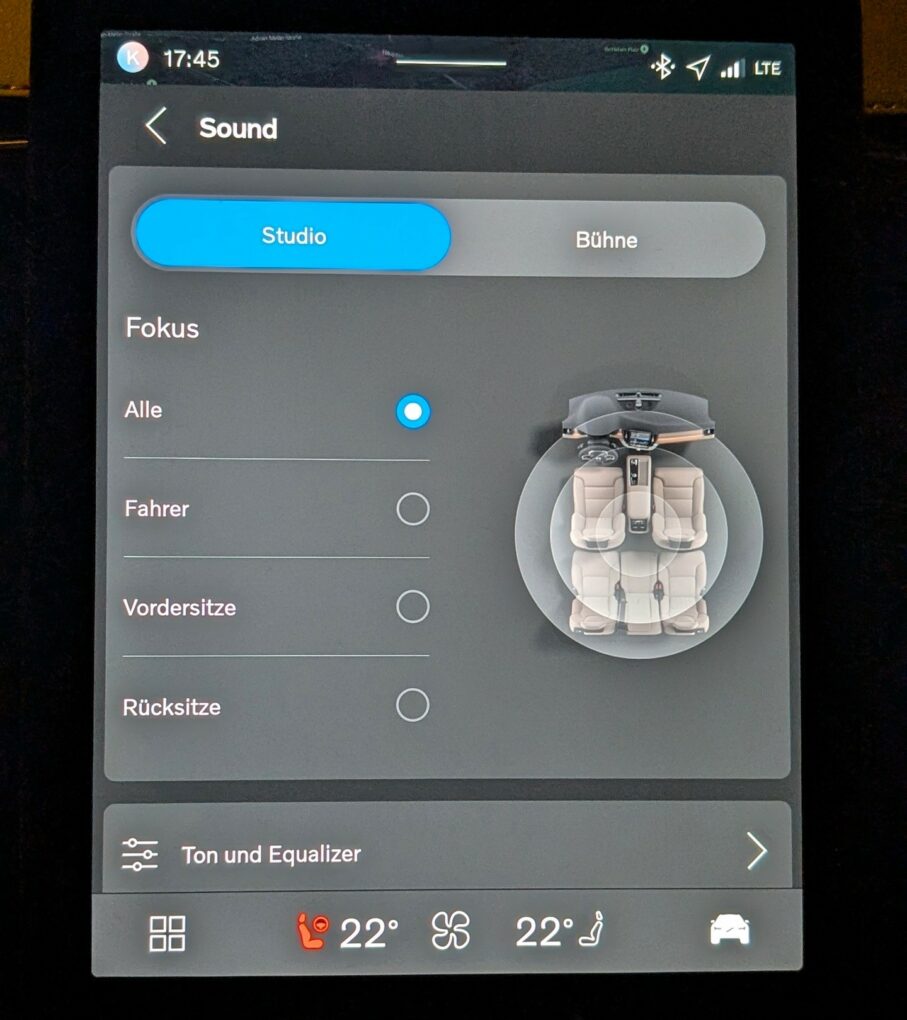
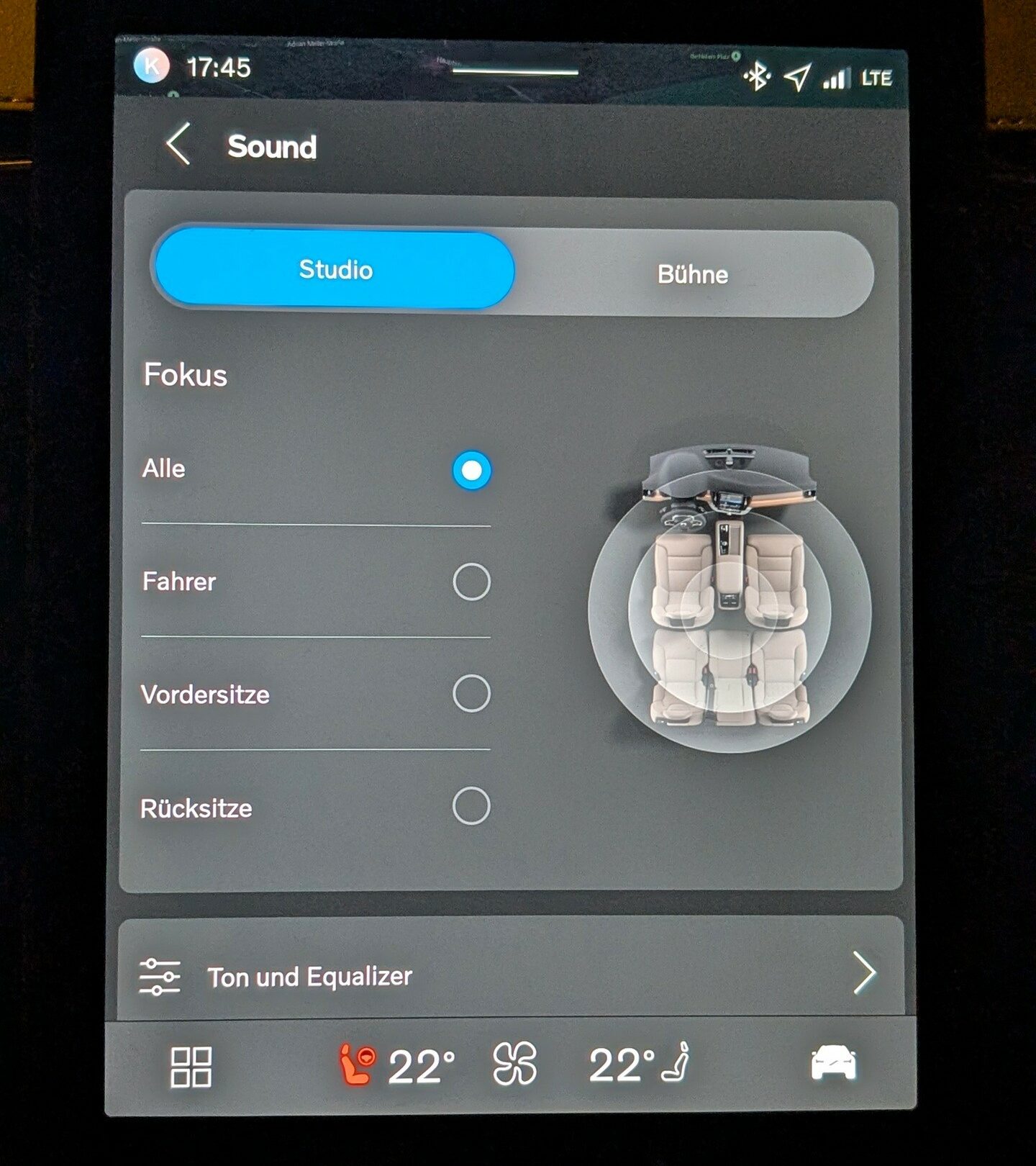
The optional Bowers & Wilkins premium audio system It is among the best the automotive industry has to offer. It features 19 speakers, including seven dual-layer Nautilus tweeters, seven midrange drivers with Continuum cones, and an enhanced 250 mm subwoofer. These are powered by a 15-channel amplifier delivering 1.410 watts of power. The centrally mounted stainless steel tweeter on the dashboard is not only a visual highlight but also an acoustic advantage thanks to tweeter-on-top technology: the sound reaches the listeners directly without first being reflected off the windshield.
The B&W Sound Experience Demo is particularly impressive, showcasing the system's capabilities: crystal-clear highs, precise mids, and powerful bass down to 20 Hz. Dirac Research's sound processing software optimizes the interaction between the speakers. Various modes recreate different acoustic scenarios – from the Gothenburg Concert Hall to the Nefertiti jazz club. Compared to the Harman Kardon system in the BMW X5 or the Bang & Olufsen system in the Audi Q7, the Bowers & Wilkins system delivers a slightly more audiophile sound, with even more finely resolved spatiality. The GWM Wey 05 can't compete.
-
- Picture: TechnikNews
-
- Picture: TechnikNews
Powertrain of the Volvo XC90 Plug-In Hybrid:
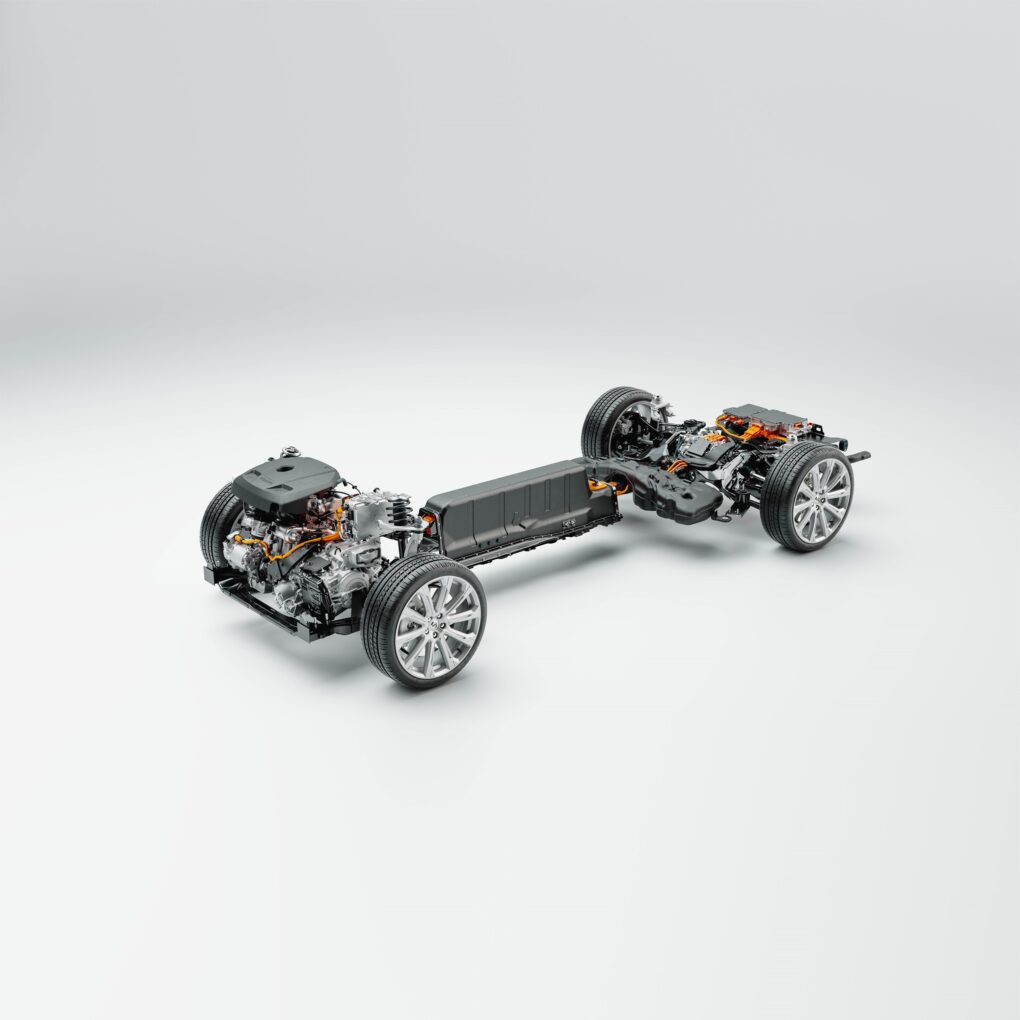
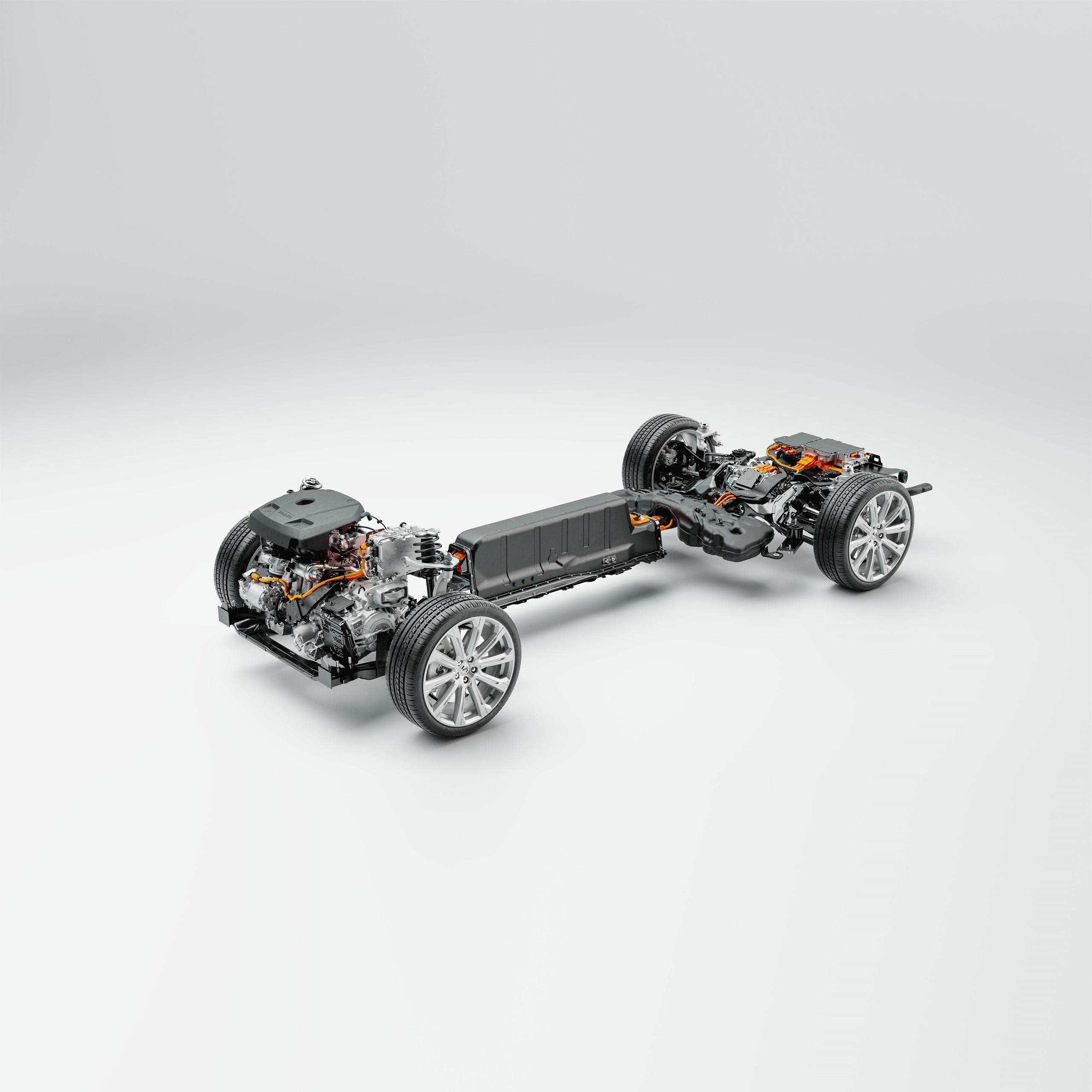
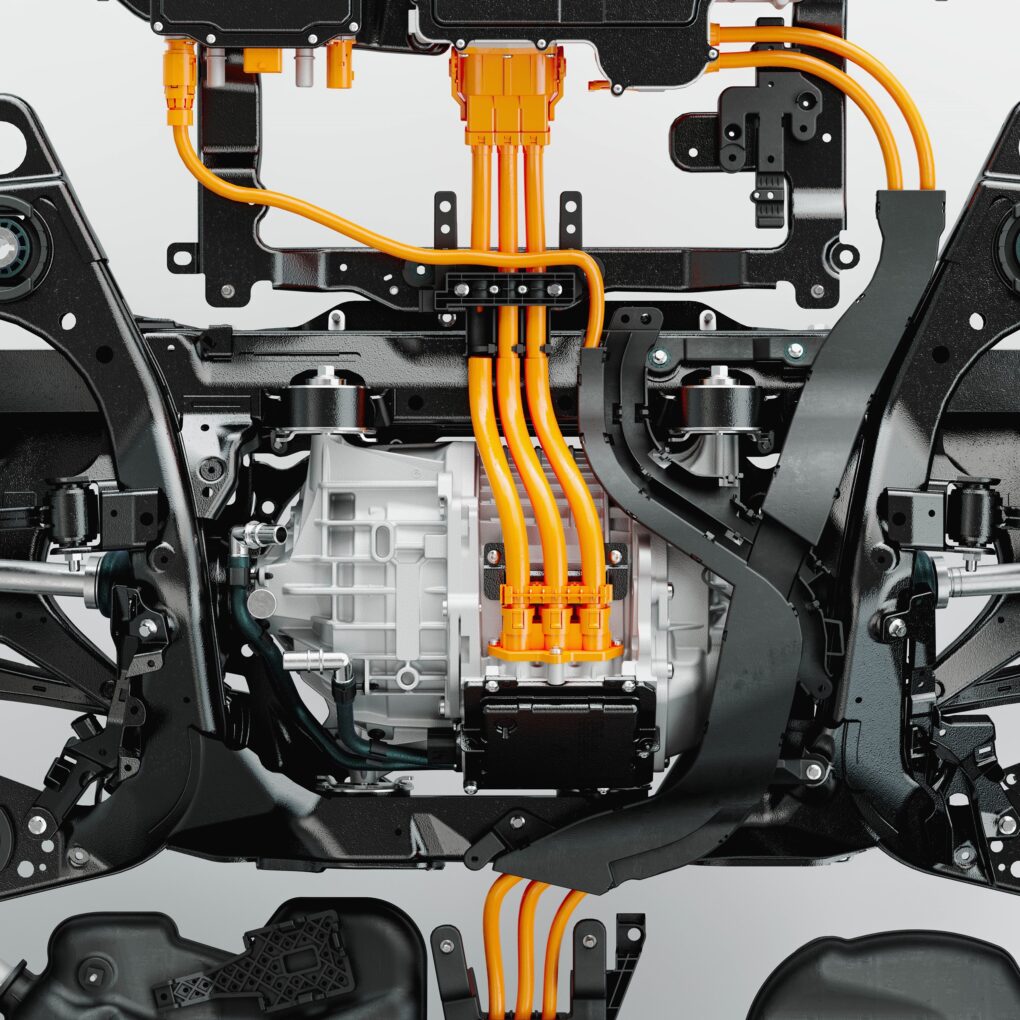
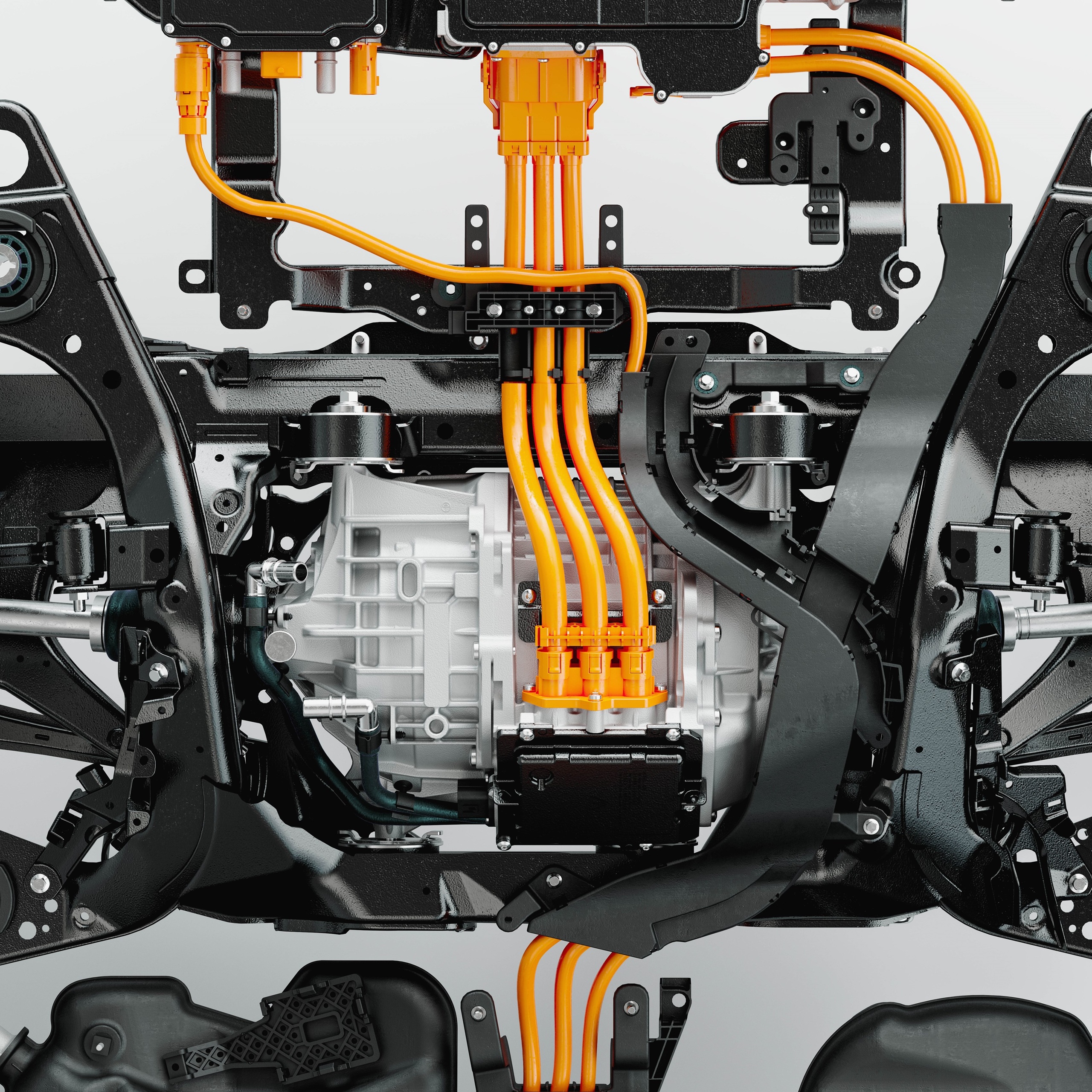
The T8 AWD's plug-in hybrid drive combines a turbocharged 2,0-liter four-cylinder gasoline engine producing 228 kW (310 hp) at the front axle with a 107 kW (145 hp) electric motor at the rear axle. The system output is therefore 335 kW (455 hp) and a maximum torque of 709 Nm. The gasoline engine uses intelligent high-pressure direct injection and variable valve timing. A particulate filter reduces emissions to Euro 6e standards. The electric motor delivers its full torque of 309 Nm from idle speed – typical of electric vehicles.
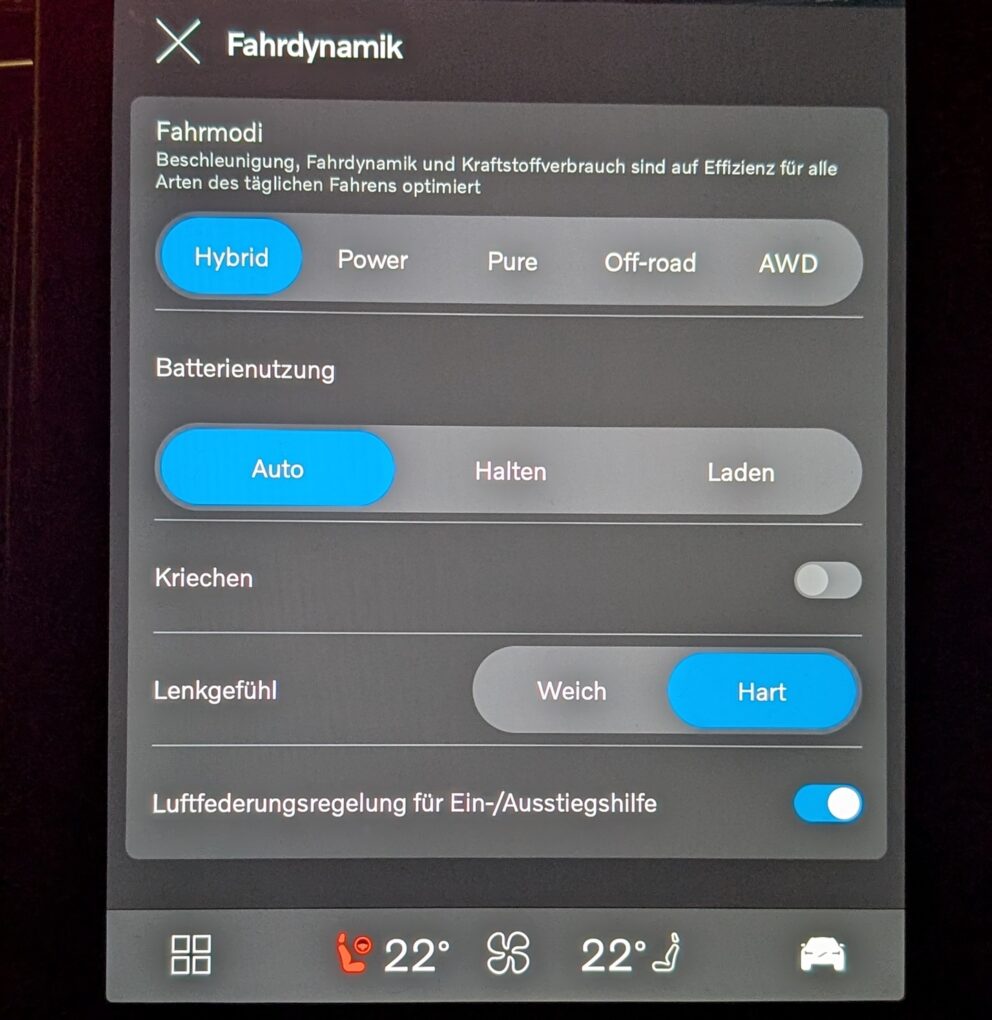
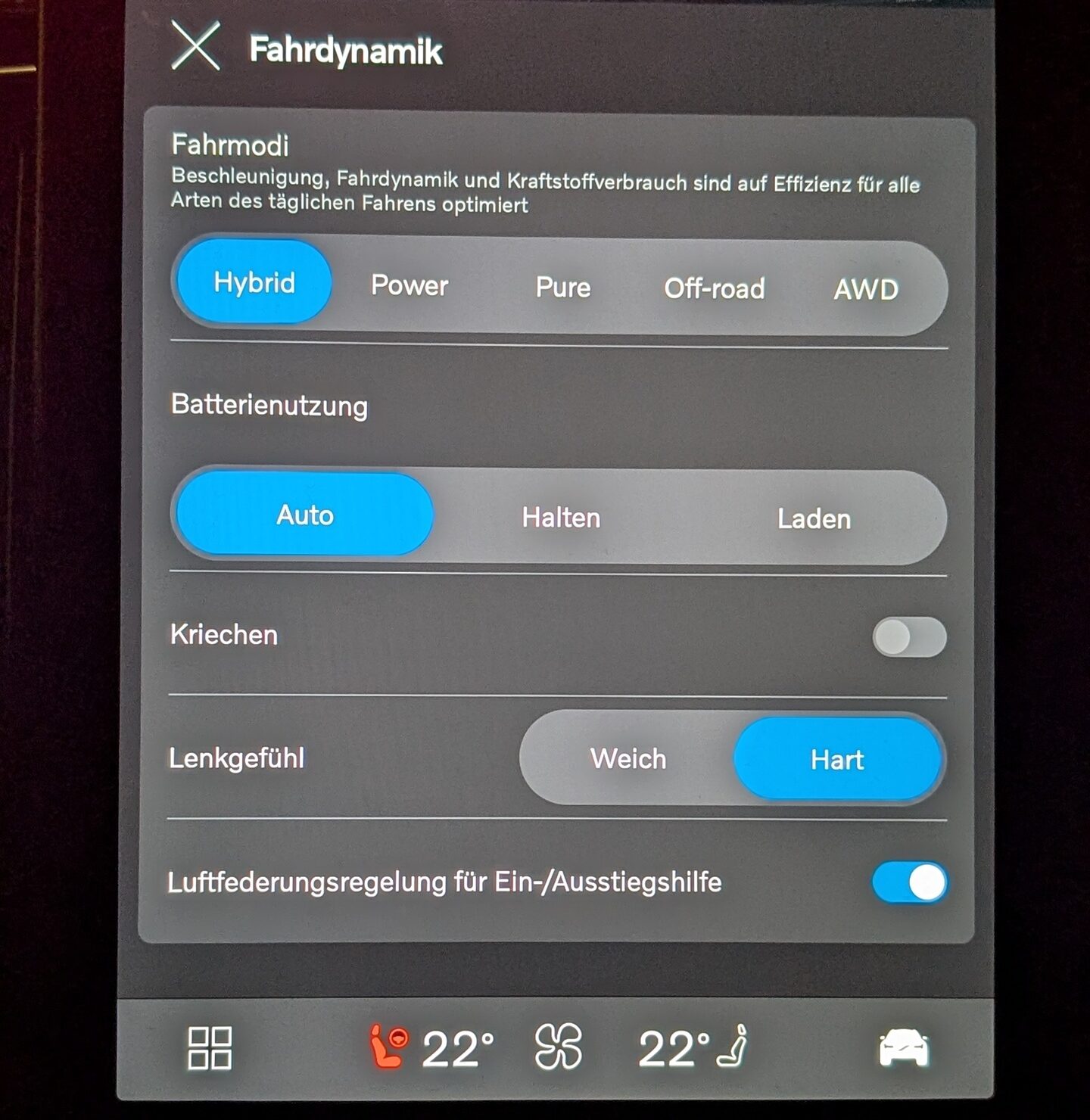
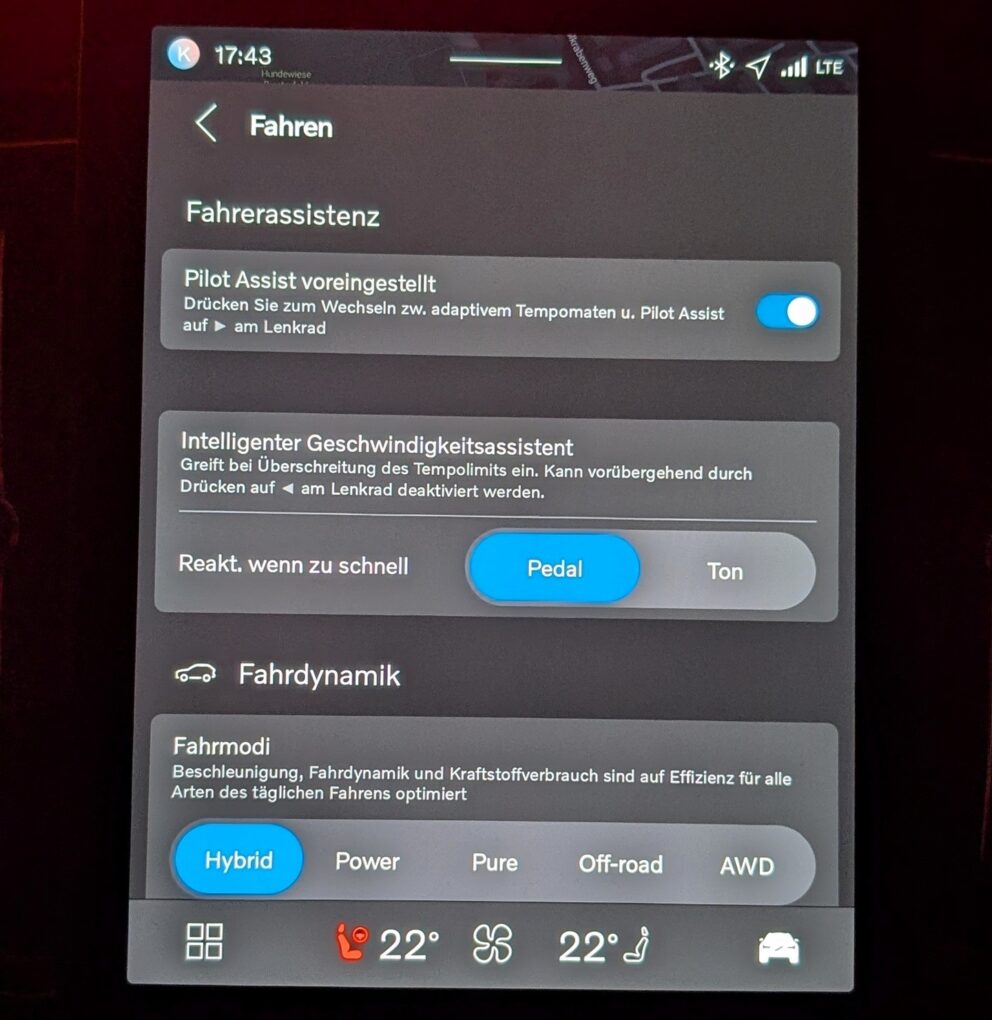
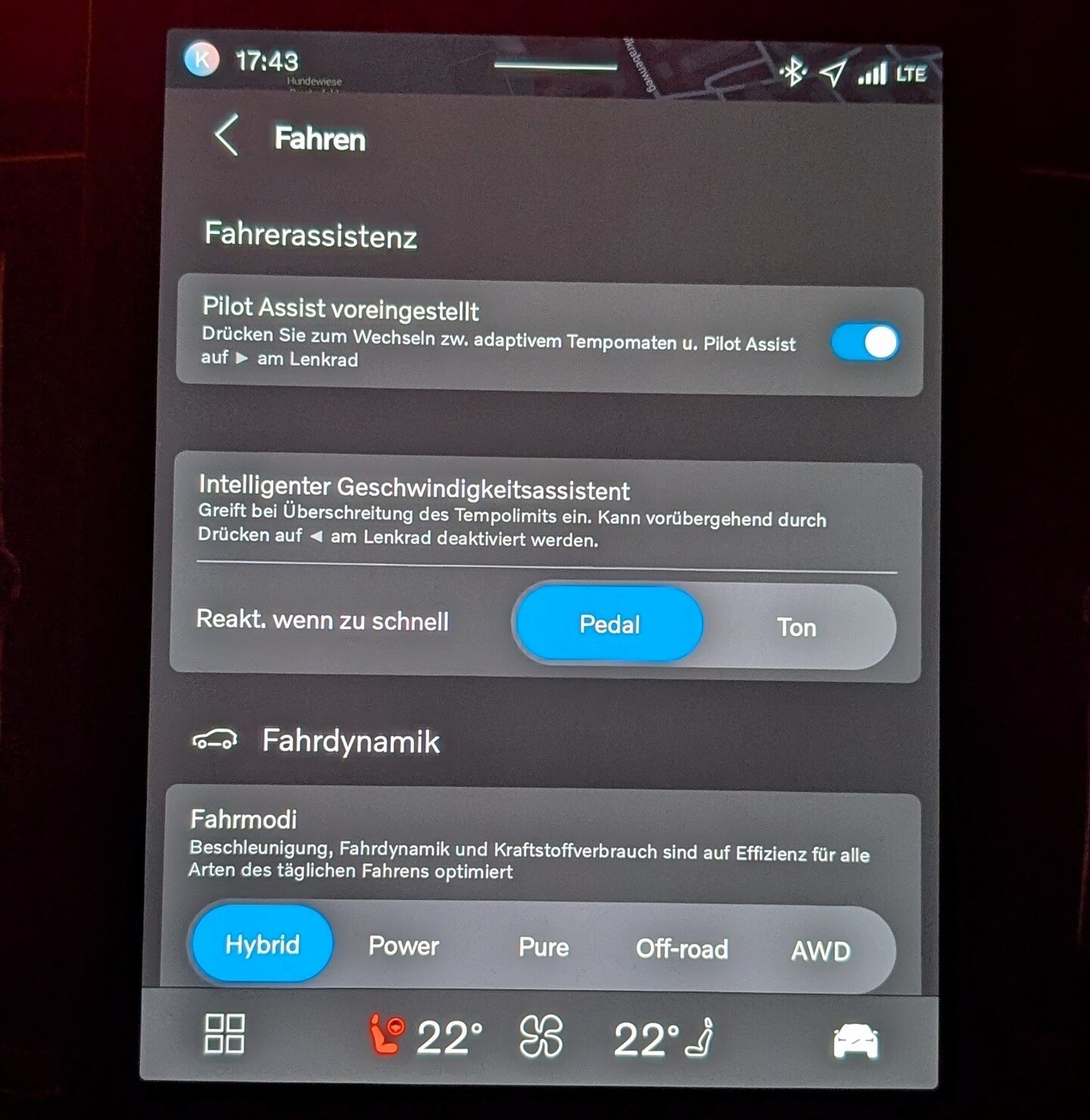
The integrated crankshaft starter generator (CISG) acts as the control center, enabling seamless transitions between electric and combustion operation. The eight-speed automatic transmission with shift-by-wire technology operates smoothly and intelligently. The selector lever, crafted from Swedish Orrefors crystal glass, is a tactile highlight. In practice, the powertrain impresses with its versatility: In Pure mode, the XC90 glides whisper-quietly in all-electric mode; in Hybrid mode, the system intelligently switches between the drive systems; and in Power mode, the combination unleashes impressive performance.
The XC90 plug-in hybrid accelerates from 0 to 100 km/h in 5,4 seconds. A truly respectable figure for such a large and heavy vehicle. This time is undercut by the BMW X5 xDrive50e (4,8 s), the Audi Q7 TFSI e (5,0 s), and the GWM Wey 05 (5,0 s). Unfortunately, the top speed of the Volvo XC90 is also electronically limited. limited to 180 km/h. Here, competitors with top speeds between 235 and 250 km/h are significantly better positioned. However, the one-pedal driving mode is particularly well-executed. In B mode, the electric motor recuperates energy strongly when the accelerator is released, braking the vehicle to a standstill. This recuperation is very effective and increases the driving range. In city traffic, this allows for relaxed driving where the mechanical brakes are hardly needed.
-
- Image: Volvo Germany
-
- Image: Volvo Germany
Battery: Could be bigger
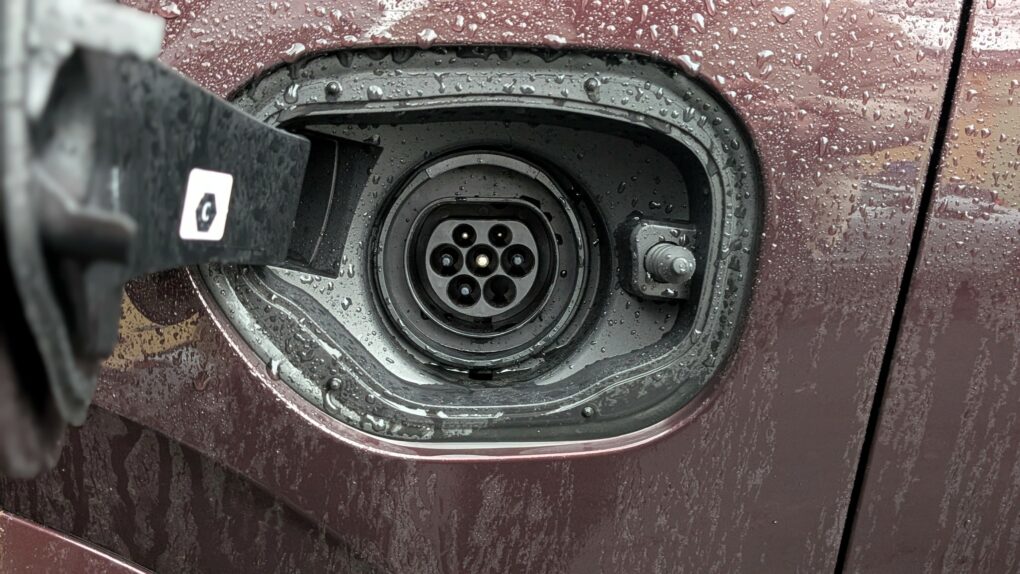
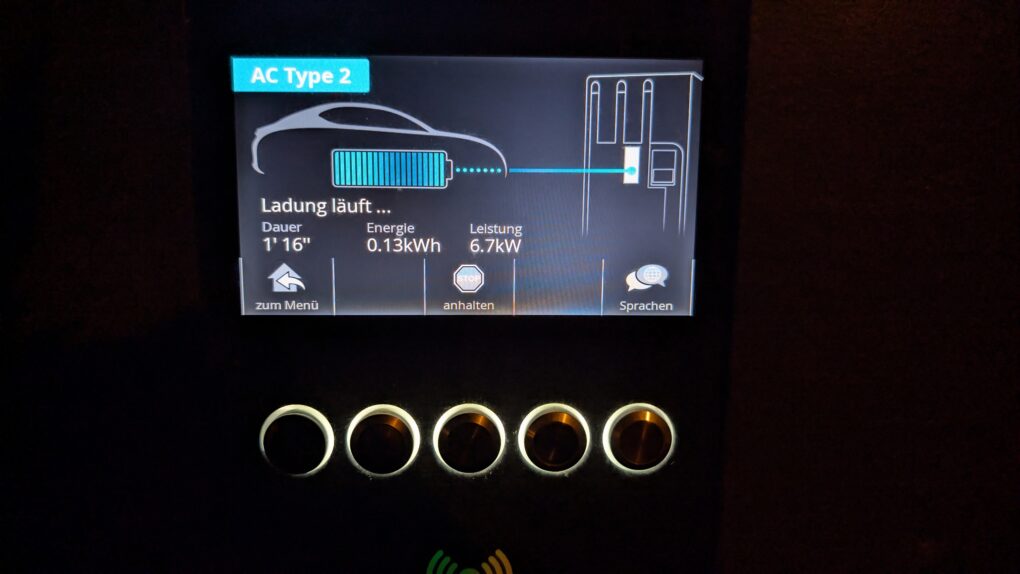
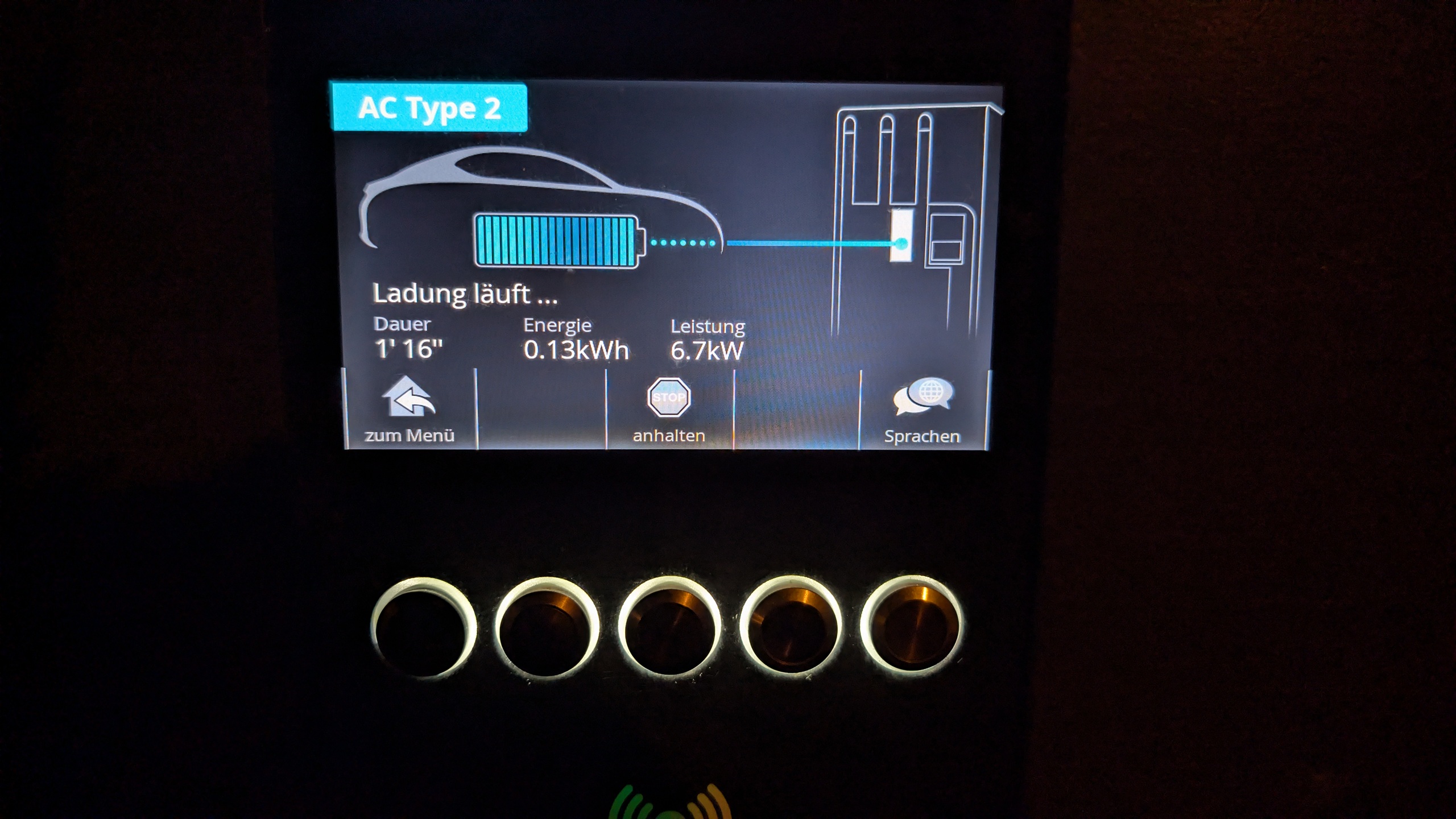
The lithium-ion high-voltage battery with 18,8 kWh capacity (14,7 kWh usable) It sits centrally in the transmission tunnel and consists of six modules, each with 16 cells. This arrangement lowers the center of gravity and improves driving dynamics without compromising interior space. The on-board charger delivers a maximum of 6,4 kW (two-phase). Charging from 0 to 100 percent takes three hours using an 11 kW wallbox and seven hours using a standard 230-volt household outlet. The charging port is located on the front left fender.
The XC90 Plug-in Hybrid also features practical Hold and Charge functions: Hold mode maintains the current charge level, while Charge recharges the battery while driving. This allows you to reserve electric range for use in low-emission zones or residential areas. The Predictive Efficiency function intelligently distributes energy along the route when a destination is entered, thus reducing fuel consumption.
-
- Picture: TechnikNews
-
- Picture: TechnikNews
Driving dynamics and handling: Top-notch for such a heavy SUV
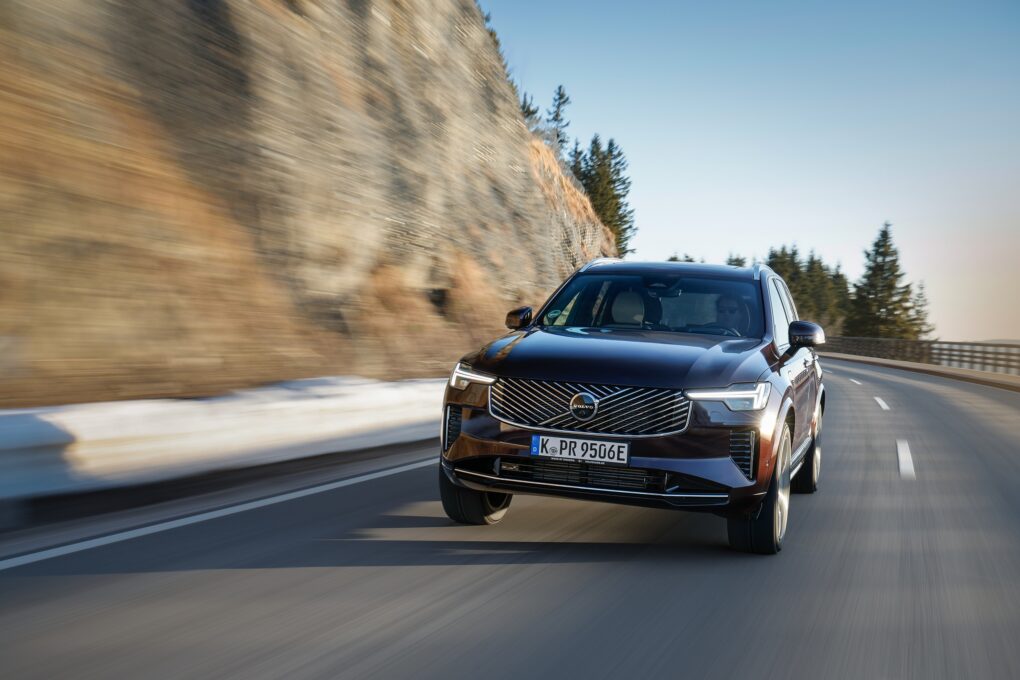
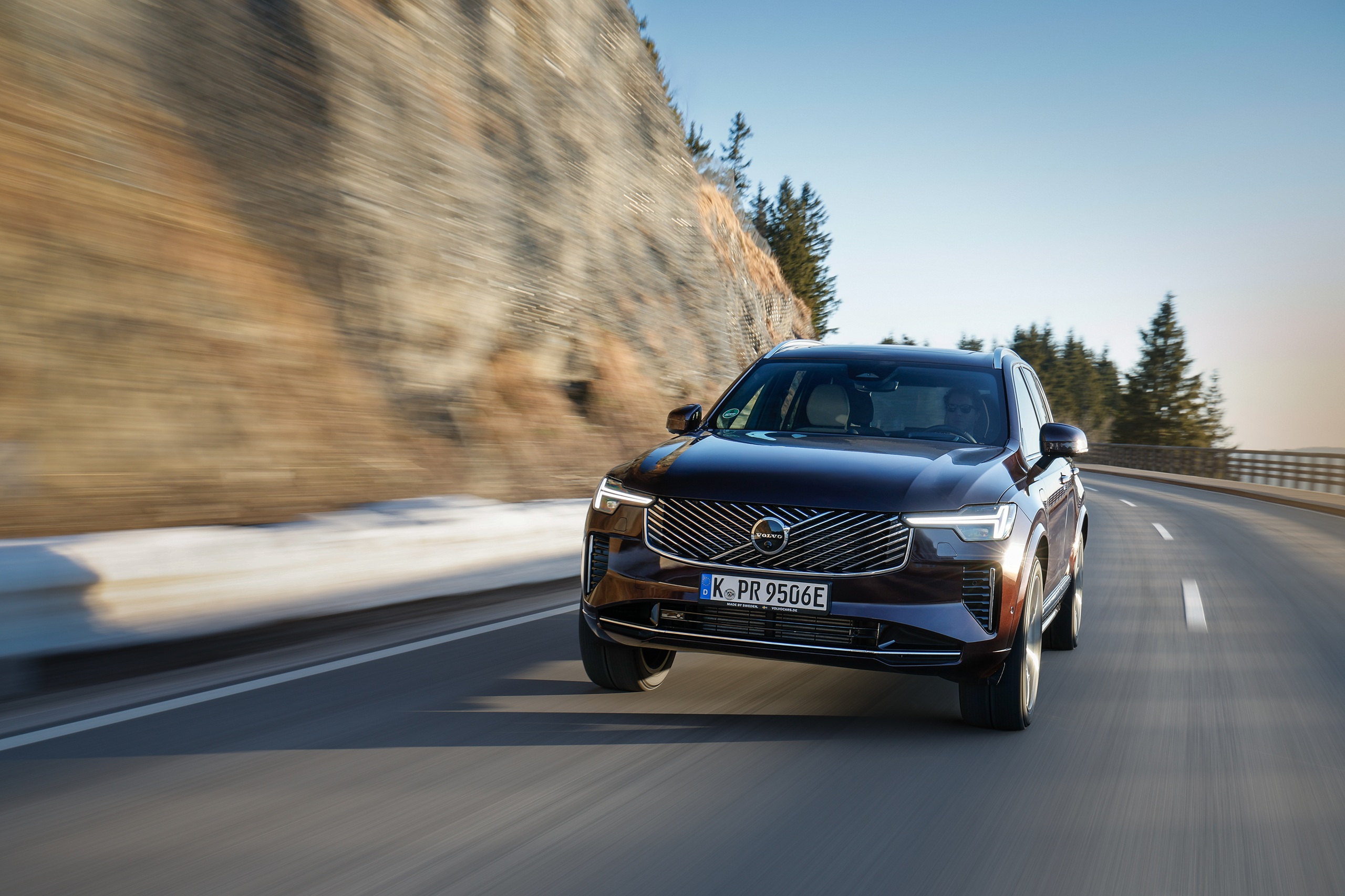
For a 2,2 ton weight For a 4,95-meter-long SUV, the XC90 moves with surprising agility. The double wishbone front axle reduces understeer, and the integral rear axle with a composite transverse leaf spring saves weight and allows for precise adjustments. The speed-sensitive electric power steering provides excellent assistance at low speeds for maneuvering and more direct feedback at higher speeds. The steering is precise, though not quite as communicative as that of the BMW X5.
The adaptive air suspension with Four-C dampers It strikes an excellent balance between comfort and dynamics: In corners, the body remains remarkably low, and body roll is effectively controlled. Corner Traction Control with Torque Vectoring brakes the inside wheel and transfers more power to the outside, allowing for tighter cornering. The electronically controlled all-wheel drive intelligently distributes power between the front and rear axles. In AWD mode, all four wheels are permanently driven. In Off-Road mode, ground clearance is increased by 40 millimeters, and Hill Descent Control is activated.
The high-performance braking system, with 345 mm discs at the front and 320 mm discs at the rear, provides confident and easily modulated deceleration. The braking distance from 100 km/h is 36 meters, which is a good figure for this vehicle class. In direct comparison, the XC90 offers a more comfort-oriented ride than the sportier BMW X5, but is more dynamic than the Audi Q7. The handling is impressively balanced – the XC90 is not a sports car, nor does it need to be.
-
- Image: Volvo Germany
-
- Image: Volvo Germany
Fuel consumption of the Volvo XC90 Plug-In Hybrid:
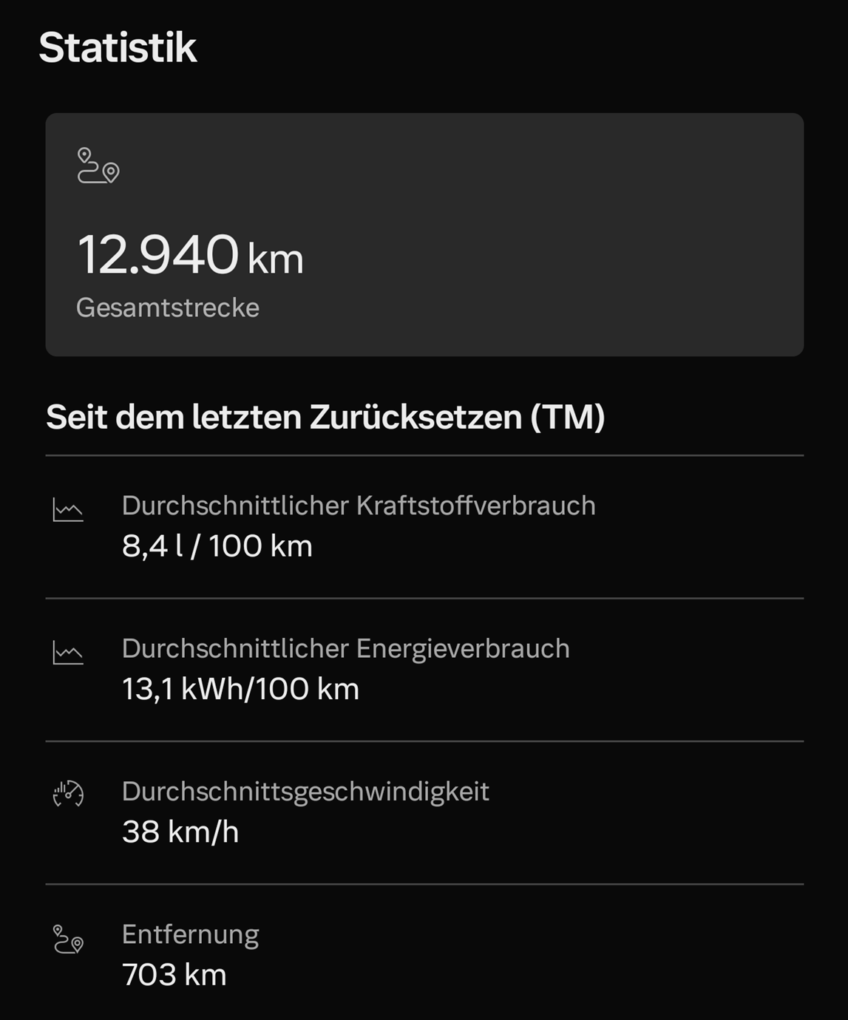
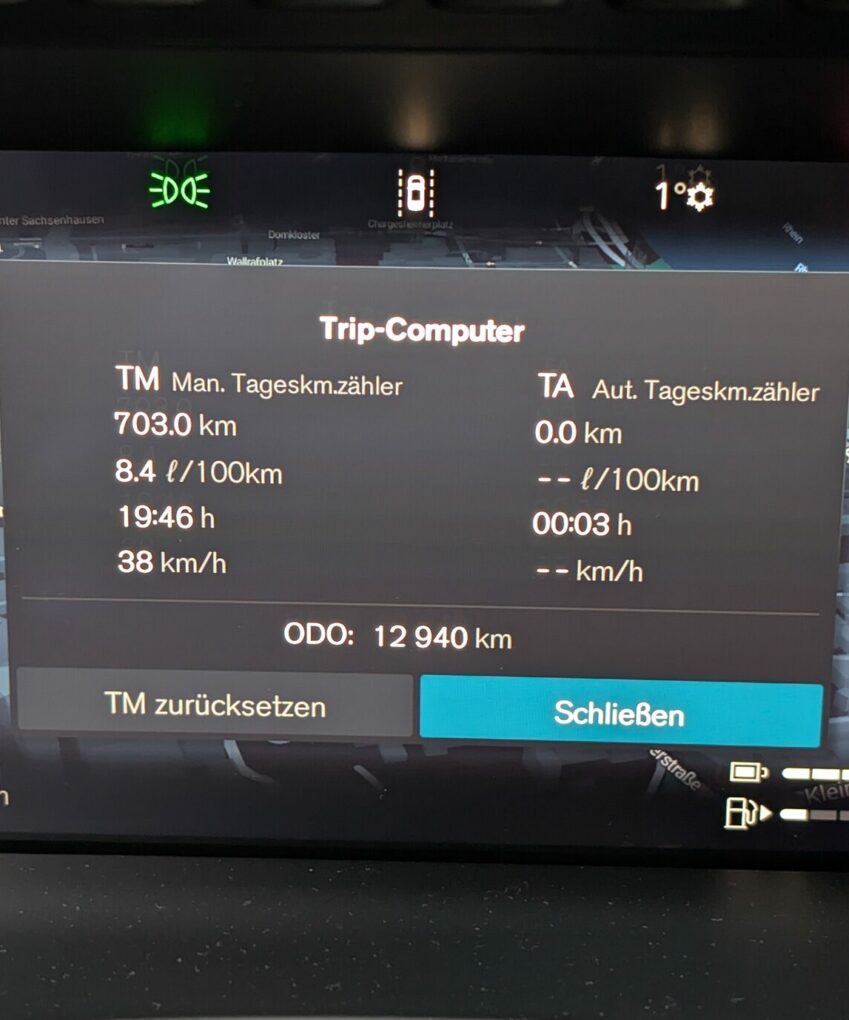
The official WLTP figures are 3,5 l/100 km (weighted combined) and 12,8 kWh/100 km of electricity consumption. In practice, however, these figures are only achievable with a fully charged battery and on short journeys. Our test drives yielded the following more realistic figures: In pure electric mode, the XC90 consumed between 22 and 25 kWh/100 km – an acceptable figure for a 2,2-ton SUV. When both drive systems were used, the consumption was... 8,4 liters/100 km and 13,1 kWh/100 km. However, it must be taken into account that the battery was not continuously charged during the 700 kilometers we drove. With a consistently full battery, fuel consumption below 8 liters/100 km is probably possible. In hybrid mode with a discharged battery, fuel consumption fluctuated depending on driving style and route.procapacity between 9 and 11 liters pro 100 kilometers.
On longer motorway journeys at higher speeds, fuel consumption climbed to 11 to 13 liters per 100 kilometers. In city traffic with a fully charged battery and predominantly electric driving, average consumption figures of under three liters per 100 kilometers were achievable, although electricity consumption must, of course, be taken into account. Internal Volvo data shows that XC90 plug-in hybrid drivers cover an average of around 50 percent of all journeys purely electrically – a remarkable figure that underlines the potential of this drive system. Those who charge consistently can manage their daily driving largely on electric power.
-
- Picture: TechnikNews
-
- Picture: TechnikNews
Range: Should be sufficient for everyday use
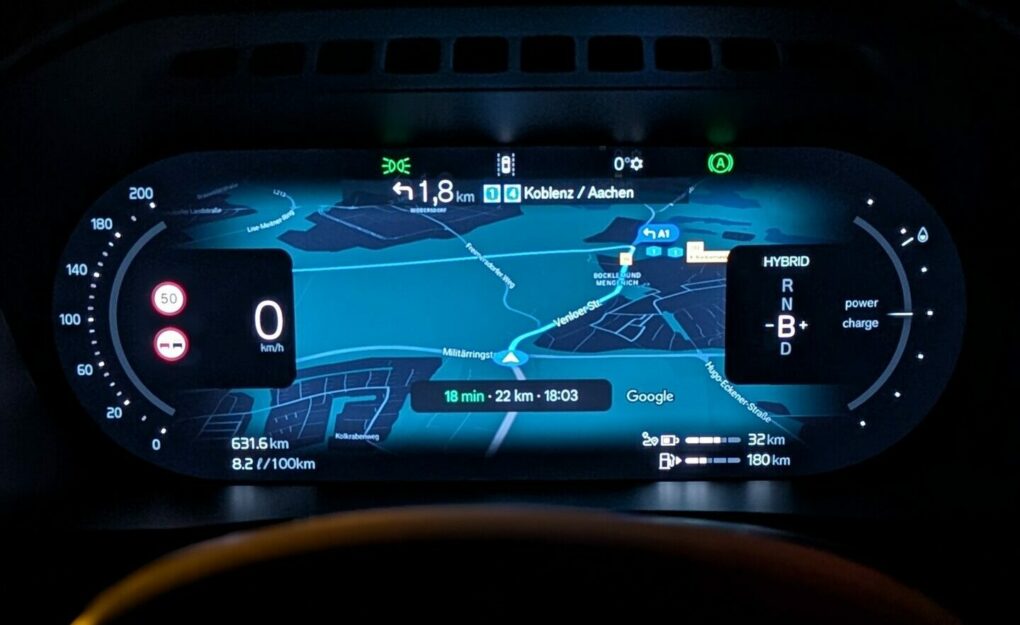
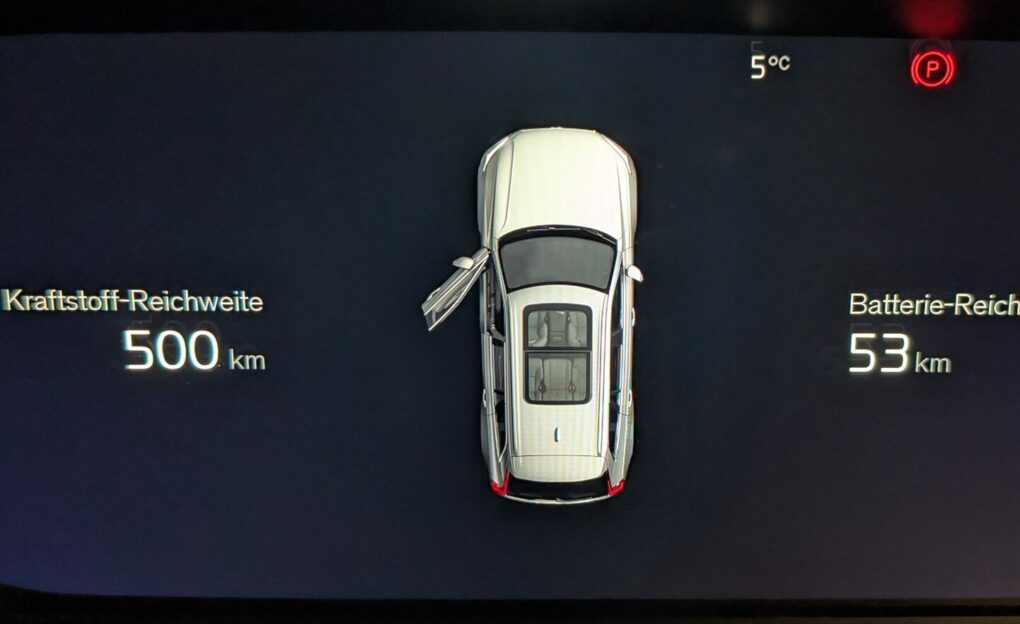
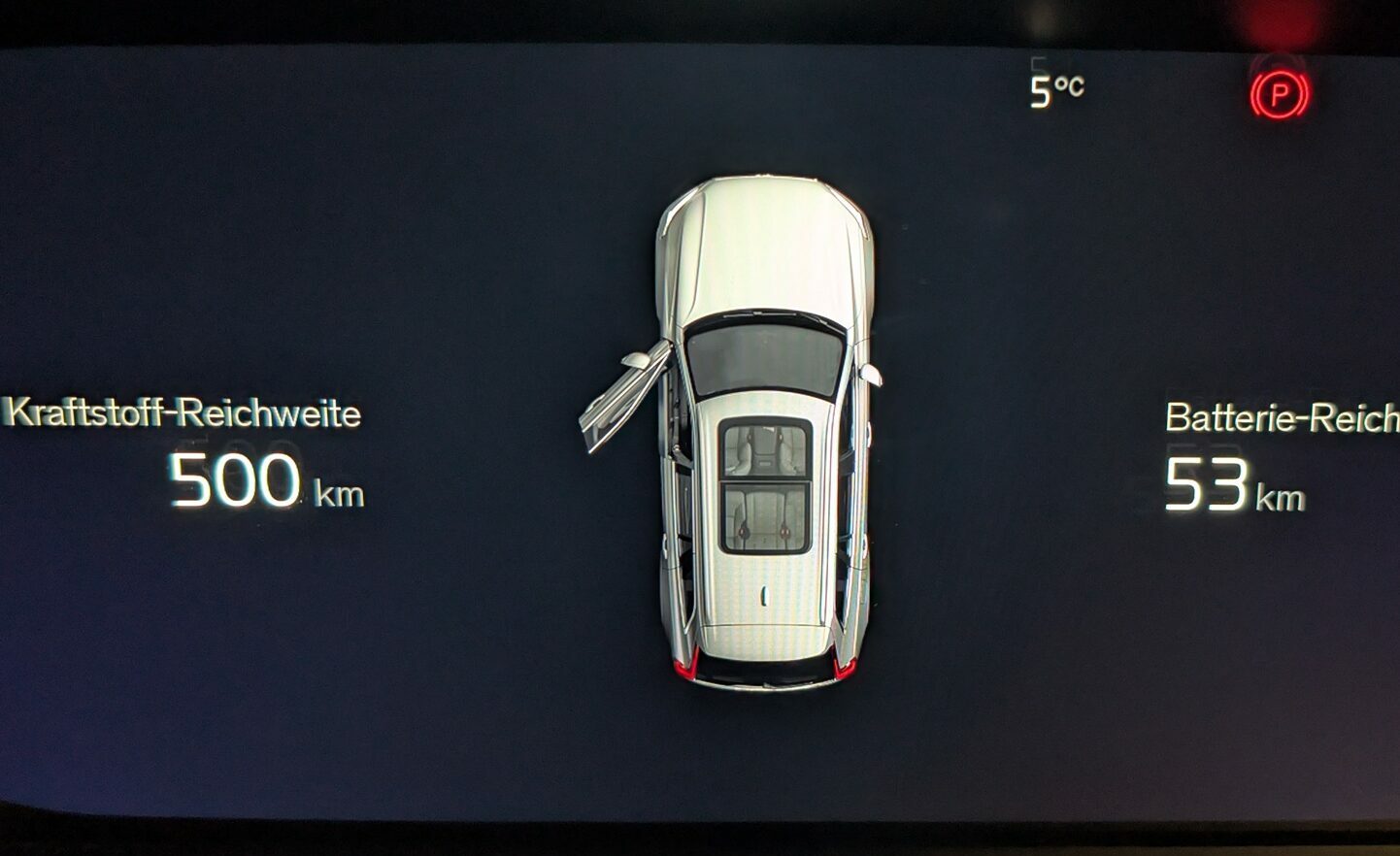
The electric range of the Volvo XC90 plug-in hybrid is 71 (combined) to 89 (city) kilometers according to WLTP. If the range in city traffic is used as the basis for the Promotion of plug-in hybrids Since the XC90 is used as a benchmark, it should also be eligible for the subsidy, as it exceeds the minimum limit of 80 kilometers. In our test, we achieved this with moderate driving and one-pedal driving activated. realistically about 62 kilometersIn sub-zero winter temperatures and with the heating on, the range shrank to around 53 kilometers. The electric top speed of 140 km/h is sufficient even for highway driving. For most commuters, the electric range is adequate. proNo problem for the commute to and from work. Those who can also recharge during the day drive almost exclusively on electric power.
For comparison: The BMW X5 xDrive 50e, with its 29,5 kWh battery, achieves higher figures of 105 to 119 WLTP kilometers, while the Audi Q7 TFSI e lags behind with an official range of 81 to 87 kilometers. The GWM Wey 05, with its 39 kWh battery, offers a WLTP range of up to 158 kilometers and has this in our test This has also been proven. The Volvo XC90's fuel tank has a capacity of 71 liters. With efficient driving, total ranges of 800 to 1.000 km can therefore be achieved. The actual range, of course, depends heavily on driving style.
-
- Picture: TechnikNews
-
- Picture: TechnikNews
Charging: Unfortunately, no fast charging.
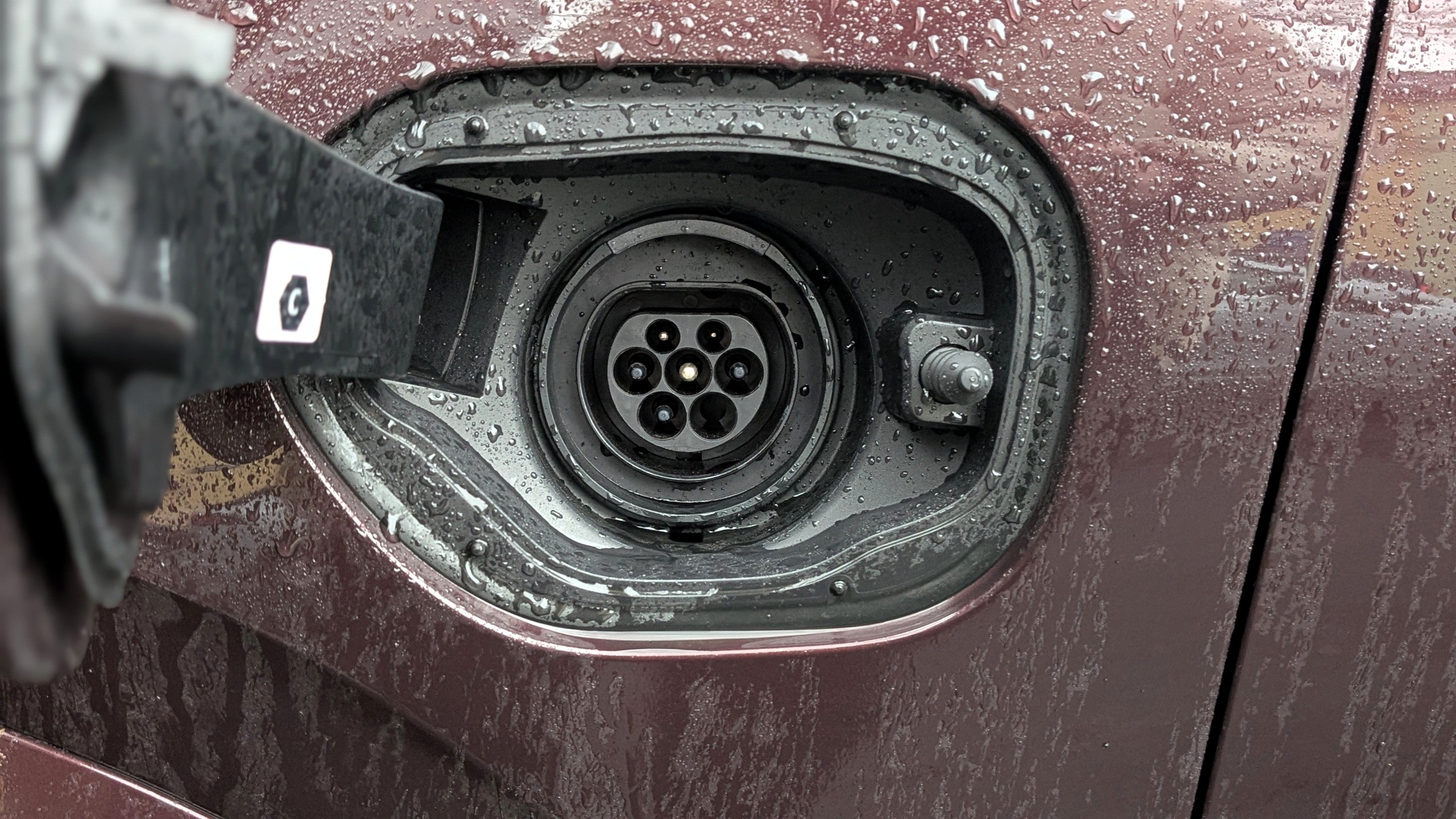
Charging with alternating current (AC) at an 11 kW wallbox or a charging station in the city takes three hours from completely empty to fullThis is a practical charging time for overnight charging or during extended stays. Charging at a standard household outlet takes seven hours, which is also sufficient for overnight charging. Operation is simple: plug the car into the charging port – that's it. The charging process can be monitored and scheduled via the Volvo Cars app to take advantage of cheaper off-peak electricity rates, for example. An illuminated ring around the charging port also indicates the charging progress.
The lack of fast-charging capability in the XC90 is a drawback. Even though most plug-in hybrid drivers primarily charge at home or at work, the option of quick top-ups on long journeys would be a significant gain in both convenience and efficiency. BMW and Audi are no further ahead in this regard. Only the GWM Wey 05 can be charged with direct current (DC) at up to 80 kW.
-
- Picture: TechnikNews
-
- Picture: TechnikNews
Price and warranty of the Volvo XC90 Plug-In Hybrid:
The Volvo XC90 Plug-in Hybrid is available in the “Core” trim level. from € 88.900 Available. This positions it below the BMW X5 xDrive50e (starting at approximately €101.270) and the Audi Q7 TFSI e (starting at approximately €90.800). The GWM Wey 05 Luxury, priced around €63.900, is significantly cheaper, but cannot compete with the established premium brands in terms of brand prestige.
The Ultra version of the XC90 we tested (starting at €96.390) comes with a comprehensive range of features: seven seats, matrix LED headlights, panoramic glass roof, head-up display, 360° camera, premium sound system by Harman Kardon, air suspension, Nappa leather seats with massage and ventilation functions, an enhanced air purification system, and all the driver assistance systems described. The Bowers & Wilkins audio system costs approximately €3.200 extra, but is absolutely worthwhile for audiophiles. Acoustic side windows add around €800 to the price. A paint finish other than the standard "Vapour Gray" costs an additional €1.150.
Volvo grants three-year warranty with unlimited mileage; The battery is guaranteed for eight years or 160.000 kilometers. Service packages are reasonably priced, and the maintenance intervals of 20.000 kilometers or one year are standard for this class. Insurance classification is typical for its class (liability 26, comprehensive 31), and the expected resale value is solid, as the Volvo XC90 is considered to hold its value well.
-

- Even Santa Claus likes driving a Volvo – Image: TechnikNews

-

- Even Santa Claus likes driving a Volvo – Image: TechnikNews

Many thanks to Volvo Germany for providing the Volvo XC90 Plug-In Hybrid for this test report. This did not influence our opinion!