
The Vivo X-series smartphones have been among the best devices on the market for years, and the Vivo X300 Pro is no exception. Compared to the X200 Pro However, the equipment has not changed significantly.
For a suggested retail price of €1.399, you essentially get almost identical technical specifications to the X200 Pro – supplemented by a slightly improved camera, a marginally larger battery, and faster wireless charging. We've thoroughly tested the device and will determine whether the extra cost of the X200 Pro is worthwhile or whether you should opt for its predecessor.
Conclusion
The Vivo X300 Pro is a thoroughly successful smartphone without any real weaknesses. For me, it's definitely one of the best devices on the market – and in some areas, it's even the best. The design feels premium, the display is extremely bright and color-accurate. I like the software, the long update cycles, and the strong performance. The battery life is long, and the battery recharges quickly. The cameras are excellent, the vibration motor is noticeably better than its predecessor, and the fingerprint sensor remains the best on the market in my opinion.
Despite all its strengths, I have to say that not much has changed compared to the Vivo X200 Pro. I even prefer the design of its predecessor – mainly because of the brushed frame and because it felt more comfortable in the hand. The display, performance, and battery life are virtually unchanged. I also see only minor improvements in the cameras, and I had particularly high hopes for the ultrawide camera.
At the current price of €1.399, I find it difficult to wholeheartedly recommend the X300 Pro. Even though it's still the best smartphone on the market in my opinion, the price is simply too high compared to its predecessor. If you can still get the X200 Pro for around €1.000, you should definitely go for the older model. However, since it's hardly available anymore and the X300 Pro has already dropped to about €1.100, it's still worth considering. I would wait a few more weeks or months until the price drops to around €1.000. Then you'll get an excellent overall package at a fair price – and then I can fully recommend the Vivo X300 Pro. In any case, I'm already really looking forward to the X400 Pro next year.
We thank Vivo Austria for providing the Vivo X300 Pro 🙂
Design
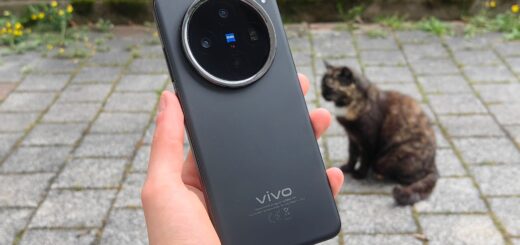
At first glance, the design of the Vivo X300 Pro appears almost unchanged compared to its predecessor, but a closer look reveals some differences. The Vivo X300 Pro is slightly more compact overall than the X200 Pro, which I personally find very appealing. It weighs 226 g, making it neither heavier nor lighter than its predecessor. It again features an angular frame that appears slightly sharp, making the device less comfortable to hold. Rounded frames are simply much more ergonomic. Nevertheless, the smartphone sits well in the hand and is suitable for use in many situations. proIt can be operated easily with one hand. However, due to its size, complete one-handed operation is not always possible. proeasily possible.


The frame is still made of aluminum, but unfortunately it's no longer brushed like its predecessor; it's now completely matte. This has the advantage that fingerprints and signs of wear are far less noticeable, but personally, I preferred the brushed look of the previous model and found it a bit grippier.
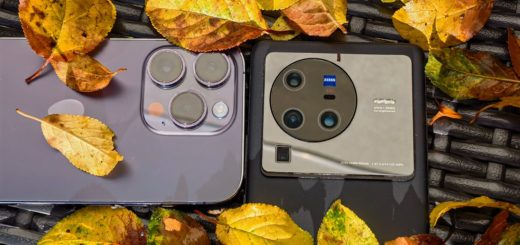
The back is made of matte glass, which feels very soft, textured, and high-quality. The triple camera is located in the upper third of the casing, protruding quite noticeably and standing out due to its rounded design. Personally, I much prefer this design to, for example, the Samsung Galaxy S25 Ultra. Because the camera protrudes so far, the smartphone wobbles quite a bit when lying on a table, especially in the upper third. The available colors are "Dune Brown" and "Phantom Black." I tested the brown model, which I can highly recommend.


The biggest differences compared to its predecessor are noticeable on the front. The display bezel is even thinner, which I find very impressive. Unfortunately, the display glass is no longer curved on all four sides – something I really liked on the predecessor, both visually and for swiping. It's a shame that Vivo didn't continue this design with the X300 Pro. Nevertheless, the front is still one of the most beautiful on the market, and you'll hardly find a thinner display bezel.
Display
The Vivo X300 Pro's display measures 6,78 inches and has a resolution of 2.800 x 1.260 pixels. The sharpness is perfectly acceptable for everyday use; individual pixels are not noticeable. The panel supports a smooth 120 Hz refresh rate, resulting in very fluid animations and scrolling. This is definitely noticeable in everyday use. The maximum brightness is listed at 4500 nits. In terms of technical specifications, the display is completely unchanged from its predecessor. But that's not a problem, as the X200 Pro already had one of the best displays on the market.

The colors are intense, as is typical for OLED displays, but still sufficiently realistic depending on the color mode. Viewing angle stability is very good, although white content takes on a slightly reddish tint at extreme angles. I'm also very impressed with the maximum brightness: especially in direct sunlight, the display is among the brightest on the market. While it doesn't quite reach the brightness levels of a Google Pixel or Huawei Pura 80 Pro without direct sunlight, it remains more than bright enough.
Software
The Vivo X300 Pro runs OriginOS version 6, based on Android 16. It has received security updates for seven years and major Android version updates for five years. This is even more than its predecessor, putting it on par with Samsung, Apple, and Google. Kudos to Vivo for this.
I've really come to like OriginOS, and it's almost become one of my favorite user interfaces. The software is clear, beautifully designed, and features great animations. At the same time, it doesn't feel as playful and colorful as, for example, Xiaomi's interface. The control panel and notification bar are combined instead of separate, which I find very convenient. The settings app is also quite well-organized now. The home screen looks uncluttered, there's a nice app drawer, and the Google News feed is on the left.
I especially appreciate the many additional features that Vivo has maintained for years. For example, you can customize the fingerprint sensor animation, the unlock animation, and modify the gesture controls. I also love that apps can be minimized to small windows, allowing you to use multiple applications simultaneously – something that isn't possible with Google Pixel devices. The gallery app is also very well done, particularly the features for generating text from images and instantly exporting an image as a PDF.
Performance
Under the hood is the MediaTek Dimensity 9500, manufactured using a power-saving 3nm process. It also comes with 16 GB of RAM and 512 GB of internal storage, which is not expandable. The RAM is the very fast LPDDR5X Ultra type.
Everyday performance is – as with its predecessor – at a very high level. Apps launch and close extremely quickly, animations run more smoothly and consistently than on almost any other smartphone, games look high-quality, and even the camera app is virtually stutter-free. Overall, the operating speed is excellent. Honestly, however, I don't notice any difference compared to its predecessor or other high-end smartphones like the HONOR Magic 7 Pro or HUAWEI Pura 80 Pro. We've simply reached a point where processor differences are barely noticeable in everyday use. The X300 Pro's heat management is also good – even under demanding tasks, the device never gets uncomfortably warm.
Battery
The battery has a capacity of 5.440 mAh. This makes it only slightly larger than the X200 Pro's battery. However, the Chinese version uses a 6.510 mAh battery. Fast charging is possible up to 90 watts, but unfortunately, the necessary power adapter is not included. Wireless charging is possible up to 40 watts, which is slightly more than its predecessor.
Despite the slightly larger battery, I achieve almost the same battery life with the Vivo X300 Pro as with its predecessor. With a screen-on time of 3,5 to 4,5 hours, I usually still have between 45 and 70 percent battery remaining at the end of the day. That's a very good result, and practically everyone should be able to achieve that. proIt easily lasts a whole day without recharging. In the first few days, I did notice that the consumption was slightly higher at times, but after a short while, it completely settled down.
camera
On the back there is a triple camera, arranged as follows:
- 50 megapixel main camera – f/1.57
- 50 megapixel ultra-wide-angle camera – f/2.0
- 200 megapixel telephoto camera – f/2.67 – 3,5x optical
A 50 megapixel front camera with an aperture of f/2.0 is responsible for selfies.

All three cameras deliver impressively beautiful images in good lighting conditions. I particularly like the color reproduction this year: it looks natural, yet remains crisp without being oversaturated. Those who prefer more vibrant colors can adjust this directly via various color palettes.proAdjust the file. The dynamic range is also extremely strong and virtually unmatched on all three cameras. Only in backlit situations or with very bright light sources did I occasionally notice slight light streaks – something I didn't expect when... Pura 80 Pro so it went unnoticed.
The main camera's sharpness is excellent. The ultrawide camera, however, can't quite keep up. The zoom, on the other hand, is outstanding: even at 10x, 20x, or even 30x magnification, the images still appear remarkably sharp. From about 50x magnification onward, it becomes clear that the AI has heavily processed the images, and the results no longer look realistic, but are still impressive nonetheless.
In low light, the main camera is also among the best on the market. The white balance is spot on, the sharpness is high, and the colors remain natural. Sometimes the shots could be a touch brighter for my taste, but overall the quality is good. Even the zoom camera performs surprisingly well despite its smaller aperture and remains perfectly usable even in low light. Only the ultrawide camera falls short here – it's not bad, but for €1.399 I expect significantly more.
Portraits, videos and selfies
The Lenovo X300 Pro is also among the best smartphones on the market for portrait photography. The bokeh effect is very realistic, and the edge detection works extremely reliably. I particularly like the natural-looking skin tones. Videos with the main camera can be recorded in 8K at up to 30 fps and in 4K at up to 120 fps. The sharpness is good, the colors are accurate, and the stabilization is also quite good.
The selfie camera delivers solid results: skin tones appear natural, the sharpness is fine, and the dynamic range is adequate.
Other
Vivo has integrated a 3D ultrasonic fingerprint sensor into the display, which is very easy to reach with your thumb. It reacts very quickly and extremely reliably – overall, it's definitely one of the best sensors on the market. My only complaint is that it's quite small, and I still don't understand why Vivo, like with the other device, chose a larger size. X80 Pro no longer uses a larger sensor.


The vibration motor is also among the best in its class: very precise, sensibly integrated into the software, and always noticeable without being loud or intrusive. I also like the stereo speakers. They get sufficiently loud and sound clear and pleasant up to a certain volume, with solid bass.
Last but not least, I would like to highlight the fact that the Vivo X300 Pro is certified according to IP68 and IP69 standards for protection against water and dust ingress.