
Ford Ranger PHEV Wildtrak (2026) review: The electrification of a pickup truck
A TEST REPORT from Kasimir Hupe  on April 30, 2026, 13:58 am | Write a comment
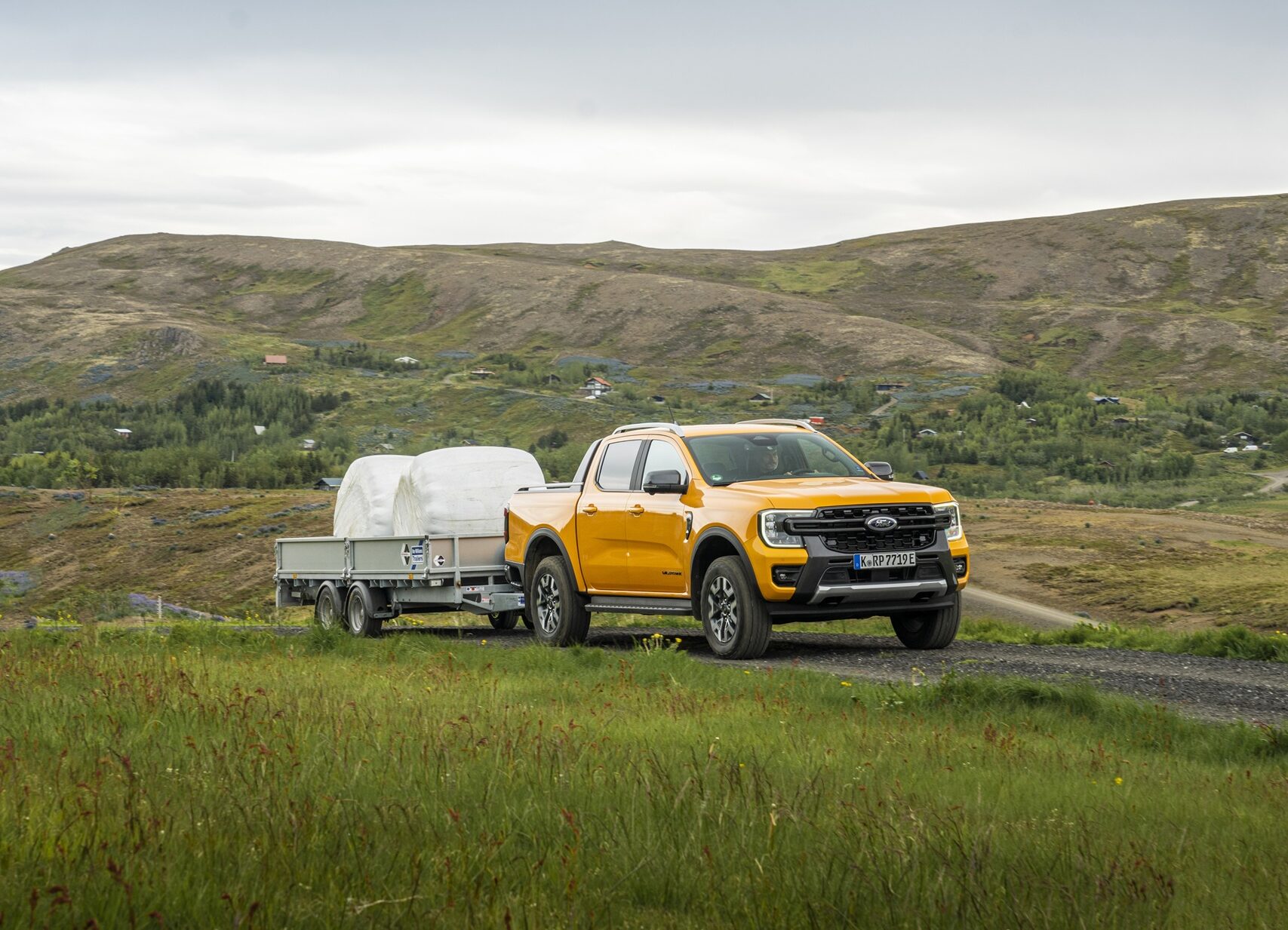
The Ford Ranger has been the best-selling pickup truck in Europe for ten years running and is now available with a plug-in hybrid power supply for the first time. Plug-in hybrid version of the Ranger It's more than just an update; it marks a turning point for the entire vehicle class. We've thoroughly tested Europe's first hybrid pickup for you – on asphalt, in mud, and at the charging station.
The story of the Ford Ranger is one of unwavering determination. Born in North America in the early 1980s, the Ranger was initially a compact, robust pickup truck for the American market – affordable, reliable, and relentlessly practical. What no one could have predicted at the time was that this workhorse from Michigan would one day become Europe's best-selling pickup. The first three generations of the Ranger were still based on the Mazda B-Series platform, which imposed a certain modesty on the Ford. With the fourth generation, unveiled in November 2021 and available to order from May 2022, Ford in Dearborn made a radical change: The Ranger is an in-house development, built at the Silverton plant in South Africa, and shares virtually nothing with its predecessors.
The Ford Ranger leads for ten years in a row the European sales charts among pickup trucks, with a market share that at times exceeded 43 percent. In some European markets, more than half of all newly registered pickups were Ford Rangers. Europe's best-selling pickup – that's not just a marketing slogan, that's hard statistics. And now, in 2025, Ford has launched the next stage of evolution: The Ranger is getting a plug-in hybrid powertrain – the first pickup in its class in Europe. We put the Wildtrak version through its paces and reveal whether the electric Ranger lives up to the high expectations.
Conclusion (tl;dr) about the Ford Ranger PHEV Wildtrak:
The Ford Ranger Plug-in Hybrid Wildtrak is a bold statement in a vehicle class long considered immune to electrification. Ford proves that a pickup truck with over a ton of payload, a 3,5-ton towing capacity, and genuine off-road capabilities can indeed harmonize with a hybrid powertrain. The Ranger PHEV is not a commpronot a vehicle, but a fully-fledged pickup truck– only quieter, cleaner in city traffic and, thanks to the instantly available torque of the electric motor, surprisingly confident off-road.
The electric range of around 35 to 40 kilometers in real-world conditions is acceptable for a commercial vehicle of this class and fully covers the daily commute for many users. Those who charge regularly, proIt significantly impacts fuel consumption. Those who rarely charge pay more – both in terms of purchase price and fuel consumption. The Ranger PHEV isn't a car for everyone, but for the right user, it's a brilliant all-rounder. No wonder it received such high praise from an international panel of experts. prompt the International Pickup Award 2026 has lent.
Strengths and weaknesses of the Ford Ranger PHEV Wildtrak
✅ Power
- System output of 281 hp and 697 Nm of torque
- Electric range of up to 41 km, which is sufficient for most commutes.
- Unchanged towing capacity of 3.500 kg and payload of 1049 kg
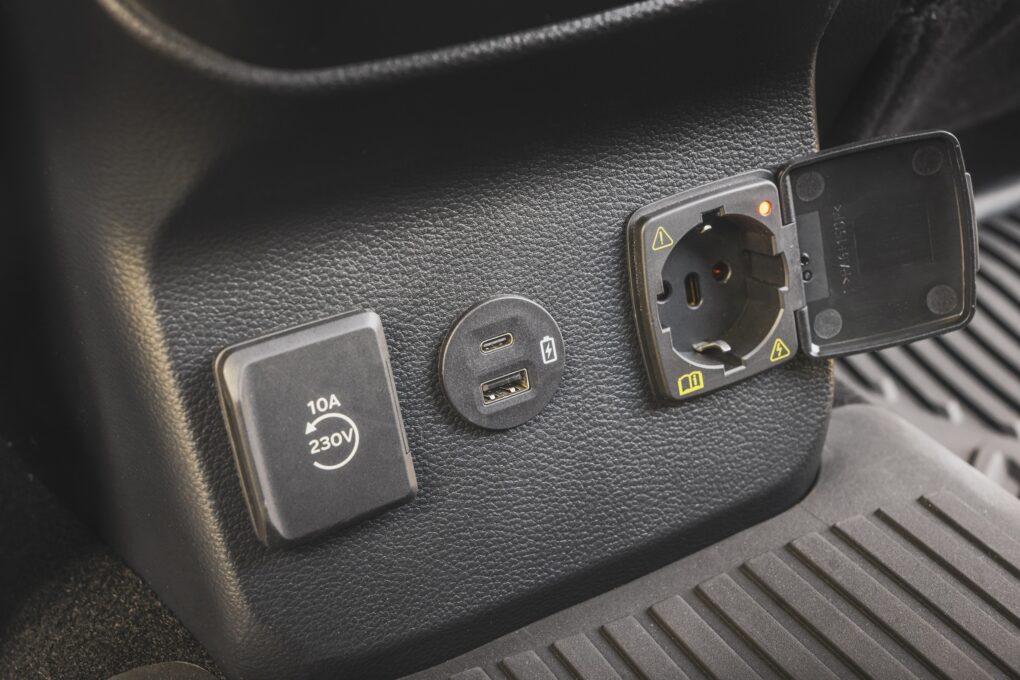
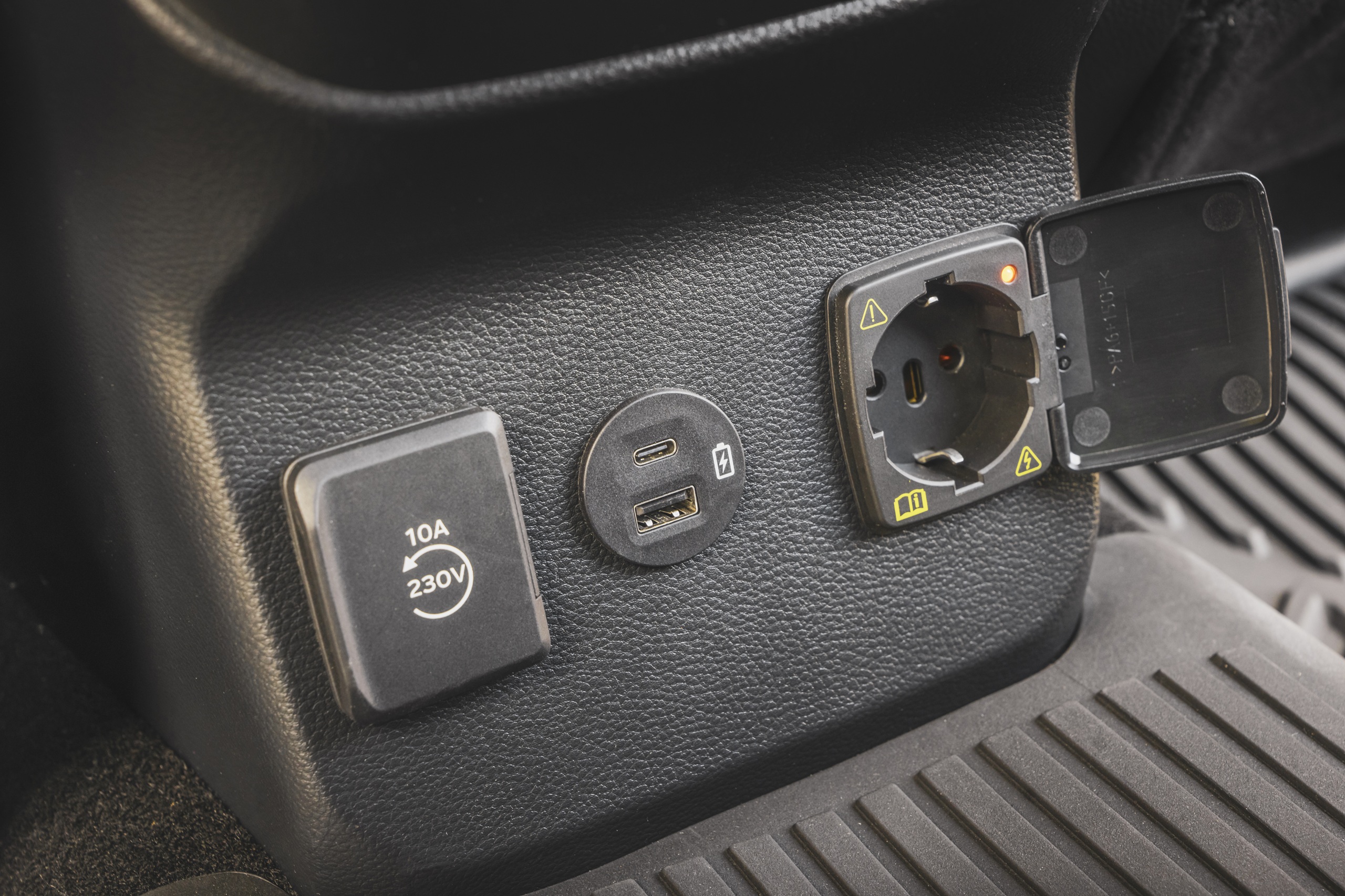
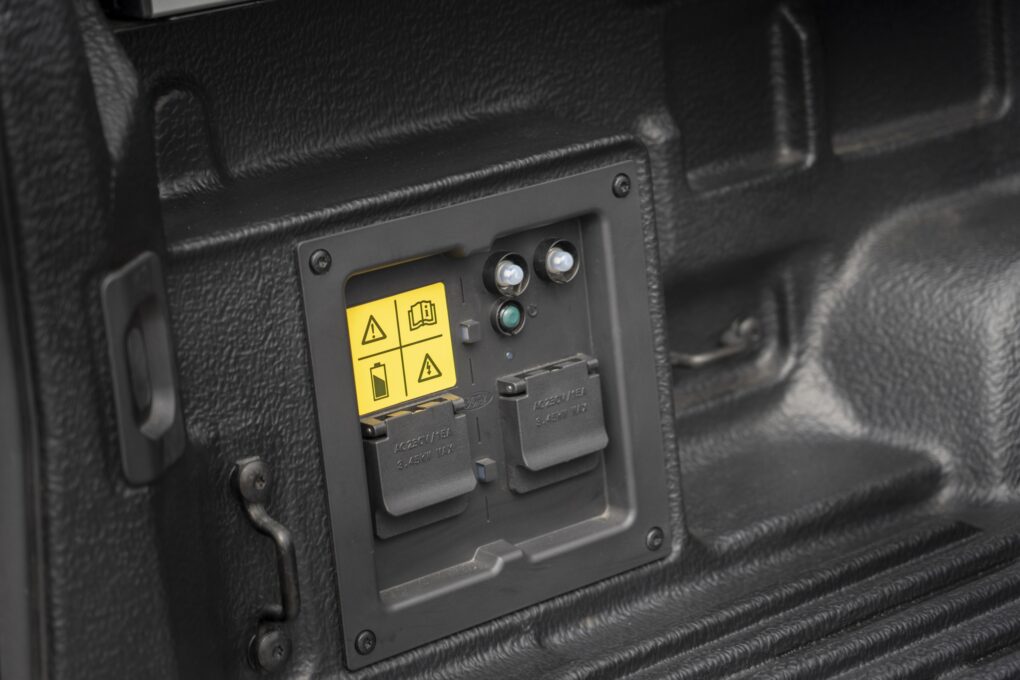
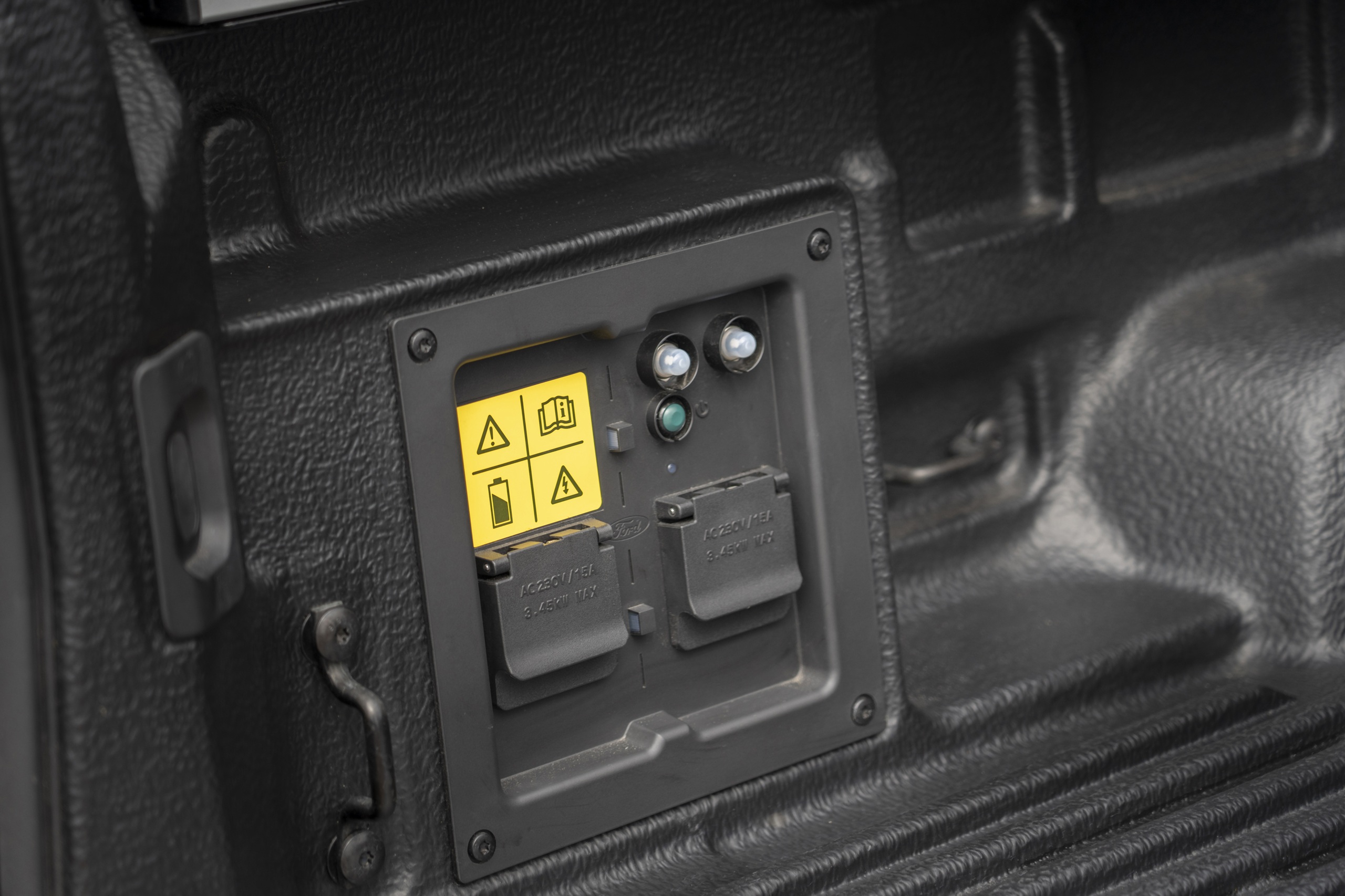
- Pro Power Onboard with up to 6,9 kW replaces external generator
- First-class off-road capabilities, enhanced by instant electric torque
- High-quality, well-made interior with modern infotainment system
- Extensive warranty coverage of up to 8 years
❌ weaknesses
- Electric range is rather short compared to passenger car PHEVs.
- At 2.511 kg, it's the heaviest model in the series – noticeable in driving performance and fuel consumption.
- Without regular charging, significantly higher consumption than the diesel version.
- Higher purchase price compared to diesel versions
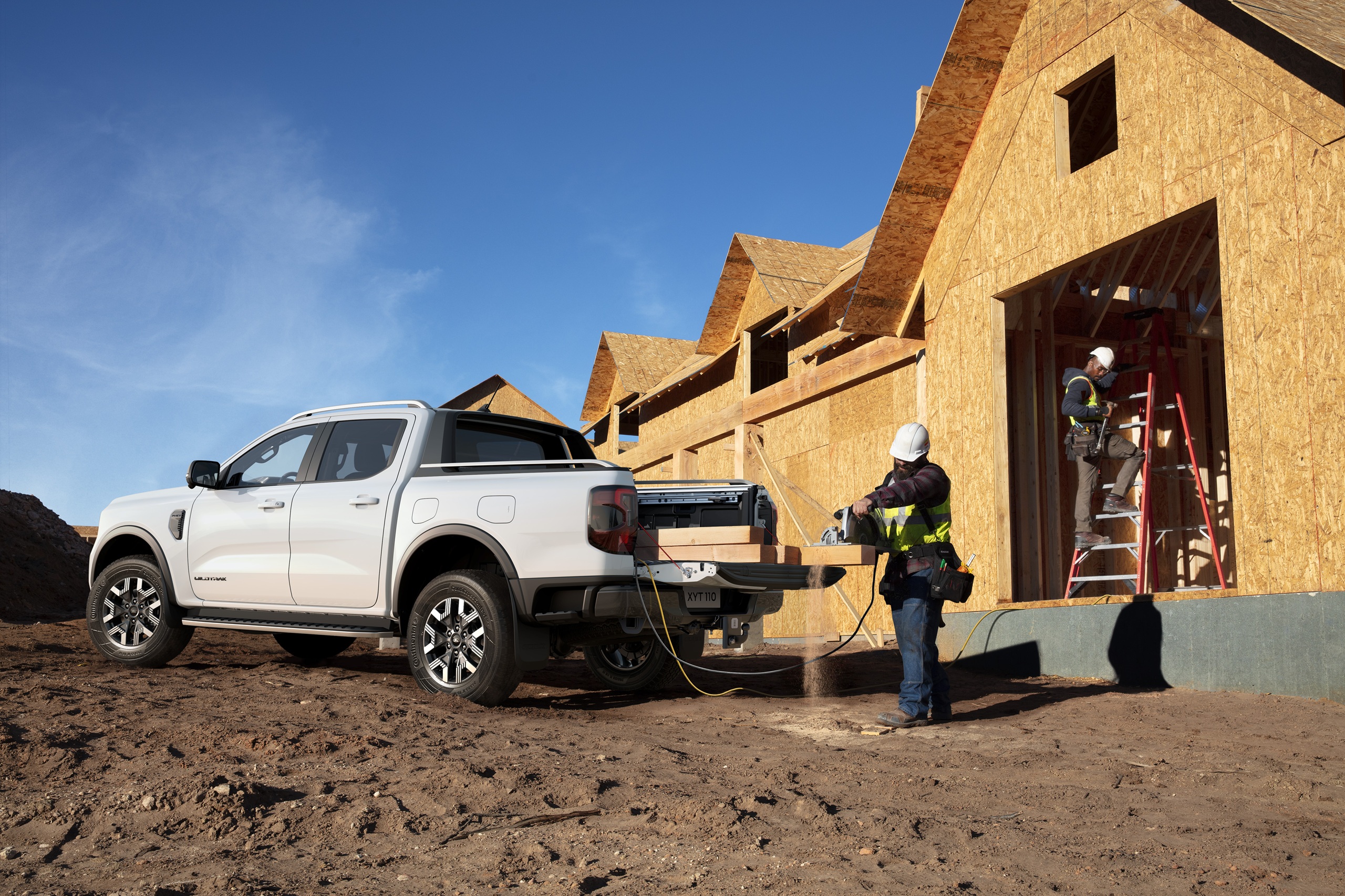
Image: Ford
Design and exterior of the Ford Ranger PHEV Wildtrak
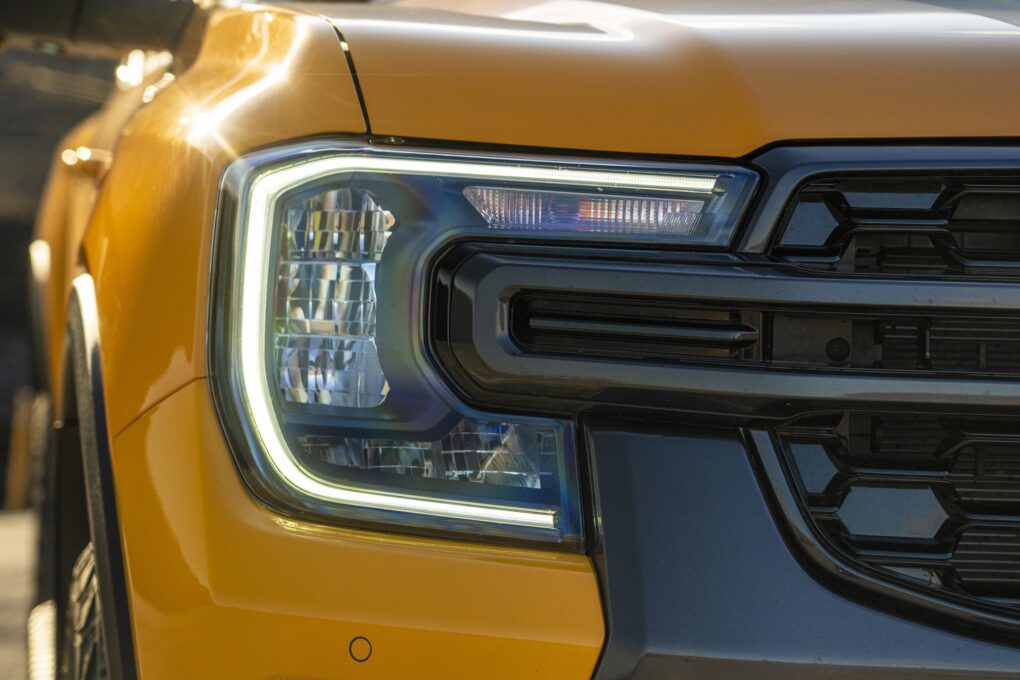
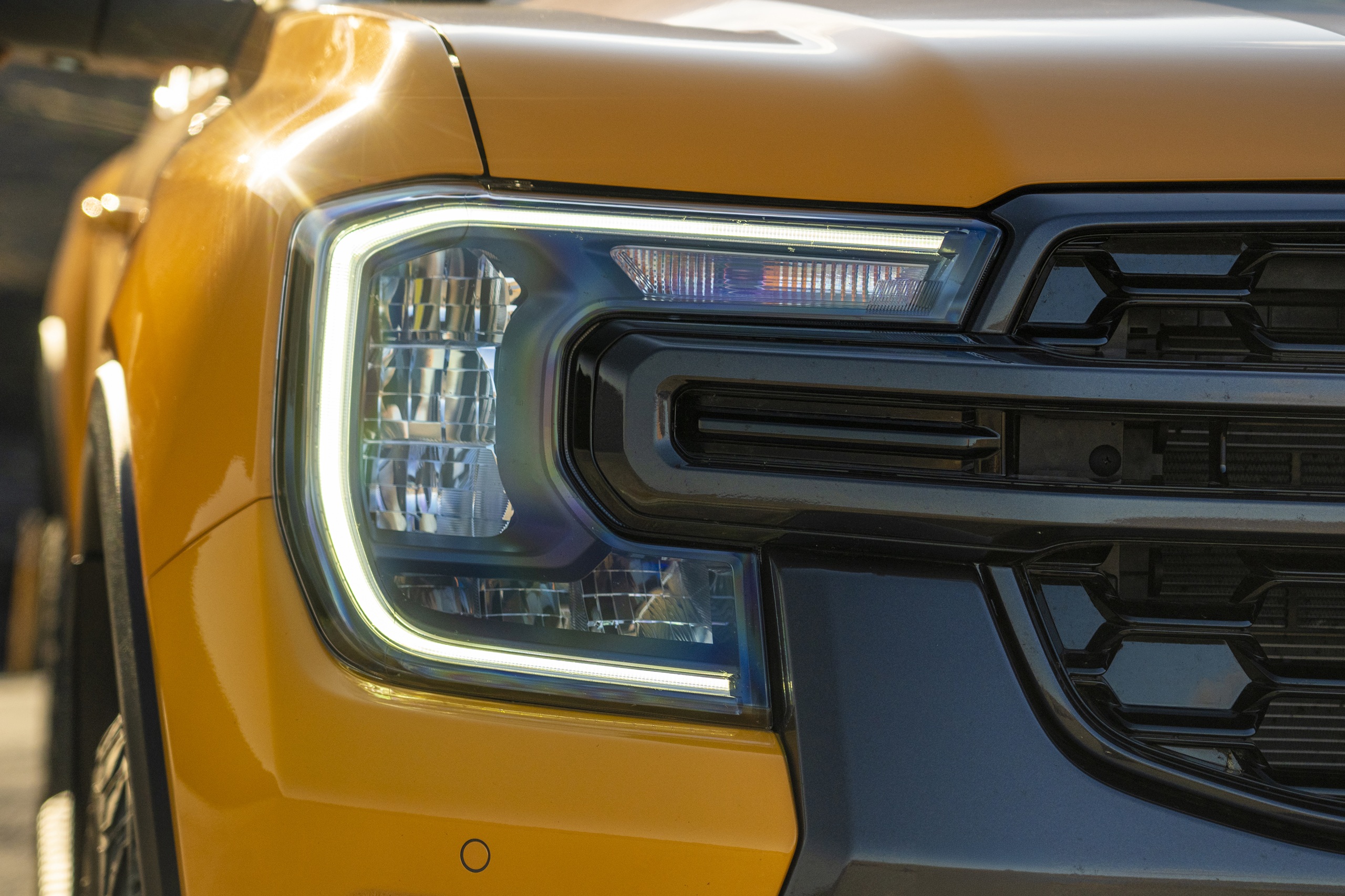
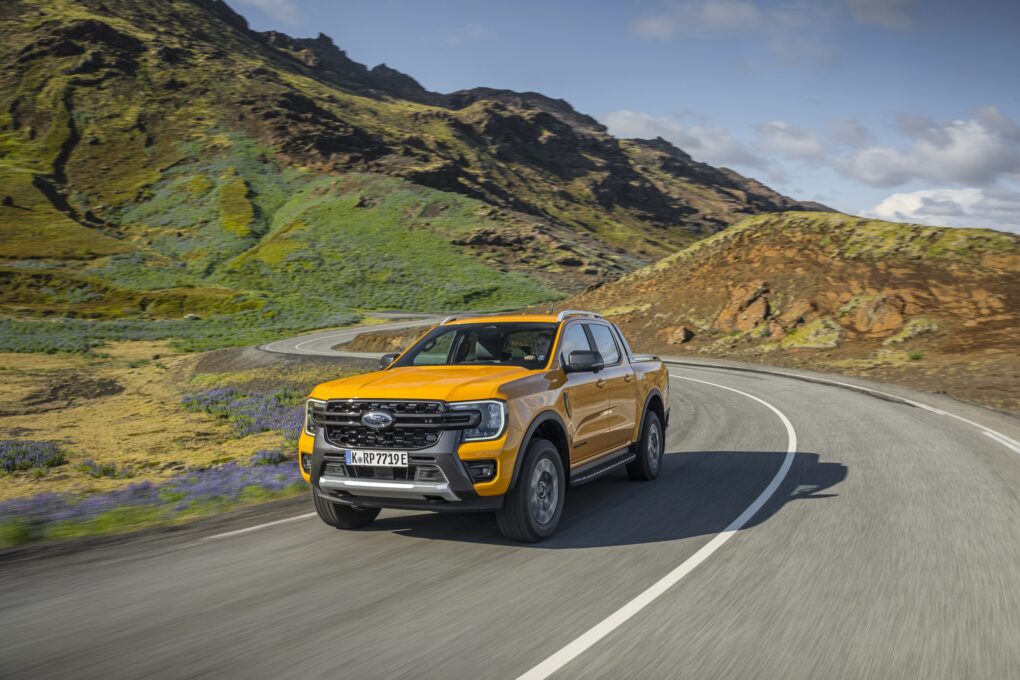
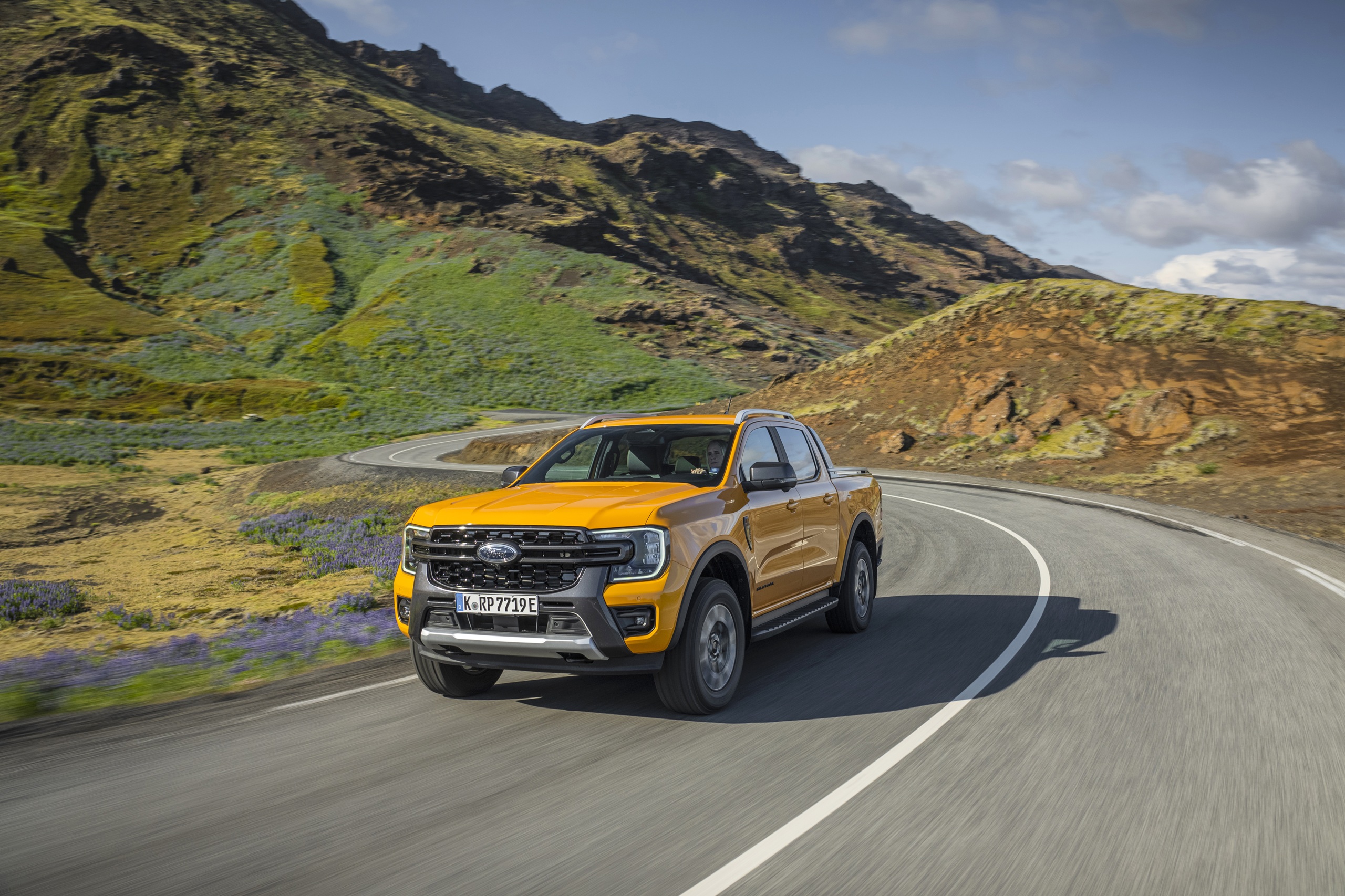
Anyone who sees the Ford Ranger Wildtrak PHEV for the first time from a distance immediately recognizes: This is not a timid facelift, but a a confident interpretation of modern pick-up design. At 5,35 meters long – longer than a long-wheelbase Mercedes S-Class – and 2,03 meters wide, the Ranger shows no regard for European parking spaces. The modern honeycomb grille, LED matrix headlights, and boldly styled wheel arches give the Wildtrak a presence that makes other vehicles look literally small.
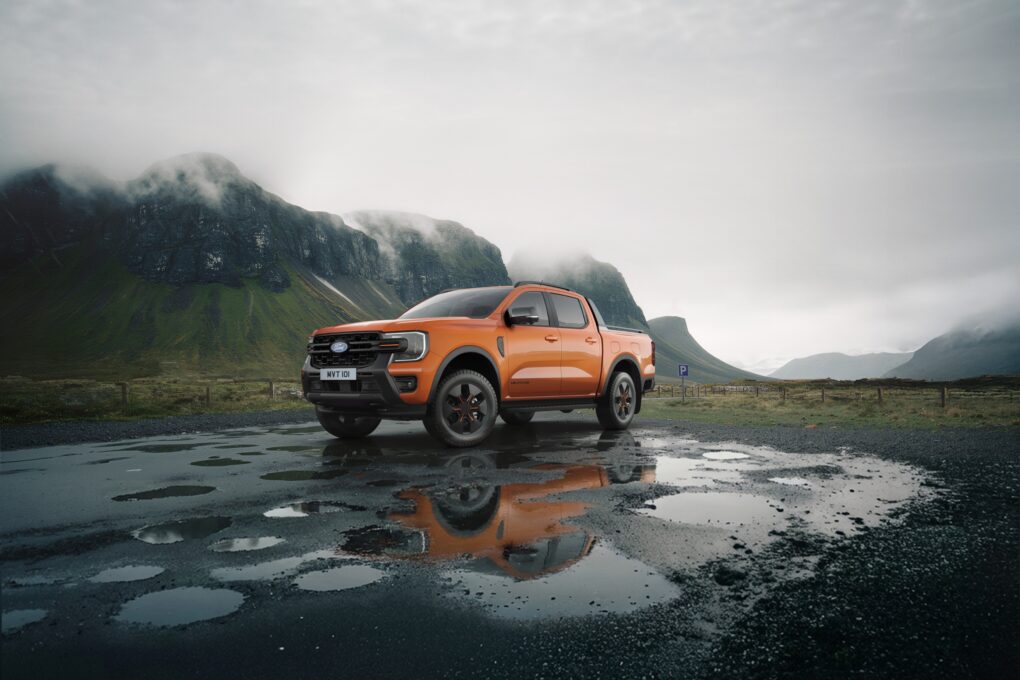
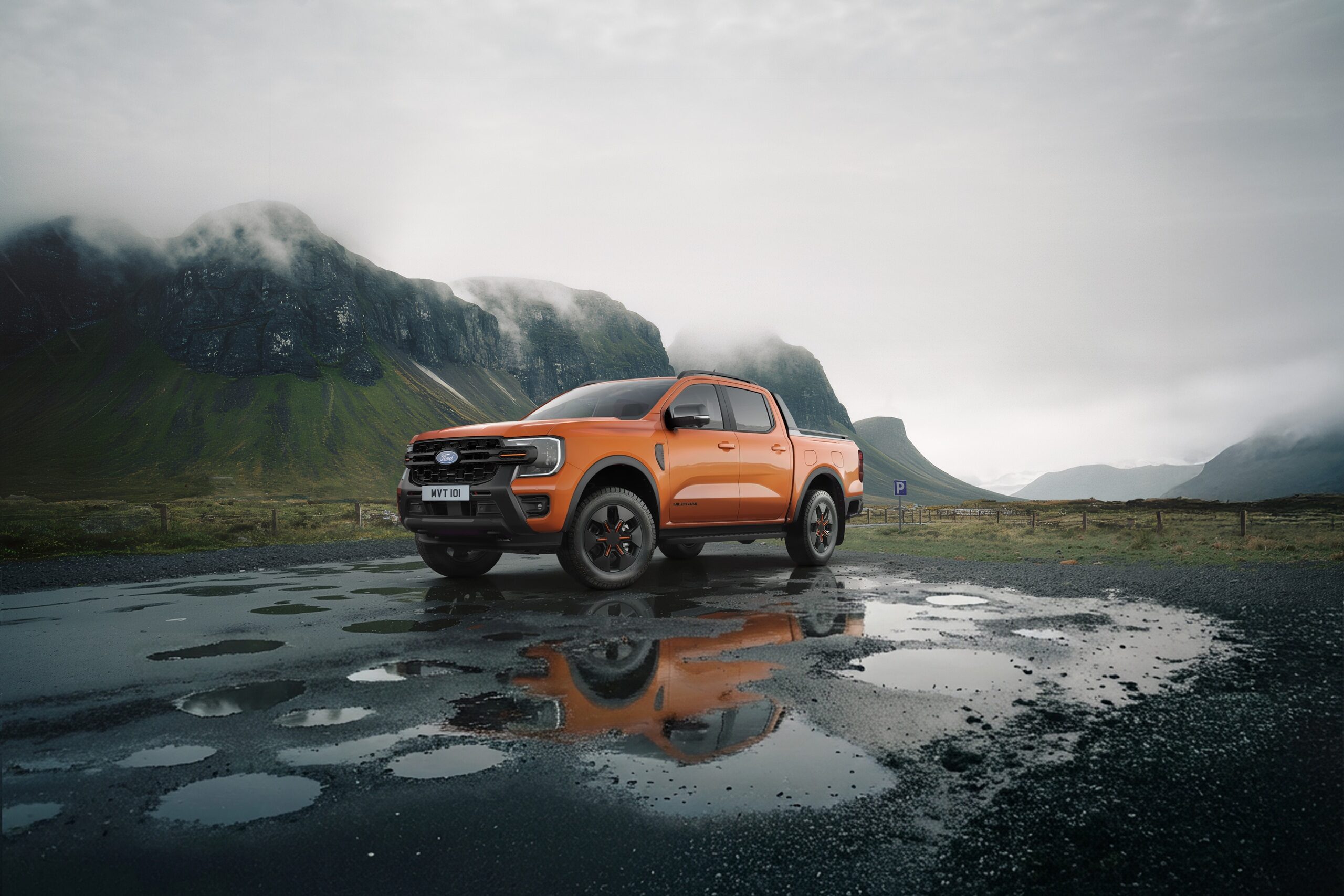
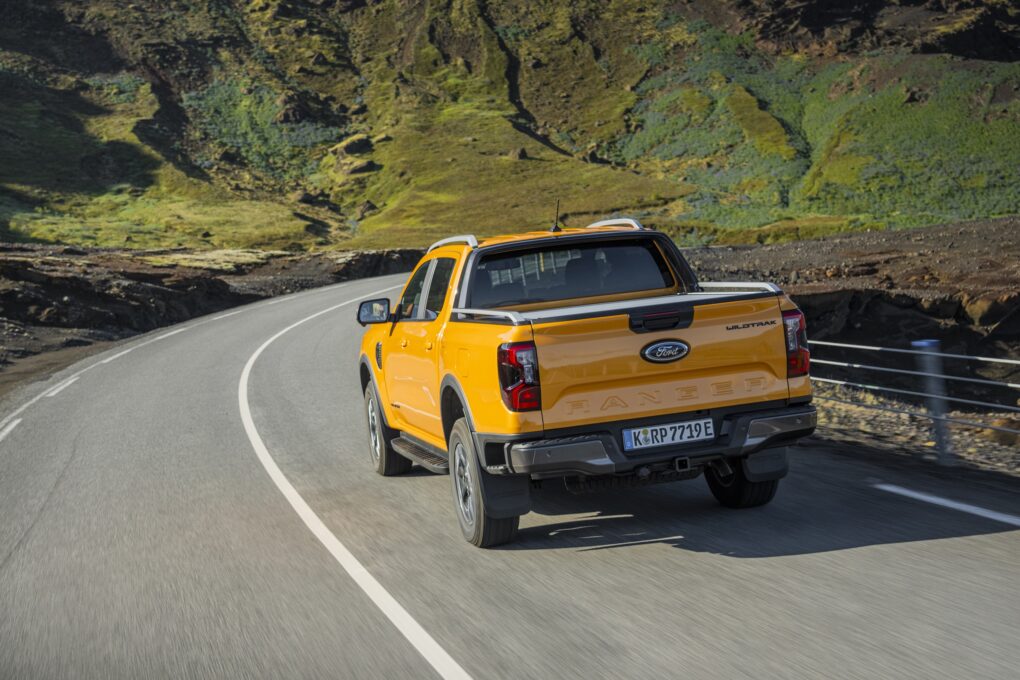
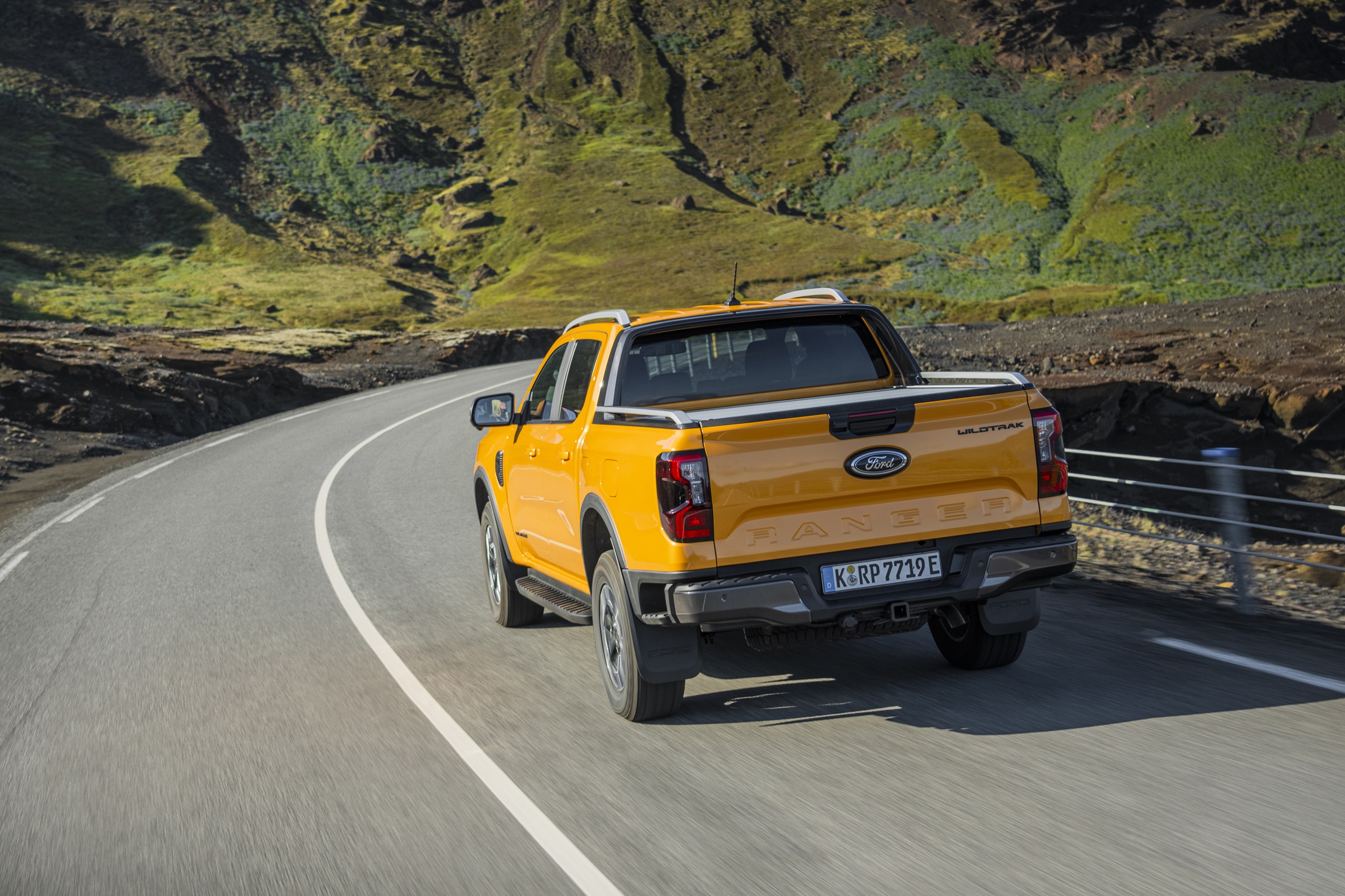
Characteristic of the Wildtrak trim are the sporty body accents, roof rails, and integrated running boards. The latter significantly facilitate entry and exit from the tall vehicle. The cargo bed with its electrically operated roll-up cover and the standard tinted windows underscore the lifestyle character of this trim level. Our test vehicle, in the striking Cyber Orange Metallic (this color was recently changed to a darker Ignite Orange Metallic), cut a particularly fine figure and drew envious glances from many an SUV driver. All-terrain tires are also available as an option, considerably enhancing the Wildtrak's off-road capabilities.
-
- Image: Ford
-
- Image: Ford
space
As Double cab with two full rows of seats The Ranger PHEV offers space for up to five people. The driver and front passenger sit very comfortably; the generous legroom and wide seats make long journeys pleasant.
The situation is more nuanced in the second row. Average-sized passengers will still sit comfortably, but those over 1,85 meters tall will find long journeys in the back seat tiring. While the roof is high due to the pickup truck design, legroom is limited. Access to the second row is straightforward thanks to the wide-opening doors. Overall, the amount of space is quite decent for a vehicle in this category, although a similarly sized SUV would offer all occupants a more spacious feel.
Storage space and loading area
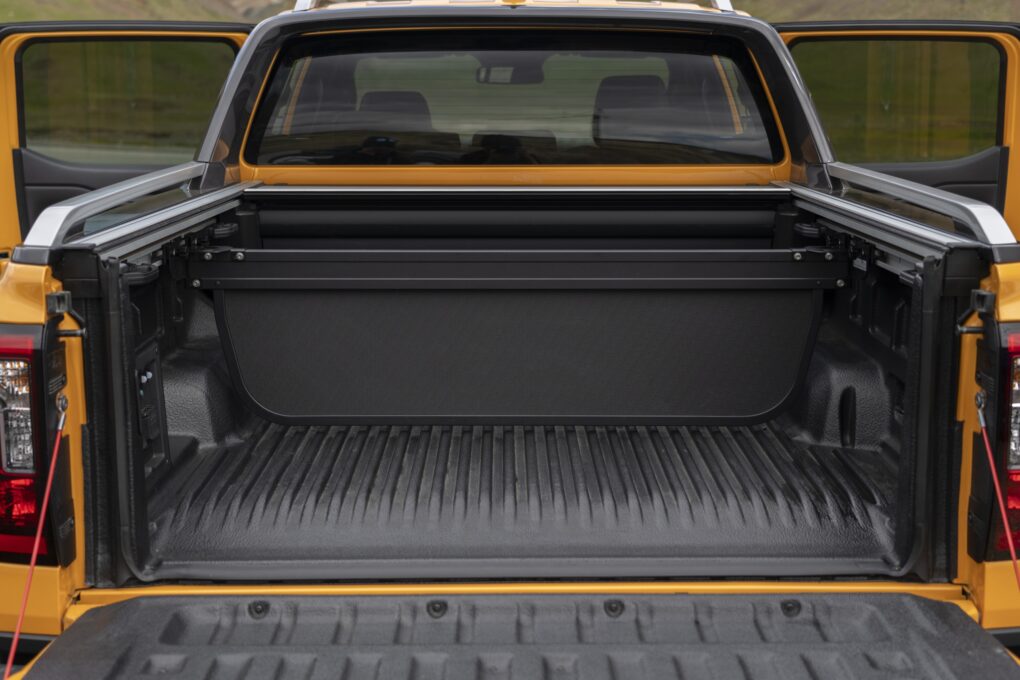
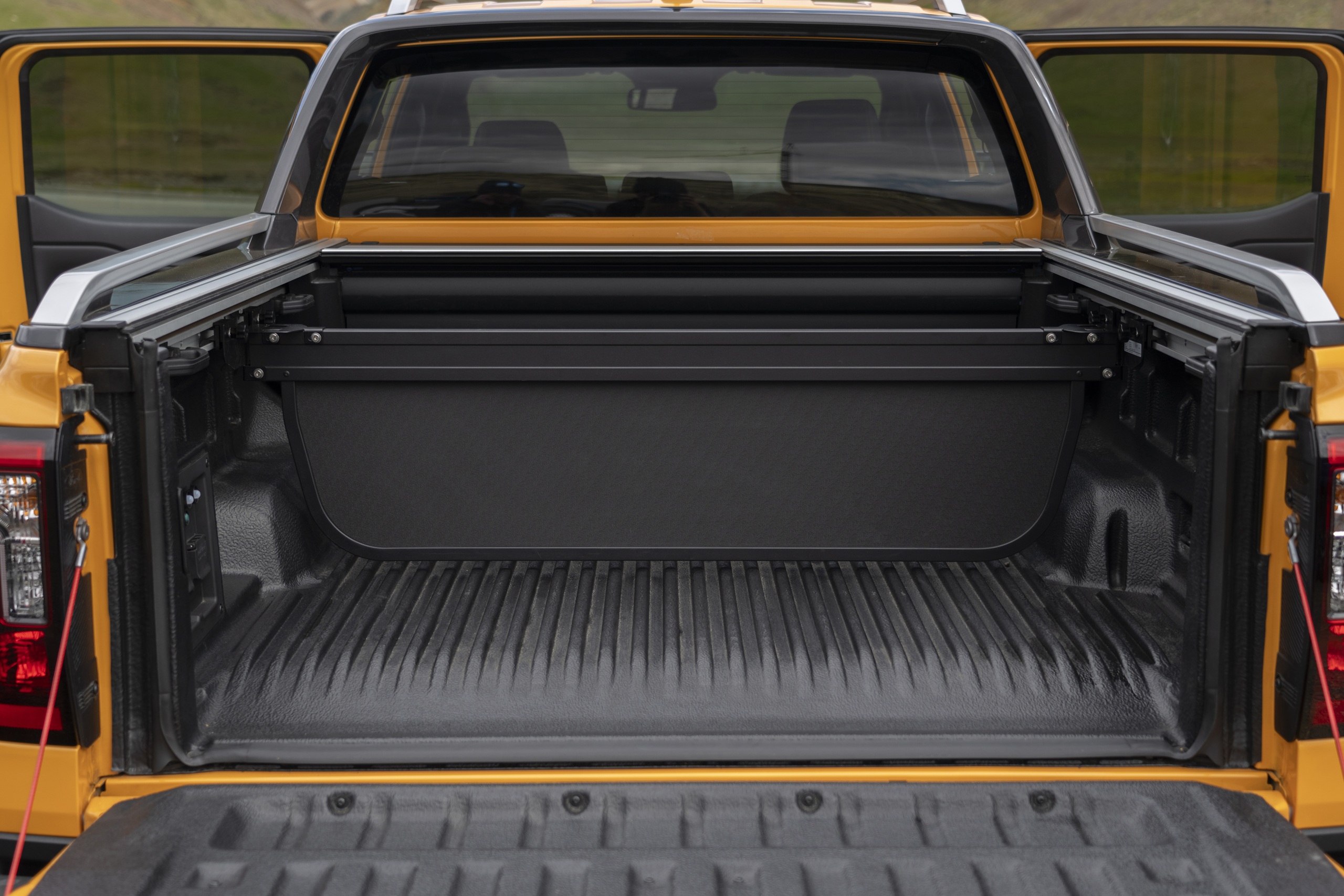
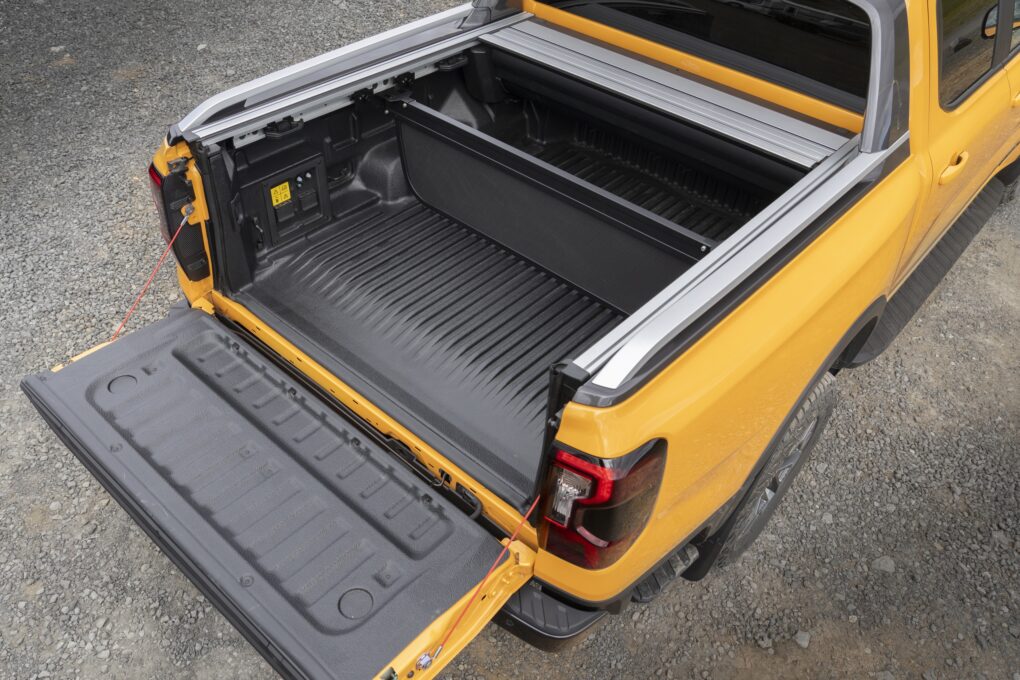
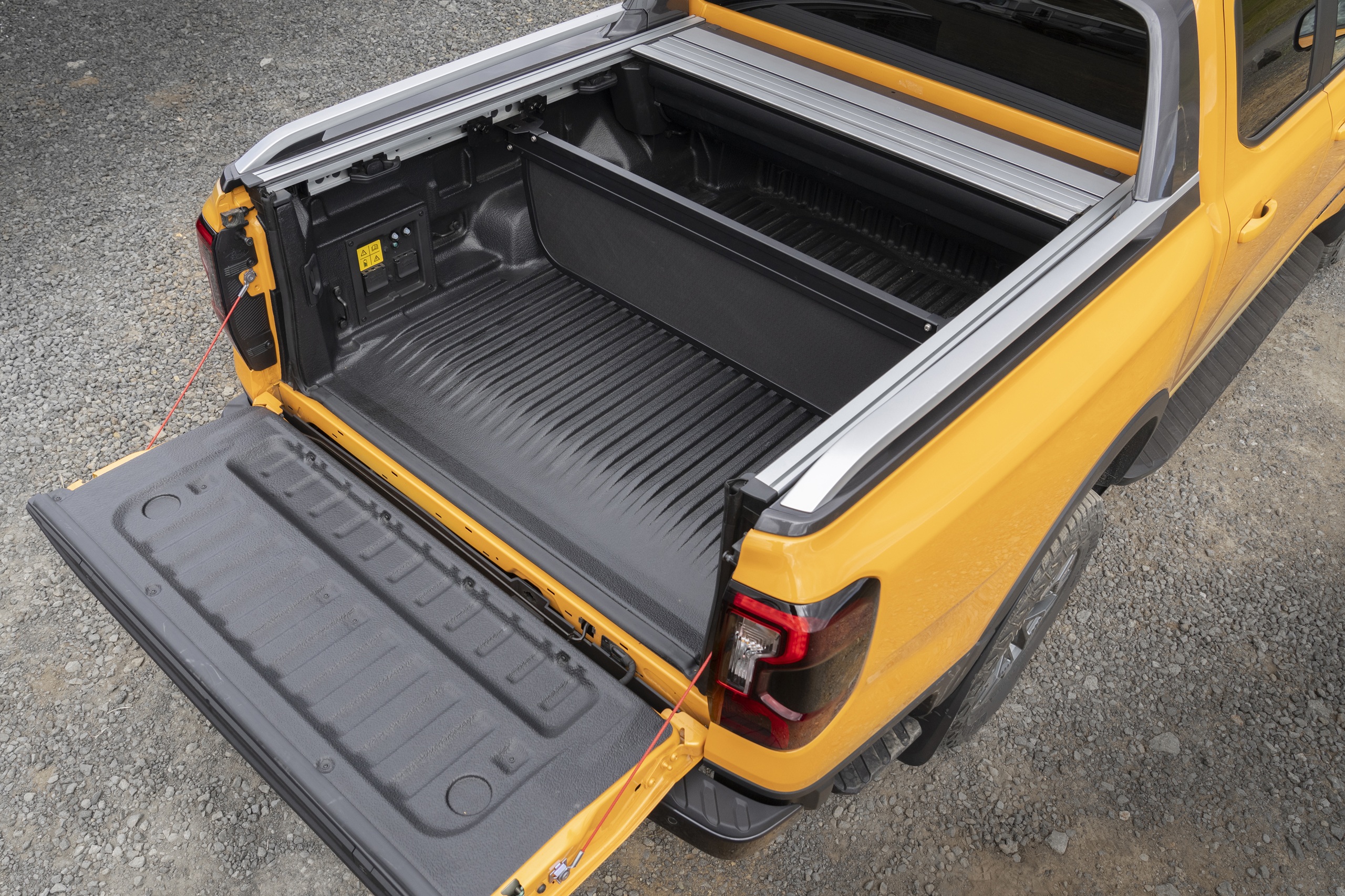
The actual cargo space of the Ranger PHEV is the open flatbed with a loading volume of 1233 litersWith a maximum payload of 1049 kilograms and a towing capacity of 3.500 kilograms, identical to that of the most powerful diesel in the series, the plug-in hybrid makes no compromises in terms of workability. The loading area offers ample space for building materials, garden tools, or recreational equipment. The optional, electrically operated roll-up cover also protects the load from the elements and prying eyes.
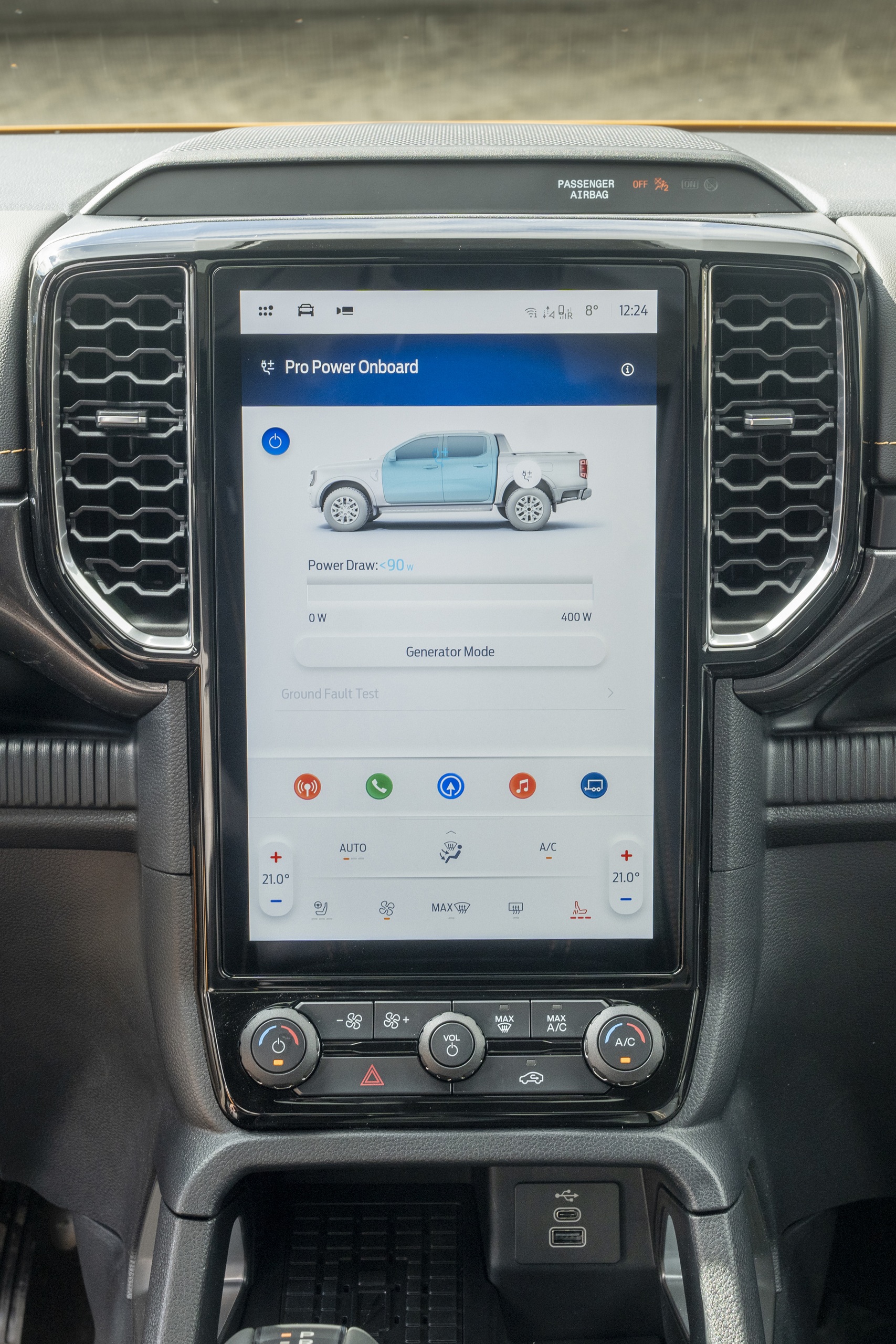
Behind the second-row seats, there is also a lockable storage compartment for smaller valuables. Those who regularly use power tools or camping equipment will appreciate the exclusive Pro Power Onboard function. With up to 6,9 kilowatts of power, electricity can be drawn directly from the vehicle battery, eliminating the need for a generator.
-
- Image: Ford
-
- Image: Ford
Driver assistance systems of the Ford Ranger PHEV Wildtrak
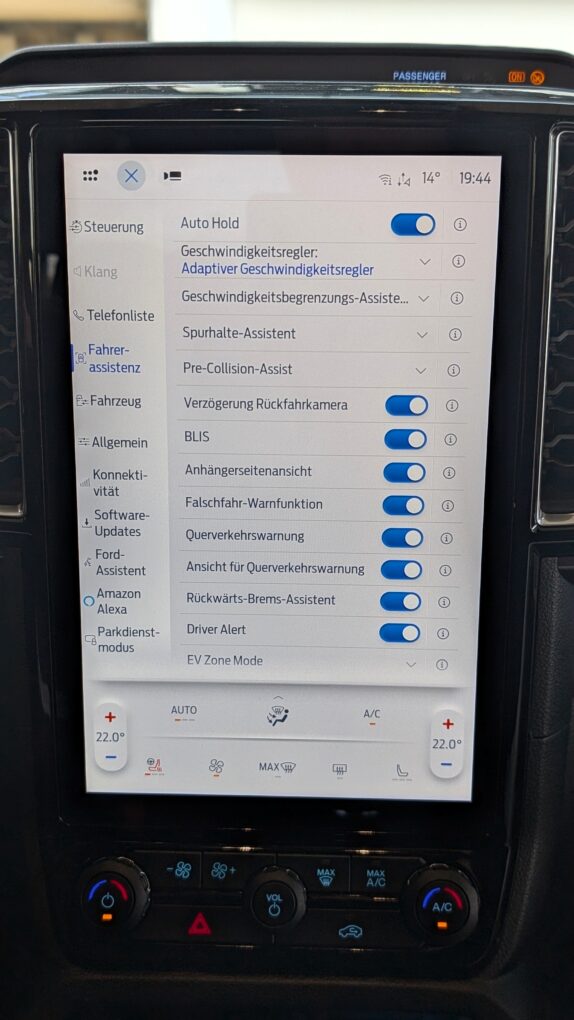
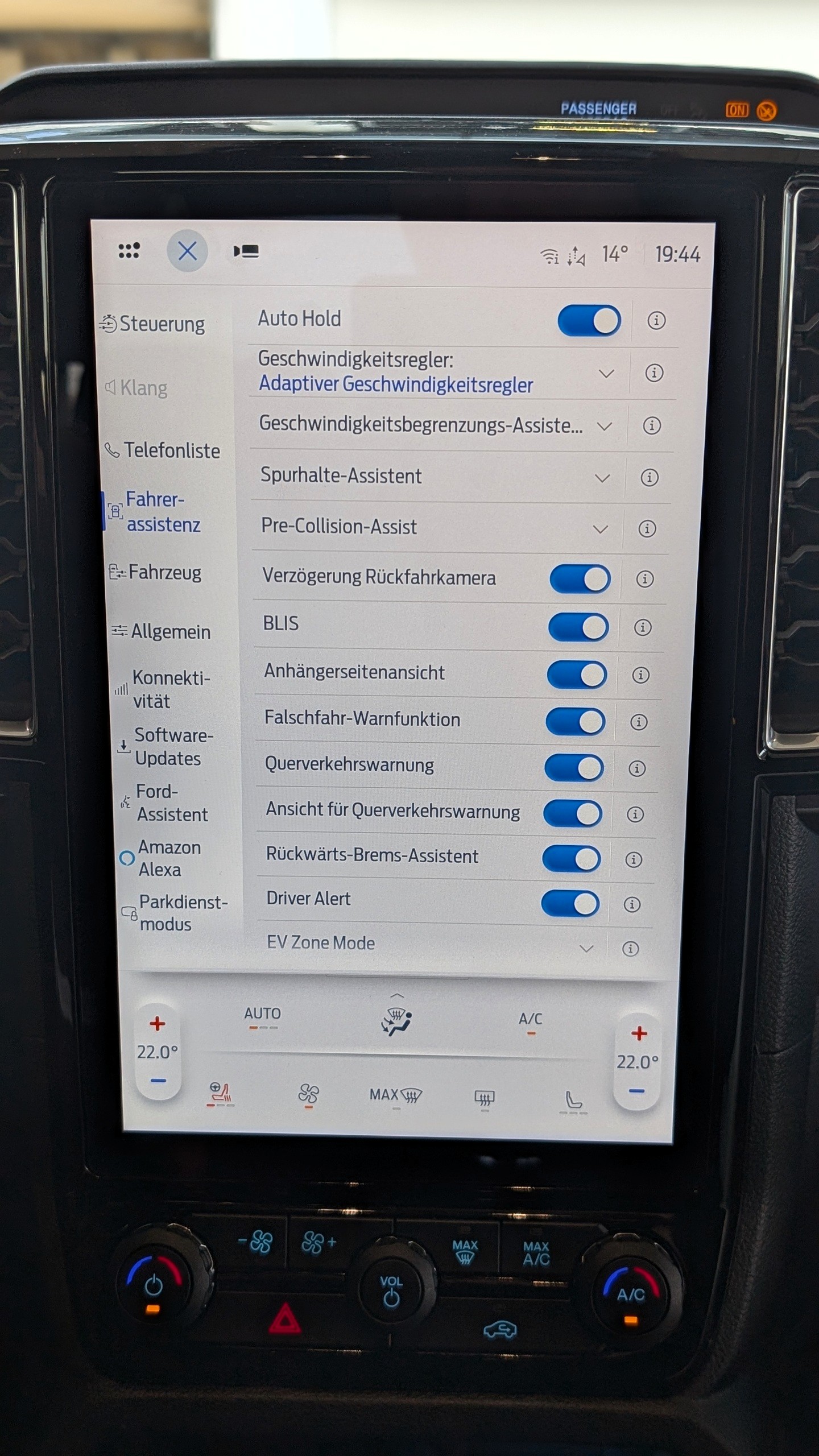
Ford has equipped the Ranger Wildtrak PHEV with a comprehensive suite of driver assistance systems. Adaptive cruise control, lane keeping assist, and lane guidance assist are standard. For the full range of electronic aids, the optional Technology Package is available. This adds rear cross-traffic alert, blind spot monitoring, park assist, and a surround-view camera – a welcome feature, especially when maneuvering the long vehicle.
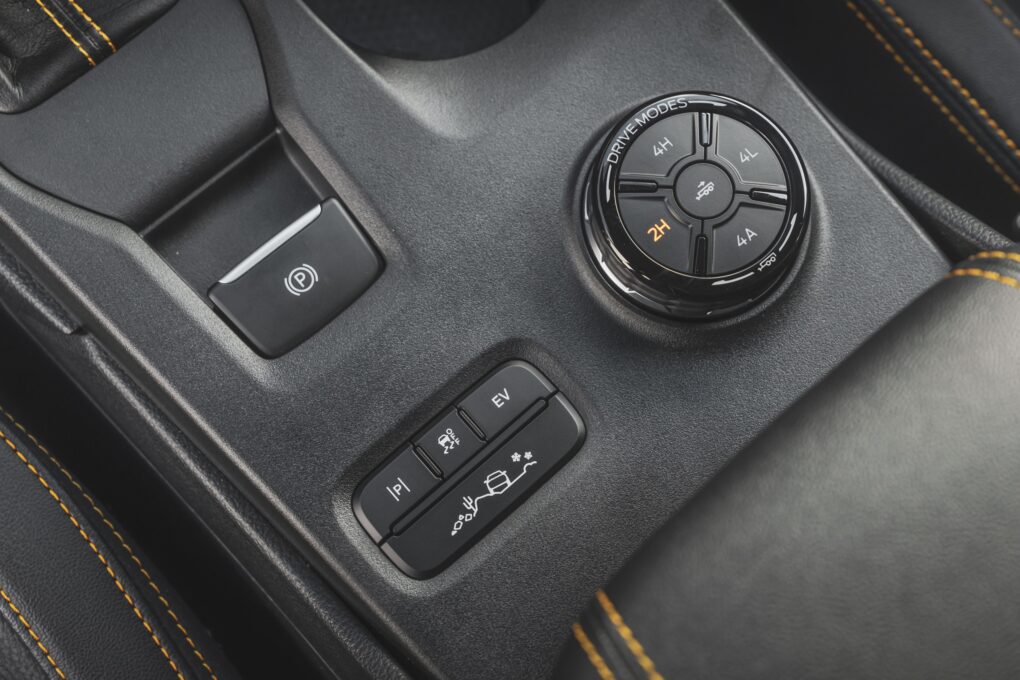
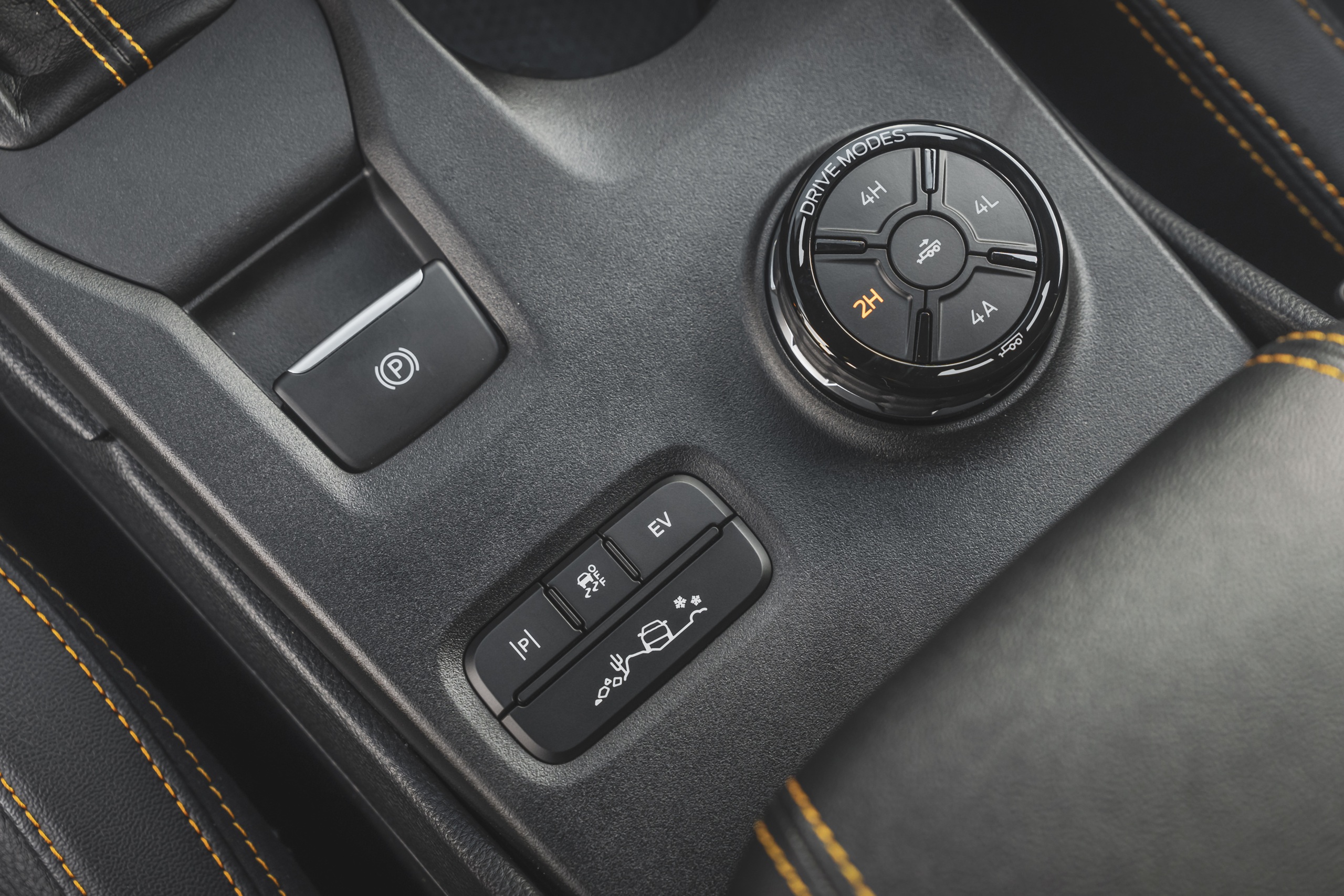
Also available is the Ford BlueCruise system For semi-automated driving on highways. It's the first system in its class to enable hands-free driving. The Terrain Management System with its various driving modes (2H, 4A, 4H, and 4L) expertly manages the electronic control of the all-wheel drive. The optional 100% locking rear differential transforms the Ranger into a serious off-roader. LED headlights and a high-beam sensor are standard features at this price point.
Safety
The current Ford Ranger achieved A good rating in the Euro NCAP test, whereby the Ranger and its identical counterpart Twin brother VW Amarok They are rated identically in terms of safety. In the area of active safety, the Ranger impresses with a knee protection airbag in addition to the standard equipment.
One concession to the vehicle type must be made, however: pedestrian protection is not optimal due to the design – as with all pickups in this class – since high hoods and boxy front ends are physically at a disadvantage compared to the low-slung front ends of passenger cars. The terrain management system with ESP function, however, ensures that the Ranger remains controllable even in difficult situations: even if the ESP is deactivated and the rear end breaks loose, the Ranger always regains its composure.
-
- Picture: TechnikNews
-
- Picture: TechnikNews
Interior of the Ford Ranger PHEV Wildtrak
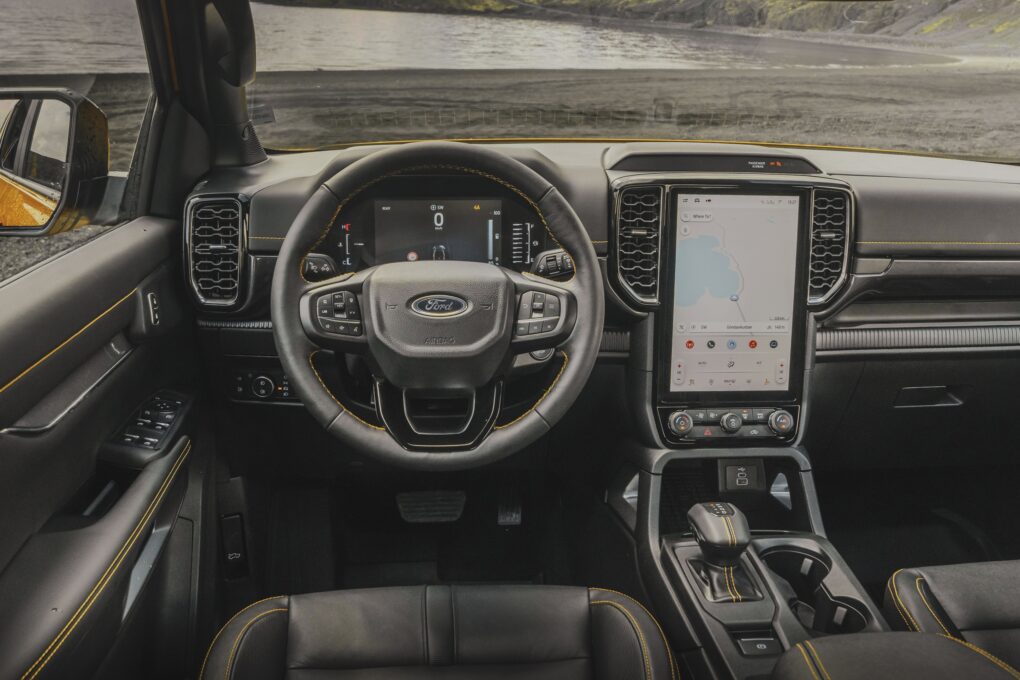
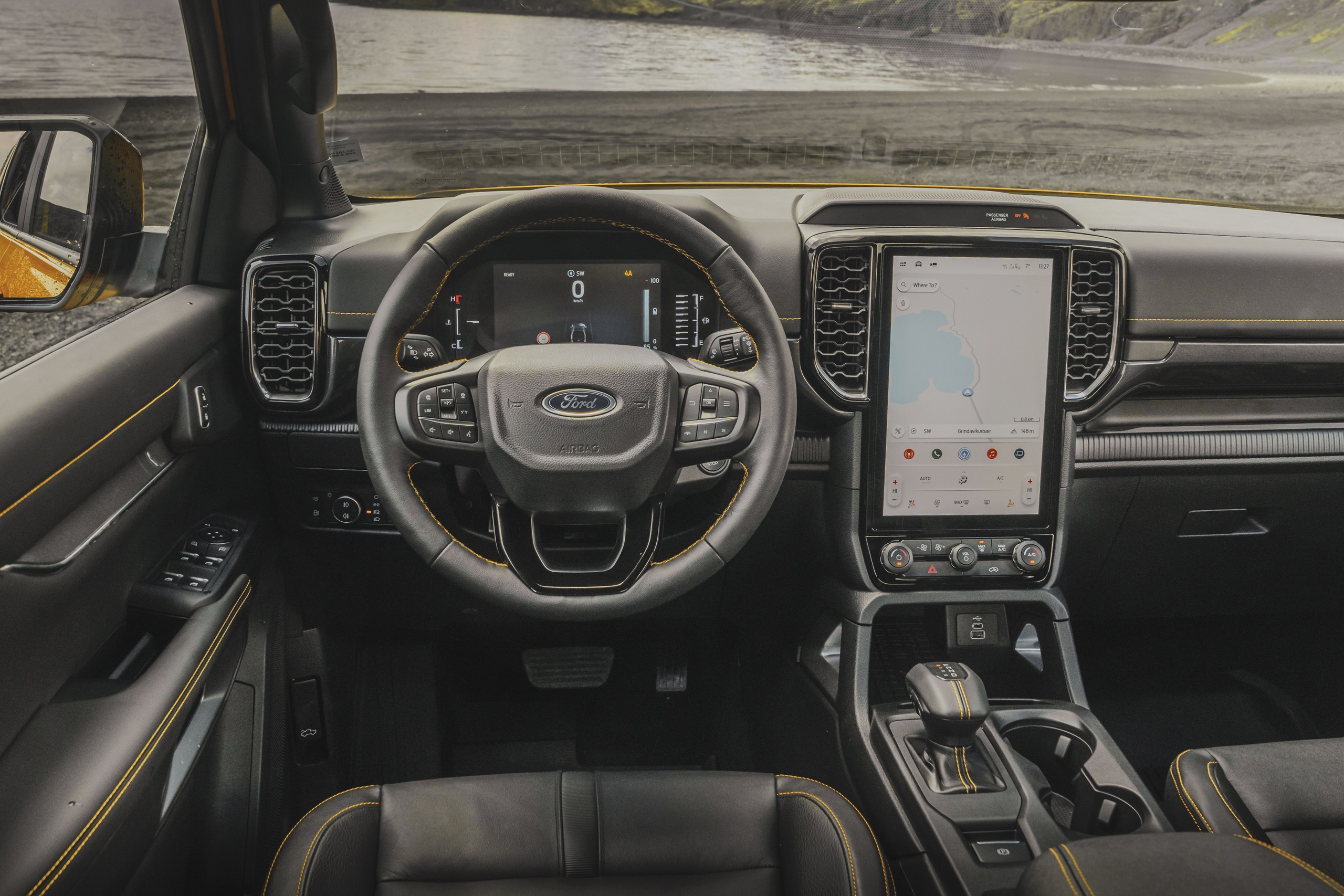
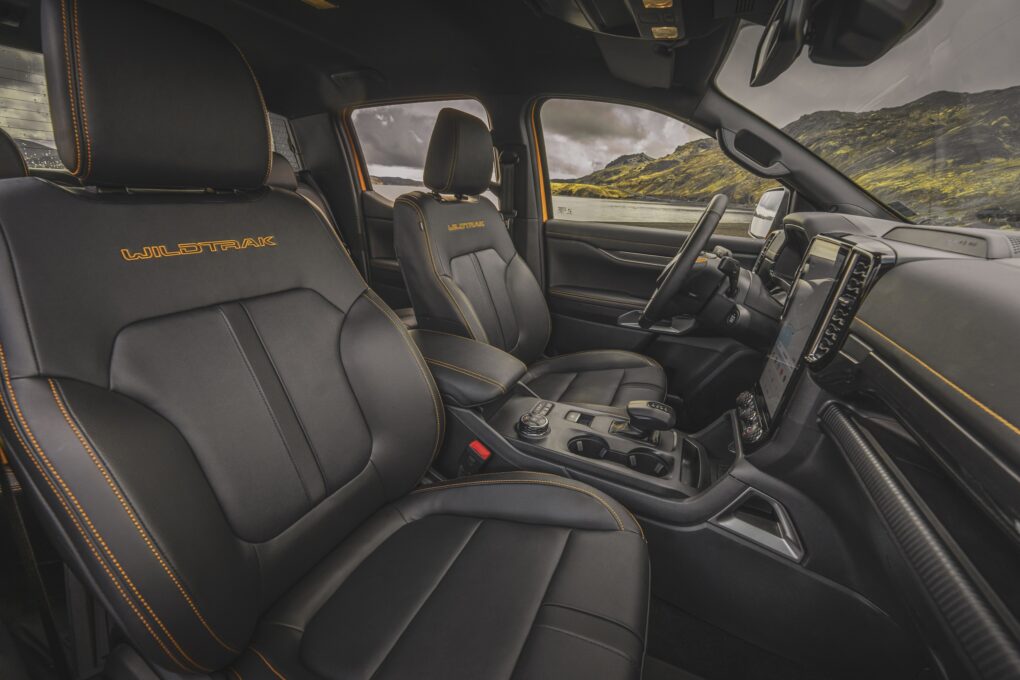
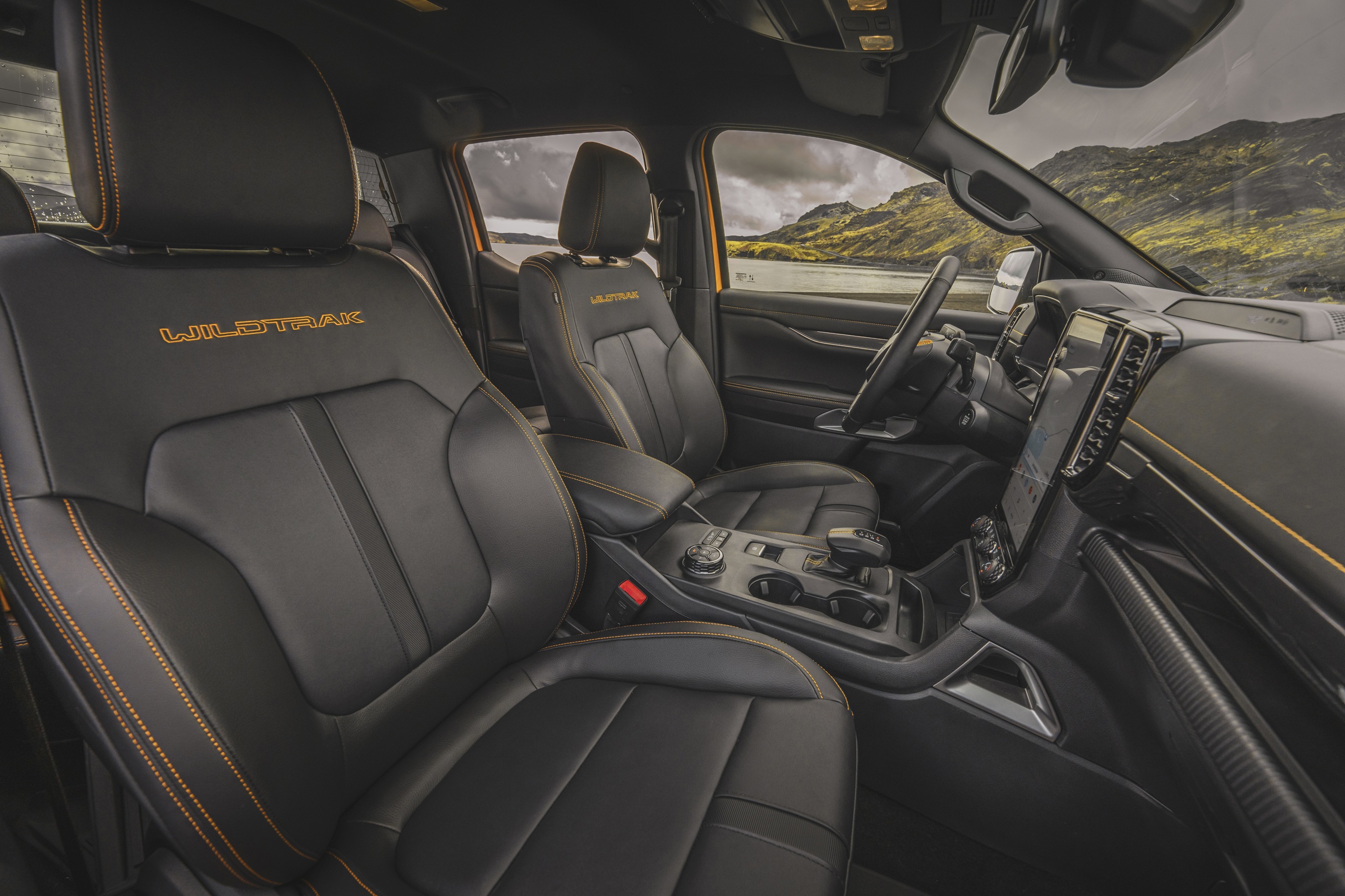
The cockpit of the Ford Ranger Wildtrak PHEV pleasantly combines the no-nonsense work ethic of a commercial vehicle with the comfort features of a modern SUV. The materials used The materials appear both high-quality and robust.It's clear that people who work on construction sites or in rough terrain every day had a hand in the development. Everything feels robust and durable without looking cheap. The generously sized buttons and dials for the air conditioning and auxiliary units are particularly noticeable, as they can even be operated while wearing work gloves. proIt can be operated without any problems. Ford hasn't forgotten with the Ranger PHEV that this vehicle is a tool and not a status symbol – at least not when it needs to be.
The Wildtrak trim includes leather seats with bronze stitching, an elegant detail that perfectly reflects the character of the trim level. The driver's seat features electric adjustments, including seat cushion tilt and lumbar support, while the front passenger seat is manually adjustable. Heated front seats and a heated steering wheel are standard. Dual-zone automatic climate control allows the driver and front passenger to set their own preferred temperature. One minor drawback is the somewhat limited USB connectivity in the second row.
-
- Image: Ford
-
- Image: Ford
Infotainment and connectivity
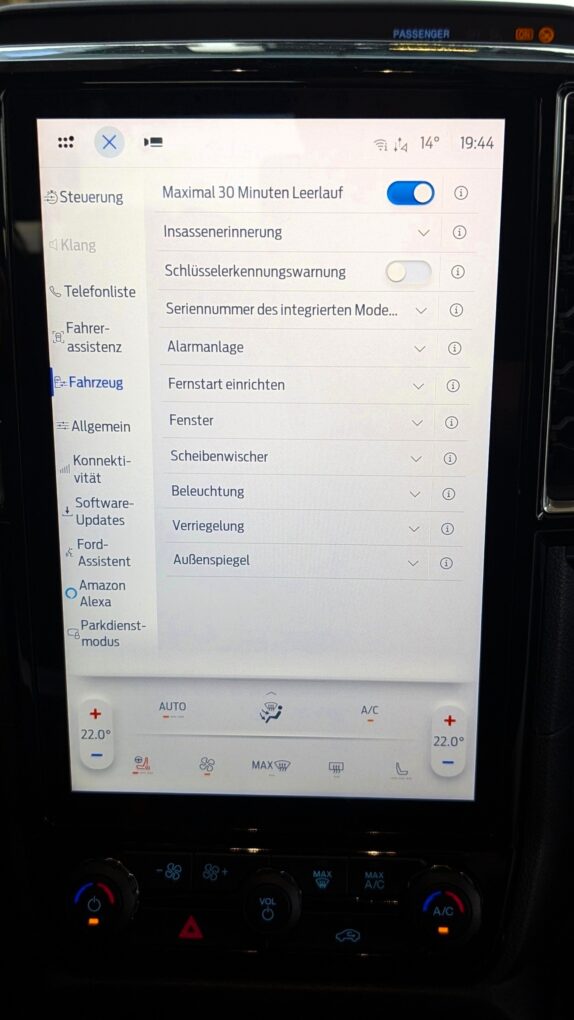
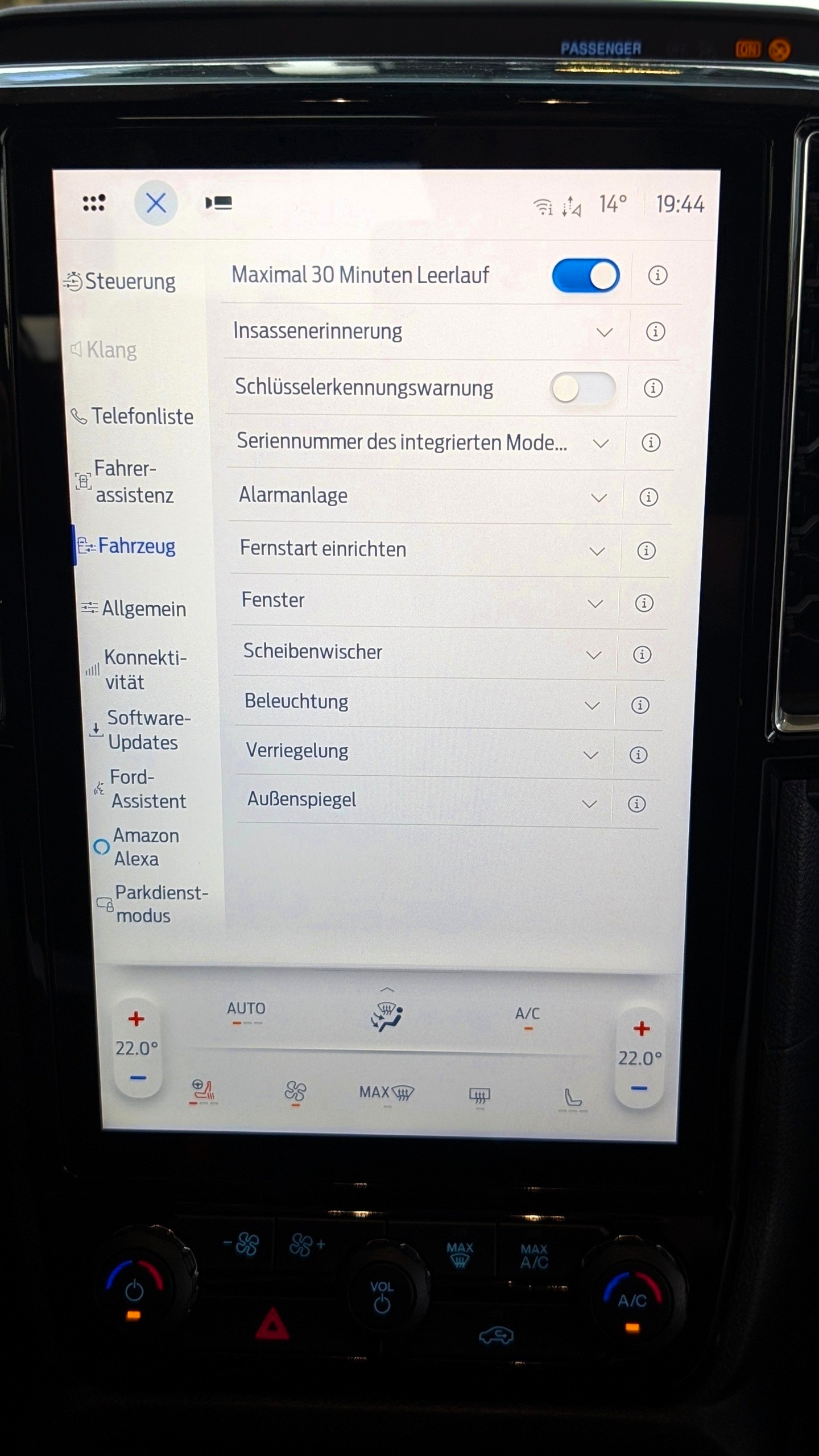
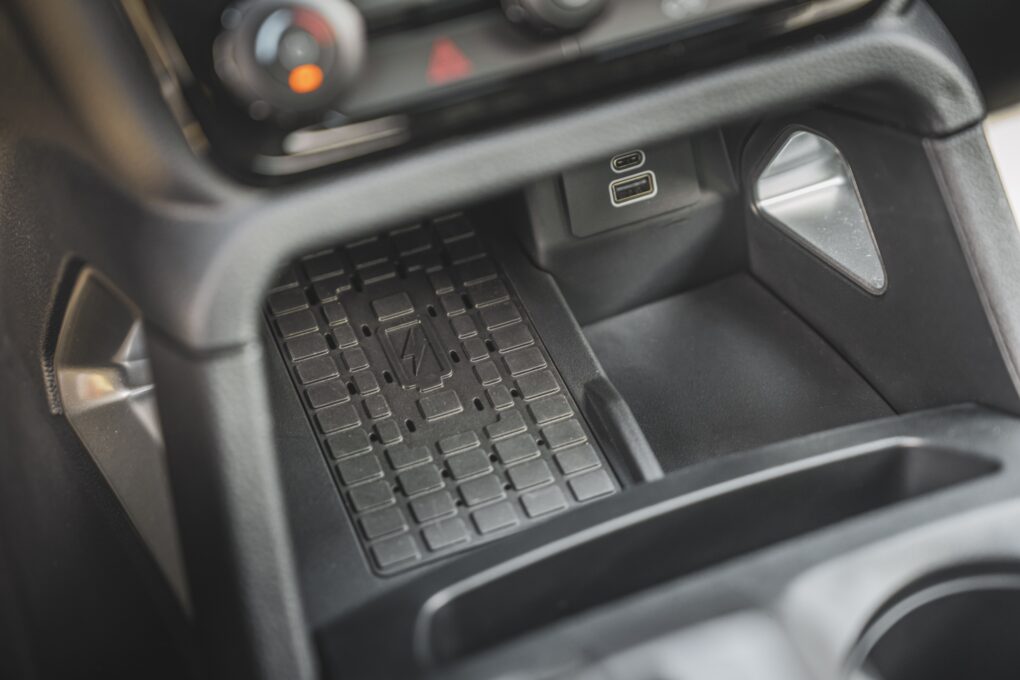
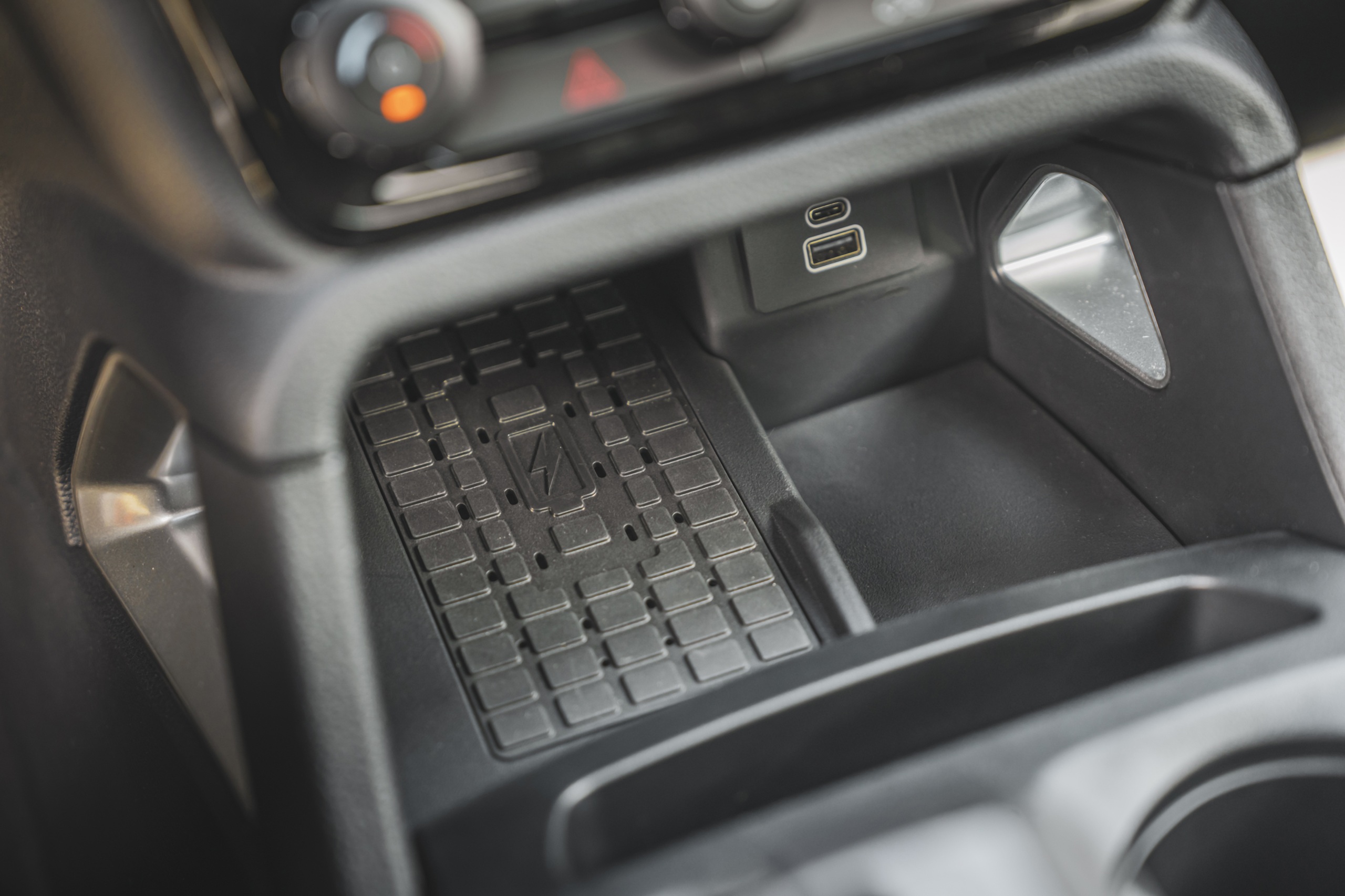
The 12-inch portrait display of the Ford SYNC 4A infotainment system enthroned proThe infotainment system is centrally located in the dashboard and creates a modern, uncluttered look. The software runs smoothly and responds fluidly to input. Apple CarPlay and Android Auto are available wirelessly, which significantly simplifies everyday use. A Wi-Fi hotspot ensures that passengers in the second row can also stay connected. The inductive charging pad for smartphones is another convenient feature.
The 12-inch digital instrument cluster in front of the driver provides all relevant information in a clear and configurable manner. Voice control works reliably, although not quite on par with an Amazon Echo. There's a separate display for the PHEV drive system, visualizing the current energy flow, battery charge level, and selected driving modes. This is helpful for efficient use of the hybrid system. [About the] Ford app Ford also offers remote access to vehicle data, warning messages, and online service bookings. The optional B&O sound system, available for the Wildtrak trim, delivers a compelling soundstage that will satisfy even audiophiles.
-
- Image: Ford
-
- Image: Ford
Comfort
Considering the Ford Ranger PHEV's off-road capabilities, it's almost surprising how comfortable it is on paved roads. The rear leaf-sprung suspension, which typically compromises comfort in unladen pickups, handles even deep potholes with remarkable composure. Ford has significantly refined the suspension tuning of the current generation compared to its predecessor, a difference that is noticeably beneficial in everyday driving. The seats are rather softly sprung, which suits the vehicle's relaxed character. However, a bit more lateral support would be desirable on very long highway journeys.
In all-electric mode, the Ranger glides along completely silently. An unusual experience for pickup truck drivers who are used to the soundtrack of a diesel engine. When the 2,3-liter EcoBoost gasoline engine When the electric motor engages, it does so smoothly and refinedly, yet is still unmistakably noticeable. Under higher load, the four-cylinder engine sounds a bit rougher than one might wish – a V6 diesel sounds significantly more refined. The noise level in the interior is decent for a pickup truck, but on the highway, wind and road noise become more pronounced than in a sedan or SUV in this price range. Overall, the Ranger Wildtrak PHEV is a good choice for anyone seeking comfortable travel in the commercial vehicle category.
-
- Image: Ford
-
- Image: Ford
Drive of the Ford Ranger PHEV Wildtrak
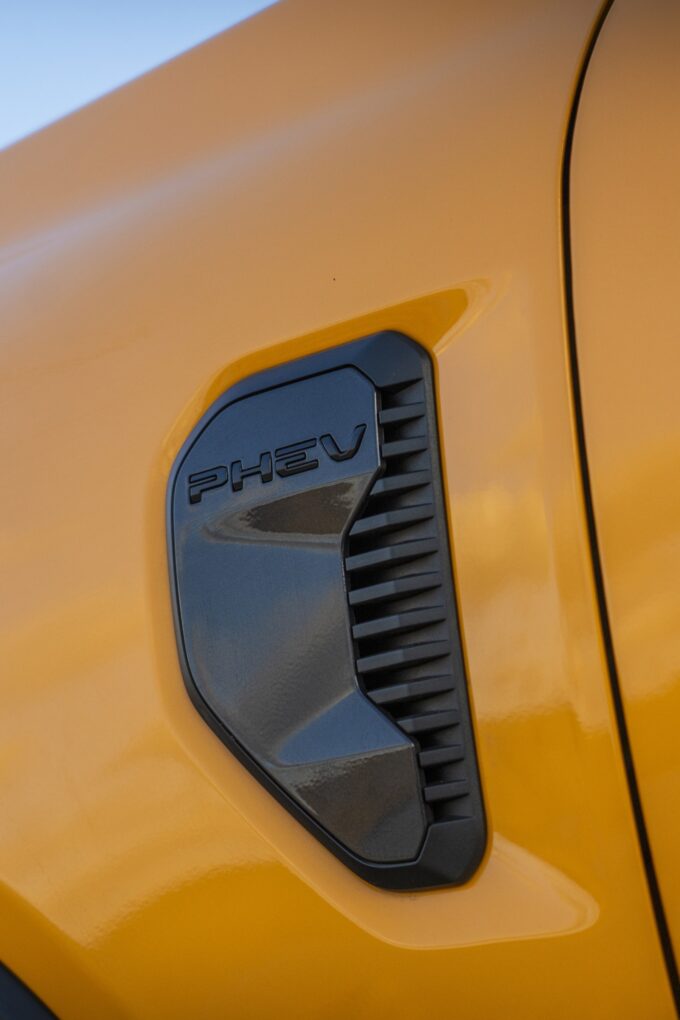
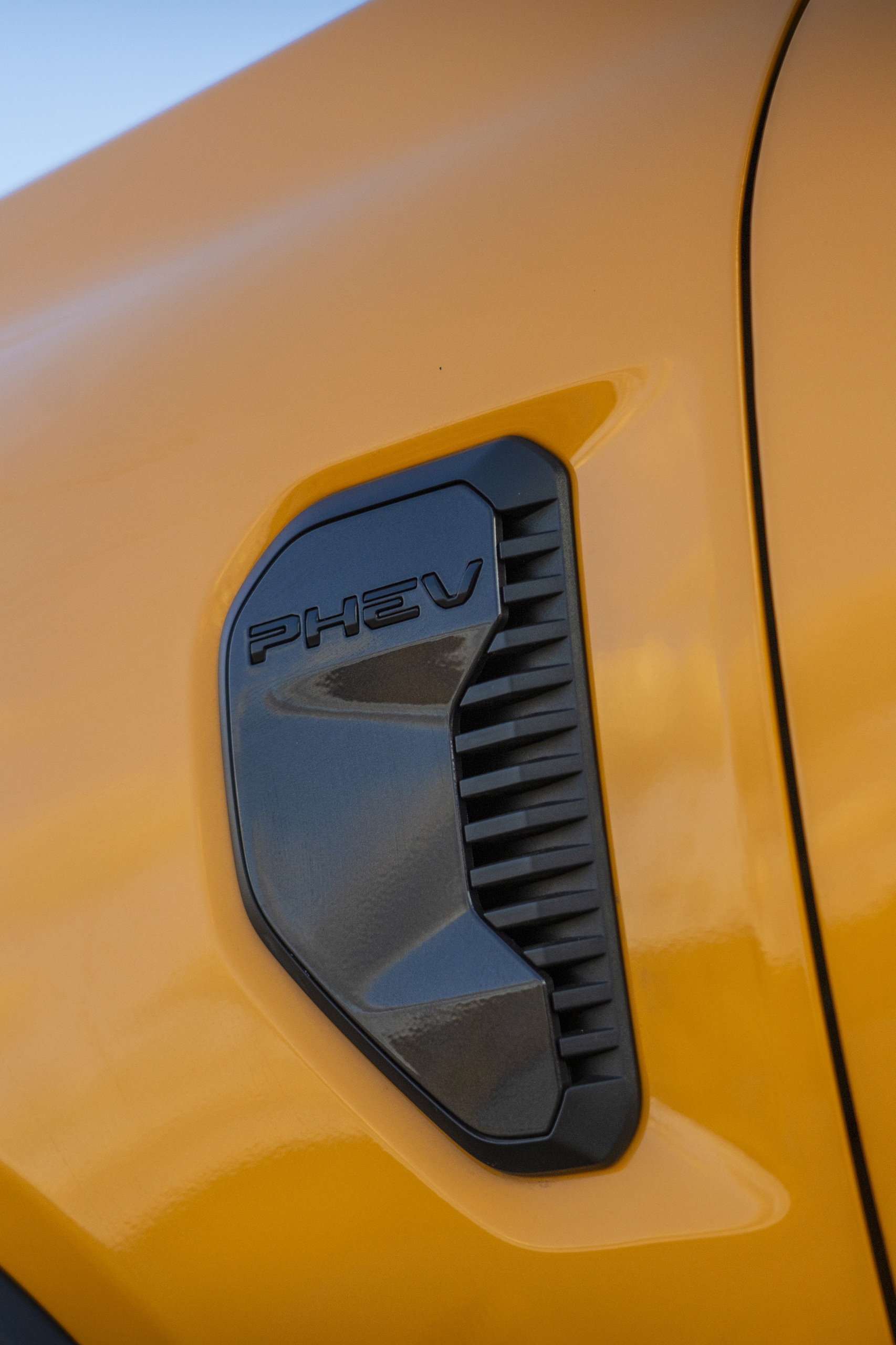
The heart of the Ford Ranger PHEV Wildtrak is a combination of a 2,3-liter EcoBoost turbocharged gasoline engine and a 75 kW (102 hp) electric motor. Together, they achieve a system output of 207 kW (281 hp) and a maximum torque of 697 Nm. By comparison, the most powerful diesel engine in the series, a 3,0-liter V6, delivers 240 hp and 600 Nm. The PHEV is therefore the most powerful model in the entire German Ranger portfolio. (except for the Raptor). Power is transmitted via a 10-speed automatic transmission that distributes power to all four wheels.
The all-wheel drive is electronically controlled and can be switched between 2H (rear-wheel drive), 4A (automatically engaging all-wheel drive), 4H (permanent all-wheel drive), and 4L (all-wheel drive with low range) – even while driving. In practice, the Ranger PHEV accelerates from 0 to 100 km/h in 9,2 seconds, making it slightly slower than the V6 diesel at 8,7 seconds. The reason for this is the weight: at 2.511 kilograms, the PHEV is the heaviest model in the series, which is noticeable in its performance. Its top speed is 180 km/h, while the diesel reaches 190 km/h.
-
- Image: Ford
-
- Image: Ford
Battery
The Ranger PHEV's drive battery has a net capacity of 11,8 kWh (gross: 16,5 kWh) and is a nickel-manganese-cobalt lithium-ion battery. For 2026, this is a rather modest capacity – current passenger car PHEVs often offer twice that or more. Ford justifies the size by stating that a larger battery would further increase the vehicle's weight and reduce its payload – a valid argument for a commercial vehicle.
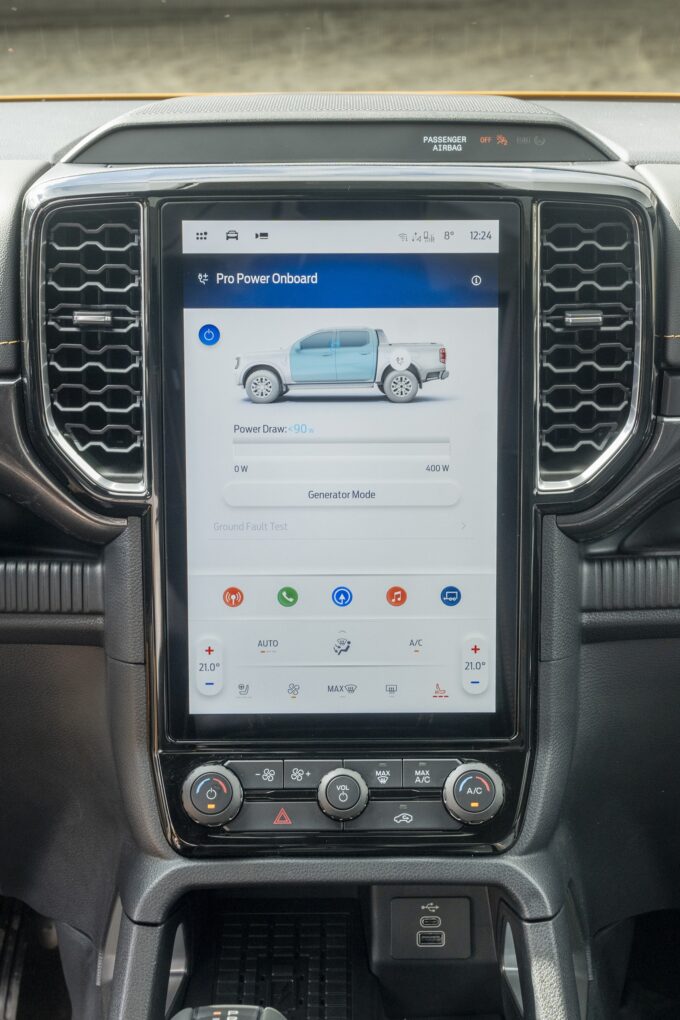
The battery can also be used for the Pro Power Onboard Function use, which allows electrical devices with a power output of up to 6,9 kilowatts to be operated directly from the vehicle.
-
- Image: Ford
-
- Image: Ford
Driving dynamics and handling
The Ford Ranger PHEV isn't exactly a dynamic performer, and it doesn't pretend to be. With a curb weight of over 2,5 tons, a long body, and a leaf-spring rear suspension, its physical limitations are clearly defined. The body rolls noticeably in corners, and the steering feels more distant than direct. However, anyone who takes the Ranger PHEV where it truly belongs—off-road—will experience a completely different vehicle.
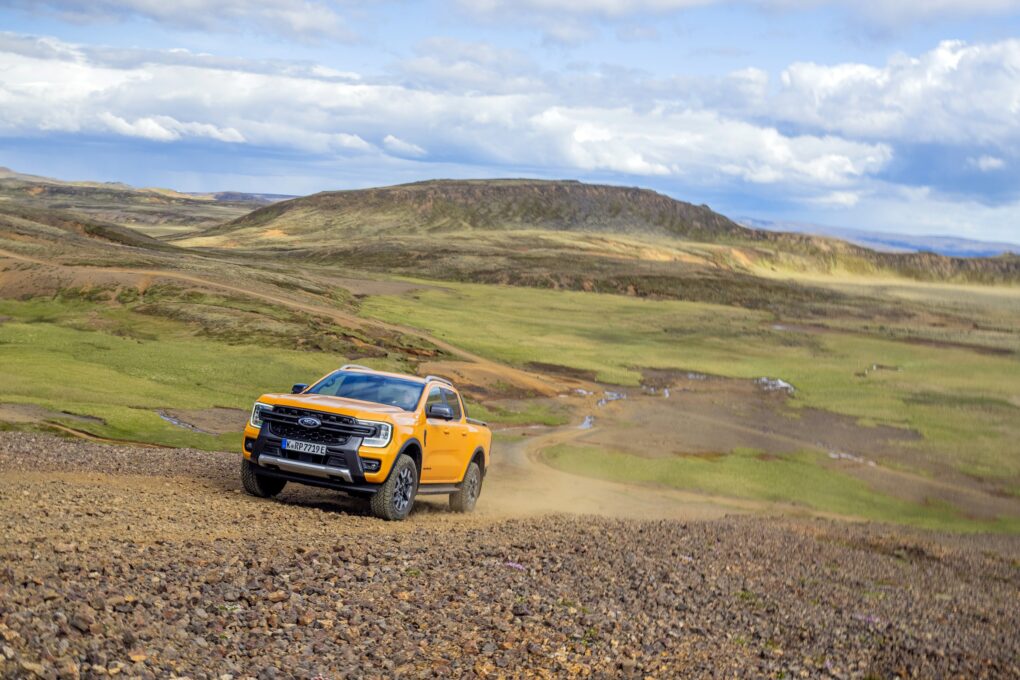
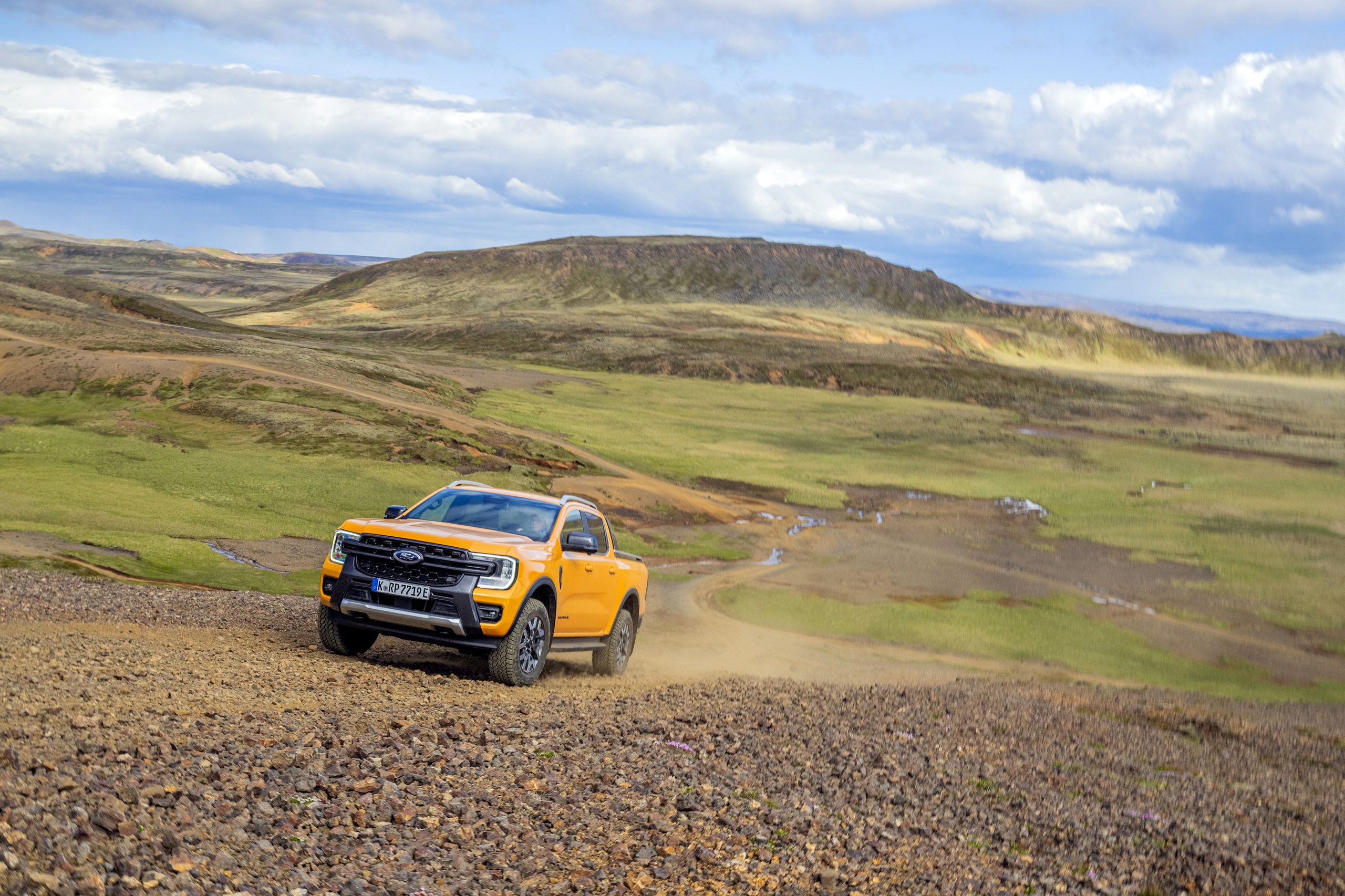
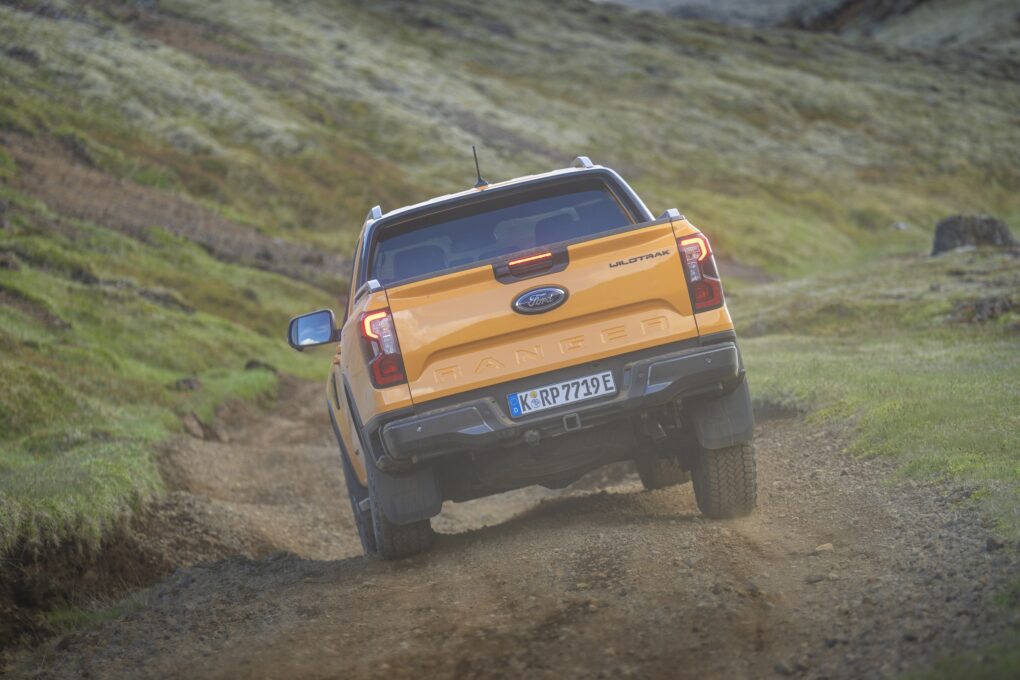
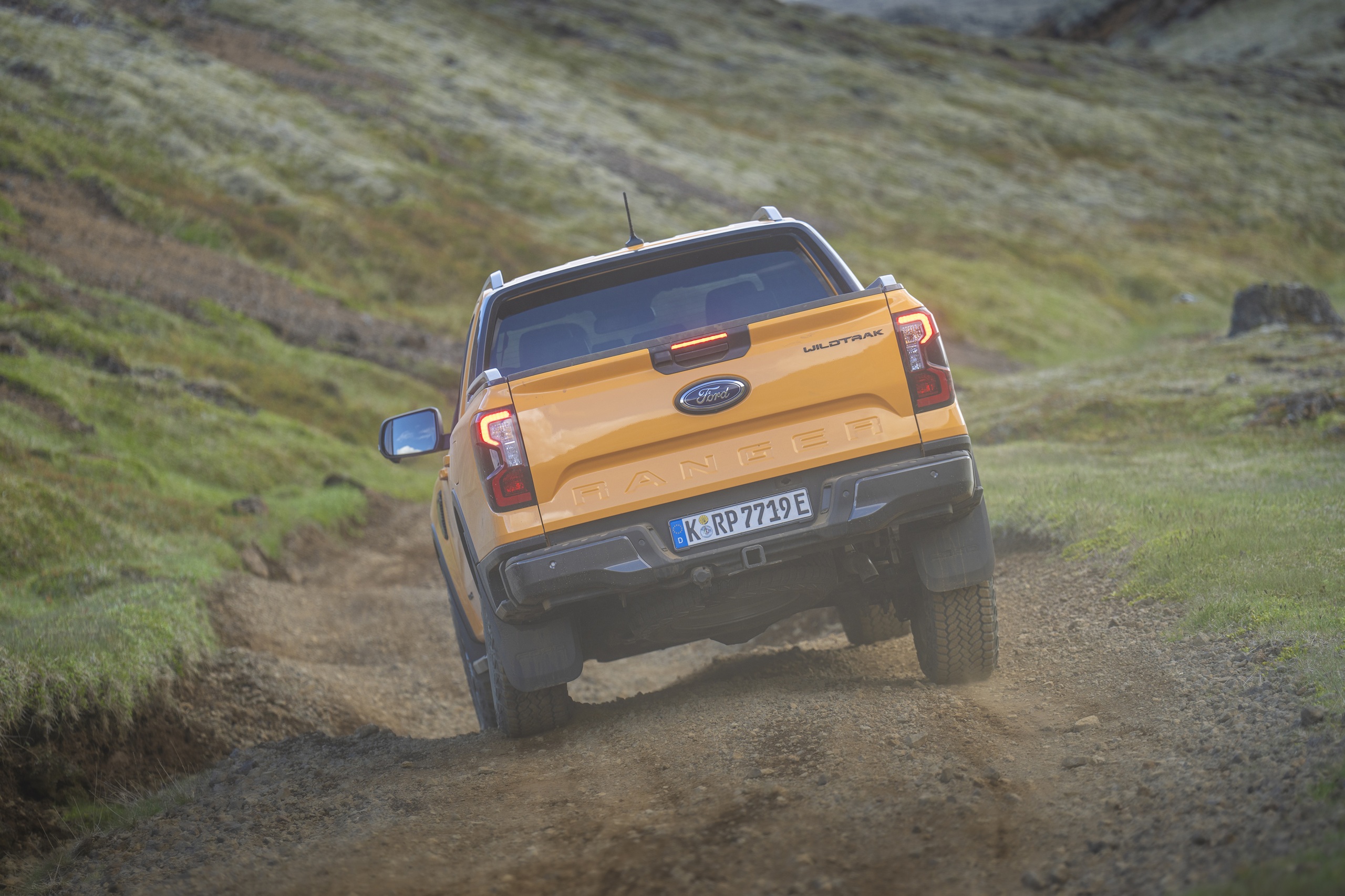
Off-road, the Ranger reveals perhaps its most compelling side. The permanent, electronically controlled all-wheel drive with four operating modes – 2H, 4A, 4H and 4L with reduction gear This forms the basis for the Ranger's off-road capabilities. What distinguishes the PHEV from its diesel counterparts is the electric motor's instantly and fully available torque. While a combustion engine first has to rev up, the electric motor delivers full power immediately. This is an invaluable advantage during slow, precise off-road maneuvers on slippery surfaces or steep inclines with minimal grip.
In combination with the optional all-terrain tires, the Wildtrak tackles muddy fields, wet meadows, and rough gravel tracks with impressive composure. The 100- locking differential on the rear axle further enhances this capability.proThe center-lock locking effect perfectly rounds off the off-road package. Even when ESP is deactivated and the rear end... proEven when abruptly pushed to the point of breaking away, the Ranger always calmly and confidently regains its composure. With ground clearance that commands respect from SUV drivers and a wading depth that allows for genuine stream crossings, the Ranger PHEV is not an off-roader for show, but one built for off-road use.
-
- Image: Ford
-
- Image: Ford
Fuel consumption and range of the Ford Ranger PHEV Wildtrak
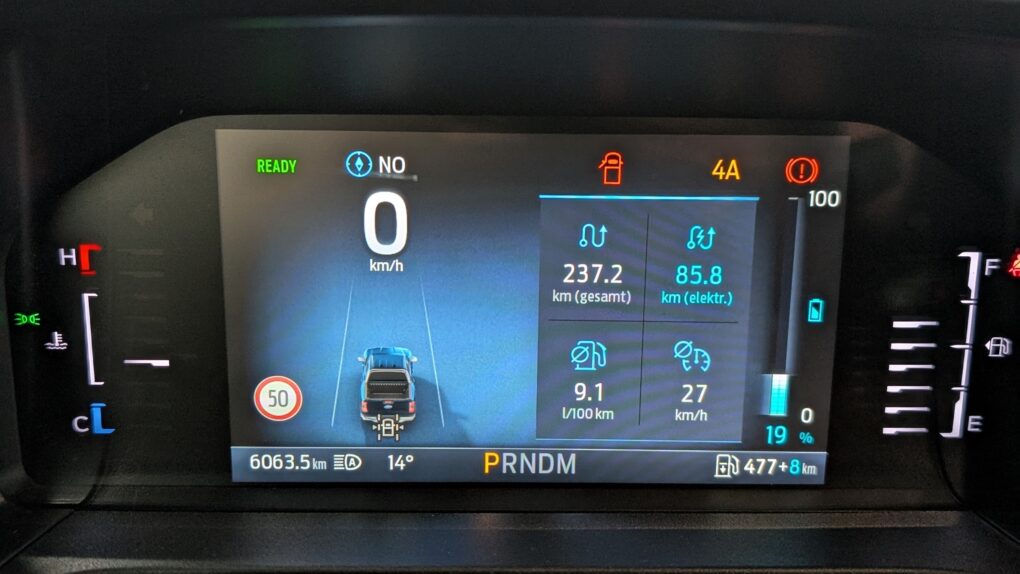
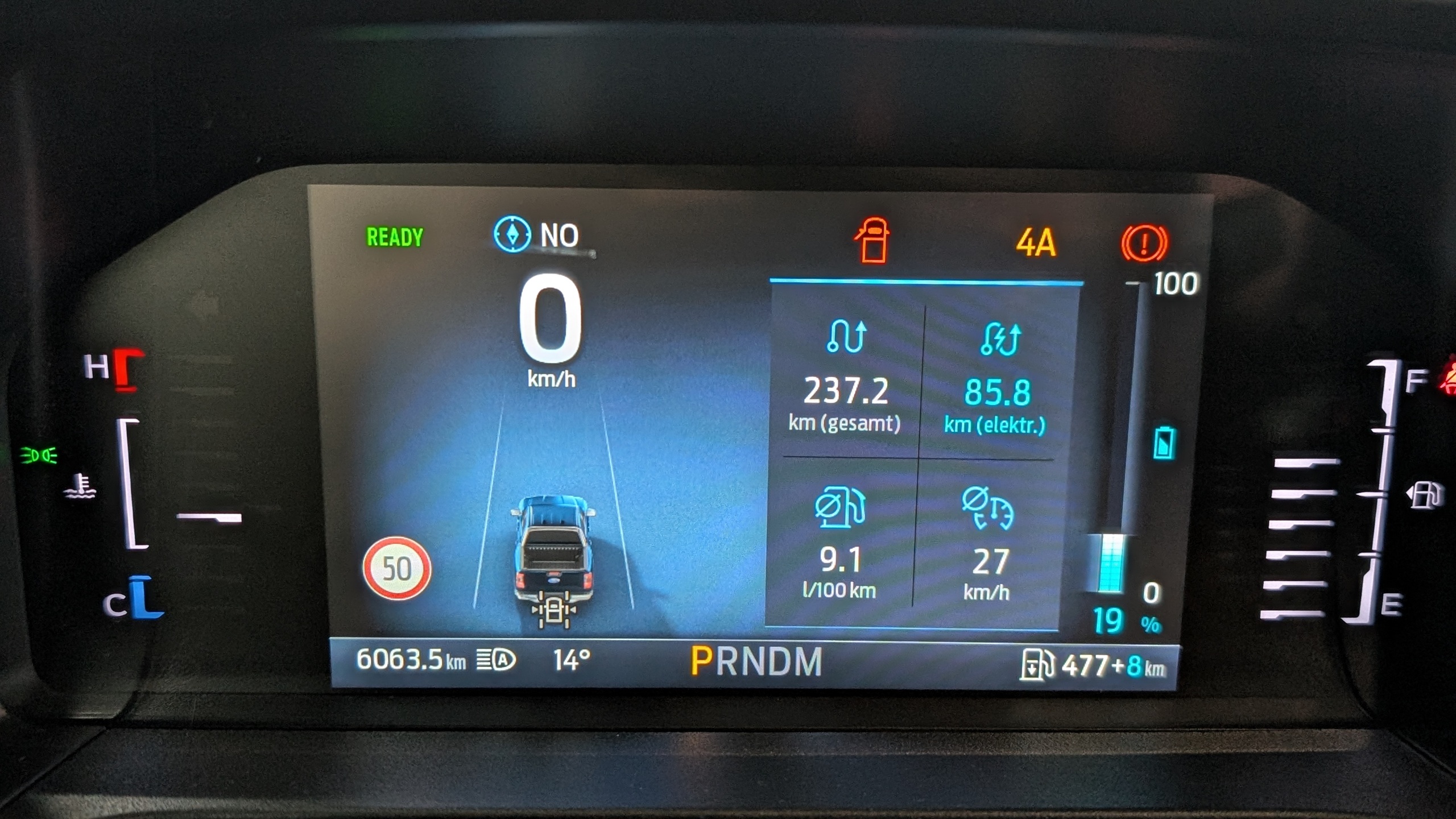
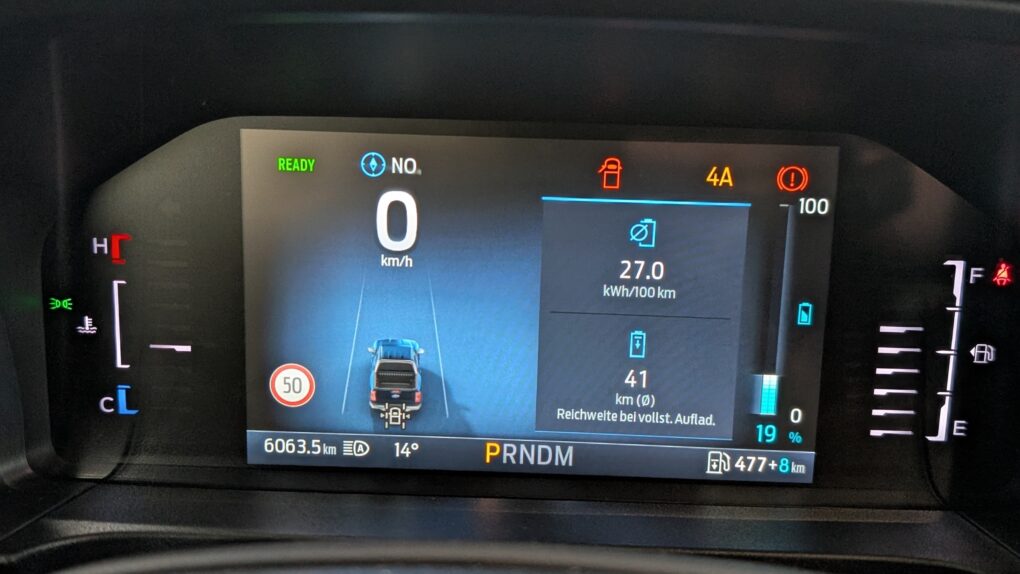
The official WLTP fuel consumption figures for the Ford Ranger PHEV Wildtrak sound enticing: 3,1 liters per 100 kilometers combined and 23,2 kWh/100 km of electric power consumption. However, these impressive figures only apply if the battery is regularly charged and the electric driving mode is consistently used. In real-world driving, i.e., in mixed hybrid operation with intermittent charging, the test results were around 9,1 liters and 27 kWh per 100 kilometers – a level roughly equivalent to that of the V6 diesel.
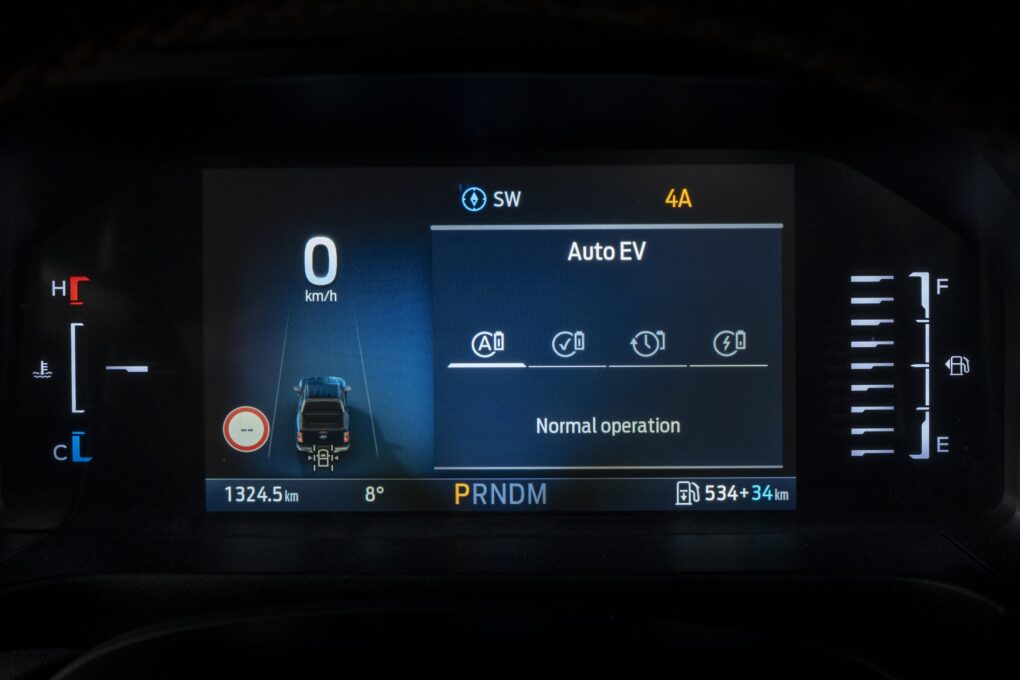
This is the structural disadvantage of all Plug-in hybrids: Those who don't charge regularly are driving around with the weight of two powertrains and a gasoline engine that's significantly thirstier than a modern diesel pickup. However, for frequent drivers with daily commutes under 40 kilometers and a charging option at home or work, PHEV technology can lead to considerable cost savings. The Ranger PHEV features four driving modes: all-electric (EV-Only), automatic hybrid operation, battery maintenance, and battery charging while driving.
-
- Picture: TechnikNews
-
- Picture: TechnikNews
Reach
The maximum electric range according to WLTP is up to 43 kilometers; in our practical test, it was a maximum of 41 kilometers. For a vehicle of this class, that's quite respectable, although Current passenger car PHEVs have long since exceeded the 80 or 100 kilometer mark. Crack. In practice, 35 to 40 kilometers are realistic with moderate driving and mild temperatures. However, the range decreases more quickly in winter or at higher speeds.
Nevertheless, the Ranger PHEV enables many commuters who travel 30 to 40 kilometers daily and charge at home to commute completely emission-free. For long distances and irregular charging, diesel remains the more economical choice.
charging
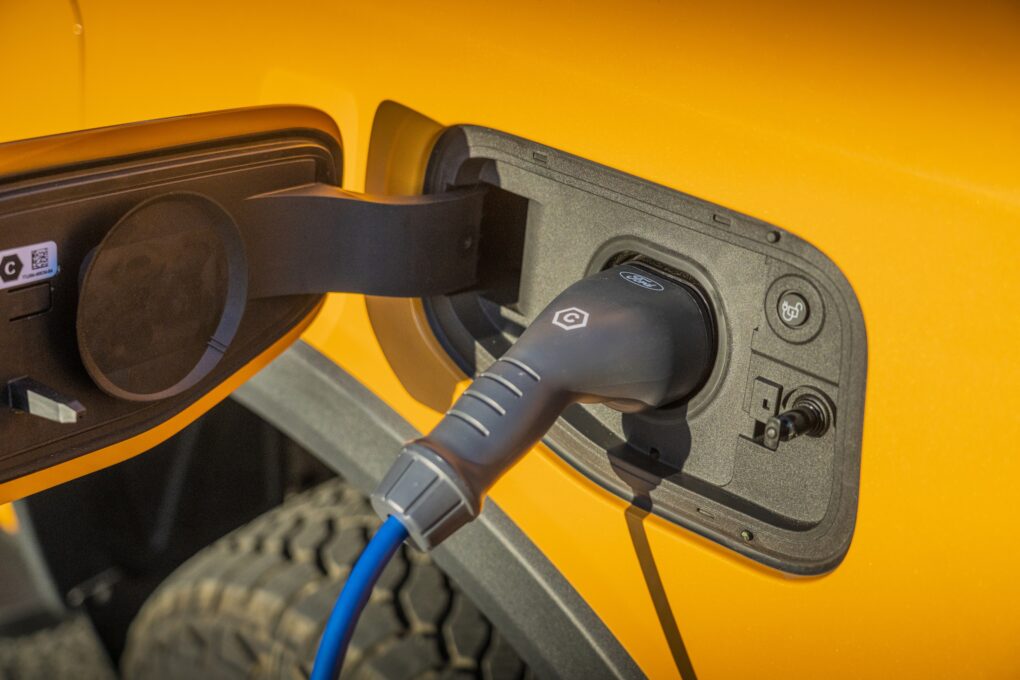
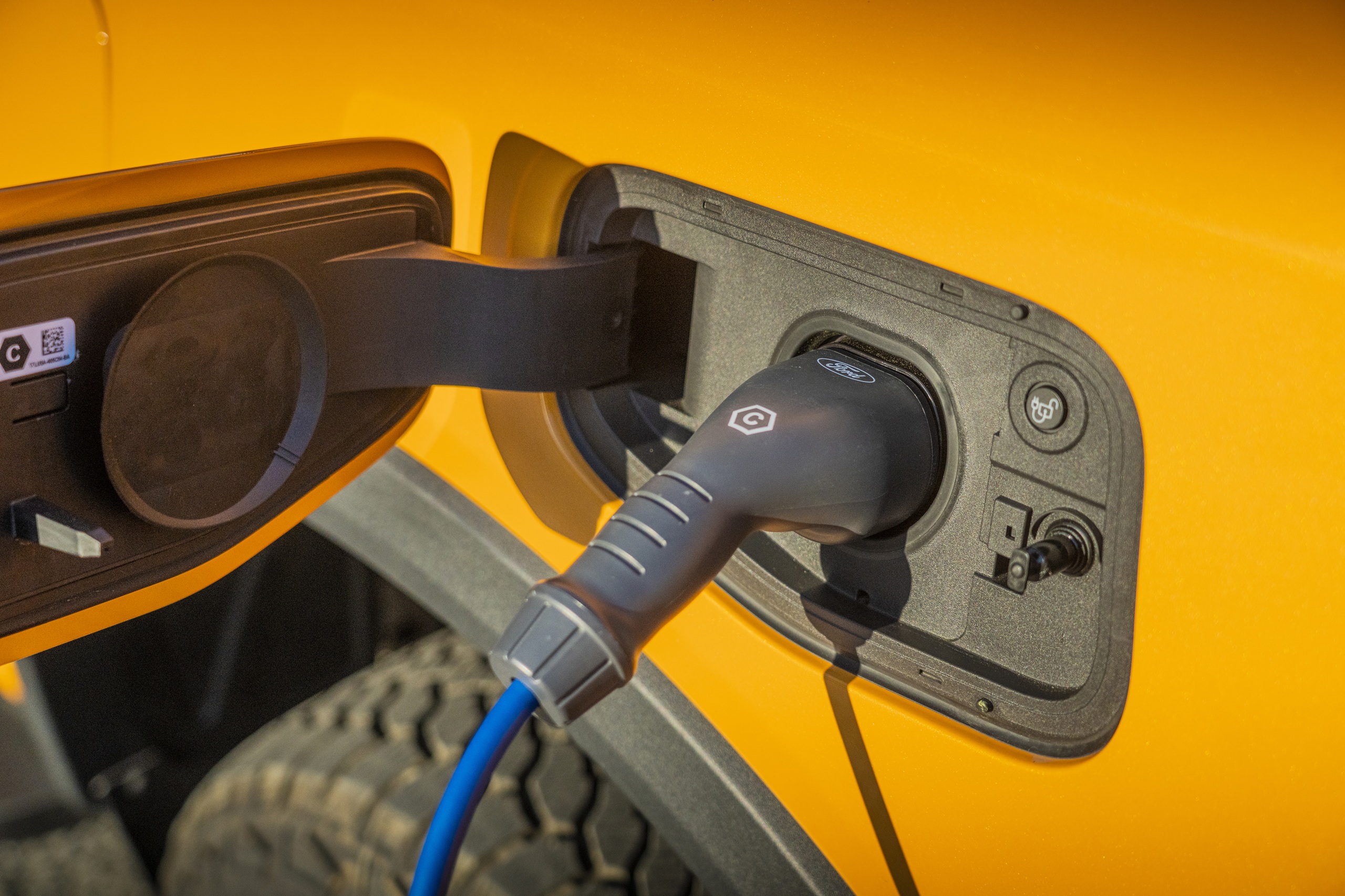
The 11,8 kWh battery can be fully charged in just under four hours using a standard household outlet with adequate circuit protection. This is practical and straightforward for everyday use. Unfortunately, charging takes just as long at a wallbox or public charging station. The integrated on-board charger limits the charging power to 3,7 kW, even if the wallbox offers more power (e.g., 11 kW or 22 kW).
DC fast charging is not included, but this is less of a concern given the moderate battery size. Ford offers support in setting up the charging infrastructure and enables... Cooperation with Octopus Electroverse Access to the BlueOval Charge Network. A useful addition for fleet users and private individuals alike.
-
- Image: Ford
-
- Image: Ford
Price and warranty of the Ford Ranger PHEV Wildtrak
The Ford Ranger PHEV Wildtrak is available in Germany from a Base price of 53.790 euros net (64.010 euros gross) Available. Depending on the equipment and selected options, fully configured vehicles can quickly exceed the €70.000 mark. This is a confident price, noticeably higher than the diesel versions, which are significantly cheaper with comparable equipment. However, for business users, the price premium is offset by tax advantages for plug-in hybrids, lower operating costs, and the company car tax benefit.
The manufacturer's warranty is two years, and Ford's roadside assistance is included within this period and is extended with each scheduled service at a Ford dealership. For greater protection, the warranty can be extended to up to eight years or 160.000 kilometers for private use. Commercial users can be covered for up to four years or 160.000 kilometers. The high-voltage battery has a separate warranty. Ford also offers "Protect Service Plans" which allow you to plan inspection costs for up to four years at a fixed price.
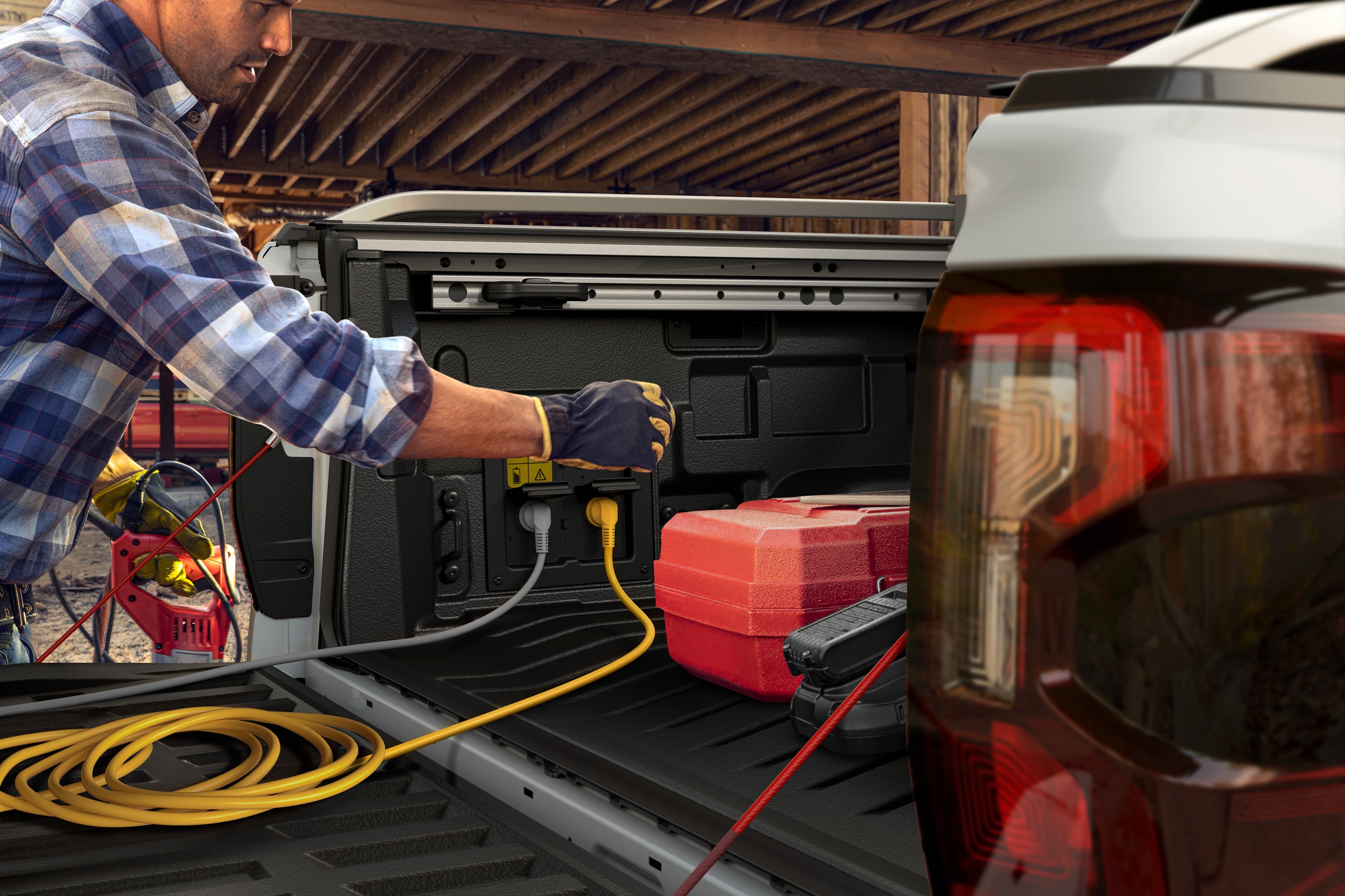
Image: Ford
Many thanks to Ford Germany for providing the Ford Ranger PHEV Wildtrak for this test report. This did not influence our opinion!