
VW Amarok PanAmericana long-distance test: How good is it in normal road traffic?
A TEST REPORT from Benedict Behring  on May 04, 2026, 8:00 am | Write a comment
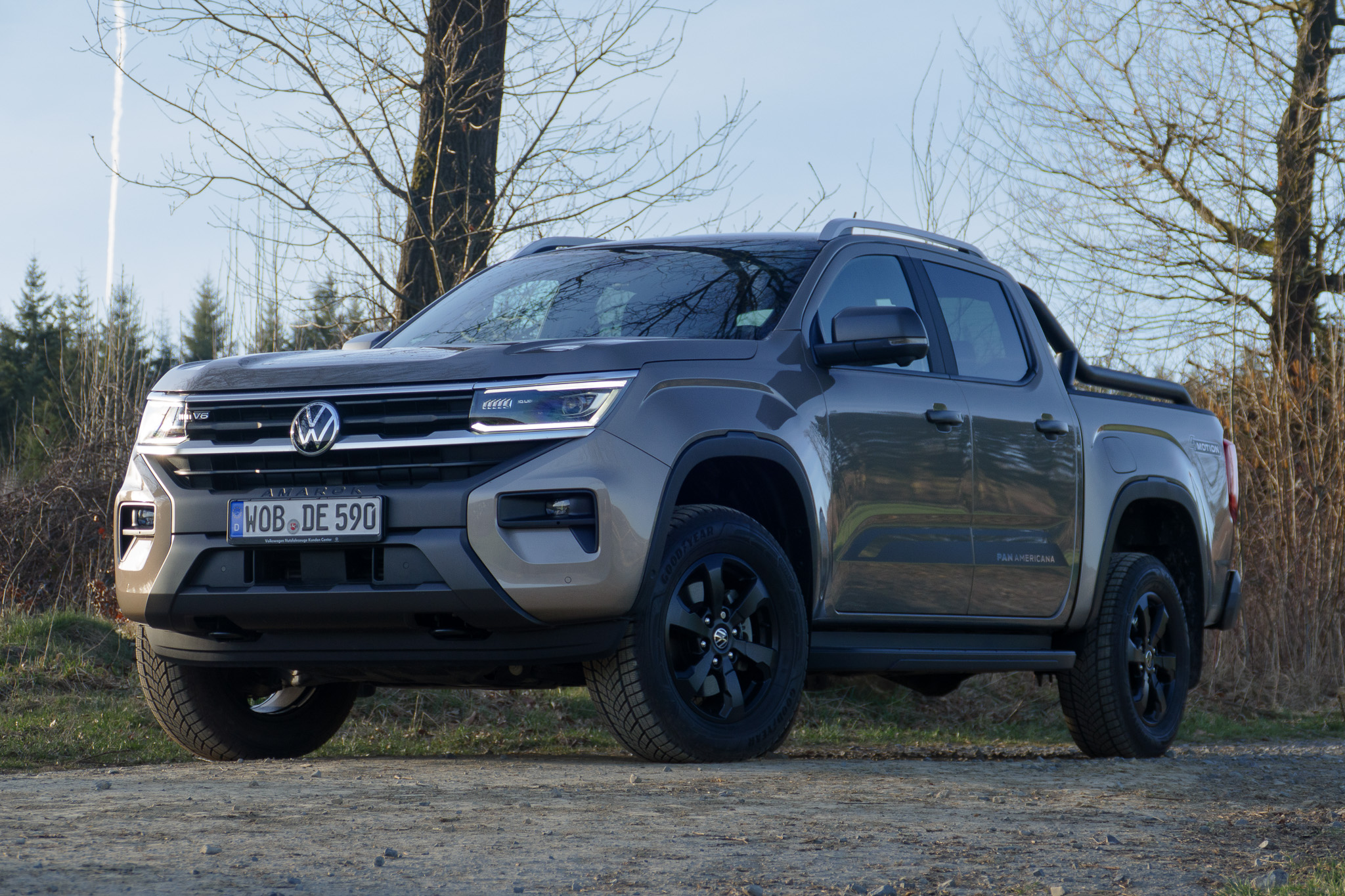
Contrary to what you may have read in other media, in this test we are not focusing on the off-road capabilities of the volkswagen amarok in the special edition "PanAmericana". On the contrary. We were interested in the long-distance test on paved roads and the question of whether the pickup, actually designed for mud, could also impress here.
tl; dr
The volkswagen amarok The PanAmericana presents itself as a successful blend of classic work vehicle and modern all-rounder. With its 3,0-liter V6 diesel engine, 10-speed automatic transmission, and overall comfortable suspension, it is suitable not only for tough jobs but also for long journeys. Even at higher speeds, the vehicle remains composed and conveys a secure driving feeling – an area where many pickups traditionally show weaknesses.
Its strengths clearly lie in practical use. A high towing capacity, a well-designed cargo bed, robust interior materials, and overall functional controls make it easy to work with. Off-road, the Amarok scores points with easily accessible off-road functions, a differential lock, and various drive modes, including low range. This is all supported by useful technology such as the 360-degree camera, a flexibly configurable instrument cluster, and excellent traffic sign recognition. However, weaknesses also become apparent upon closer inspection. The infotainment system is sluggish, driver assistance systems like the blind spot monitor don't always work flawlessly, and rear passenger space remains limited. There are also minor comfort compromises, such as an annoying beeping sound at higher speeds and the lack of a head-up display.
Ultimately, the Amarok isn't a vehicle for those obsessed with details, but rather a clearly utilitarian pickup truck with a surprisingly high level of comfort. Anyone looking for a versatile vehicle that convincingly combines work, off-road capability, and long-distance driving will find it here. here Starting at €63.642,39 for the Style version and €73.739,54 for the PanAmericana special edition model we tested (both including 19% VAT), it's a well-rounded package with only a few, rather practical, drawbacks.proto miss.
-
- Picture: TechnikNews
-
- Picture: TechnikNews
-
- Picture: TechnikNews
Design
-
- Picture: TechnikNews
-
- Picture: TechnikNews
-
- Picture: TechnikNews
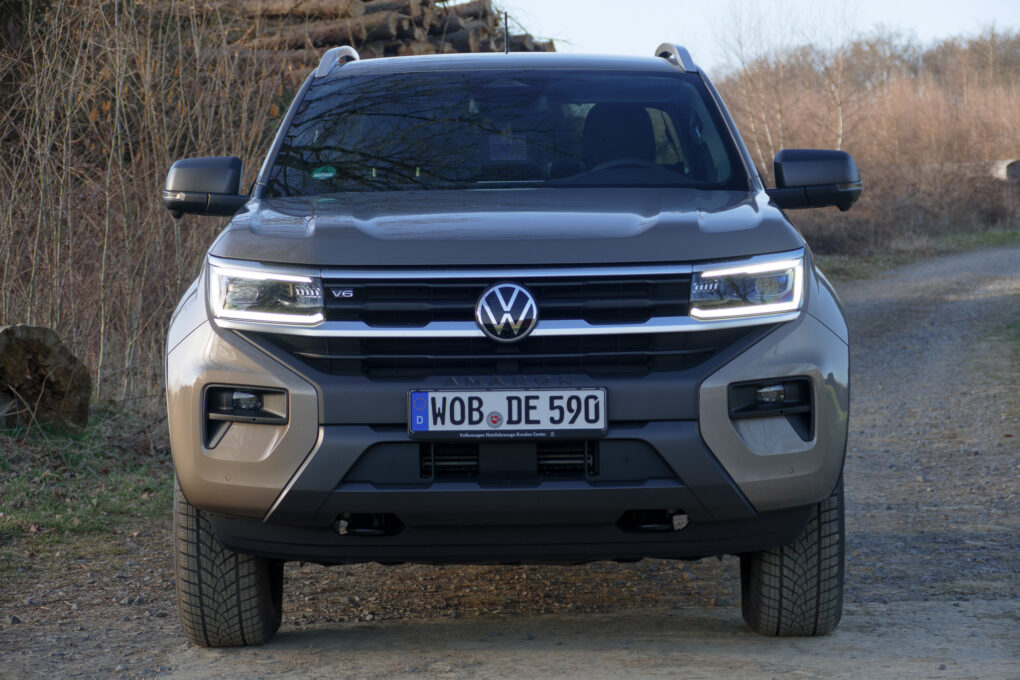
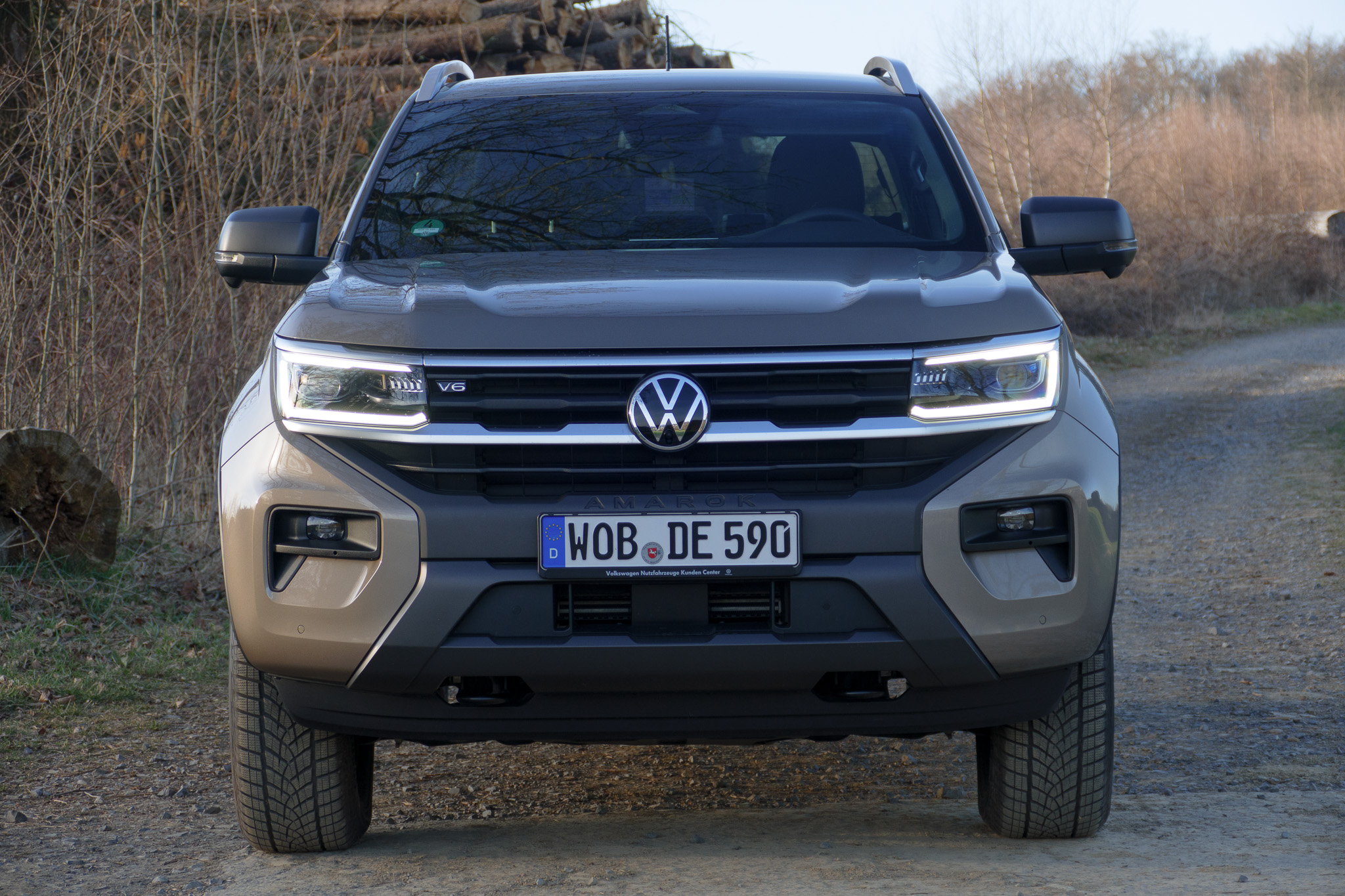
The front of the Volkswagen Amarok isn't overly aggressive, yet it still conveys a strong presence on the road. The design contrasts well with the body color, using a combination of black and silver. The V6 emblem in the grille confidently indicates the engine. The AMAROK lettering below the grille is less visually prominent, but its textured surface is tactile. Technically, the headlights impress with the IQ.Light matrix lighting system. In everyday use, the system proves remarkably precise. Oncoming vehicles and cyclists are selectively masked out of the beam, while the rest of the road remains well-illuminated by the remarkably bright high beams. The cornering lights also illuminate the road ahead with a wide and even beam pattern.
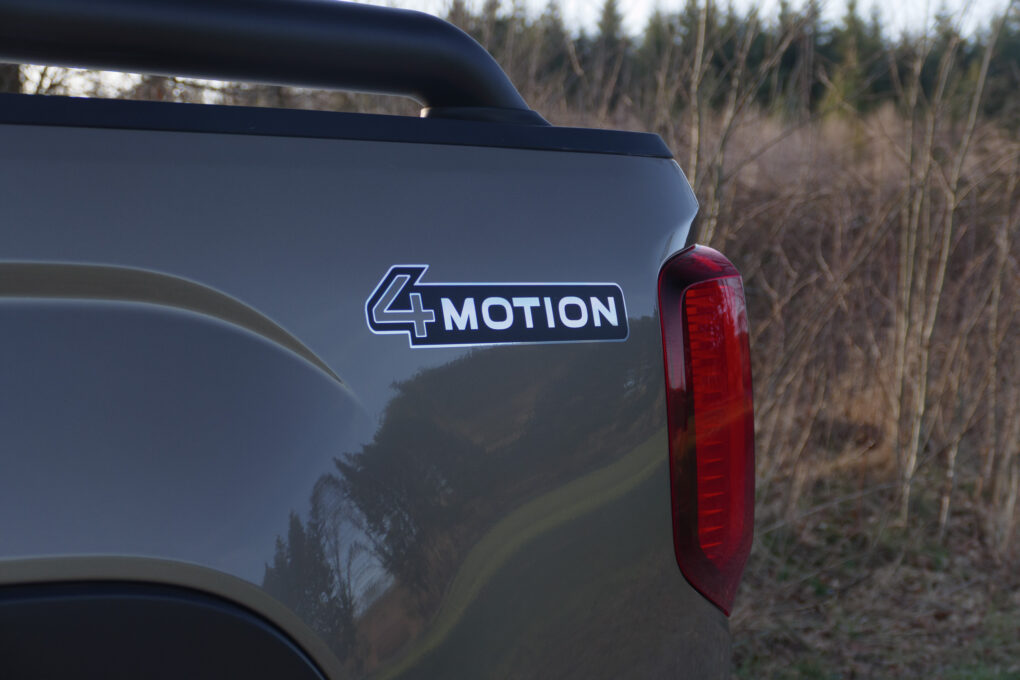
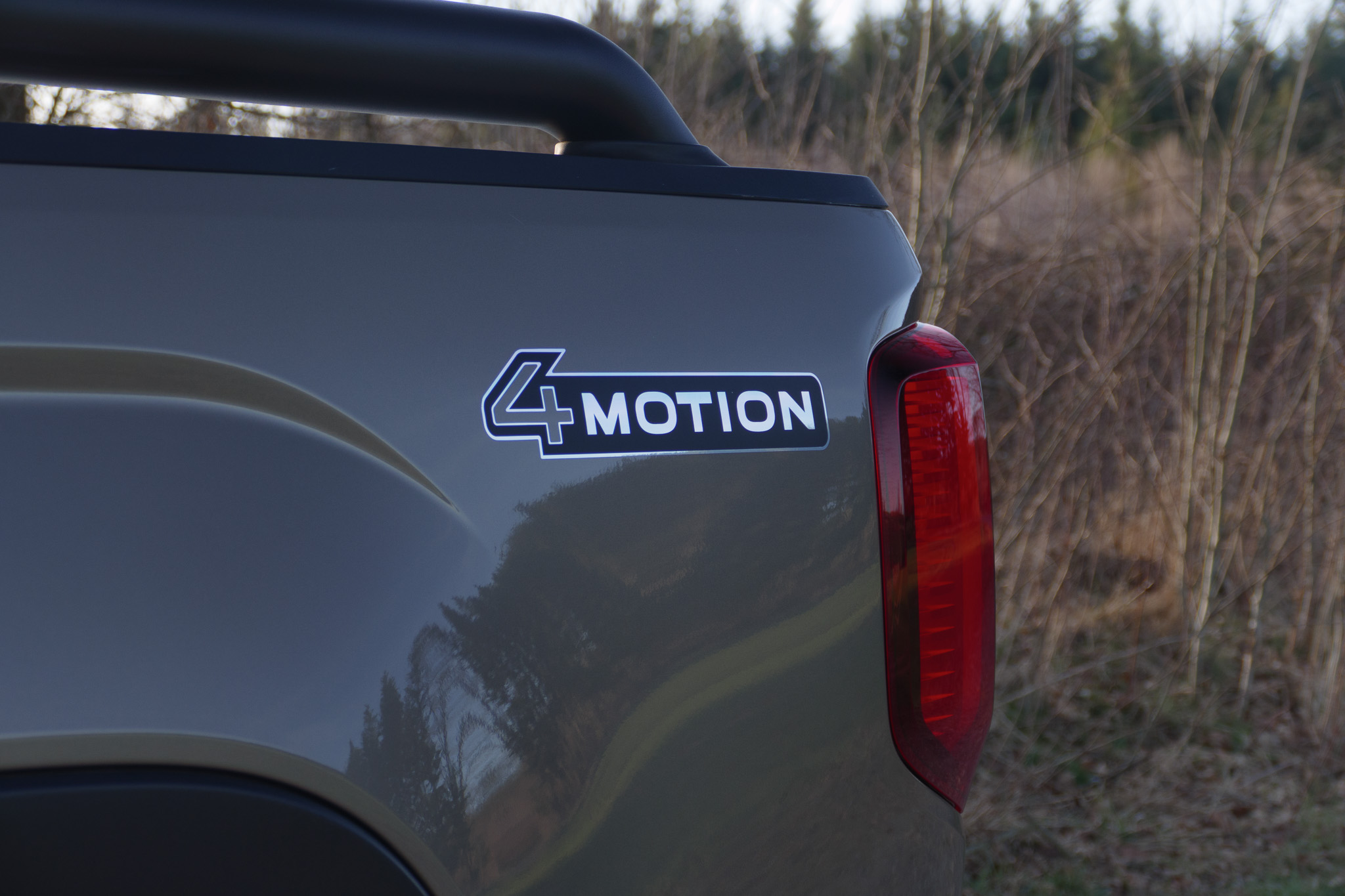
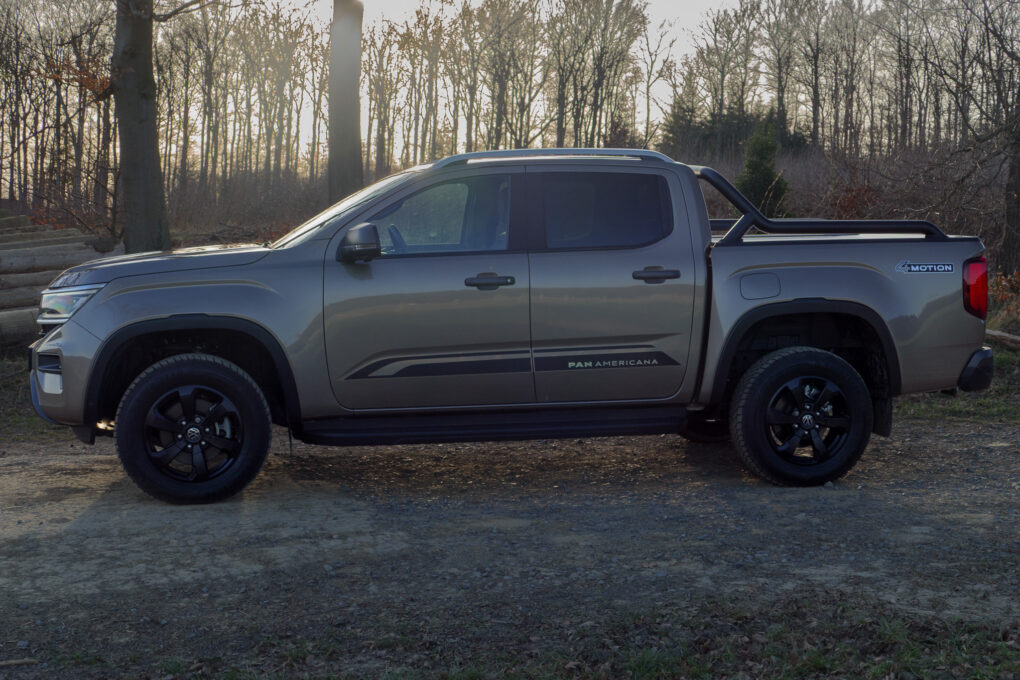
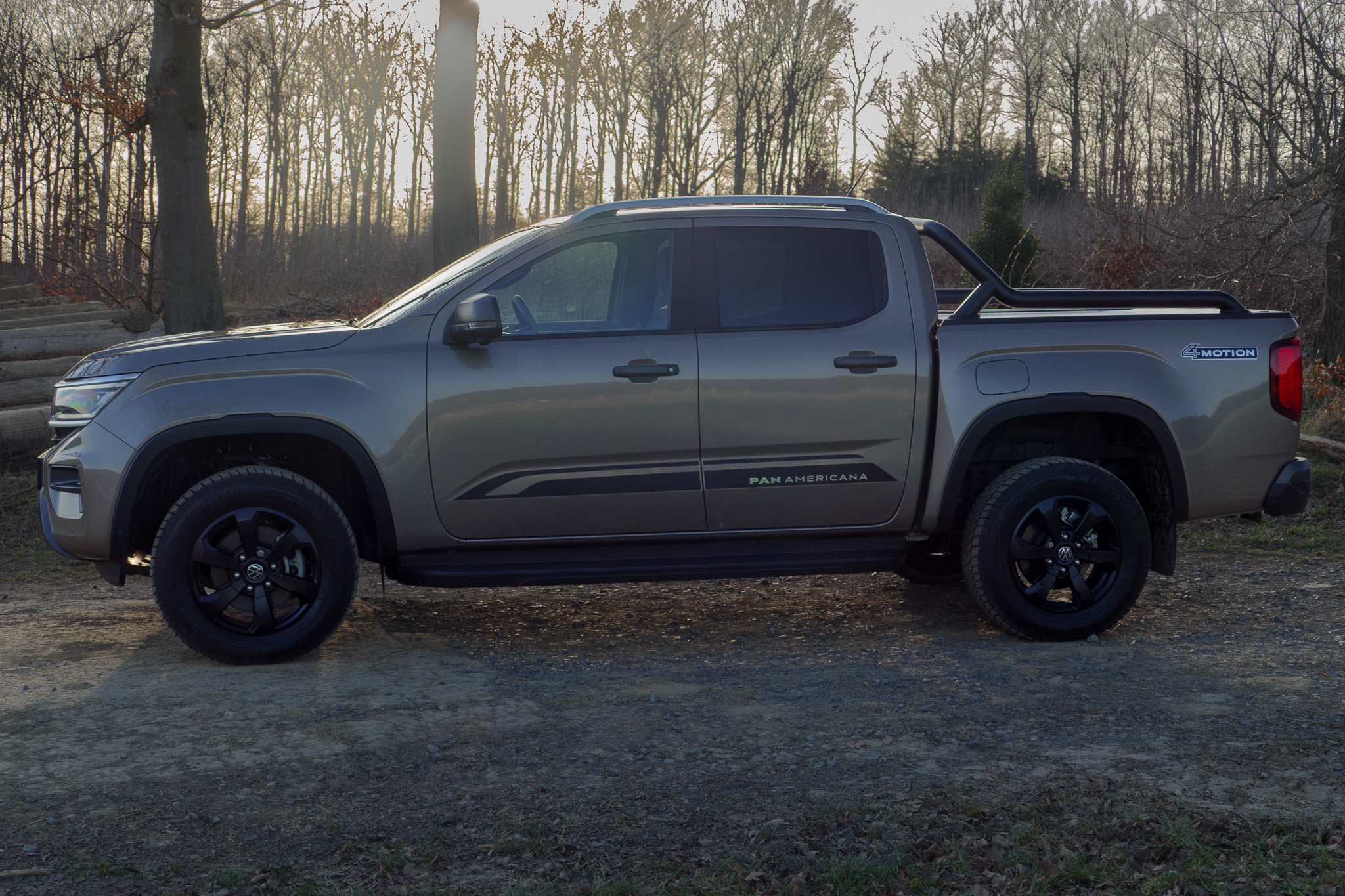
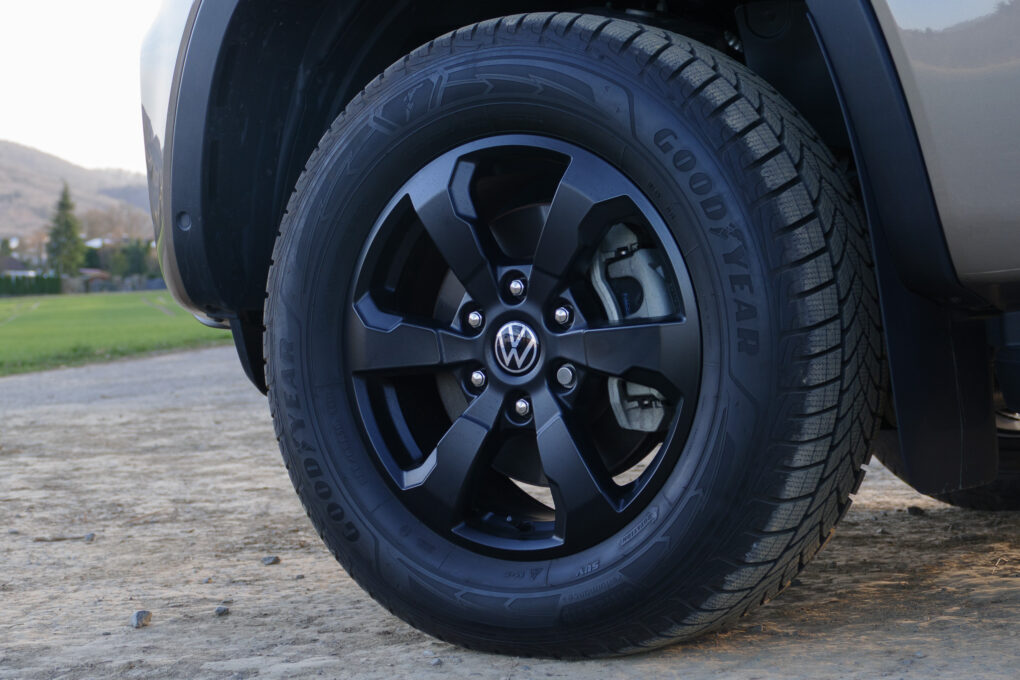
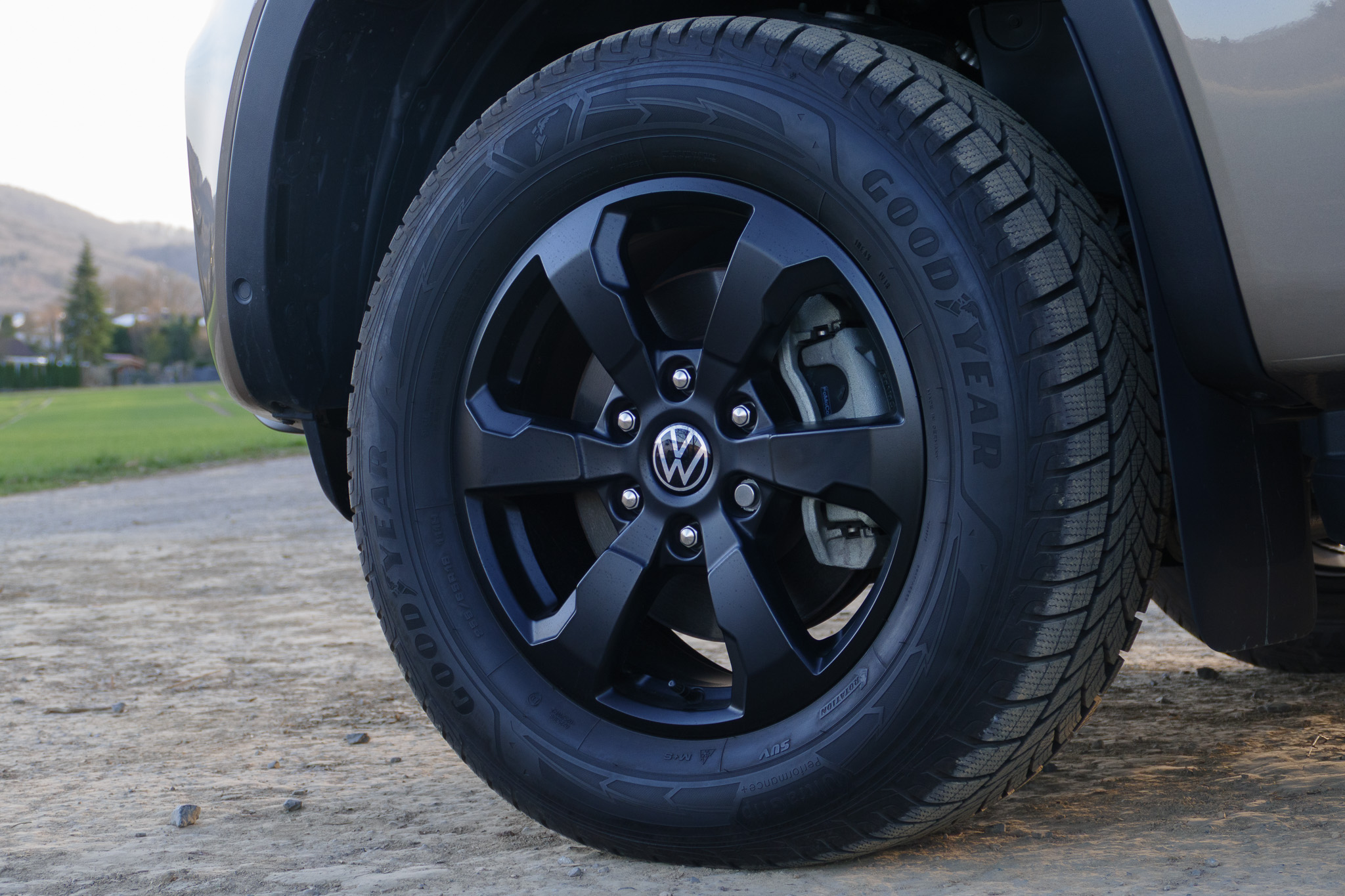
The Volkswagen Amarok's side profile is decidedly functional. The 18-inch wheels appear comparatively small in the large wheel arches, but allow for ample suspension travel and enhance its off-road capability. The running board is well-sized and, together with the grab handle on the A-pillar, significantly facilitates entry and exit. Chrome-colored lettering ("PanAmericana" above the running board, "4MOTION" at the rear) adds subtle visual accents. Standard features also include a permanently mounted roof rack, prominent mud flaps at the front and rear, and large exterior mirrors that improve visibility.
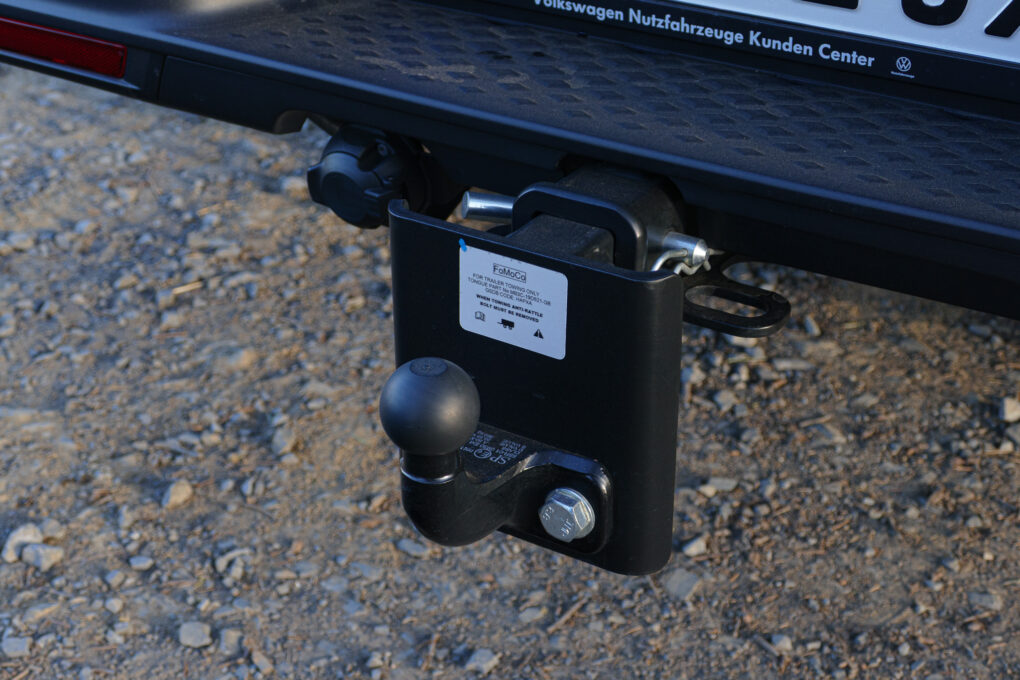
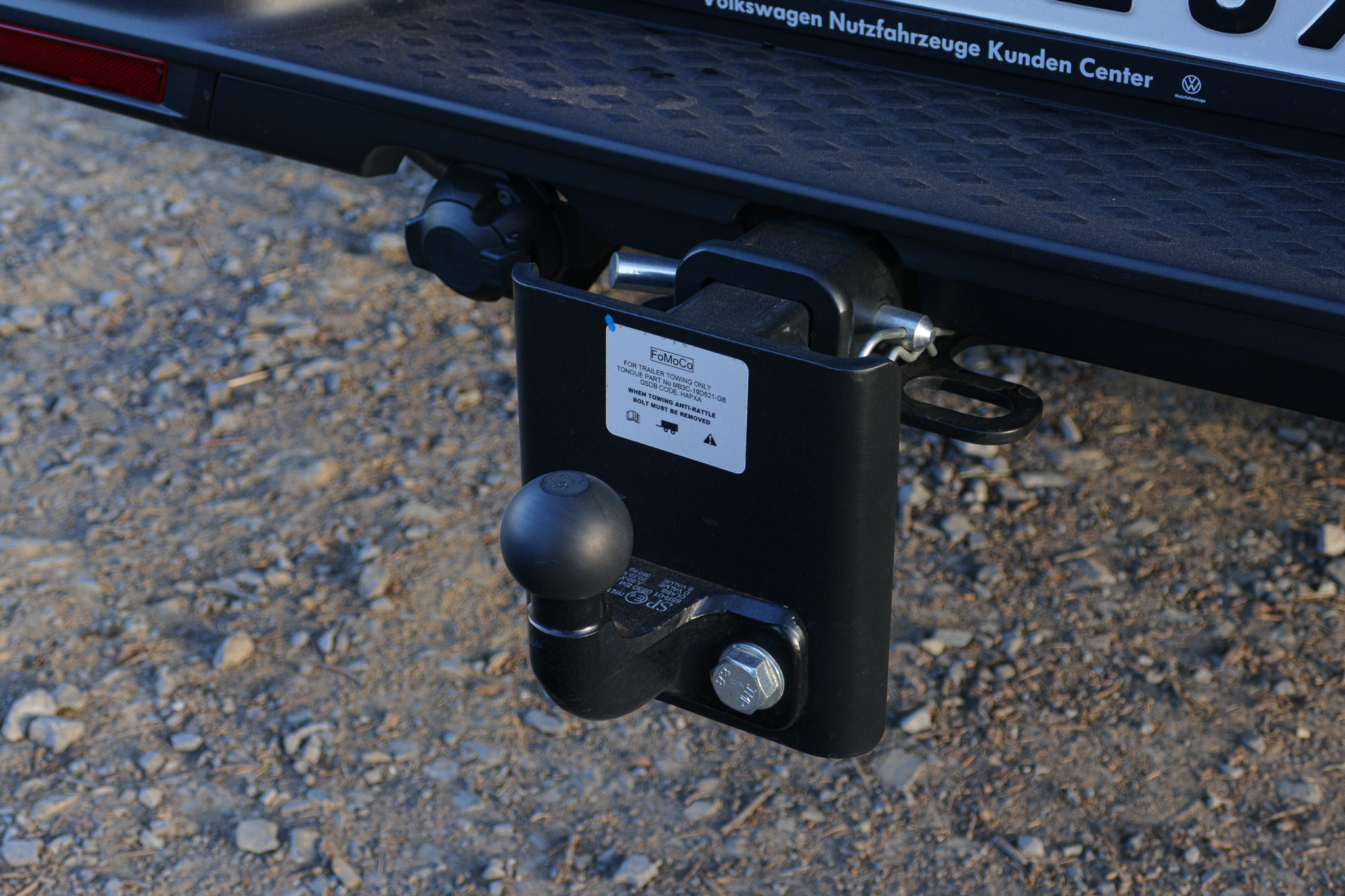
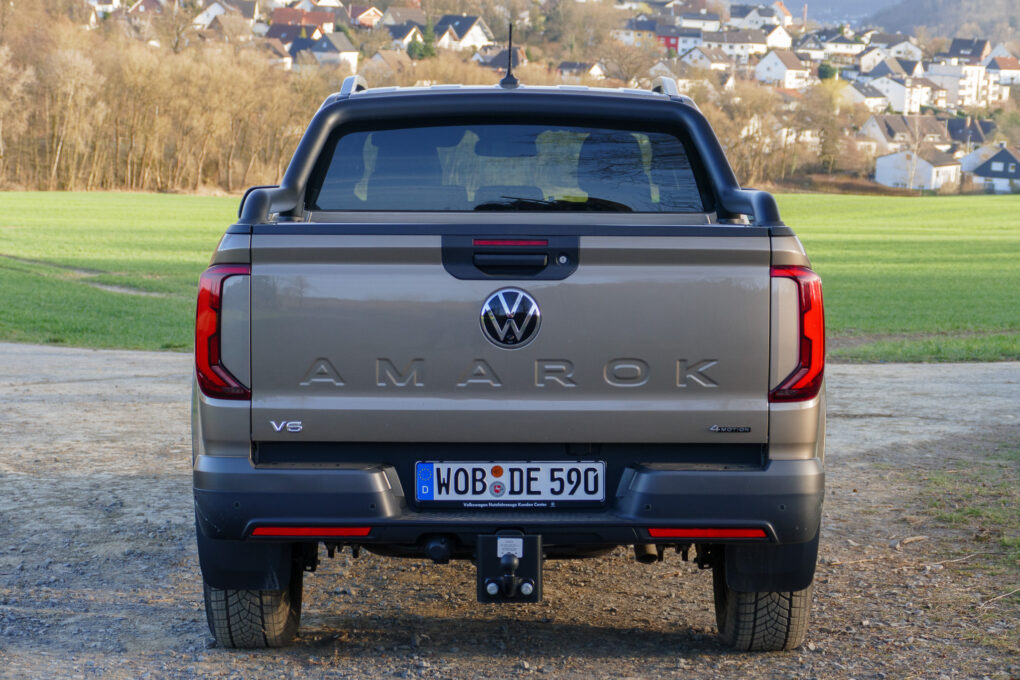
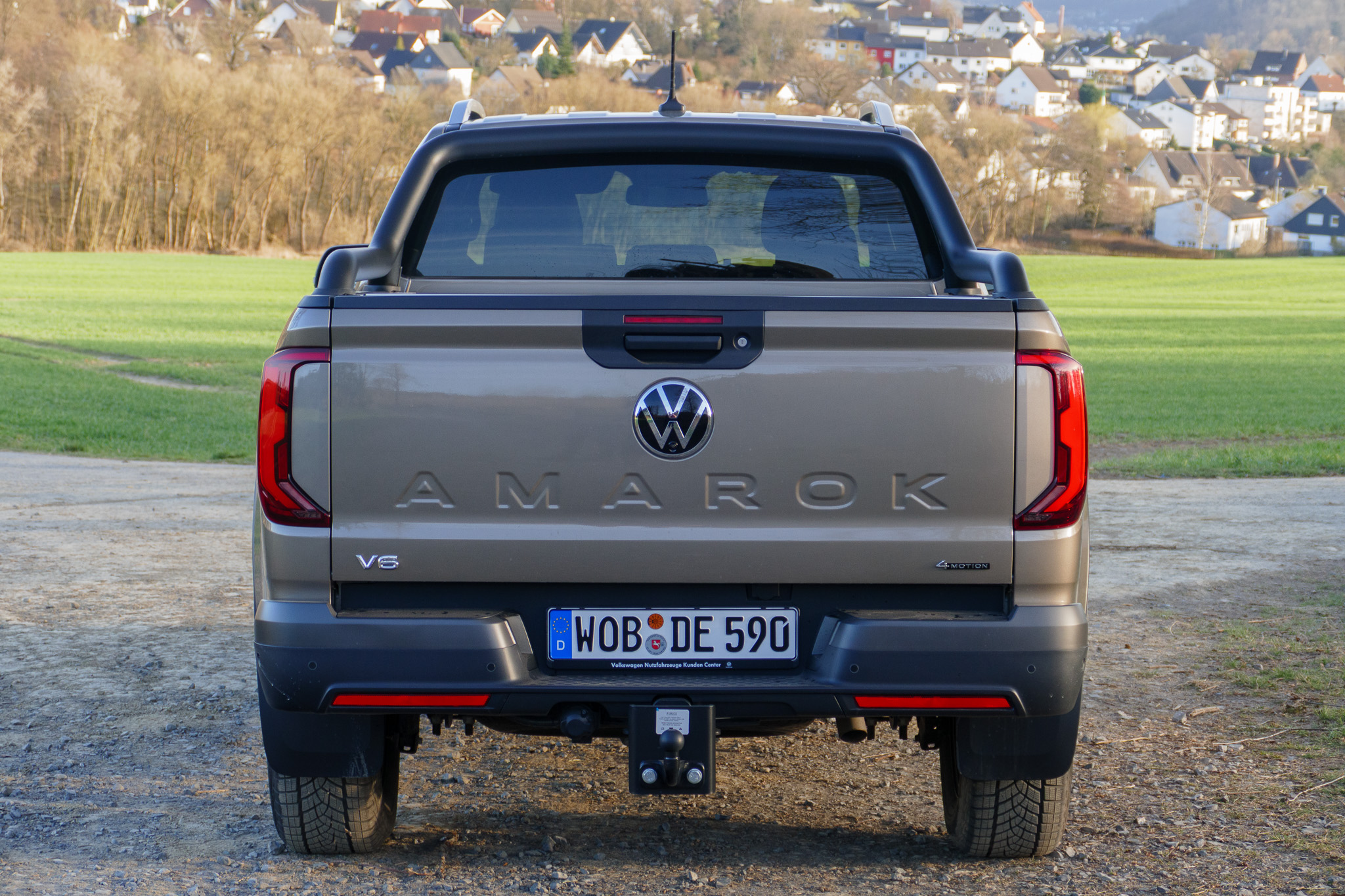
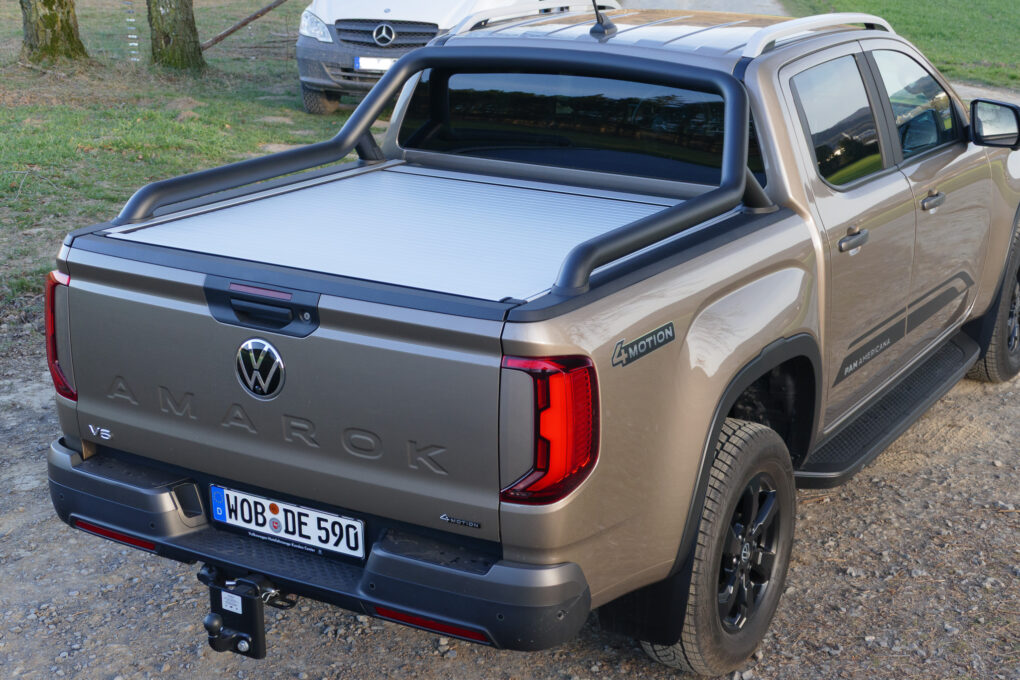
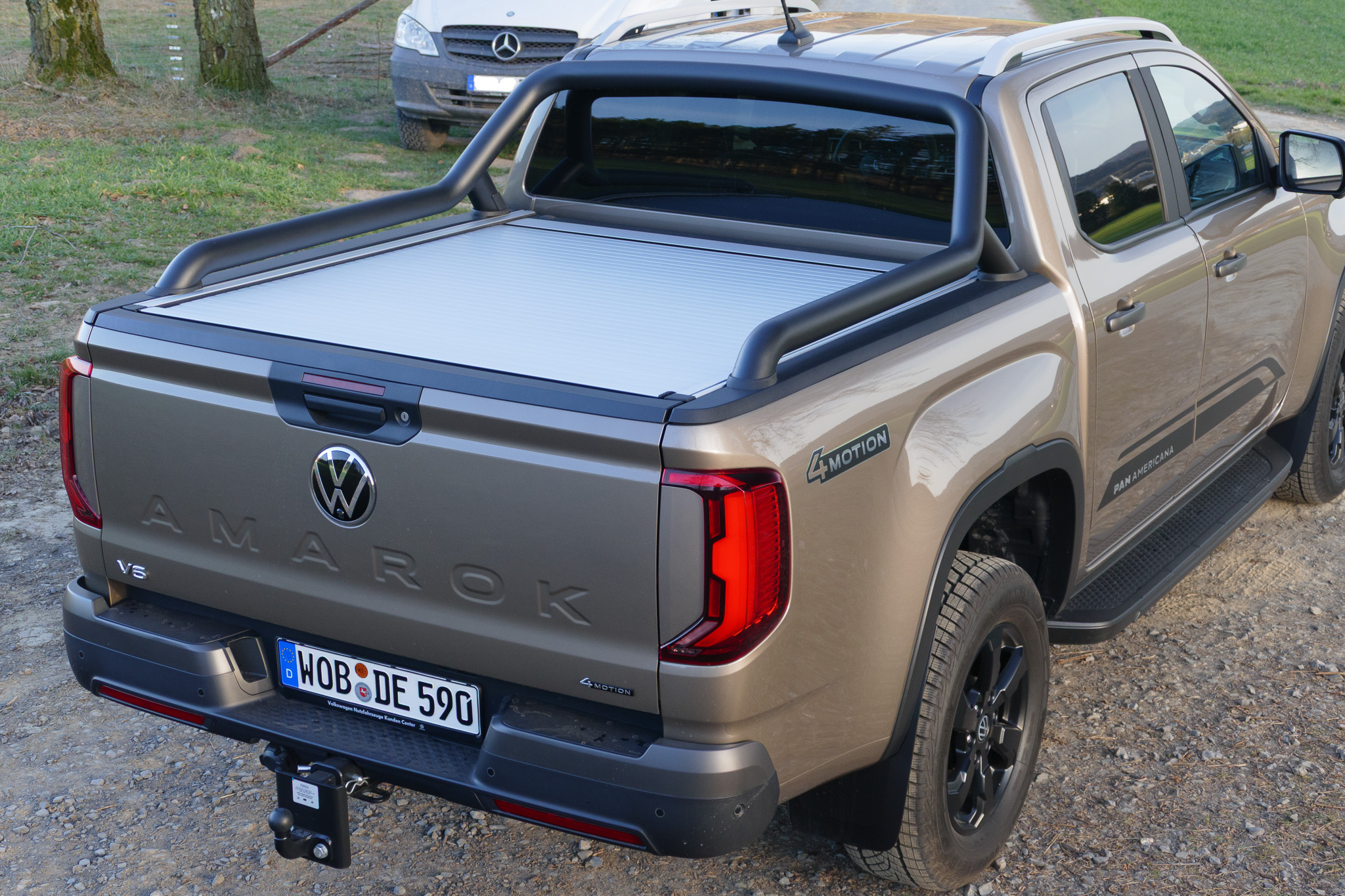
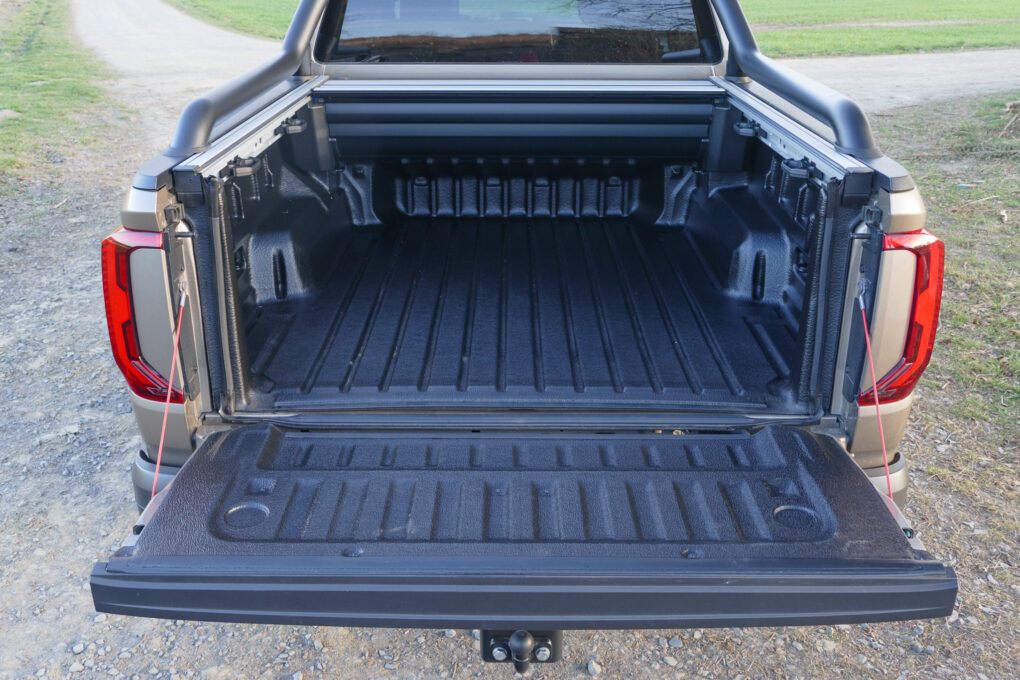
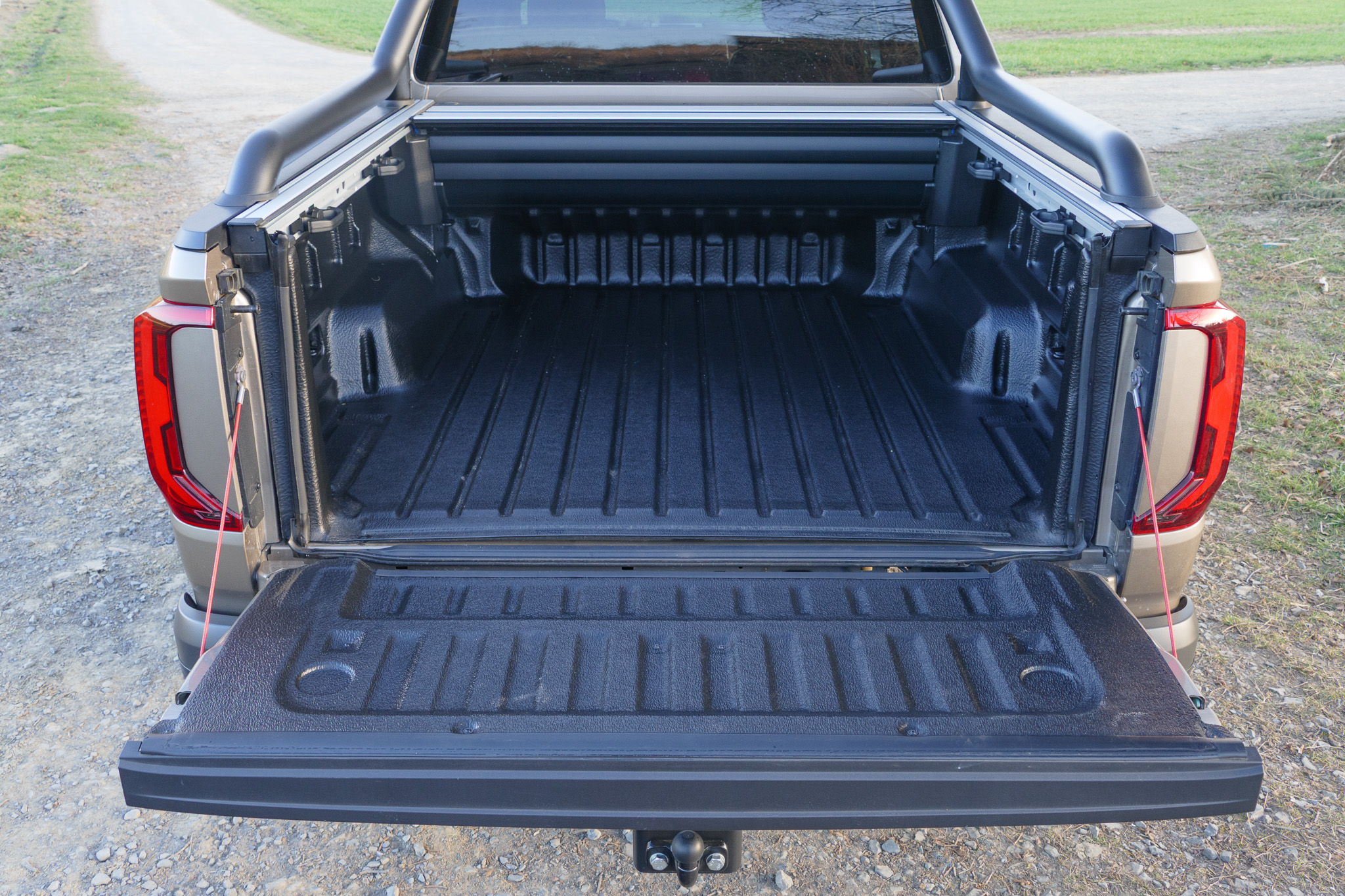
At the rear of the Volkswagen Amarok, this model features a functional design with subtle accents. The black sport bar and the AMAROK lettering embossed into the tailgate are particularly striking. The look is complemented by the V6 emblem on the lower left and the "4MOTION" lettering on the right. The optional electric tonneau cover can be operated via the vehicle key, from inside the vehicle, or directly via a button on the cargo bed, and allows very little water to enter despite the high-pressure water jet. Next to the button is a 12-volt socket, and above it, an optional sliding load management system on both sides. Four lashing eyes are available for securing cargo, and the cargo bed is well-lit. The tailgate is not dampened but offers simulated cupholders and can also be used as a seat. A trailer hitch with a maximum towing capacity of 3,5 tons completes the rear design.GCW 6.500 kg) and a large-area LED light signature.
-
- Picture: TechnikNews
-
- Picture: TechnikNews
-
- Picture: TechnikNews
inner space
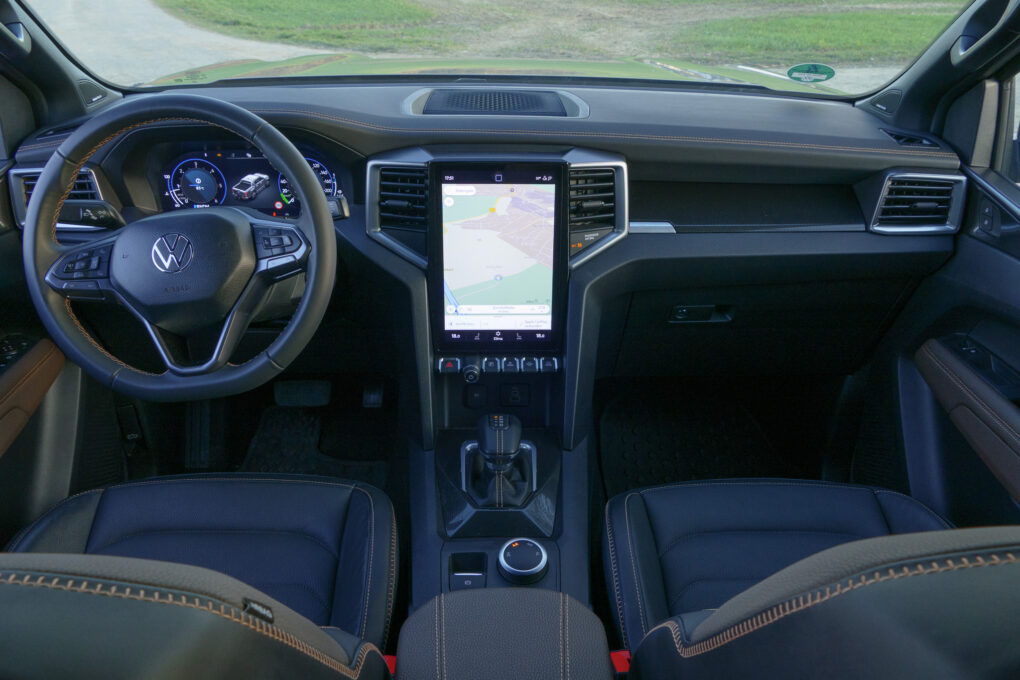
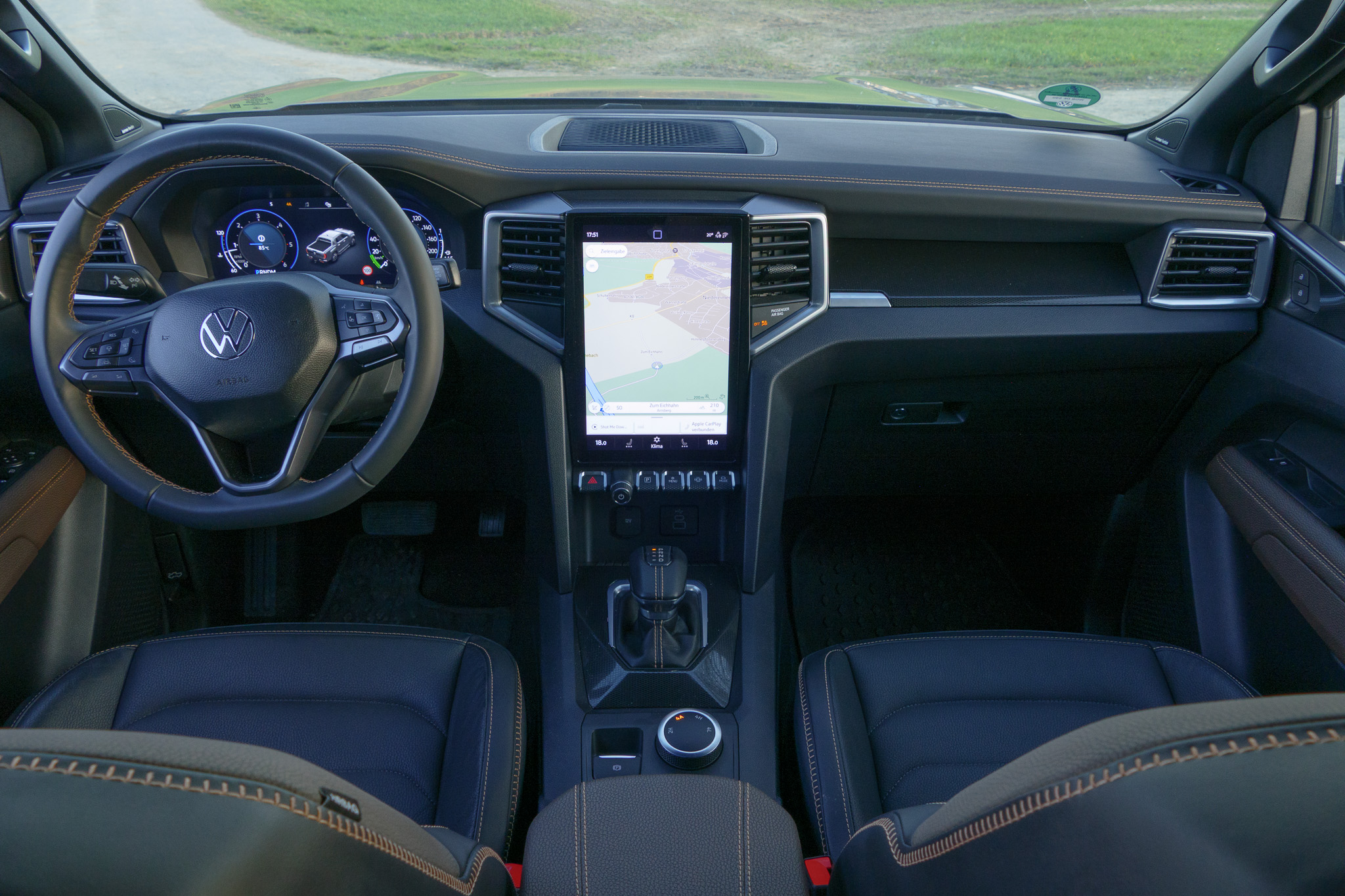
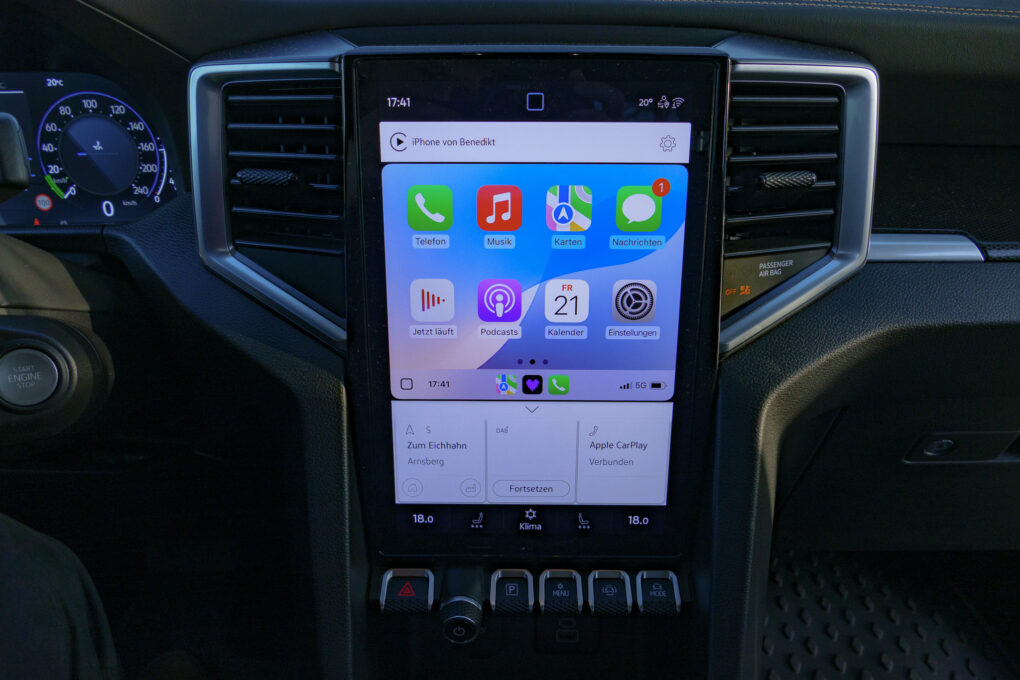
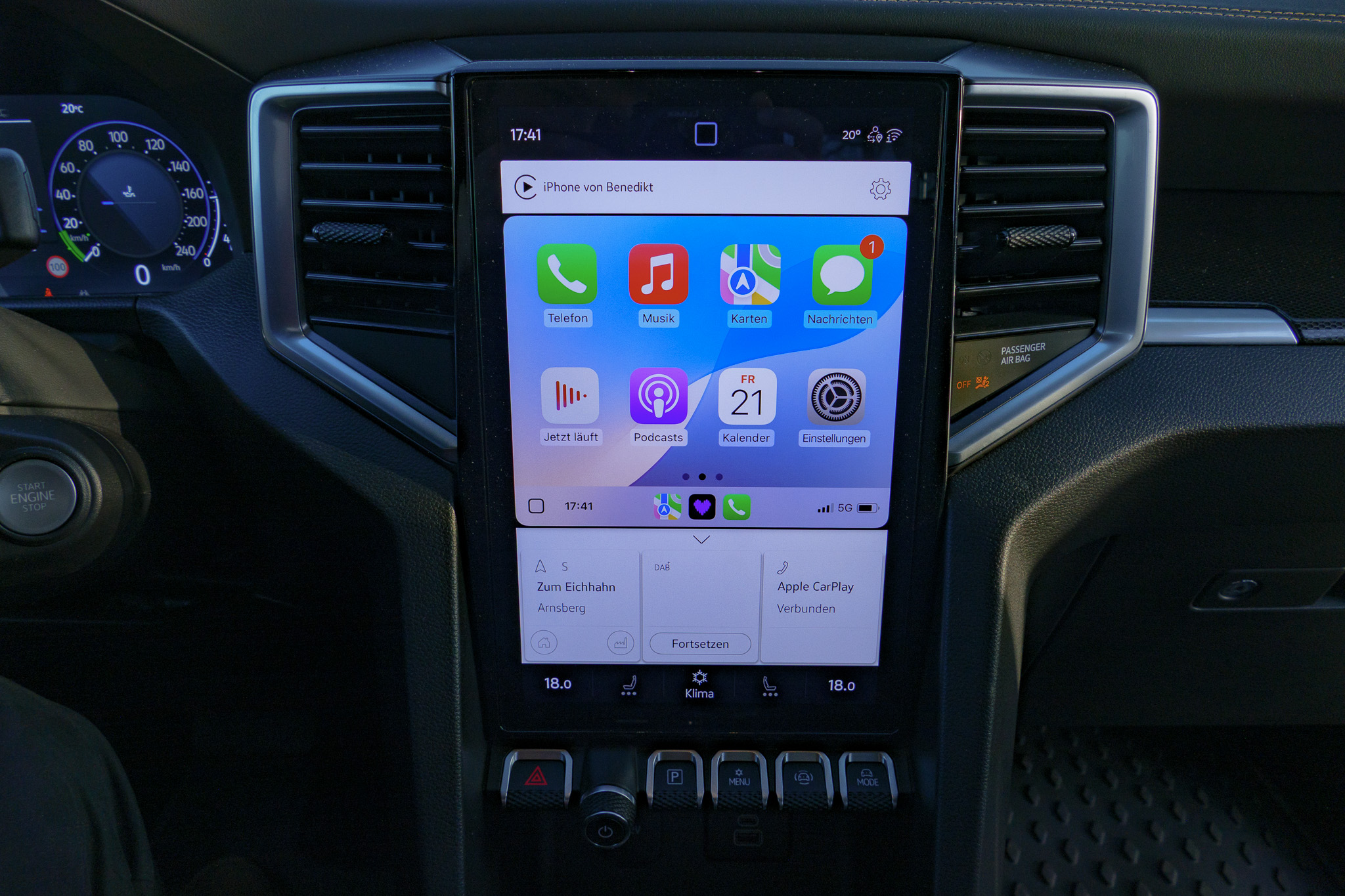
Inside the volkswagen amarok Functionality is clearly the priority. In the front seats, the electrically adjustable and heated leather seats with integrated lumbar support offer solid, rather firm padding, and the headrests are mechanically adjustable. The materials used are generally robust and easy to care for, designed for simple cleaning. There are no creaking noises; only the armrest feels a bit wobbly. The center console features two cupholders, a storage compartment under the armrest, and connections in the form of 12-volt, USB-C, and USB-A ports. An inductive charging pad is also included. The leather-wrapped gear selector offers manual gear selection via side-mounted buttons, which can also be used to lock gears. The steering wheel uses physical buttons and is therefore easy to operate. The 12,3-inch infotainment system is large, but unfortunately also very sluggish. Apple CarPlay more reliably than their own software works, and the climate control has to be regulated via small touch surfaces.
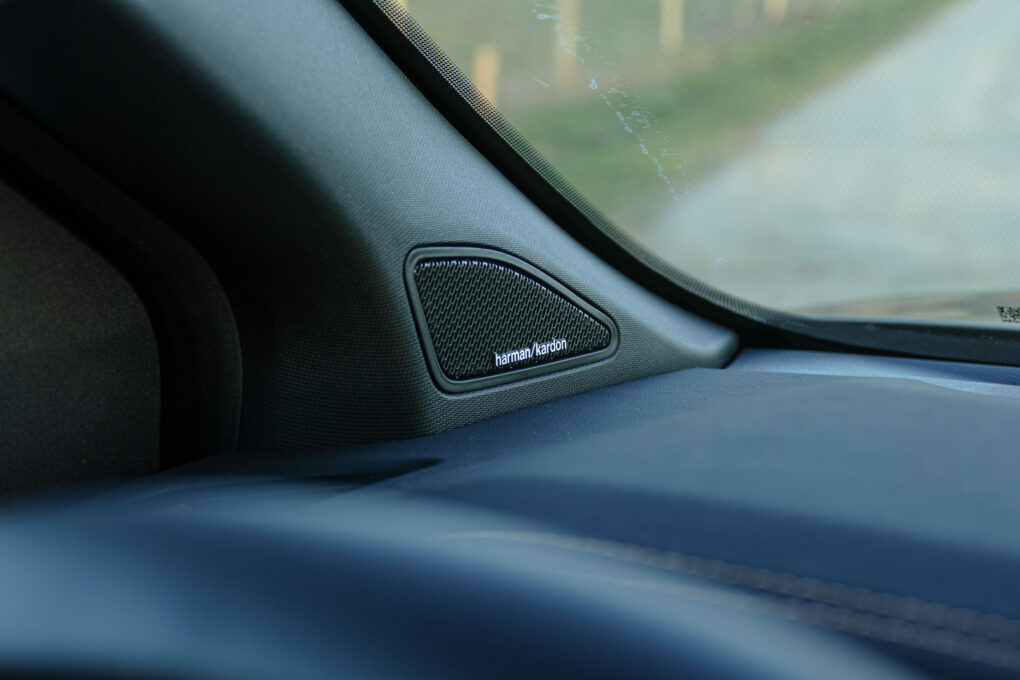
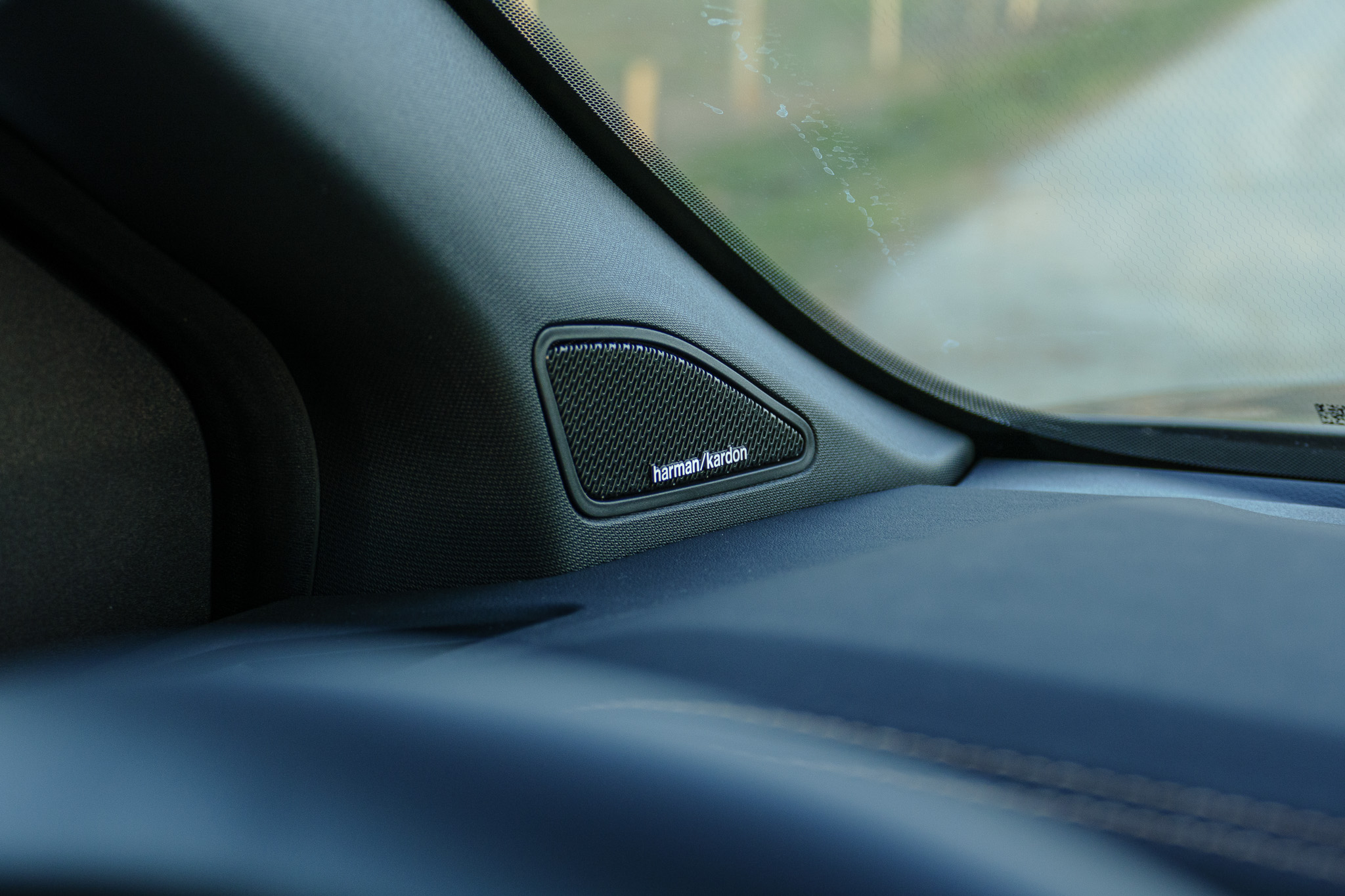
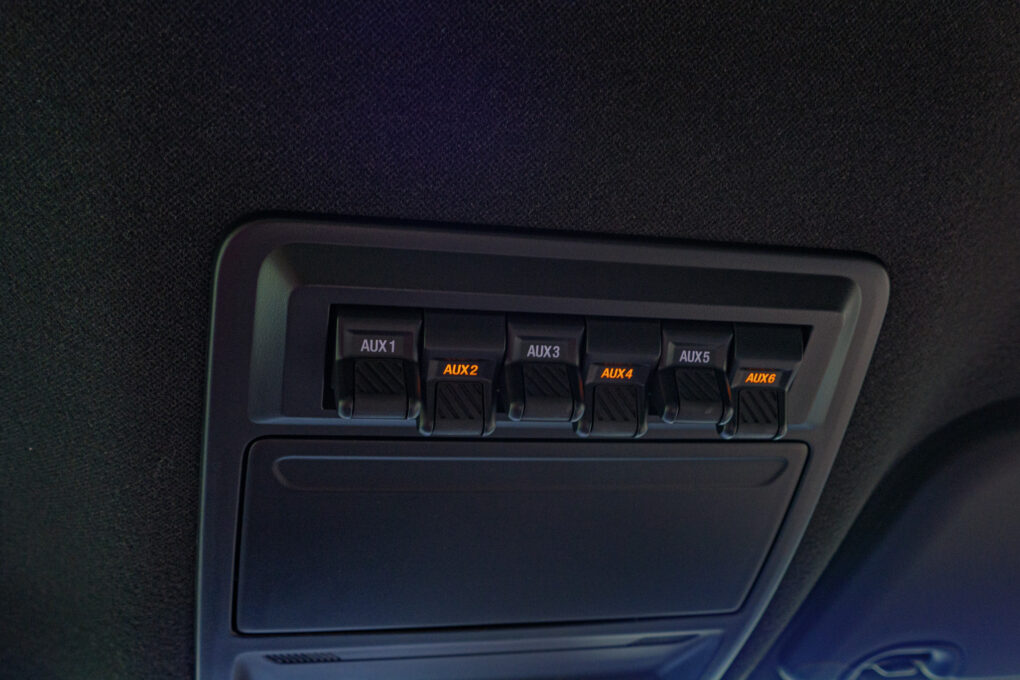
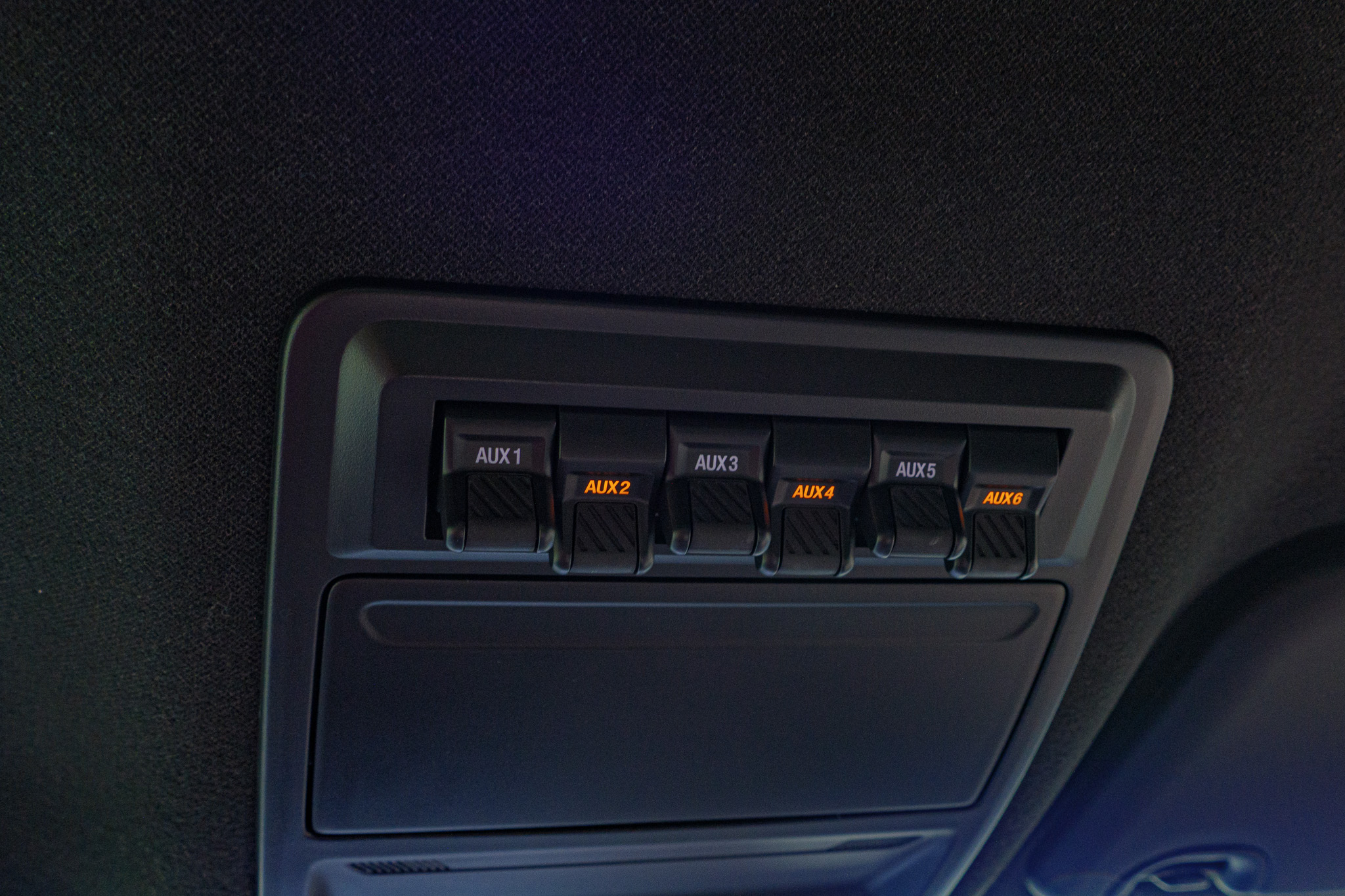
Practical details are evident throughout the interior. Two glove compartments, the lower one lockable and illuminated, and cupholders in all doors provide additional storage options. The doors can be opened quickly and easily via integrated handles in the armrest. The headliner features several toggle switches for additional functions (e.g., auxiliary lighting) as well as a sunglasses holder. An automatically dimming rearview mirror and a rather weak heated steering wheel are also included. Ambient lighting is very minimal and located in both front door panels and footwells. The standard sound system from Harman Kardon With eight speakers, a subwoofer and 640 watts, it delivers above-average sound quality for a commercial vehicle.
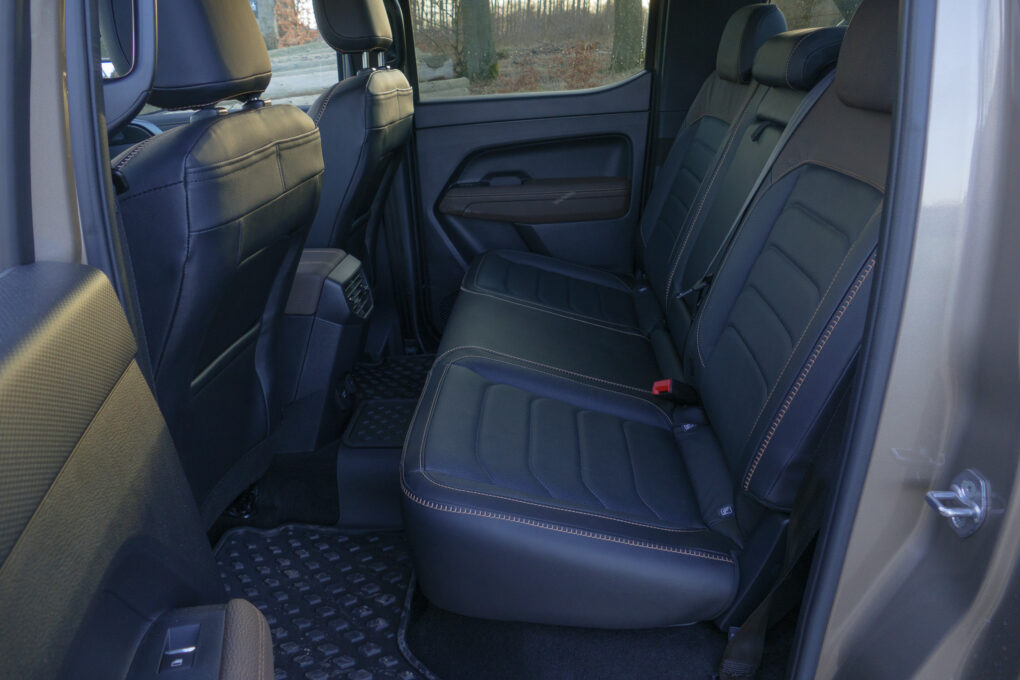
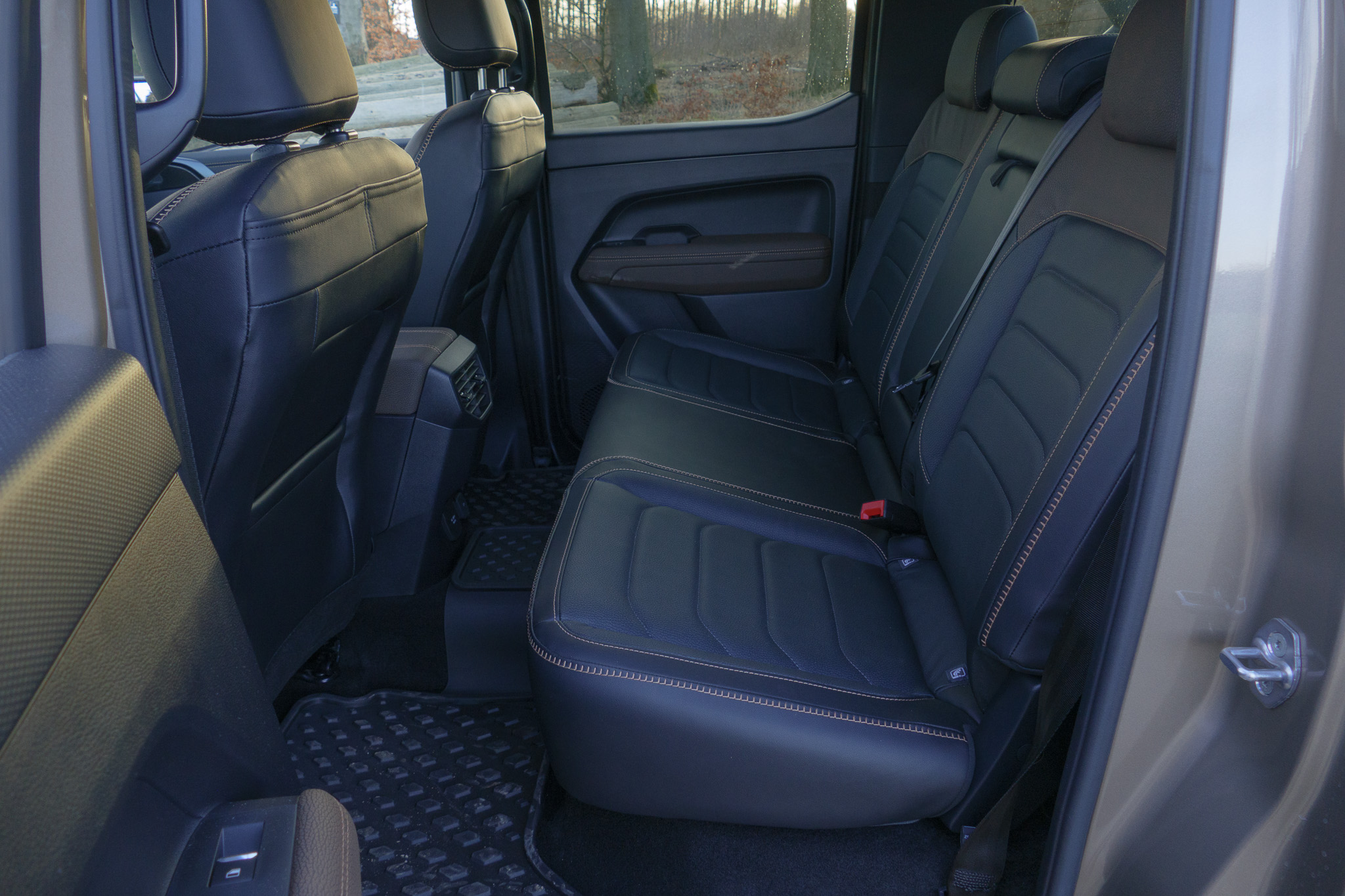
The functional approach continues in the rear. Entry is made easy thanks to the running board and grab handle on the B-pillar. proNo problems. The backs of the front seats have pockets, including a padded one in the lower section. The center console offers a 230-volt outlet (150 W, US layout, adapter required) and a 12-volt socket. There's no separate climate control zone, but two air vents are present. The rear bench seat is configured as a three-seater, but the middle seat offers limited legroom. It will be cramped for taller people, but cutouts in the front seats make it usable as long as the driver and rear passengers are under about 1,90 m (6'3"). Isofix anchor points are available on the outer seats. The center tunnel is relatively small. A fold-down, soft-touch rear center console with two cupholders is integrated, but it fits very snugly. Additionally, there are three small storage compartments in the lower section in front of the rear seats.
-
- Picture: TechnikNews
-
- Picture: TechnikNews
-
- Picture: TechnikNews
Technical data and driving impression
The Volkswagen Amarok PanAmericana measures approximately 5,35 m in length, with a width of about 1,91 m (excluding mirrors) and a height of just under 1,88 m. The front overhang is relatively compact at approximately 869 mm, while the rear overhang, at around 1.251 mm, is significantly longer, emphasizing the vehicle's strong focus on cargo space. The cargo bed itself is practically sized, offering a length of approximately 1,62 m and a total width of approximately 1,52 m. The space between the wheel arches is about 1,21 m, allowing for the transport of a Euro 3 pallet. The side wall height of approximately 525 mm facilitates loading and unloading in everyday use.
We drove the Amarok on a long-distance test drive from Dortmund to France and felt like we were in a normal SUV. A combination of comfortable seats, pleasant suspension (despite leaf springs), and a 10-speed automatic transmission transformed the Amarok from an off-road vehicle into an everyday car for a moment. The 3,0-liter V6 TDI engine with 240 hp and 600 Nm of torque performs powerfully and allows us to accelerate confidently up to 190 km/h. One should only be careful during hard braking maneuvers. When the 2.457 kg curb weight is suddenly thrust forward, the steering becomes quite vague. The sound was occasionally annoying: a high-pitched whine around 1,2 bar of boost pressure and air turbulence on the highway as if the driver's side window seal were leaking. At the recommended speed of 130 km/h, the Amarok remains at 2.000 rpm and 1 bar of boost pressure, thus producing no whine.
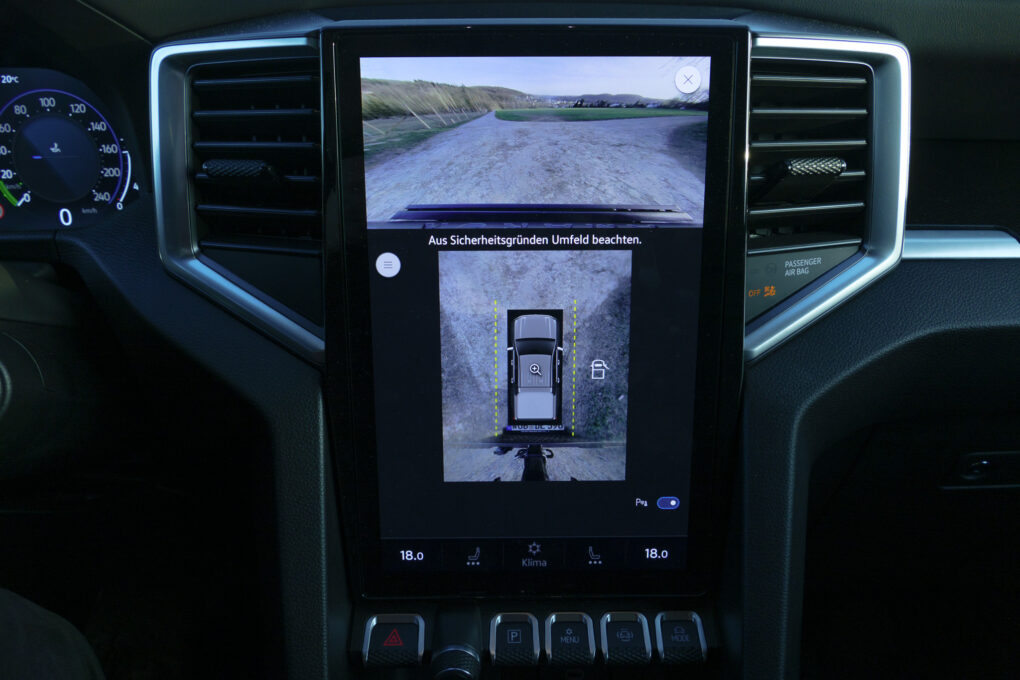
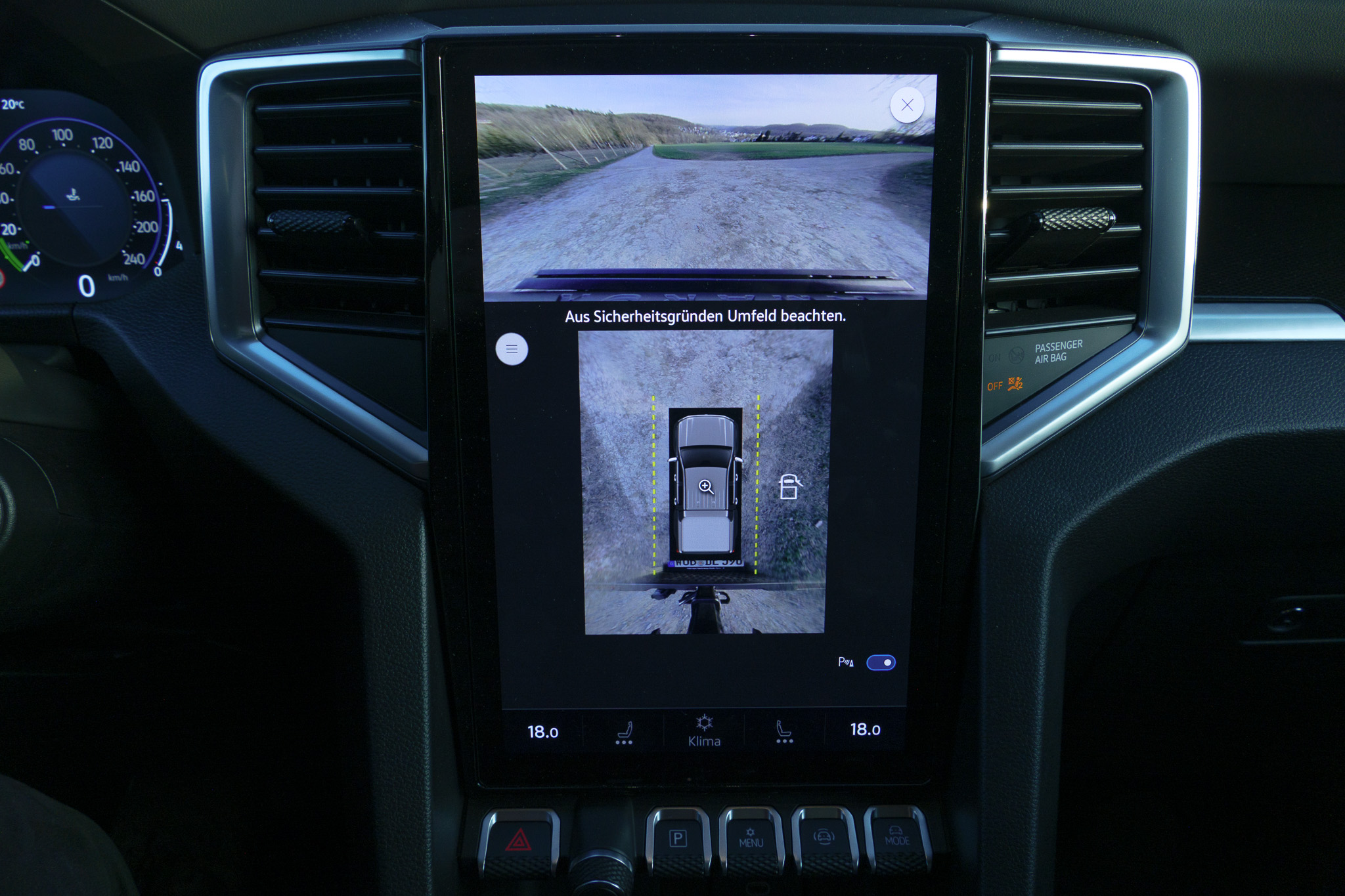
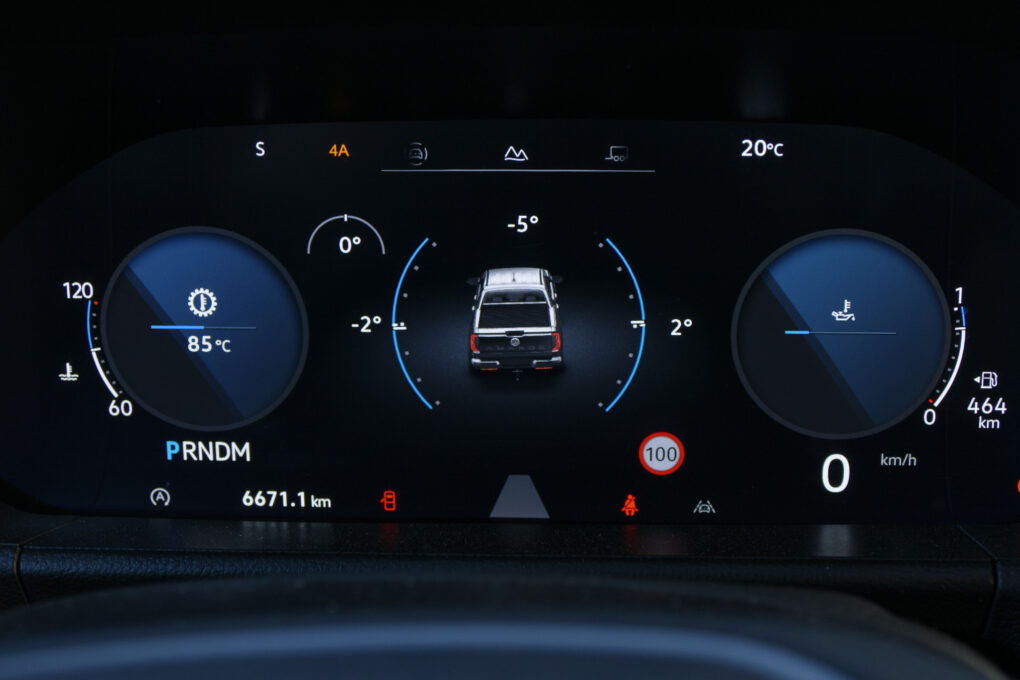
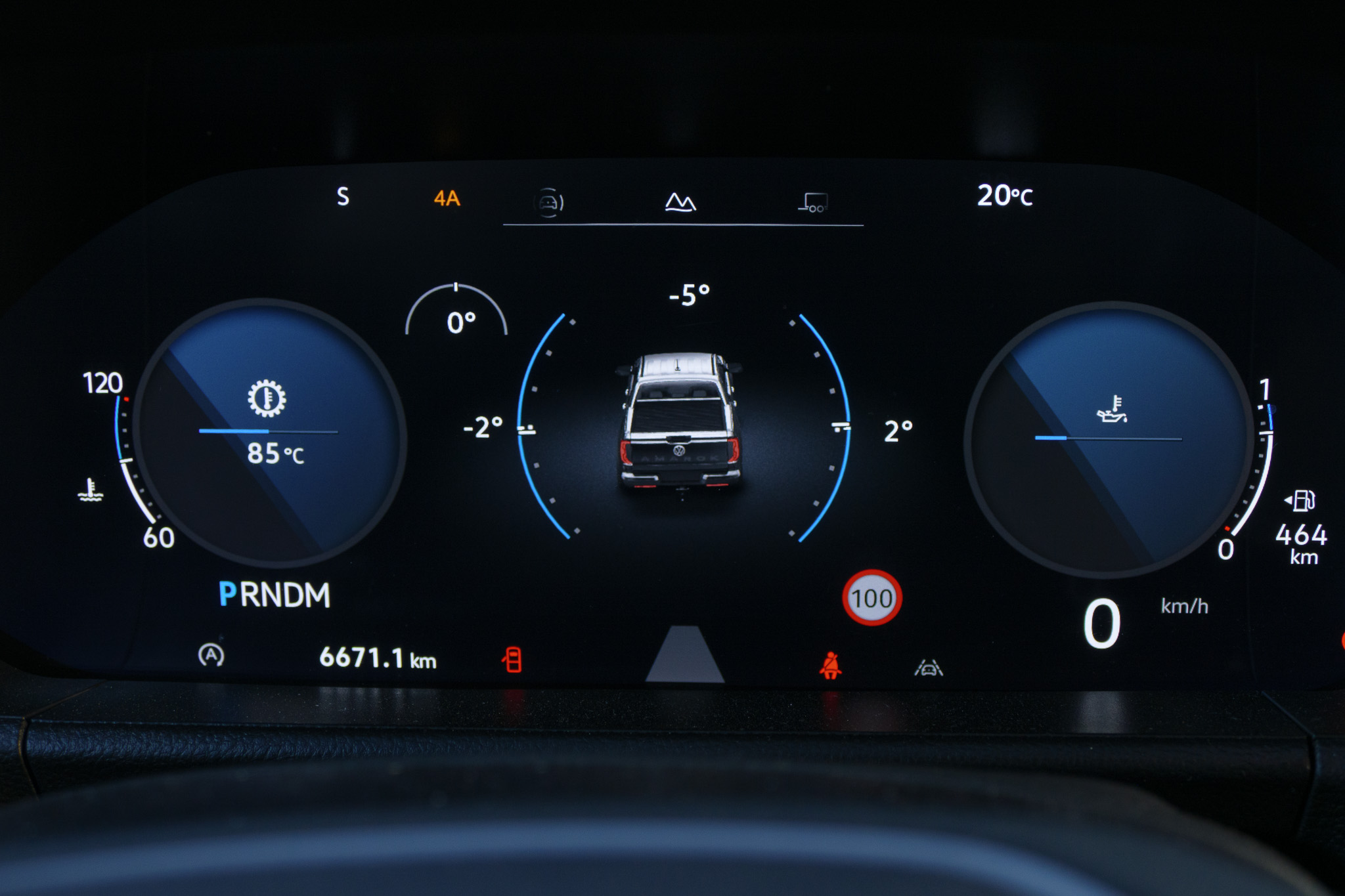
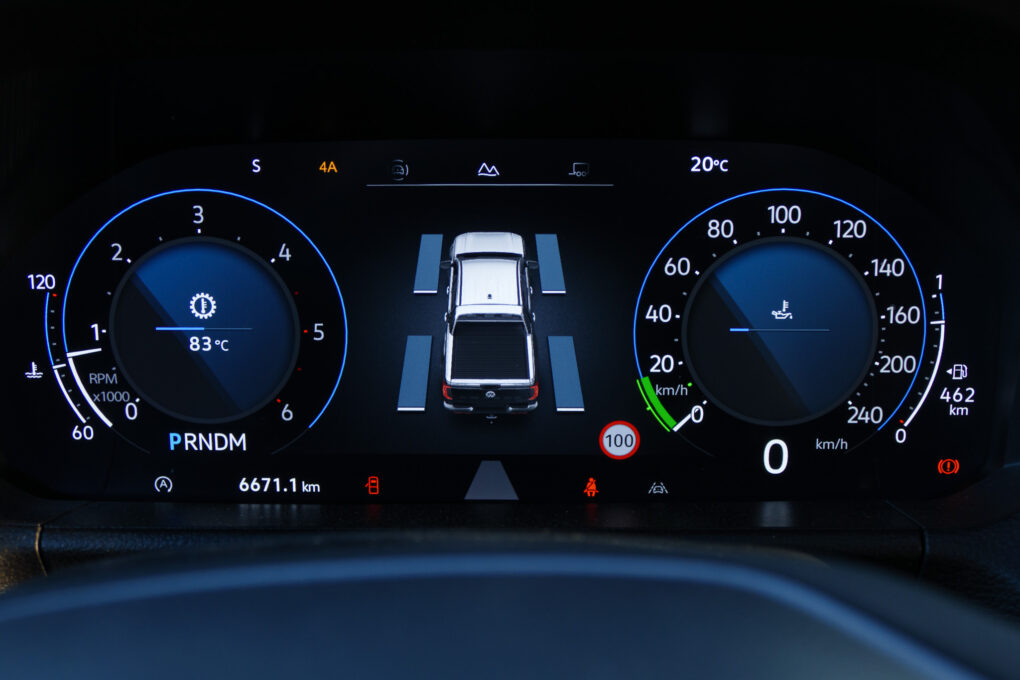
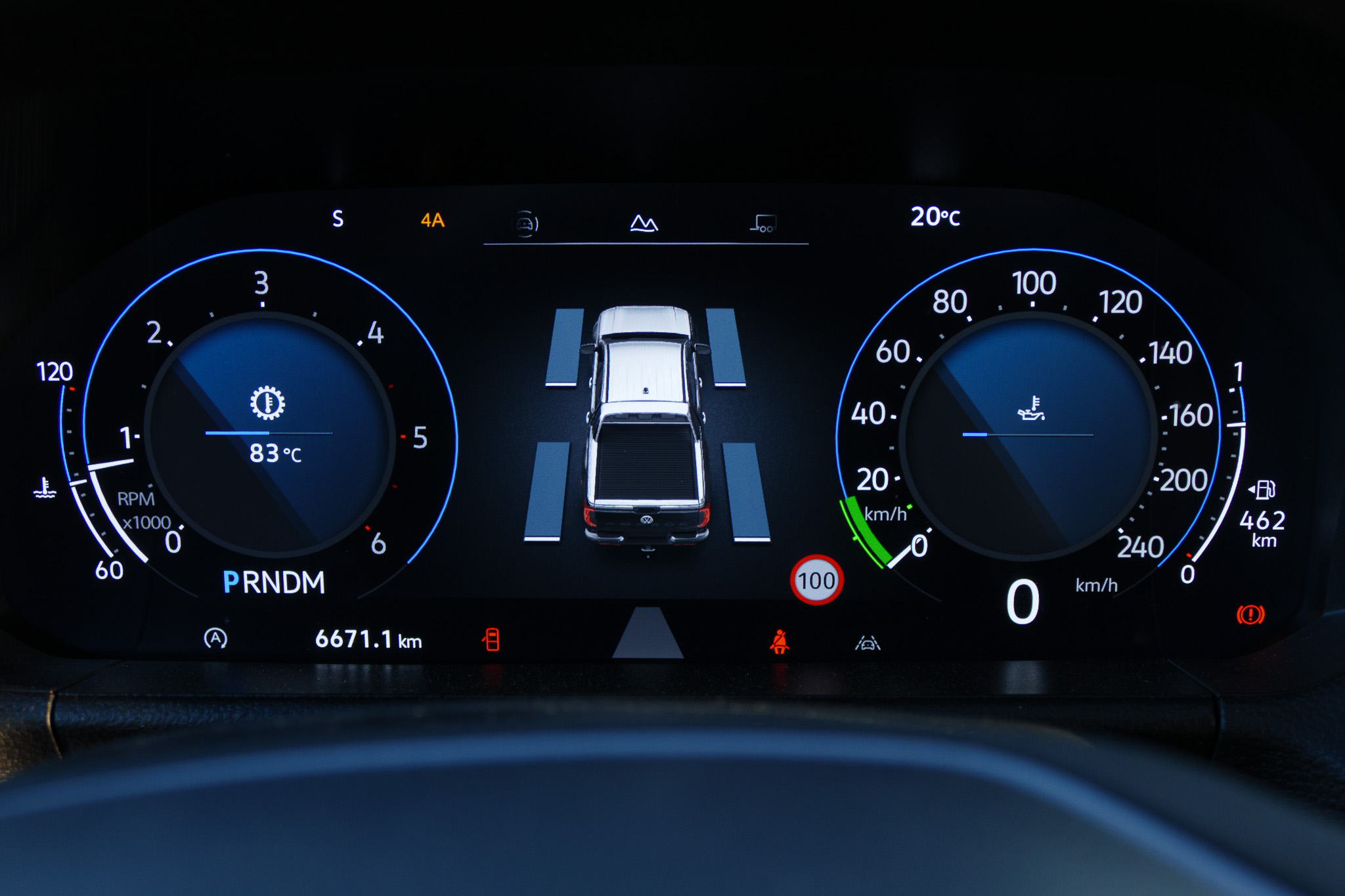
In terms of driver assistance systems, the Volkswagen Amarok performs solidly for a work vehicle, with minor weaknesses in its fine-tuning. The blind spot assist on the right side occasionally reacts too sensitively and sometimes incorrectly identifies objects like reflective walls as vehicles. The adaptive cruise control (ACC), on the other hand, works attentively, reliably detects cyclists, and reacts accordingly with braking and visual warnings in the mirrors. The 360-degree camera system provides excellent visibility, offering a clear advantage, especially when maneuvering and off-road. However, I find it puzzling that if you've been in reverse, you can't manually switch to the front camera when driving forward, or that this is only possible after three clicks. The digital instrument cluster is individually configurable and provides additional helpful information, whether for off-road use or on the road.
-
- Picture: TechnikNews
-
- Picture: TechnikNews
-
- Picture: TechnikNews
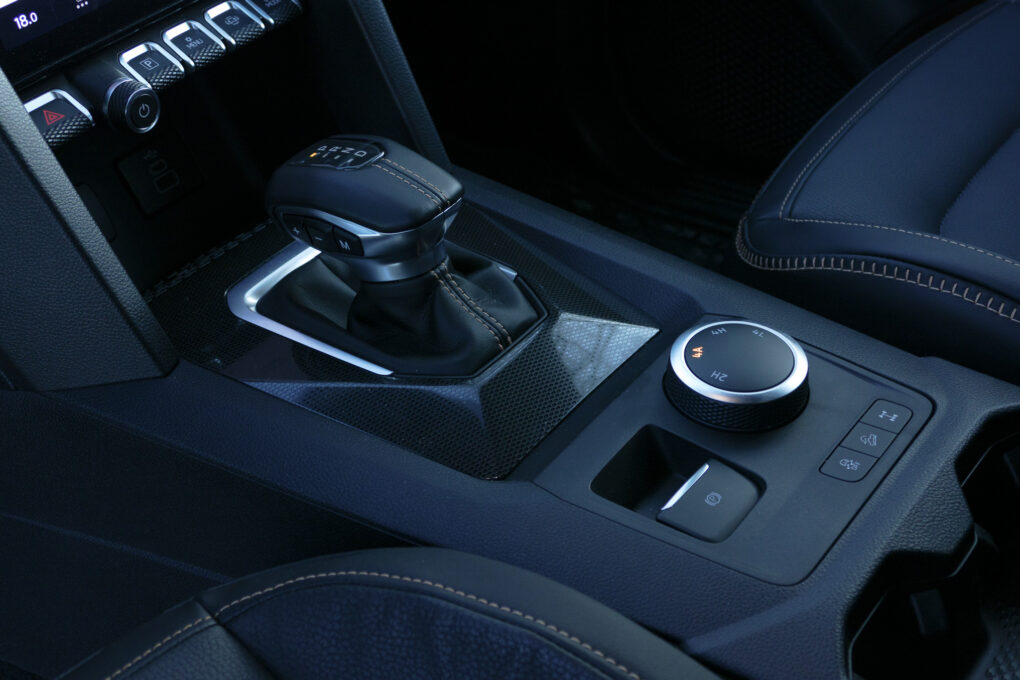
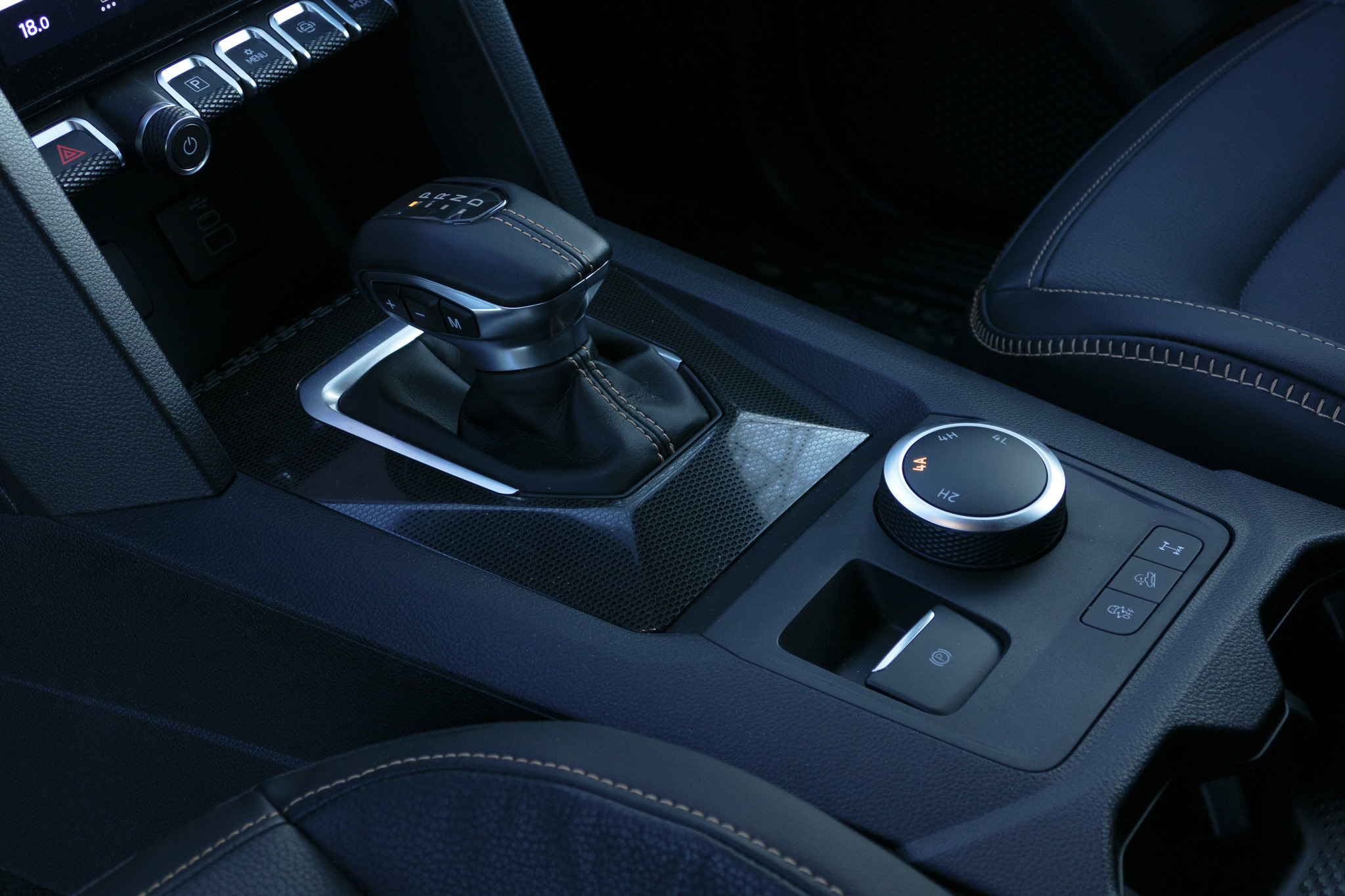
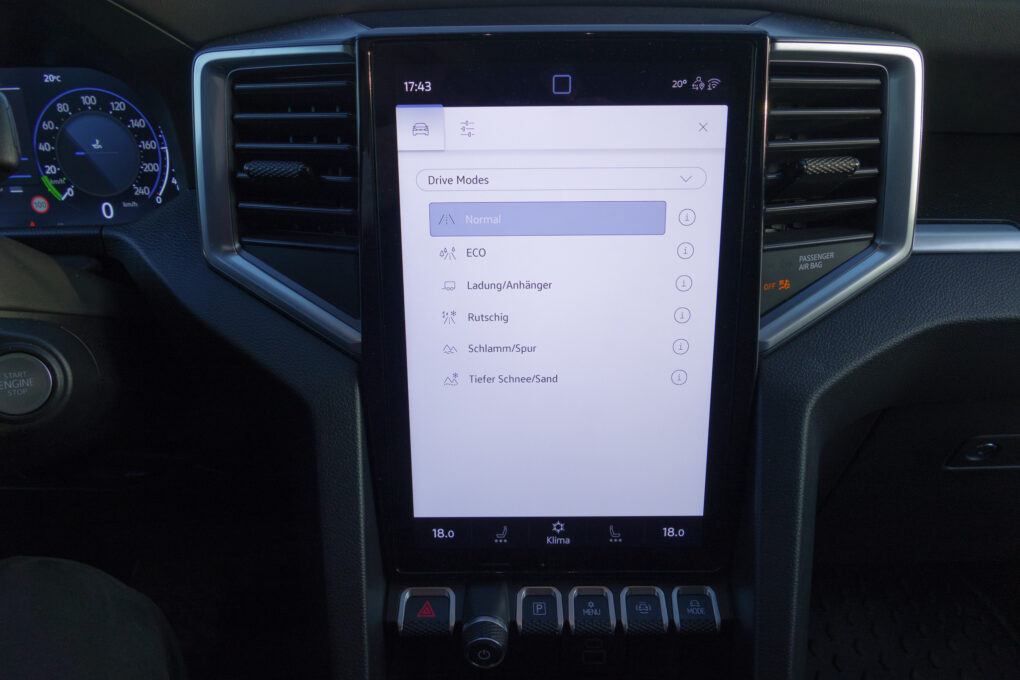
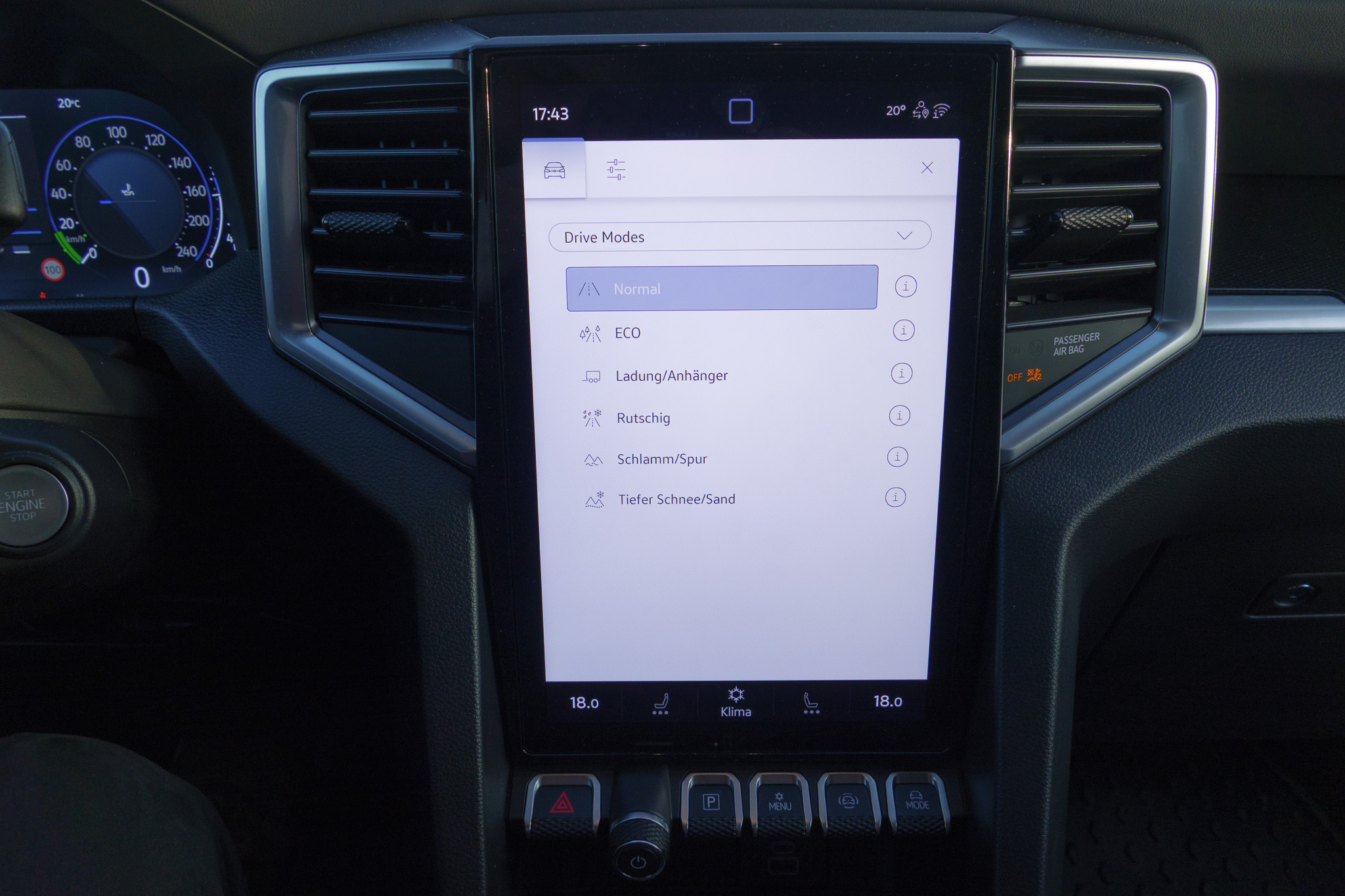
The operation of key off-road functions is minimalist. The center console features three direct selection buttons for the rear differential lock, hill descent control, and ESP. This is complemented by a rotary dial for quickly selecting between rear-wheel drive, automatically controlled all-wheel drive, and a special all-wheel-drive mode for unpaved surfaces, including low-range gearing. Several driving modes are also available, adapting the vehicle to different operating conditions.
-
- Picture: TechnikNews
-
- Picture: TechnikNews
-
- Picture: TechnikNews
consumption and range
The 3.0 V6 engine needs to be well-fueled. We achieved a consumption of 8,2 liters per 100 km on the highway and between 11 and 12 liters per 100 km in urban areas. However, in heavy traffic or at high speeds on the highway, consumption can reach 15 liters per 100 km. Whether we were driving in pure rear-wheel drive or with automatic all-wheel drive made hardly any difference thanks to the intelligent switching. With a full tank of 80 liters of diesel, you can therefore travel between 533 and 975 km.
Many thanks to VW Commercial Vehicles Germany for providing the Amarok PanAmericana for this test report.