Our test conclusion
My name is L1.
The Ausom L1 is a really good e-scooter for anyone who commutes daily in the city and values comfort and a large battery. The suspension, brakes, and turn signals are impressive, and at €589, the price is very fair. However, those who often have to carry their scooter or take it on public transport should opt for a lighter model due to its weight of almost 30 kilograms.
- application 8,5
- driving comfort 9
- Drive and brakes 8,5
- Battery 7,5
- Equipment 8,5
- Handling 6
- Price-performance 9
Pro
- Comfortable full suspension front and rear
- Powerful engine with smooth throttle response
- Powerful disc brakes on both wheels
- Large battery with 748,8 Wh
- Bright indicators on the handlebar ends
- Immobilizer via PIN or NFC without app
- Good build quality for the price range
- Road approval (ABE)
Contrary to
- High weight of 28,4 kg
- Cumbersome folding mechanism
- Long charging time of approximately 11 hours
- Battery level displayed only as a bar graph
- Settings only via hidden menu
- Turn signals without audible signal and automatic shut-off
E-scooters with suspension on both wheels, a large battery, and road approval have so far been primarily a matter of budget. Anyone wanting to glide over cobblestones and poor bike paths without feeling every bump in their knees usually had to dig much deeper into their pockets. The Ausom L1 aims to change that. It comes with full suspension, a nearly 750-watt-hour battery, turn signals, and general operating approval for German road traffic, all for 589 euros.
I've been using the L1 as my everyday vehicle for the past four weeks, primarily for commuting to and from university and a lot in Hamburg's HafenCity. To cut to the chase: for the money, you get a really good e-scooter. You just have to be prepared to carry a few extra kilos.
The L1 comes in two versions, with 15,6 or 20,8 amp-hours. I tested the smaller version with 15,6 amp-hours.
Construction and processing
Even unpacking it requires a bit of strength, as the box weighs almost 32 kilograms. The L1 isn't quite as quick to set up as some other e-scooters either. After unfolding and securing the handlebar, the handlebars, display, and headlight need to be individually screwed on. The necessary tools are included, as are assembly gloves, the charger, and three NFC cards. You should allow about fifteen minutes for this. Afterward, it's worth checking the tire pressure and brakes.
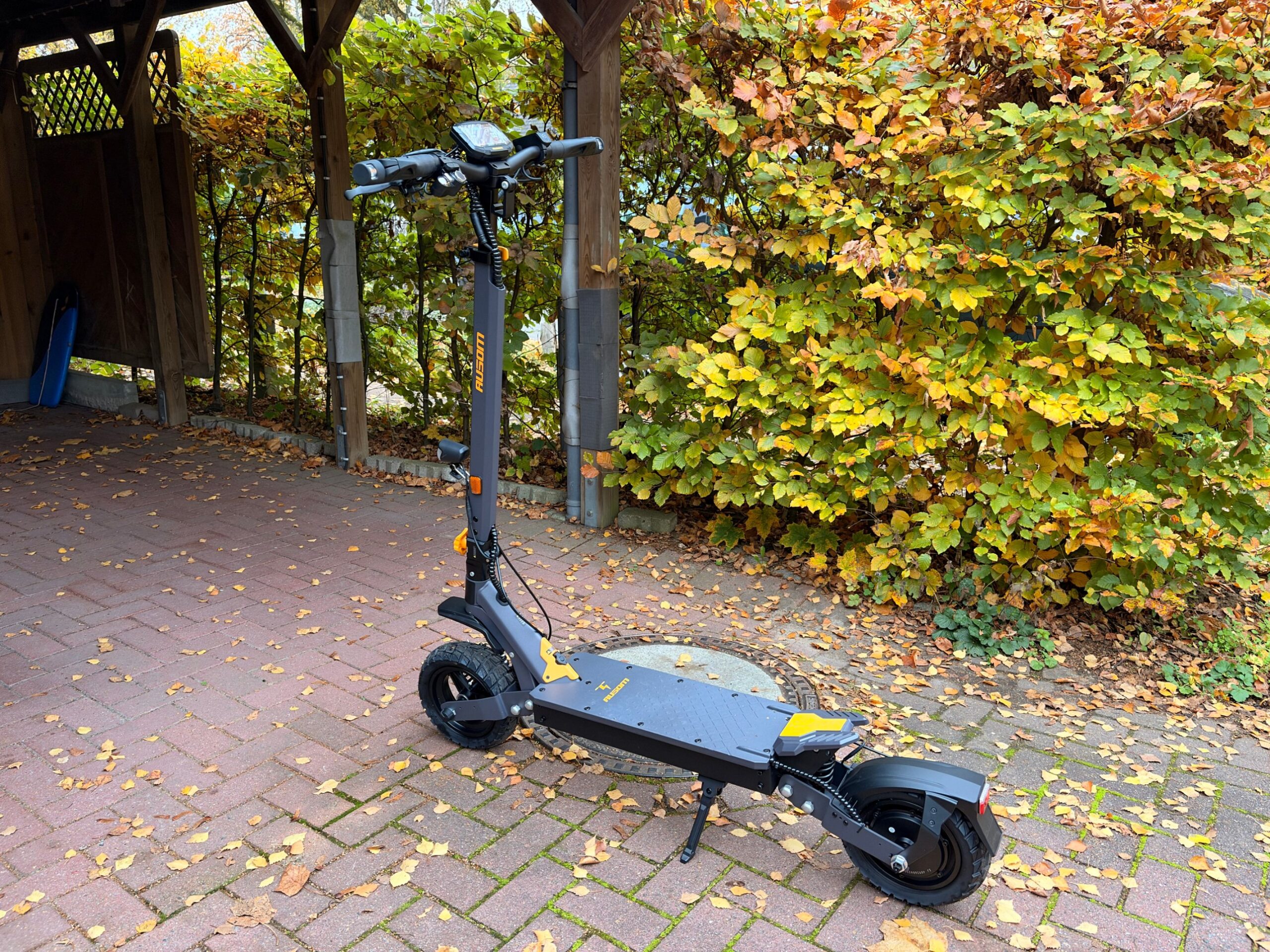
Visually, the L1 is more impressive than its price would suggest. The frame is made of steel, painted gray, and features a few yellow-orange accents. It looks more like a tool than a lifestyle gadget, which suits the L1's intended image. The build quality is very good for the price range; the welds are clean and the handlebars are firmly attached. The L1 is protected against splashing water according to IP54, so a ride through Hamburg's rain is no problem.
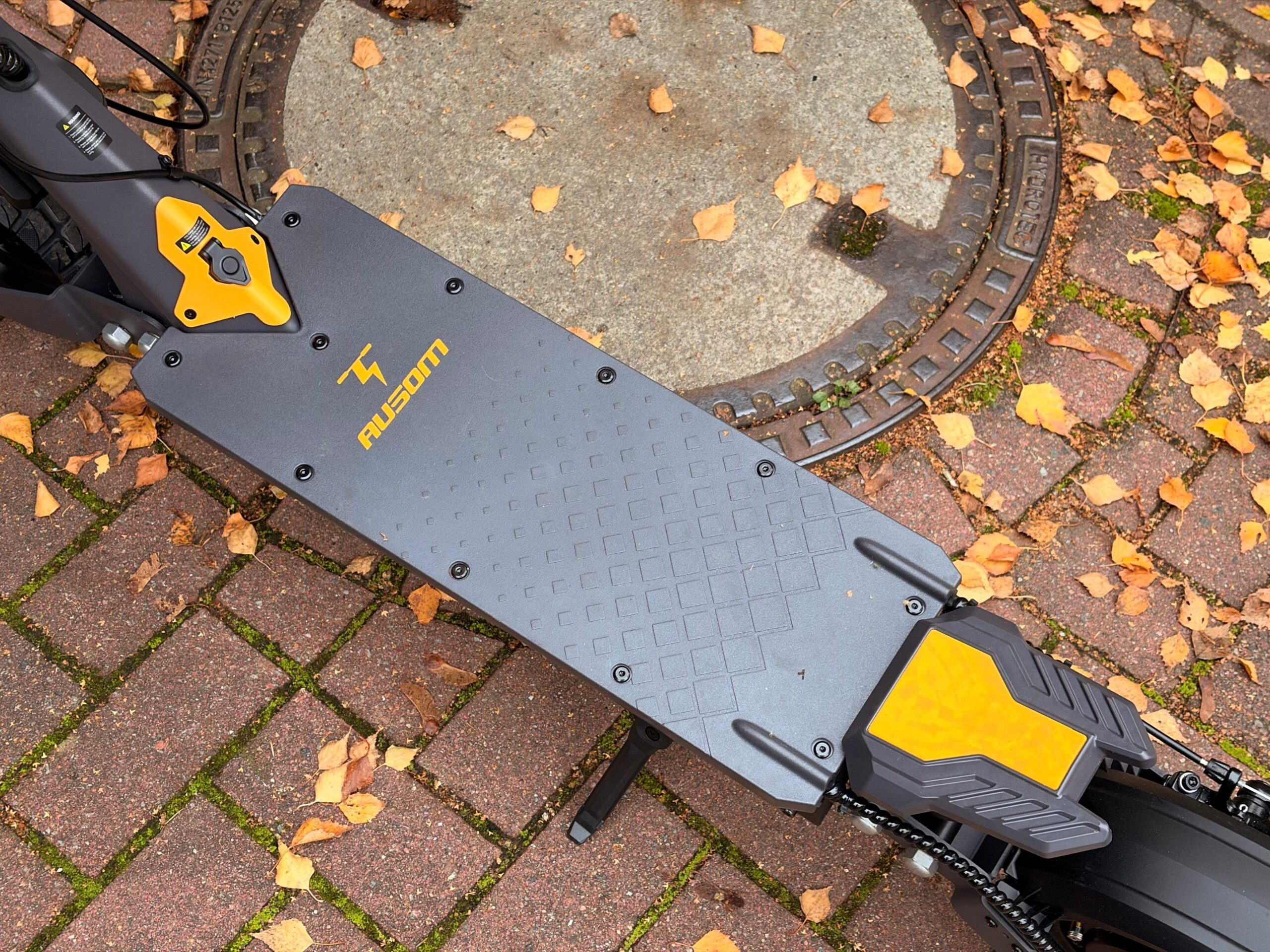
The footboard is a comfortable size at 51,5 x 18,7 centimeters; one can proStanding with both feet side by side is no problem. At the rear, there's a slightly raised shelf where you can rest your back foot. Because the running board is quite high off the ground, even higher curbs aren't a major obstacle. The large mudguards reliably keep out spray.
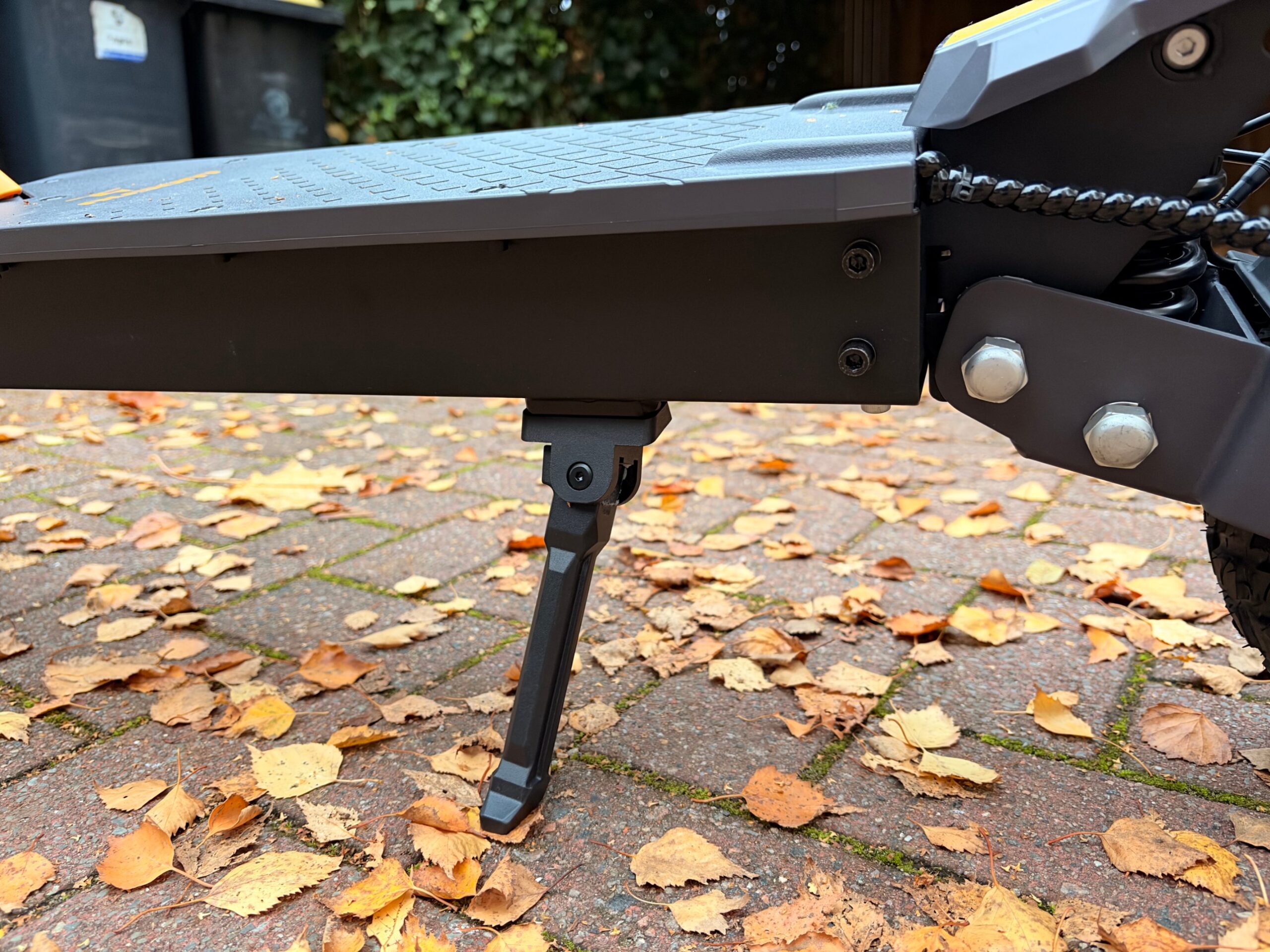
The price for this robustness is the weight. At 28,4 kilograms for the smaller battery version and 29,6 kilograms for the larger one, the L1 is a real heavyweight. I was lucky enough to hardly have to carry it during the test, because when you do, you feel every single kilo. Anyone who plans to regularly carry their e-scooter up stairs or take it on buses and trains should think carefully about this.
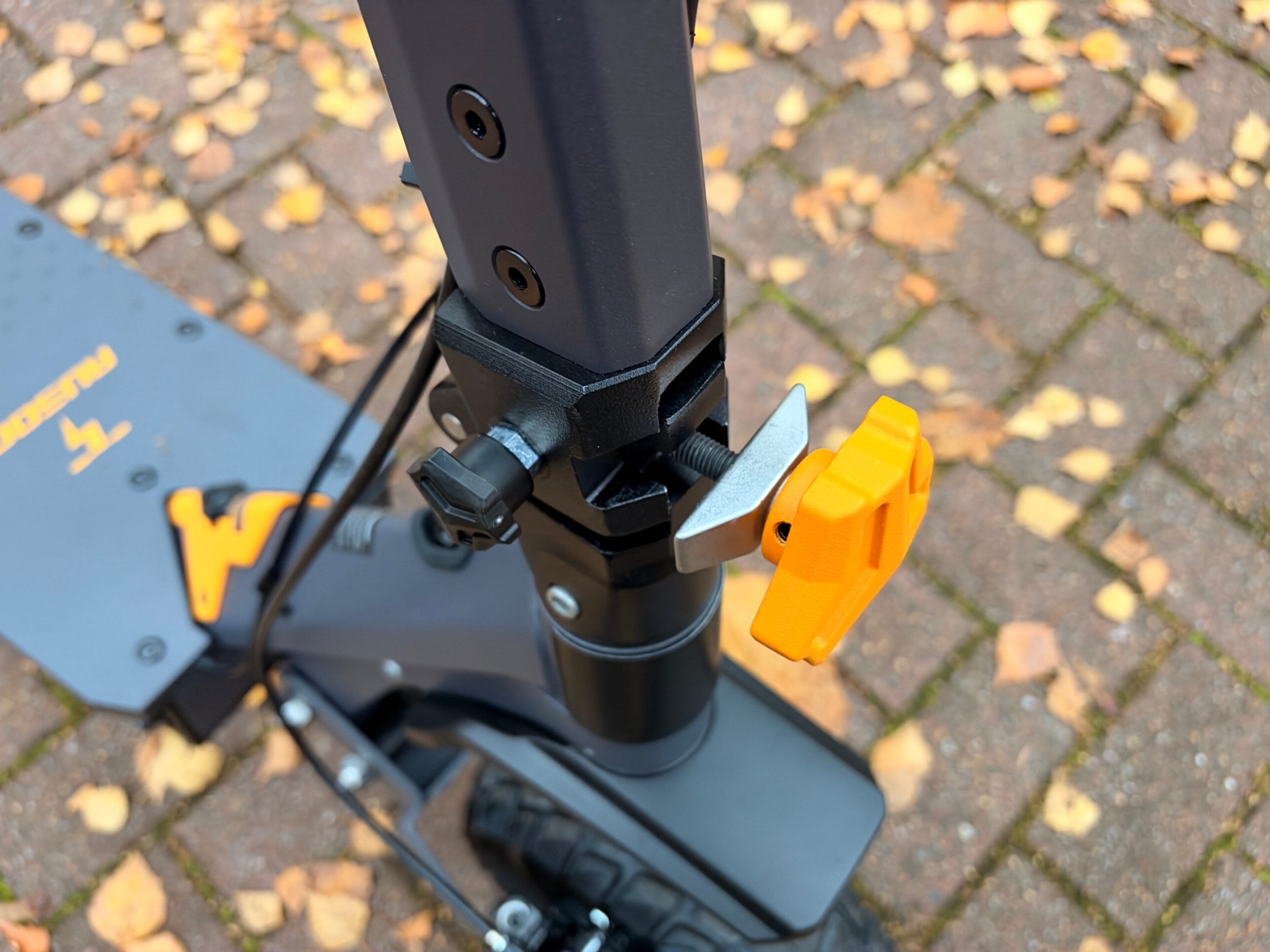
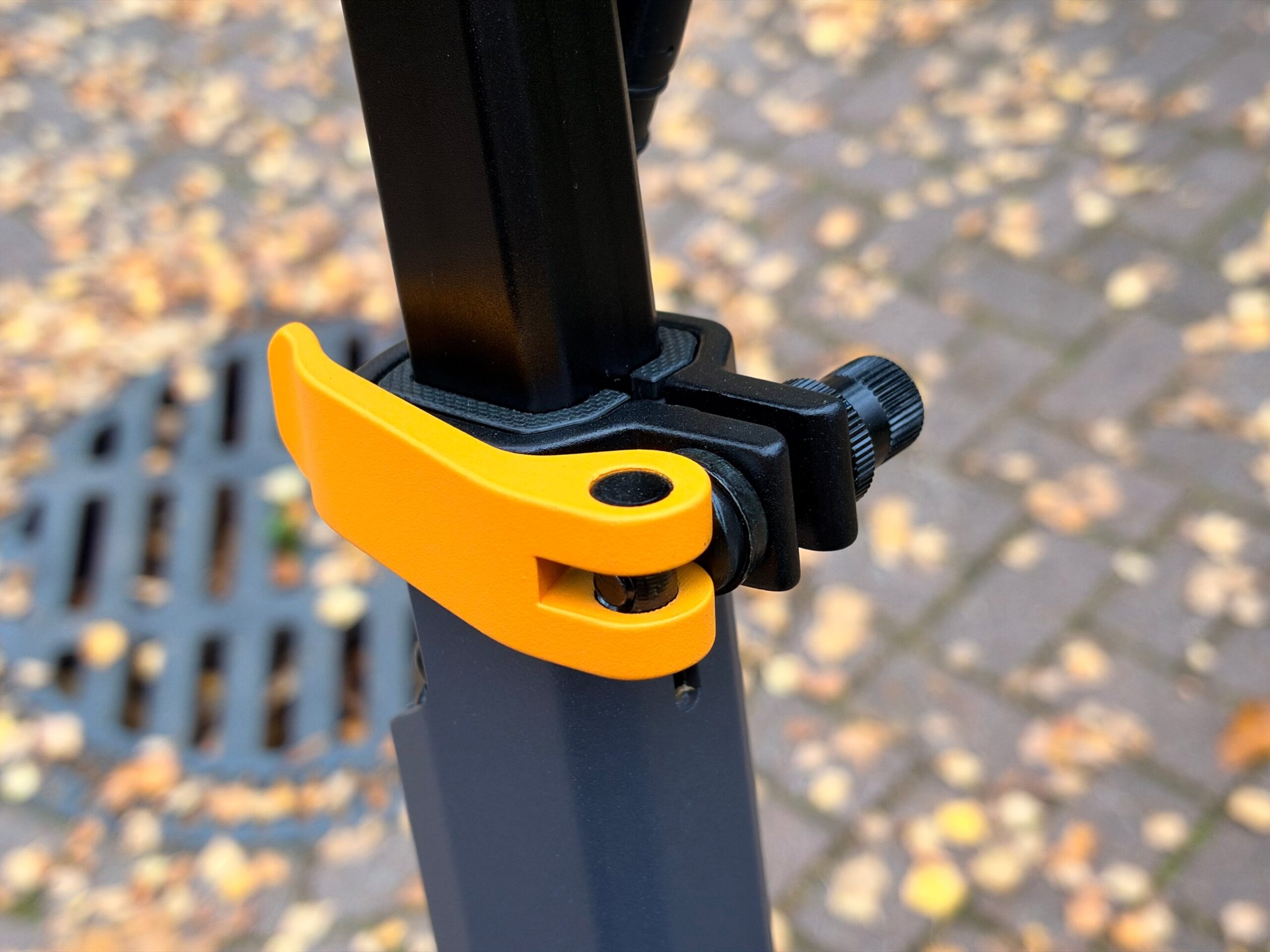
In addition, the folding mechanism is unnecessarily cumbersome. Instead of a quick-release lever, you first have to loosen a large rotary knob, then hook the handlebar into place at the rear. However, this only works if the handlebar has been adjusted to the correct height beforehand. When folded, the L1 still measures 125 x 69 x 56 centimeters because the handlebar itself cannot be folded. This is sufficient for a car trunk, but it's not intended for daily use switching between a scooter and public transport.
Heavier riders should be aware of one limitation: According to Ausom, the maximum payload is 106,6 kilograms, and the permissible total weight including the scooter is 135 kilograms. That's decent, but not exceptionally high.
Handlebars, display and controls
The handlebars are a comfortable 69 centimeters wide, providing excellent control. Their height is adjustable, making the L1 suitable for riders between 1,40 and 2 meters tall, according to Ausom. The grips are thick and comfortable. However, the throttle is positioned quite high and close to the brake lever, which takes some getting used to.
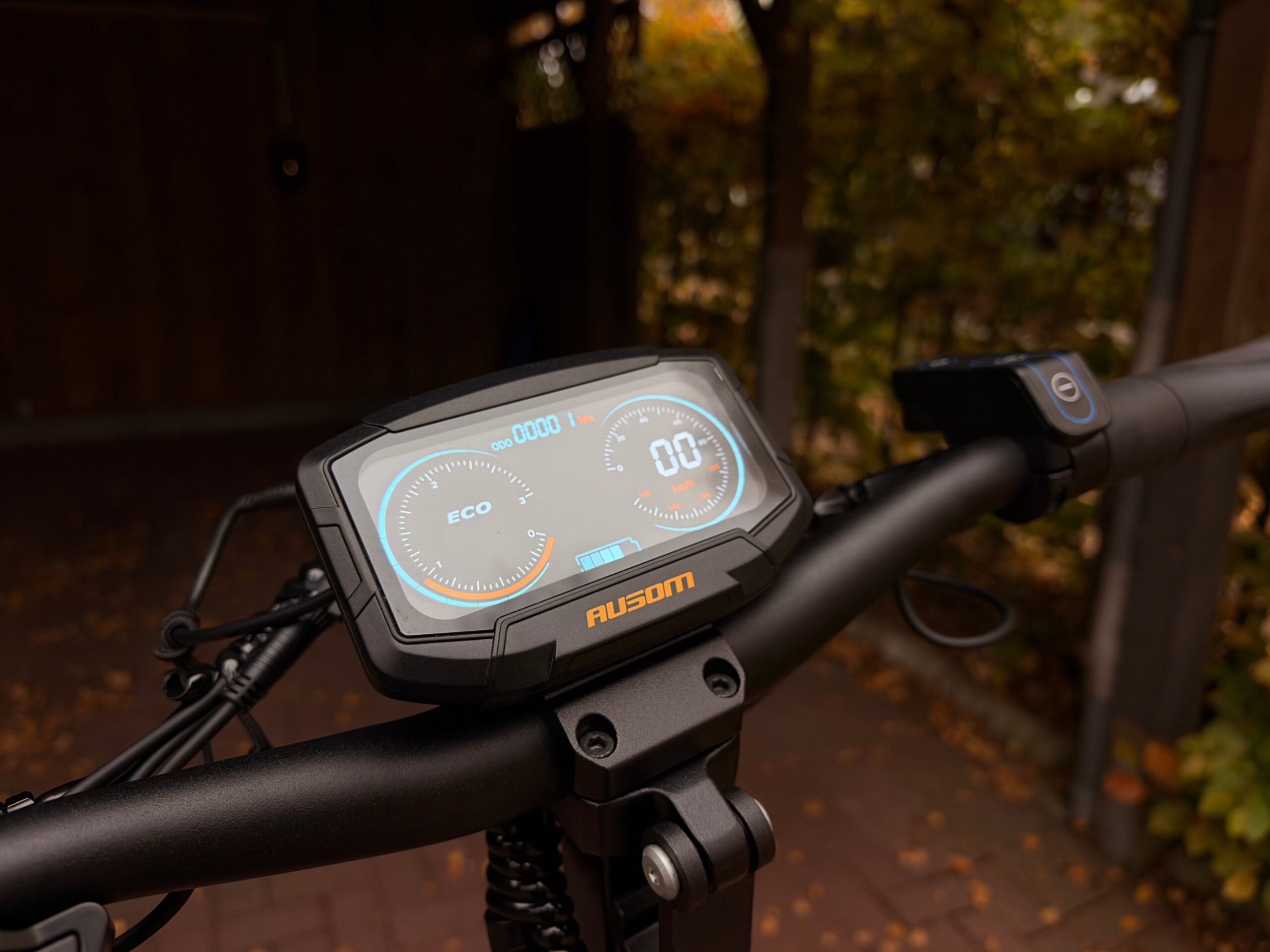
The 4,5-inch LCD display is one of the largest found on an e-scooter in this price range. It clearly shows speed, riding mode, distance traveled, and battery level. However, the battery level is only displayed as a bar graph. A percentage indicator or an estimate of the remaining range would be significantly more helpful for a scooter designed for long distances.
The immobilizer is a particularly interesting feature. Before you can ride, the L1 needs to be unlocked, either with one of the three included NFC cards, which you briefly hold against the display, or with a PIN code entered using the buttons on the handlebars. During my testing, I always unlocked the L1 with the PIN; it's quick and worked every time. The factory default code is 0000, so you should change it immediately. It's a simple yet effective solution that doesn't require a smartphone, app, or account.
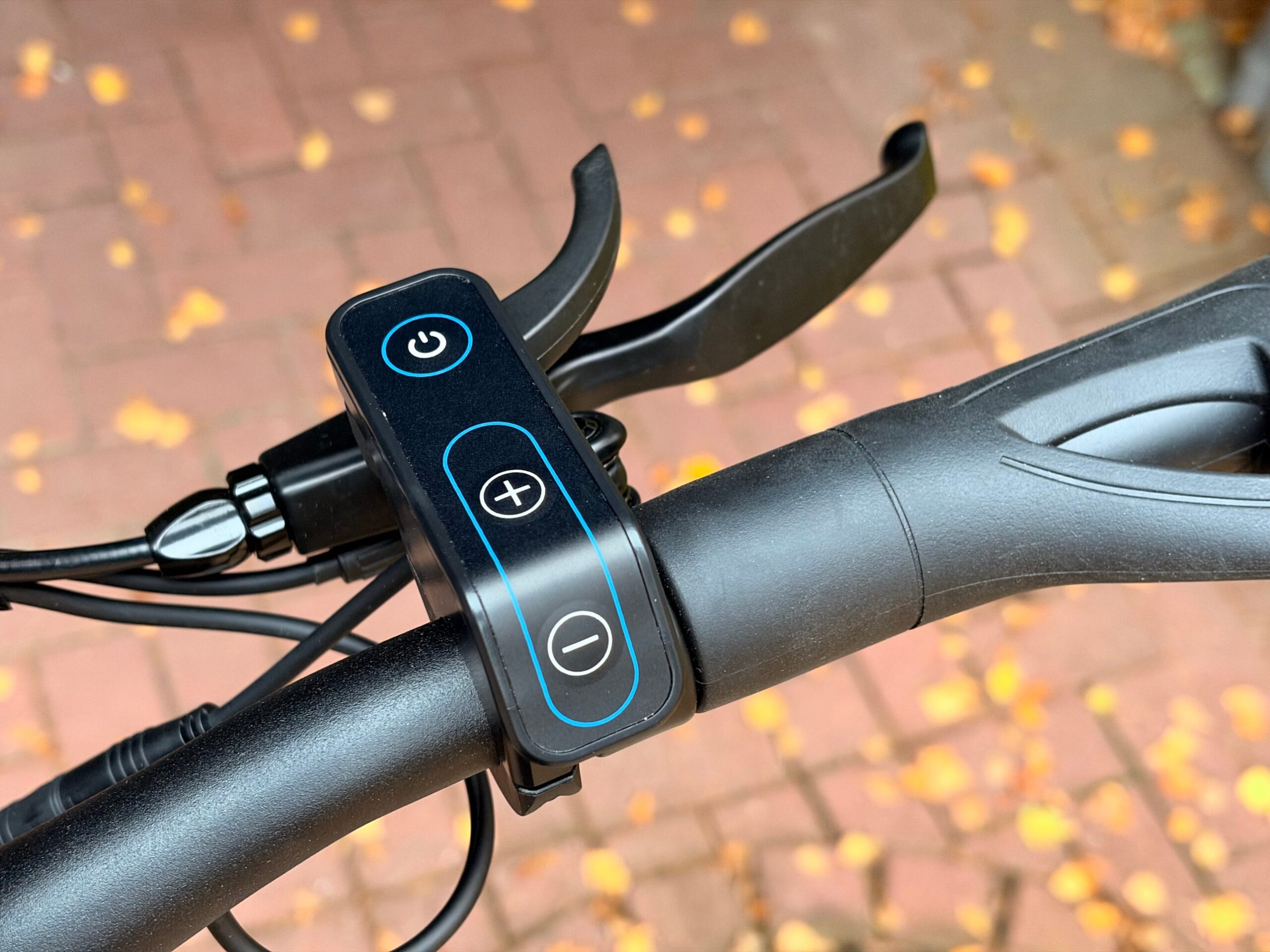
The catch: Anyone wanting to change the PIN or register a new card has to access a hidden menu, which is reached by simultaneously pressing the plus and minus buttons. There, the settings are hidden behind abbreviations like P18 for NFC cards or P23 for the password. You won't get far without the user manual. There's no app. Depending on your perspective, this could be seen as an advantage or a disadvantage, as an app would make management significantly more convenient.
Driving
Three driving modes are available: Eco at 10 km/h, Sport at 15 km/h, and Race at the legally permitted 20 km/h. Switching between modes is done using the plus and minus buttons on the handlebars. There is also a push mode to assist when pushing the heavy scooter.
The L1 is powered by a rear-wheel hub motor with a nominal output of 500 watts and a peak output of up to 930 watts. For a street-legal e-scooter, that's powerful. The L1 accelerates briskly from a standstill and smoothly cuts off at its top speed, without the jerkiness at the 20 km/h limit that some other e-scooters exhibit.
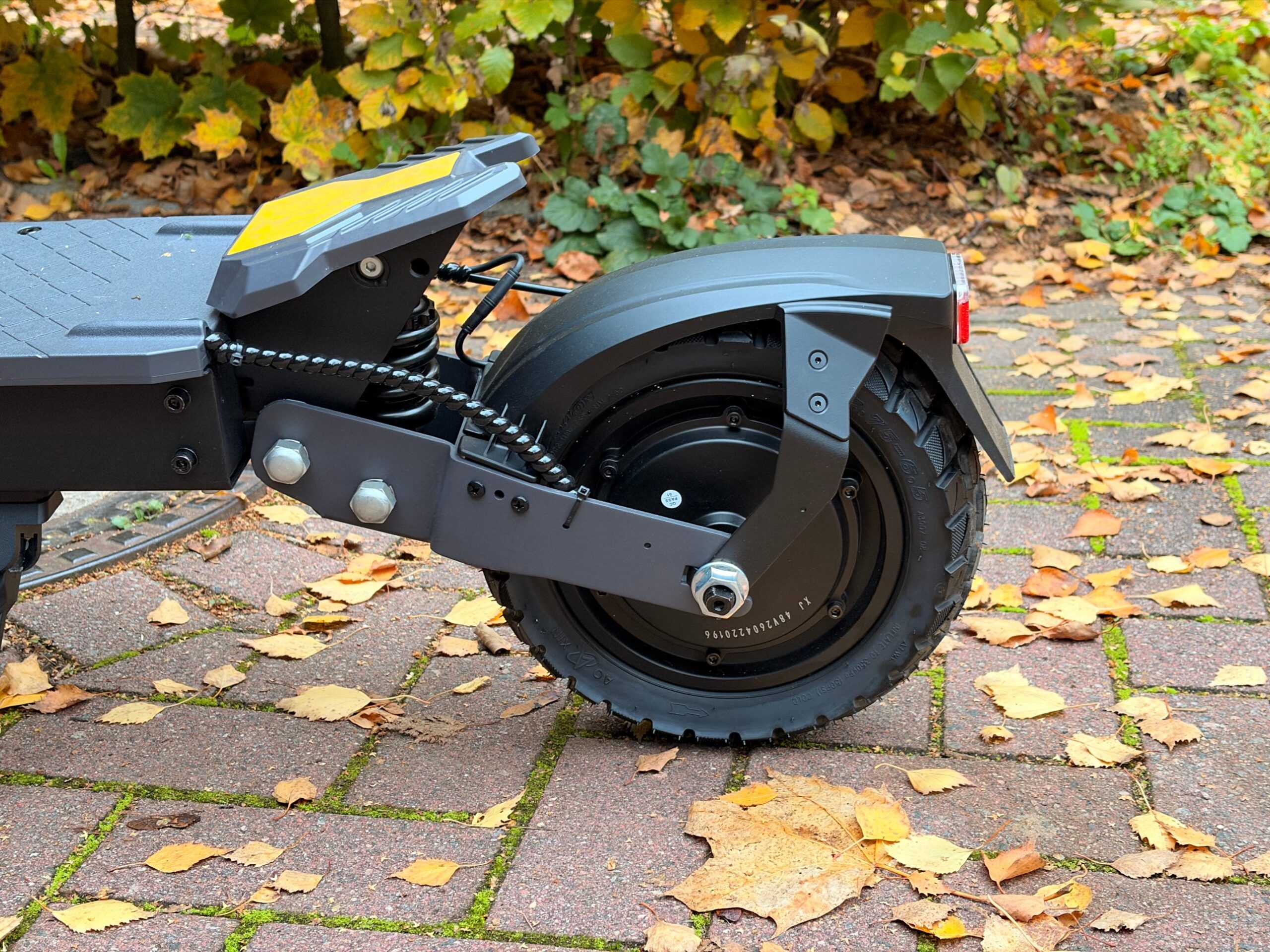
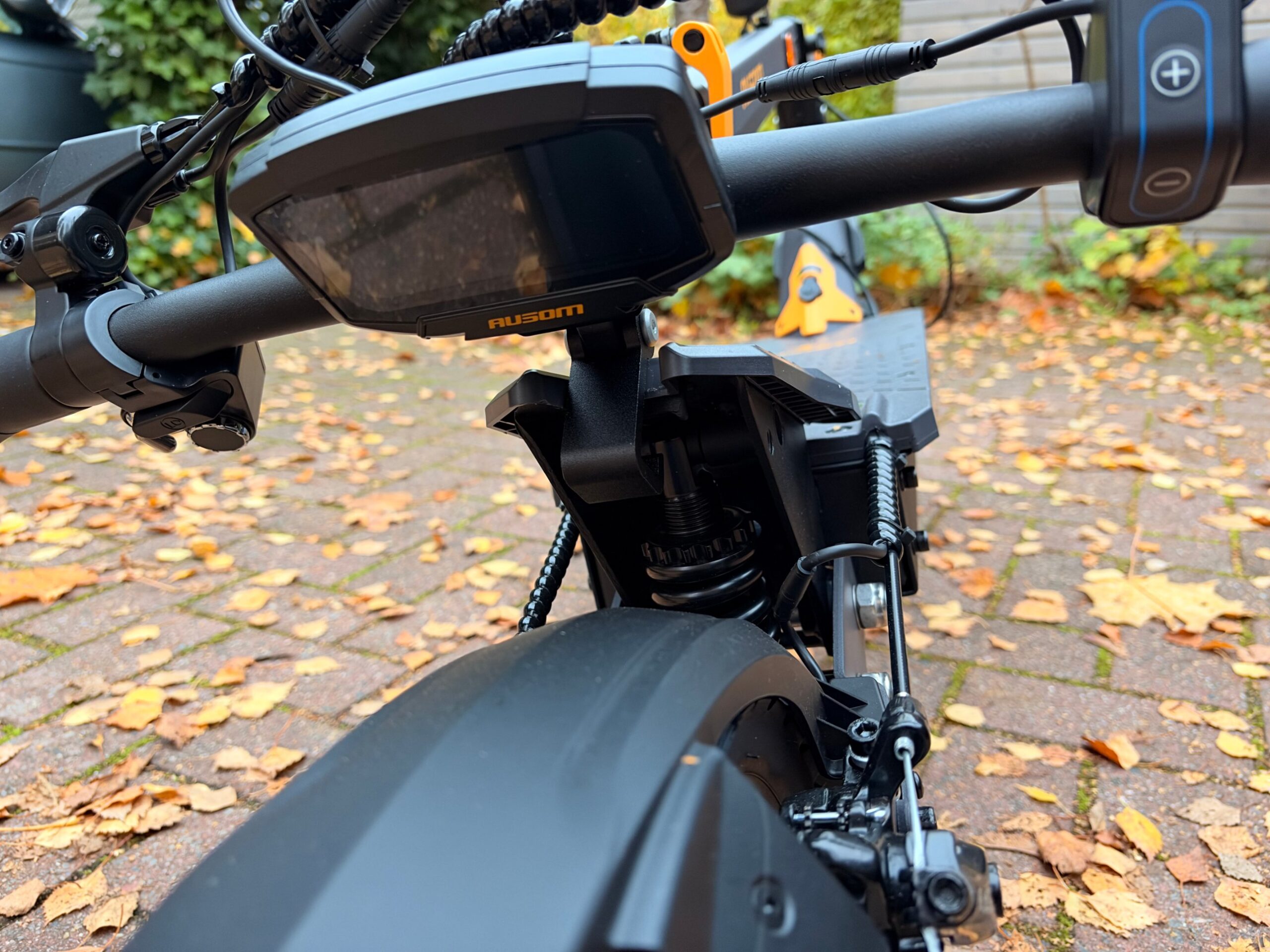
The L1's centerpiece is its suspension. The front and rear wheels are mounted on swingarms with adjustable springs that effectively absorb potholes, cobblestones, and uneven terrain. The spring rate can be adjusted to suit the rider's weight and personal preference using the included tool. This suspension is complemented by 10-inch tubeless tires that offer good grip and are less prone to punctures than tube-type tires.
The L1 handled well for me, even in HafenCity with its many curves, bridges, and varying surfaces. Sometimes, though, you notice when steering that you're riding a large, heavy scooter. But that's to be expected with this design, and anyone switching from a lighter city scooter will quickly get used to it.
Braking is achieved with mechanical disc brakes on both wheels, assisted by an electric motor brake. The brakes are powerful, yet easy to modulate.
Lights and indicators
Ausom also gets a lot right when it comes to lighting. The headlight is bright, its angle is adjustable, and it also shines to the sides, making you more visible from the side in the dark. The taillight brightens when braking. There's no light sensor; the lights are switched on via a separate switch.
The most important feature, however, is the handlebar-end turn signals. They are bright and highly visible and are operated via a toggle switch on the left handlebar. This is a real advantage in everyday use, as you no longer have to stick your arm out with one hand when turning. However, the L1 doesn't emit an audible signal while the turn signal is activated, nor does it automatically switch it off. You have to remember to turn it off yourself.
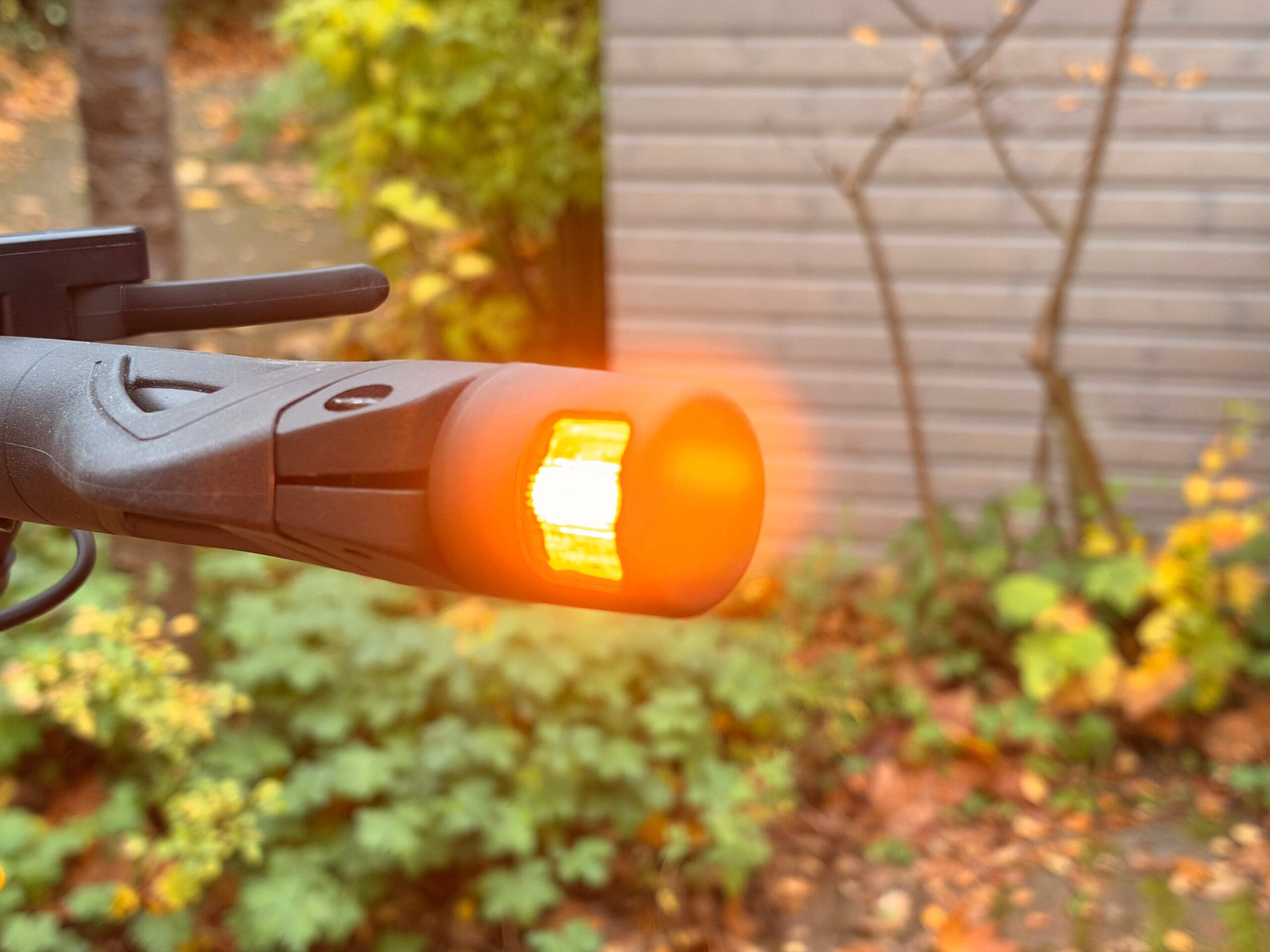
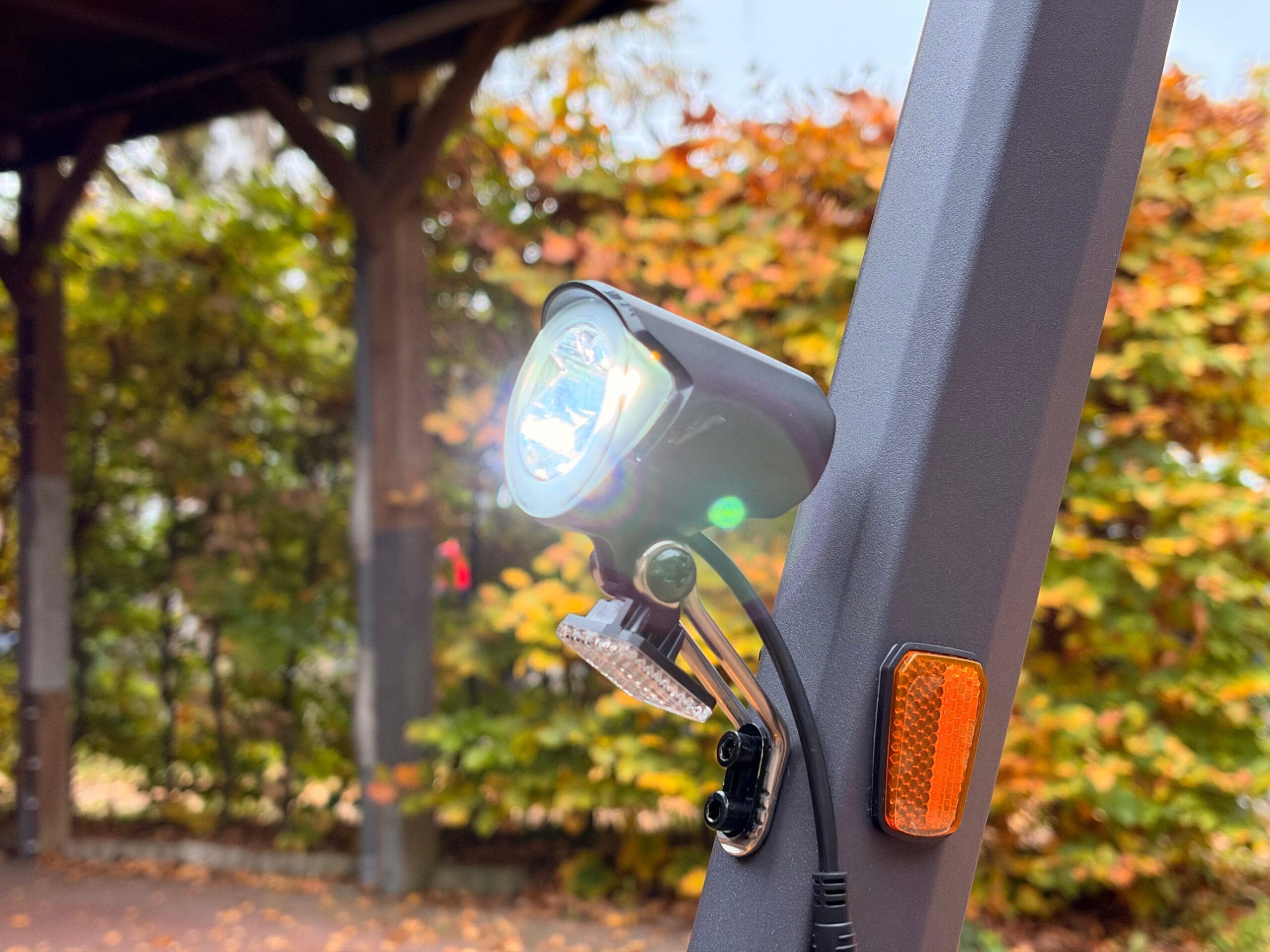
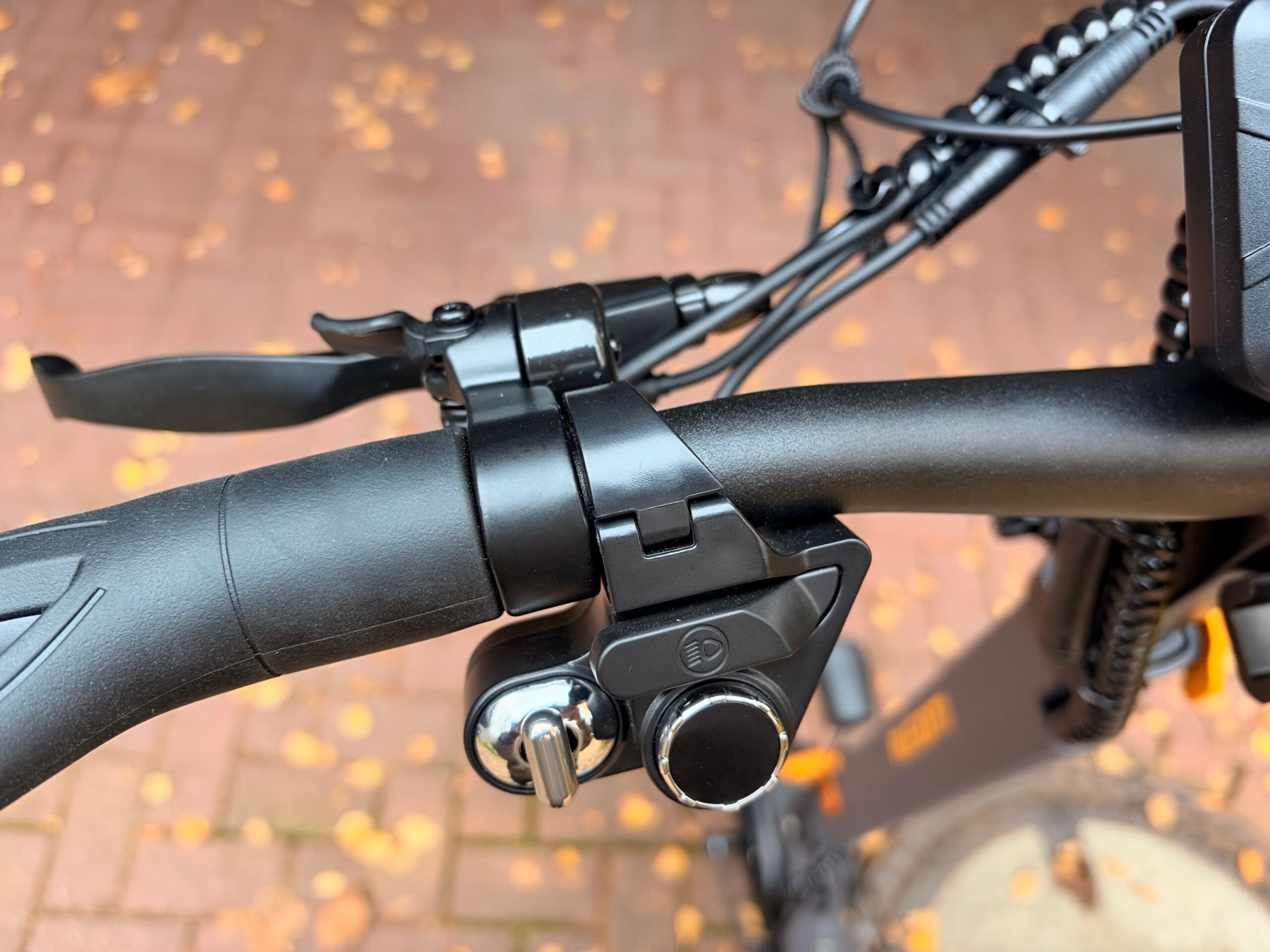
Incidentally, the L1 already meets the legal requirements for e-scooters. Following the reform of the regulations governing electric micro-vehicles, all new e-scooters launched from 2027 onwards must be equipped with turn signals. Those buying now don't need to worry about this. Like any road-legal e-scooter, the L1 also requires a license plate.
Battery and range
The battery is permanently installed and has a capacity of 748,8 watt-hours in the smaller version and around 1.000 watt-hours in the larger one. Ausom promises a range of up to 70 or 90 kilometers, respectively. However, these figures are from laboratory tests, measured with a 70-kilogram rider at a constant speed of 15 km/h, temperatures between 20 and 25 degrees Celsius, and on a flat, dry surface. This has little to do with everyday riding.
In everyday life, I didn't have to worry about the range. The L1 always had enough power for the trip to and from university. proI managed it without any problems, including the drives through HafenCity. I charged it in the evening. Especially now in autumn and winter, you should also keep in mind that low temperatures noticeably reduce the range.
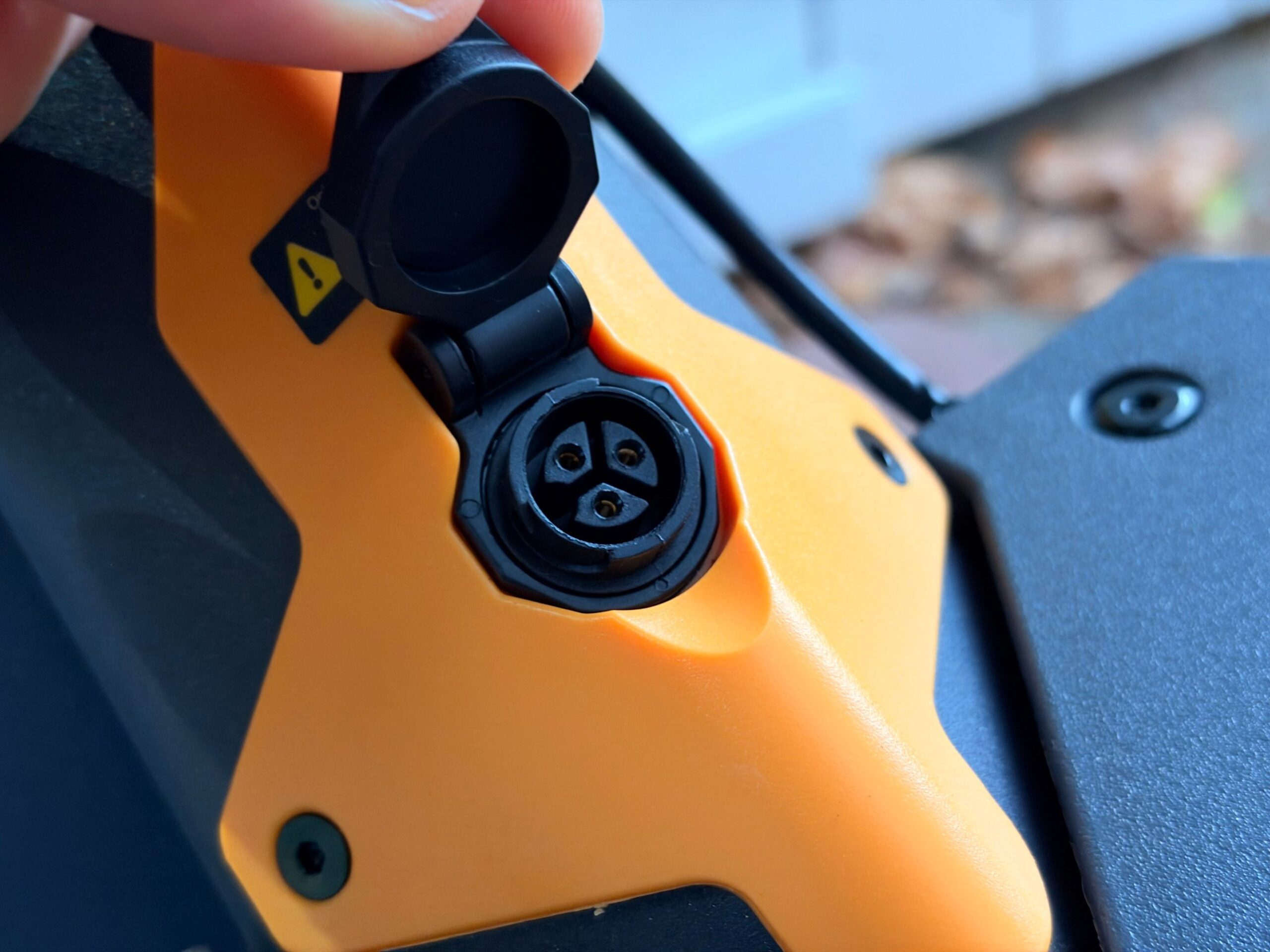
The downside of the large battery is the charging time. The included charger only delivers 1,5 amps, so a full charge takes around eleven hours, and even longer with the larger battery option. The L1 is therefore a classic scooter that you charge overnight. Because the battery isn't removable, the entire scooter has to be plugged in. The user manual also advises against charging indoors. Anyone without a basement or garage with an outlet should consider where they plan to charge the L1 before buying it.
Price and availability
The Ausom L1 is available in Germany and currently costs €589 with the 15,6 Ah battery and €679 with the 20,8 Ah battery. For a fully suspended e-scooter with a large battery, turn signals, and road approval, this is a very fair price. There is currently hardly any competition at this price point for this combination of features. Use the code "TKAL1" to get a discount. TechnikNews.NET readers save €40.
Conclusion
The Ausom L1 is a really good e-scooter. The suspension makes rough roads and cobblestones comfortable, the motor has plenty of power, the brakes are reliable, and the battery always lasted long enough for my daily commute to university. It also features bright turn signals, good lighting, and an immobilizer that uses a PIN or NFC card and doesn't require an app. The build quality is surprisingly good for this price range.
There are still some criticisms, however. At almost 30 kilograms, the L1 is very heavy, the folding mechanism is cumbersome, and the charging time of around eleven hours requires patience. The battery indicator is too inaccurate, and the settings in the hidden menu are almost impossible to find without instructions.
For those who commute daily in the city, want a large battery, and don't want to constantly carry their scooter, the Ausom L1 offers a lot of e-scooter for €589. However, those looking for a lightweight companion for public transport and stairwells should consider a smaller model.