
Lenovo Legion Go 2 review: The OLED monster with staying power
A TEST REPORT from Dominic Lux  on May 11, 2026, 8:30 am | Write a comment
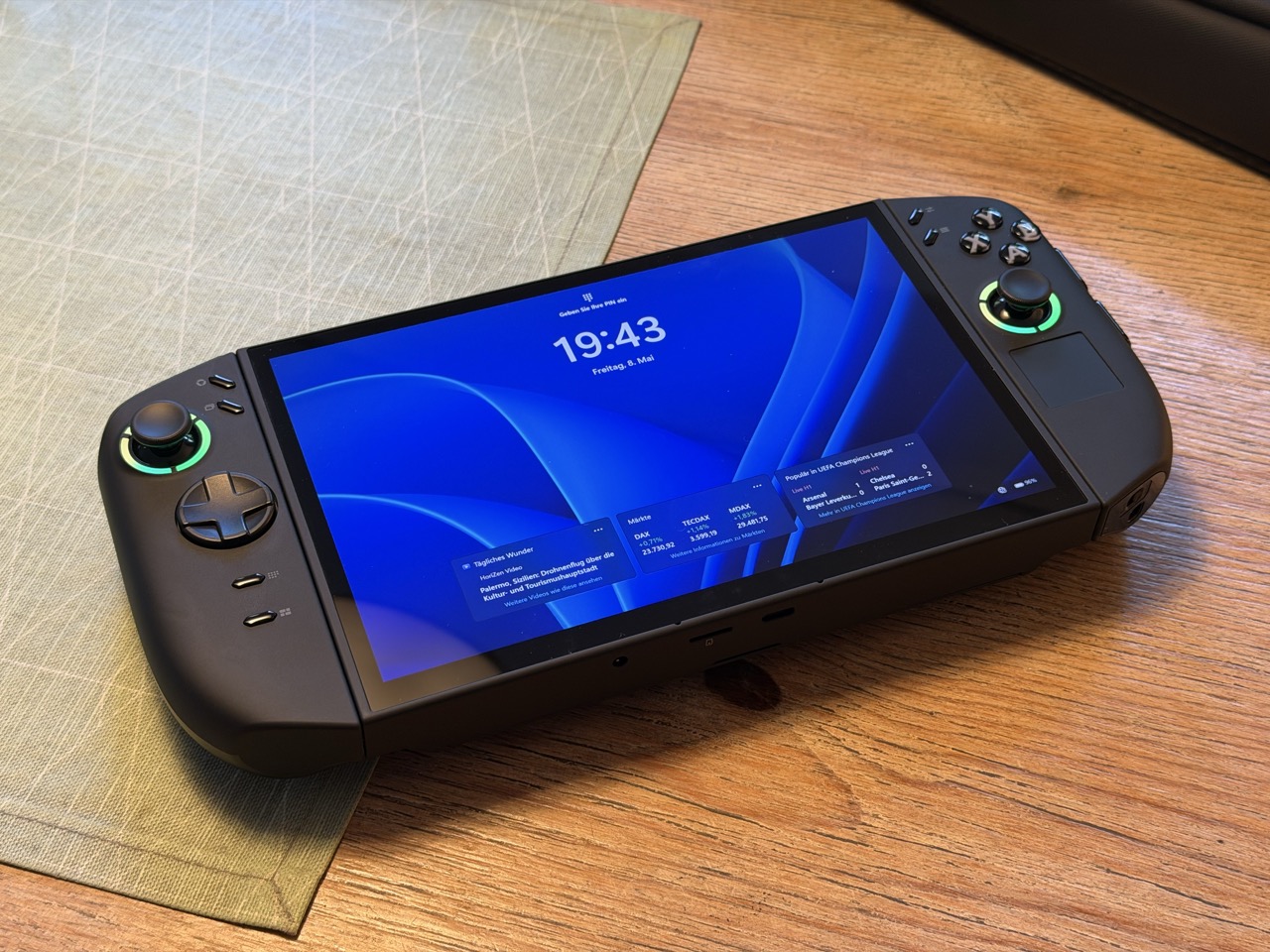
When the first Lenovo Legion Go saw the light of day just over two years ago, the tech world was both fascinated and skeptical. Lenovo had the courage to build a handheld that was essentially a small computer: a huge display, detachable controllers, and pure Windows power. But as is so often the case with pioneering projects, there were teething problems. The software felt like a construction site, the battery life was more of a short sprint than a marathon, and the weight almost required additional weight training.
Now, the Lenovo Legion Go 2, officially designated as Gen 2, is before us, promising to erase all these shortcomings. Lenovo hasn't simply updated the components, but rather re-evaluated the entire concept and tweaked the right levers to reclaim the crown in the now fiercely competitive gaming handheld market. In this comprehensive review, we'll determine whether the new flagship lives up to the high expectations and whether the hefty price tag is ultimately justified by the performance it delivers.
tl;dr: The most important points in brief
In summary, it can be stated that the Lenovo Legion Go 2 This is currently the most powerful overall package for handheld enthusiasts. The combination of a brilliant 8,8-inch OLED display with a variable refresh rate and the brute force of the Ryzen Z2 Extreme almost eliminates all the weaknesses of its predecessor. The massive increase in battery capacity to 74 watt-hours is particularly impressive, finally making the device suitable for long-distance use. Those who are bothered by the hefty weight of 920 grams and the impressive... Starting price of 1.199 euros (incl. 19% VAT) Anyone who can live with it will receive a technically almost flawless gaming monster that currently leaves the competition behind in terms of immersion and endurance.
Design and ergonomics: A heavyweight with gentle curves
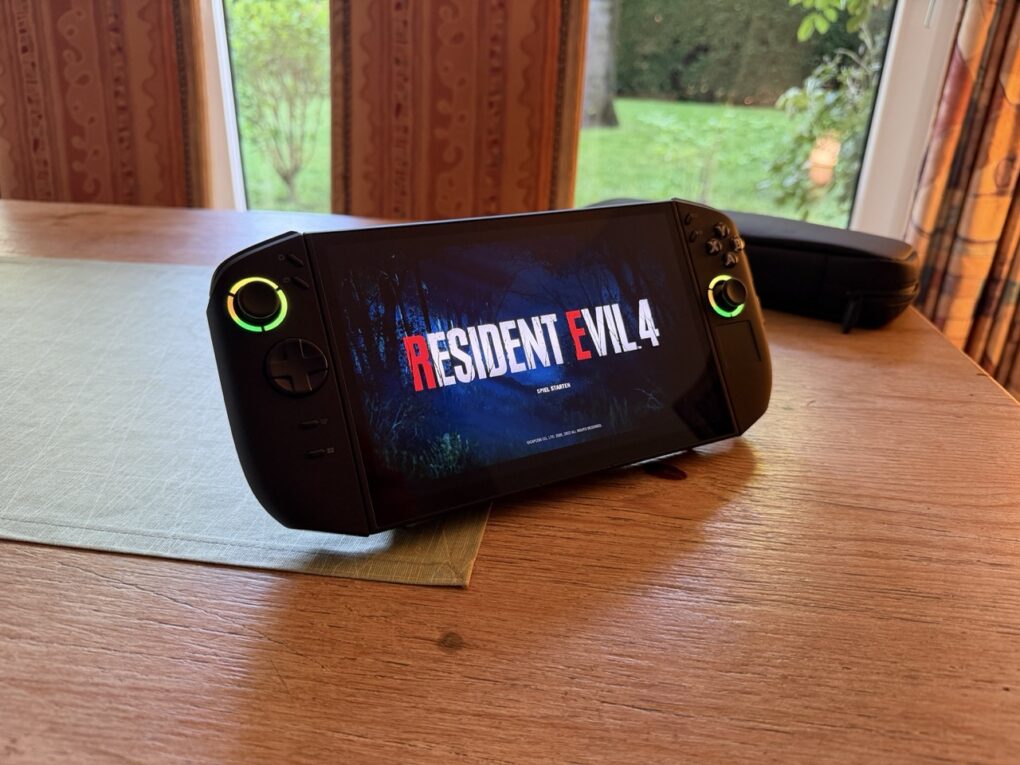
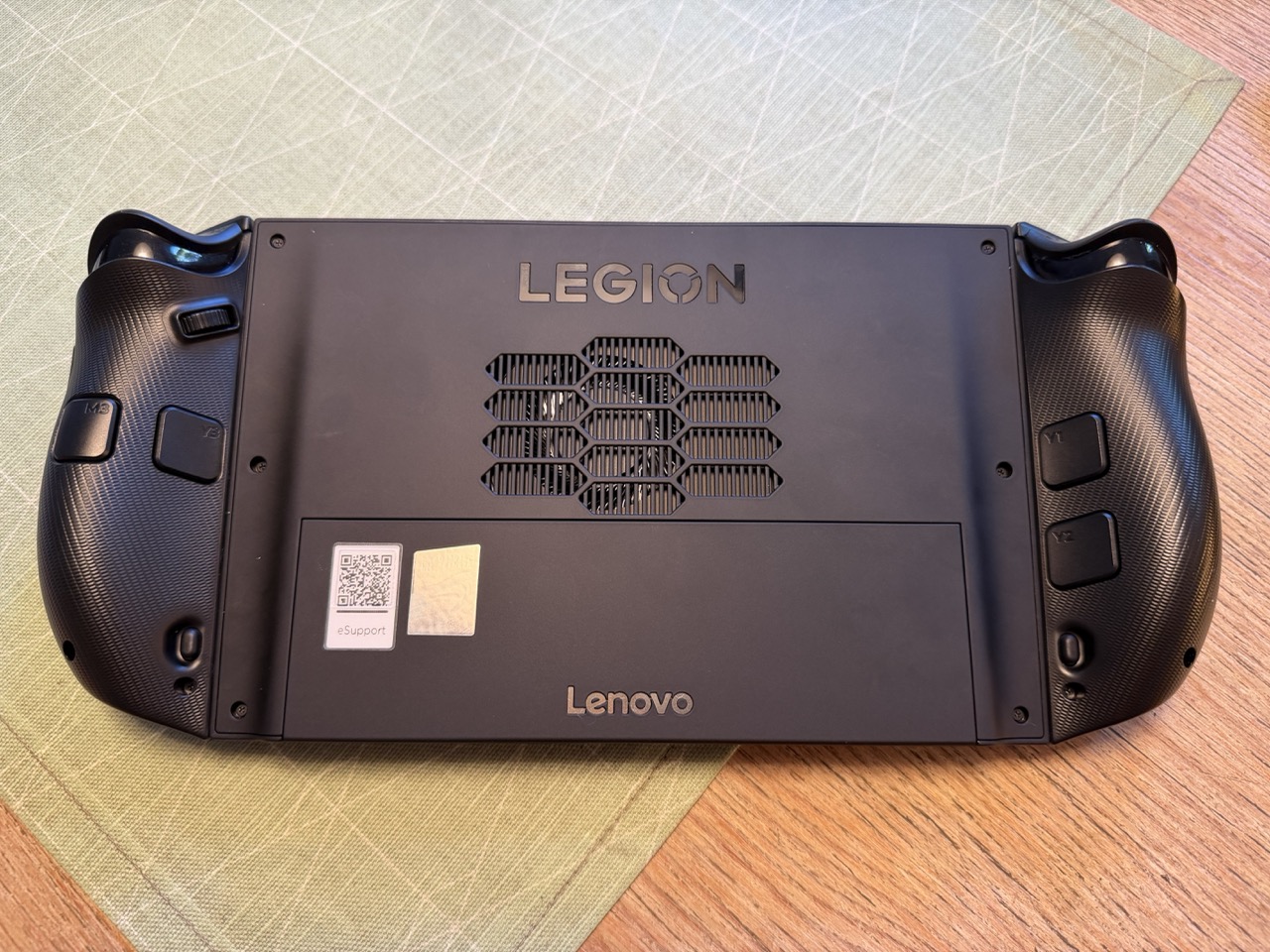
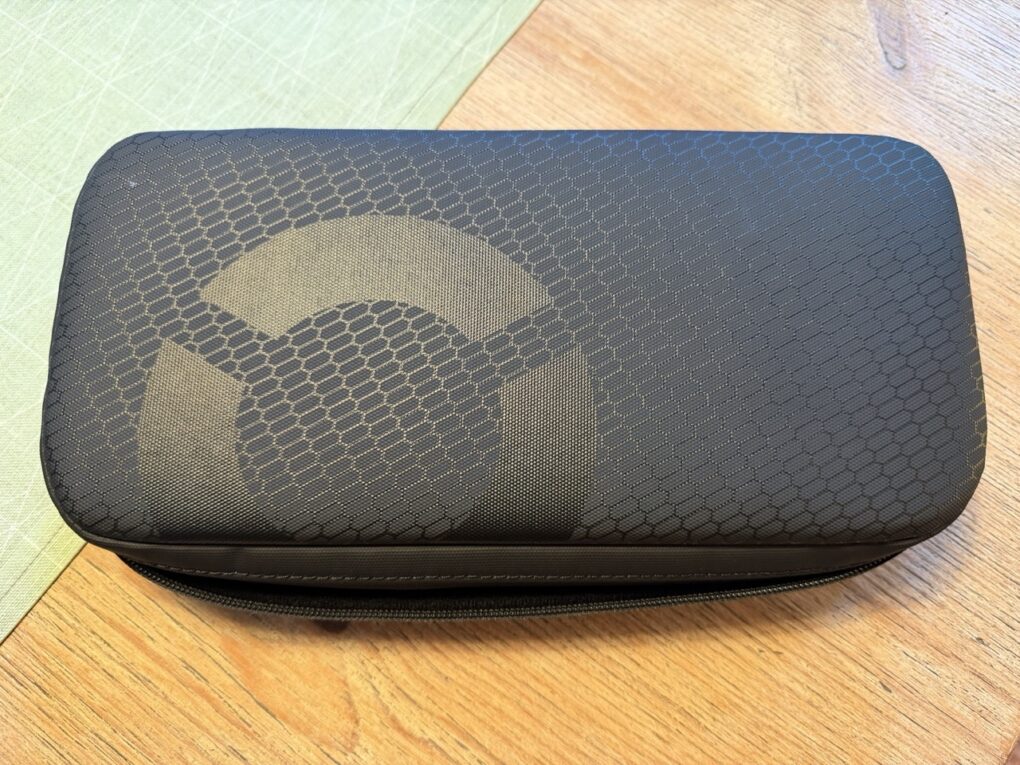
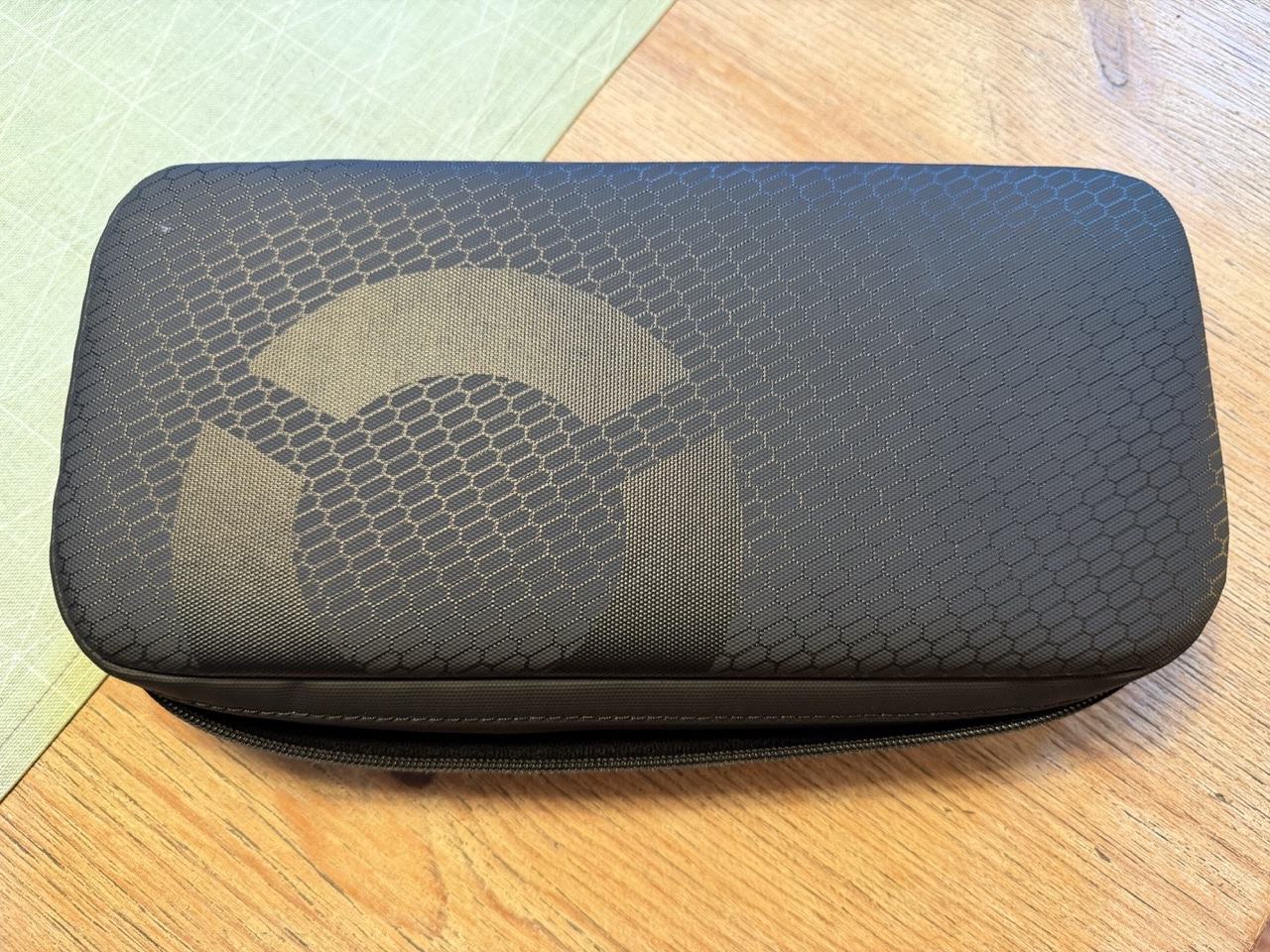
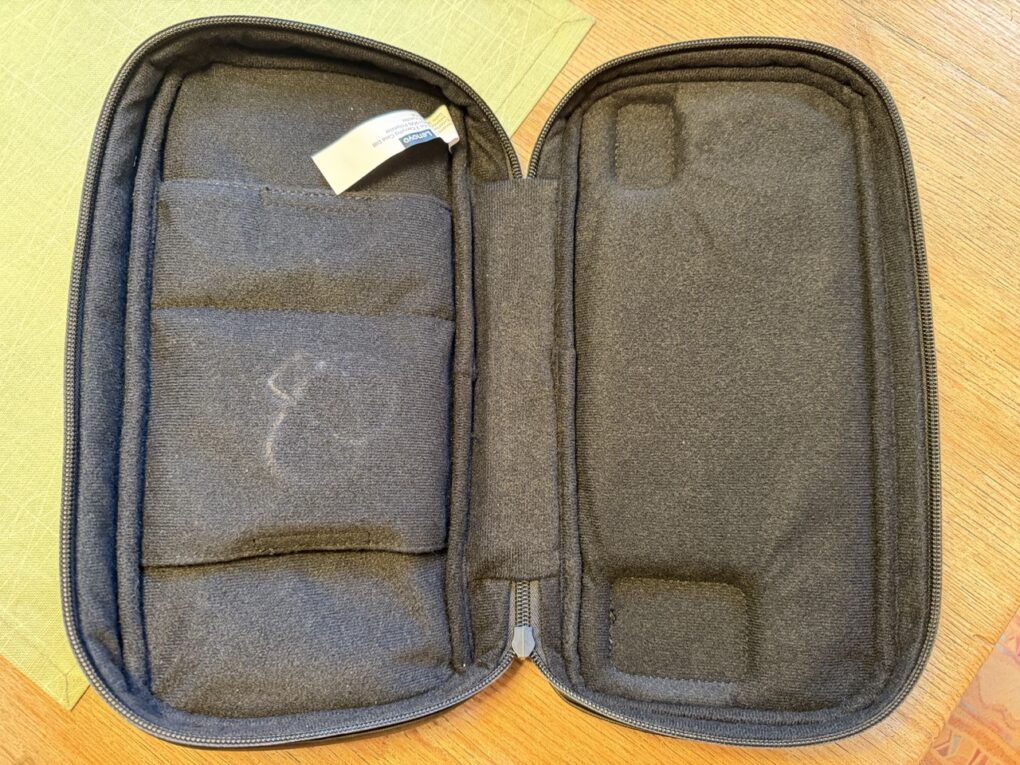
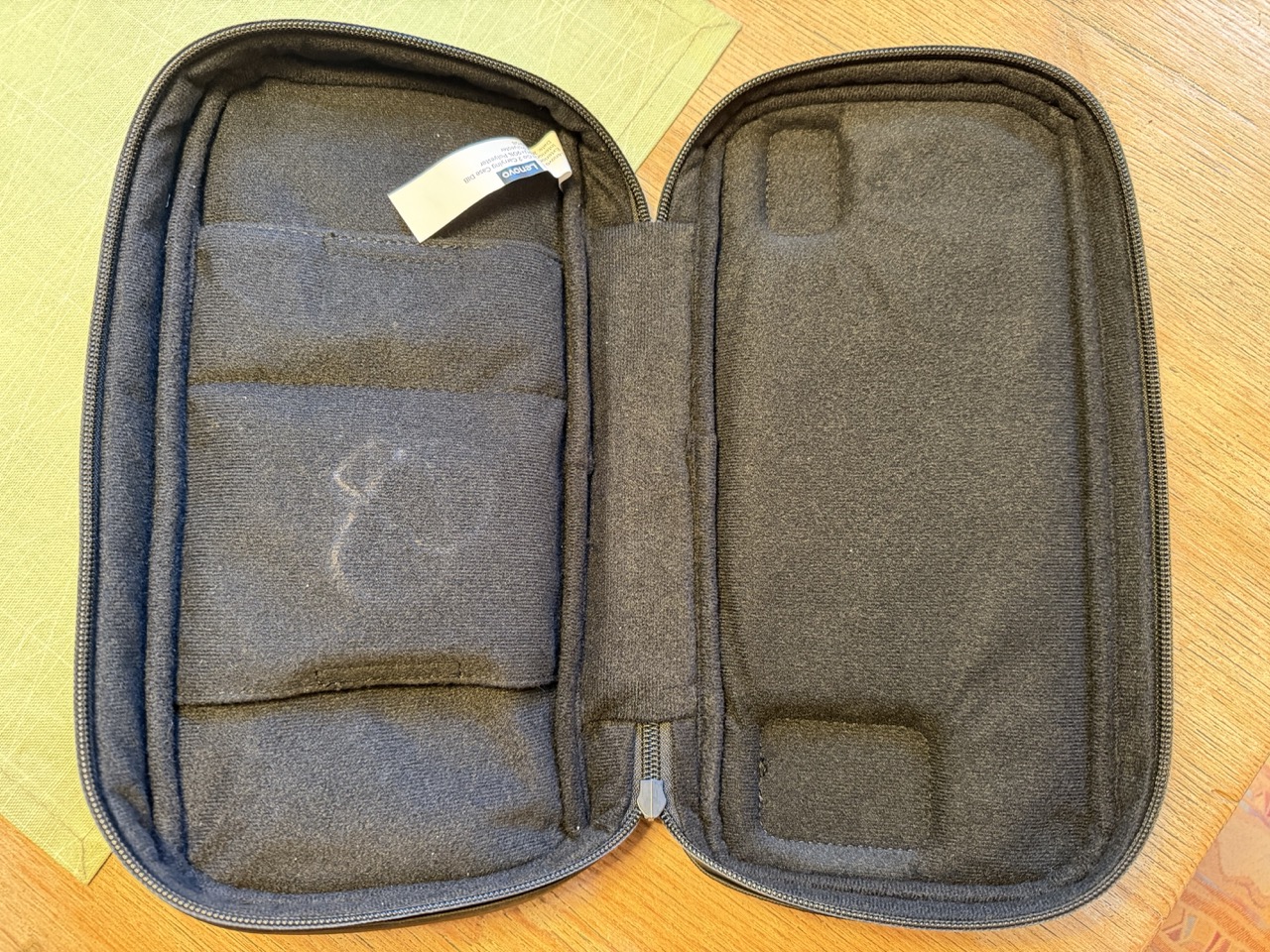
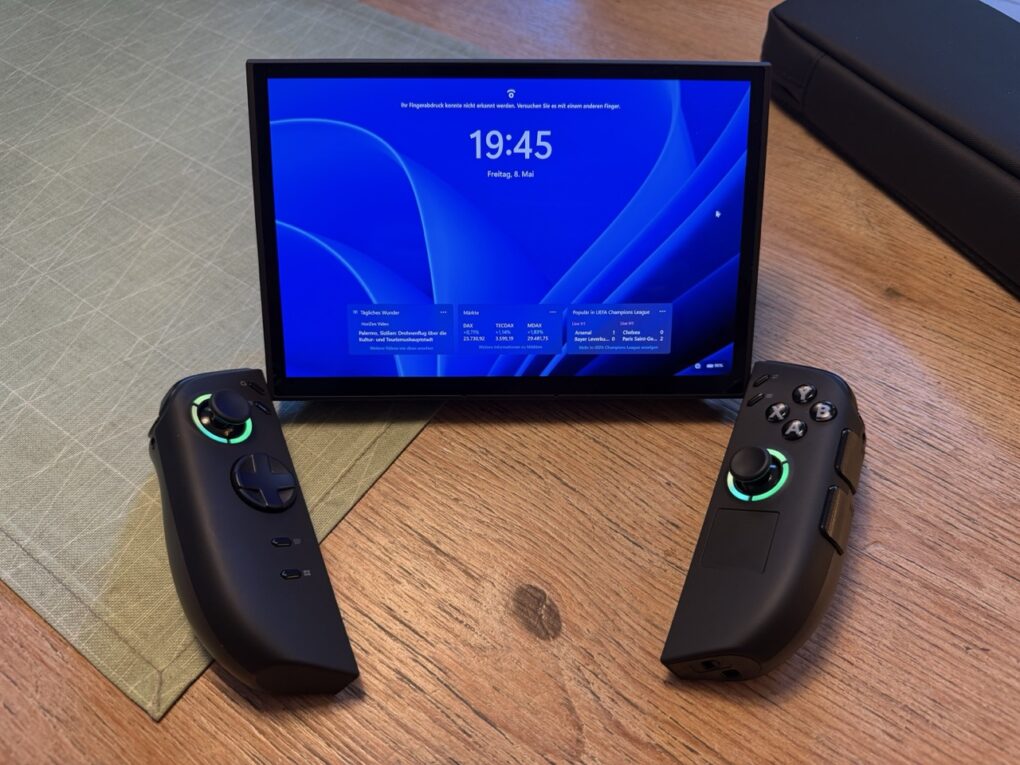
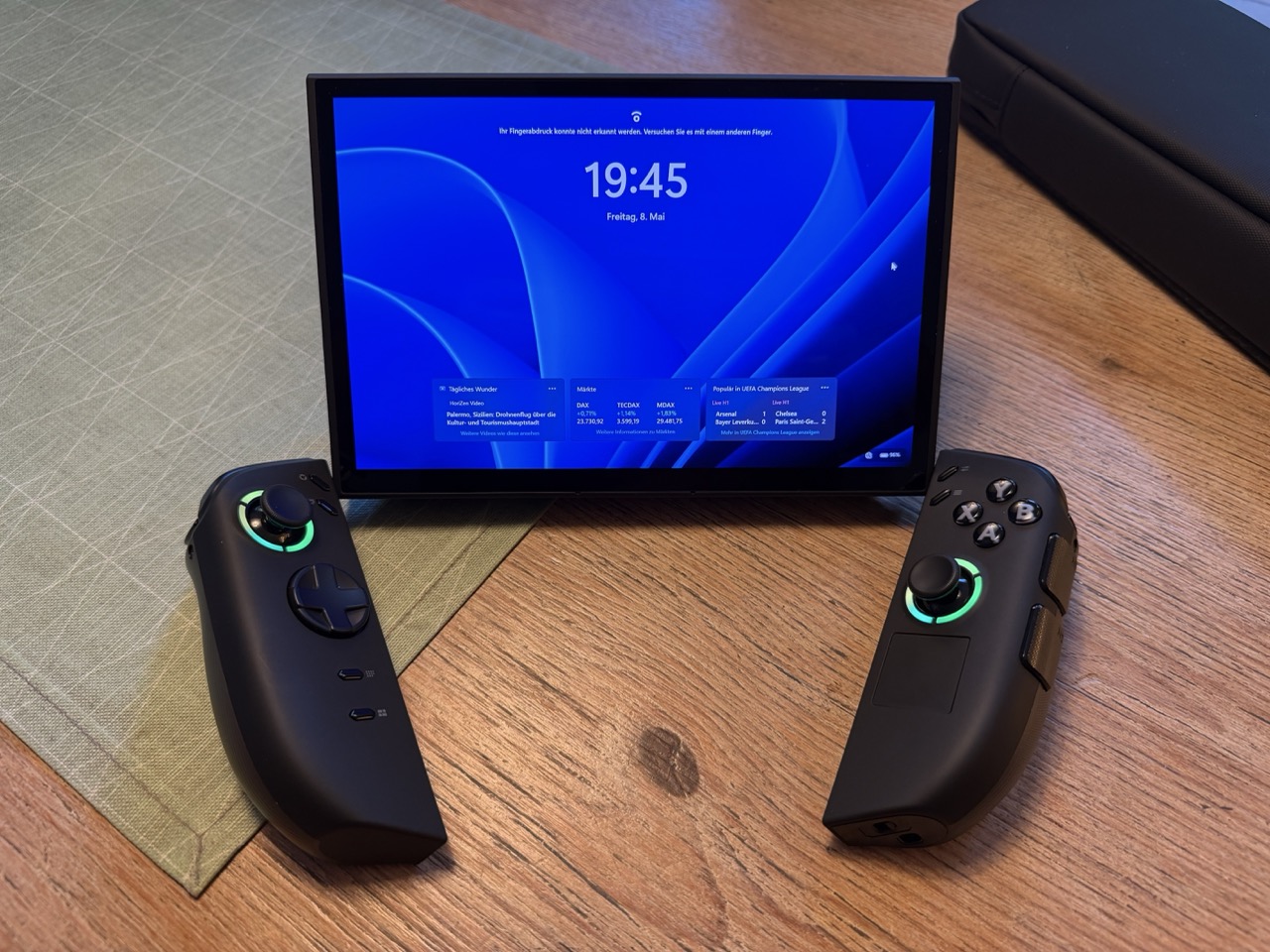
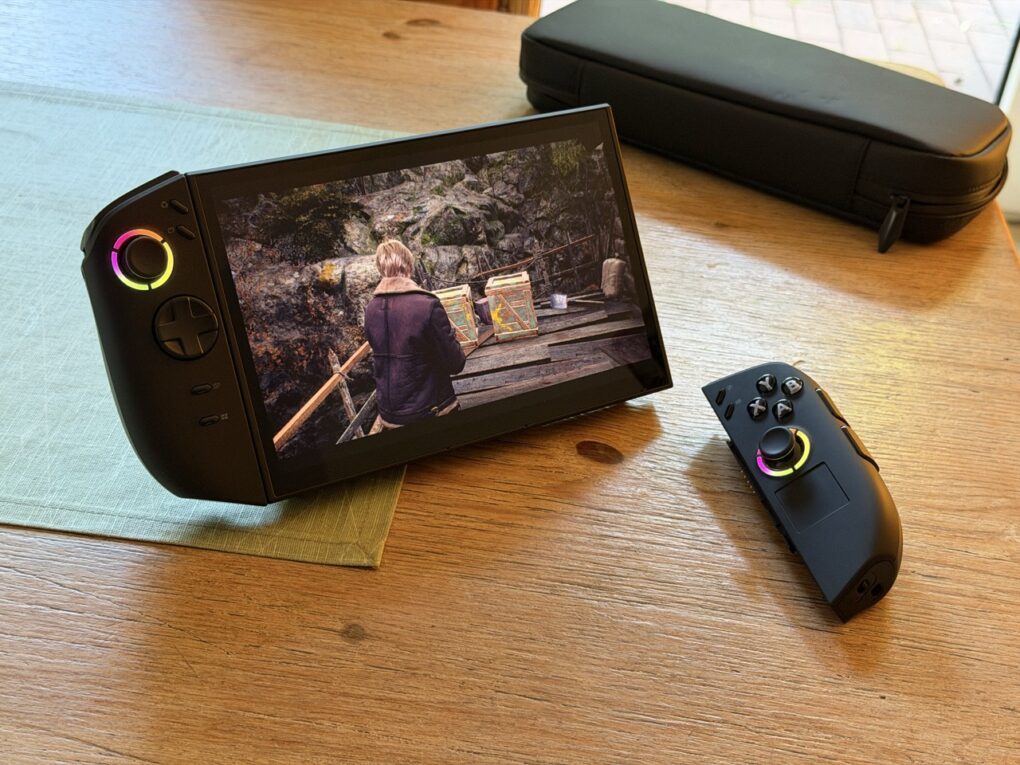
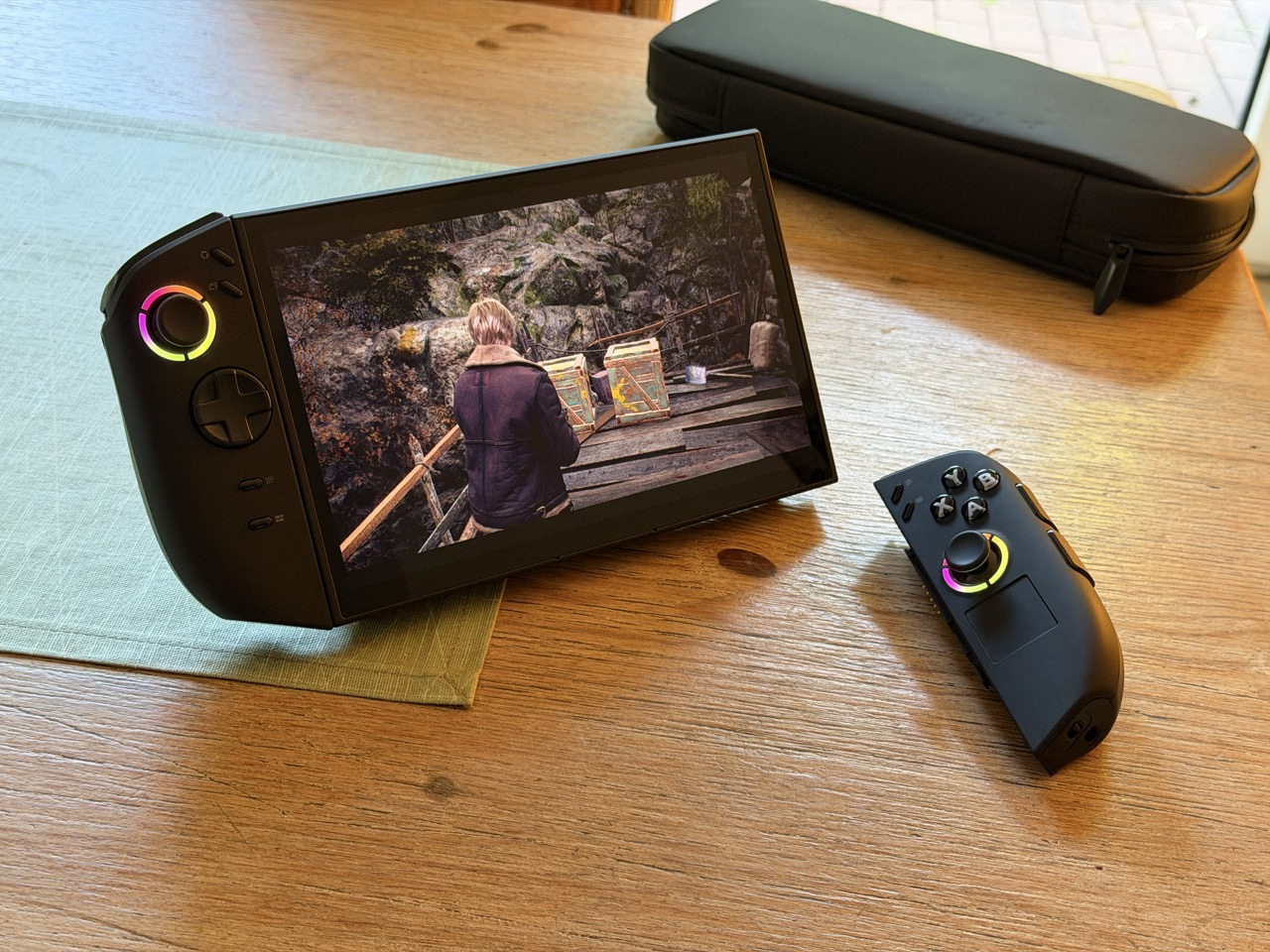
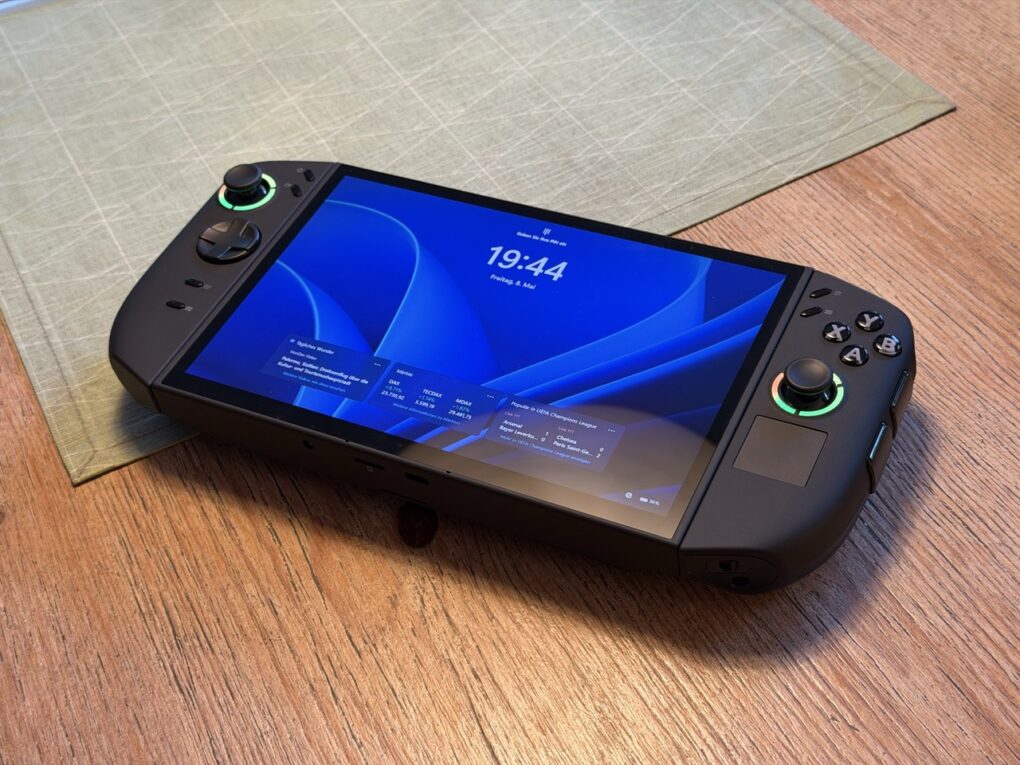
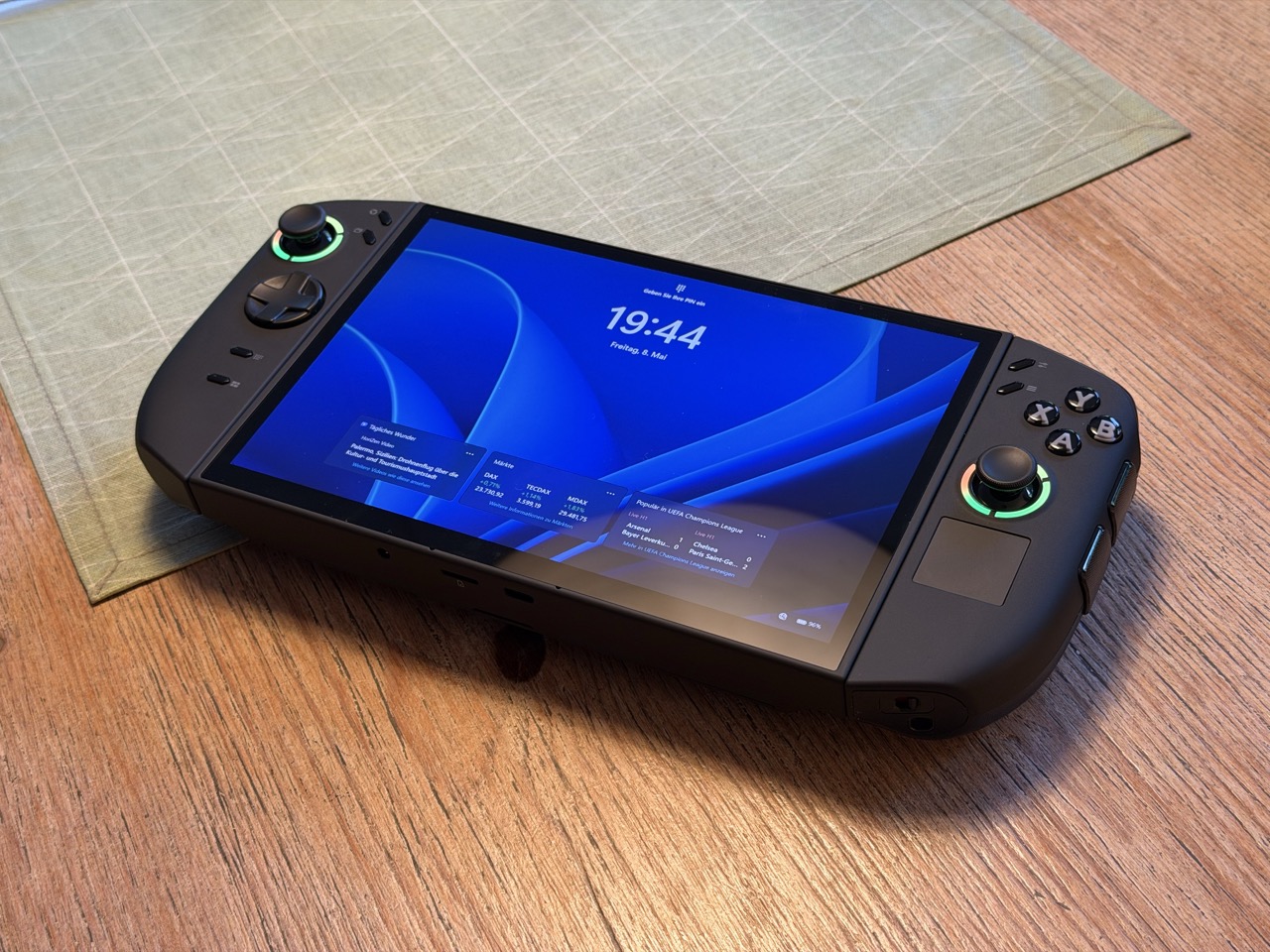
The moment you lift the Legion Go 2 out of its included carrying case, its substantial weight is immediately noticeable. At nearly 920 grams, it's no lightweight and weighs noticeably more than a Steam Deck or the ROG Ally. But Lenovo has taken an interesting approach here: instead of desperately trying to slim the device down, they focused on how this weight feels in your hands. The TrueStrike controllers have been completely redesigned. Where the predecessor's sharp edges pressed uncomfortably into your palms, we now find smooth, ergonomic curves that make holding them for extended periods significantly more comfortable. The new "silk-like" coating on the casing also ensures a firm grip and effectively prevents the device from becoming a fingerprint magnet after an intense gaming session.
-
- Picture: TechnikNews
-
- Picture: TechnikNews
-
- Picture: TechnikNews
-
- Picture: TechnikNews
Another hardware highlight is the integrated fingerprint sensor in the power button. While this might sound trivial, it's a real boon in everyday use with a Windows device. You press the button and are instantly logged into the system, without having to fumble with the fiddly on-screen keyboard for passwords. The detachable controllers are, of course, included again, and their locking mechanism now feels significantly more stable and premium. The FPS mode, in which the right controller is used as a vertical mouse, has also been updated. The optical sensor on the underside now works more precisely, making it considerably easier to play strategy games or shooters at a desk. It remains a niche feature, but one that continues to make the Legion Go 2 unique in the market.
The display: The return of the king thanks to OLED
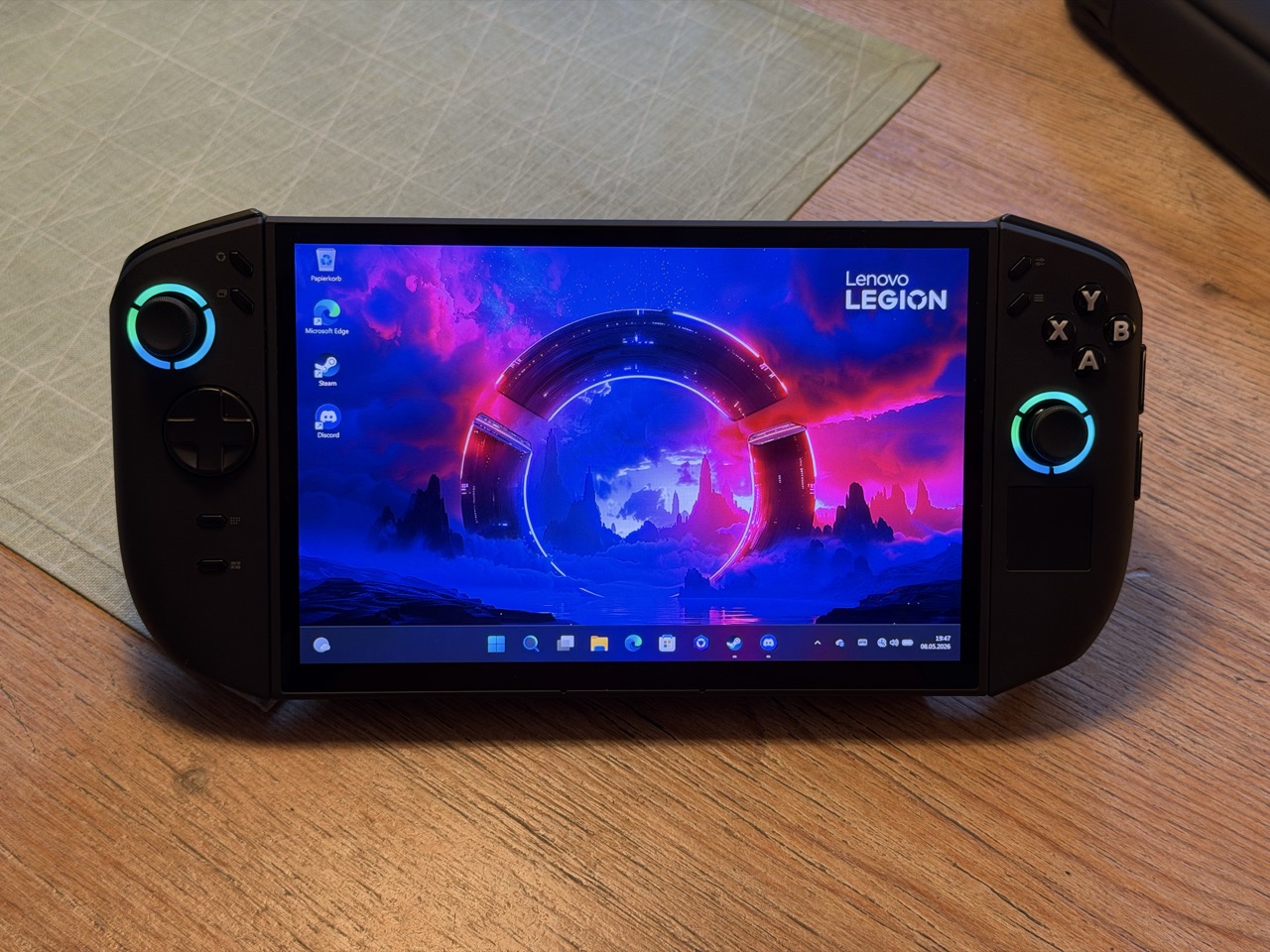
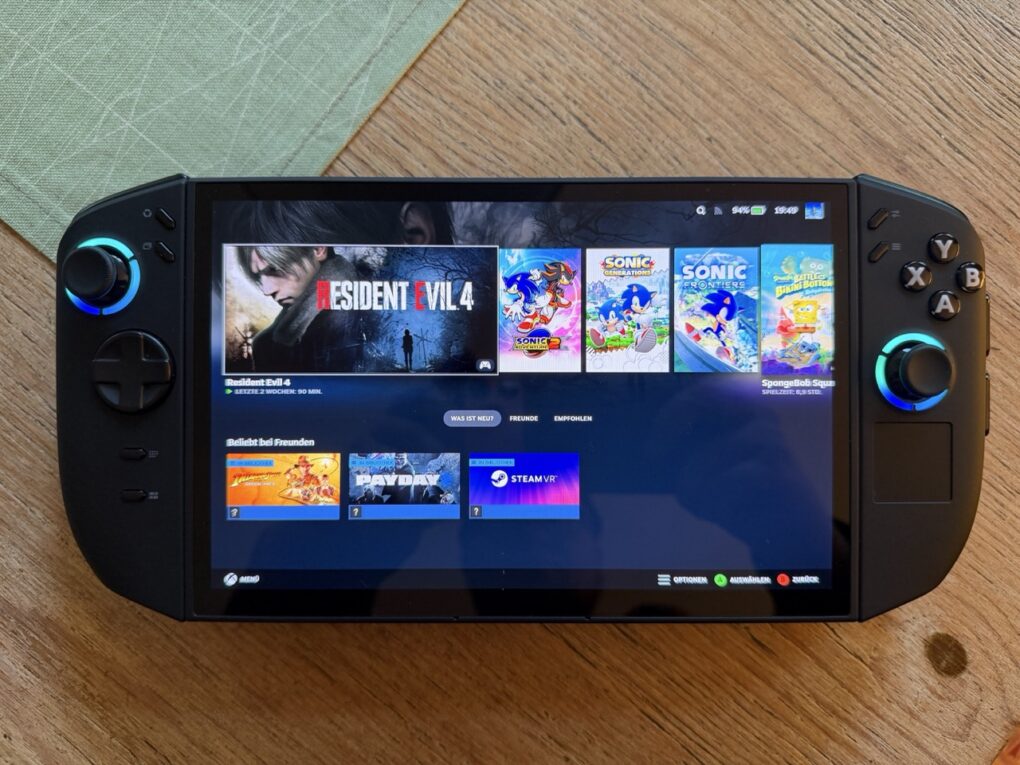
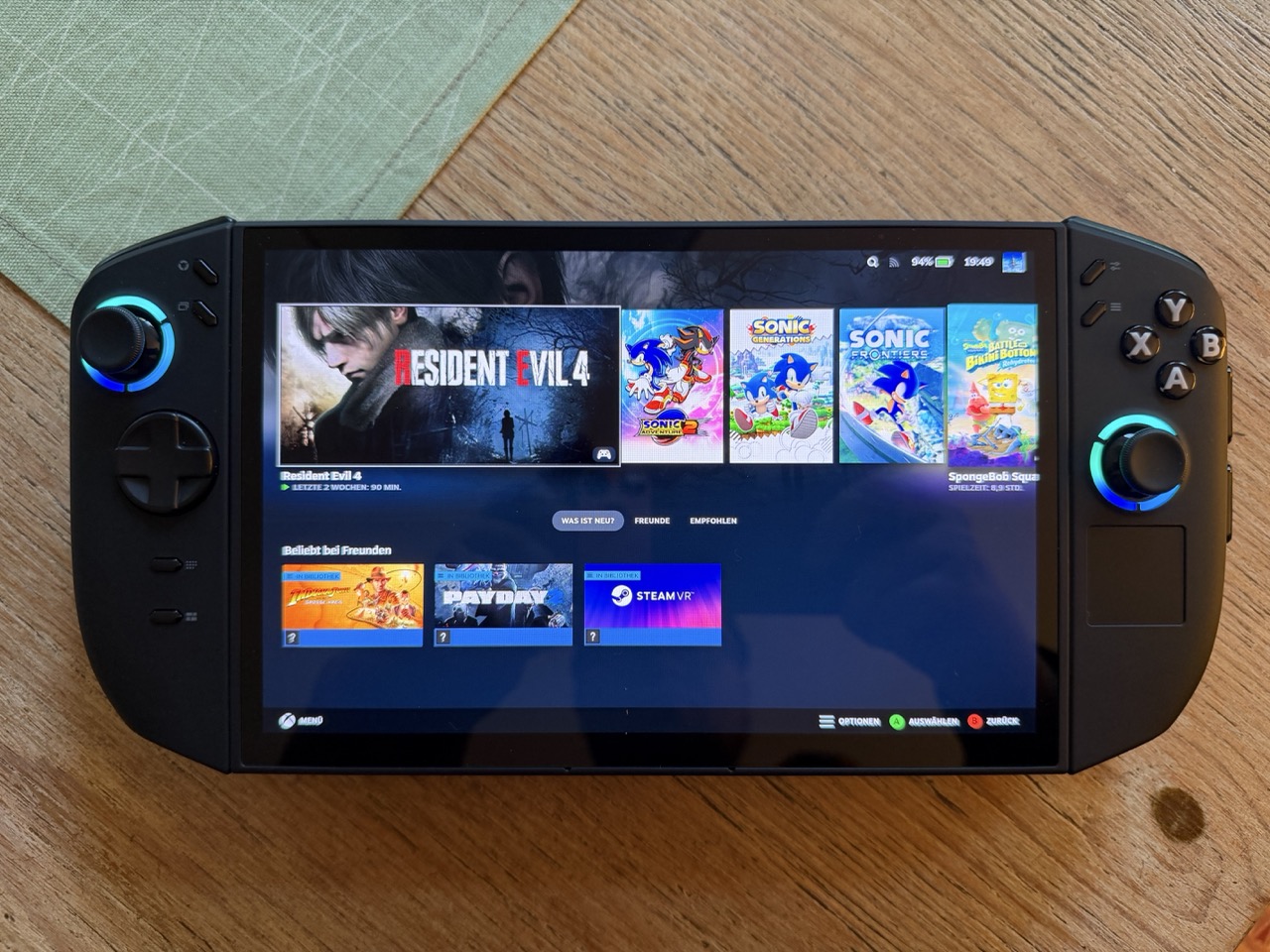
Lenovo listened to community feedback and made no compromises when it came to the screen. The switch from IPS to OLED is a real game-changer for a handheld of this size. Thanks to its VESA True Black 1000 certification, the 8,8-inch panel delivers contrast levels that have to be seen to be believed. When playing a game like Alan wake 2 When the flashlight cuts through the darkness, the rest of the screen remains truly pitch black, without the typical gray glow of older LCD panels. The colors appear incredibly vibrant without being unnaturally oversaturated.
-
- Picture: TechnikNews
-
- Picture: TechnikNews
The decision to reduce the native resolution from the predecessor's somewhat excessive 1600p to 1200p was particularly clever. At first glance, this might seem like a step backward to tech enthusiasts, but in practice, the opposite is true. With a pixel density still exceeding 250 ppi, the image is razor-sharp on this screen, but the hardware has to process significantly fewer pixels. This results in modern games running much more smoothly natively, without relying on aggressive upscaling technologies. Combined with the variable refresh rate of up to 144 Hz, the result is an extremely smooth image. Even if the frame rate dips below 60 FPS, the VRR technology effectively smooths out the stuttering, ensuring a buttery-smooth gaming experience.
Performance and cooling: When the Z2 Extreme flexes its muscles
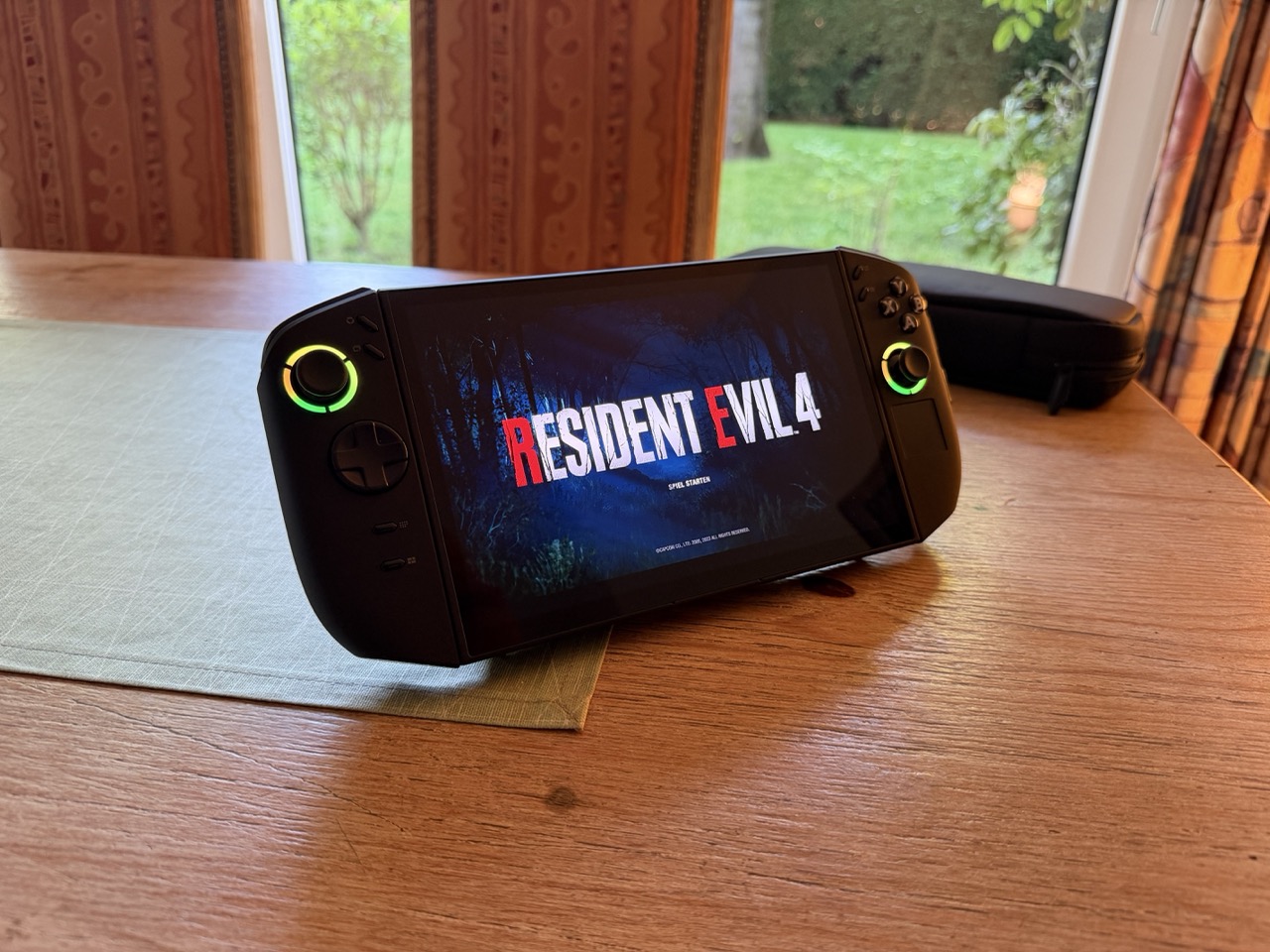
Under the hood is the new AMD Ryzen Z2 Extreme. This chip is specifically optimized for mobile handhelds and impressively demonstrates in our tests what's currently possible. Combined with 32 GB of LPDDR5X RAM clocked at a blazing-fast 8000 MHz, the device flexes its muscles. In our benchmarks, the Go 2 was able to run modern AAA titles like Resident Evil 4 Remake and Resident Evil 9: Requiem at medium to high settings in its native 1200p resolution with stable frame rates between 55 and 65 frames per second. pro Representing a second. That's a feat that, just a few years ago, was reserved for bulky gaming laptops.
Technical specifications compared:
| Component | Test device specifications |
| Processor | AMD Ryzen Z2 Extreme (8 cores / 16 threads) |
| graphics unit | Integrated Radeon Graphics (RDNA 3.5 architecture) |
| random access memory | 32 GB LPDDR5X at 8000 MHz |
| memory | 1 TB M.2 2242 SSD (expandable via MicroSD) |
| Display | 8,8″ OLED, 144 Hz, VRR, 1920 x 1200 pixels |
| Battery | 74 Wh with Super Rapid Charge |
-
- Picture: TechnikNews
-
- Picture: TechnikNews
-
- Picture: TechnikNews
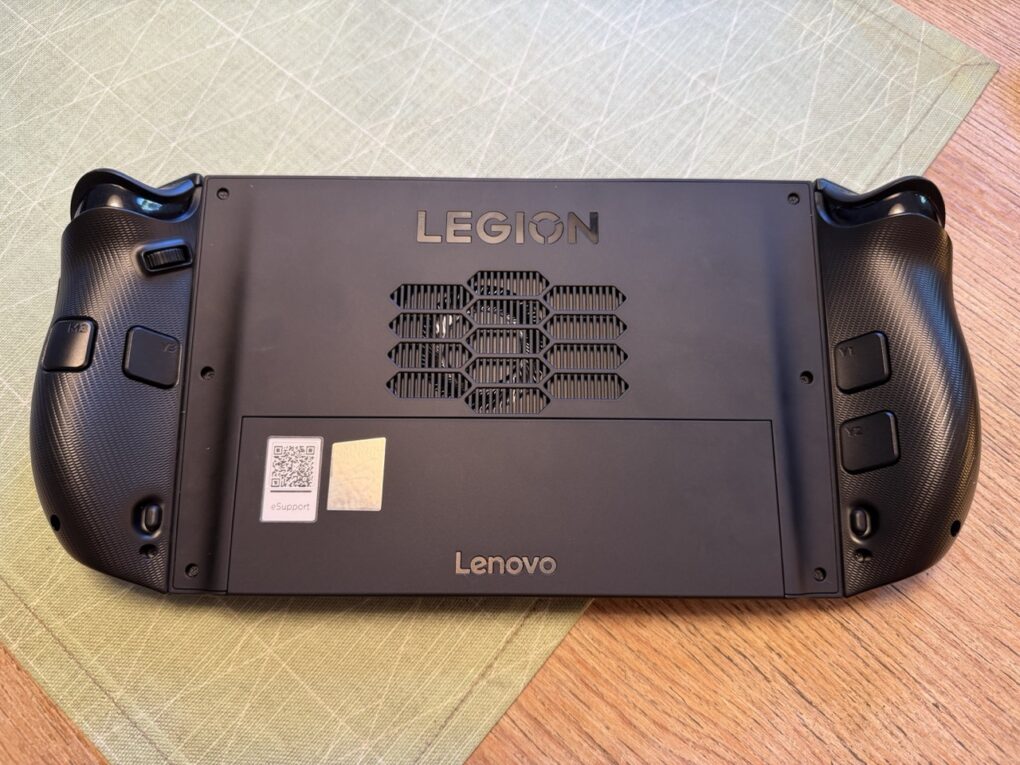
Of particular note is the redesigned cooling system called Legion ColdFront. While its predecessor often sounded like a small hairdryer under load, emitting an unpleasant, high-pitched whistling noise, the Gen 2 model is significantly more civilized. The fans proThey now produce a rather low-pitched rumble that is barely noticeable even without headphones. In our test, temperatures remained well within safe limits even after two hours of continuous gaming; the back of the device became noticeably warm but never uncomfortably hot. Lenovo has clearly invested a lot of effort in airflow and the placement of the heat pipes.
Software and battery life: The breakthrough for commuters
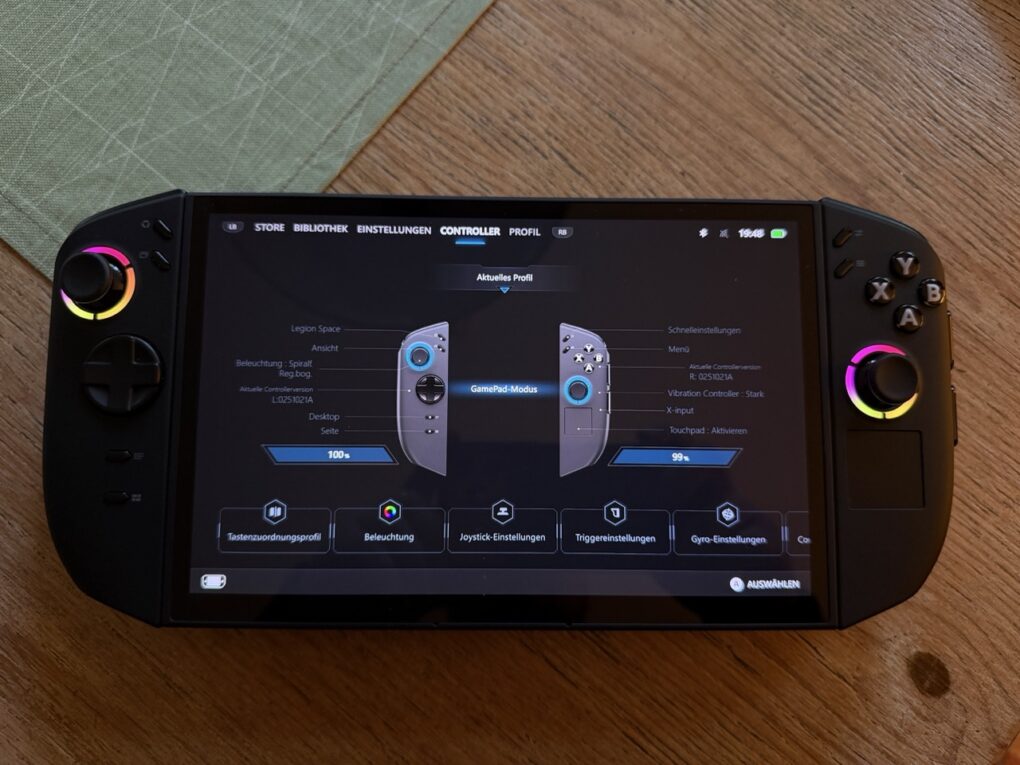
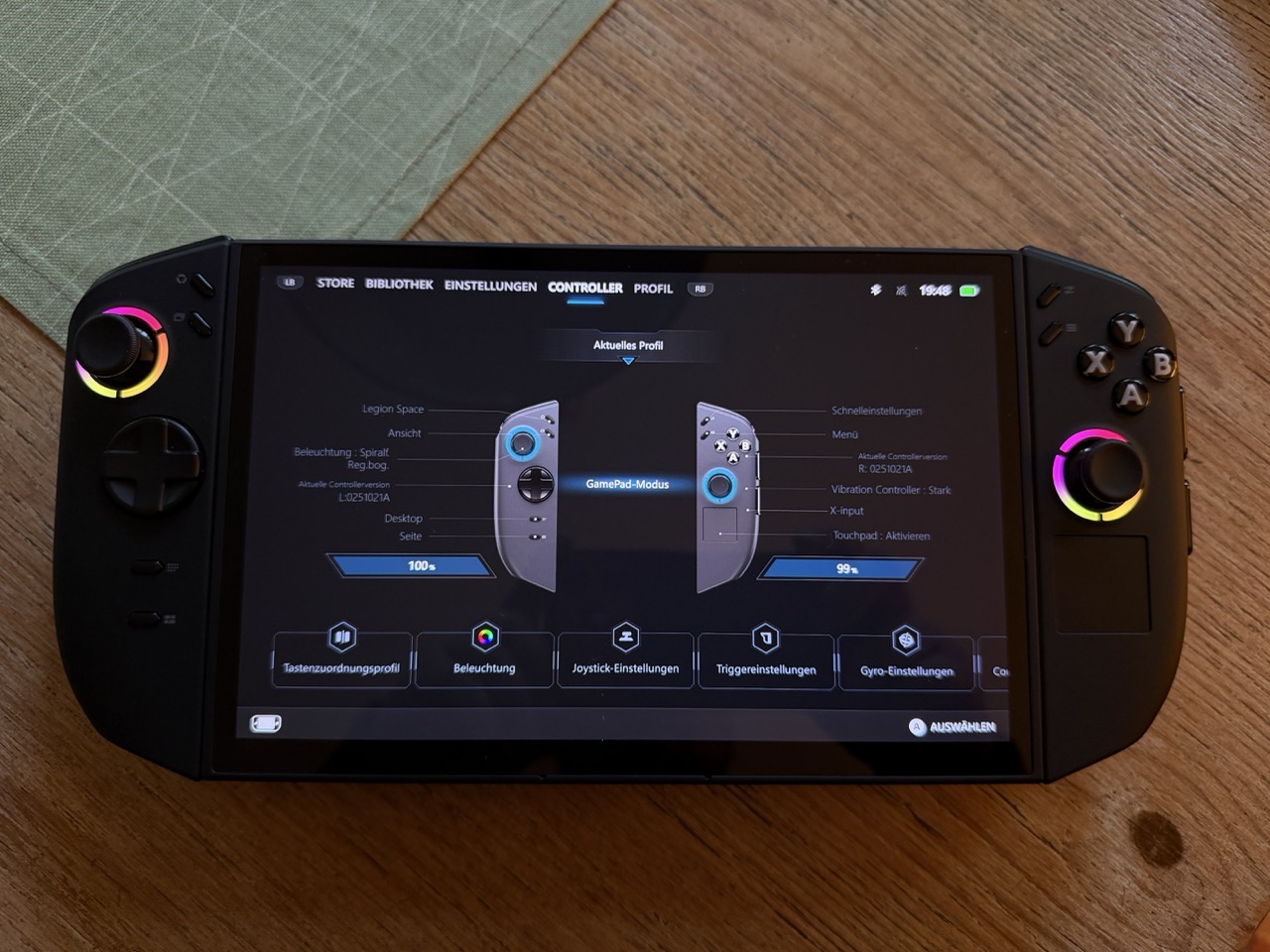
The Achilles' heel of almost all Windows handhelds is the software. Windows 11 simply isn't designed for thumb operation on a small touchscreen. Lenovo attempts to mask this with its own Legion Space software. In its latest version, this interface appears significantly cleaner, responds more quickly to input, and consolidates all game libraries—from Steam and Epic to Xbox Game Pass—in one central location. While there are still moments when you suddenly land on the Windows desktop and have to use the small trackpad, these breaks in the user interface are less frequent.
Perhaps the most significant improvement, however, concerns battery life. The battery has been increased from 49 watt-hours to an impressive 74 watt-hours. As a result, the device now lasts for approximately two and a half hours at full power – a figure that often didn't even reach 90 minutes with its predecessor. Reducing the TDP to around 15 watts for less demanding titles or indie games further improves the battery life. proFour to five hours of playtime are easily achievable. For pure video streaming or light office work, the Legion Go 2 even manages over seven hours. Thanks to the fast-charging function, the massive battery is also 80 percent charged again in just under an hour, which significantly increases its actual everyday mobility.
Conclusion: The ultimate handheld for enthusiasts
The Lenovo Legion Go 2 isn't for everyone. It's large, heavy, and with a web price of €1.600 (including 19% VAT), it's also a costly investment for which you can already get very decent gaming laptops. But it currently offers the best display on the market, brutal performance, and finally, battery life that truly lives up to its name. Lenovo has successfully addressed almost every criticism of its predecessor and created a product that finally feels mature.
Anyone looking for a mobile gaming powerhouse, and for whom the Steam Deck is too weak or the ROG Ally X too small, can't ignore the Legion Go 2. It's the logical culmination of a vision that stumbled somewhat two years ago, but is now moving forward with a firm stride. Those with the necessary funds who are looking for the best Windows handheld currently available will find it here.
Those who can wait a little longer can get the SteamOS version, which should offer slightly longer battery life and possibly better overall performance in most games.
Pros & Cons at a Glance
| What we like | What we like less |
| Stunning 8,8″ OLED with VRR support | With a weight of 920g, it has a very high tare weight. |
| Enormous system performance thanks to Ryzen Z2 Extreme | High entry price |
| Massive improvement in battery life (74 Wh) | Windows 11 is still somewhat cumbersome. |
| Innovative and ergonomically improved controllers | Dimensions are borderline for small hands |