
VW Tayron eHybrid review: Does the new hybrid technology impress?
A TEST REPORT from Dominic Lux  on September 27, 2025, 21:51 am | Write a comment
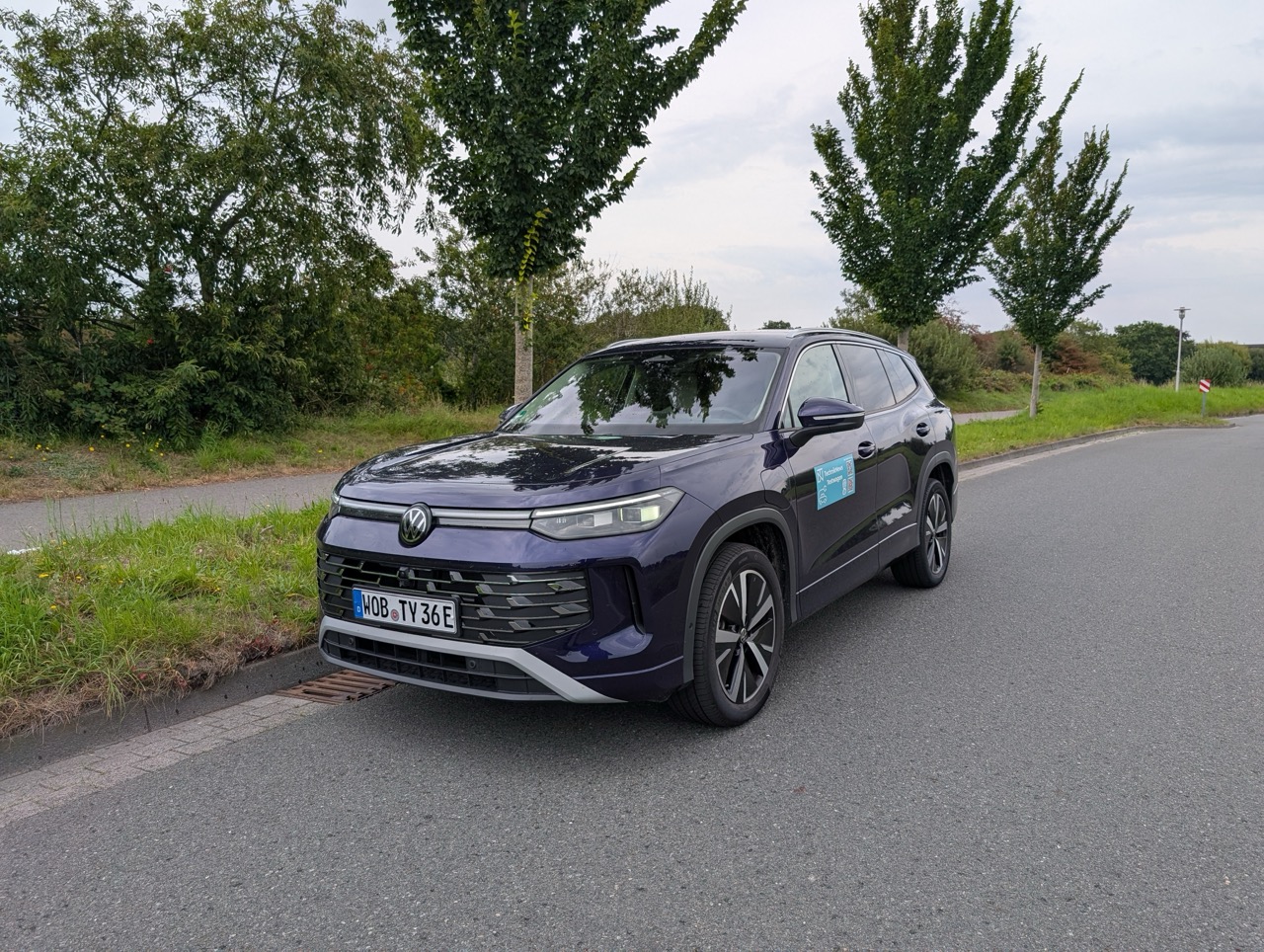
The Tayron is the successor to the Tiguan Allspace, the larger Tiguan variant with up to seven seats. Essentially, it follows in the footsteps of the popular VW Touran. What remains is a spacious, latest-generation plug-in hybrid, though now only with a maximum of five seats. Or, as I affectionately call it: the Baby Touareg. Can the new Tayron impress in everyday use? We think it certainly deserves a chance, even if most people will likely still opt for the new Tiguan.
tl;dr: Finally, a usable electric range?
The VW Tayron eHybrid is more than just the successor to the Tiguan Allspace. It scores points with a striking color scheme reminiscent of the legendary Fire&Ice x BOGNER of the Golf 2 Edition, and an infotainment system that is finally fast, stable, and truly usable. The driver assistance systems also work unobtrusively in the background without being intrusive, and the driving characteristics are pleasantly comfortable. Thanks to DCC (VW's dynamic damping system), long journeys are particularly relaxed, and even though the head-up display isn't an AR system, it's very easy to read. With an electric range of up to 100 kilometers in summer, 11 kW AC charging, and 50 kW DC fast charging, it clearly stands out from previous VW plug-in hybrids. For families who find the Tiguan too small, the Tayron offers a modern, spacious, and future-proof alternative. Because when the Touareg is discontinued next year, the Tayron will remain Volkswagen's largest model.
Video report:
Design: Big brother of the Tiguan
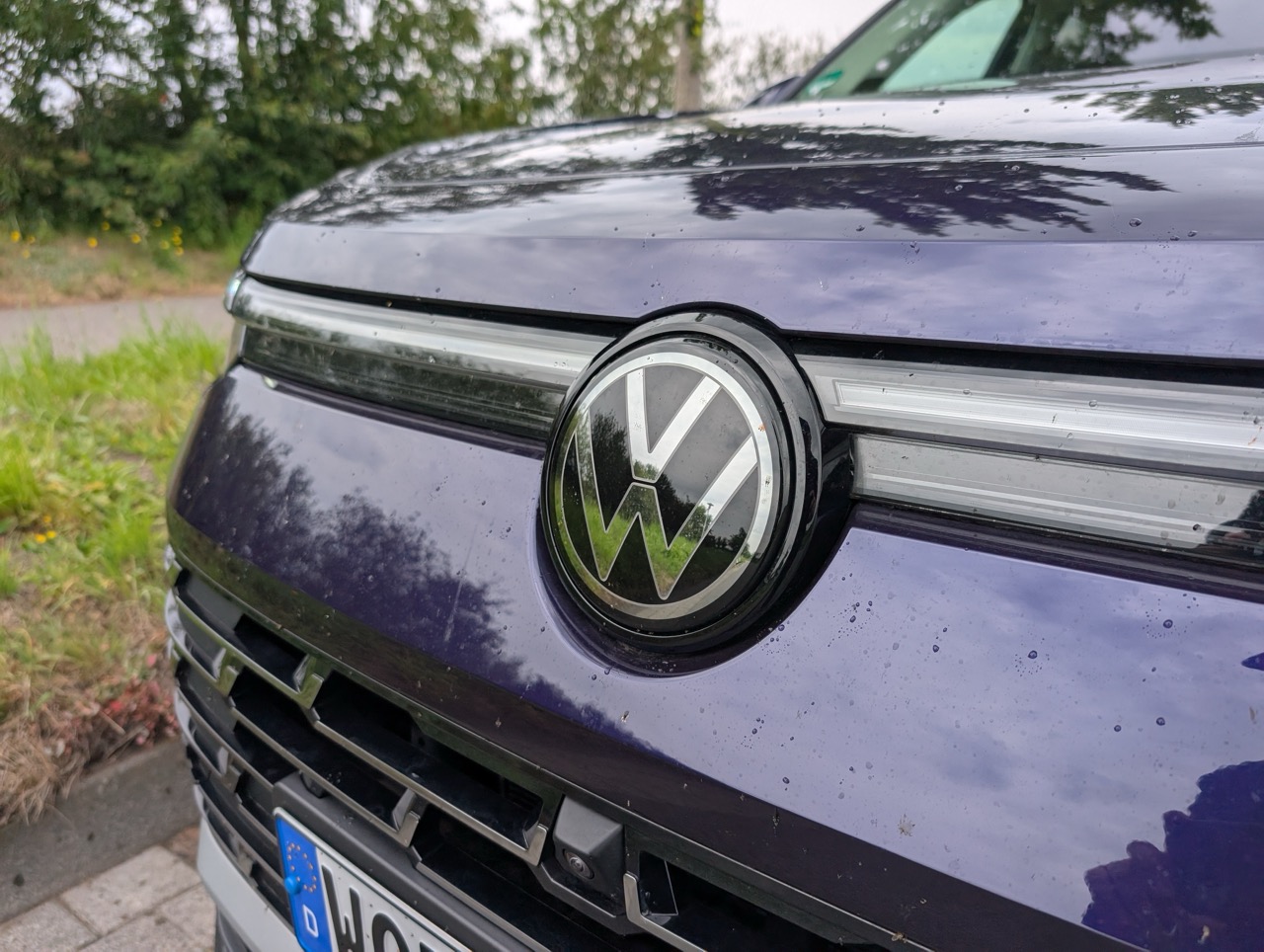
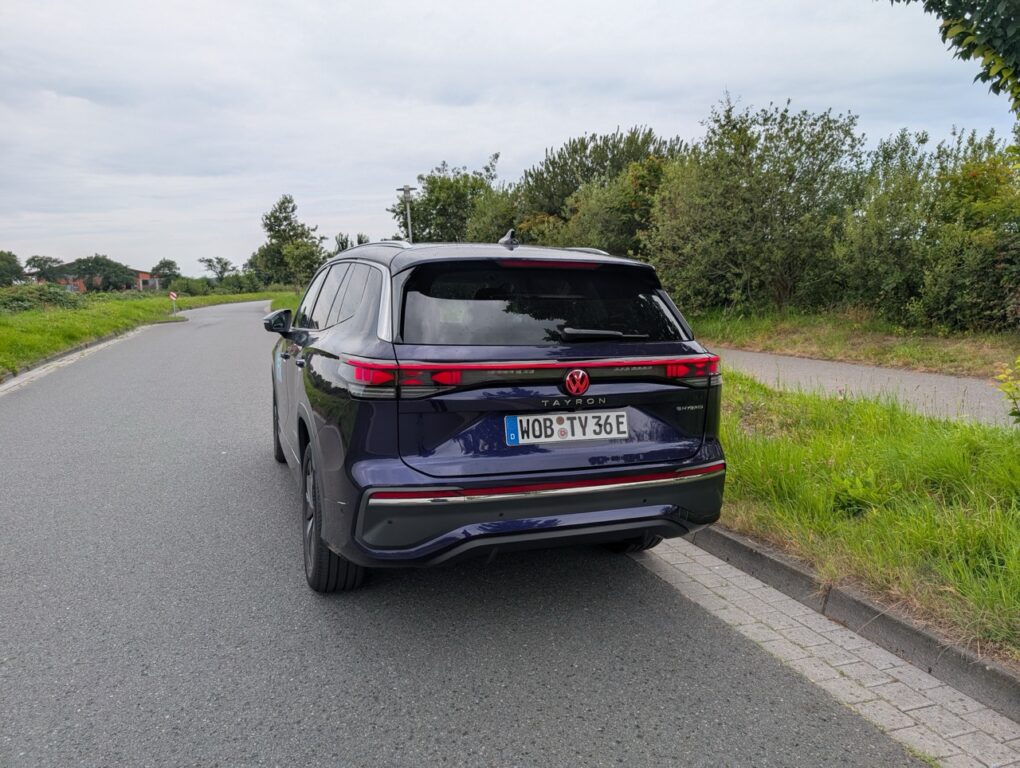
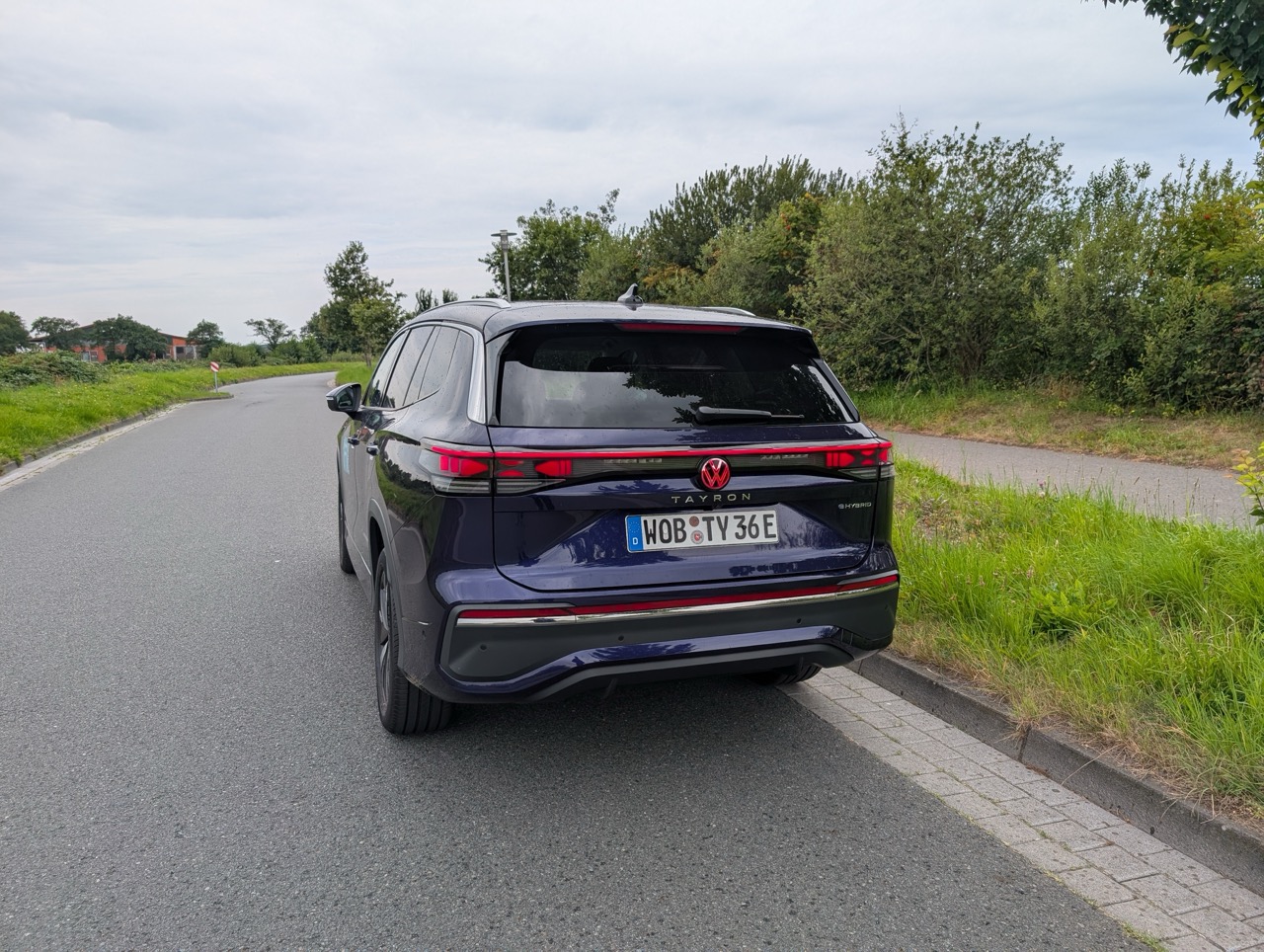
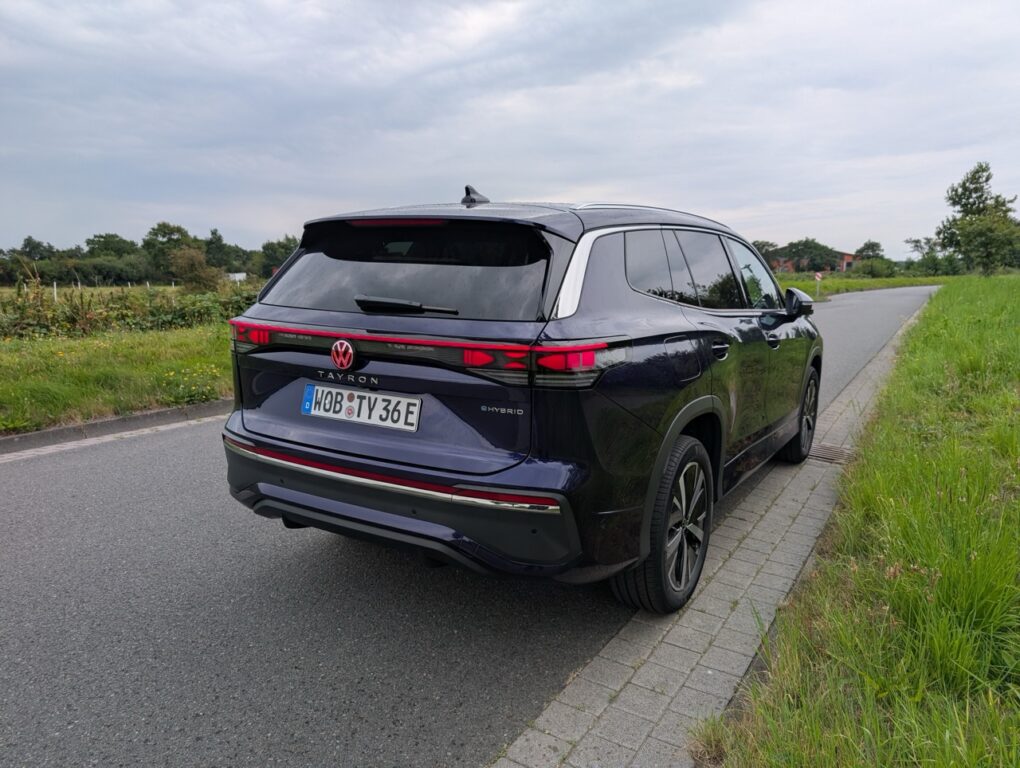
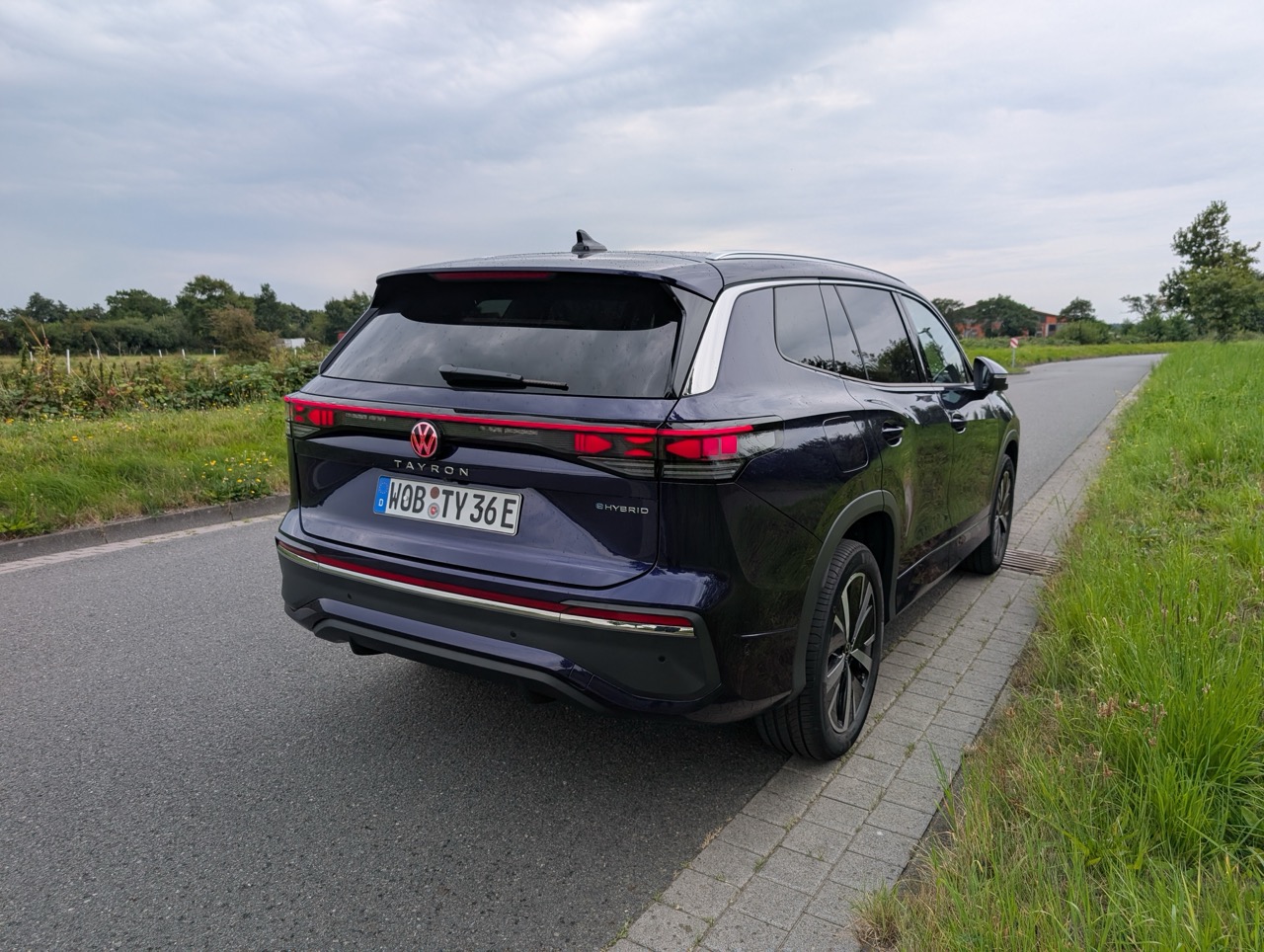
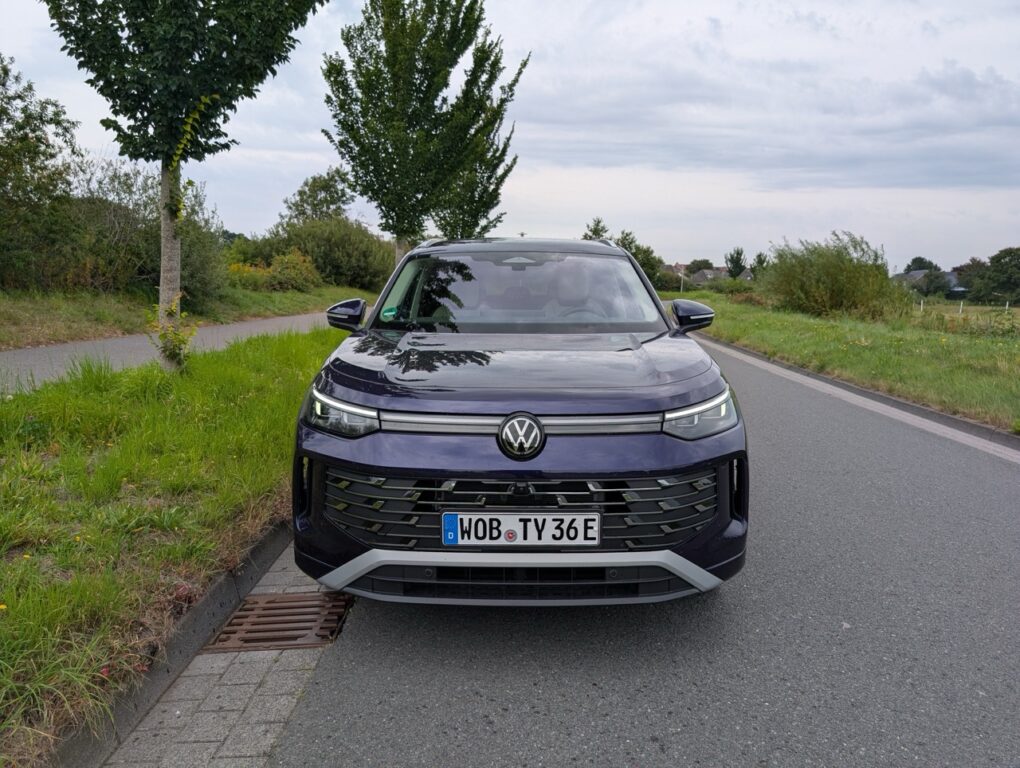
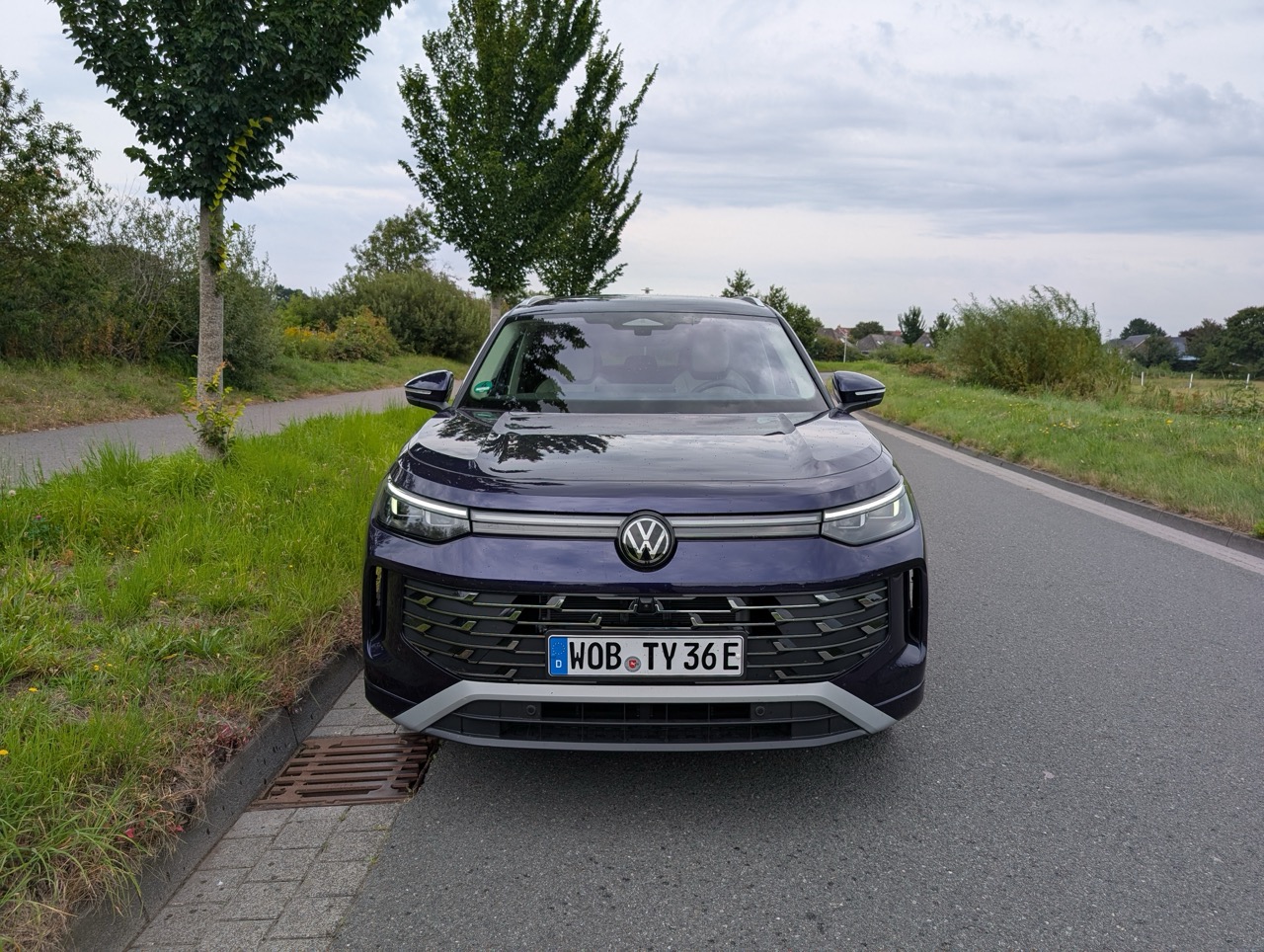
In terms of design, the Tayron resembles the new Tiguan's big brother. Both models share the current VW design language with clean lines, a wide front, and a continuous light strip at the rear. On the Tayron, the front and rear logos are illuminated. While the Tiguan appears more compact and somewhat rounded, the Tayron stretches out with more muscular proportions, giving it a more mature and commanding presence. The striking color scheme, in particular, is reminiscent of the Fire & Ice special editions and lends it a distinct character. Overall, it combines elegance with sportiness and positions itself noticeably above the Tiguan, almost like a baby Touareg. However, it is clearly differentiated from the Touareg in terms of price and equipment; more on that later.
-
- Picture: TechnikNews
-
- Picture: TechnikNews
-
- Picture: TechnikNews
Interior: Finally good quality again?
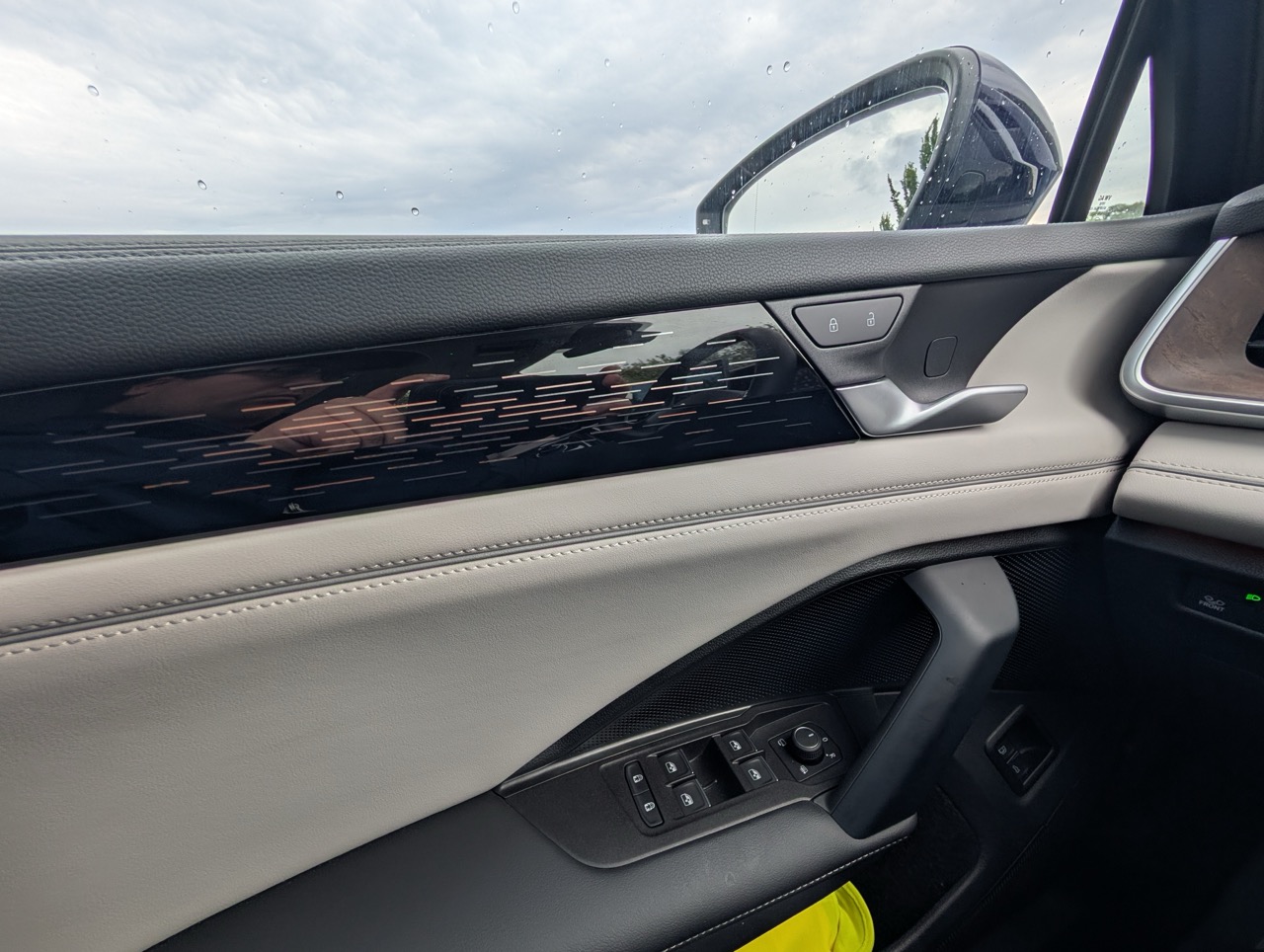
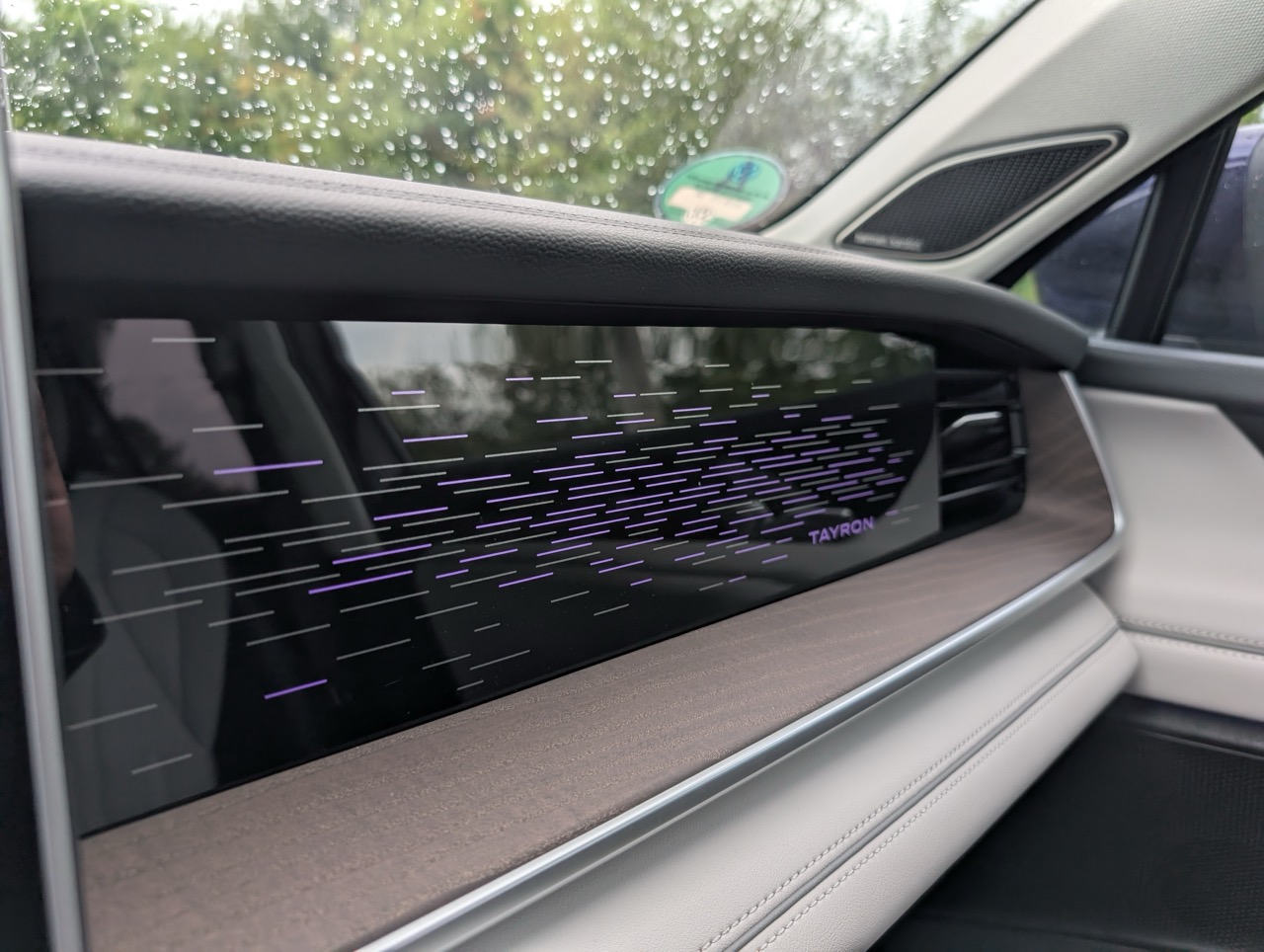
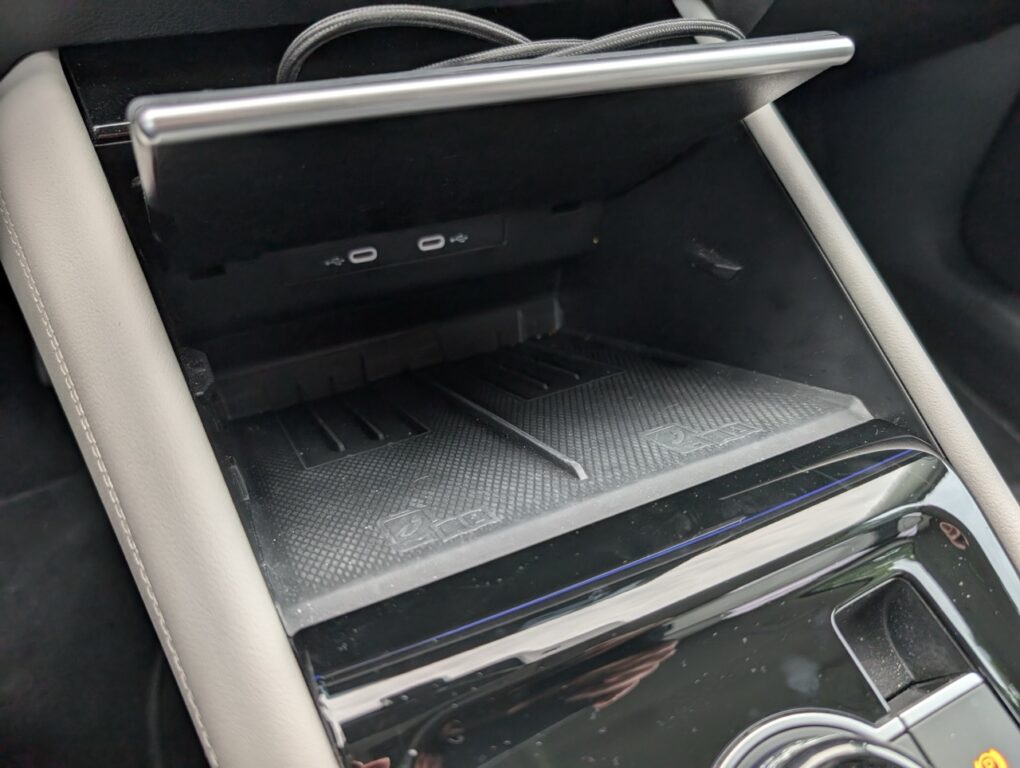
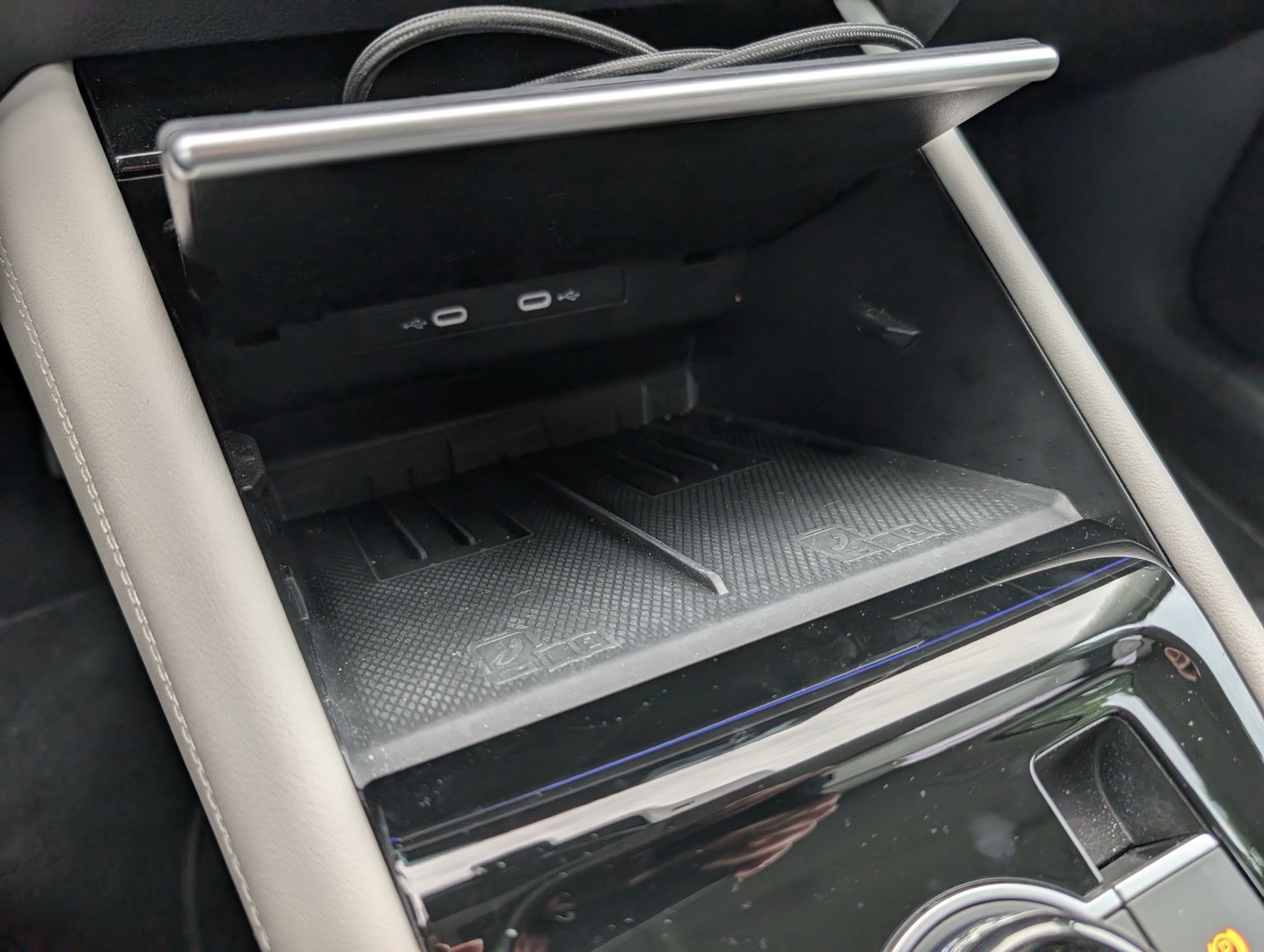
Inside, the Tayron once again showcases typical VW quality, combined with some well-executed details. The real wood trim on the dashboard looks particularly elegant, lending the cockpit a warm and sophisticated feel. The ErgoActive seats are among the highlights: they are not only comfortable but also offer ventilation, heating, and a massage function. While the massage function doesn't quite reach the level of the first-class system in the ID.7, it still provides added comfort on long journeys. Conveniently, both the driver's and front passenger's seats have memory buttons. The ambiance is further enhanced by harmonious ambient lighting. The recess on the passenger side is noticeable; VW could have easily integrated a passenger display here. Instead, there's an illuminated piano black inlay with the Tayron logo, and in the R-Line version, even an illuminated R logo. Numerous thoughtfully designed storage compartments round off the successful overall impression and make the Tayron a modern and comfortable family SUV.
-

- Picture: TechnikNews

-
- Picture: TechnikNews
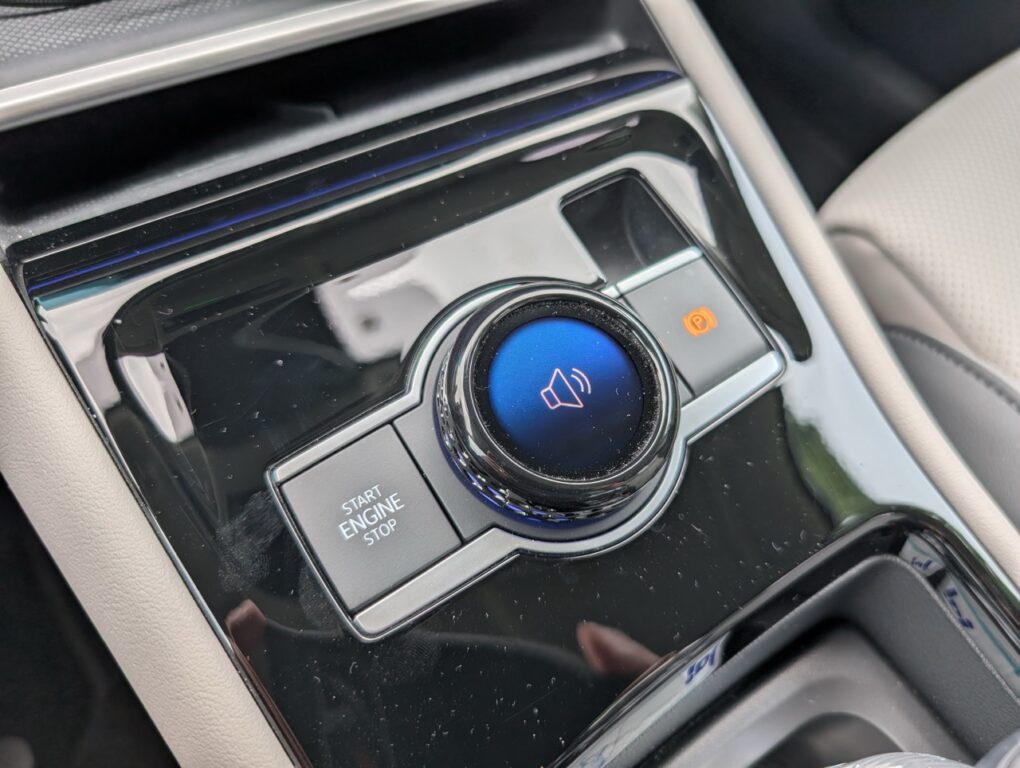
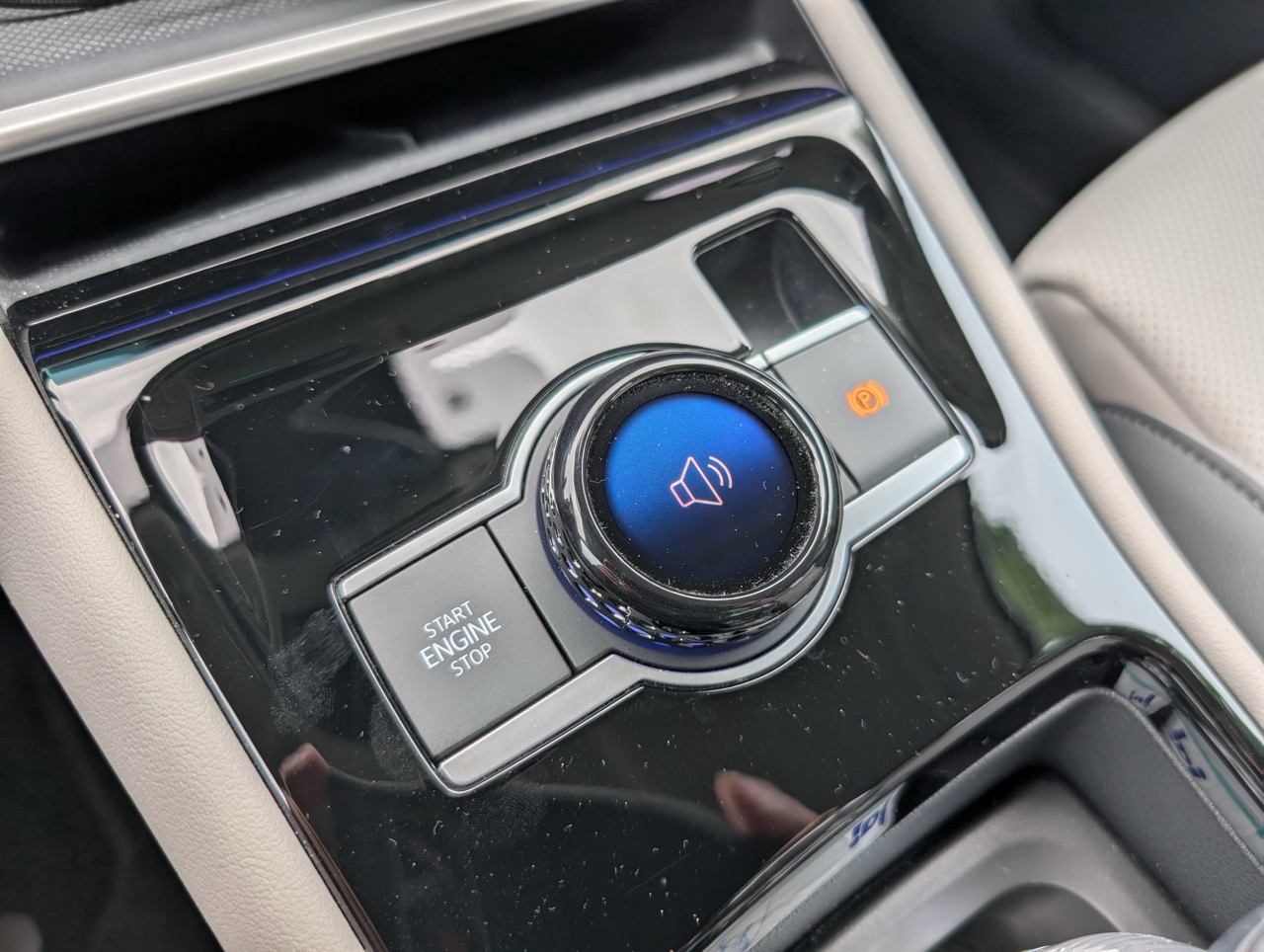
The new rotary dial, also known as the "Driving Experience Control," is a nice addition to the center console. It will now be available in several VW models. Currently, it allows for quick and physical adjustment of the vehicle's volume, driving modes, and ambient lighting. This worked quite well during our test.
The real keys are back.
A real highlight: VW is finally bringing back proper buttons to the steering wheel in the Tayron. With a clearly defined pressure point and backlighting, they feel high-quality and are significantly more intuitive to use than the much-criticized touch surfaces. For many, this will likely be the biggest improvement since the introduction of ID. Software 4.0; even though it's officially called something different in the Tayron, it's technically the same system.
Infotainment: Not much new, but useful details.
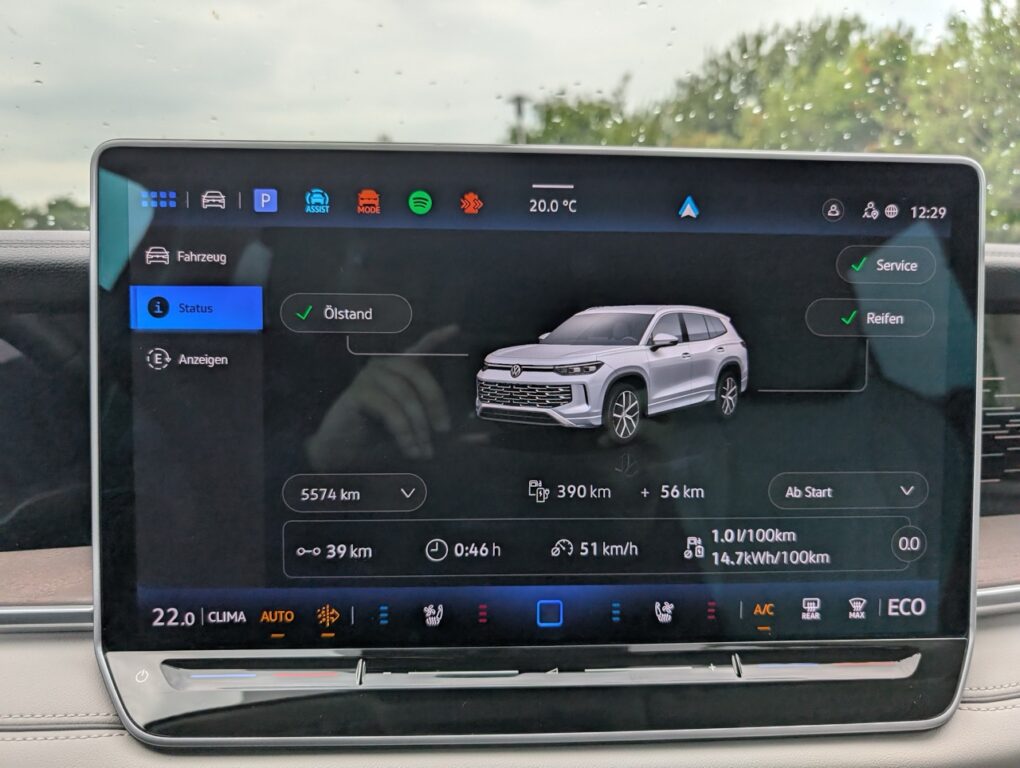
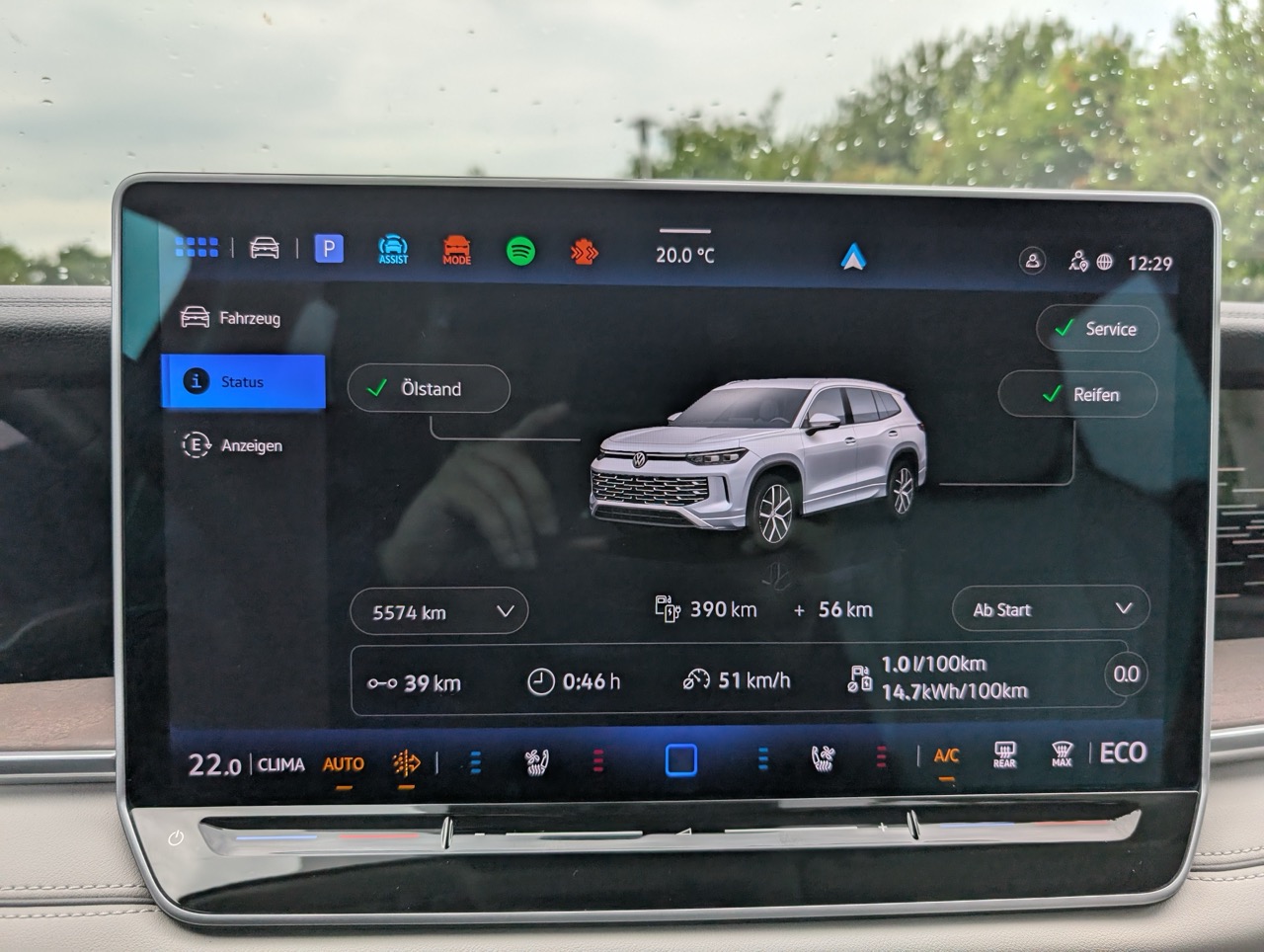
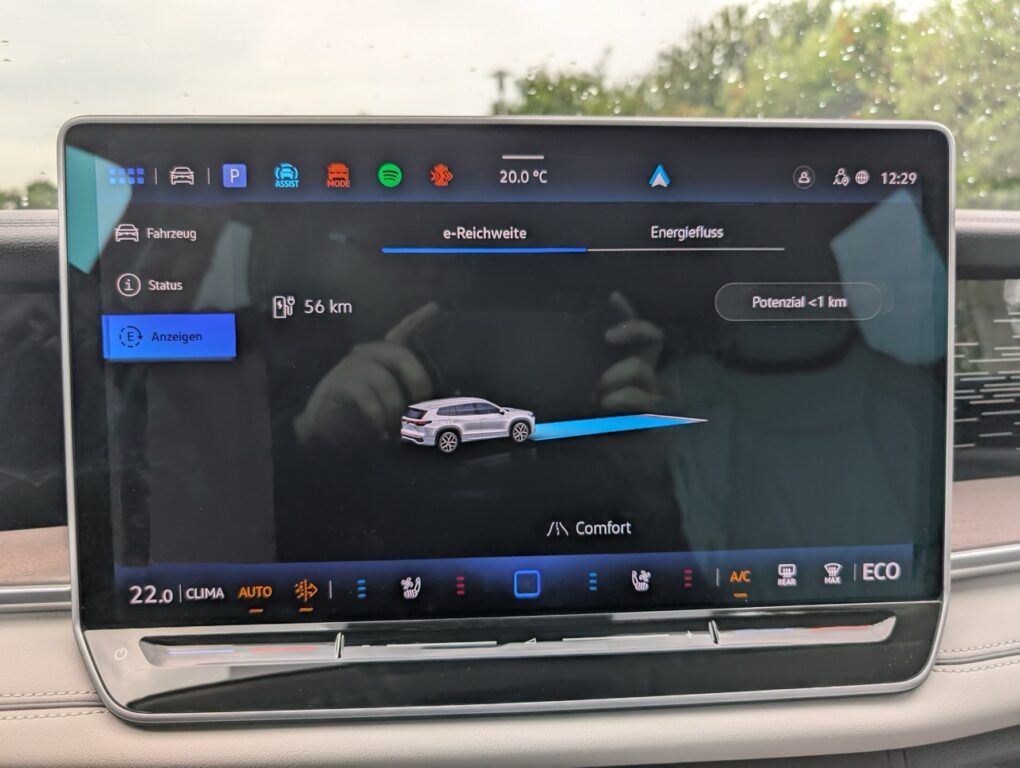
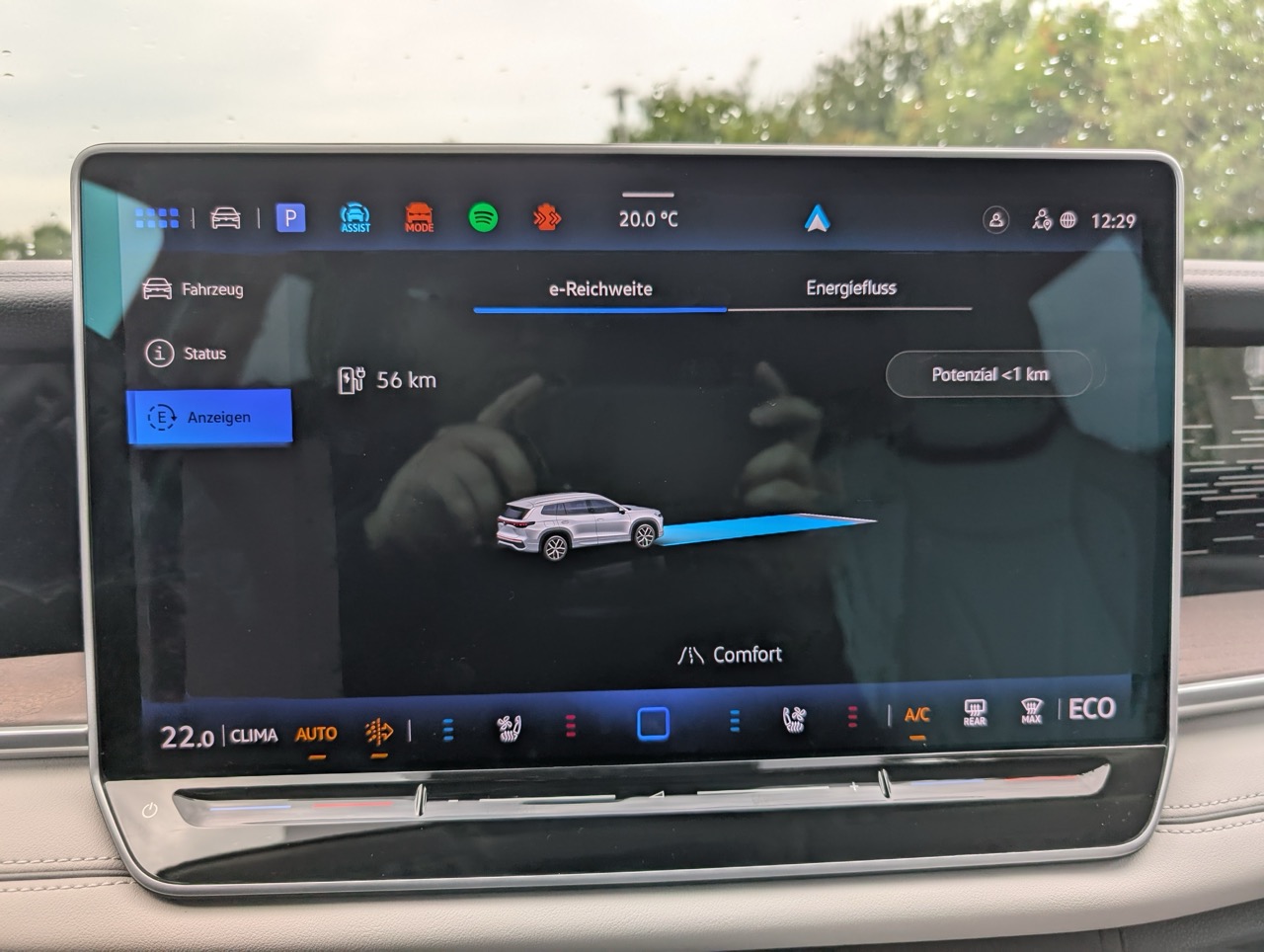
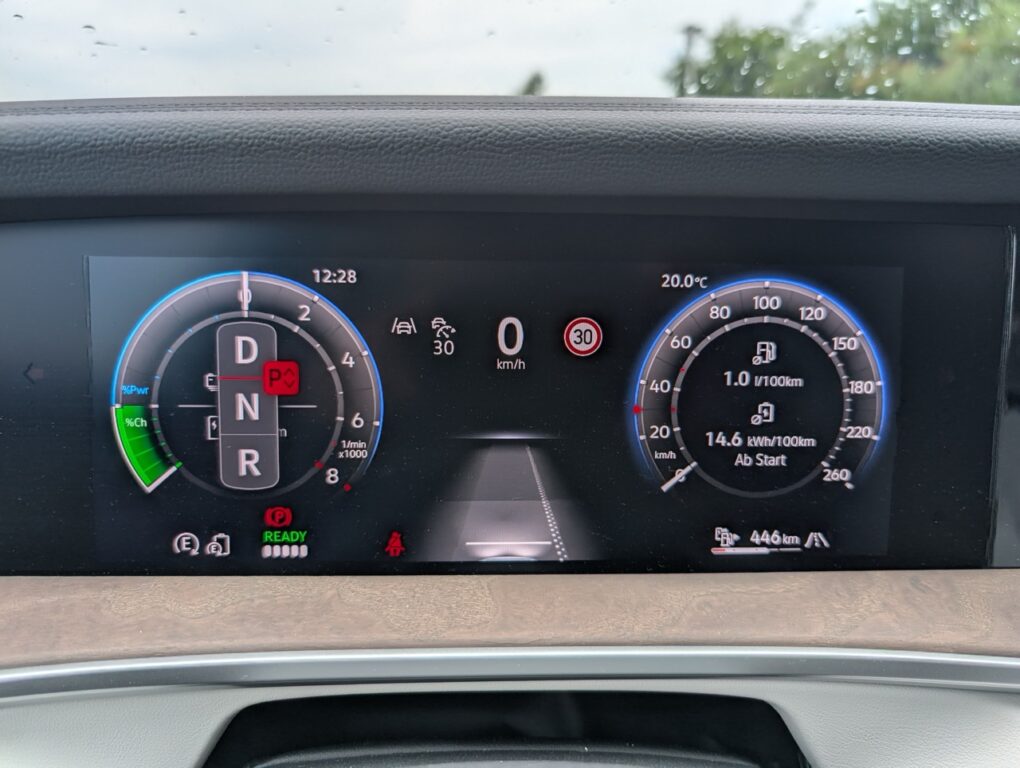
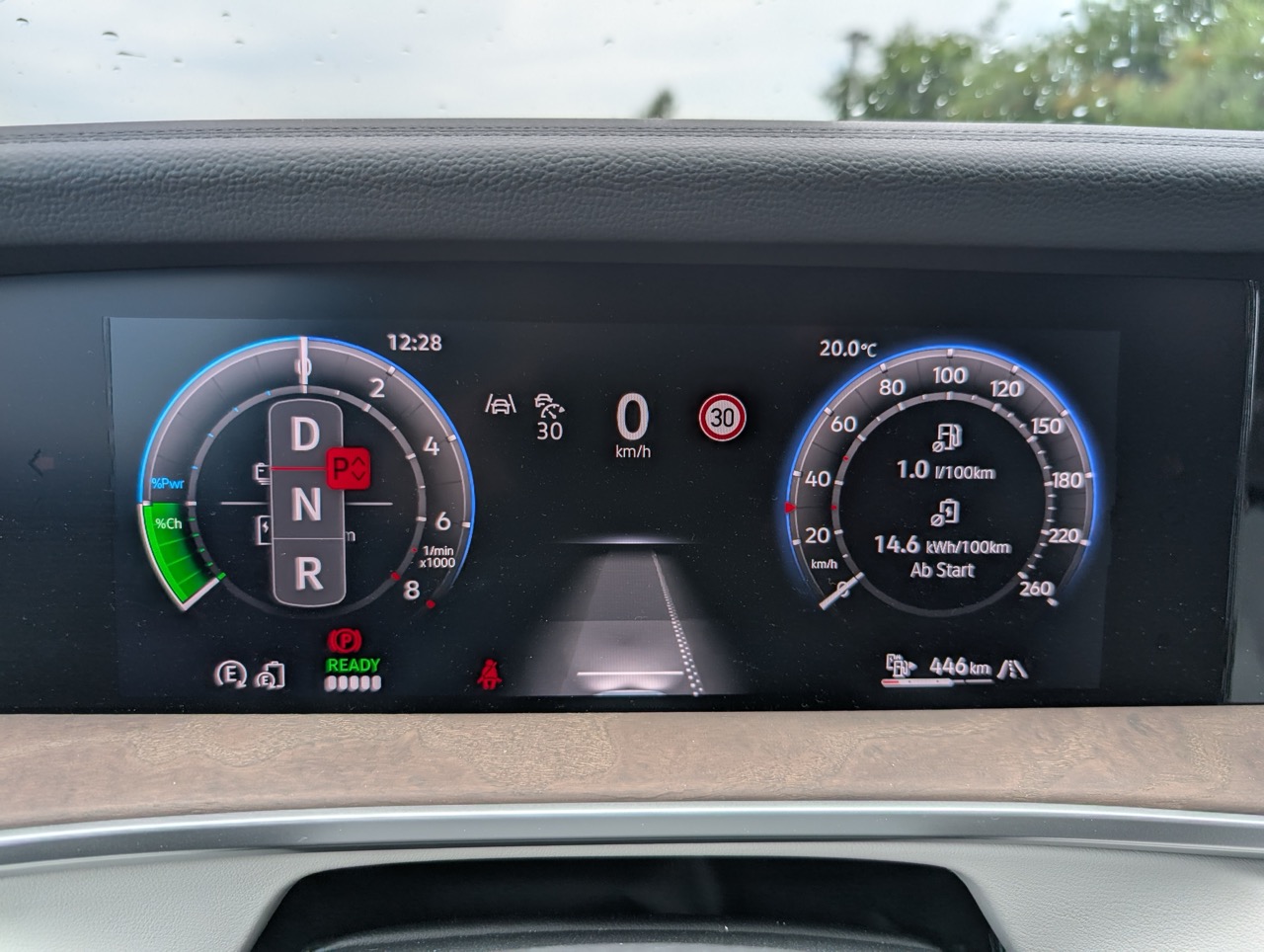
The Tayron's infotainment system is based on the proven VW ID. Software 4.0, which we already know from the newer ID. models. This means clear menu navigation, smooth animations, and intuitive operation via the large touchscreen. In addition to familiar features such as navigation, media control, and online services, the PHEV offers special tiles that inform the driver about current consumption, remaining electric range, and the charging status. The efficiency optimizer is particularly useful: it provides real-time tips on how to drive even more economically and maximize electric range, for example, through predictive braking, efficient acceleration, or optimized climate control. In this way, the Tayron combines comfort with smart support for an energy-efficient driving experience.
-
- Picture: TechnikNews
-
- Picture: TechnikNews
-
- Picture: TechnikNews
-
- Picture: TechnikNews
Those who don't need a 15-inch (approx. 38 cm) infotainment screen can opt for the 12,9-inch (approx. 33 cm) display in the Tayron at no extra cost. This is usually more than sufficient.
The Tayron eHybrid drives very smoothly and confidently, always conveying a sense of security and composure. The optional DCC adaptive chassis control performs exceptionally well, ranging from extremely comfortable in Normal mode to noticeably firm in Sport mode. For those who prefer an even more personalized driving experience, the Personal Driving Mode offers further customization options.proThere are many fine-tuning options to tailor the driving experience precisely to individual preferences. The driver assistance systems are also superbly implemented: With the Travel Assist The Tayron almost drives itself – a clear recommendation to order, as with any vehicle from the VW Group.
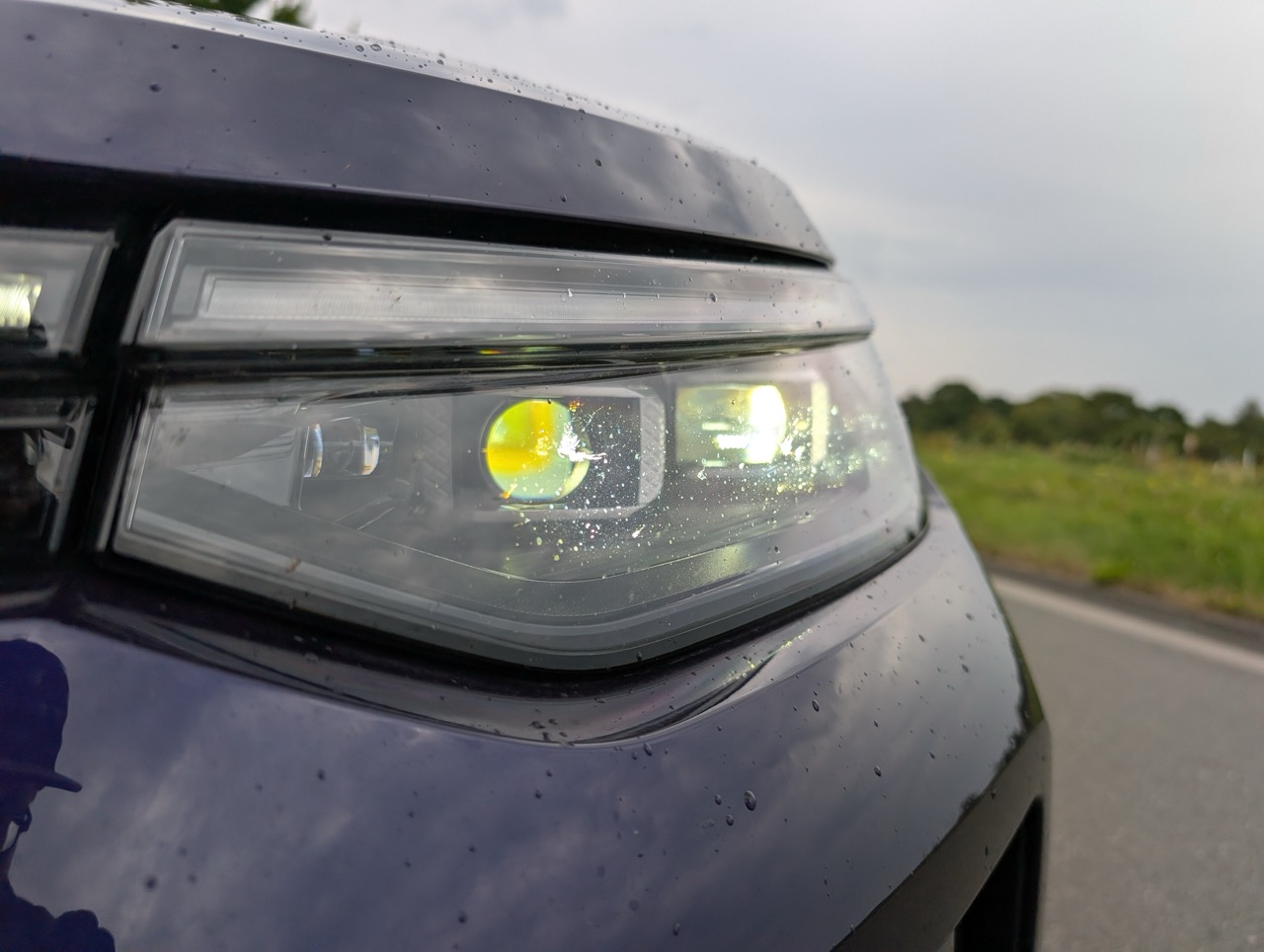
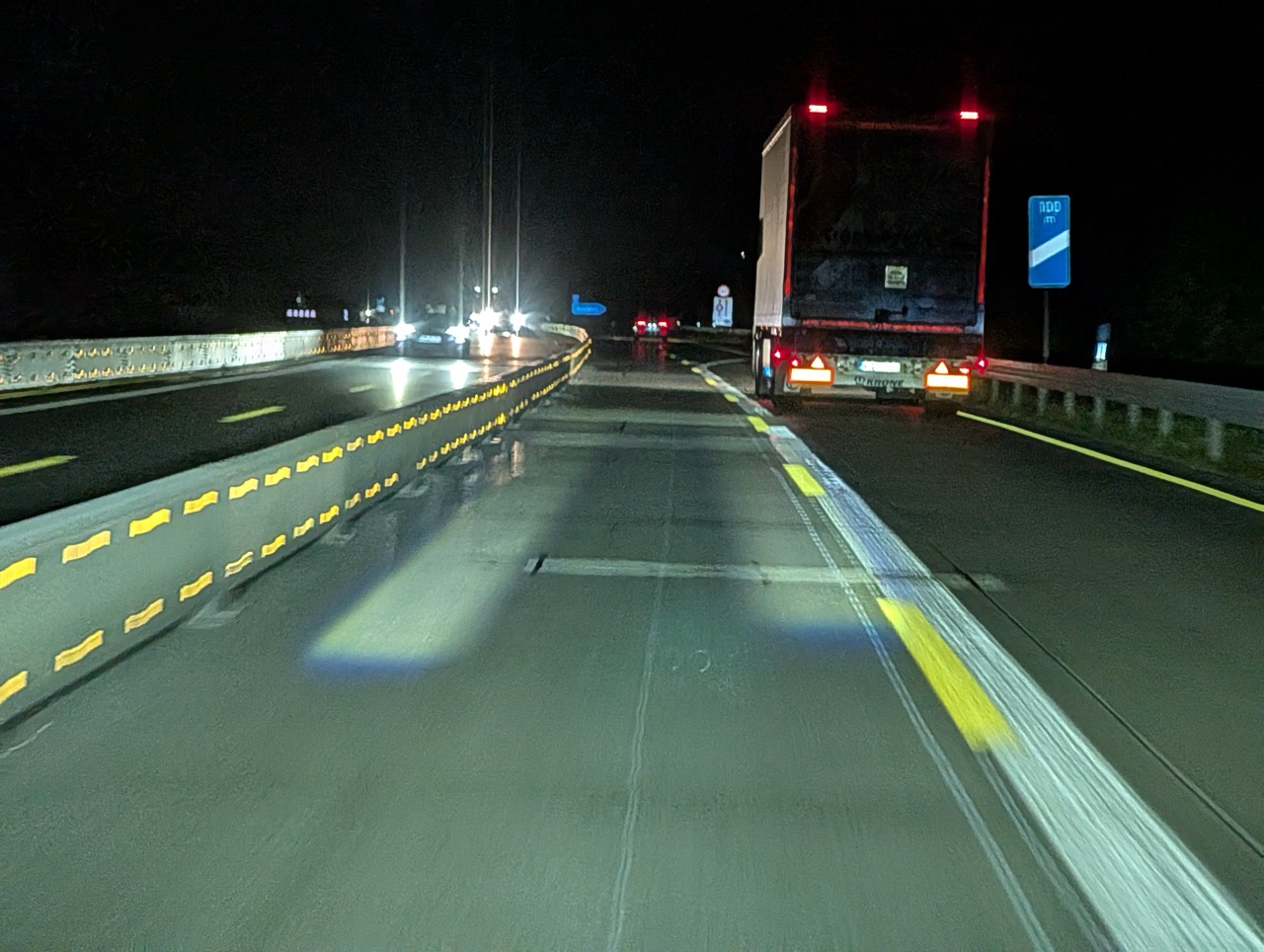
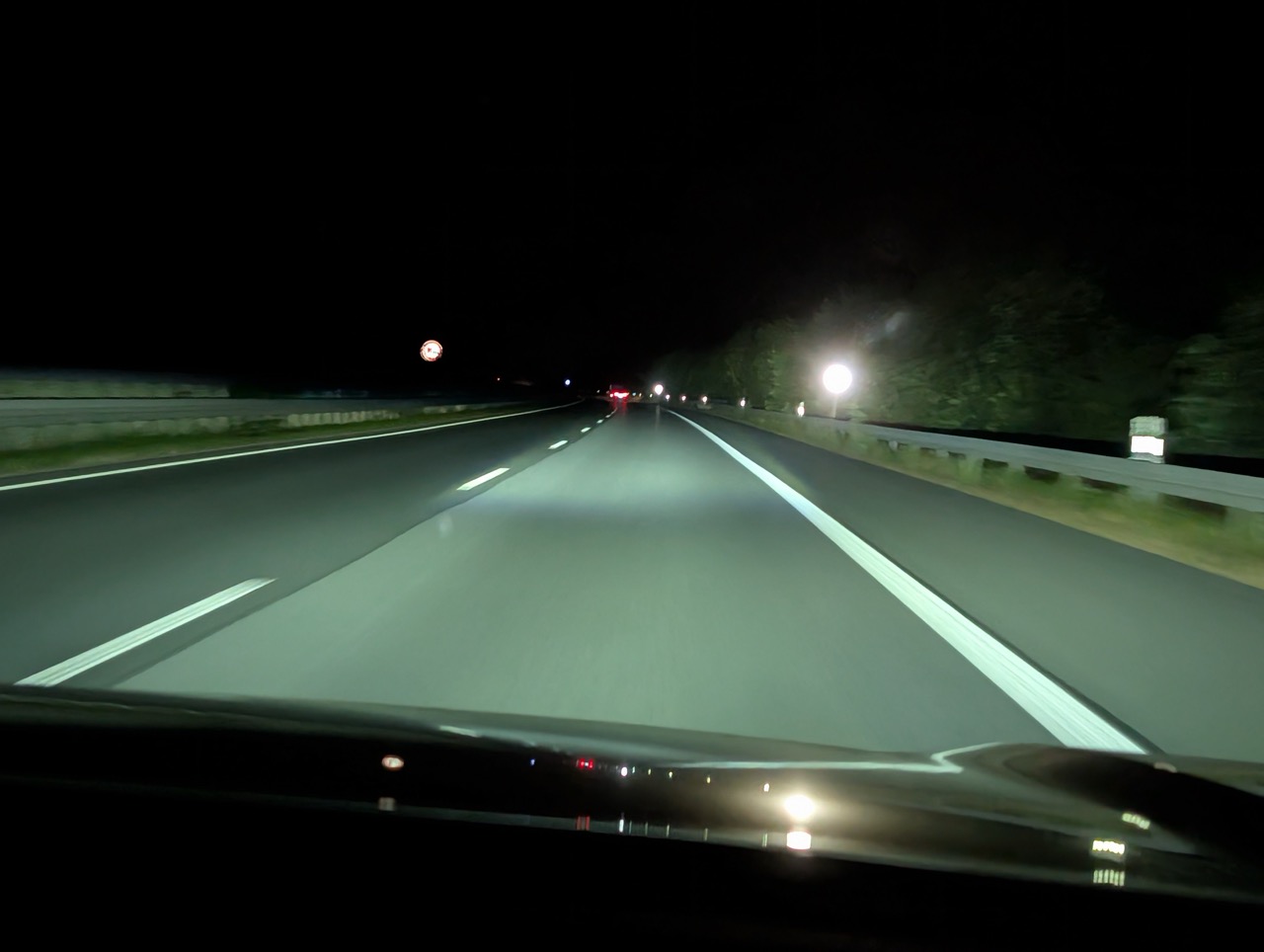
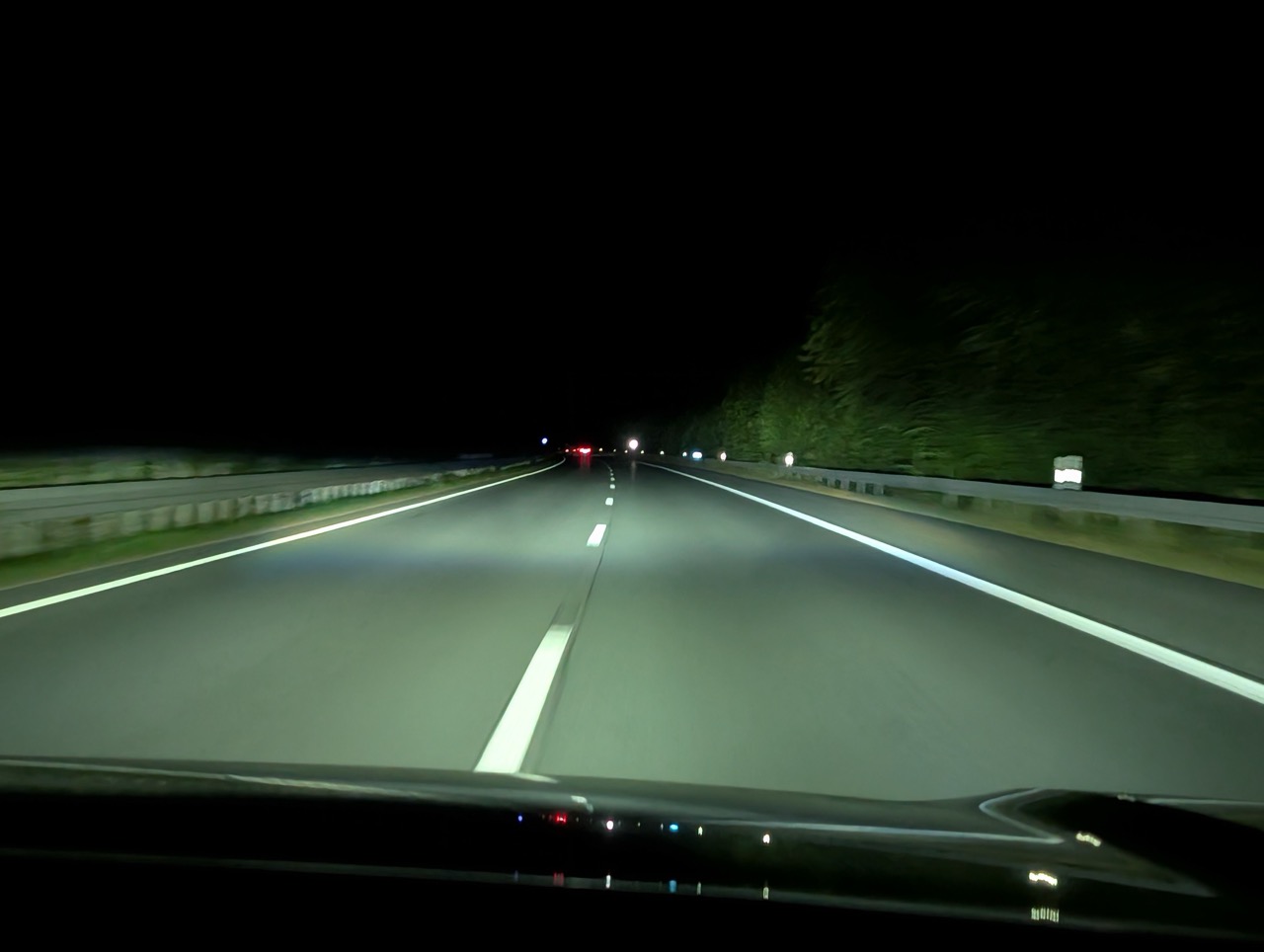
HD matrix light
A real highlight is the latest generation of the conventional matrix LED system, now called HD matrix lightA particularly practical feature is the new construction site lighting, which illuminates the entire width of the vehicle, including the mirrors. This makes it much easier to judge how to stay in narrow lanes. On the motorway, the technology truly shines. The oncoming lane is completely masked out, eliminating the need for flashing headlights from truck drivers. At the same time, the driver's own lane is more clearly highlighted by an additional beam of light, noticeably improving visibility and safety. We found this to be a definite safety benefit on nighttime motorway journeys, while other passengers considered it more of a gimmick. What do you think of this new feature? Let us know in the comments below this report.
Consumption: Good, as long as the battery is charged.
When driving in hybrid mode, the fuel consumption is around 3 liters per 100 km, which is really efficient for a vehicle of this size. However, as soon as the battery is empty, consumption increases significantly; the Tayron then quickly consumes 9 to 10 liters per 100 km. In purely electric mode, consumption is around 23 kWh / 100 kmIt's important to be aware that a plug-in hybrid is always carrying either an empty battery or the heavy combustion engine unless both systems are working together optimally. Therefore, purchasing one is only truly worthwhile if you regularly use both drive modes in combination and consistently charge the car.
Battery management: A meaningful improvement.
VW has deliberately eliminated a charging mode via the combustion engine in its new PHEV models. This mode was already inefficient from an energy perspective and offered little real added value. VW's decision to do so seems all the more logical, as it will now strongly encourage company car drivers, who often didn't even bother to unpack their charging cables, to actually charge their vehicles at charging stations.