
Chessnut Move Review: The Chessboard of the Future
A TEST REPORT from Benedict Behring  on July 29, 2026, 9:00 pm | Write a comment
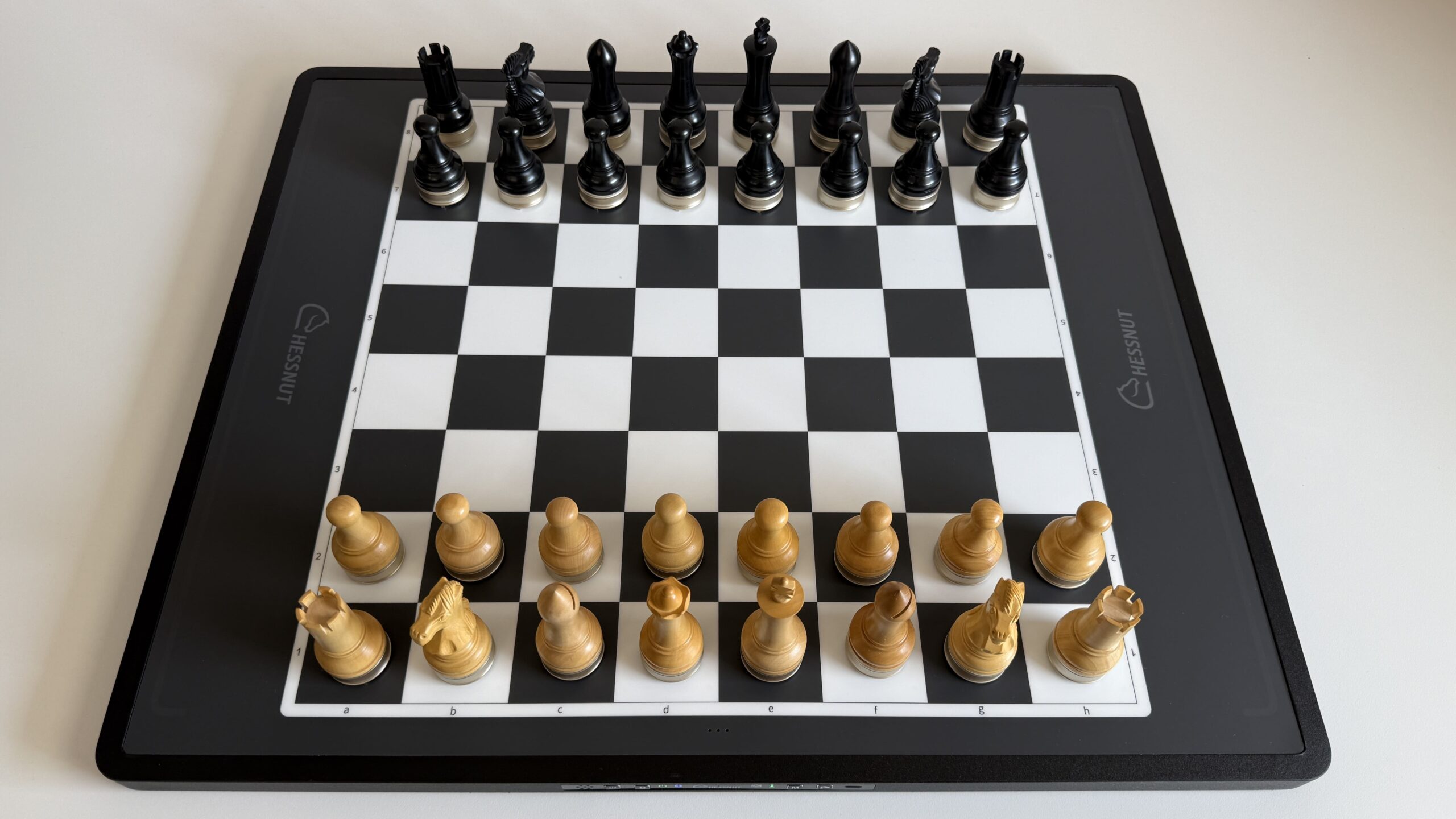
The digital age stops for nothing, not even inventions whose origins date back thousands of years. This is particularly evident with the Move chessboard from Chessnut. Manually placing or even setting up pieces is now a thing of the past. In this report, I'll show you what happens when you combine an old board game with new technology.
tl; dr
The Chessnut Move is more than just a cool gadget. For me, it's the biggest revolution in chess since the introduction of time clocks around the 19th century – and Chessnut also has a new product related to that, which we might introduce to you later. The current price of at least $719,00 is in line with the overall impression. The pieces are of good quality, the chessboard is constantly updated, and even the unboxing conveys a premium feel. The drawbacks in our test were a slightly detached side panel and a very rare instance of the pieces "deviating" from the Move. Software-wise, we would like to see the option to manually move the pieces when playing online against opponents or friends around the globe, and for the AI to be able to play against itself. Essentially, it would be a magical decoration for the home. The noise level of the moving pawns, rooks, bishops, and other pieces is around 52 dB during operation.
Unboxing
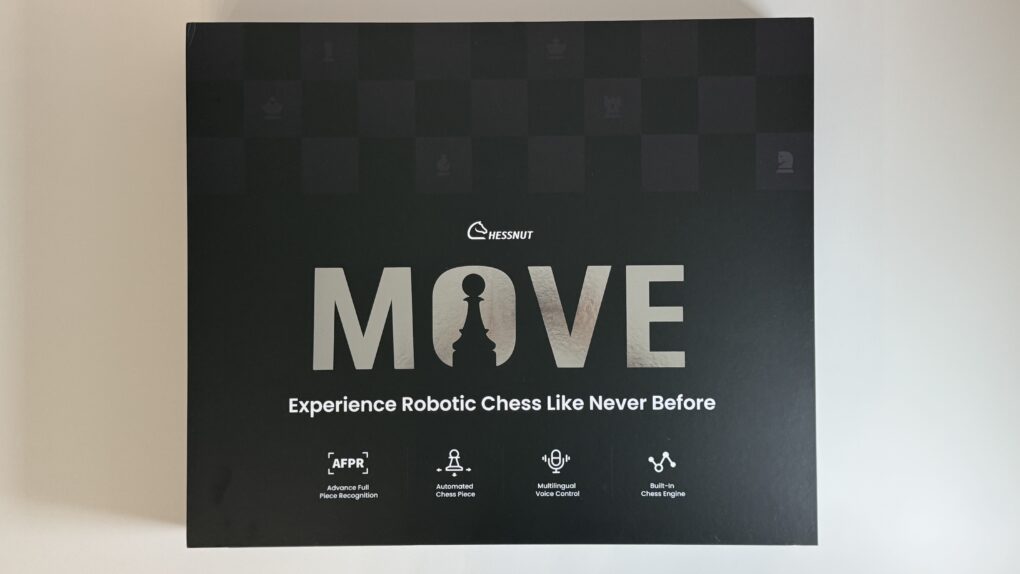
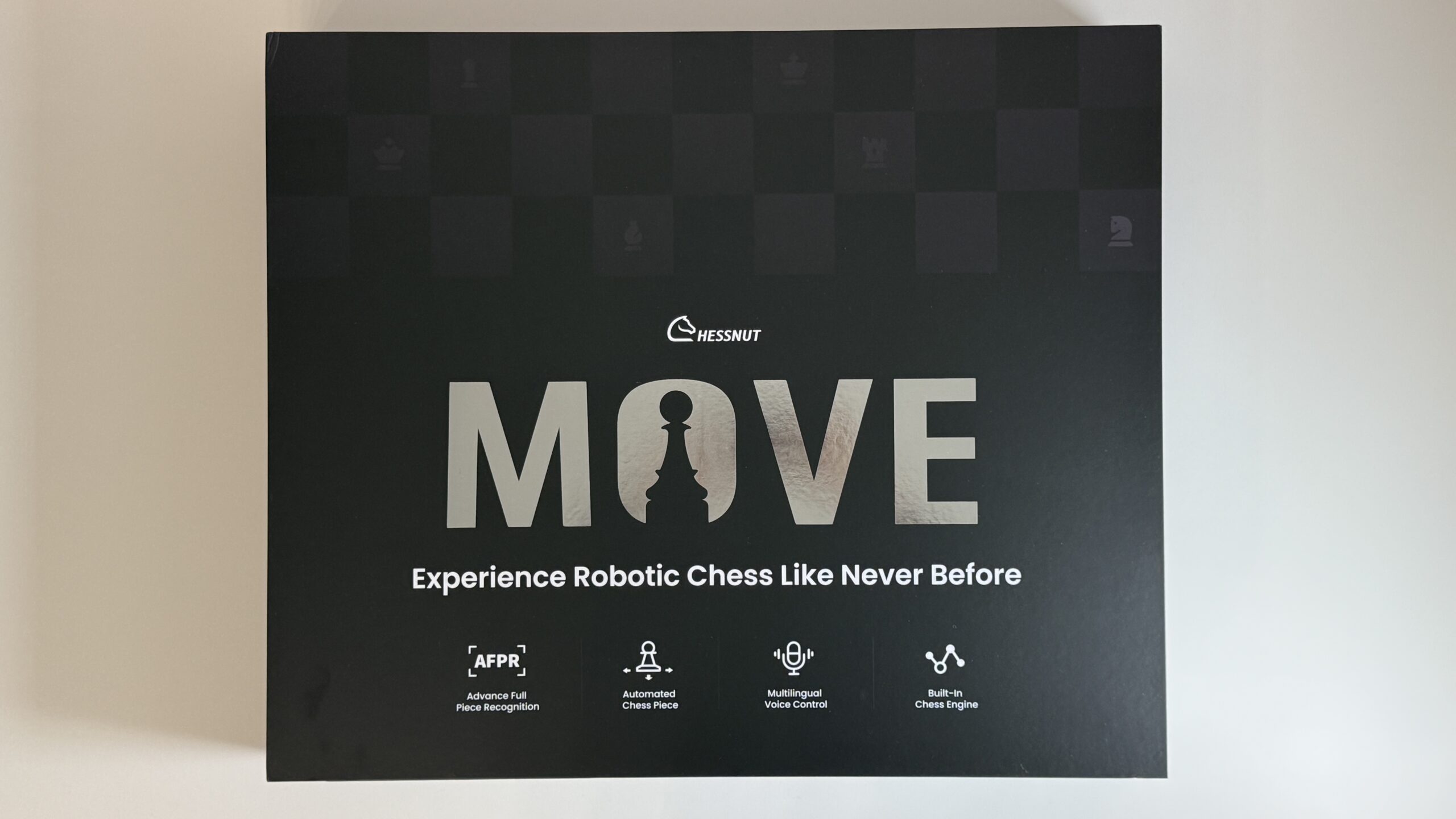
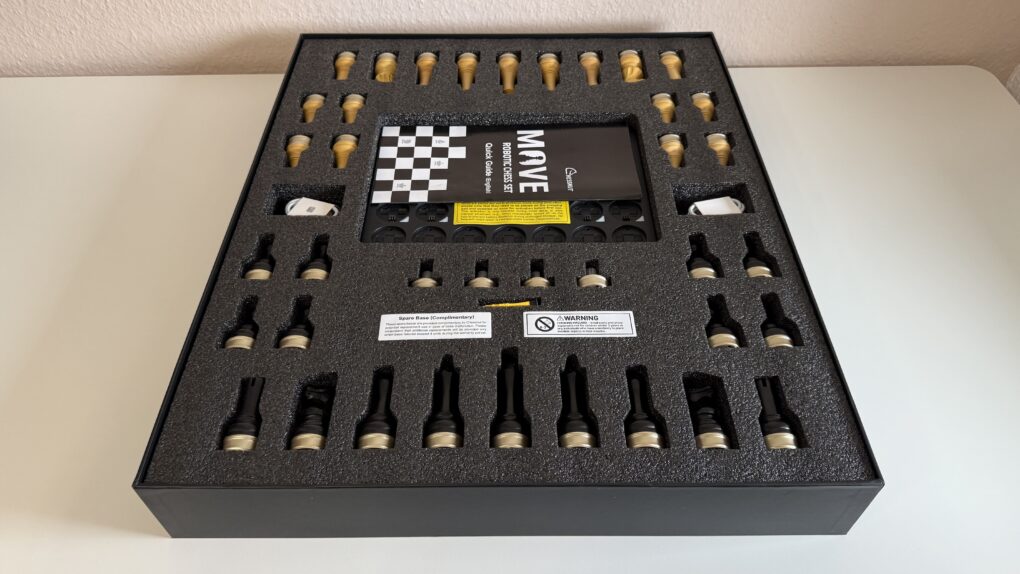
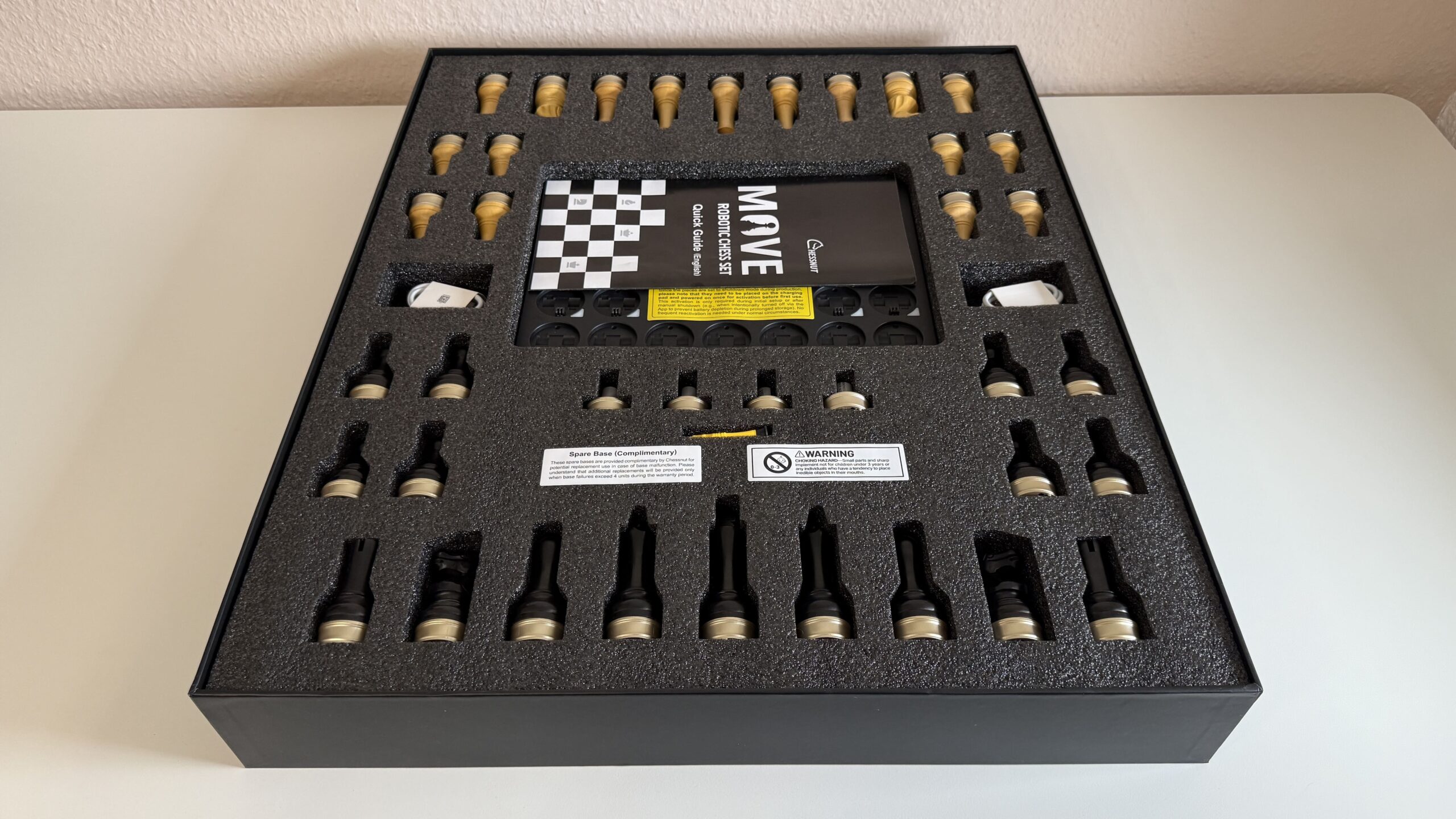
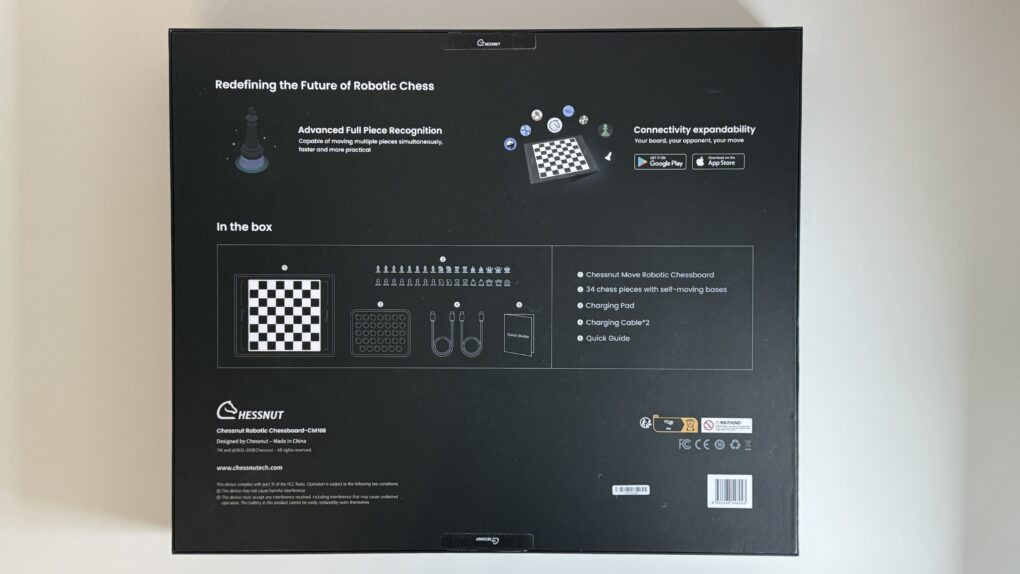
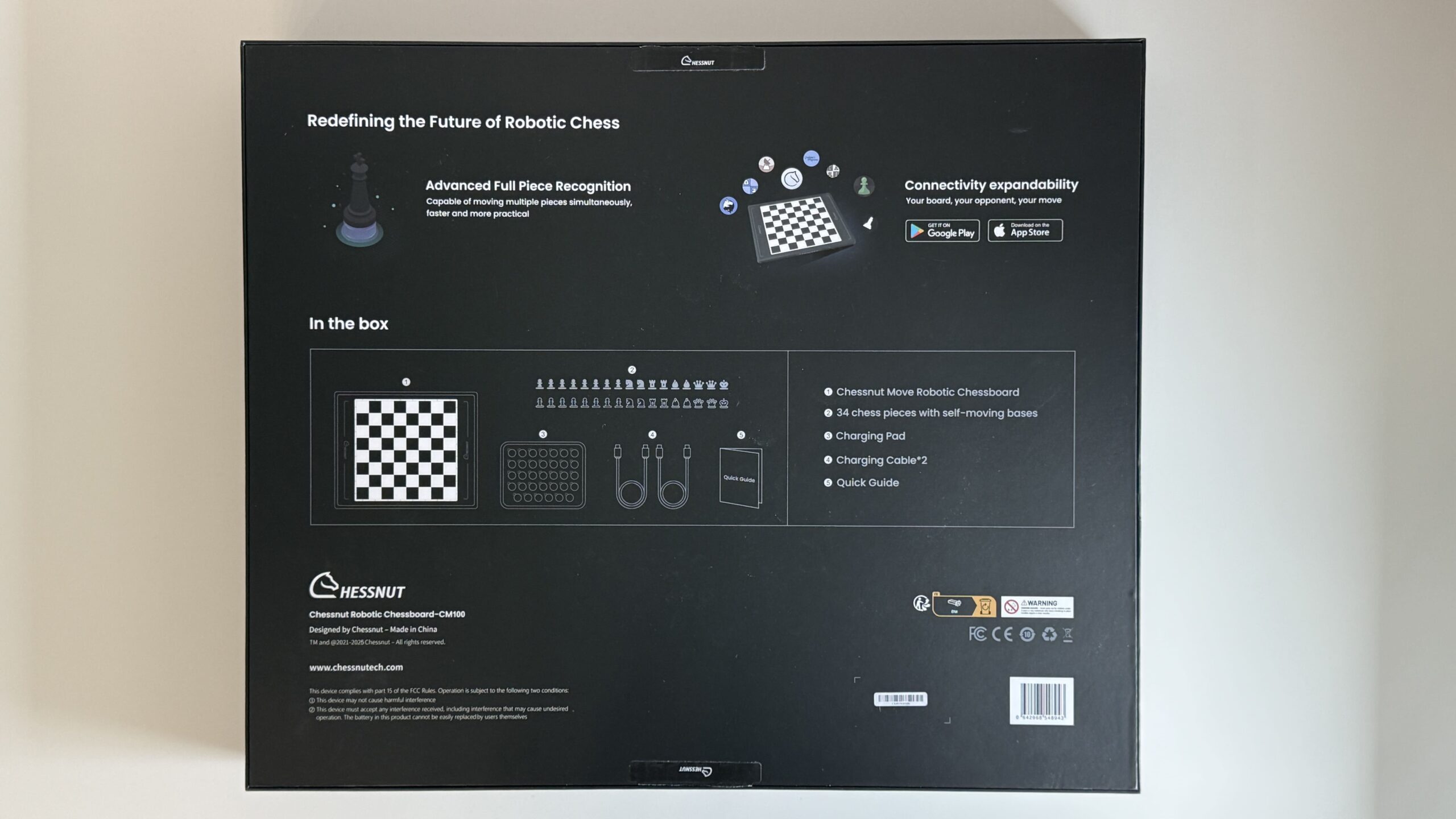
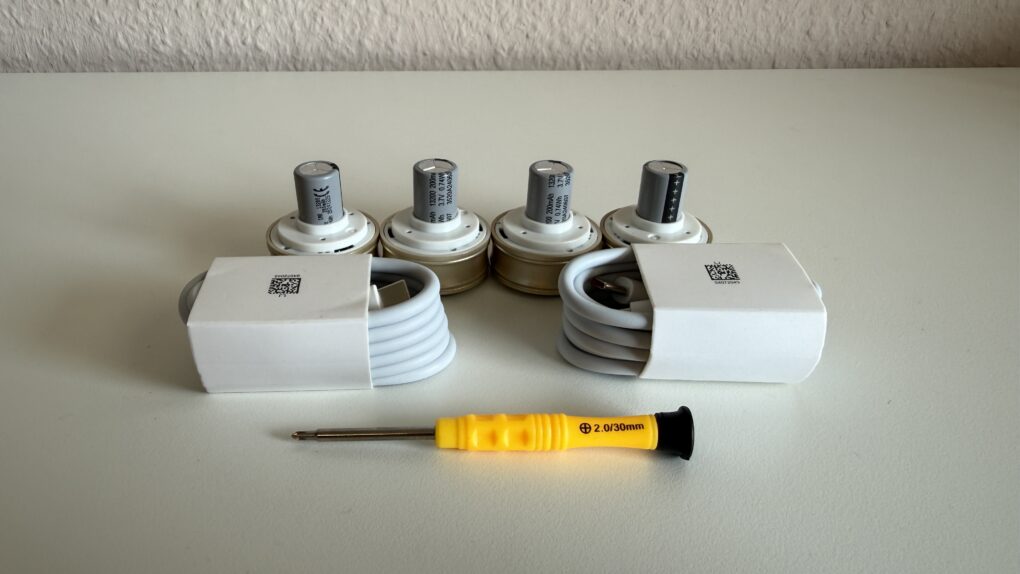
At first glance, I can honestly say the packaging is worthy of a product in this price range. The front features a glossy description of the product, followed by a brief explanation of its key features, and a subtle stylized chessboard in the background. The back is more minimalist, listing the contents. These include 34 chess pieces (2 queens) with 4 additional bases, the charging pad, the chessboard, two USB-C cables, a screwdriver, and a quick start guide in English.
-
- Picture: TechnikNews
-
- Picture: TechnikNews
-
- Picture: TechnikNews
Figures and charging pad
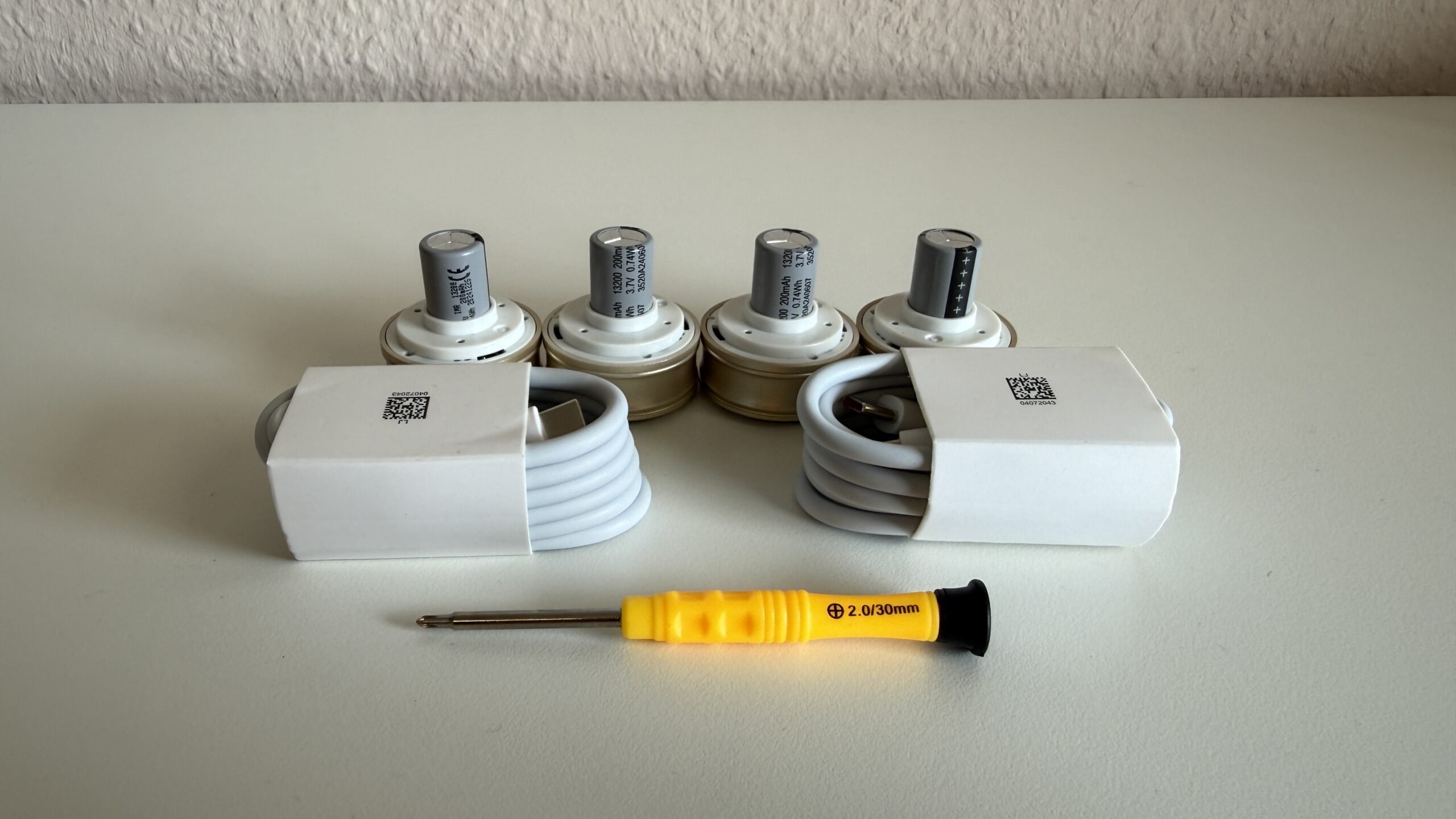
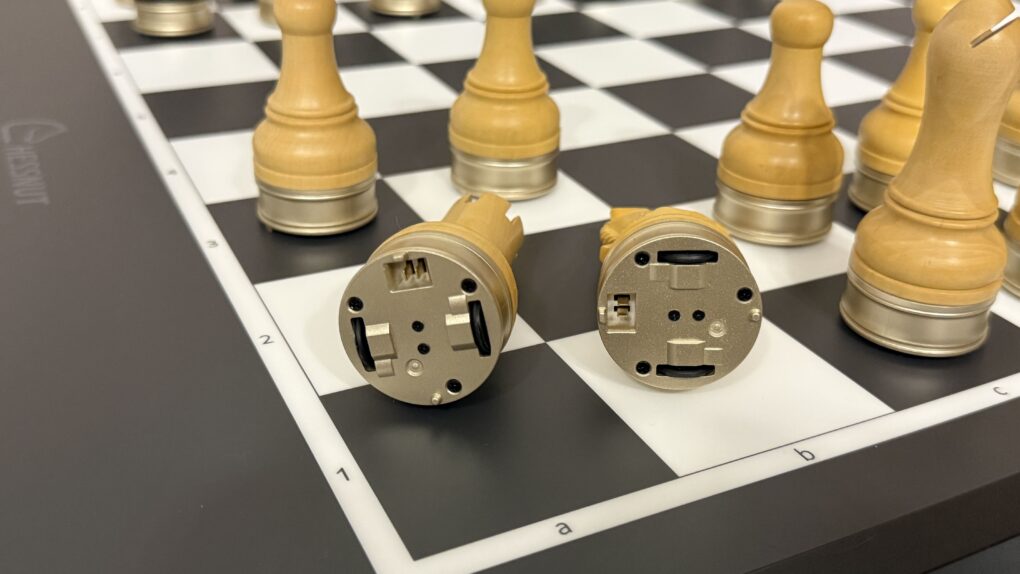
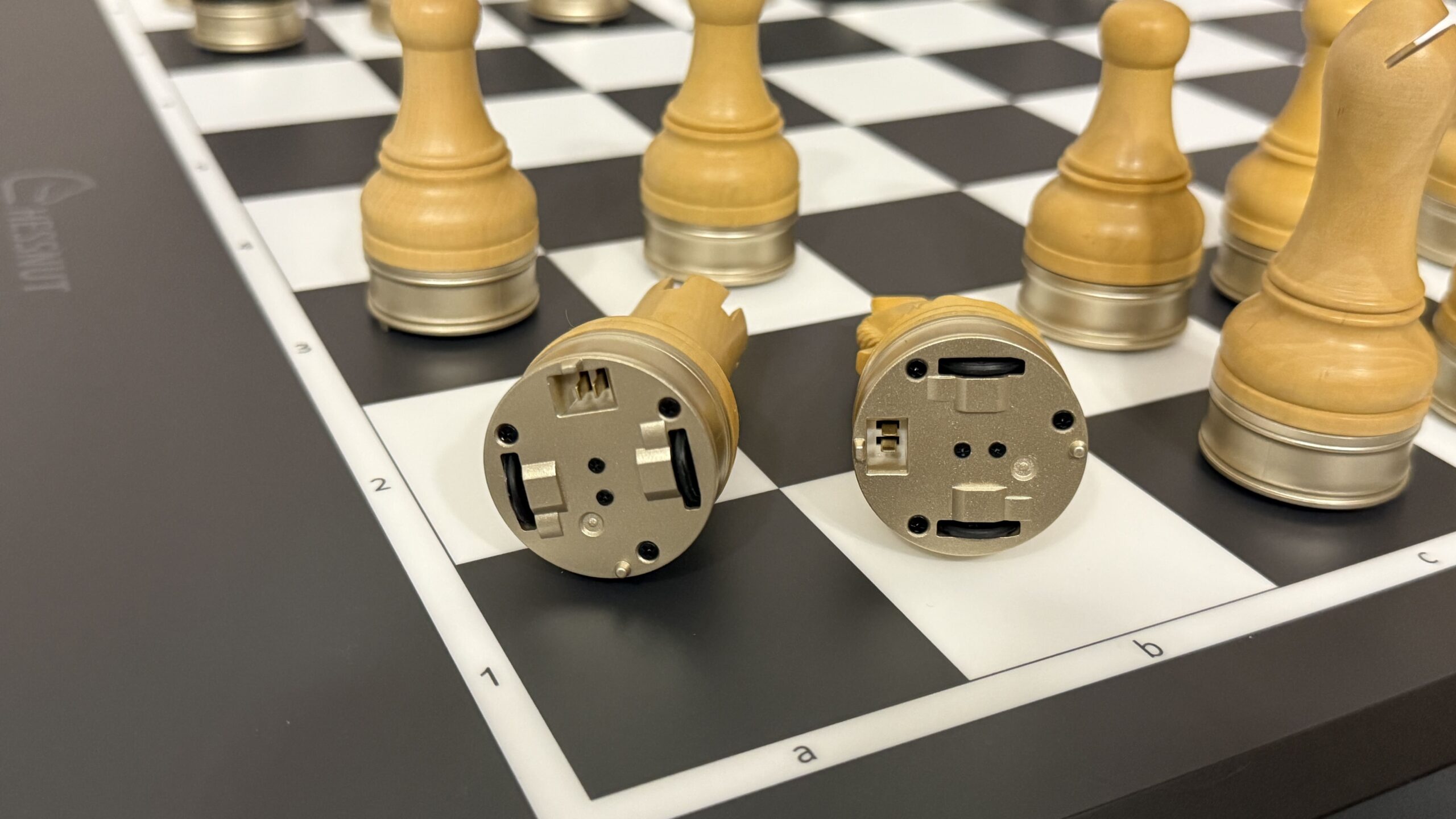
Opening the two seals on the box, the chess pieces are revealed. Each is individually packaged according to color and function. The pieces weigh very little but feel substantial when placed on the board. They always consist of two parts: the wooden piece itself and the attached base, which is charged and then moves on its two wheels. The base is, of course, an electrical component that will eventually wear out. For this reason, Chessnut includes four additional bases, onto which the piece can be quickly and easily attached with three screws. Then, the new base simply needs to be configured via the app.
-
- Picture: TechnikNews
-
- Picture: TechnikNews
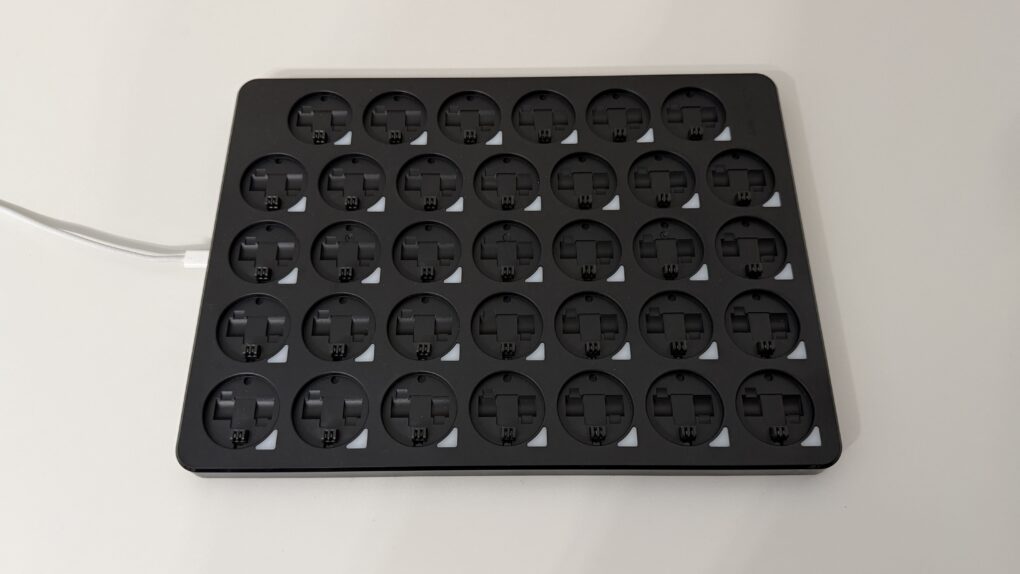
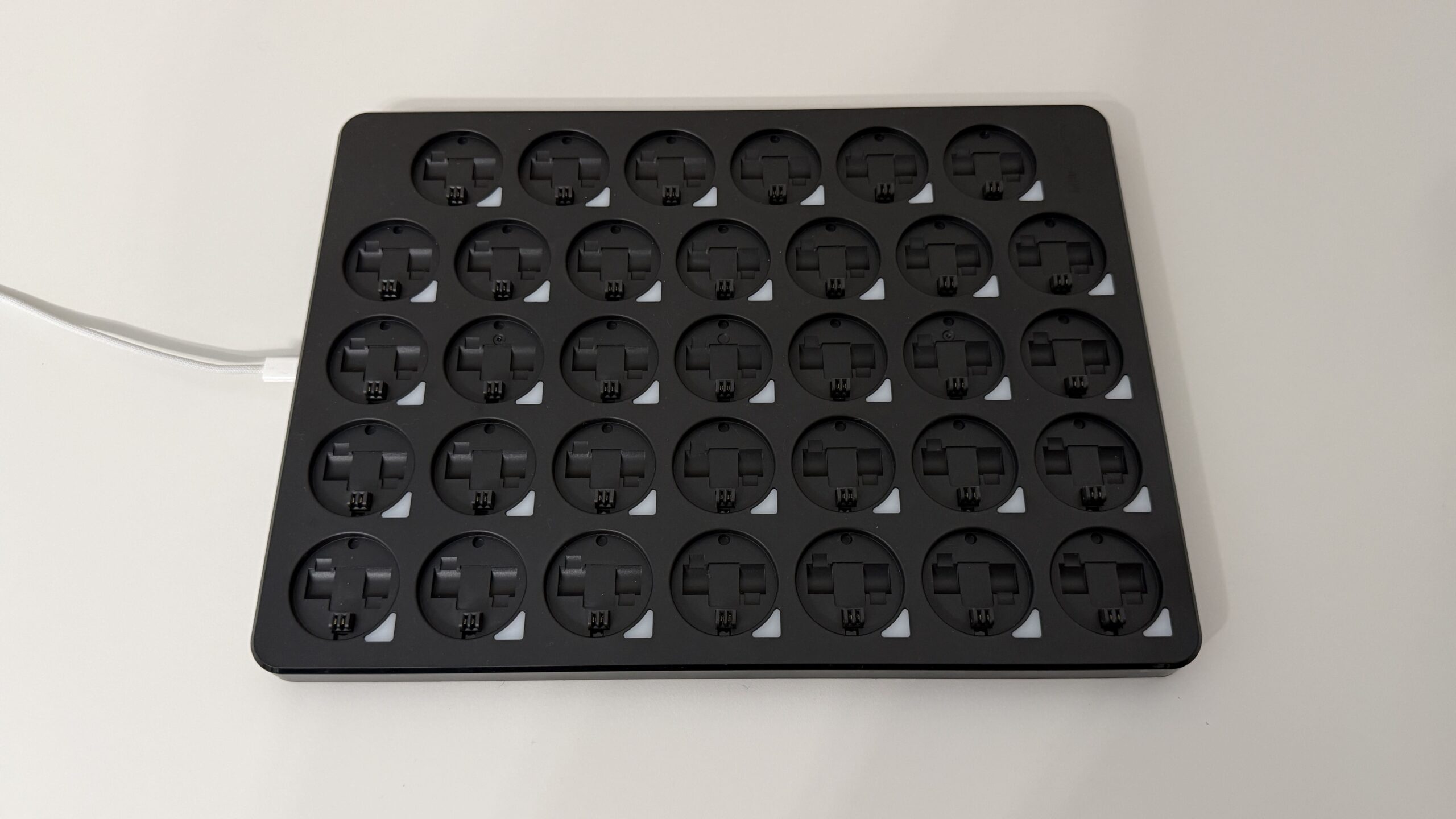
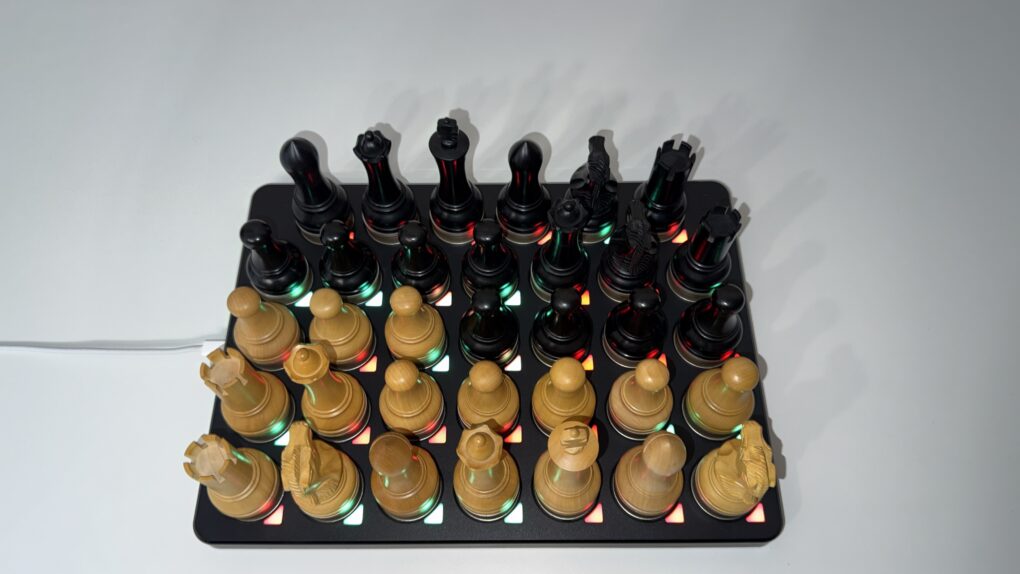
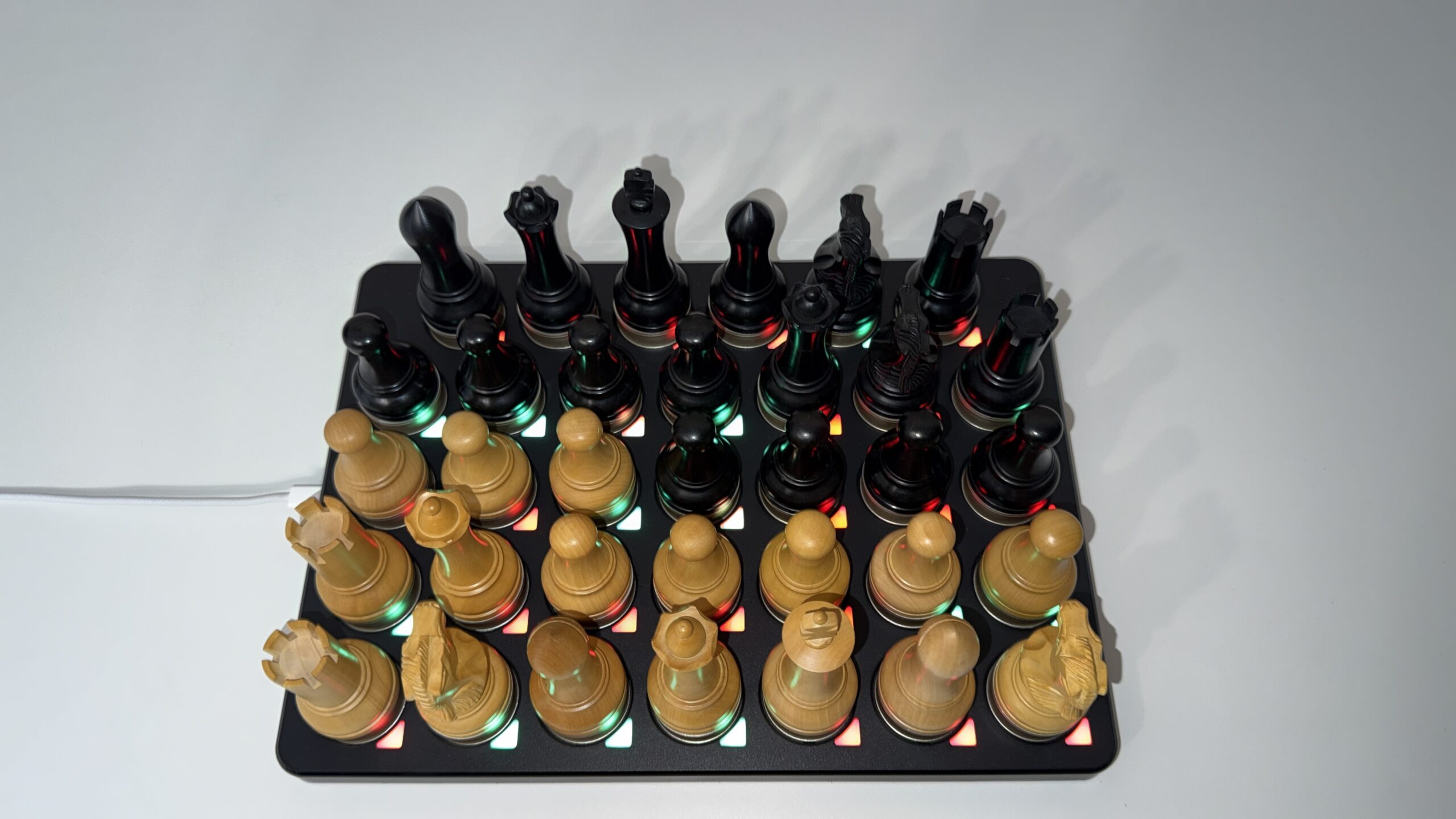
The charging pad, which blends seamlessly with the product's design, also delivers technically. All 34 chess pieces can be charged simultaneously. An LED in each slot indicates whether charging is in progress or complete. As a bonus, you'll occasionally be treated to a small light show. The only minor drawback is the interface between the charging pad and the piece bases. It's not wireless charging in the sense that you can place the pieces on it in any orientation. There's only one correct position, which is clear but a bit fiddly when trying to charge multiple pieces in quick succession.
-
- Picture: TechnikNews
-
- Picture: TechnikNews
The Move chessboard
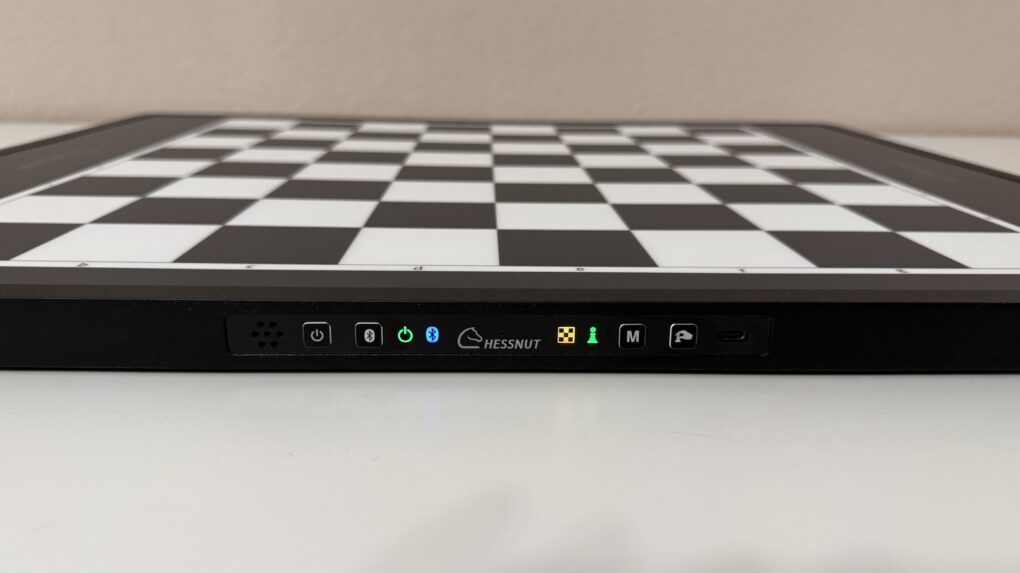
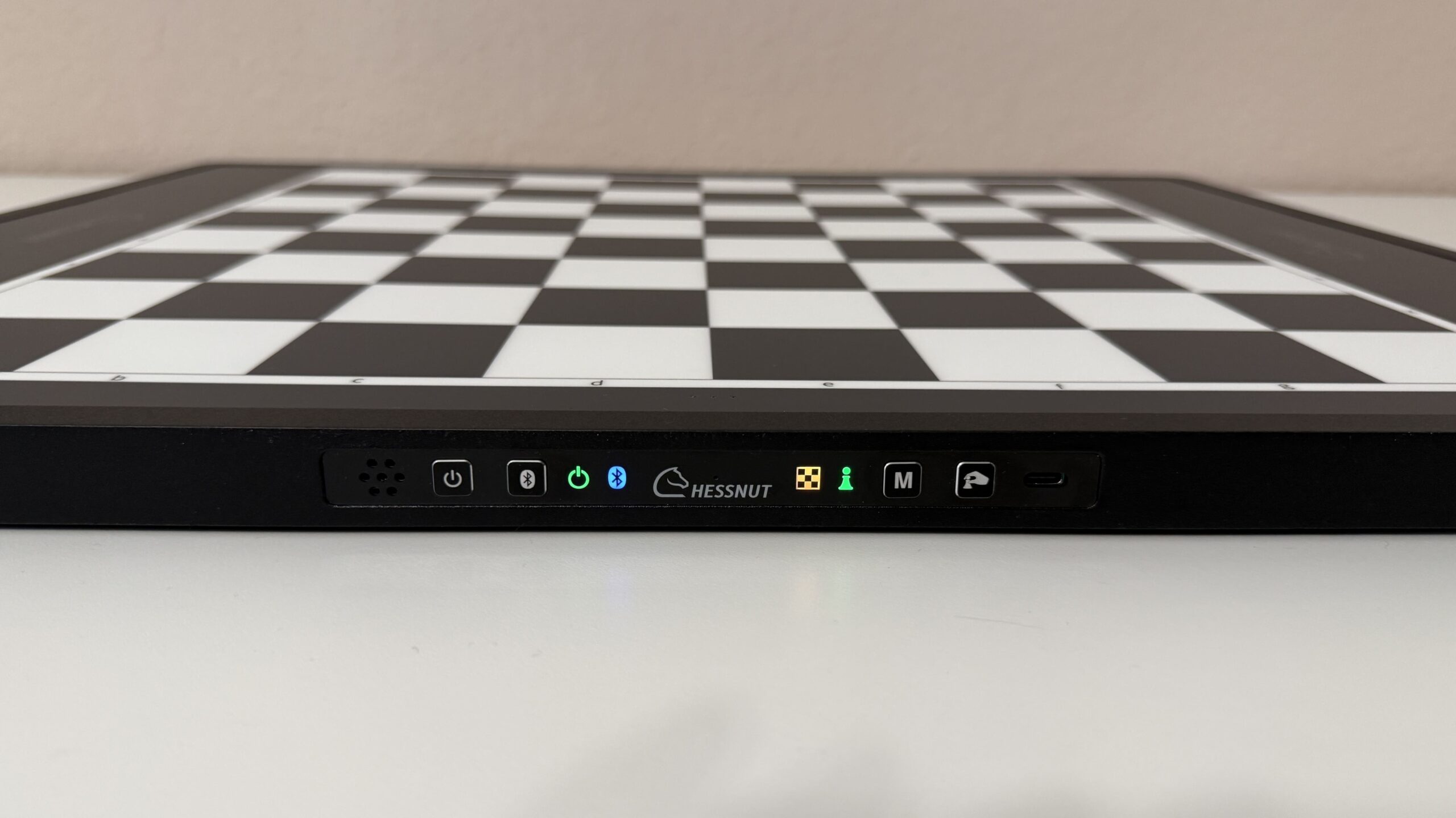
The core component is revealed beneath another protective layer, its buttons specially protected for shipping. There are four buttons in total. The two on the left switch the board and the Bluetooth connection on and off. The ones on the right have a few more functions:
M button:
- Select the side to play (both sides are also possible)
- Allows you to select the bot strength in 8 levels.
- End a game
- The chessboard symbol lights up when a bot game is being played.
Configuration button:
- Place all pieces in the opening position.
- The light with the farmer glows red when one or more figures have less than 20% charge.
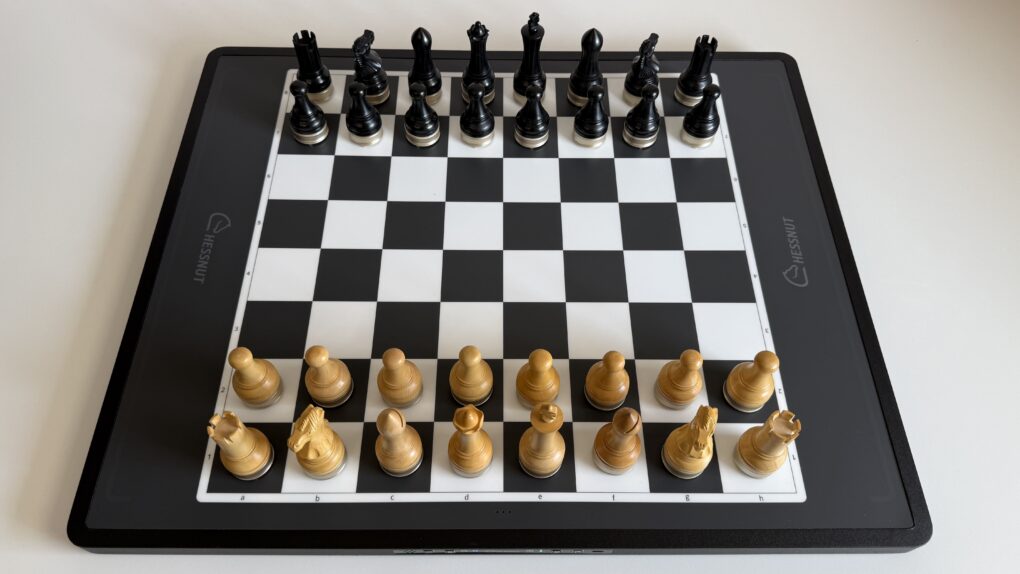
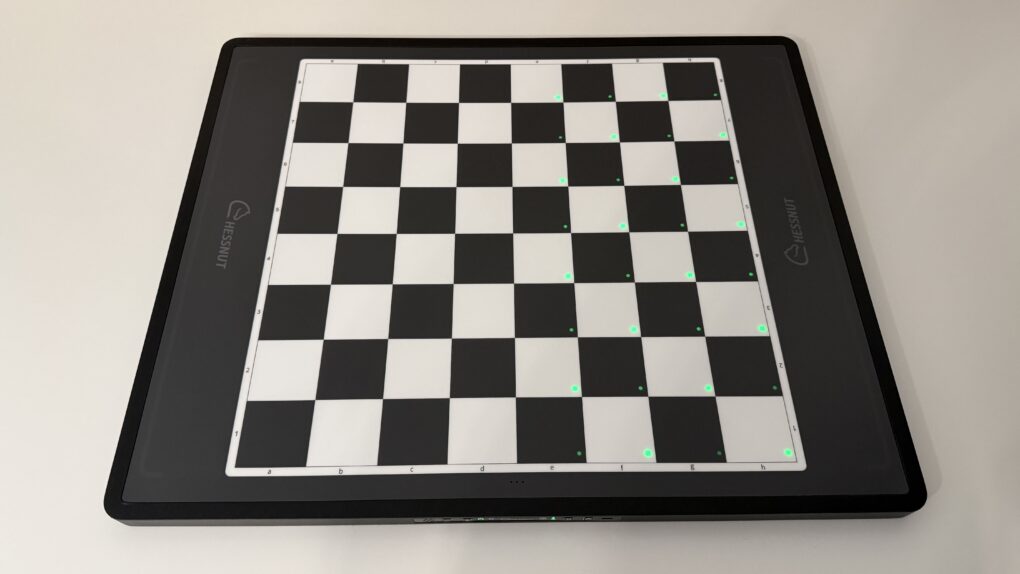
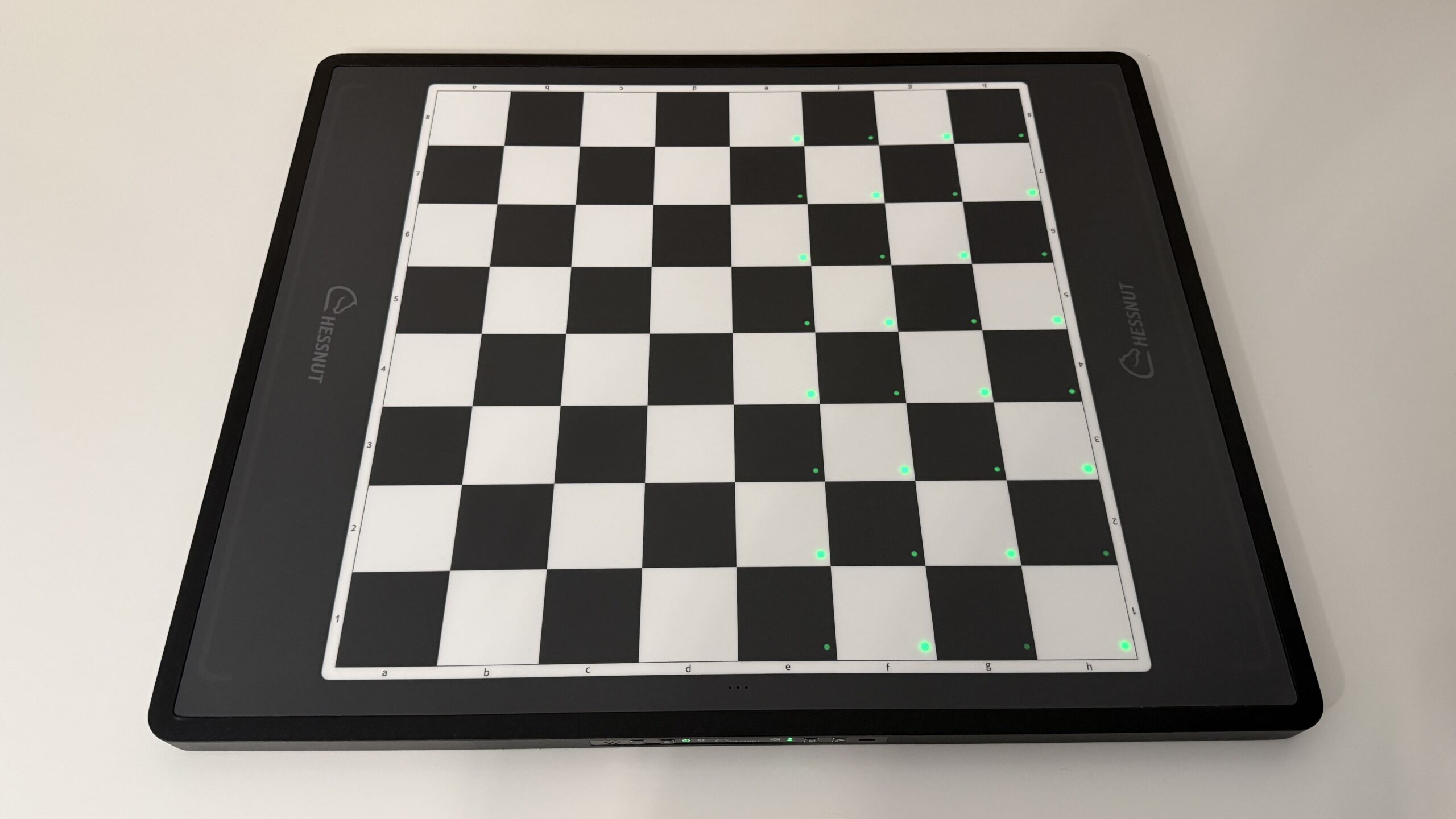
The playing field has a light for each square. At the start of the game, these lights indicate the side selection and the difficulty level. During the game, they show the bot opponent's move or the king in check. The board measures 63 cm x 52 cm and is 2,5 cm high. The actual playing area is 45,4 cm x 45,4 cm. The remaining centimeters are filled with the Chessnut logo on the sides, where the pieces land when captured. The overall design of the board appears very high-quality, except for one significant issue: the side paneling started to peel slightly in one spot after only a short time during our test. A stronger adhesive is definitely needed here.
-
- Picture: TechnikNews
-
- Picture: TechnikNews
-
- Picture: TechnikNews
Features
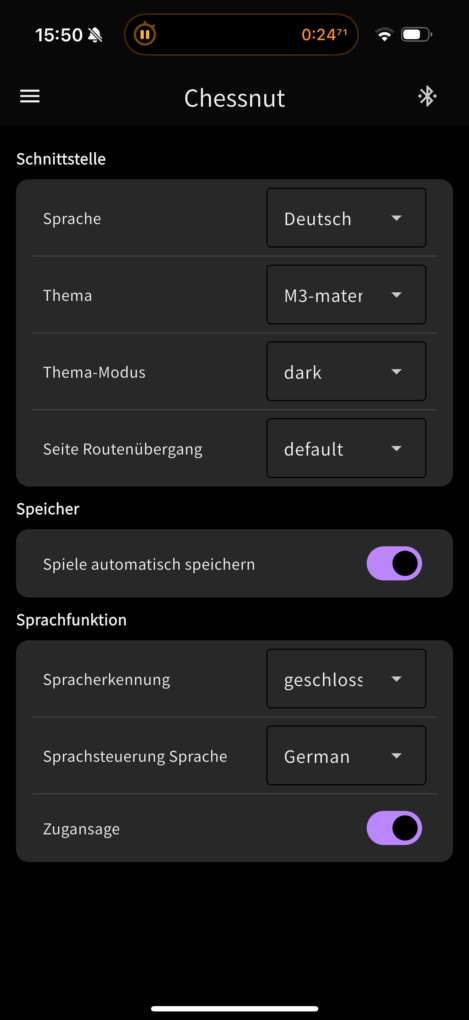
First of all, it should be said that you can, of course, play even when the board is off. It's not as if any magnets on the pieces would prevent a normal game. Contrary to what you might think, the pieces don't move with magnets, but with wheels, two of which are fitted to each base. But naturally, we want to see the "magic," so we switch the system on. It immediately recognizes all the pieces on the board, and at the touch of a button, they all move to their correct starting positions within approximately 48 to 27 seconds (depending on how you position them). Generally, movement is only straight ahead; that is, the pieces move, stop, turn, and move again. They don't turn. Another highlight compared to non-"smart" chessboards is the ability to move the pieces by voice. Sure, chess isn't exactly physically demanding, and making it even more convenient is almost like slacking off – but simply saying G2 G3 and having my pawn move automatically gives you a certain feeling of power ;). The voice control currently works in 32 languages and is reliable as long as you speak clearly.
Play offline against bots
There are several ways to play. In offline games against bots, you select your side and difficulty level using the buttons on the board, without any mobile connection. The round then begins, and White makes the first move. Within two seconds of the human player's move, the AI follows suit. This has never caused any problems; quite the opposite, in fact. Even at the lowest difficulty level, the AI rarely made mistakes. While its moves were slightly less precise, the AI is reluctant to overlook something, just like a human would.
App
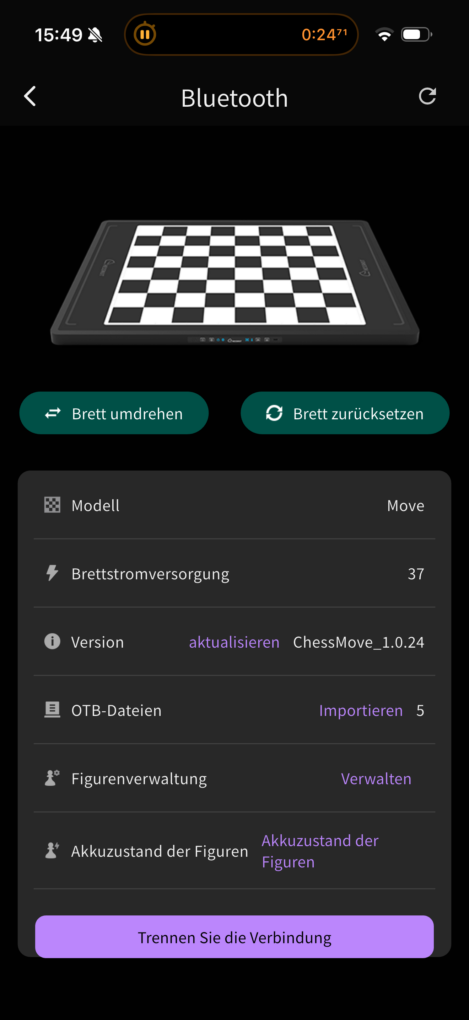
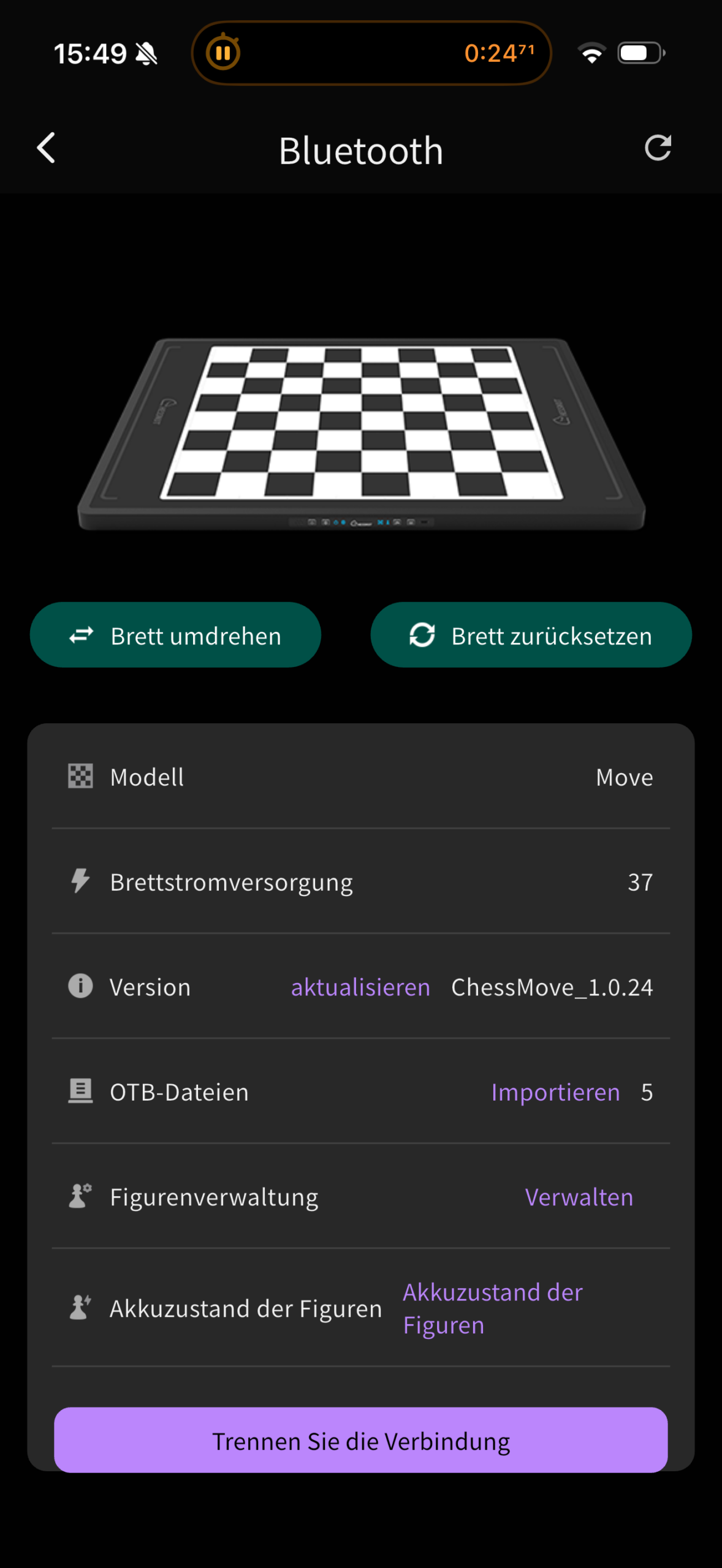
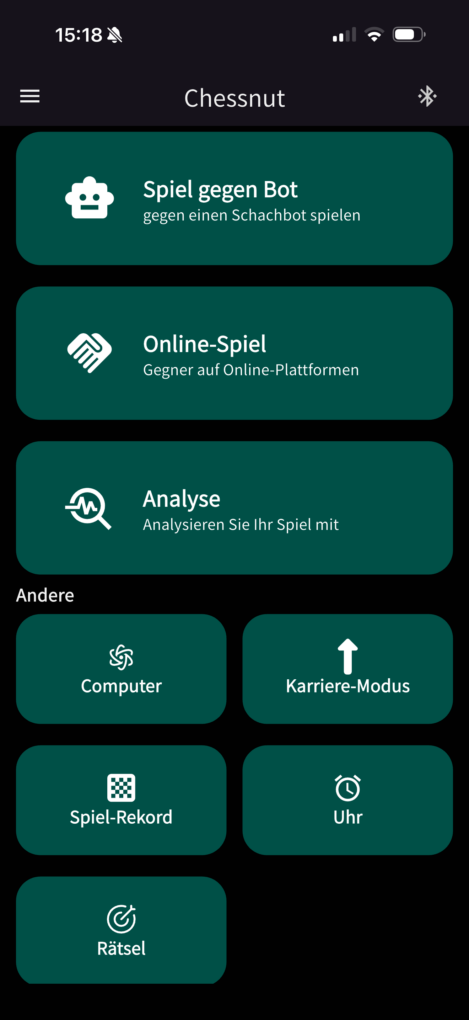
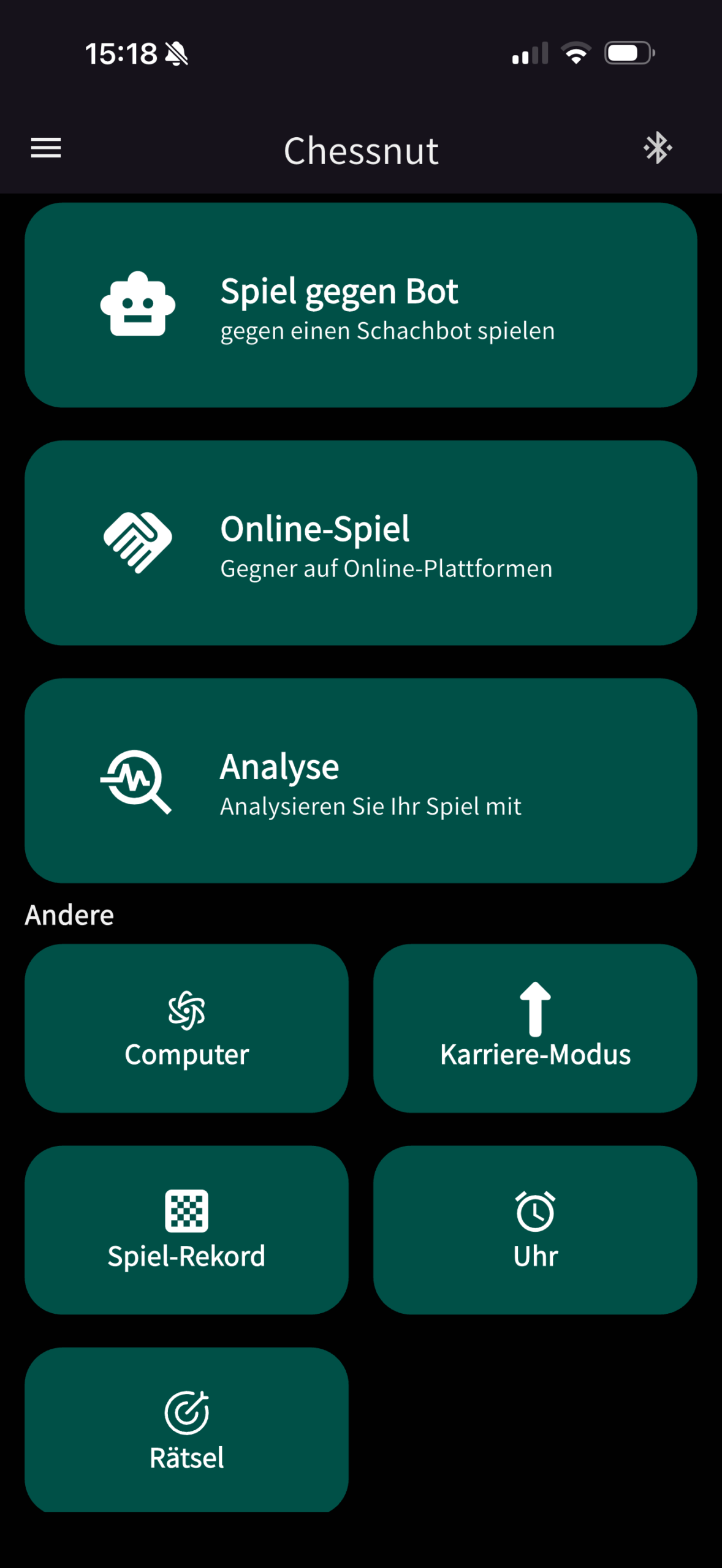
More precise settings and additional game modes can be configured via the app. Bluetooth connection is established in seconds, and updates are also installed via a Wi-Fi connection. The user interface is very clean: all app features are organized into tiles and easy to find.
Game against bot
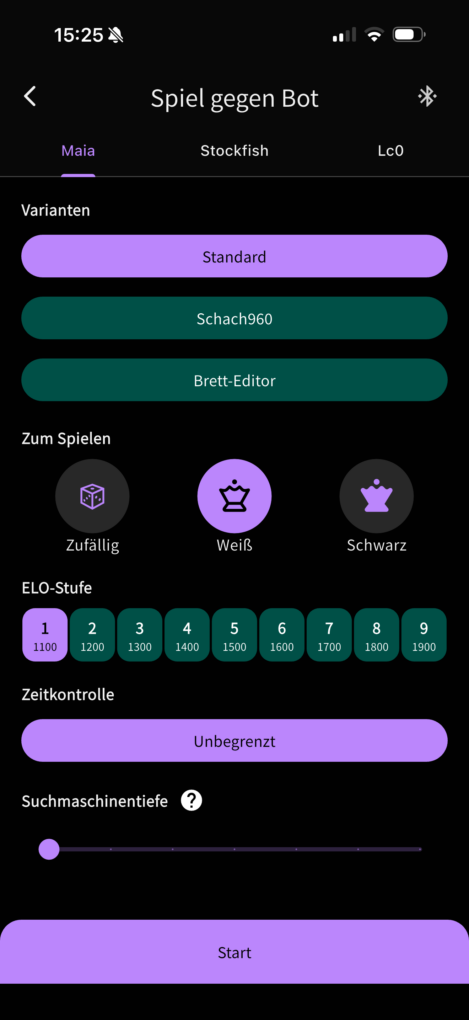
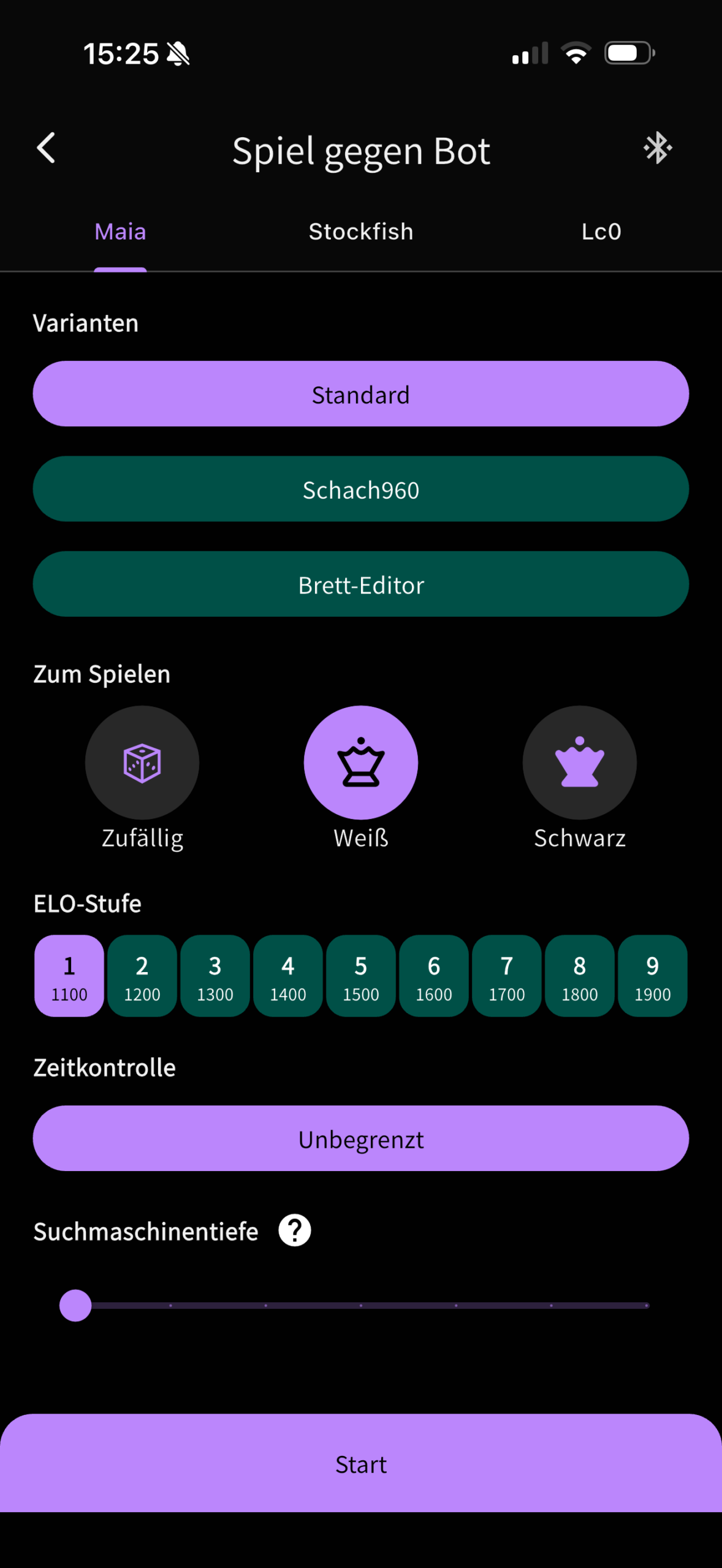
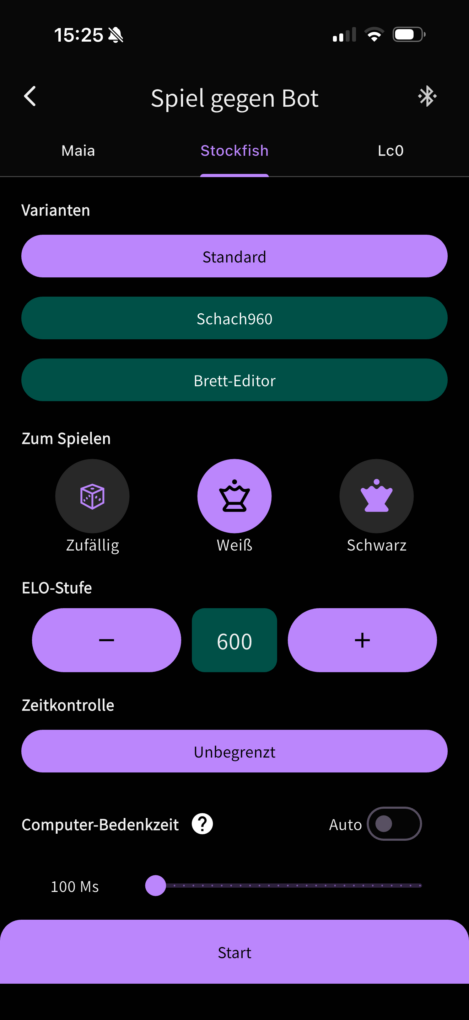
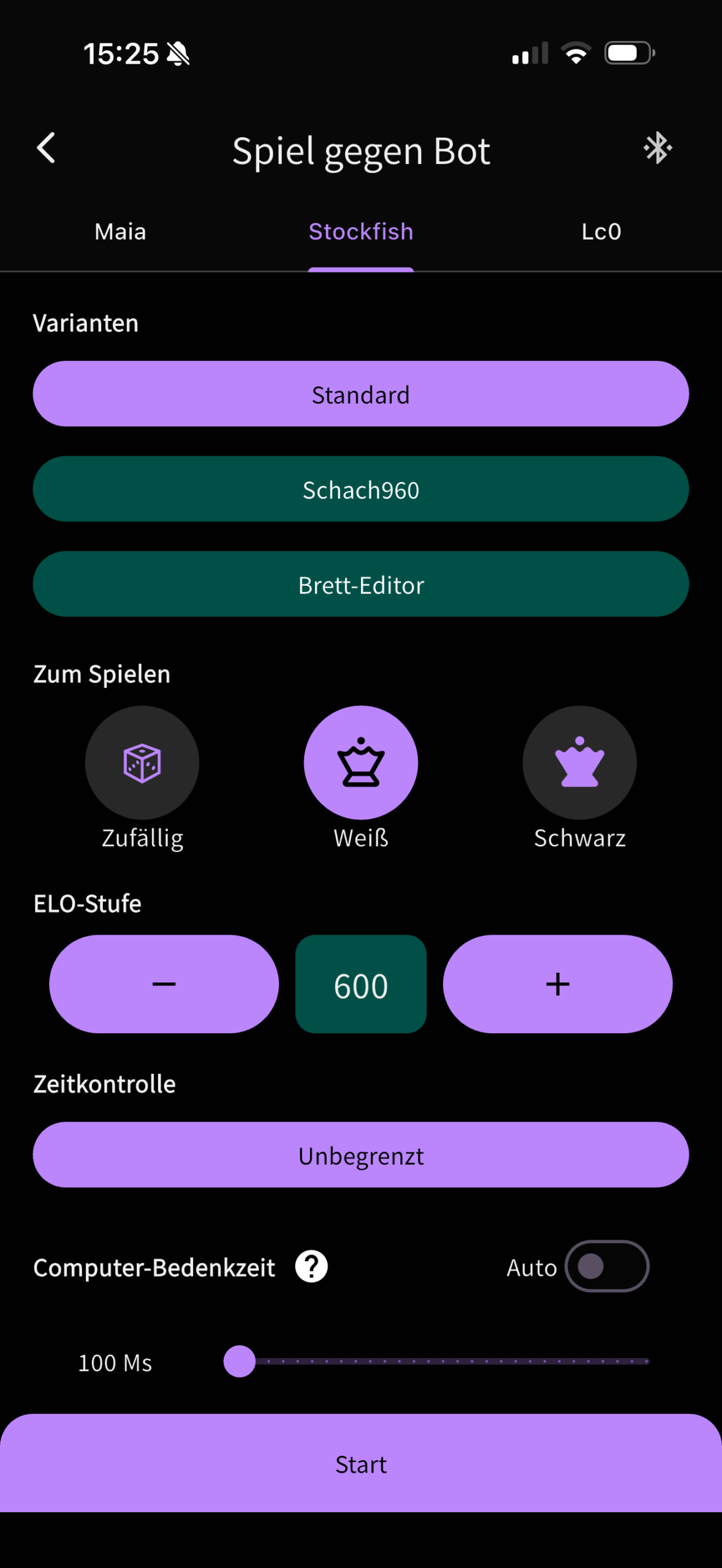
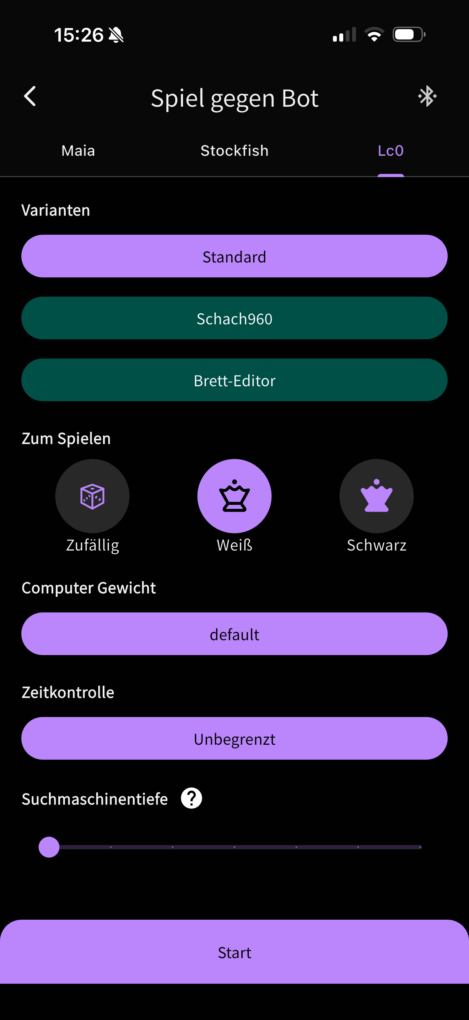
The top tile allows you to configure your game against a bot as follows. First, you choose one of three chess engines (Maia, Stockfish, Lc0), then the chess variant (Standard, Chess960, or board editor, which allows you to play a round with any starting position). You can also choose a side or be randomly assigned one, and if needed, adjust the time by adding minutes. pro Specify a move or an increment. Regarding the main topic, the AI, you can select different ELO levels and how many moves in advance the computer should plan its next move.
-
- Picture: TechnikNews
-
- Picture: TechnikNews
-
- Picture: TechnikNews
Online game
Of course, we can also play online against opponents (or friends) all over the world via platforms like Lichess.org or Chess.com. While the pieces still have to be moved digitally via a Bluetooth-connected mobile phone (which I find incomprehensible), at least the pieces then move in real time.
Other functions
The app also allows you to create analyses, view past games and analyze them move by move, and start a timed game. There's also a career mode where you aim to increase your ELO rating in increasingly difficult matches against bots. However, the most interesting alternative game mode for me was the "puzzle mode." In this mode, a board is created, and you have to find the next best move for the given color. The app provides feedback on your moves.
-
- Picture: TechnikNews
-
- Picture: TechnikNews
-
- Picture: TechnikNews
Game and loading time
The electric board provides approximately 12 hours of playtime on a full charge, while a full charge from 0 to 100 percent takes 3 hours. The figures take about 2,20 hours to fully charge using the charging pad and then last for roughly 17,5 hours of playtime. This is ultimately the bottleneck, as the Move controller can be charged during gameplay, but the figures cannot, although they can still be placed manually.
Price and availability
Currently, the Chessnut Move is only available on the official Chessnutech.com website, and in two versions. These differ only in whether the pieces are made of wood or plastic, and therefore in price.
Many thanks to Chessnut for providing the Chessnut Move for testing. This did not influence our opinion!