
Lynk & Co 08 (2026) review: Hybrid with 200 kilometers electric range
A TEST REPORT from Kasimir Hupe  on July 27, 2026, 15:14 pm | Write a comment
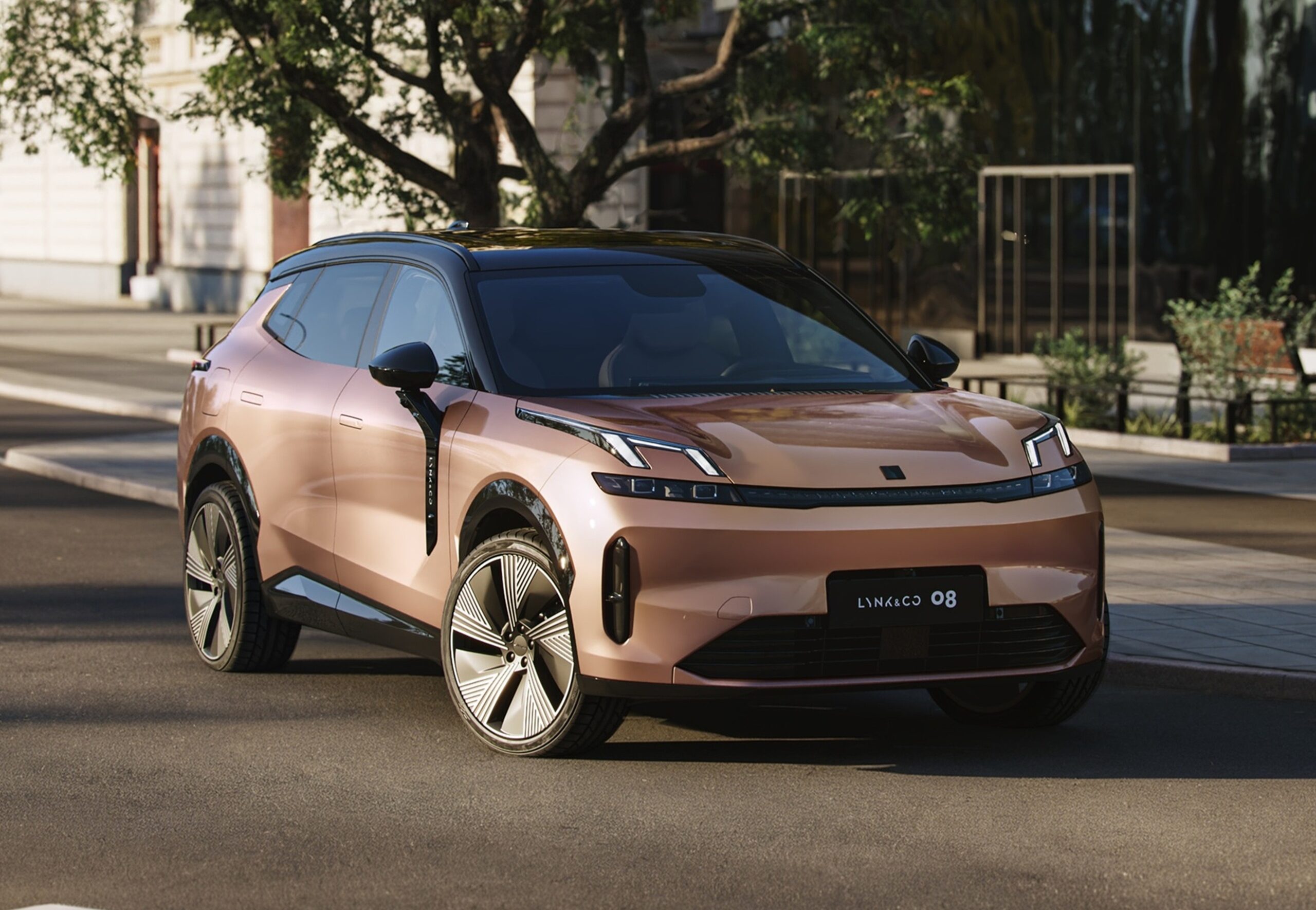
With a nearly 40 kilowatt-hour battery, an electric range of 200 kilometers, and a fast-charging function that is rather rare in plug-in hybrids, the large Lynk & Co 08 from Geely and Volvo competes against the GWM Wey 05, BYD Seal U DM-i and the established Volvo XC60 I drove it on country roads, on the motorway, and in the city. Here is my test report:
Its story begins in China in September 2023 – and with a bang. Within 35 days, the first 10.000 units of the SUV (Sport Utility Vehicle) are delivered to customers. Overnight, the model becomes the flagship of the Lynk & Co. brand, founded in 2016 by Geely and Volvo. Technically, the vehicle is based on the CMA Evo platform and shares its basic structure with Volvo. In its home market, it even boasts up to 593 hp, all-wheel drive, and achieves a Total range of over 1.400 kilometers.
For Europe, Lynk & Co is redesigning the concept. Instead of maximum performance, the 2026 model year version prioritizes range: front-wheel drive, 345 hp, a large battery, and a purely electric range of 200 kilometers according to WLTP (Worldwide Harmonized Light Vehicles Test Procedure). The 08 is thus the brand's most important product and simultaneously challenges Volvo, BYD, and GWM.
Conclusion (tl;dr) on Lynk & Co 08: A wake-up call to the established players
The Lynk & Co 08 redefines what a plug-in hybrid can be. With an electric range of 200 kilometers and the ability to charge via DC fast chargers, it replaces the old hybrid.proMake sense. Anyone who charges regularly is essentially driving an electric car that never lets them down and simply keeps going on long journeys. Add to that a generous amount of space, high comfort, extensive standard equipment, and a price that makes a Volvo XC60 look outdated. As a practical touring car with the option of purely electric driving, hardly any rival makes as much sense.
It's not exactly a driver's car, though. The front-wheel drive, the numb steering, and the soft suspension make it a cruiser, not a sports car. Moreover, the young brand still has to prove its resale value and service promise. But for those seeking a pragmatic, electric-focused SUV for families and long journeys, this model offers one of the most sophisticated PHEV options on the market.
Strengths and weaknesses of the Lynk & Co 08
✅ Strengthen:
- Best-in-class electric range of 200 kilometers according to WLTP, real-world range around 180.
- DC fast charging with up to 85 kW
- Superior, very smooth-running hybrid drive with 345 hp
- Generous space and high long-distance comfort
- Generous standard equipment and a powerful Harman/Kardon sound system
- Attractive price
❌ Weaknesses:
- Front-wheel drive only, no all-wheel drive
- Many functions are exclusively accessible via the touchscreen.
- Isolated software bugs
- Only 185 km/h top speed
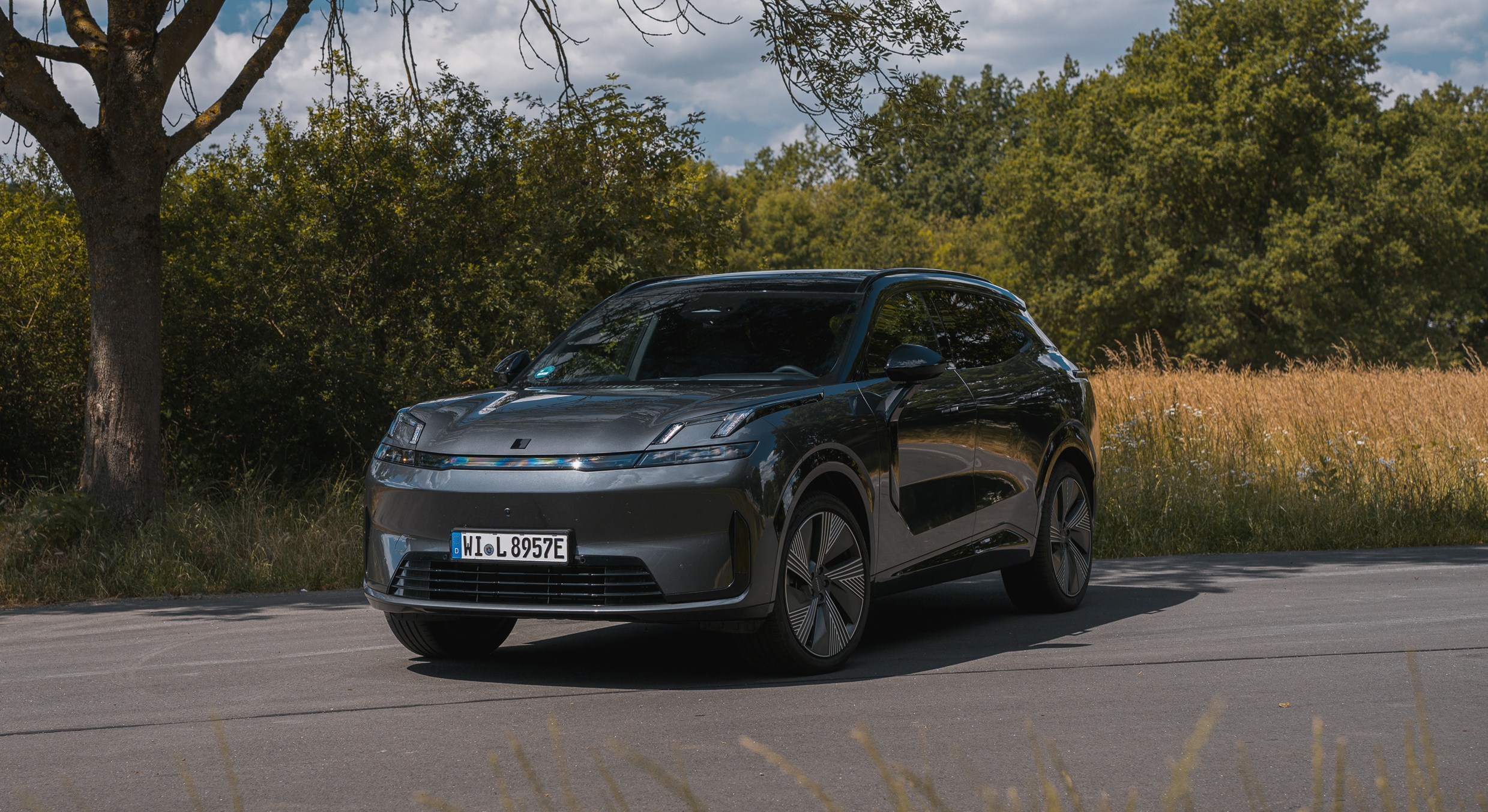
Image: Lynk & Co
Before me stands an SUV that doesn't deny its origins, yet still manages to project a distinctive image. With a length of 4,82 meters, a width of 1,92 meters, and a wheelbase of 2,85 meters, it presents a substantial, but not... proA striking appearance. The surfaces are calmly designed, the continuous light strip lends character to the front, and the frameless doors and recessed handles convey a sense of quality. Compared to a Wey 05, which at 4,87 meters is longer, the Lynk & Co 08 presents itself as more understated, almost European in its elegance.
The details reveal where the money is. The More variant we tested It comes equipped with adaptive matrix headlights that use LED technology for glare-free illumination and feature sequentially sweeping turn signals. Additional features include tinted windows, a large panoramic sunroof, and a power tailgate. Five metallic paint finishes and a black contrast roof are available. On the road, the 08 looks more expensive than it is and, thanks to its unfamiliar logo, drives pleasantly discreetly. The rear appears somewhat generic, but the panel gaps and paint quality are impressive.
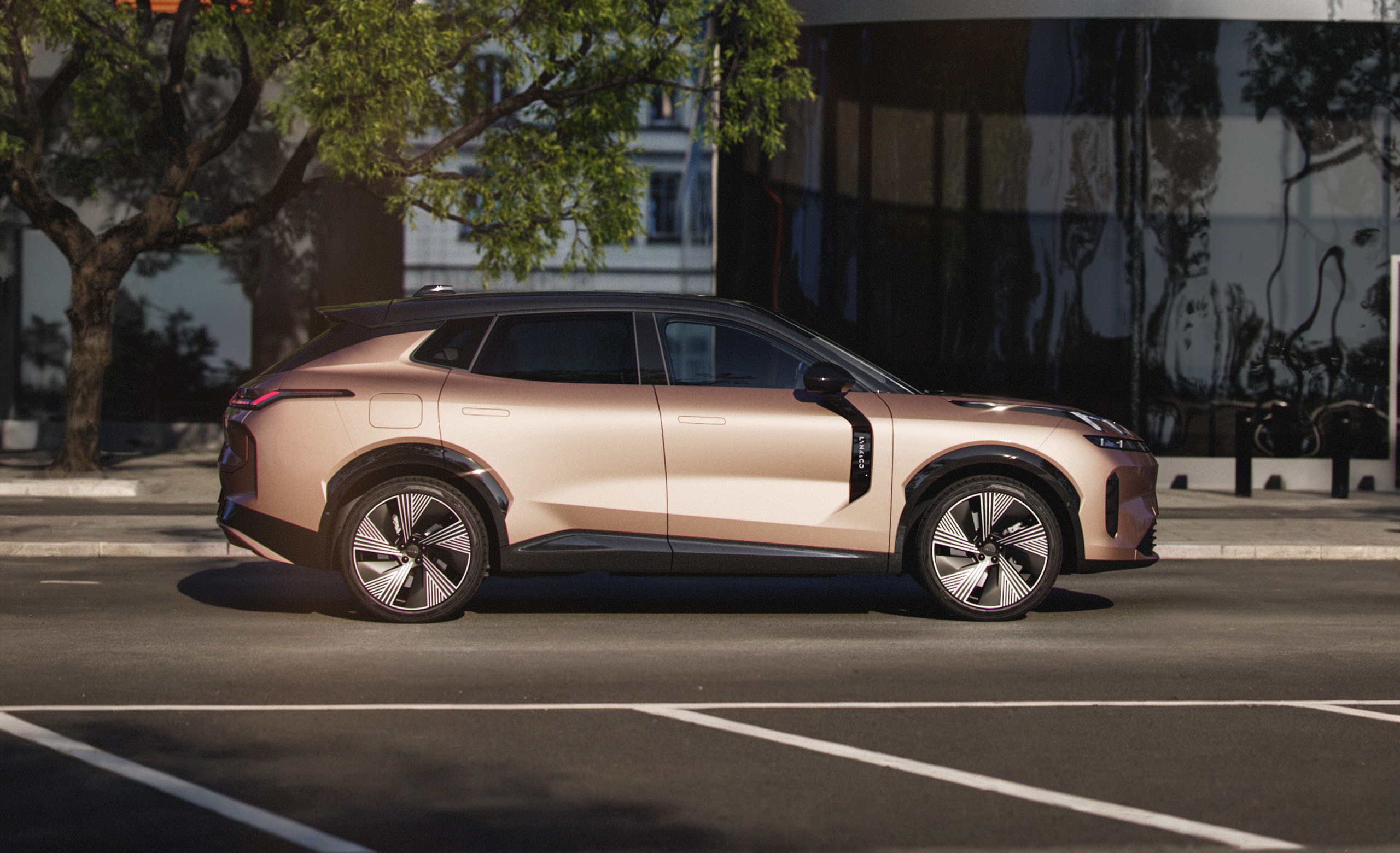
Image: Lynk & Co
Space: Long-haul lounge for five
Anyone getting in immediately notices the long wheelbase. There's plenty of room both in the front and the back. Rear passengers enjoy 96,3 centimeters of legroom and nearly 98 centimeters of headroom. Even two tall adults can travel comfortably one behind the other. And there's still ample space for three people in the back. The rear seat backrest is adjustable, and the More trim level features three-zone climate control. This puts the 08 in the top tier of its class, offering a more spacious feel than the shorter Volvo XC60, whose rear seats are more cramped.
Furthermore, the seats are truly impressive. The front seats are electrically adjustable in eight directions, remember their positions, and in the top trim level, are heated and cooled, as well as equipped with a massage function that provides a pleasantly firm massage rather than just a gentle caress. The rear bench seat has warming on the outer seats, ISOFIX child seat anchors, an armrest, cupholders, and individual air vents. The only minor drawback: the large battery slightly raises the floor in the rear, which might make the thigh support a bit shallow for very tall passengers. Otherwise, the Lynk & Co is among the most space-efficient vehicles in its segment.
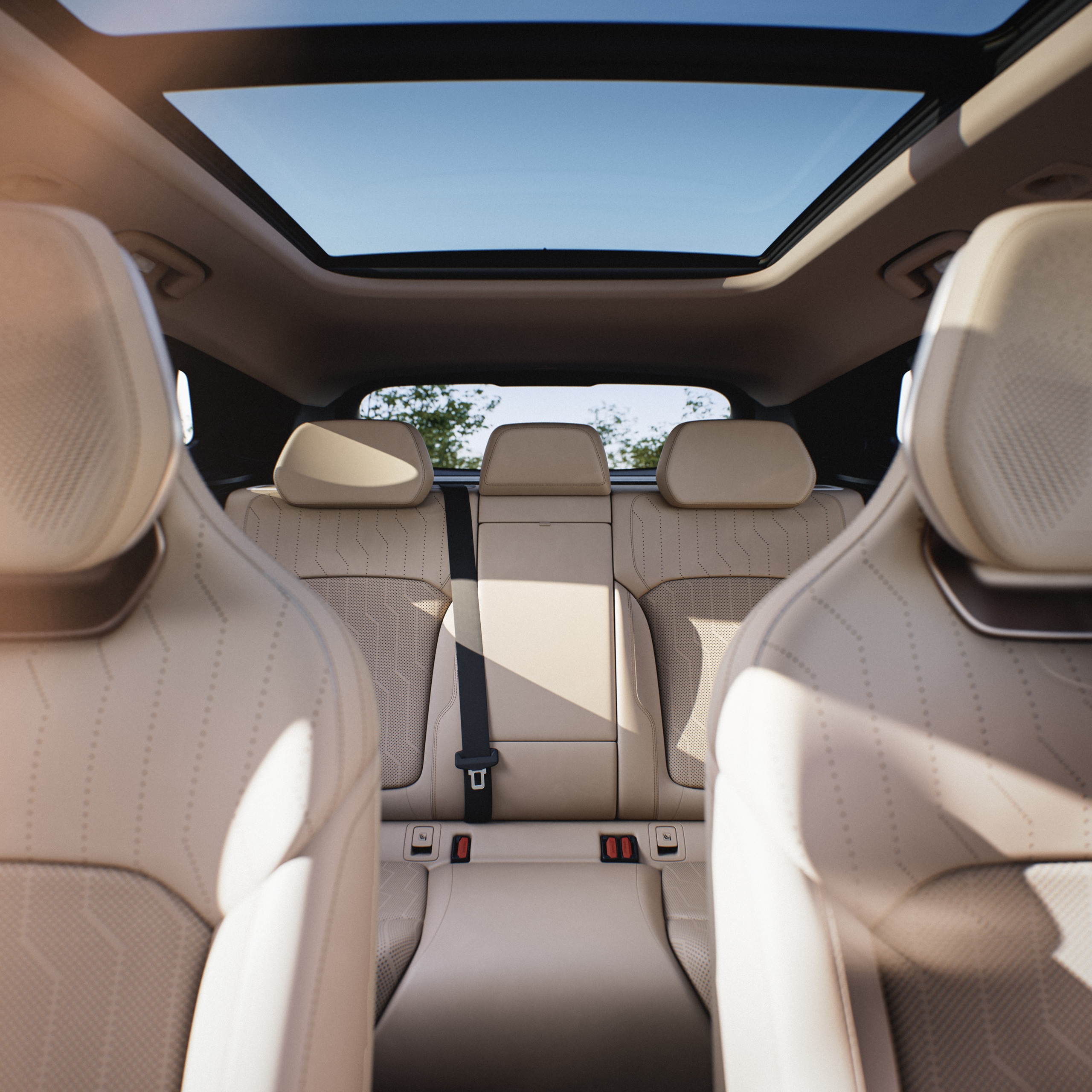
Image: Lynk & Co
Trunk space: Variable, but not a record holder
At the rear, a luggage compartment opens up with a volume of 540 liters, measured to the roofline according to the VDA standard. Folding down the 60:40 split rear seats increases the volume to 1.254 liters and the loading length to up to 1,79 meters. That's a solid figure, but not the best: A BYD Seal U offers a similar capacity, while the Volvo XC60 manages around 468 liters. However, the Lynk & Co 08's trunk is easily large enough for a week's worth of groceries, including a stroller.
The detailed solutions are practical. The loading sill is low, the opening is wide, a double floor keeps things organized, and there's a 12-volt socket and a cover. The 08 can tow up to 1.600 kilograms (braked), which is a respectable figure for a front-wheel-drive vehicle. There's no under-hood storage (frunk) or spare tire. Instead, a tire repair kit is provided. Overall, the cargo area is versatile and family-friendly, but at 540 liters, the actual capacity is only average.
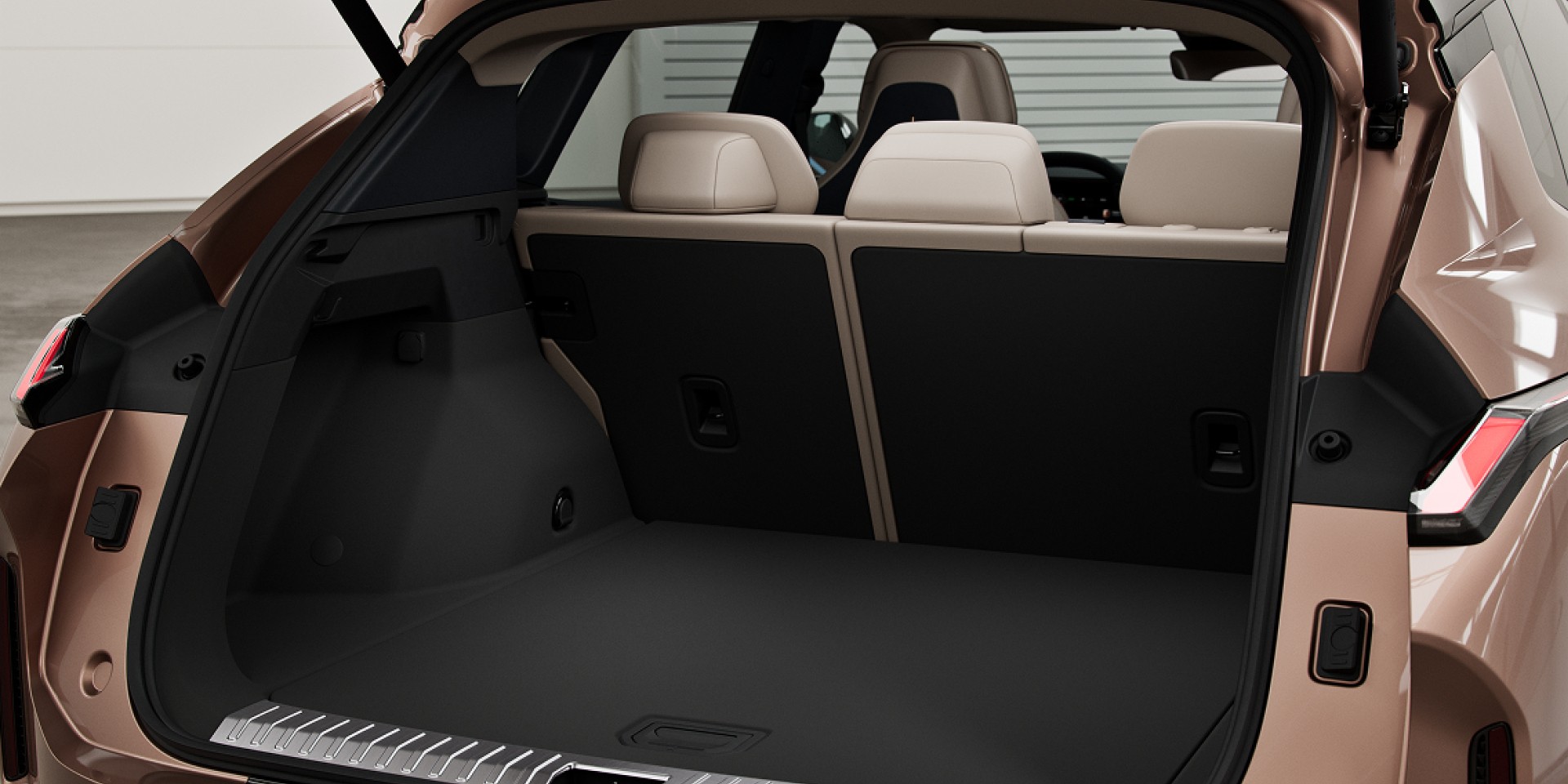
Image: Lynk & Co
Interior of the Lynk & Co 08: A digital salon with a feel-good factor
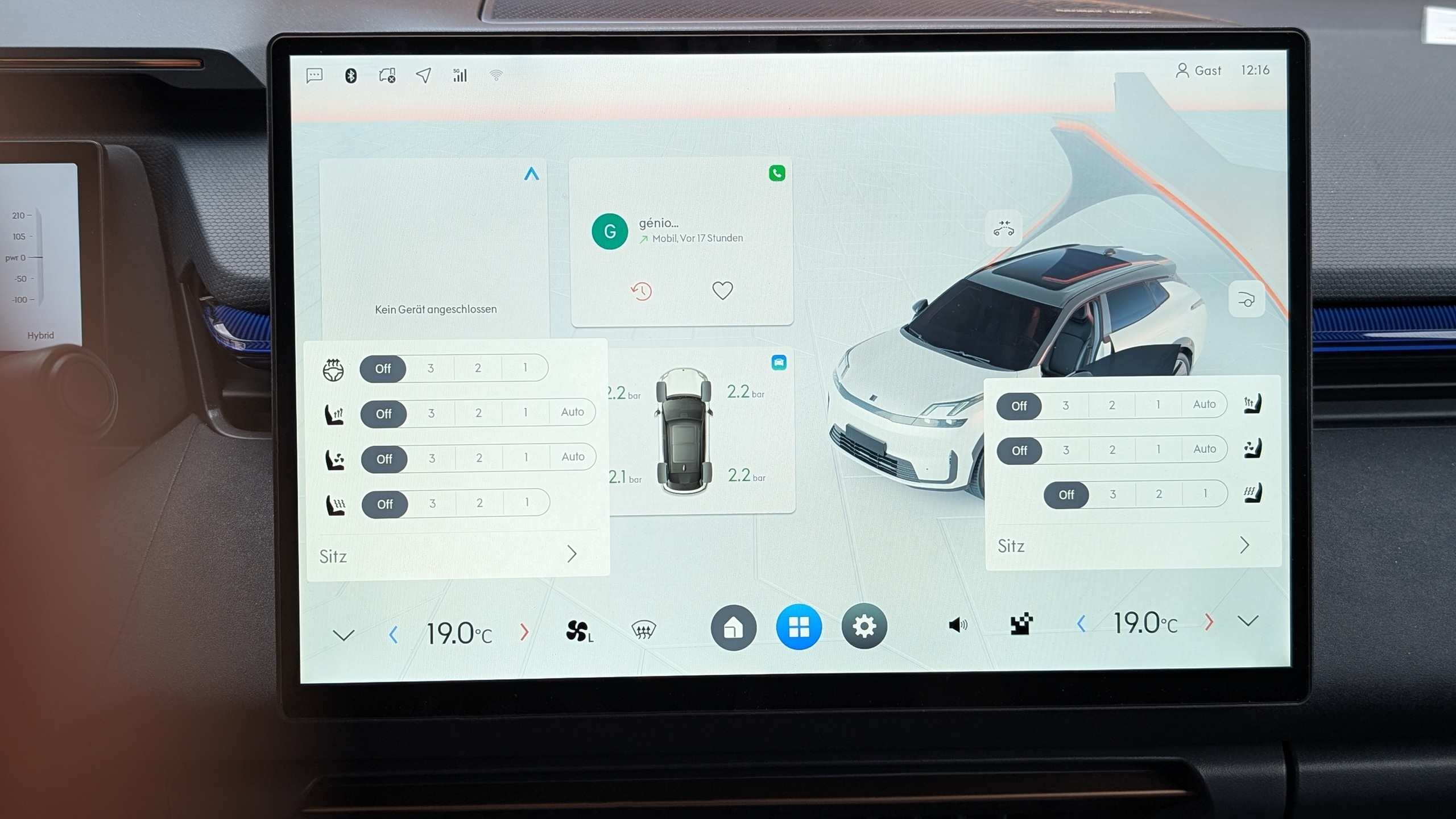
Inside, you're greeted by a clean, modern space. A freestanding 15,4-inch touchscreen dominates the dashboard, with a 10,2-inch driver display behind it. There's no head-up display. Pleasantly bright ambient lighting, synthetic leather, and microfiber in two color schemes create a high-quality atmosphere, while the panoramic sunroof floods the cabin with light. Physical buttons are scarce; almost everything is controlled via the screen. Visually, this feels more cohesive than in a BYD Seal U and is closer to a Volvo, even if the Swedish car has the edge in terms of tactile quality.
In everyday use, however, minimalism also reveals its downsides. Climate control, mirror adjustment, and many basic functions are hidden in menus. This is initially frustrating and distracting while driving. Even the practical auto-hold function, which keeps the car braked at traffic lights, can only be activated via the quick menu instead of a dedicated button. On the plus side, there's an inductive charging pad, numerous storage compartments, an electrically locking glove box, and an interior camera. The steering wheel is heated. During testing, I missed having physical knobs and buttons for volume and temperature. However, once you get used to it, the cockpit becomes a comfortable place for long journeys.
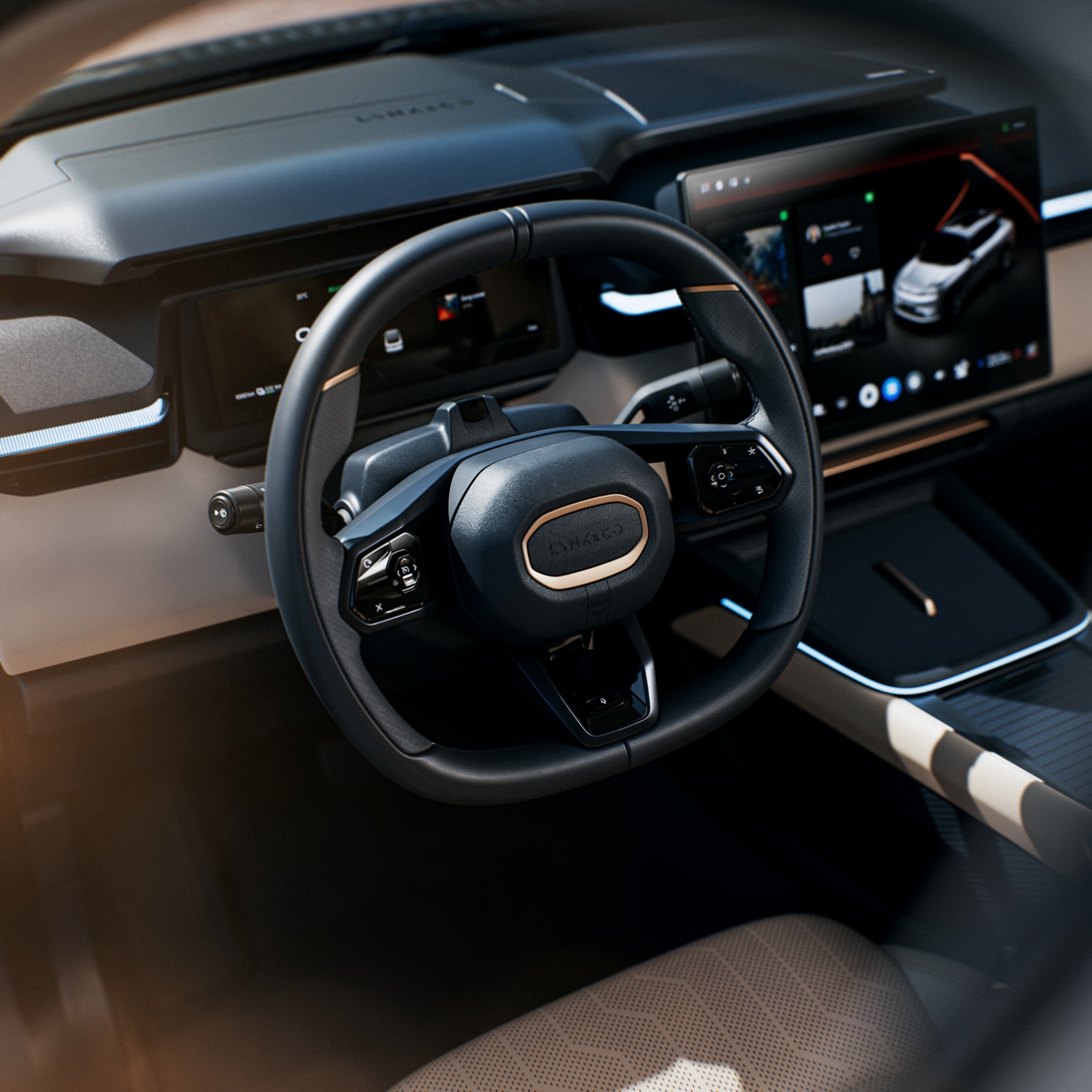
Image: Lynk & Co
Infotainment & Connectivity: A system with rough edges
The operating system is called Flyme Auto It originates from the smartphone world of Geely's subsidiary Meizu. The screen is responsive, the graphics are sharp, and animations liven up the menus. Onboard features include a 5G mobile module, a Wi-Fi hotspot, wireless Apple CarPlay, Android Auto, navigation, and a voice assistant. Additional speakers are integrated into the driver's headrest, which can be used, for example, for more private phone calls. Updates are installed remotely. In terms of responsiveness, the system feels more modern than the older Google menu in the Volvo and more streamlined than the rotating solution in the BYD.
It's not perfect, however. The menu logic is sometimes unintuitive, some translations were clunky at launch, and important functions are buried too deep. Occasionally, the system doesn't establish a connection to Android Auto immediately and requires a second attempt. On the plus side, the front USB-C port provides charging at up to 60 watts. A smartphone can be used as a digital key, and facial recognition unlocks profiles. The voice assistant's understanding is inconsistent, sometimes brilliant, sometimes completely unresponsive. Those who familiarize themselves with it will find a modern, fast system that improves with each update. The biggest annoyance remains the touchscreen climate controls.
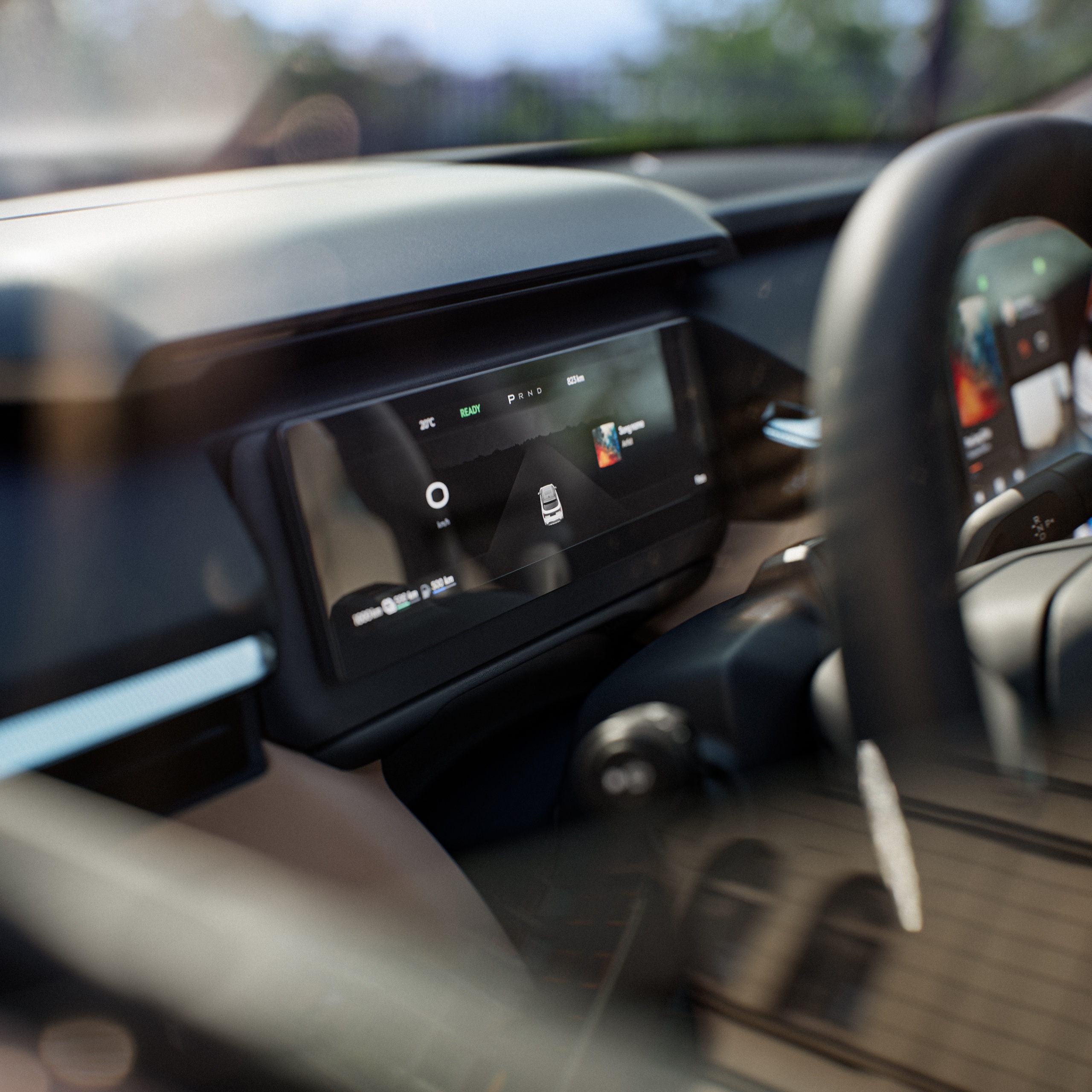
Image: Lynk & Co
Sound system: Harman/Kardon as a trump card
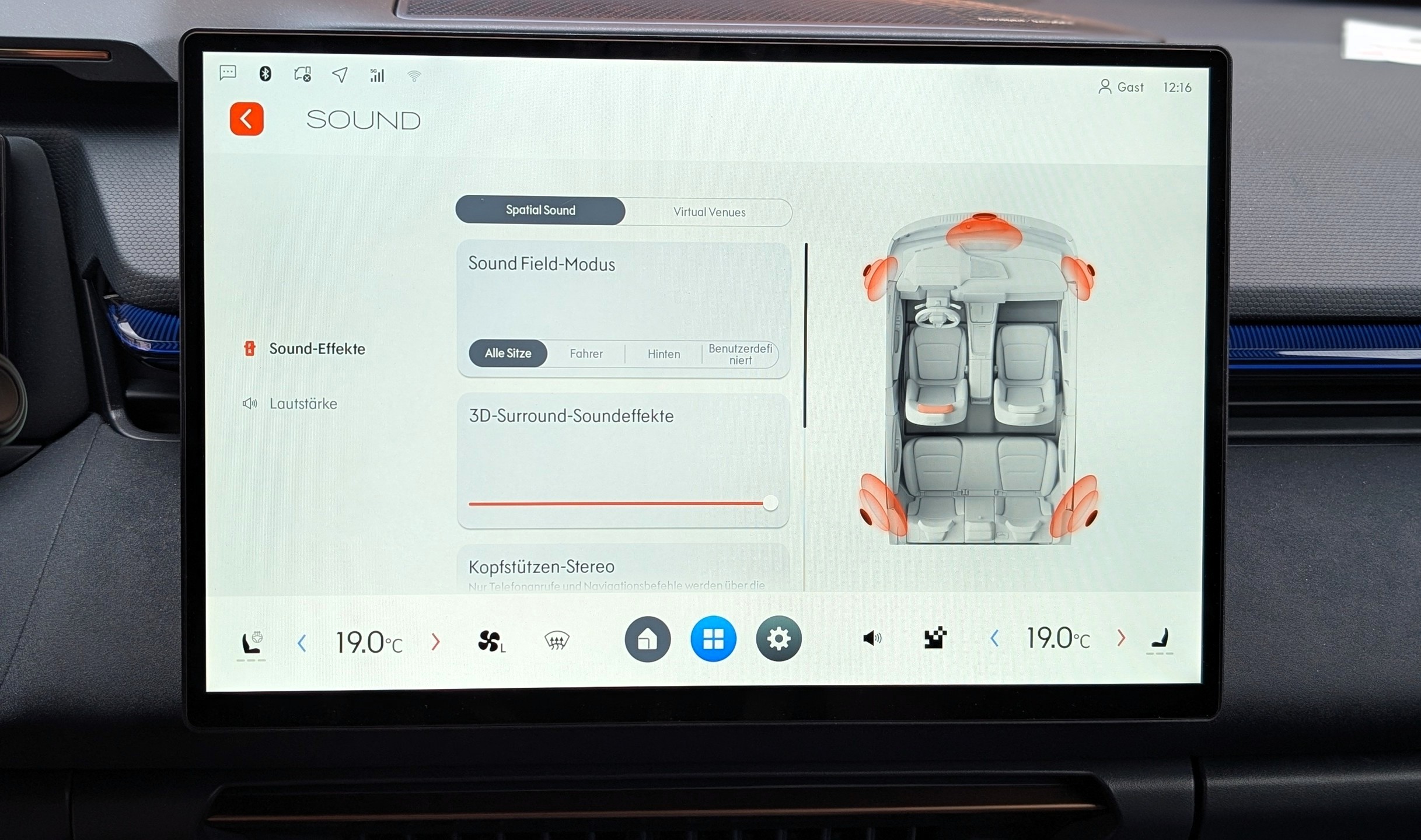
Another highlight is the facility of Harman/Kardon with 23 speakers Including a subwoofer, which is hidden in the "More" trim level. In this price range, that's quite a statement. The sound fills the room, clearly separates the instruments, and delivers a rich, controlled bass. The base "Core" trim level has to make do with eight speakers that perform adequately, but without much fanfare. By comparison, a similarly high-end Bowers & Wilkins sound system in a Volvo costs several thousand euros extra – here, it's included in the package.
On my test drives, the sound system proved to be a pleasant companion. At higher volumes, it produces an almost concert-quality sound, while at lower volumes it remains finely detailed, and the ambient lighting can pulse to the music if desired. The sound alone is reason enough to pay extra for the More package. Those who prefer a neutral sound might find the tuning a touch too bass-heavy, but most will likely enjoy it. Overall, the sound experience is one of the car's true strengths.
Picture: TechnikNews
Lynk & Co 08 driver assistance systems: Generously equipped, occasionally overzealous
Lynk & Co doesn't skimp on driver assistance systems. Depending on the trim level, features like adaptive cruise control (ACC), highway assist, lane keeping assist, lane change assist, blind spot monitoring, rear cross-traffic alert, a surround-view camera, driver drowsiness detection, predictive emergency braking, and traffic jam assist are all included. This puts the 08 on par with premium brands. On the highway, the assist system keeps the vehicle safely in its lane, the cruise control operates smoothly, and the camera image is high-resolution.
As with many new systems, some interventions are overly eager. The software also suffers from minor glitches. Sometimes the camera doesn't display the side view when the turn signal is activated, and sometimes the audible signal tone is completely missing. When turning, I would have preferred a dedicated blind spot camera instead of the bird's-eye view, which would be more helpful in everyday driving. The lane keeping assist noticeably tugs at the steering wheel, the speed warning sounds for every little thing, and the EU-mandated driver fatigue detection system frequently issues warnings for no apparent reason. While many of these features can be deactivated, they reappear after every restart. BYD and GWM struggle with the same teething problems; a Volvo, in this respect, seems more refined. Once the systems are configured to your liking, you get a comprehensive and generally effective safety net.

Picture: TechnikNews
Safety: Can it compete with Volvo?
The 08 boasts a comprehensive safety package. It features multiple airbags, including one between the front seats, as well as electronic stability control.proThe car comes equipped with electronic stability control (ESC), brake assist, hill start assist, trailer stability control, tire pressure monitoring, and a tachograph for emergencies. It even detects whether passengers remain in the rear seats after an exit. Since the platform was co-developed by Volvo, one can expect a number of advanced structural features.
The Lynk & Co 08 reached its highest rating in September 2025. five stars in the Euro NCAP crash test. The plug-in hybrid SUV achieved strong results in the four main categories: Adult Occupant (90%), Child Occupant (87%), Vulnerable Road Users (78%), and Safety Assist (81%). Subjectively, the solid, stable handling at high speeds contributes to a feeling of safety – the car feels incredibly planted on the highway.

Picture: TechnikNews
Comfort: The flagship discipline of the 08
This is where the 08 is in its element. A double wishbone suspension is used at the front, and a multi-link suspension at the rear. The tuning is clearly focused on comfort. The car smooths out bumps, remains composed on the motorway, and is surprisingly quiet thanks to acoustic glass. Since the drive system is mostly electric, the interior is often as quiet as an electric car. The 21-inch wheels of the More version firm up the ride somewhat; on the 19-inch wheels of the Core version, it rolls even more smoothly.
On long journeys, it truly shines. The noise level is low, the suspension is smooth, the seats provide excellent support even after hours of driving, and the gasoline engine is barely noticeable. Only the air conditioning takes a little too long to reach the set temperature on hot days. A minor drawback is that the large wheels audibly thump over sharp transverse joints, and the soft suspension exhibits a slight tendency to rebound in fast corners. But these are minor complaints. For families and frequent drivers, the comfort is this car's most compelling feature.
Picture: TechnikNews
The Lynk & Co 08's propulsion system: Sovereign rather than brutal
Under the hood lies a clever combination. A 1,5-liter turbocharged four-cylinder gasoline engine (102 kW/137 hp) meets a powerful electric motor (155 kW/208 hp). Together, they deliver 257 kW or 345 hp. Power is transmitted to the front wheels via a three-speed transmission for hybrids (DHT, Dedicated Hybrid Transmission). The electric motor usually provides the power, while the gasoline engine engages directly at higher speeds. The vehicle accelerates from 0 to 100 km/h in 6,8 seconds, but unfortunately, its top speed is limited to 185 km/h.
The drive concept feels like an electric car on the road. The 08 accelerates smoothly without a roaring engine. The transitions between electric and gasoline are almost imperceptible. It's not a brutal sprinter like the 476 hp Wey 05 with all-wheel drive, but it's certainly quick enough. Its drawback is the pure front-wheel drive: at full power on wet roads, there's noticeable torque steer; a Volvo XC60 or a Wey 05 distribute their power more effectively thanks to their all-wheel drive. Otherwise, the drive system impresses with its smooth operation.
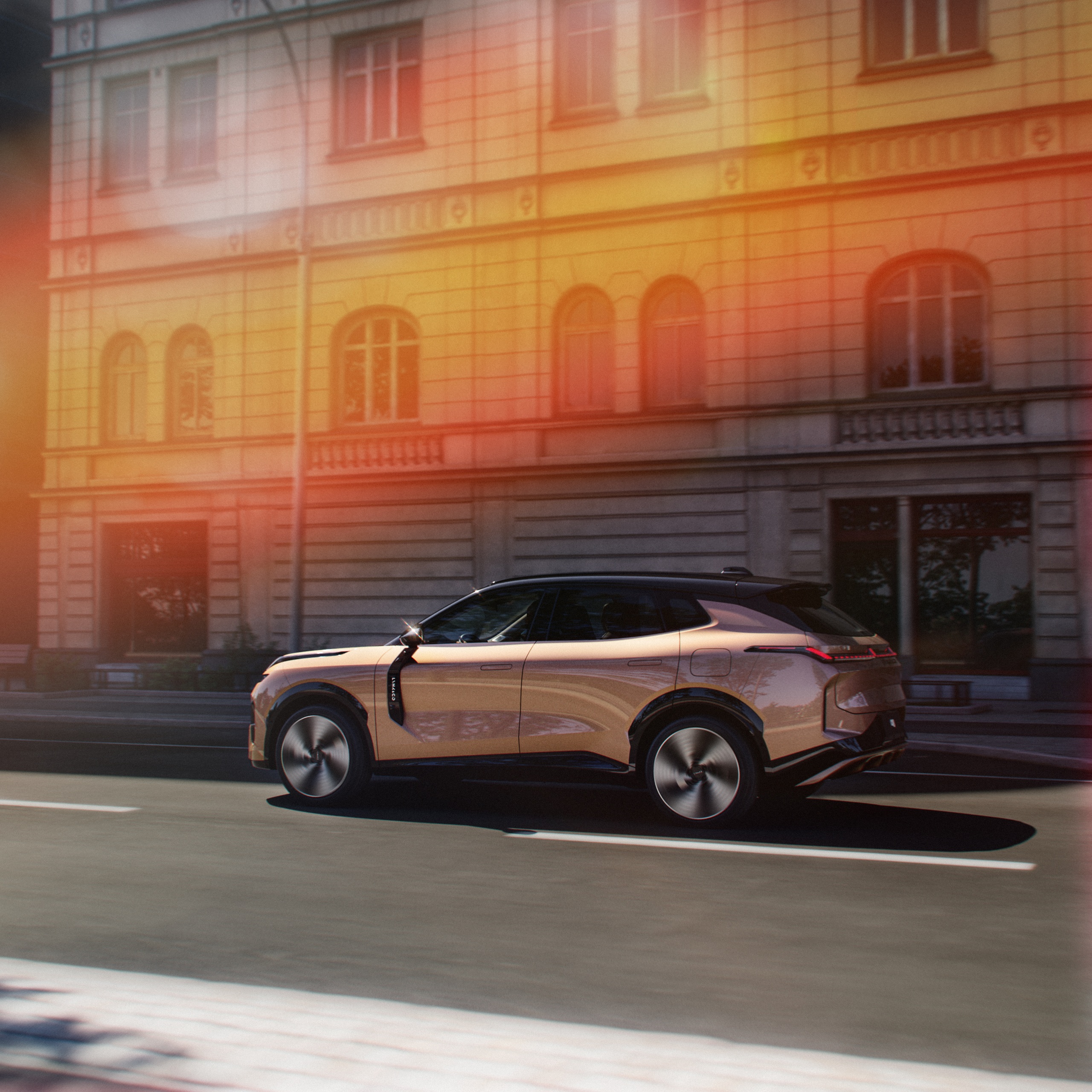
Image: Lynk & Co
Driving dynamics and handling: Comfort before cornering performance
Anyone with sporting ambitions will be disappointed with the 08. The light steering provides very little feedback from the road. In Sport mode, it becomes firmer, but remains devoid of feel. The 2,1-ton curb weight is noticeable in fast corners; the body rolls noticeably, and the turning circle of twelve meters is reasonable. The 08 is deliberately not a cornering machine, but a cruiser. It doesn't offer the precision of a BMW X3 It doesn't come close, and a Volvo XC60 feels more powerful and agile.
On winding country roads, you shouldn't push the speed too hard. It leans and prefers a relaxed pace. The grip is decent, and the brakes provide clean deceleration. Under load, the front tires tend to spin in tight corners. If you ease off the speed, the Lynk & Co becomes a confident touring companion. Its driving dynamics remain deliberately average. Anyone looking for genuine driving pleasure should look elsewhere.
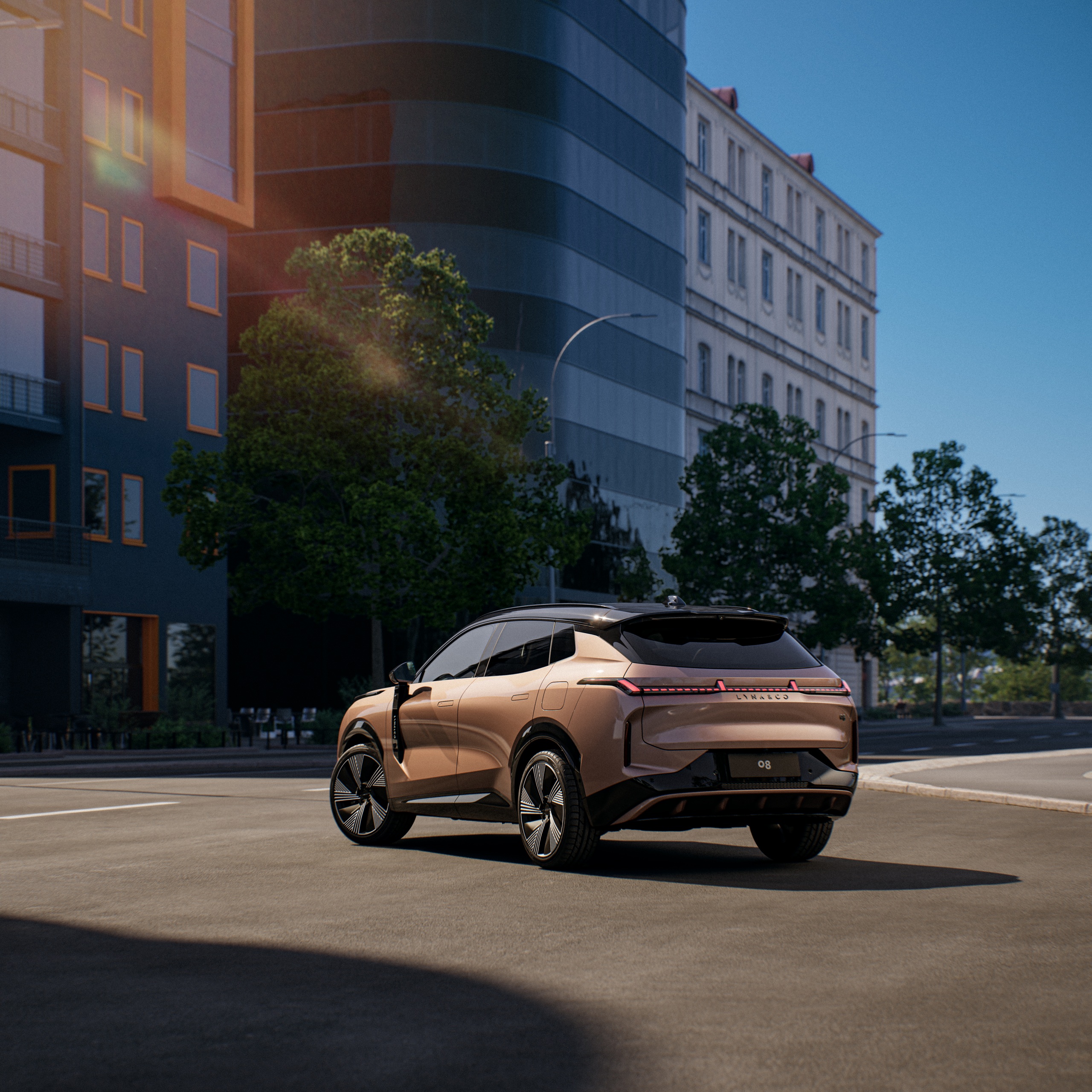
Image: Lynk & Co
Battery: Record-breakingly large
The heart of the 08 is its large battery. At 39,6 kilowatt-hours, it's enormous for a plug-in hybrid; competitors usually make do with 18 to 27 kilowatt-hours. This battery capacity is almost on par with that of a small electric car and enables a range of up to 200 kilometers. Chemically, Lynk & Co uses cells with nickel, cobalt, and manganese, which can store a lot of energy in a small space. BYD, on the other hand, uses the Blade battery made of lithium iron phosphate (LFP) in the Seal U. This battery is more thermally stable and has a longer lifespan, but it has a lower energy density.
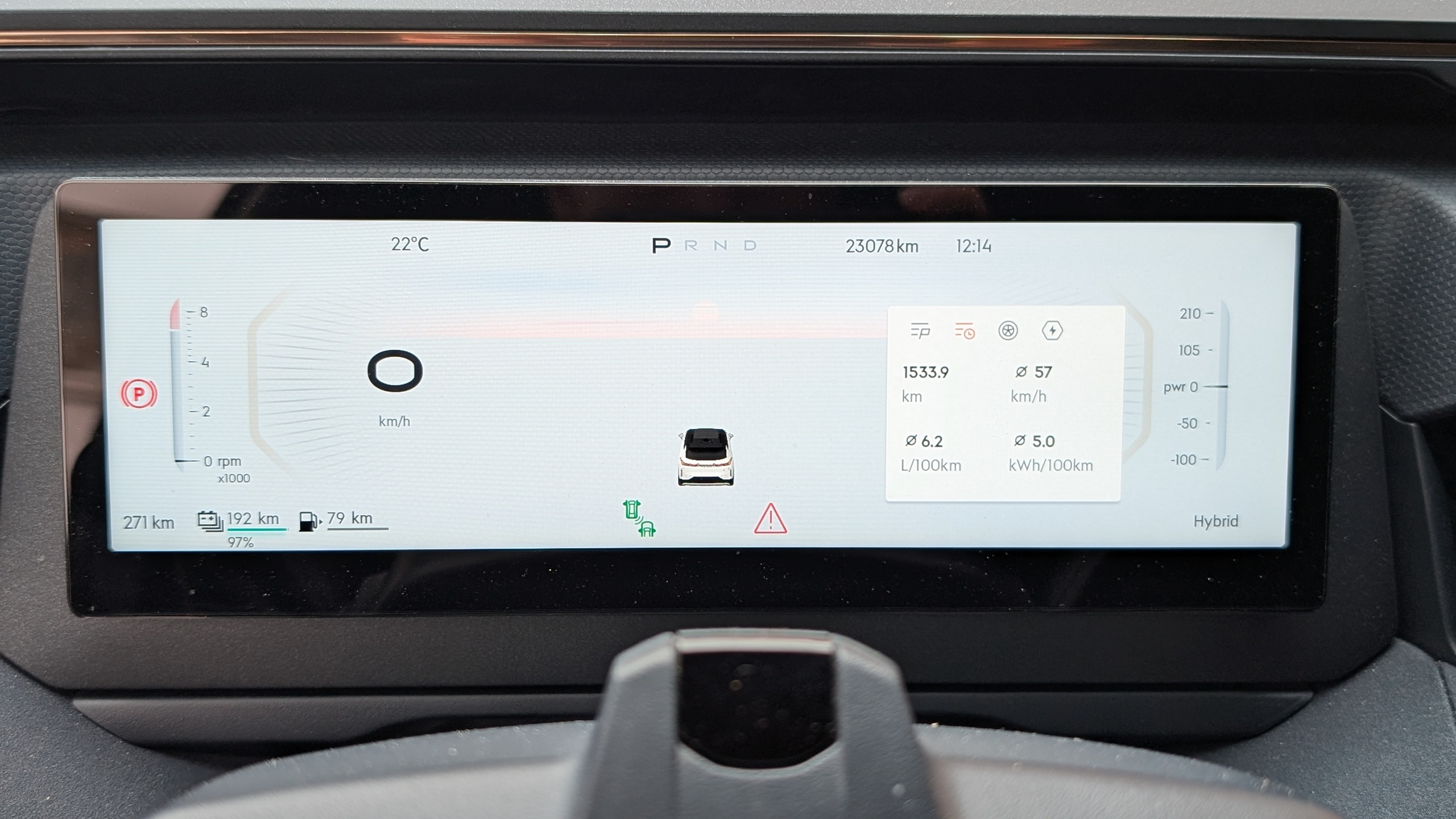
In practice, the battery lives up to the data sheet's promises. Our measurements yielded a range of around 180 kilometers in purely electric mode, which is the best result so far among all the PHEVs we've tested. During an economy run conducted by the manufacturer, the 08 even managed 293 kilometers in one go. This set a world record.For comparison: A BYD Seal U has a range of up to 125 kilometers, a Wey 05 about 132 kilometers and a Volvo XC60 only 78 kilometers.
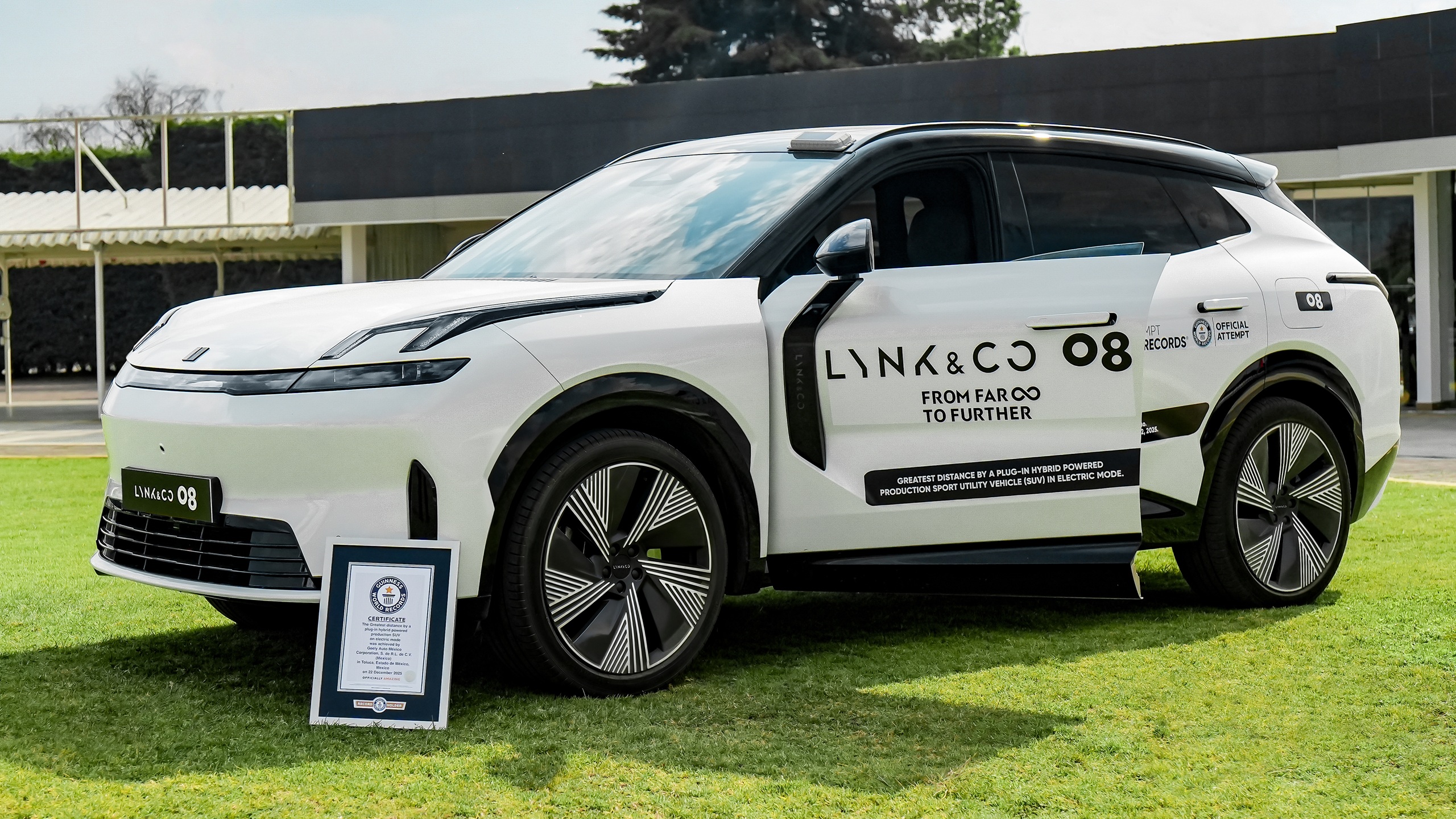
Image: Lynk & Co
Fuel consumption & range of the Lynk & Co 08: Two worlds in one car
The 08 leads a double life when it comes to fuel consumption. As a pure electric car, it consumes around 20,8 kWh per 100 kilometers according to WLTP. Those who charge daily and commute drive practically without a drop of gasoline. The official weighted figure of 0,9 liters of gasoline consumption and 23 grams of carbon dioxide (CO₂) per kilometer is therefore somewhat optimistic, as it assumes a constantly fully charged battery. A more realistic figure is achieved with an empty battery: Lynk & Co then quotes 6,5 liters and 149 grams per kilometer, which also corresponds to our test results. However, if you cover long distances with a full battery, gasoline consumption of less than 5 liters is achievable. pro 100 kilometers is quite realistic.
Herein lies the truth about every plug-in hybrid. If you charge it regularly, it's extremely economical. If you ignore the charging station, you're lugging around a good two tons, including the battery, and you'll likely end up with around seven liters per 100 kilometers on the highway. However, because the battery is so large, significantly more journeys can be completed purely on electric power than with BYD or Volvo models with smaller batteries. So, how economical this car is depends entirely on the driver.
Picture: TechnikNews
Total range: Long distances are no problem
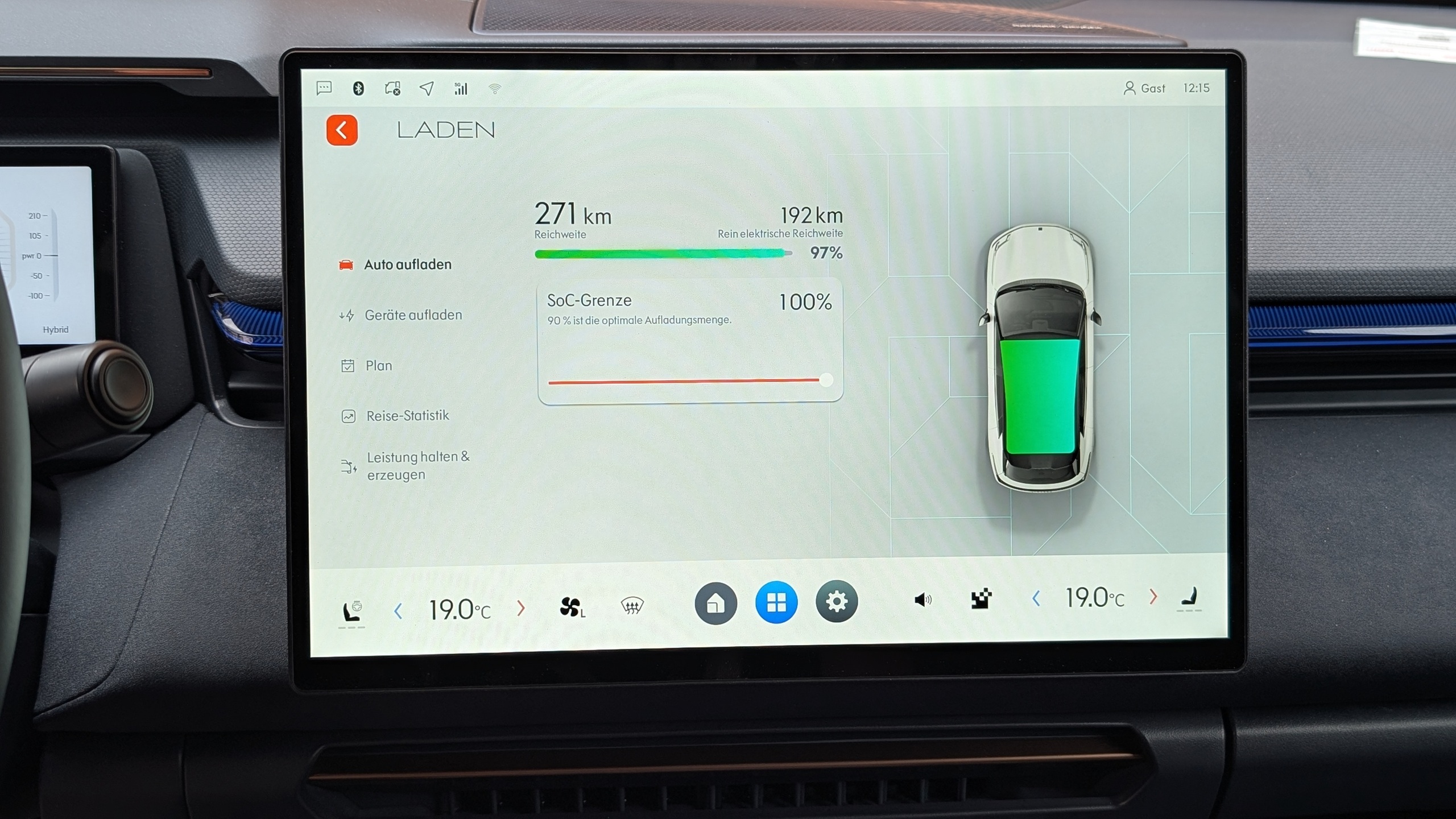
Range anxiety is a non-issue with this car. According to WLTP, it boasts a range of 200 kilometers, and in our realistic test, we achieved a respectable 180 kilometers. Off the highway, on country roads and in the city, the full 200 kilometers are indeed achievable. With its 60-liter tank, the 08 can travel over 1.000 kilometers combined. Only high highway speeds noticeably reduce this figure. It thus combines the quietness of an electric car in everyday driving with the composure of a combustion engine on long journeys. No direct competitor can match this electric range; most offer half that or less.
In everyday terms, this means: A load pro For many commuters, the car covers all journeys purely electrically during the week. Only on long trips does the gasoline engine take over. It is precisely this combination that highlights the greatest potential for increased efficiency.proThe test focused on the part-time electric vehicle, namely the choice between a short electric range and a long overall range. A week of city driving without a single refueling or charging stop was conducted during the test. proEasily possible. This flexibility is the strongest selling point of the entire car.
Picture: TechnikNews
Charging: AC and DC best performance
The 08 not only charges with up to 11 kilowatts of alternating current (AC) at a wallbox, but also with up to 85 kilowatts of direct current (DC) at a fast-charging station. Charging from 10 to 80 percent takes around 33 minutes, while a full AC charge at a public charging station takes about four hours and 30 minutes. A plug-in hybrid that can charge with DC is a rarity. Neither the BYD Seal U nor the Volvo XC60 offer this capability; they rely exclusively on AC charging.
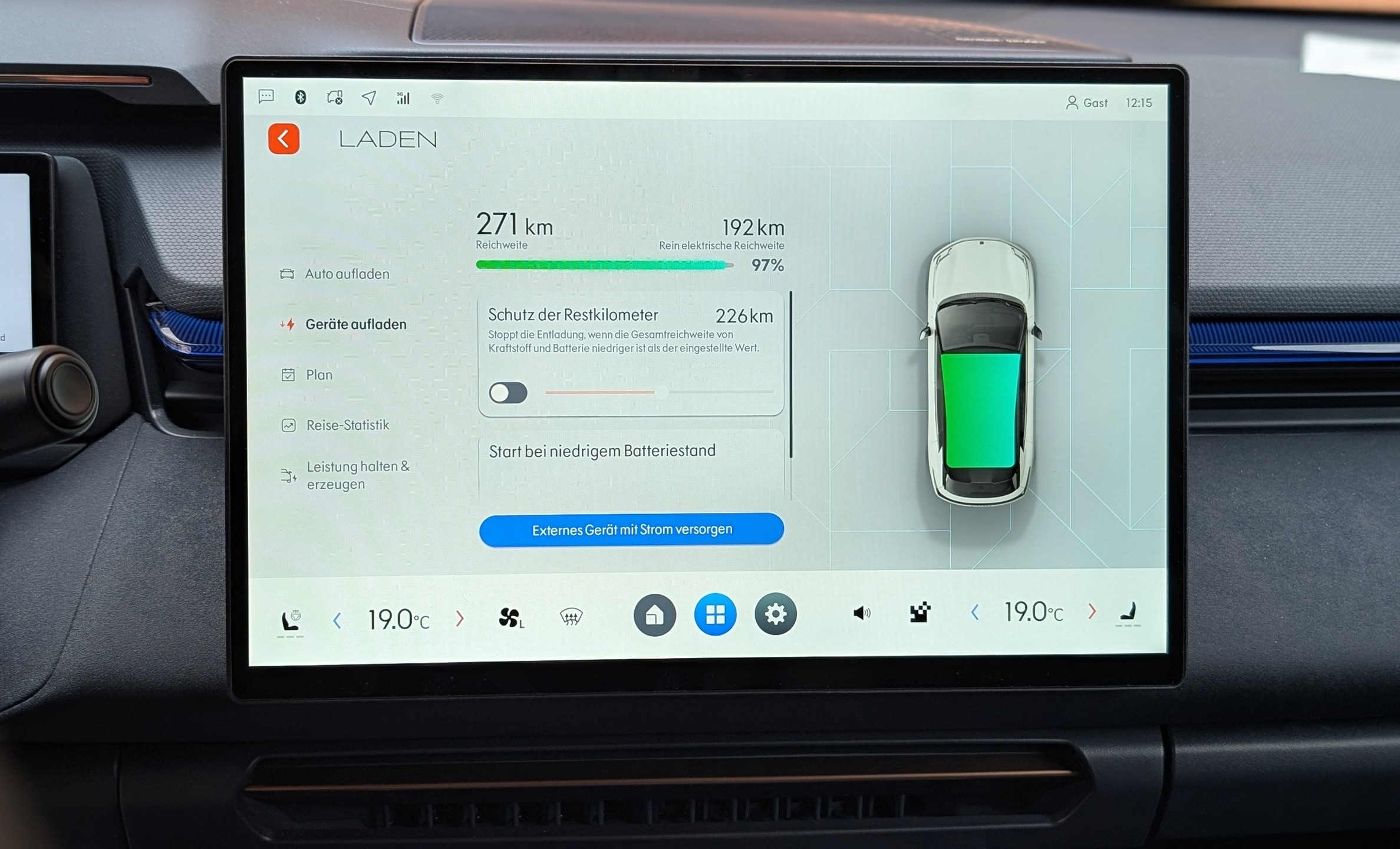
In everyday use, this changes the rules of the game. On long journeys, a half-hour coffee break is all it takes to recharge the battery enough for another 150 kilometers. Those who charge at home start every morning with a full battery. In addition, the 08 can output 3,3 kilowatts of power externally via an adapter (V2L, Vehicle to Load), powering, for example, a camping stove or tools. While 85 kilowatts isn't a top-of-the-line figure, it's a small revolution for a hybrid. This feature sets the Lynk & Co 08 apart from every rival.
Picture: TechnikNews
Price & Warranty of the Lynk & Co 08: A lot of car for the money
Lynk & Co is calling for the Base configuration Core 55.995 Euro and the lavish More trim level adds another €59.995. A BYD Seal U starts at €39.990, but offers less range, less power, and a more basic interior. A Wey 05 is more expensive, but has significantly more power. A comparably powered Volvo XC60 plug-in hybrid starts at over €64.000, several thousand euros more than the Lynk & Co, and offers only a fraction of the electric range. (All prices in this article are as of July 2026 and include 19% VAT.)
You get a lot for your money. The More version includes a panoramic sunroof, matrix headlights, massage seats, and a premium sound system – without an endless list of optional extras. All cars come with a 4-year warranty and an 8-year warranty for the high-voltage battery. The warranty conditions They are competitive, and Lynk & Co is taking a long-term approach. However, two questions remain: How stable is a young brand's residual value, and how dense is its service network? The operational support provided by Volvo in the service department at least alleviates these concerns. Based on its features and specifications, the 08 is a strong offering – the unpredictable depreciation is the only real drawback.
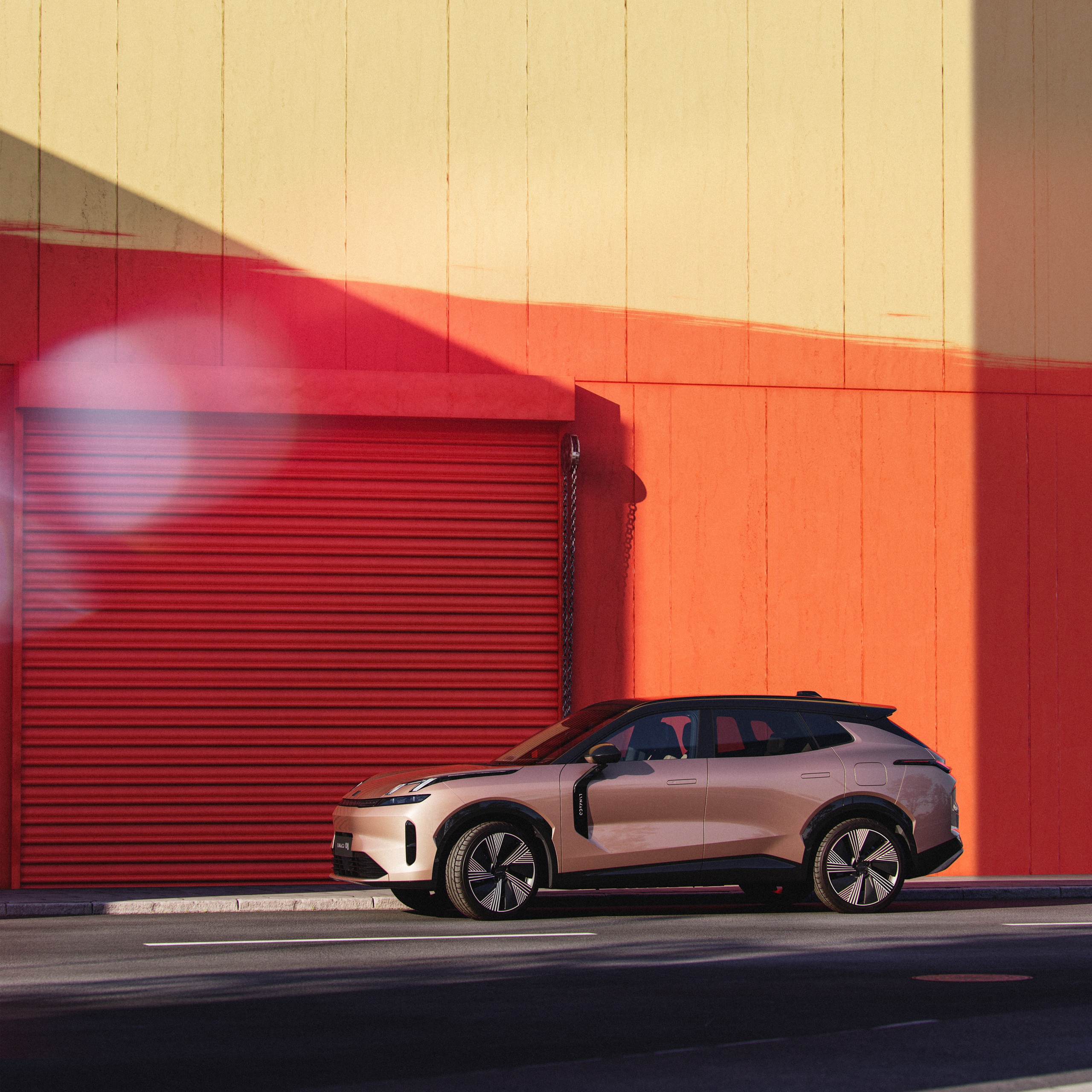
Image: Lynk & Co
Many thanks to Lynk & Co Germany for providing the Lynk & Co 08 for this review. This did not influence our opinion!