Our test conclusion
Meraki Espresso Machine (2nd Gen)
The Meraki is the most convenient way to make truly excellent espresso: its grinder, two scales, and dual boiler ensure a smooth workflow, consistent espresso results, and milk can be frothed simultaneously. It's worthwhile for anyone looking for a stylish, easy-to-use all-in-one machine and willing to pay the premium price. Coffee professionals who prefer to upgrade their grinder and machine separately will find better options elsewhere.
- Design & processing 9
- Service 9,5
- Espresso 9
- Milk foam 8
- Smart features 5
- Daily life & cleaning 8,5
- Price-performance 6,5
Pro
- Very easy to use and smooth workflow
- Integrated scales under the grinder and brewing unit
- Consistently very good espresso
- Espresso and milk simultaneously thanks to dual boiler
- High-quality workmanship, stylish design
- Quiet operation
- Less cleaning effort
Contrary to
- High price
- Wi-Fi is hardly useful without an app.
- The wooden handle on the portafilter is a little loose.
- No knock box included.
- Big need of space
- Mill and machine are not separately interchangeable.
Espresso machines have an imageproProblem. Anyone who wants café-quality espresso at home needs not only the machine, but also a good grinder, scales, a timer, and above all, patience until the grind, dose, and extraction time are just right. The Meraki espresso machine aims to eliminate precisely this hurdle. Grinder, two scales, brew group, and steam wand are all integrated into one device, and a touchscreen guides you through every step. This comes at a price: Meraki regularly charges €1.999.
I've been using the Meraki daily since the beginning of October for several coffees, mainly espresso and cappuccino. Before that, I tested the Sage Barista Touch Impress, among others, a machine with similar features but in a lower price range.
What the Meraki promises
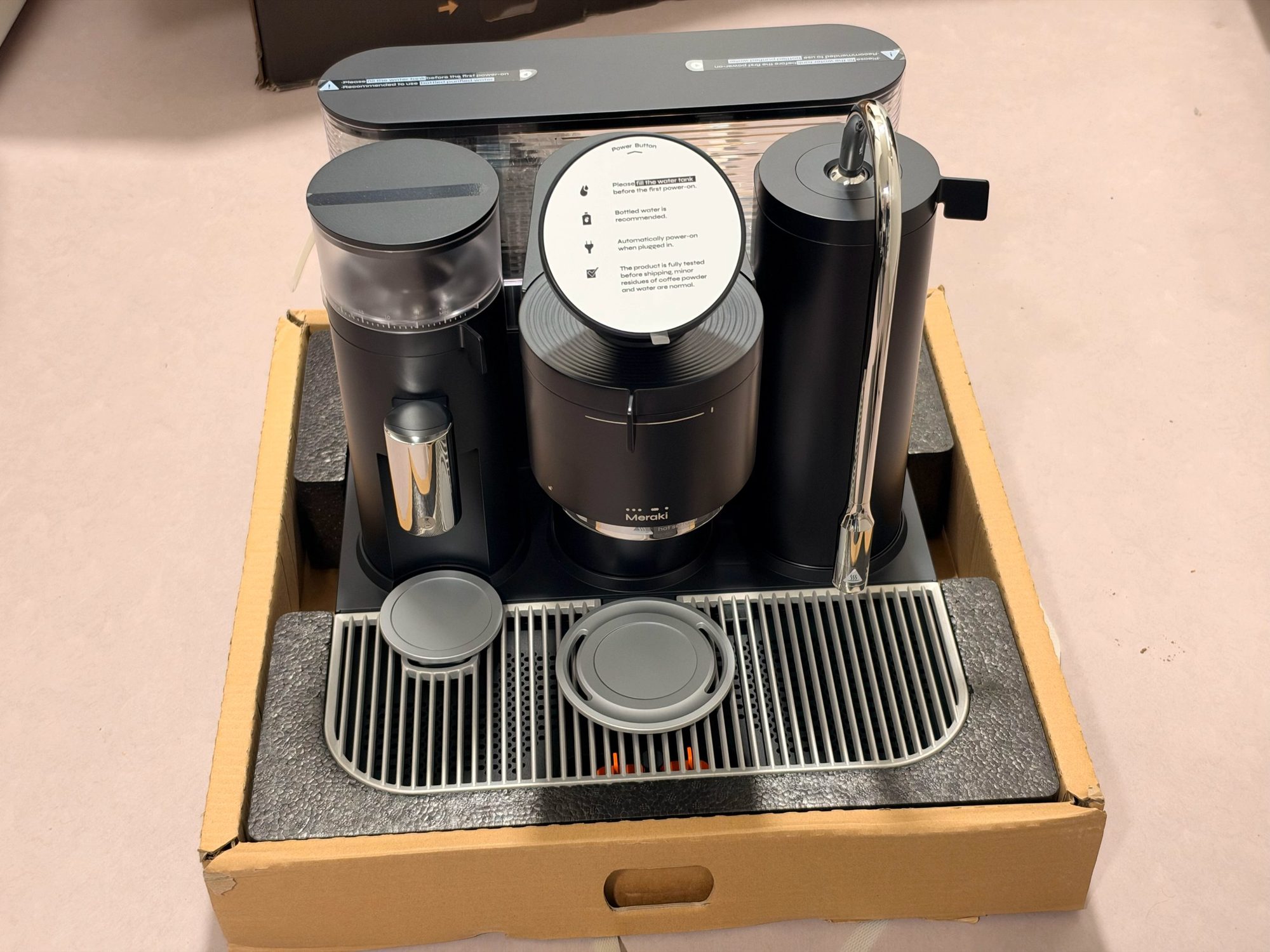
I tested the current second generation in black; the machine is also available in white. According to the manufacturer, it uses two separate boilers: a 350-milliliter brew boiler and a 550-milliliter steam boiler. A PID controller regulates the temperature, and it also features a heated brew group and a rotary pump with nine bar pressure. The conical burr grinder has a 38-millimeter diameter and 45 grind settings; it was developed in collaboration with the grinder manufacturer Timemore. There are scales located under both the grinder and the brew group, which, according to the specifications, measure to an accuracy of 0,2 grams. The water tank holds two liters. Unboxing the package is also a unique experience: Meraki has planned everything down to the last detail, resulting in a comparatively small box.
This feature is usually found on machines that require the purchase of a separate grinder costing several hundred euros. Whether this translates to a noticeable difference in the cup was the most intriguing question of this test.
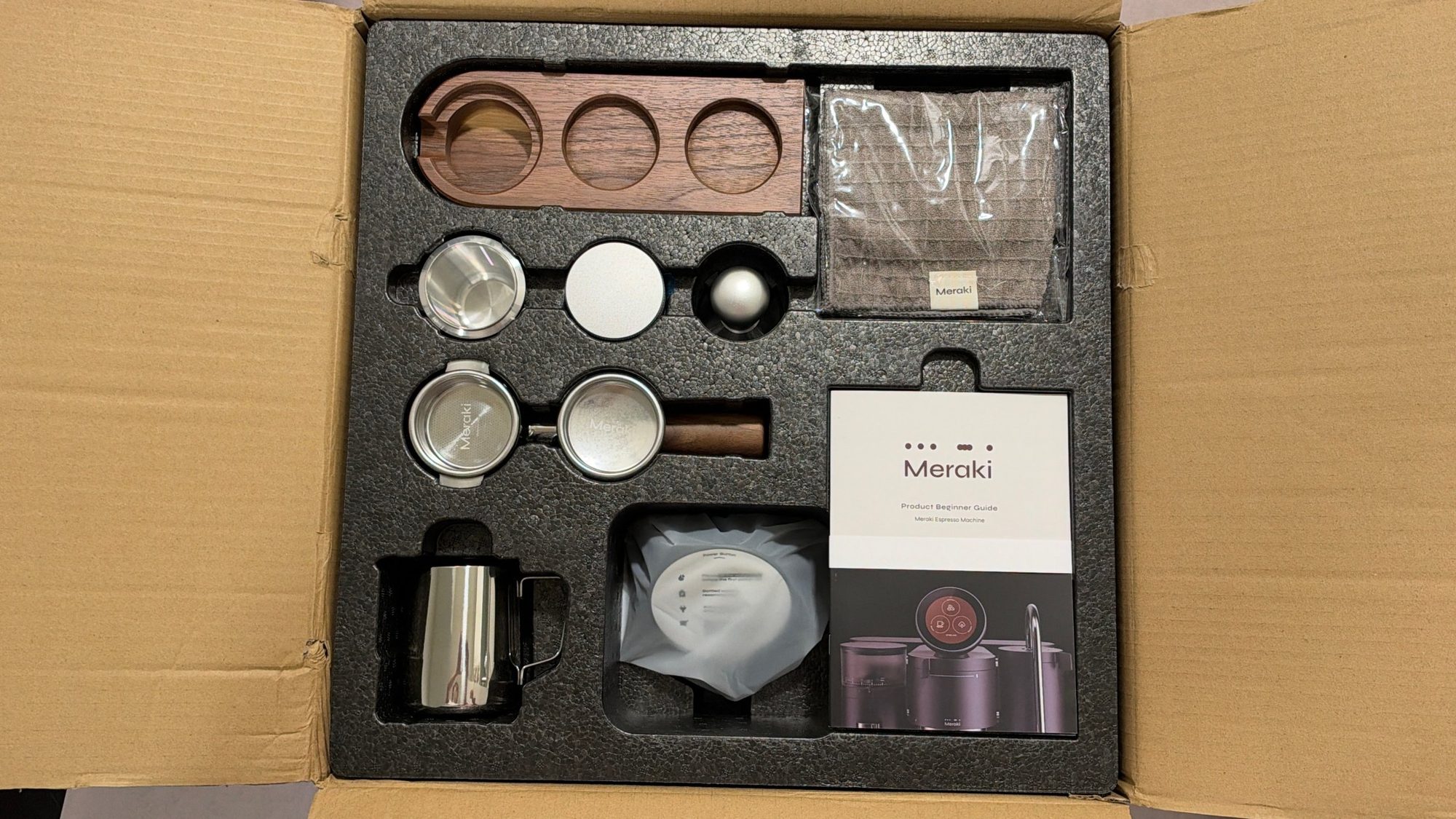
Design and workmanship: Plastic that doesn't look cheap
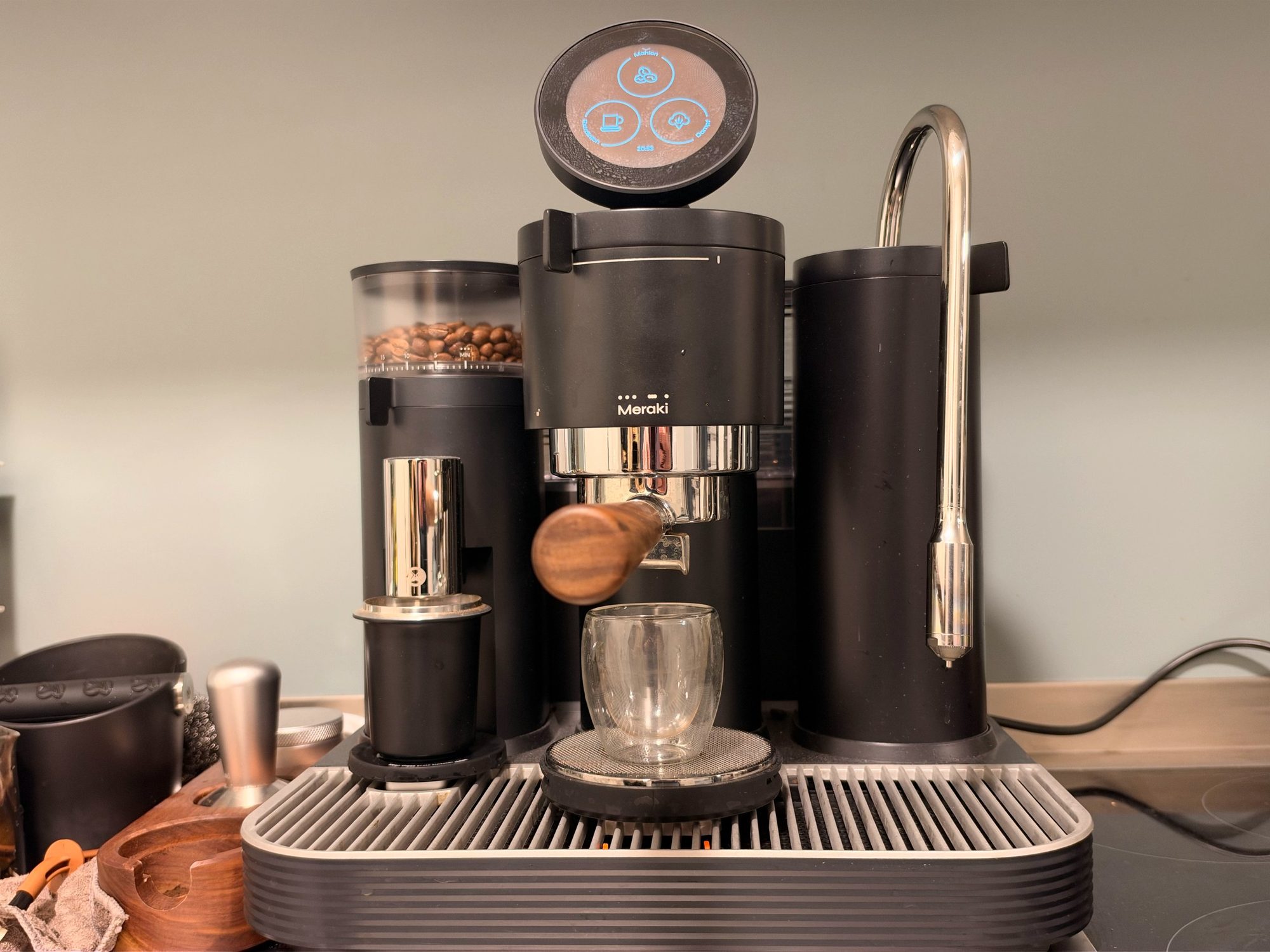
The Meraki breaks with the classic portafilter look. Instead of a chrome-plated box, three elements stand side by side on a shared base: the grinder on the left, the brew group in the middle, and the steam wand on the right. A round, tiltable touchscreen sits on top. It's a bit playful, but practical in everyday use.
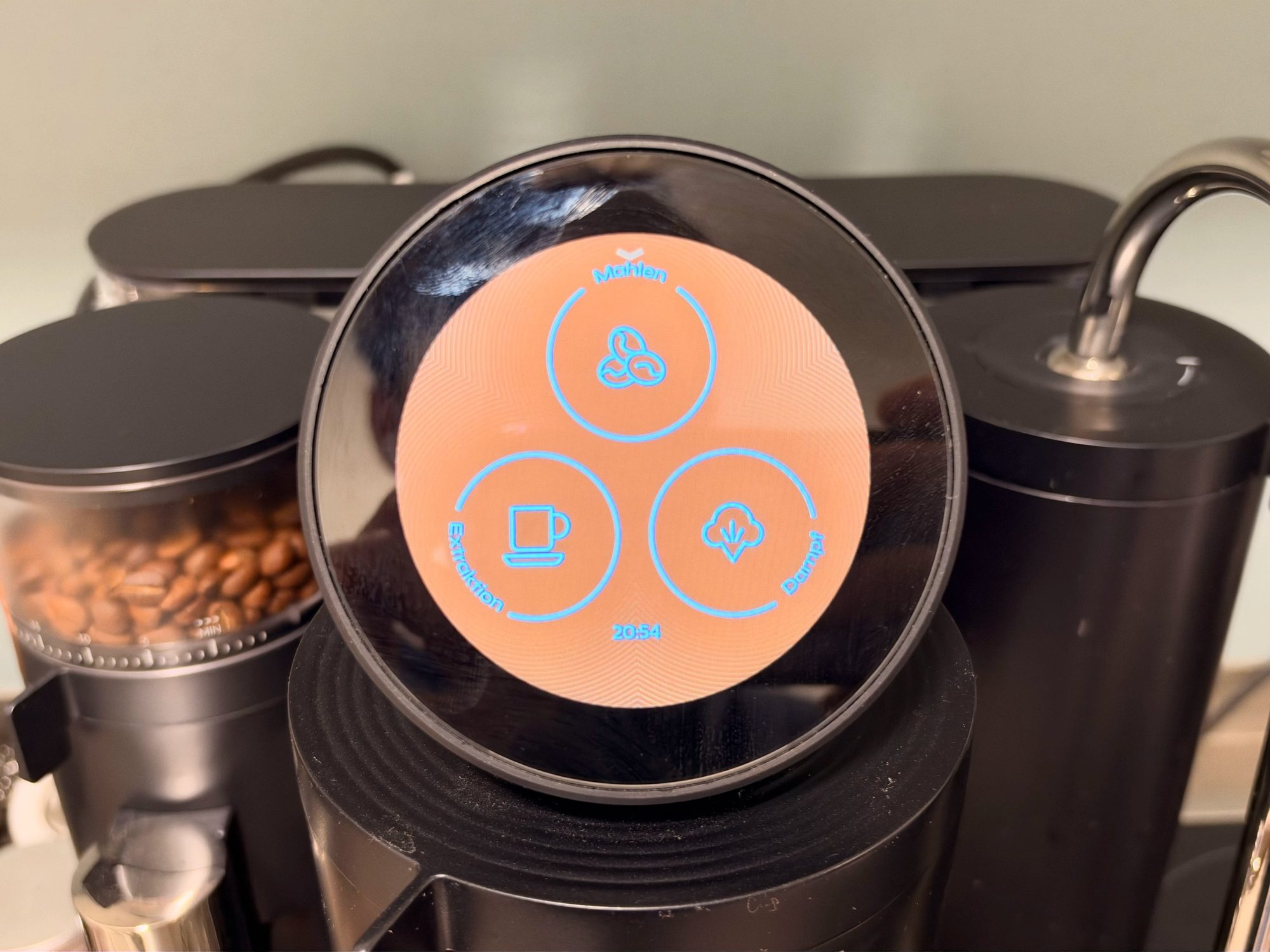
The casing is made of plastic. In this price range, that might put some people off, but it didn't bother me. The machine appears to be very well made, and that hasn't changed even after eight weeks. And the plastic has a very practical advantage: fingerprints and coffee splashes are easier to wipe off than on polished stainless steel.
There are a few minor criticisms, though. I had to search for the power button at first; its placement isn't intuitive. While the portafilter is easy to lock in, its wooden handle is a bit loose. And a knock box is missing from the package. I already had one, but newcomers will need to buy one separately. According to the manufacturer, the drip tray isn't dishwasher safe.
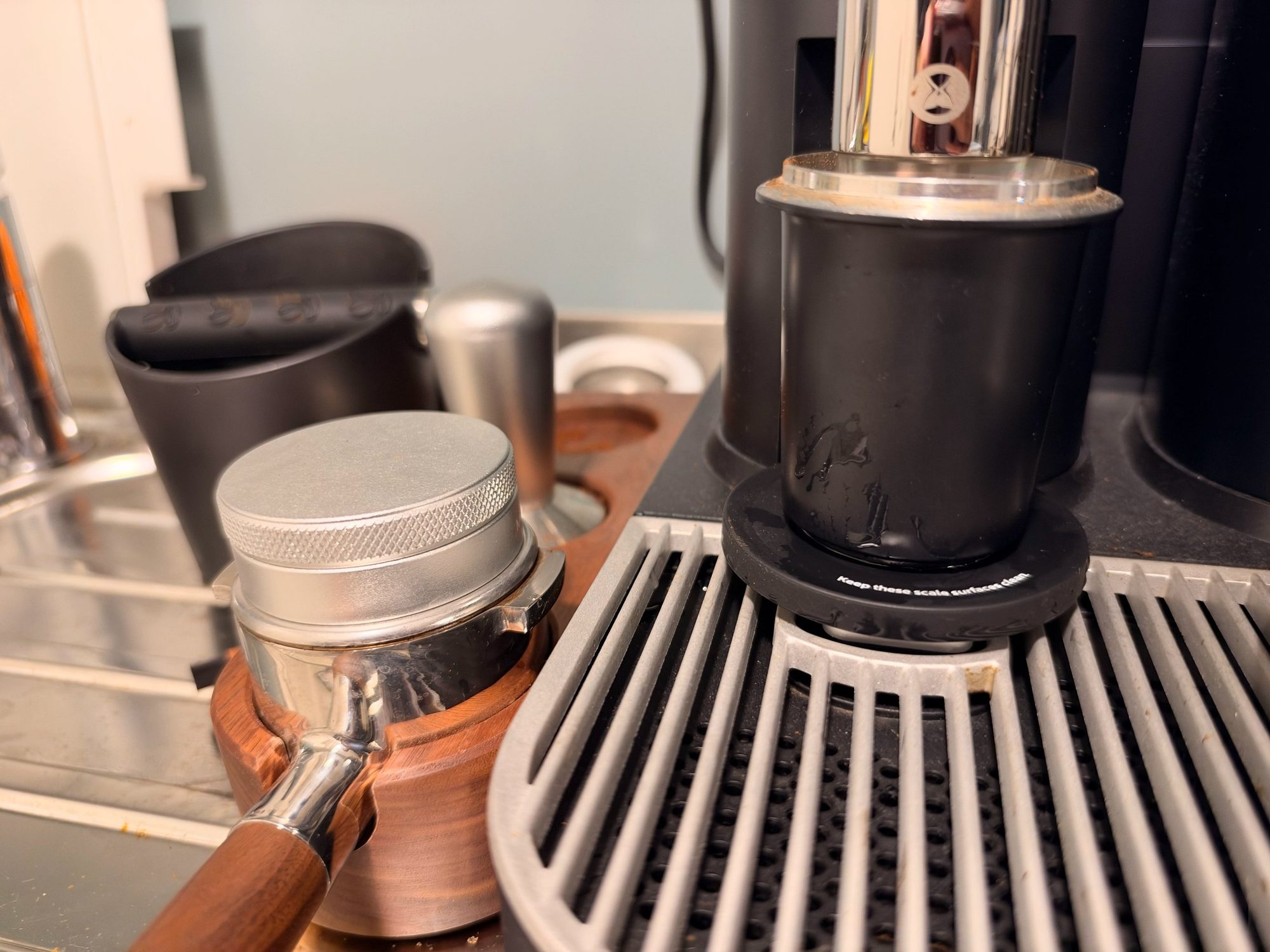
You should plan for some space. With a base of 37 by 37 centimeters and a height of around 41,5 centimeters, the Meraki is not a small device, but it fits in my space. proeasily onto the work surface.
Setup and operation: The real trump card
Setting it up is straightforward. Fill the water tank, add the beans, switch it on, and follow the instructions on the display. I connected the machine directly to my Wi-Fi network, after which it installed a firmware update. Meraki states a heat-up time of three to four minutes; mine takes just under three minutes to heat up completely.
In everyday use, the Meraki truly demonstrates its capabilities. The display allows you to set the desired amount of ground coffee; in my case, it's 16 grams. The scale beneath the grinder provides real-time weighing, and in my tests, the deviation was typically around 0,2 grams. Next, the ground coffee is distributed and tamped using the included distributor, and the portafilter is inserted into the brew group. A scale within the brew group also provides weight, and the extraction stops as soon as the set weight is in the cup. An external scale with a timer, like the kind espresso machine enthusiasts typically keep next to their espresso machines, is unnecessary.
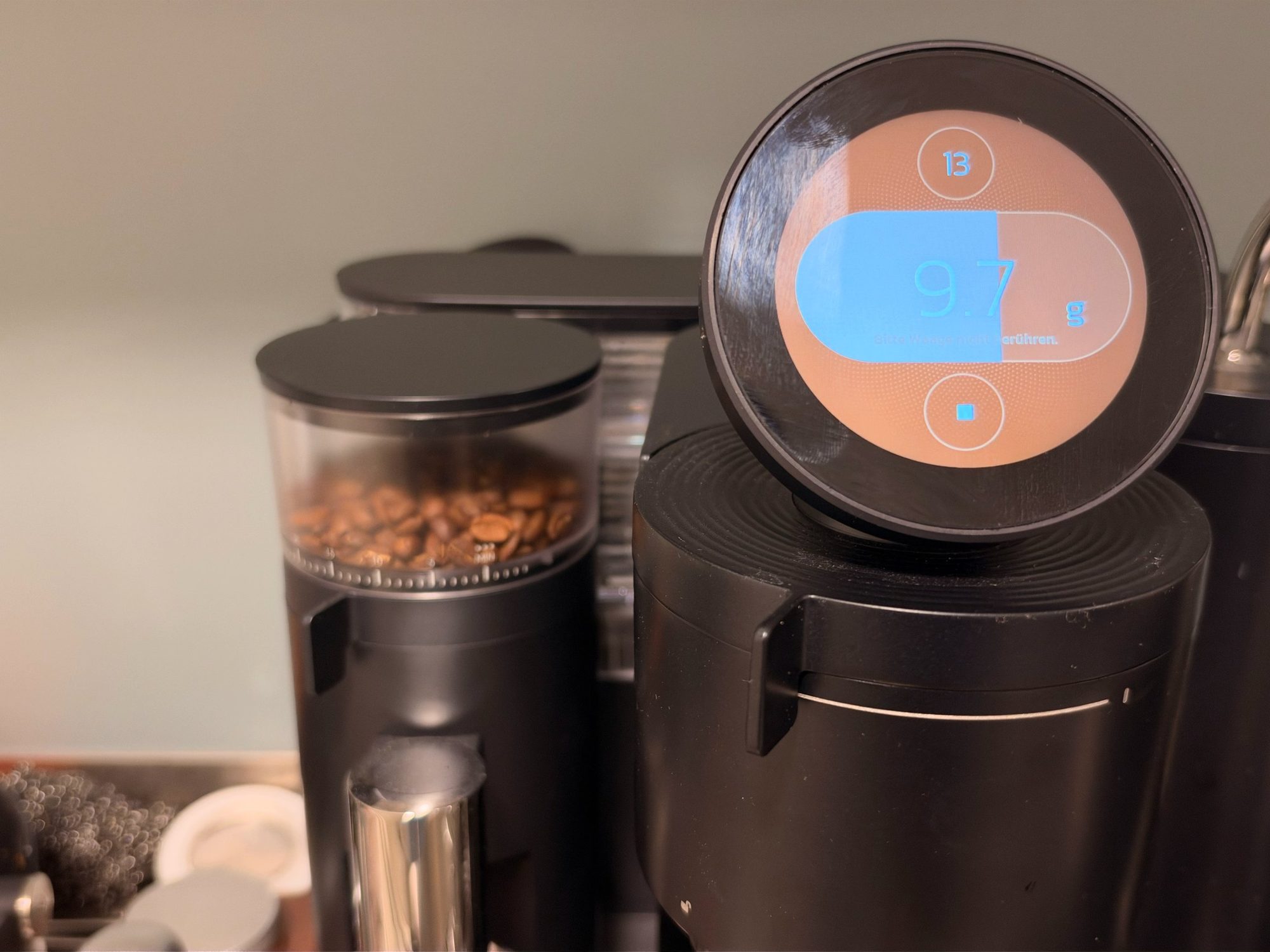
This process is the machine's biggest advantage. It's so smooth that you don't have to think about it in the morning. Compared to the Sage Barista Touch Impress, however, it's noticeable that the Sage provides a bit more guidance for beginners. The Meraki, on the other hand, offers more adjustable settings for grind size, dose, and brew volume.
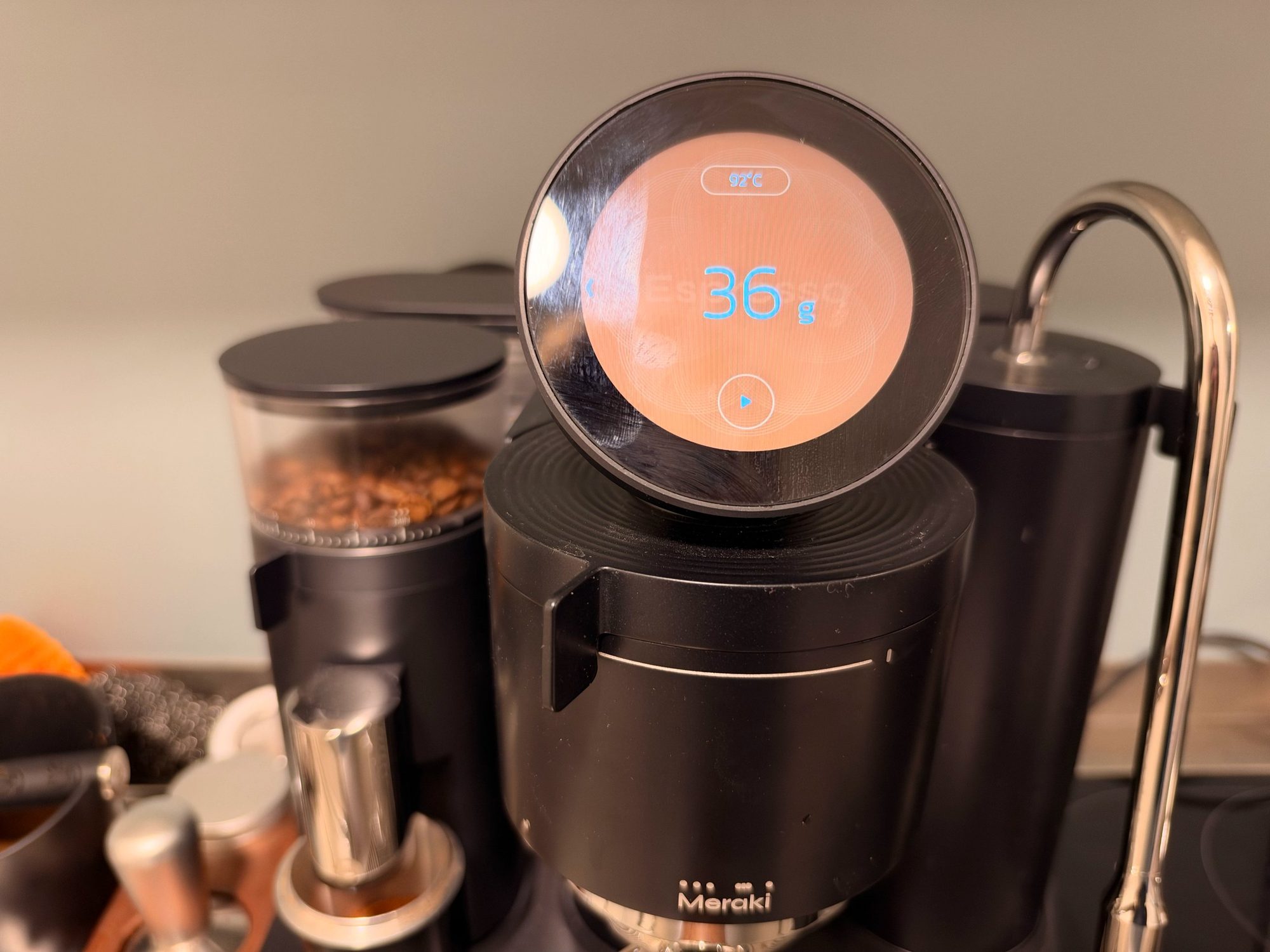
Espresso: Consistency is its real strength.
I tested with a wide variety of beans, from inexpensive supermarket beans to more expensive roasts, including varieties from Lavazza and the Hamburg roastery Elbgold. I tested the grind from coarse to fine.probeer. My standard recipe is a double espresso with 16 grams of ground coffee and 38 grams in the cup, ground to level 13, with a brewing time of about 20 seconds.
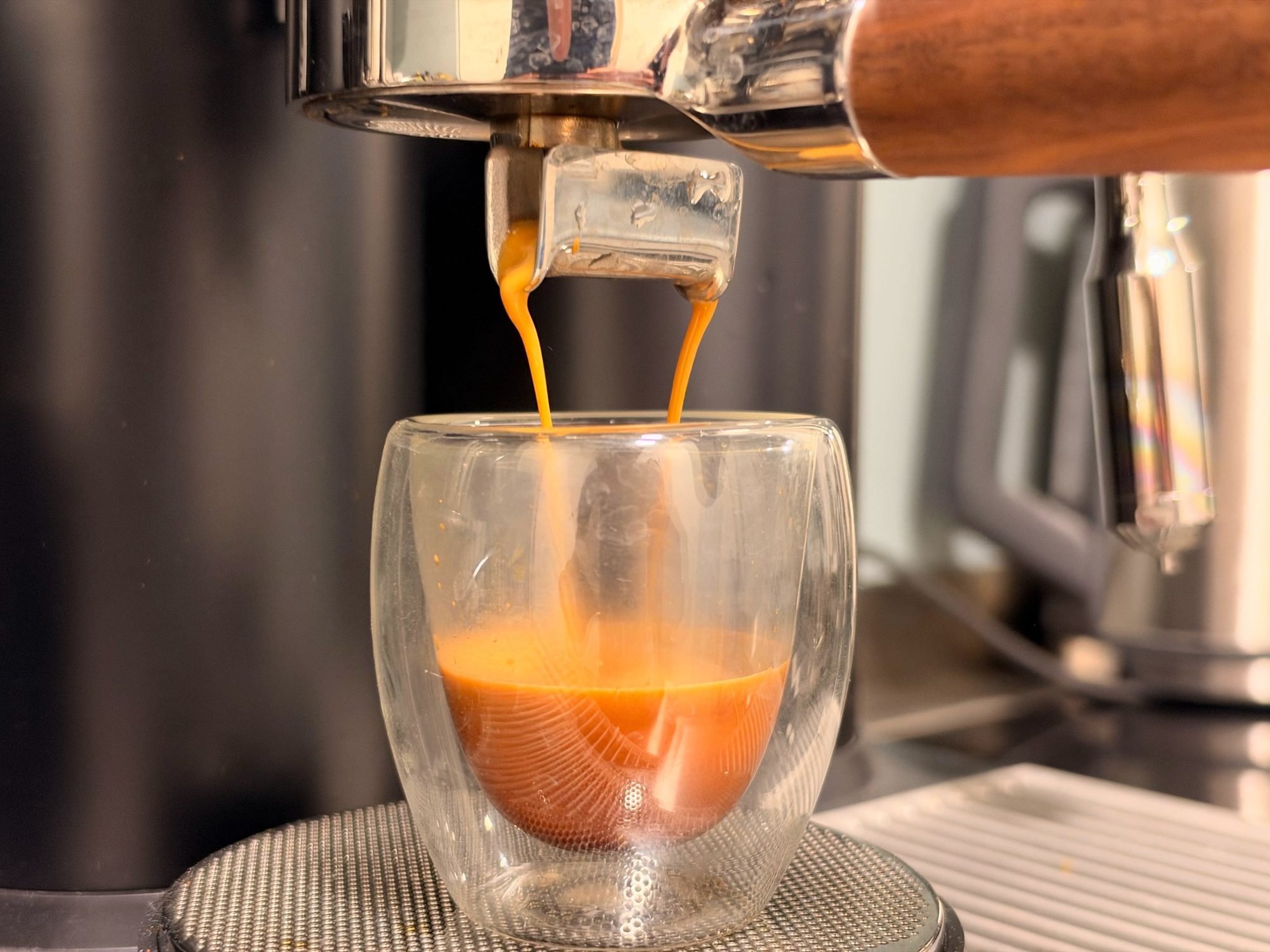
It only took a few tries to get the espresso to taste right. The result is a smooth, almost oily espresso with a hazelnut-brown crema, and most importantly, it tastes the same every day. In almost eight weeks, I only had one failed shot, and that was due to an incorrect setting on my part. In direct comparison, I prefer the espresso from the Meraki to that from the Sage Barista Touch Impress.
Not fromproI have the CoffeeSense function. Meraki sells beans from partner roasters with an NFC chip in the packaging; when you hold the bag to the machine, it's supposed to load the appropriate recipe. I can't comment on how well this works.
Milk froth: Simultaneously instead of one after the other
Because the Meraki has two separate boilers, espresso and milk can be prepared simultaneously. This actually works in practice. proIt works flawlessly and noticeably saves time when making cappuccino. With cheaper machines that only have one heating system, you usually have to wait.
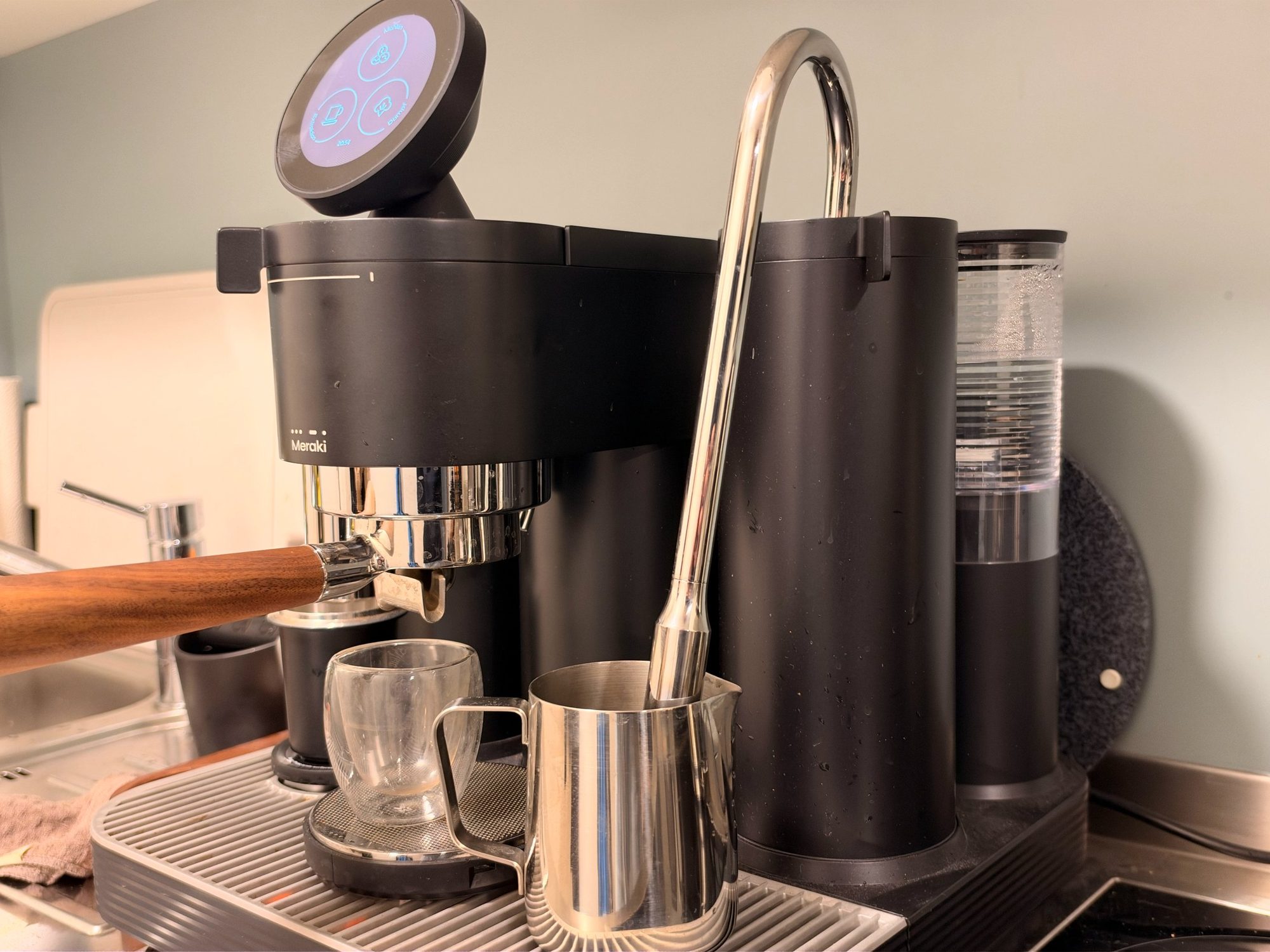
Frothing takes about a minute. With cow's milk and oat milk, it produces a foam easily sufficient for a good cappuccino. The machine also offers an automatic mode that froths up to a target temperature. I found manual operation easier and therefore hardly used the automatic function. To be honest, I can't say much about its suitability for latte art; that's where my skill falls short, not the machine's.
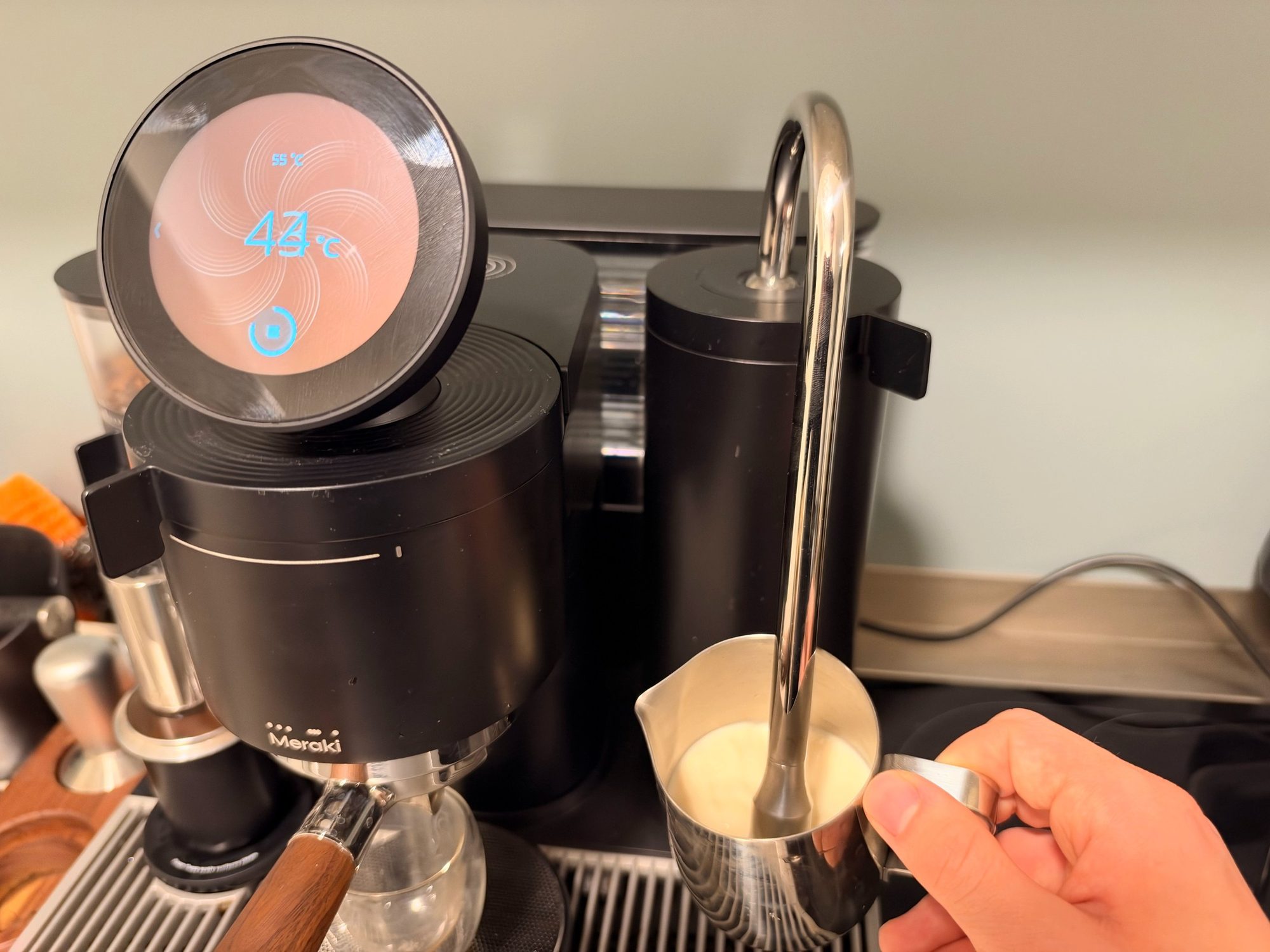
Smart features: Lots of technology, little benefit
The Meraki has Wi-Fi, but there's no app. In my test, the connection served exactly one purpose: the firmware update. Anyone who wants to move a machine into... home network Those who bring something should also benefit from it, for example, recipes from smartphone or a remote control. Combined with CoffeeSense, this feature seems more like a sales gimmick than a genuine added value. The functions I actually used daily were the two scales and the display.
Daily life and cleaning
Throughout the entire testing phase, the Meraki ran without any error messages or malfunctions. I was pleasantly surprised by the noise level. The machine is pleasantly quiet, which, according to the manufacturer, is due to the rotary pump. I refill the water tank approximately every one to two weeks.
Maintenance is minimal. I clean the machine once. pro The week was thoroughly cleaned, and no component was particularly difficult to access. If a cleaningproThe machine will notify you automatically when the gram is due.
One fundamental point concerns the all-in-one concept. Because the grinder and machine are housed in a single unit, in the event of a defect, a single part cannot simply be replaced; in some cases, the entire device must be sent in for service. This wasn't an issue in my test. According to their website, Meraki offers a two-year warranty through authorized service partners and a 30-day trial period with a money-back guarantee.
Price and alternatives
The manufacturer's suggested retail price is €1.999. At the time of this test, Meraki was selling the machine in its own shop for €1.699 and included a barista set with accessories such as a WDT tool, milk pitcher, and tamper, which was not included with my test unit.
That's a lot of money, even on sale. Anyone looking for a similar all-in-one solution should compare the Sage Oracle Jet, which is currently available from around €1.500. A Nunc. is more expensive, easily costing €1000 more. The De'Longhi La Specialista Touch with integrated grinder is significantly cheaper at under €600, but technically it's in a different league. I haven't tested either of these machines myself. Those who enjoy tinkering and think long-term are better off with a separate espresso machine and grinder, as both can be upgraded and repaired individually.
Conclusion: The easiest way to really good espresso
The Meraki espresso machine isn't for coffee nerds who want to manually control every parameter and upgrade their setup over years. It's for people who want really good espresso without having to delve into the technical details. And that's exactly what it delivers: The workflow is well-designed, the integrated scales eliminate the need for weighing, the espresso tastes consistently excellent, and milk-based drinks are quick and easy thanks to the dual boiler. Add to that high-quality workmanship, quiet operation, and eight weeks of trouble-free use.
The weaknesses lie elsewhere. Wi-Fi without the app is practically useless, CoffeeSense feels like a gimmick, and small details like the loose wooden handle on the portafilter or the missing knock box don't quite live up to the overall promise. The biggest drawback remains the price. However, for those looking in this price range and wanting a stylish, easy-to-use all-in-one machine, the Meraki is an excellent choice. I would buy it myself under these conditions.