
Vivo X200 FE review: Competition from within the company
A TEST REPORT from Fabian Menzel  on August 15, 2025, 6:00 pm | Write a comment
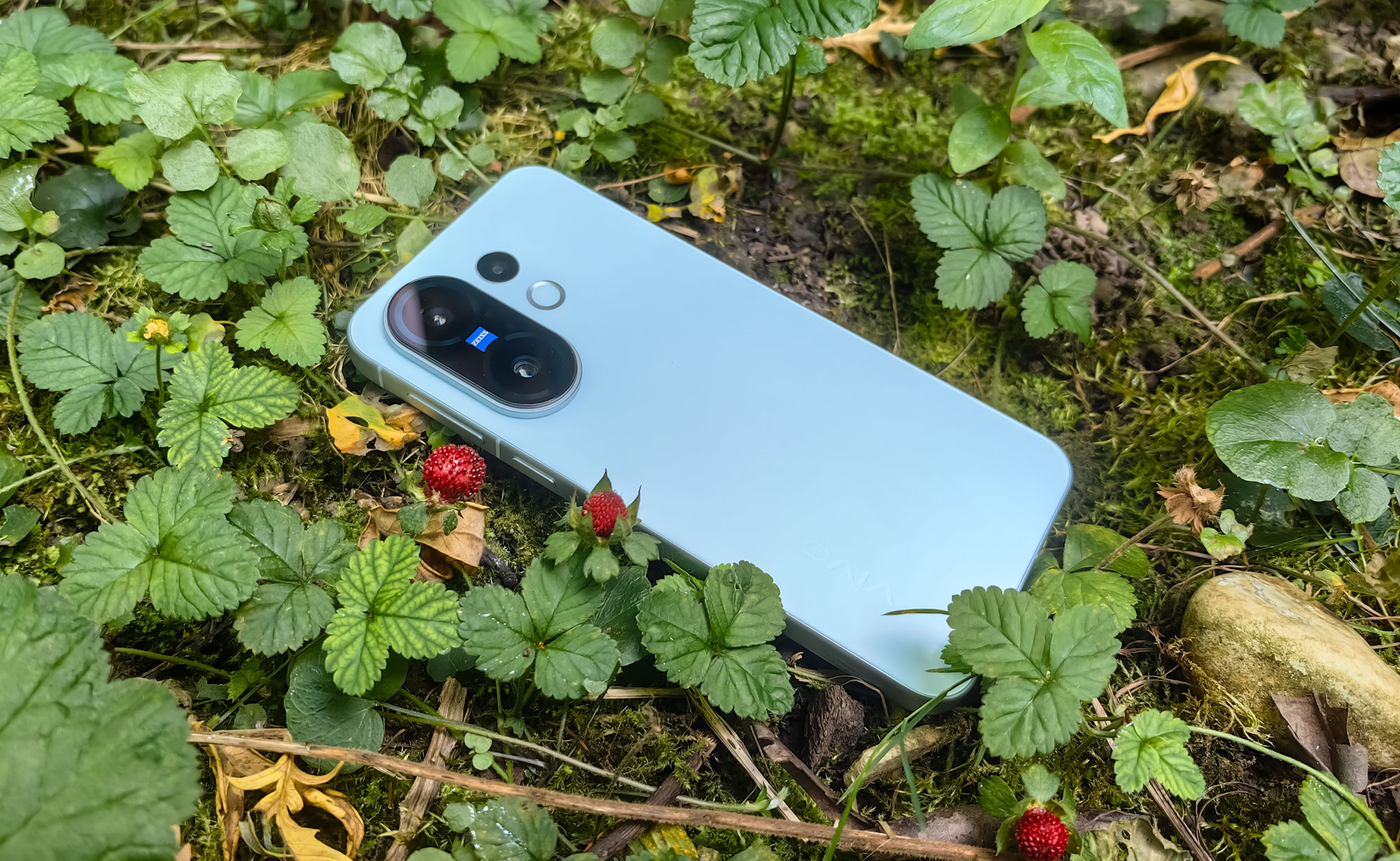
After having looked at the Vivo X200 and X200 Pro Now that we've taken a closer look at the last device in the series – the Vivo X200 FE. It's the smallest and least equipped smartphone in the X200 series and currently costs around €700.
For this price – which is currently even slightly higher than the X200 – you get a very impressive range of features: a MediaTek Dimensity 9300+ processor, a 5.300 mAh battery, a 6,31-inch OLED display with 120 Hz refresh rate, up to 12 GB RAM, a 50-megapixel triple camera, and more. The specs sound really good on paper, but does the smartphone also perform well in everyday use? Or should you currently opt for the X200? You'll find out all this and much more in this review.
Conclusion
My verdict on the Vivo X200 FE is actually harder than I thought. On the one hand, it's a very good, high-quality, and stylish smartphone, unique due to its compact size. The display is great, the performance is outstanding, and the battery life is among the best of all the smartphones I've tested this year. I also like Funtouch OS, and the main and telephoto cameras are surprisingly good.
However, the ultra-wide-angle camera and stereo speakers are two major weaknesses that shouldn't be present for a smartphone with a recommended retail price of €799. My biggest criticism, however, is Vivo's current price and product policy. The X200 FE currently costs around €700, making it about €100 more expensive than the standard X200. However, the X200 is the better smartphone – especially the ultra-wide-angle camera and stereo speakers are significantly better. Therefore, I would currently go for the X200 – especially since it's almost as compact as the FE. Even though the Vivo X200 FE is a great smartphone, I can't recommend it at its current price of €700 – only when it's cheaper than the X200.
We would like to thank Vivo Austria for providing the test device!
Design & processing
The absolute highlight of the Vivo X200 FE is definitely its design. Compared to the competition, it's considerably more manageable, measuring 150,8 × 71,8 × 7,99 millimeters, and at just 186 grams, noticeably lighter. The compact form factor is the biggest argument why you should buy the X200 FE. It's so refreshing to hold such a compact piece of technology in your hand alongside all the massive smartphones. The frame is made of matte metal, which feels classy and sturdy. The buttons are superbly crafted, have a good pressure point, but are positioned a bit too high for my taste. Despite the angular frame, the smartphone doesn't feel too angular in the hand. It sits perfectly and is easy to grip, and can be used in most situations. procan be operated easily with one hand.
-

- Picture: TechnikNews

-

- Picture: TechnikNews

-

- Picture: TechnikNews

-

- Picture: TechnikNews

The back is made of matte glass, which feels high-quality and somewhat soft. It's nowhere near as rough as, say, the iPhone 16 Pro. The three cameras are located at the top left, and I find their arrangement very appealing. At least the main and telephoto cameras protrude slightly from the casing, causing the smartphone to wobble noticeably when lying on a table. To counteract this wobble, you should use the included protective case. The Vivo X200 FE is actually only available in light blue. I would have liked a bit more choice here, but I quite like the blue color.
The front is at least as beautiful as the back. It's dominated by a gorgeous OLED display surrounded by extremely thin bezels. Unlike the X200 and X200 Pro, the edges are unfortunately not rounded to the frame. The cutout for the front camera is pleasingly small.
Display
On the front is a 6,31-inch OLED display with a resolution of 2.640 × 1.216 pixels and a refresh rate of up to 120 Hertz. This means that the panel pro It can display up to 120 individual images per second. Thanks to the high resolution, sharpness is excellent, and colors are reproduced with pleasant realism without appearing unnatural.

Picture: TechnikNews
The maximum brightness is particularly impressive: According to the manufacturer, the panel reaches up to 4.500 nits, which means that content remains very legible even in direct sunlight. In my outdoor tests, I never had any issues with visibility. One minor weakness is the viewing angle stability – when tilted sideways, the panel discolors slightly, which is not uncommon for OLEDs, but is somewhat more noticeable here than on the X200.
Software
The X200 FE runs Funtouch OS 15 based on Android 15. Vivo promises four major Android updates and security updates through 2030. Samsung, Google, and Apple are a bit better in this regard, but for the current price, I think it's perfectly acceptable. I quite like Funtouch these days because it looks clean and offers a number of additional features. Numerous AI features have recently been added, including:
- AI Image Studio: Provides photo editing tools such as object removal, live cropping, and automatic image enhancement.
- Image Expander: Expands photos beyond their original size by calculating missing areas using a generative algorithm.
- AI screen translation: Translates foreign language content on the screen.
- Circle to Search: Enables visual search by drawing on the display.
- AI Office: Offers productivity tools such as speech-to-text and content summarization.
- Smart Call Assistant: Detects fraudulent callers.
Performance
While the X200 and X200 Pro feature the MediaTek Dimensity 9400, the FE features the slightly weaker Dimensity 9300+, which is manufactured using a 4-nanometer process. The Dimensity 9400 uses a 3-nanometer process. In Austria and Germany, only the version with 12 GB of RAM and 256 GB of internal storage is available. The latter cannot be expanded with a MicroSD card.

Picture: TechnikNews
Even though the processors look minimally different on paper, I notice absolutely no difference in everyday use. Apps launch and close incredibly quickly, and stuttering is very rare. Even with large apps or multitasking, there are no issues. I do notice that the back occasionally gets noticeably warm, but it never became a cause for concern.
Battery
Similar to the rest of the X200 series, the battery in the European version is slightly smaller than the one in China. While the Chinese version has a 6.500 mAh battery, the Austrian version uses a 5.300 mAh battery. This is significantly smaller, of course, but still a lot—especially considering the compact body.
I easily get through two days with the Vivo X200 FE, which isn't something I can say about many smartphones. With screen time of 3,5 to 4,5 hours, I still have at least 60 percent and a maximum of 70 percent battery left at the end of the day, which is simply impressive. This puts it almost on par with the X200. Fast charging is possible with up to 90 watts, although the corresponding power adapter must be purchased separately. Wireless charging is unfortunately not available.
camera
There are three cameras on the back, positioned as follows:
- 50 Megapixel main camera
- 8 megapixel ultra wide angle camera
- 50 megapixel telephoto camera – 3x optical

Picture: TechnikNews
The main camera uses the same sensor as the X200. Accordingly, the results are completely identical. The dynamic range is excellent, as is typical for Vivo, and the sharpness is extremely high. Even fine details are clearly visible. Colors are reproduced with pleasing realism in "ZEISS" mode. However, the results are often too high in contrast for my taste.
The ultra-wide-angle camera is actually the biggest criticism of the Vivo X200 FE. The sensor is very small and only has an 8-megapixel resolution, which is noticeable when taking photos. Fine details are quickly lost, and in difficult lighting conditions, images quickly become noisy. The color matching between the main and ultra-wide-angle cameras could also be better. For a smartphone with an RRP of €799, I expect significantly more. The X200 and X200 are significantly better in this regard.
The telephoto camera with 3x optical zoom is impressive across the board. Colors are reproduced accurately, the dynamic range is excellent, and the sharpness is significantly better than expected. Images are particularly detailed and clear at 3x, 4x, and 5x magnification. Even at 10x magnification, the shots are usually still presentable.
Other
Last but not least, I'd like to address a few minor points. Let's start with the stereo speakers, which unfortunately didn't completely convince me. While they're sufficiently loud, high tones can sometimes sound unpleasant, and the bass also leaves something to be desired. For €700, you can definitely expect more.
I like the built-in vibration motor much better. Unlike the Live V50 It provides very precise vibrations and feels high-quality in the hand. The fingerprint sensor under the display is also very good. While it's an optical sensor, positioned a bit too low for my taste, it's very fast and reliable.