
Volvo EX40 Black Edition review: Black horsepower hammer
A TEST REPORT from Leander Diedrich  on September 07, 2024, 8:50 am | Write a comment
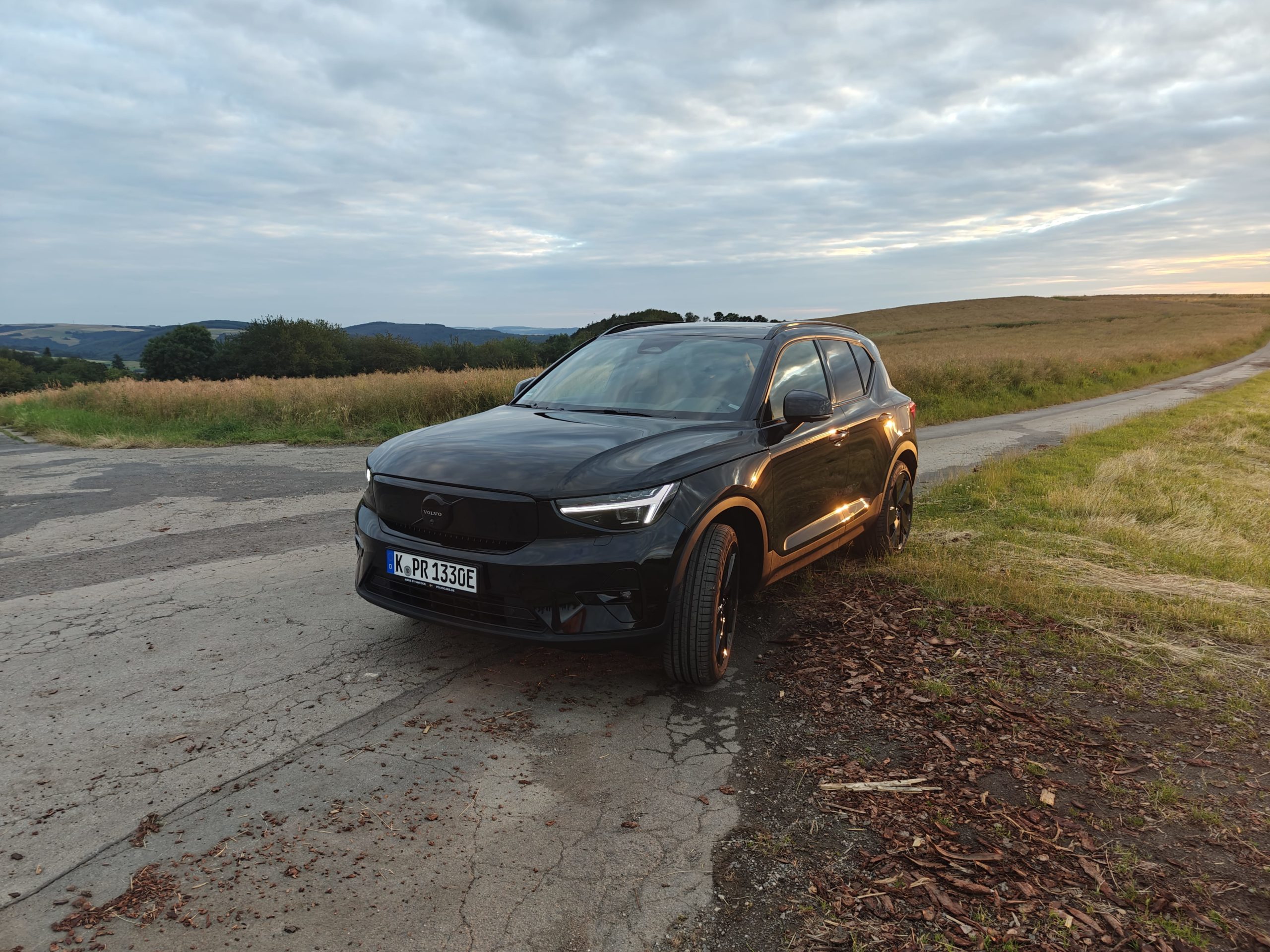
The Volvo EX40 is no stranger at first glance. Volvo has had the compact SUV in its range for several years - albeit under a different name. Volvo has given the electric XC40 Recharge a new model name and a new coat of paint. We tested the new Volvo EX40 Black Edition extensively for three weeks.
Conclusion
In our test, the Volvo EX40 Black Edition showed its strengths, particularly in terms of appearance: the all-black design is definitely an eye-catcher. The space and comfort in the EX40 are also absolutely positive. The Android-based operating concept makes a good impression and is a support for the driver rather than a challenge. Shortcomings were noticed in the Pilot Assist, which cannot steer many curves independently and has questionable deviations from the set speed. The somewhat high consumption of the EX40 can be forgiven, because the charging speed is good at over 200 kW, and it masters long distances without any problems. For the Black Edition, you have to put a lot of money on the table at between 53.000 and 62.000 euros - you don't get a perfect electric car for that, but you do get a good one.
Dangerous-looking design language
In purely visual terms, the EX40 in the new Black Edition makes a bold appearance. In addition to the paintwork and the 20-inch diamond-cut rims in high-gloss black, all of the EX40's trim and lettering are also completely black. The EX40 is by no means a wolf in sheep's clothing: you'd better not mess with this dark figure even on second glance. At the front, the LED headlights in the familiar "Thor's hammer" look stand out. Just like these, the taillights of the EX40 have not changed either, and the somewhat outdated halogen indicators at the rear reveal the older basic structure of the vehicle.
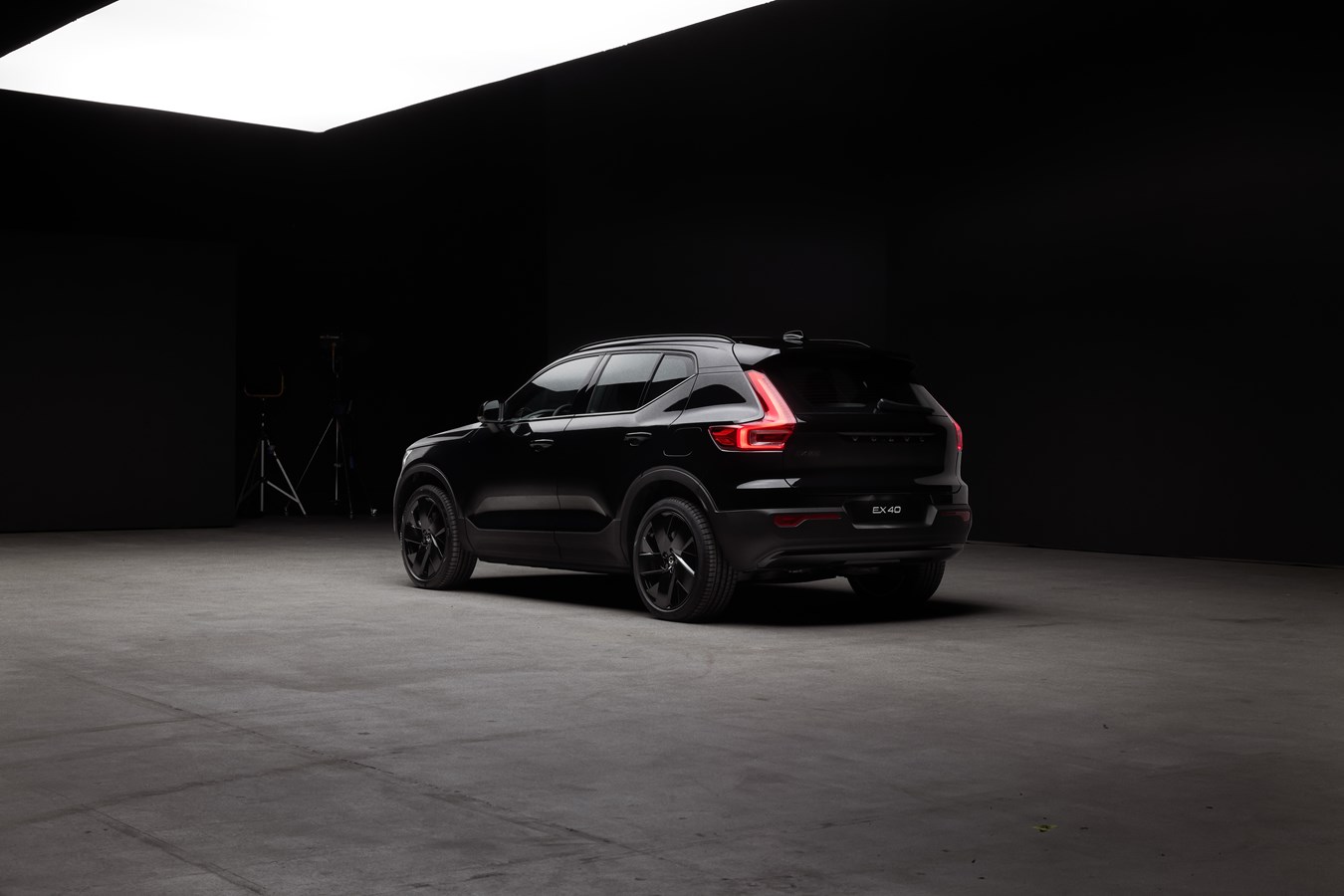
Image: Volvo
High quality interior
How could it be otherwise with the model name "Full Black" - of course the interior of the EX40 is also completely black. The seats are made of a pleasant Alcantara-like material and offer generous seating comfort. The center console has piano lacquer, which is a magnet for fingerprints, dust and scratches. There is also an inductive charging cradle for the smartphone and two USB-C ports. The storage compartment in the center console does not make a very high-quality impression with its rickety-looking closure. In the dark, the backlit pattern of a Swedish mountain landscape on the dashboard creates a cozy ambience in the vehicle. For summer Sunday drives, the EX40 has a glass sunroof, which can also be darkened with an electric roller blind.
There is enough space in the back for even tall people. There is enough knee room behind a 1,85 m tall driver, there is plenty of headroom and the seating position is also very comfortable. The rear passengers also benefit from two USB-C ports and can make themselves comfortable with a fold-out armrest with integrated cup holders.
The largest storage space in the EX40 is behind the electric tailgate with a storage volume of 410 l. A semi-electric trailer hitch can be extended at the push of a button, offering an impressive towing capacity of 1,8 t. Additional storage space can be found in the 31 l frunk, although not much more than a charging cable fits in here.
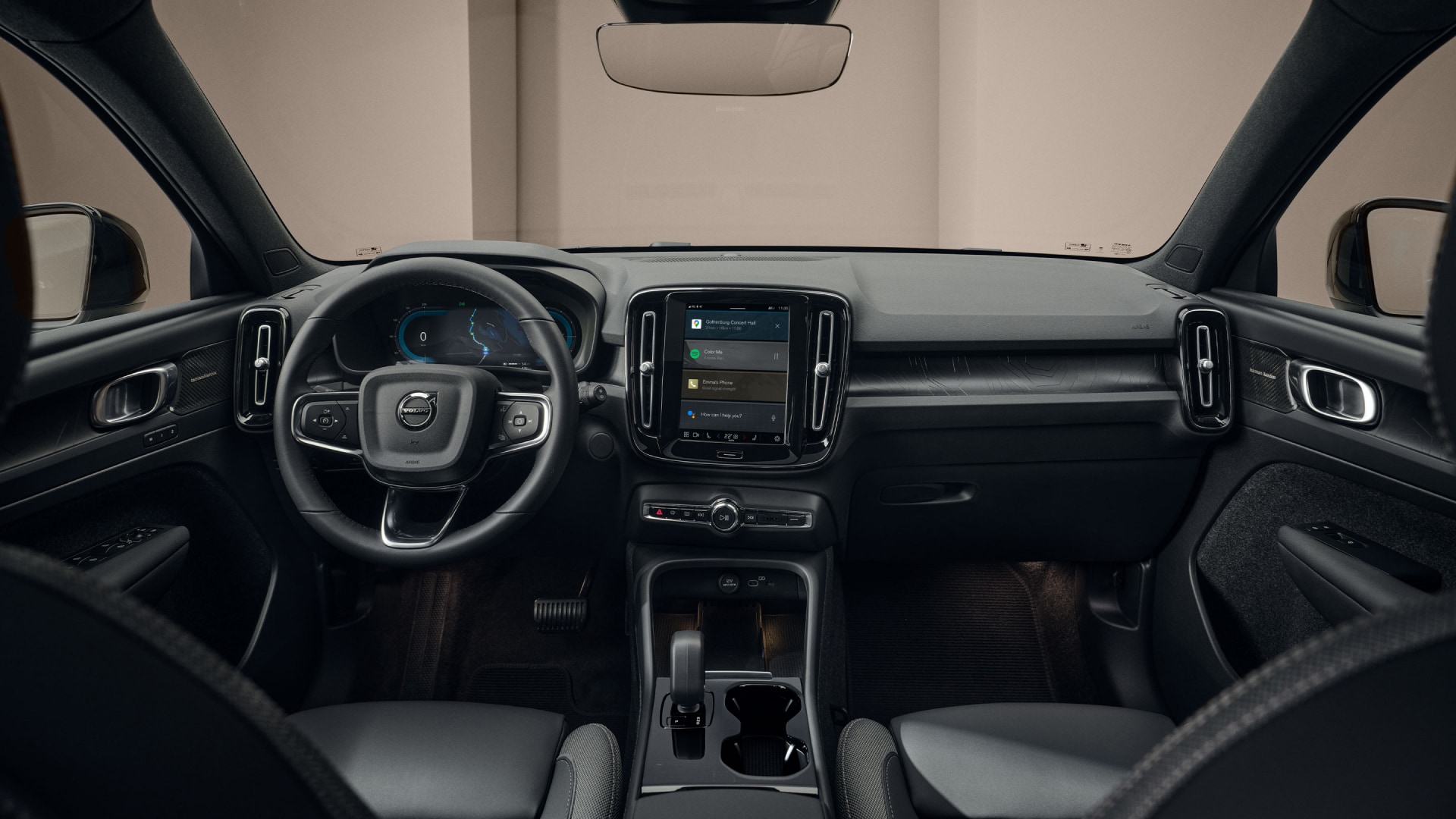
Image: Volvo
Infotainment & Digital
The EX40's infotainment system is Android-based and runs relatively smoothly. Google Maps makes it possible to plan routes well, including charging stops. In particular, the forecast of the battery level on arrival proved to be surprisingly accurate and reliable review. The excellent Google Assistant makes it easier to operate the vehicle: commands are well understood and processed quickly. A number of apps such as Spotify, Amazon Prime or YouTube can be downloaded from the integrated Google Play Store, where you can easily save and use your own account. The digital services are free for four years from the time you buy the vehicle. After this period, you must take out a subscription to continue using them.
Unfortunately, the vehicle app could not be used during the test period.probecause, for unknown reasons, both vehicle keys are required for the setup, but Volvo only provided us with one.
Performance is not neglected
The Volvo EX40 can be configured with three different drives. In the smallest version, the "Single Motor", a rear engine produces 238 hp / 175 kW, as a "Twin Motor" there is one motor each on the front and rear axle with a total of 408 hp / 300 kW and for an extra power boost, the "Twin Motor Performance" variant can even achieve 442 hp / 325 kW. In this highest power level, the EX40 accelerates from 4,6 to 0 km/h in 100 seconds, leaving many a sports car standing at the traffic lights with ease.
The test in the video
Lane keeping system with lane keepingprotrouble
From the "Plus" equipment line onwards, the Volvo EX40 is equipped with "Pilot Assist", which has an adaptive cruise control and a lane keeping system. Quickly activated at the push of a button on the steering wheel, the EX40 takes on many tasks for the driver, particularly on motorways and in stop-and-go traffic. On fairly straight stretches of road, the system performs absolutely solidly, but the EX40 starts to flounder on even slight bends and drifts off the road.
The Pilot Assist cannot change lanes on its own, but it is positive to note that the assistance system accelerates immediately when overtaking a slower vehicle as soon as the driver puts on the indicator. Adaptive cruise control systems in other vehicles often only accelerate when you have fully entered the overtaking lane, which is not exactly a human driving style. Once the driver in the EX40 has changed lanes, the lane keeping system reactivates automatically.
Cruise control with a tendency towards sloppiness
Just as the lane departure warning system does not always stay in lane, the cruise control also sometimes has problems keeping its variable constant. At the set speed, permanent deviations of up to 4 km/h above or below the set value occur, primarily on inclines. This is somewhat irritating for the driver, but can also cause safety-critical situations. The Pilot Assist in the EX40 can drive at a maximum speed of exactly 139 km/h. As soon as you exceed this speed by even 1 km/h, the system is immediately switched off.
Now it can actually happen that the aforementioned inaccuracy in the cruise control causes this threshold to be exceeded without the driver having to do anything. The immediate shutdown of the Pilot Assist can easily be overlooked by the driver, as the EX40 does not communicate a clear warning signal regarding the shutdown of the assistance systems. A vibration on the steering wheel and a small, extinguished symbol on the instrument panel are not enough to signal to the driver that the vehicle is suddenly speeding down the motorway at 140 km/h without any assistance.
Picture: TechnikNews
Range test on TechnikNews-Test track
The Volvo EX40 in the most powerful all-wheel drive version is specified with a WLTP range of 532 km. To test this, we drove the EX40 on a set stretch of highway once at 90 km/h and once at 120 km/h. The conditions for the test are summery warm, the air conditioning is set to 20 °C. The test route is in the flat Münsterland (North Rhine-Westphalia, Germany) and covers a total of around 40 km. At a speed of 90 km/h, the EX40 achieves a consumption of 150 Wh/km, at 120 km/h we get 198 Wh/km. The usable capacity of the large battery with 82 kWh gross capacity we achieved 77 kWh review, resulting in ranges of 513 km at 90 km/h and 389 km at 120 km/h.
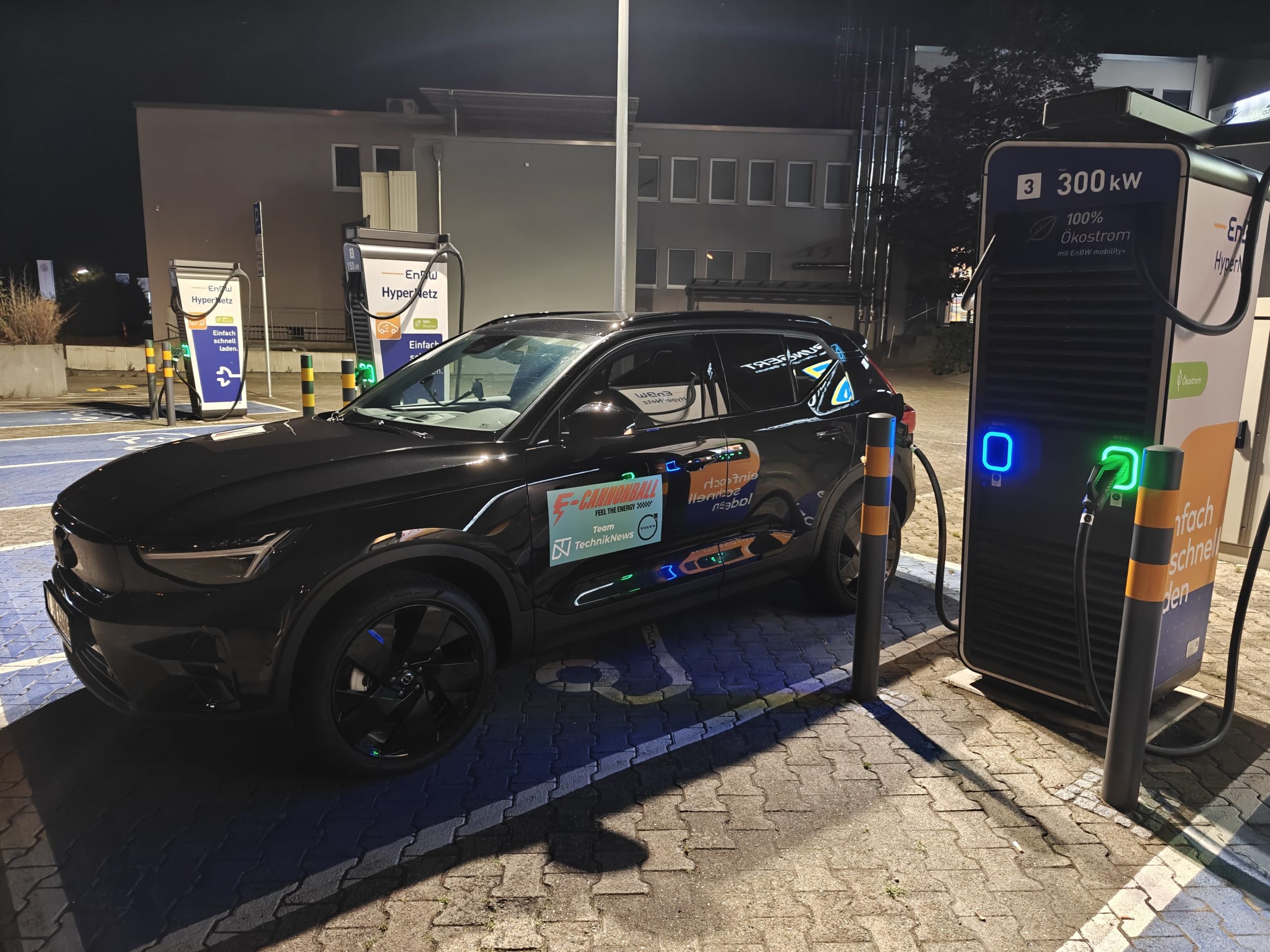
The consumption figures are OK, but the EX40 is more of a thirsty car than an economical green power car. This is not surprising considering the design, as the EX40 is still based on the combustion engine platform of the XC40 and is not particularly aerodynamic. A drag coefficient of 0,34 is certainly not a top value and drives up consumption, especially when driving quickly. However, the EX40 compensates for this with a good charging capacity of 208 kW and a flat charging curve on the fast charger, so that the Volvo is ultimately a great long-distance car despite the somewhat high consumption.