
Qualcomm Snapdragon Wear Elite: 3nm chip with a focus on on-device AI
of Nils Ahrensmeier  on March 02, 2026, 8:00 pm | Write a comment
At MWC 2026 in Barcelona, Qualcomm unveiled the Snapdragon Wear Elite platform, a new foundation for the next generation of smart wearables.. For the first time, the platform puts “agentic AI experiences” directly at the center of the end device and promises significant improvements in performance and efficiency through the switch to a 3nm architecture and a dedicated NPU..
3nm hardware architecture and massive performance increase
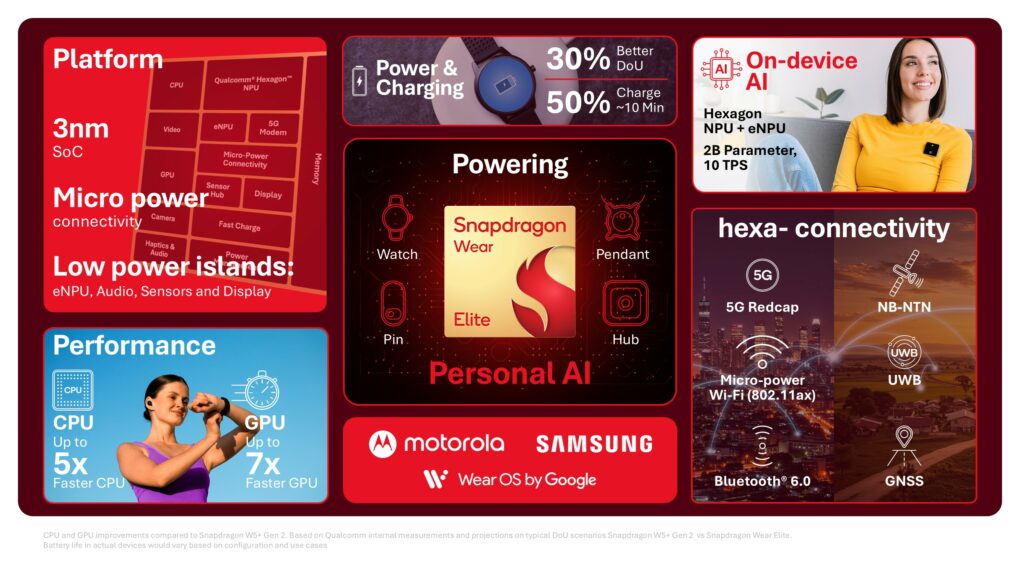
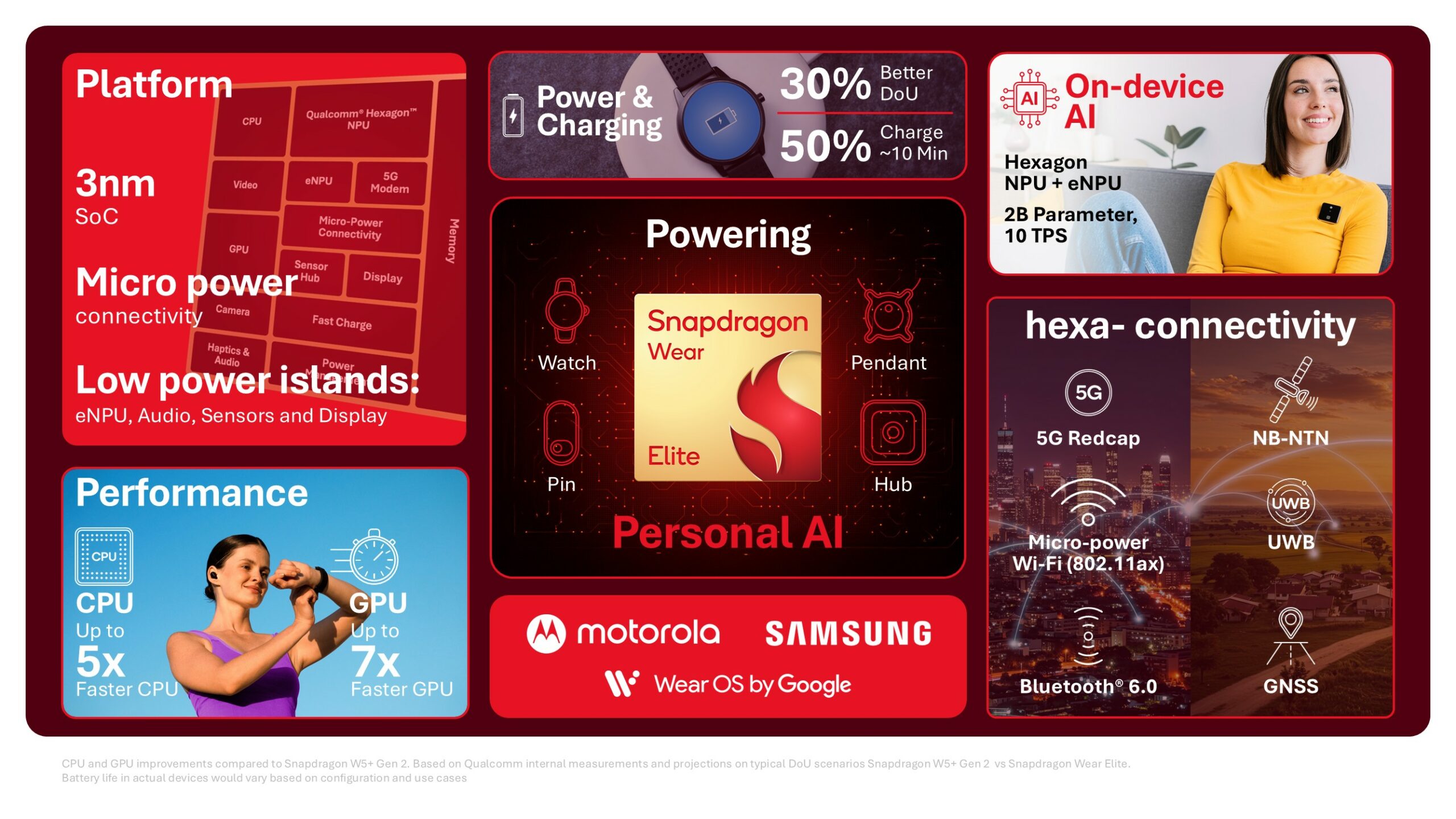
The Snapdragon Wear Elite platform is based on a modern 3nm process technology, which allows manufacturers to create even more compact and slimmer case designs without compromising hardware performance.proto make a mistake. Compared to its direct predecessor, the Snapdragon W5+ Gen 2 platform, the new system achieves up to a 5-fold increase in single-core CPU performance.. The graphics unit has also been massively redesigned: The integrated Adreno A622 GPU delivers up to 7 times higher performance, which should particularly improve the fluidity of the user interface and demanding multitasking..
-
- The new Snapdragon Wear Elite platform uses a 3nm design for maximum efficiency (Image: Qualcomm)
On-device AI through dedicated Hexagon NPU
A key component of the new platform is the “Qualcomm Hexagon NPU”, which was specifically developed for processing AI models directly on the wearable.. The system supports AI models with up to two billion parameters, enabling the realization of a so-called "agentic" AI assistant.. This form of intelligence learns the user's preferences and behaviors in order to... proto actively provide support in everyday life, while ensuring that sensitive data remains entirely on the device for greater privacy and does not need to be processed in the cloud.. This is complemented by the Qualcomm Sensing Hub, which continuously captures personal context to refine the AI agent's interactions..
Efficiency, battery life and fast charging technology
Despite the increased computing power, Qualcomm promises significantly improved energy efficiency. Intelligent power-saving mechanisms and dedicated low-power islands for tasks such as audio and sensor processing should increase battery life by about 30 percent in typical daily use compared to the previous generation.. For users, this means a runtime of several days with active use.. Should the battery run out, a new fast-charging technology is used that refills the energy storage to 50 percent capacity in about 10 minutes..
World's first hexa-connectivity for wearables
In terms of connectivity, Qualcomm is introducing a so-called "Hexa Connectivity" solution.. It simultaneously supports six different wireless technologies: 5G RedCap for energy-efficient mobile data, Micro-Power Wi-Fi 6 (802.11ax), Bluetooth 6.0, Ultra-Wideband (UWB), GNSS for precise location tracking, and Satellite NB-NTN.. Of particular note is the support for satellite-based two-way communication via NB-NTN, which enables emergency messaging even in areas without mobile network coverage.. The integration of UWB also allows for new applications such as digital car keys or precise proximity services directly via the wrist..
-
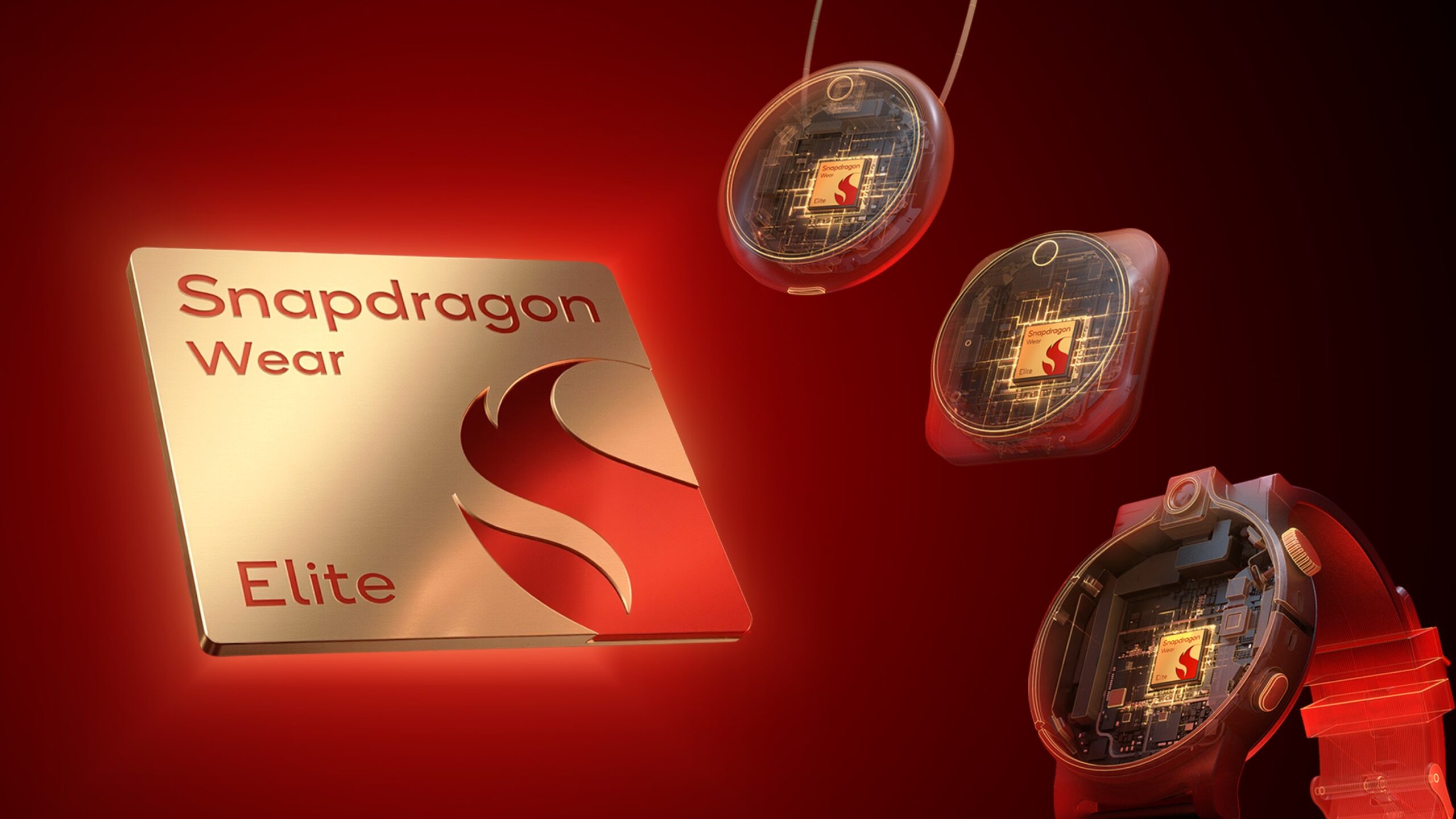
- The platform supports a wide variety of form factors, from watches to smart pins (Image: Qualcomm)
Partner ecosystem and availability
Qualcomm is working closely with industry heavyweights for the rollout of the platform. Google is optimizing Wear OS specifically for the new architecture to fully leverage the benefits of the NPU and improved connectivity.. Samsung has already announced that it will use the Snapdragon Wear Elite platform in upcoming Galaxy Watch models.. Motorola also uses the platform for new concepts such as the AI companion "Project Maxwell".. According to Qualcomm, the first commercial devices based on the Snapdragon Wear Elite are expected to be on the market in the coming months..
Transparency note: TechnikNews was invited by Qualcomm to the MWC in Barcelona as part of a press trip. The company is covering the costs of travel and accommodation. In addition, TechnikNews Information obtained from Qualcomm under NDA. The manufacturer had no influence on the content, nor was there any obligation to report on it. The only requirement was the earliest possible publication date.