
At this year's Made by Google event in Mountain View, Google unveiled its latest Pixel generation. The spotlight is on the new Pixel 10 smartphones, the Pixel Watch 4, and the Pixel Buds 2a. We've rounded up all the key new features.
Google Pixel 10 series
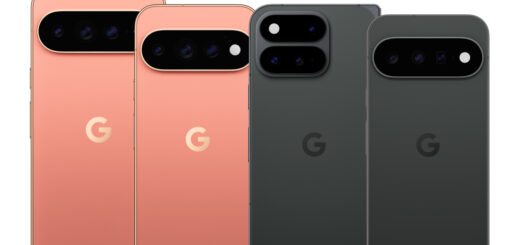
The Pixel 10 series includes the Pixel 10, the Pixel 10 Pro (XL), and the Pixel 10 Pro Fold. All models utilize the custom Tensor G5 chip, run Android 16, and offer noticeable improvements in endurance, camera quality, and on-device AI. All devices come with seven years of updates for the operating system, security, and Pixel Drops, an IP68 certification—including the Fold model—and modern OLED displays with high peak brightness. Google is also the first Android manufacturer to introduce wireless charging and magnetically attached accessories with the new "Pixelsnap" ecosystem.

The Pixel 10 features a 6,3-inch Actua display with a 120 Hz refresh rate and up to 3.000 nits of peak brightness. The Pro models go one step further with Super Actua LTPO panels, reaching a variable refresh rate of 1 to 120 Hz and up to 3.300 nits. Inside, the Pixel 10 features 12 GB of RAM and 128 or 256 GB of storage, while the Pro devices offer 16 GB of RAM and up to one terabyte of storage. Connectivity has been upgraded: All models support Wi-Fi 7, Bluetooth v6, Thread, and Google Cast, while UWB is reserved for the Pro devices. A satellite emergency calling function is currently only available in the US.
Larger batteries, faster charging
According to Google, the battery life is up to 30 hours, and with Extreme Battery Saver enabled, even up to 100 hours are possible. Wired charging is available at 30 watts for the Pixel 10 and 10 Pro, while the Pro XL charges even faster at 45 watts. Wireless charging via PixelSnap or Qi2 delivers up to 15 watts for the Pixel 10 and 10 Pro, and up to 25 watts for the Pro XL. As with its predecessors, Google is also relying on recycled materials and completely plastic-free packaging.

Google continues to build on its camera strengths. The Pixel 10 features a triple camera system for the first time, consisting of a 48-megapixel wide-angle camera with Macro Focus, a 13-megapixel ultra-wide-angle camera, and a 10,8-megapixel telephoto lens with up to 20x super-res zoom. The Pro models, on the other hand, rely on a proA more professional setup with a 50-megapixel wide-angle camera, a 48-megapixel ultra-wide-angle camera with macro function, and a 48-megapixel telephoto lens with 100x optical zoom. This allows for multiple fixed focal lengths as well as magnifications of up to 8x. For video recording, the devices support 4K resolution (with Video Boost on the Pro and Pro XL), 60K with up to XNUMX frames per second. pro second, 10-bit HDR, night video and comprehensive image stabilization.
Google is once again placing particular emphasis on AI features this year. With Camera Coach, Add Me, Auto Best Take, high-res photos up to 50 megapixels (on the Pro), and new editing options in Google Photos, the manufacturer says the camera will be even easier and more intelligent to use. The integration of Gemini AI plays a central role system-wide. Prices start at €899 for the Pixel 10 with 128 GB of storage. The Pixel 10 Pro costs €1.099, and the 10 Pro XL even €1.299. Prices are expected to rise, particularly in the first four months. fall sharply .
Pixel 10 Pro Fold
With the Pixel 10 Pro Fold, Google continues its foldable lineup following the Pixel 9 Pro Fold, bringing noticeable improvements in display, durability, and battery life. The device combines a 6,4-inch Actua panel with up to 3.000 nits on the outside and an 8-inch Super Actua Flex display with LTPO technology on the inside. This makes it ideal not only for watching movies and playing games, but also for multitasking via split screen and drag-and-drop. Compared to the 9 Pro Fold, Google has redesigned the hinge and opted for a more stable aluminum construction, complemented by Gorilla Glass Victus 2 on the front and back. Also new is the IP68 certification, whereas last year's model had to make do with IPX8.

The battery has grown to over 5.000 mAh and can be charged either via cable at 30 watts or wirelessly via PixelSnap at 15 watts. The triple camera consists of a 48-megapixel wide-angle lens, an ultra-wide-angle lens with macro focus, and a 5x telephoto lens with super-resolution zoom up to 20x. Special features such as dual-screen preview, rear-camera selfies, and tabletop mode for astrophotography make the most of the flexible design. Combined with seven years of updates and Gemini integration, the Fold stands out more from traditional smartphones while remaining embedded in the Pixel ecosystem.
The Pixel 10 starts at €899, the Pixel 10 Pro at €1099, and the Pixel 10 Pro XL costs at least €1299. These devices launch on August 28.08th. The Pixel 10 Pro Fold costs at least €1899, and this device, along with the Pixel Watch 4 and the Buds 2a, will launch on October 09th. Buyers of a new Pixel smartphone also receive one year of Google AI Pro free.
Google PixelWatch 4
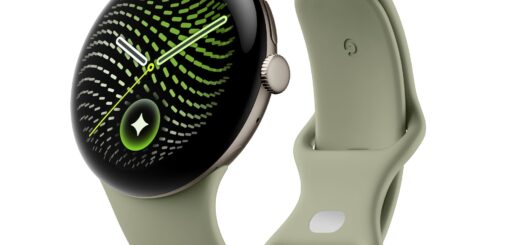
In parallel with the smartphone series, Google has also updated the Pixel Watch. The Pixel Watch 4 features a new Actua 360 dome display with narrower bezels and up to 3.000 nits of brightness, which should significantly improve readability in sunlight. The 41mm version achieves a battery life of up to 30 hours, while the 45mm version lasts up to 40 hours. In battery saver mode, the battery life is extended to up to 48 or 72 hours, respectively. Charging is now 25 percent faster, thanks to a new side Quick Charge docking station that displays information about the time, battery level, remaining charge time, and the next alarm when placed on the watch.

In terms of fitness and health, Fitbit's suite remains the core, from precise heart rate monitoring and more than 40 training modes, including the Morning Brief, to Readiness, Cardio Load, and Target Load for optimally controlled training. New additions include even more accurate L5 GNSS for more challenging environments and expanded running tools. For the first time in a smartwatch—although only in the US—a satellite emergency call provides greater safety. This is complemented by Loss of Pulse Detection, Safety Check, Emergency Sharing, and fall and accident detection.
The watch also makes progress in terms of interaction. An improved speaker system, noticeably stronger haptics, and Raise-to-Talk accelerate operation, while a new coprocessor enables richer on-device AI with Gemini. The package is rounded out by a comprehensive range of accessories.proprogram with improved quick charge dock and new wristbands.
The Pixel Watch 4 starts at €41 in the 399 mm version, with LTE costs €100 more. The 45 mm version also costs €499, with LTE costs only €50 more in the larger version. The watch will launch with the Pixel 10 Pro Fold and the Buds 2a on October 9th.
Google Pixel Buds 2a
Finally, with the Pixel Buds 2a, Google is also taking its A-series in-ear headphones to a new level. For the first time, they feature Active Noise Cancellation with Silent Seal 1.5 and a Transparency Mode. Each earbud houses a Tensor A1, which handles signal processing. Sound is provided by an 11-millimeter driver, optionally supplemented by stereo spatial audio with compatible devices and content, as well as a customizable 5-band equalizer.
For calls, the buds combine Wind Mesh and Google AI for noise cancellation. With ANC, they offer up to 7 hours of listening time and up to 10 hours without. With the charging case, they offer up to 20 hours and 27 hours, respectively, and a 5-minute quick charge provides about an hour with ANC.

For phone calls, the buds combine a special "wind mesh" with Google's AI-powered noise cancellation. Battery life is up to seven hours with ANC and up to ten hours without, with the charging case up to 20 or 27 hours. A quick charge of just five minutes is enough for about an hour of playback with ANC.
Practical improvements are also evident in everyday use. A new stabilizer ensures a secure fit, the earbuds are IP54-rated against sweat and splashes, and the case is IPX4-rated. Features like Multipoint, precise location tracking via the Find Hub, and deep integration with Gemini—including true hands-free use—round out the package. Sustainability also plays a role: The buds are largely made from recycled materials, are delivered in plastic-free packaging, and, for the first time, offer replaceable batteries in the charging case. They will be available from October 9th in Hazel and Iris for €149.