Mercedes-Benz has at its Berlin-Marienfelde plant, the oldest proAt the company's site, founded in 1902, the switch has been flipped. From now on, the new axial flux electric motors will roll off the assembly line there. We took a look at what exactly is behind this hype and why AMG is quite right to call this extremely compact drive unit the "V8 of the electric age".
tl;dr: In short
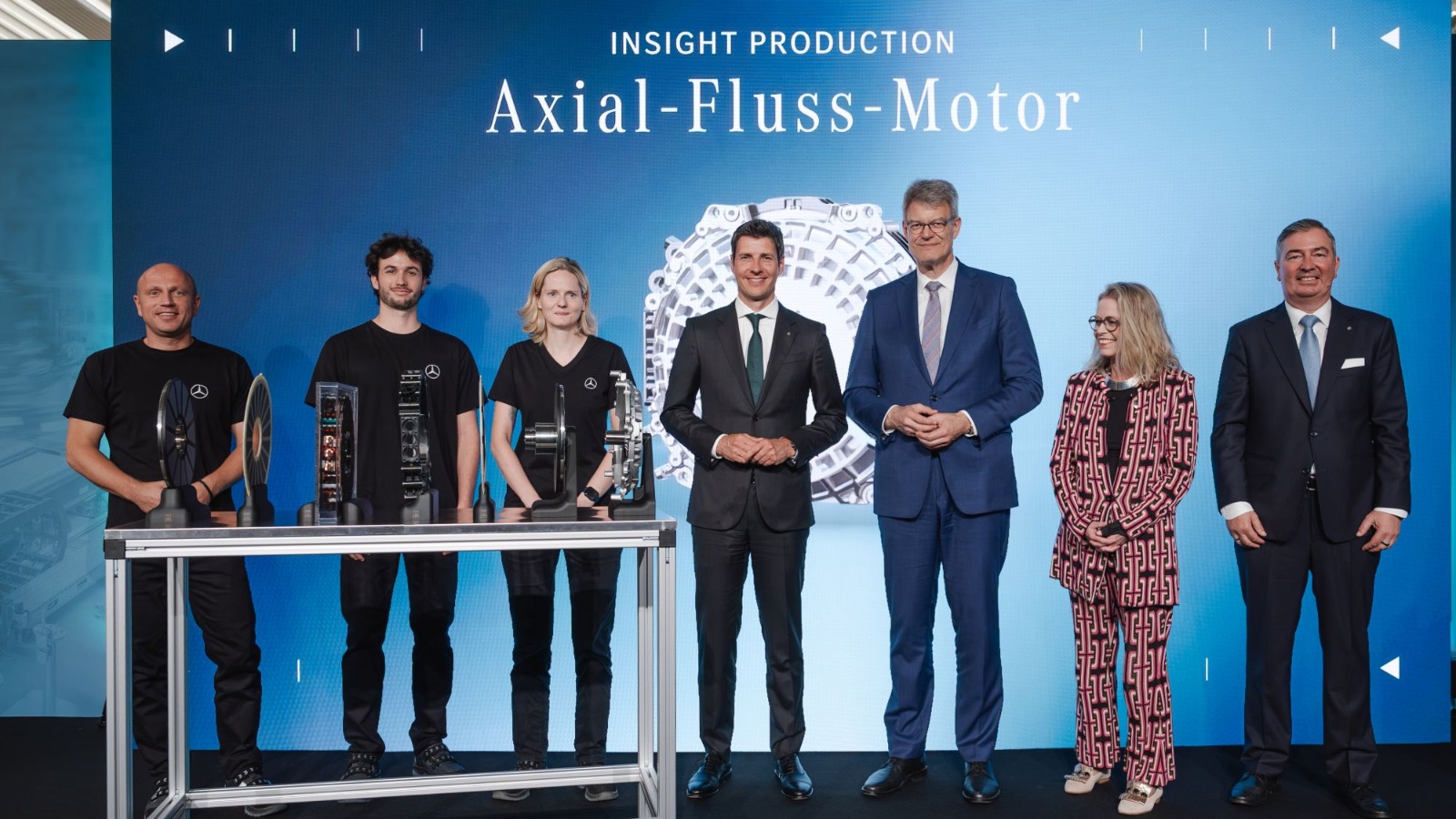
What happened? Mercedes-Benz has officially launched mass production at its long-established Berlin-Marienfelde plant.proProduction of the completely newly developed electric axial flux motor has started.
Historical milestone: This technological leap represents a massive paradigm shift – absolutely comparable to the invention of the Wankel engine or the widespread breakthrough of electronic fuel injection in 1992.
Where is it used? It will premiere in the new Mercedes-AMG GT 4-door Coupé, which sprints to 100 km/h in 2,4 seconds thanks to its engines.
Why is this a big deal? Compact dimensions of only 8 to 9 cm in width meet extreme performance. For the massesproThe production of this engine required the complete reinvention of 35 processes worldwide.
A historic leap in engine history, or why is this even so relevant?
To understand the importance of this production launch for the industry, a brief look at history is helpful. German engineering in automotive manufacturing has repeatedly undergone paradigm shifts. When Felix Wankel developed the rotary engine in the 50s and 60s, it represented a radical departure from the decades-old reciprocating piston principle. Another massive milestone came in 1992: That year, fully electronic fuel injection finally retired the mechanical carburetor and suddenly made engines "intelligent."
This is precisely the league in which today's leap to the axial flux motor operates. It is a fundamentally new architecture that has the potential to raise the performance of electric vehicles to a completely new level.
Tradition meets cutting-edge high-tech manufacturing
Across a sprawling 30.000 square meters and seven production lines (spread across three halls), true industrial magic is unfolding in Berlin. In 2021, Mercedes acquired the British electric motor specialist YASA, who had previously perfected the concept for small-scale production. The challenge now lay in flawless mass production of automobiles. The result: Of the 98 process steps, 65 are being used for the first time at Mercedes, and 35 are completely new worldwide.
Technical overview: The most important technical terms explained briefly
Axial flux motor: In a conventional radial flux motor, the electromagnetic flux runs in a star-shaped pattern. In an axial flux motor, this magnetic field runs parallel to the axis of rotation. The revolutionary design eliminates the need for a traditional stator back. The result? The motor is disc-shaped, extremely flat, drastically lighter, and delivers maximum performance in the smallest possible installation space.
AI-supported process management: During the so-called "marriage" (the insertion of the stator between the two rotor disks), the magnets exert immense forces of up to 9 kN – equivalent to about 900 kilograms! The stator must be held precisely in the center, accurate to less than 0,1 millimeters. In the very last half second of the process, an intelligent control algorithm corrects the position with high-frequency pulses.
Laser welding technology: The copper wire coil bundles must be securely connected in a very confined space. A laser process accomplishes this with an extremely short energy input, ensuring that adjacent components do not suffer any heat damage.
Where does this concentrated powerhouse land?
These engines are making their debut in the new, all-electric Mercedes-AMG GT 4-door coupeA whopping three of these axial flux motors are installed. The packaging is completely absurd: The motor on the front axle is barely 9 centimeters wide, the two on the rear axle are even only about 100% each 8 centimeters.
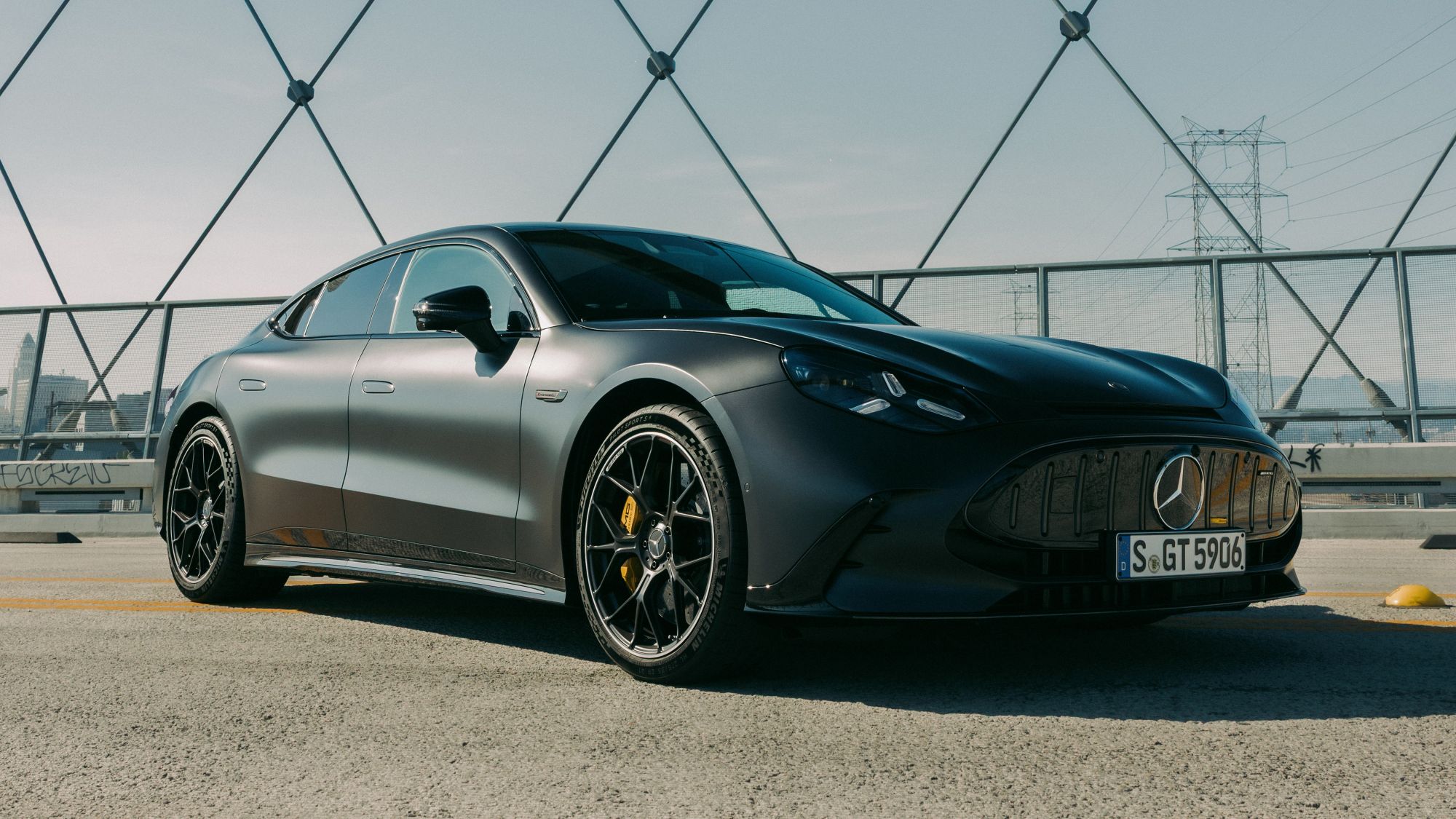
The result on the road? The vehicle sprints at ludicrous speeds. 2,4 seconds from 0 to 100 km / h and runs up to 300 km/h At its peak, the front engine reaches speeds of over 15.000 revolutions per minute. pro Minute. A technology demonstrator (the Concept AMG GT XX) recently completed over 40.000 kilometers in a high-speed endurance test in Nardò, Italy, using these engines, breaking 25 records in the process.
What does this mean for the future of the German automotive industry?
With the launch in Berlin, Mercedes-Benz impressively demonstrates that the transformation to electromobility and classic engineering expertise are a perfect match. When what was once considered far too complex for mass production is now being manufactured on an assembly line, we are on the verge of a massive leap in performance for sporty electric cars. We are extremely excited to experience this technology live on the road soon!