
DJI Power 1000 review: Powerful all-rounder for on the go
A TEST REPORT from Benedict Behring  on April 30, 2025, 9:00 am | Write a comment
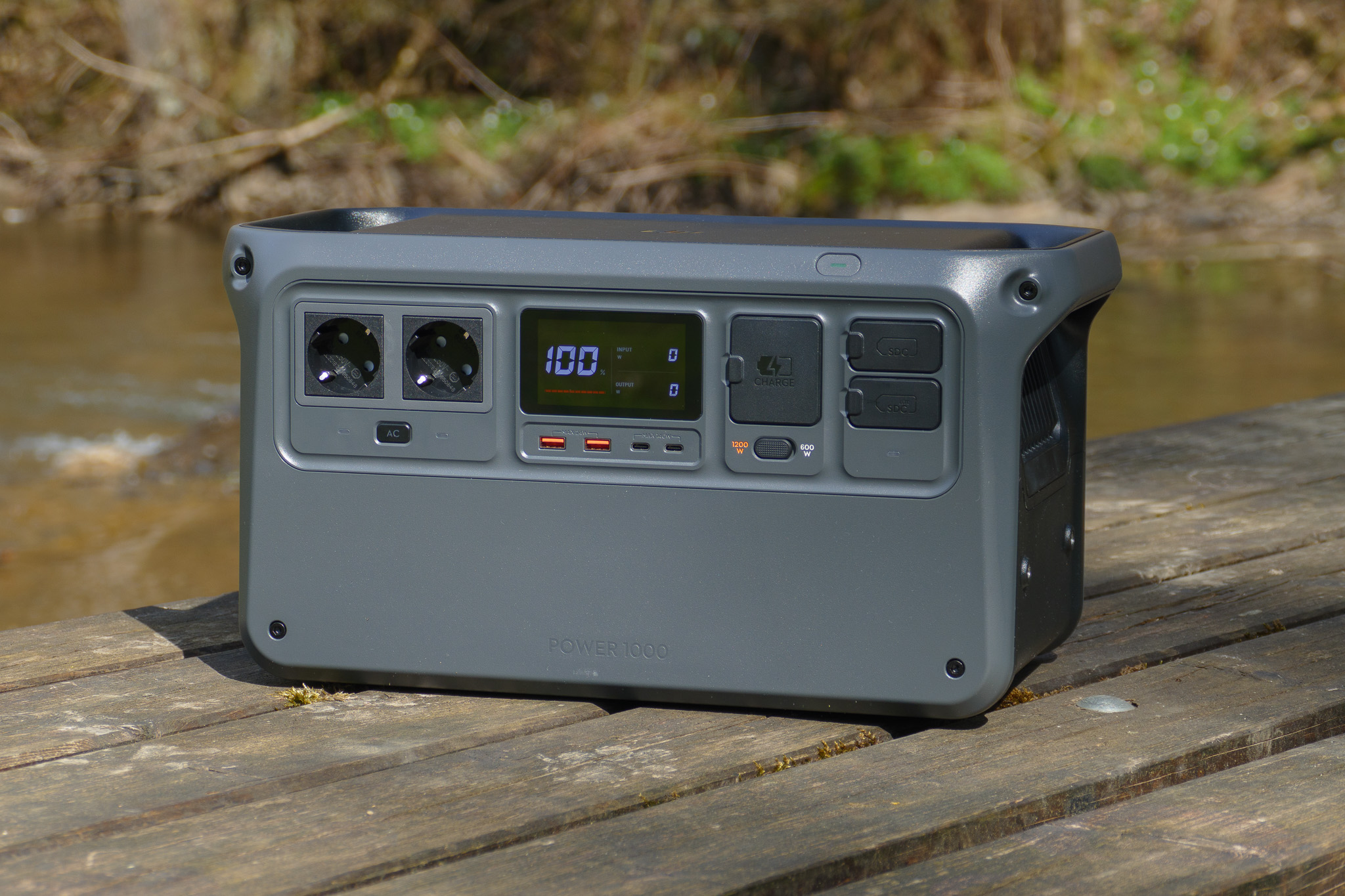
With the DJI Power 1000, DJI is launching a powerful power station that impresses not only with its capacity but also with a well-designed ecosystem consisting of a solar panel, adapter, and storage case. We tested the complete package, which includes the power station, solar panel, MPPT solar adapter module, car socket-to-SDC power cable (12 V/24 V), and storage case.
tl;dr: Lots of power, little compromiss
The DJI Power 1000 in combination with the Zignes solar panel, the MPPT adapter, the Car socket to SDC power cable (12 V/24 V) and the Protective bag This results in a highly flexible and sophisticated system for mobile power supply – whether for outdoor adventures, everyday van life, or as an off-grid emergency power solution. Thanks to numerous protective mechanisms, quiet operation, and low heat generation, the XXL power bank can be operated safely. It is also possible to remotely monitor and control the power station via Bluetooth or Wi-Fi. However, this requires the separately available DJI Power Dongle (€25,00), which we didn't have for testing and therefore can't comment on the stability and usefulness of the connection. Thanks to the almost nonexistent weaknesses, such as the lack of rubber on the carrying handles, the device and its personal benefits are easy to assess. If the Power 1000 with 1024 Wh for €999,00 is too expensive for you, you can switch to the Power 500 This one offers half the capacity, i.e. 529,00 Wh, for €512.
DJI Power 1000: The power station in detail
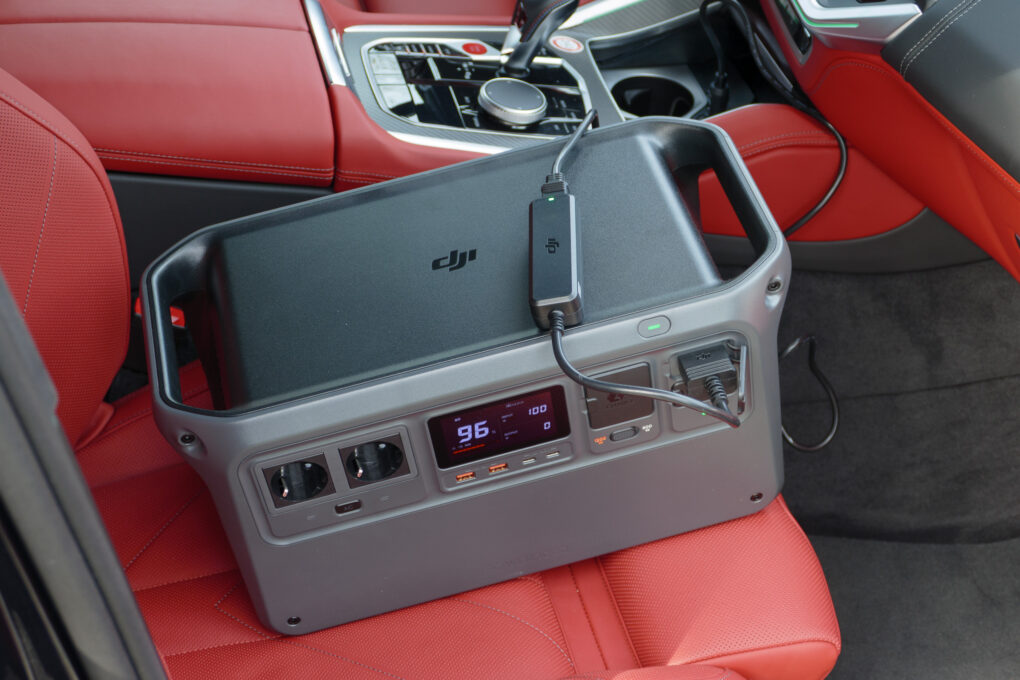
The power station appears to be of high quality and robust. At 13 kg, it's not exactly lightweight, but its compact dimensions of 44,8 × 22,5 × 23,0 cm (length × width × height) make it easy to carry. Unfortunately, it lacks rubberized handles, which slightly reduces its comfort during transport.
The surface is stable and can support up to 100 kg, which matches its robust, industrial design – perfect for placing things on during outdoor trips. The inlet and outlet vents are on the left side, where air flows in, and on the right side, where it flows out. The latter, like the rest of the power station, only gets slightly warm during use. The noise level also remains pleasingly low – a quiet hum is not disturbing, even at night when used to operate a night light or the air conditioner.
Technical data & performance
- Capacity: 1024 Wh
- continuous power: 2200 W
- Short-term performance: 2600 W (1 min.)
- Top performance: 4400 W for a very short moment (e.g. when switching on heavy devices)
Connections:
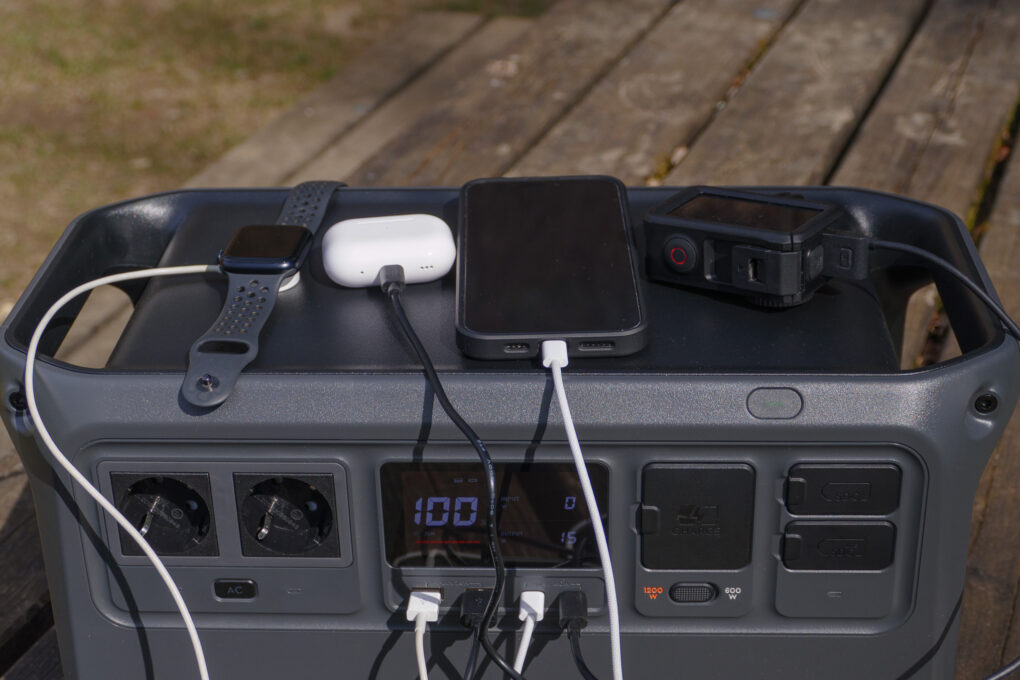
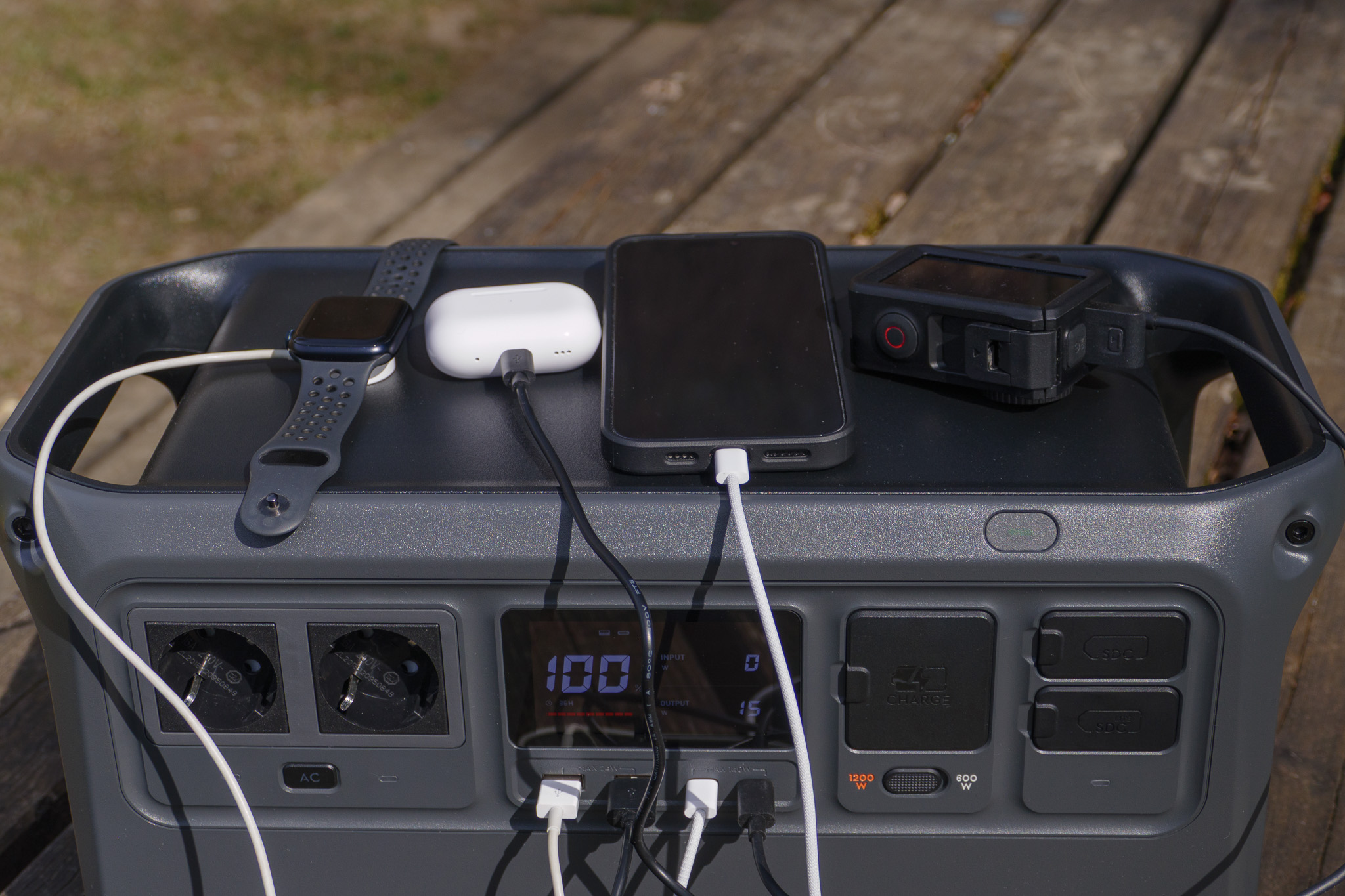
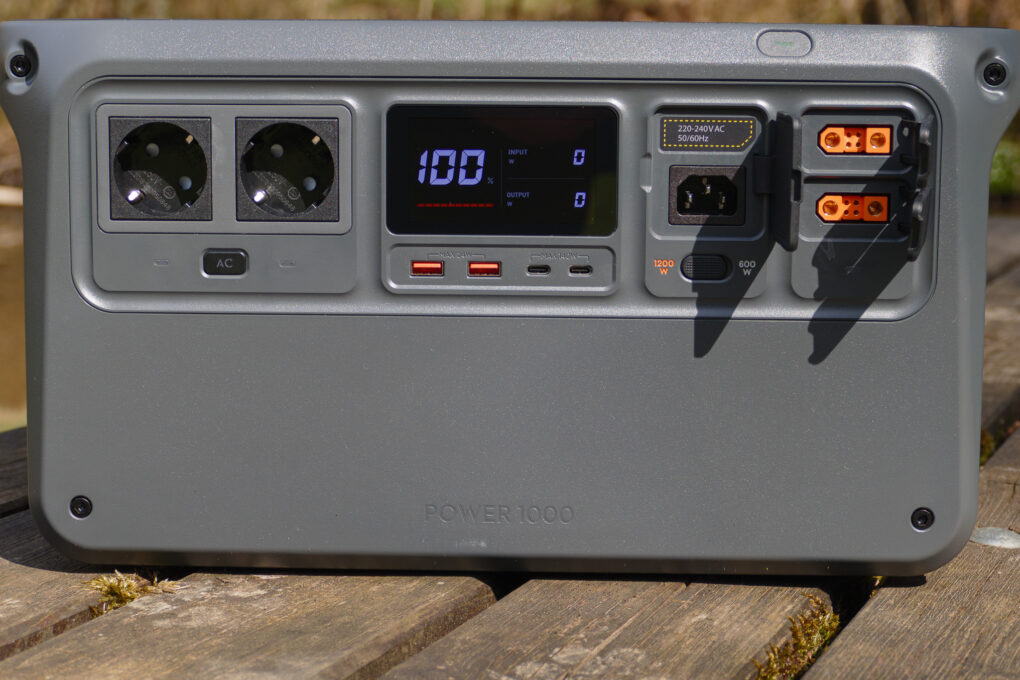
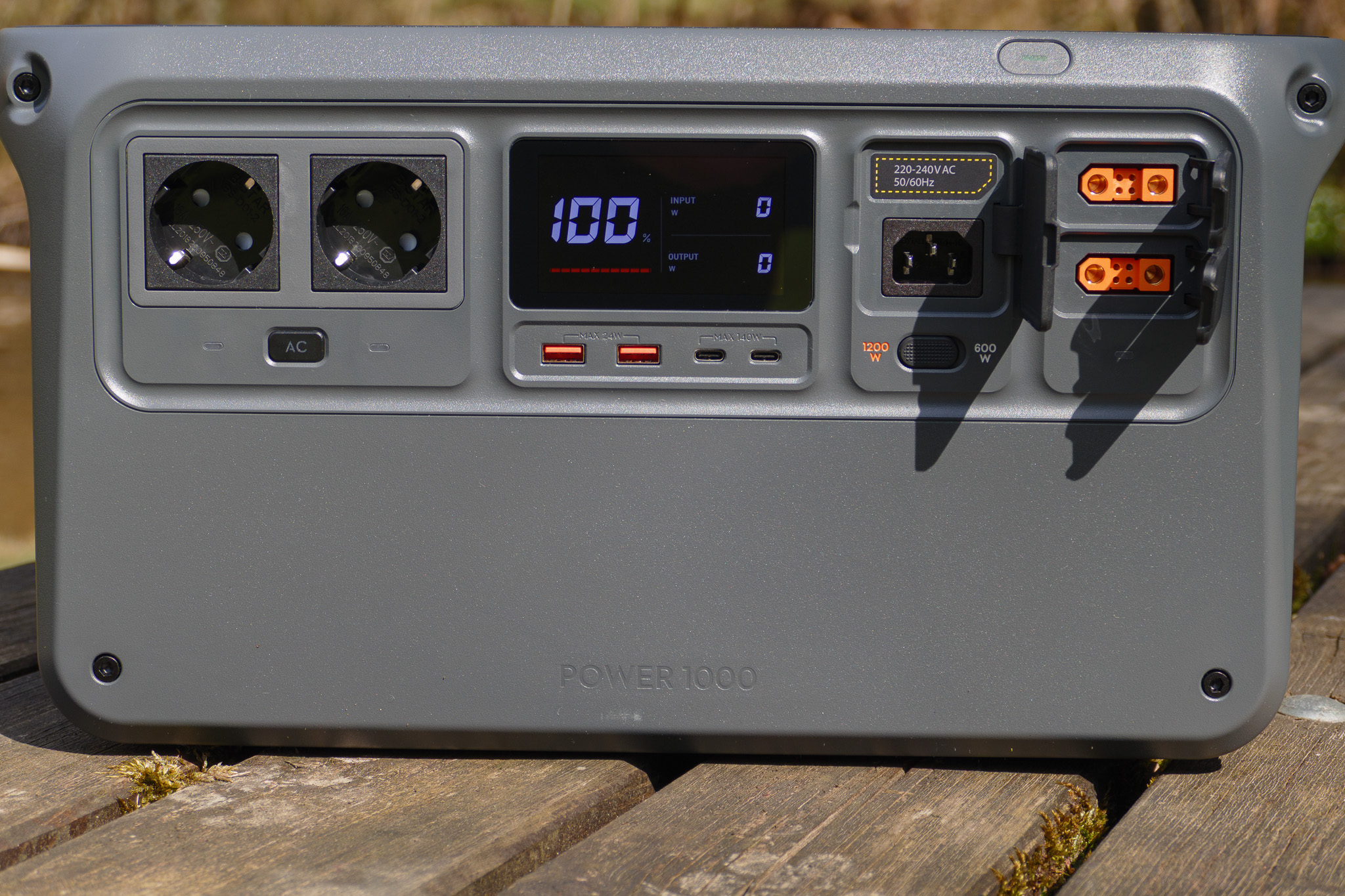
2× AC output
2× USB-C (up to 140 W)
2× USB-A (up to 24 W)
1× SDC + 1× SDC Lite output (240W each) input (400W each)
1× AC input
-
- Picture: TechnikNews
-
- Picture: TechnikNews
-
- Picture: TechnikNews
charging options
The DJI Power 1000 can be charged flexibly in several ways – from a power outlet to solar panels to the cigarette lighter in a car.
1. Mains current (AC)
The power station features a convenient slider switch directly on the device, allowing you to adjust the charging power between 600 watts and 1200 watts – depending on the available mains power:
In 1200-watt mode The charging process starts at approximately 1100 watts and increases to a full 1200 watts after a short time. Towards the end of the charging process, the power automatically reduces – to approximately 85 W at 600% battery level and even to approximately 95 W at 500%. This power gradation protects the battery.
→ Actual loading time: 15 minutes.In 600-watt mode Charging begins at approximately 550 watts, gradually increasing to full power after about 30 minutes. Towards the end, the charging power is also automatically reduced. → Actual loading time: 15 minutes.
The charging noise remains very low in both modes – the Powerstation proonly produces a light, unobtrusive hum, which makes it suitable for indoor use or noise-sensitive environments (e.g. bedrooms).
2. Car charging (12V)
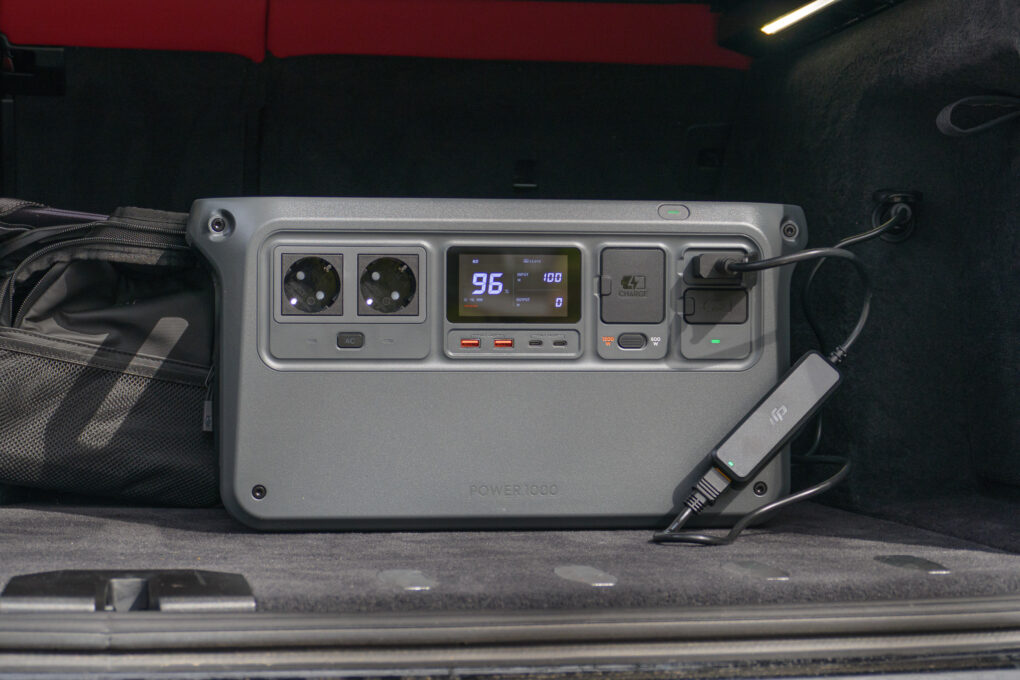
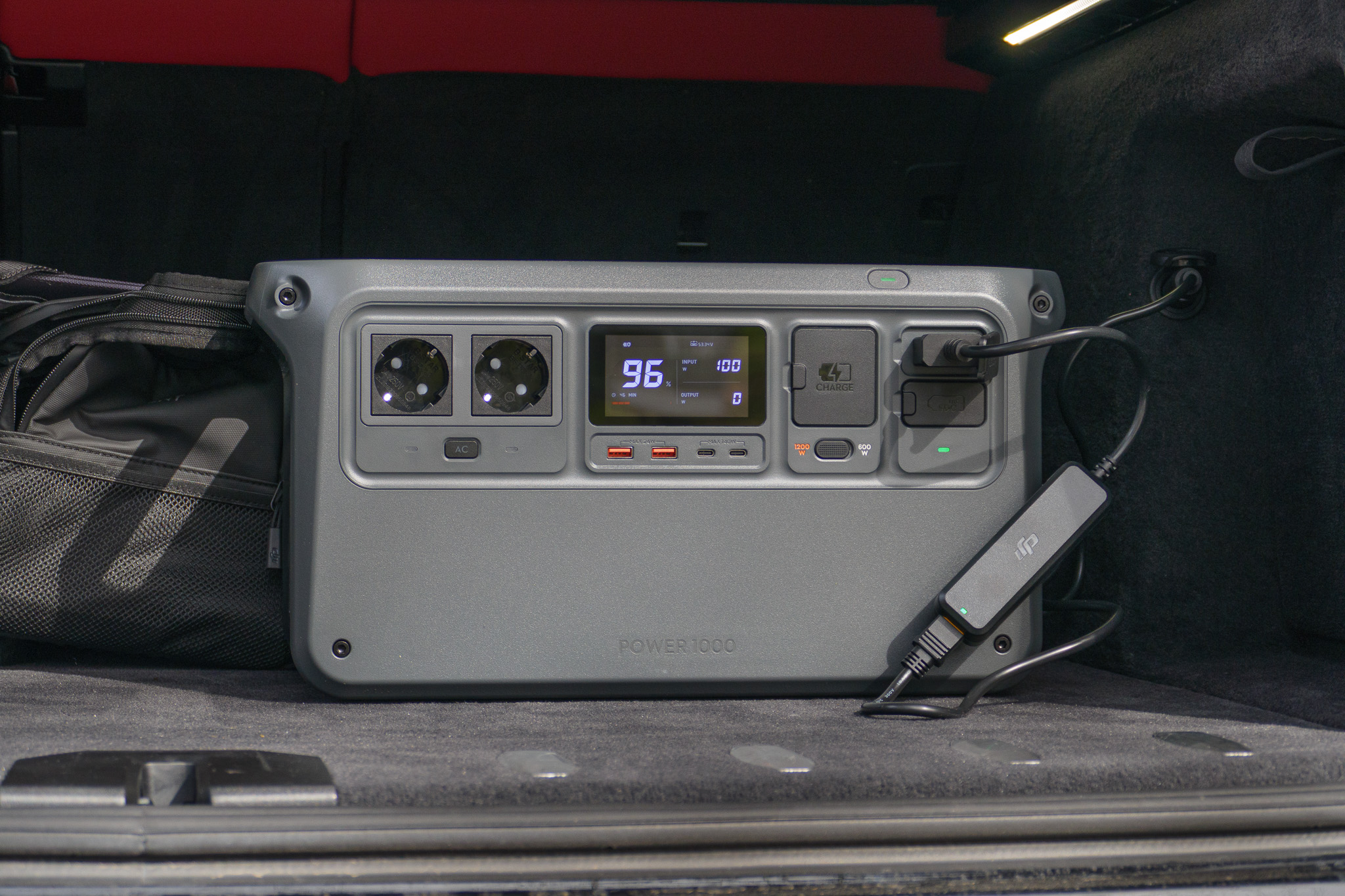
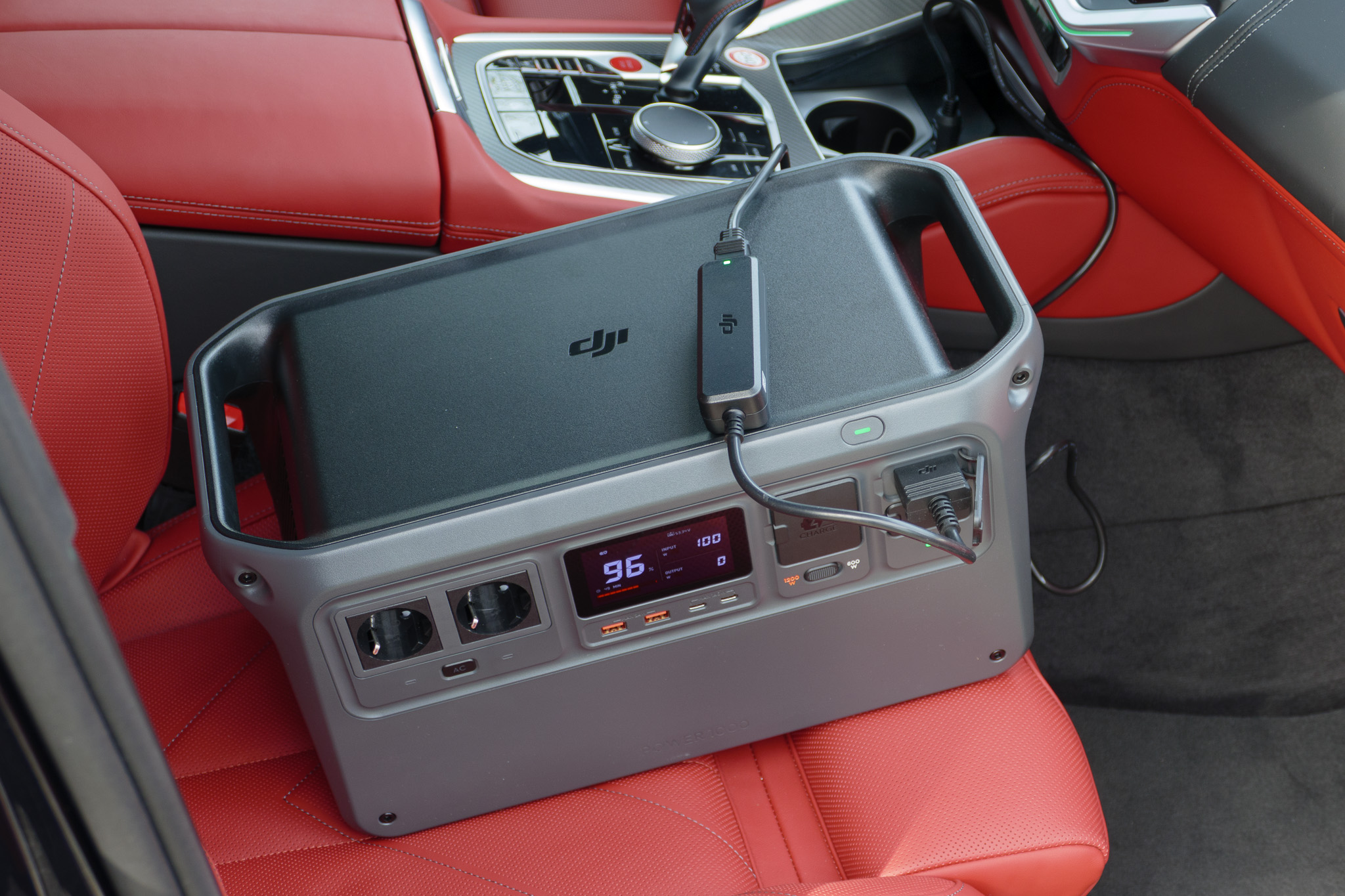
When charging via the cigarette lighter in the vehicle, excess energy is charged into the DJI Power 1000, which immediately charges with approx. 100 watts Charging power starts. This means that it is approximately 10,5 hours fully chargedIdeal for long journeys or camping trips. During charging, other devices such as a cooler or an electric air pump can, of course, be operated in parallel. This is always provided the car is running.
3. Solar charging
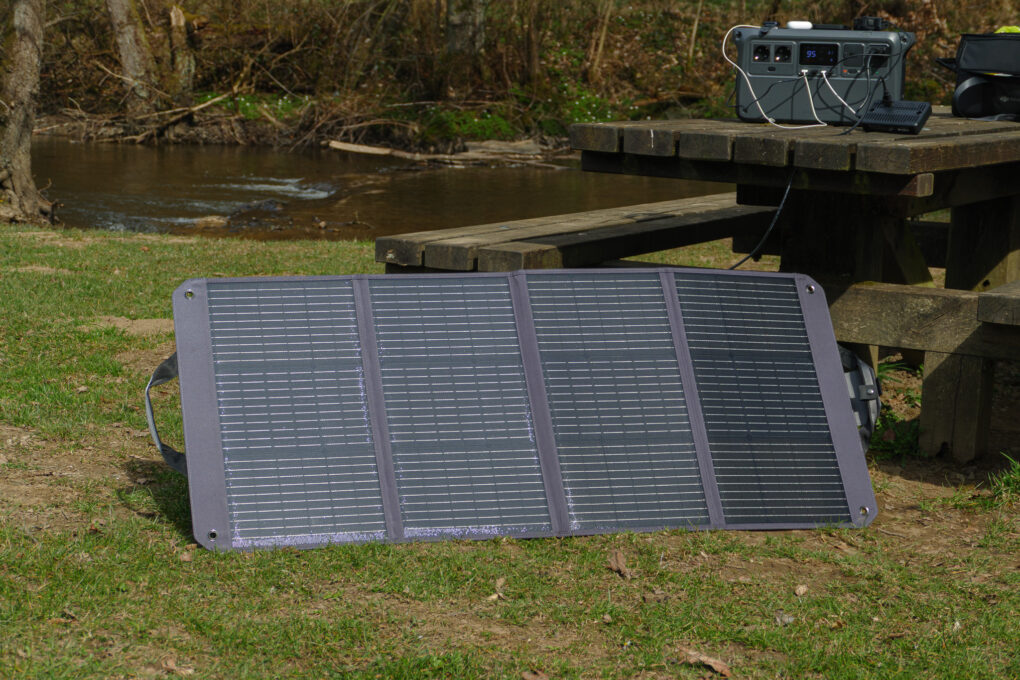
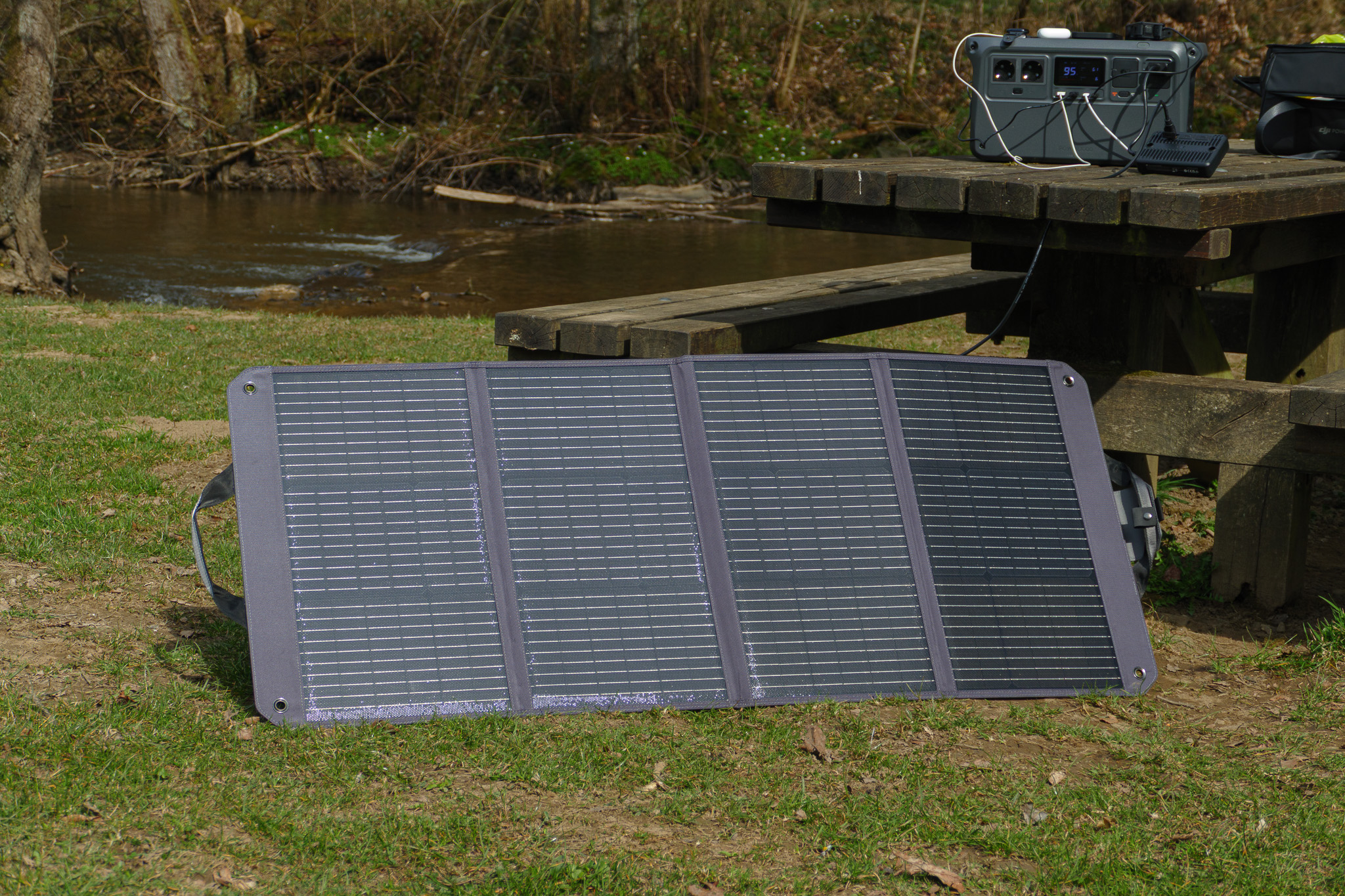
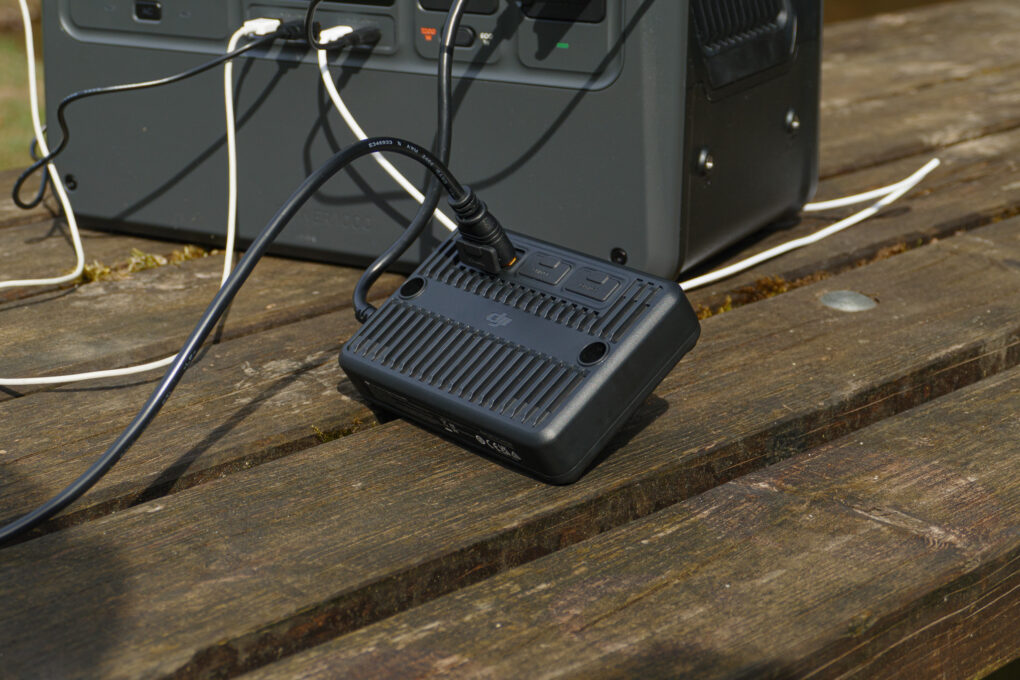
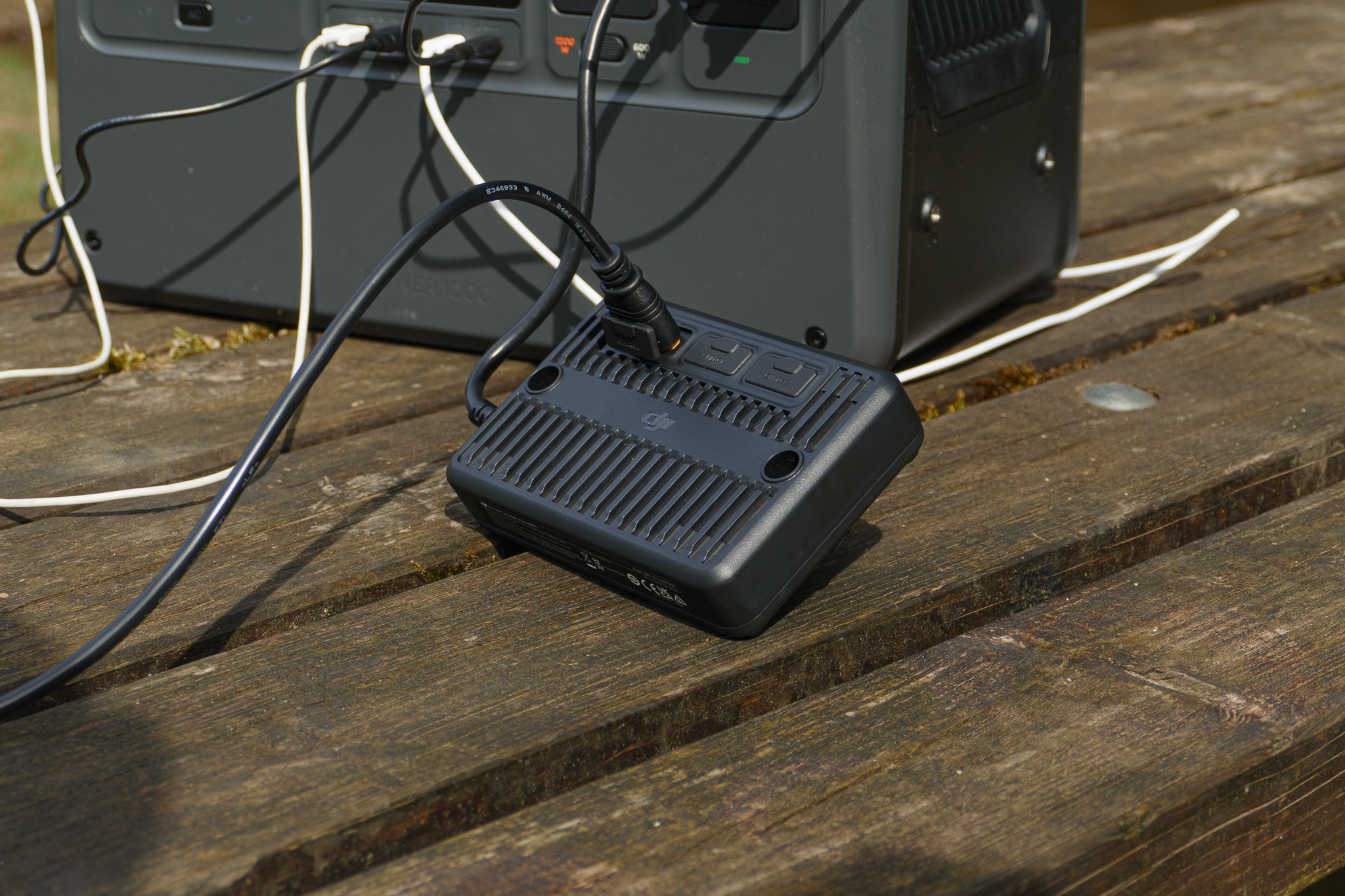
The interaction with the optional Zignes 120W solar panel and the XT60-to-SDC module (or the MPPT adapter module) is particularly interesting for autonomous applications. In our test, we achieved up to 90 watts input powerUnder ideal summer conditions, the stated 120 watts should be approximately achievable.
The maximum solar input power of the Powerstation pro SDC/SDC Lite connection is 400 W. Thanks to the adapter module, up to three panels can be operated simultaneously. A maximum of two modules, each with an adapter, can be connected to the power station, so up to 800 W solar power possible MPPT (Maximum Power Point Tracking) is an intelligent algorithm that, according to DJI, continuously monitors the voltage generated by the connected solar modules in real time. It ensures that the optimal combination of voltage and current (VI) is always used. This maximizes energy yield and charges the DJI Power 1000 particularly efficiently and effectively. We were unable to test the MPPT because only a single solar panel was used review.
Operating behavior in everyday life
The DJI Power 1000 impresses with its very stable and reliable energy delivery behavior:
continuous power: 2200 watts – all connected devices run reliably and continuously.
Short-term overload capacity: 2600 watts for up to 1 minute – ideal for devices with short-term high inrush current such as kettles or microwaves.
Top performance: up to 4400 watts for very short pulses, e.g. when starting heavy machinery.
Safety & overload protection
In the event of an overload, a warning signal (beeping) sounds. The power station then shuts down automatically to prevent damage. As soon as the load is reduced, the power station resumes operation independently without manual intervention, providing additional safety during daily use. Alternatively, you can also remove a load and restart the device to resume operation even faster.
Energy consumption & remaining running time display
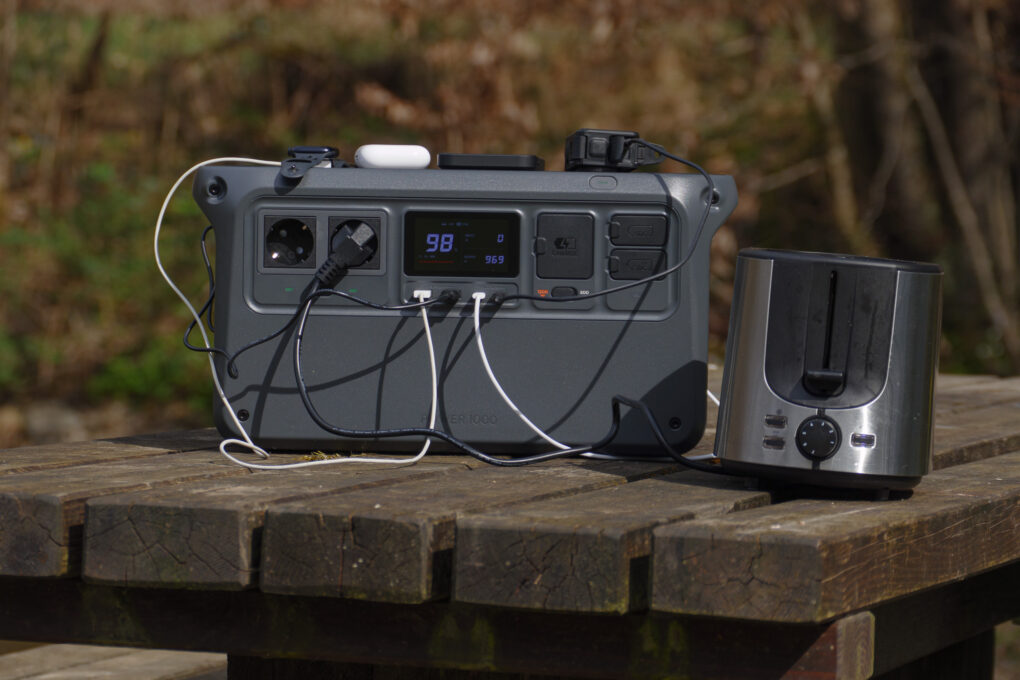
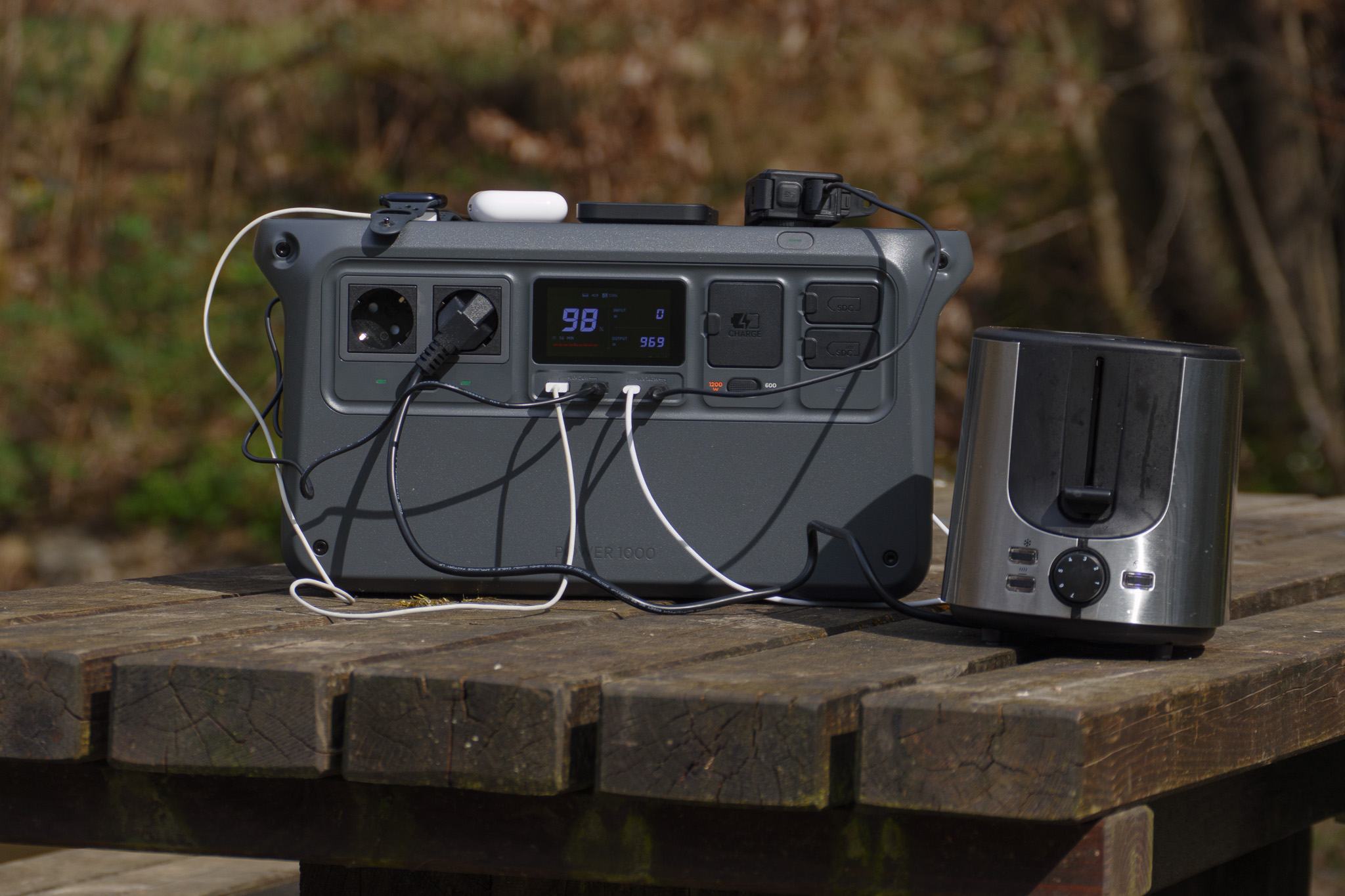
The power consumption display is very precise. In a test with a television (approx. 55 W), the runtime was 11 hours, 46 minutes (instead of the stated 12 hours) – a pleasingly small deviation. A desktop PC with a power consumption of approximately 200 W was able to operate for over 5 hours. A repeated beep sounds in the last two minutes before the battery is discharged. This useful feature alerts users that the battery is running low. The display can be turned off individually by briefly pressing the power button.
-
- Picture: TechnikNews
-
- Picture: TechnikNews
-
- Picture: TechnikNews
Zignes 120 W solar panel: mobile & weatherproof
The Zignes 120W solar panel is the ideal complement to the DJI Power 1000 for off-grid power. Priced at €299,00, it not only offers solid performance but also scores points with its high mobility and clever design.
Design & Handling
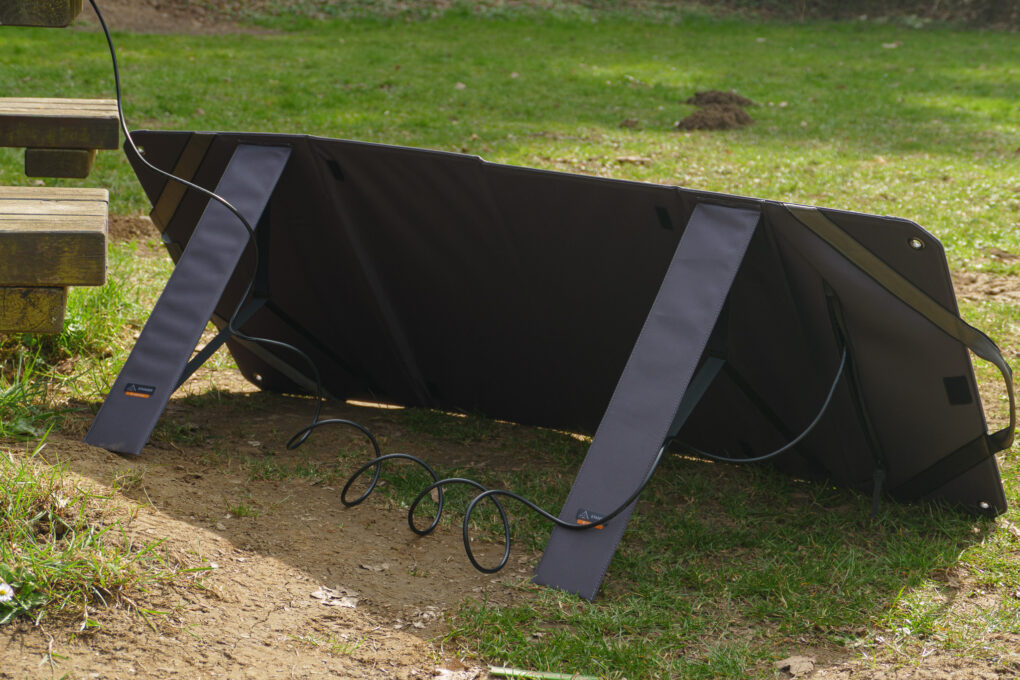
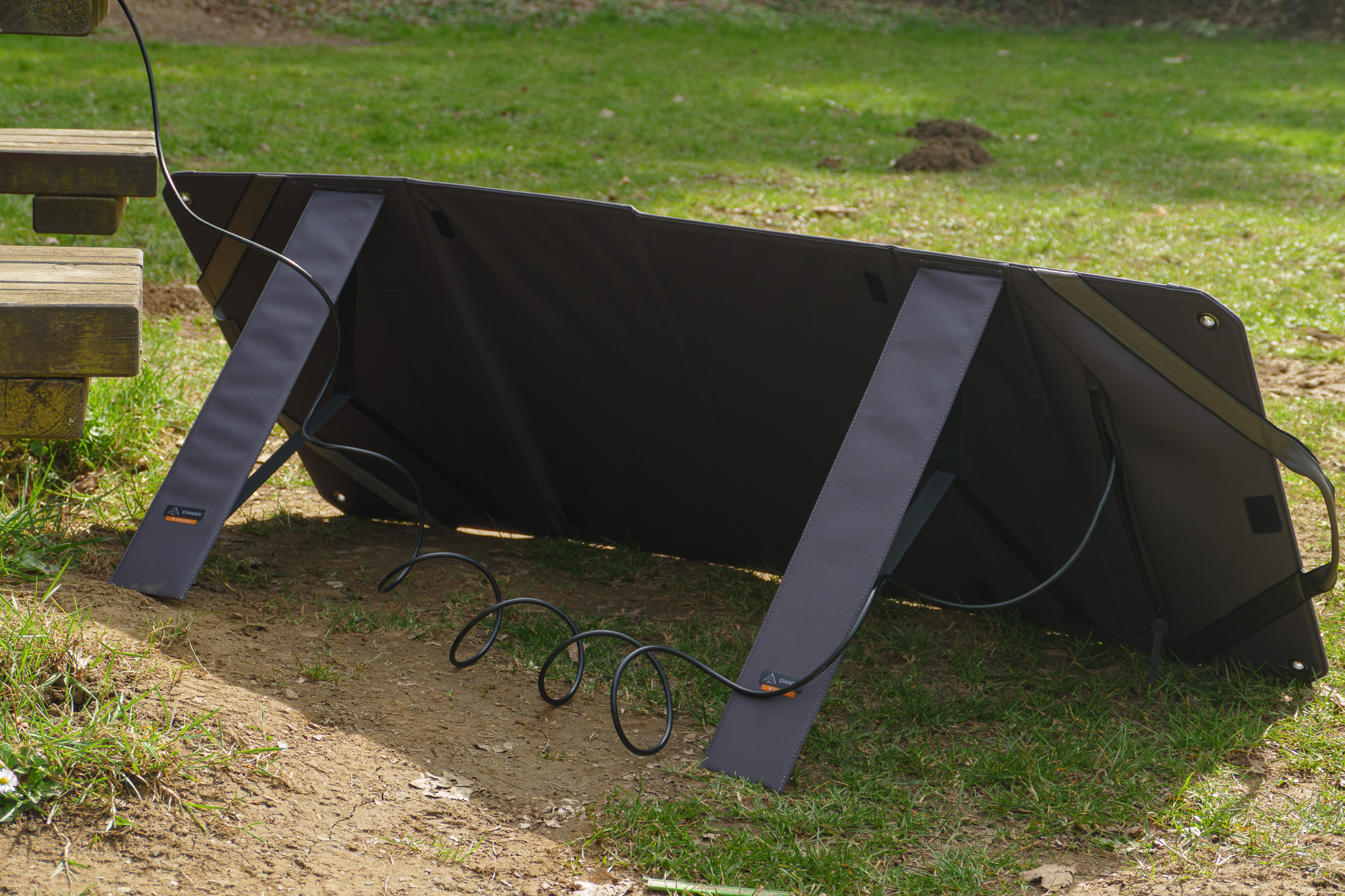
The panel consists of four foldable solar modules that fold together into a compact package. Weighing just 5,6 kg and measuring 36,5 × 58,0 × 7,0 cm (LxWxH when folded), it can be easily transported like a carrying bag. When set up and unfolded, the dimensions are 136,5 × 58,0 × 3,6 cm (LxWxH). The integrated carrying handle system and high-quality craftsmanship with faux leather details ensure an elegant yet practical appearance. The Zignes panel is not directly compatible with the power station and requires the use of the optional DJI solar panel adapter module (€59,00), which can be screwed directly onto the power station, or the flexible car socket-to-SDC power cable (€49,00).
Installation & weather resistance
The all-in-one design was particularly well-received: A 3-meter-long connection cable is integrated directly into the panel and can be neatly stowed behind a waterproof zippered compartment. The integrated support feet can be adjusted in inclination to achieve the optimal sun angle depending on the time of day. Additionally, four eyelets allow for secure anchoring in the ground. The panel is protected against dust and water jets according to IP65, making it ideal for outdoor use.
-
- Picture: TechnikNews
-
- Picture: TechnikNews
Storage case: Practical transport
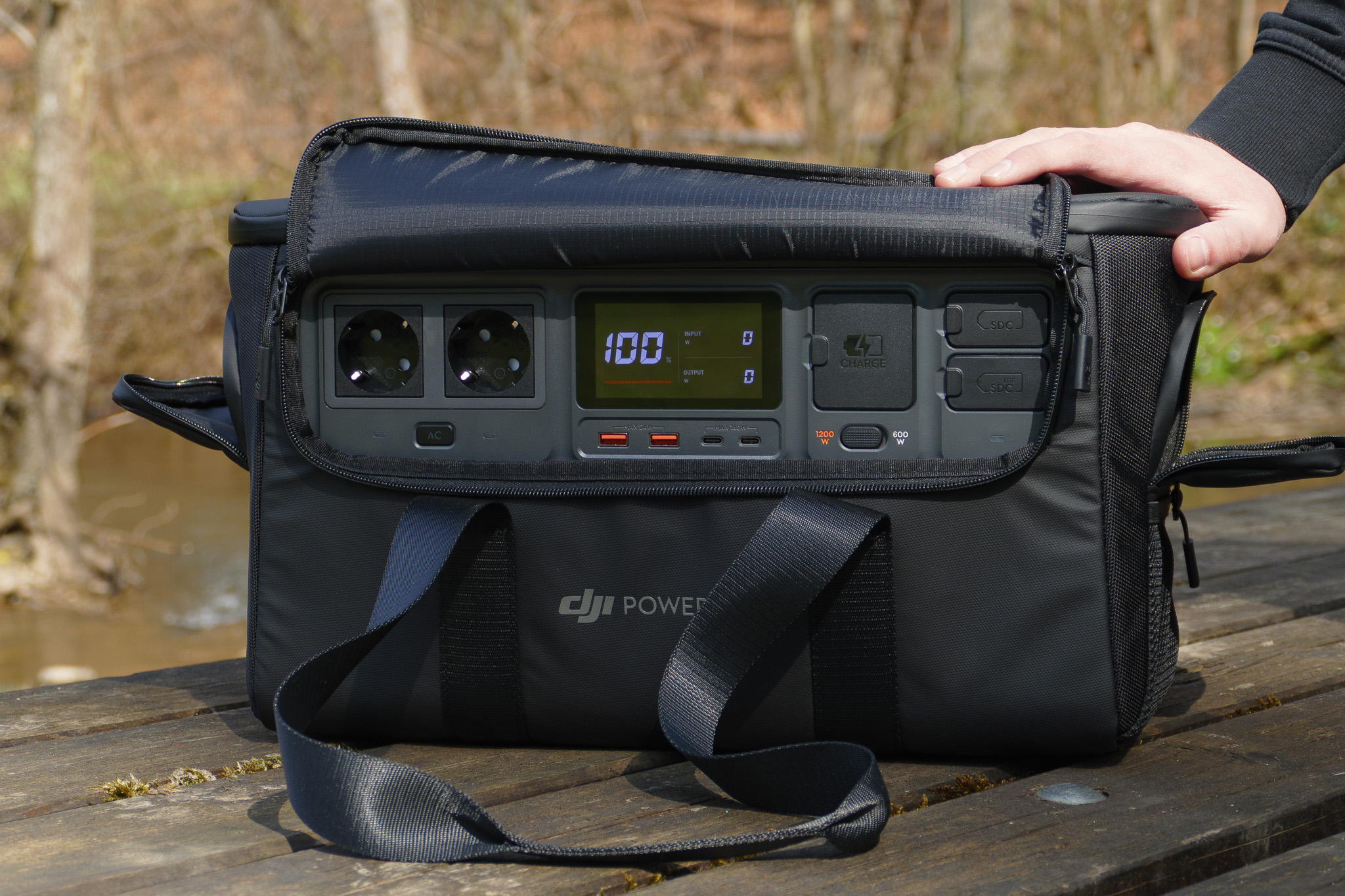
The storage case for the Power 1000, also available separately, is well-made and allows you to use the power station without having to remove it. A zippered flap on the front allows for operation, but closes downwards so that rainwater doesn't directly touch the ports, even when devices are connected. It would be practical, however, if the flap could be secured at the top. This would make handling even easier. Zippered ventilation openings are provided on the sides so that the cooling of the power station is not affected. Mesh pockets on the sides and a large zippered compartment on the back offer additional storage options. The case stands securely thanks to non-slip feet. A sign on the outside showing the position of the power button makes it easier to use. The price is €99,00. Certainly useful for frequent outdoor users, but not absolutely necessary.
Picture: TechnikNews
Many thanks to DJI Germany for providing the technical equipment for testing. This did not influence our opinion!