
Mitsubishi Outlander PHEV (2025) review: What can the comeback of the plug-in hybrid pioneer achieve?
A TEST REPORT from Kasimir Hupe  on September 17, 2025, 11:07 | Write a comment
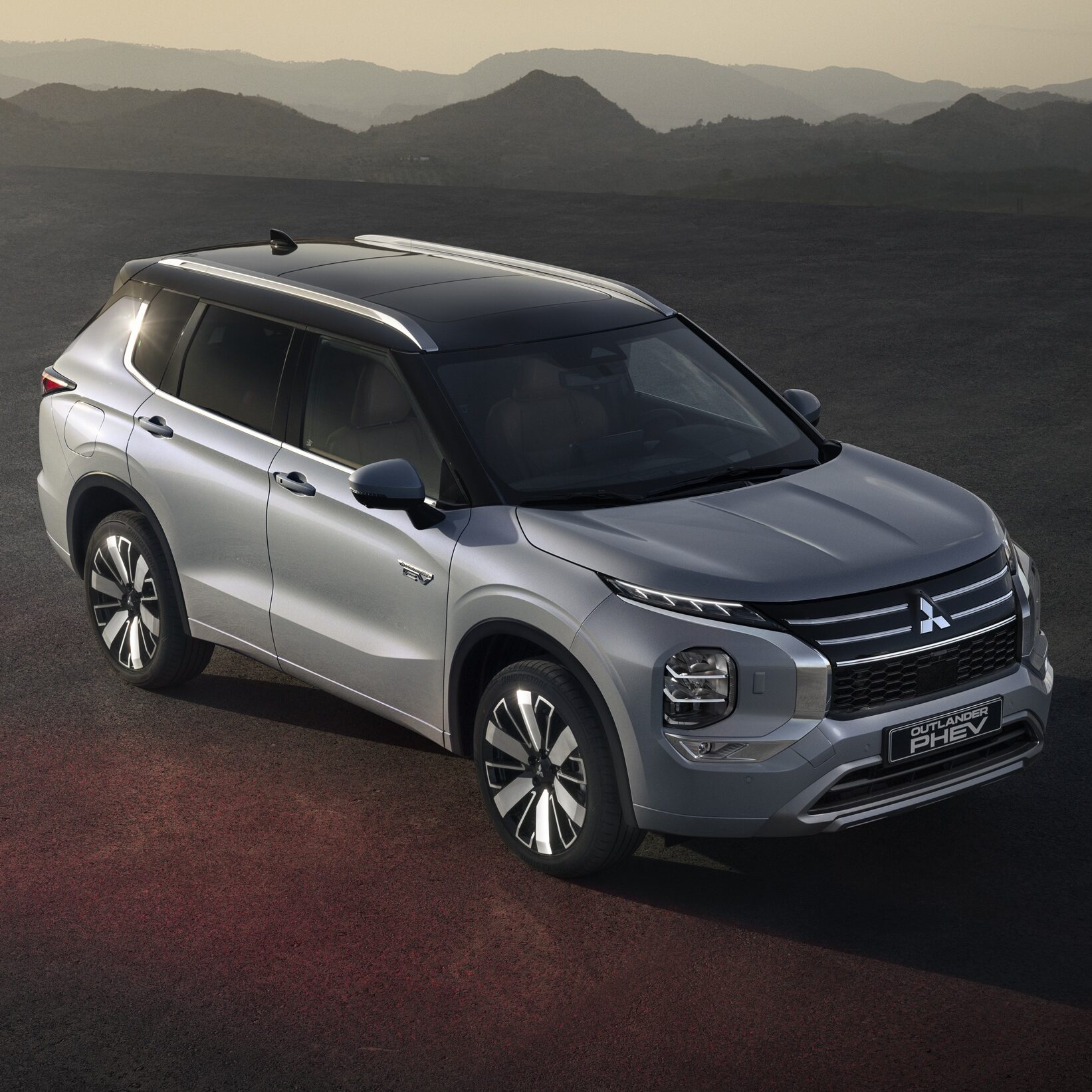
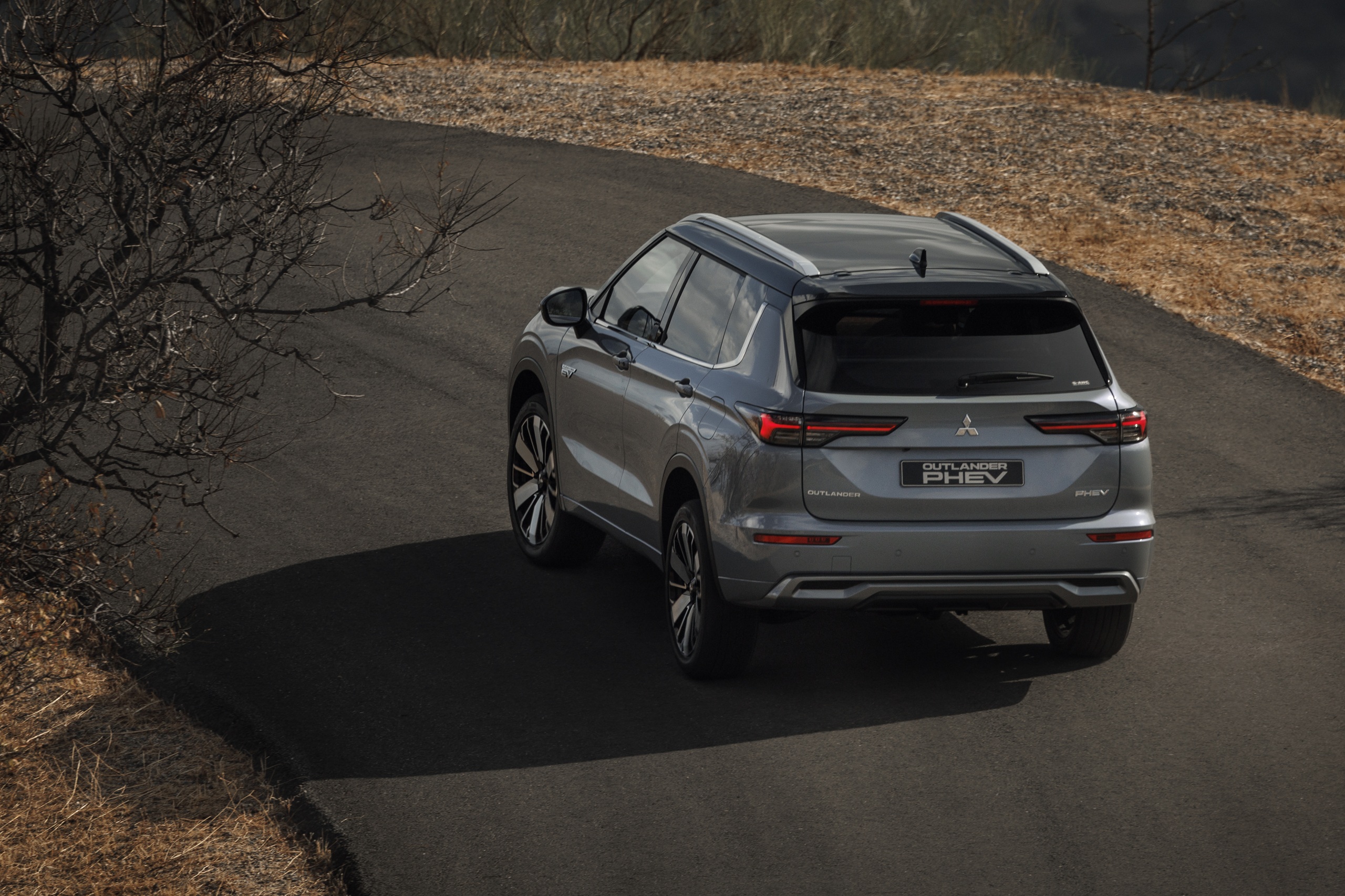
The new Mitsubishi Outlander PHEV (Plug-in Hybrid Electric Vehicle) marks the Japanese manufacturer's return to the European premium SUV segment after a three-year hiatus. As one of the pioneers in the field of plug-in hybrid SUVs, Mitsubishi is setting new standards with the fourth generation of the D-segment SUV for even more comfort, technology, and electric range. We've put the top model through its paces for you.
The Mitsubishi Outlander looks back on a rich history since its market launch in 2001. Originally a purely Japanese model called "Airtrek," the SUV conquered the European markets in 2003. Following the first generation (2001-2006) and the second generation (2007-2012), Mitsubishi achieved a real coup with the third generation in 2013: The Outlander PHEV was introduced as the world's first plug-in hybrid SUV and became Europe's best-selling PHEV between 2015 and 2017. The new Mitsubishi Outlander Plug-in Hybrid will be built at the Okazaki plant in Japan from the end of 2024.
After a marketing break of several years on the European market, the Outlander has returned to Germany in its fourth generation since 2025. The current model, based on a platform from the Renault-Nissan-Mitsubishi Alliance, is offered here exclusively as a plug-in hybrid with a system output of 225 kW (306 hp), standard all-wheel drive, and a significantly increased electric range. Current competitors include the Volvo XC60 Plug-In Hybrid, the Mazda CX-60 Plug-In Hybrid or the Suzuki Across Plug-In Hybrid.
tl;dr (conclusion) on the Mitsubishi Outlander PHEV: Top plug-in hybrid SUV
The new Mitsubishi Outlander PHEV is a major step forward. It impresses us as a sophisticated plug-in hybrid with strong practical qualities. The electric range of up to 83 kilometers in the practical test allows most users to use it purely on electric power for everyday use, while the proven hybrid concept also enables longer distances without any complications.proMisse masters the challenges. Also particularly noteworthy is the smooth interplay of the two powertrains, the standard all-wheel drive, and the high level of ride comfort.
Weaknesses are evident in the outdated DC fast charging standard CHAdeMO, the top speed limited to 170 km/h and the operation of some assistance systems. Starting price of 46.990 euros For the base variant, it confidently positions itself in the competitive price segment, but this is also justified by its extensive equipment and advanced technology. For drivers who value plenty of space, all-wheel drive, and environmentally friendly mobility, the Outlander PHEV is a highly recommended alternative overall.
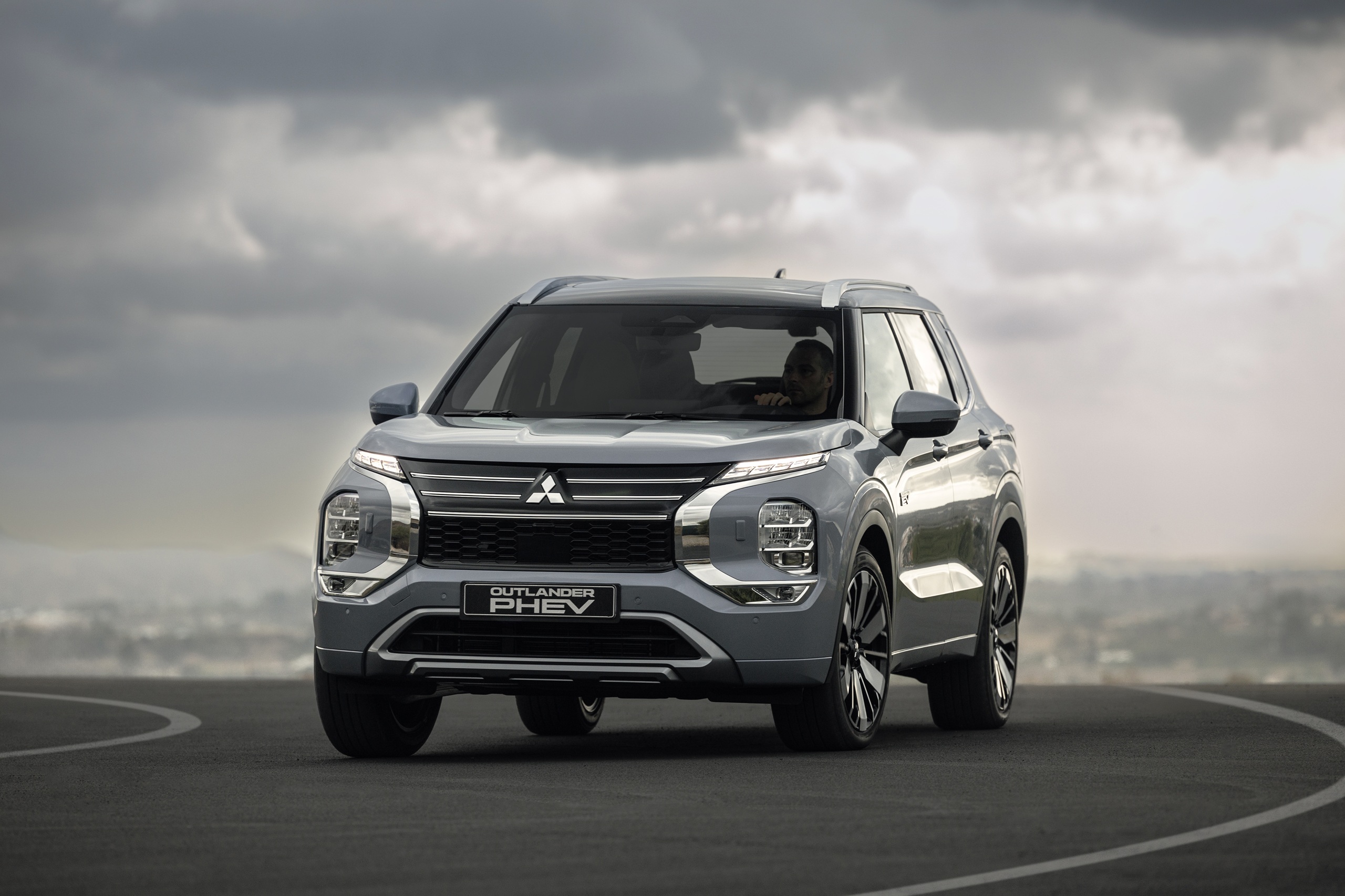
Image: Mitsubishi Germany
Strengths and weaknesses of the Mitsubishi Outlander PHEV:
✅ Advantages:
Good everyday suitability with up to 83 km purely electric range
Almost imperceptible transitions between drive modes
Standard all-wheel drive system (S-AWC) ensures excellent traction and driving safety
Generous space for all five passengers
Many upgrades in the interior
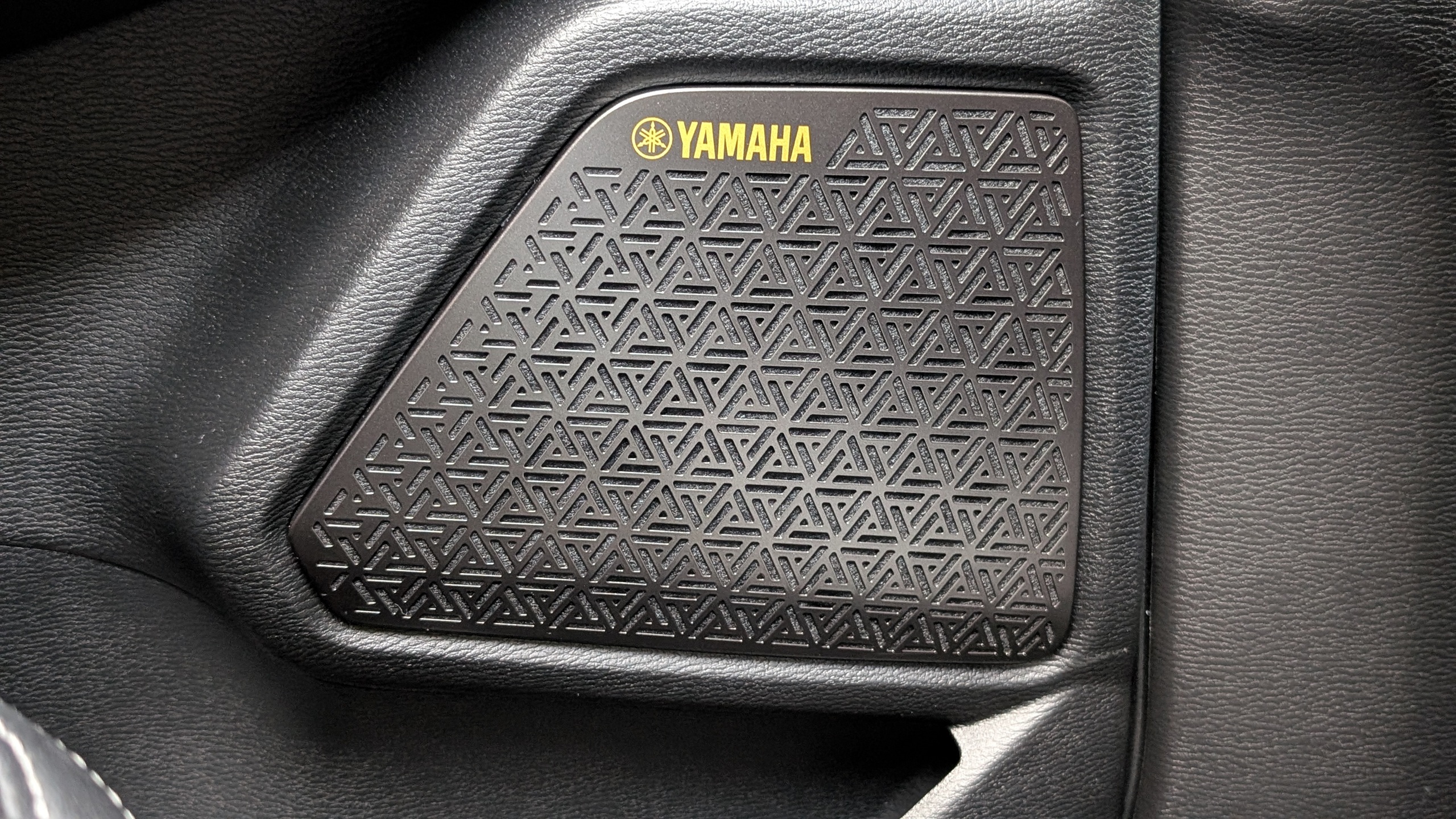
High-quality Yamaha sound system with up to 12 speakers
Up to 8 years warranty with regular maintenance
❌ Disadvantages:
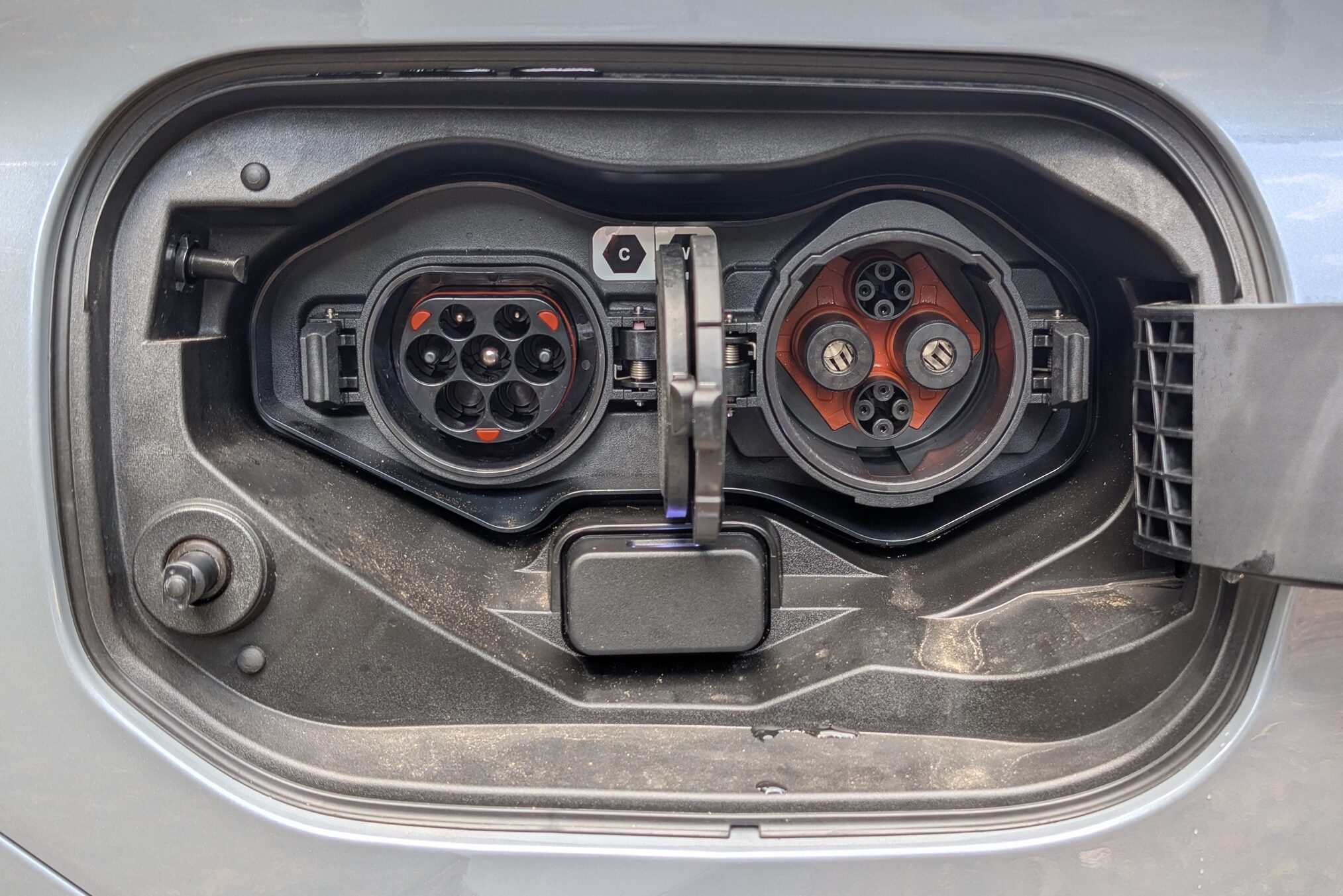
Outdated CHAdeMO charging standard instead of CCS
AC charging from 0 to 100 percent with only 3,6 kW takes 7 hours
The One Pedal recuperation is strong, but does not brake the vehicle completely to a standstill
Speed limit at 170 km/h
Design and exterior of the Mitsubishi Outlander PHEV: A tank on wheels
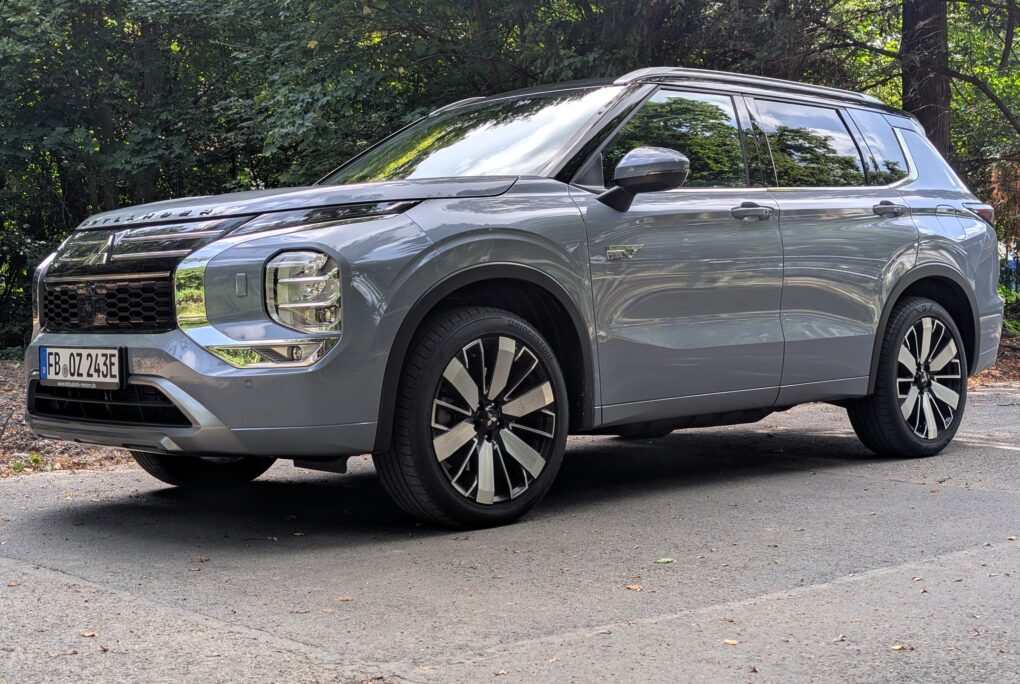
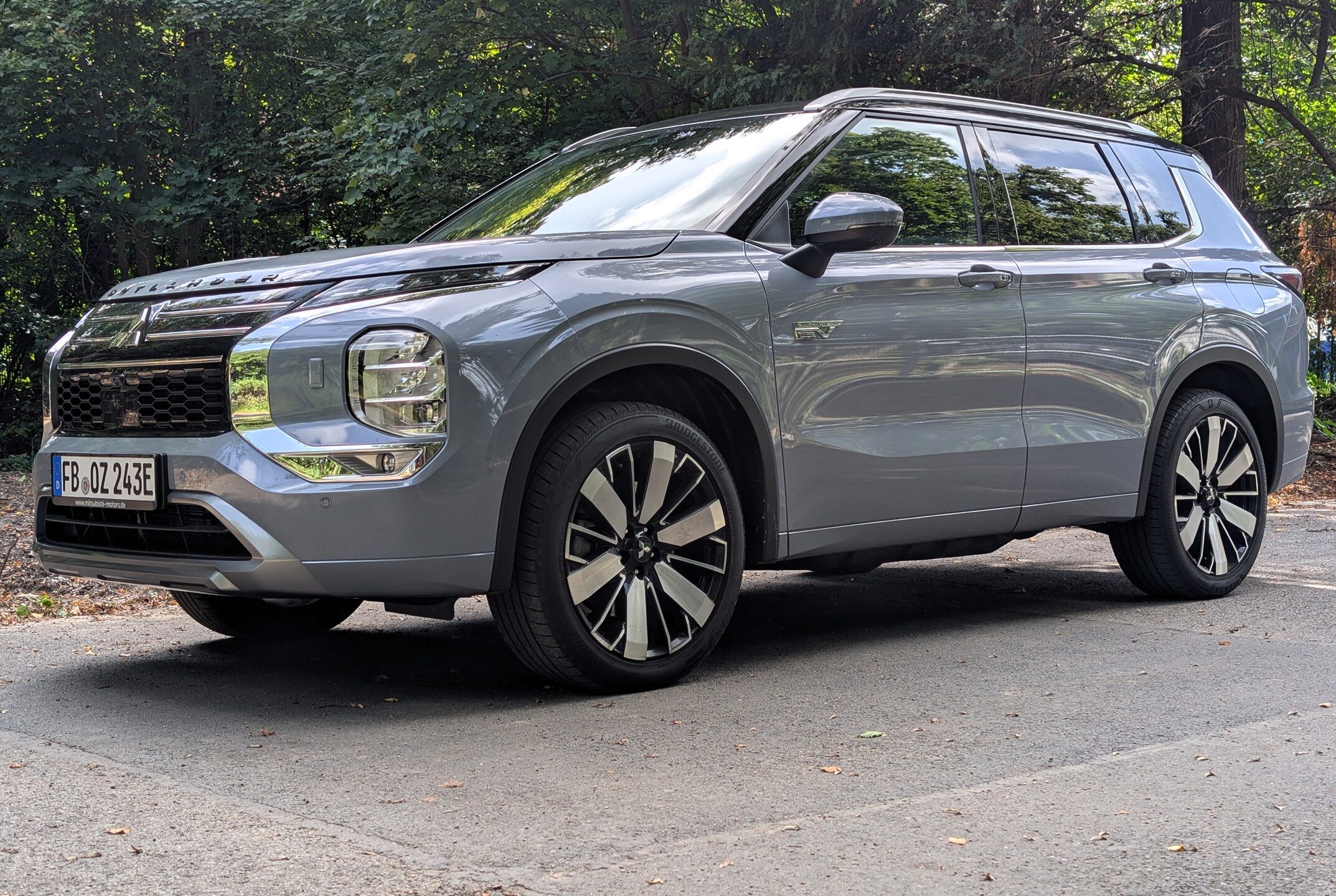
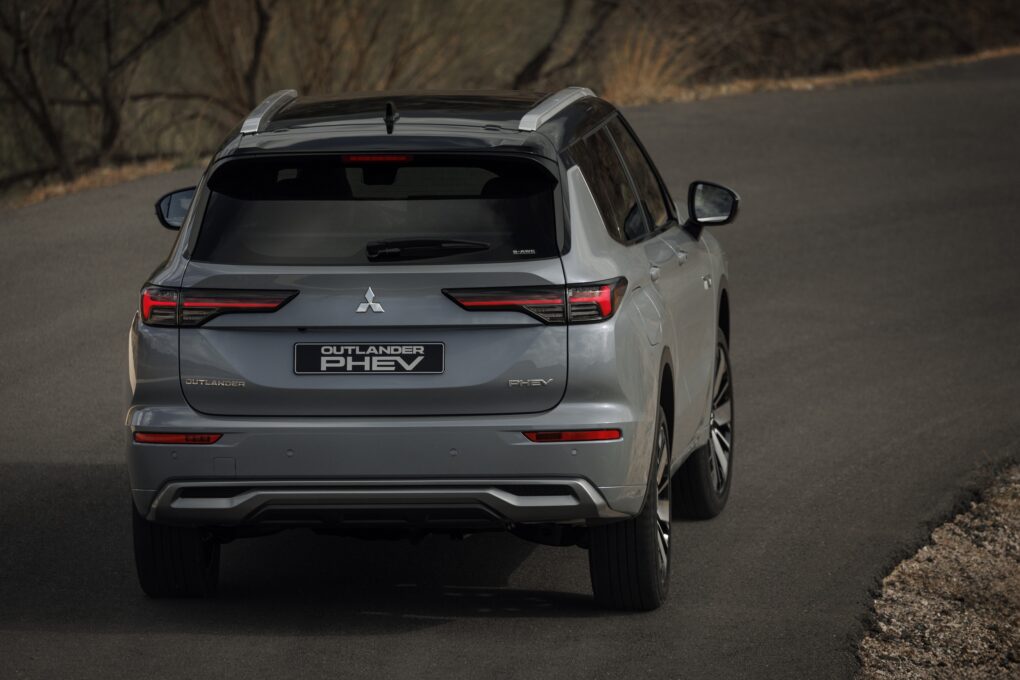
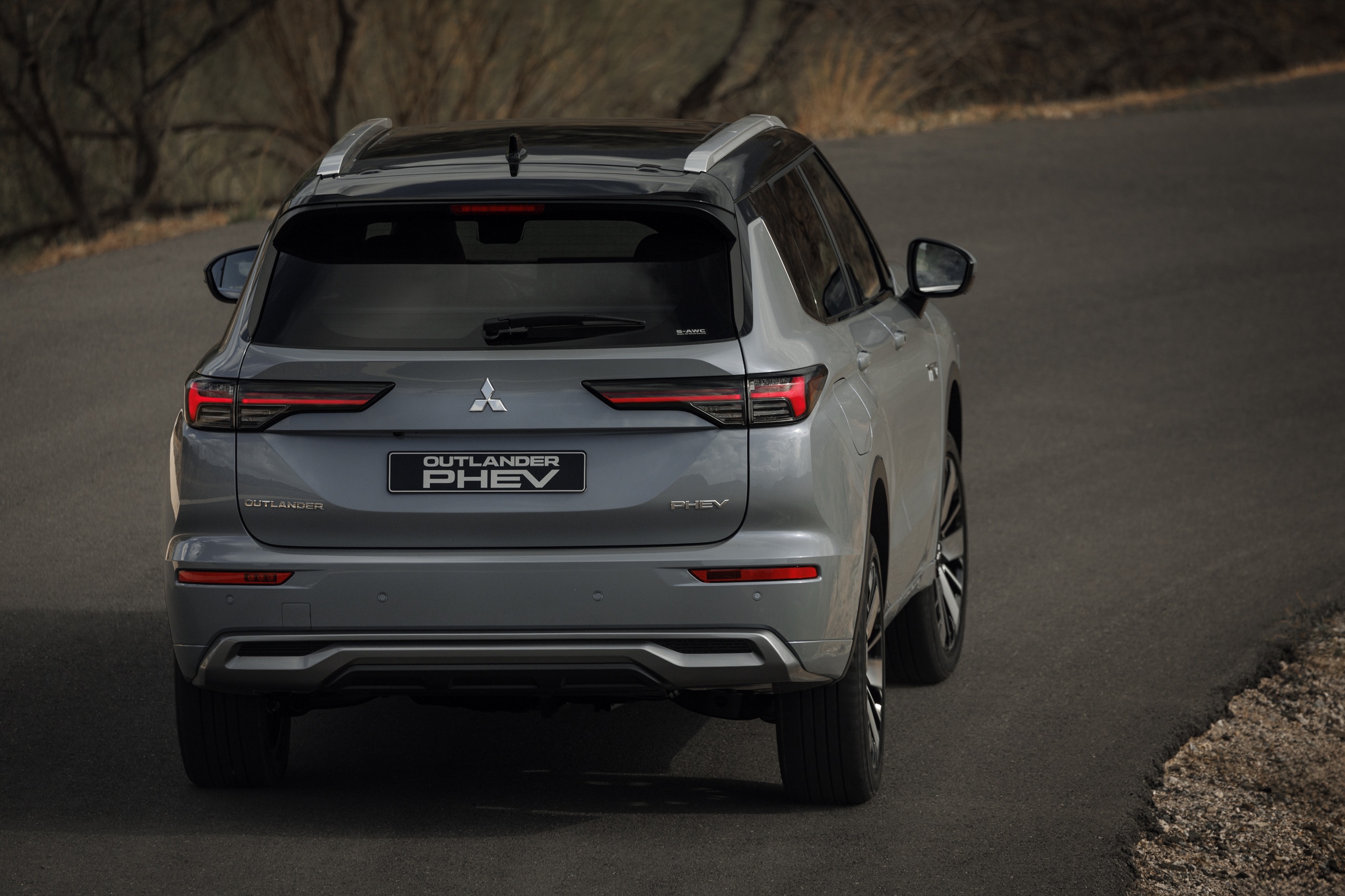
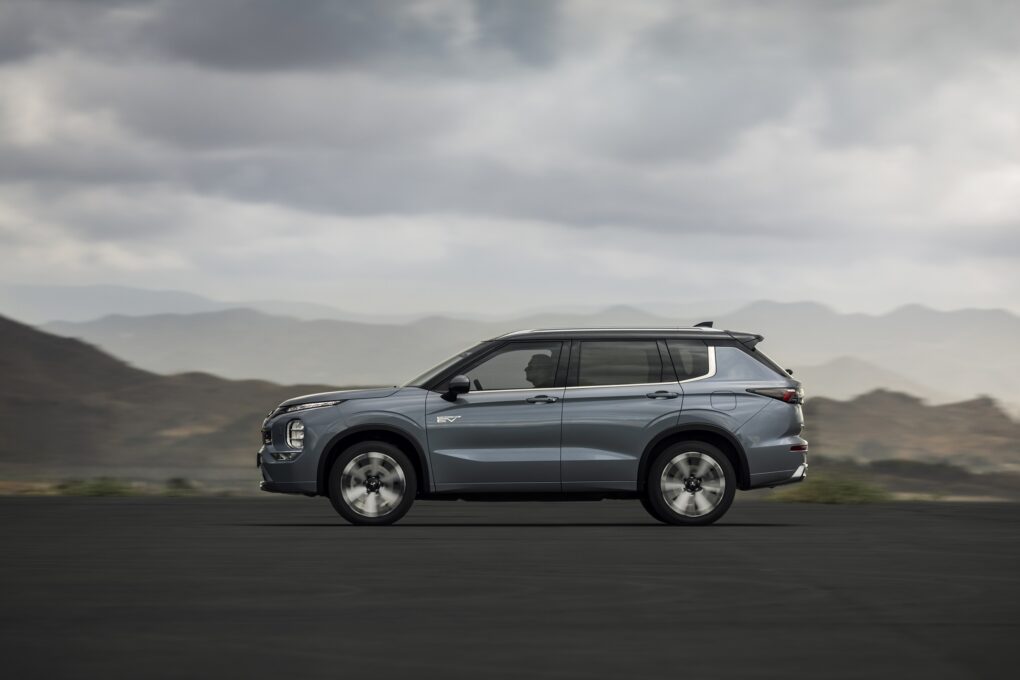
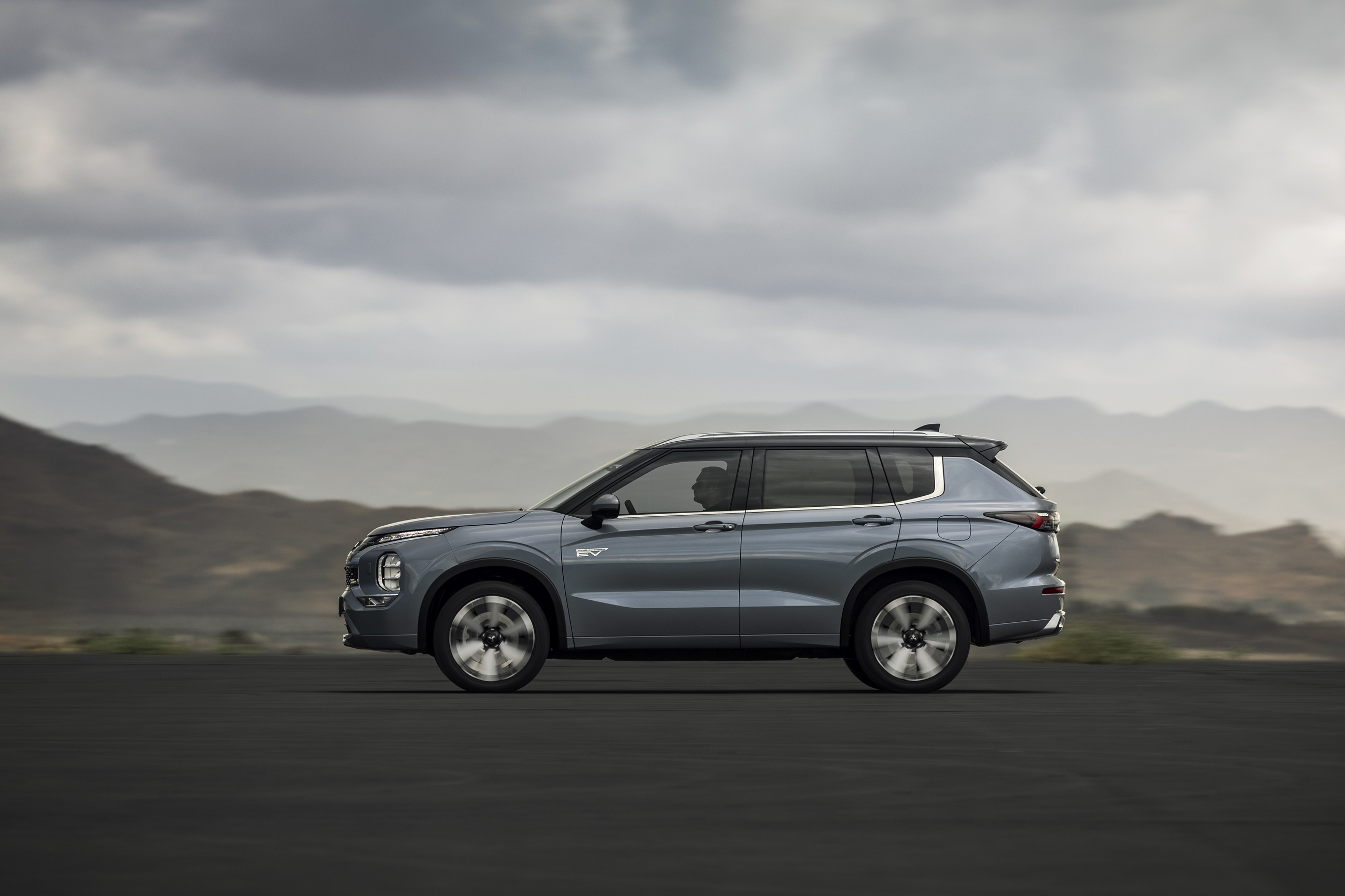
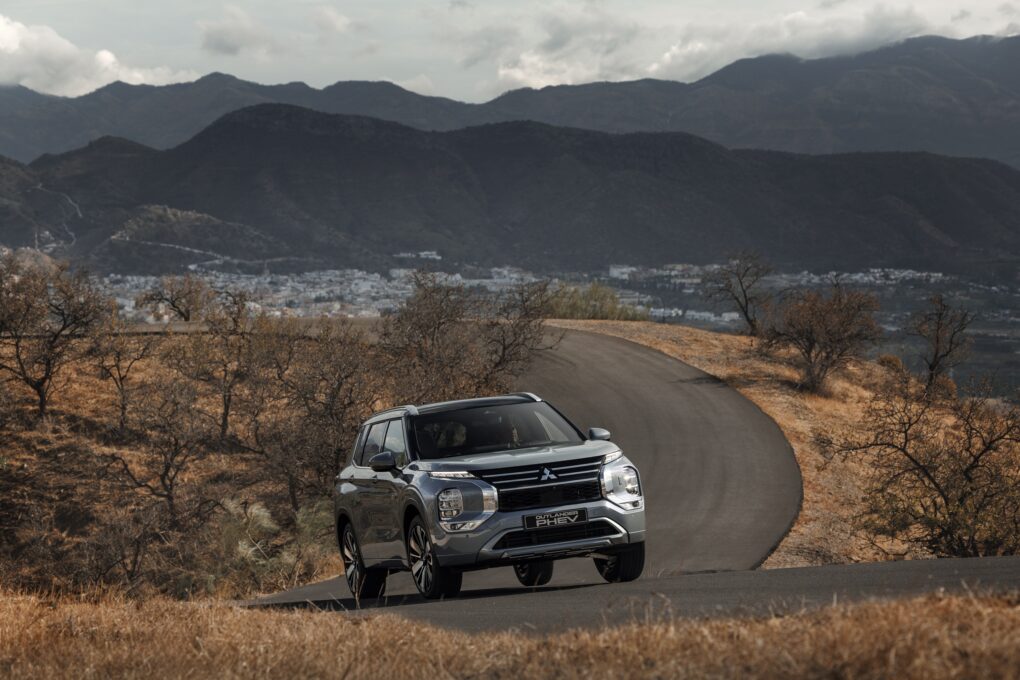
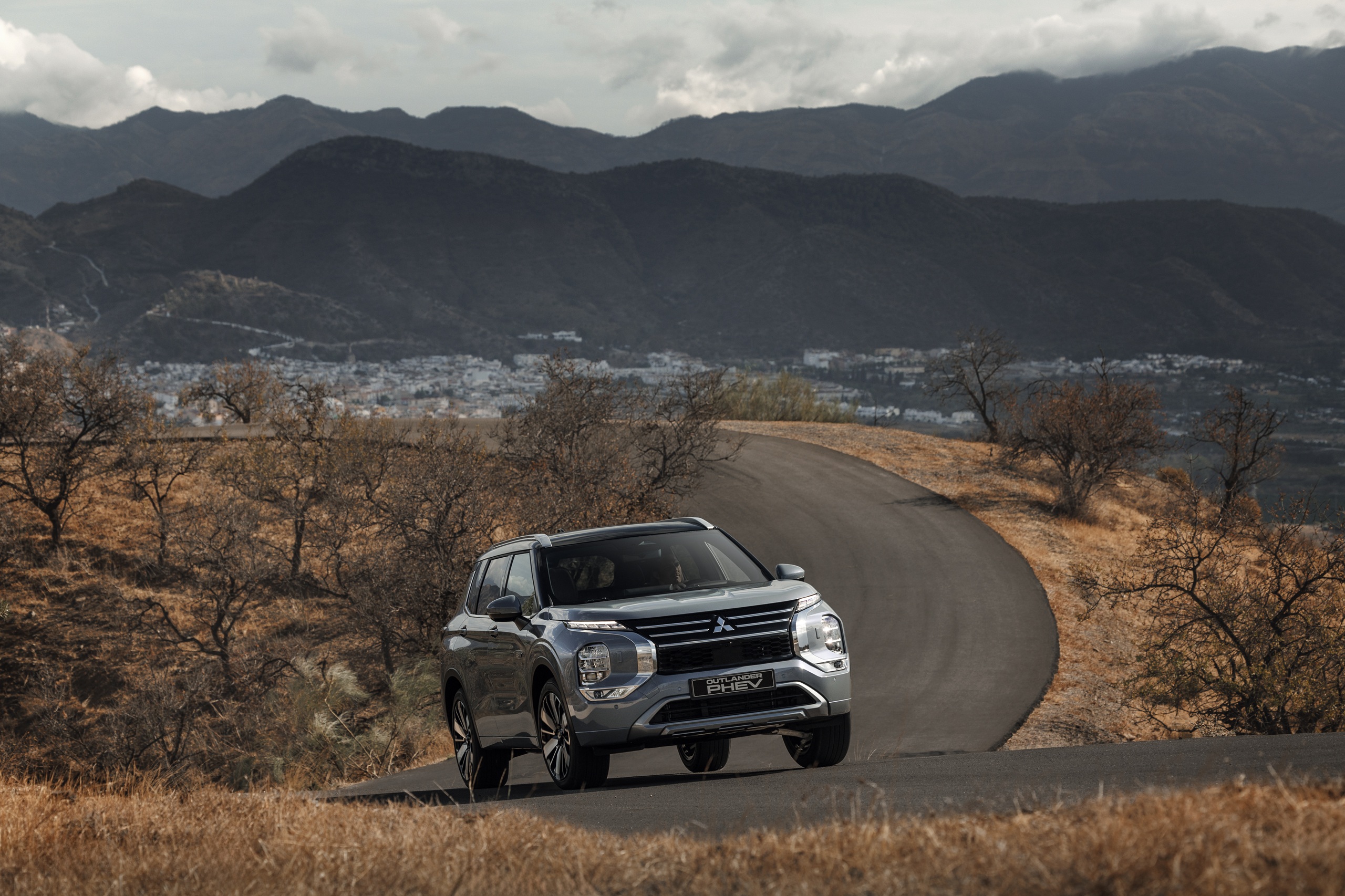
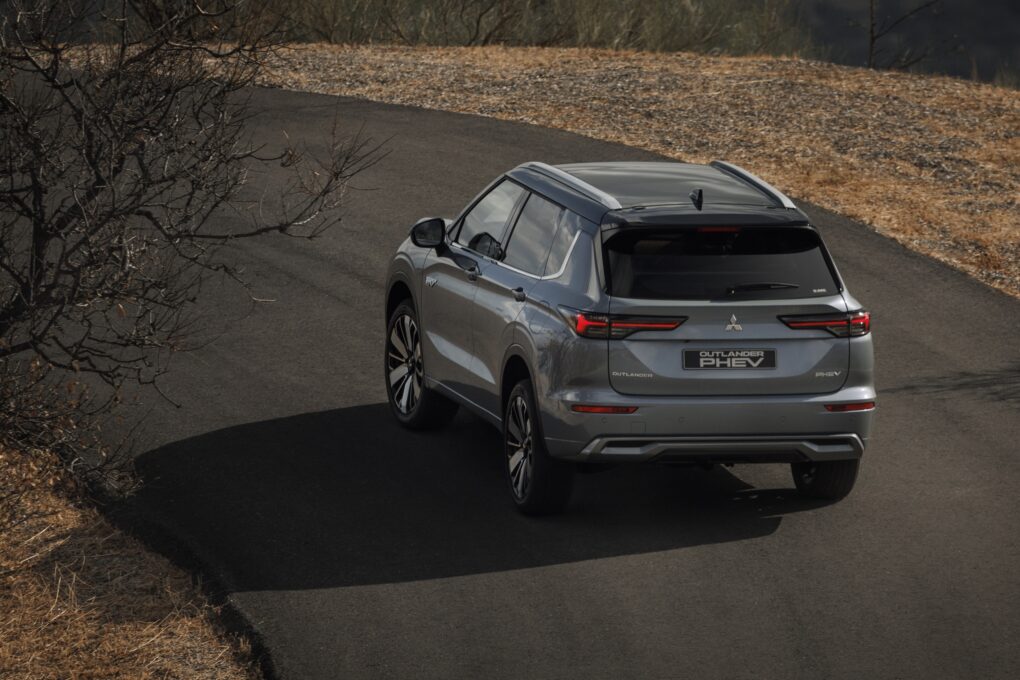
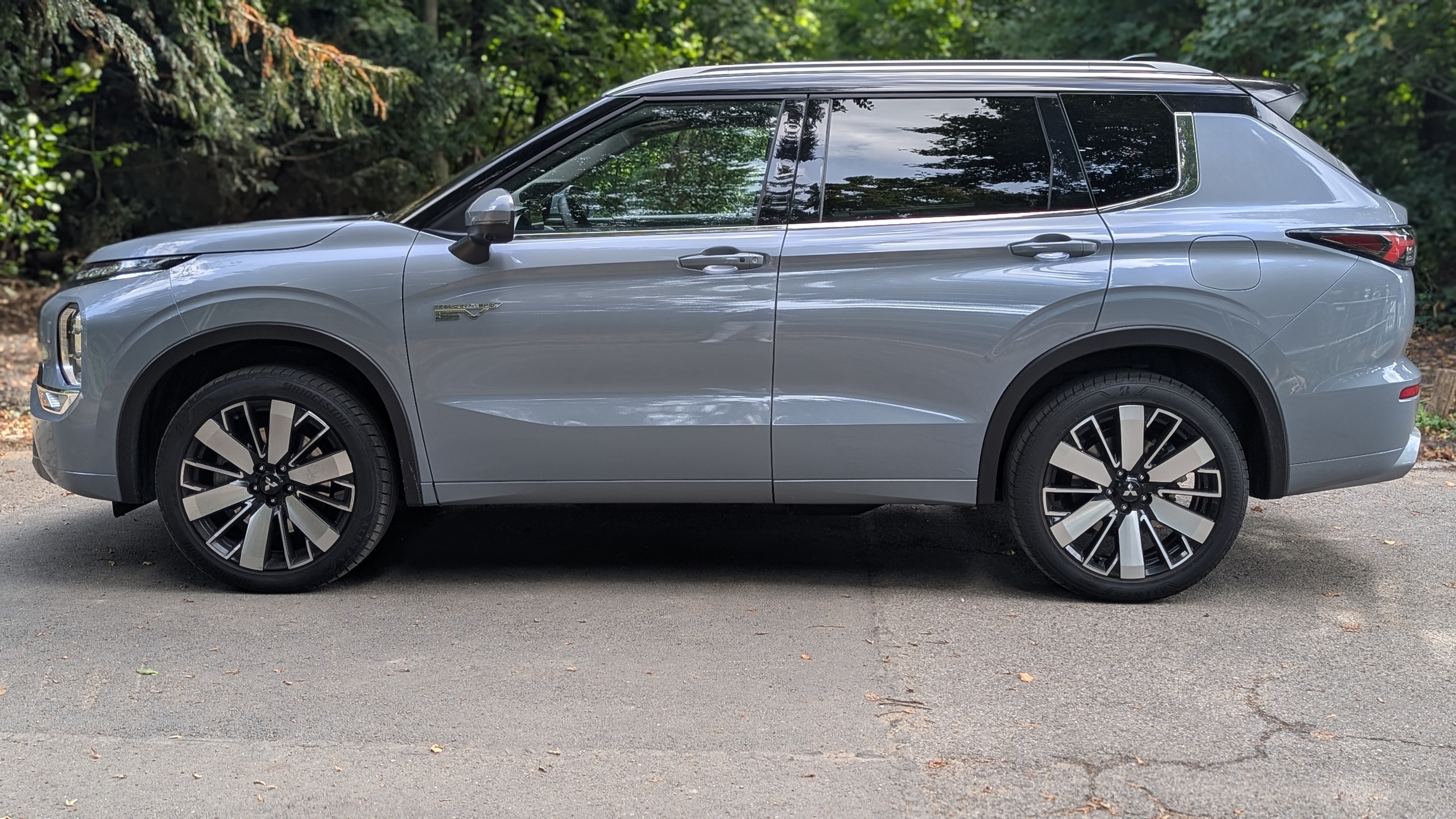
The new Outlander has a much more present and confident appearance than its predecessor. The front is dominated by the “Dynamic Shield” brand face Its sleek design features slim LED daytime running lights and subtly positioned main headlights. Its massive stature, with a total length of 4,72 meters, a width of 1,86 meters (without mirrors), a height of 1,75 meters, and a wheelbase of 2,70 meters, gives it a stately appearance on the road and clearly positions the SUV in the mid-size segment. We also particularly appreciate the full-LED headlights and the characteristic Hexaguard Horizon design at the rear.
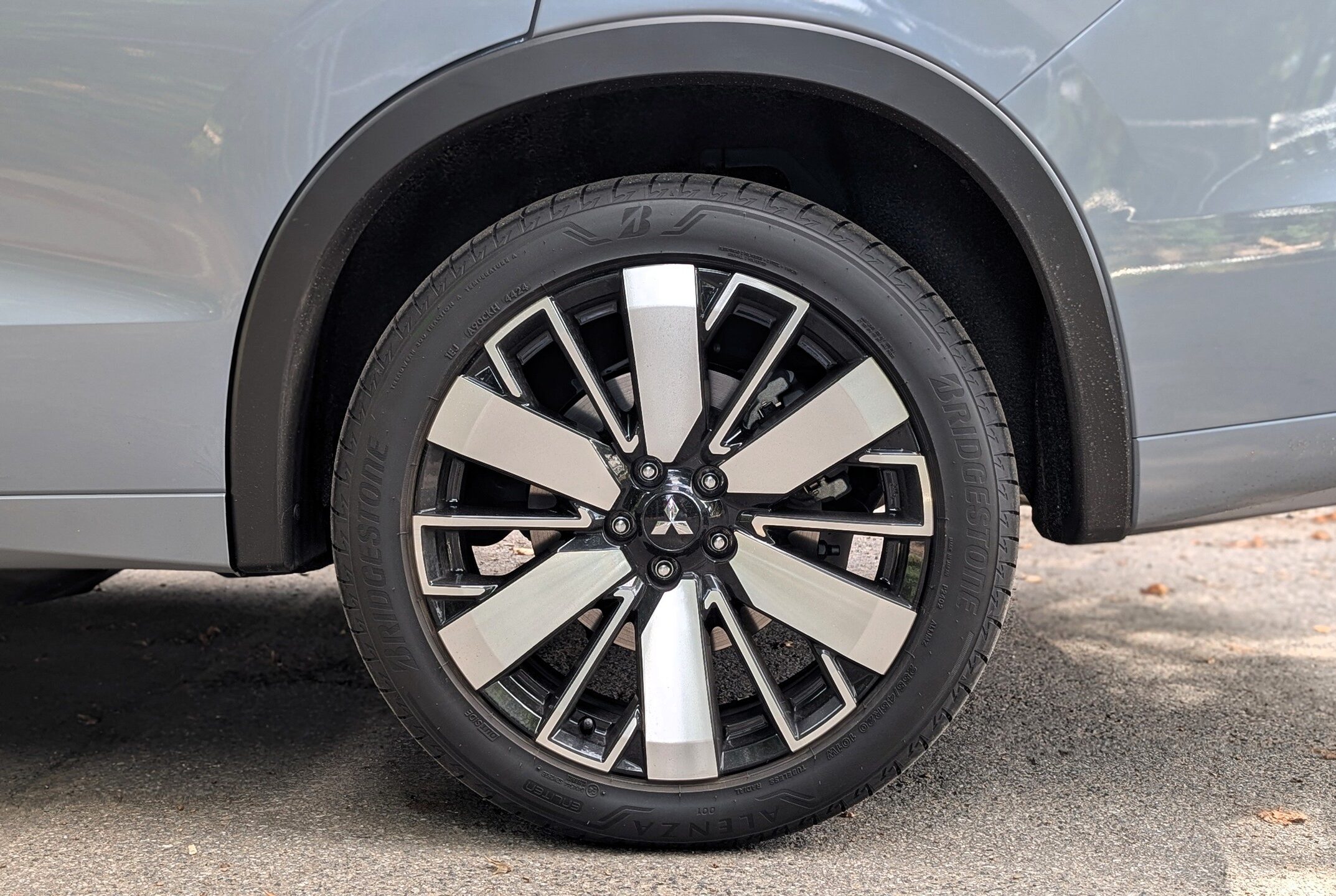
The plug-in hybrid SUV offers a choice of five two-tone and six solid paint finishes. The two-tone paint finish of Moonstone Gray with Panther Black, chosen for the tested configuration, underscores the Outlander's high-quality credentials. The 20-inch alloy wheels in the top trim further emphasize its robust character, while the 19,9 cm ground clearance signals genuine off-road capability. The turning circle of 11 meters is quite acceptable for the vehicle's size. A comprehensive Accessoriesprograms also gives it further individuality.
-
- Picture: TechnikNews
Interior of the Mitsubishi Outlander PHEV: Many upgrades
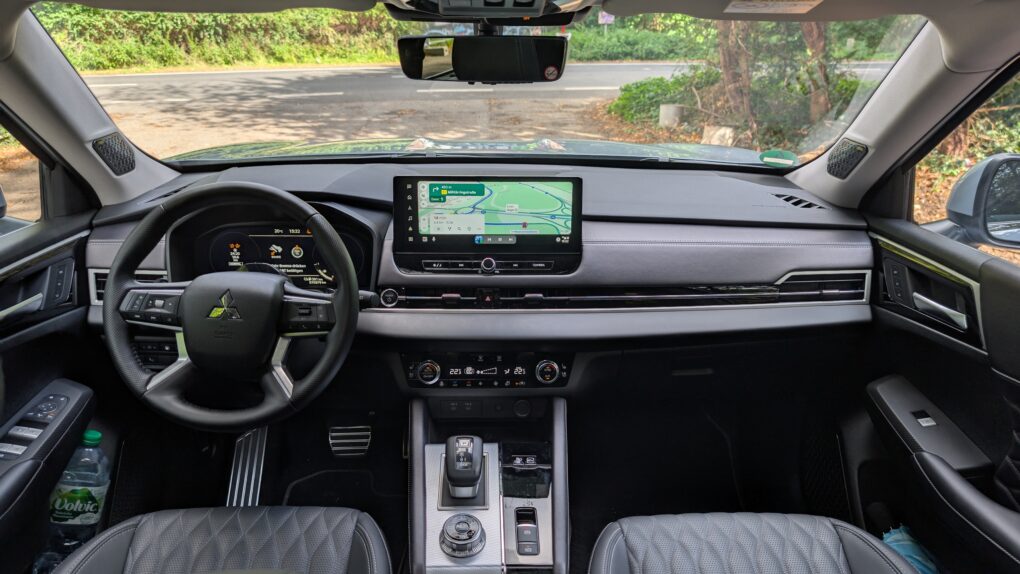
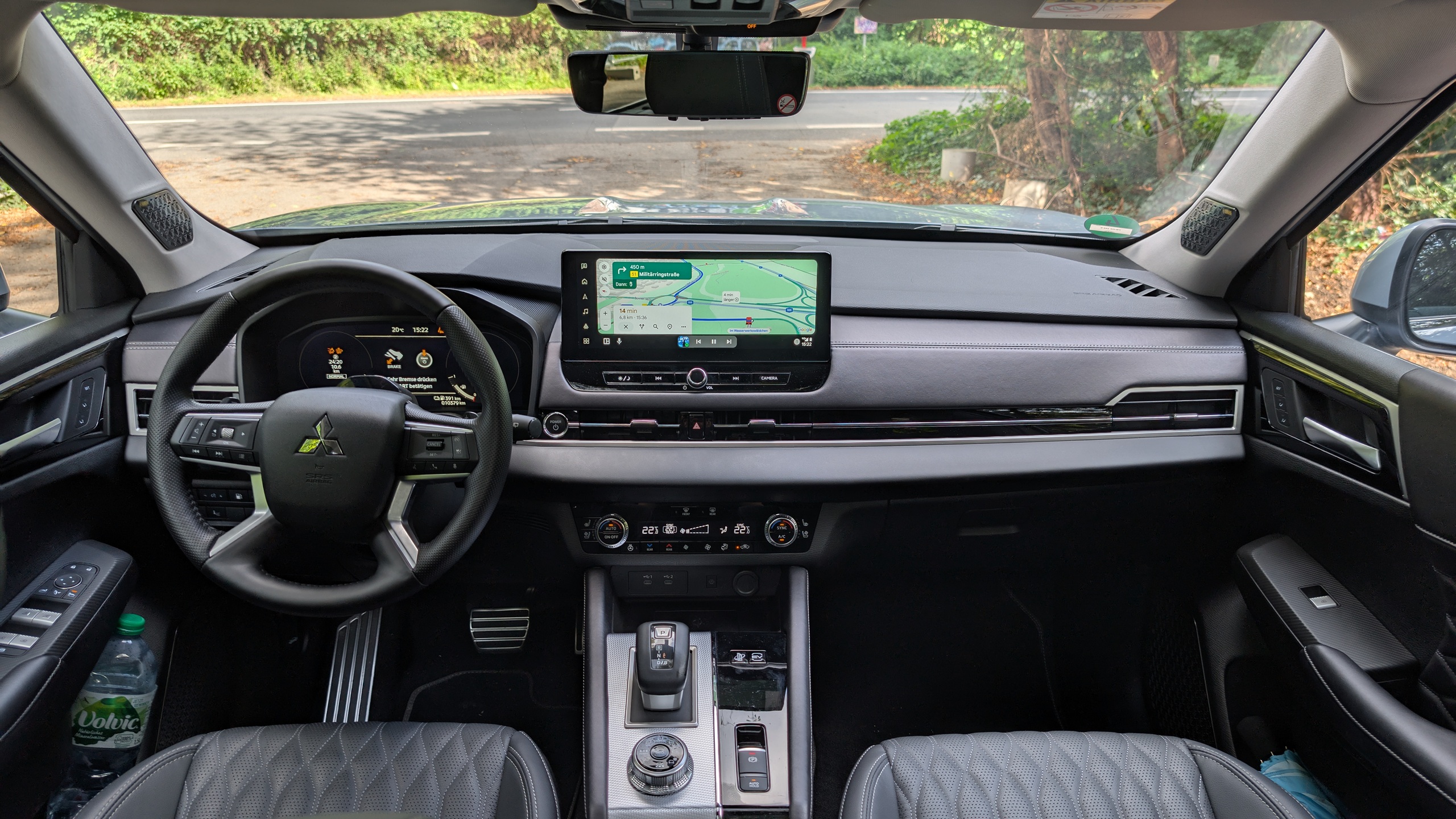
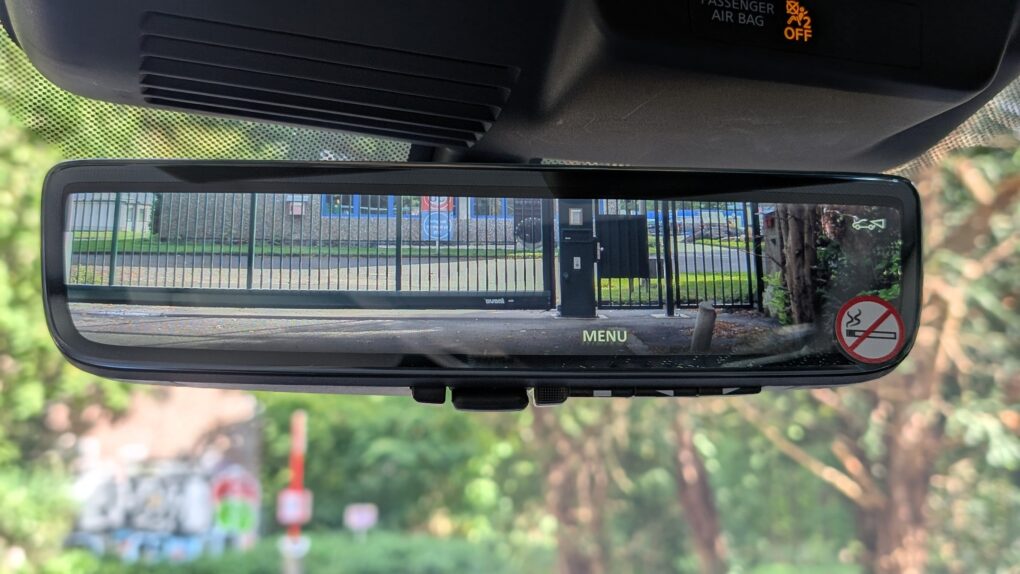
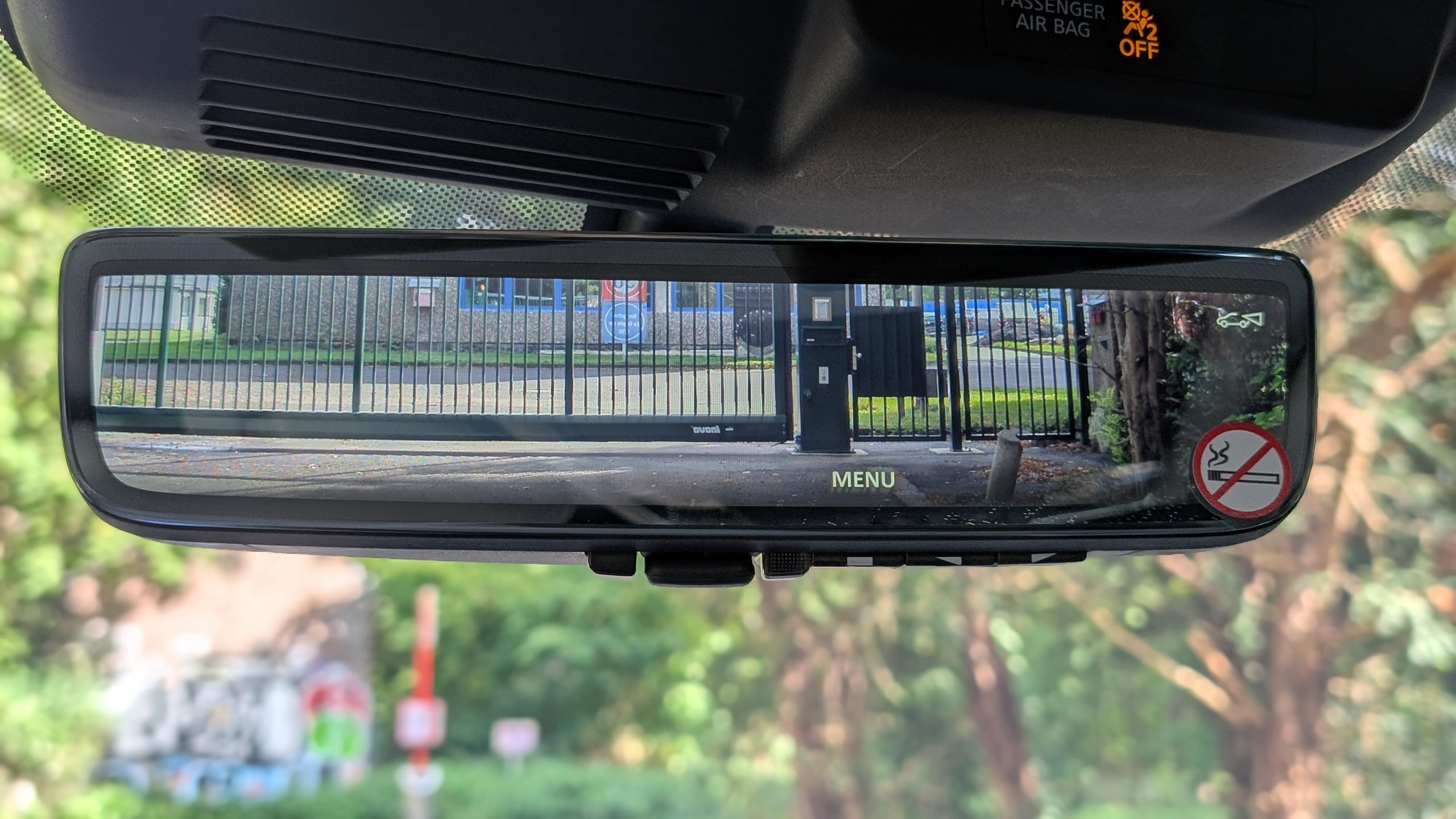
Inside, the Outlander welcomes its passengers with a significantly improved ambience. High-quality materials and impeccable craftsmanship create a premium atmosphere. The large 93-centimeter panoramic glass sunroof with electric blind also ensures a light-filled interior. If visibility is obstructed by passengers or luggage, a frameless, high-resolution digital interior mirror can display an image from an additional camera located below the roof spoiler.
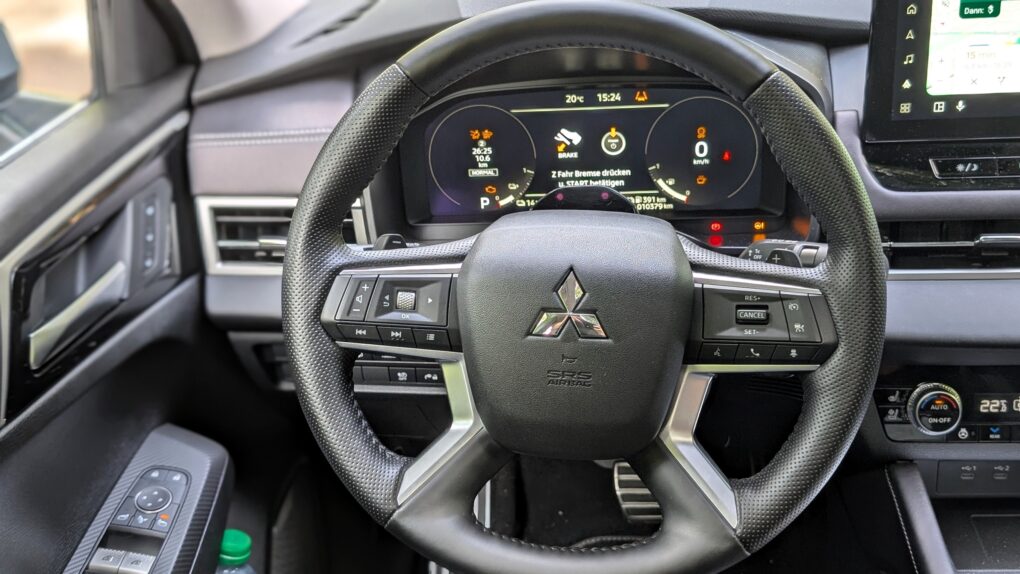
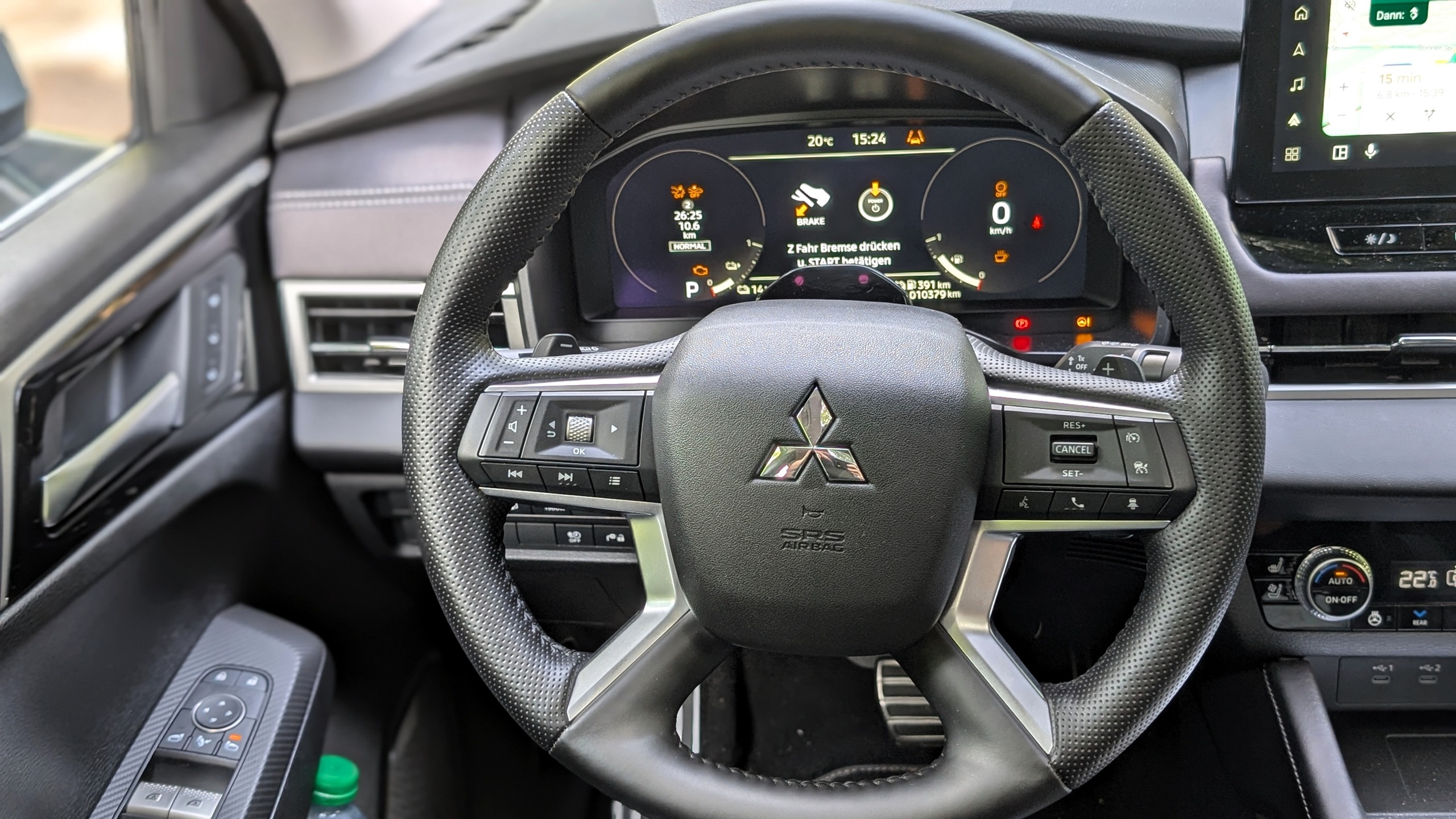
The perforated leather front seats in the top-of-the-line trim for the driver and front passenger are not only electrically adjustable, heated, and cooled, but also offer a memory function and are overall very comfortable. Rear passengers also appreciate seat heating. Practical details Features such as extendable sun visors on the rear doors and numerous storage compartments further enhance travel comfort. The attractive tactile buttons on the comfortable, grippy steering wheel perfectly round off the interior experience.
-
- Picture: TechnikNews
-
- Picture: TechnikNews
Space and trunk: very good rating
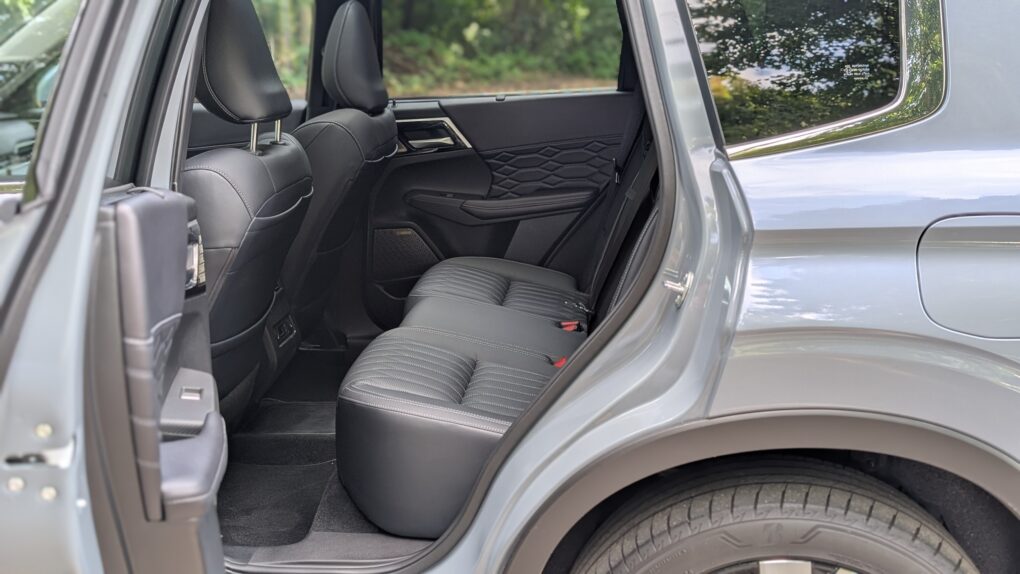
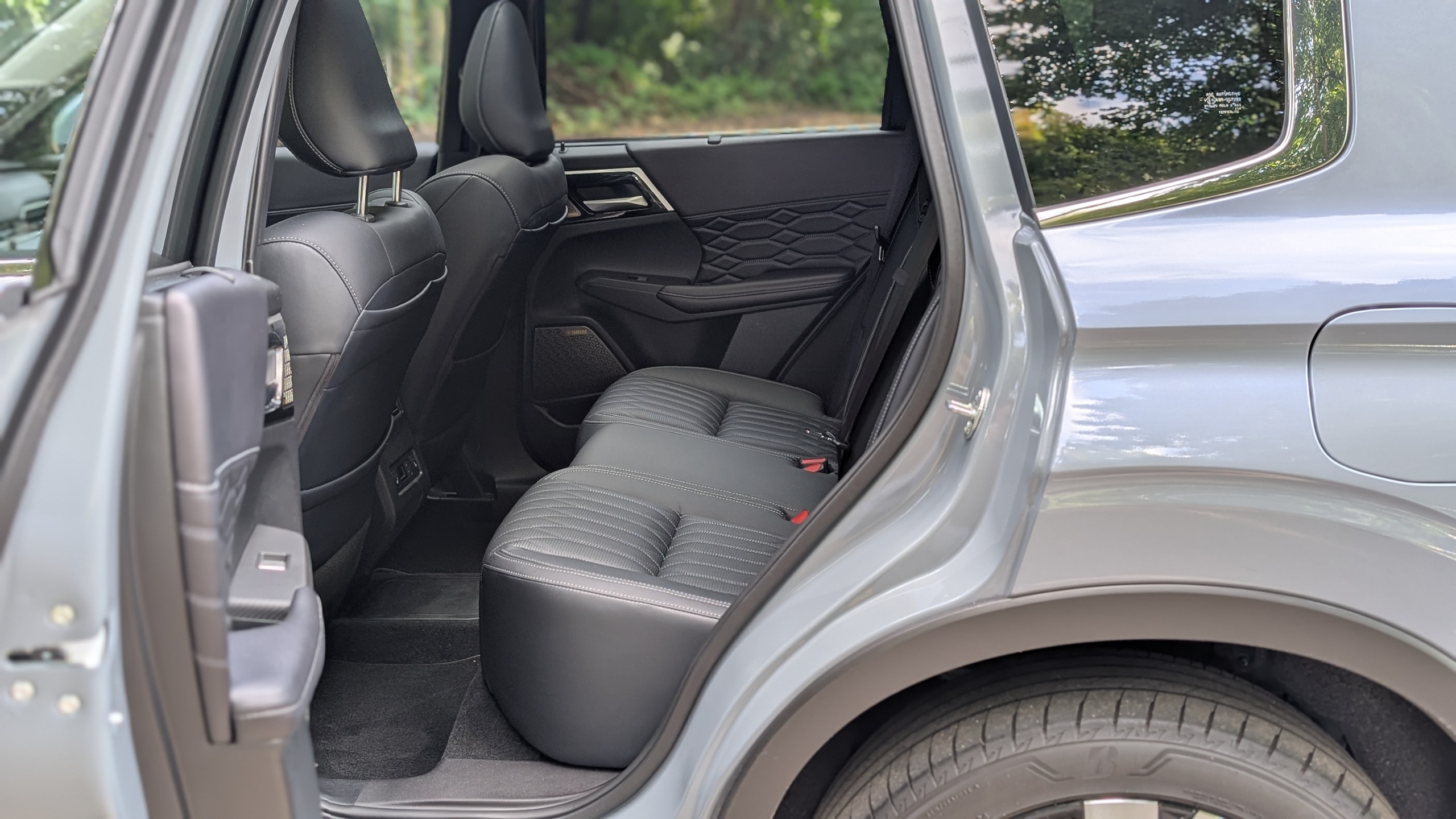
The space is generous, with plenty of room for adults and children in both the first and second rows. Rear passengers also have their own climate control unit. The 40:20:40 split rear seats also offer a high level of flexibility and can be flexibly adjusted to suit any loading needs.
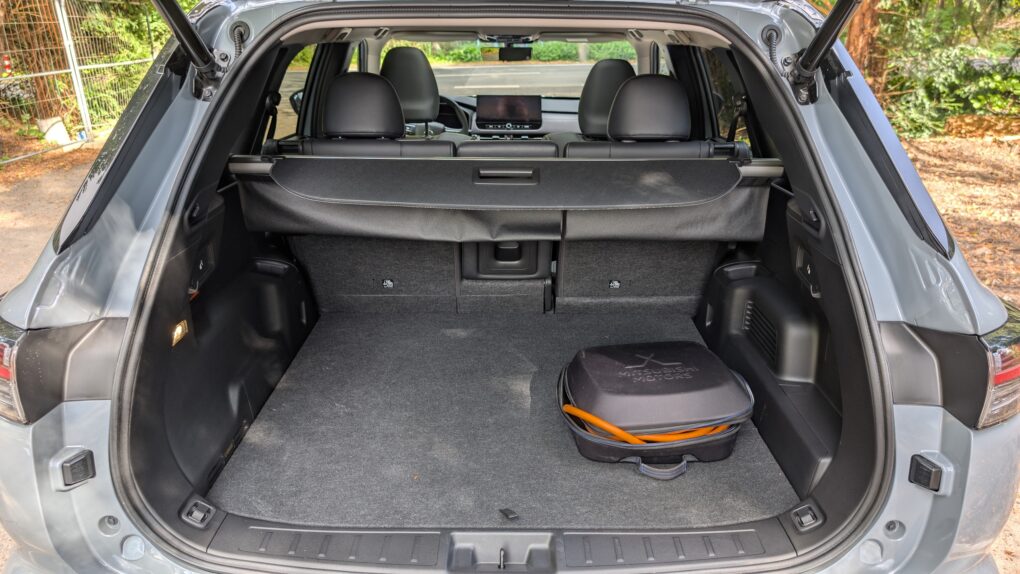
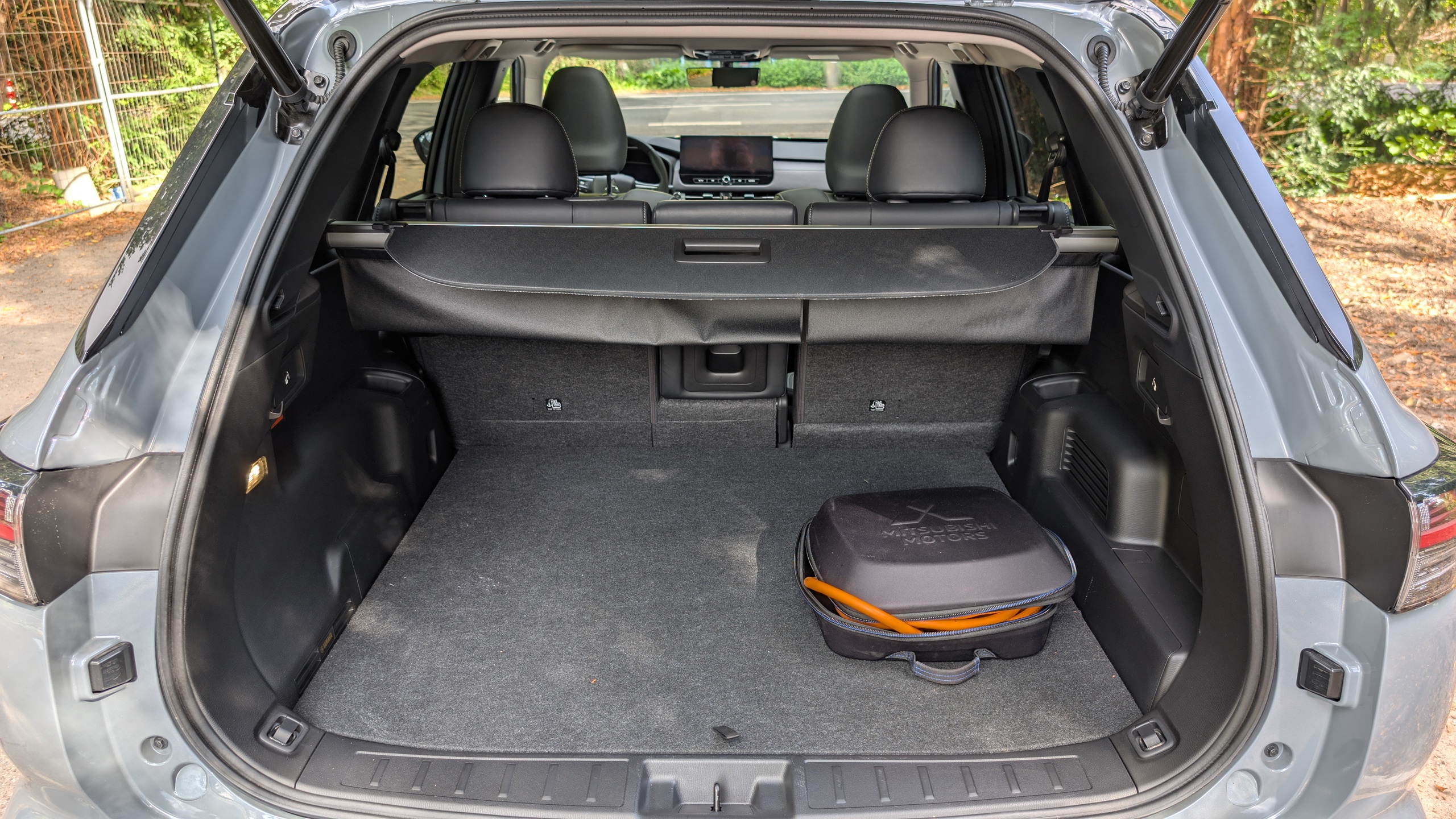
The trunk holds between 495 and 1404 liters with the rear seat folded down, which is a very good figure for a PHEV SUV. The payload is up to 510 kilograms, and the maximum roof and nose weight is 80 kilograms. The braked towing capacity is 1.600 kilograms, and unbraked, up to 750 kilograms.
-
- Picture: TechnikNews
-
- Picture: TechnikNews
Comfort and connectivity: Plenty inside
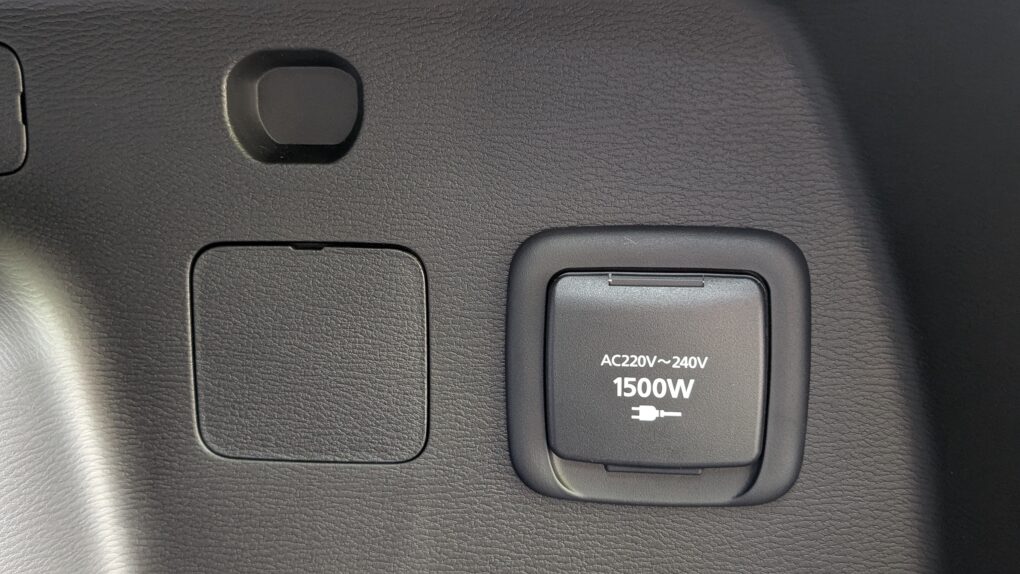
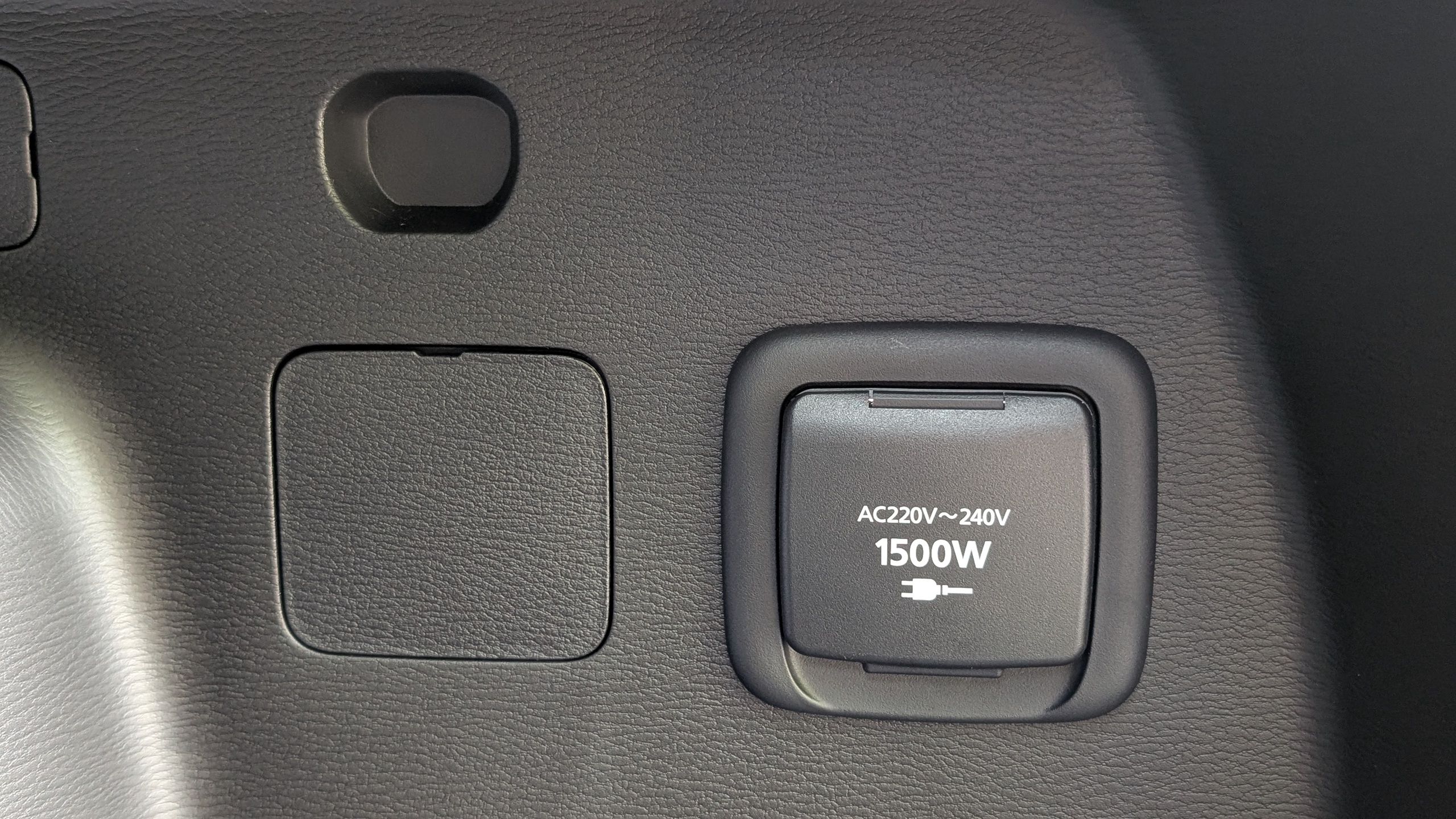
The three-zone automatic climate control provides individually adjustable comfort, while the warm-water auxiliary heating system ensures pleasant conditions inside the vehicle even in winter temperatures. Heated seats are available for both the outer front and rear seats and are complemented by a ventilation function for the front seats. Practical details, such as the 230-volt power outlets in the second row and in the trunk, significantly increase everyday usability and are a unique selling point.
The Smart Key system also enables convenient, keyless opening and starting of the Outlander. The power-operated tailgate with sensor control works well, but unfortunately, it beeps every time it's opened and closed. Wireless charging for smartphones and several USB-C ports are also available, ensuring modern connectivity. With the voice command "Hey Mitsubishi," various Google functions can be used without having to take your hands off the steering wheel or take your eyes off the road, which worked well in our tests.
About the Mitsubishi Connect app You have access to various security, protection, and comfort services. The app allows you to set and access information about the charge level indicator, the charging timer function, or the climate control system, including the hot water auxiliary heater. Furthermore, the app offers advanced vehicle control functions such as door locking/unlocking, adjusting the interior temperature, a vehicle finder, and the ability to send routes to the infotainment system. You will also be notified in real time via the app, text message, or email in the event of a break-in attempt.
-
- Picture: TechnikNews
-
- Picture: TechnikNews
Infotainment and sound: Yamaha ensures rich sounds
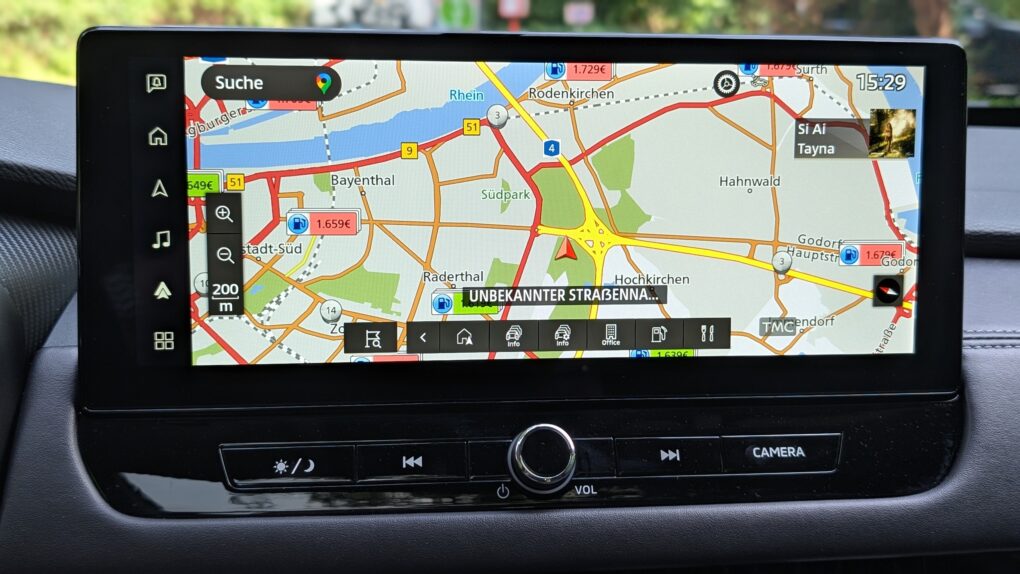
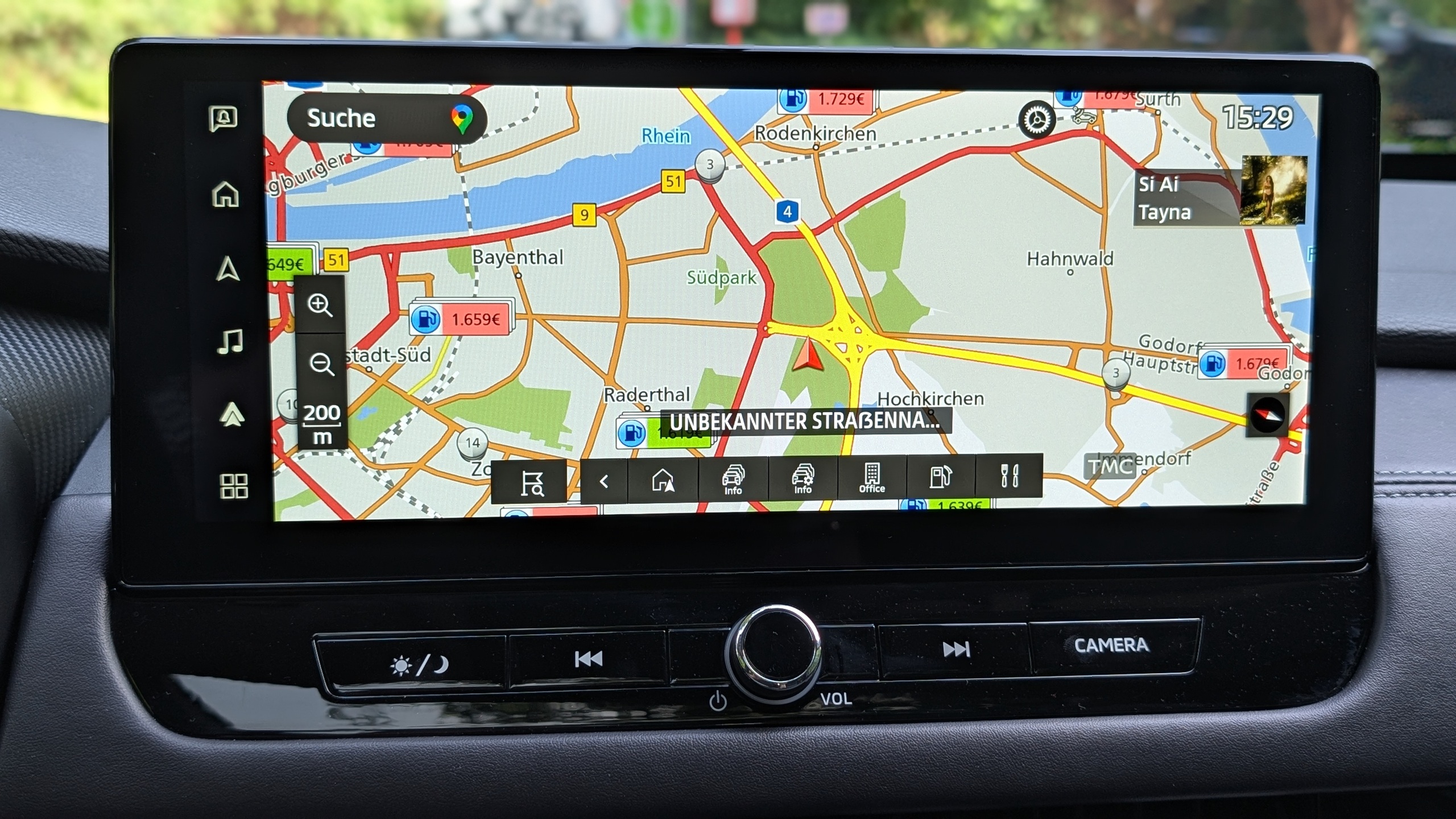
The cockpit is dominated by two large screens. A fully digital 12,3-inch instrument display provides all driving-relevant information and is complemented by a head-up display that projects important data directly into the driver's field of vision. proinjected. The 12,3-inch touchscreen infotainment system It offers a modern user interface with TomTom navigation, which can also display current fuel prices at gas stations, and integrated Google services, and runs very smoothly overall. Wireless smartphone connectivity via Apple CarPlay and Android Auto works seamlessly, simplifying the integration of your own apps.
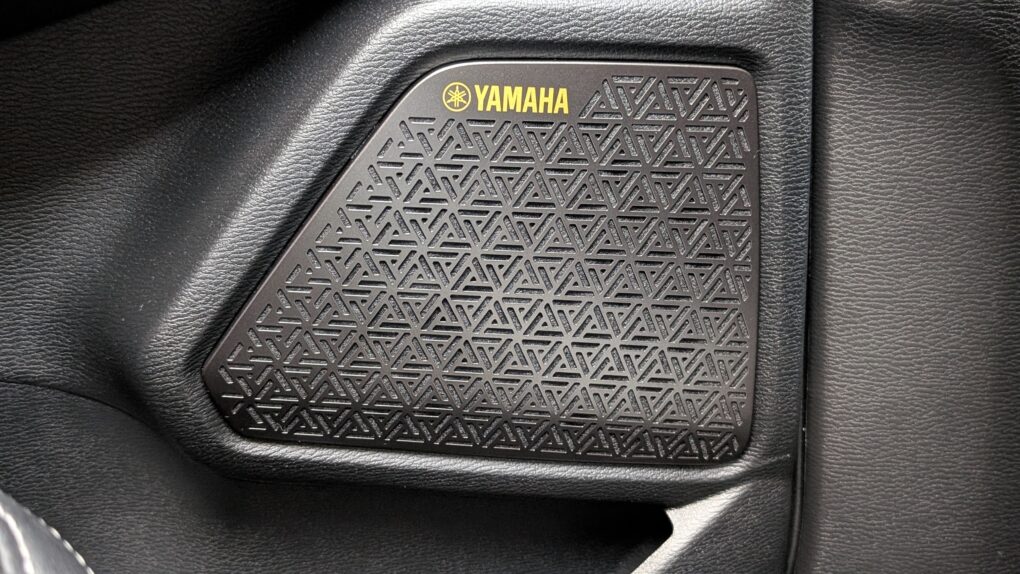
The highlight is undoubtedly the Yamaha sound system. The base model features 8 speakers, while the top-of-the-line version boasts 12 speakers, including a subwoofer and two amplifiers, delivering 1650 watts of power. “Dynamic Sound Yamaha Ultimate” system offers different soundprofile (Signature, Lively, Powerful, Relaxing) and delivers impressively spacious, clear surround sound. The partnership between Mitsubishi and Yamaha is at its best here.
-
- Picture: TechnikNews
-
- Picture: TechnikNews
Drive of the Mitsubishi Outlander PHEV: 306 hp through all-wheel power
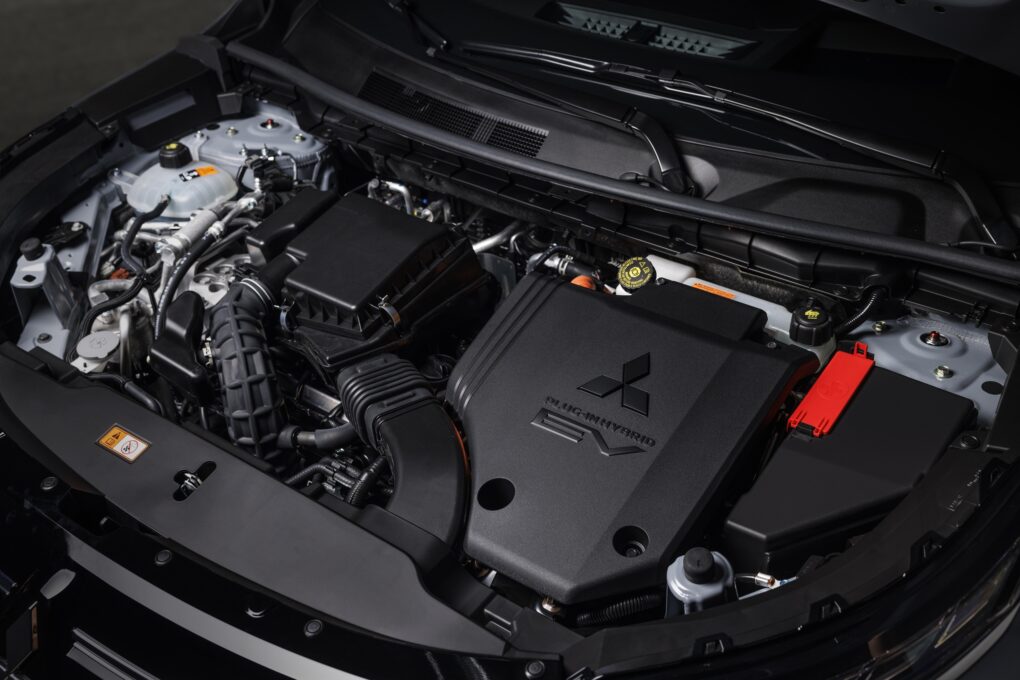
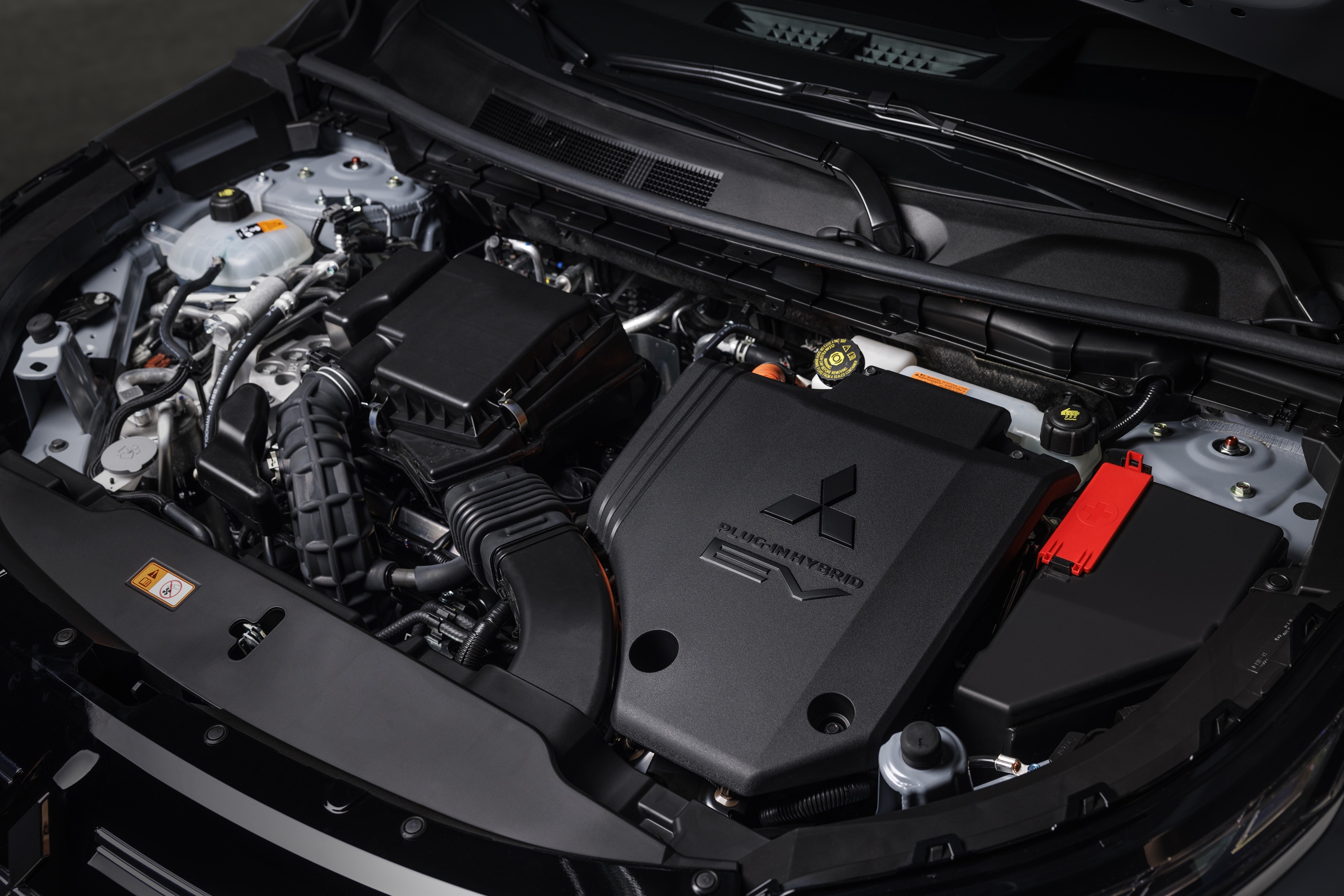
The heart of the Outlander is its plug-in hybrid system, which combines a 2,4-liter four-cylinder gasoline engine (100 kW / 136 hp) with two powerful electric motors on the front (85 kW / 116 hp) and rear axle (100 kW / 136 hp). This results in an impressive System output of 225 kW (306 HP)Power is transferred to the road via a permanent all-wheel drive system, which Mitsubishi calls "Super All Wheel Control" (S-AWC). Top speed is limited to 170 km/h, and up to 135 km/h is possible in pure electric mode.
The powerful acceleration, thanks to the instant torque of the electric motors, ensures solid acceleration from 0 to 100 km/h in 7,9 seconds. Depending on the driving situation and battery charge level, the system operates in various modes (pure electric, series, or parallel hybrid). The transitions are almost imperceptible. In SAVE mode, the current charge level is prioritized for later use, while in CHARGE mode, the battery is charged by the combustion engine.
-
- Image: Mitsubishi Germany
-
- Image: Mitsubishi Germany
Driving dynamics and handling: Designed for comfort
Despite its heavy weight of over 2,2 tons, the Outlander PHEV doesn't feel sluggish. The steering is precisely tuned, albeit a bit light for sporty maneuvers; it could provide a bit more road feedback. The new adaptive suspension with dual damper control ensures good ride quality.proIt strikes a balance between comfort and control, with it being designed more for comfort and thus ironing out bumps with ease.
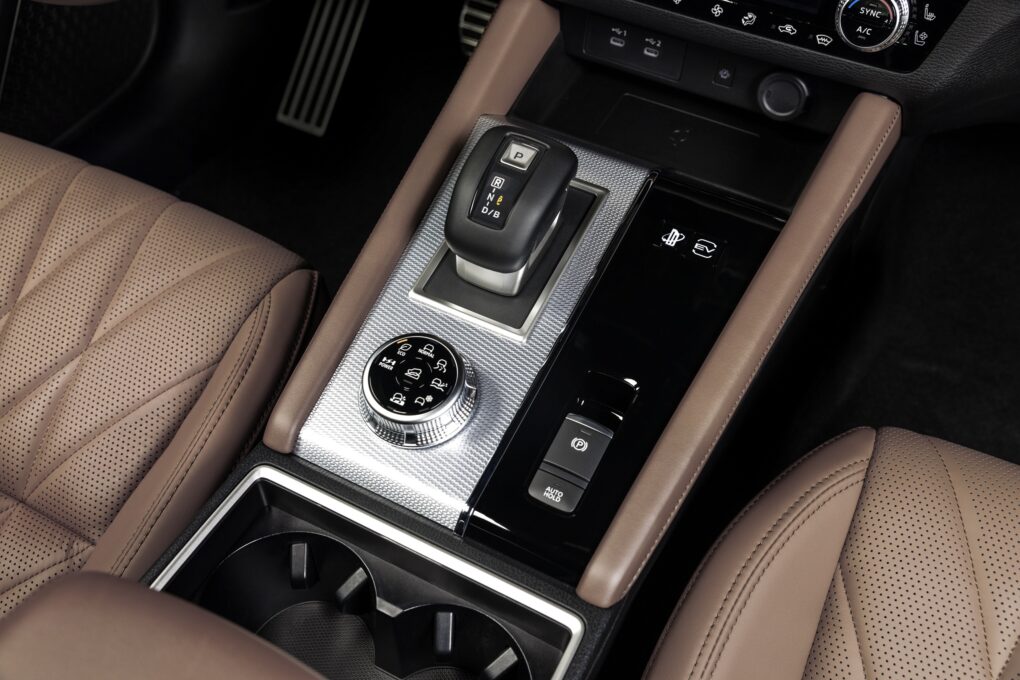
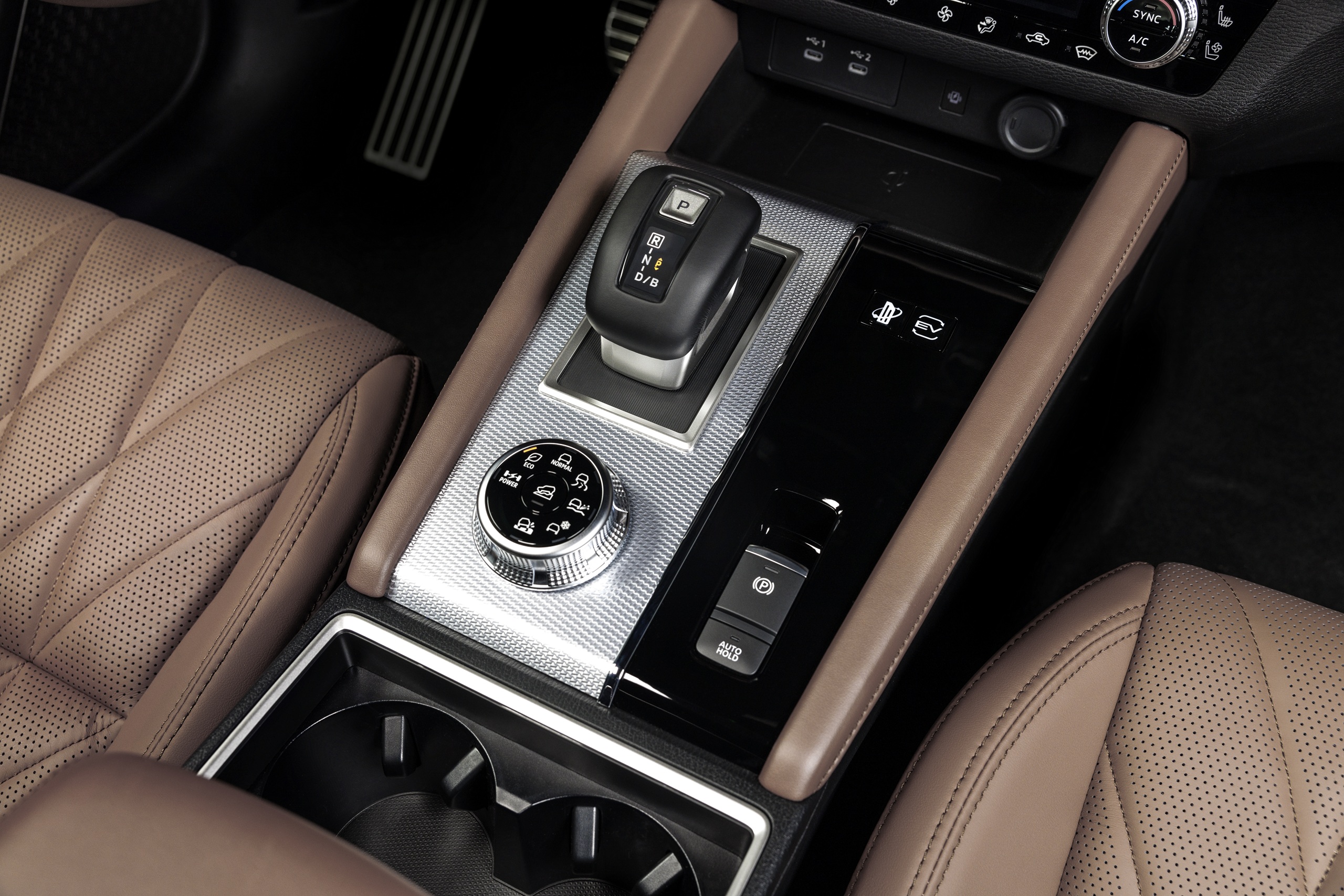
The permanent all-wheel drive “Super All Wheel Control” (S-AWC) Active Yaw Control ensures excellent traction in all conditions. In addition, seven driving modes, selectable via a rotary knob on the center console, allow adaptation to different driving situations and surfaces. Regenerative braking, adjustable in six stages via steering wheel paddles, also allows for individual adjustment of braking behavior. The alternatively activated one-pedal driving system generally works well, but the regenerative braking is set somewhat strongly, and the vehicle doesn't come to a complete stop when you take your foot off the accelerator.
-
- Image: Mitsubishi Germany
-
- Image: Mitsubishi Germany
Off-road capabilities: For light terrain it is sufficient
Thanks to the intelligent S-AWC all-wheel drive with dynamic handling control, a ground clearance of almost 20 centimeters, and special driving modes for different terrain, the Outlander isn't afraid of unpaved roads either. While the approach angles of 18,7 degrees at the front and 22,5 degrees at the rear limit its capabilities in difficult terrain, it's perfectly equipped for excursions on gravel roads or snowy roads.
The Outlander PHEV is well-equipped for light off-road use. The various driving modes allow adaptation to mud, sand, or snow. It also features front and rear underbody protection. However, it doesn't achieve the off-road capability of traditional SUVs like the previous Pajero. However, in terms of off-road capability, it clearly positions itself above pure road vehicles.
-
- Image: Mitsubishi Germany
-
- Image: Mitsubishi Germany
Fuel consumption and range of the Mitsubishi Outlander PHEV: Solid performance
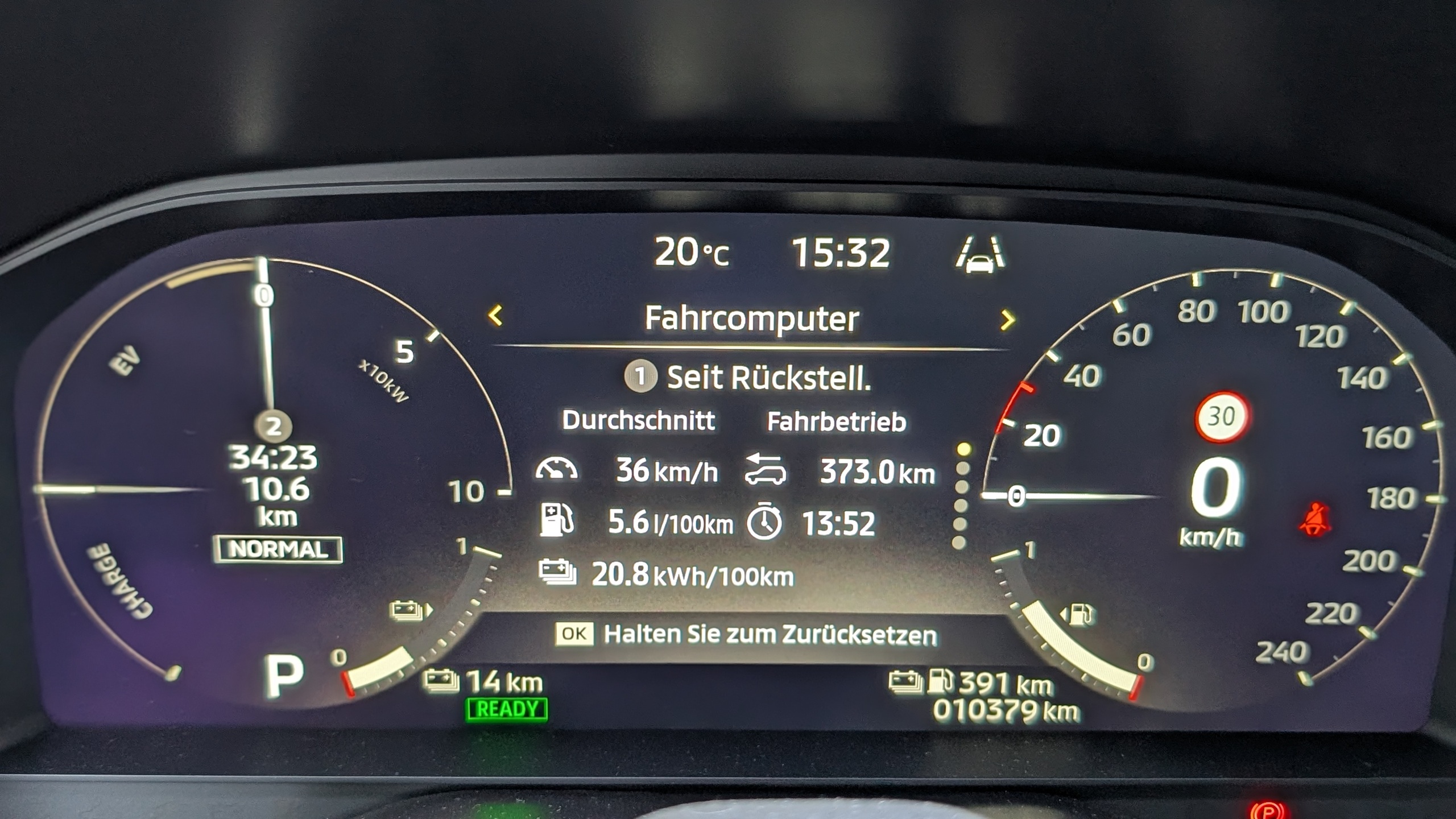
The new model's greatest strength is its 22,7 kWh lithium-ion battery with a 355-volt system. With a full battery, the Outlander PHEV achieves a purely electric range of 83 kilometers – an outstanding figure that falls just slightly short of the WLTP standard of 85 kilometers. In city traffic, up to 100 kilometers can even be achieved on electric power alone. With the fuel tank increased by 10 liters, from 43 to 53 liters, the Outlander PHEV can therefore travel a total of approximately 700 kilometers with a full battery and tank.
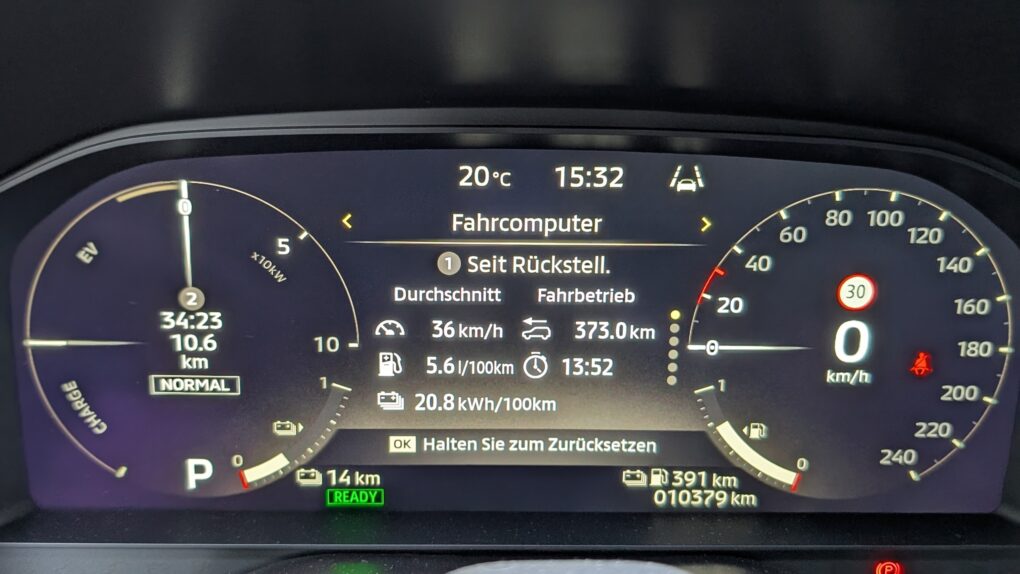
Combined fuel consumption in our test was approximately 5,6 liters of gasoline and 20,8 kWh of electricity per 100 km, a really good figure for such a large and heavy SUV. However, with a discharged battery, consumption increases significantly. The WLTP figure is 7,1–7,3 l/100 km, but in practical testing, we measured over 140 l/9 km on the highway at an average speed of approximately 100 km/h. The weighted combined WLTP consumption of 0,8 liters pro 100 kilometers is therefore almost unattainable. Low fuel consumption in the Outlander definitely requires regular battery charging.
-
- Picture: TechnikNews
-
- Picture: TechnikNews
Charging with the Mitsubishi Outlander PHEV: The biggest drawback
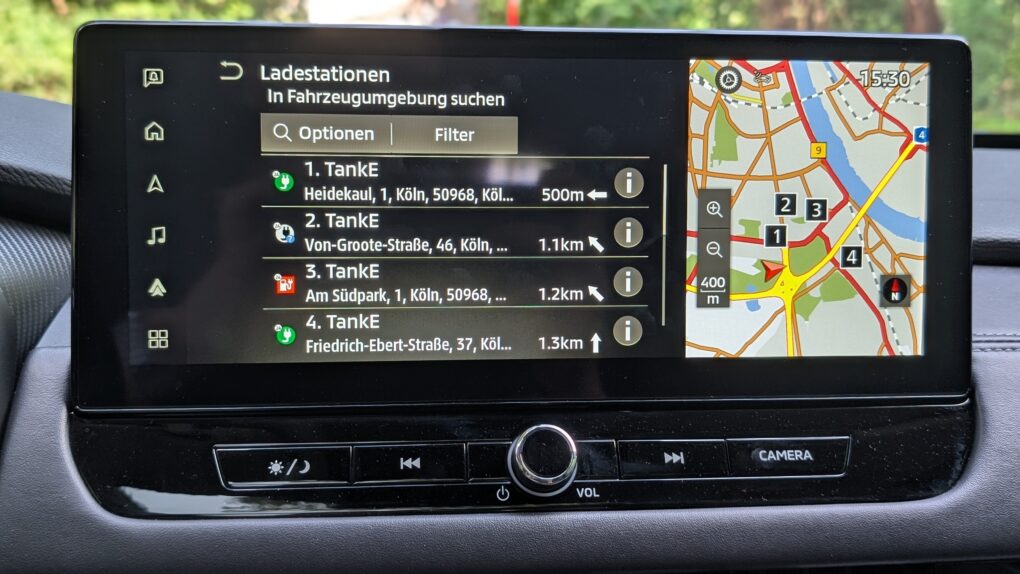
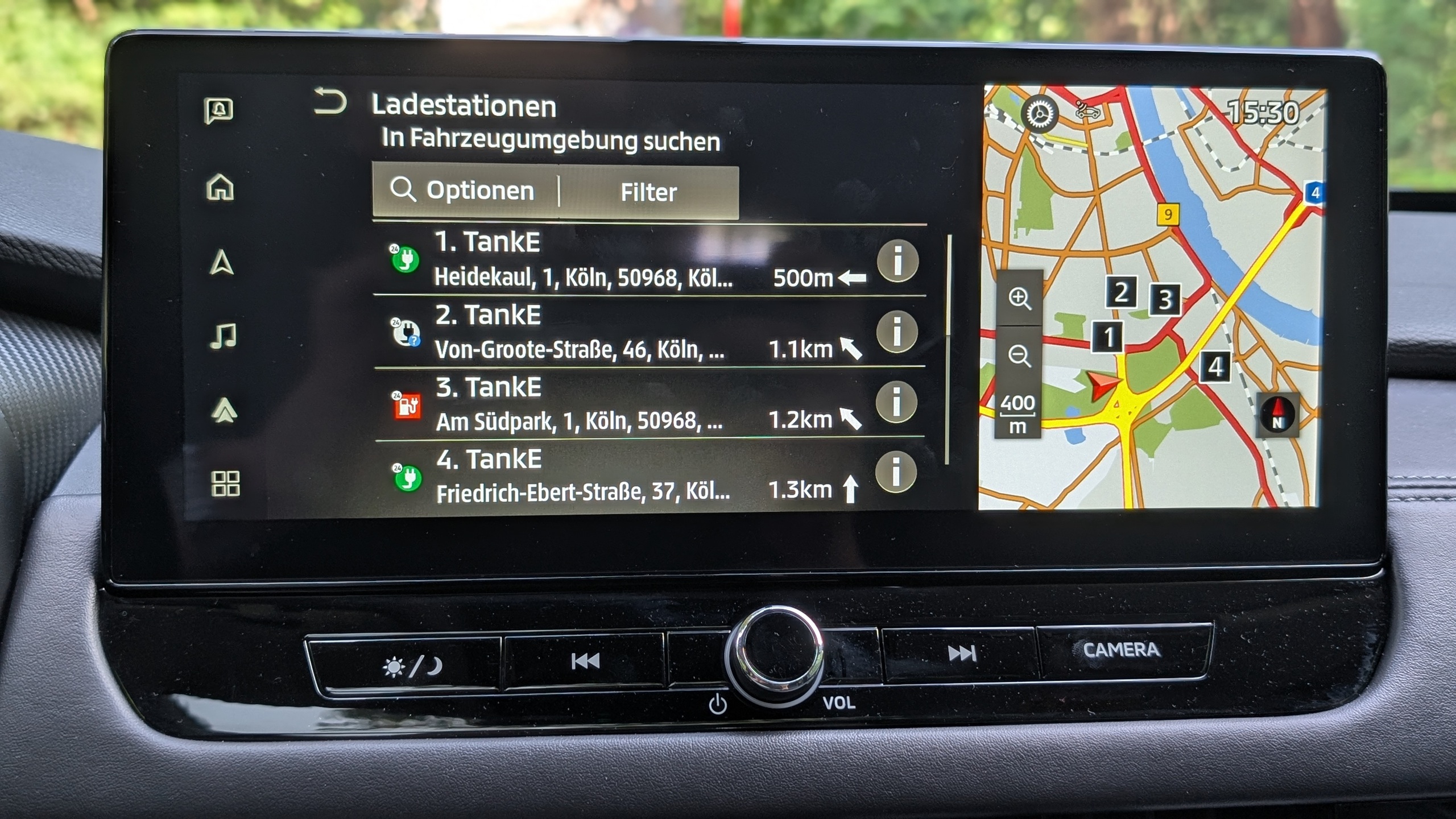
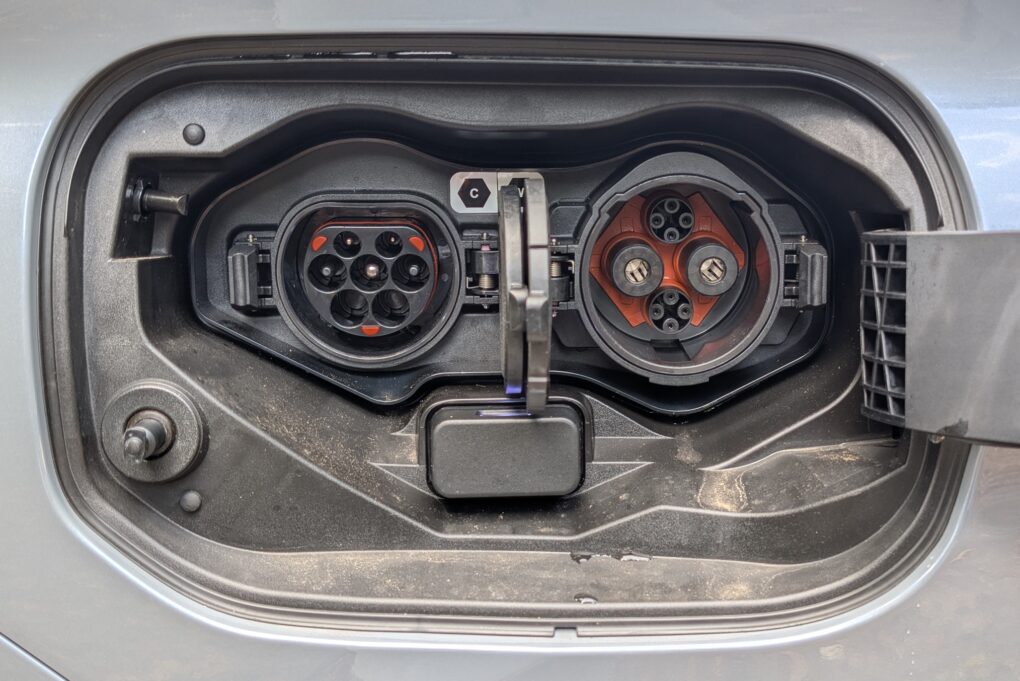
Charging presents a mixed picture. At a fast charging station (CHAdeMO standard) with a maximum of 50 kW, the battery can be charged from 35 to 0 percent in about 80 minutes in our test. The problem here is that CCS is now the charging standard in Europe, and therefore there are very few charging stations with CHAdeMO connection
Unfortunately, the charging power at a wallbox or a public AC charging station with a Type 2 connector is limited to a single-phase 3,5 kW. A full charge from 0 to 100 percent takes around seven hours. However, most providers charge a blocking fee after four hours at public charging stations. So, if you want to charge the battery from 0 to 100 percent, keep this in mind. Using a household socket with a maximum charging power of 2,3 kW, it takes approximately ten hours to fully charge the battery.
-
- Image: Mitsubishi Germany
-
- Picture: TechnikNews
Assistance systems and safety of the Mitsubishi Outlander PHEV: Five stars
The list of standard assistance systems in the “TOP” equipment is long and comprehensive:
Adaptive Cruise Control (ACC) with Stop&Go function
Lane Keeping Assist (LDP) and Lane Departure Warning (LDW)
Forward Collision Mitigation (FCM+) with pedestrian and cyclist detection
Blind Spot Assist (BSW) and Rear Cross Traffic Alert (RCTA)
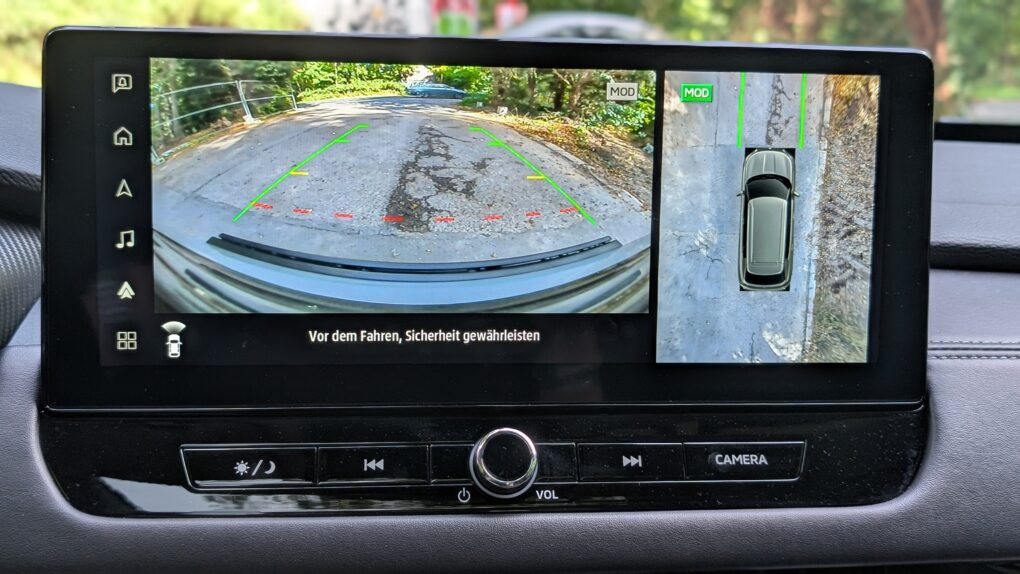
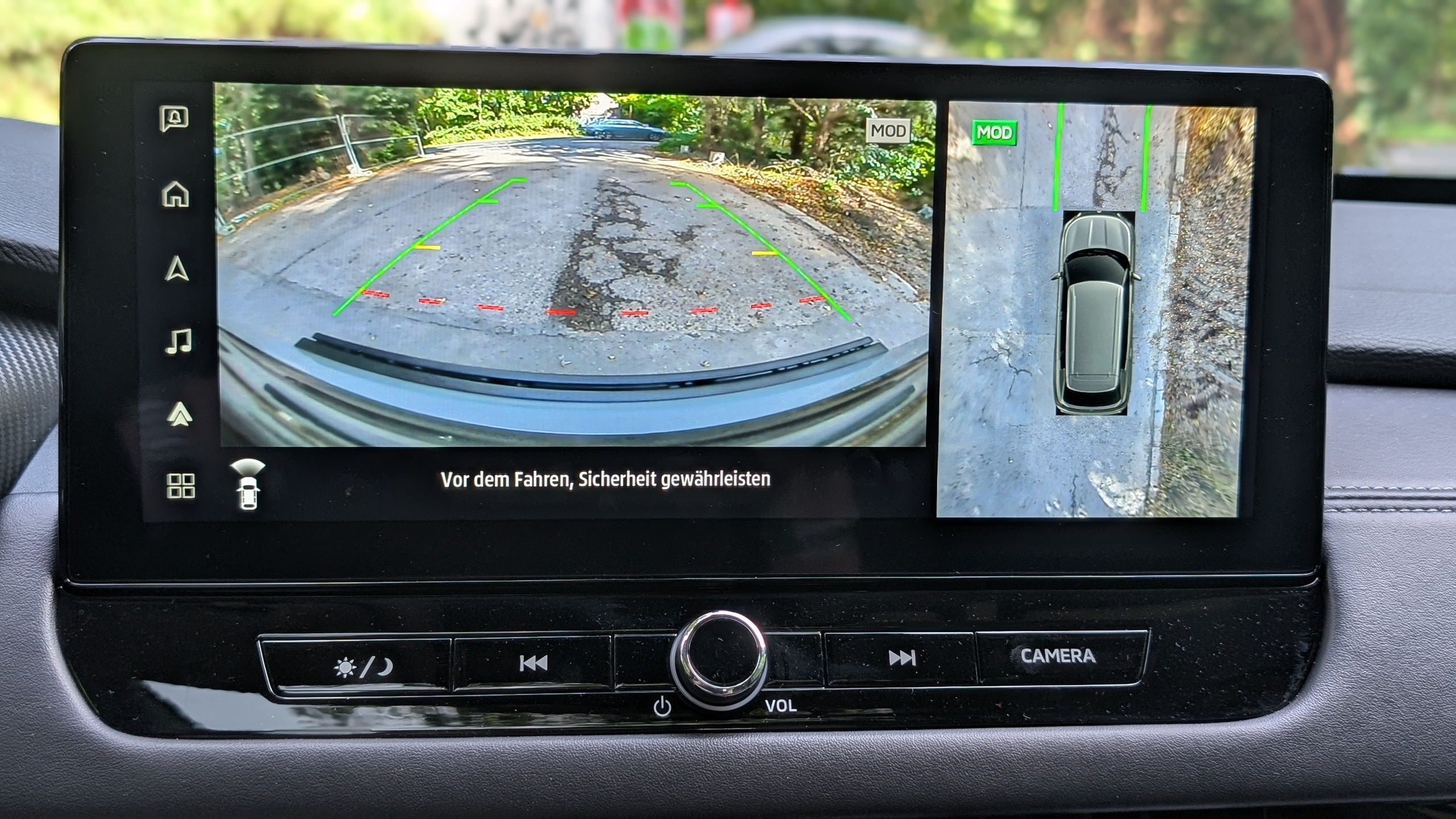
360-degree camera system for better all-round visibility
Emergency Steering Assist (ELKA) and Reverse Emergency Braking Function (R-AEB)
Traffic Sign Recognition (TSR) and Intelligent Speed Assist (ISA)
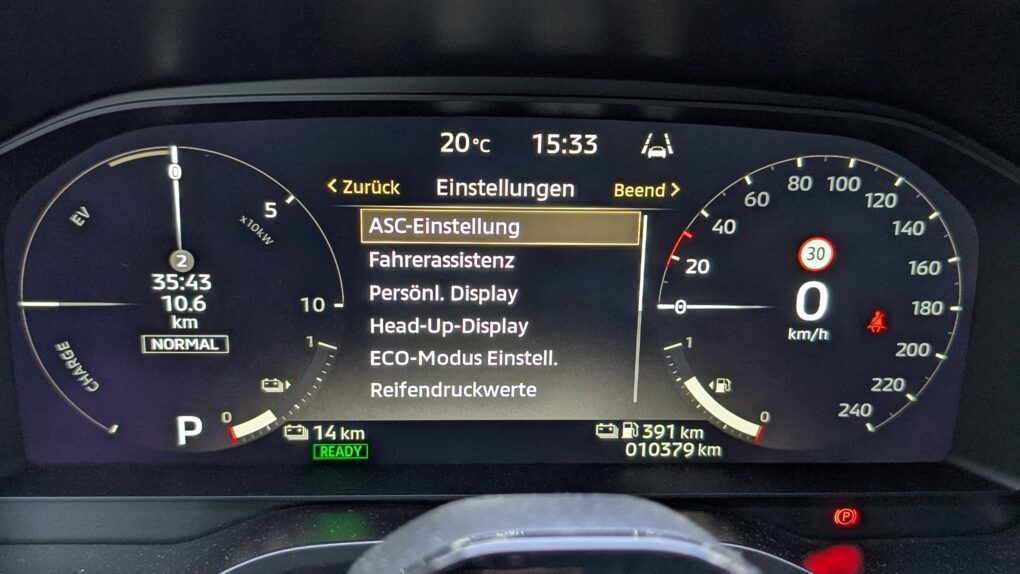
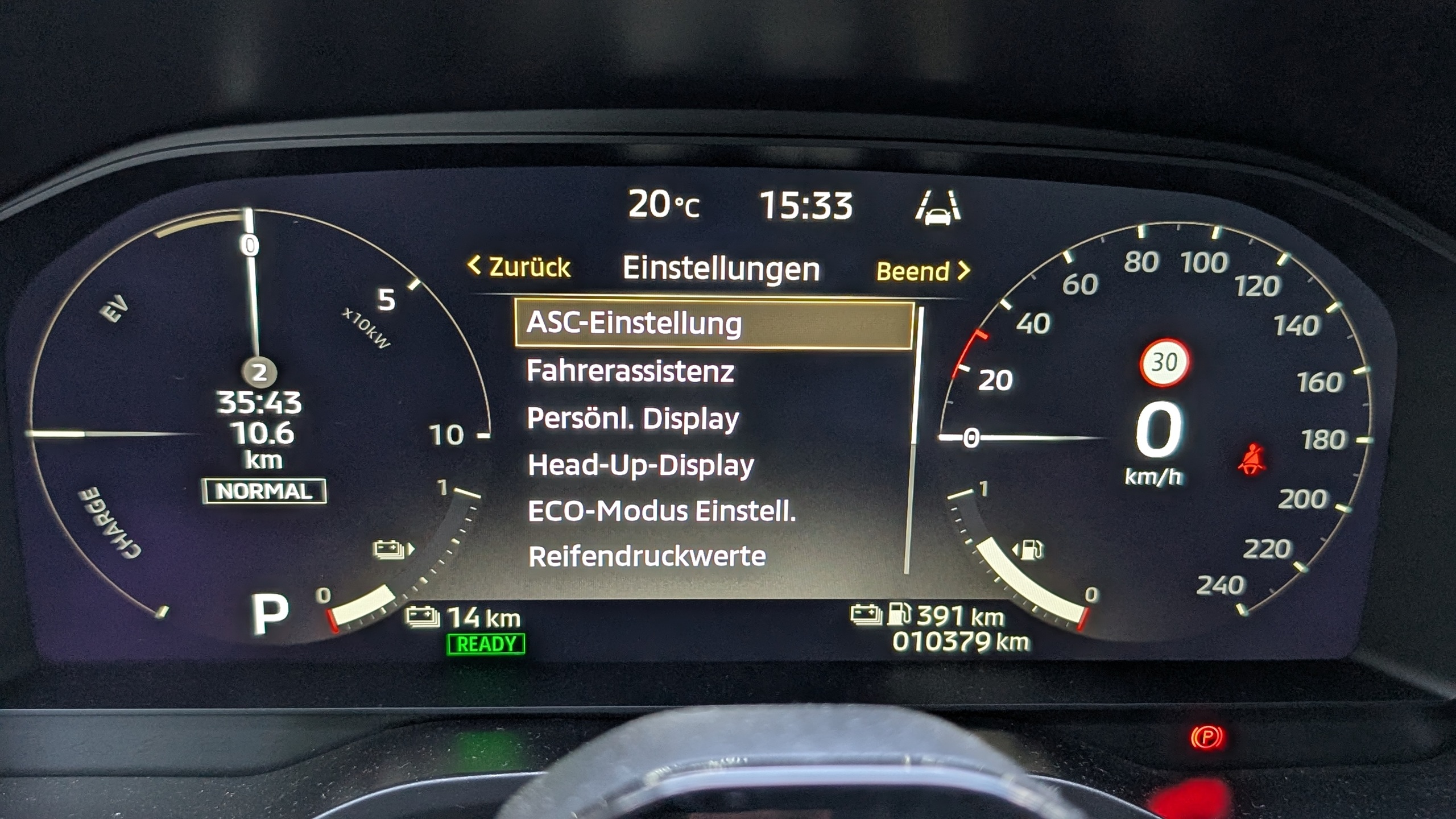
The systems work reliably. However, deactivating the speed warning is cumbersome via the steering wheel menu. The 360-degree camera and the front and rear parking sensors, on the other hand, make maneuvering much easier. The camera resolution, however, could be a bit better.
The 10,8-inch head-up display provides clear information without distracting the driver from the road. The adaptive, high-tech full-LED headlights adapt to the current driving situation by adjusting the beam range or automatically dimming the lights as needed, for example, to make road signs clearly visible.
-
- Picture: TechnikNews
-
- Picture: TechnikNews
Price and warranty of the Mitsubishi Outlander PHEV: Attractive package
The Mitsubishi Outlander PHEV is in the basic configuration from € 46.990 The top variant we tested costs €61.040, but offers a very comprehensive range of features, including leather seats, 20-inch wheels, a Yamaha premium sound system, a panoramic roof, and a special paint job worth €1.550.
Mitsubishi offers an attractive warranty package: a five-year or 5 km manufacturer's warranty, which can be extended to up to eight years or 100.000 km with regular maintenance at an authorized dealer. The high-voltage battery is covered by a warranty of eight years or 160.000 km, without requiring regular maintenance. This warranty is truly outstanding and underscores Mitsubishi's confidence in its own technology and product quality. Maintenance intervals are every 8 kilometers, which keeps operating costs low.
The Outlander is currently special conditions Available for business owners in all trim levels. The base model can be leased starting at EUR 219 net per month. The INTRO edition also offers a monthly leasing rate of EUR 299 net. Both offers are valid for a 36-month term and a mileage of 10.000 km. pro Year at an effective annual interest rate of 4,49% or 4,99%. Company car drivers benefit from additional tax advantages thanks to the 0,5% tax rate for PHEV vehicles and the low CO₂ emissions of just 19 g/km. (All prices in this article are as of September 2025 and include 19% VAT.)
Picture: TechnikNews
Many thanks to Mitsubishi Germany for providing the Mitsubishi Outlander PHEV for this test report. This did not influence our opinion!