
Range Rover Velar P400e (2025) review: What can the elegant British plug-in hybrid do?
A TEST REPORT from Kasimir Hupe  on October 30, 2025, 15:12 am | Write a comment
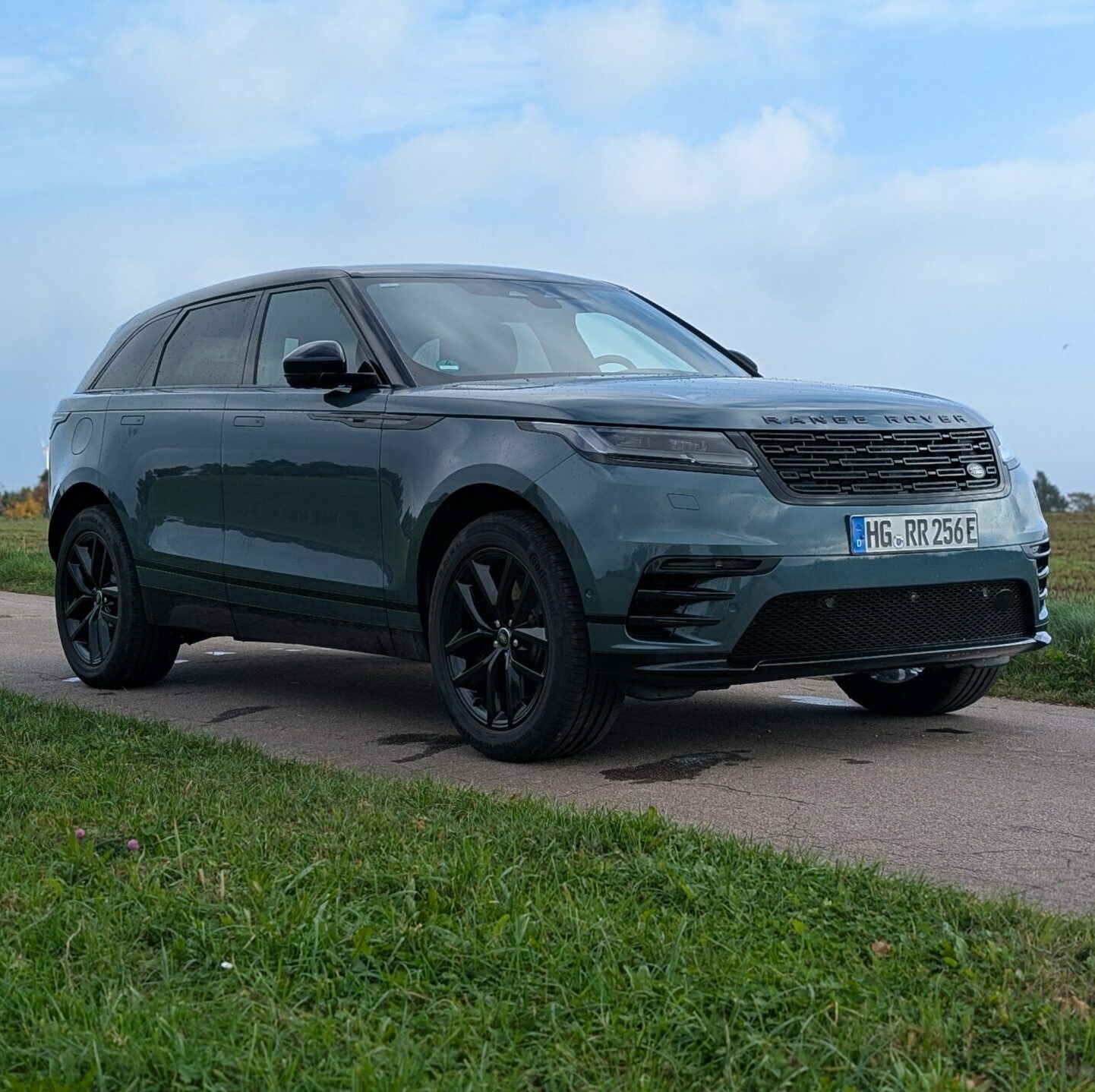
For the 2024 model year, Land Rover has given its Avant-garde SUV The Range Rover Velar P400e has undergone a comprehensive overhaul. It now combines a 221 kW four-cylinder turbocharged gasoline engine with a 105 kW electric motor for an impressive system output of 297 kW (404 hp). The new, larger 19,2 kWh battery is also said to enable an electric WLTP range of up to 65 kilometers. But how does the Range Rover Velar P400e perform in real-world driving? We put the British luxury SUV through its paces.
The name “Velar” holds special significance in Range Rover history, dating back to the secret prototypes of the very first Range Rover in 1969. To conceal the identity of the 26 pre-production models, the engineers chose the name “Velar,” derived from the Italian word “velare” (to veil or conceal). Almost half a century later, on March 1, 2017, the modern Range Rover Velar was unveiled to the public at the Design Museum in London; its official premiere took place on March 7, 2017, at the Geneva Motor Show.
As the fourth member of the Range Rover family, the Velar is positioned between the Evoque and the Range Rover Sport and is based on the aluminum platform of the Jaguar F-Pace. In 2018, the Velar was named "World's Most Beautiful Car" and received the design award at the World Car Awards. In September 2020, the model received its first facelift and was offered for the first time as the P400e plug-in hybrid. A further comprehensive update followed in February 2023 (2024 model year) with new pixel LED headlights, a redesigned interior, and a larger 19,2 kWh battery for the P400e. The 2025 model year continues the proven design language without significant changes, focusing on refining existing technologies and comfort features.
Technical specifications – Range Rover Velar P400e
| Base price (Germany) | S: from €83.200 Dynamic SE: from €91.800 Autobiography: from €101.500 |
| vehicle class | Mid-size SUV, premium segment |
| Engine type | Plug-in hybrid: 2.0 liter 4-cylinder turbo gasoline engine (Ingenium) + electric motor |
| system performance | 297 kW (404 PS) |
| System torque | 640 Nm |
| Acceleration (0-100 km/h) | 5,4 seconds |
| top speed | 209 km/h (purely electric: 140 km/h) |
| Battery capacity (gross) | 19,2 kWh |
| Electric range (WLTP) | up to 65 km |
| Charging power (AC / DC) | 7 kW (AC, 1-phase) 50 kW (DC) |
| loading time | 7 kW wallbox or AC charging station (0-100%): approx. 2,5 hours 50 kW DC charger (0-80%): approx. 30 min |
| Combined fuel consumption (WLTP, weighted) | Fuel: from 1,7l / 100 km Electricity consumption: from 24,7 kWh/100 km |
| Dimensions (L / W / H) | 4.797 mm 2.147 mm (with mirrors) 1.683 mm |
| Unladen weight (DIN / EU) | 2.205 kg / kg 2.280 |
| Boot volume (VDA) | 503 - 1.310 liters |
Picture: TechnikNews.net
TL;DR (Conclusion) on the Range Rover Velar P400e: Very comfortable PHEV
The Range Rover Velar P400e is a symbiosis of design, comfort, and now significantly improved hybrid technology. It remains a style statement in the mid-size luxury SUV segment, its minimalist aesthetic further sharpened by the facelift. Its true talent unfolds as a supremely comfortable cruiser: the superior ride comfort, enhanced by the optional air suspension and excellent noise insulation, makes every journey a relaxing experience. The interior is an oasis of tranquility and modern luxury, even if the radical switch to a purely touchscreen-based interface won't appeal to everyone and requires some getting used to. Furthermore, the optimized P400e powertrain represents a significant advancement. realistic 50 to 55 kilometers The increased electric range could be better, but it covers most daily journeys, and the DC fast charging capability gives the part-time electric car further flexibility.
Nevertheless, the Velar remains a vehicle of conscious consumerism.proIts beautiful design comes at the expense of rear passenger and trunk space. Furthermore, it lacks comfort features like seat ventilation, which should really be standard in this price range. The somewhat weak and non-adjustable regenerative braking is another missed opportunity. Ultimately, the Velar P400e is more than ever a car for drivers who love comfort and design – provided their usage is suitable.profil fits the plug-in hybrid concept and they are ready for exceptional style from € 83.200 to pay. The extended five-year warranty is a strong selling point and effectively dispels any concerns about the brand. The Range Rover Velar is therefore ideal for design-conscious buyers who value a superior driving experience and appreciate the option of emission-free commuting.
Strengths and weaknesses of the Range Rover Velar P400e
✅ Strengths:
System output of 404 hp and superior handling
DC fast charging capability up to 50 kW (0-80% in 30 minutes)
Excellent sound insulation, one of the quietest interiors in its class.
Despite its high weight, it handles corners very well.
Timeless, elegant design with high-quality workmanship
Intuitive Pivi Pro infotainment system with 11,4-inch touchscreen
Five-year manufacturer's warranty or 150.000 km
❌ Weaknesses:
No seat ventilation available
Recuperation not adjustable and somewhat weak
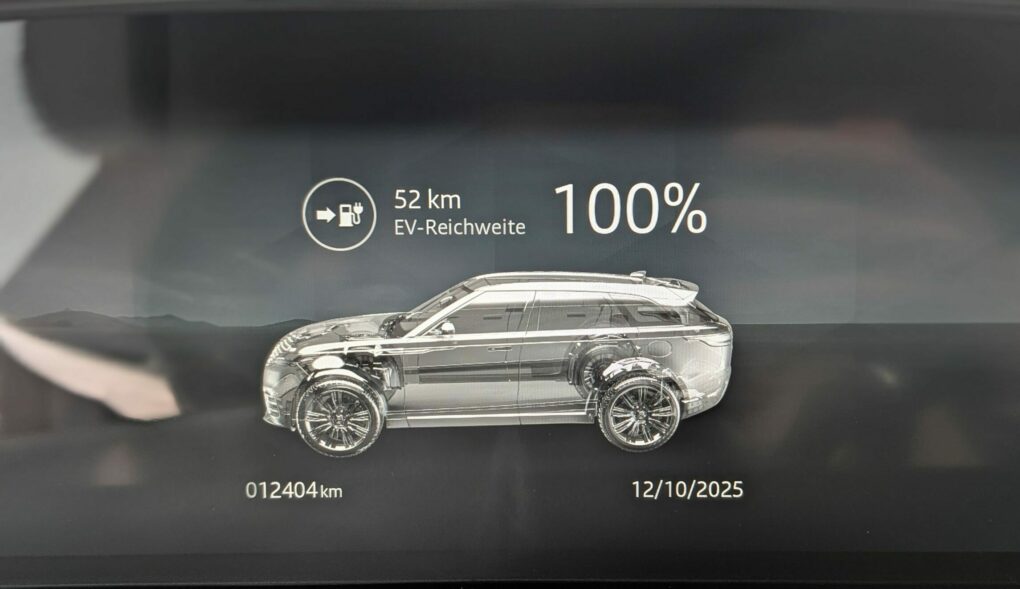
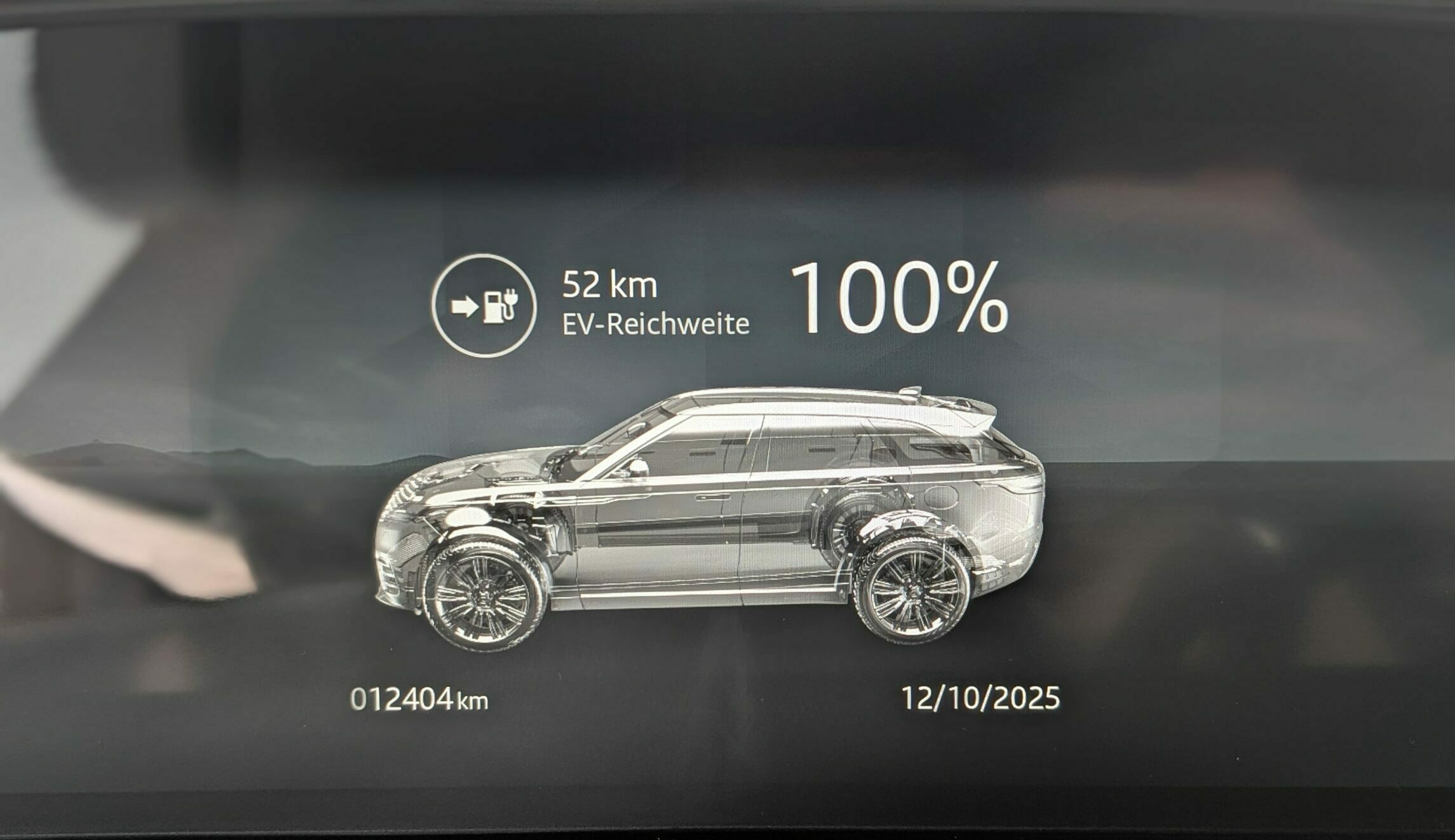
Only 52 kilometers of purely electric range
Design and exterior of the Range Rover Velar P400e
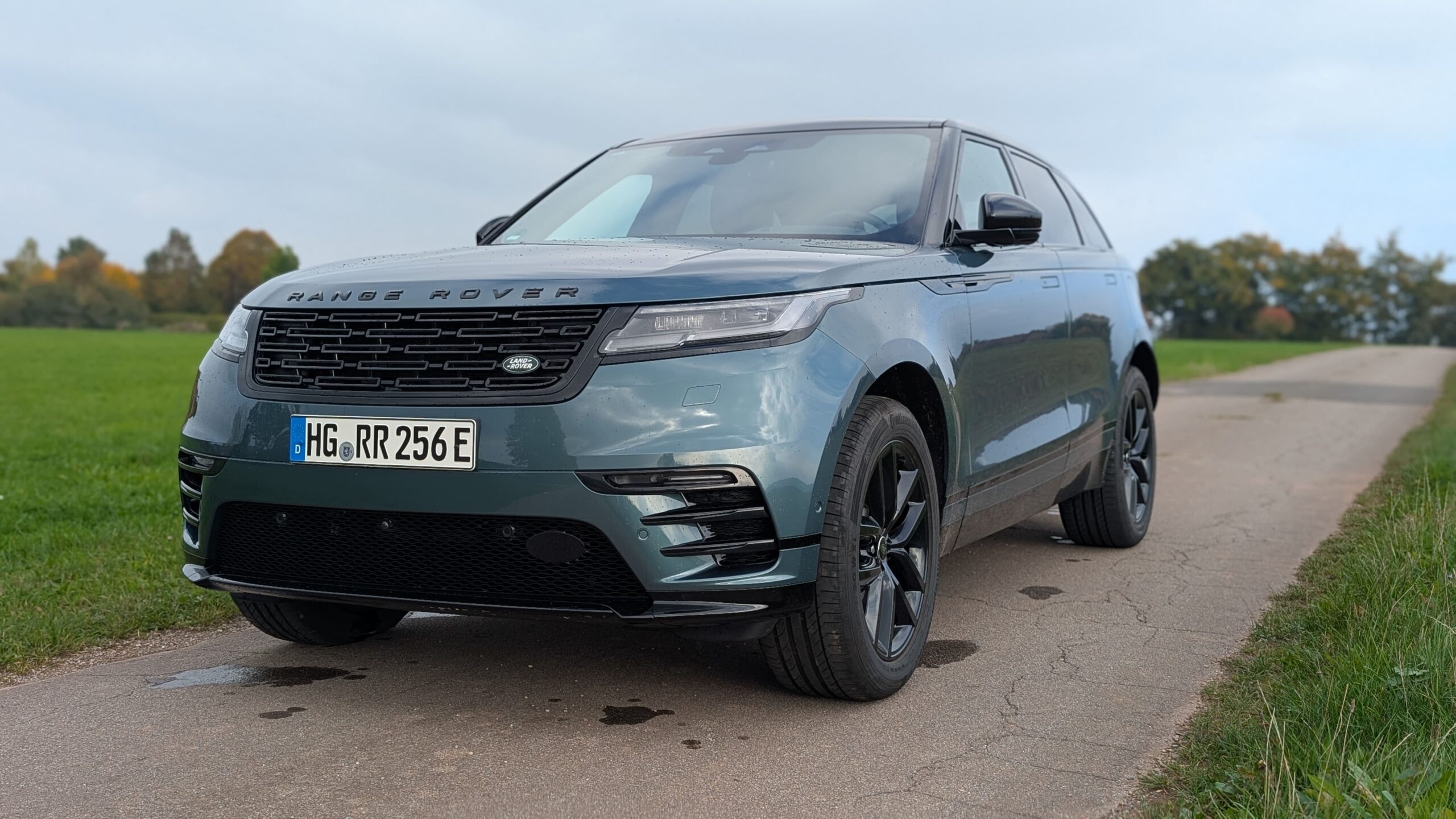
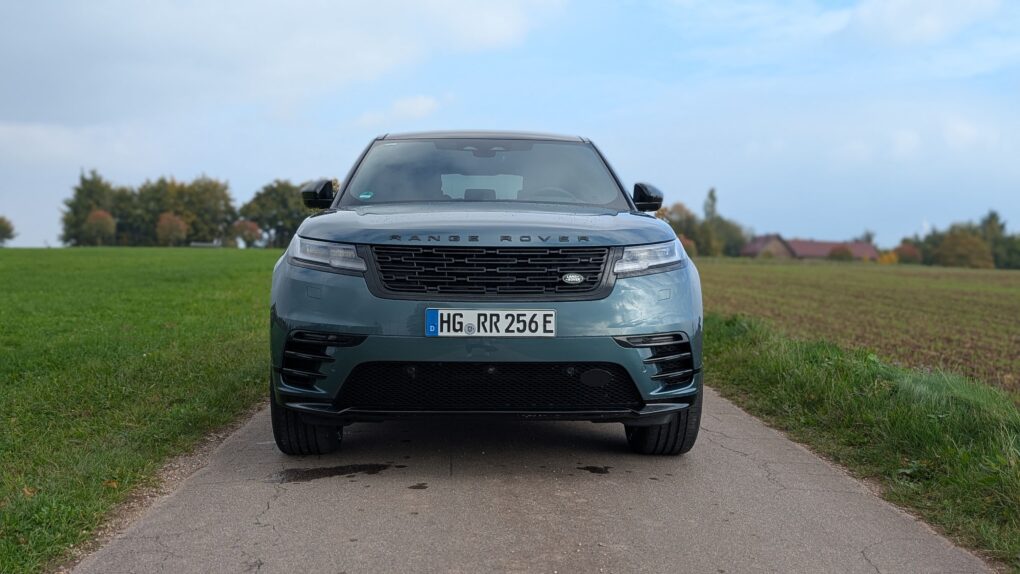
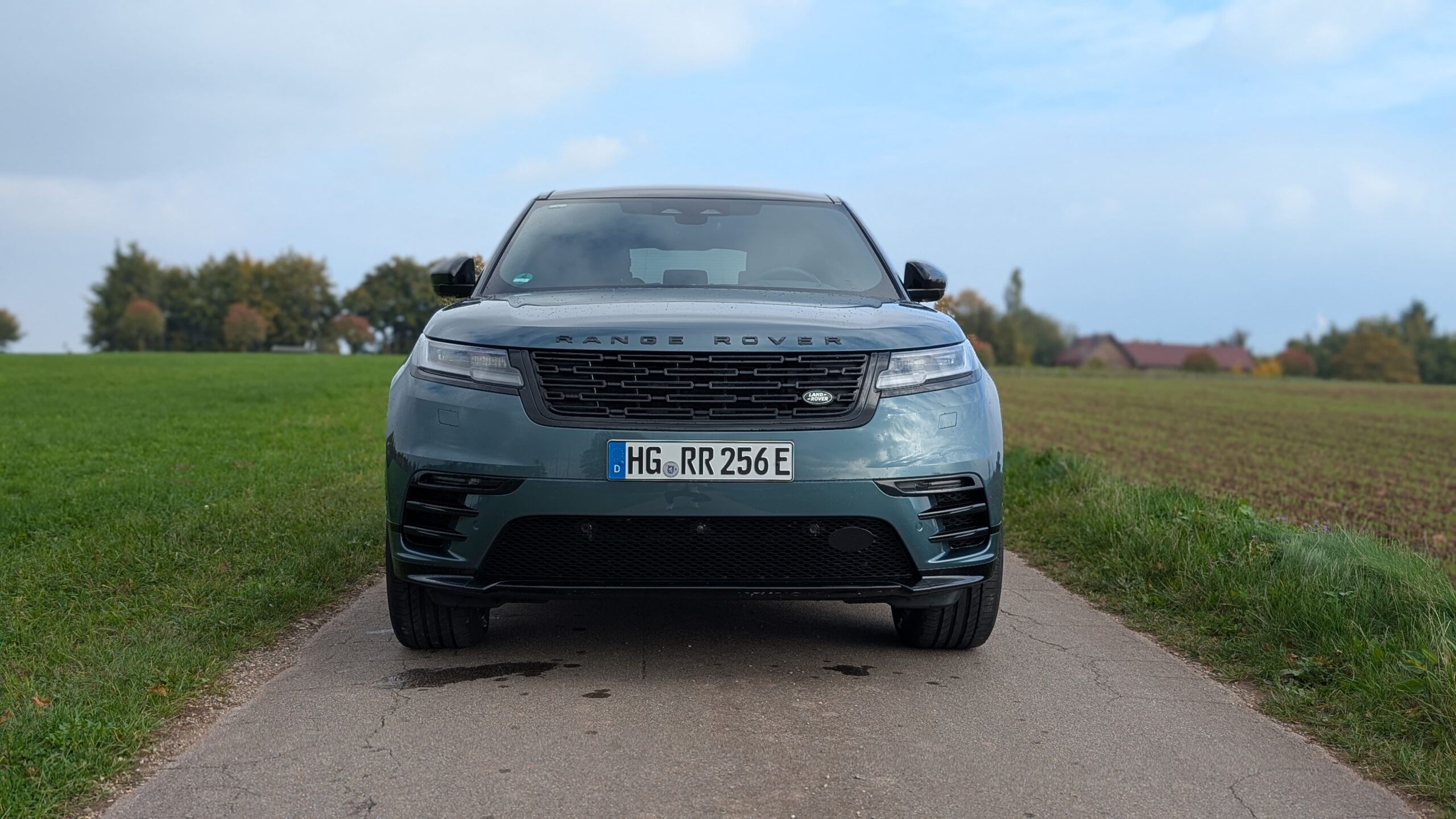
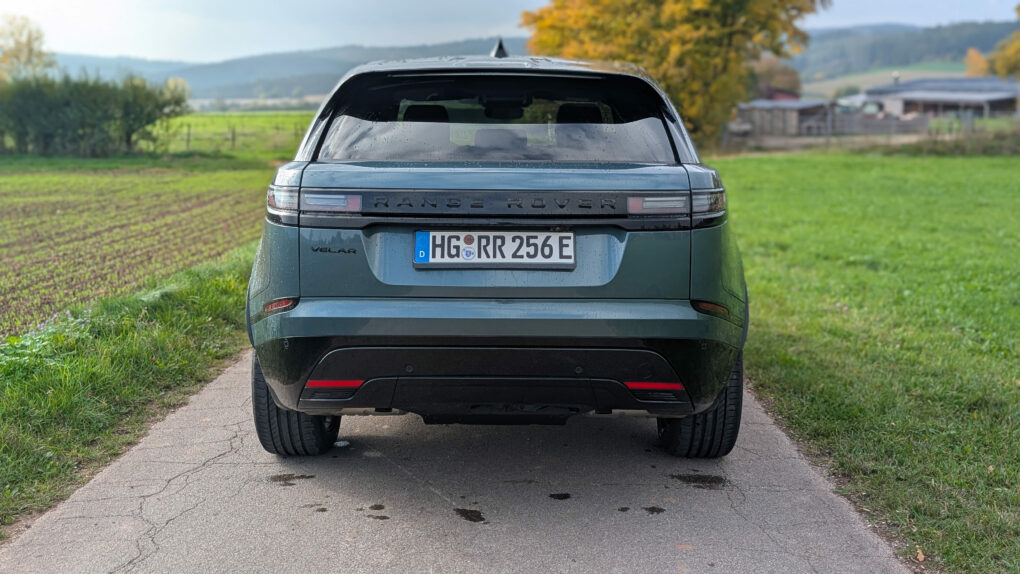
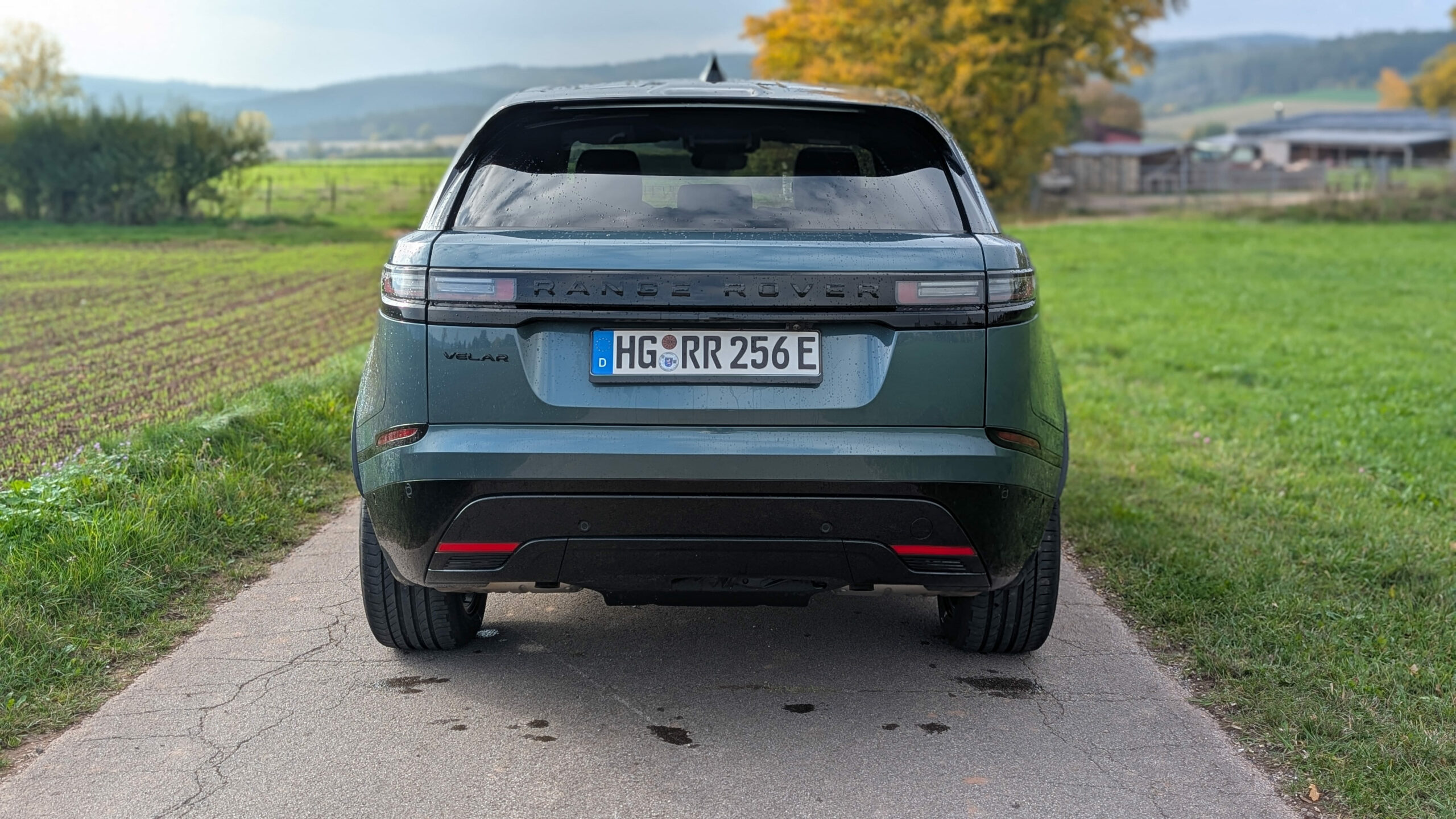
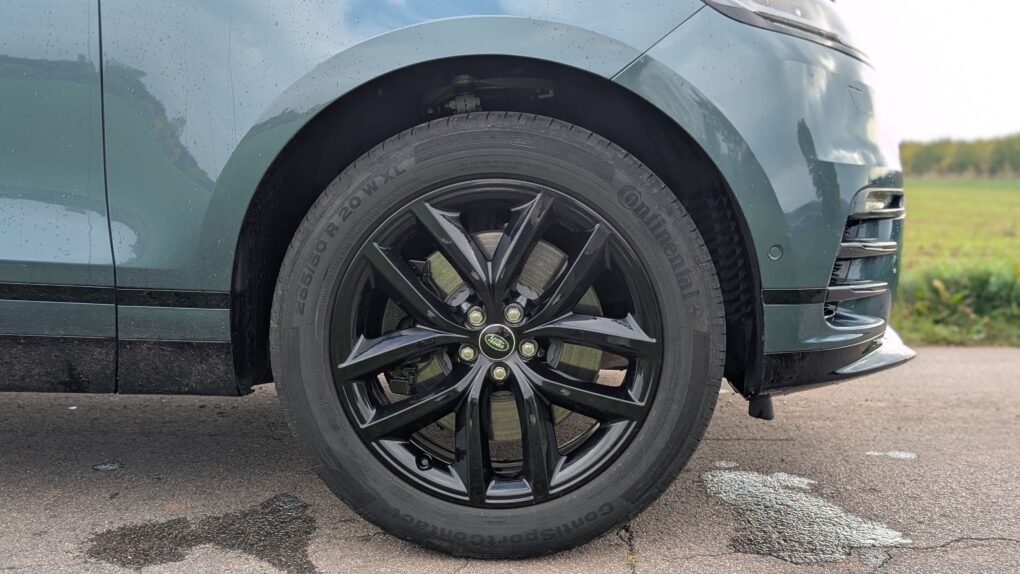
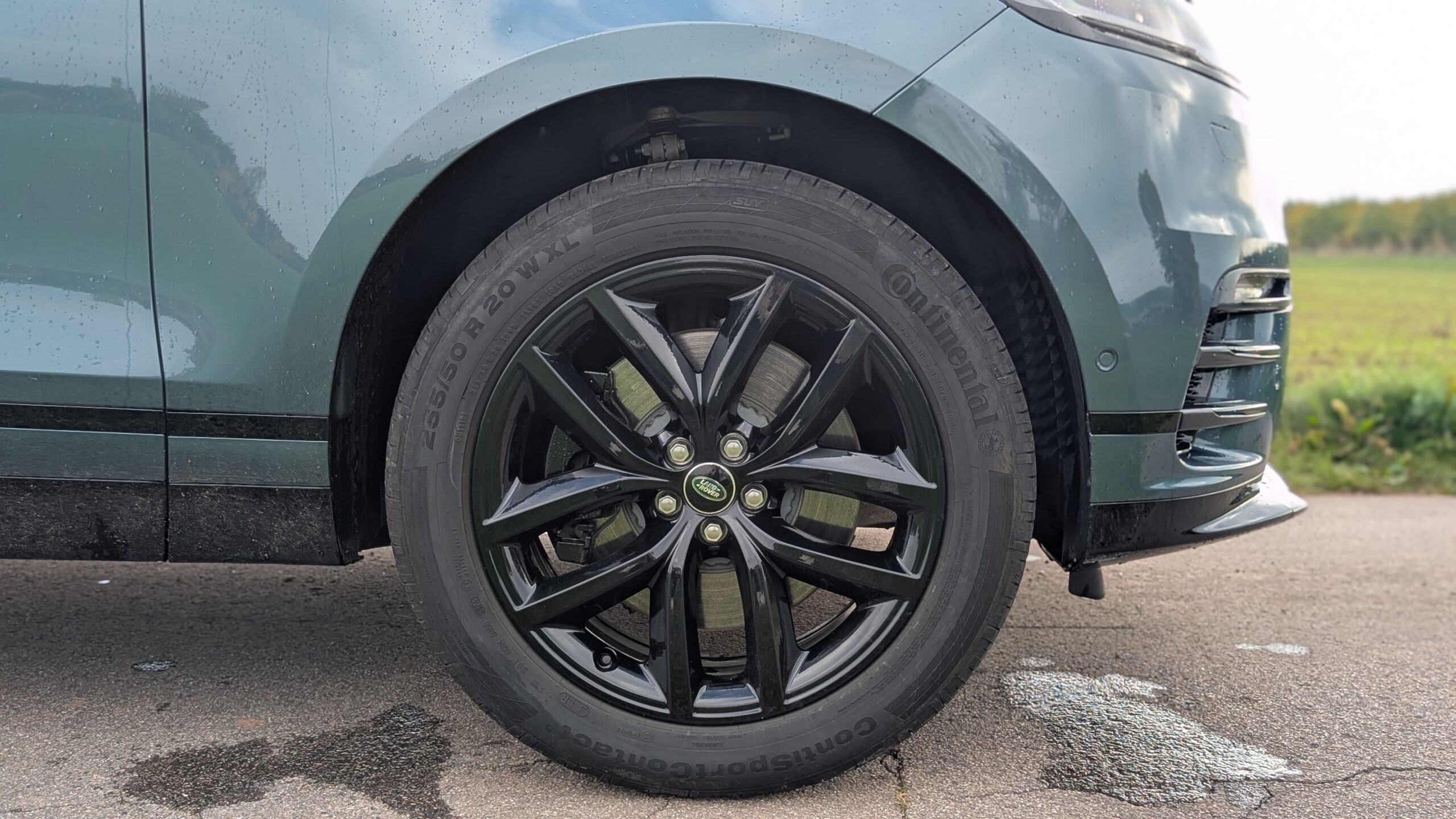
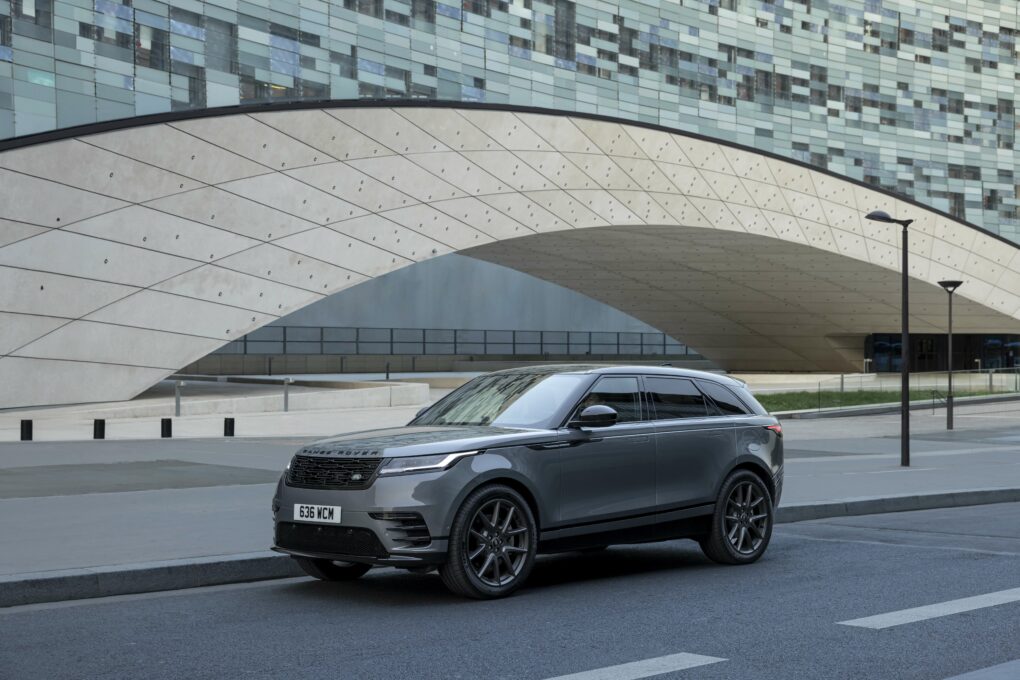
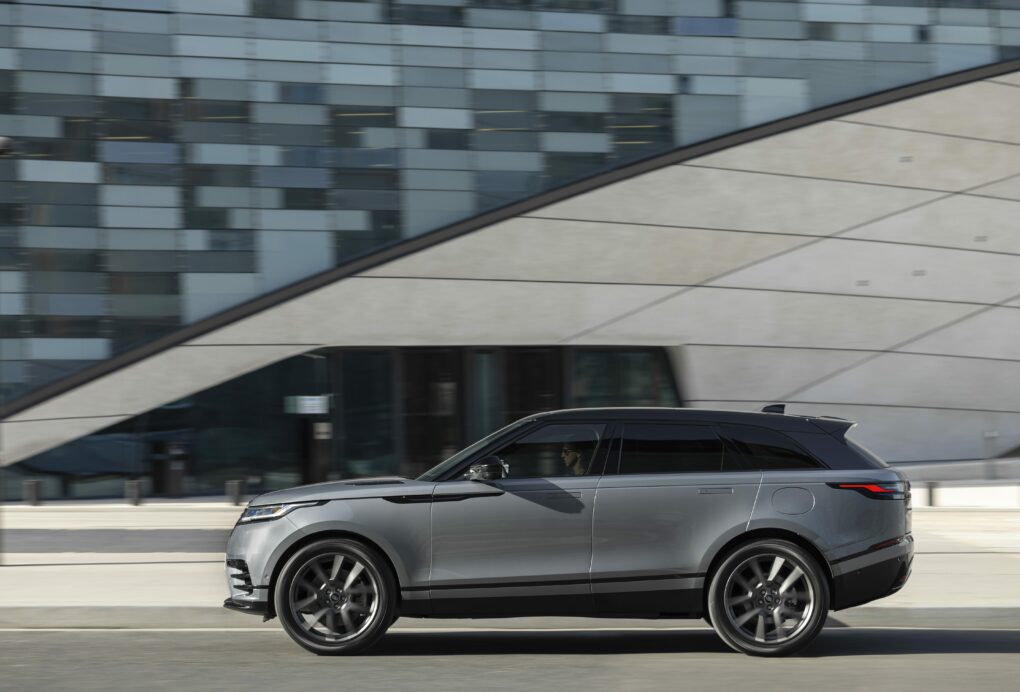
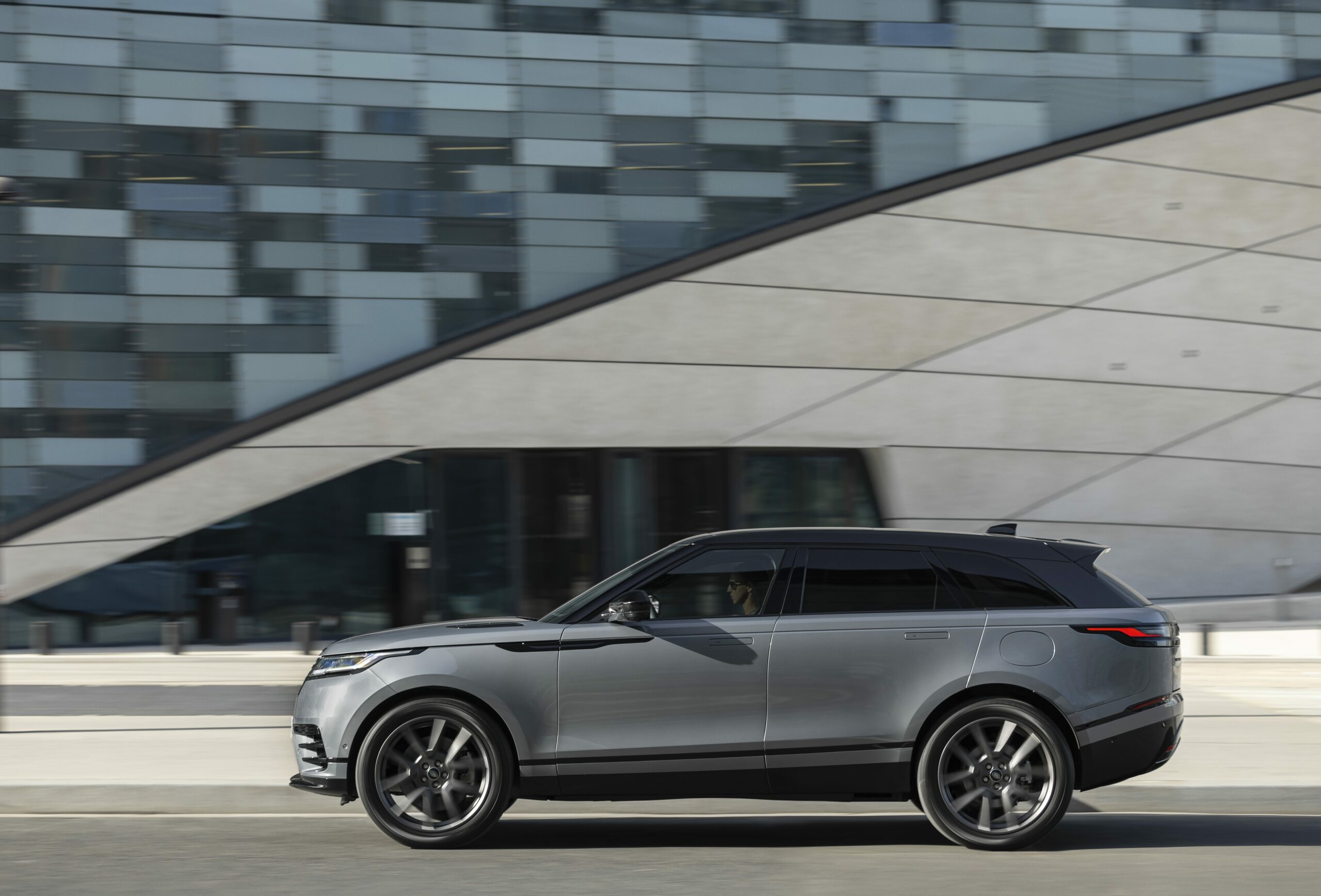
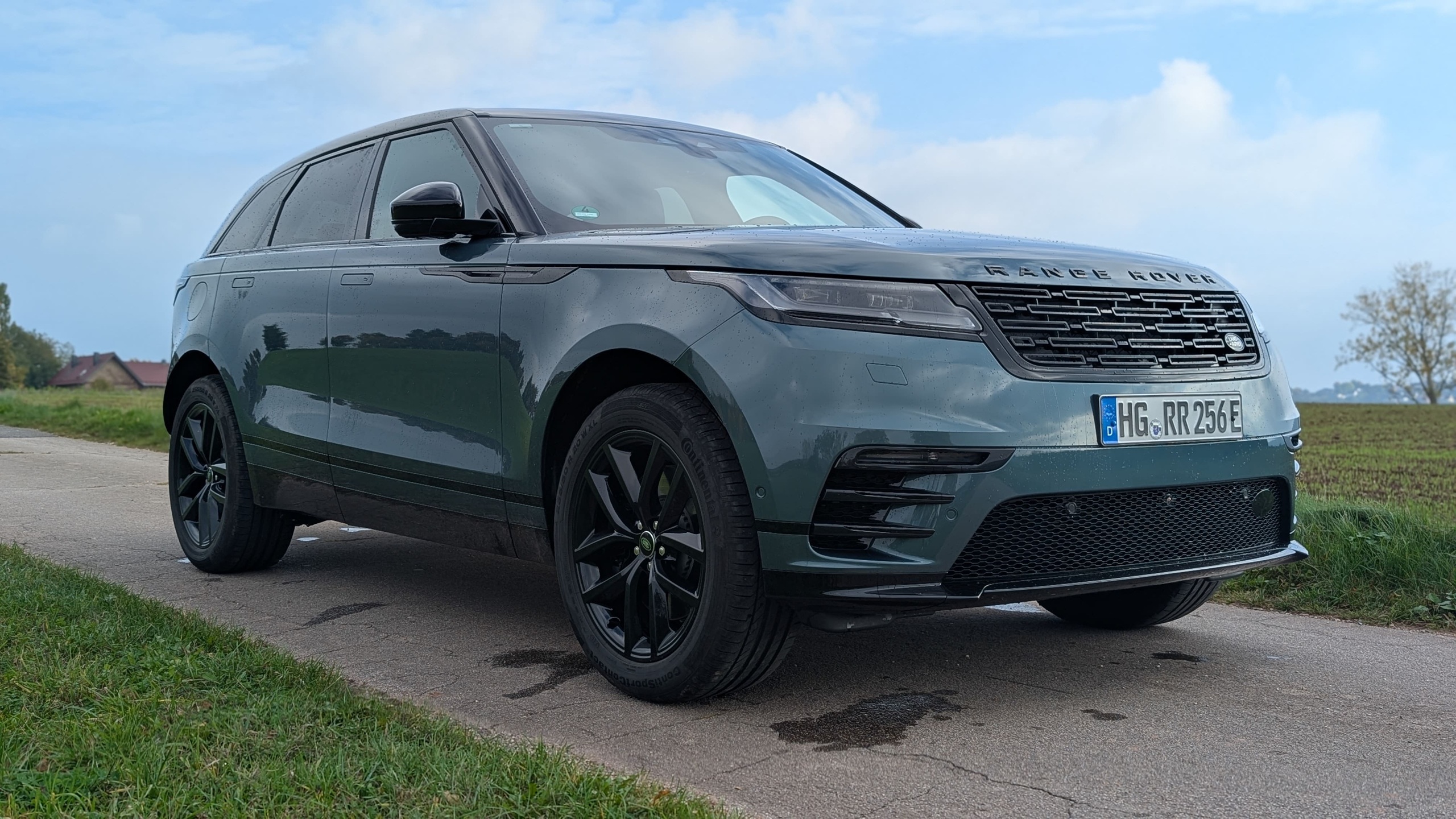
The design philosophy of the Range Rover Velar can be summed up in one word: reductionism. The facelift for the 2024 model year is a real eye-catcher, sharpening the details without altering its fundamental character. The front end is now characterized by a redesigned grille The front is dominated by extremely flat pixel LED headlights. These new lighting units are more than just functional; they are also design elements. Their precisely cut optics are reminiscent of gemstones and give the Velar a distinctive signature, day and night. Technologically, they offer truly excellent road illumination with adaptive matrix functions and a beam range of up to half a kilometer. At the rear, the lower bumper has been redesigned, correcting one of the few previous design weaknesses. The Velar now appears less "high-riding" and sits more flush with the road. The exhaust tailpipes are elegantly concealed, further emphasizing the clean, minimalist aesthetic.
-
- Picture: TechnikNews
-
- Picture: TechnikNews
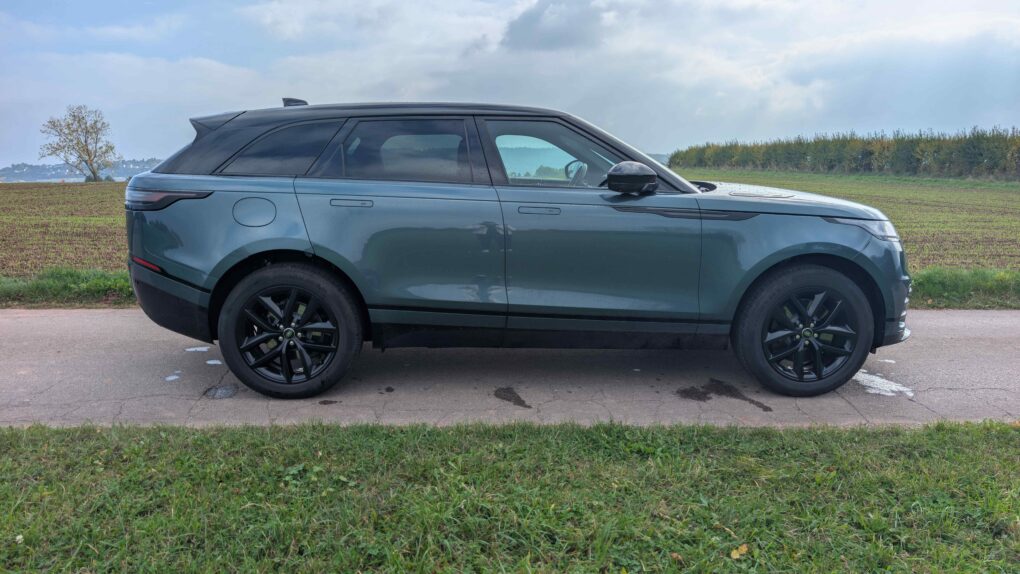
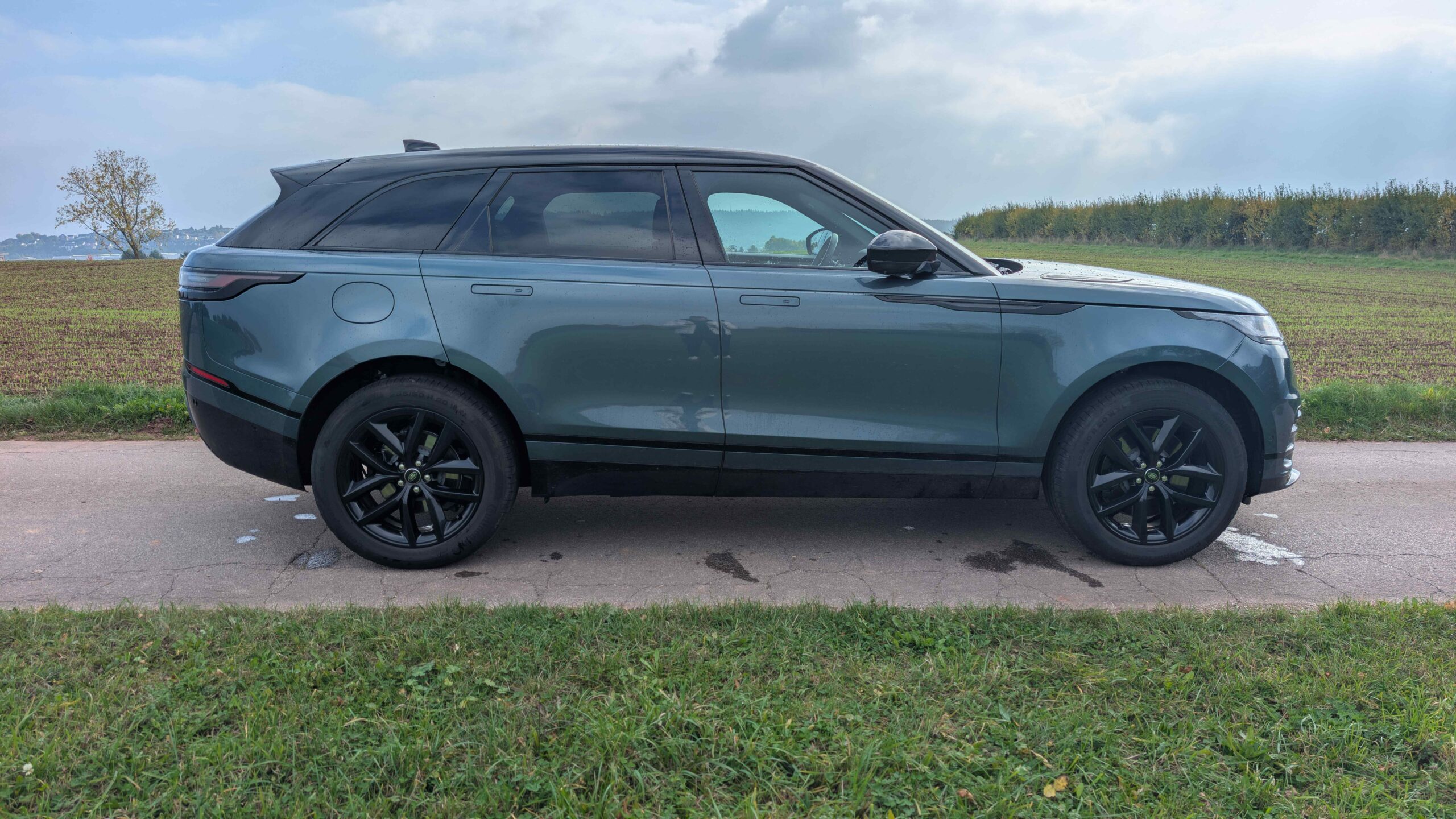
Characteristic features such as the floating roofline, the continuous beltline, and the flush-mounted door handles have been retained. When the vehicle is unlocked, they extend smoothly and retract back into the bodywork at speeds above 8 km/h to maintain the smooth lines of the flanks. Despite this consistent focus on flawless design, the designers haven't neglected an important practical detail: the generously sized side and rearview mirrors are a real plus in everyday driving. They offer excellent all-around visibility and are a welcome concession to everyday usability – an aspect often overlooked in many design-oriented vehicles. The look is rounded off by new paint colors such as Varesine Blue or... Zadar Grey.
-
- Picture: TechnikNews
-
- Picture: TechnikNews
Space and trunk capacity: Plenty of storage space
The Velar stretches to a length of almost 4,80 meters, raising expectations of generous space. These expectations are fully met in the front seats. Driver and front passenger enjoy an airy feeling of spaciousness and the commanding driving position typical of Range Rover, which, together with the large windows, provides excellent visibility of the road.
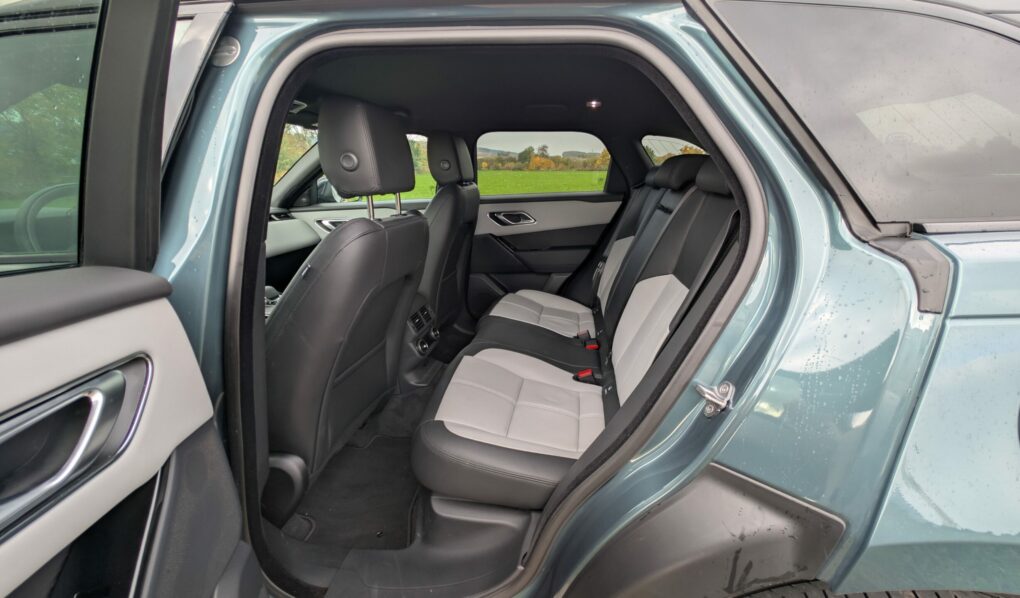
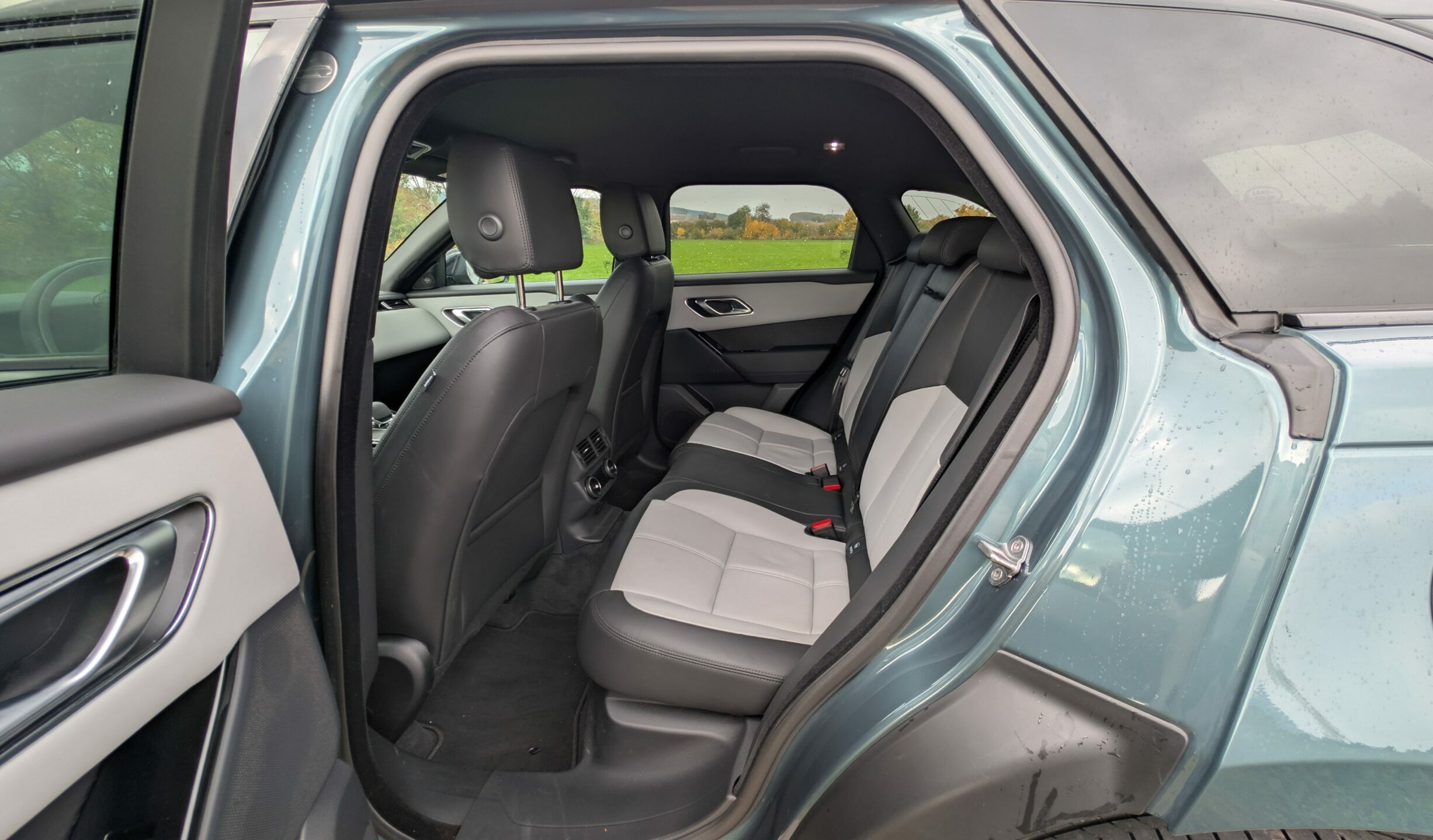
However, the picture is more nuanced in the rear seats. While the legroom is perfectly adequate for average-sized adults, passengers over 1,85 meters tall may find it cramped, especially if there are also tall people sitting in the front. Furthermore, the sloping, coupé-like roofline, a key element of the Velar's design, noticeably restricts headroom for very tall passengers. On the plus side, the electrically adjustable rear seatback angle, available in higher trim levels, significantly improves comfort on longer journeys.
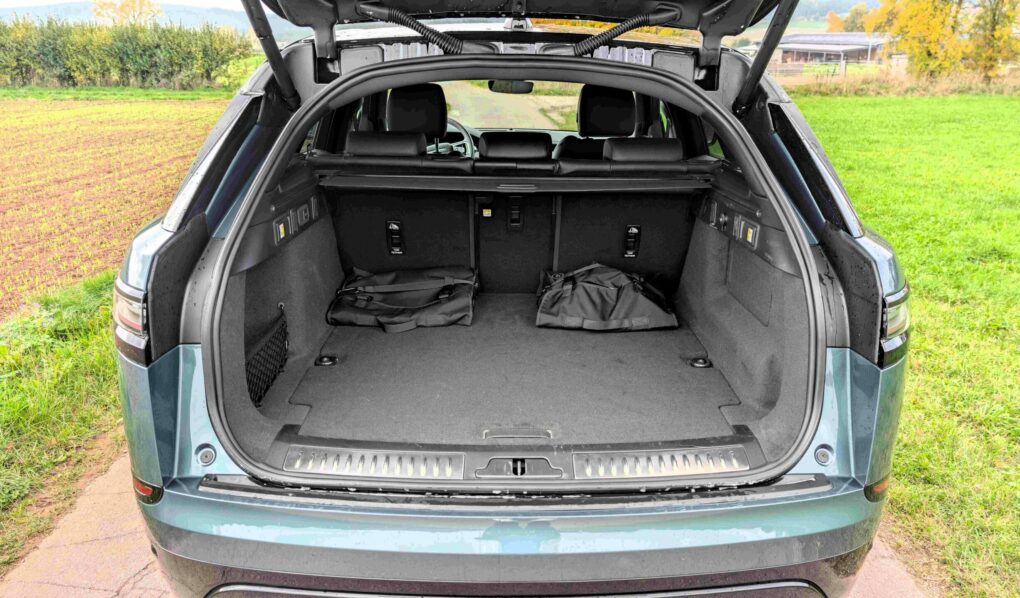
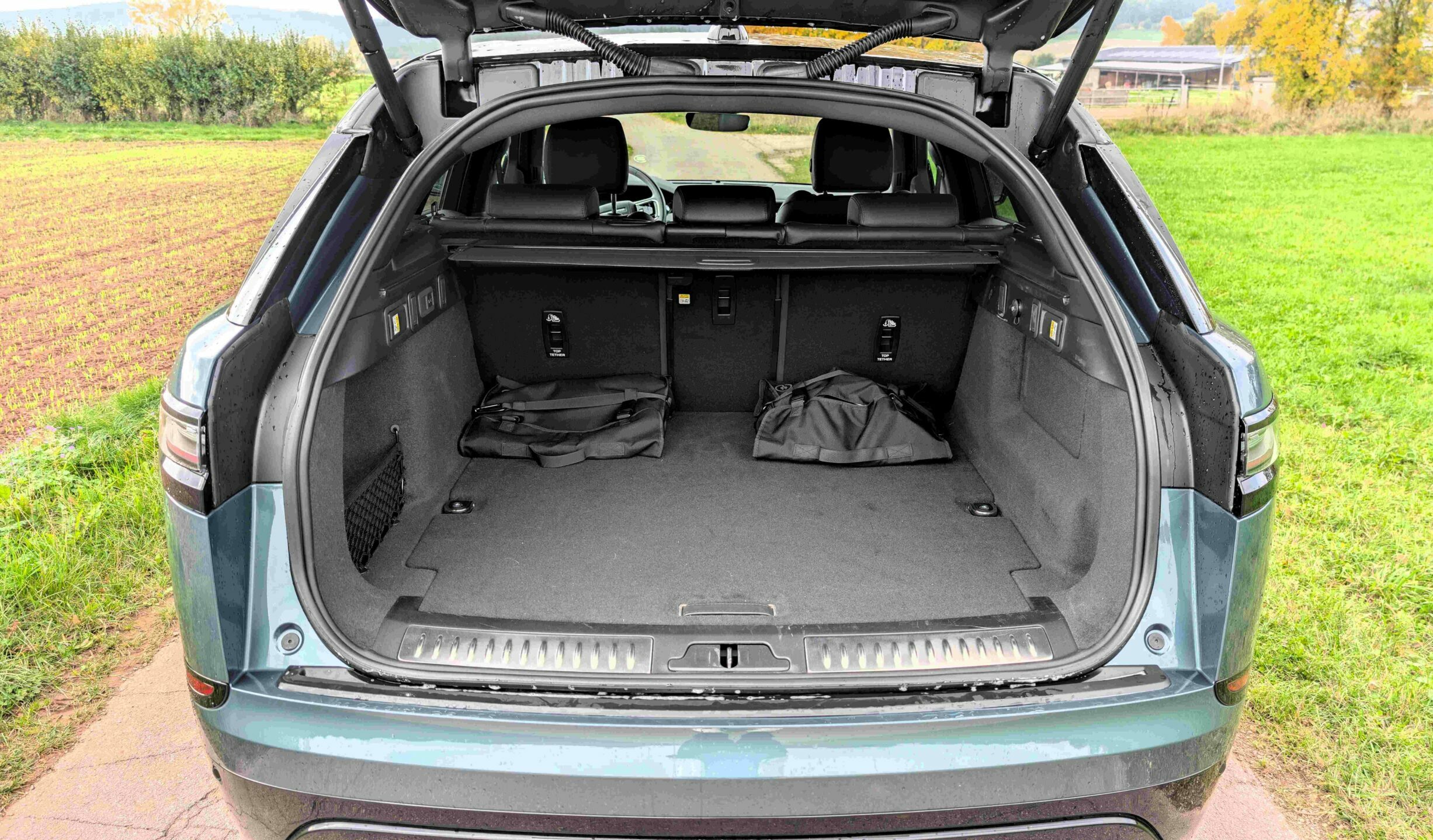
Regarding boot space, the P400e driver has to be careful.promiss in. While the pure combustion engine models boast a generous cargo volume of up to 552 liters, the 19,2 kWh battery of the plug-in hybrid, located under the cargo floor, reduces the capacity. Official figures state a volume of 503 litersWith the rear seats folded down, which can be split 40:20:40, the cargo space expands to up to 1335 liters. While the load floor is flat, storing the charging cables proves somewhat impractical in everyday use, as there is no separate compartment under the floor.
-
- Picture: TechnikNews
-
- Picture: TechnikNews
Interior of the Range Rover Velar P400e
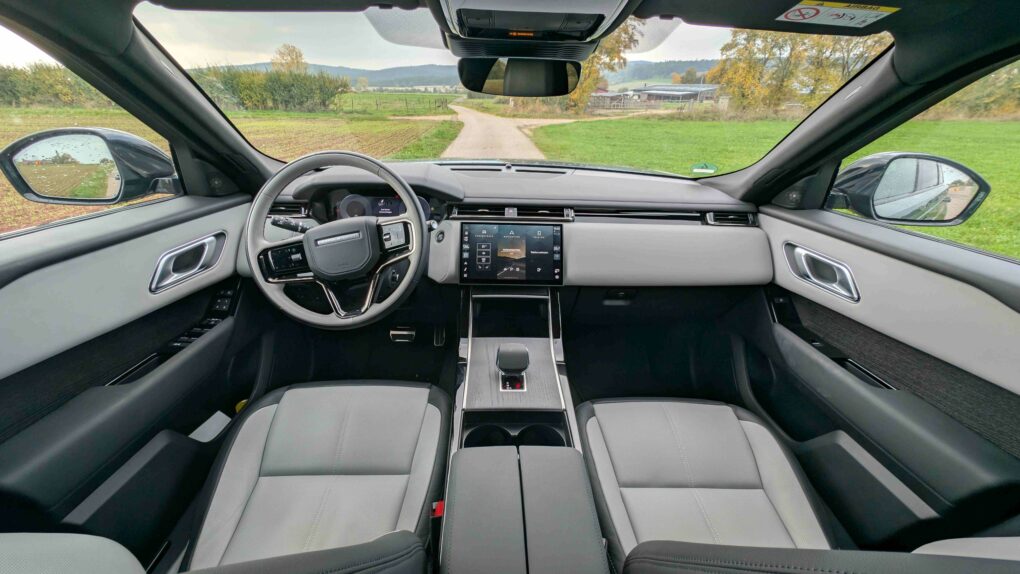
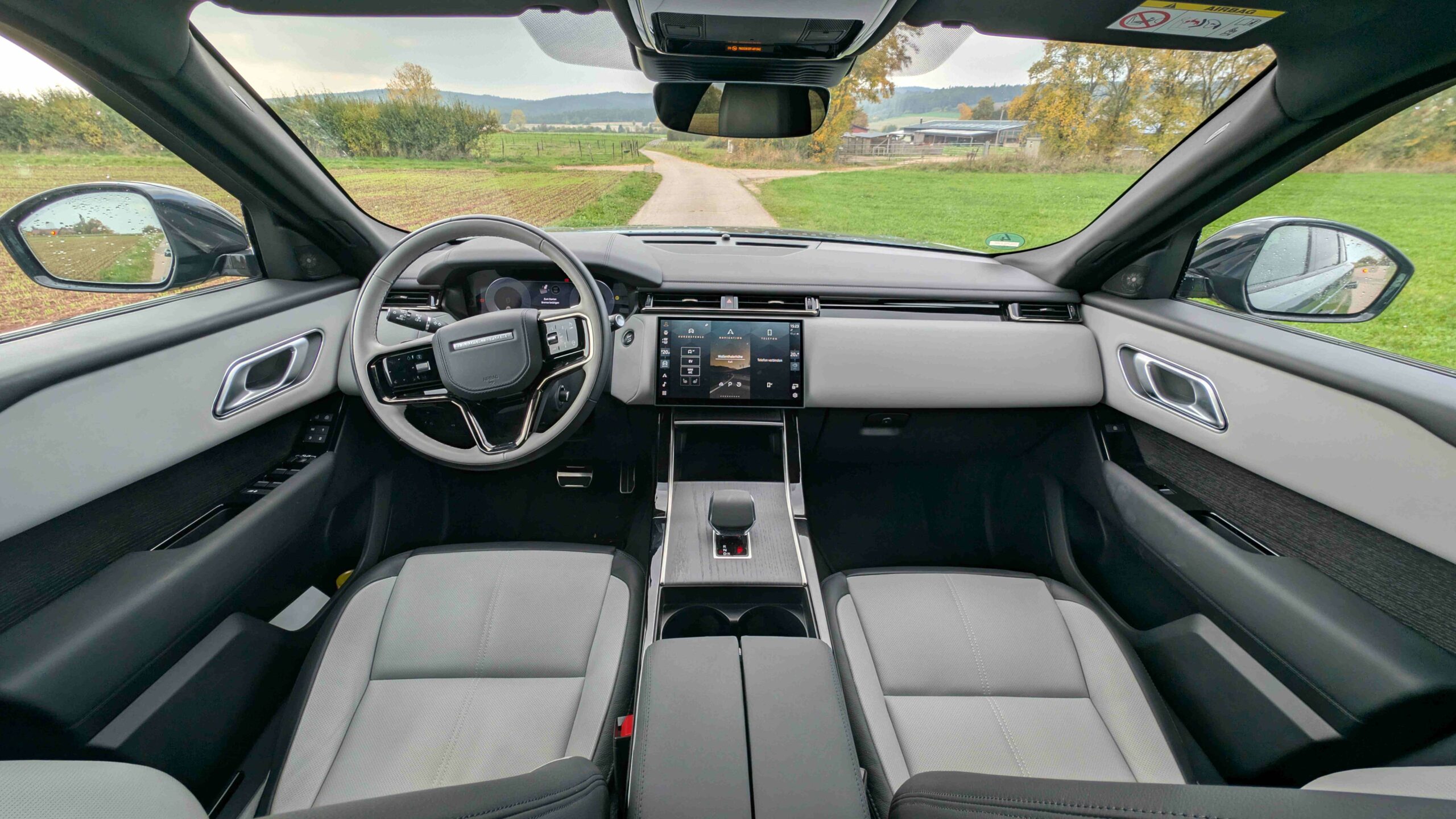
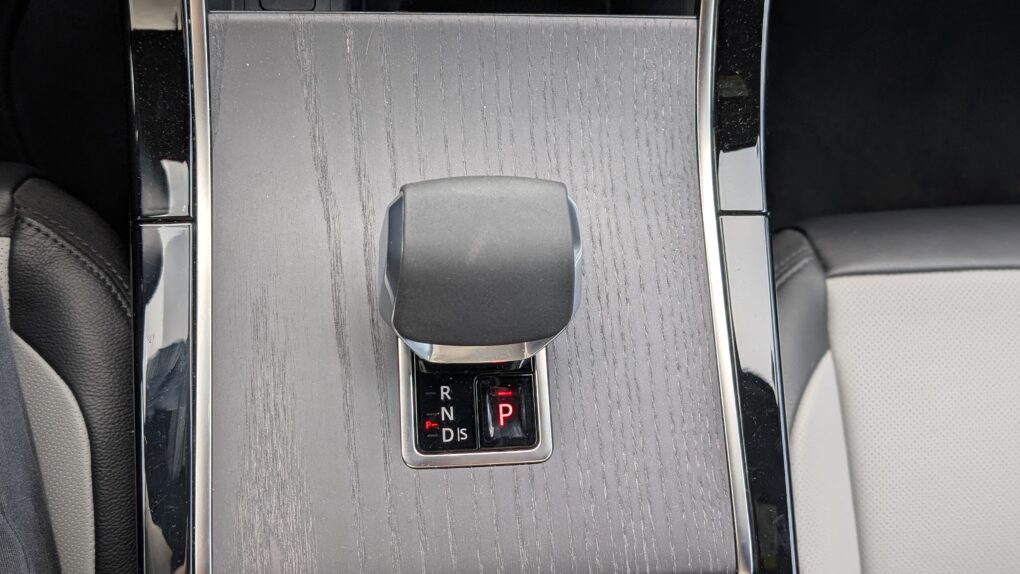
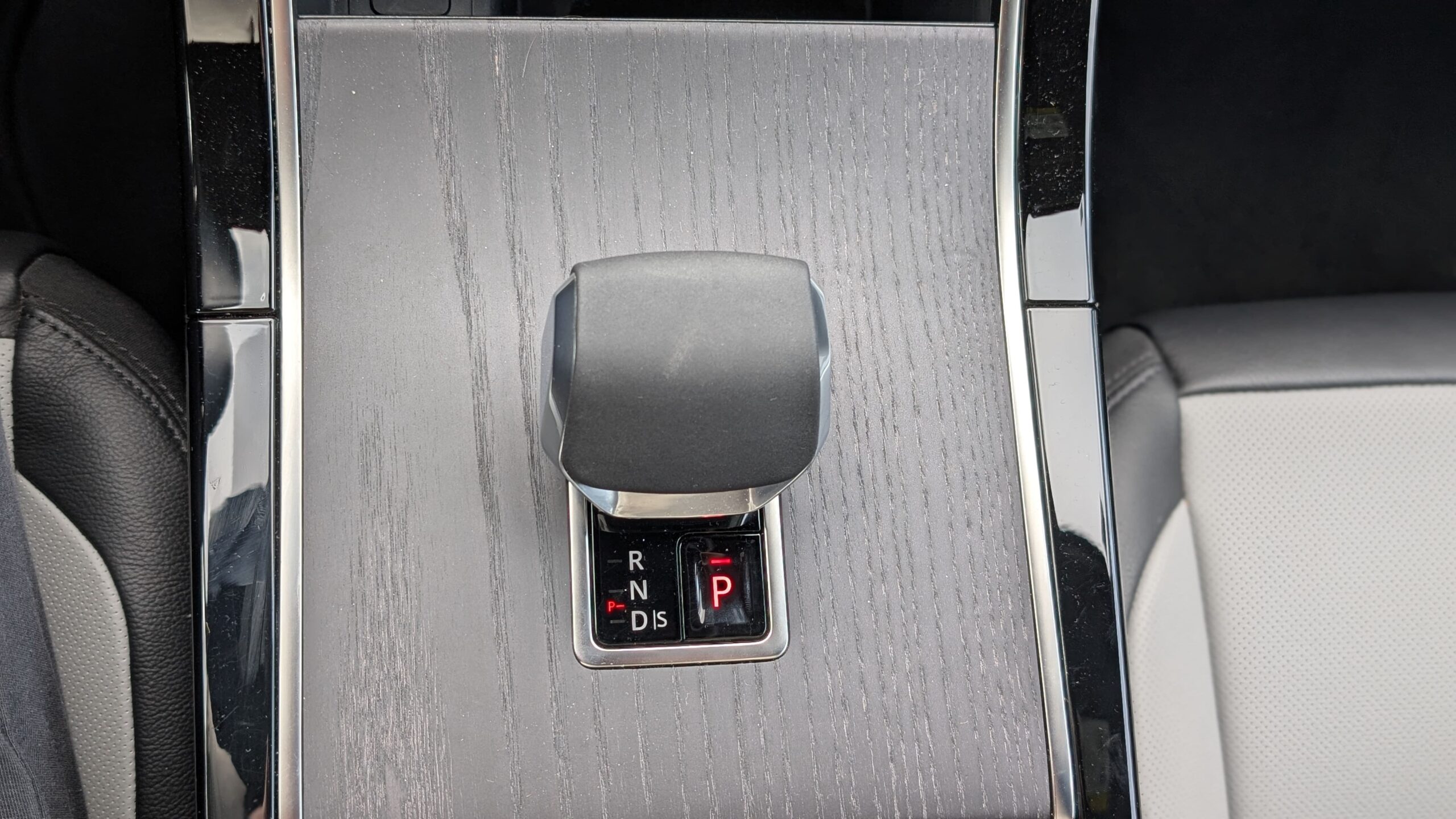
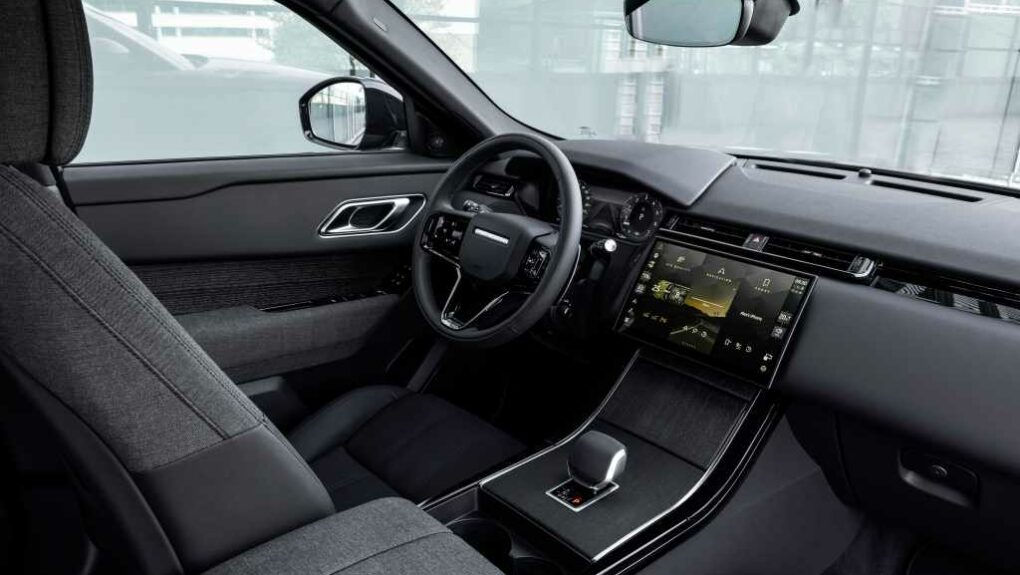
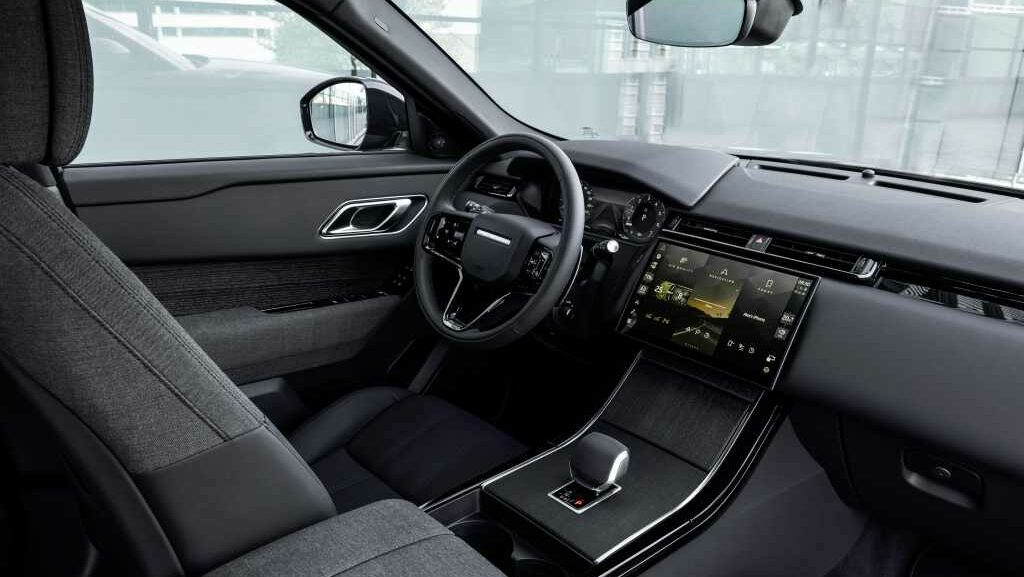
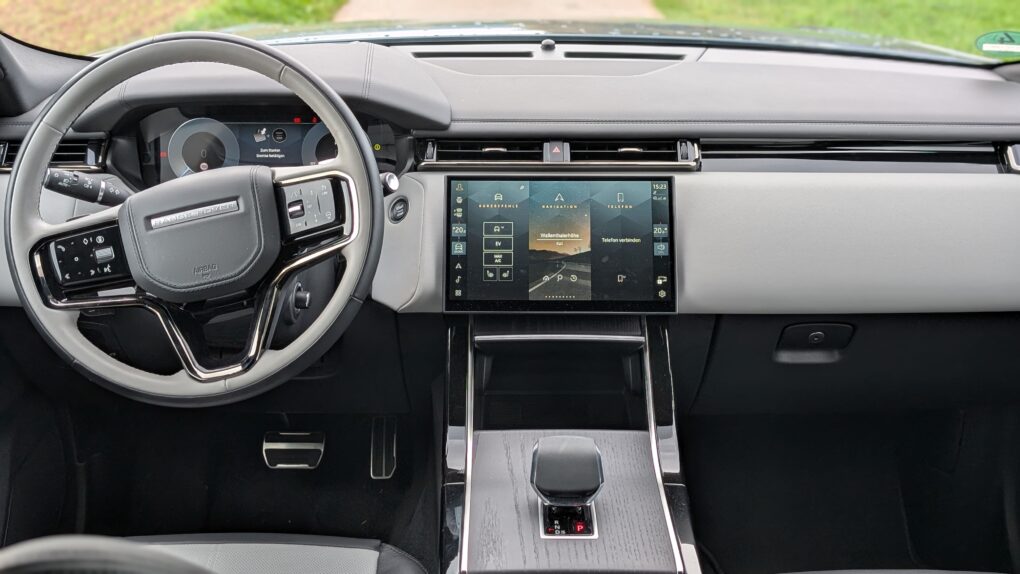
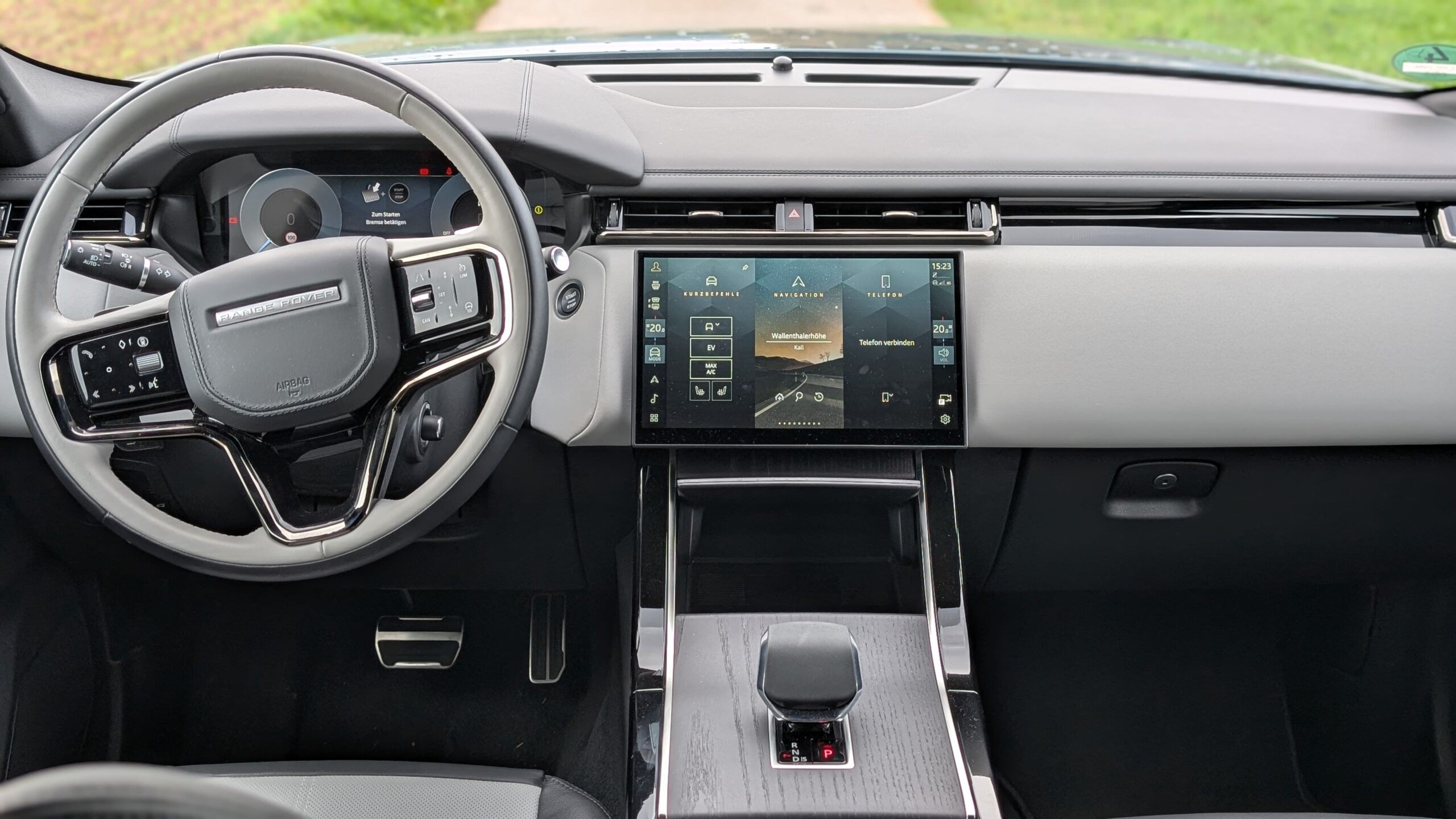
The interior of the Range Rover Velar has always been a masterpiece of minimalist design. With the 2024 model year, however, Land Rover takes this philosophy to the next level. The previous layout with two stacked touchscreens has been replaced by a single, dominant control unit, resulting in an exceptionally uncluttered cockpit. This radical reduction to the essentials gives the interior a modern and luxurious atmosphere that clearly distinguishes it from its often cluttered competitors.
-
- Picture: TechnikNews
-
- Picture: TechnikNews
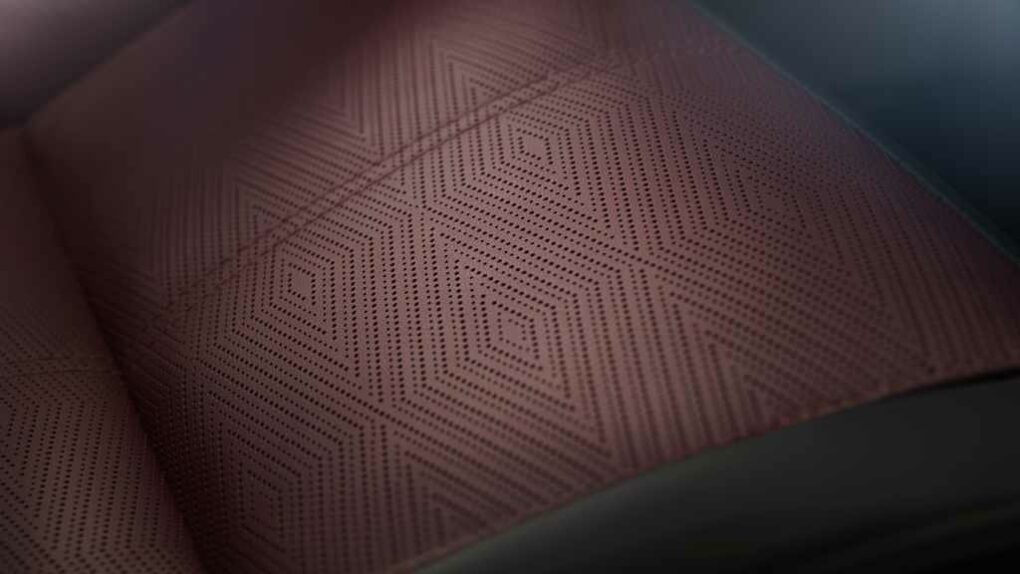
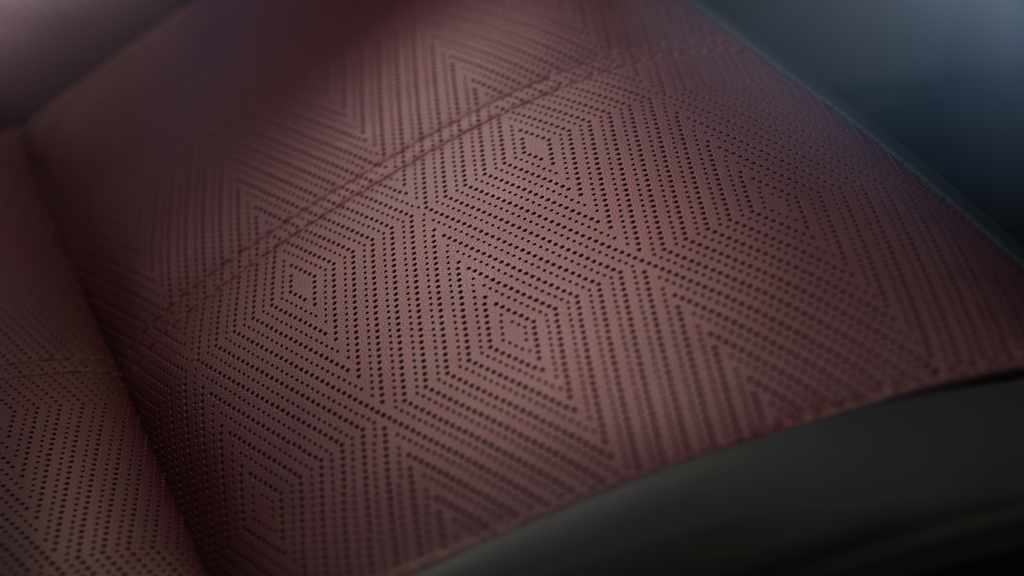
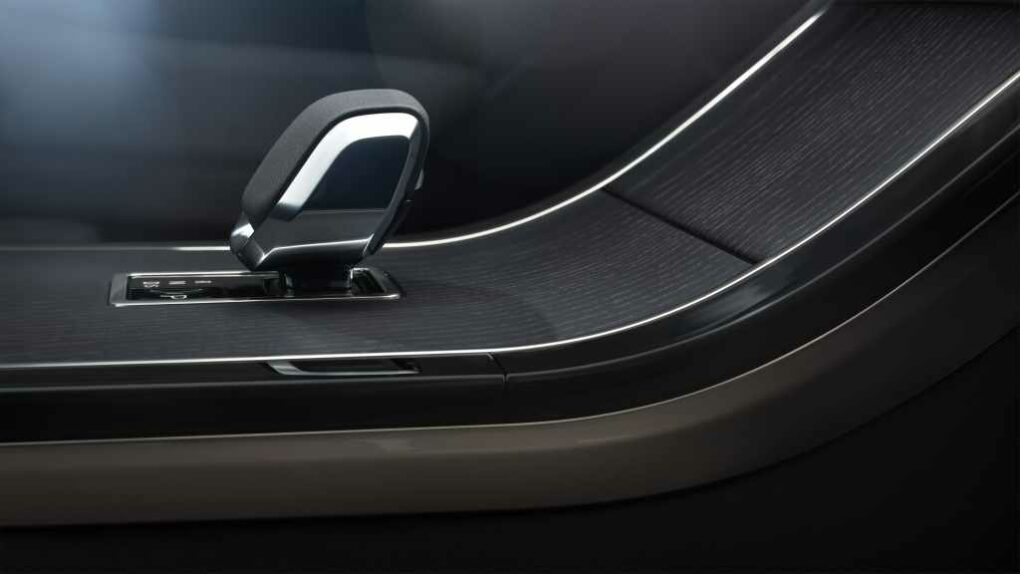
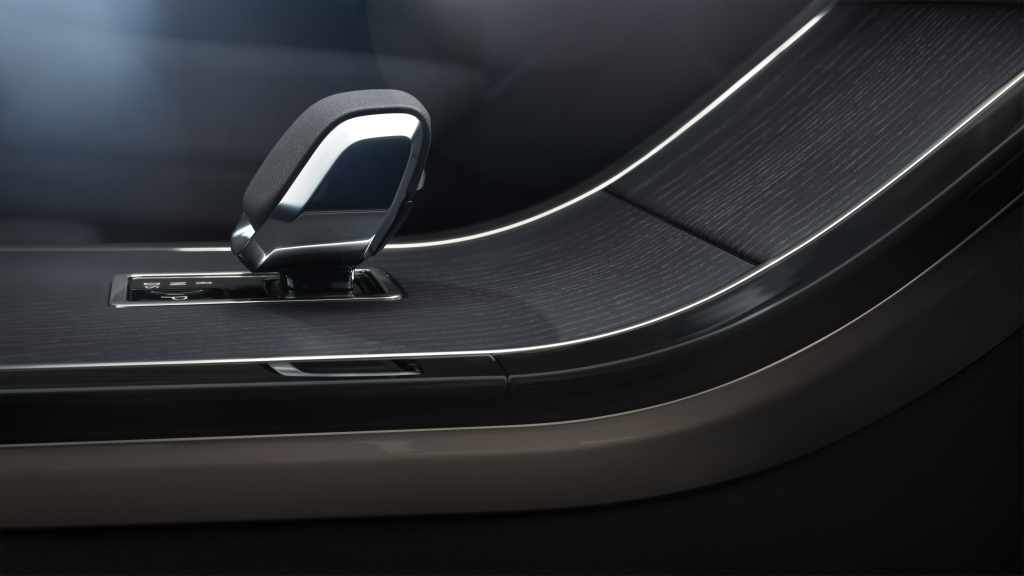
The choice of materials and the quality of workmanship are at the expected high level. Fine Windsor leather New color options like "Caraway" are pleasing to the touch and the eye, and a pleasant fragrance wafts from the interior upon opening the door. The optional leather-free interior is particularly noteworthy. Developed in collaboration with the Danish textile specialist Kvadrat, the combination of a high-quality wool blend and polyurethane textile inserts is not only 58% lighter than leather, but also offers a unique feel and a modern, sustainable aesthetic without sacrificing luxury. The use of simpler plastic in the lower door area is the only point of criticism; however, the overall impression remains exceptionally high-quality.
-
- Image: Range Rover
-
- Image: Range Rover
The seats are central to the driving experience. Our test impressions confirm their exceptional comfort. With up to 14-way electric adjustment, an optional massage function, and excellent contouring, they offer perfect support and maximum comfort, even on long journeys. All the more surprising, then, is a gap in the equipment list that is particularly noticeable in this price range: despite the perforated leather seats, seat ventilation is not available. For a vehicle that often exceeds the €90.000 mark, this is a clear disadvantage compared to competitors where this feature has long been standard. It's a small but noticeable omission in an otherwise impressive comfort package.
-
- Image: Range Rover
-
- Image: Range Rover
Infotainment and sound: Significant improvement
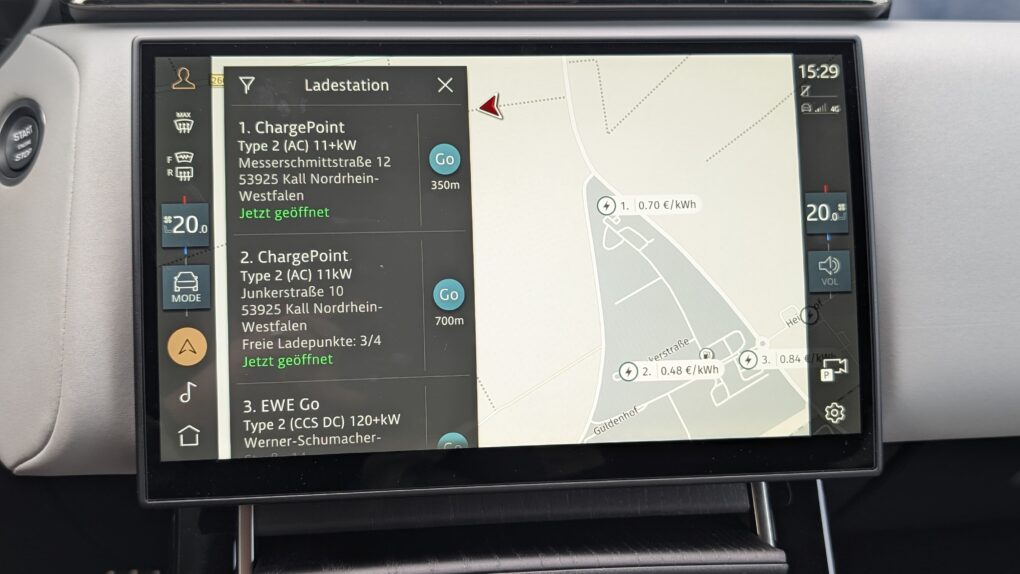
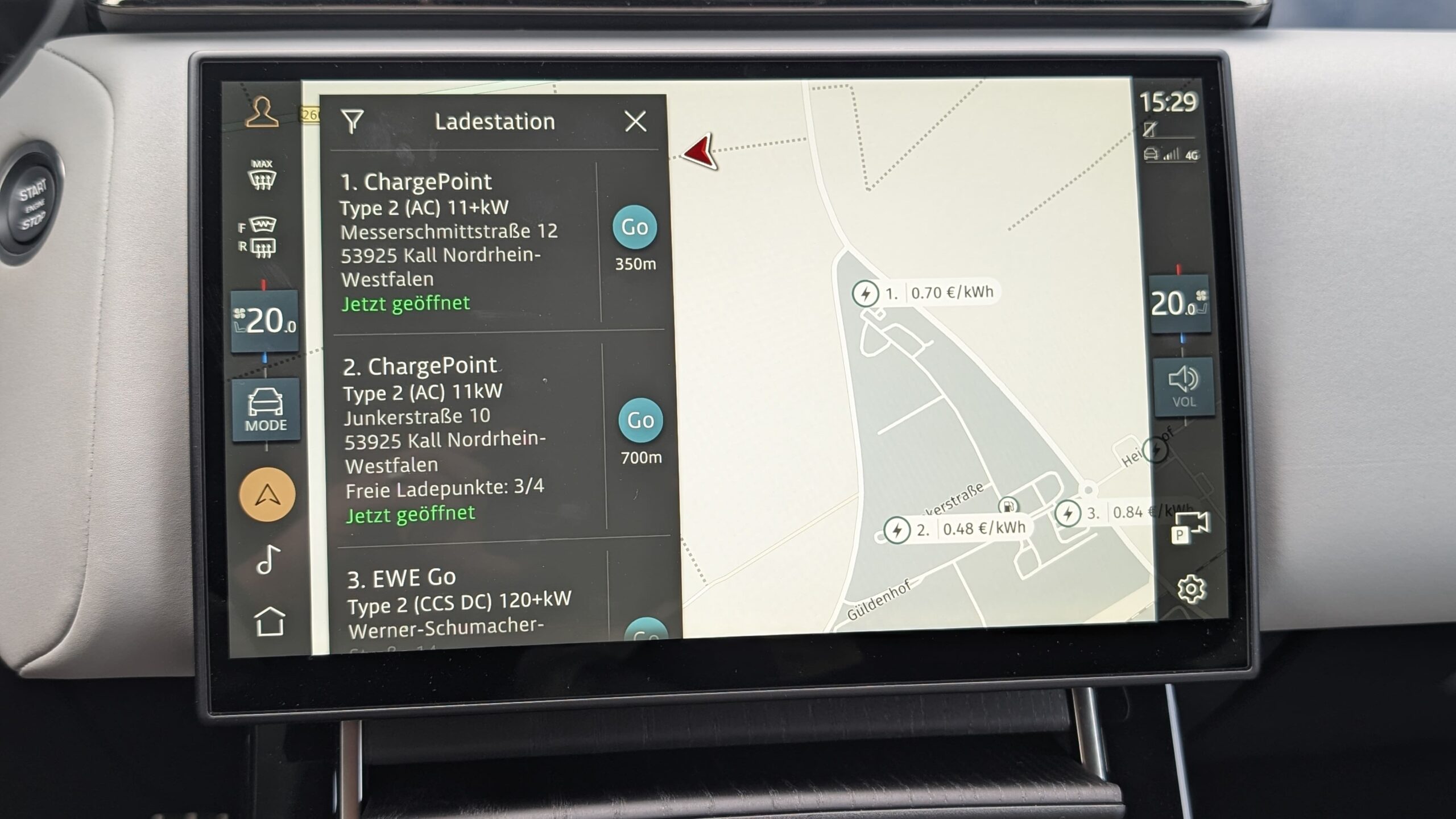
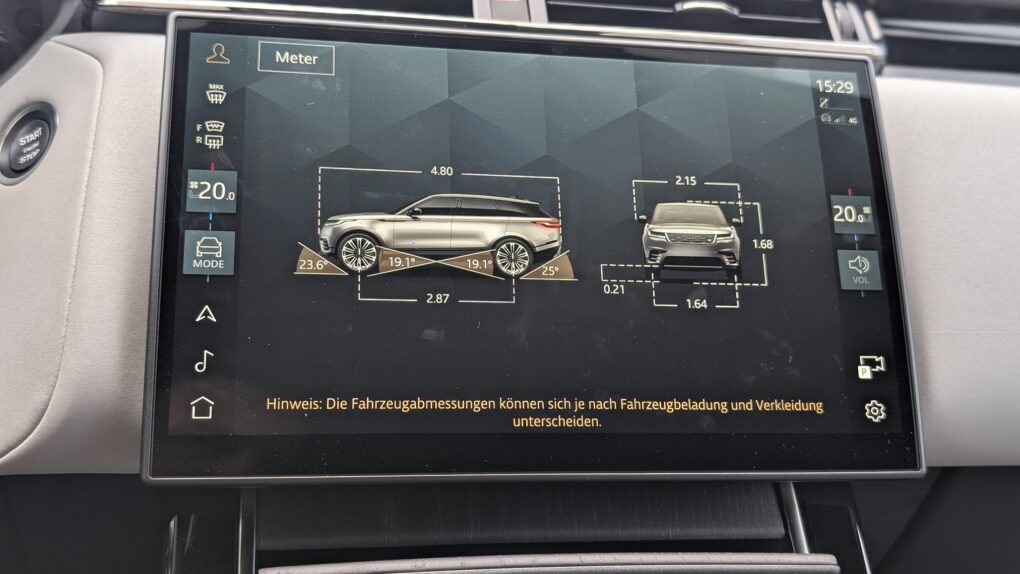
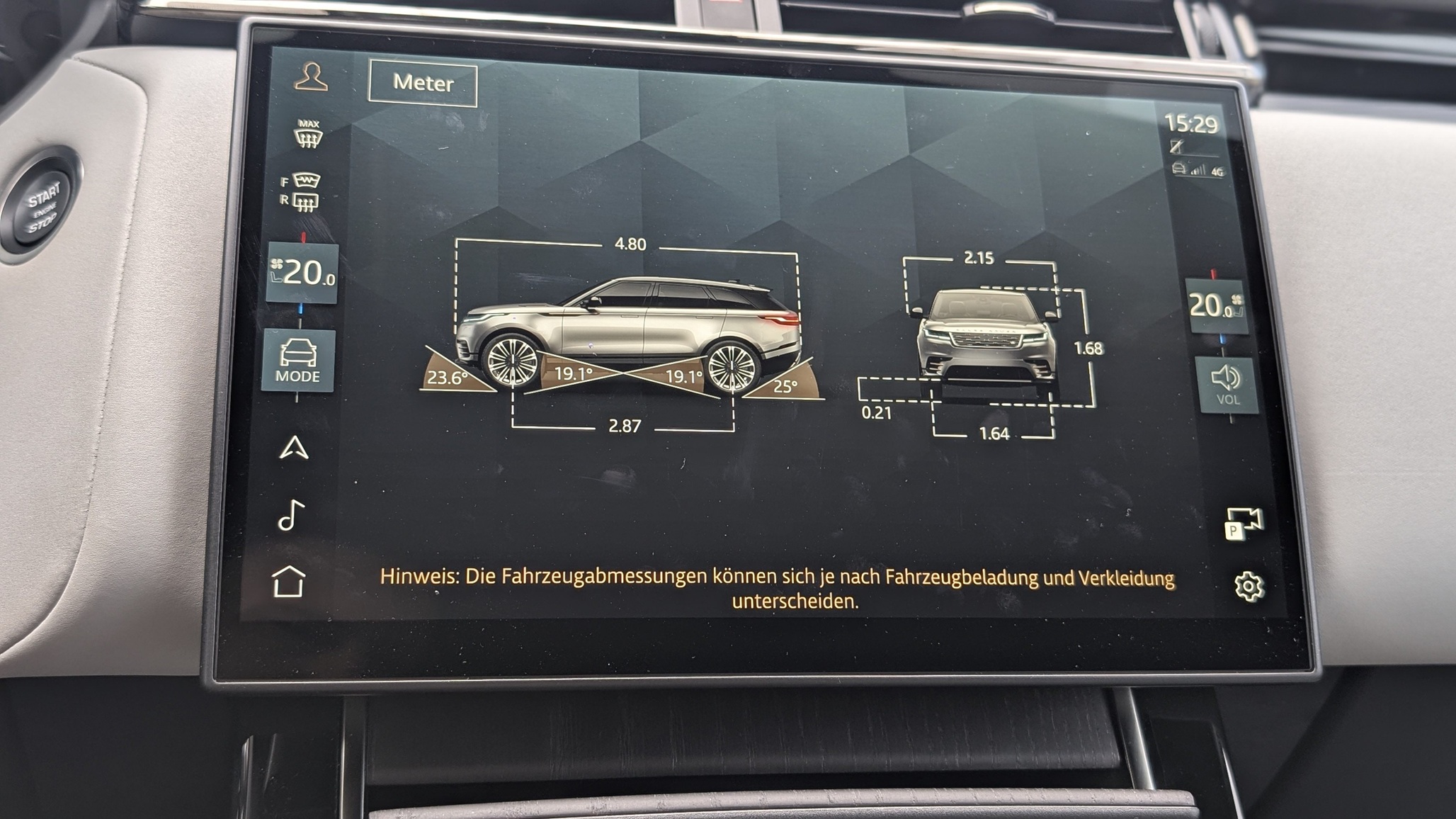
The centerpiece of the Velar's redesigned interior is undoubtedly the Pivi Pro infotainment system, which is operated via a single, elegantly curved and seemingly floating 11,4-inch glass touchscreen. This is not only larger, but also ergonomically positioned higher in the center console. This improves reach and reduces reflections.
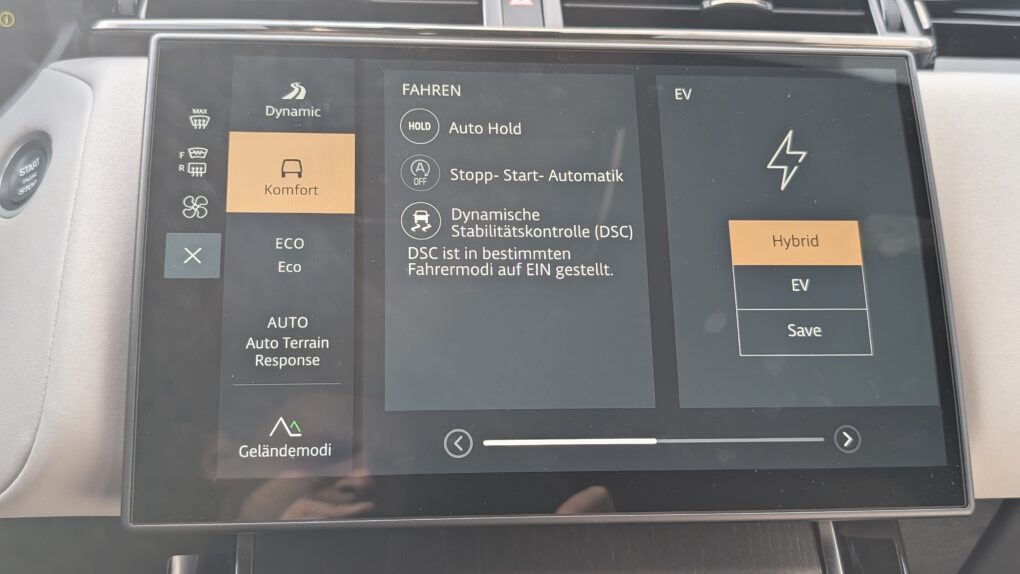
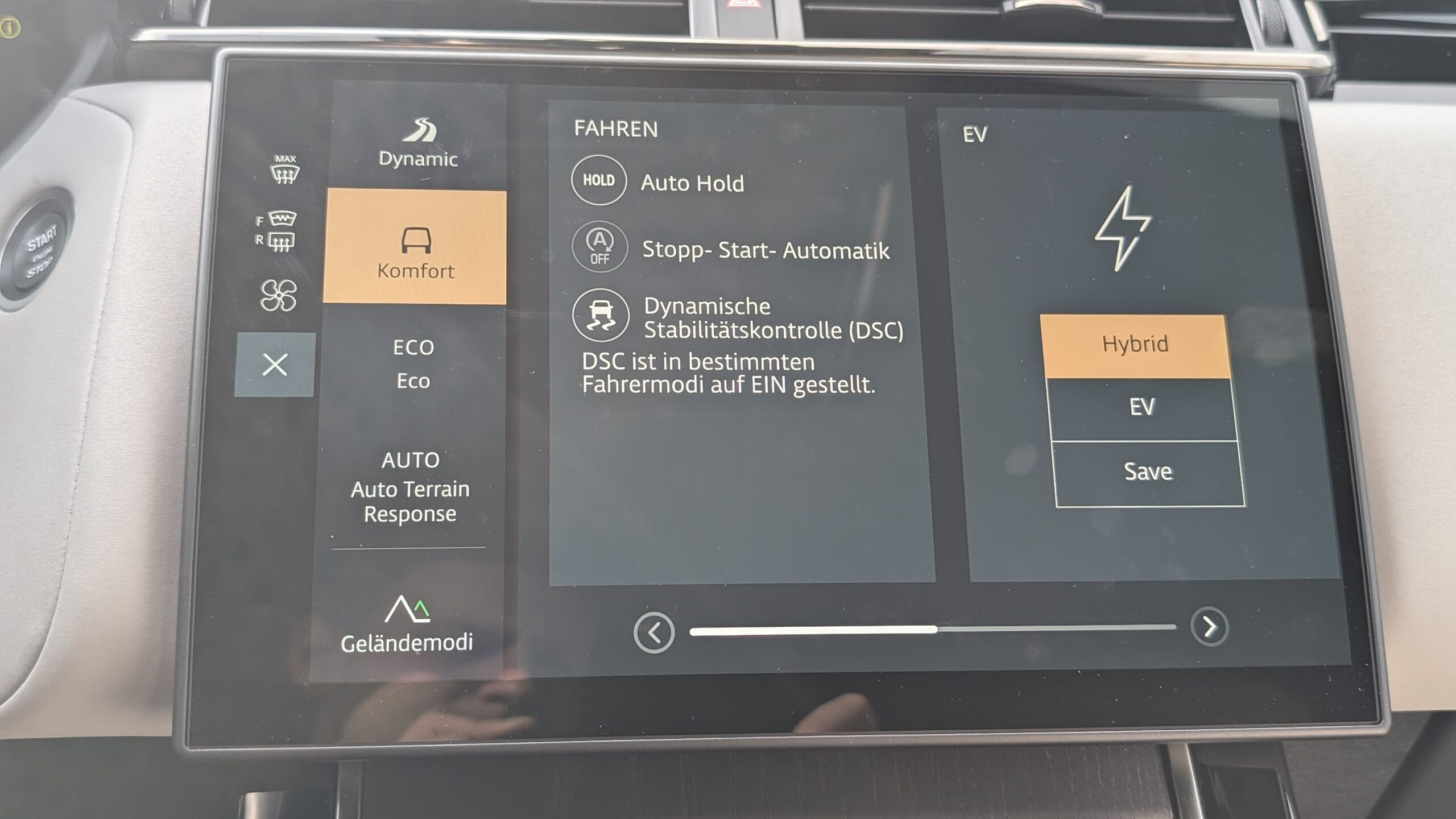
The operating concept is radically digital. There are no more physical buttons for climate control, volume, or driving modes. Instead, permanently visible control bars on the sides of the screen are designed to ensure quick access to the most important functions. Land Rover promises that 80% of all commands can be executed with a maximum of two touches of the screen. The [missing information - likely a typo or similar] are commendable. high resolution, fast response time and intuitive menu structureHowever, the loss of haptic feedback is a point of criticism. The need to take your eyes off the road to make even simple adjustments like temperature or seat heating poses a safety risk and represents a step backward in ergonomics. It's a fine line between modern design and intuitive usability – the Velar clearly falls on the latter. proaggressive, but also controversial side.
-
- Picture: TechnikNews
-
- Picture: TechnikNews
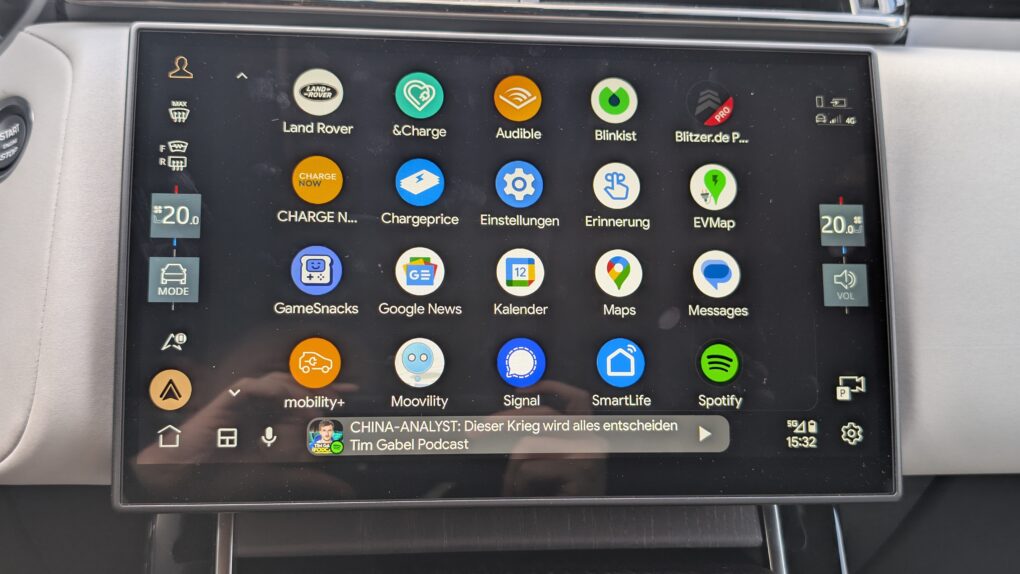
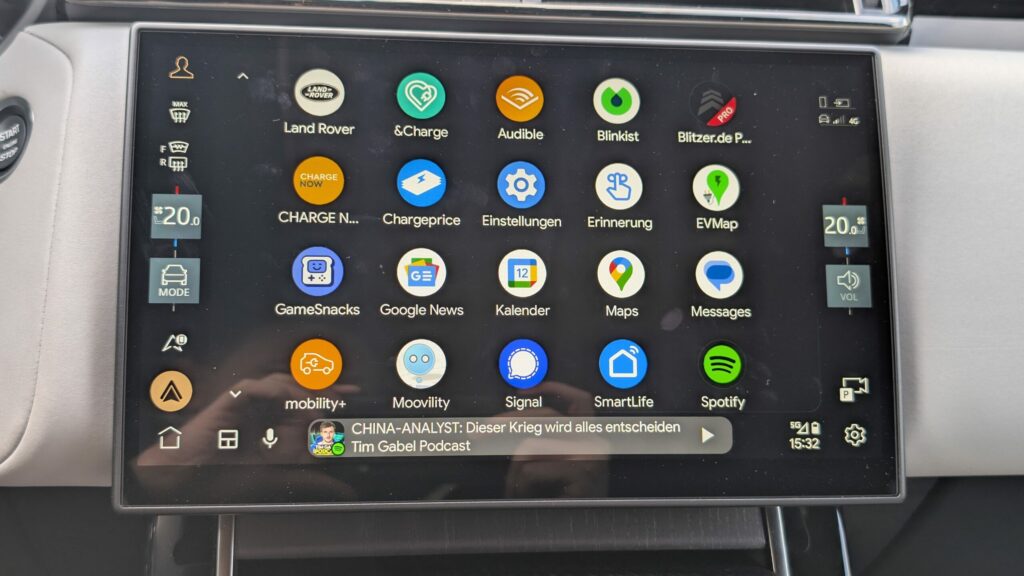
In terms of connectivity, however, the system is beyond reproach. Wireless Apple CarPlay and wireless Android Auto are standard and work flawlessly. A well-placed inductive charging pad provides wireless power to the smartphone. Thanks to two permanently installed eSIMs, the Velar is always online, and the use of integrated apps like Spotify or Amazon Alexa is possible. The latter features a well-functioning voice control system that understands many commands, even in natural language.
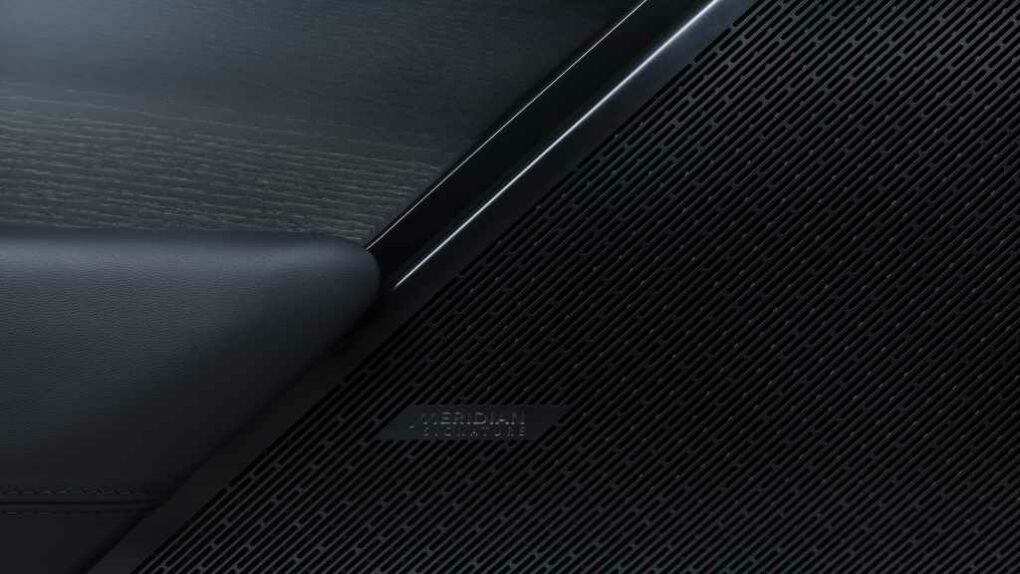
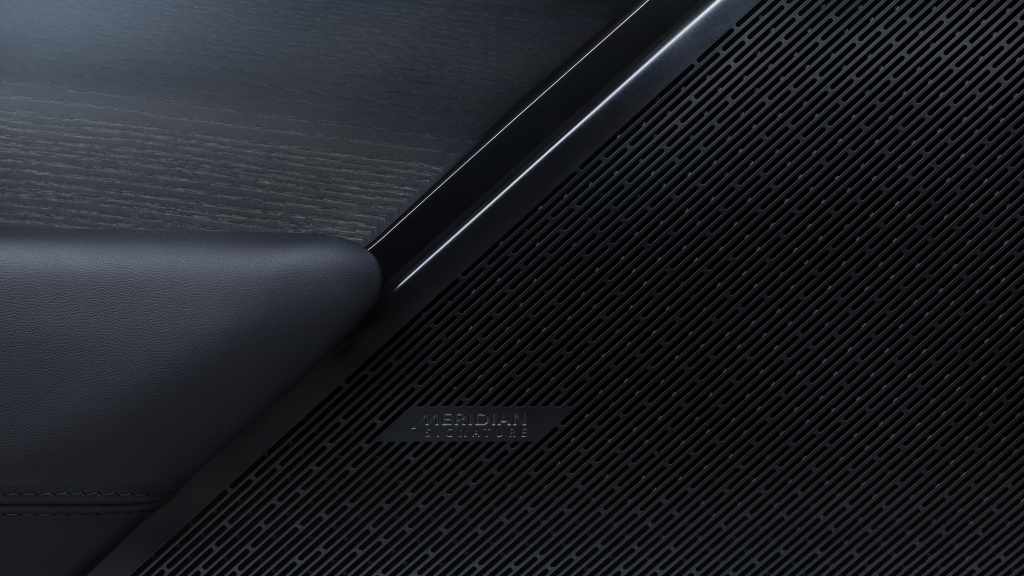
The optional sound systems from British specialist Meridian ensure an adequate sound experience. In particular, the Meridian 3D Signature Sound System With up to 17 speakers and 750 watts of power, it transforms the already quiet interior into a concert hall on wheels and delivers a clear, powerful and spacious sound.
-
- Picture: TechnikNews
-
- Image: Range Rover
Connectivity and comfort of the Range Rover Velar P400e
Beyond the pure driving experience, modern luxury is increasingly defined by... seamless connectivity and intelligent comfort featuresIn this area, the Velar has made significant strides for the 2024 model year. A key advancement is the enhanced capability for over-the-air (SOTA) software updates. While previously only the infotainment system was typically updated wirelessly, now approximately 80% of all the vehicle's electronic control units – including the powertrain, chassis, and onboard diagnostics systems – can receive the latest software without a visit to a workshop. This not only increases convenience but also ensures the vehicle's future-proofing.
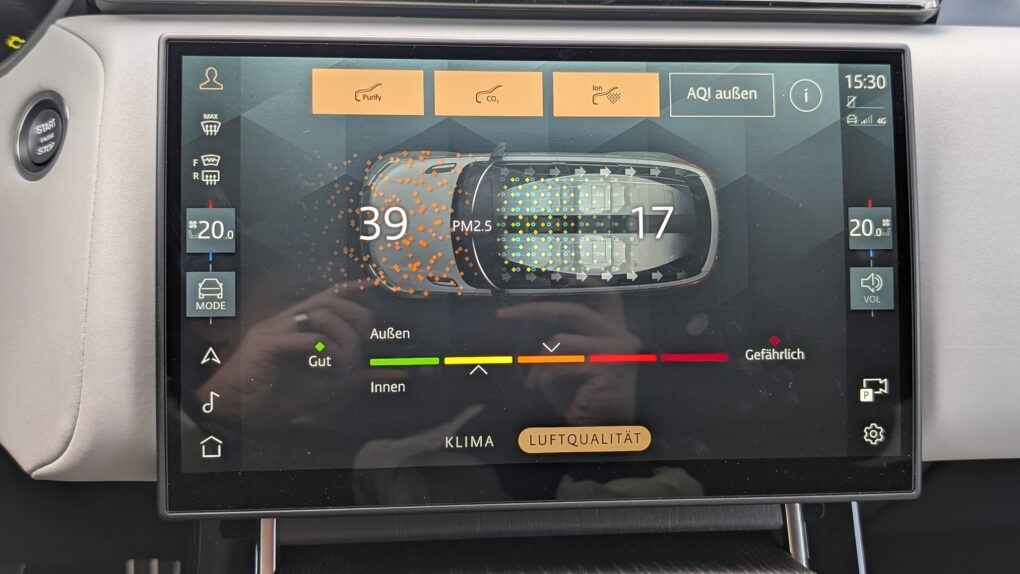
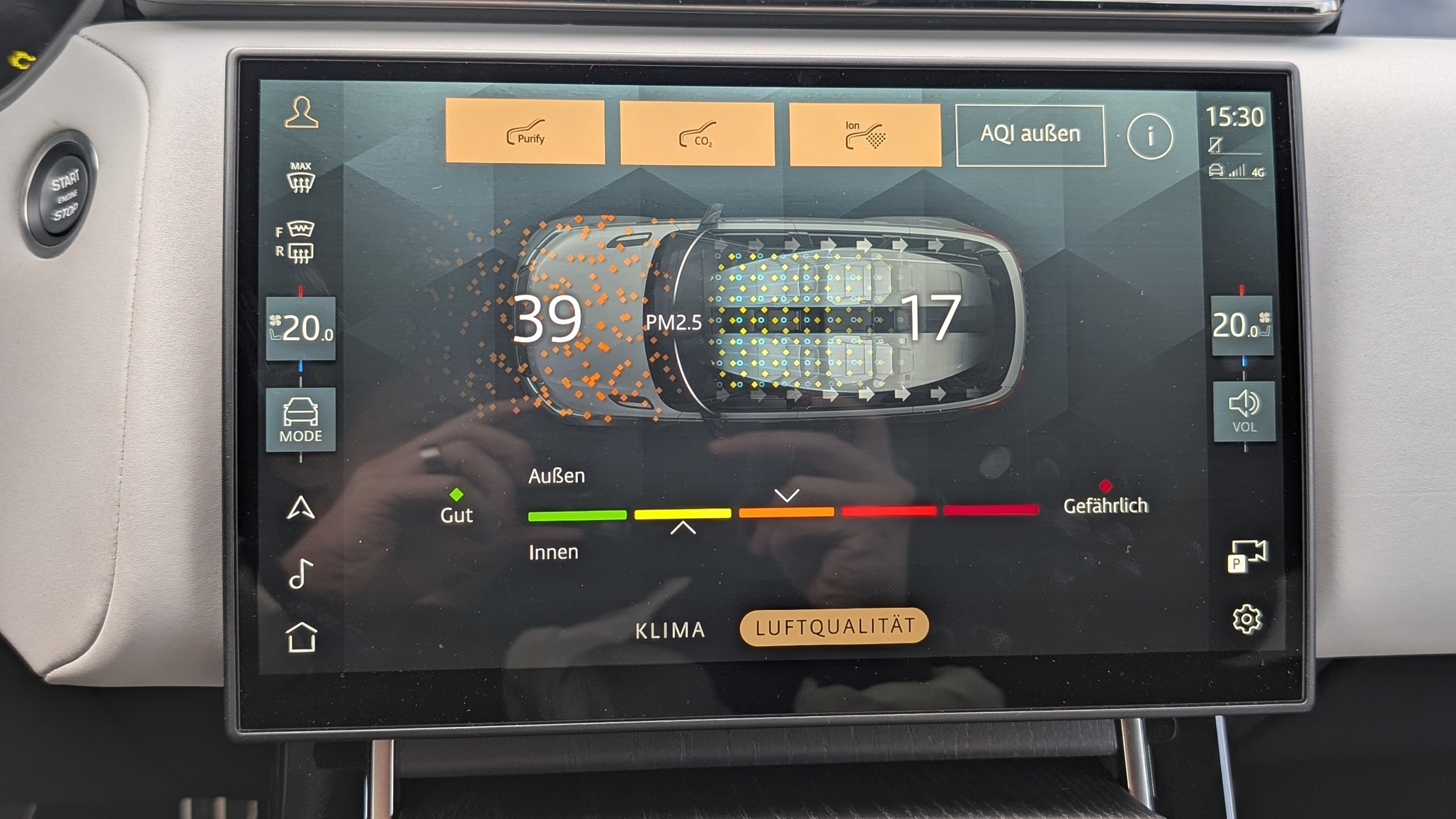
The further developed system ensures the well-being of the passengers. "Indoor Air Purification System Plus"It combines PM2.5 fine dust filtration with a CO₂ management function and Nanoe-X technology to actively reduce allergens, bacteria, and odors, maintaining consistently high cabin air quality. In everyday testing, a very practical detail also stood out: the air conditioning is switched off...proIt warms up quickly. Especially in the colder months, this is a noticeable increase in comfort, minimizing the waiting time for a pleasant indoor temperature.
The connection to the outside world is ensured via the Land Rover Remote App on your smartphone. It not only enables standard functions such as locking and unlocking the vehicle and locating it, but also truly shines when used with the P400e powertrain. This allows you to conveniently pre-condition the interior using mains power before setting off, without reducing the battery range. Furthermore, the charging process can be monitored and intelligently controlled, for example, to take advantage of cheaper off-peak electricity rates.
-
- Picture: TechnikNews
-
- Picture: TechnikNews
Driver assistance systems and safety: Top equipment
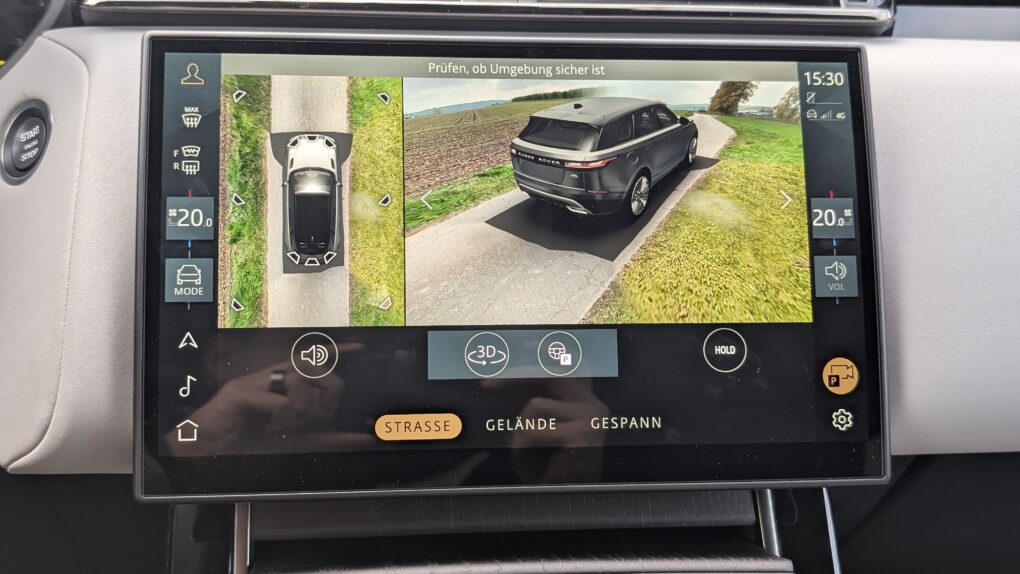
The Range Rover Velar is equipped with a comprehensive Suite of modern driver assistance systems Equipped with a range of features, both standard and optional, include adaptive cruise control with stop & go function and steering assist, active lane keeping assist, blind spot monitoring, and various front and rear collision warning systems. Particularly useful in urban environments is the camera, which displays a 360-degree bird's-eye view of the vehicle on the large Pivi Pro screen, significantly simplifying maneuvering in tight spaces.
In terms of passive safety, the rating is based on the 2017 Euro NCAP crash test, in which the Velar received the highest rating of five stars. The detailed results were available with 93% for the protection of adult occupants85% for child protection and 74% for pedestrian protection was a good result at the time. However, it must be noted that the testproEuro NCAP's safety standards have been tightened several times since 2017. Modern safety features that are often crucial for a five-star rating today, such as a center airbag between the front seats or an enhanced emergency braking function for reversing, may be lacking in the Velar.
An often underestimated aspect of passive safety is protection against driver fatigue. Here, the Velar performs exceptionally well. The aforementioned very good noise insulation Supported by active road noise cancellation, this creates an extremely quiet and stress-free cabin atmosphere. This significantly reduces cognitive strain on long journeys and thus contributes indirectly but effectively to safety. Combined with the exceptionally comfortable seats and the superb chassis, the Velar becomes one of the most relaxed touring vehicles in its class.
-
- Picture: TechnikNews
-
- Picture: TechnikNews
Range Rover Velar P400e drive system
The powertrain of the P400e is the technical core of the Velar and was significantly revised for the 2024 model year. It combines a 2,0-liter four-cylinder turbocharged gasoline engine from the Ingenium family, which alone produces 221 kW (300 hp), with a powerful electric motor integrated into the transmission, delivering 105 kW (143 hp). The result is an impressive system output of 297 kW (404 PS) and a maximum torque of enormous 640 Nm.
These figures translate into superior driving performance. This is how the sprint from 0 at 100 km / h in just 5,4 secondsThis puts the Velar, weighing over 2,2 tons, on par with sports sedans. Its top speed is electronically limited to 209 km/h, but it can reach speeds of up to 140 km/h in all-electric mode, making emission-free driving on the motorway possible.
The interplay between the two drive sources is usually exemplary in its smoothness and refinement during normal operation. In hybrid mode, the system seamlessly switches between electric and combustion engine drive to ensure optimal efficiency at all times. However, the harmony isn't always perfect. During our test drives, a small but noticeable drawback became apparent: The engine occasionally jerks a little when it first starts.This phenomenon occurs primarily in city traffic under light load or in cold ambient temperatures, when the gasoline engine reactivates after a pure electric phase. It's not a serious problem, but it detracts from the otherwise extremely refined impression and represents a minor flaw in the complex tuning of the hybrid management system.
-
- Image: Range Rover
-
- Image: Range Rover
Driving dynamics and handling: Ultra comfortable
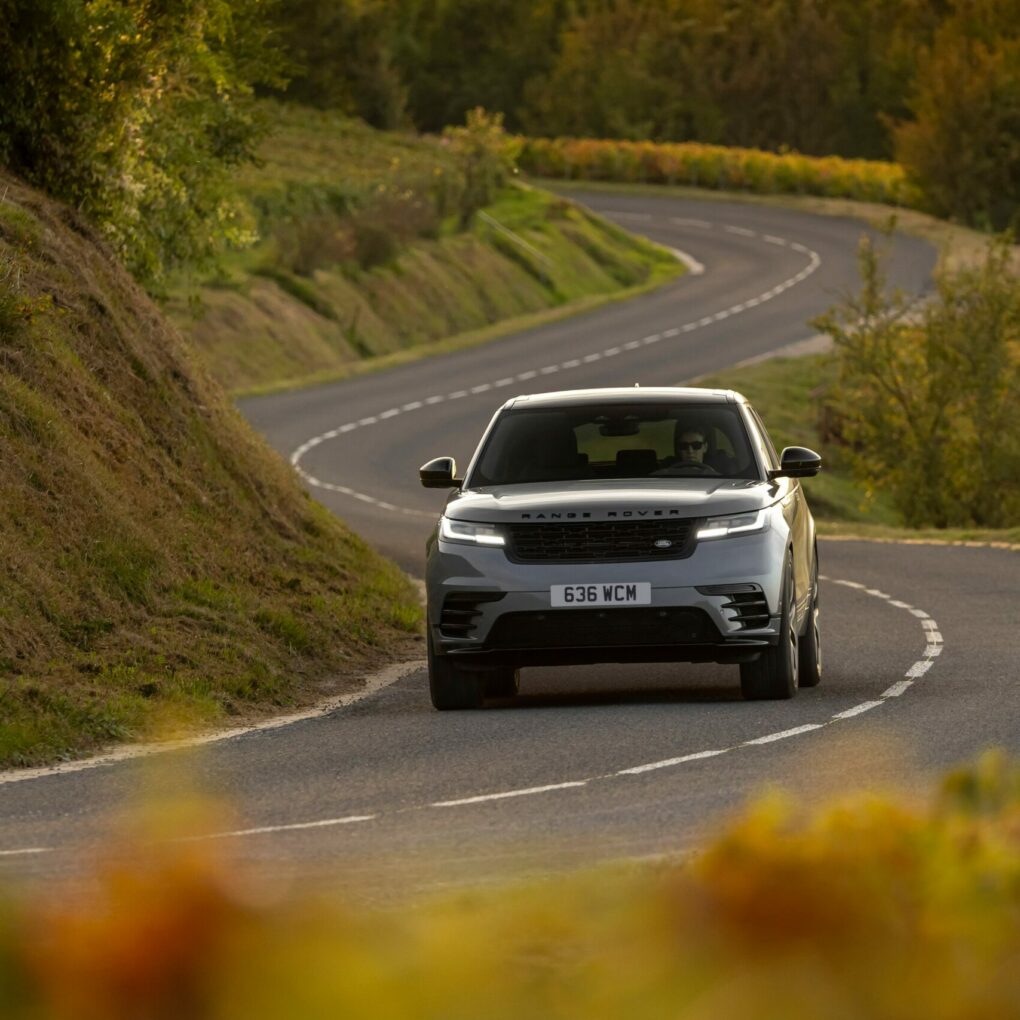
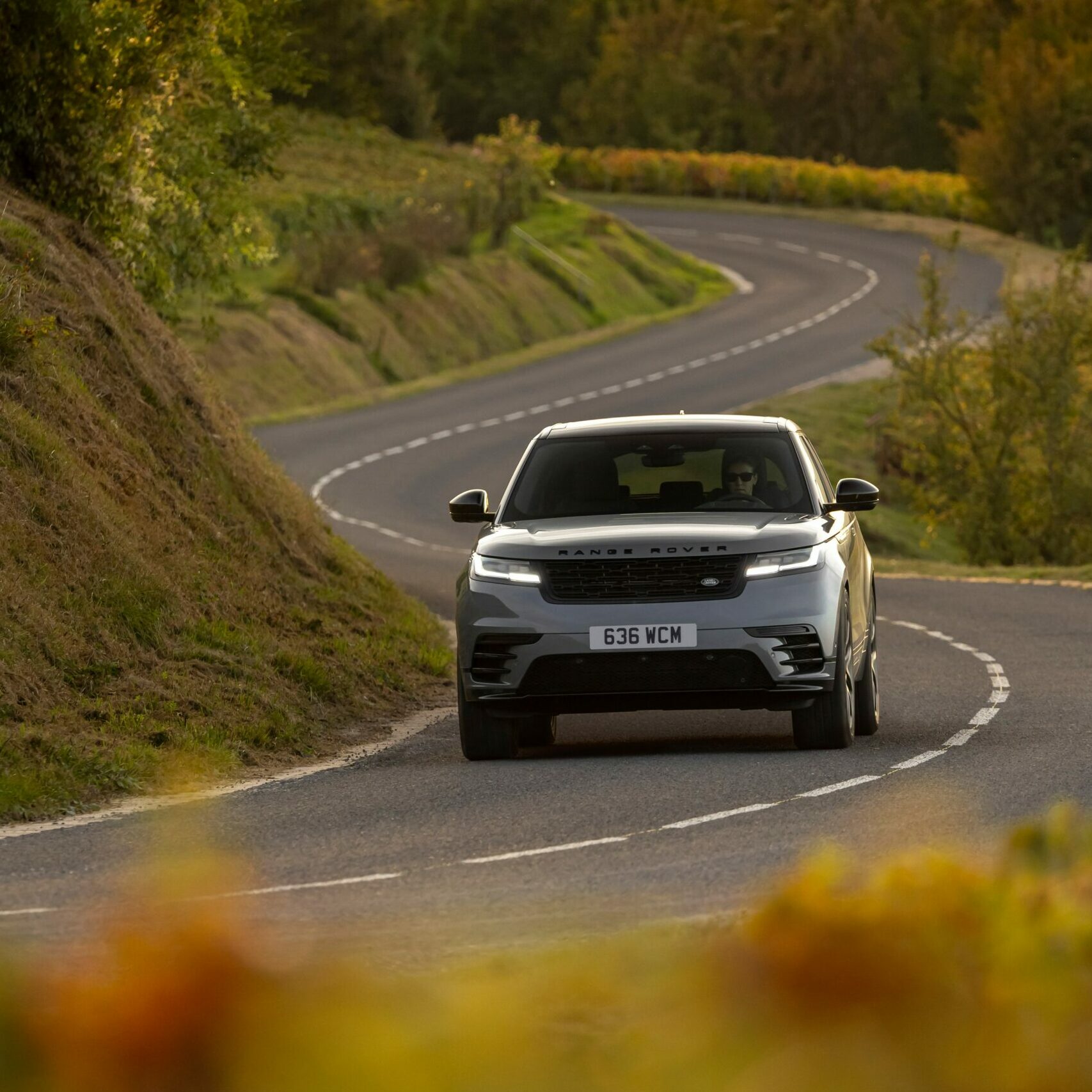
A Range Rover traditionally stands for superior comfort rather than peak sportiness. The Velar doesn't break with this tradition, but reinterprets it. more dynamicThe technical basis for this is a chassis that comes standard with Adaptive Dynamics, i.e., electronically controlled dampers. In the top-of-the-line "Autobiography" trim, this is optionally complemented by electronically controlled air suspension. The latter is highly recommended, as it elevates ride comfort to an exceptional level. The system smooths out road imperfections, from short bumps to long undulations, with stoic composure, creating the sensation of floating above the road. Additionally, the air suspension offers practical advantages, such as lowering the vehicle for easier entry and exit or improving aerodynamics at high speeds.
Despite its focus on comfort and a curb weight of over 2.200 kg, the Velar surprises with remarkably agile handling. Testing revealed that it corners exceptionally well. Body roll is effectively controlled by the adaptive suspension, and the steering is precise and offers a pleasant weight distribution, if not overly communicative. This allows the large SUV to be driven surprisingly nimbly and safely through winding roads, always conveying a reassuring sense of stability. While it's no sports car like a Porsche Macan, it's significantly more agile and driver-focused than its larger siblings.
-
- Image: Range Rover
-
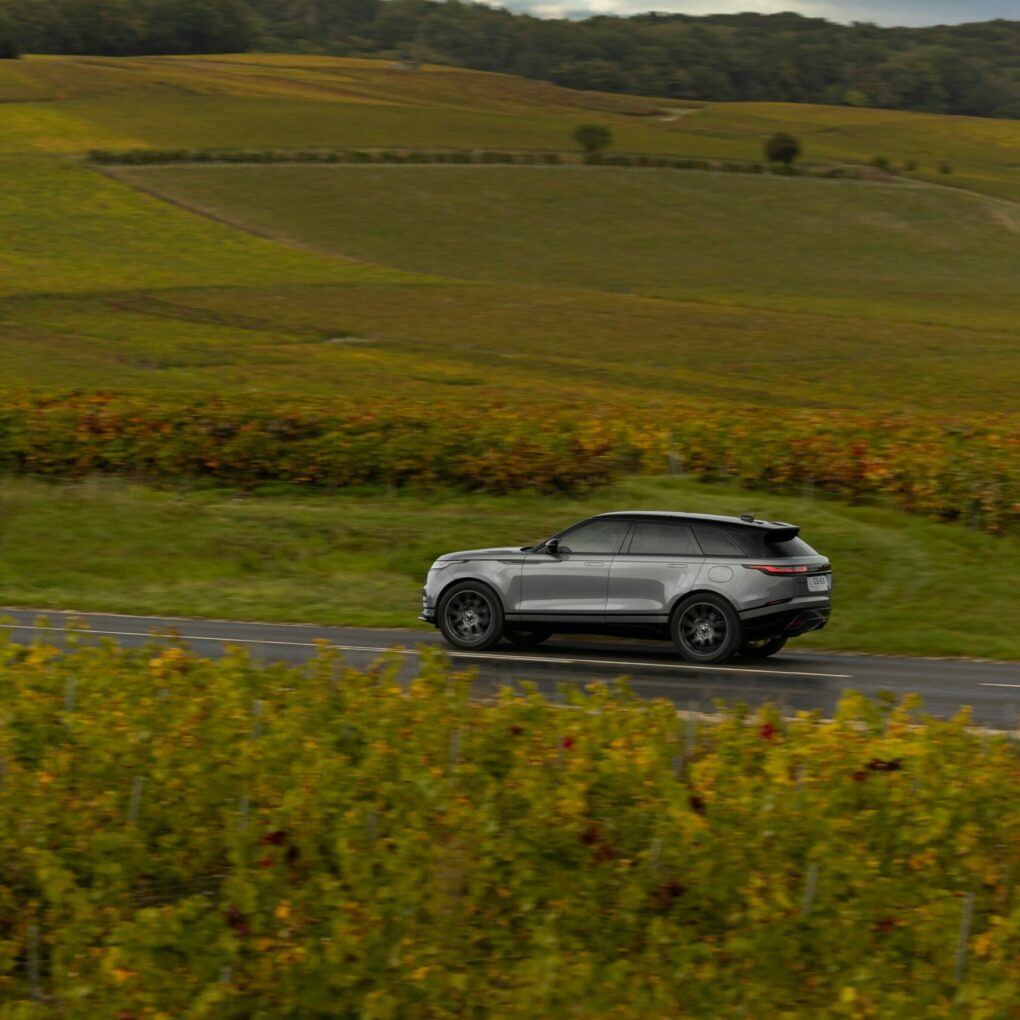
- Image: Range Rover
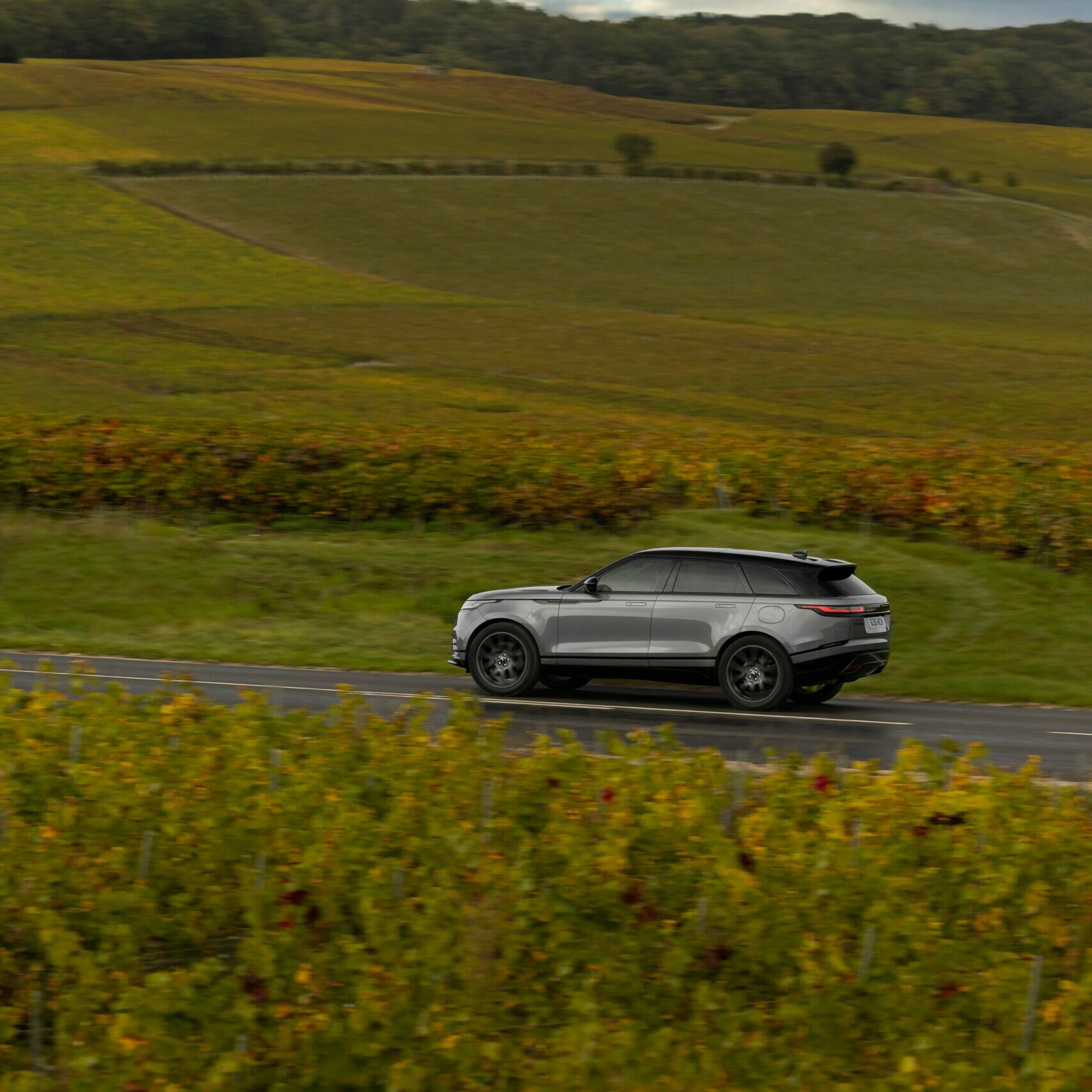
Braking and recuperation: Hardly any energy recovery
The braking system deserves special praise. Brake pedal feel is often a challenge in hybrid vehicles, as the transition from regenerative braking (recuperation) to mechanical braking can be noticeable. Not so in the Velar. The brakes are very pleasant and offer excellent modulation. The pressure point is clearly defined, and the response is consistent and confidence-inspiring throughout the entire pedal travel. The positive driving experience is further enhanced by excellent visibility. The high seating position, the relatively narrow A-pillars, and the aforementioned large exterior mirrors provide superb all-around visibility and facilitate maneuvering in city traffic and on narrow streets.
Where there is light, there is also shadow. A significant point of criticism regarding driving dynamics is the energy recuperation. Unfortunately, the recuperation is rather weak and not adjustable. While many other plug-in hybrids and electric cars allow the driver to adjust the recuperation strength in several stages – even enabling so-called "one-pedal driving" – Land Rover omits this feature. Even in Dynamic driving mode, where recuperation is slightly increased, the deceleration when lifting off the accelerator remains very subtle. This is a missed opportunity: firstly, efficiency in city traffic could be improved with stronger energy recuperation, and secondly, the driver would have more interaction with and control over the hybrid system.
-
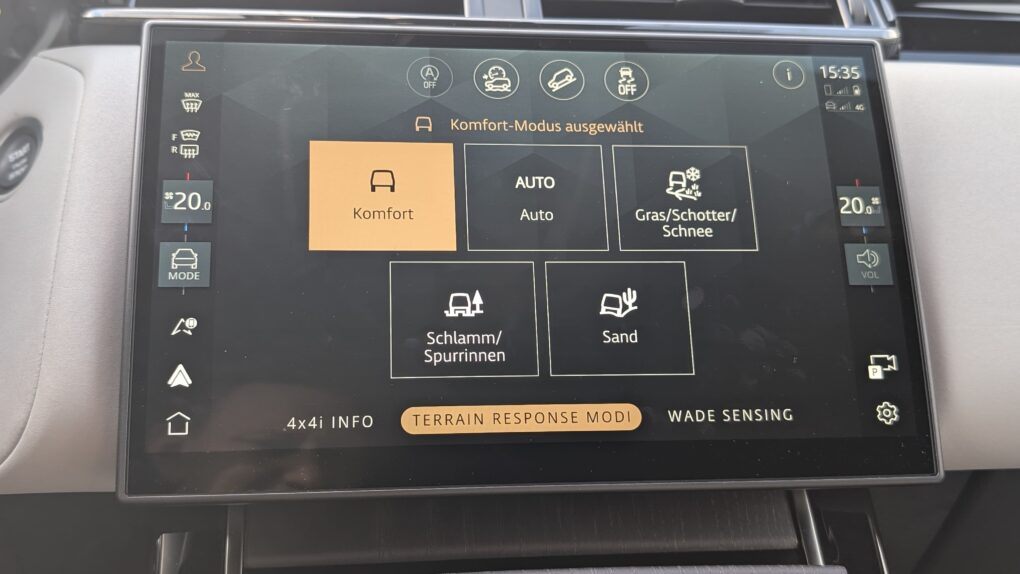
- Picture: TechnikNews
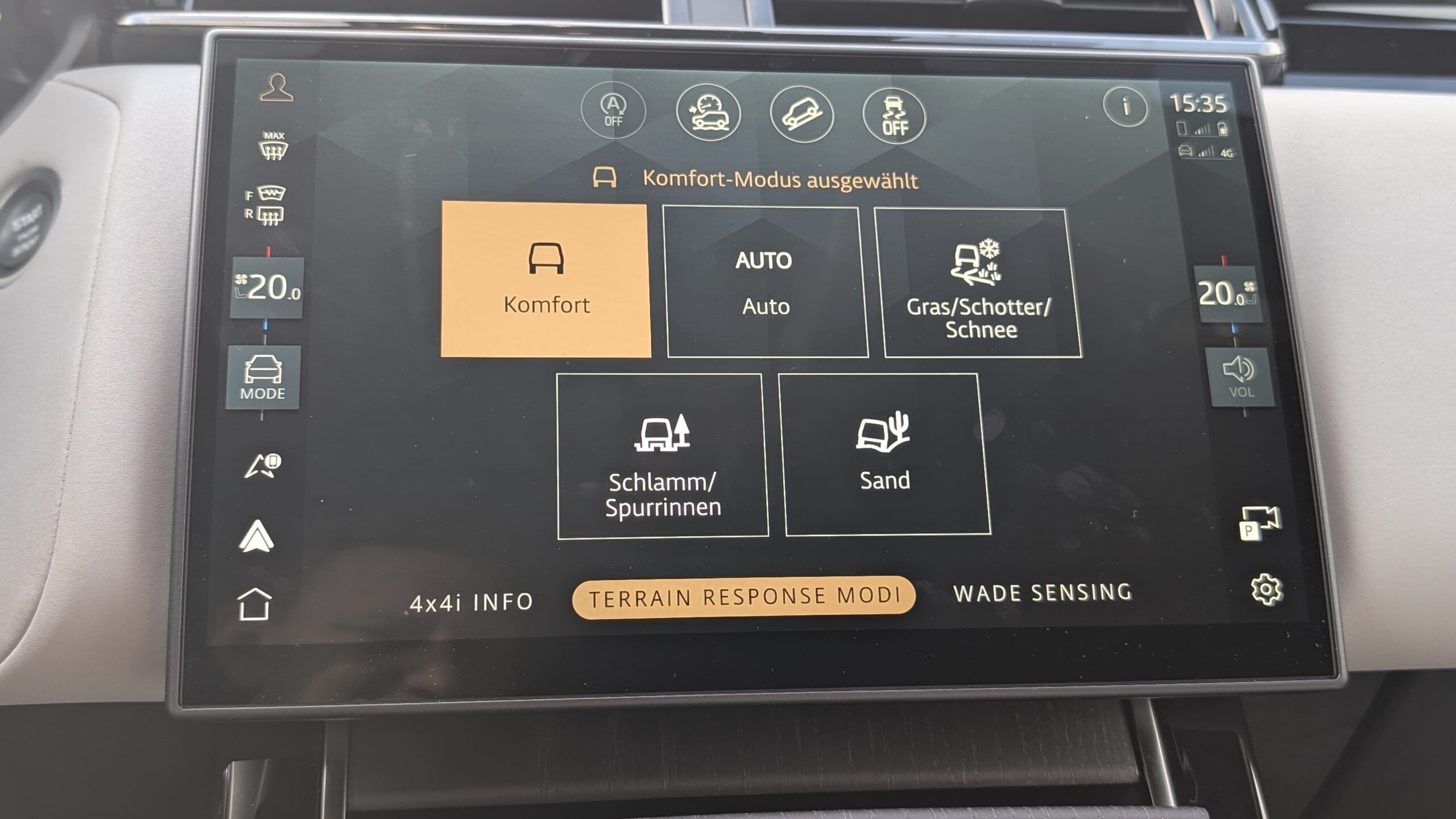
-
- Picture: TechnikNews
Fuel consumption and range of the Range Rover Velar P400e
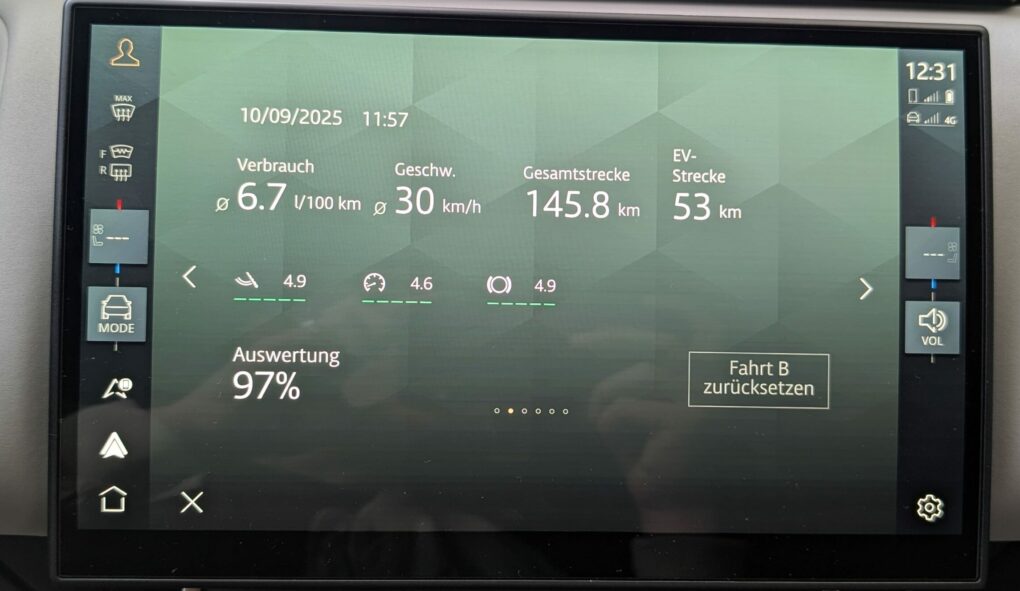
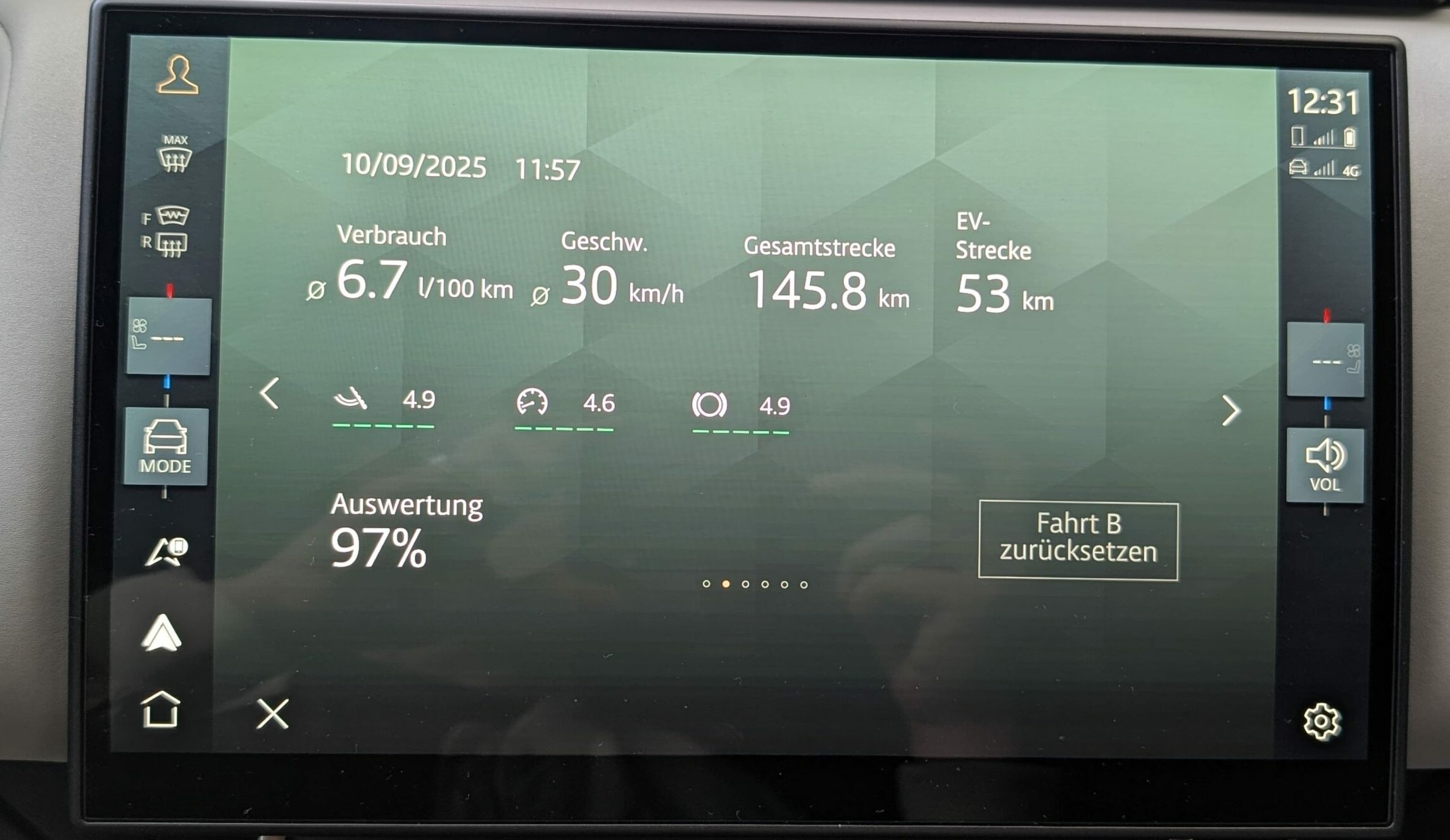
The efficiency of a plug-in hybrid depends significantly on its electric range and the user's charging habits. Thanks to the increased battery capacity of 19,2 kWh, the Velar P400e has made a significant leap forward in this area. Land Rover states the official WLTP range as up to 64 kilometers. In our tests, we achieved a value of 50 to 55 kilometers at moderate outside temperatures and mixed driving conditionsproThis is considered realistic. It's a solid value, but compared to the competition, it's rather in the lower third.
The official, weighted combined fuel consumption according to the WLTP standard is an impressively low 1,9 l/100 km, complemented by an electricity consumption of 24,7 kWh/100 km. However, such figures are only achievable in practice with a maximum proportion of electric driving. A more realistic hybrid consumption, involving regular charging but also longer journeys, is around [value missing in original text]. 5,5 to 6,8 liters pro 100 kilometers. However, the crucial factor is the PHEV's second aspect: fuel consumption when the battery is empty. Once the battery is depleted, the 2,0-liter four-cylinder gasoline engine has to handle the vehicle's considerable weight of over 2,2 tons on its own. In this scenario, for example, on long highway stretches without charging options, fuel consumption increases significantly. Expect figures between 9 and 11 liters per 100 kilometers. pro Expect 100 km.
This extreme variation in fuel consumption illustrates the nature of a plug-in hybrid. With consistent charging, ideally at home or at work, the Velar P400e can be a very efficient and cost-effective vehicle. However, those who primarily drive long distances and rarely charge will be penalized with high fuel consumption and drive a heavy vehicle whose ecological and economic advantages are lost.
-
- Picture: TechnikNews
-
- Picture: TechnikNews
Charging: DC fast charging capability is a major plus
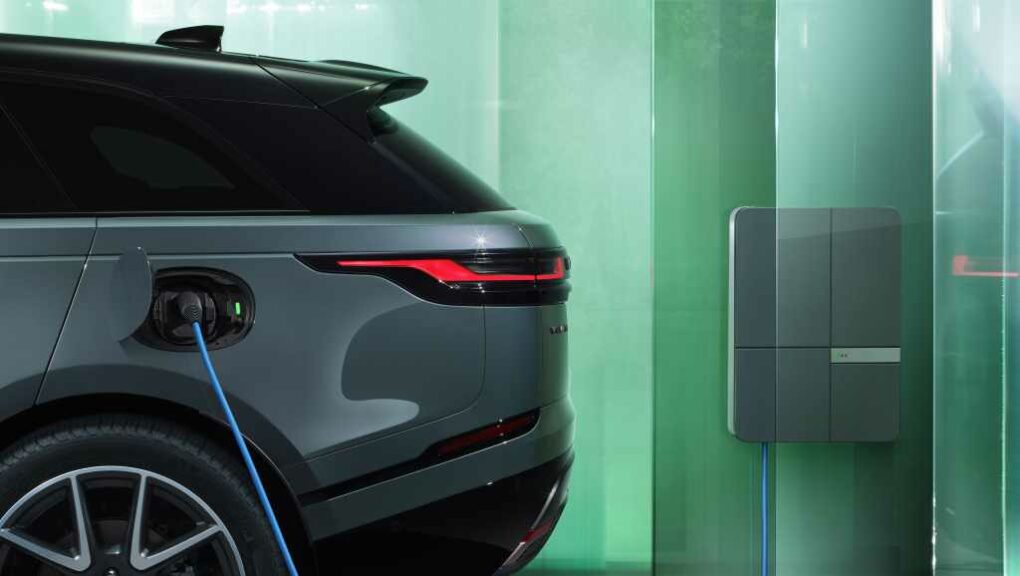
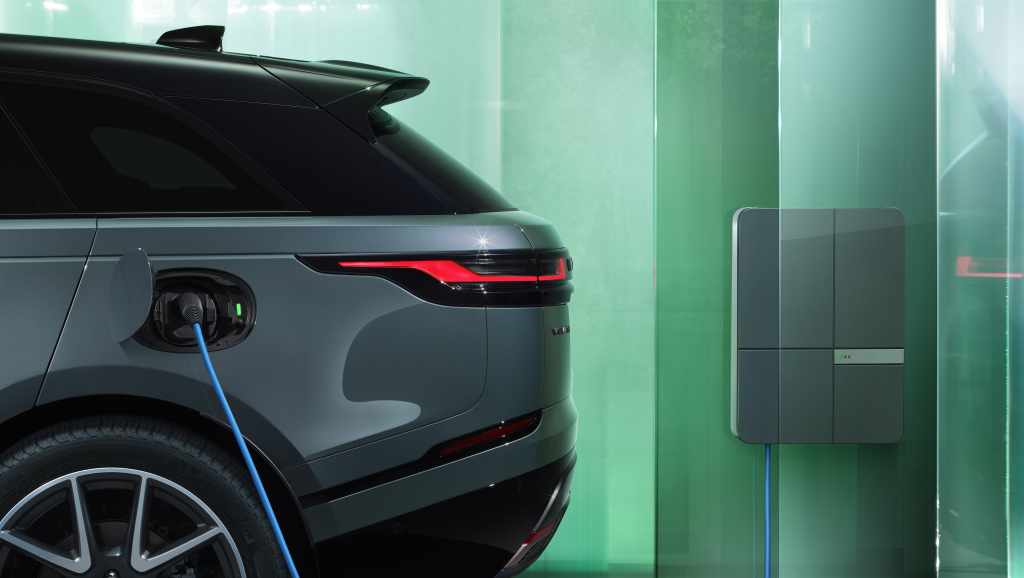
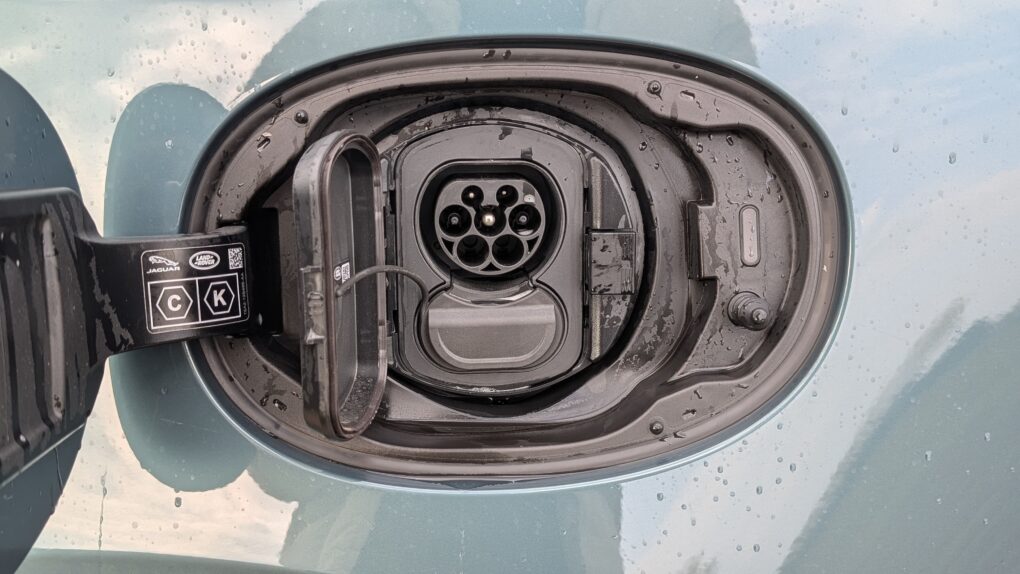
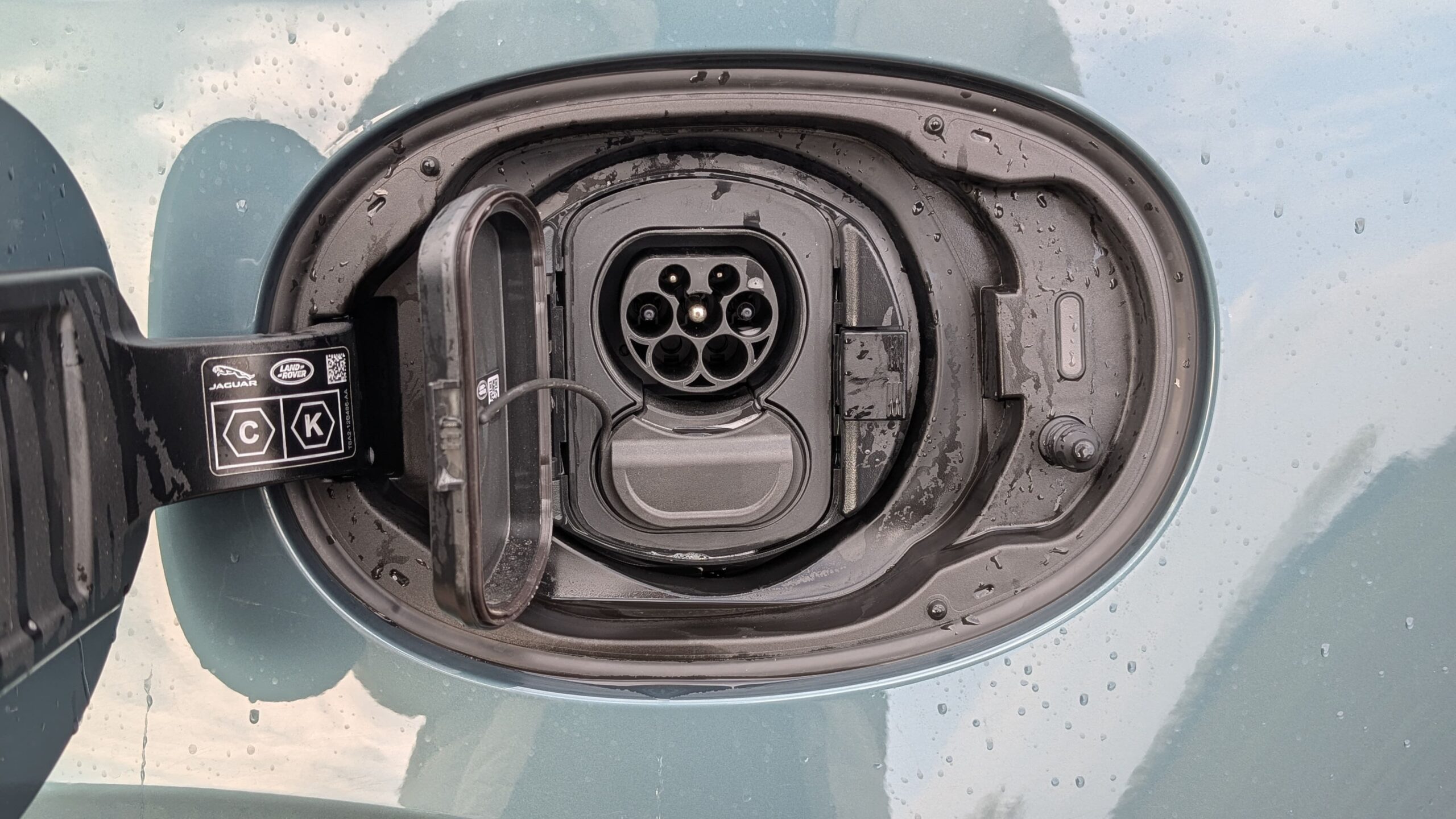
The charging concept of the Range Rover Velar P400e is sophisticated. For everyday charging at home or at work, an on-board AC charger is installed. Using a 7 kW wallbox, the 19,2 kWh battery can be charged in approximately... 2,5h Charge from 0 to 100%. This is a practical value that allows the vehicle to be charged overnight or during working hours. proIt charges fully without any problems. Charging takes longer at a standard household outlet, about 8 hours, which is sufficient for overnight charging. An 11 kW on-board charger would, of course, have been even better.
The biggest advantage, however, is its ability to fast charge using direct current (DC). The Velar P400e can be charged via a CCS connector at public DC fast charging stations with a power output of up to 50 kW The battery can be charged. A charge from 0 to 80% capacity is possible in just 30 minutes. This overcomes one of the biggest weaknesses of conventional plug-in hybrids: the long charging time on the go. This often makes effective use of the electric drive impossible on longer daily journeys. With the Velar P400e, an electric range of around 40 kilometers can be added during a lunch break or shopping stop. This increases flexibility and makes the vehicle attractive even for users who cannot or do not want to charge exclusively at home. This is a crucial practical advantage that noticeably increases the added value of the hybrid drive in everyday life.
-
- Image: Range Rover
-
- Picture: TechnikNews
Price and warranty of the Range Rover Velar P400e: Good overall package
As is typical for the brand, the entry point into the world of the Range Rover Velar is in the upper price segment. For the model we tested... P400e Plug-in Hybrid The price list for the "S" trim level starts at around €72.200. Choosing a higher trim level, such as the "Dynamic SE" (starting at approximately €91.000 for a specific special edition), or the top-of-the-line "Autobiography" version, and adding some of the tempting options from the extensive list of extras, can quickly push the final price over €100.000. This confidently positions the Velar on par with its German premium competitors.
A crucial and strategically important argument that Land Rover has recently been touting is the significantly improved manufacturer's warranty. In Germany, all new vehicles now come with a warranty of five years or up to a mileage of 150.000 kilometers, whichever comes first. This is a significant advantage over many German competitors, who often only offer the legally required two years without mileage restrictions.
For the specific components of the plug-in hybrid drive system, especially the high-voltage battery, extended warranty conditions usually apply. Manufacturers typically cover a period of eight years or 160.000 kilometers and guarantee a certain percentage of the original battery capacity. The exact terms and conditions for the German market should be obtained from the dealer.
This extended warranty is not only a benefit for customers, but also a strategic move. The Land Rover brand has historically struggled with a reputation for below-average reliability. Such concerns are particularly significant for a technologically complex vehicle like a PHEV. The 5-year warranty sends a strong signal from the manufacturer, bolstering confidence in the quality of its products. It significantly reduces the perceived financial risk for customers and provides a powerful competitive advantage.
Picture: TechnikNews
Competitive comparison: Expensive but competitive
The Range Rover Velar P400e operates in a highly competitive market dominated by German premium manufacturers. Its positioning, however, is unique: it doesn't compete directly in terms of driving dynamics, but rather as an alternative focused on design, elegance, and comfort. Its main PHEV competitors include... Volvo XC60, the GWM Wey 05, the Audi Q7 and the Mercedes-Benz GLC.
| Land Rover Range Rover Velar P400e S | Mercedes-Benz GLC 400 e 4MATIC | Volvo XC60 T8 Plus Black Edition AWD | GWM WEY 05 2.0 PHEV Luxury AWD | Audi Q7 55 TFSI and quattro | |
| Engine & Performance | |||||
| Engine type | Plug-in hybrid | Plug-in hybrid | Plug-in hybrid | Plug-in hybrid | Plug-in hybrid |
| Internal combustion engine | 2,0-liter 4-cylinder turbo gasoline engine | 2,0-liter 4-cylinder turbo gasoline engine | 2,0-liter 4-cylinder turbo-supercharged gasoline engine | 2,0-liter 4-cylinder turbo gasoline engine | 3,0-liter V6 turbo gasoline engine |
| system performance | 297 kW / PS 404 | 280 kW / PS 381 | 335 kW / PS 455 | 350 kW / PS 476 | 290 kW / PS 394 |
| System torque | 640 Nm | 650 Nm | 709 Nm | 847 Nm | 600 Nm |
| Transmission | 8-gear automatic | 9-speed automatic transmission (9G-TRONIC) | 8-speed automatic transmission (Geartronic) | 9-speed dual-clutch transmission (DCT) | 8-speed automatic (tiptronic) |
| Power unit | All-wheel drive (AWD) | Permanent all-wheel drive (4MATIC) | All-wheel drive (AWD) | All-wheel drive (AWD) | Permanent all-wheel drive (quattro) |
| performance | |||||
| Acceleration (0-100 km/h) | 5,4 s | 5,6 s | 4,9 s | 5,0 s | 5,7 s |
| top speed | 209 km/h | 237 km/h | 180 km/h (electronically limited) | 235 km/h | 240 km/h |
| Top speed (electric) | 140 km/h | 140 km/h | 140 km/h | 135 km/h | 135 km/h |
| Electrical Data & Consumption | |||||
| Battery capacity (gross) | 19,2 kWh | 31,2 kWh | 18,8 kWh | 39,7 kWh | 25,9 kWh |
| Electric range (WLTP) | up to 63 km | up to 130 km | up to 79 km | up to 158 km | up to 84 km |
| Fuel consumption (weighted, combined) | 1,9 l / 100 km | 0,5 l / 100 km | 1,0 l / 100 km | 0,4 l / 100 km | 1,2 - 1,4 l / 100 km |
| Power consumption (weighted, combined) | 25,8 kWh / 100 km | 20,4 kWh / 100 km | 19,0 kWh / 100 km | 24,4 kWh / 100 km | 27,8-29,1kWh/100km |
| CO₂ emissions (weighted, combined) | 43 g / km | 11 g / km | 22 g / km | 12 g / km | 28 - 33 g / km |
| DC fast charging | Yes (up to 50 kW) | Yes (up to 60 kW) | No (AC up to 11 kW) | Yes (up to 50 kW) | No (AC up to 11 kW) |
| Dimensions & Weights | |||||
| Length | 4.797 mm | 4.716 mm | 4.708 mm | 4.870 mm | 5.063 mm |
| Width (with mirrors) | 2.147 mm | 2.075 mm (without mirror: 1.890 mm) | 2.054 mm (without mirror: 1.902 mm) | 1.960 mm (without mirror) | 2.212 mm |
| Height | 1.683 mm | 1.640 mm | 1.653 mm | 1.690 mm | 1.727 mm |
| Boot capacity (normal) | 503 liters | 470 liters | 468 liters | 500 liters | 650 liters |
| Maximum boot capacity | 1.335 liters | 1.530 liters | 1.395 liters | 1.229 liters | 1.863 liters |
| Towing capacity (braked) | 2.000 kg | 2.000 kg | 2.250 kg | 2.000 kg | 2.800 kg |
| Empty weight | Approx. 2.155 kg | Approx. 2.325 kg | Approx. 2.150 kg | Approx. 2.335 kg | Approx. 2.450 kg |
| Price & Guarantee | |||||
| Base price without equipment | 83.200 € | 72.340 € | 74.490 € | 63.900 € | 87.300 € |
| Warranty (vehicle) | 5 years or 150.000 km | 2 years | 2 years | 5 years | 2 years |
| Paint warranty | 3 years | 5 years | 2 years | 5 years | 3 years |
| Rust perforation | 6 years | 30 years | 12 years | 12 years | 12 years |
| Further guarantees |
|
|
|
|
|
(Note: The data is as of October 2025 and may vary depending on the model year and equipment.)
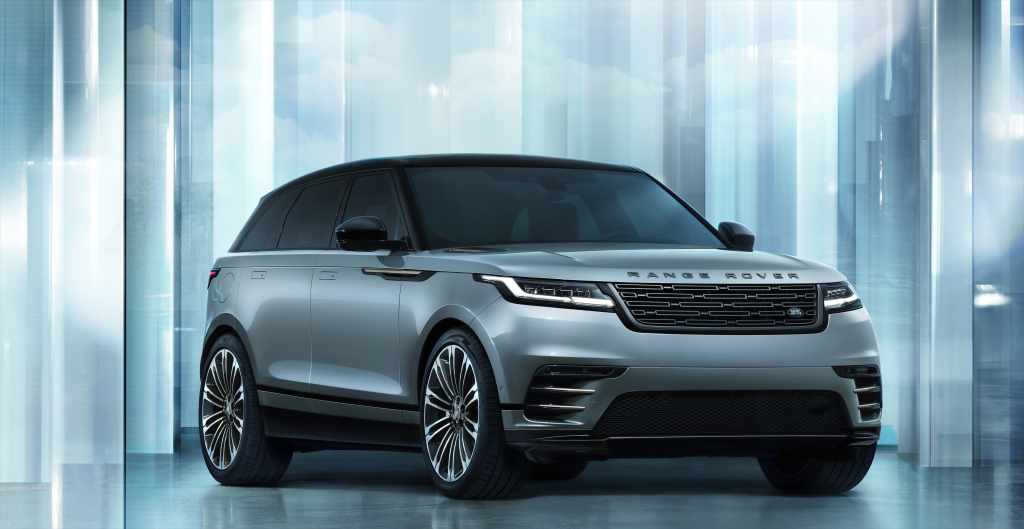
Image: Range Rover
Many thanks to Range Rover Germany for providing the Range Rover Velar P400e for this test report. This did not influence our opinion!