
VW California eHybrid (2025) review: Where is the camping mode?
A TEST REPORT from Dominic Lux  on April 24, 2026, 9:00 p.m. | Write a comment
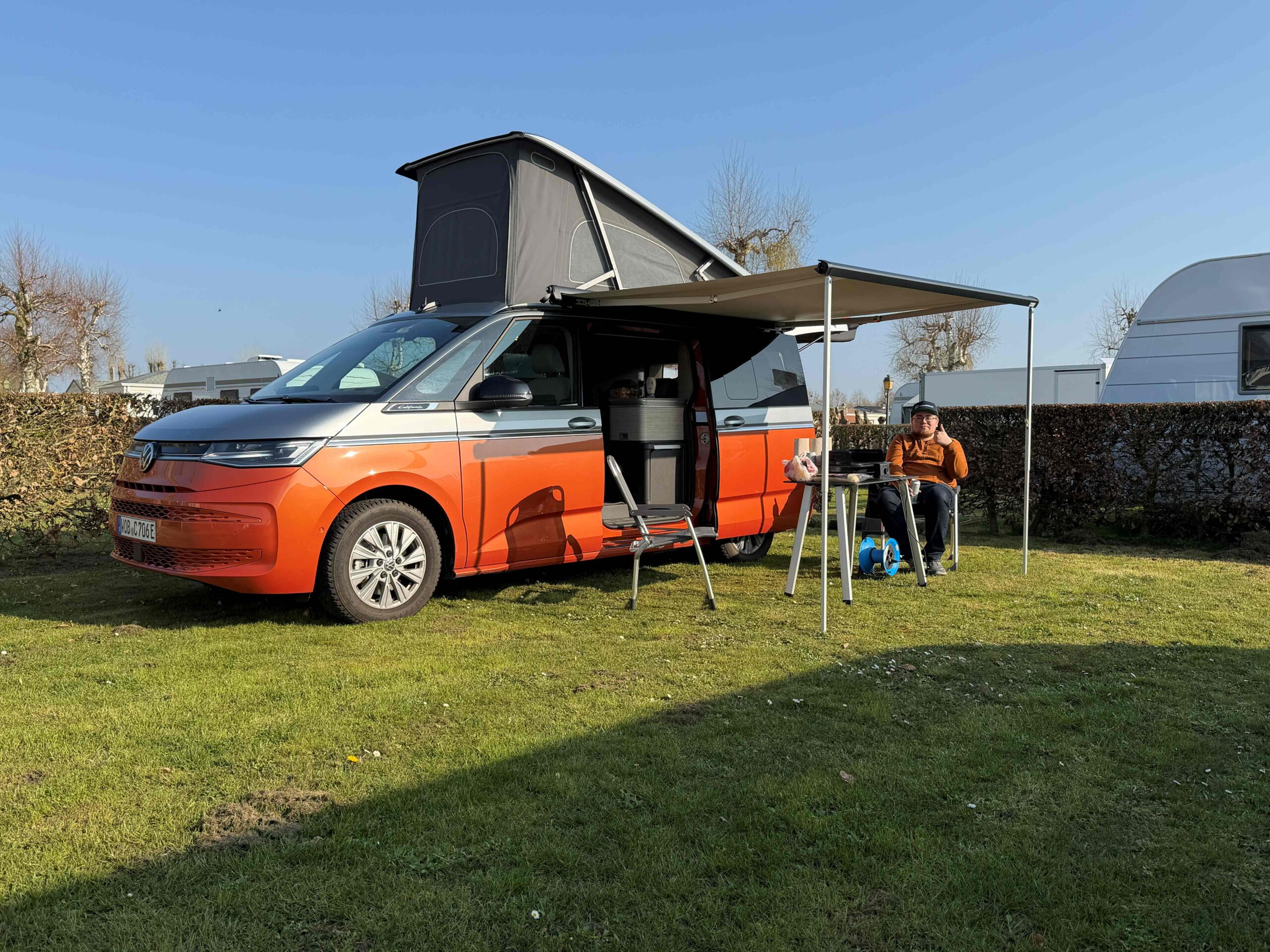
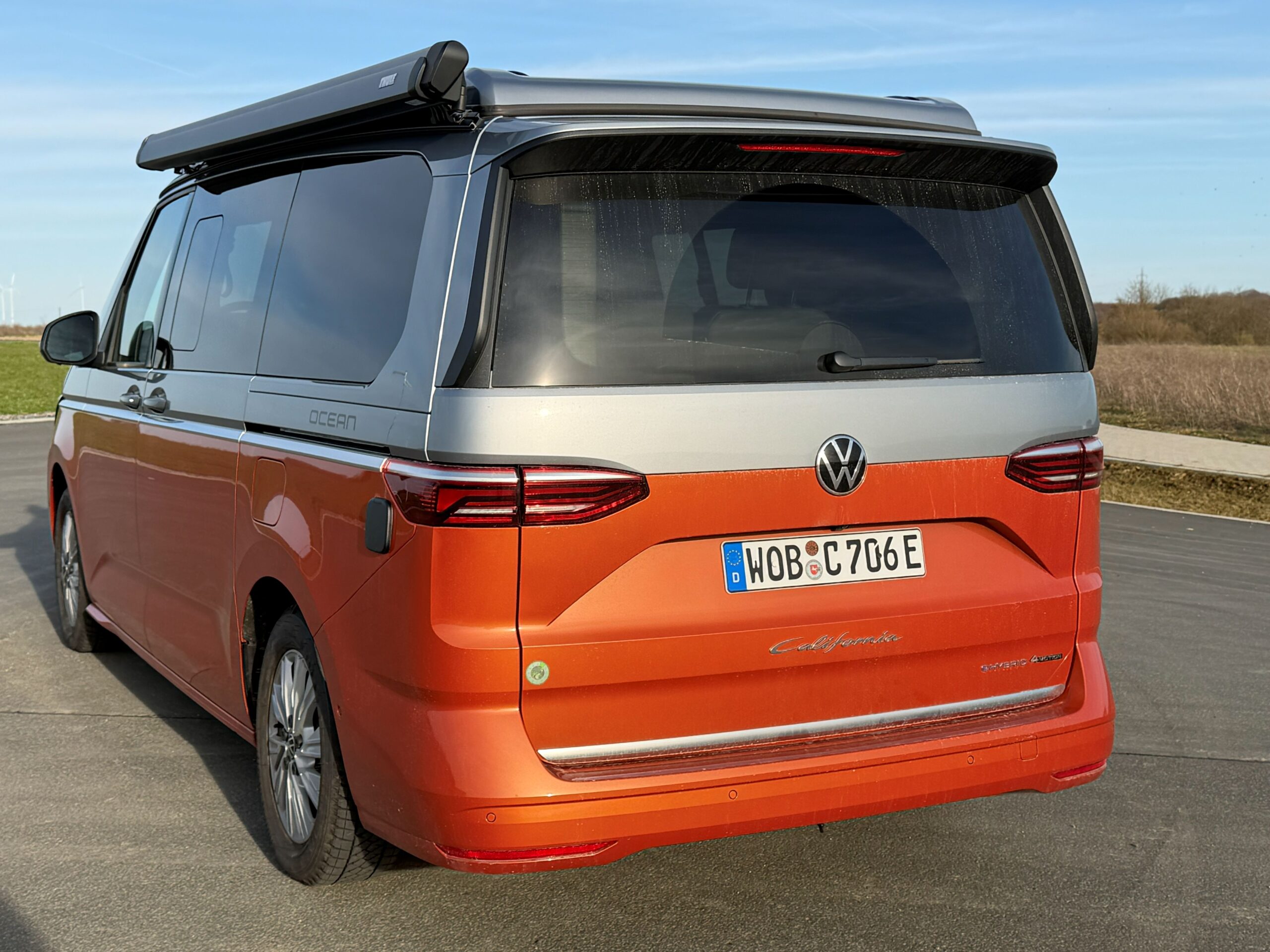
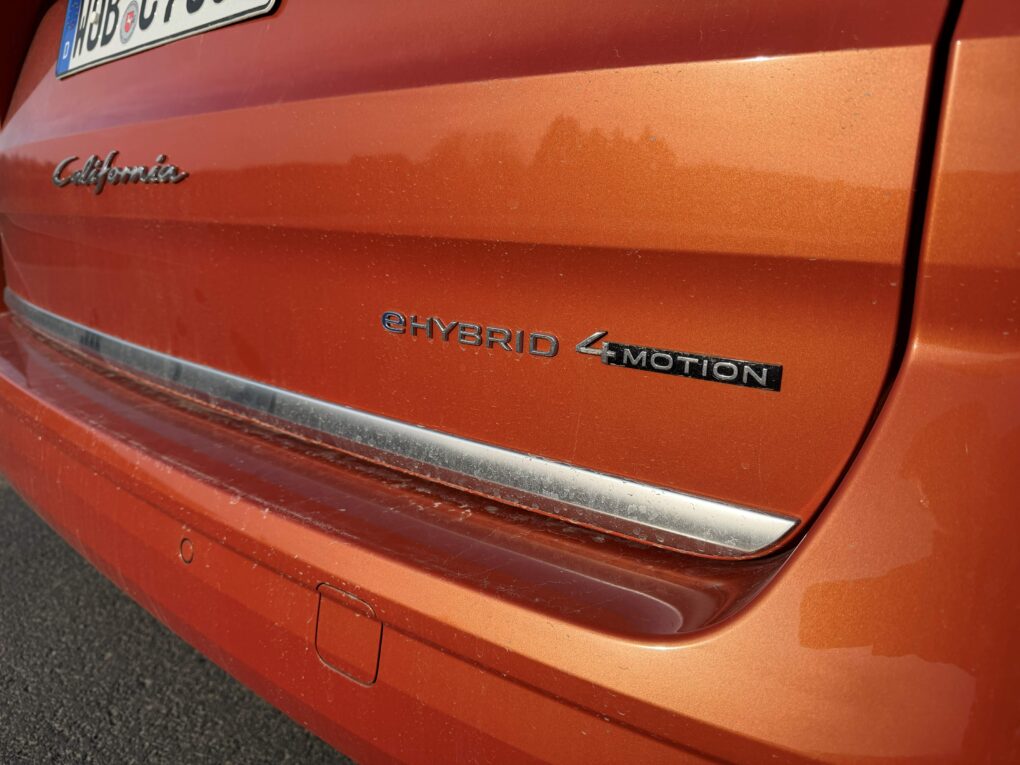
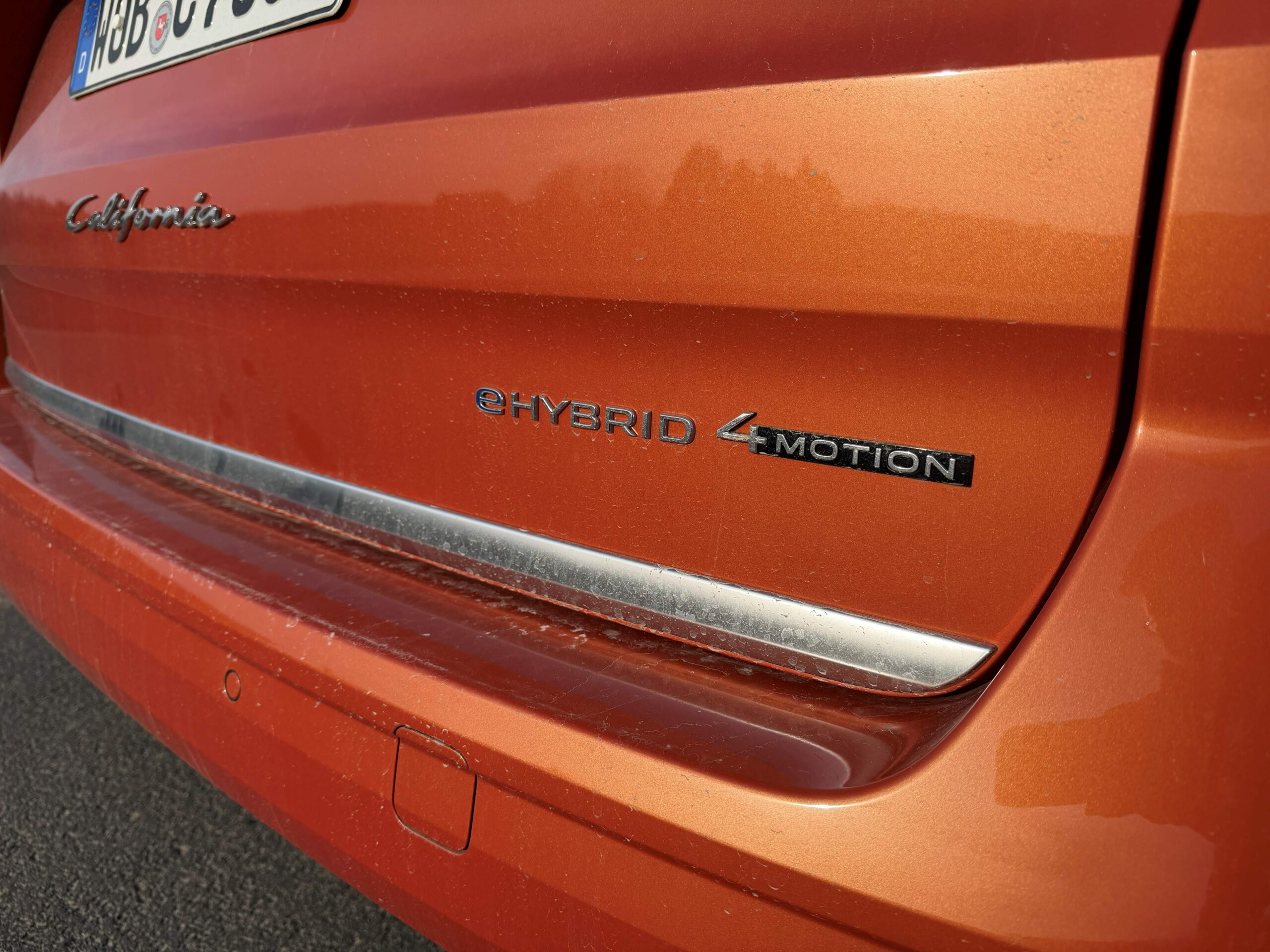
The VWCalifornia It's a legend. But with the switch to the T7 platform (Multivan), a new era begins. For the first time, the "Cali" is available as a plug-in hybrid (PHEV) with all-wheel drive. We put the new camper through its paces in everyday life and took it on a road trip to Belgium. And we answered the most pressing question: Where's the camping mode?
tl;dr: An expensive pastime, without a camping mode
The new VW California (T7) eHybrid scores well in testing with an impressive charging capacity for PHEVs: 50 kW DC and 11 kW AC, as well as excellent Travel Assist. The new 19,7 kWh battery provides acceptable all-electric range. The software has been noticeably improved and now runs significantly more stably than in previous generations. However, the heating system is a major disappointment: a true Camping mode The high-voltage battery is missing; it only serves for a 30-minute pre-conditioning period. Instead, the conventional gasoline-powered auxiliary heater has to be used, which also suffered from sporadic malfunctions during testing.
Fast charging: 50 kW DC as a true unique selling point
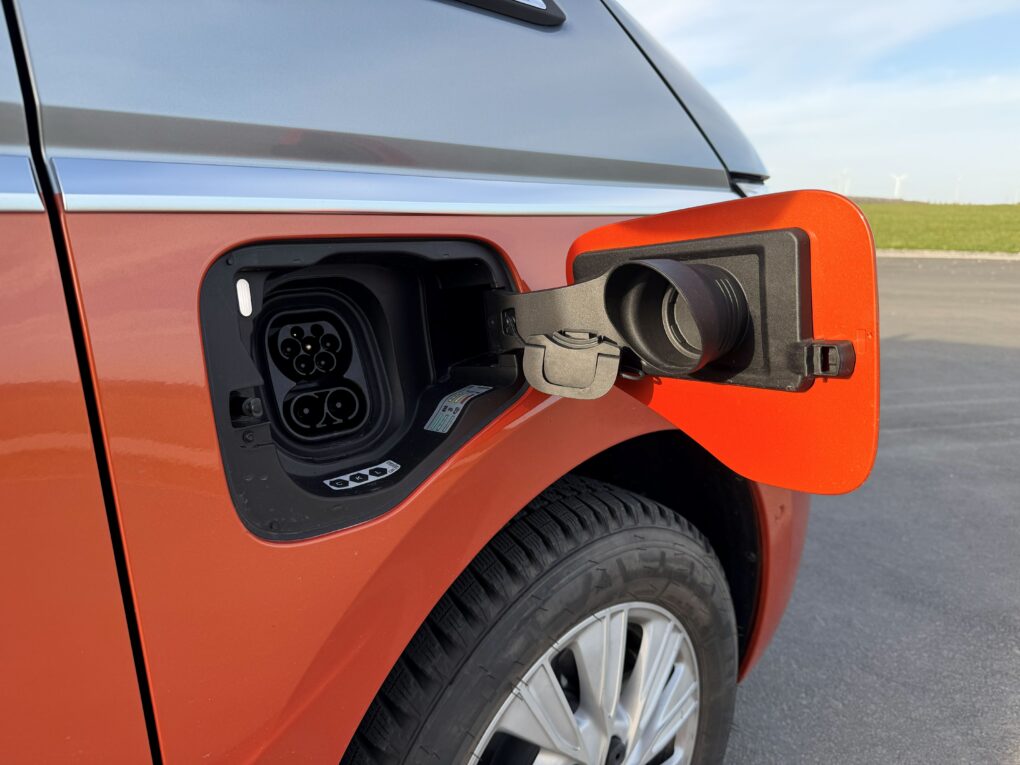
One of the technical highlights of the new California eHybrid is undoubtedly its charging infrastructure. While many plug-in hybrids on the market are still stuck at slow 3,7 kW or maximum 7,2 kW charging points, Volkswagen is taking a different approach with the T7 (and the new Golf GTE). here (review) has taken a significant step forward. The vehicle now supports three-phase alternating current (AC) charging at up to 11 kW. This drastically reduces charging time at public charging stations or home wallboxes, so the battery is fully ready for use again in under two hours.
-
- Picture: TechnikNews
-
- Picture: TechnikNews
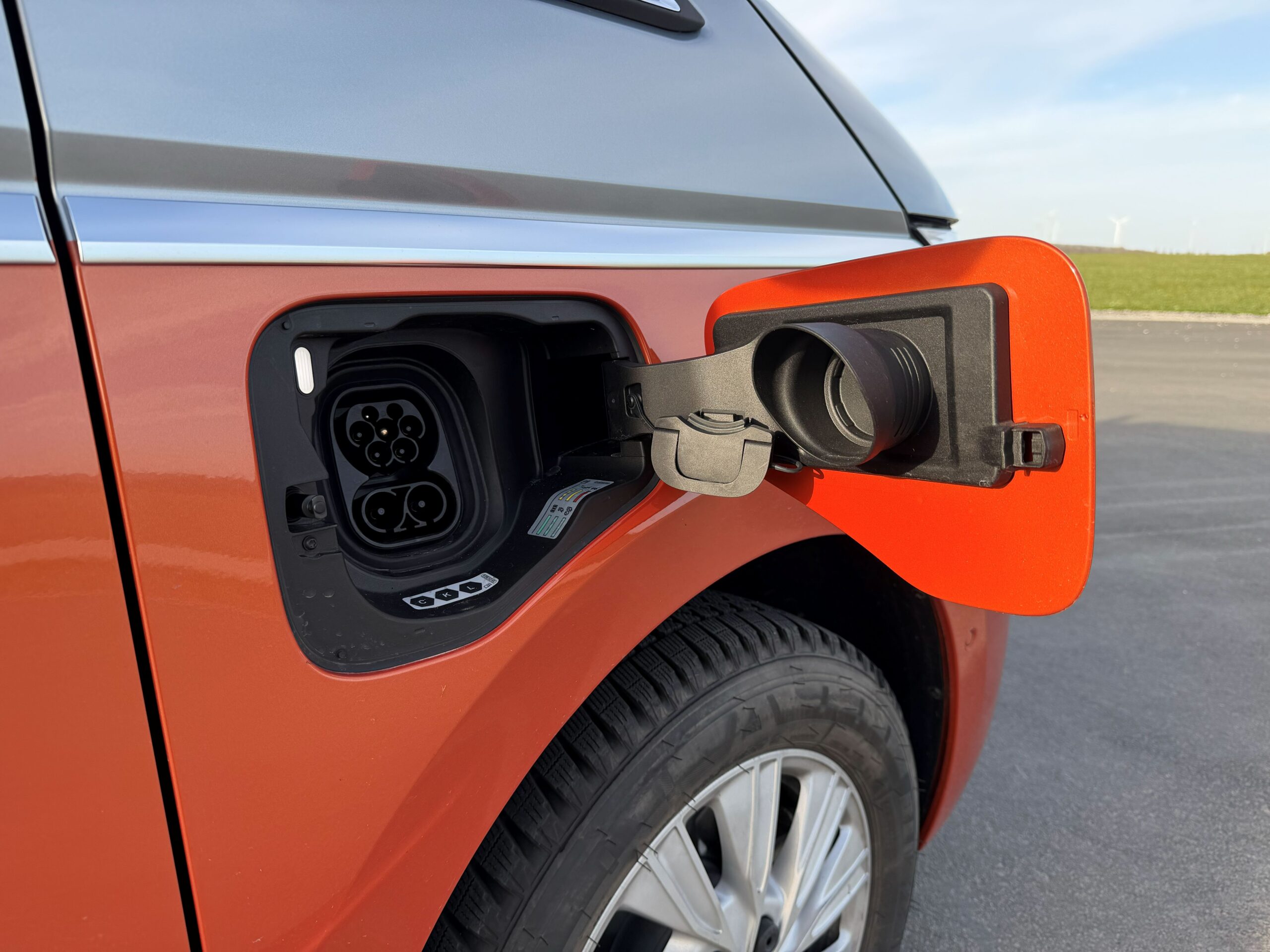
Even more impressive, however, is the integration of a CCS connector for direct current (DC) charging. With a peak output of 50 kW, the battery can be charged from 10 to 80 percent in around 25 minutes during a short motorway break. For a campervan, this is a huge advantage, as the electric range can then be used efficiently even on long journeys, for example, to explore the destination region silently and with zero local emissions.
The heating problem: Missing camping mode via high voltage
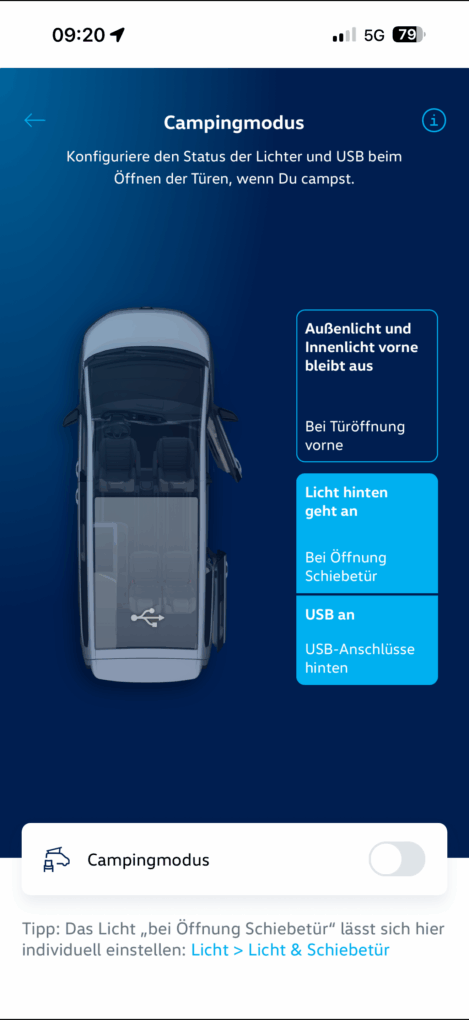
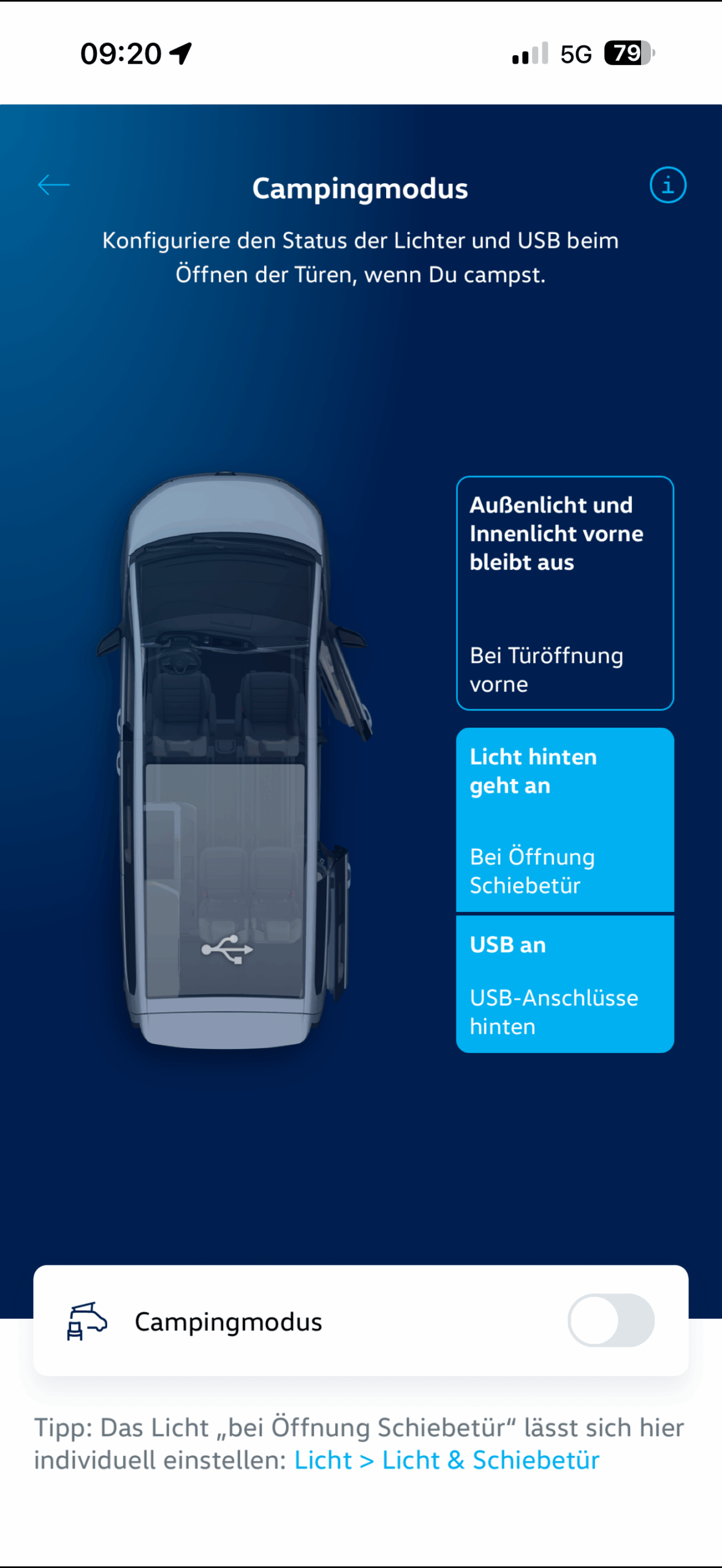
Despite the high-voltage battery, there's a major disappointment for sustainability enthusiasts when it comes to heating. Contrary to the hopes of many users, the large drive battery cannot be used for continuous camping heating. The system only allows for pre-conditioning. This runs for a maximum of 30 minutes and is primarily intended to bring the vehicle up to temperature before driving. A true "camping mode" that electrically heats the interior for hours is not currently implemented and, according to current information, will only be introduced with a future facelift.
A conventional, gasoline-powered auxiliary heater remains responsible for providing warmth while the vehicle is stationary. However, during our test, this heater did not perform optimally. We experienced several sporadic malfunctions, during which the heater failed to operate or didn't start at all. In a vehicle of this price range, primarily designed for overnight stays in nature, an unreliable heater is a critical shortcoming that Volkswagen urgently needs to address through software updates or hardware revisions.
Software and operation: A big step forward with minor drawbacks
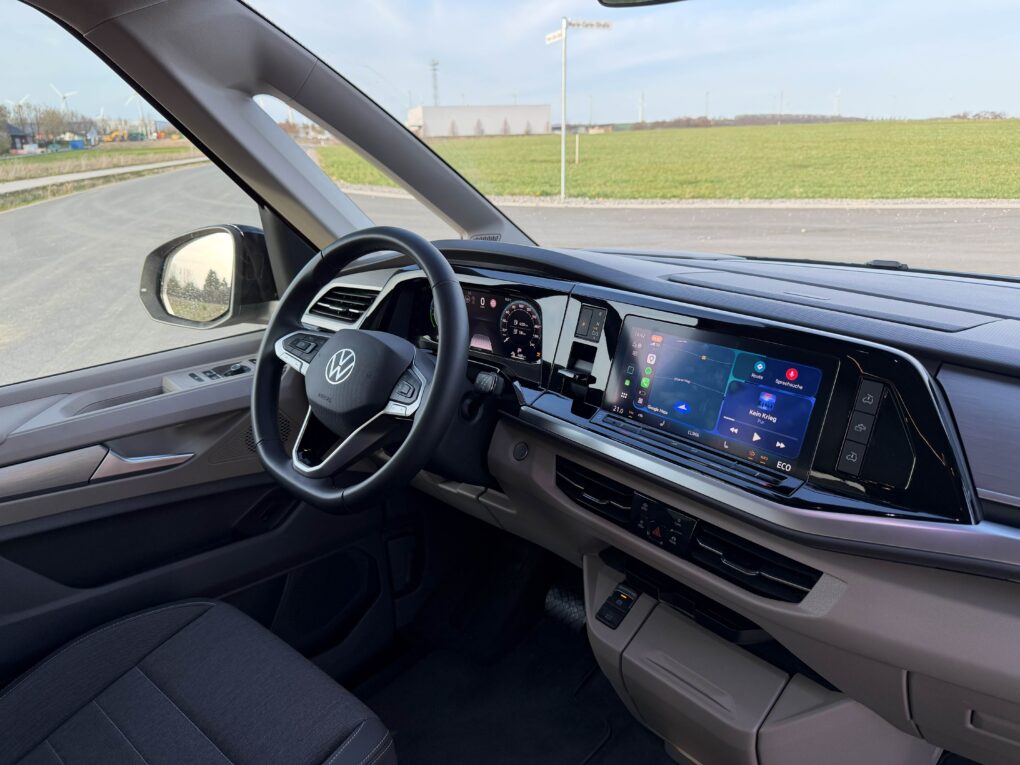
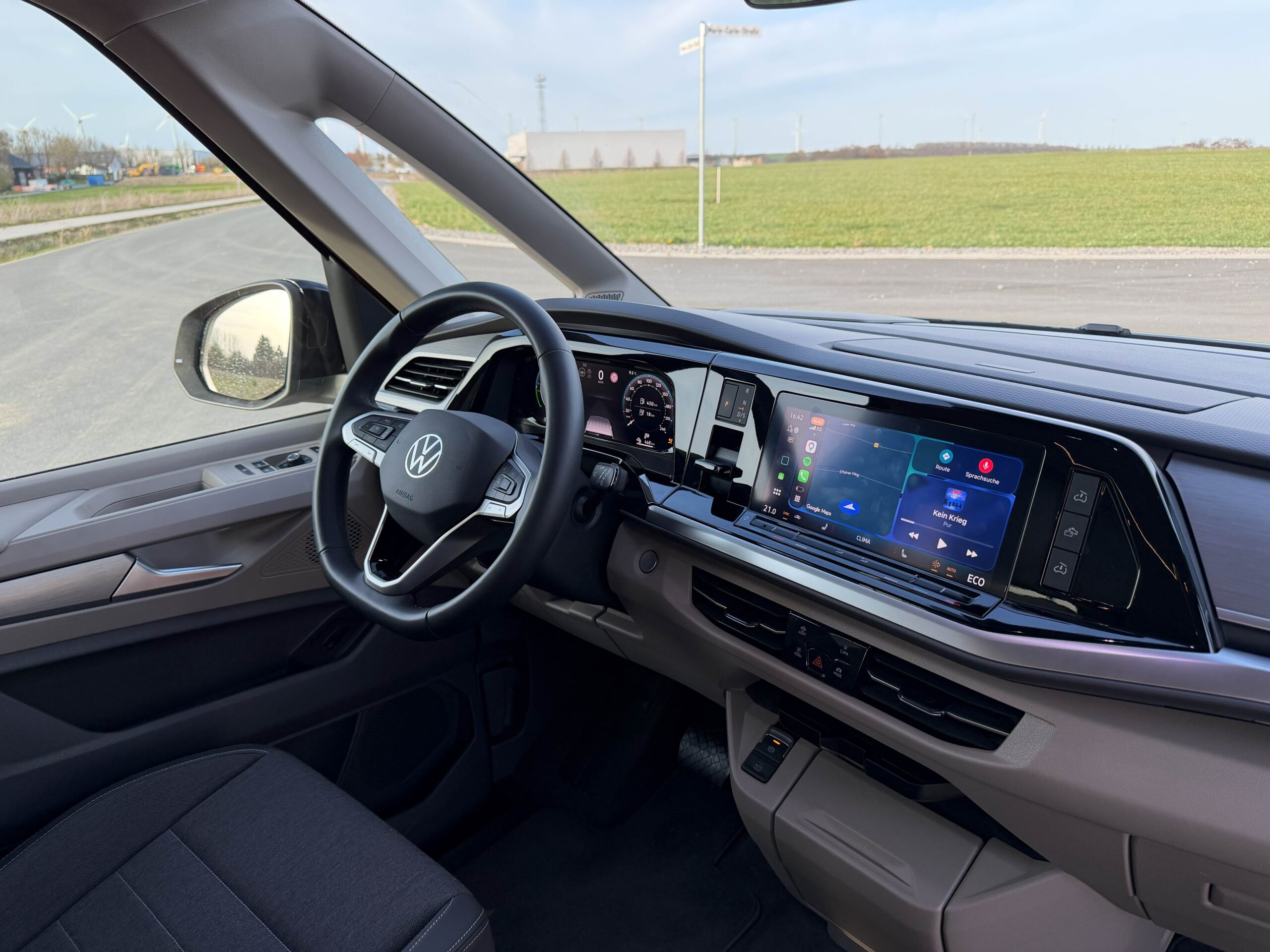
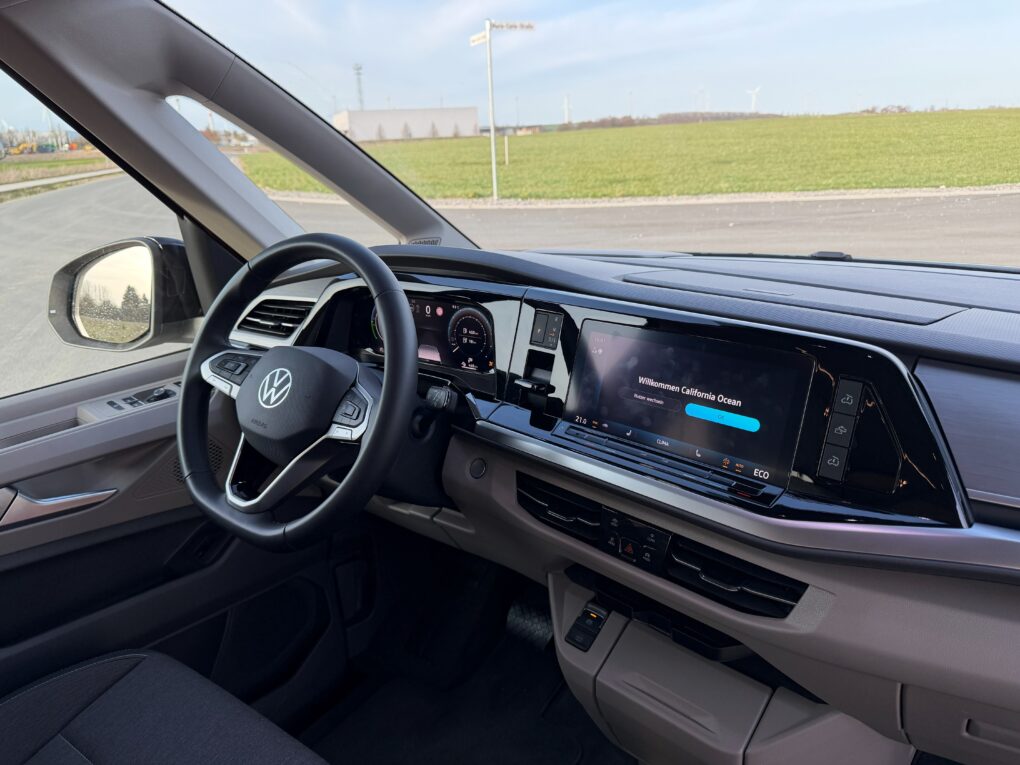
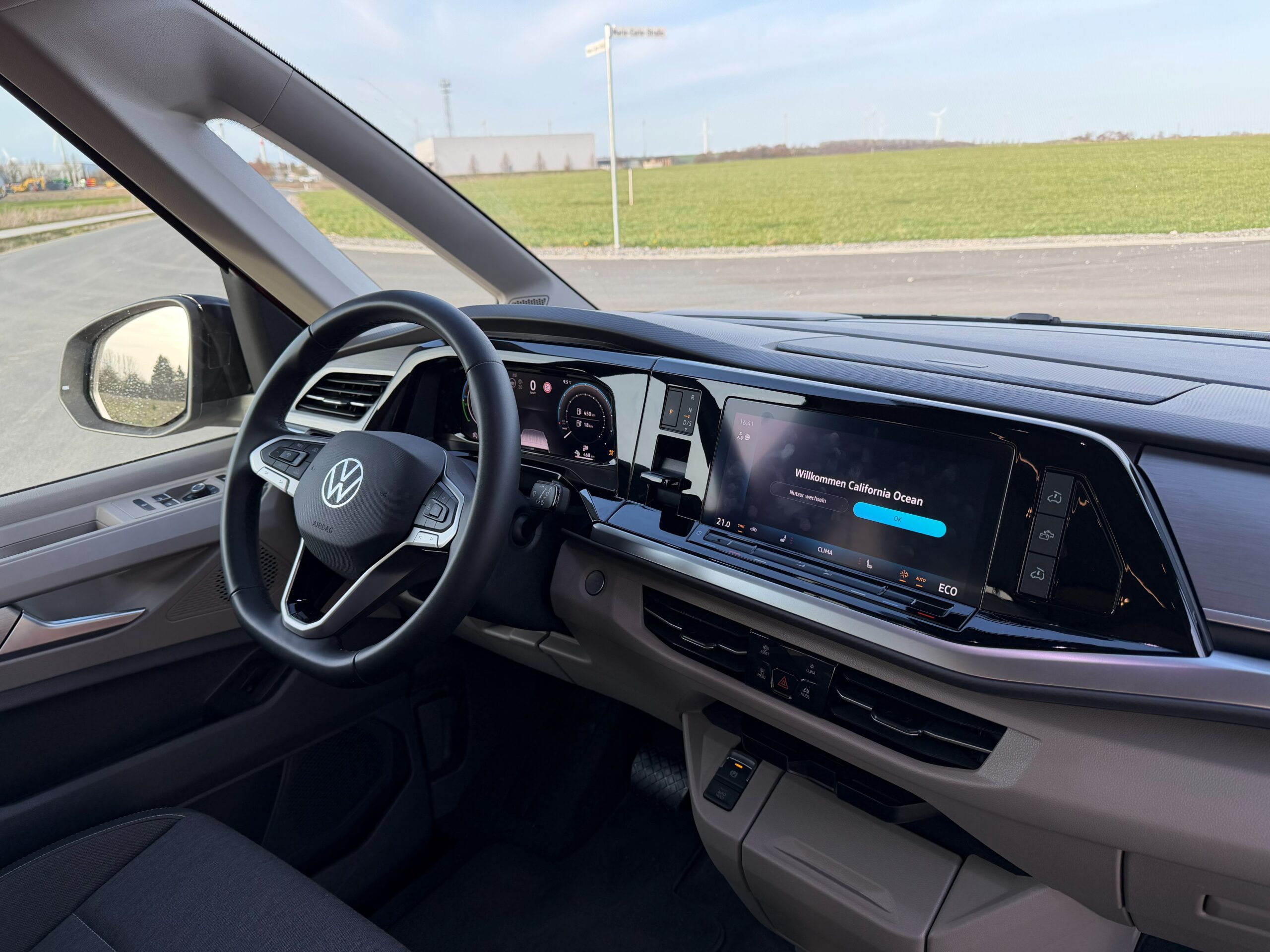
Volkswagen has done its homework when it comes to software. The infotainment system in the 2025 model is based on the latest generation and eliminates (heh heh) the headaches that users often had to endure with the early MIB3 versions. Operation is smooth, the menu structures are more logical, and system stability was flawless throughout our entire test period. The digital cockpit now harmonizes much better with the central display.
-
- Picture: TechnikNews
-
- Picture: TechnikNews
However, VW inexplicably clings to a detail that has been a source of criticism since the introduction of the Golf 8: the touch sliders for temperature and volume control below the screen remain unlit in the new California. At night, operating these functions is therefore purely a matter of intuition or luck. It remains a technical mystery why an otherwise so thoroughly digitized vehicle leaves such an obvious usability gap in this area.
Travel Assist: Relaxed cruising on the way to Belgium
On the highways towards Belgium, the California was able to demonstrate its new strengths. The Travel Assist system proved to be an excellent co-pilot. It not only maintained the lane and distance to the vehicle in front with remarkable precision, but also anticipated speed limits and curve radii. As is typical of VW, the assistant operated with great confidence and instilled a sense of security at all times. The increased comfort provided by the updated MQB platform is clearly noticeable; the California drives less like a van and more like a comfortably tuned passenger car, which significantly reduces driver fatigue, especially on long journeys. For those seeking even greater comfort, the adaptive chassis control system "DCC" can be added as an option.
Smart home in the back: The California app in use
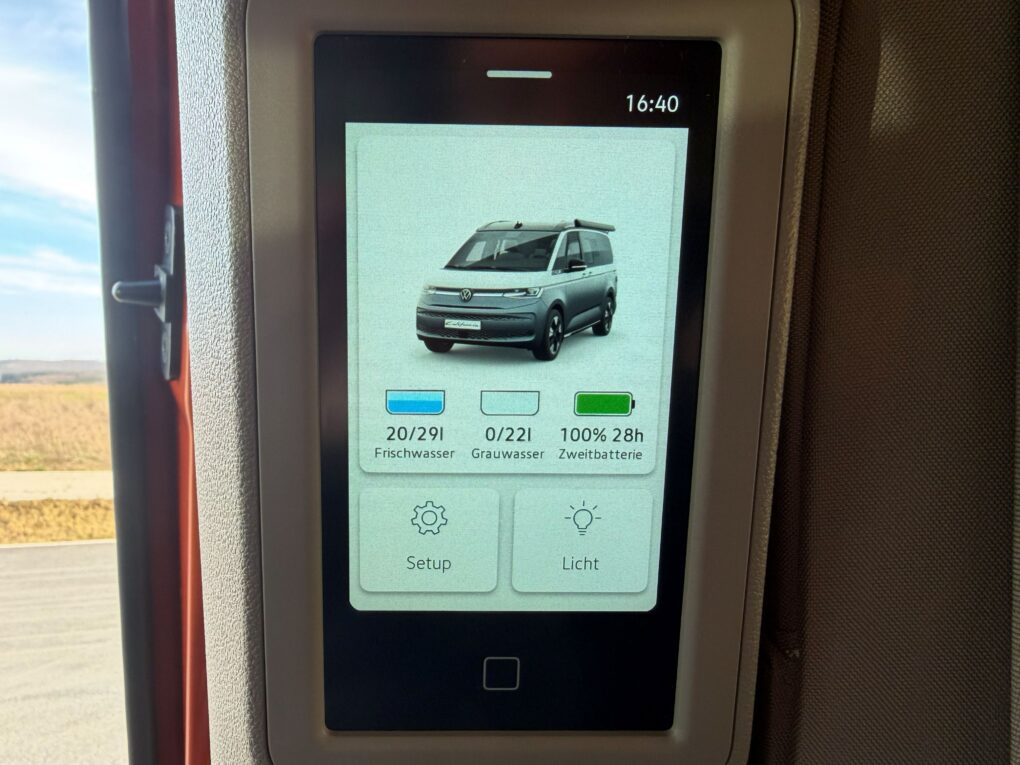
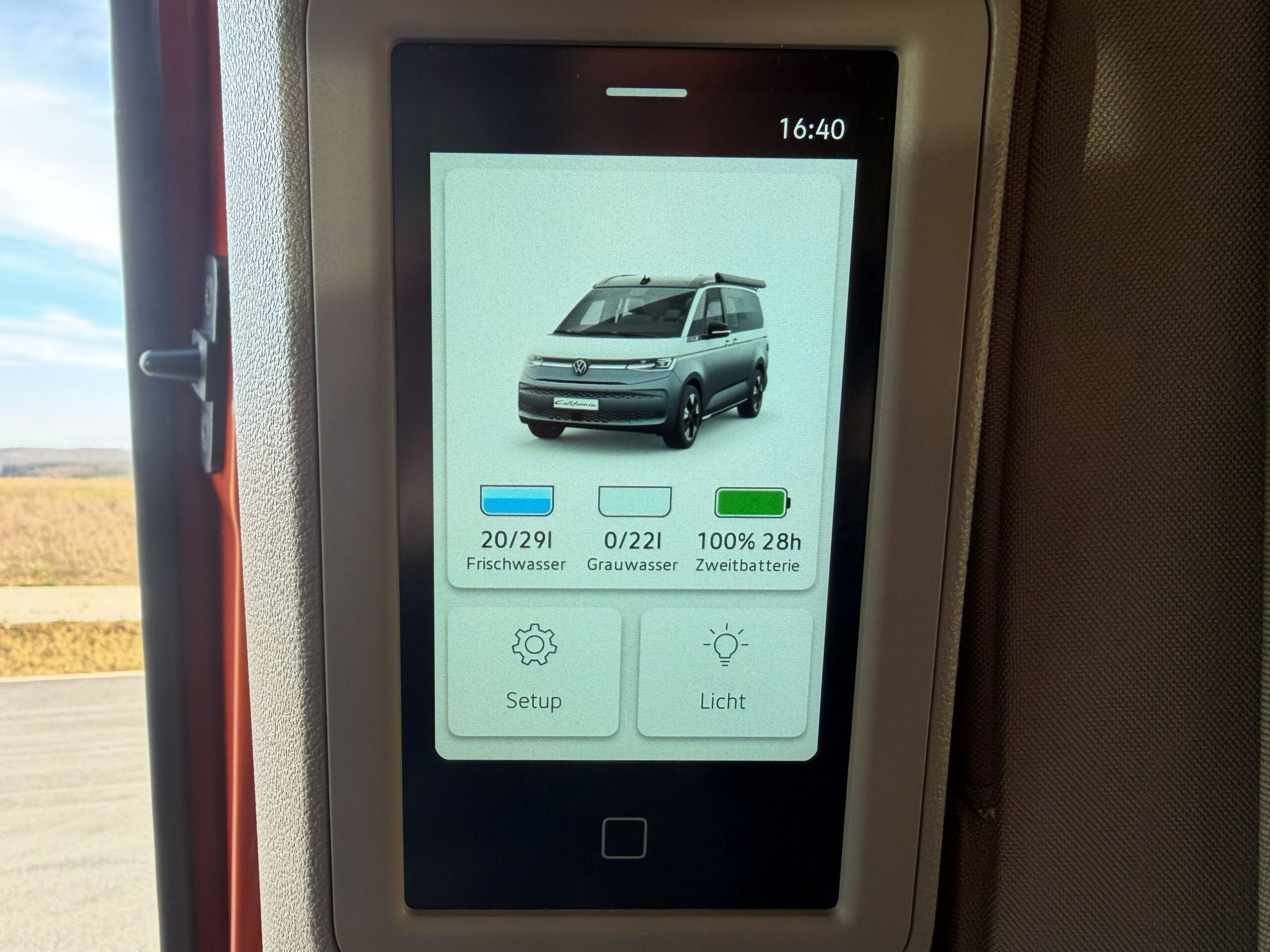
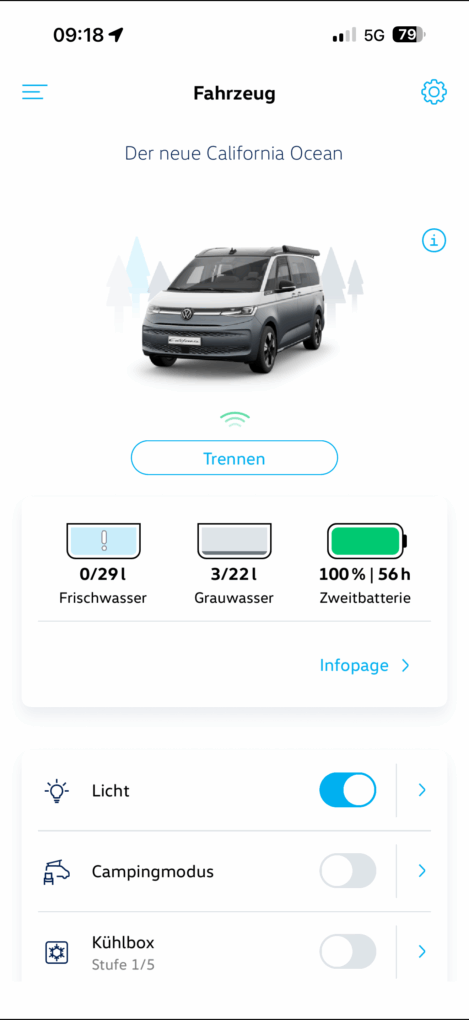
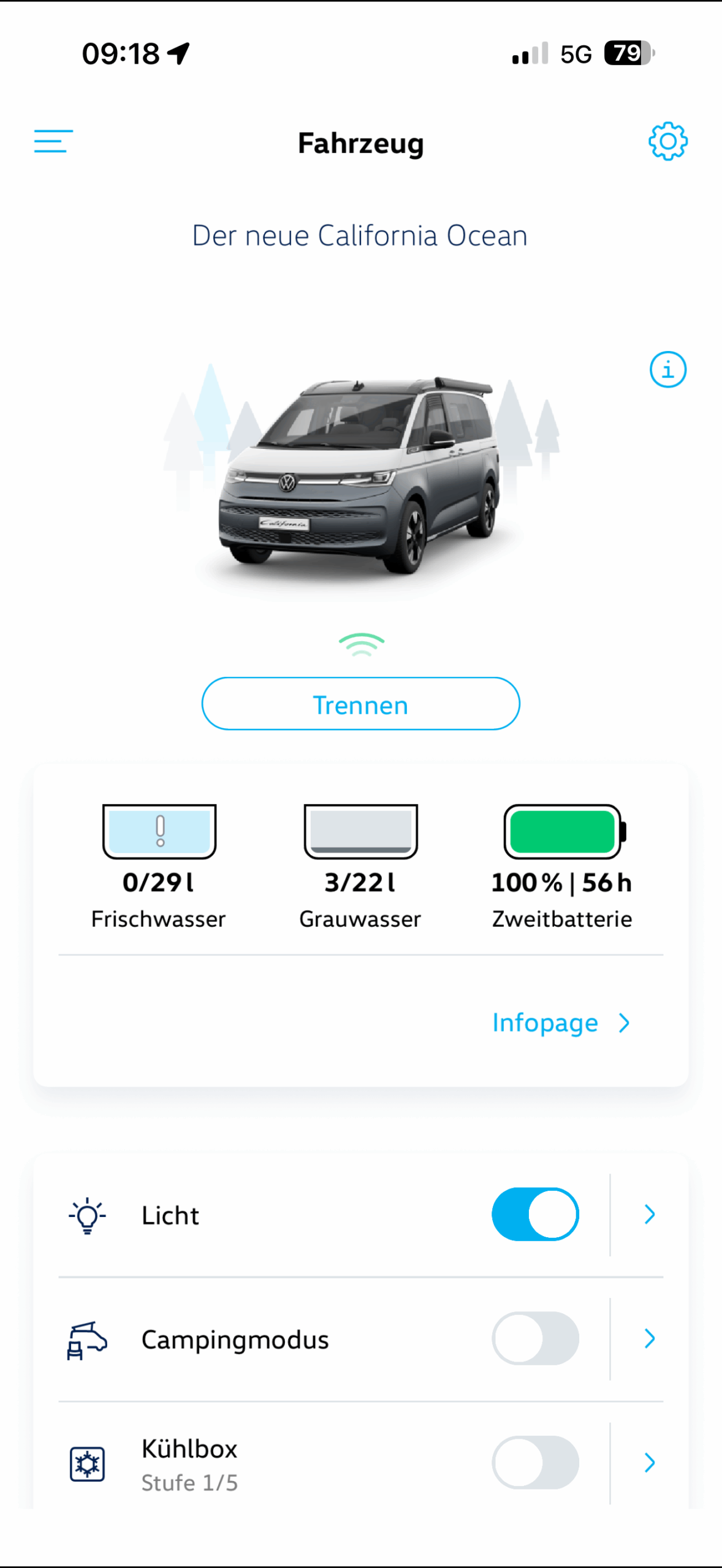
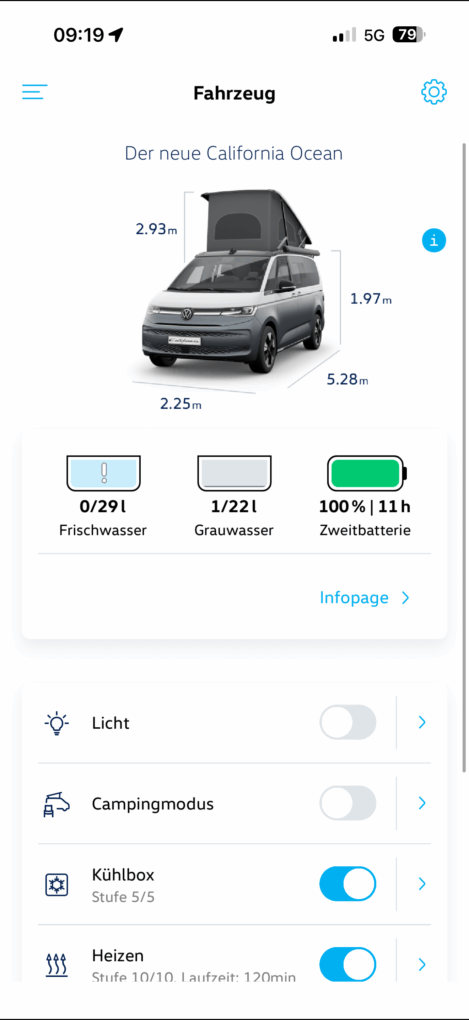
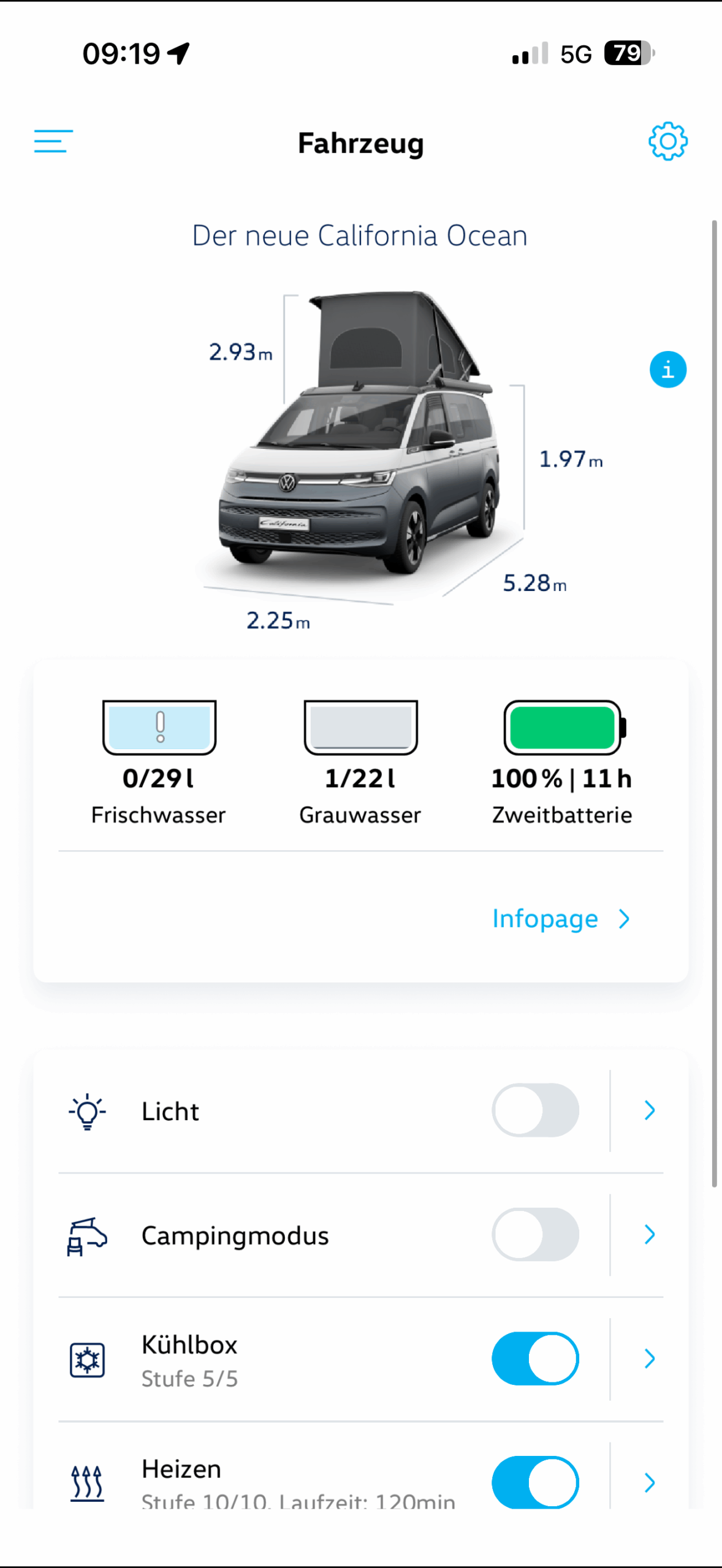
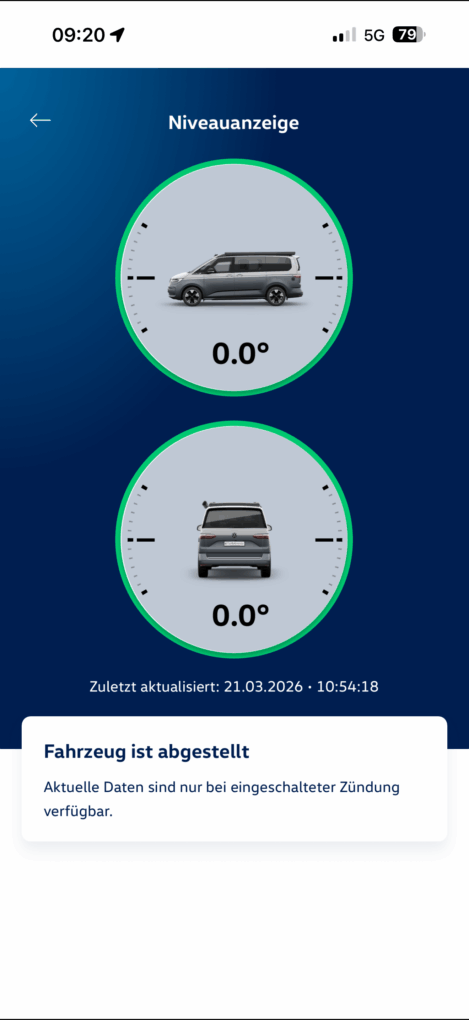
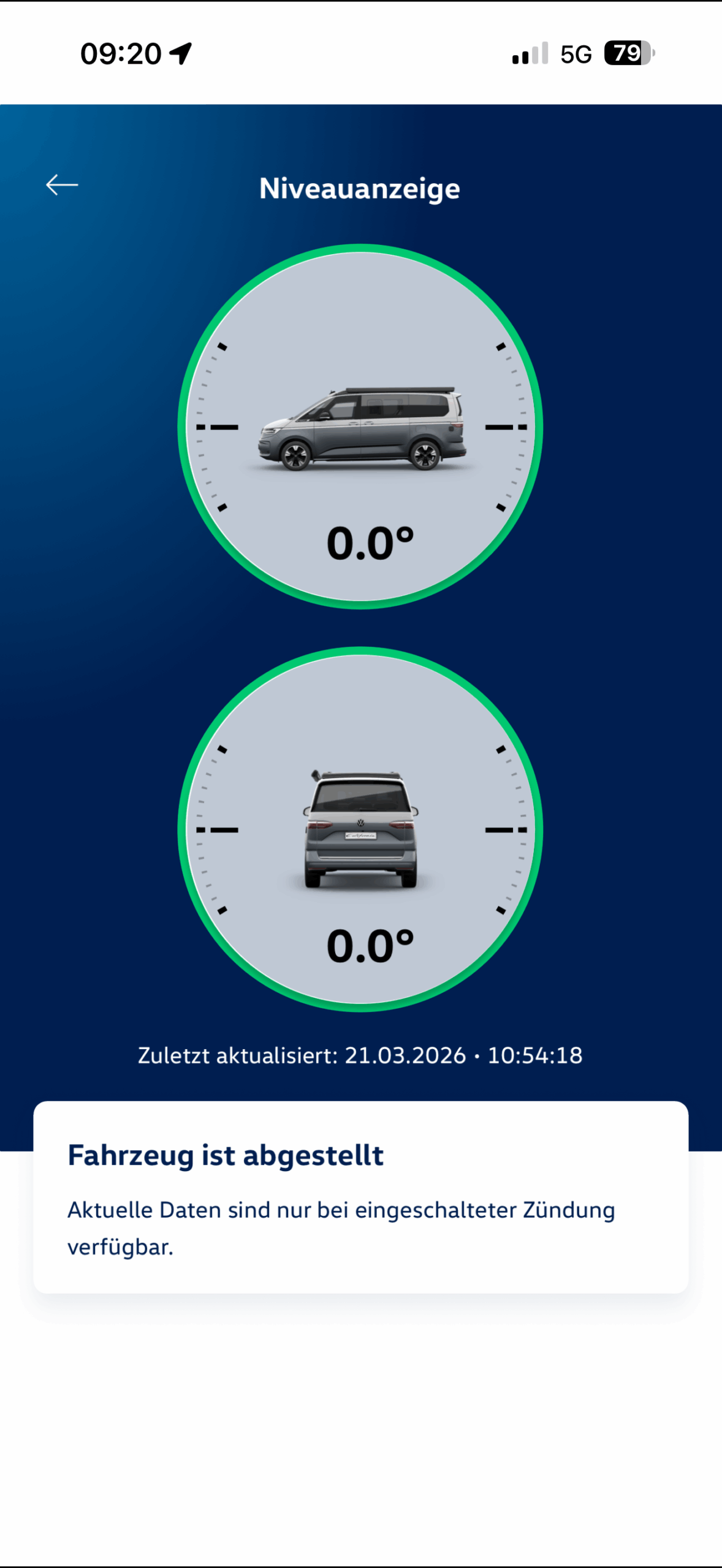
A key part of the camping experience in the T7 is managed through the newly developed Smart Home system. A special display is installed in the rear of the vehicle, serving as the central control unit for all living area functions. The real highlight, however, is the California App. As long as the vehicle's ignition is on, the smartphone can be paired with the system and functions as a fully-fledged remote control.
-
- Picture: TechnikNews
-
- Picture: TechnikNews
-
- Picture: TechnikNews
-
- Picture: TechnikNews
-
- Picture: TechnikNews
-
- Picture: TechnikNews
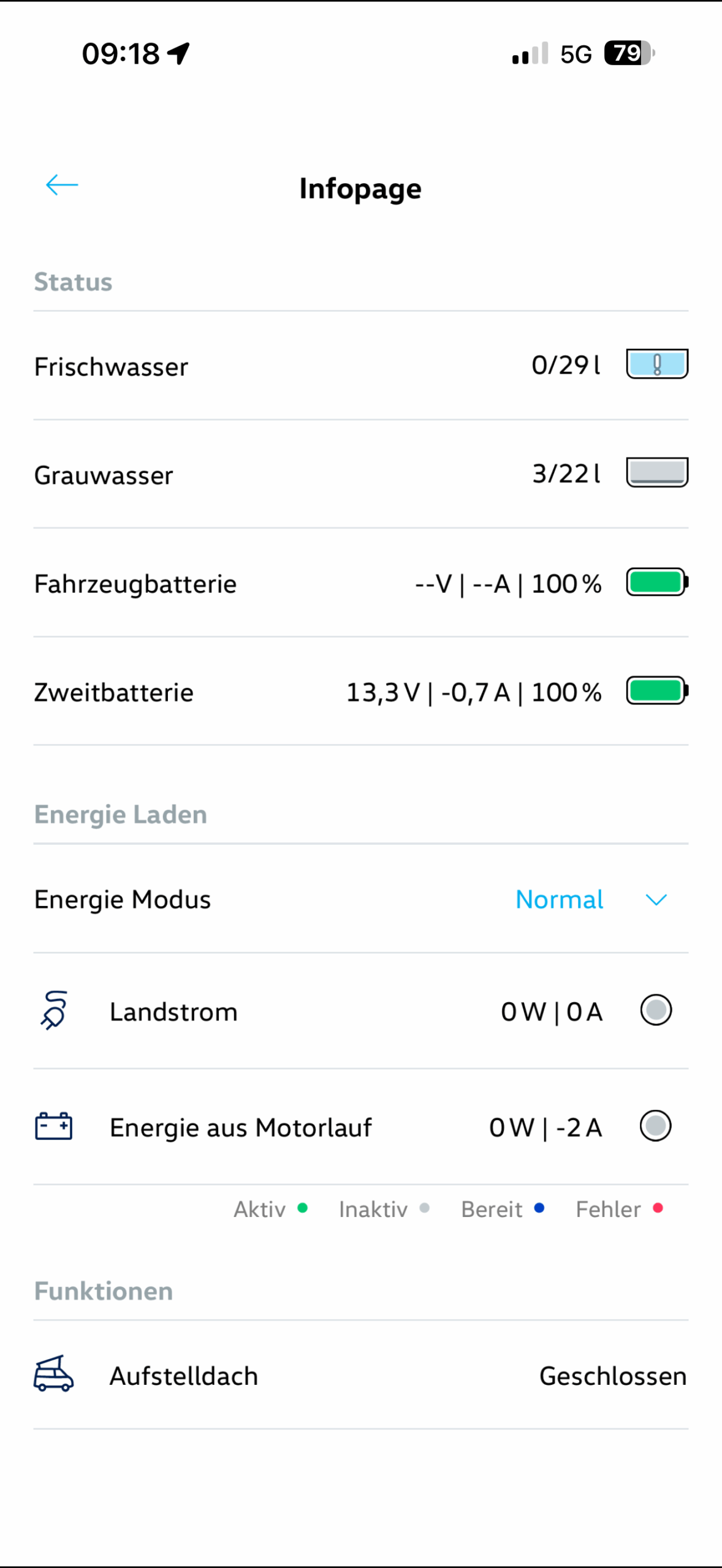
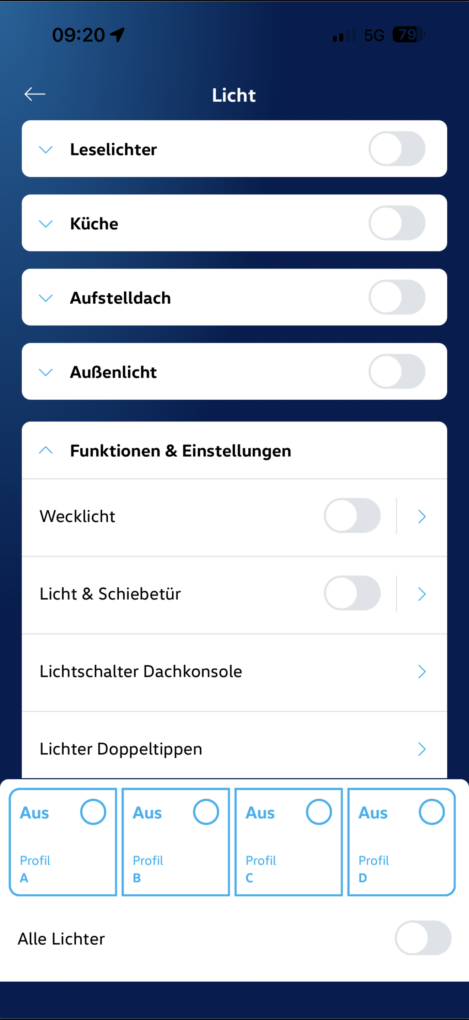
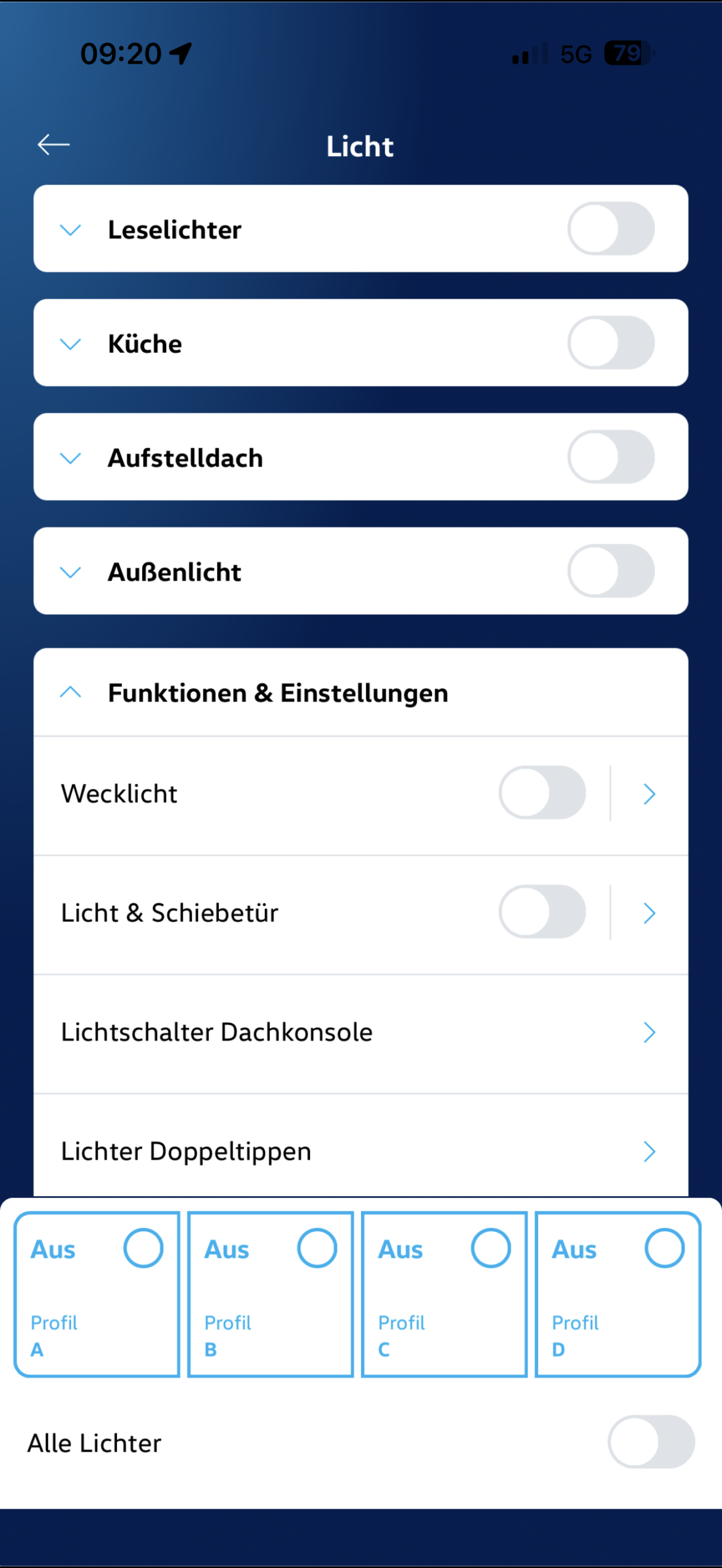
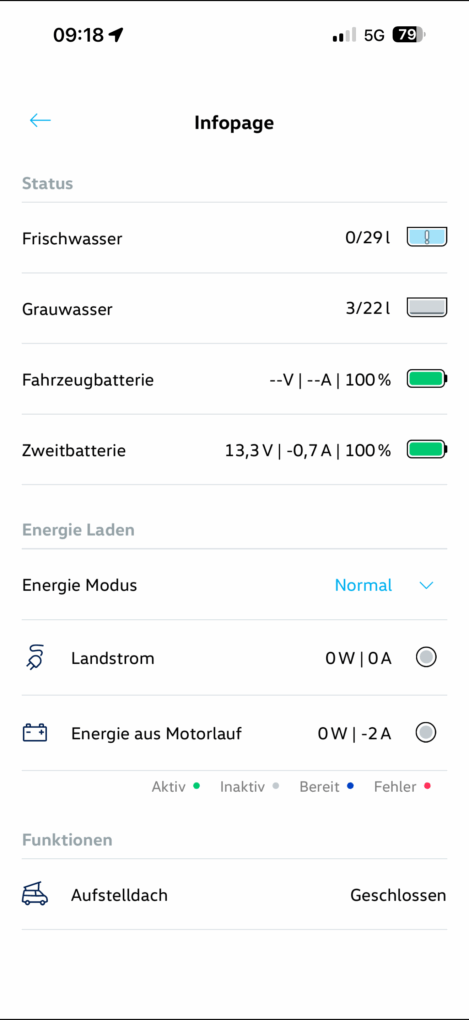
The app allows you to keep track of all fill levels. You can see the levels of the fresh and grey water tanks down to the one percent. Particularly important for campers is the monitoring of the two 12V auxiliary batteries, which independently power the cool box and lighting, separate from the high-voltage battery.proPositive lighting: The app allows for extremely detailed programming of the interior lighting. From individual zones to different dimming scenarios for different times of day, the ambiance can be customized down to the smallest detail. In practice, this works very intuitively and underscores the modern aspirations of the vehicle.
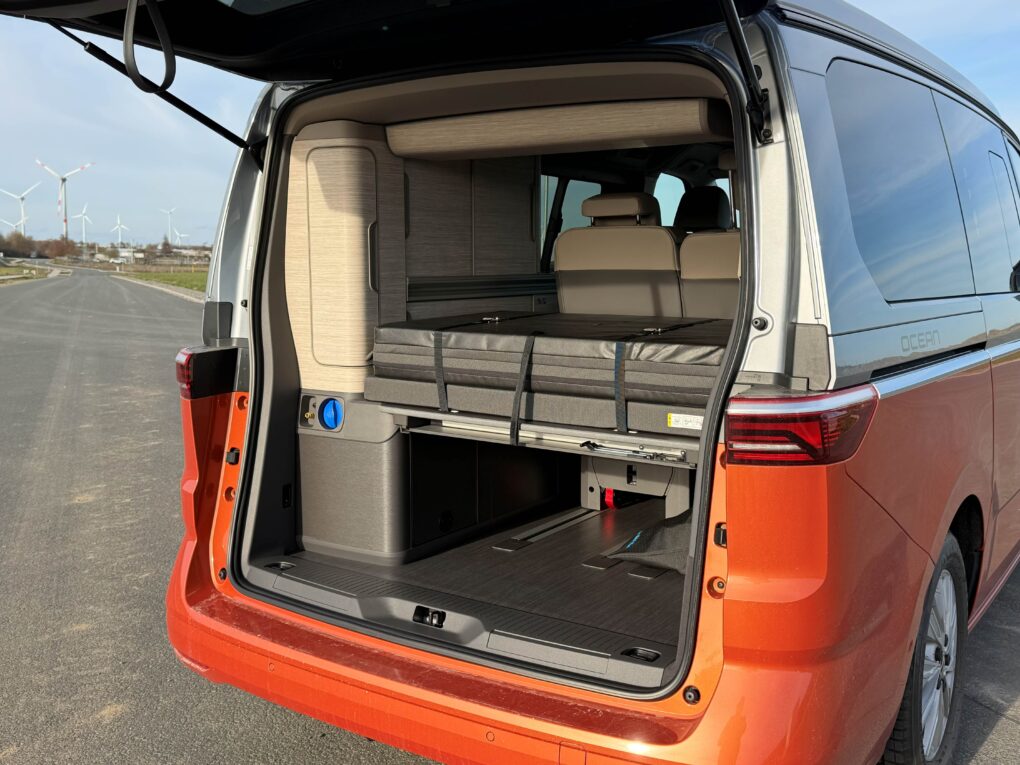
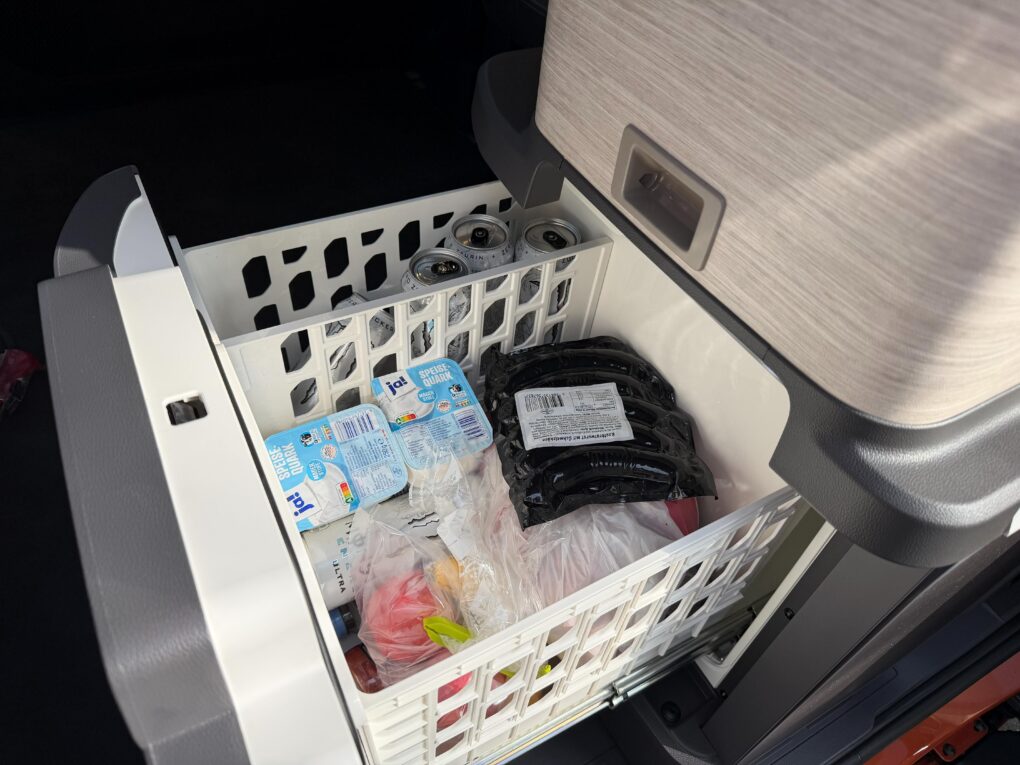
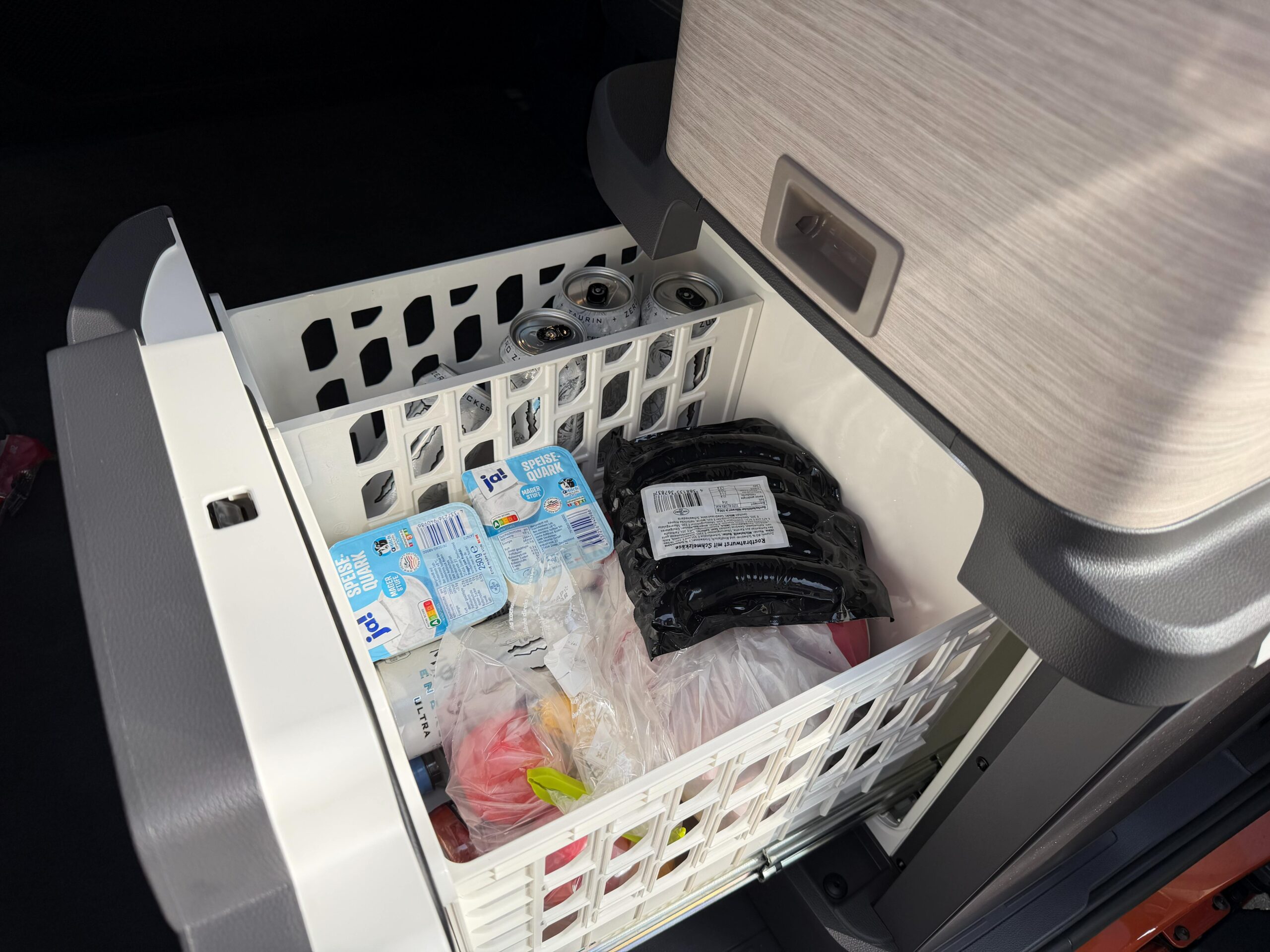
The "summer kitchen" in the California is quite compact and small, but it serves its purpose. A small gas cartridge powers the gas stove. A small sink provides for cleaning hands and dishes, although the shower head is rather cheaply made. The "shower function" at the rear of the vehicle is also cheap; there's a valve for connecting a shower head, which is included. This shower is really only useful for rinsing your feet after coming off the beach.
Road trip to Belgium: Practical test while camping
Our journey took us to the Belgian coast. Here, the hybrid concept truly shone in terms of driving dynamics. The combination of electric motor and combustion engine provides ample power, effortlessly propelling the fully loaded camper up inclines. In the narrow streets of small Belgian towns, the California also scores points with its car-like maneuverability and lower height, which facilitates access to many parking spaces. The 360-degree area view camera ensures undamaged rims and easy parking maneuvers.
-
- Picture: TechnikNews
-
- Picture: TechnikNews
-
- Picture: TechnikNews
-
- Picture: TechnikNews
-
- Picture: TechnikNews
-
- Picture: TechnikNews
-
- Picture: TechnikNews
-
- Picture: TechnikNews
-
- Picture: TechnikNews
However, during the cooler coastal nights, the aforementioned heating issue became the dominant topic. While the smart home functions and app-based monitoring greatly simplified life on board, the unreliability of the gasoline-powered auxiliary heater marred the otherwise very positive impression. It's a shame that the available electrical energy from the high-voltage battery couldn't be used more efficiently for stationary operation to avoid such interruptions. Furthermore, the auxiliary heater naturally emits a strong odor while running, although it's not as loud as older models.
Sleeping in the camper: possible upstairs and downstairs.
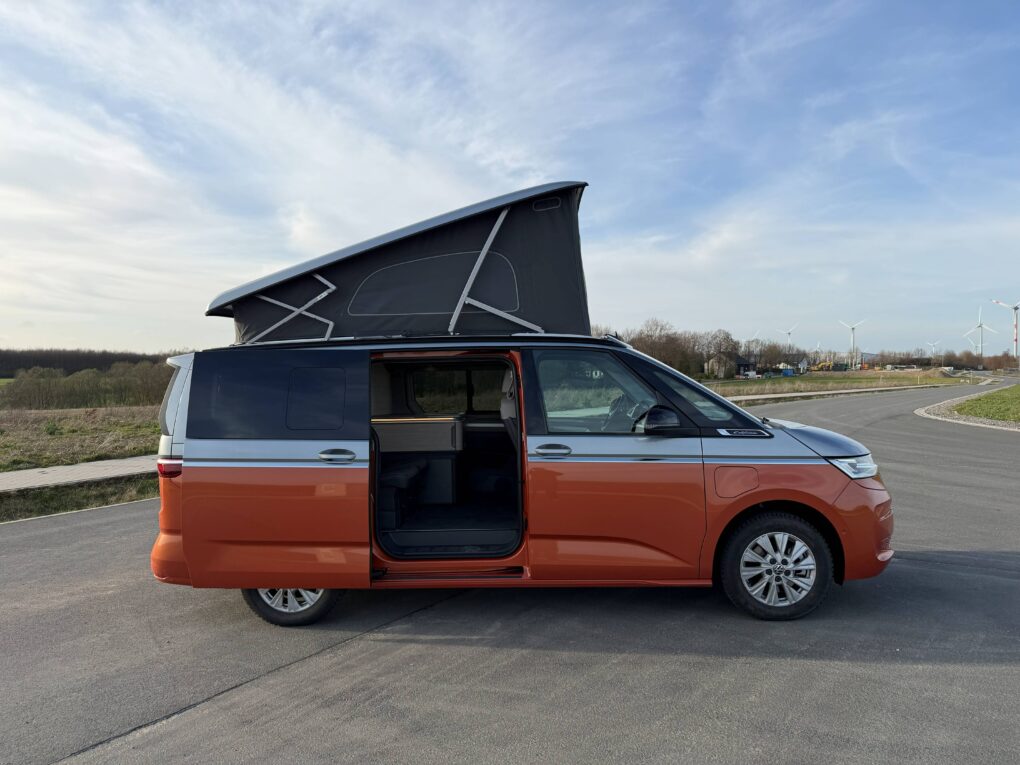
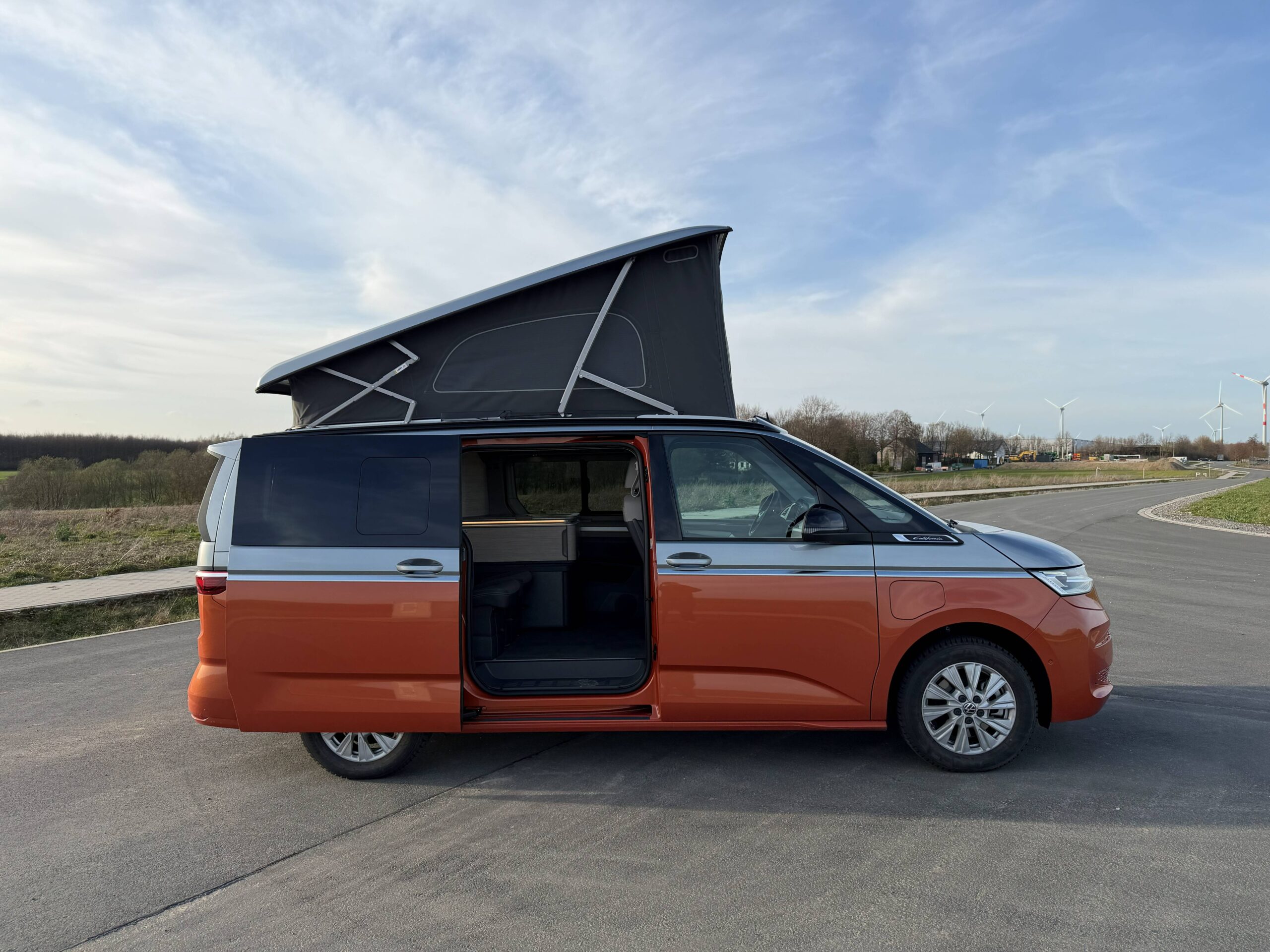
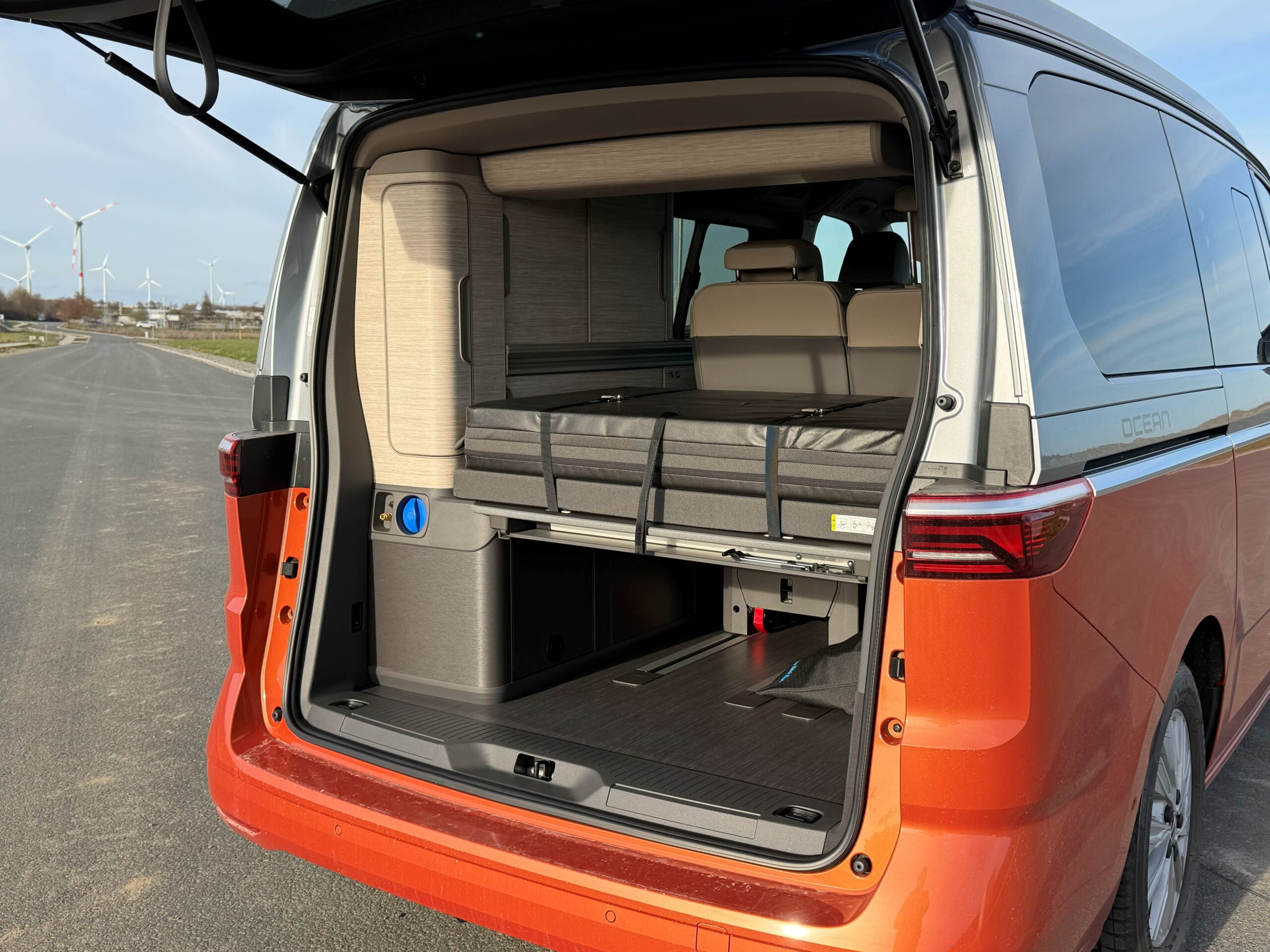
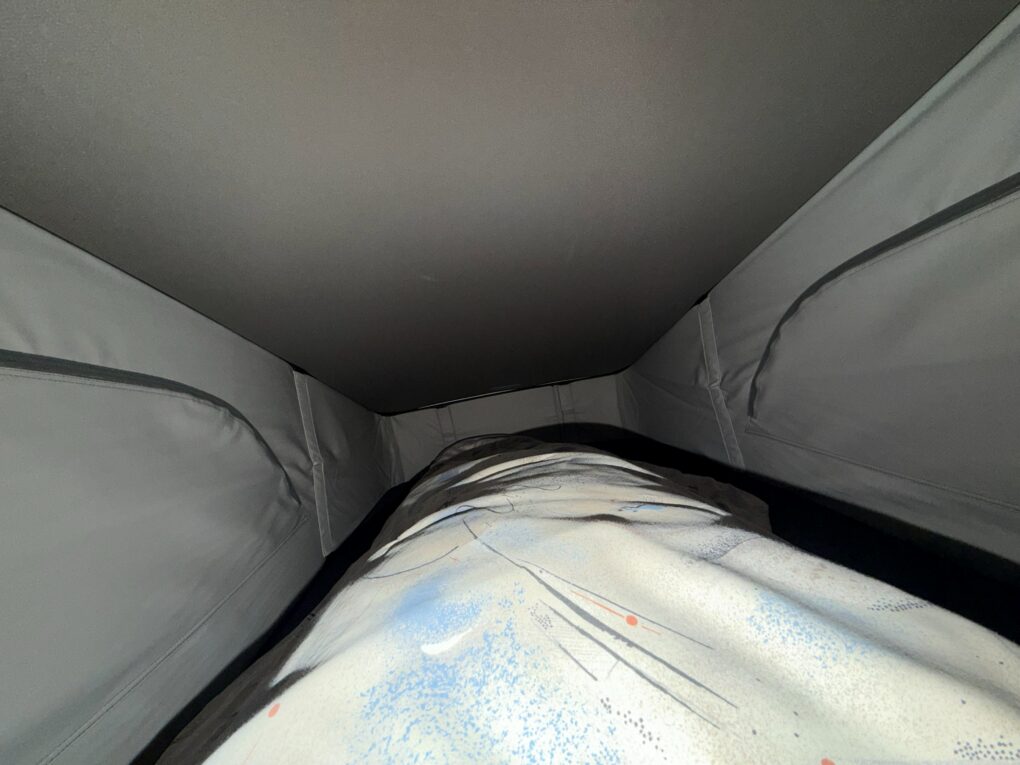
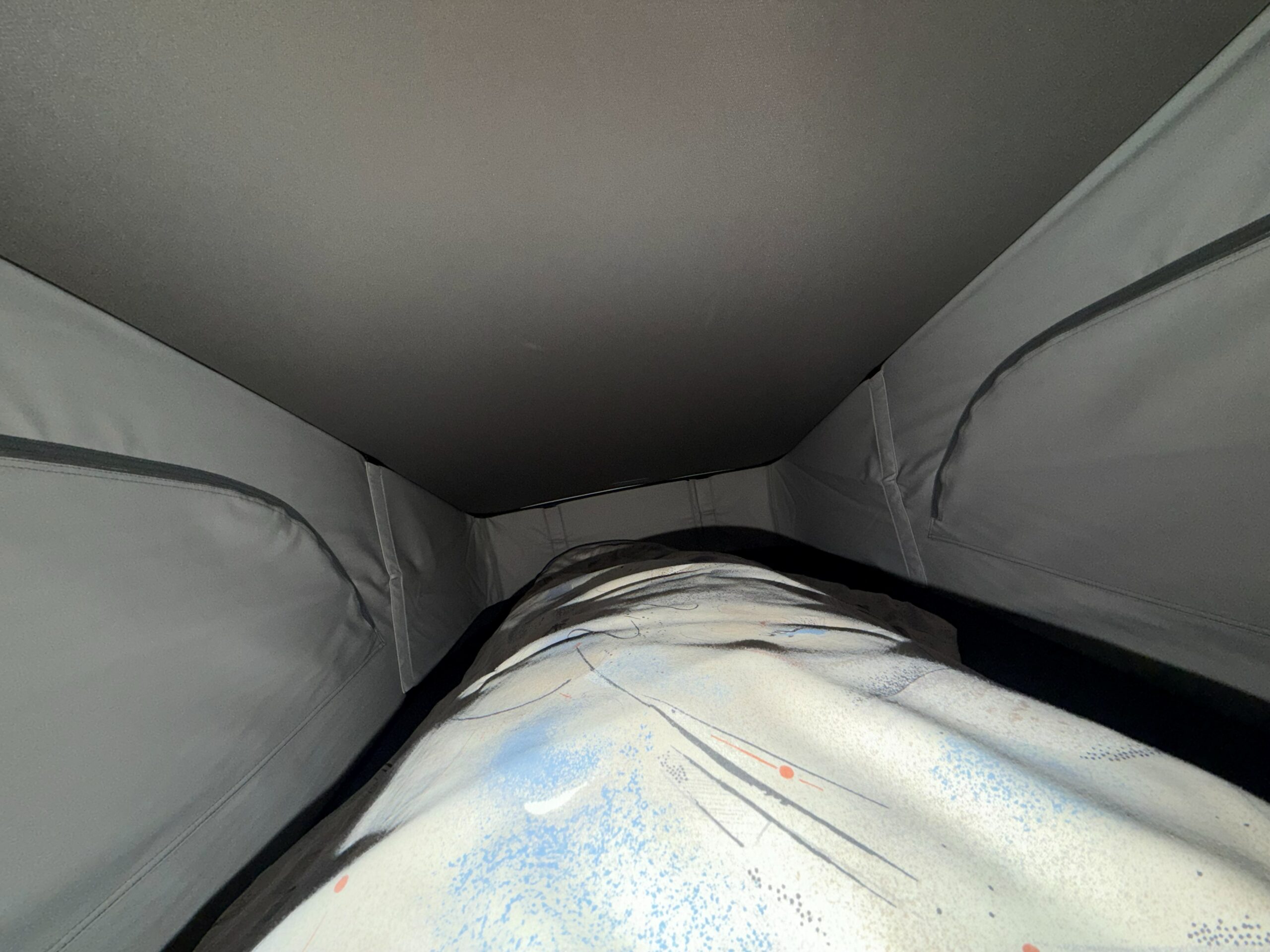
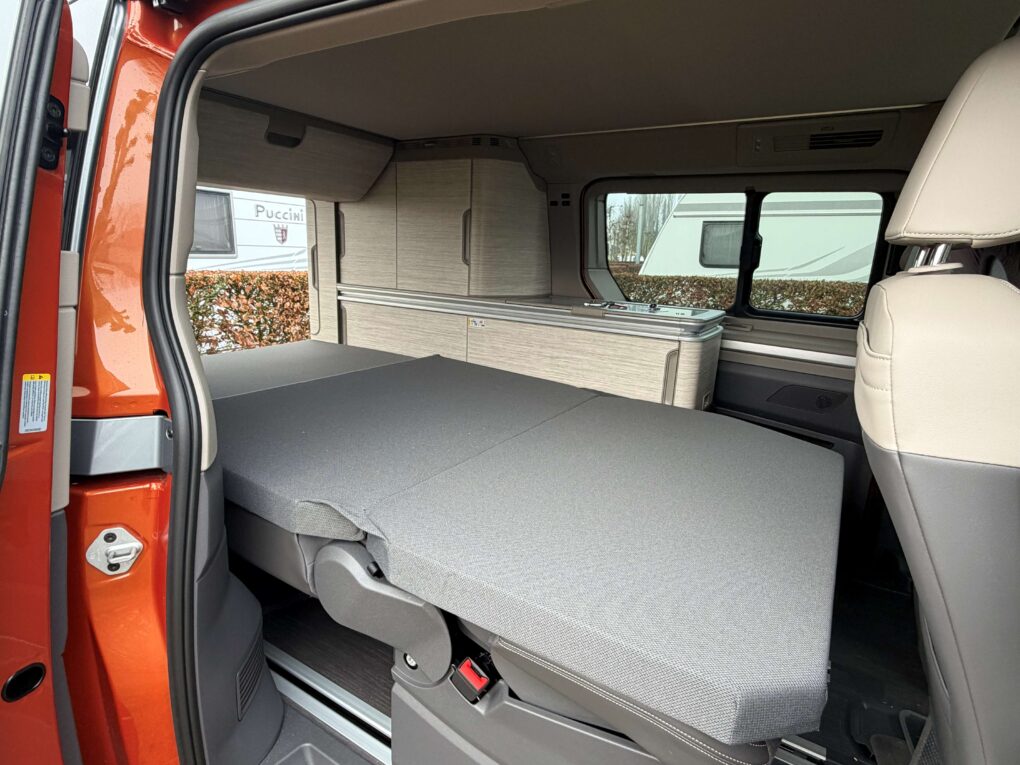
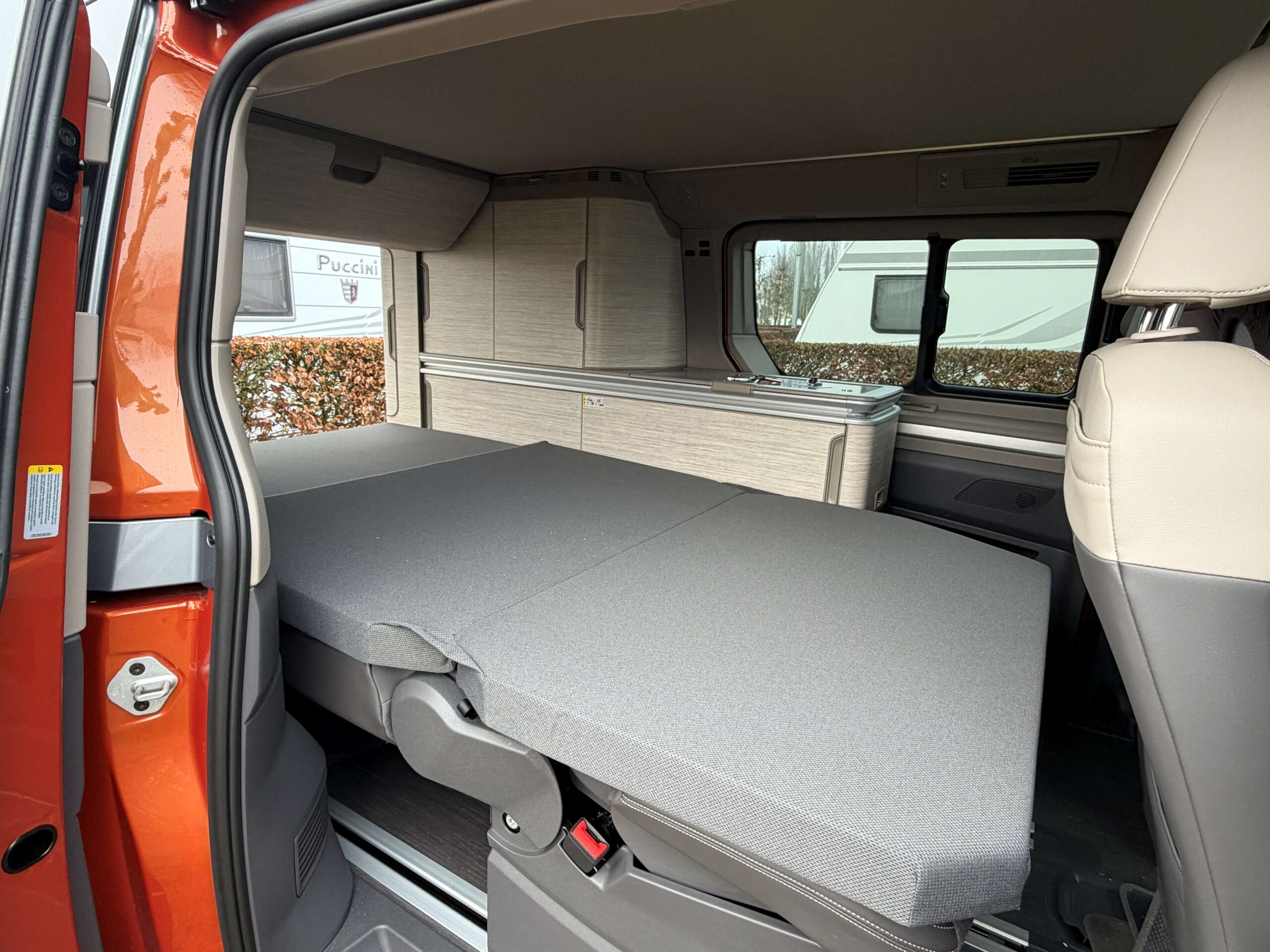
During my road trip, I tested both sleeping options: the pop-up roof and the mattress in the lower section. My conclusion? I slept better upstairs, but it was noticeably colder there, as the mosquito nets offered little protection from the elements; even the auxiliary heater struggled. The electric roof tent is very convenient, extends and retracts quickly, and can even be easily controlled via an app. An important tip: When retracting the tent, the sliding hatch to the roof should definitely remain open to prevent the fabric from getting caught.
My impression after 2 weeks: A technology demonstrator with room for improvement.
The VW California T7 eHybrid is undoubtedly the most modern and digitally advanced camper van Volkswagen has ever built. Its charging capacities of 11 kW AC and 50 kW DC are exemplary in this segment and make the PHEV concept perfectly suitable for everyday use. The software has made a huge leap forward, and the Travel Assist also operates at a top level. A realistic range of 75 km was achieved in warmer temperatures off the motorway. On the motorway itself, the battery is depleted after 40-50 km.
The average fuel consumption at motorway speed of 130 km/h was 12 liters per 100 kilometersWhile in combined driving, fuel consumption of 6-7 liters per 100 kilometers was frequently achieved. For a camper weighing over 2,5 tons, that's a good figure.
Nevertheless, a bitter aftertaste remains regarding its suitability for winter use and, above all, its price. The fact that the high-voltage battery cannot be used for a continuous camping heater mode and that the gasoline-powered auxiliary heater exhibited intermittent problems during testing doesn't quite align with the otherwise high-tech aspirations. However, those who can live with the unlit sliders and the heating issues will get a vehicle that sets new standards in terms of connectivity and driving comfort in the compact camper van segment. It remains to be seen whether Volkswagen will address these issues with the upcoming facelift.proChenen delivers a fully electric heating mode.
The California we tested is priced at a mere [price missing]. 107.108,20 € (incl. 19% VAT) That's a lot of money, really. But if you can find something cheaper among the various online offers, you can look forward to a perfectly decent camper, albeit with a few teething problems.