
Huawei MateBook 13 (2019) review: Power in a compact form factor
A TEST REPORT from David Haydl  on April 29, 2019, 15:00 am | Write a comment
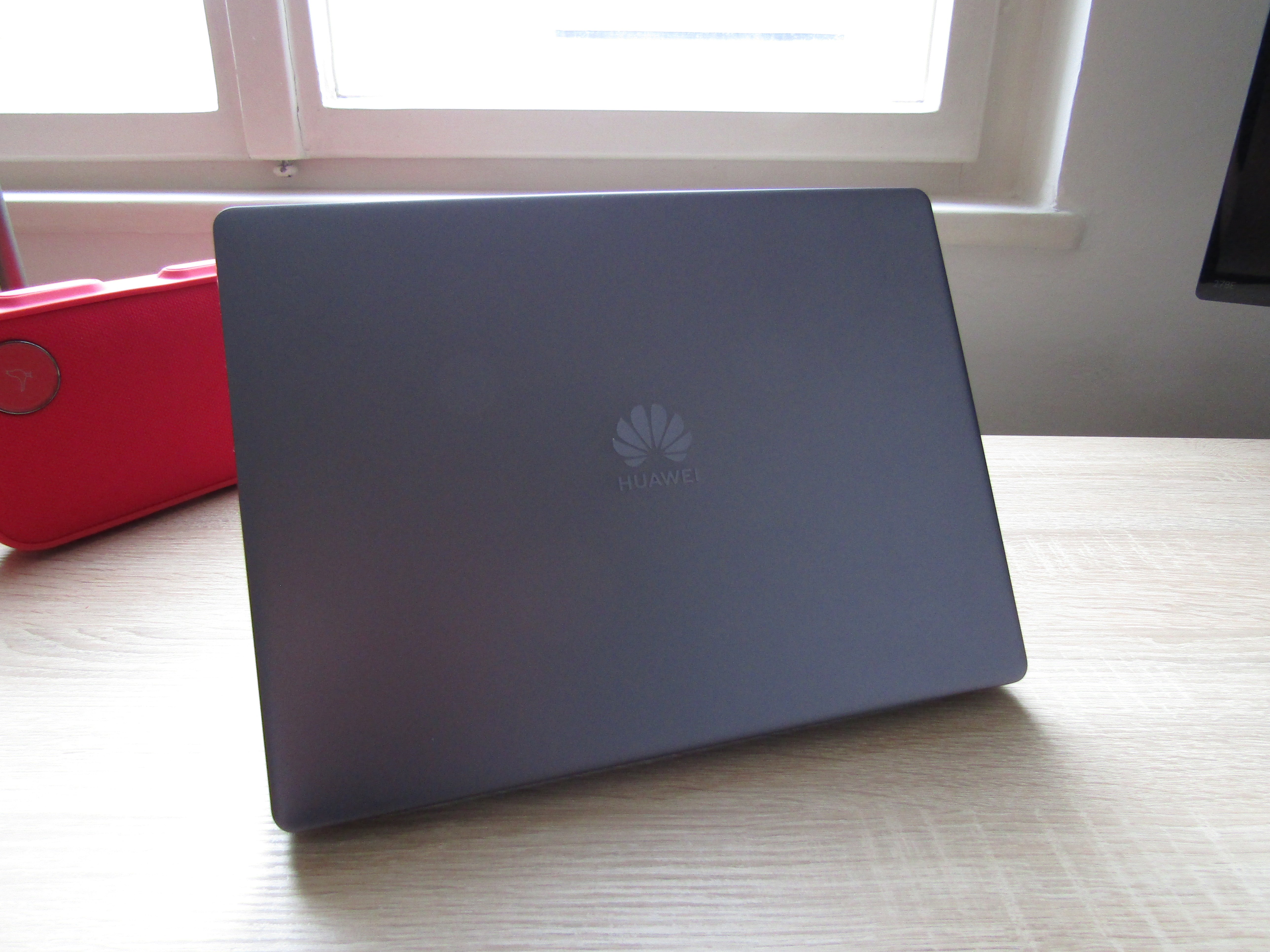
The Huawei MateBook 13 (2019) is the successor to the Huawei MateBook X, which is a pretty powerful ultrabook. The question arises whether the model for 2019 can build on this. My test should show that.
Unboxing and initial setup
In the packaging of the MateBook 13, next to the device itself, the first thing you will find is a USB-C power supply. This has a maximum output of 20 volts at 3,25 amps. The corresponding cable has a USB-C connector on both sides and is also quite long, which was often very positive during my test phase. Second, a MateDock is included in the packaging, which adds a USB-A port, a VGA port and an HDMI socket to the notebook. Last but not least, we also find a quick start guide.

The scope of delivery is pretty manageable (picture: TechnikNews)
Because the MateBook 13 for 2019 is running Windows 10, initial setup is very easy. After you have determined which language you speak and where you live, you enter the Microsoft account. In addition, a dialog for setting up the fingerprint sensor appears, which is located in the power button of the device. The notebook is ready for use after about 20 minutes.
Design and workmanship
Yes, I'll admit it: the MateBook 13 looks very similar to Apple's MacBooks, especially the 12-inch model. Especially when both ultrabooks open, it is almost impossible to tell the two devices apart at first glance. But that's not to say that I don't like the design - on the contrary. The minimalist look even appeals to me a lot. In addition, the entire case feels very high quality. Nothing creaks or wobbles here. Space gray is the only color that Huawei has for the 13th MateBook in its range, but that didn't bother me at all.
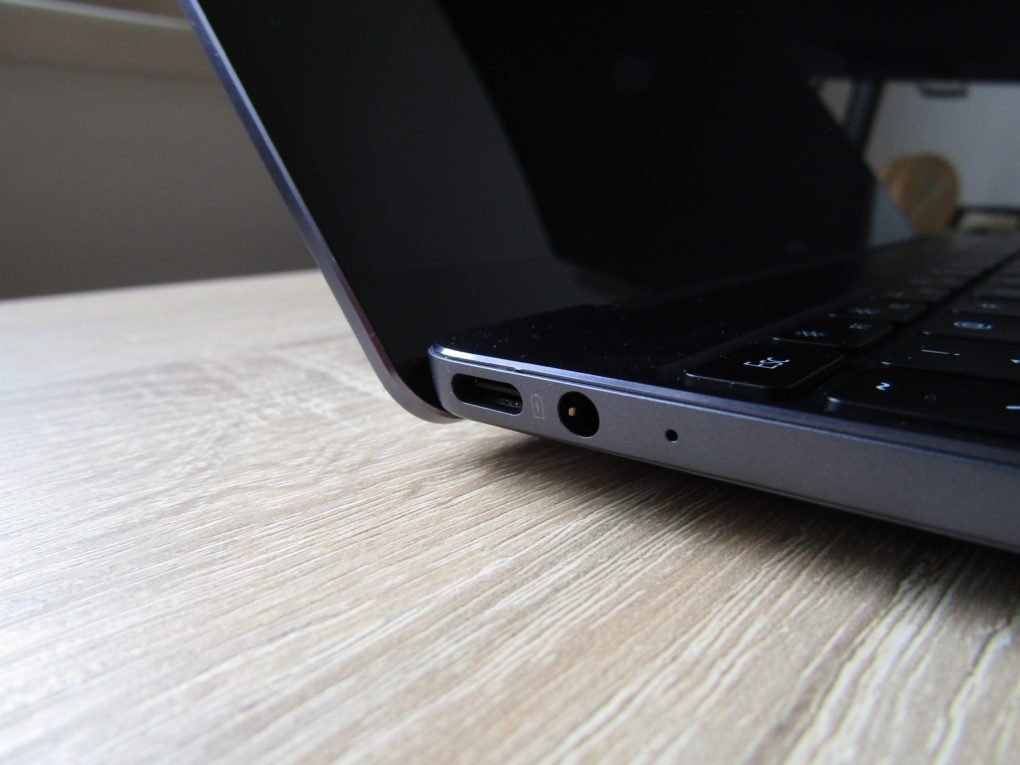
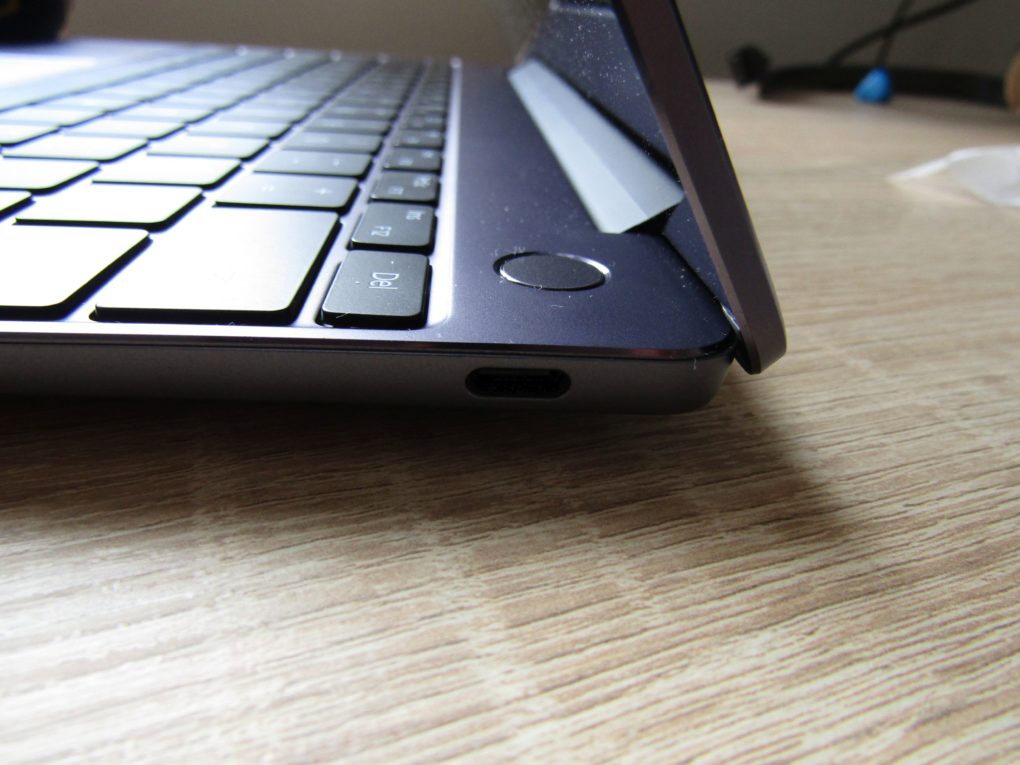
The MateBook 13 is also very portable. It is 286 millimeters long, 211 millimeters wide and 14,9 millimeters high. The weight is around 1,25 kilograms. I think it's obvious that there isn't much space left for connections. Huawei installed a USB-C and a headphone port on the left. There is another USB-C port on the right. It should be said here that charging is only possible via the left port, while data can be transferred via both.
-
- Picture: TechnikNews

-
- Picture: TechnikNews

The speakers with Dolby Atmos are not immediately visible, because they are located on the underside of the MateBook 13. Surprisingly, they didn't convince me a bit, as they start to clink at low volume.
Display
The display of the Huawei MateBook 13 (2019) is 13 inches and has a resolution of 2160 × 1440 pixels. It supports touch input, which makes it quite reflective. But that only makes half as much, since the brightness can be increased very far. For the aspect ratio, Huawei decided on 3: 2, which means that the work surface is a little larger in height.

It is also noticeable here: The similarity to the MacBook is definitely there (picture: TechnikNews)
Overall I was very happy with the screen. It is sharp enough proproduces true-to-life colors and is pleasantly bright for working. However, I don't think the 13 Series MateBook has a touchscreen as there is no stylus support and Windows isn't really designed for touch navigation - more on that later.
Above the display there is also a sensor for the automatic regulation of the display brightness. Usually works as it should, even if I noticed every now and then that the ambient light sensor was unsure how exactly it should now regulate the brightness.
Keyboard and trackpad
The keyboard of the MateBook 13 itself really impressed me. The keys are exactly the right size and travel, which means that I was able to type my texts very quickly and comfortably. However, I noticed that in the dark the backlight goes out after a short time without writing, which is more annoying than you might think at first.
The trackpad couldn't really pull me under its spell. Apart from the fact that it is quite small, I often get “stuck” on the touchpad, especially with drag-and-drop movements. That means that I could not run my finger smoothly over the mousepad in these situations. Fortunately, gestures and inputs were always correctly recognized and implemented - thanks to the Precision drivers.

Picture: TechnikNews
In return, I liked the fingerprint sensor in the power button all the more. The finger is read as soon as the button is pressed, so that the login takes place immediately after successfully booting up. And otherwise the sensor recognizes my finger without waiting a second.

Picture: TechnikNews
Huawei Share, whose contact area is next to the trackpad, didn't want to hit me at all. Even looking at several instructions on the Internet didn't help.
Performance
My test device has an eighth-generation Core i7-8565U from Intel with eight gigabytes of RAM and an SSD with a capacity of 512 gigabytes. The whole package comes with an MX150 from Nvidia. Alternatively, there is a version with a Core i5-8265U, which also belongs to the eighth generation of Intel processors. Huawei also offers a variant with a 256 gigabyte SSD.
Performance problems should not get in the way in everyday life. Only a few seconds pass from the Ultrabook booting up to being ready for use. Browsing the Internet, doing office work and writing emails are of course no problem. Playing around with Photoshop and Lightroom does not push the device to its limits either. Gaming was also possible to a certain extent - albeit with full use of the fans.
A few words about the battery life, which I was also quite happy with. Nine hours of work was never a problem, but when gaming it ran out much quicker. With the power pack mentioned at the beginning, the device is fully charged again within two hours.
Software
Windows 13 version 2019 runs on the Huawei MateBook 10 (1803). Not 1809. That's a shame when you consider that the next big generation of the Microsoft operating system will soon come.
With this Ultrabook I had the same problem as with the 2 Laptop Surface: Windows 10, rather many third-party apps, is / are not really designed for touchscreens. I particularly notice this in Google Chrome. If I tap around here with my finger, the cursor suddenly disappears. In my opinion, that shouldn't happen, especially when you keep in mind that convertibles and laptops with touchscreens have been around since Windows 8.
Prices and availability
Where can you buy the MateBook 13 (2019) now? The ultrabook is available from Amazon, at MediaMarkt and at Saturn. The MSRP for the entry-level model is 899 euros, while the MSRP for the more expensive model is 1.099 euros.
Huawei MateBook 13 (2019): Conclusion
The Huawei MateBook 13 offers, as I wrote in the title of this review, power in a very compact form factor. You can easily put the MateBook 13 in any bag and edit emails, edit photos and write source code for any program on the go without any problems. And even though gaming works with the device, I would rather go for the Razer Blade Stealth for these purposes, which was specifically designed for that. However, Huawei can still improve two things in the next generation: the size of the trackpad and the battery life.
Thank you for providing the Huawei MateBook 13 (2019).