
Oppo Find X10 review: Almost everything is correct, but
A TEST REPORT from Nils Ahrensmeier  on October 28, 2026, 10:00 am | Write a comment
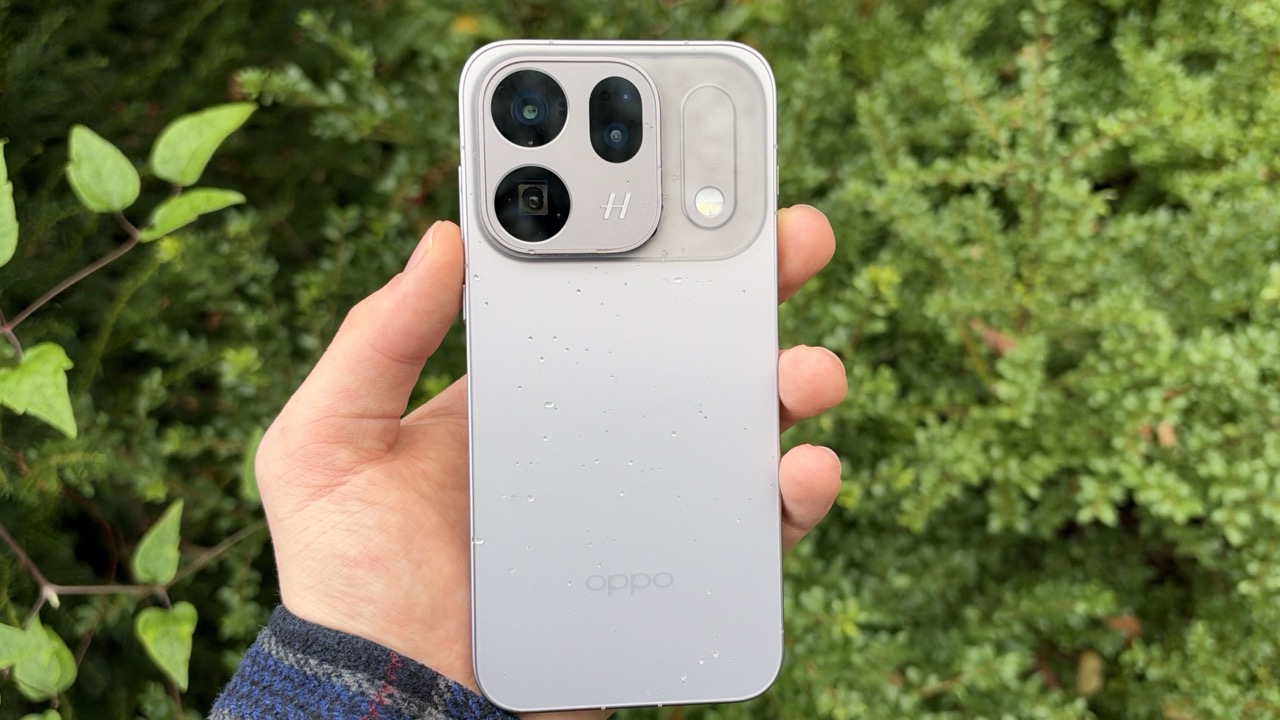
Oppo is bringing the Find X10 series to Germany, and for the first time, two models are making their way here: the Find X10 Pro Max, the flagship model, and the Find X10, which I've been examining more closely over the past two weeks. On paper, the "regular" model is the more sensible of the two, but in practice, it's still a true flagship. However, the price is anything but sensible: Oppo is asking for €1.299 for the Find X10. Our review will determine whether that's justified.
Design and workmanship
At 156,51 x 74,29 x 8,35 millimeters and 210 grams, the Find X10 isn't a small smartphone, but it sits surprisingly comfortably in the hand. The frame is made of matte aluminum with flat sides and gently rounded edges, while the back is a single piece of glass with a velvety, matte finish. Fingerprints are barely visible, and the device has a high-quality feel in every respect.
The fact that it immediately brings an iPhone to mind is undeniable. Flat sides, rounded corners, a large camera module in the upper left corner – it's strongly reminiscent of Apple. At the same time, Oppo has incorporated enough of its own features to ensure the Find X10 doesn't come across as a copy. The glass back seamlessly transitions into the camera module, and the camera itself, with its three lenses, Hasselblad logo, and separate areas for the flash and color sensor, has a distinctive style that I find quite appealing. Besides Mist Grey, the Find X10 is also available in Glacier Blue and Glow Coral.
Oppo doesn't compromise on durability. The Find X10 is IP66, IP68, and IP69 rated for dust and water resistance, meaning it can even withstand high-pressure water jets. The display is also usable in the rain, a feature no other phone in the industry offers. Both the front and back are protected by Oppo's Crystal Guard Glass, developed in collaboration with Corning.
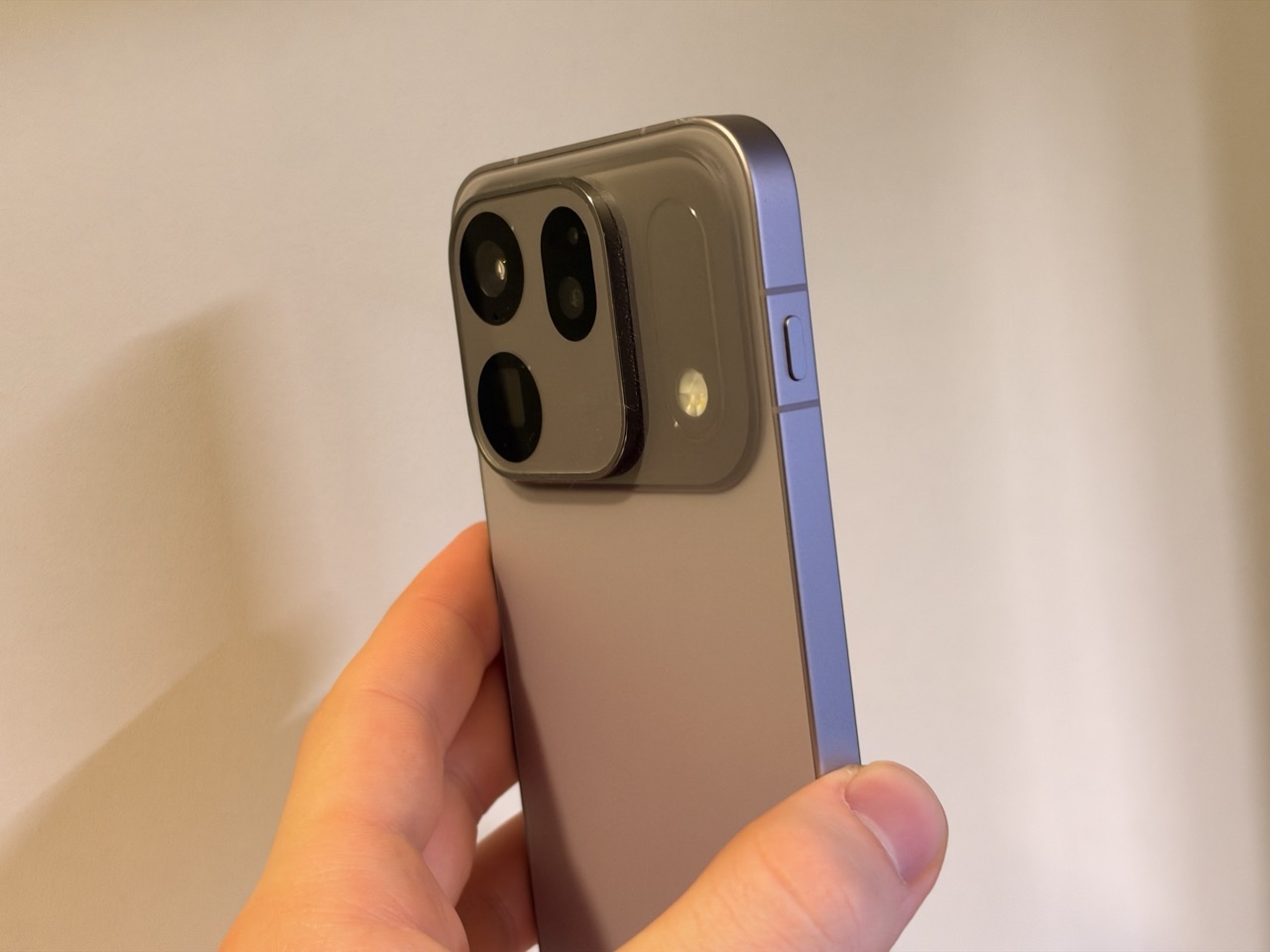
The OPPO Find X10 has a "Snap Key" for quickly executing actions. (Image: TechnikNews)
New is the Snap Key on the left side, Oppo's answer to Apple's Action Button. It comes pre-linked to AI MindSpace: a short press saves the current screen content, a long press a voice memo. Alternatively, it can be used to control the flashlight, sound, etc.proYou can assign files, voice recordings, translations, or screenshots to it. However, I hardly used the button during testing, as it still feels somewhat underdeveloped. You can't freely assign your own apps to it, which is precisely what would make the button truly useful. If Oppo improves this with an update, the Snap Key will become a practical extra. Currently, it's more of a button you'll eventually forget about.
screen
The display is one of the highlights of the Find X10 for me. Oppo has installed a flat 6,59-inch AMOLED panel with 2.772 x 1.272 pixels, a pixel density of 462 ppi, and an adaptive refresh rate of 1 to 120 Hz. Up to 144 Hz is only available in select games like Call of Duty: Mobile or PUBG Mobile.
What immediately stands out are the display bezels. At just 0,99 millimeters all around, they're uniformly thin, making them the narrowest Oppo has ever used in a smartphone. It looks truly modern, and in everyday use, you really do feel like you're only holding the screen content. In comparison, many other current smartphones suddenly seem a bit outdated. For me, that's a real unique selling point.
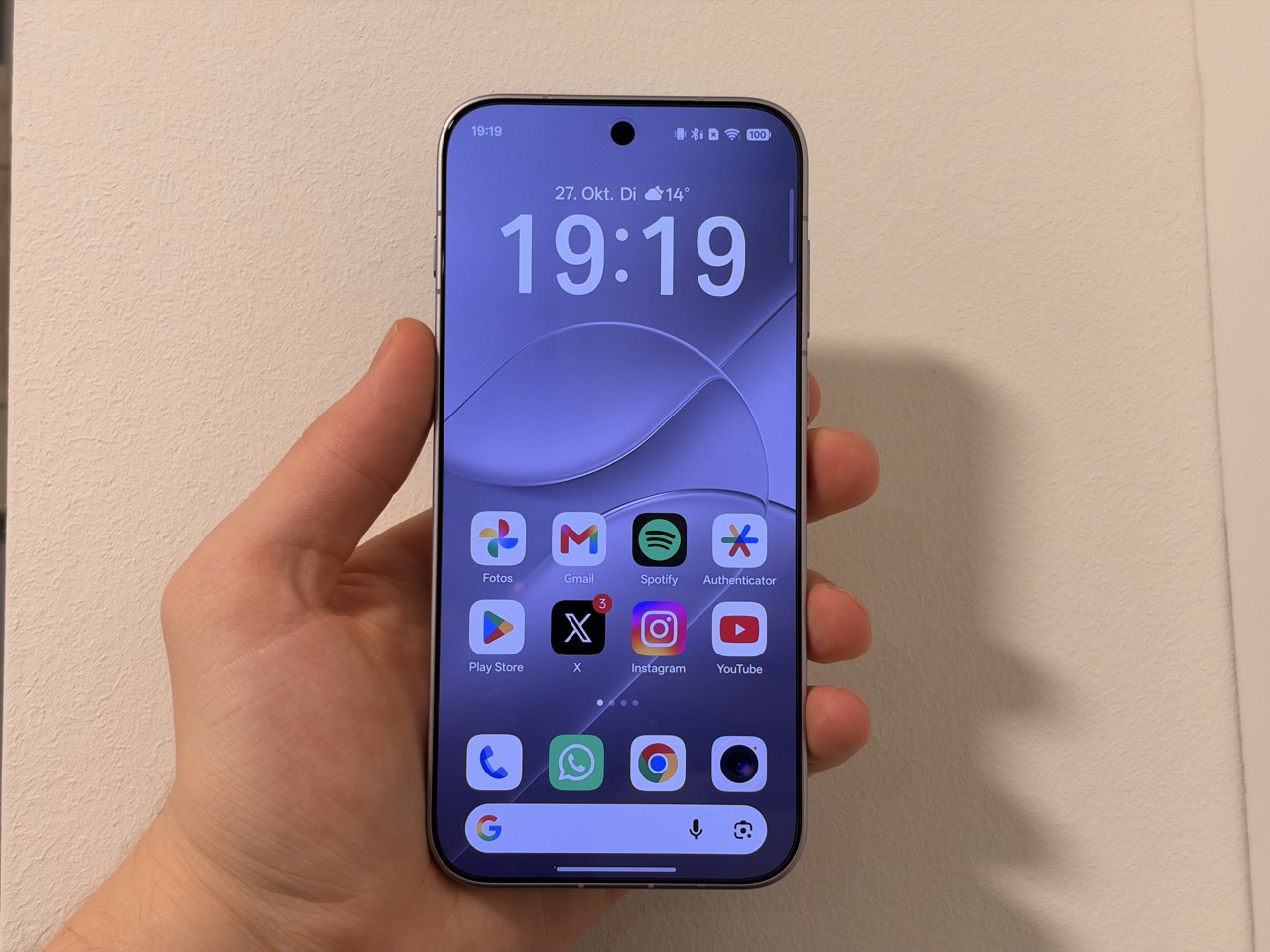
The OPPO Find X10 has super thin screen bezels (Image: TechnikNews)
There's nothing to complain about regarding brightness either. Oppo specifies 2.000 nits in full-screen mode and up to 3.600 nits at peak. These figures should always be taken with a grain of salt; in practice, my display was also in direct sunlight. proEasily readable. At the other end of the scale, it goes down to one nit, which is pleasant in bed at night. Those sensitive to flicker will appreciate the PWM dimming at 3.840 Hertz.
The color reproduction is very naturally calibrated right out of the box. Oppo also advertises that the panel covers 95 percent of the BT.2020 color space, which is actually used in film and television.proThe color gamut is significantly larger than the DCI-P3 color space commonly used in smartphones. In everyday use, this is particularly noticeable with HDR content, which appears vibrant yet not overdone in Dolby Vision. For most users, this is a minor detail, but for those who edit photos and videos on their smartphones, it's a real advantage.
hardware and software
Inside, the MediaTek Dimensity 9600M, manufactured using TSMC's 3-nanometer process, works alongside 12 GB of LPDDR5X RAM and 256 or 512 GB of UFS 4.1 storage. The Pro Max gets a slightly more powerful version, the Dimensity 9600 Pro, but this makes no difference in everyday use. The Find X10 is consistently fast; apps launch quickly, animations run smoothly, and even with many apps open simultaneously, the device doesn't lag.
The Find X10 didn't get noticeably warm during my test. However, those who regularly play demanding games for hours on end at the highest settings would be better off with the more powerful chip in the Pro Max. For everyone else, the performance of the Find X10 is more than sufficient and will be for the next few years.
There is plenty of other equipment: Wi-Fi 7, Bluetooth 6.2, NFC, dual SIM, a fast USB-C port with USB 3.2 Gen 1 for quick data transfer of large photo and video files, and an ultrasonic fingerprint sensor in the display that unlocks quickly and reliably.
OPPO Find X10 software
The software used is ColorOS 17, based on Android 17. Visually, I like the interface; it's well-designed, fluid, and highly customizable. However, two things really annoyed me. First, the Find X10 is crammed with numerous pre-installed third-party apps. While these can be uninstalled, such things simply have no place on a €1.300 smartphone. Second, notifications were frequently delayed during testing because ColorOS aggressively terminates background apps. This can be adjusted via the battery settings. pro The app needs fixing, but that shouldn't be the case in this price range.
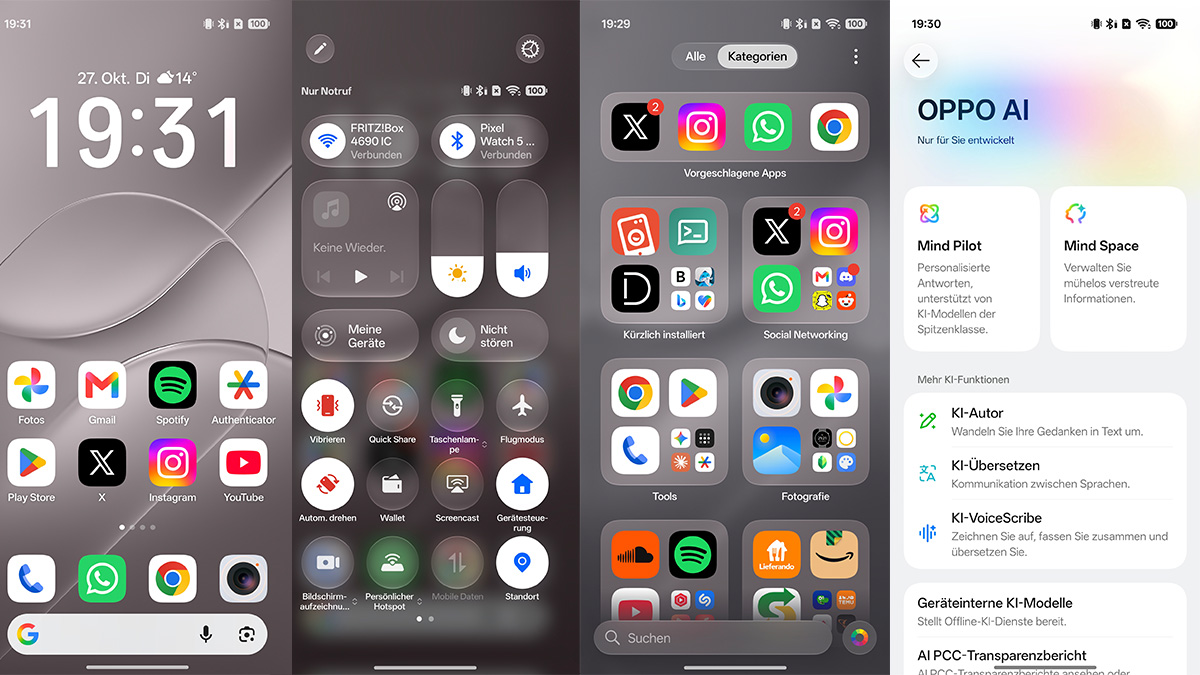
OPPO's software looks suspiciously like iOS. (Image: TechnikNews)
Of course, Oppo is also heavily invested in AI. With Mind Pilot, they offer a dedicated app that combines Gemini, ChatGPT, and Perplexity under one roof, along with AI-powered editing features in the gallery. I think that's cool in principle, but I didn't actually use it much during testing. For everything I need AI for in my daily life, there's Gemini, and Oppo's own AI isn't integrated deeply enough into the system to offer me any real added value.
Oppo's update promise guarantees five major Android updates and six years of security updates. That's decent, but Samsung and Google are even more generous with seven years.
Loudspeakers
The Find X10 uses stereo speakers, with the earpiece acting as the upper speaker. I didn't notice anything negative about it; quite the opposite, in fact. The speakers are sufficiently loud, voices in videos and podcasts are easily understood, and the sound is good for watching YouTube or series on the go. Of course, they don't replace a Bluetooth speaker, but for a smartphone, they're a solid solution.
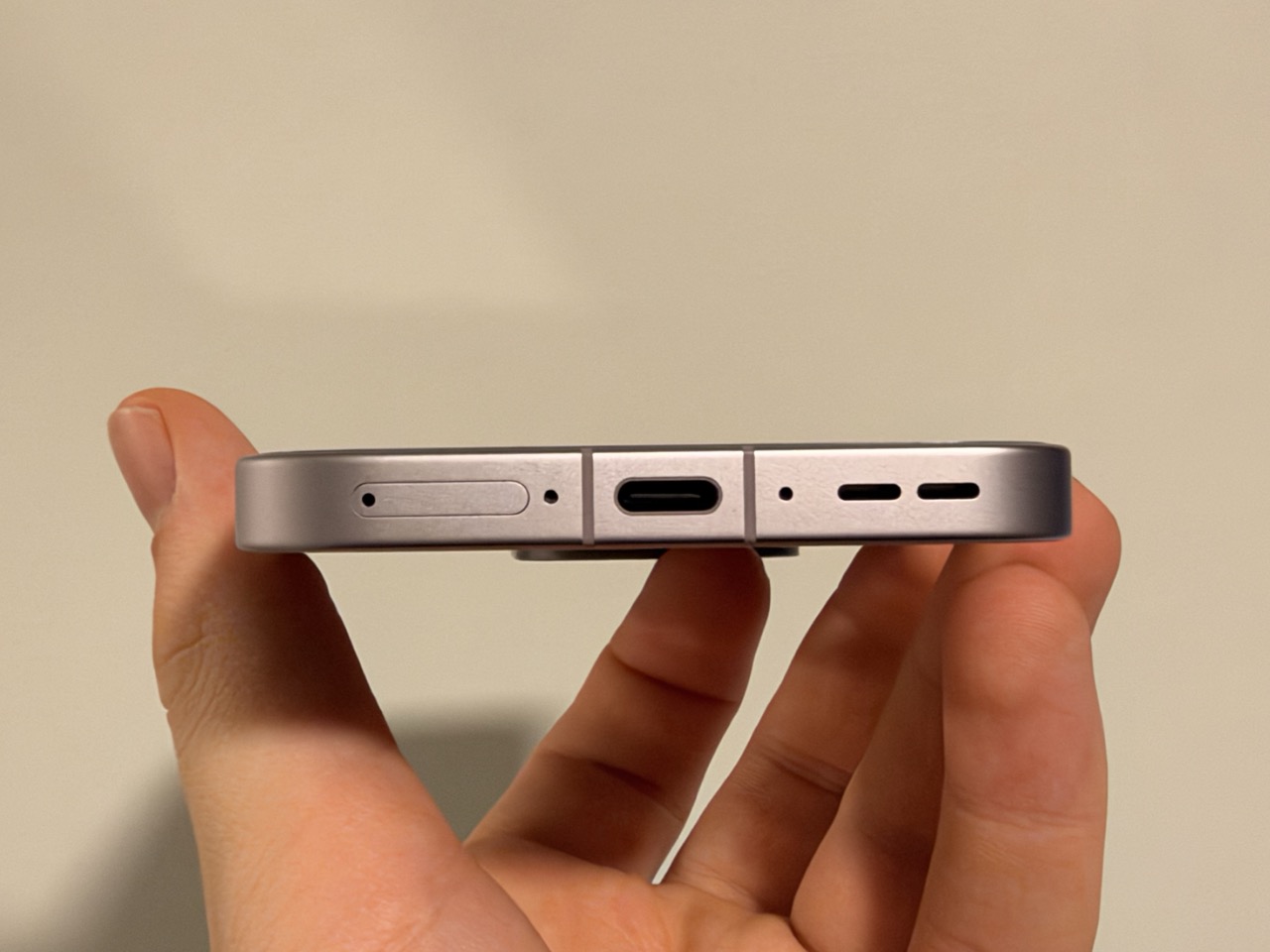
The speakers on the Find X10 are good, but nothing more. (Image: TechnikNews)
Battery life
Now let's get to the absolute highlight of the Find X10. Oppo has fitted a 7.150 mAh silicon-carbon battery into a casing that's just 8,35 millimeters thick. One small drawback: In other regions, like Asia, the Find X10 even gets an 8.000 mAh battery, while only the smaller version makes it to Europe. That's a shame, but it doesn't change the fact that it's the largest battery I've ever used in a smartphone of this type.
And it shows. In two weeks, I never once managed to drain the Find X10's battery in a single day, and I'm certainly not someone who babysits their smartphone. A day and a half of battery life is perfectly realistic even with heavy use; those who use their smartphone a little less can easily get two days. According to Oppo, the battery should also retain over 80 percent of its original capacity after five years of typical use.
Charging is possible via cable at up to 80 watts using Oppo's SuperVOOC power adapter; other USB-PD power adapters can deliver up to 55 watts. I used both the Oppo adapter and my own chargers, and in both cases, the Find X10 recharged very quickly. With the 80-watt adapter, a full charge takes about an hour. Wireless charging is supported at up to 50 watts, and reverse charging for headphones and other devices is also included.
Cameras
The camera has traditionally been the flagship feature of the Find X series, and the Find X10 is no exception. Oppo, in collaboration with Hasselblad, has developed a setup with two 200-megapixel cameras: The main camera uses a 1/1,4-inch sensor with an f/1.6 aperture and optical image stabilization, while the periscope telephoto camera uses a 1/1,56-inch sensor with a 65mm focal length (approximately 2,8x zoom) and also features optical stabilization. In addition, there's a 50-megapixel ultra-wide-angle camera and a 50-megapixel front-facing camera with autofocus and a very wide 100-degree field of view, ideal for group selfies and vlogs.
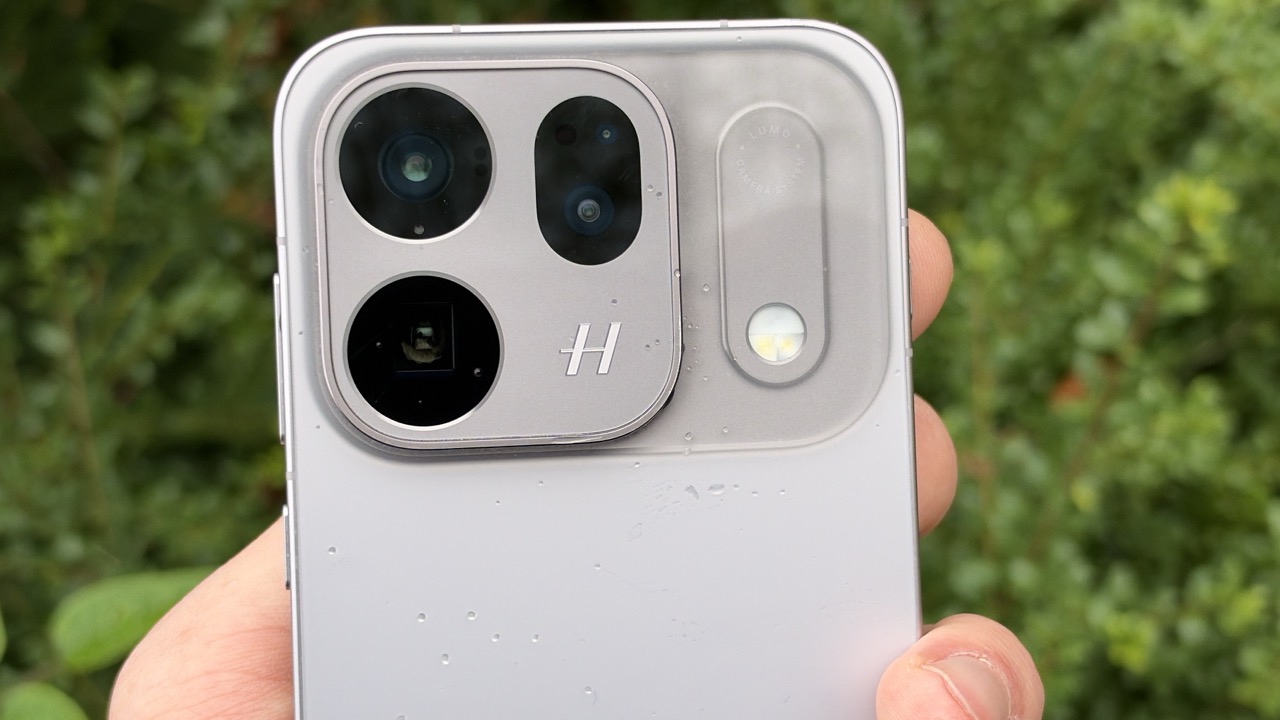
The OPPO Find X10 has three rear cameras, two of which have 200 MP. (Image: TechnikNews)
New is the LUMO True Image Engine. Its approach is to process photos less aggressively than before: less sharpening, less HDR effect, more natural skin tones. This is supported by a multispectral color sensor designed to capture the colors of the scene more accurately. The result is visible: photos may appear slightly less crisp at first glance than those from some other smartphones, but they look significantly more natural and closer to what you actually saw. By default, the Find X10 saves images at 26 megapixels; the full 200 megapixels are available via Hasselblad's Hi-Res mode.
During testing, I primarily used the main camera, and it's truly excellent. Photos are rich in detail, the colors are accurate, and it performs reliably even in challenging lighting conditions. The zoom also impressed me, performing on par with my iPhone 18 Pro. Thanks to the large 200-megapixel sensor, even higher zoom levels can be used without significant loss of quality. For those who want to zoom in even further, the optional Hasselblad teleconverter is available, enabling an 11x optical zoom with the telephoto camera. The Find X10 is the first standard model in the Find X series to support this attachment.
We took quite a few more photos with the OPPO Find X10, which you can see here. here can watch.
The only real drawback compared to the Pro Max is the ultrawide camera. With its smaller sensor, it's the weakest lens in the setup, especially in low light. However, it takes decent pictures in daylight, and I think most people will hardly notice the difference in everyday use. Furthermore, unlike the Pro Max, the telephoto camera lacks close-focus capability for macro photography.
Oppo has also improved its video capabilities. All three rear cameras record in 4K at 60 frames per second. pro One second in Dolby Vision, main and telephoto cameras also achieve 4K at 120 frames per second. pro One second and 8K at 30 frames per second pro Second. For creatives, there are Open-Gate recordings, which utilize the full sensor area and allow clips to be cropped later in both portrait and landscape formats, plus the Log profile O Log2 and a customized version of the Blackmagic Camera app.
Price and availability
The Oppo Find X10 is now available in Germany. The 12GB/256GB version costs €1.299, while the 512GB variant costs €1.499. This is a significant price increase compared to its predecessor. The Find X10 Pro Max is priced at €1.799.
Those who pre-order by October 28, 2026, will receive a €100 instant discount and their choice of a Hasselblad teleconverter, an Oppo Watch X3, or an Oppo Pad 5, worth approximately €500, while supplies last. Additionally, customers will receive €250 for trading in an Oppo or OnePlus device, and €150 for trading in an Apple or Samsung device.
Conclusion
The Oppo Find X10 is a really good smartphone. The display with its extremely narrow bezels is a true highlight, the main camera and zoom are top-notch, and the battery is simply the best I've ever experienced in a smartphone of this size. Add to that high-quality build quality and a design that, while inspired by the iPhone, has its own distinct style thanks to the camera module.
There is still criticism, however. The Snap Key is not fully developed, the many pre-installed apps and the delayed notifications have no place in a smartphone of this price range, and the ultra-wide-angle camera can't quite keep up with the rest of the setup.
The biggest problem, however, remains the price. €1.299 is very steep, even if you can somewhat offset it with pre-order discounts, free gifts, and trade-in bonuses. This puts the Find X10 in the absolute flagship league in terms of price, competing with iPhones, Galaxy phones, and Pixels. But for anyone who's already considering an Oppo flagship, I recommend the Find X10. It's a much more realistic device and, for most, a better choice than the Pro Max, as most people can easily do without the few extra features of its bigger sibling in everyday use.