
iPhone 14 Pro in review: Known strengths and weaknesses
A TEST REPORT from Fabian Menzel  on November 07, 2022, 8:00 | 1 comment
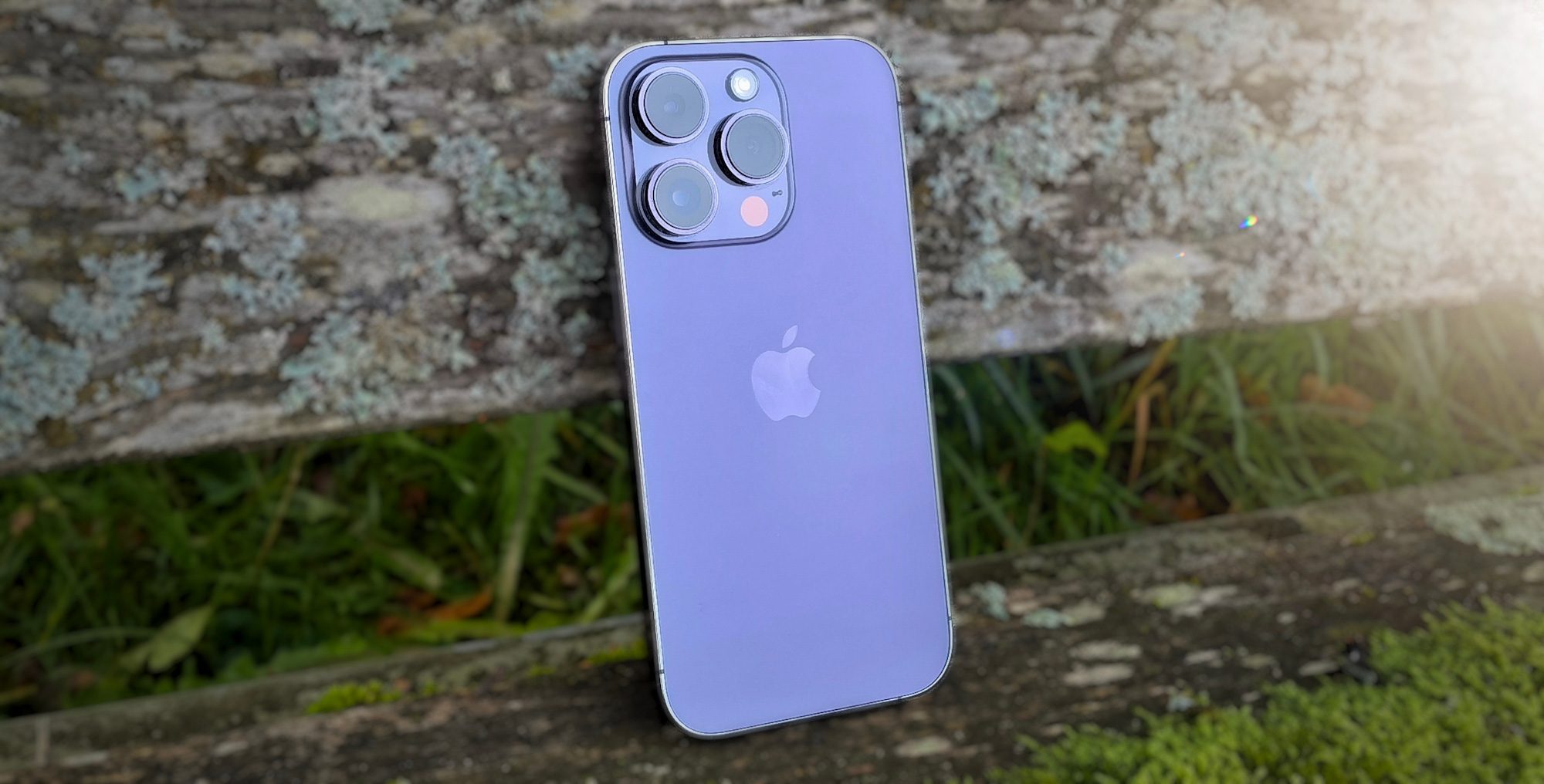
The new iPhone 14 Pro is undoubtedly a very exciting smartphone, as Apple has revised two important aspects: the camera and the front design. After five years, the notch is finally a thing of the past - at least on the Pro iPhones - and the 65 percent larger 48-megapixel main camera has, on paper, received one of the biggest upgrades in recent years.
All of this sounds pretty good, but this is offset by the enormously high price of a whopping 1.299 euros. You can find out whether this is justified or whether the predecessor is more worthwhile in this detailed test report.
Haptics & design
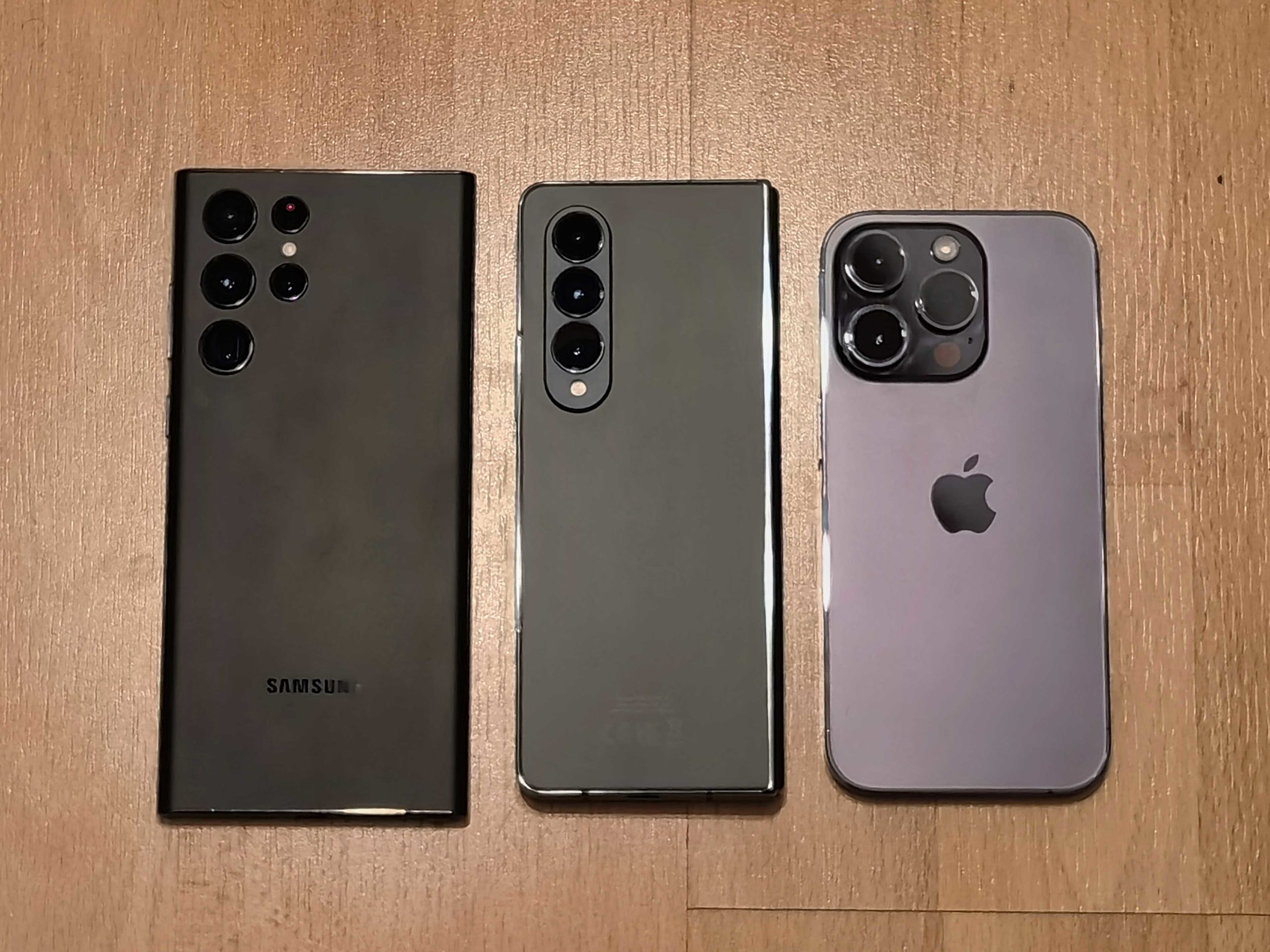
With dimensions of 147,5 millimeters in height and 71,5 millimeters in width, the iPhone 14 Pro is clearly one of the handy smartphones. One-handed operation is almost always possible proeasily possible, which is unfortunately only the case with very few smartphones these days.
As with the 12 Pro and 13 Pro, an angular high-gloss frame made of stainless steel is used, which isproIt looks and feels classy, but is extremely susceptible to fingerprints. You could spend the whole day cleaning the frame. Added to that is a rather unpleasant in-hand feeling, which is conveyed by the angular design. Unfortunately, it is not as ergonomic in the hand as the iPhone 11 Pro with its rounded frame. I like the back much better. It is made of matte glass, which feels particularly high-quality and is very grateful for fingerprints. Together with the stainless steel frame, the iPhone 14 Pro is one of the highest quality smartphones on the market.
-
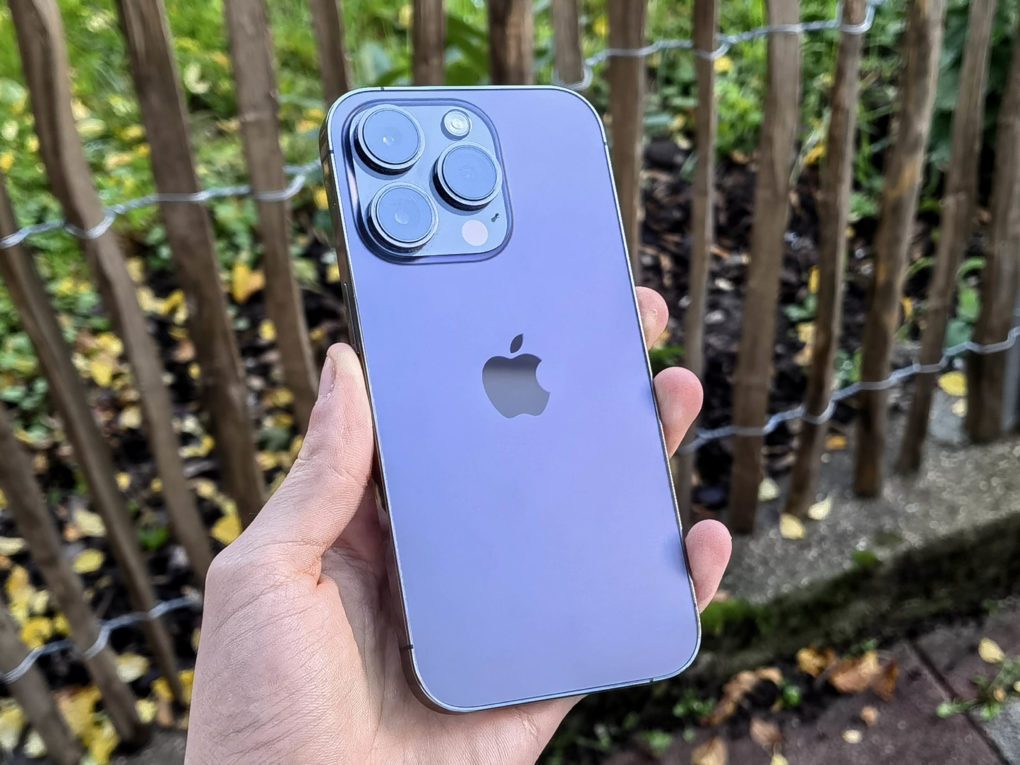
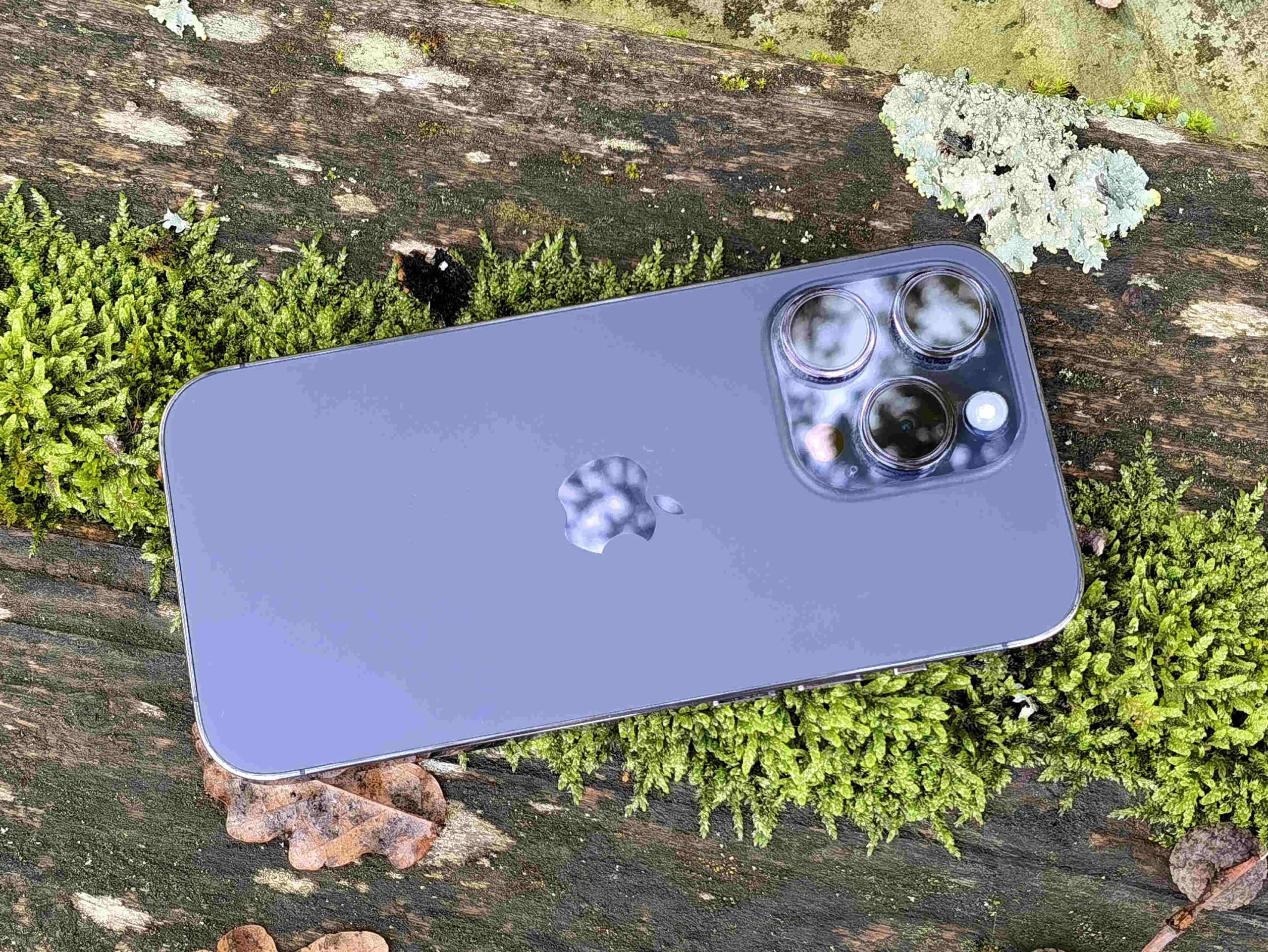
- I really like the dark purple. (Picture: TechnikNews)
-
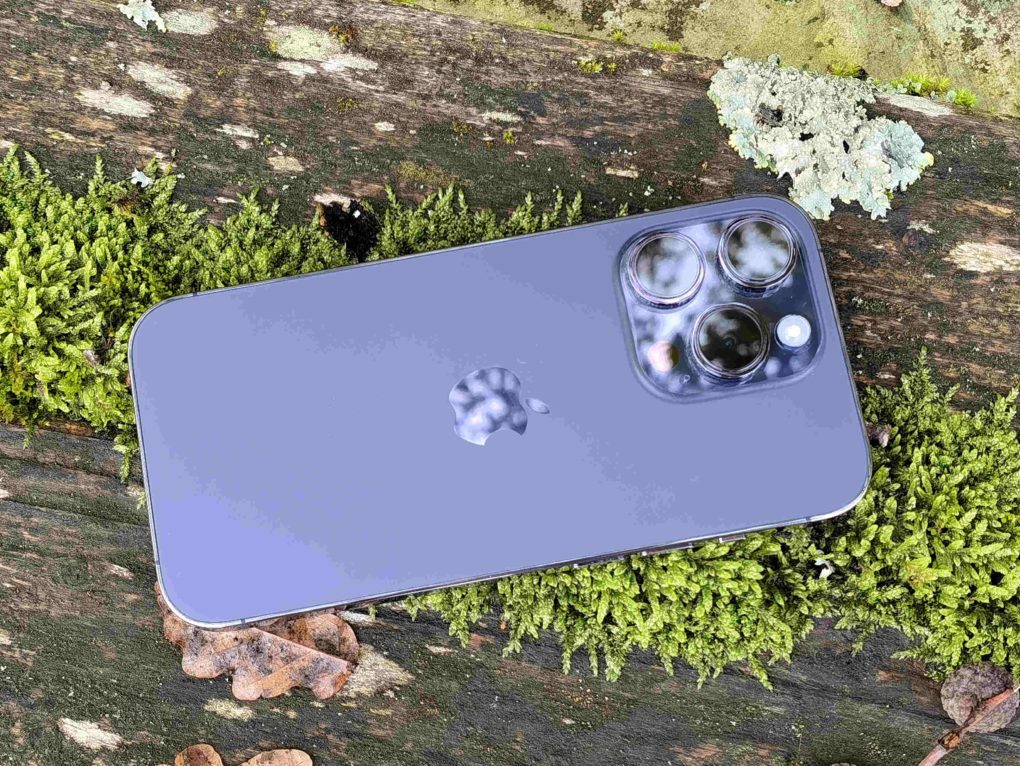
- This is a relatively subtle purple, which looks gray in certain lighting situations. (Picture: TechnikNews)
-
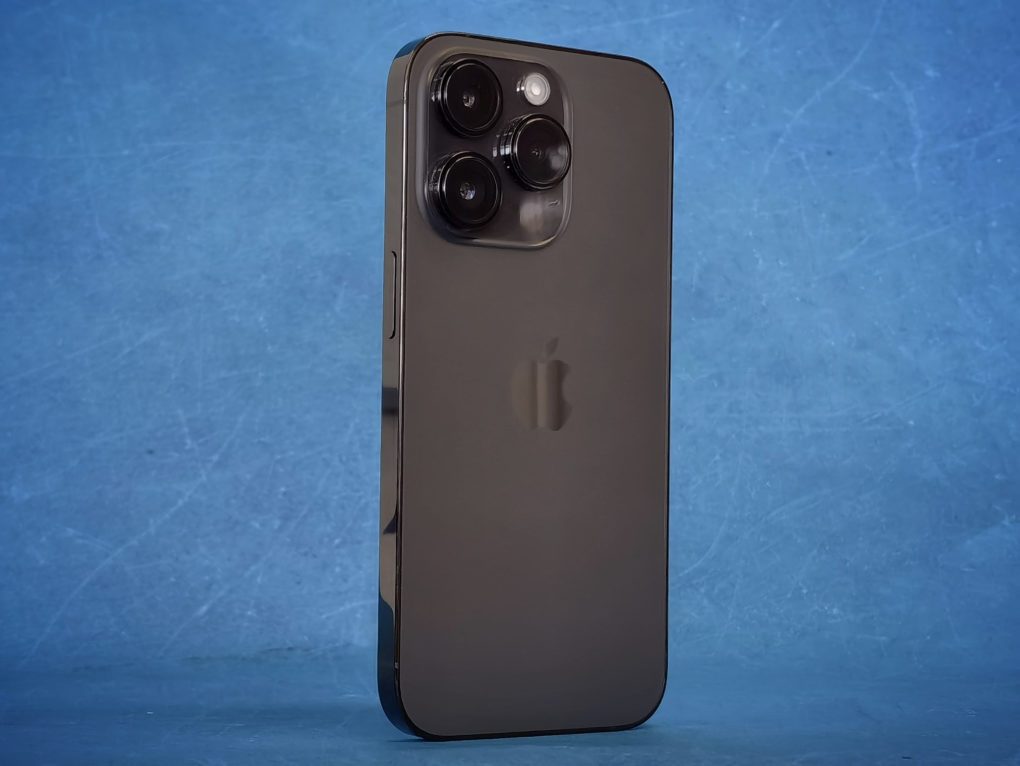
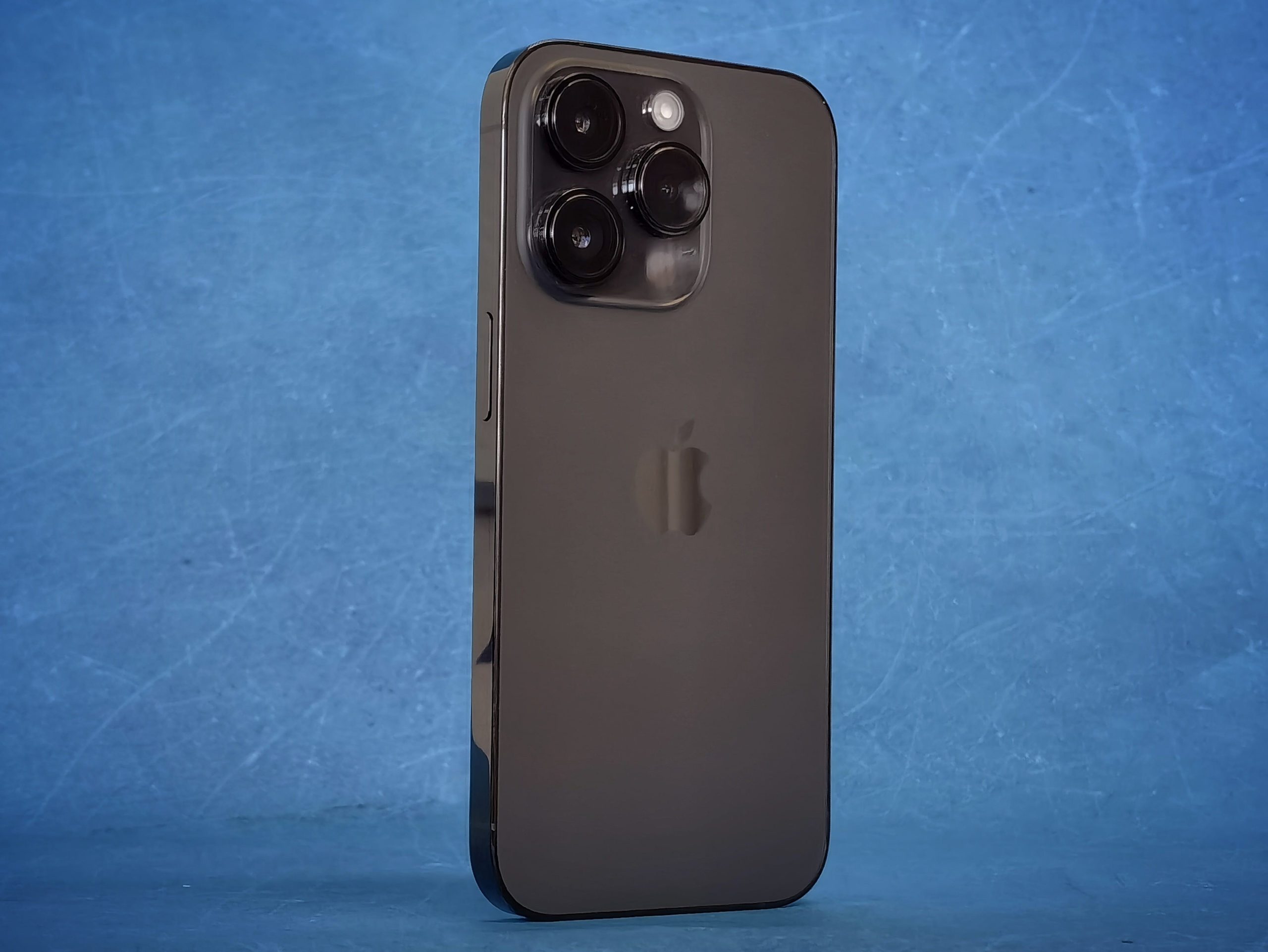
- Space Black is significantly darker than Space Gray on previous iPhones. (Picture: TechnikNews)
-

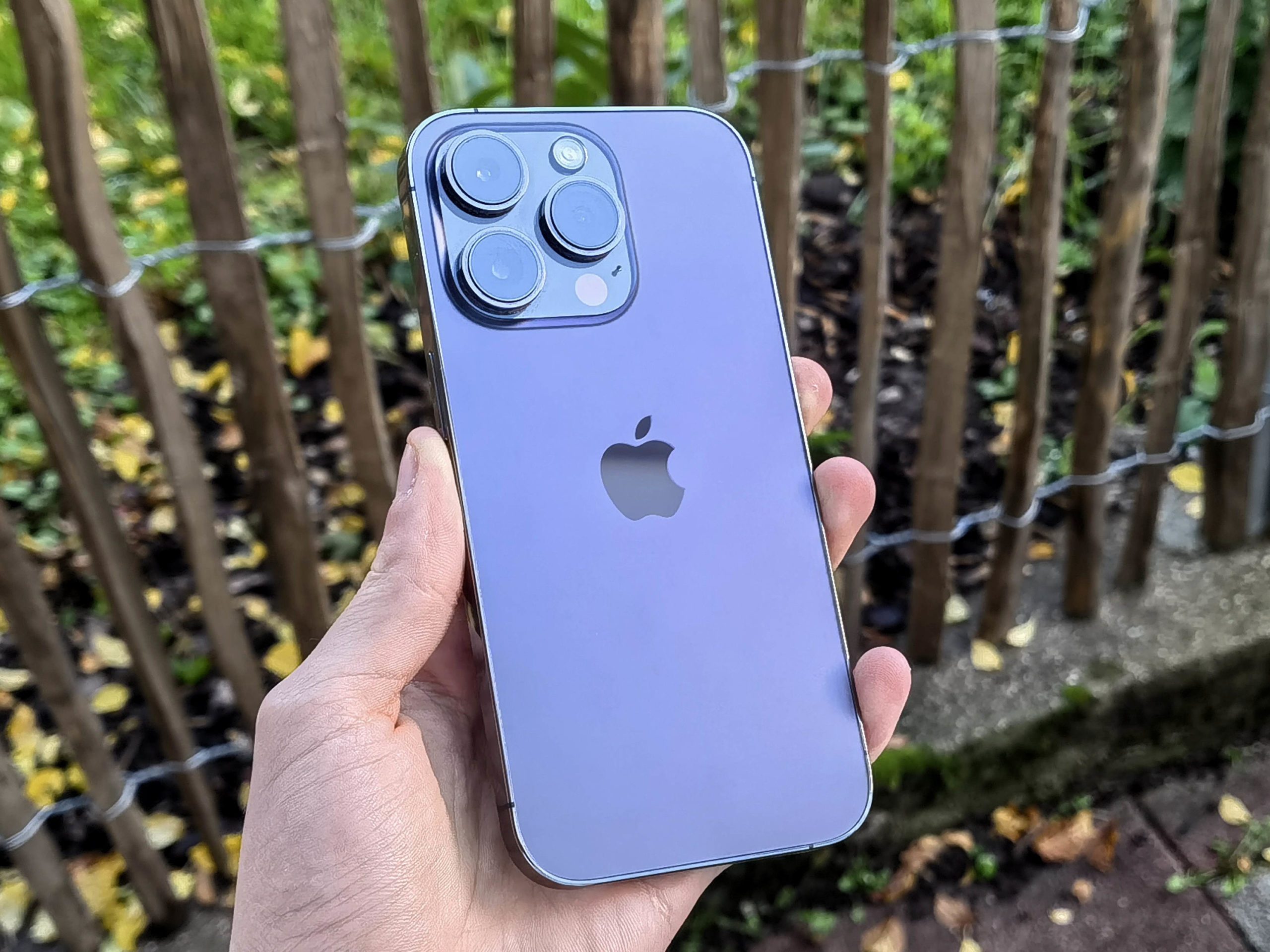
- The iPhone 14 Pro is noticeably smaller than most other flagships. (Image: TechnikNews)
When it comes to colors, customers have four variants to choose from: space black, gold, silver and dark purple. I tested the model in purple, which made me very happy because it's finally something new again. Apple calls it purple, but honestly it's only really purple in some lighting situations. Often it looks gray and sometimes silver.
-
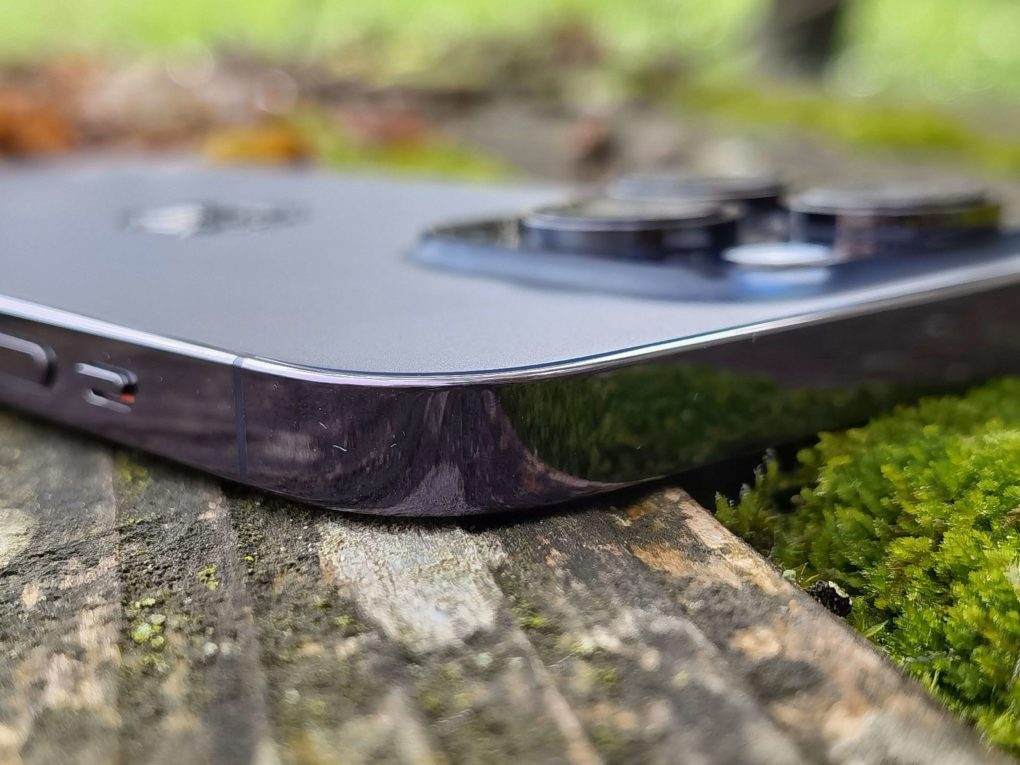
- The shiny stainless steel frame looks very classy. (Picture: TechnikNews)
-
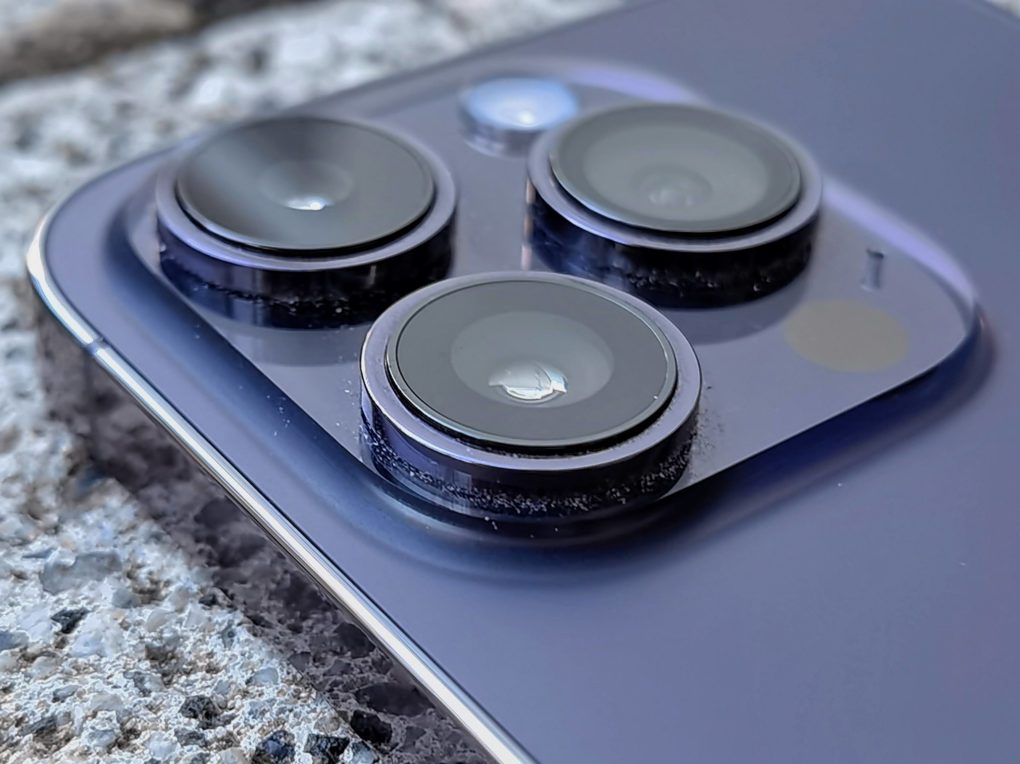
- The individual sensors protrude extraordinarily far from the case. (Picture: TechnikNews)
In addition to the color and the Apple logo placed in the middle, the camera design should also immediately catch the eye, because the built-in sensors in the upper left corner are enormously large and protrude extraordinarily far from the housing, which means that the smartphone lies on the table during operation wobbles a lot. Furthermore, it is very difficult to remove dust between the individual lenses because they protrude so far. Apple could have done a better job of that.
The notch is history
Something has finally changed on the front. The notch now seems to be history on the Pro iPhones. Instead, Apple has installed a large punch hole in the middle of the display below the upper screen frame. Of course, Apple had to come up with its own name for it. They call the cutout "Dynamic Island". You can think what you want of that, but I have to give Apple credit for the fact that the Dynamic Island looks much nicer than the notch in my opinion. It is also a bit smaller and simply looks more modern. The Dynamic Island also introduced some new software functions, which we will look at in more detail in a moment.
-
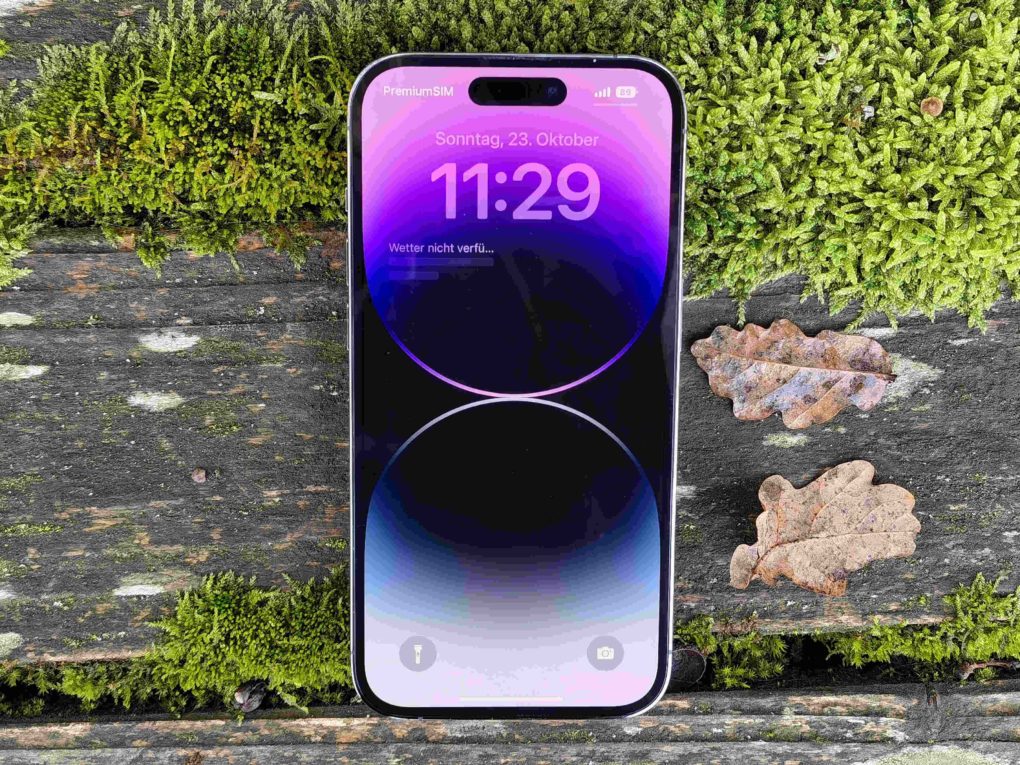
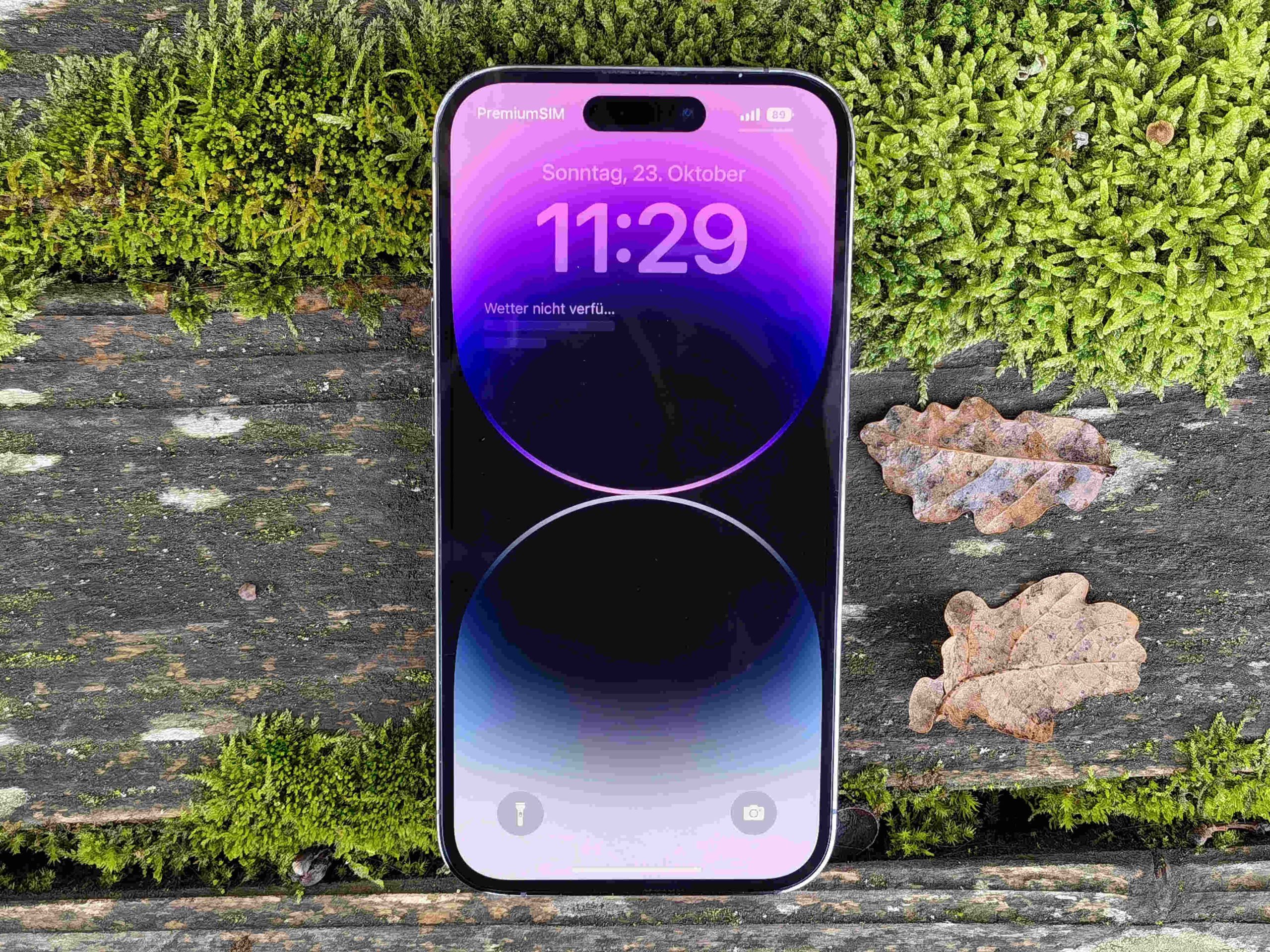
- The front of the iPhone 14 Pro has finally received an upgrade over its predecessor. (Image: TechnikNews)
-
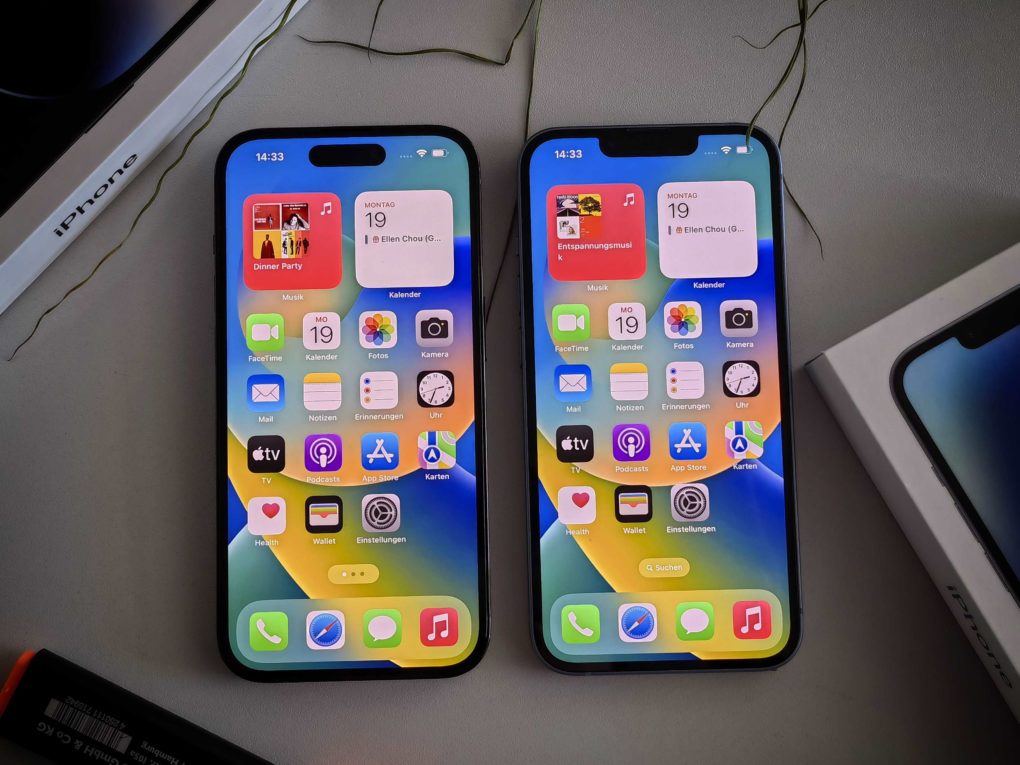
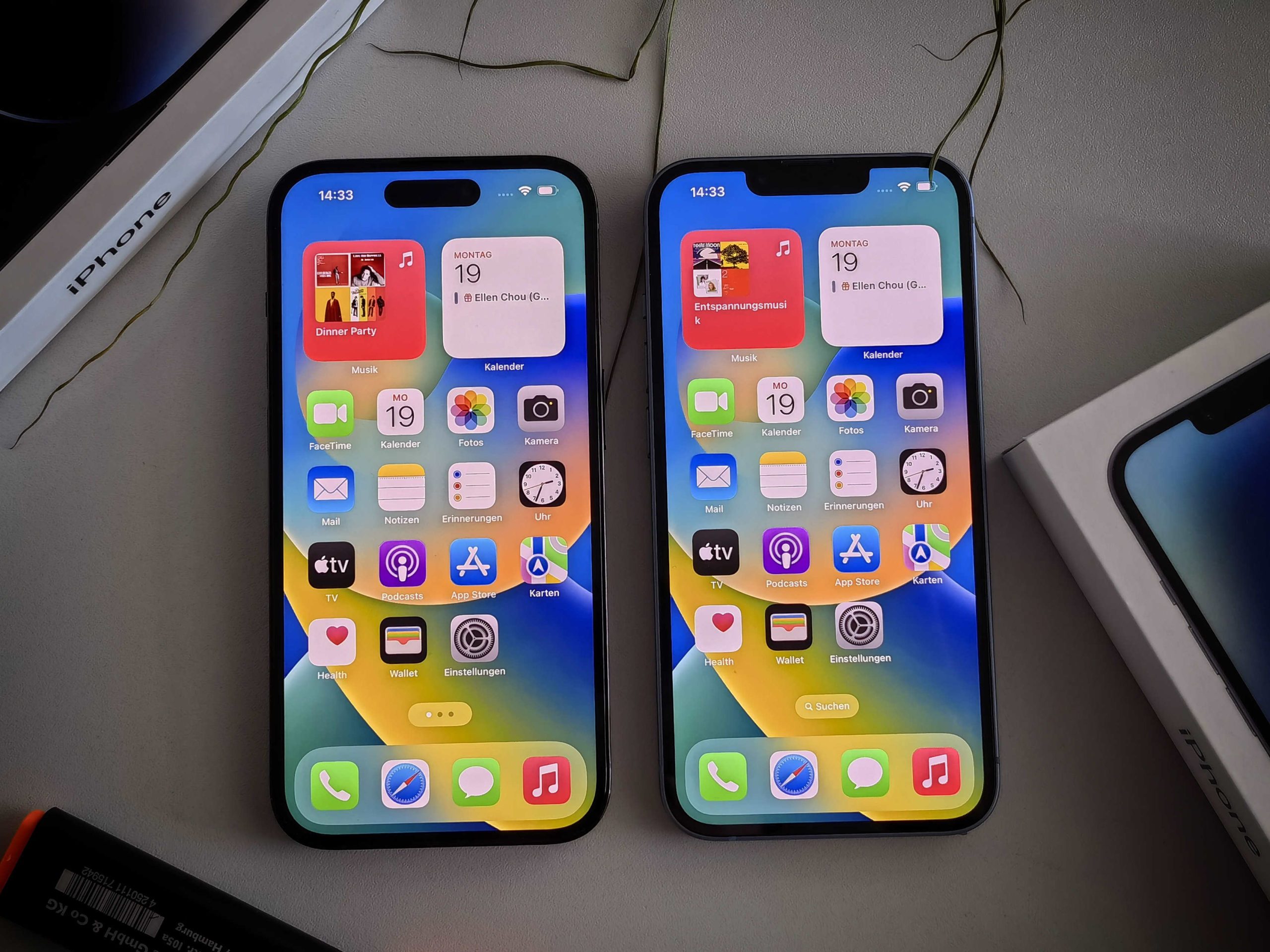
- The Dynamic Island looks a lot more modern than the Notch in my opinion. (Picture: TechnikNews)
Other than that, not much has changed on the front. The evenly thick border around the screen has only become slightly thinner than the predecessor, but that is only noticeable in a direct comparison.
Excellent workmanship
Display – top class
The Super Retina XDR OLED display measures 6,1 inches diagonally and has a resolution of 2.556 x 1.179 pixels at 460 ppi, which is more than sufficient for everyday use. In addition, the panel supports a smooth refresh rate of 12o Hertz, which means that 120 individual images pro second can be played back. As with the predecessor, Apple uses LTPO technology, which is able to automatically adjust the refresh rate to the required level in order to save power.
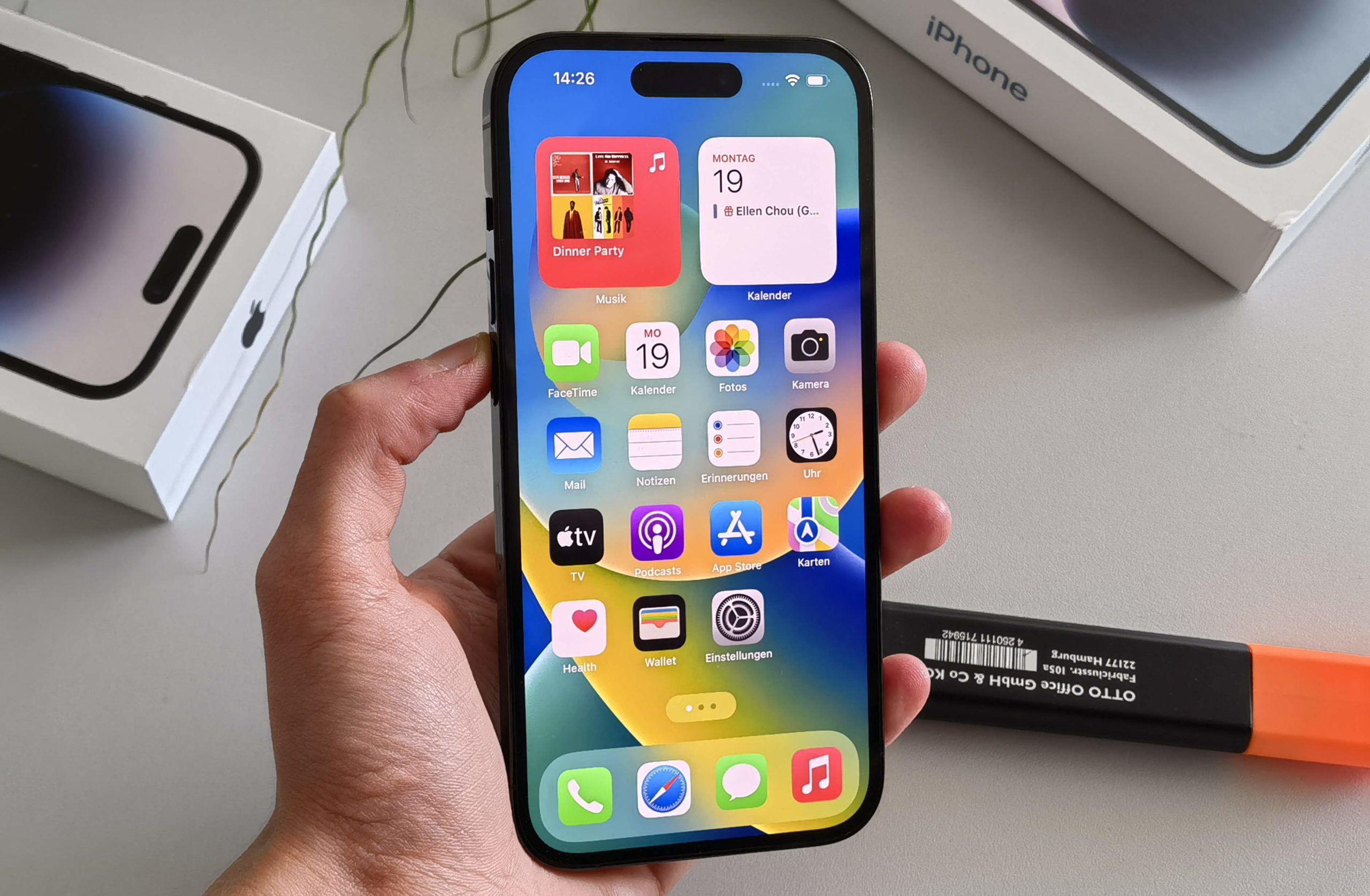
The display of the iPhone 14 Pro is excellent. (Image: TechnikNews)
The iPhone 14 Pro's screen is also impressive in all other areas. No other smartphone displays colors with such a high contrast and at the same time so realistically. The black level is as excellent as usual and even the white level, which doesn't always look perfect on OLED panels, is more than impressive. In addition, there is phenomenal brightness and very good viewing angle stability. Even on extremely sunny days, I never had any problems with readability.
Always-on display
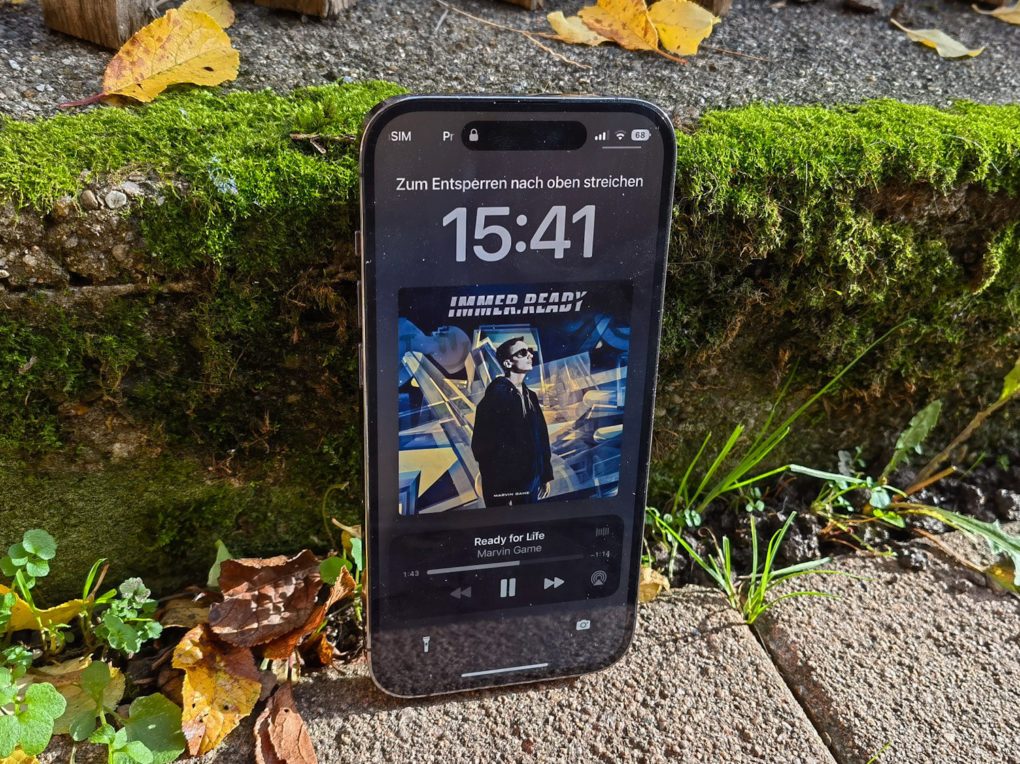
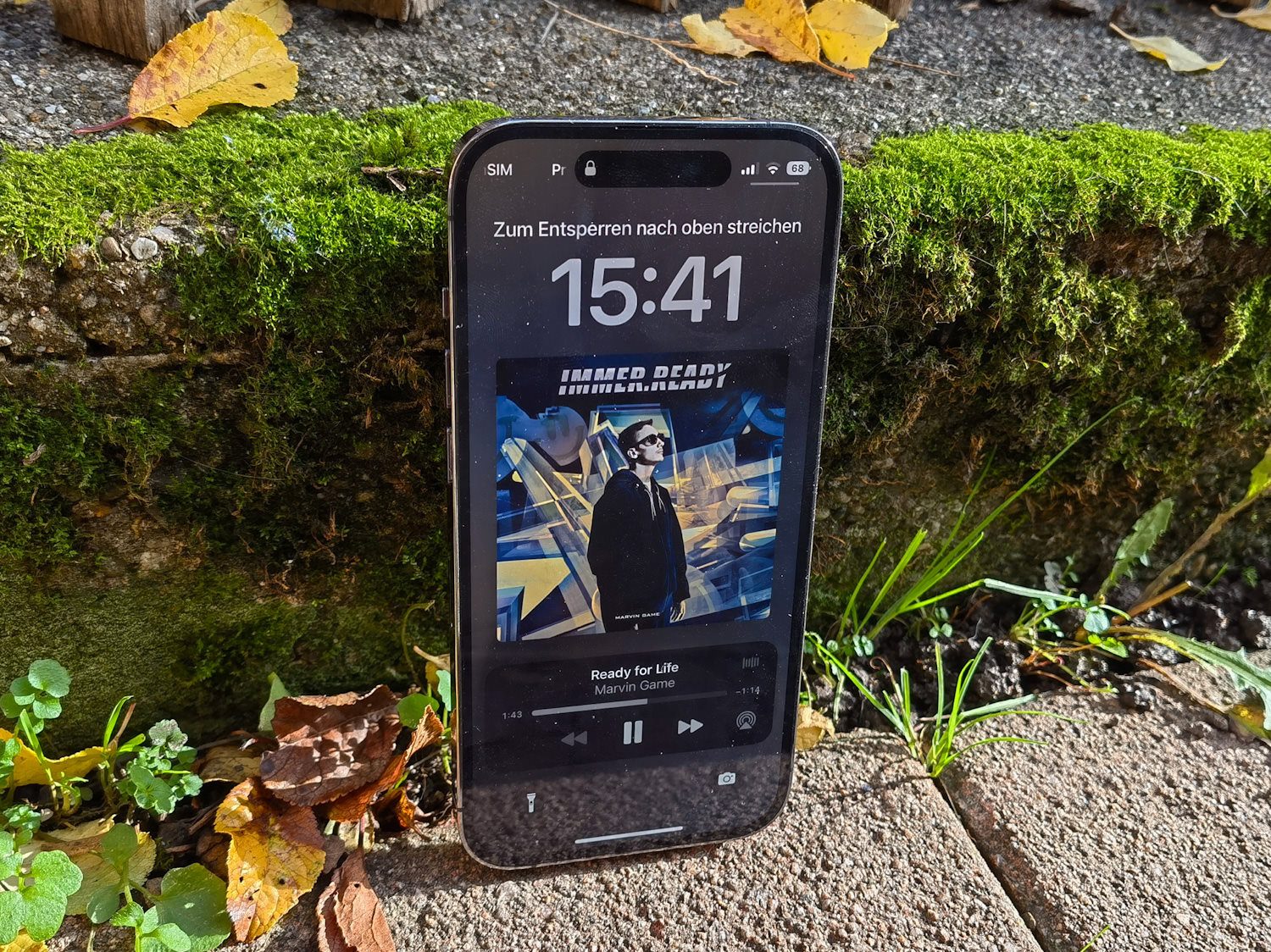
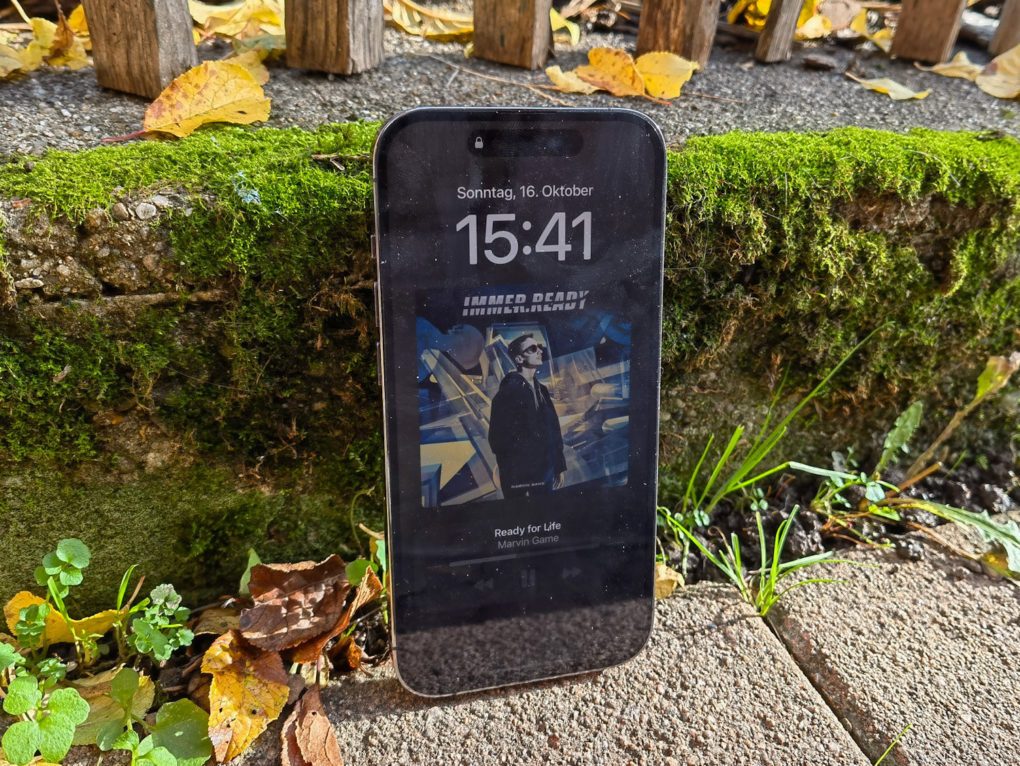
The iPhone 14 Pro also has a new feature, an always-on display, which uses the new display engine in the A16 Bionic processor, among other things. Unlike what we know from Android smartphones, however, this is a display across the entire screen. The background image of the lock screen is displayed dimmed with all widgets and notifications, and the feature cannot be switched on and off according to a fixed schedule.
The image on the left shows the iPhone with the activated lock screen and the image on the right shows the always-on display:
-
- Picture: TechnikNews
-
- Picture: TechnikNews

Software—iOS 16
The unique selling point of an Apple iPhone is undoubtedly the software, because unlike the smartphones of the competition, it relies on the in-house iOS operating system. The question of whether you like the software is also a matter of taste. However, one can positively comment on the easy-to-understand operation and the pleasant user experience, which is based, among other things, on high fluidity, the same scrolling behavior everywhere, clean optimization and very fluid animations. On the other hand, the closed system also has disadvantages, for example you are limited to the Apple App Store and there are no options for multi-tasking.
Apple is also superior in terms of longevity, because with more than five years of OS updates, which always appear on the first day, they are clearly superior to the competition when it comes to software support.
Dynamic Islands
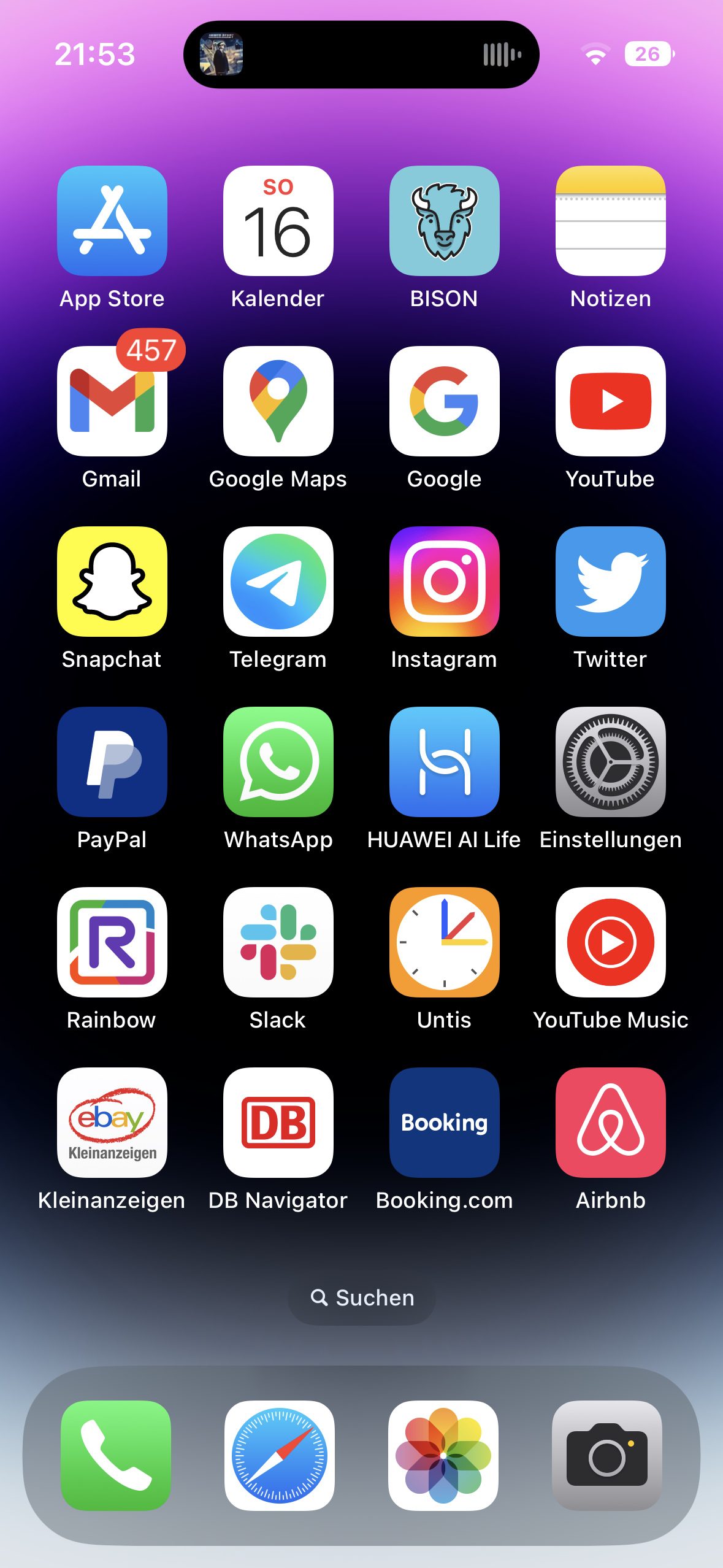
The most important new feature of the iPhone 14 Pro can be found on the front, the so-called "Dynamic Island". This wide screen cutout contains not only the front camera but also the sensors for FaceID, Apple's three-dimensional facial recognition. But it has also been integrated into the software operation as a new level, in contrast to the previous "punch holes" on Android smartphones.
-
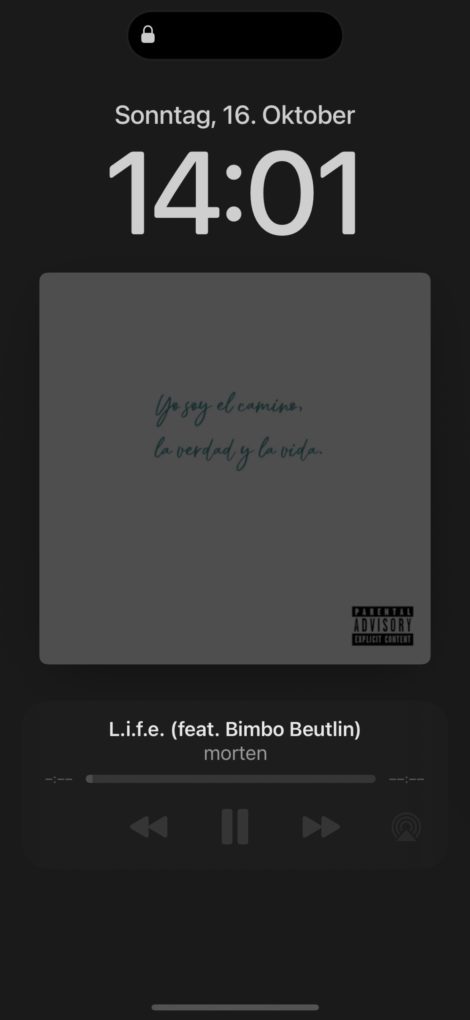
- The FaceID unlock icon is shown to the left of the Dynamic Island on the always-on display. (Screenshot: TechnikNews)

-
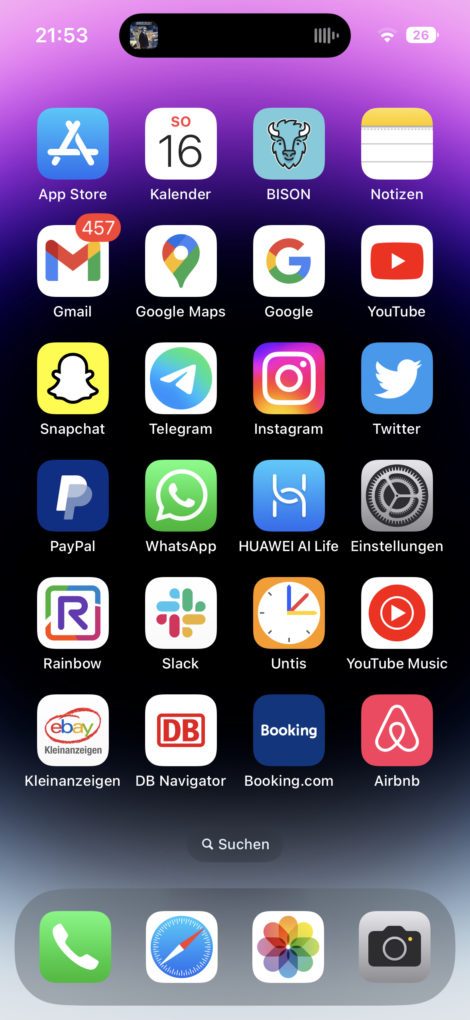
- Music that continues in the background is displayed in the island. (Screenshot: TechnikNews)
-
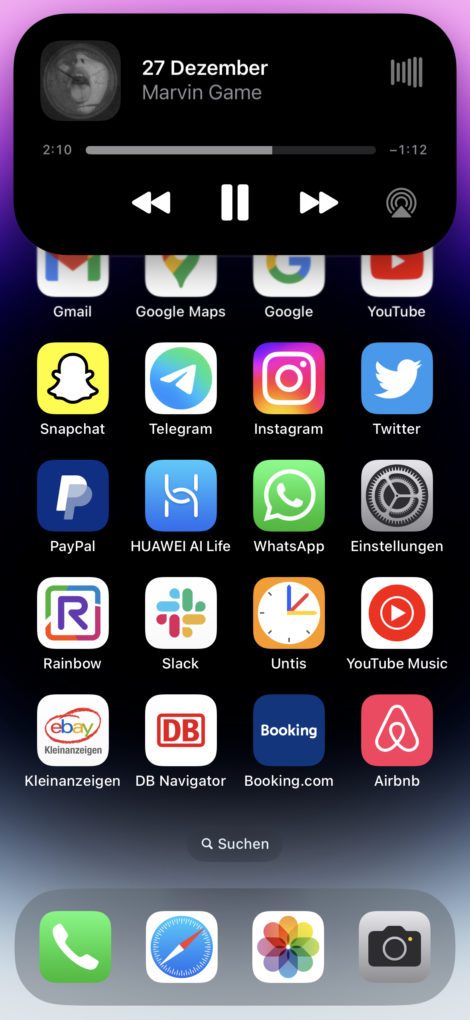
- With music playing in the background, you can tap and hold on the Dynamic Island so you can pause or skip into the song. (Screenshot: TechnikNews)
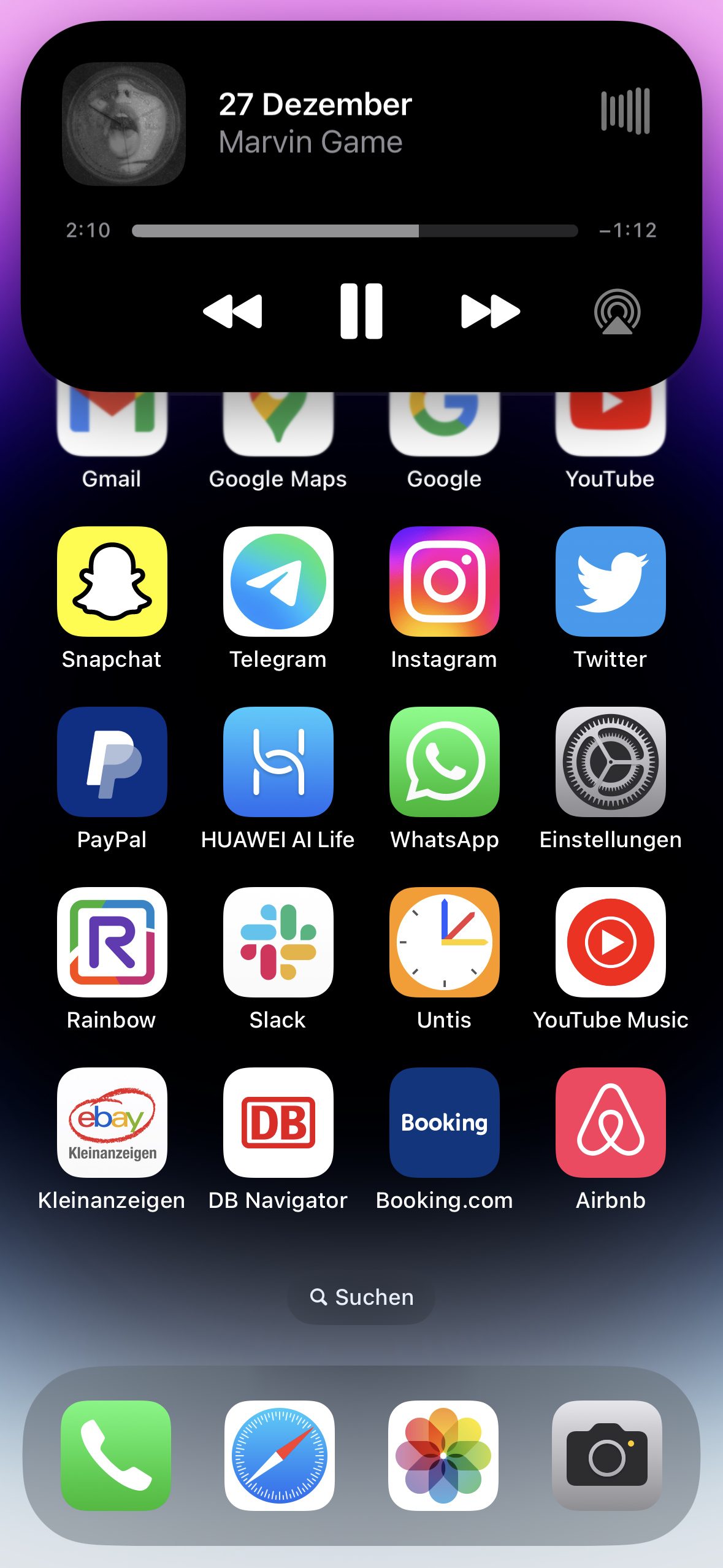
Activities from applications that continue to run in the background are displayed as icons at the top so that they can be accessed again with one click. This includes navigation in Apple maps, running music / voice messages or a timer. The island also serves as an indicator, for example for a low battery level or for muting the iPhone. Support for Dynamic Island from third-party applications is currently quite rare, but this is likely to change quickly in the future.
Performance - fast, future-proof & hot
The processor installed in the iPhone 14 Pro is called A16 Bionic, and it is once again the most powerful smartphone chipset on the market. It is manufactured using a four-nanometer process. Together with the excellent optimization, the smartphone has great everyday performance, the software always follows your hand and apps start very quickly. The iPhone has no problems even with more complex tasks such as video editing or 3D games. Together with the many software updates, this is definitely the longest-lasting smartphone currently on the market.
Despite the excellent performance, the heat development in everyday use needs improvement. This is not only very pronounced during complex processes, but also during everyday tasks such as consuming social media with the screen bright at high levels.
Battery – good runtimes, long loading times
Apple installs a 3.200 mAh battery that can be charged with up to 20 watts. With a MacBook power supply, it takes almost two hours to fully charge the battery, which is extremely embarrassing for 1.299 euros. Even significantly cheaper smartphones from OPPO, OnePlus, Xiaomi and Vivo are worlds better here. Apple really needs to do better here in the future.
As bad as the loading times are, the runtimes are fortunately good. With activated always-on display I still had at the end of the day with a screen-on-time of 5 to 6 hours between 27 and 38 percent Battery left, which is very commendable for such a small battery. at deactivated always-on display I still had it after 5 to 6 hours between 30 and 50 percent battery left. Even if the always-on display eats up a little more battery, of course, I wouldn't worry about it as much. Most people might proget through a day without a charge.
Camera - good quality with known weaknesses
Apple has installed a triple camera on the back, which is also supported by a LIDAR sensor. On paper, the main camera has received a major update compared to last year. It now has a resolution of 48 megapixels and, at 1/1.28 inches, is significantly larger than the 13 Pro. There is also an ultra-wide-angle camera with a resolution of 12 megapixels and a sensor size of 1/2.55 inches. The third camera is a 12 megapixel telephoto camera with 3x optical magnification. Digital zoom is possible up to 15x.
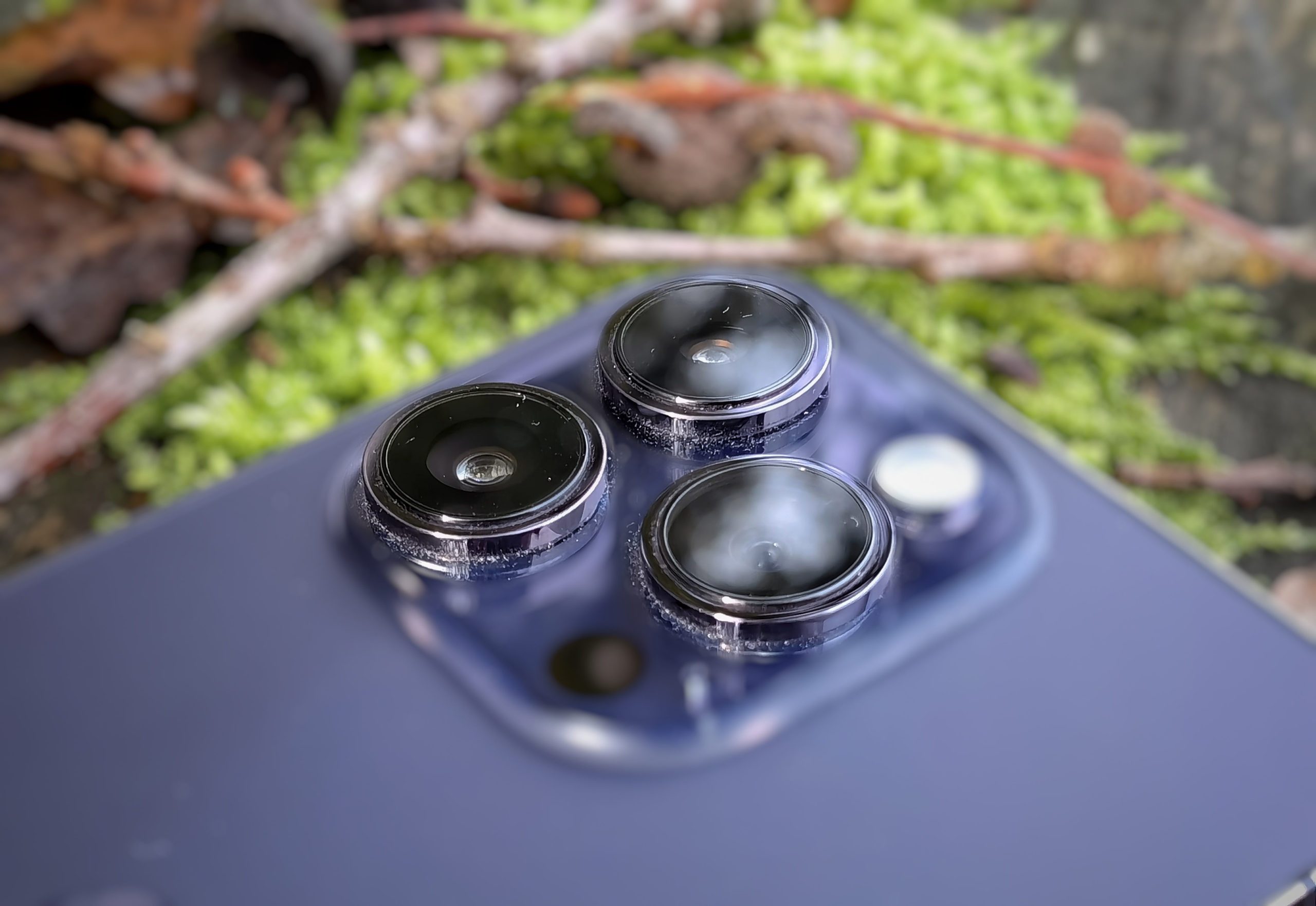
The triple camera of the iPhone 14 Pro. (Image: TechnikNews)
I will deliberately keep the camera brief, because just a few days ago we had the iPhone 14 Pro compete with the Vivo X80 Pro in a detailed camera comparison. In addition, our colleagues from HUAWEIblog In a detailed comparison, I compared the camera of the P50 Pro with that of the iPhone 14 Pro, which I can also recommend to you. In these articles you will find all the details about the new iPhone camera:
- Camera comparison: iPhone 14 Pro vs. Vivo X80 Pro
- Camera comparison: iPhone 14 Pro vs. HUAWEI P50 Pro
In summary, the iPhone 14 Pro takes good pictures with all three cameras, although they are hardly better than the iPhone 13 Pro. Colors are sometimes reproduced too unnaturally for my taste and all Android flagships are actually visibly better in terms of dynamic range. The sharpness is very good, however, and the iPhone still takes quite passable pictures in low light, although I would have expected a little more here. Selfies have become noticeably better and Apple is still unmatched when it comes to videos.
Other - great speakers, good vibration motor, FaceID and more
Apple has given the iPhone 14 Pro great stereo speakers, which are even better than its predecessor. They get extremely loud, the sound is clear and the bass is really great for a smartphone.
The vibration motor (taptic engine) ensures extremely precise haptic feedback and does not sound annoying either. It is currently one of the best vibration motors in a smartphone.
The only secure option for unlocking the smartphone is hidden in the Dynamic Island: FaceID. It is a three-dimensional facial recognition system, which is significantly more secure than most Android smartphones. Only HUAWEI can currently keep up with the Mate 50 Pro. FaceID works extremely reliably and, compared to its predecessor, the iPhone can now also be unlocked in landscape format - and when wearing a mask.
The link to Huawei Blog does not work. database error