
BYD ATTO 3 review: Nice car with room for improvement in terms of software
A TEST REPORT from David Haydl  on April 09, 2023, 8:00 p.m. | Write a comment
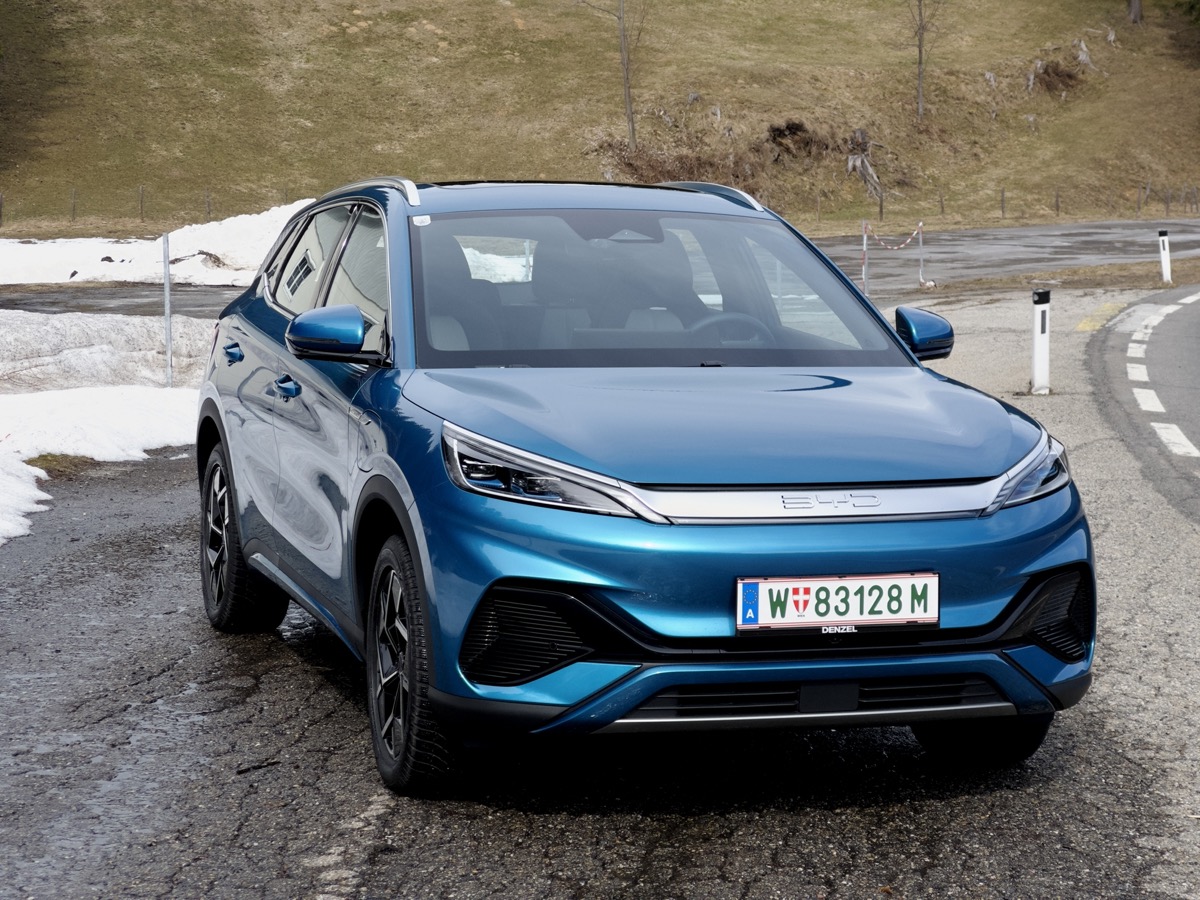
At the beginning of the year BYD takes off here in Europe. I was now able to test the entry-level model, the BYD ATTO 3.
The name BYD will raise a question mark for most. This is a company from China, which has recently also been producing electric cars. My colleague David Wurm was able to see the first three models, the ATTO 3, the HAN and the TANG as part of the Launch events in January look in advance. In this test report, however, everything should revolve around the first vehicle, the BYD ATTO 3. The mini SUV is the most affordable model in the range.
For two weeks I was able to find out how this works in everyday life.
tl; dr
The BYD ATTO 3 is a good car for the price point. The look is not too flashy on the outside, yet modern, and on the inside you'll find some unusual, but very nice, design elements. I was very satisfied with the driving comfort in normal and eco mode and it is also fun to drive the ATTO 3 in sport mode.
My two criticisms are the maximum charging speed of 88 kilowatts and that the software and infotainment still need improvement in some areas. At this point I have to say that I received four updates during my test phase, which already ironed out some points that I originally wanted to bring in.
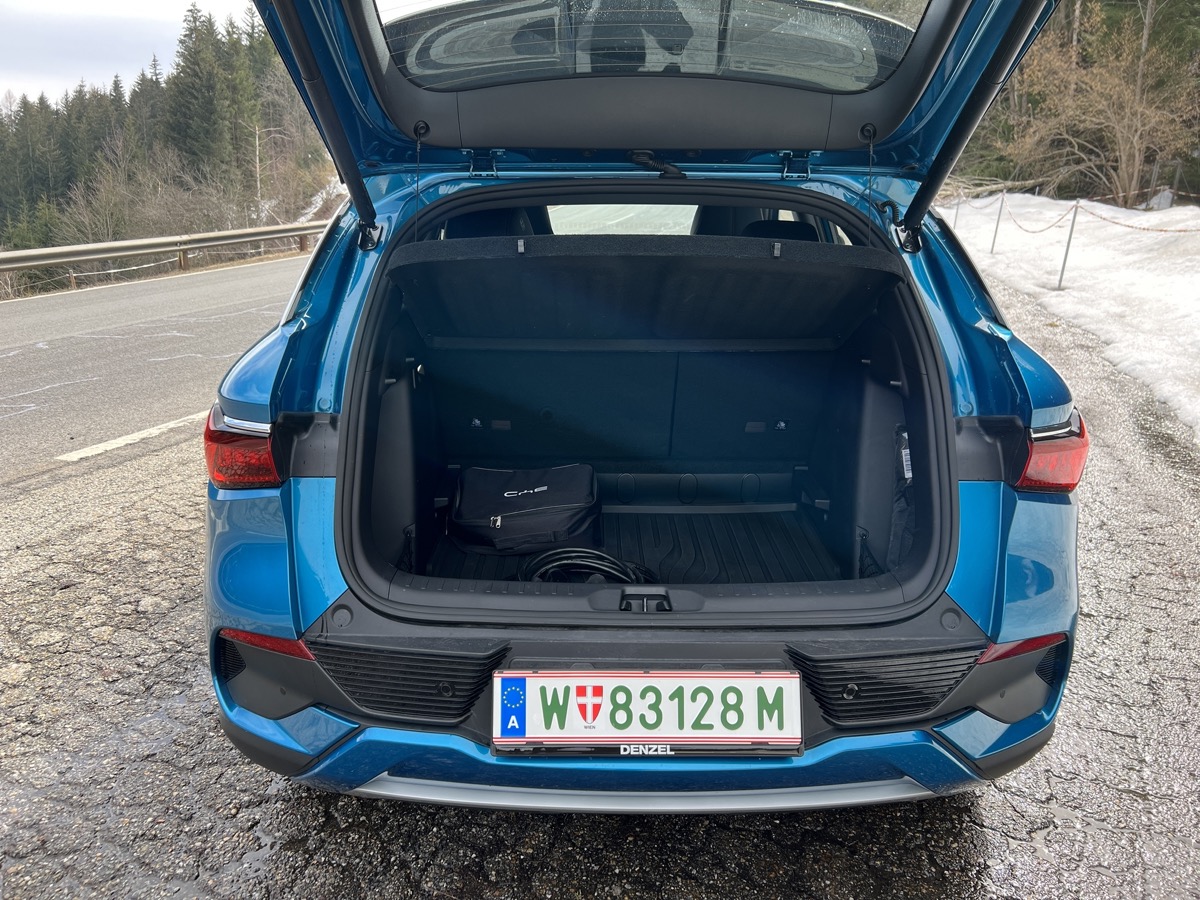
I would have wished for a frunk, but the spacious trunk partly makes up for the lack.
Design
The BYD ATTO 3 is an inconspicuous compact SUV. It is available in Skiing white, Climbing grey, Parkour red and Surfing blue, although my test vehicle was the latter colour.
At the front you can see a subtle BYD logo and the LED headlights. These are so bright that most of the time I didn't even have to turn on the high beam at night. A frunk is not installed in the ATTO 3, but the bonnet can still be opened by pulling a lever on the driver's side. Looking underneath, I don't quite understand why at least a small frunk wasn't integrated. There would always be a little space for that. There is enough space in the trunk to store the charging cable.
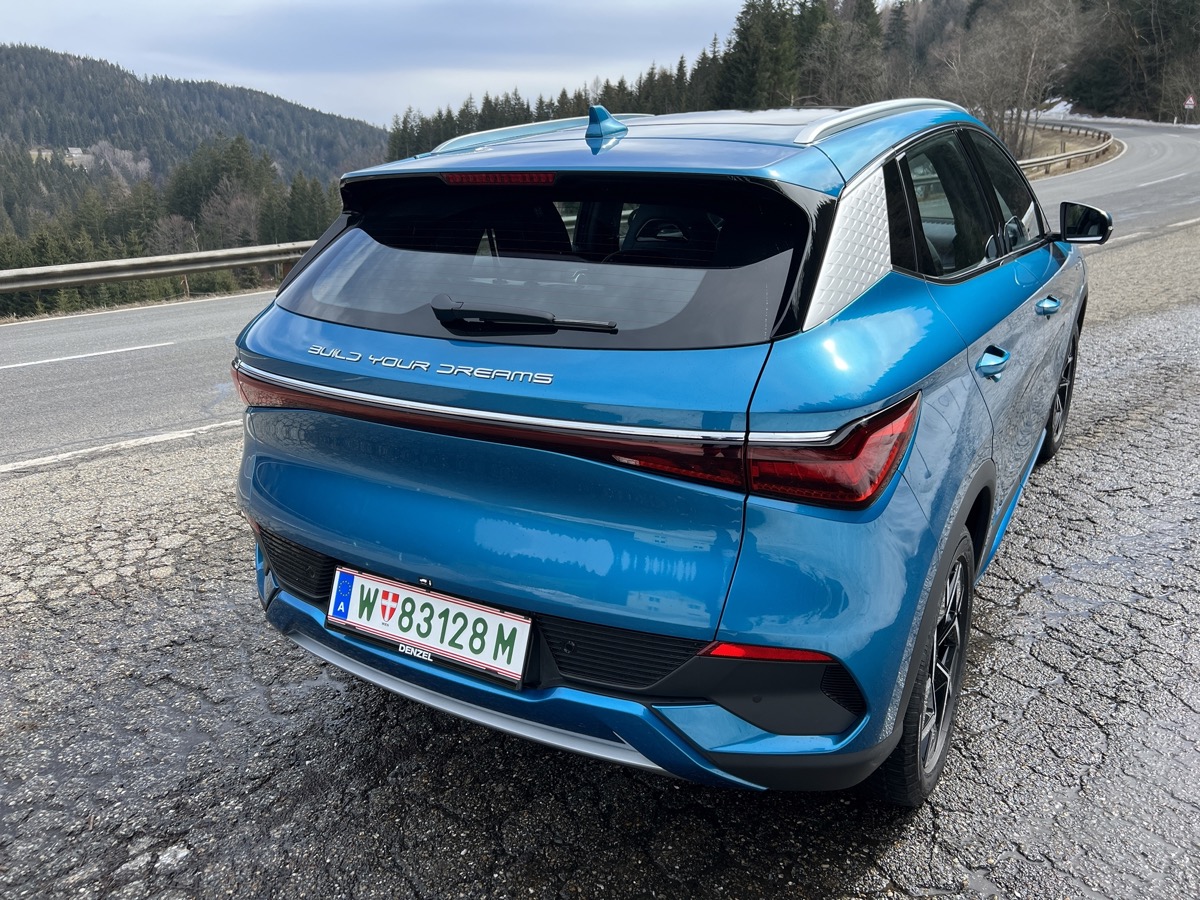
If you look at the car from the left side, you will notice the button for keyless unlocking of the car on the driver's door handle. This locks and unlocks the vehicle with a simple press. And to be honest, I like that better than the sensors that are used in other cars because the button is worlds more reliable. It would have been nice if there was something like that on every door. The pattern behind the doors to the rear seat is a nice visual addition and we already know it from CUPRA born.
The tailgate can be operated electrically. To the right and left of this we find an LED headlight and in between the lettering "Build Your Dreams" (i.e. the full name of BYD) can be seen. The aesthetics of it is a matter of taste, I almost would have liked it better if only the compact BYD logo had been attached here as in the front.
-

- Picture: TechnikNews
-
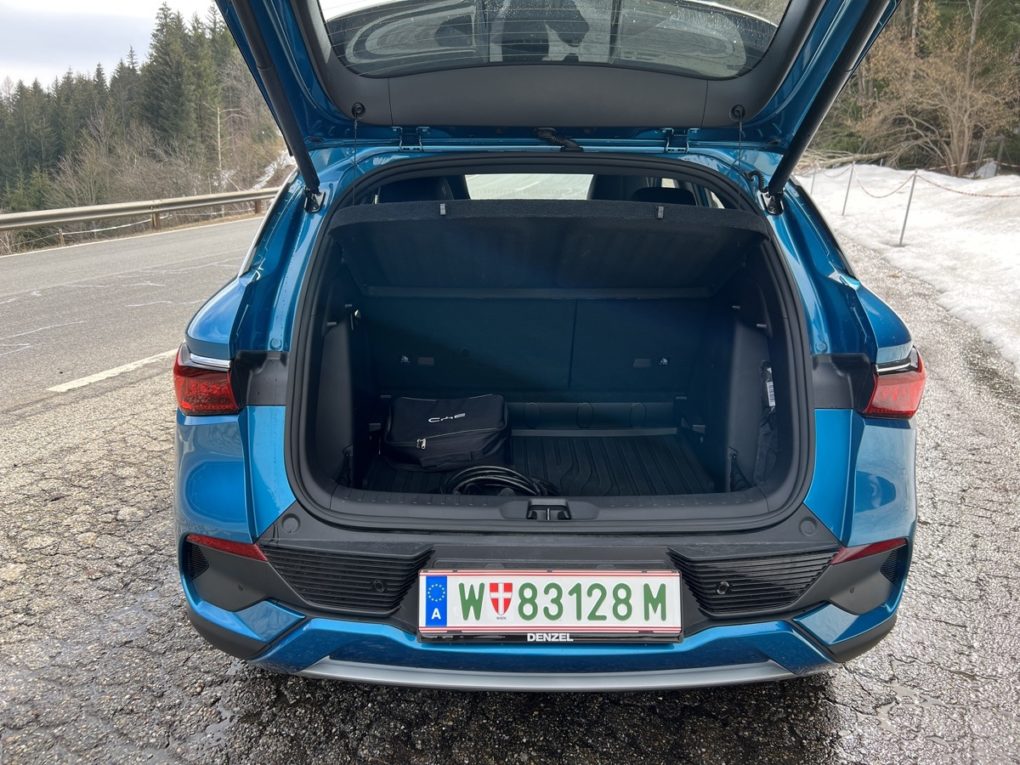
- There is no frunk, but there is a spacious trunk. (Picture: TechnikNews)
inner space
There are many noteworthy design elements in the interior, including the door handles with a loudspeaker, the shelves in the doors with the cords or the distinctive ventilation slots. It's not for everyone visually, but I like it. Incidentally, the door handles are not quite as intuitive to use, because almost nobody I took with me with the BYD ATTO 3 understood how to open the doors on the first try.
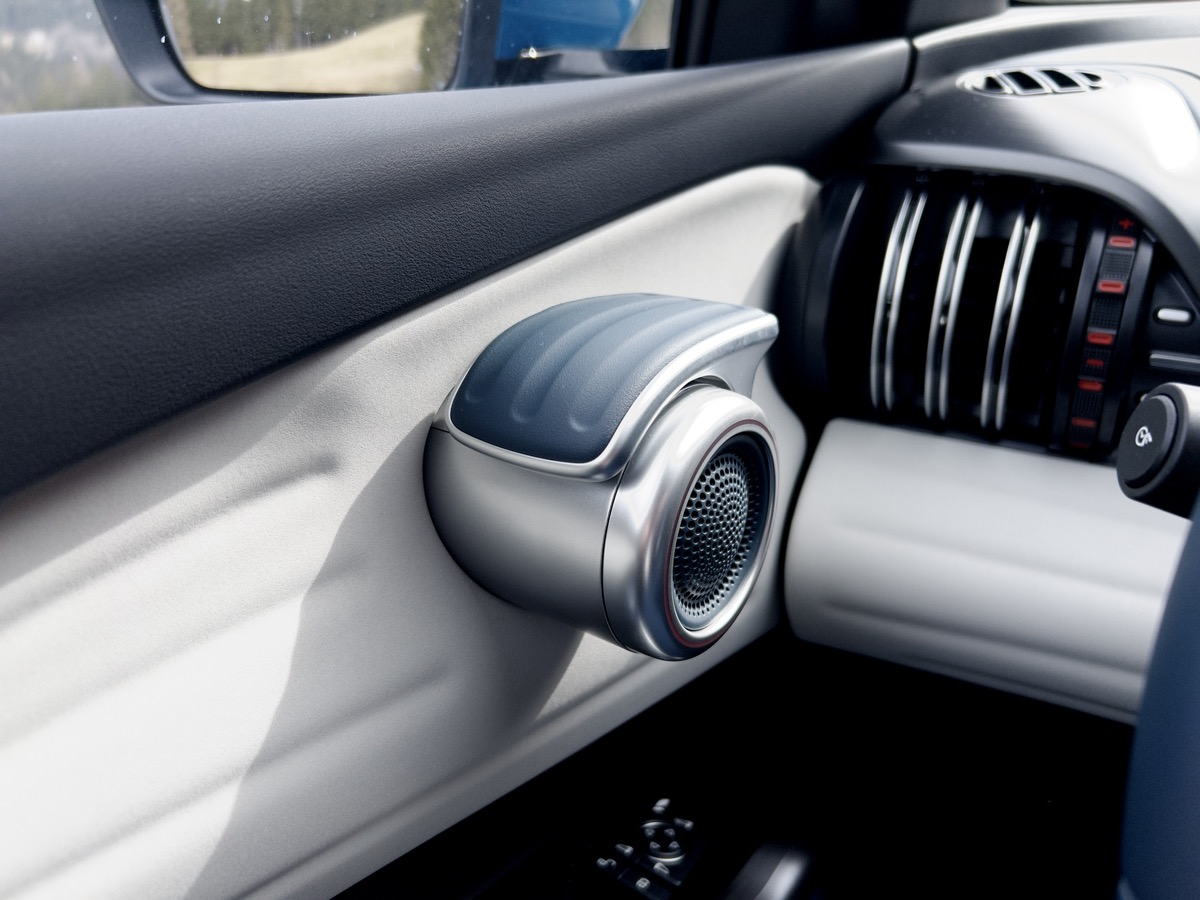
These are the door handles in the BYD ATTO 3. (Picture: TechnikNews)
The seats are electronically adjustable and rather soft. There is no built-in massage function.
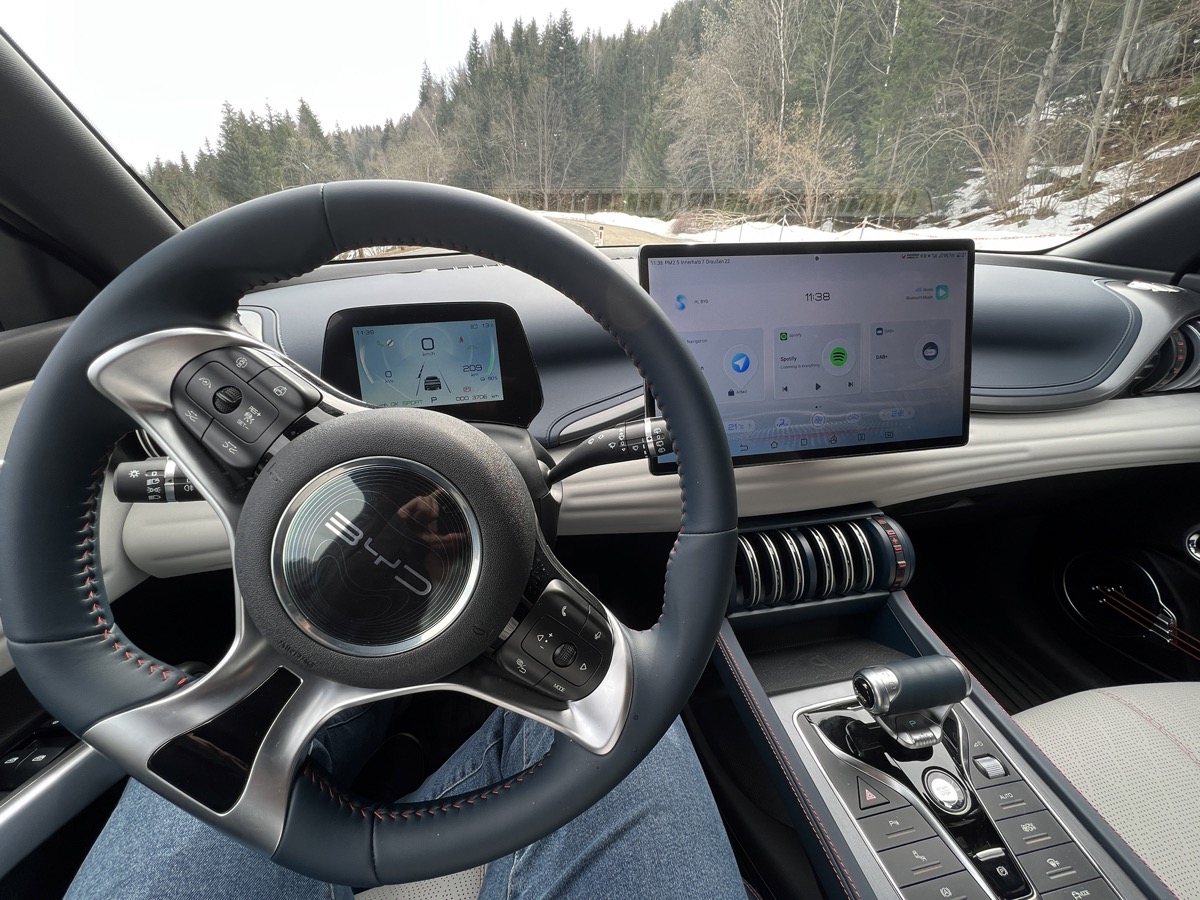
Many functions that are usually present in a motor vehicle can be controlled using buttons in the center console. The air conditioning can also be manipulated to a small degree, with detailed settings hidden in the infotainment. I have to criticize the positioning and the size of the button for the alarm flasher. This is small and could be placed higher up for my taste so that it can be reached more quickly.
The storage compartment under the armrest is on the small side, but there is a larger, open storage space under the center console. This is perfect for things like glasses cases or house keys. A USB-A and USB-C port are also located there - a bit difficult to access, in my opinion.
Picture: TechnikNews
The speakers are sufficient for me, but not outstanding. I also noticed that the volume of the infotainment and the volume of the smartphone are not the same when connected via Bluetooth, which can be quite annoying.
The second row is equipped with seats similar to the front row. I could do three people proeasily, although it would certainly have been more comfortable for them in a different, spacious car. The center console gives passengers access to air vents and USB-C ports.
infotainment and software
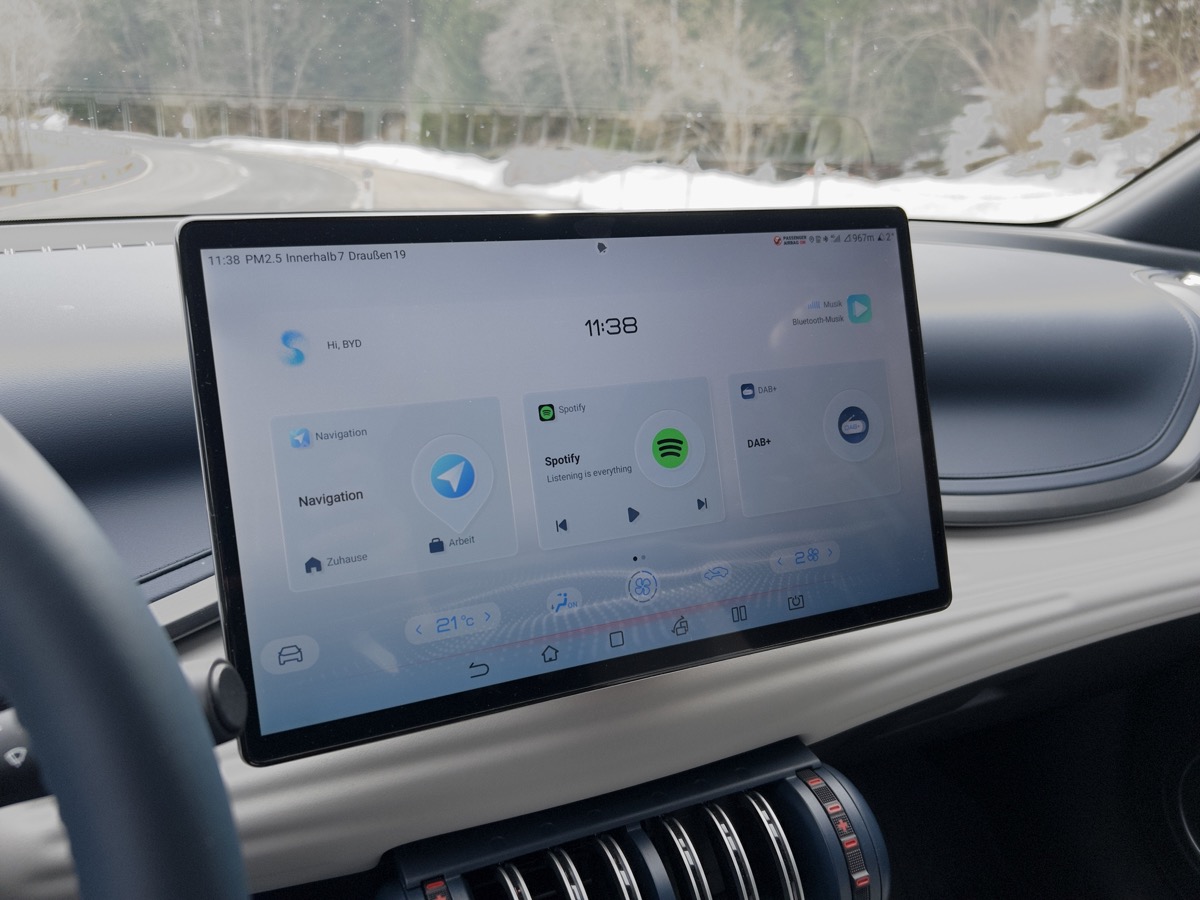
What immediately catches the eye in the interior is the large display. Depending on your preference, this can even rotate into a vertical position, whereby the software adapts very reliably to the current orientation. A disadvantage of the size of the display is that when it is horizontal, the content on the bottom left is covered by the steering wheel.
-
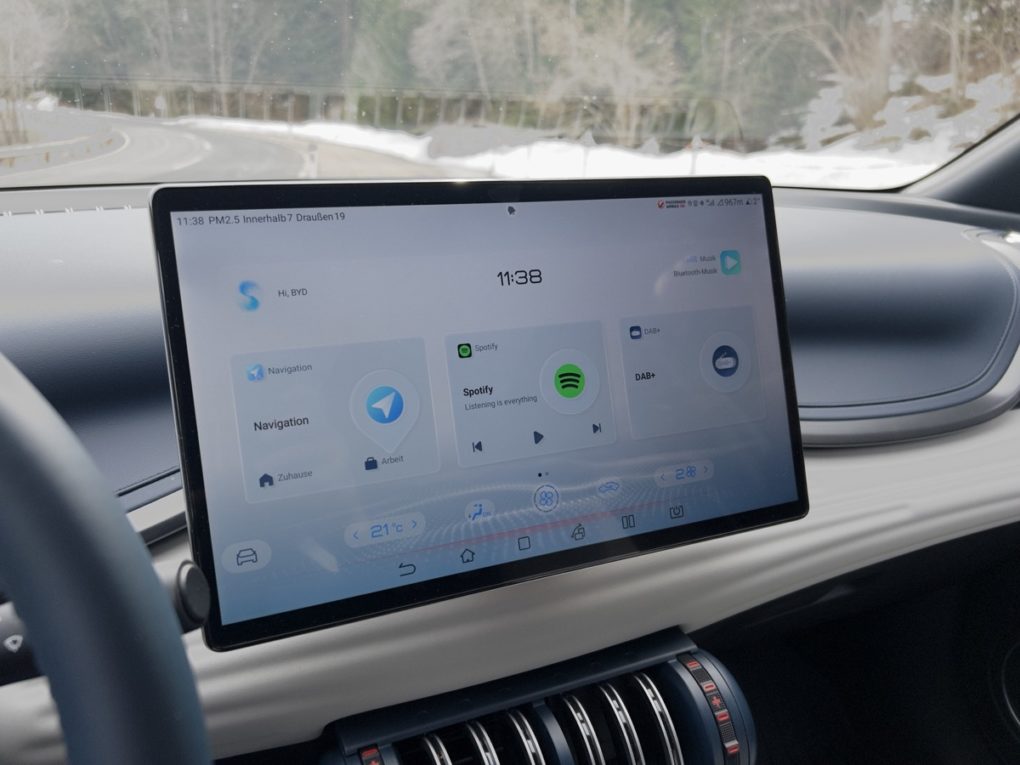
- If desired, the infotainment screen can be... (Picture: TechnikNews)
-

- ...also set up. (Picture: TechnikNews)
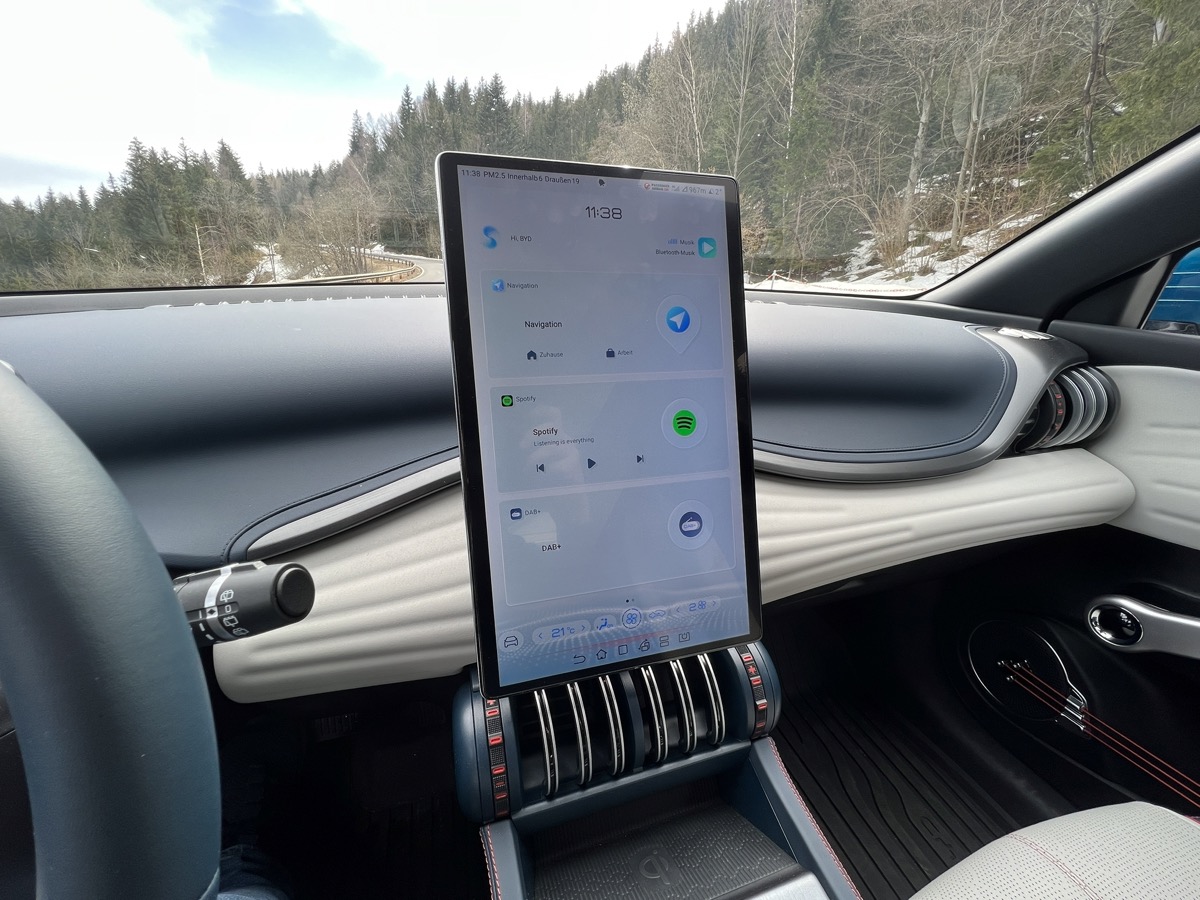
During my test, the software used was version 1.1 of BYD's own OS, a customized version of Android. A few words about that right away: The software still has a few issues, especially with regard to adaptation for the European market. However, I received four updates during my two-week test drive, which have already eliminated some of the shortcomings. BYD is also planning some major updates for the future. This quarter, German will be available as a language in the menu and for the voice assistant. And in the next quarter, the software will be expanded to include charging planning for route guidance. So I'm confident that if something isn't working quite smoothly, it will definitely be fixed with an update.
I really liked many aspects of BYD's software, such as the tidy home screen, the large icons and fonts for easy operation, or the reversing camera with a bird's-eye view. The settings, on the other hand, are not so neat, because there are many submenus, which is why you need a little time at the beginning to find your way around.
One of my highlights is the navigation app. It offers beautiful graphics, a tidy interface and also a graphical percentage display for the distance covered during a route. This can be very helpful, especially on longer trips with children, where the popular question "How far do we have to go?" comes up. On one occasion, the navigation tried to direct me into a bus lane that was not allowed for regular vehicles. So driving on trust, as would be possible with Google Maps, would not always work well here. But it must also be said that the map data comes from HERE.
CarPlay is also included, but only wired and with a few bugs. My podcast app PocketCasts didn't work properly, the other party on a phone call was occasionally inaudible and the portrait mode of the infotainment screen is not currently supported at all. But a fix for this problem is also in the works.
The display in front of the driver is rather small and shows the most important information at a glance. I would have wished that the next maneuver of a navigation was also visible.
driving experience
The BYD ATTO 3 has a front-wheel drive with an output of 150 kilowatts, which is the equivalent of around 204 hp. Acceleration from 0 to 100 kilometers pro Hour should take place in 7,3 seconds, the top speed is 160 kilometers pro Hour and the CW value is set at 0,29.
The car offers three different driving modes: Eco, Normal and Sport. In Eco mode, acceleration is limited and steering is heavier, while the normal setting makes steering slightly easier. The difference between normal and sport is that the acceleration is increased to the maximum.
And that makes a real difference. In Eco and Normal mode, the ATTO is pleasant and quiet on the streets and in Sport mode it becomes a beast, which is a lot of fun despite "only" 204 hp. The brake is more comfortable and softer than what I'm used to from other cars, but still brings the car to a stop quickly. The recuperation can be controlled via two different strengths. The effect of this is only marginal, so you almost always need the normal brakes.
Various assistance systems are of course also integrated. The following were often used during my trips:
- Adaptive Cruise Control: This maintains the set speed well and brakes gently when you approach a slower car, for example. In the event of unforeseeable events, such as another vehicle suddenly changing lanes on the freeway, he is still a little jumpy. However, this should be fixed in a future update.
- Automatic steering assistant: If this is activated, the ATTO 3 can stay on track by itself. This worked quite satisfactorily on the freeway, but in the city or on country roads the experience was still rather bumpy. However, other cars are not really better here either, so you can turn a blind eye to that.
- Lane departure warning: From this you get small warnings if you threaten to drive off the lane. I liked BYD's implementation better than the competition, as the steering wheel only wobbles slightly instead of vibrating or immediately countersteering.
- Advisory speed display: The display of the allowed speed had no added value for me because it was very often not accurate. For example, once a 100-kilometerpro-Hour restriction pro hour, although it would not have started for about 200 meters. The previously mentioned update for the cruise control should also solve this problem. The values for this are often correct on the sat nav, and the information here also comes from the map data provider HERE.
range and charging
The battery of the ATTO 3 has a capacity of 60,48 kilowatt hours and weighs 420 kilograms. It is the so-called BYD Blade Battery, which is said to be one of the safest and most durable batteries ever. According to the manufacturer, the range is 565 kilometers in the city and 420 kilometers combined. The car should only consume 15,6 kilowatt hours pro 100 kilometers when driving through the city and on the highway. When driving purely in the city, the consumption should even reach 12 kilowatt hours pro 100 kilometers sink. The loading times are as follows:
- 11 kilowatts: 6 hours and 30 minutes
- 88 kW (maximum): 80 minutes (0 to 100 percent), 44 minutes (10 to 80 percent), 29 minutes (30 to 80 percent)
Charging with at least 150 kilowatts would have been nice, since some of the competition in this price range even offers more. However, since the loading times are not really higher, this is still okay.
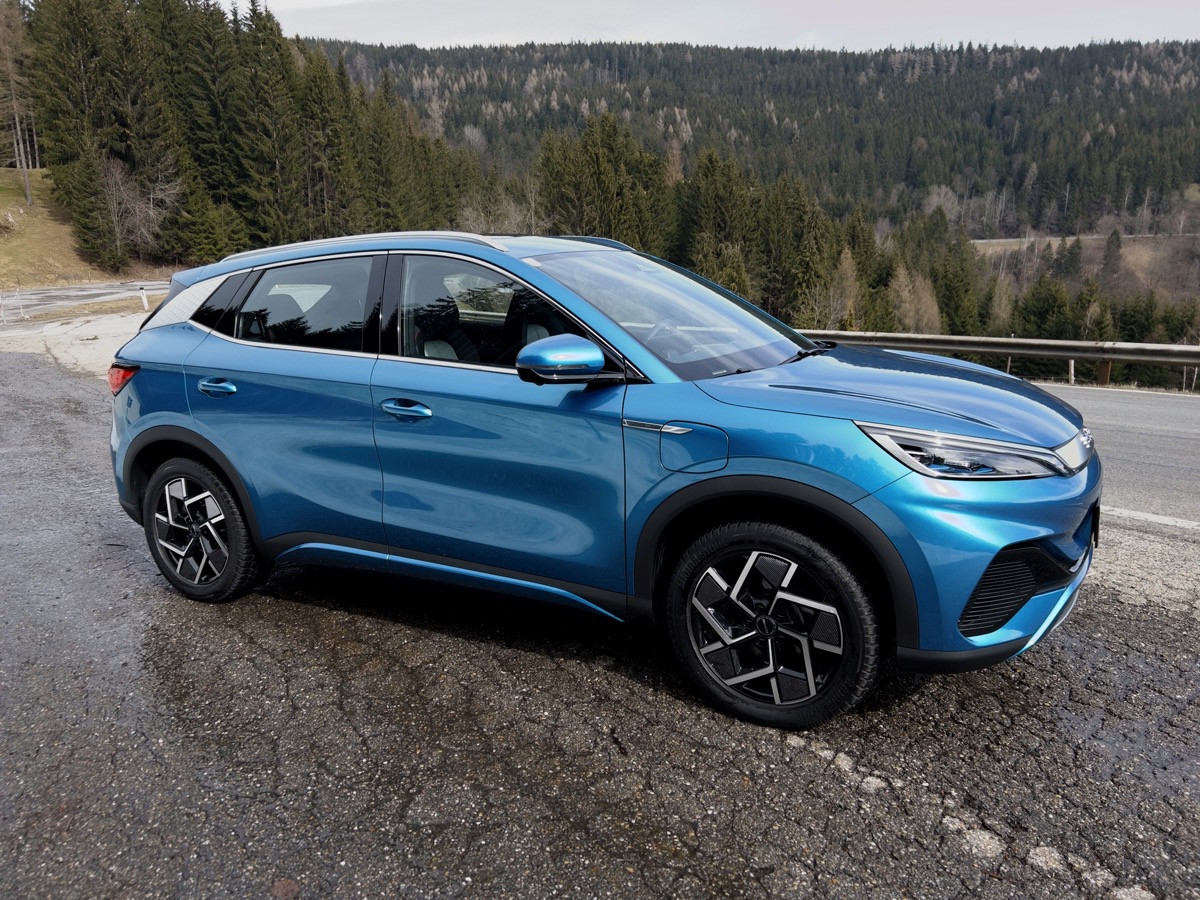
At first glance, the ATTO 3 is rather inconspicuous. (Picture: TechnikNews)
In my test, I managed to travel around 300 kilometers on a full charge and on a mix of winding mountain roads, country roads, motorways and driving in Graz. Of course, that doesn't correspond to the 420 kilometers, but since that is the WLTP figure, I am quite happy with my result. The consumption was always a little above the promise, but never really much. I was not happy with the display of the remaining range, because it was always cheating. With 100 percent in the battery, it always shows 420 kilometers, but then it always goes downhill quickly. Other manufacturers are much more honest here, even if the forecasts are lower than the figures.
I was always able to reach the maximum charging speed of 88 kilowatts at appropriate charging stations. This could always be maintained for a long time when the battery was almost empty (usually up to 45 percent). Overall, I went from 10 to 64 percent in half an hour, which means that the manufacturer's specification of 10 to 80 percent in 44 minutes is definitely realistic.
BYD ATTO 3 Pricing
The basic configuration of the BYD ATTO 3 starts at 42.600 euros. This already includes an e-mobility bonus of 2.400 euros (manufacturer's share), sales tax and an Austria package (including underbody sealing).
Thank you for providing the BYD ATTO 3!