
Volvo EX30 (2025) review: Single Motor vs. Twin Motor comparison
A TEST REPORT from Kasimir Hupe  on December 27, 2025, 15:05 | Write a comment
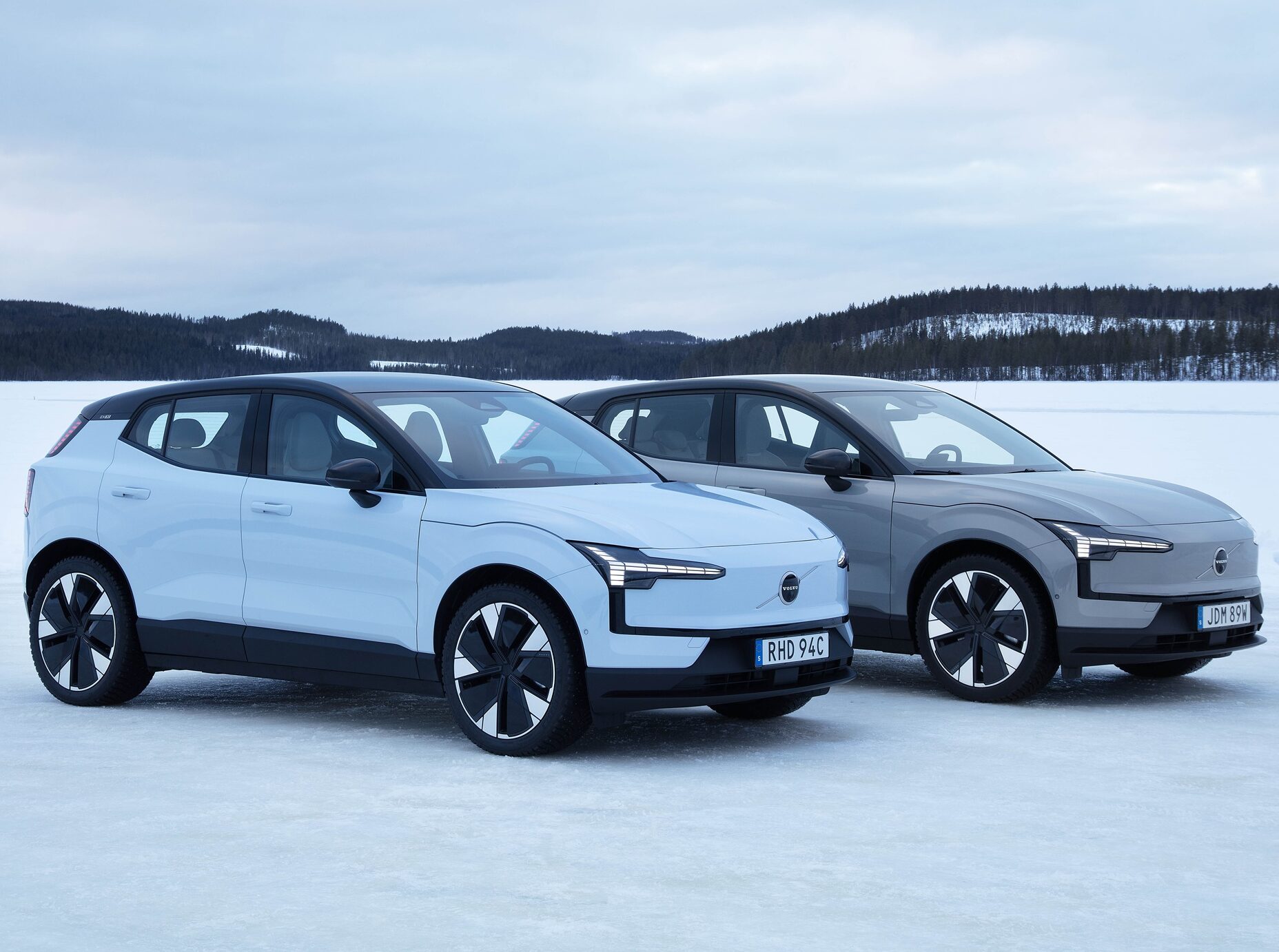
With the Volvo EX30, the traditional Swedish manufacturer is venturing into the compact electric SUV segment. A market segment already heavily populated by models such as the Tesla Model Y, the Hyundai kona electric or the VW ID.4. The EX30 also embodies Volvo's ambitious vision of more sustainable mobility. As the brand's smallest SUV and at the same time the most affordable electric vehicle in the Volvo portfolio, it aims to bridge the gap between premium aspirations and everyday practicality.
The development history of the EX30 is closely linked to Volvo's electrification strategy, which the company initiated in 2017 with the announcement that it would only offer electrified vehicles from 2019 onwards. The Volvo EX30, presented in 2023, exemplifies this transformation. It is based on the SEA platform (Sustainable Experience Architecture) of the Geely Group and shares this with sister models such as the Smart # 1This technical similarity allows Volvo to leverage economies of scale and offer the Volvo EX30 at an attractive price, without compromising on quality.promisses out on typical Volvo virtues such as safety and build quality.
What's particularly noteworthy about the EX30 is Volvo's commitment to sustainability, which permeates the entire vehicle concept. The compact electric SUV is designed to have the smallest CO₂ footprint of any Volvo vehicle ever produced over its entire life cycle. proThe Volvo EX30 features reduced dimensions. This is achieved, among other things, through the use of recycled materials in the interior, optimized production, and compact exterior dimensions. At 4,23 meters long, the Volvo EX30 positions itself one class below the already established [model/model]. Volvo EX40. This makes it suitable for urban target groups, young families and all those looking for a more affordable yet spacious everyday companion.
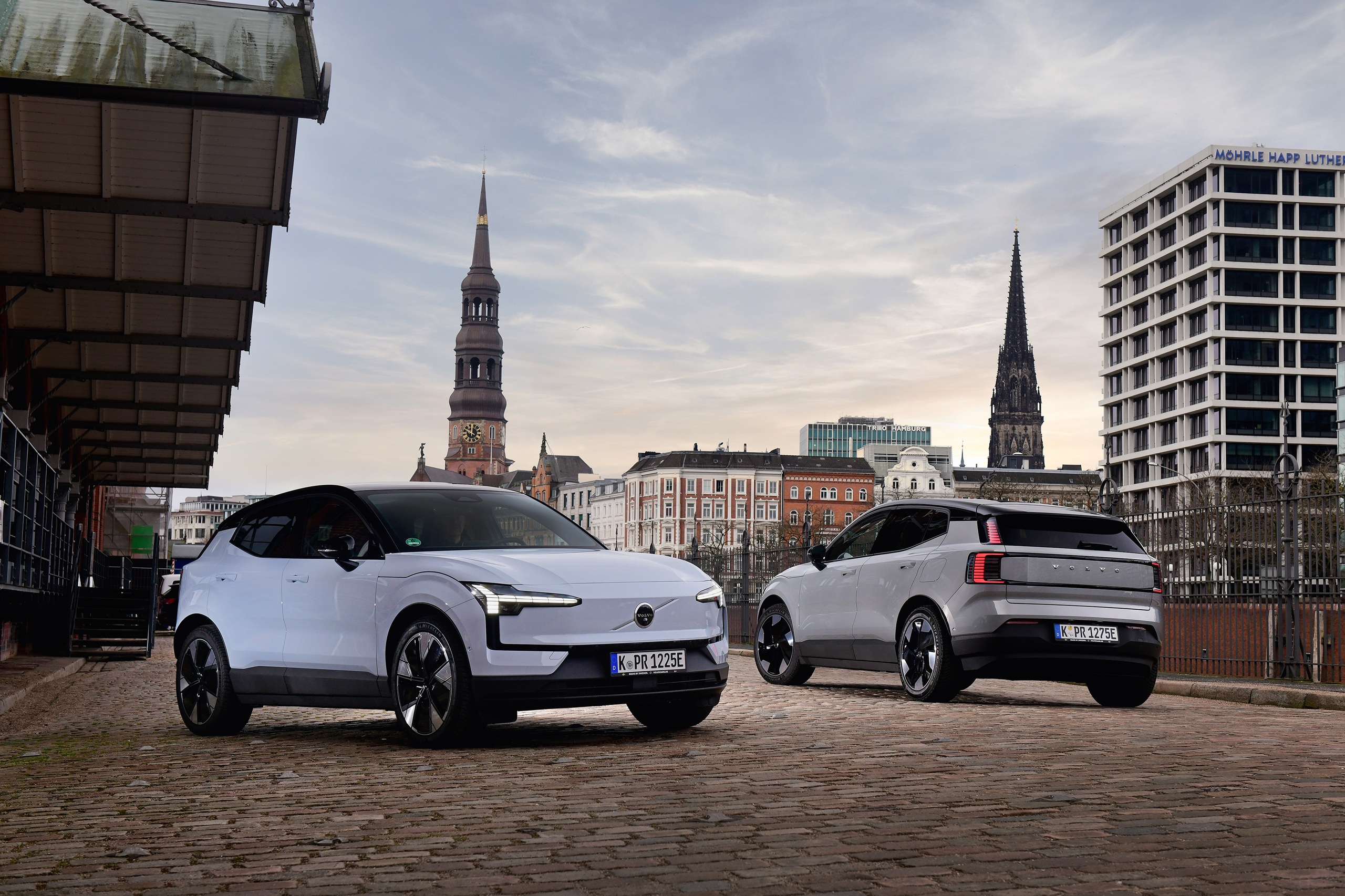
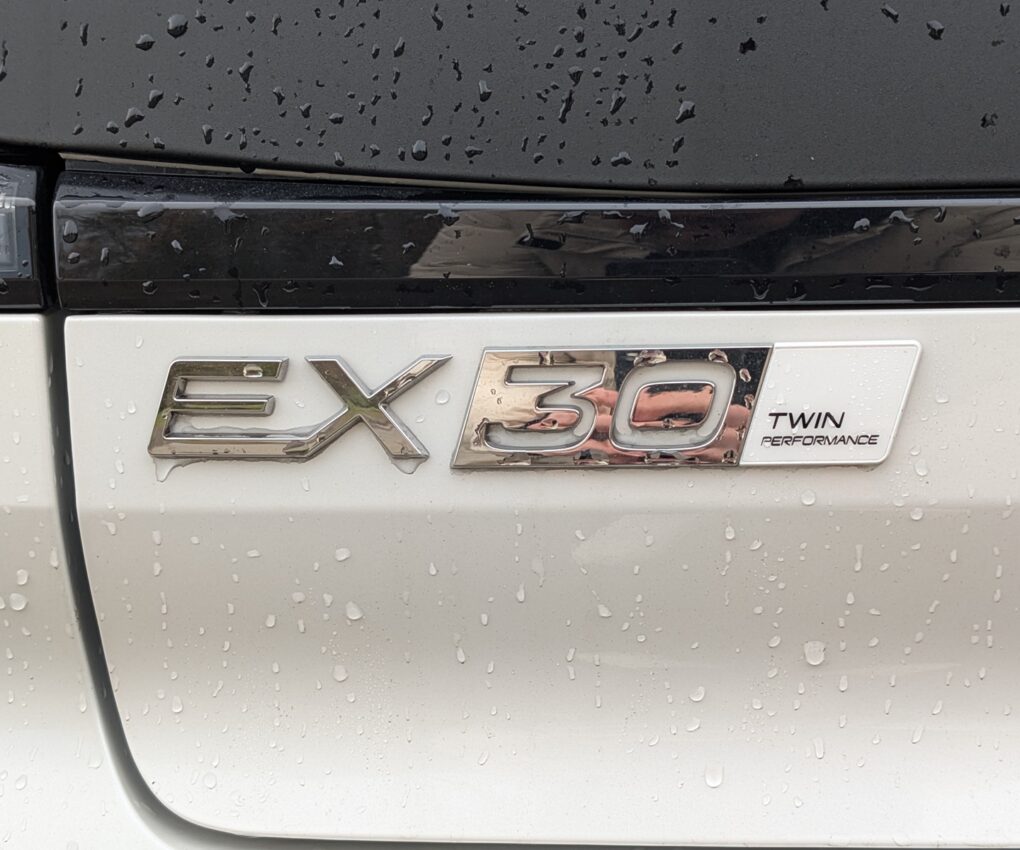
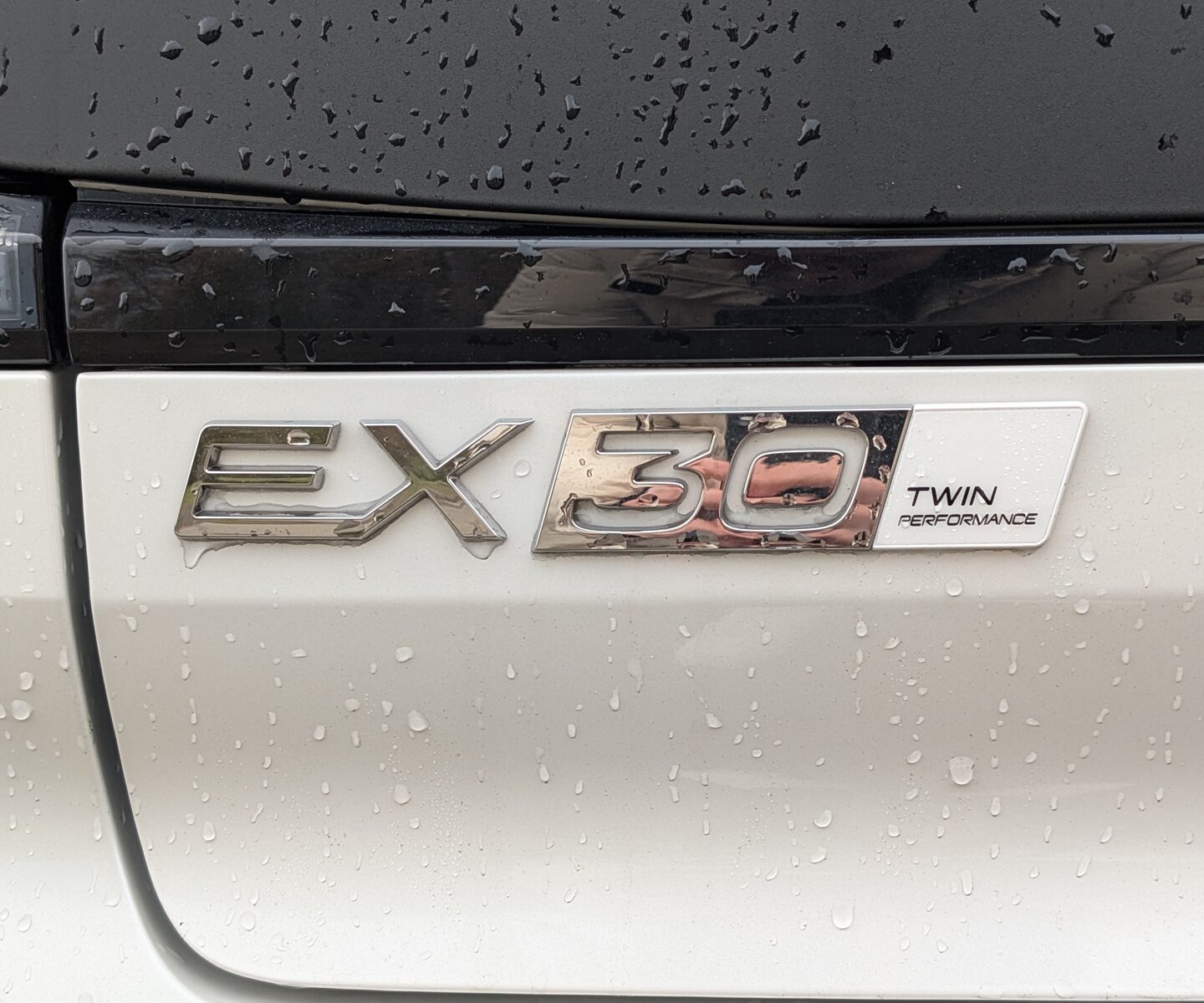
For our detailed test, we had two different variants available: the Volvo EX30 Single Motor Plus as an efficient base variant with rear-wheel drive and the Volvo EX30 Cross Country (Twin Motor Performance) with all-wheel drive, increased ground clearance and robust off-road look, which is intended to awaken the spirit of adventure.
Technical specifications of the Volvo EX30
| Volvo EX30 Cross Country | Volvo EX30 Single Engine | |
| Motor | Twin Motor Performance AWD | Single Engine |
| Offering | 315 kW (428 PS) | 200 kW (272 PS) |
| torque | 543 Nm | 343 Nm |
| Drive | All-wheel drive (front: 115 kW, rear: 200 kW) | rear-wheel drive |
| Acceleration 0-100 km / h | 3,6 seconds | 5,7 seconds |
| top speed | 180 km/h (electronically limited) | 180 km/h (electronically limited) |
| Battery (gross/net) | Nickel-cobalt-manganese (69 kWh / 65 kWh) | Lithium iron phosphate (51 kWh / 49 kWh) |
| Combined range (WLTP) | 436 km | 339 km |
| Combined range summer (real) | 380 km | 300 km |
| Combined range in winter (real-world) | 300 km | 240 km |
| Combined fuel consumption (WLTP) | 18,3 kWh / 100 km | 17,2 kWh / 100 km |
| Combined fuel consumption (real-world) | 20 kWh / 100 km | 18 kWh / 100 km |
| DC charging power | max. 175 kW | max. 150 kW |
| AC charging power | 22 kW | 11 kW |
| DC charging time (10-80%) | 15 minutes. | 15 minutes. |
| Length | 4,23 Meters | 4,23 Meters |
| Width | 2,04 meters (with mirror) | 2,03 meters (with mirror) |
| Height | 1,57 Meters | 1,55 Meters |
| Wheelbase | 2,65 Meters | 2,65 Meters |
| Boot capacity | 318 to 1.000 liters | 318 to 1.000 liters |
| Empty weight | 1.960 kg | 1.840 kg |
| Perm. total weight | 2.335 kg | 2.210 kg |
| Payload | 375 kg | 370 kg |
| Braked trailer load 12% | 1.600 kg | 1000 kg |
| Unbraked towing capacity | 750 kg | 750 kg |
| vertical load | 100 kg | 100 kg |
| tires | 19 inch (18 inch all-terrain optional) | 18 inch |
| Price | from € 57.290 | from € 38.490 |
Single Motor vs. Twin Motor
The Single Motor Plus variant The rear-wheel-drive version proves to be the more sensible all-rounder for most purposes. It offers sufficient power for everyday driving, boasts better fuel economy, and lower purchase costs. Its range is absolutely competitive for a vehicle in this class, and its performance is perfectly adequate for keeping up with traffic. For drivers who primarily travel in the city and on well-maintained roads, this variant is the clear recommendation.
The Cross Country with the Performance Package The Twin Motor, on the other hand, is aimed at a specific clientele. With its all-wheel drive, impressive acceleration of 3,6 seconds to 100 km/h, increased ground clearance, and rugged appearance, it appeals to those who occasionally want to venture off paved roads or live in regions with challenging weather conditions. The additional 19 millimeters of ground clearance and the all-wheel drive do indeed provide more safety in difficult conditions, but this comes at the expense of fuel consumption and efficiency.
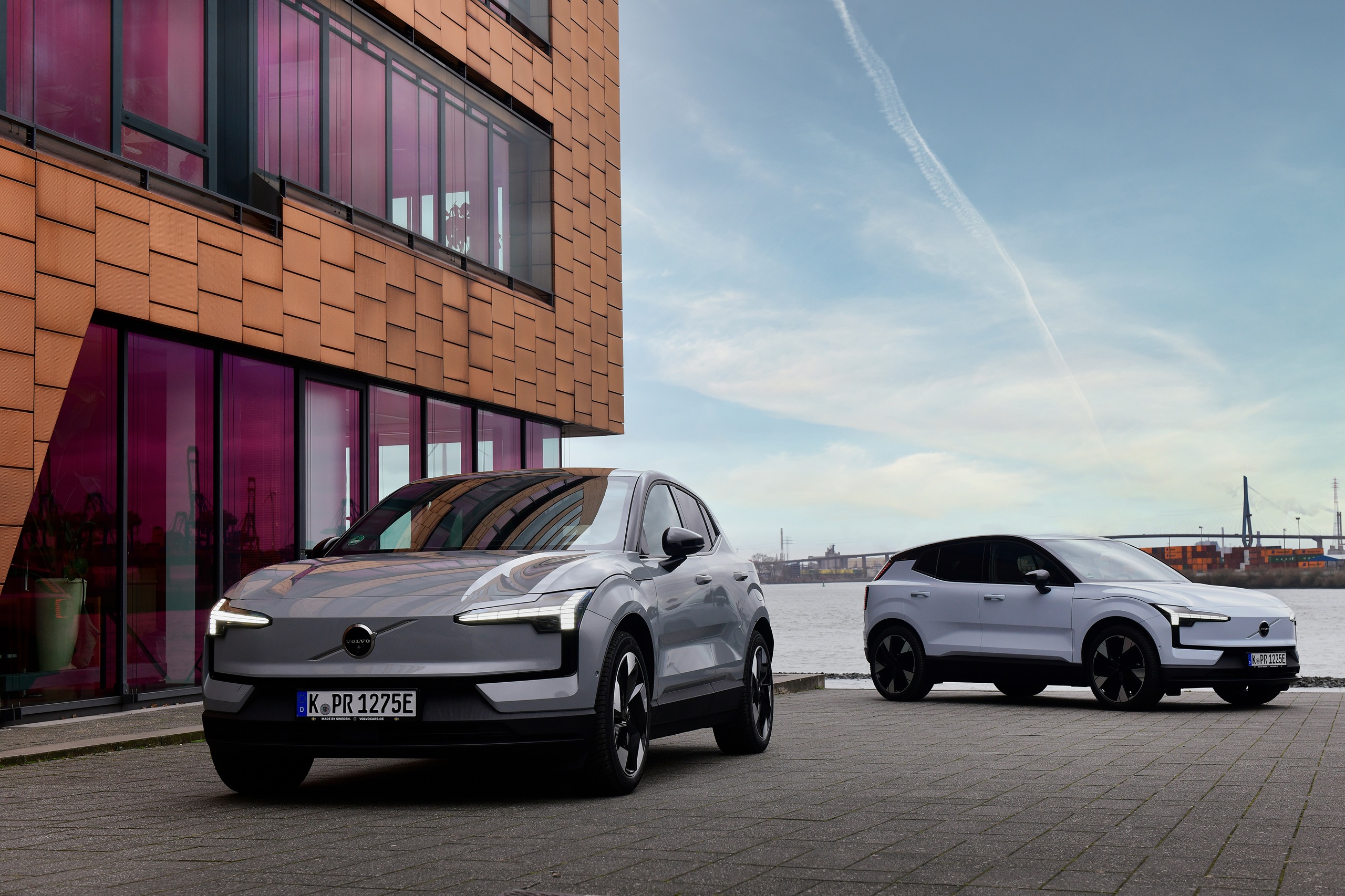
Image: Volvo
Conclusion (tl;dr) on the Volvo EX30: Radically different but still good
Both versions of the Volvo EX30 share the same strengths: a sustainable and high-quality interior, a clear and intuitive operating concept via the central touchscreen, an optional 1.040-watt Harman Kardon sound system, and a driving experience that is typically Scandinavian in its relaxed and confident manner. The excellent smartphone app, which allows many vehicle functions to be controlled remotely, underscores Volvo's commitment to providing state-of-the-art technology. The twin-engine variants also impress with their strong acceleration and excellent handling.
The Volvo EX30 reveals weaknesses in the perceived quality of its materials, as hard plastic dominates in some areas, and in its user interface, which, with its radical touchscreen centering, may not appeal to everyone. The lack of a traditional instrument panel in front of the driver also requires some getting used to. Furthermore, the legroom for rear passengers could become borderline inadequate for taller adults on longer journeys.
All in all, Volvo delivers a compelling overall package with the Volvo EX30, one that doesn't need to shy away from the established competition. Anyone who appreciates the comfort features will find it a worthwhile investment.promissing out on life, which the compact format and reduced operating concept bring with them, receives a likeable and well-designed electric vehicle with true Volvo character. The Volvo EX30 Single Motor Plus is the more sensible choice for most buyers, while the Cross Country with Performance Package and Twin Motor has its place as a niche model for specific requirements.
Strengths and weaknesses of the Volvo EX30
✅ Strengths:
High-quality, sustainable interior concept with thoughtful material selection and recycled components
Great smartphone app with beautiful design and remote control options.
Excellent safety features with reliable assistance systems
Agile, precise handling thanks to compact dimensions and good weight distribution
Reduced, uncluttered design concept inside and out
Cross Country: 22 kW AC charging capacity allows for quick recharging of a large range via alternating current.
Cross Country: Noticeably increased traction and safety in difficult conditions thanks to all-wheel drive
- Single Motor Plus: Competitive range with moderate consumption
❌ Weaknesses:
Radical touchscreen centering with no instrument panel requires getting used to and is potentially distracting.
Rear seat space is limited for taller adults on longer journeys.
The boot capacity could be a bit larger for an SUV of this class.
Cross Country: Significantly higher fuel consumption compared to the single-engine variant
Picture: TechnikNews
Design and exterior of the Volvo EX30: Minimalist yet elegant
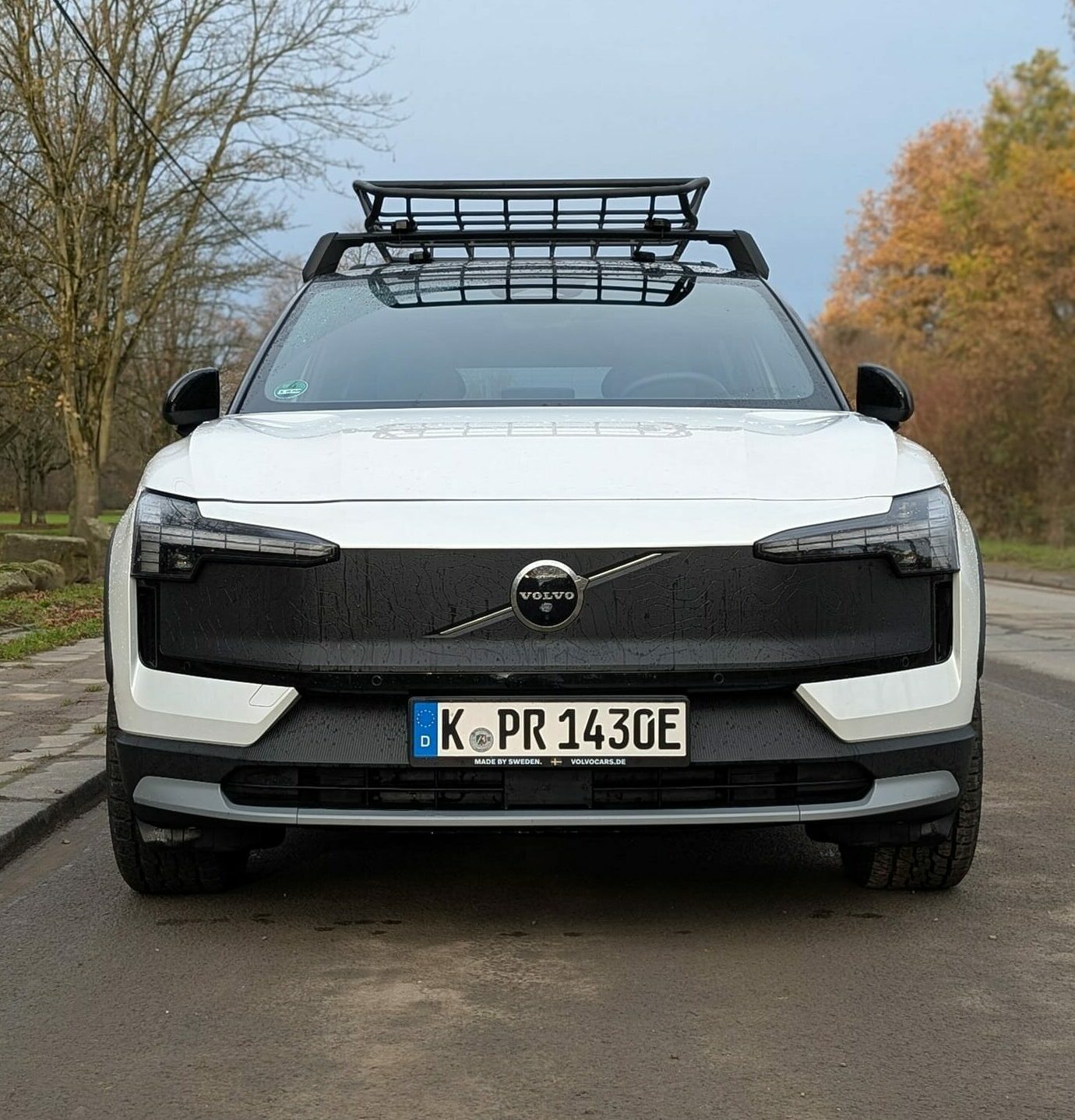
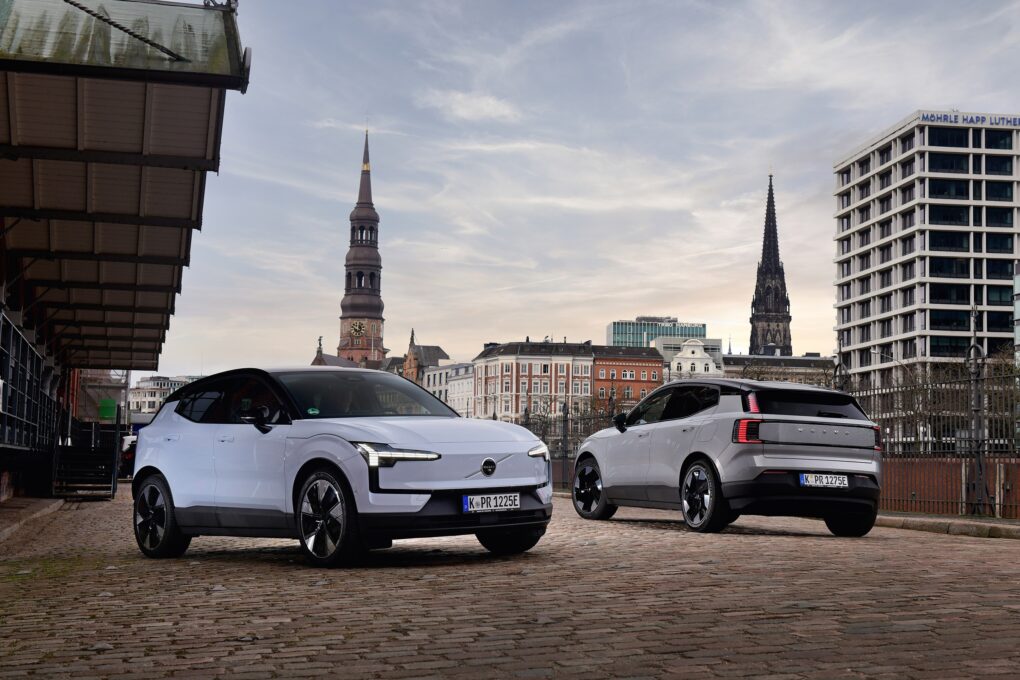
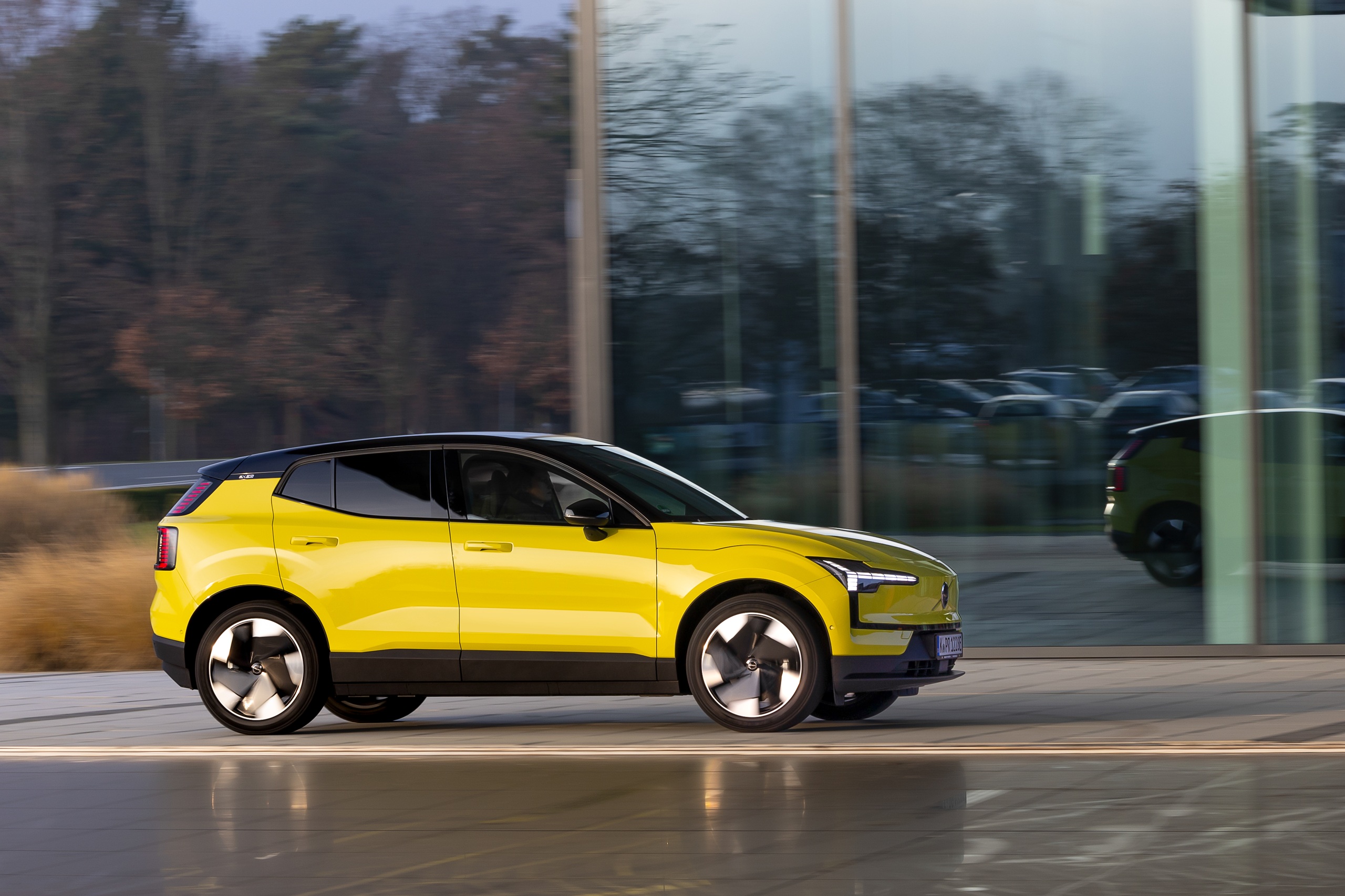
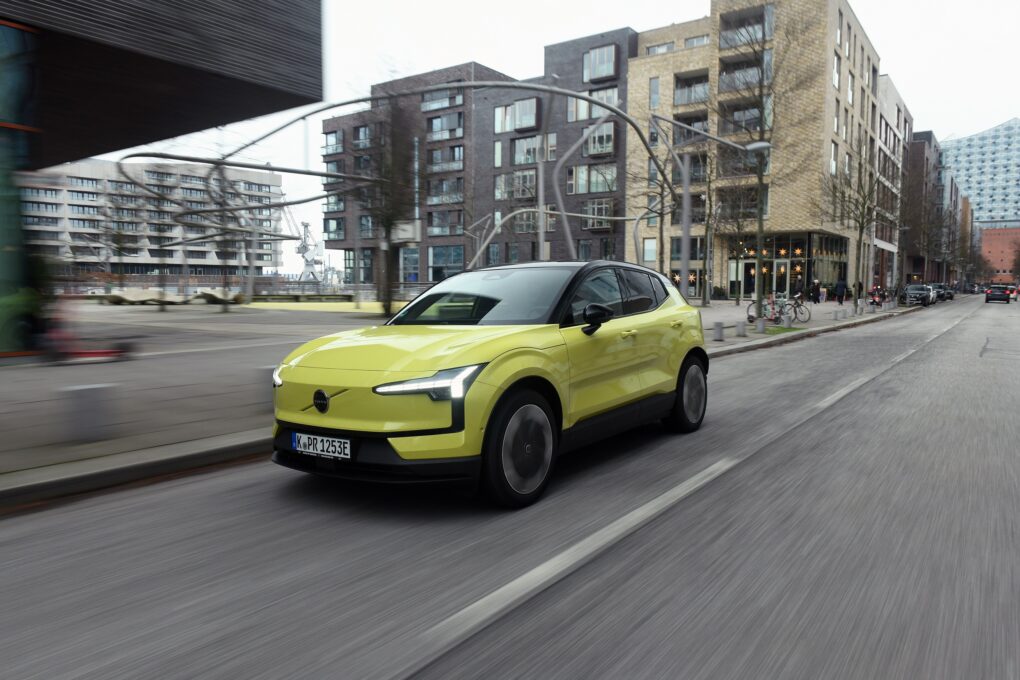
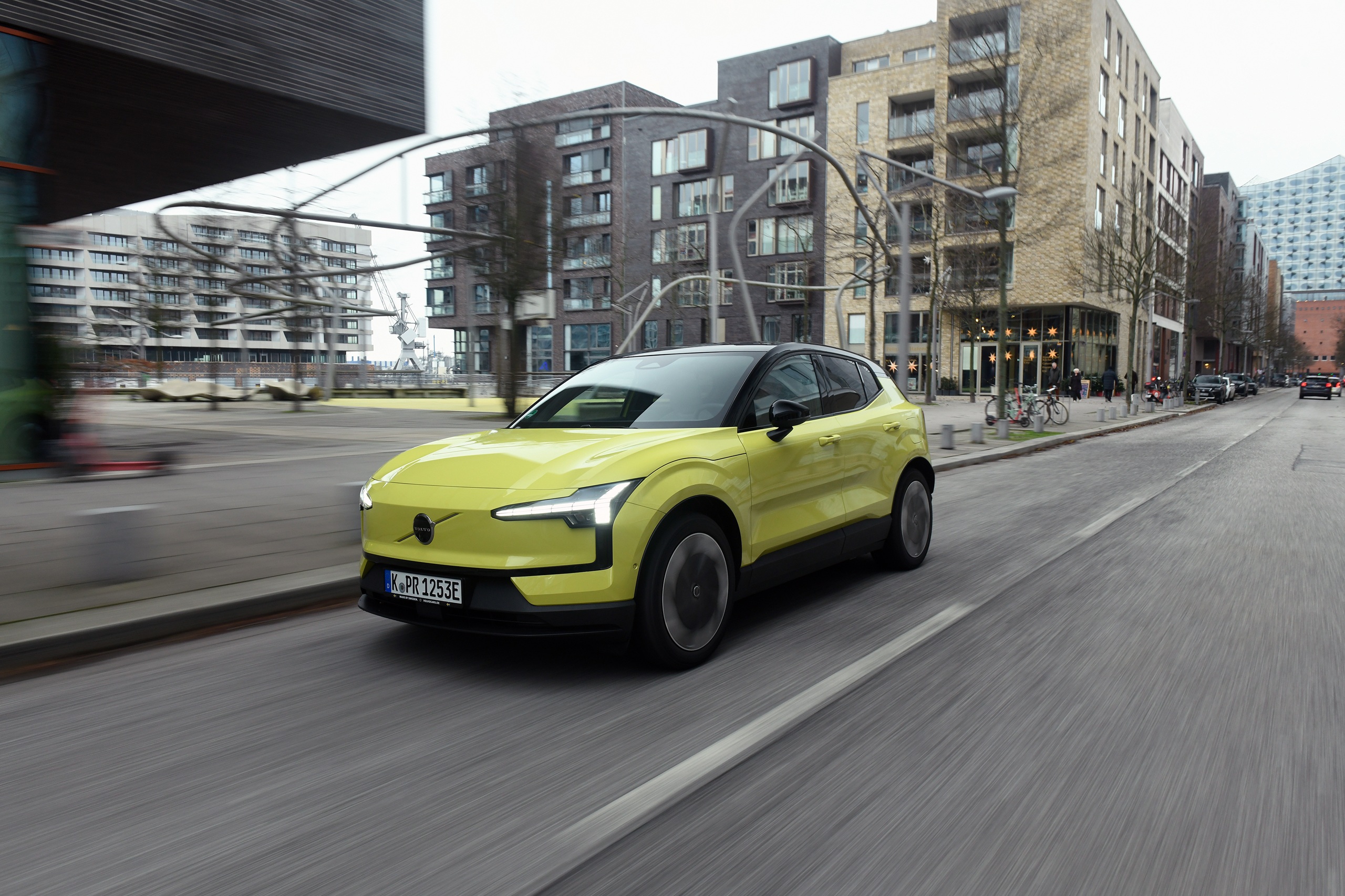
The EX30 is unmistakably a Volvo, even though it is significantly more compact than the Swedish manufacturer's established models. The front is dominated by the closed grille typical of Volvo, which, on the electric car, serves a purely functional purpose and optimizes aerodynamics. The distinctive “Thor’s Hammer” spotlight LED technology is also present in the smallest Volvo, giving the EX30 a distinctive look. Despite its compact length of 4,23 meters, the proportions appear harmonious and balanced, and the Volvo EX30 conveys a certain robustness. The relatively steep roofline could potentially compromise rear headroom, but Volvo has effectively compensated for this through clever packaging.
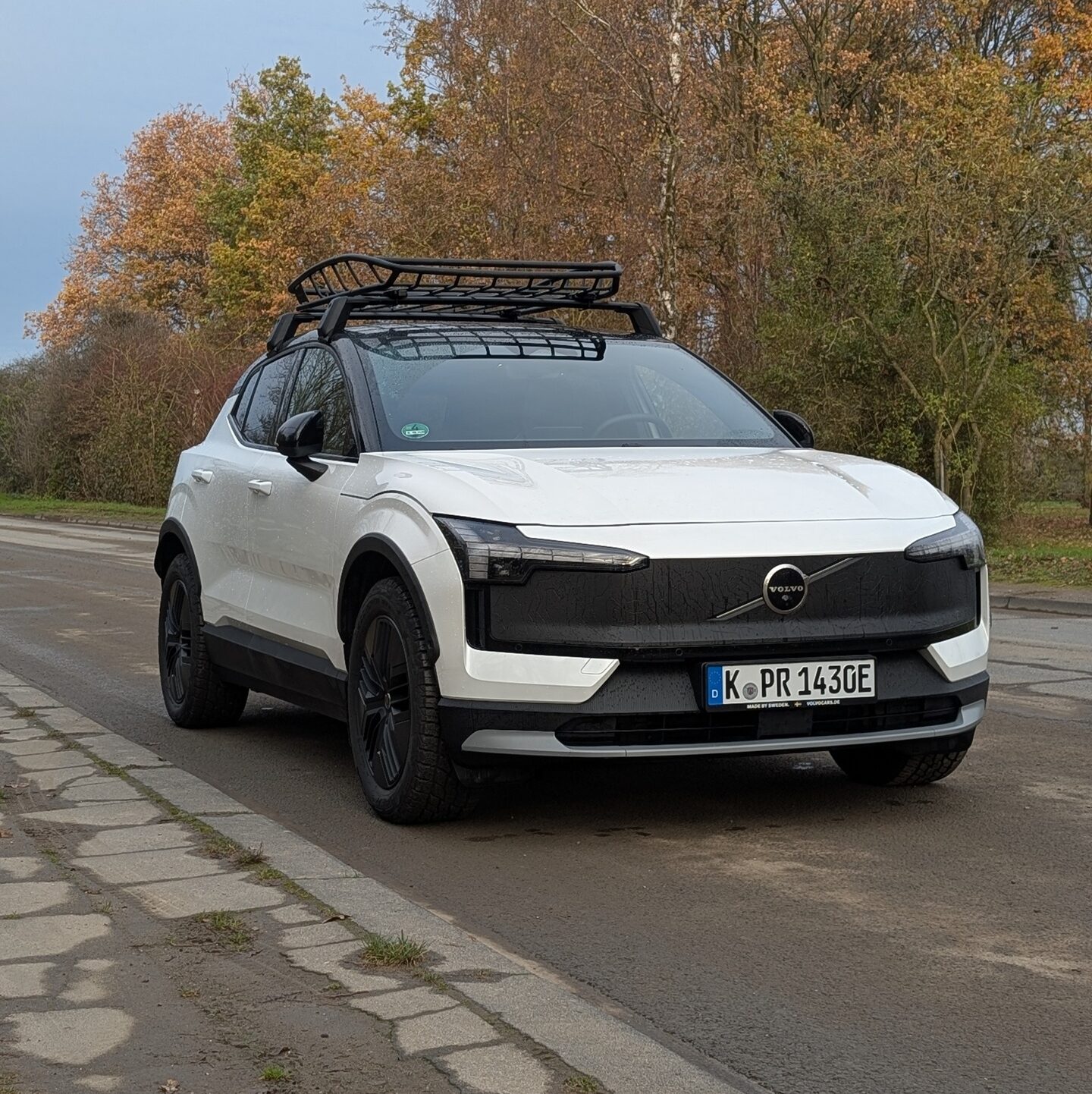
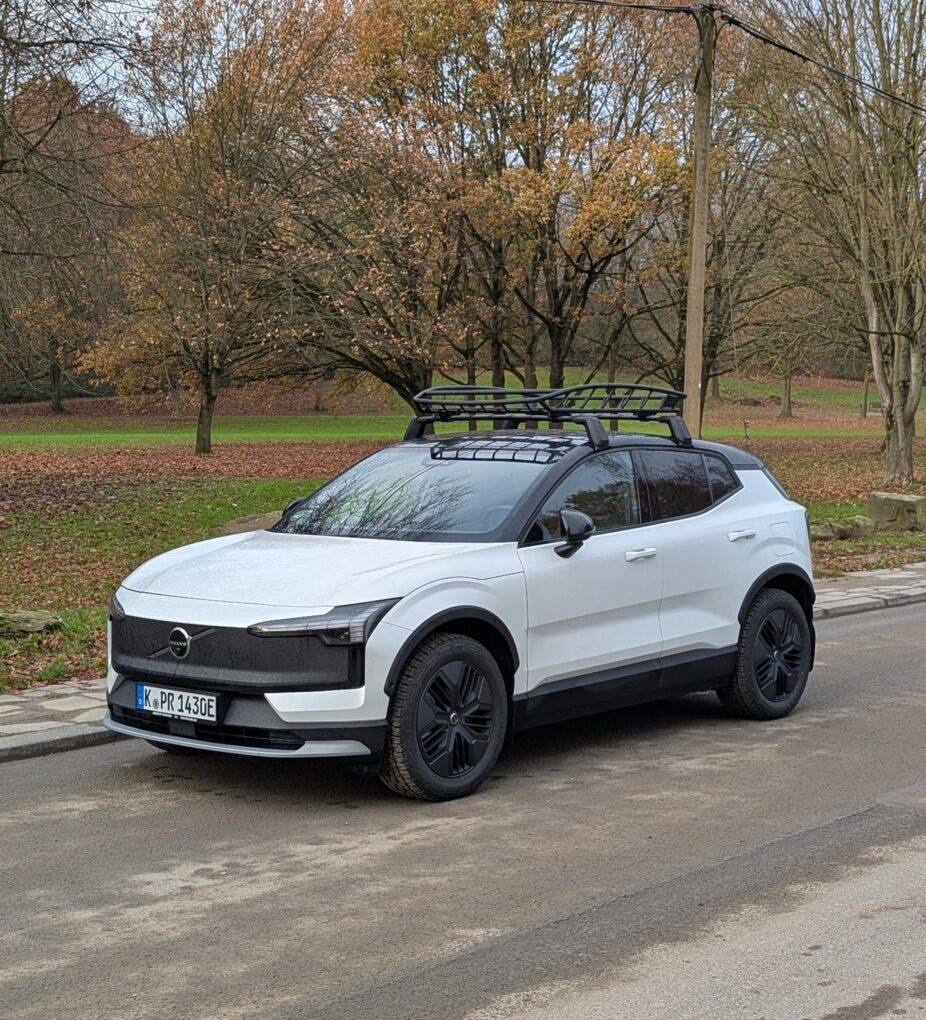
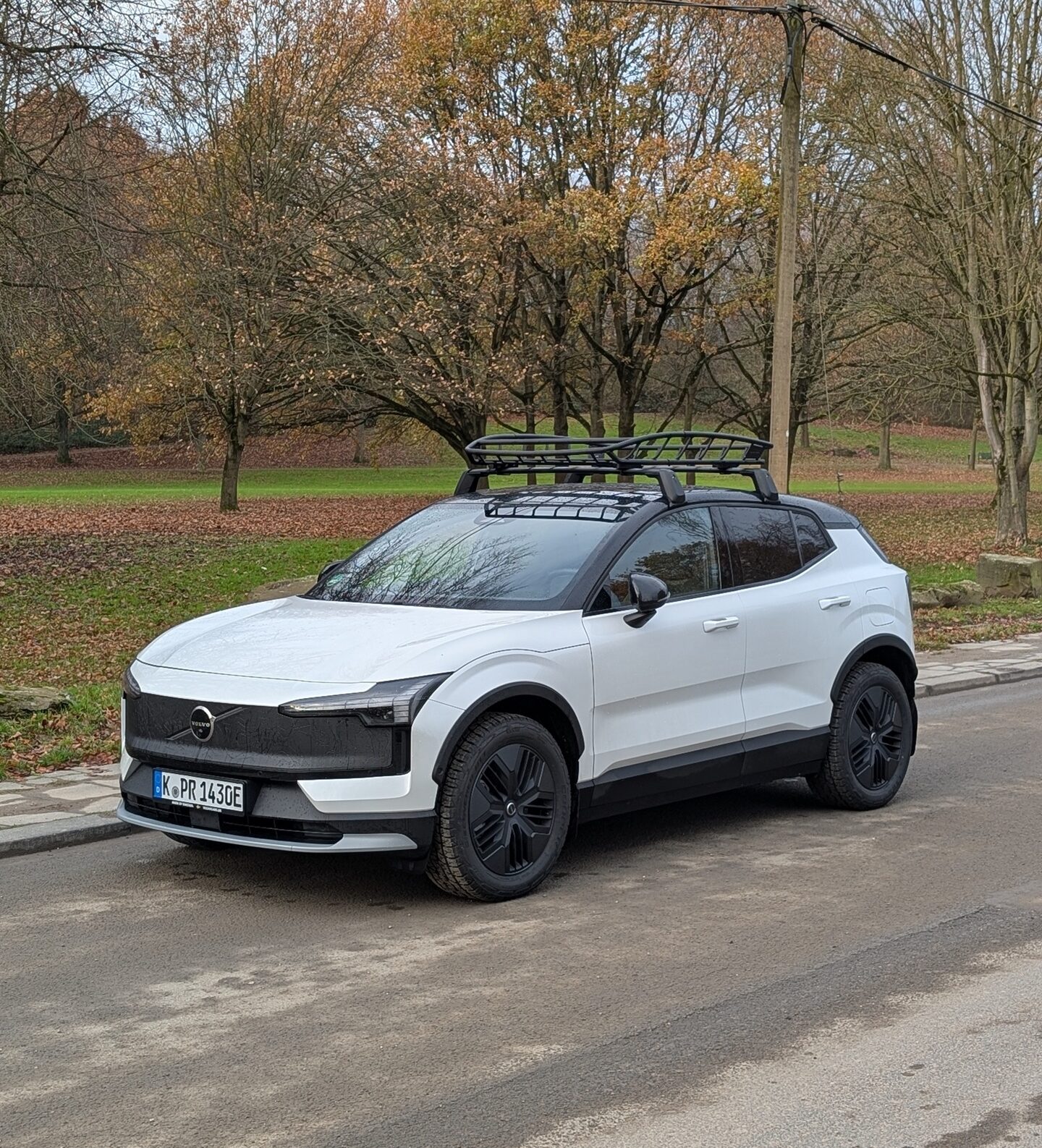
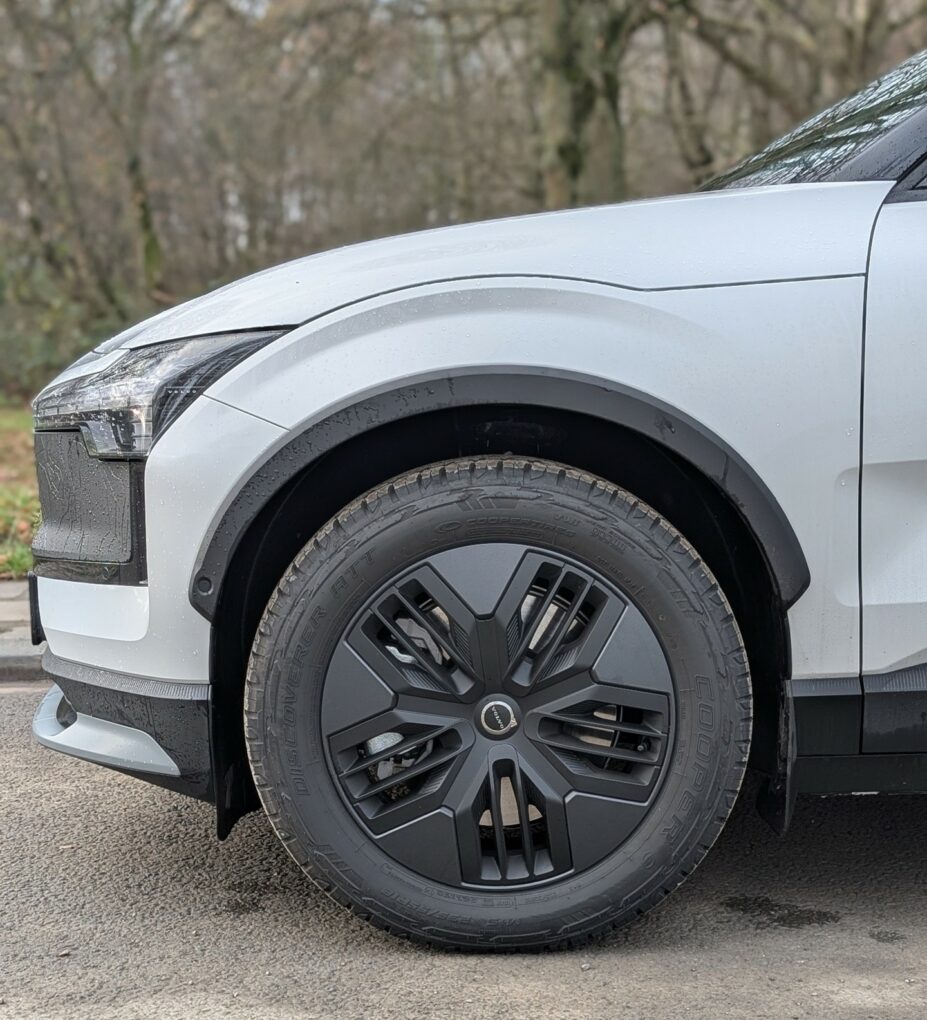
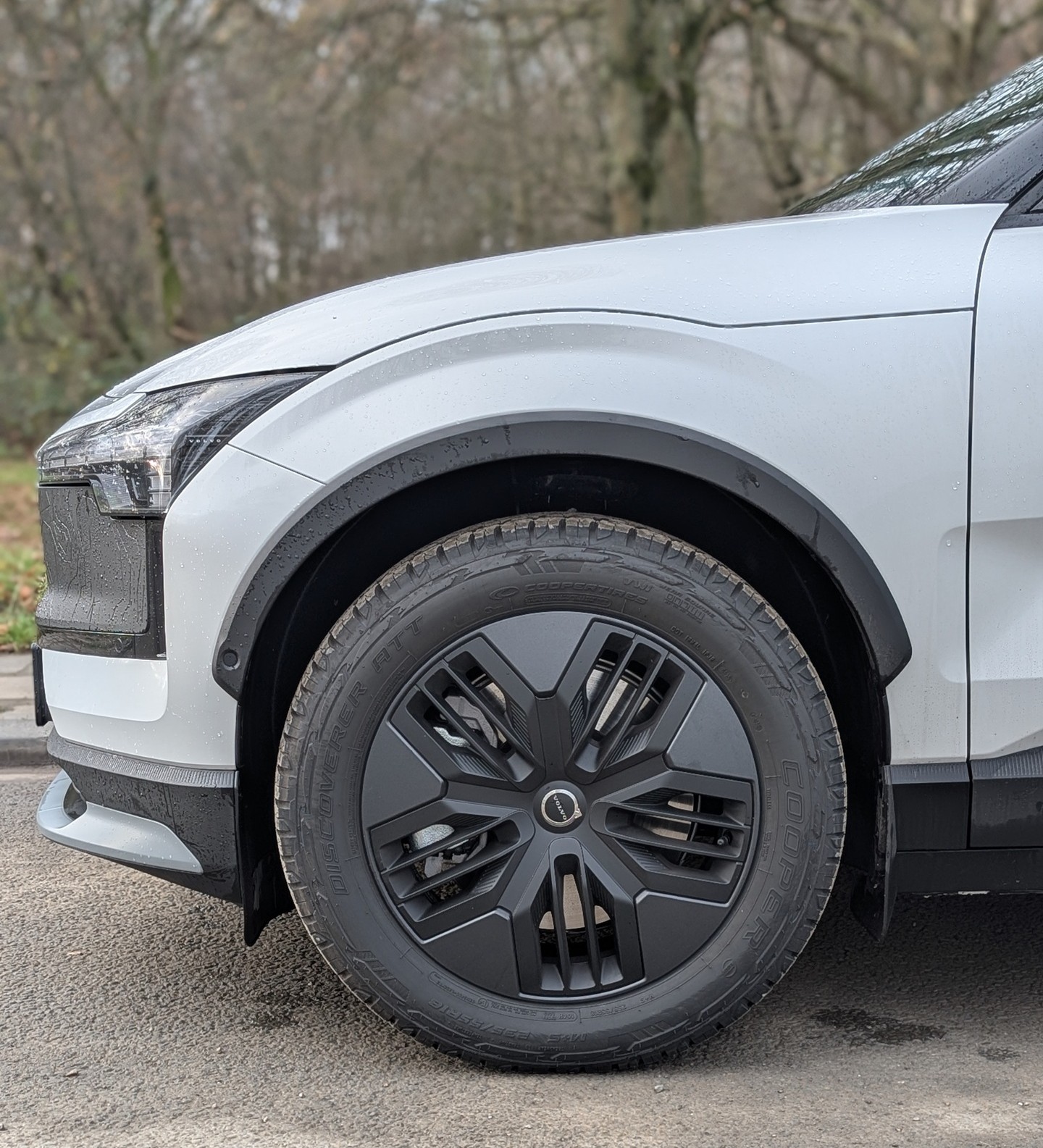
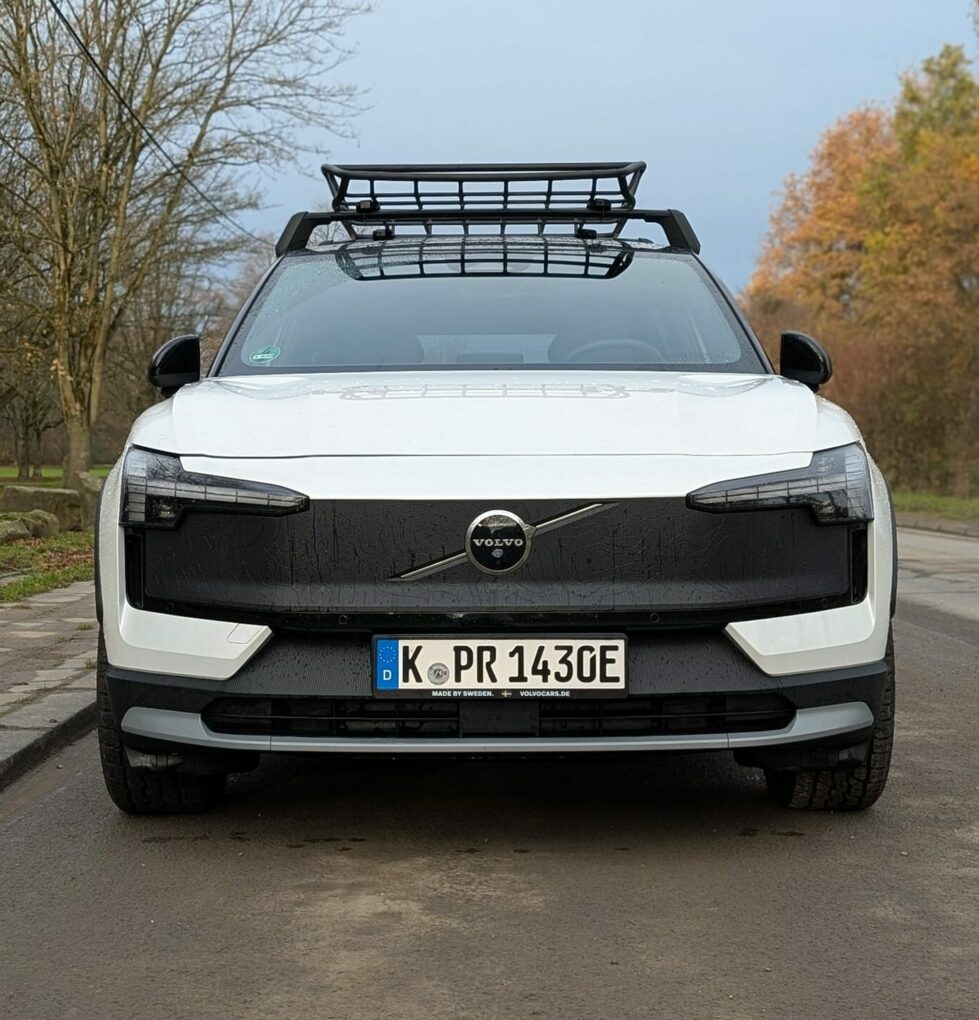
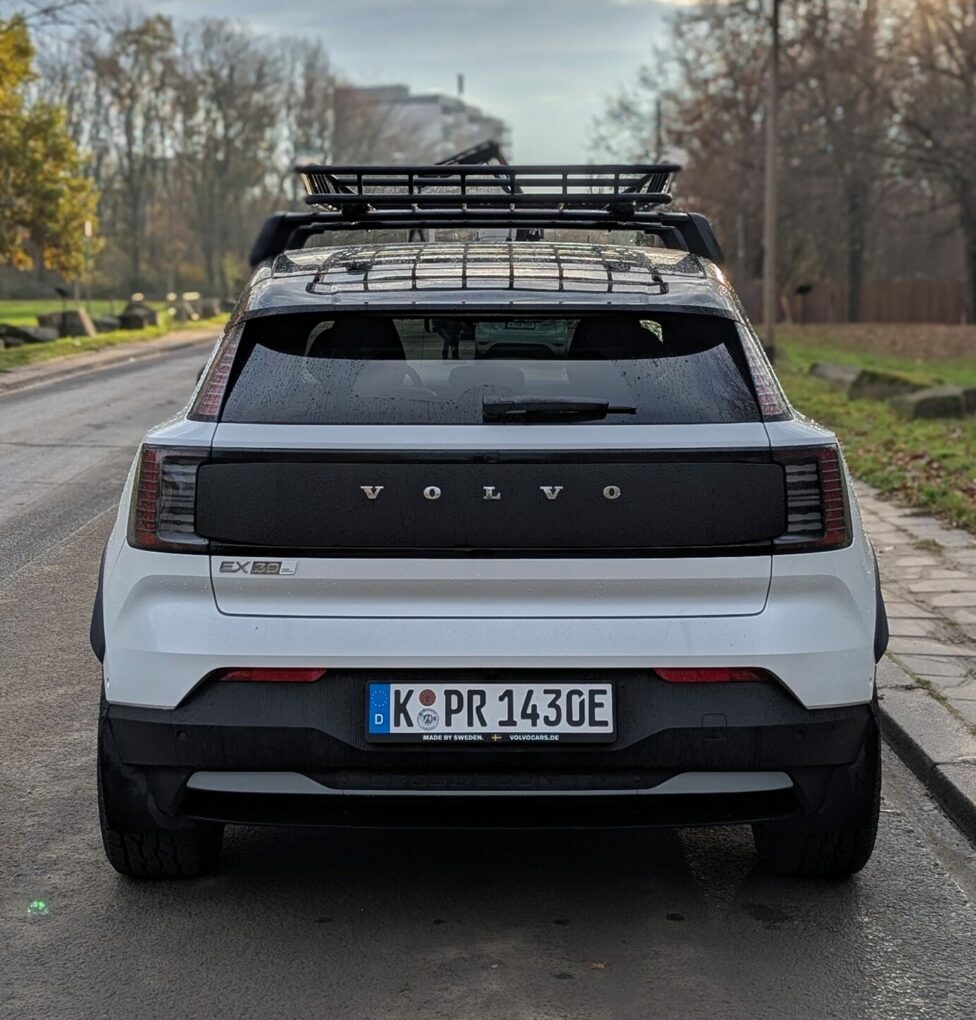
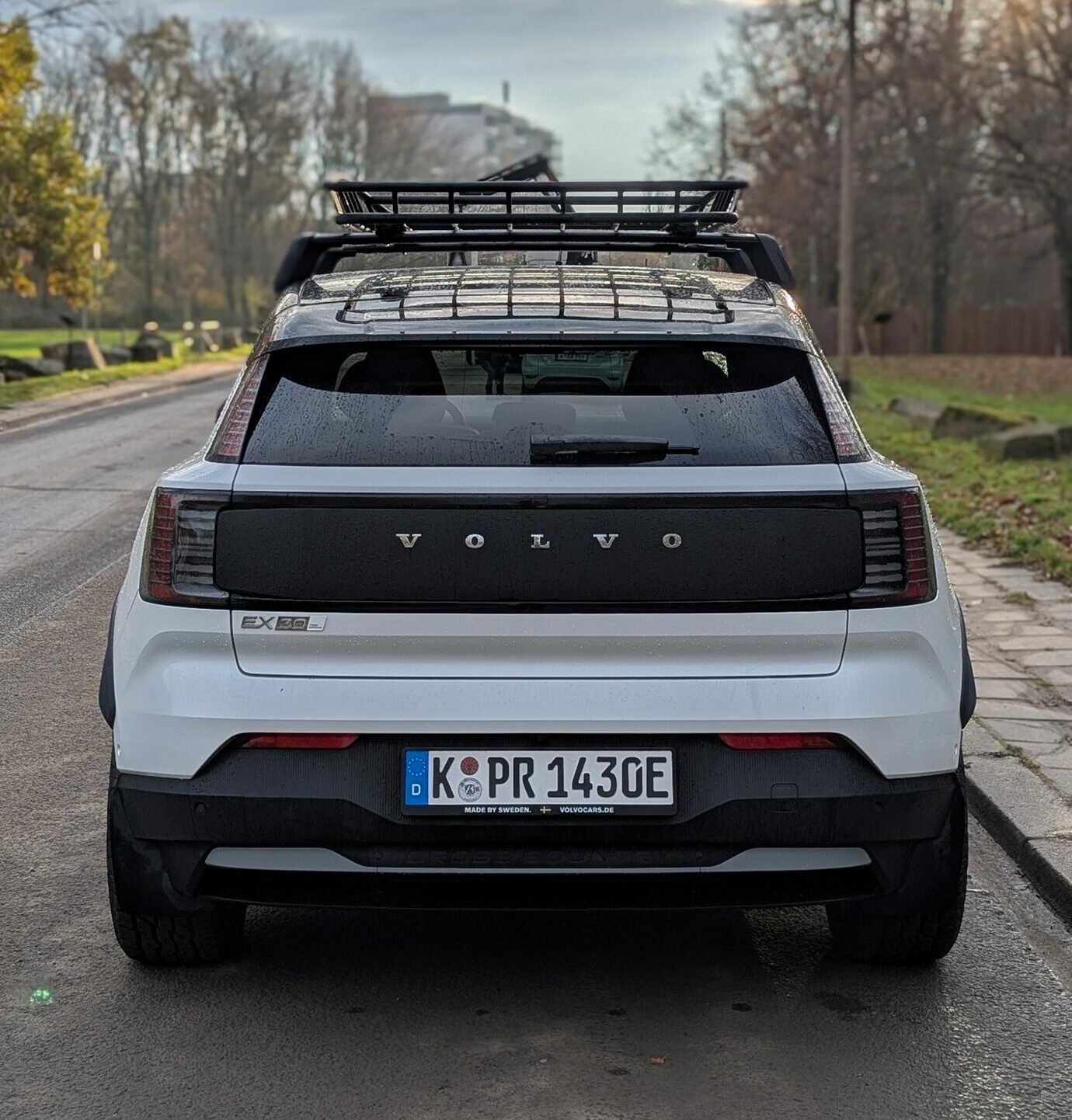
Visually, the Cross Country variant stands out significantly from the standard EX30. The black plastic cladding on the wheel arches, sills, and bumpers, as well as the distinctive front and rear skid plates, give it a more rugged, adventurous look. The 19-millimeter increase in ground clearance is also clearly visible in a direct comparison and underscores its off-road capabilities. Optional 18-inch all-terrain tires are available for the Cross Country, further enhancing its rustic appearance. Cross Country Experience packageThe addition of a roof rack and roof basket completes the outdoor concept and makes the Volvo EX30 Cross Country the ideal companion for active leisure pursuits.
-
- Picture: TechnikNews
-
- Picture: TechnikNews
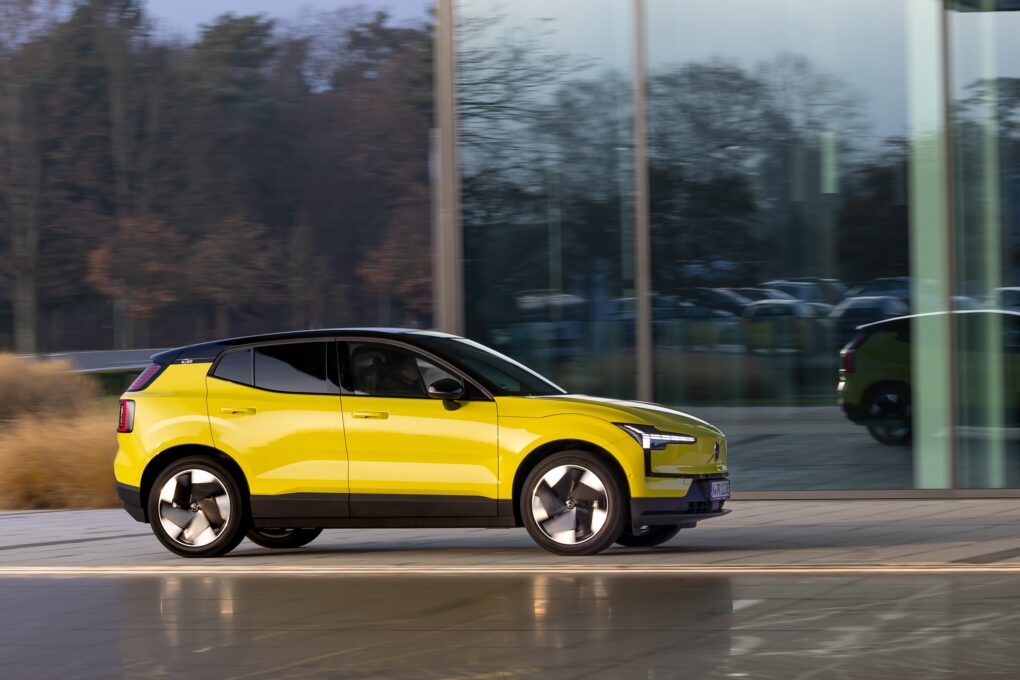
The single-engine Plus variant features painted bumpers and a choice of 18- or 19-inch alloy wheels. The latter have a sportier look, while the 18-inch wheels are more understated. The color palette includes both muted and vibrant tones. Some colors are available at an additional cost. The lighter paint finishes, such as Crystal White or Cloud Blue, particularly emphasize the Scandinavian design philosophy. The build quality of the bodywork is consistently impressive: the panel gaps are even and tight, and the paintwork is flawless.
Overall, Volvo has succeeded in creating a design with the EX30 that appears modern and distinctive without being polarizing. It has a high recognition value, and the proportions are harmonious. The Cross Country offers a visually differentiated alternative for those who prefer a more adventurous look. The single-engine Plus variant, on the other hand, appears more urban and minimalist. Both variants convey a sense of quality and a contemporary design without seeming contrived or exaggerated.
-
- Picture: TechnikNews
-
- Picture: TechnikNews
Space: Compact design – cleverly solved
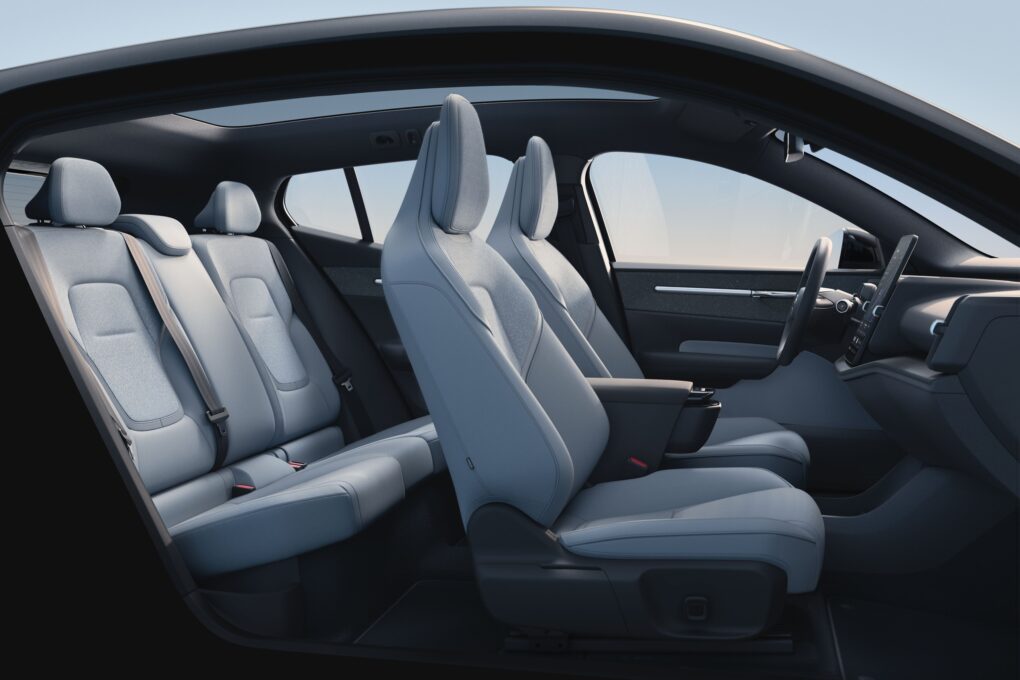
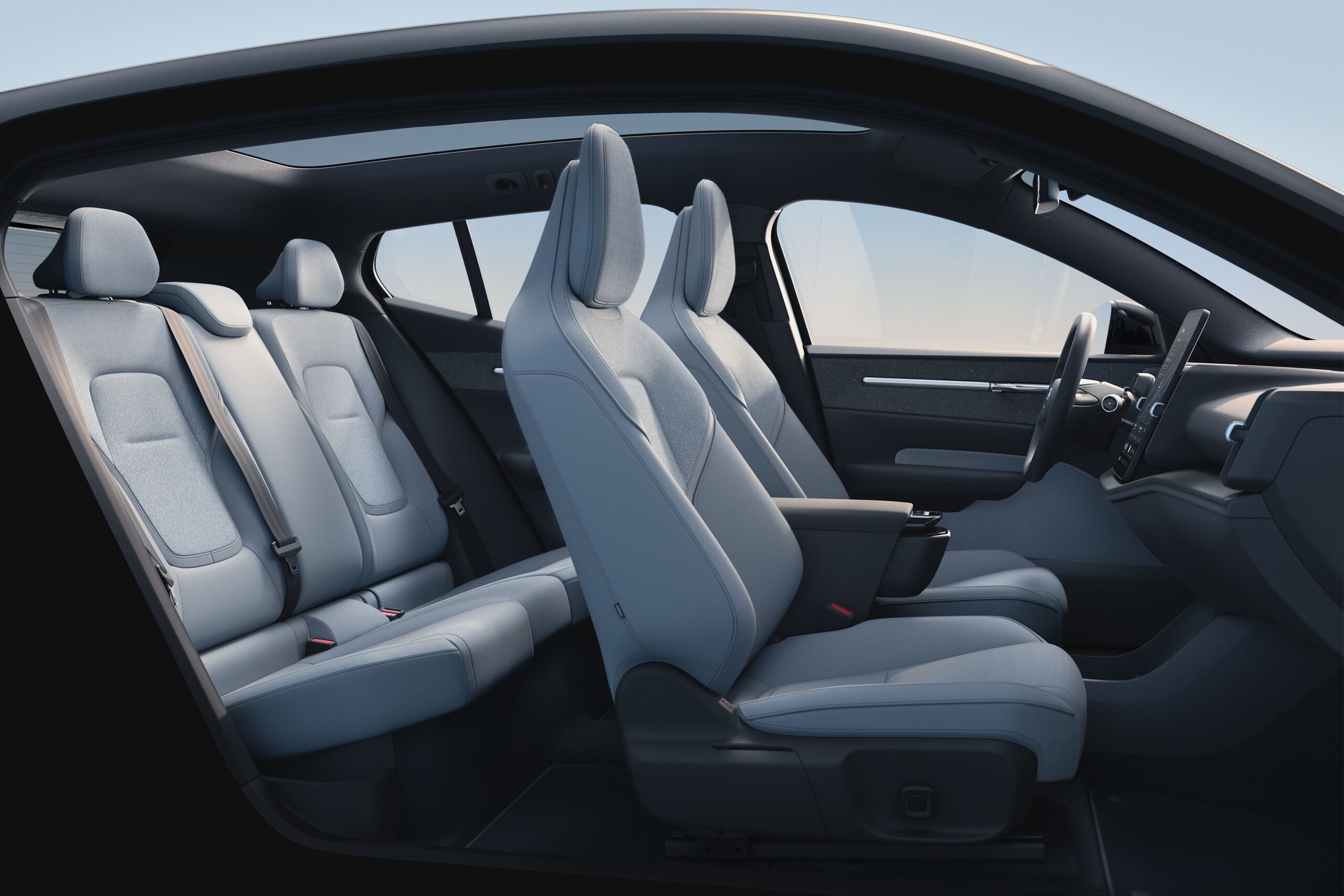
Despite its compact exterior dimensions of 4,23 meters in length, 1,84 meters in width, and 1,55 meters in height, the Volvo EX30 offers a surprisingly spacious interior. Volvo has worked cleverly here, consistently utilizing the advantages of its dedicated electric platform. The absence of a center tunnel and the compact powertrain create a sense of spaciousness that is simply not found in comparable SUVs with combustion engines. Two adults can comfortably sit in the front. proPlenty of space. The seats offer good lateral support and are comfortable even on longer journeys. Thanks to the relatively high roofline, headroom is generous – even passengers over 1,90 meters tall won't feel cramped. Legroom is also ample, and the pedals are well-positioned. Visibility is good all around thanks to the relatively large windows and upright seating position. However, the B-pillar might slightly obstruct the view when checking over your shoulder.
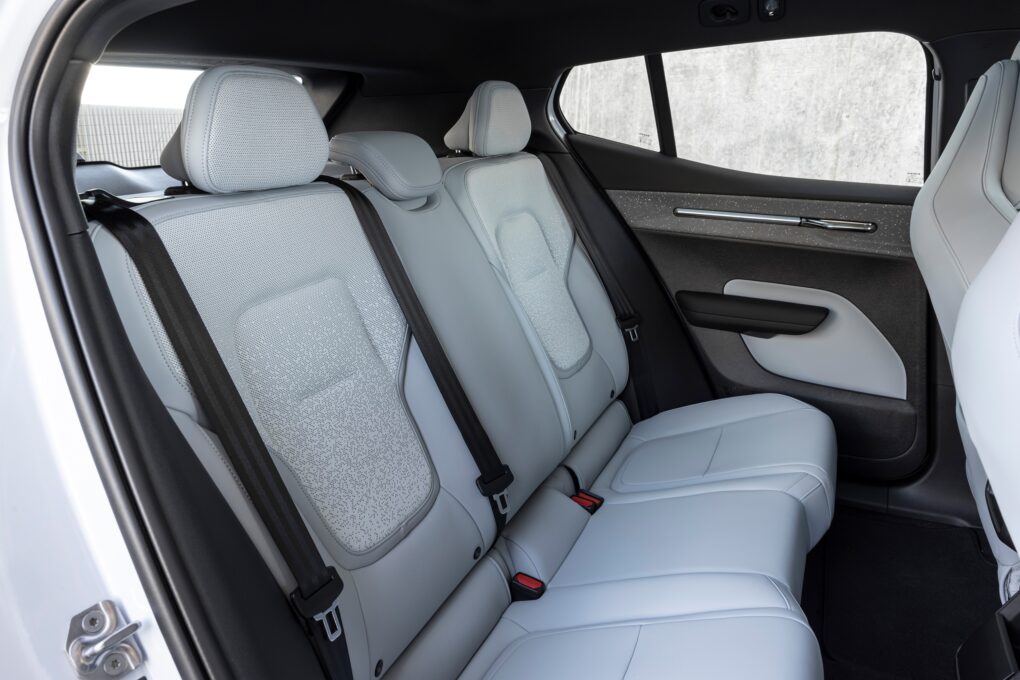
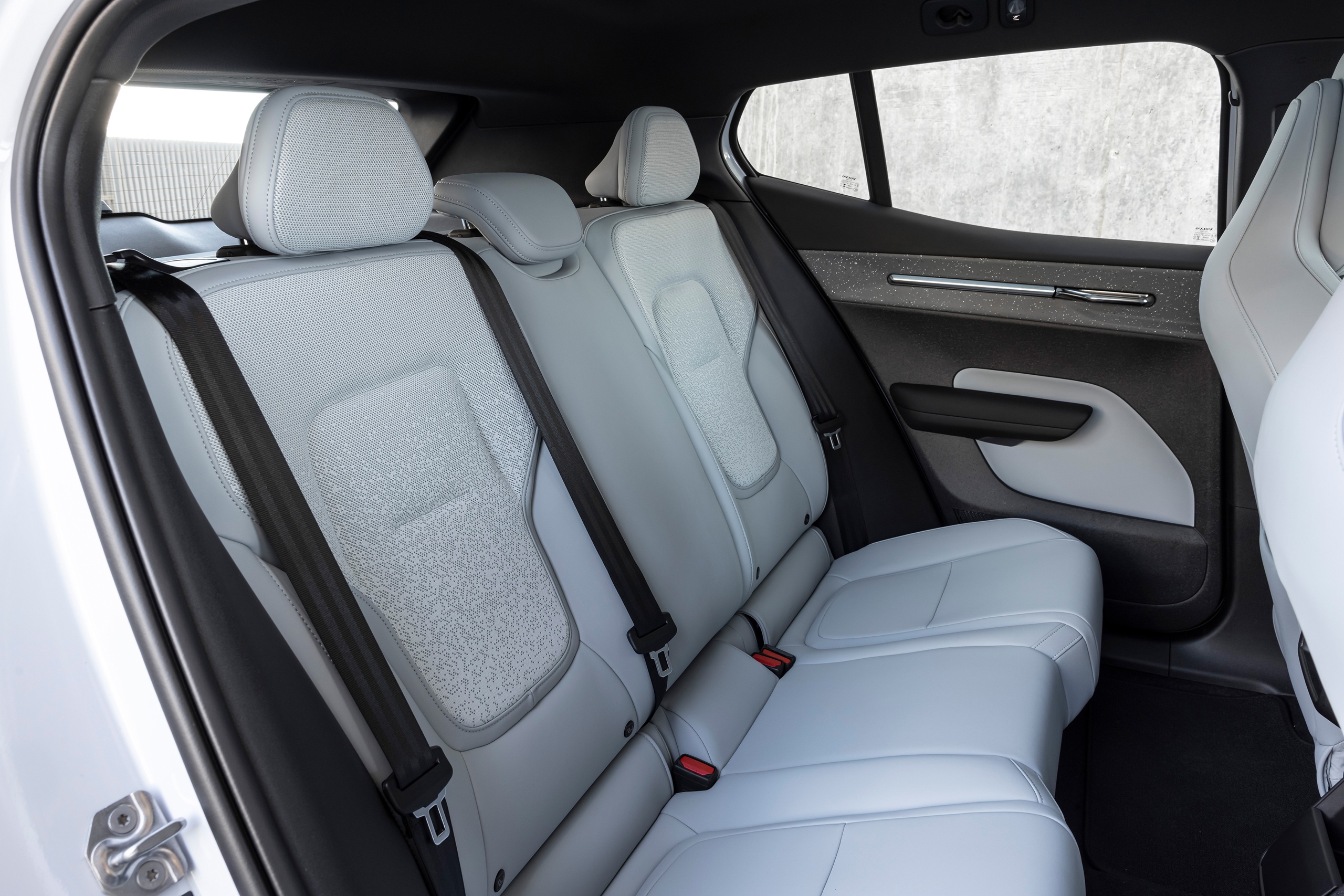
The rear seats are noticeably tighter, which isn't surprising in a 4,23-meter-long SUV. For adults up to about 1,80 meters tall, the rear seat space is quite acceptable for medium-length journeys. Legroom depends heavily on the position of the front seats. With the front seats pushed far back, it becomes cramped. Despite the coupe-like sloping roofline, headroom is surprisingly good. The absence of a center tunnel is also a plus, providing more legroom for the middle passenger and making access easier. The 60:40 split-folding rear seat backrest expands the cargo space when needed. However, this doesn't create a completely flat loading area, as a step remains between the rear seats and the trunk. Isofix child seat anchors are available on the outer rear seats. The rear door pockets are quite narrow and offer limited space for water bottles or small items.
-
- Image: Volvo
-
- Image: Volvo
Trunk: Not the biggest
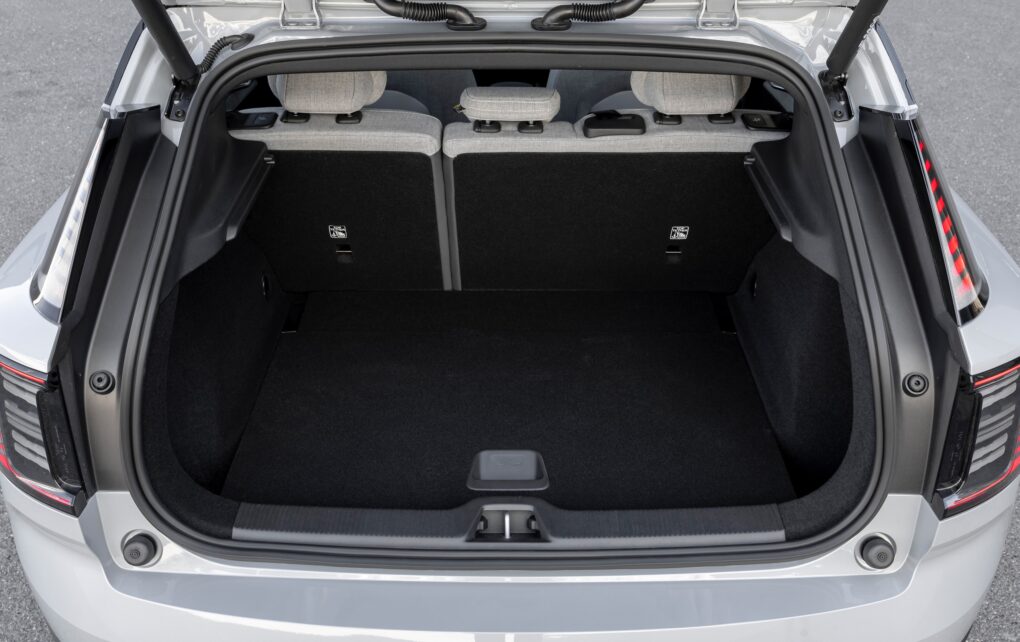
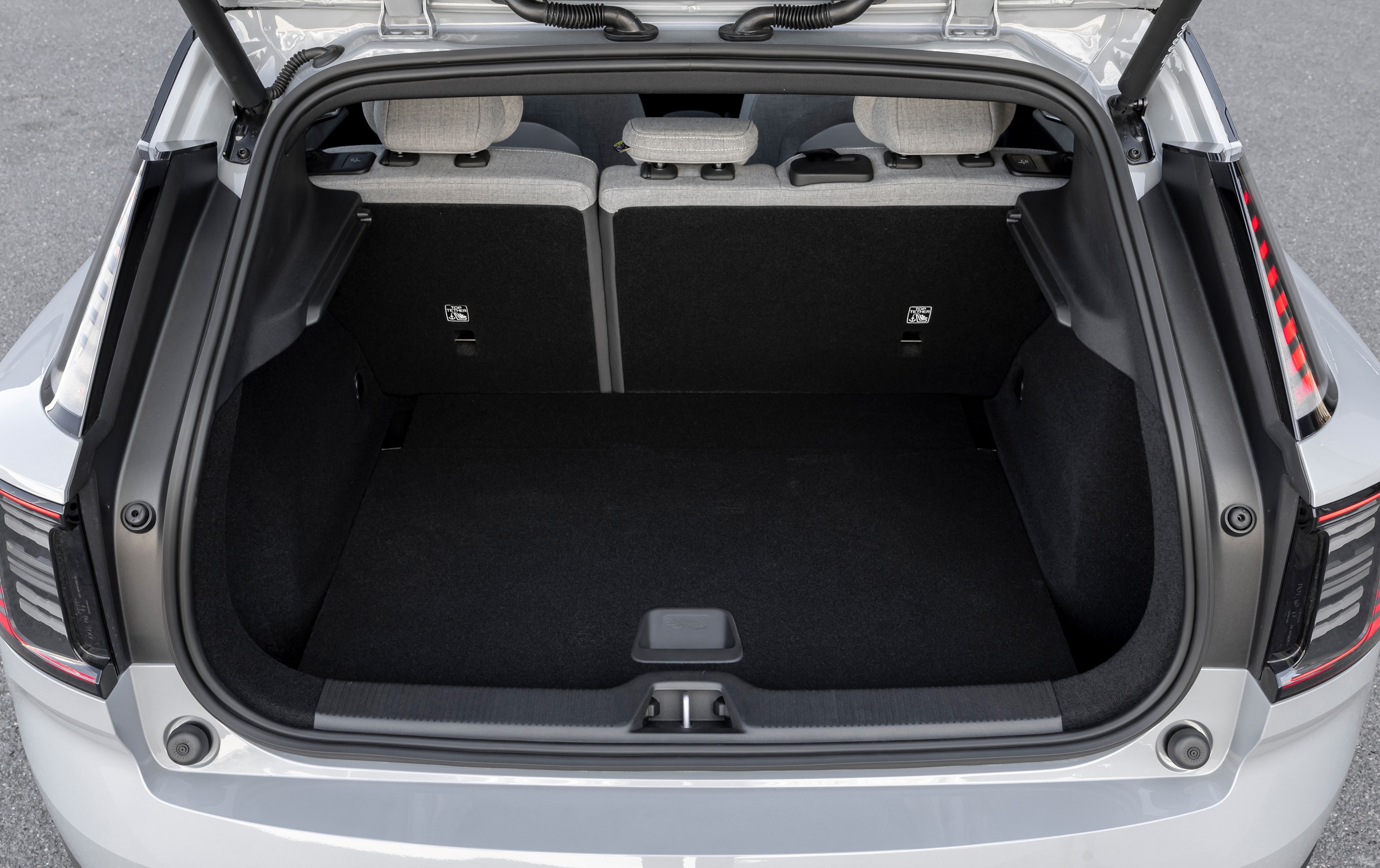
With a boot capacity of 318 liters with the rear seats upright, the Volvo EX30 is in the lower middle range of its class. For comparison: A VW ID.3 offers 385 liters, a Hyundai kona electric 332 liters. The compact exterior dimensions take their toll here. However, the trunk is well-shaped and relatively deep, so even bulky luggage fits. proIt can be stowed away without any problems. The loading sill is at a comfortable height, which makes loading and unloading easier. There is a small storage compartment under the boot floor for the charging cable and other small items.
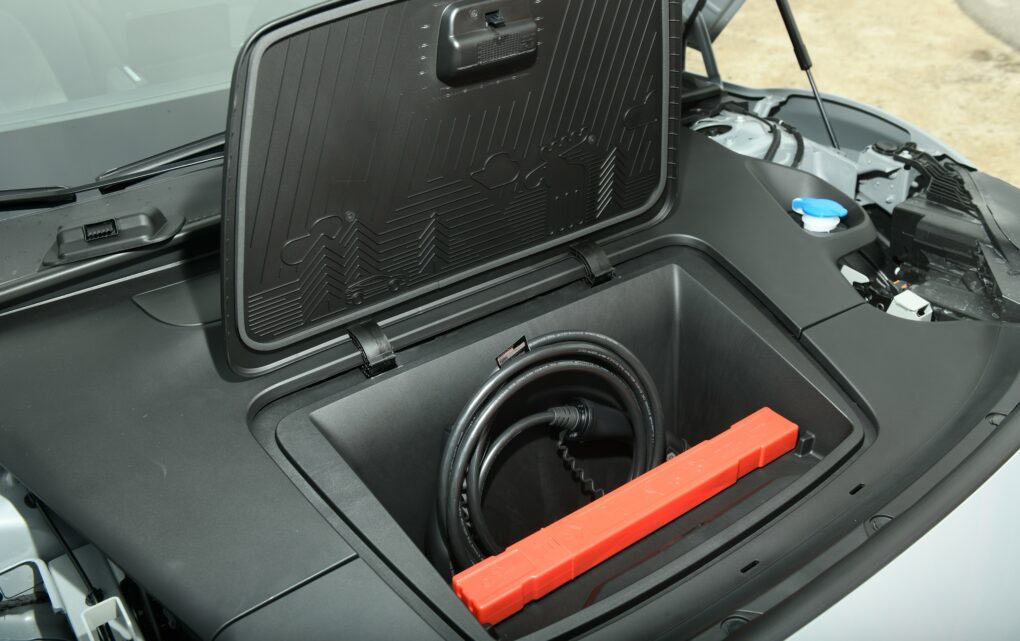
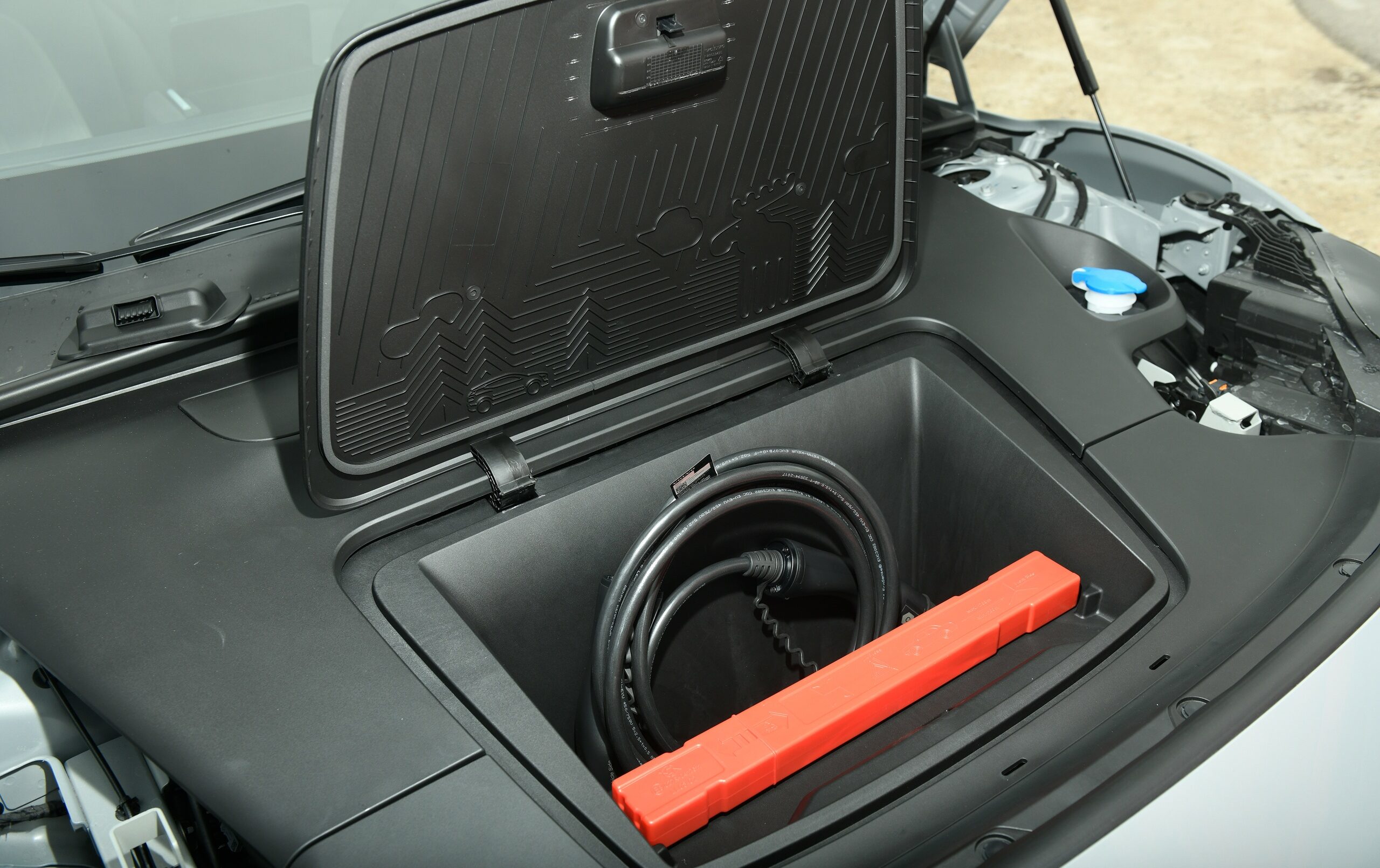
Folding down the rear seatbacks expands the cargo volume to up to 1.000 liters. The aforementioned step to the load floor isn't ideal, but it can be overcome with a little ingenuity. The Volvo EX30 also features a so-called "frunk" (front storage compartment) under the hood. However, at approximately 7 liters, this is quite small and primarily intended for storing charging cables or small items, rather than serving as a large luggage compartment.
There are tie-down points for securing luggage. However, a cargo net or luggage compartment cover is not included as standard equipment. The space is certainly sufficient for weekly shopping, sports bags, or the hand luggage of two people, but it could get cramped for extended holidays with four people. In this case, a roof rack or roof box, such as those offered for the Cross Country in the Experience package, are useful additions. Anyone who regularly transports mountain bikes, skis, or camping equipment will appreciate this option. Overall, the Volvo EX30 offers enough storage space for everyday use. However, in terms of trunk volume, it can't compete with... larger SUVs keep up.
-
- Image: Volvo
-
- Image: Volvo
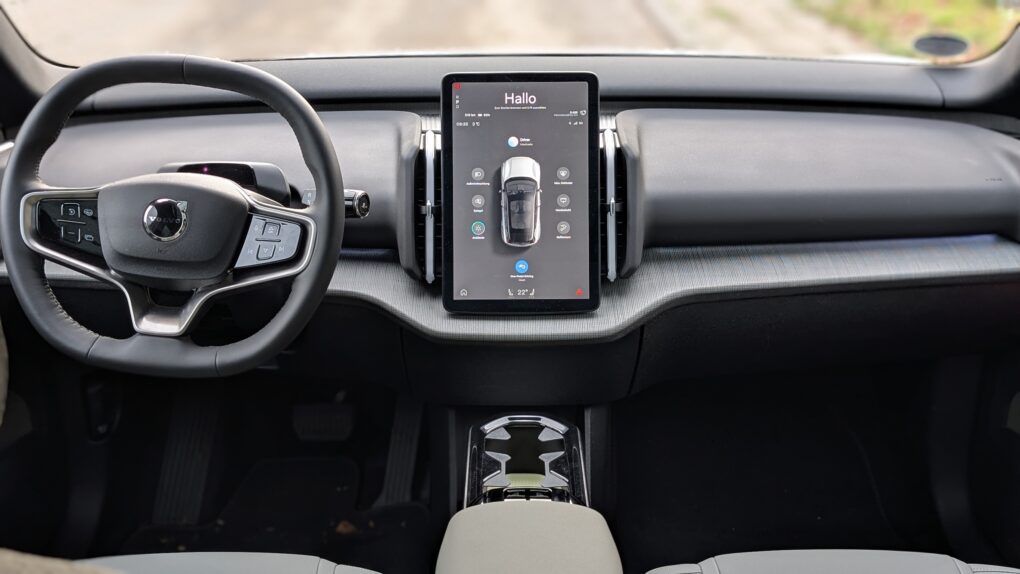
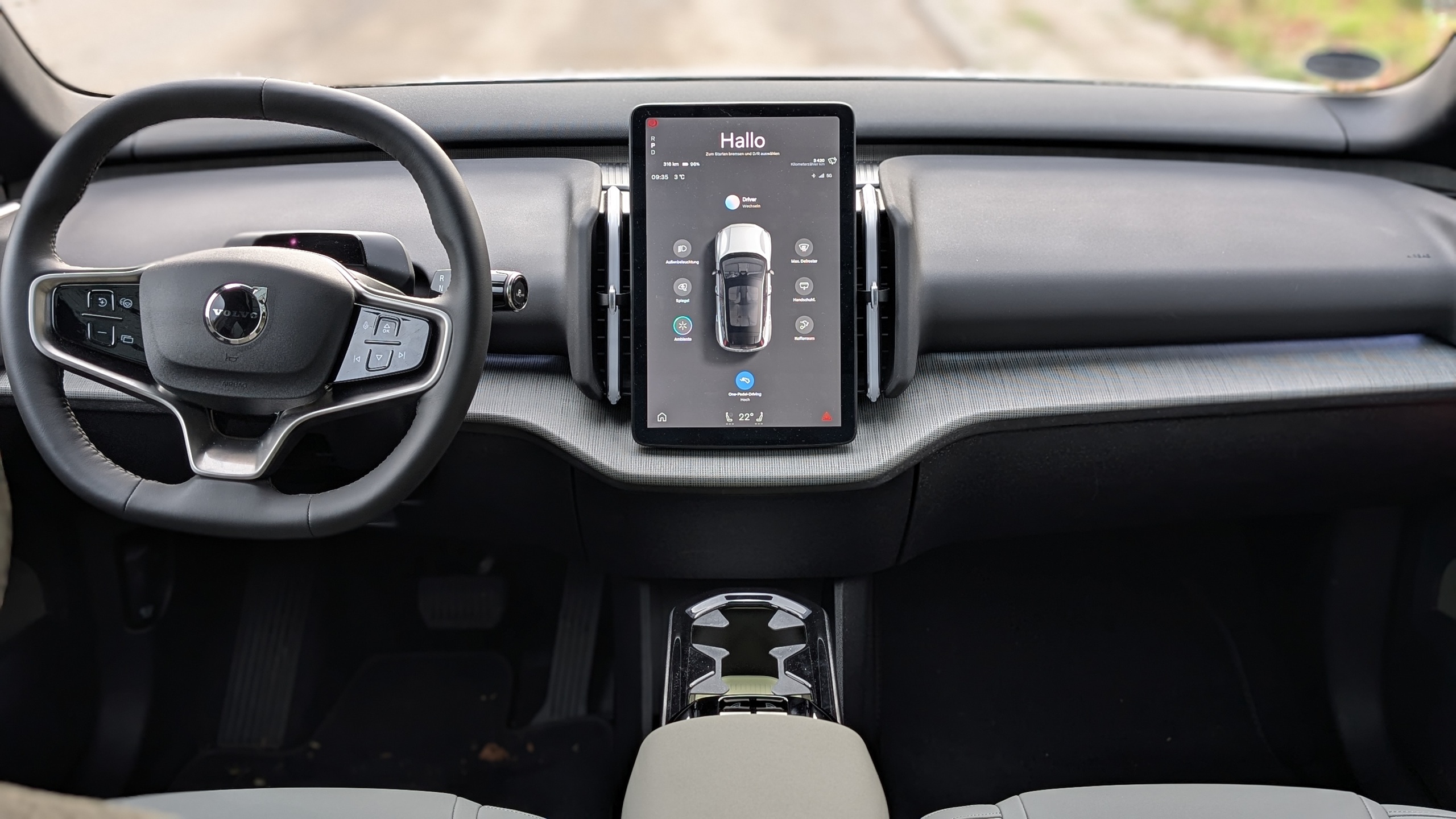
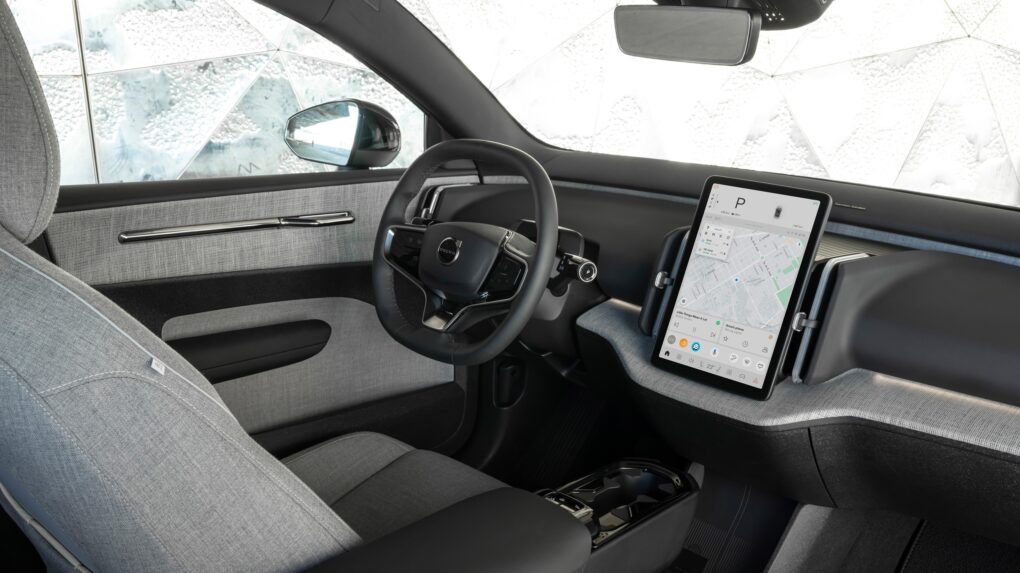
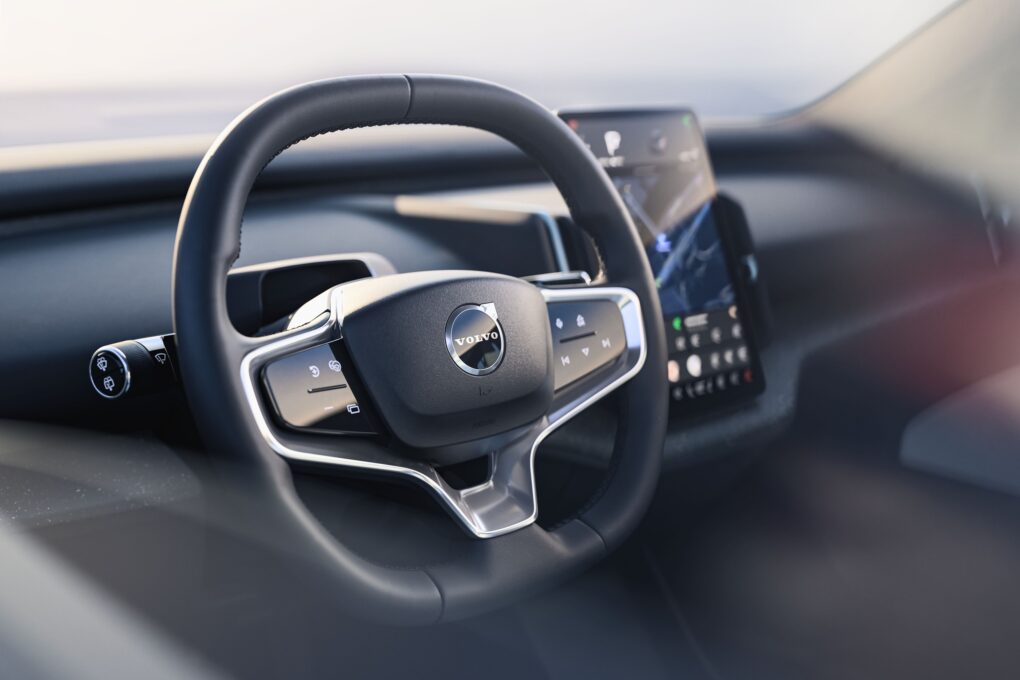
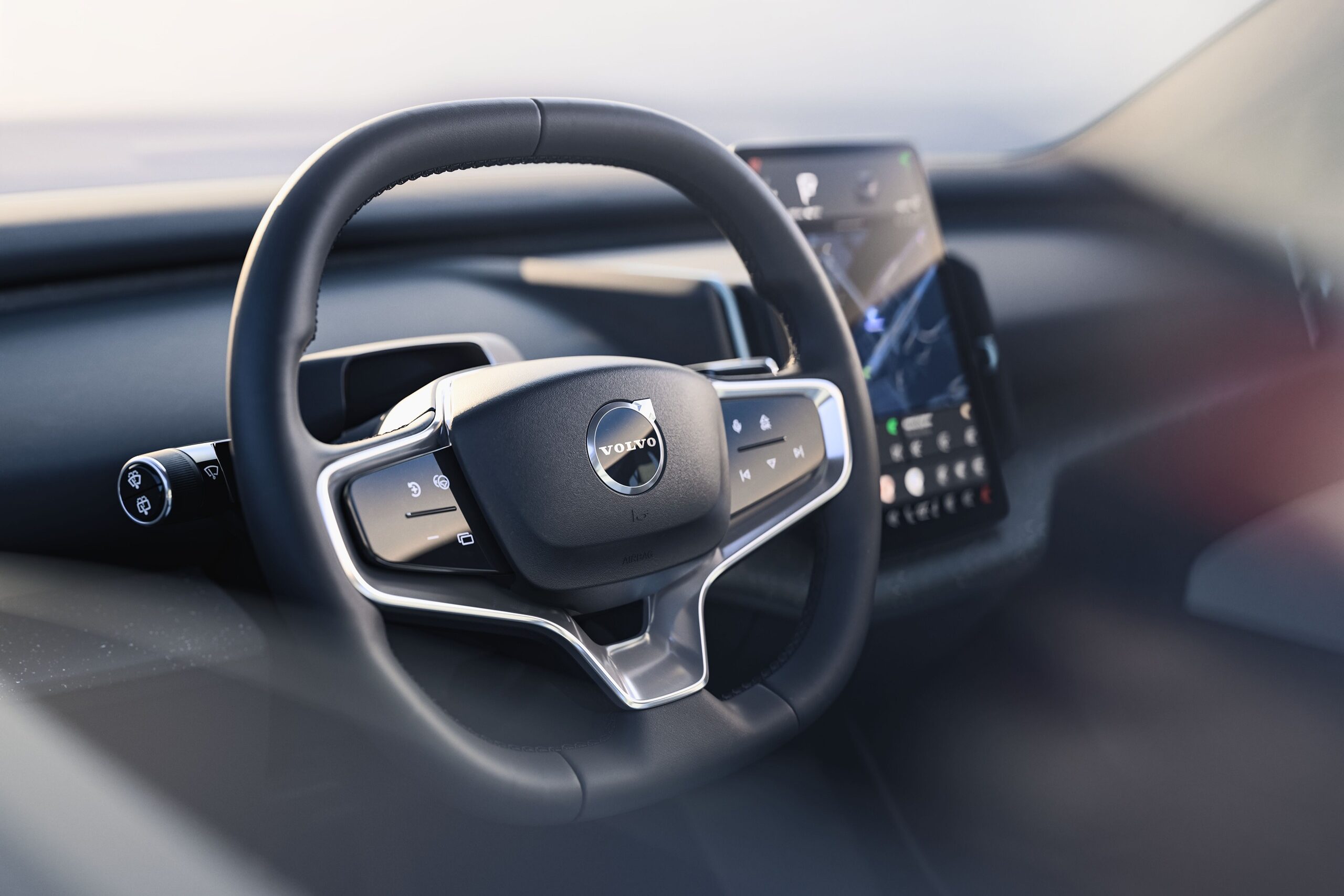
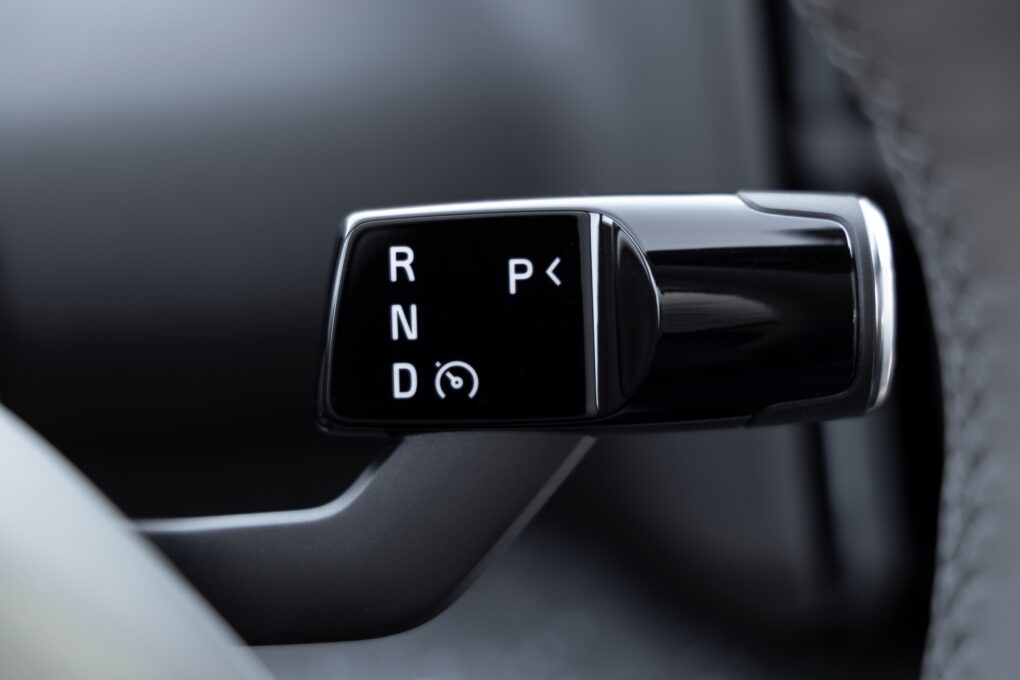
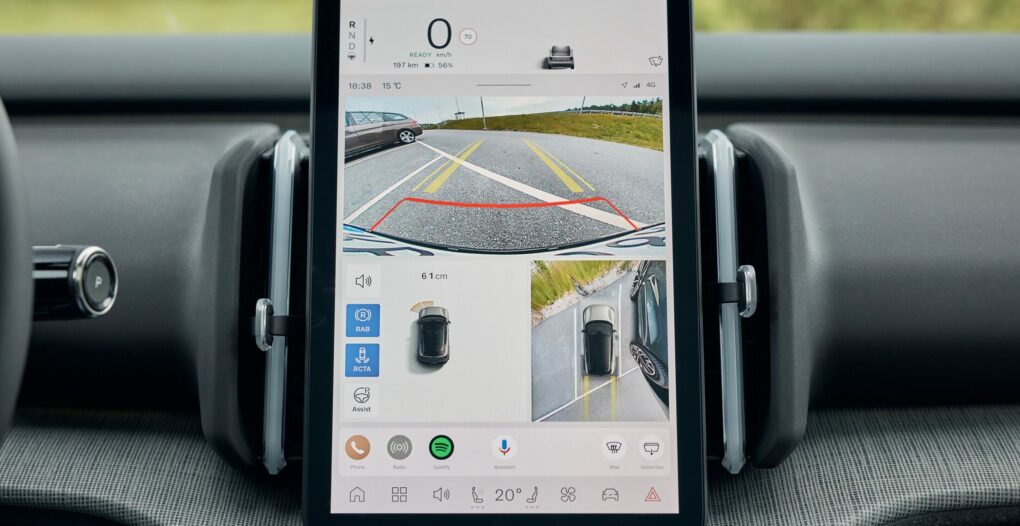
The interior of the EX30 is designed by Scandinavian minimalism and reflects Volvo's commitment to sustainability. At first glance, the clean, minimalist design is striking. Physical controls are kept to a minimum, with most functions managed via the central 12,3-inch touchscreen. A traditional instrument panel in front of the driver is completely absent. Instead, all driving-related information, such as speed, range, and navigation data, is displayed on the central screen. This solution takes some getting used to and isn't for everyone, as looking towards the center of the screen takes the driver further away from the road than with conventional instruments.
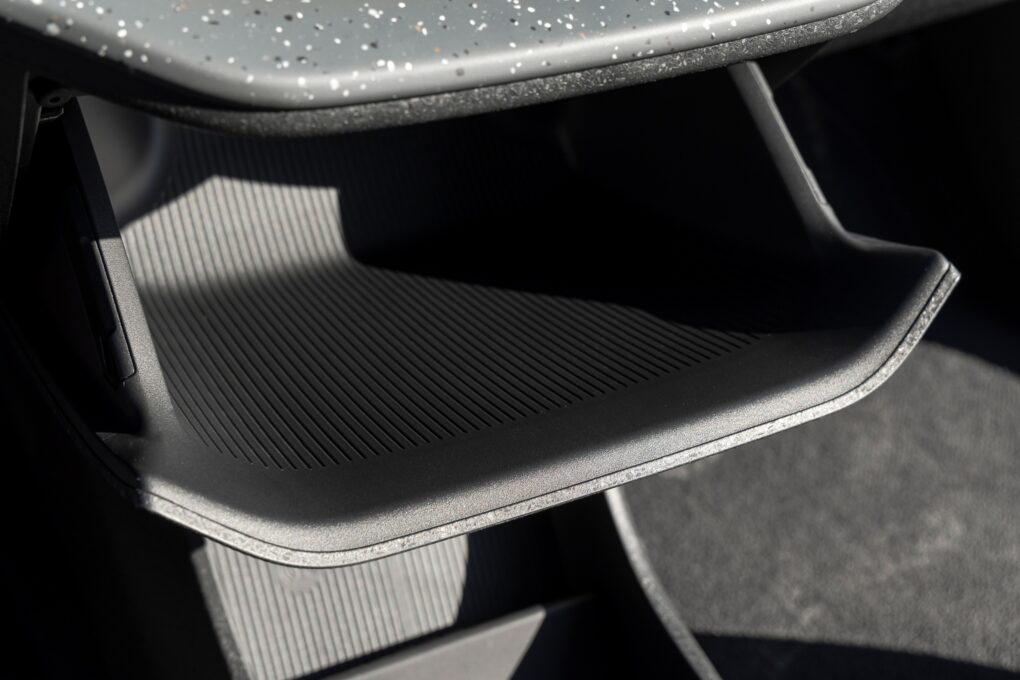
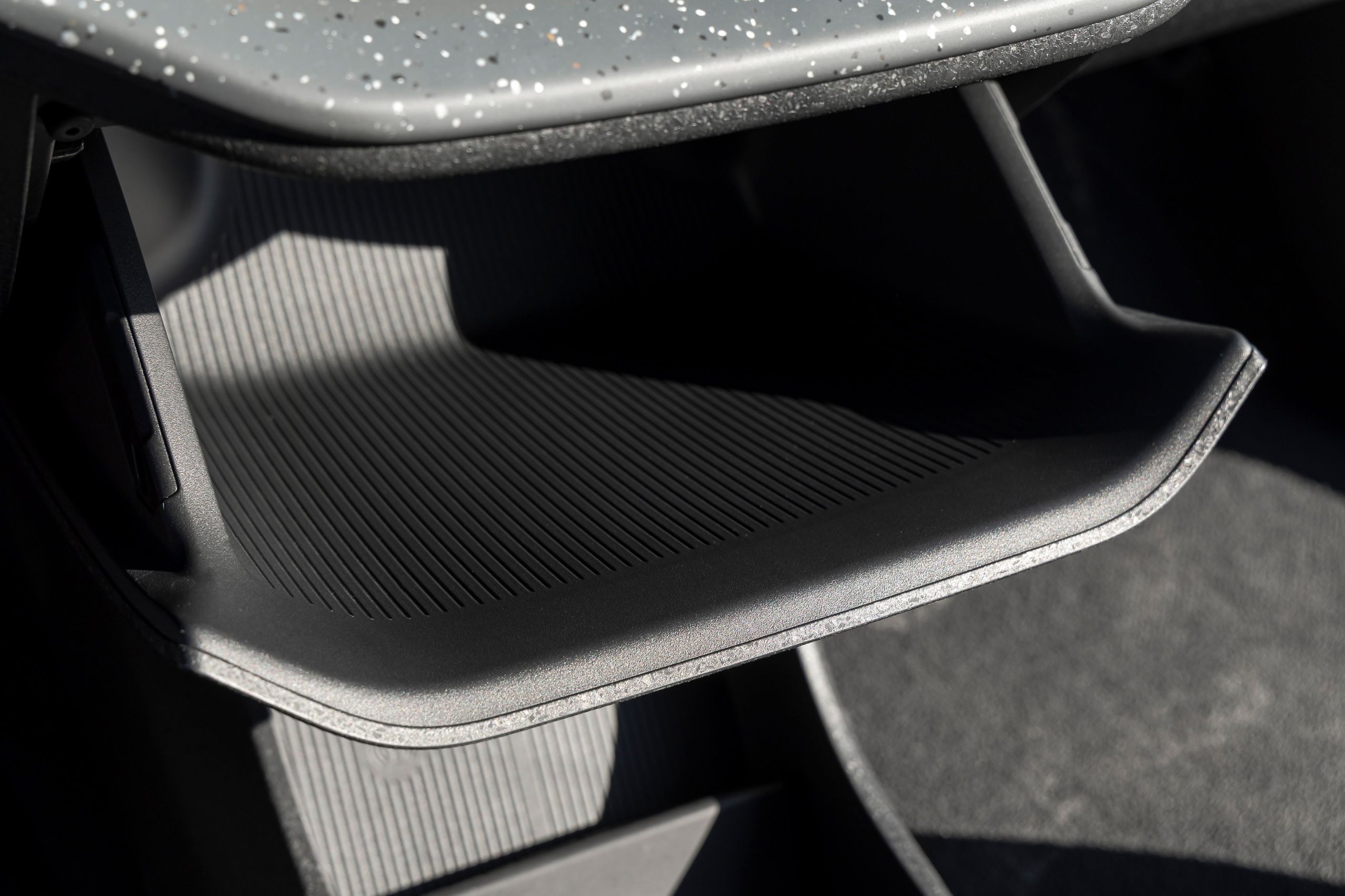
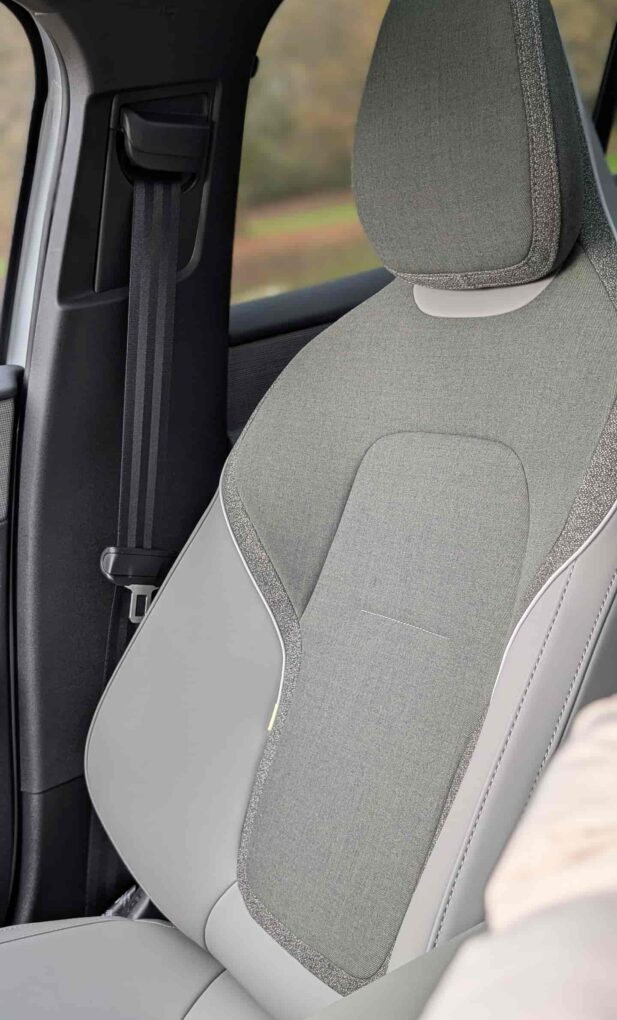
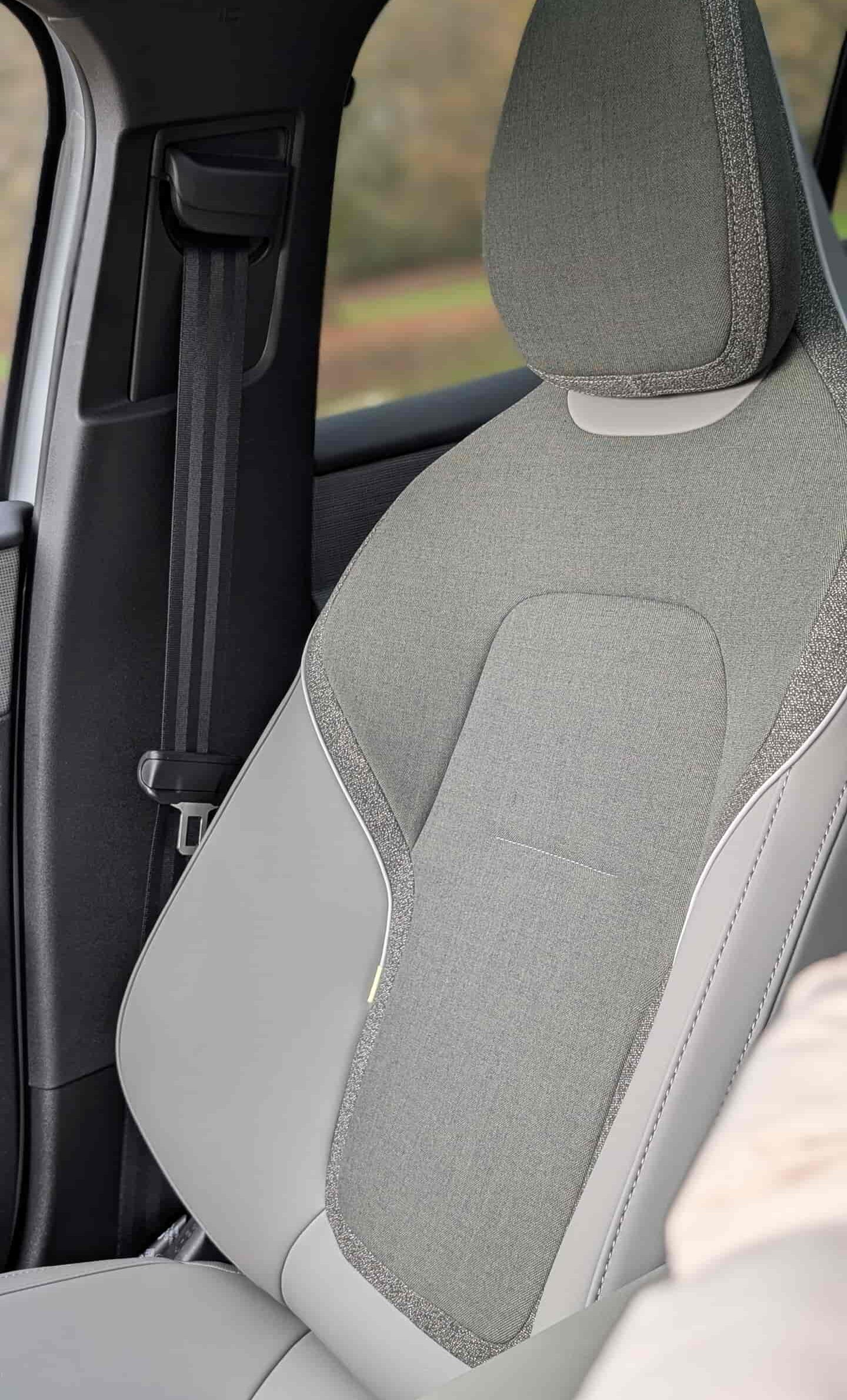
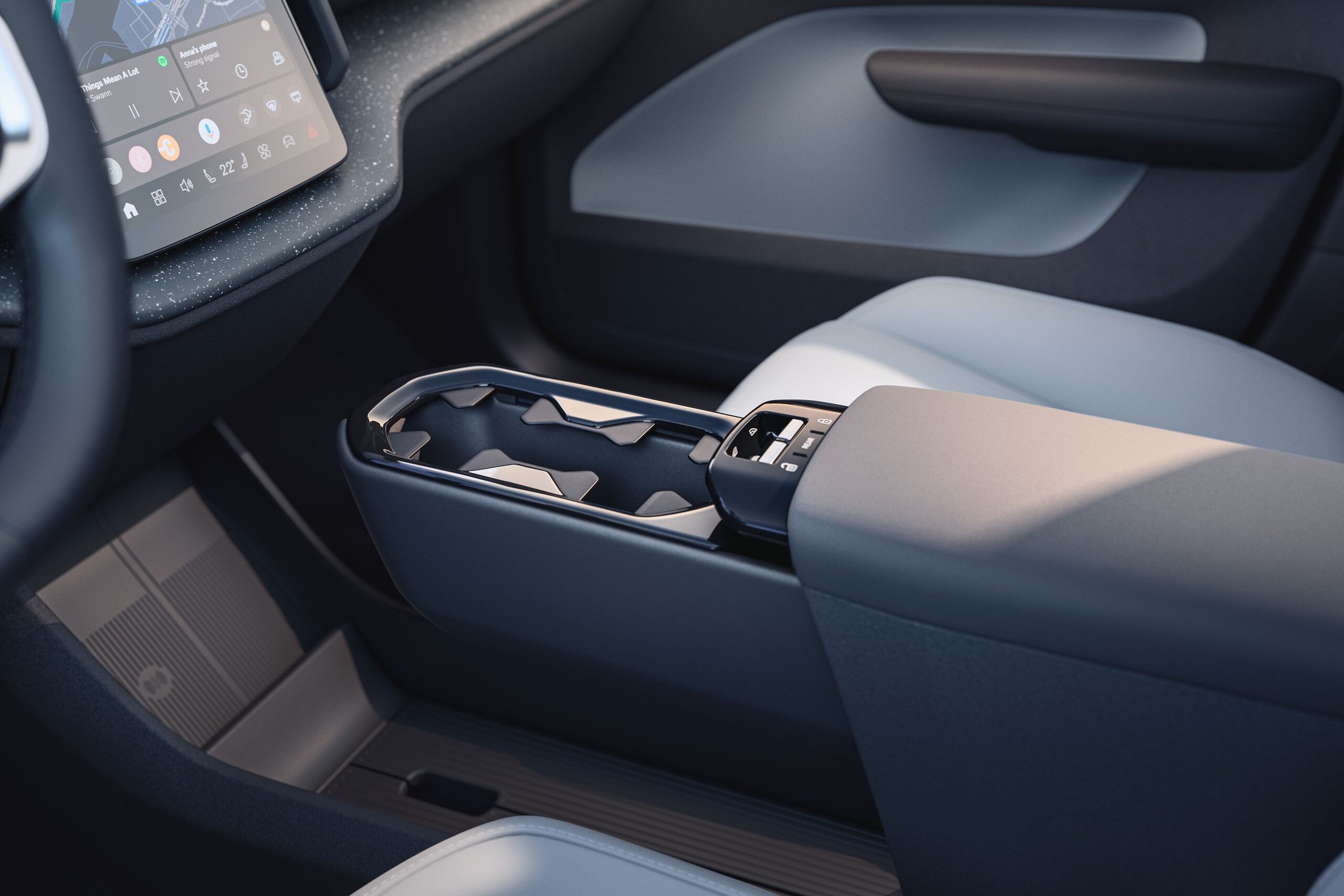
The choice of materials is particularly noteworthy. Volvo consistently uses sustainable, recycled materials. Different materials are used depending on the trim level. While the base model uses recycled polyester, higher trim levels offer wool blends made from recycled PET bottles or vegan leatherette based on renewable resources. The surfaces feel pleasant and appear high-quality. However, hard plastics in some areas slightly detract from the premium impression. Hard plastic is particularly dominant in the door panels and the lower dashboard area. The multifunctional steering wheel fits comfortably in the hand and is equipped with all the essential controls. A small storage compartment for two smartphones is located below the display, although only one of them offers wireless charging.
-
- Picture: TechnikNews
-
- Image: Volvo
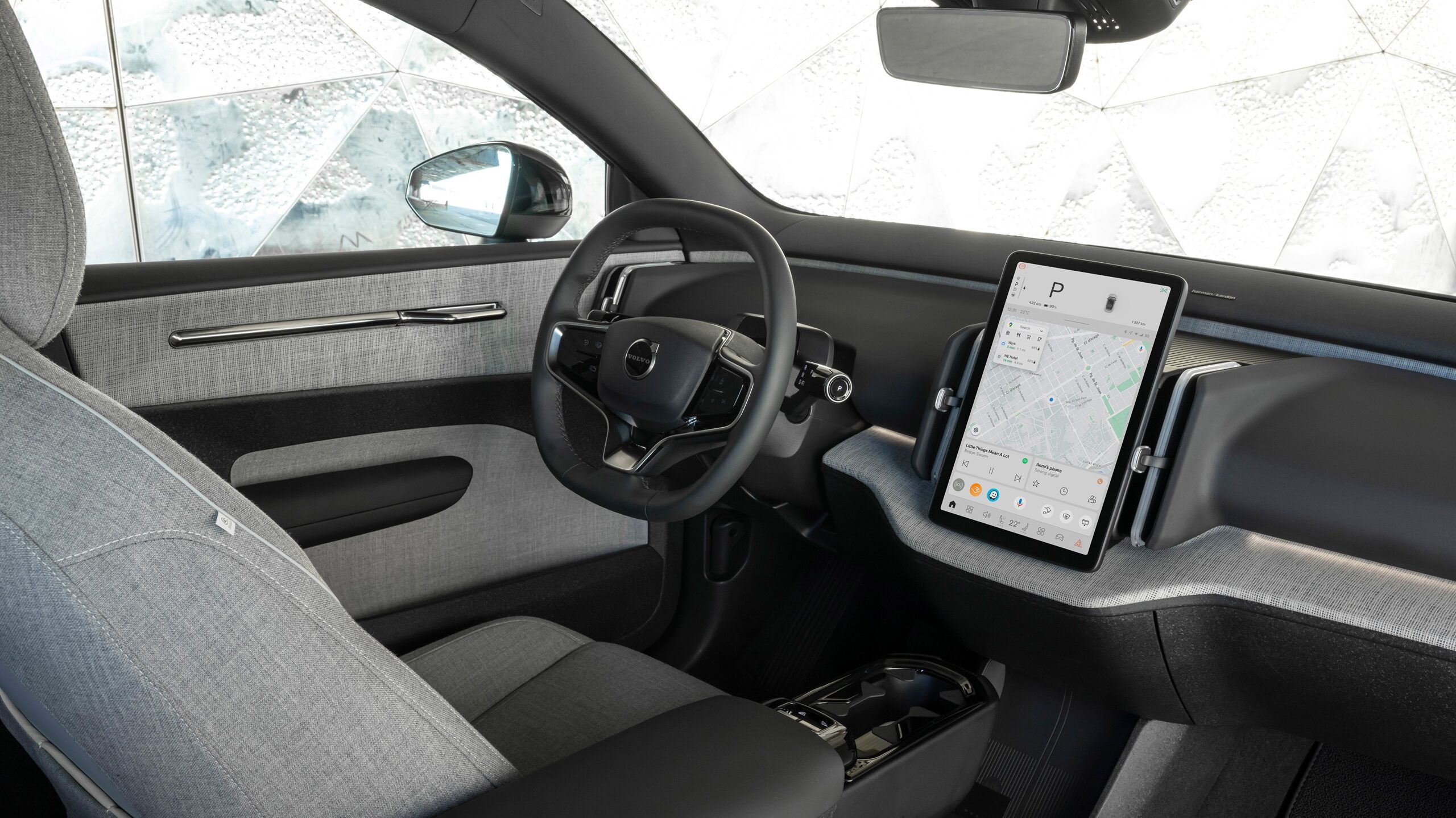
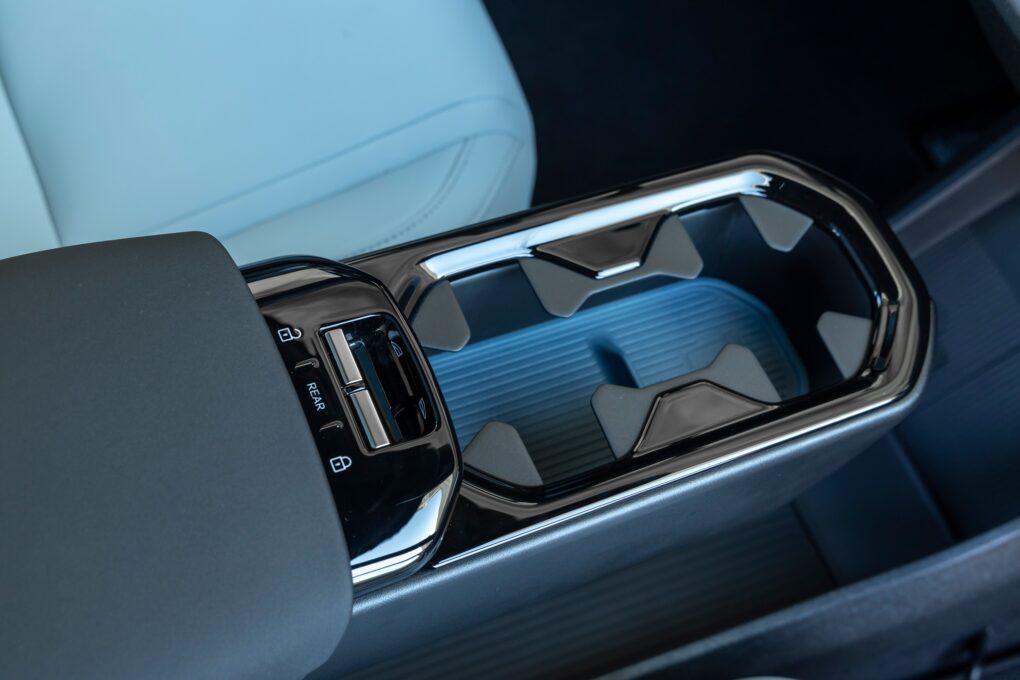
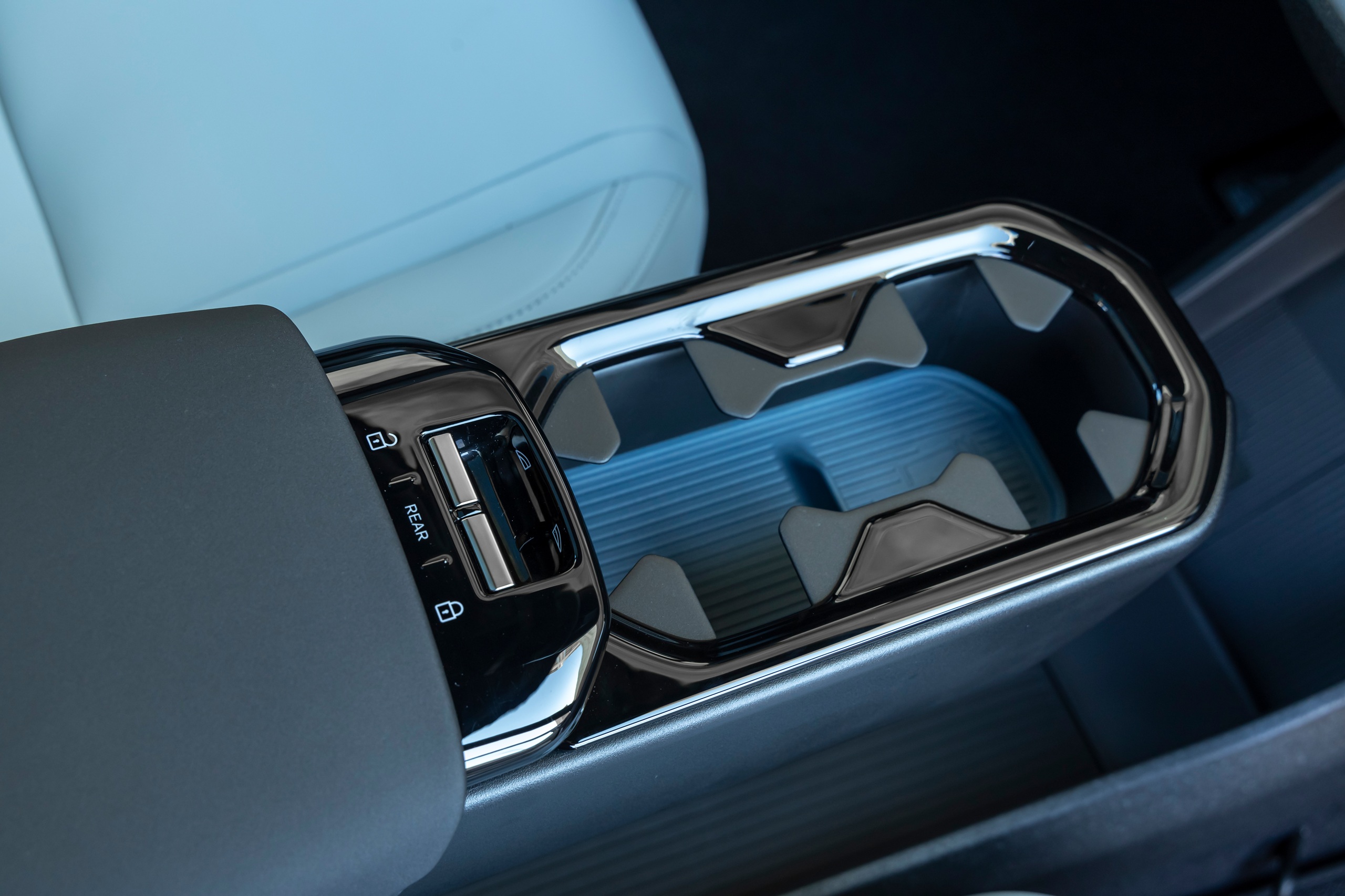
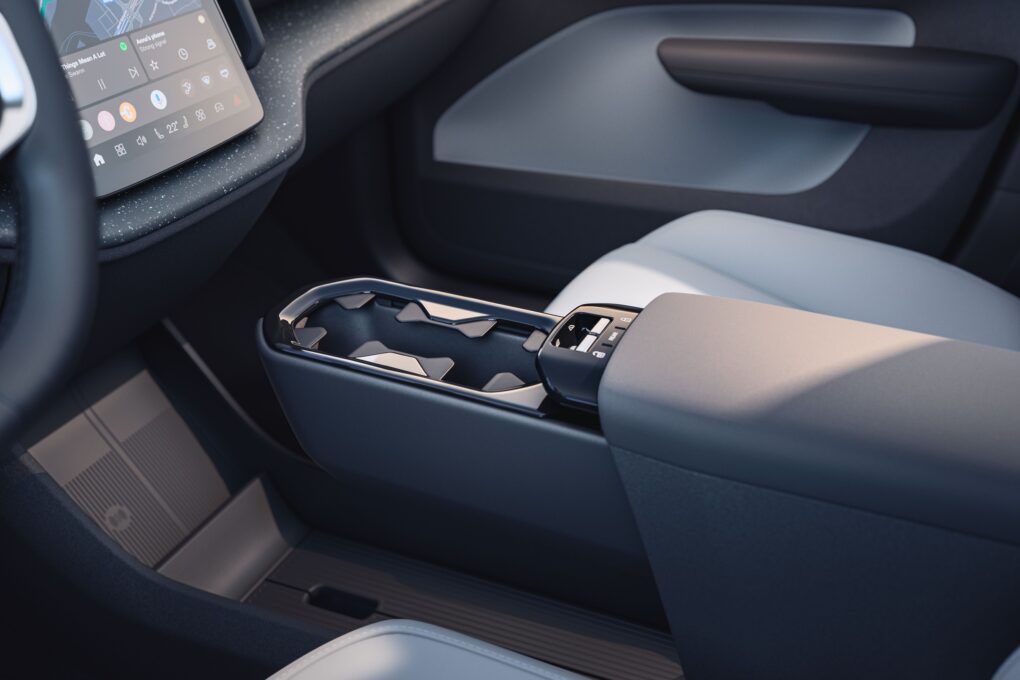
The door pockets are compact but offer enough space for a water bottle. Other storage compartments are few and far between, and a traditional glove box is completely absent. Instead, there's a mini glove compartment in the center console, which, while unusual, is quite practical. The seats offer good comfort and sufficient lateral support. They are also well-suited for longer journeys. Heated seats and steering wheel, as well as electrically adjustable front seats, are available in higher trim levels. The seating position is pleasantly high, providing good visibility of the road. All-around visibility is decent but could be further improved with slimmer A-pillars.
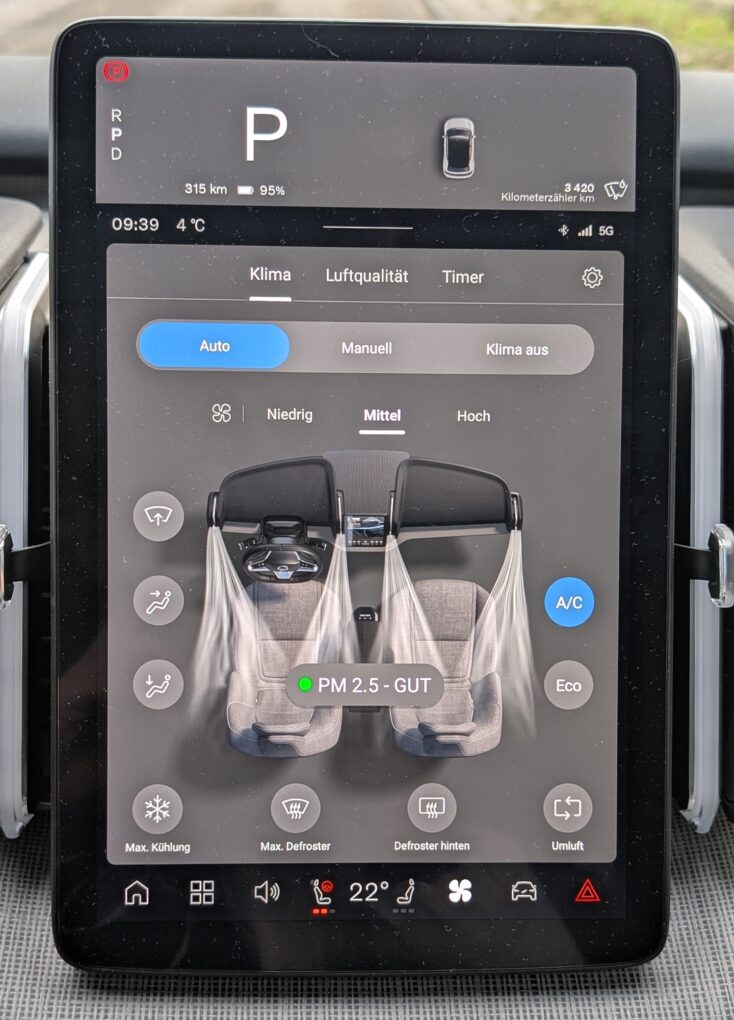
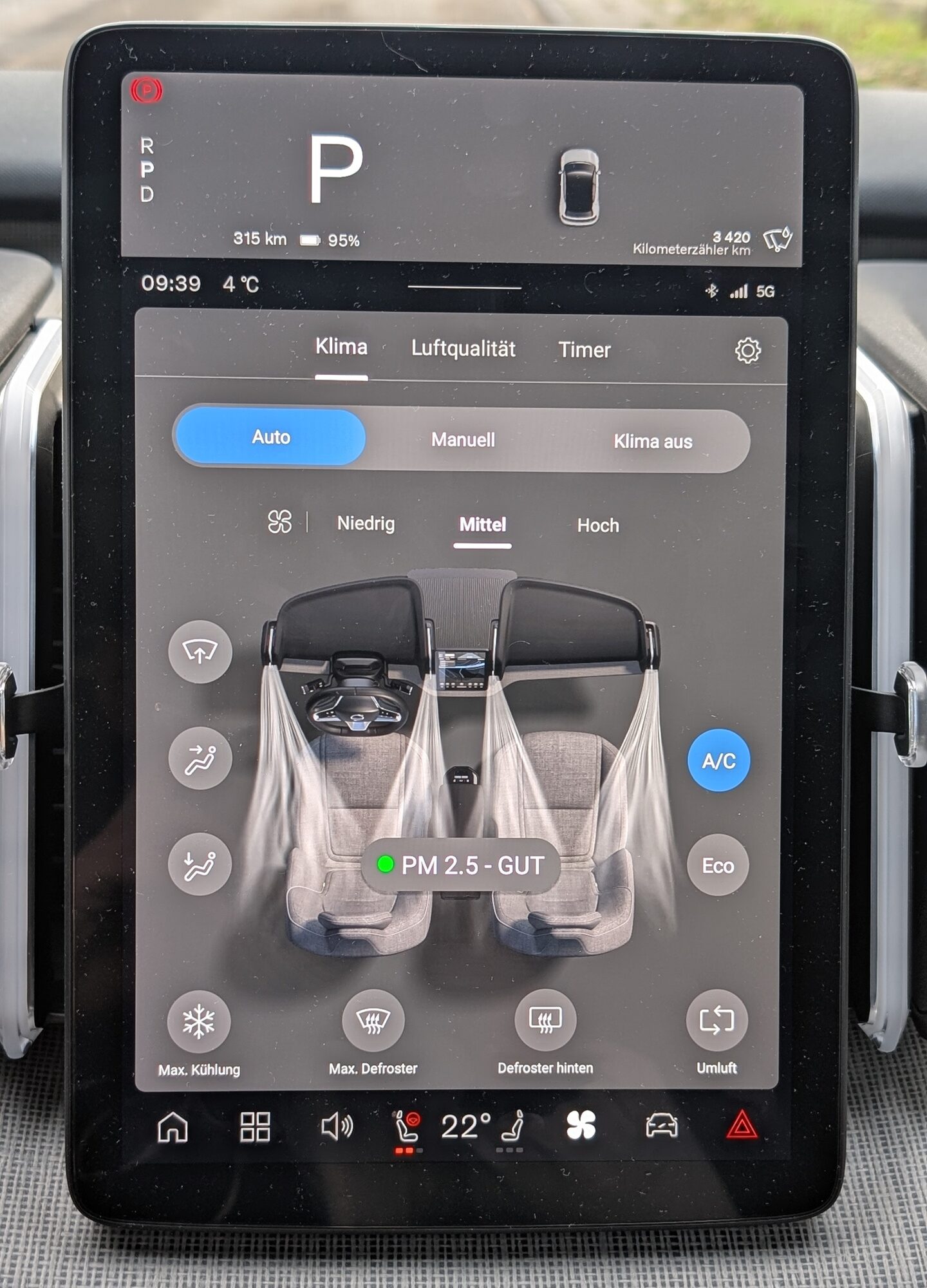
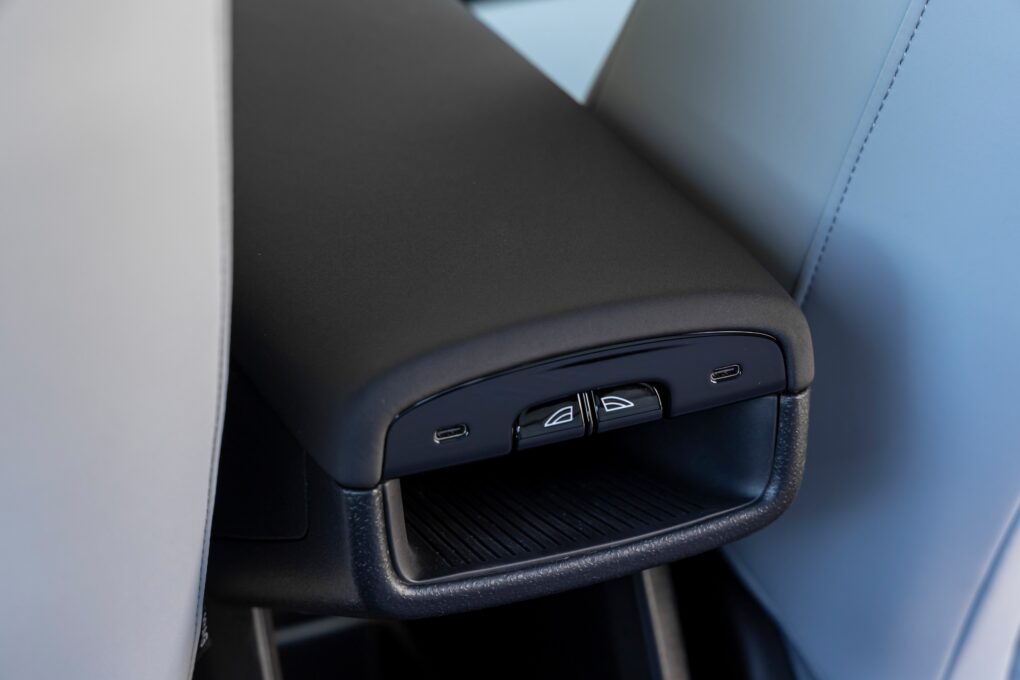
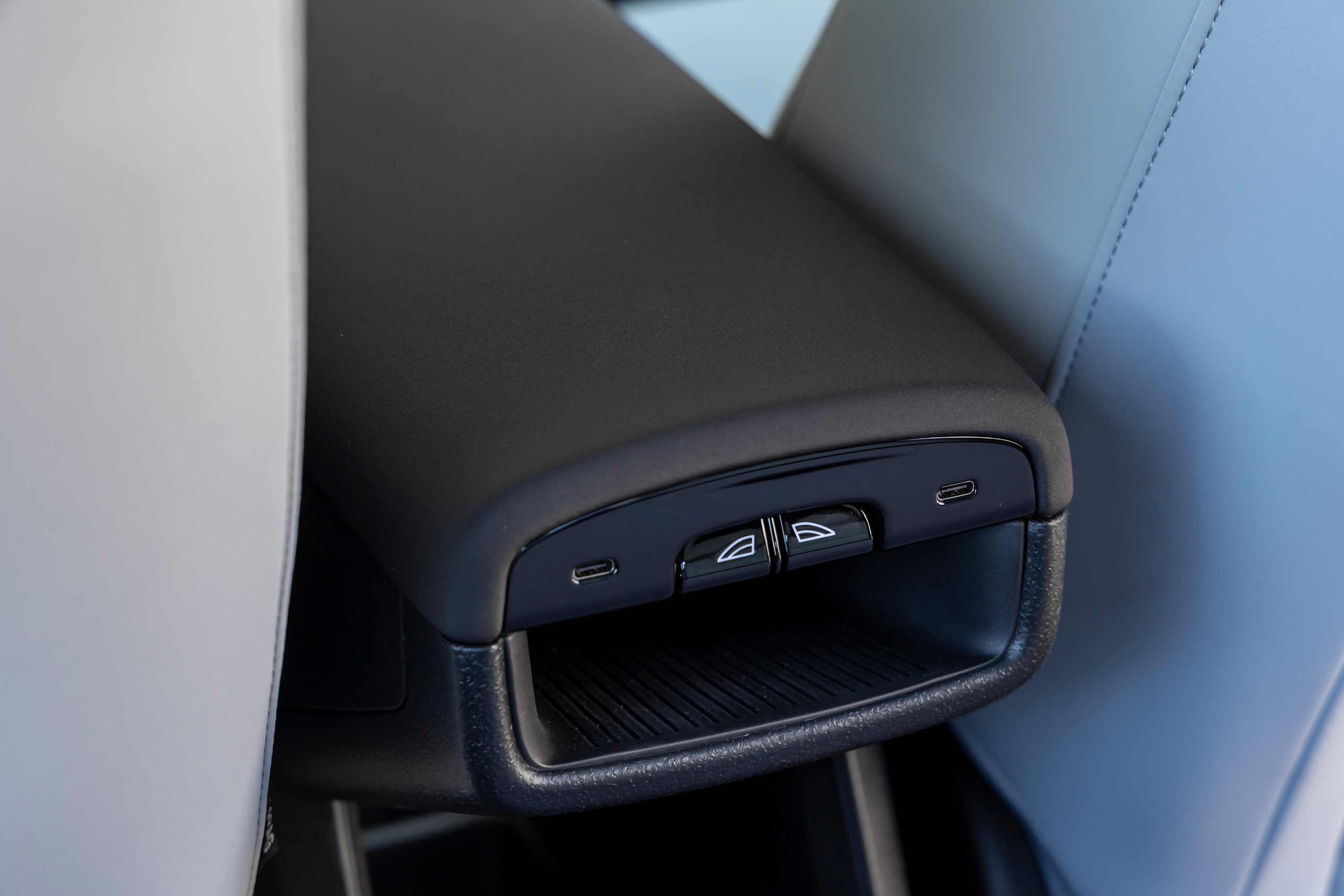
The standard panoramic glass roof is fixed and cannot be opened. It creates an airy feeling of spaciousness and lets in plenty of light, but can also contribute to the interior heating up on hot summer days. Electric sunshades are not available, which can be unpleasant in direct sunlight. The automatic climate control works efficiently and ensures comfortable temperatures. However, operating it via the touchscreen is not as intuitive as using traditional rotary controls. During our test drives, we didn't notice any rattles or squeaks. Ambient lighting creates a pleasant atmosphere, especially in the evenings. There are USB-C ports in both the front and rear. However, a 12-volt socket is missing. Overall, the interior of the Volvo EX30 leaves a positive impression with its clean, sustainable design. However, the perceived quality of the materials in some areas doesn't quite live up to premium expectations, and the operating concept takes some getting used to.
-
- Image: Volvo
-
- Image: Volvo
Comfort: Top-of-the-line features
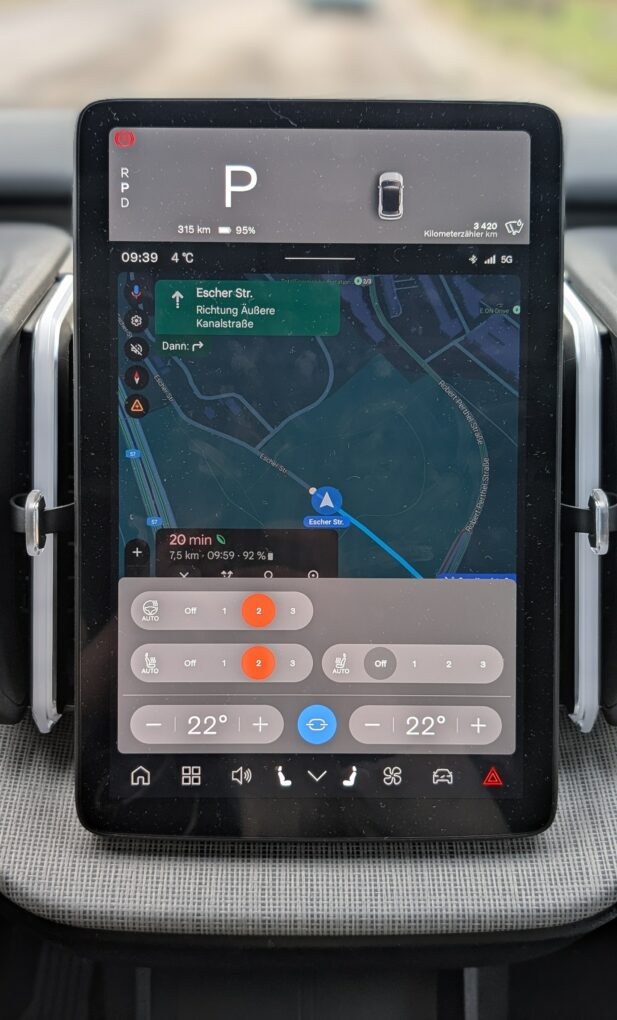
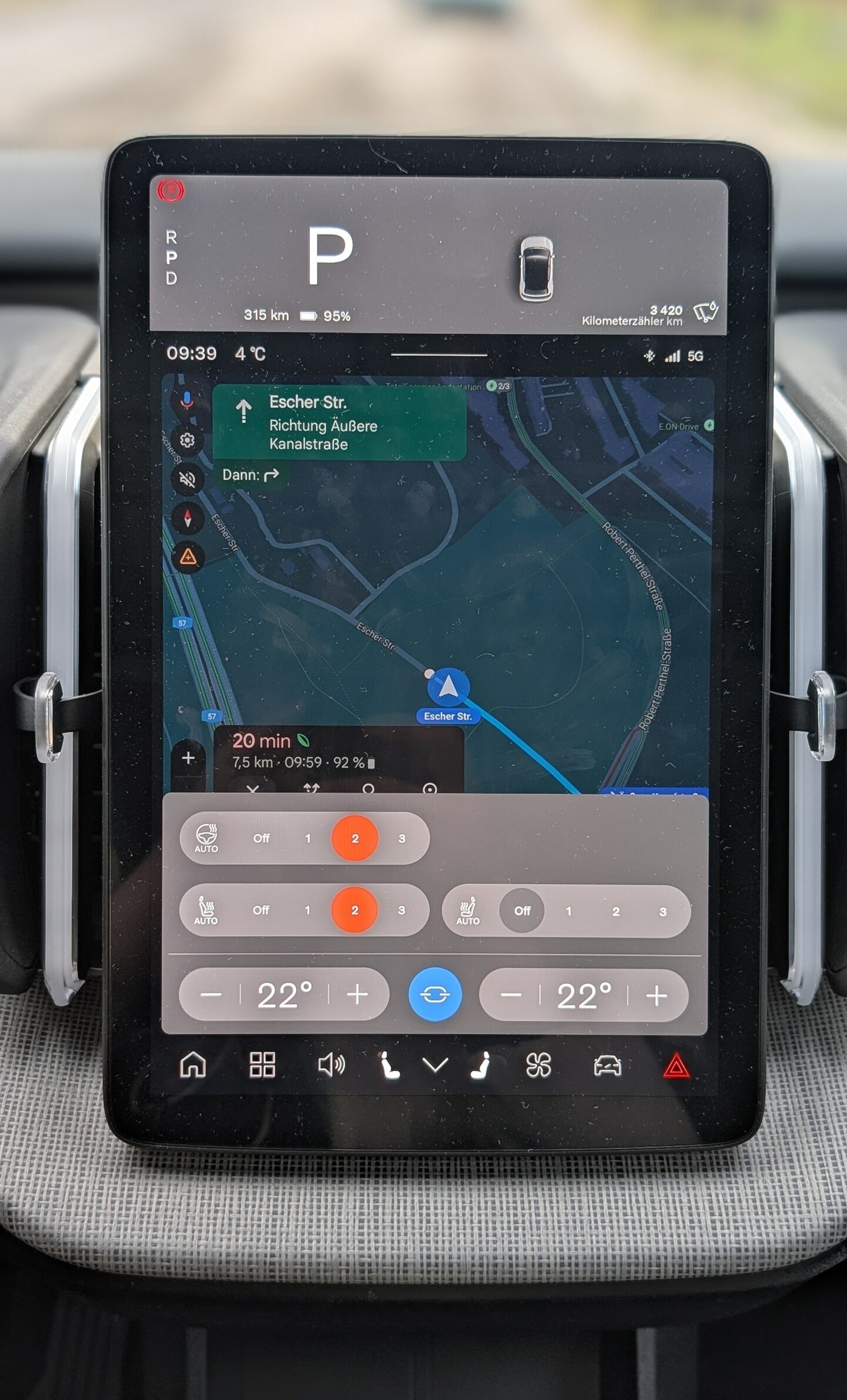
As mentioned, the seats offer good long-distance comfort, although an extendable thigh support is missing. The seat heating and steering wheel heating, on the other hand, work quickly and effectively. Seat ventilation is unfortunately not available. The upright seating position is generally comfortable, but the thigh support might be a bit tight for very tall people. The air conditioning regulates the temperature reliably and quickly creates a comfortable interior environment, even in extreme outside temperatures. Pre-conditioning via app This is a real comfort advantage: In summer, you get into a pre-cooled vehicle, and in winter, a pre-heated one, without wasting energy from the battery – provided the vehicle is connected to the charging cable. During our test, this function worked absolutely reliably and is one of the Volvo EX30's real strengths.
The noise insulation is solid, but not outstanding. At city speeds and moderate highway speeds, the Volvo EX30 is pleasantly quiet, as one would expect from an electric vehicle. However, from around 130 km/h on the highway, wind and road noise become increasingly loud. The exterior mirrors generate audible wind noise, and a certain amount of noise from the underbody also penetrates the cockpit. Volvo could improve this with better sound insulation. The Cross Country with the optional off-road tires and roof rack is noticeably louder at higher speeds on asphalt than the Single Motor Plus with road tires. Overall, the Volvo EX30 offers good comfort, which is perfectly adequate for most uses. However, those who demand the highest levels of smoothness and damping comfort will be disappointed with the... EX40 or XC60 You'd be better served in a higher class. The comfort level is what you'd expect in this segment; however, it's not at the top of its class.
-
- Picture: TechnikNews
-
- Picture: TechnikNews
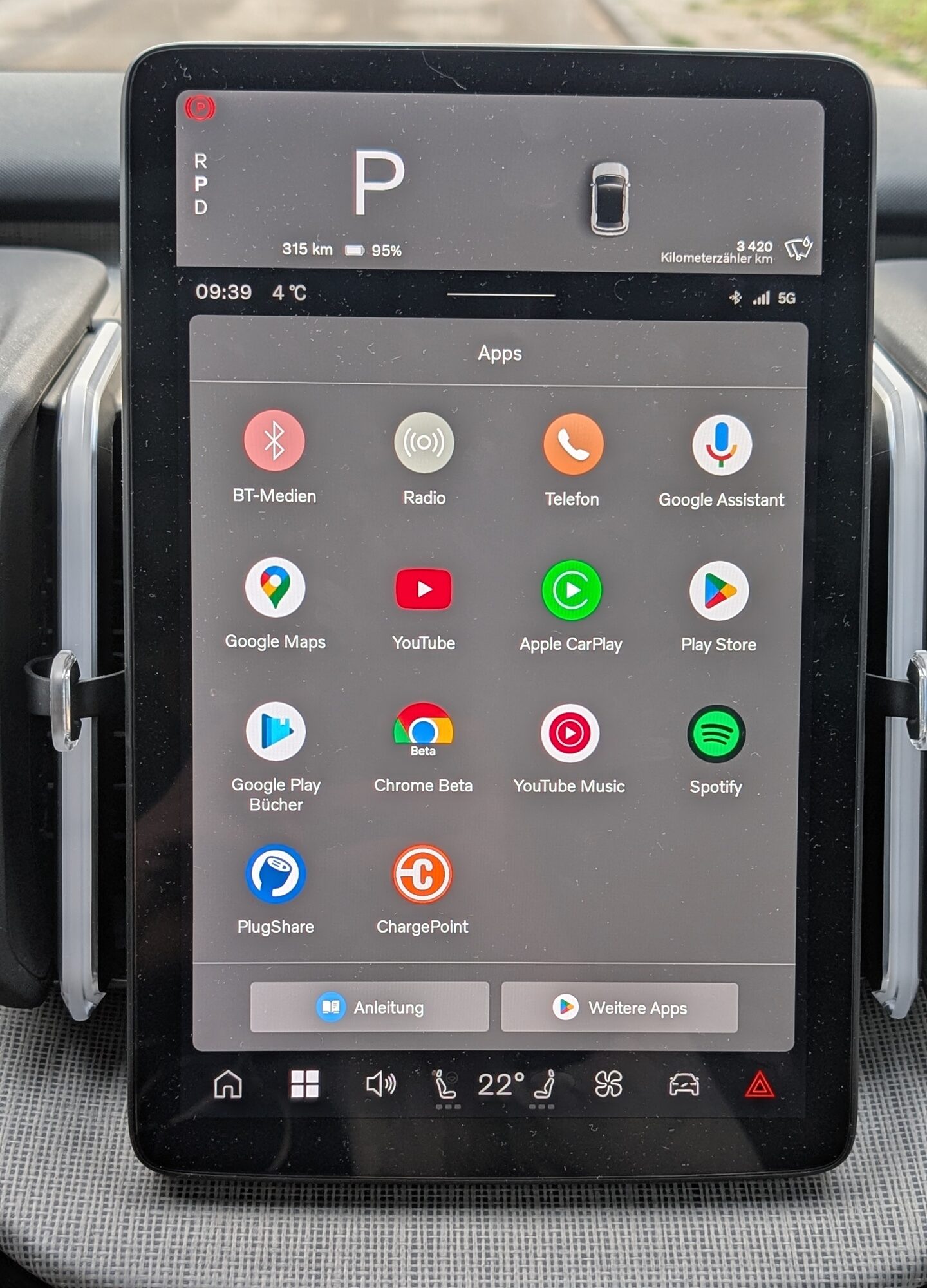
Infotainment system in the Volvo EX30: Google OS performs well
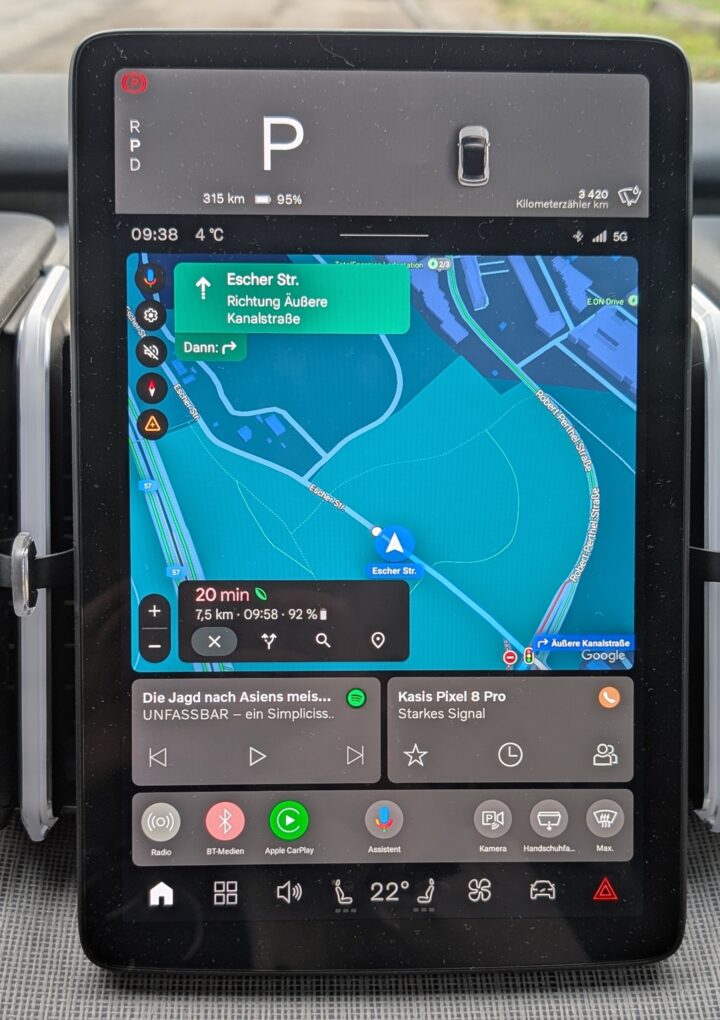
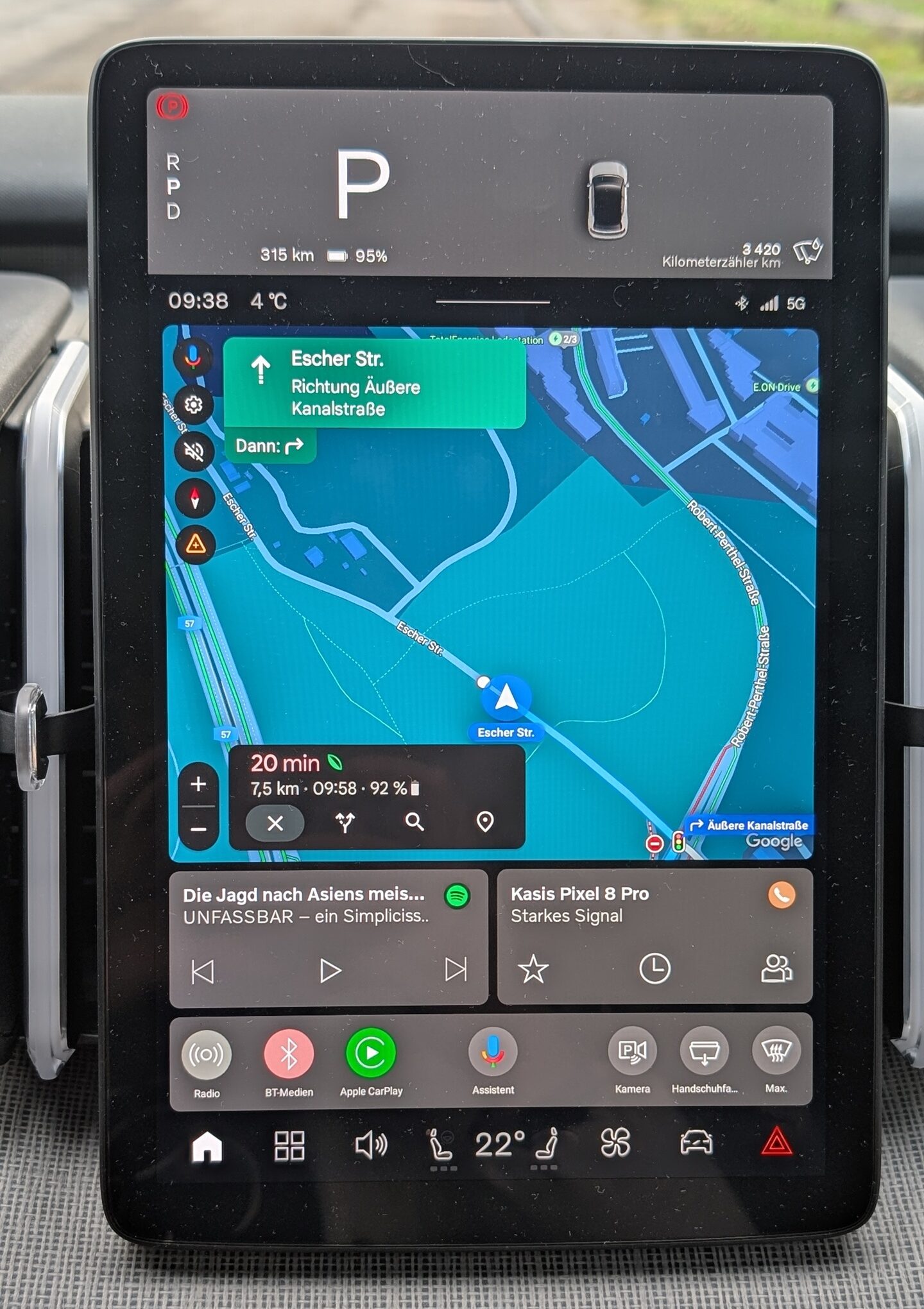
The centerpiece of the system is the central 12,3-inch portrait-oriented touchscreen located in the middle of the dashboard. Almost all functions can be controlled via this screen, including navigation, climate control, vehicle settings, and multimedia. The system is based on Google's Android Automotive operating systemThis enables close integration of Google services. Google Maps is pre-installed as the navigation system and offers reliable route guidance with up-to-date traffic information as well as special features for electric vehicles. These include, for example, the display of charging stations along the route, including availability and charging speed.
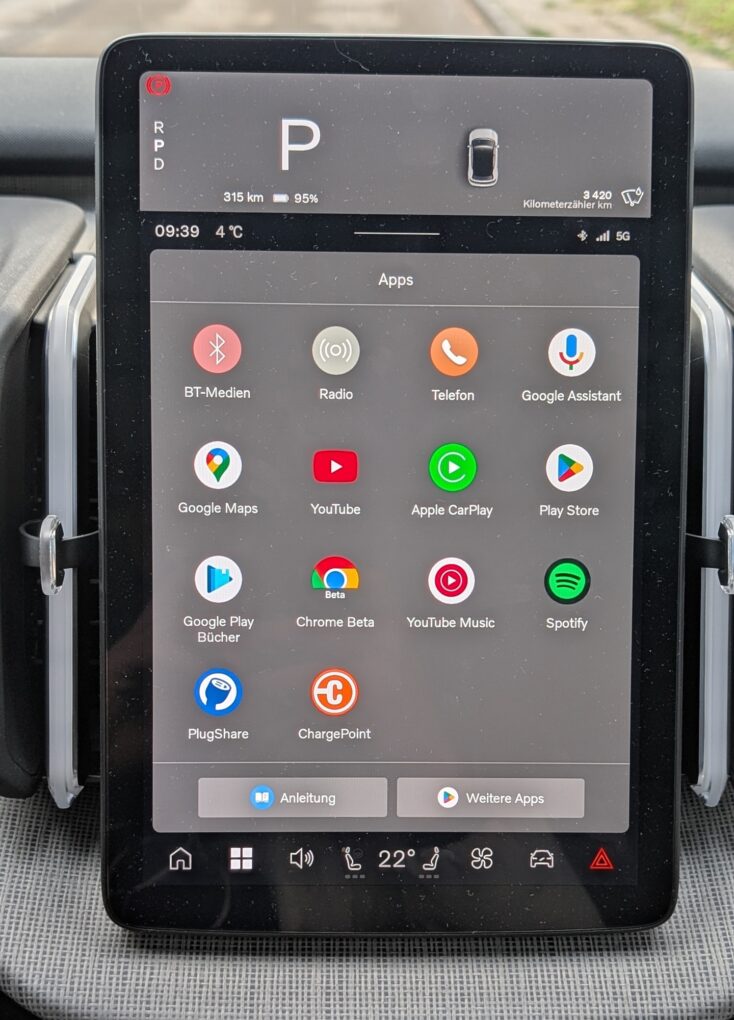
The Google Assistant enables voice control of many functions, from navigation and phone calls to climate settings. Speech recognition works well and reliably understands even complex commands. Users who already have a Google account can log in. Favorites, contacts, and other settings are then automatically synchronized. Additional apps like Spotify, YouTube Music, or Audible can be downloaded directly to the vehicle via the Google Play Store. Pairing with a smartphone is not required. Furthermore, more features are expected soon. Google's AI assistant Gemini will be available in all Volvo models.
-
- Picture: TechnikNews
-
- Picture: TechnikNews
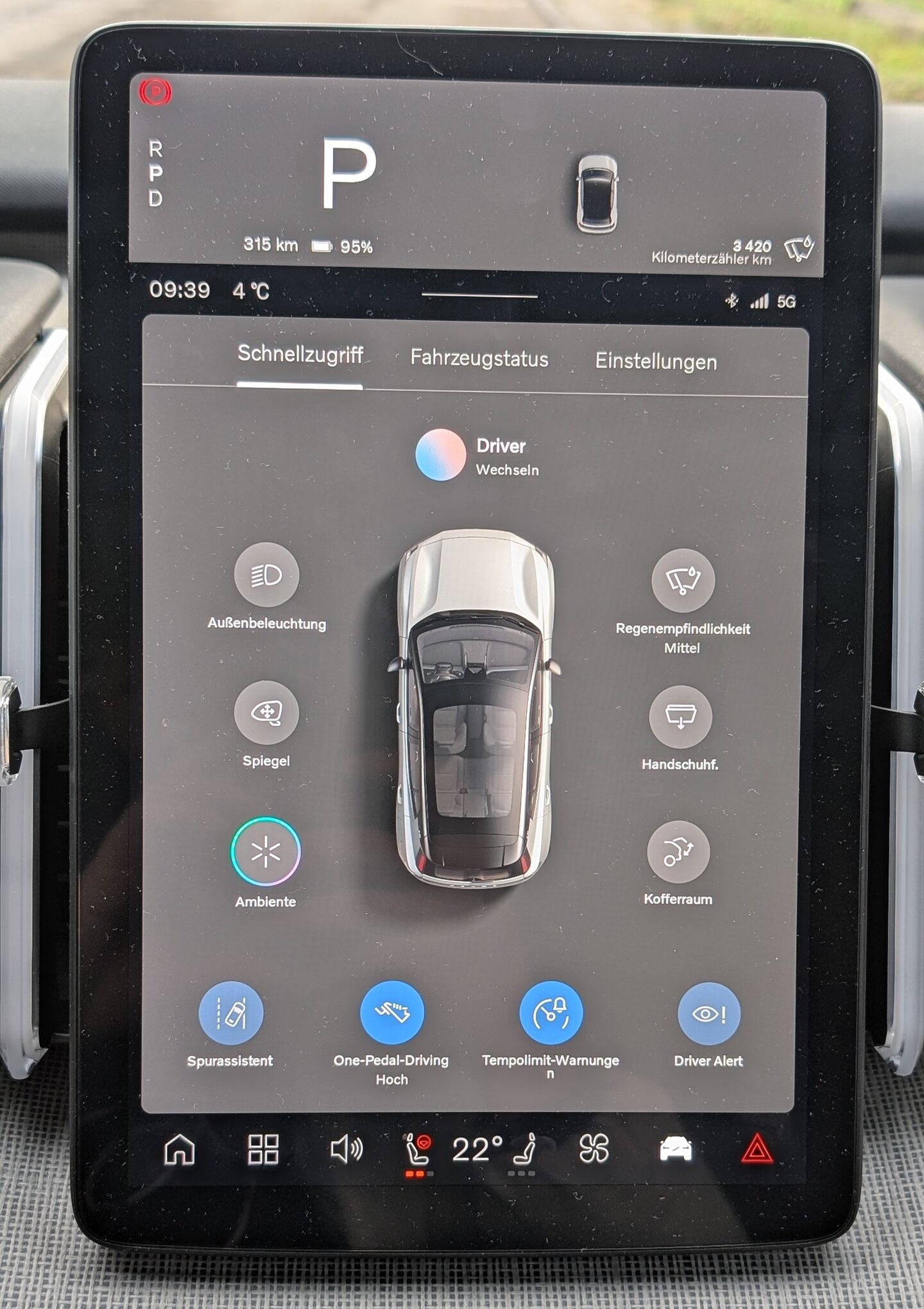
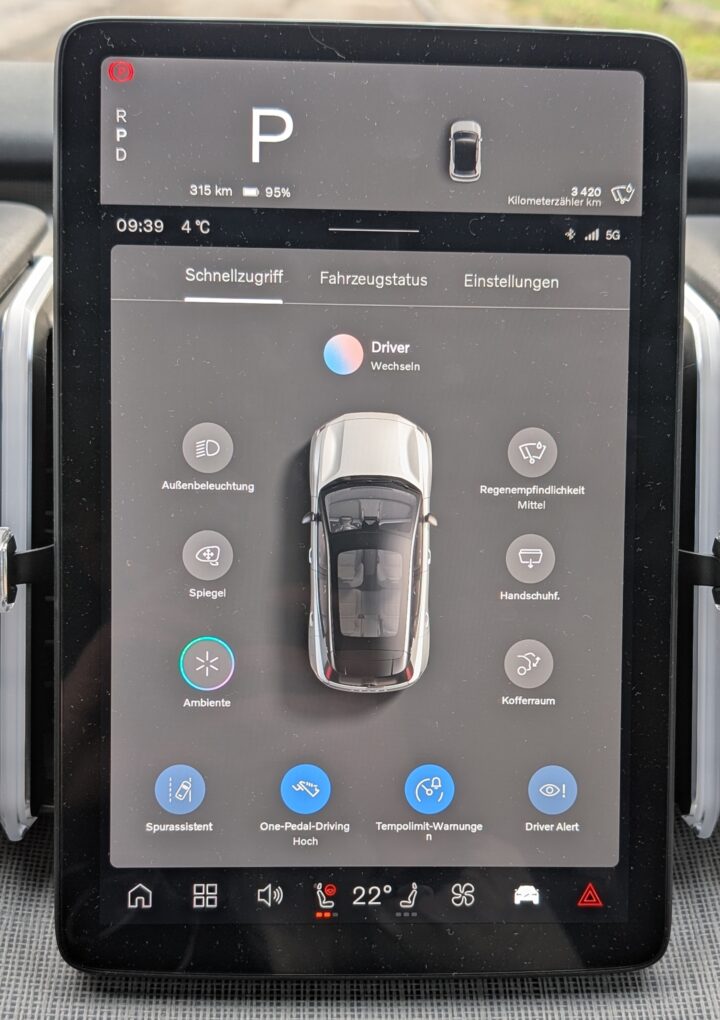
The user interface is clean and logically structured. Nevertheless, a certain amount of familiarization time is required. Many functions are hidden in submenus. Especially while driving, touch operation isn't always ideal. A drawback in everyday use is the lack of physical buttons for basic functions such as driving mode selection or climate control settings. Here, you always have to look at the screen and tap the corresponding icon, which is distracting. The touchscreen's responsiveness is good, but there are occasional minor delays.
Charging planning via the navigation system takes into account the current charge level, the route's topography, and the availability of charging stations. For longer journeys, charging stops are automatically scheduled, with the system aiming to minimize the overall travel time. In practice, this works well, although the suggested charging stops aren't always optimally chosen – a manual check is worthwhile here. One minor drawback is the sometimes very extensive and correspondingly lengthy software updates, which Over-the-Air However, it's a positive that Volvo regularly provides updates offering new features or improvements. Both the Single Motor Plus and Cross Country test variants feature the same infotainment system. Overall, the Volvo EX30 offers a modern and powerful infotainment system. However, its radical touchscreen design won't appeal to everyone.
-
- Picture: TechnikNews
-
- Picture: TechnikNews
Connectivity: Comprehensive and up-to-date
The Volvo EX30's connectivity is modern and comprehensive. The vehicle features an integrated eSIM with LTE, enabling permanent internet access – even without a paired smartphone. This connectivity forms the basis for numerous smart functions: from over-the-air updates and real-time traffic information to remote control via a smartphone app. Smartphone integration is seamless: contacts, music, and messaging apps are automatically transferred. Bluetooth telephony works flawlessly, and the hands-free system offers excellent voice quality. Furthermore, Apple CarPlay and Android Auto are also available wirelessly and functioned perfectly in our tests.
There are USB-C ports in both the front and rear, allowing multiple devices to be charged simultaneously. The wireless smartphone charging pad in the center console works reliably, although the charging area is somewhat small. The vehicle also supports the digital key function via smartphone. This allows the vehicle to be opened and started without a physical key. This is convenient if you want to share the key with family members without having to physically hand it over. Overall, connectivity is at a very high level and is one of the Volvo EX30's real strengths. Both test variants offer the same connectivity features.
-
- Image: Volvo
-
- Image: Volvo
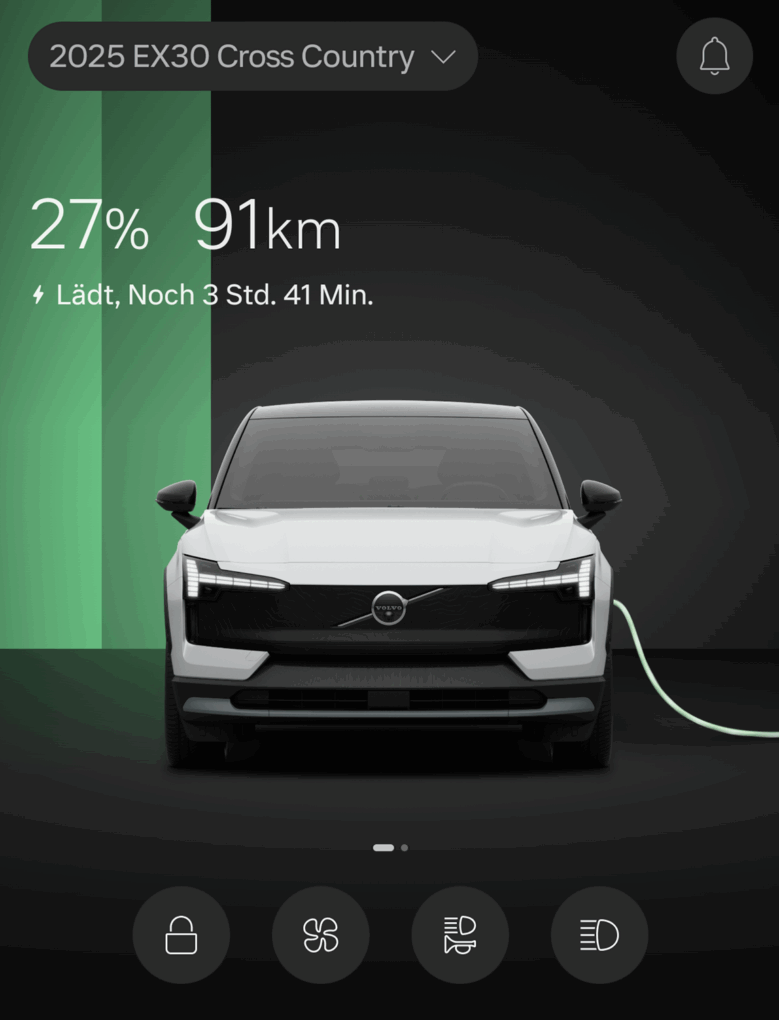
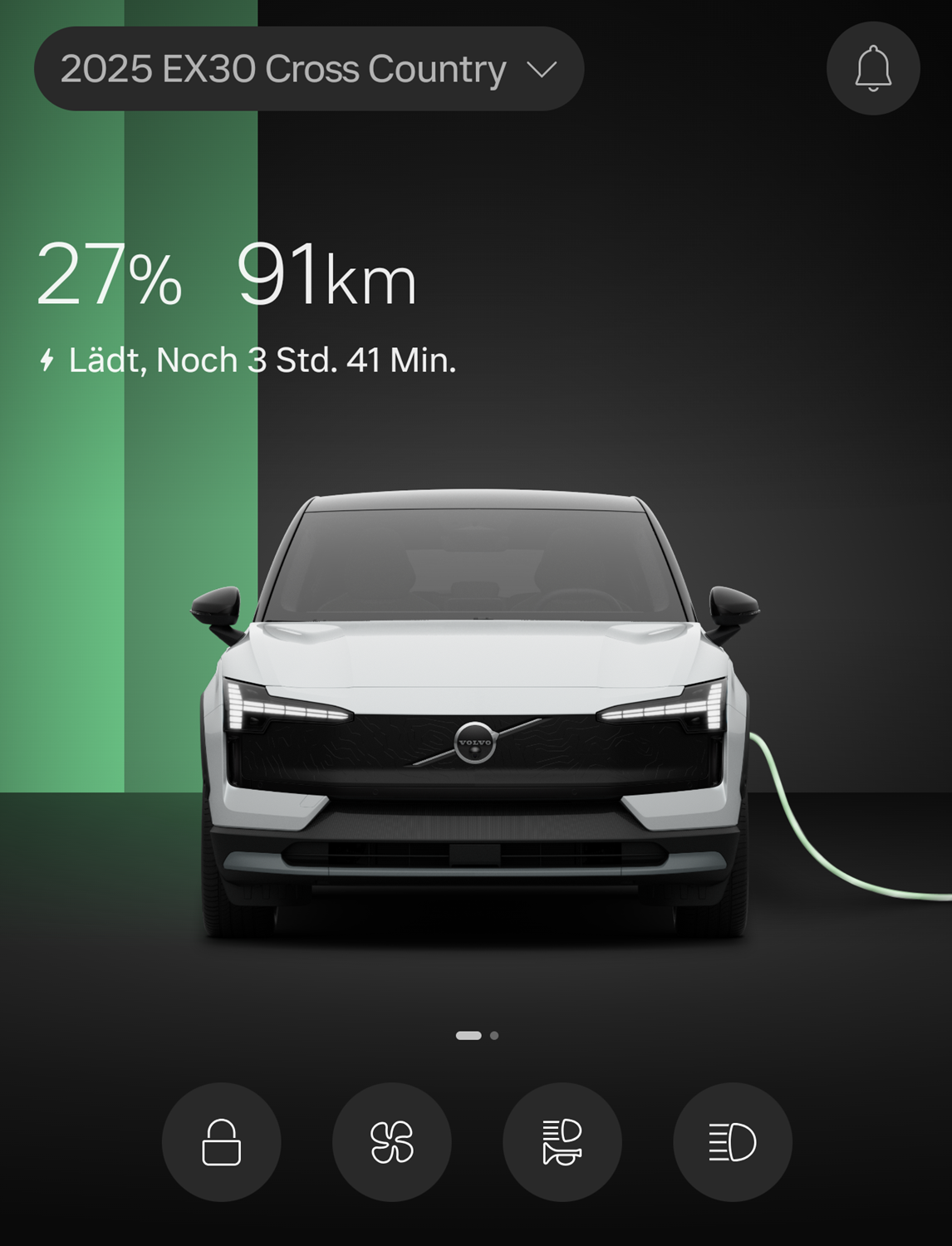
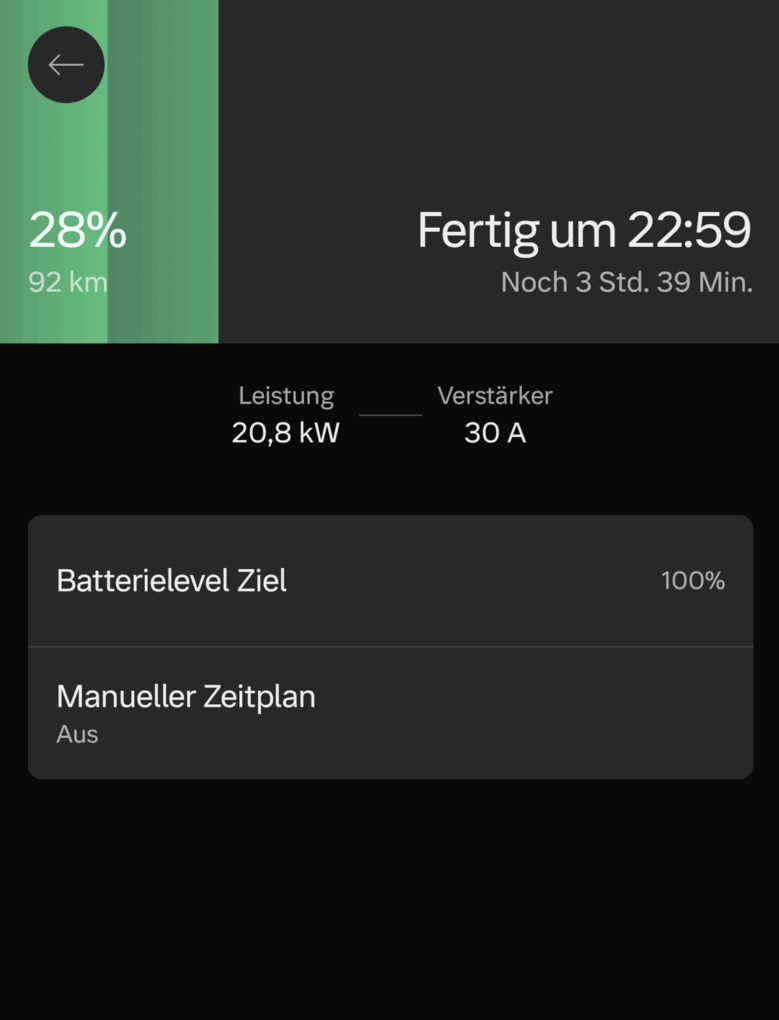
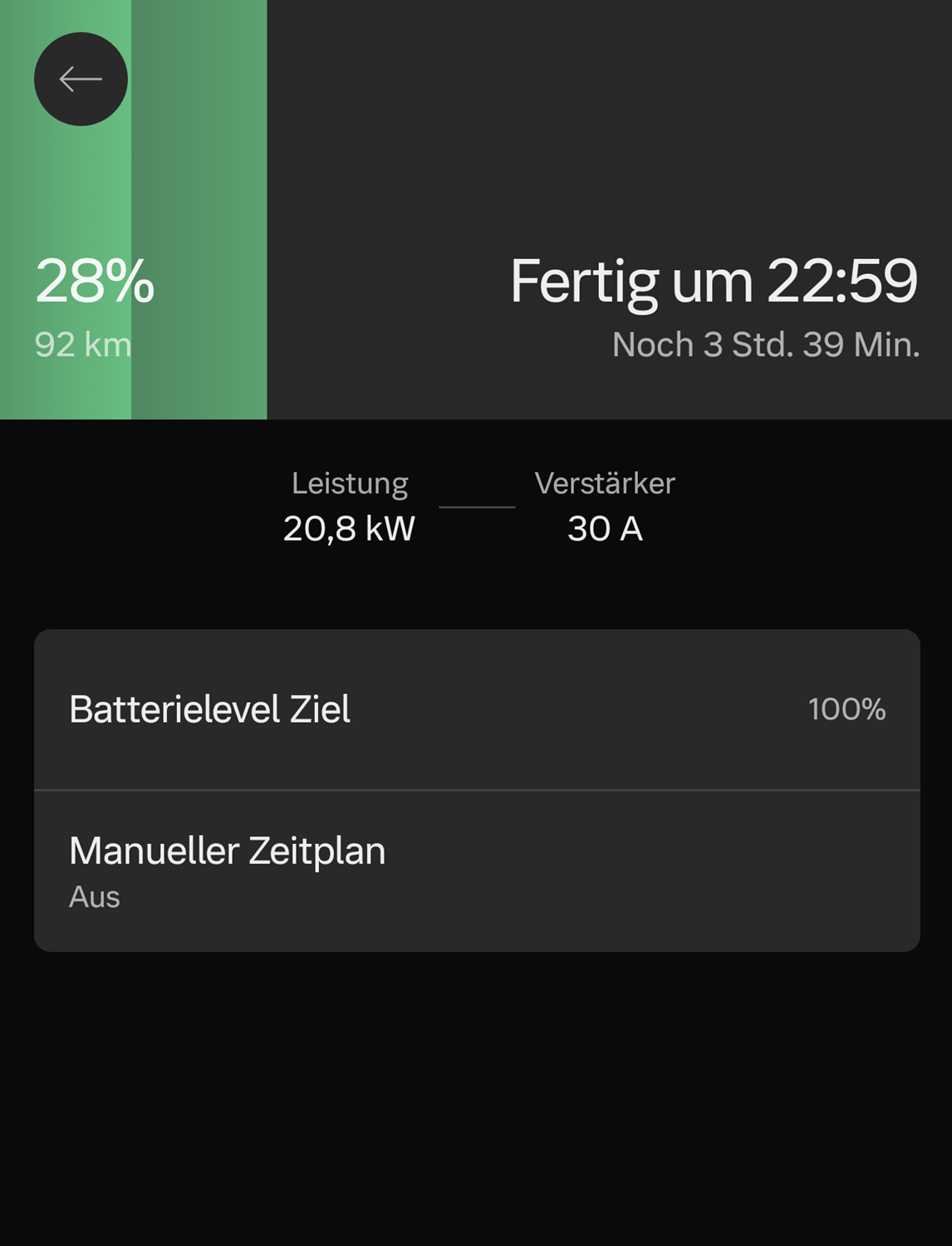
Also particularly noteworthy is the Volvo app, as it works exceptionally well in practice and proved consistently reliable throughout our test. Almost all relevant vehicle functions can be controlled and monitored remotely via the app. For example, the charge level and range can be checked, the charging process started or stopped, the air conditioning activated before departure, the vehicle locked and unlocked, and its location tracked. The timed programming and manual activation of pre-conditioning are especially convenient. This ensures the vehicle is already at the perfect temperature at the desired departure time.
The app also displays statistics on driving behavior, fuel consumption, and distances traveled in an optional logbook. Nearby charging stations can also be found via the app and sent to the vehicle as destinations. The app's user interface is intuitive and responsive. The connection between the app and the vehicle is reliable, and delays are minimal. The pre-conditioning function is particularly valuable in winter, as it eliminates the need for ice scraping and allows you to enter a vehicle with clear windows.
-
- Picture: TechnikNews
-
- Picture: TechnikNews
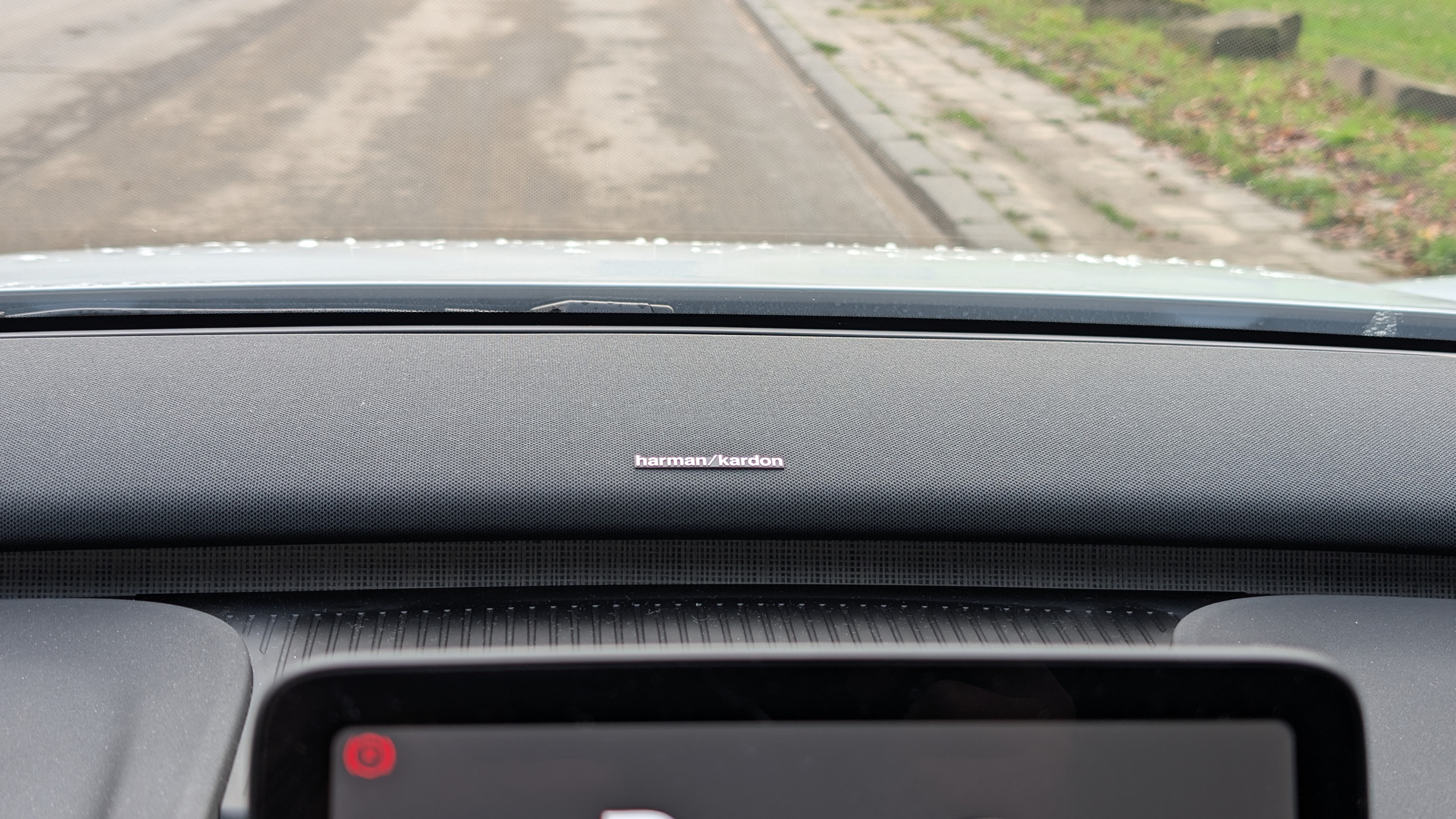
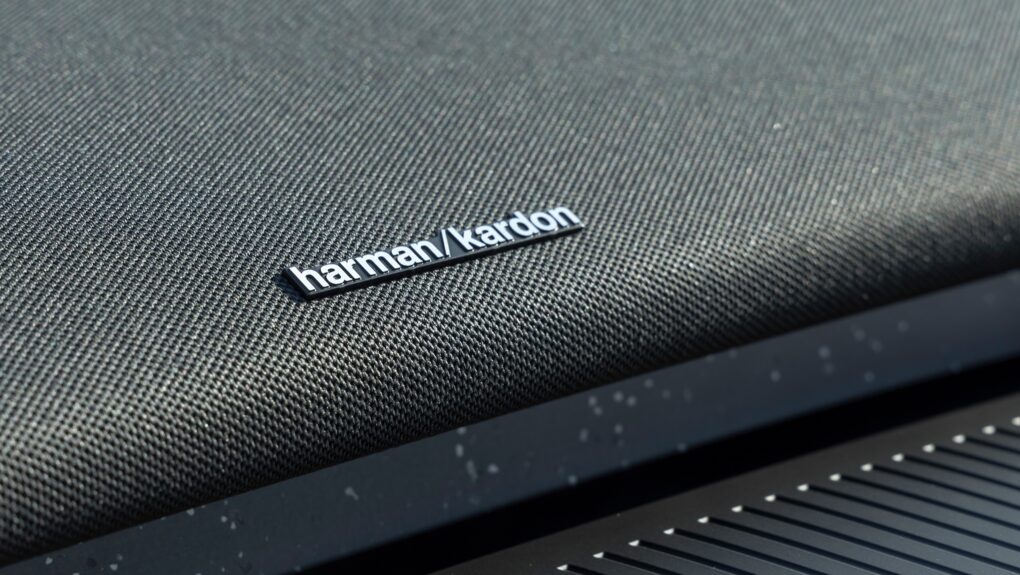
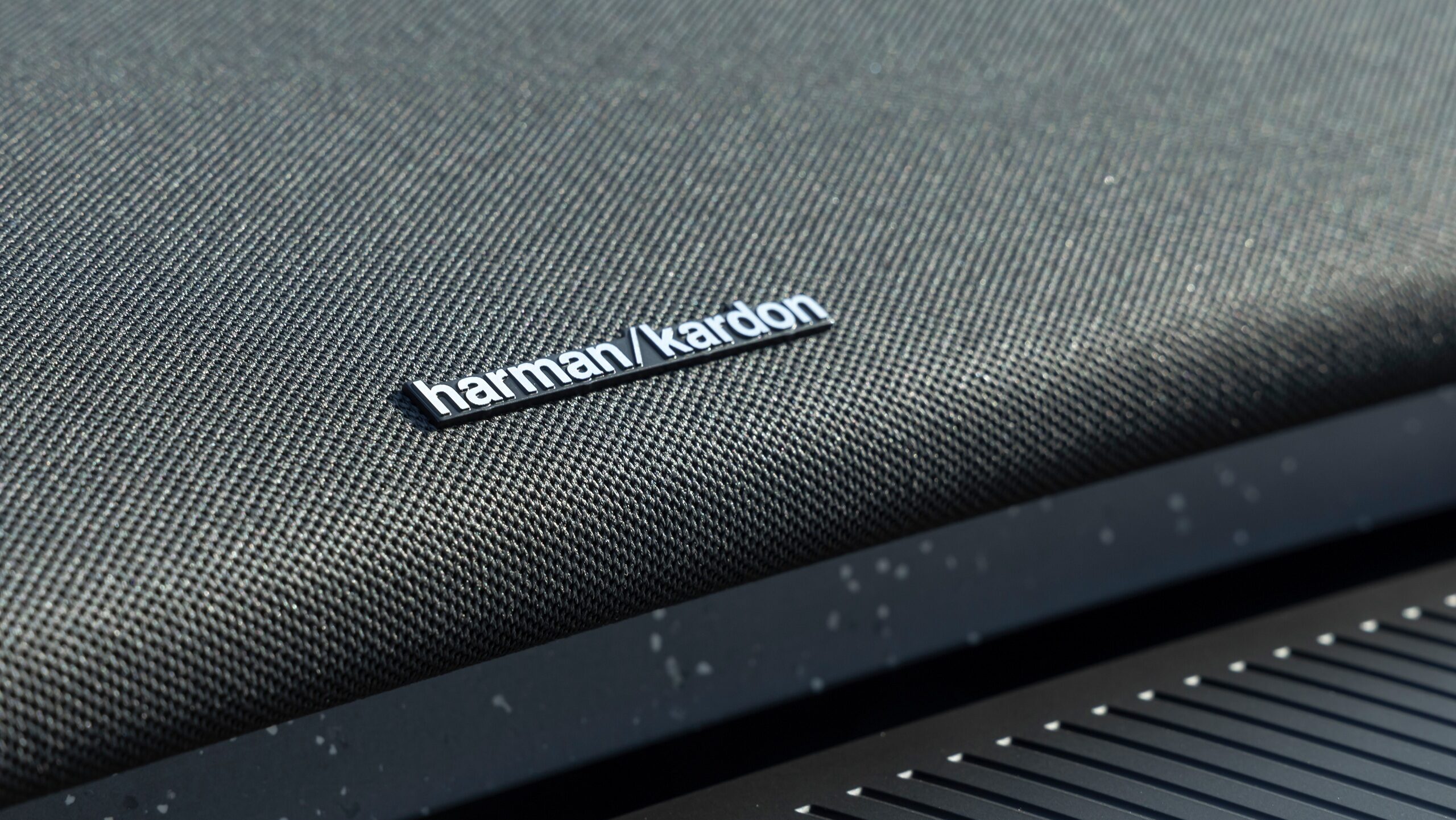
Sound: Harman Kardon is a must
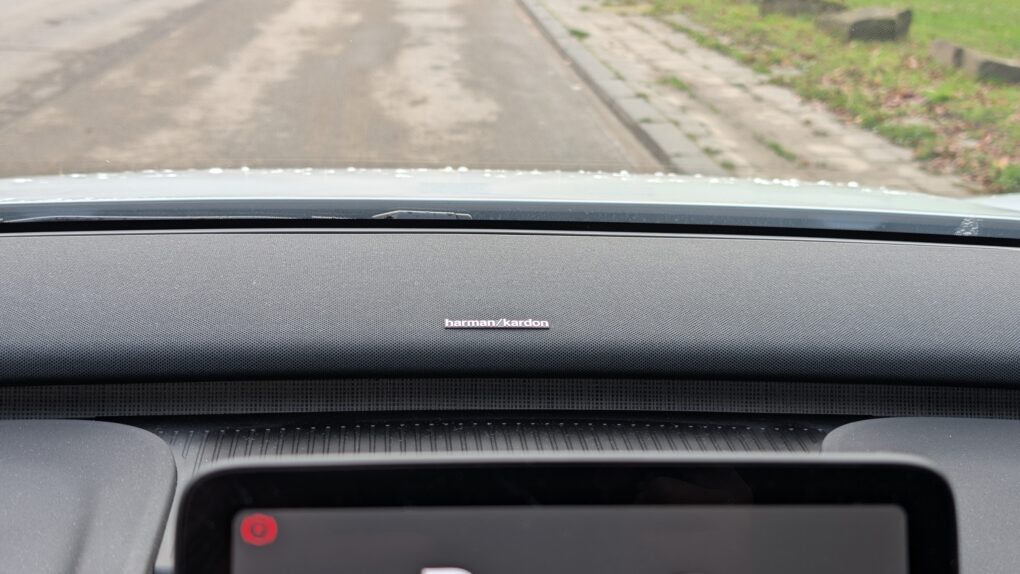
The sound quality of the Volvo EX30 depends heavily on the chosen equipment. The basic audio system with eight speakers delivers decent sound that is sufficient for most everyday situations. The midrange is clear and the treble is crisp. However, it lacks a bit of deep bass and volume at higher volumes. For casual listeners and radio enthusiasts, this system is perfectly adequate. Those with higher expectations should consider the optional... Harman Kardon premium sound system Choose the system with nine speakers and a subwoofer. It offers significantly more power and sound quality. The sound is fuller, more precise, and more balanced across the entire frequency spectrum. Even at higher volumes, the sound remains clear and undistorted. The spatial imaging is convincing, ensuring good sound even in the back seats. For music lovers, this system is a worthwhile investment.
Music streaming is possible via Bluetooth, USB, or directly through an app. LTE connectivity can be used to stream Spotify or YouTube Music. Radio and DAB+ reception are reliable, and station searches are straightforward. In addition to driving-related information, the display also shows album information and cover artwork, making operation more convenient. Call quality is good, and the hands-free system effectively filters out ambient noise. The same audio options are available in both test variants, Single Motor Plus and Cross Country. The only difference is the Cross Country's tires, which generate more road noise at higher speeds on asphalt and can therefore slightly mask the sound of the audio system. Overall, the Volvo EX30 with the optional Harman Kardon system impresses with outstanding sound quality that underscores its premium aspirations.
-
- Picture: TechnikNews
-
- Image: Volvo
Volvo EX30 driver assistance systems: Reliable and comprehensive
At Volvo, safety has traditionally been a top priority – a philosophy that continues with the EX30. Equipped with driver assistance systems The system is comprehensive and of a high standard. Standard features include adaptive cruise control with traffic jam assist, which regulates the vehicle down to a standstill and also handles restarts. This is a real comfort advantage in heavy traffic and on highways. The lane keeping assist works precisely, intervenes gently, and is not intrusive when you risk crossing the lane markings. The traffic sign recognition also functions reliably, displaying current speed limits and no-overtaking zones on the central display.
A head-up display (HUD) that projects this information directly into the driver's field of vision. proThe option to display a message is not available, so the driver must look to the central touchscreen. The blind spot assist reliably warns of vehicles in the blind spot, and LED lights in the side mirrors alert the driver to potential hazards. With the turn signal activated and a vehicle detected in the blind spot, the system intervenes to correct the steering. The emergency braking assist features pedestrian, cyclist, and large animal detection. During our test drives, the system always reacted correctly. proFast and reliable. The collision warning is timely without being intrusive. If a collision is imminent, the system automatically initiates emergency braking if the driver does not react. The evasive steering assists in avoiding obstacles when a collision cannot be avoided by braking alone.
-
- Picture: TechnikNews
-
- Picture: TechnikNews
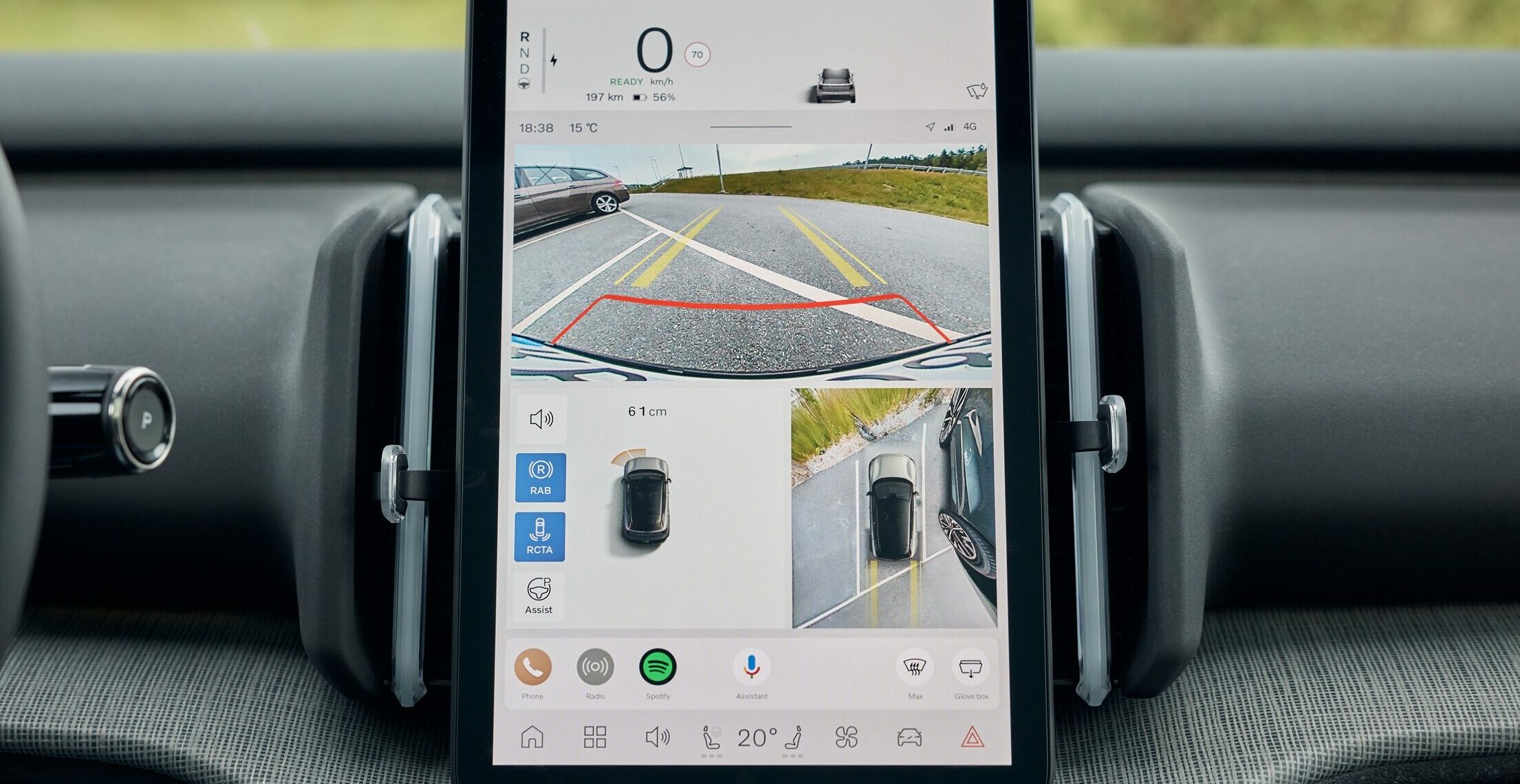
The parking assistant features a 360-degree camera with good image quality and guide lines. Front and rear parking sensors and an audible warning make maneuvering in tight parking spaces easier. A fully automatic parking assistant, which steers independently, is also available as an option. It works reliably for both parallel and perpendicular parking. The rear cross-traffic alert protects against approaching vehicles, pedestrians, or cyclists when reversing out of a parking space and initiates emergency braking if necessary. The cruise control is conveniently operated via steering wheel buttons and can automatically adopt speed limits. The traffic sign recognition system not only detects speed limits but also no-entry signs and warns the driver in good time.
The sensors generally function reliably. However, under adverse weather conditions such as heavy rain, fog, or low sun, occasional false alarms or temporary failures of individual systems occur. This is not unusual for modern driver assistance systems. The systems can be individually configured and their intervention intensity adjusted. Overall, the EX30 meets Volvo's high standards for safety technology and offers a comprehensive range of features that is not necessarily standard in this vehicle class.
-
- Image: Volvo
-
- Image: Volvo
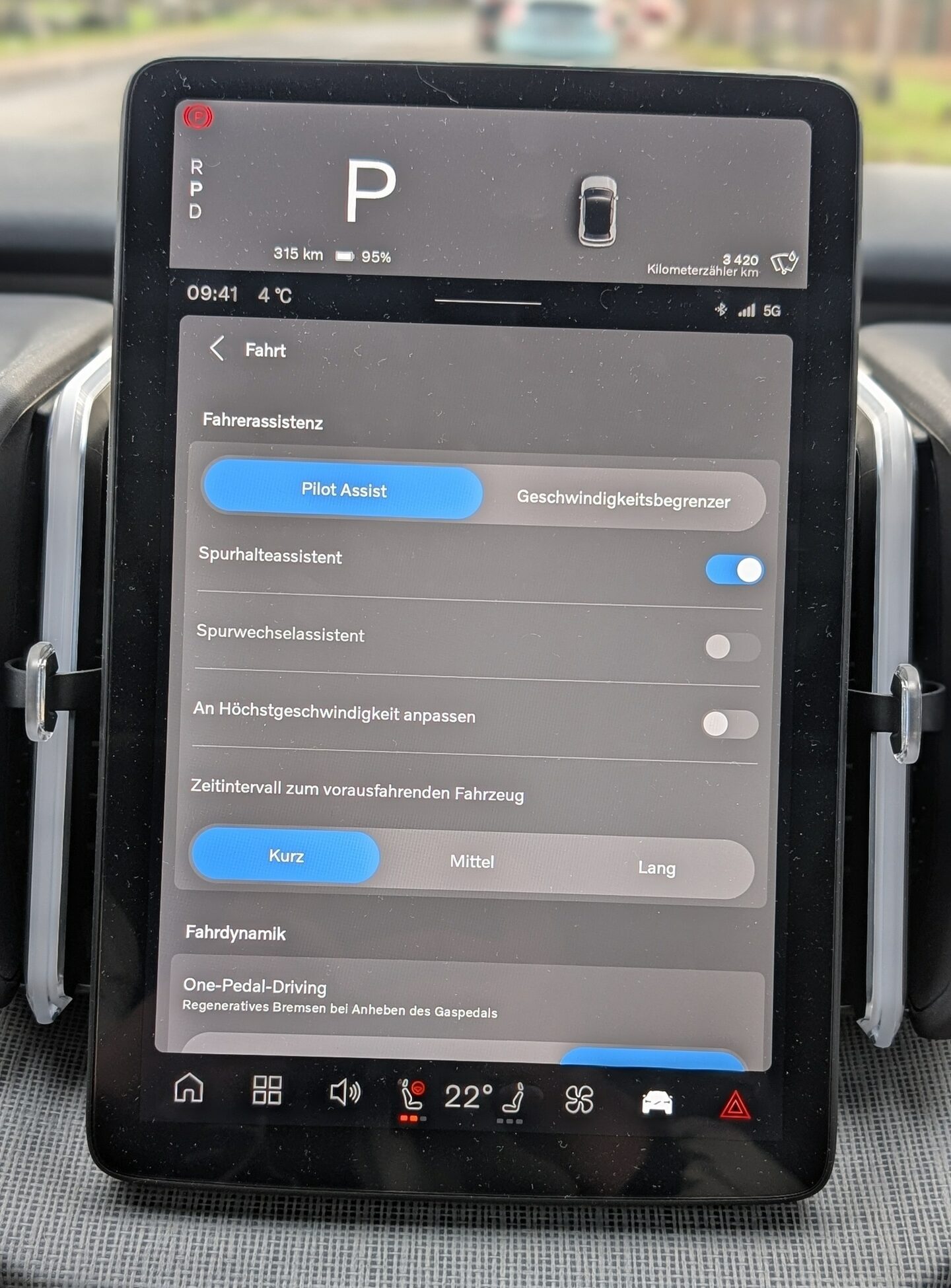
Autonomous driving: Pilot Assist offers Level 2
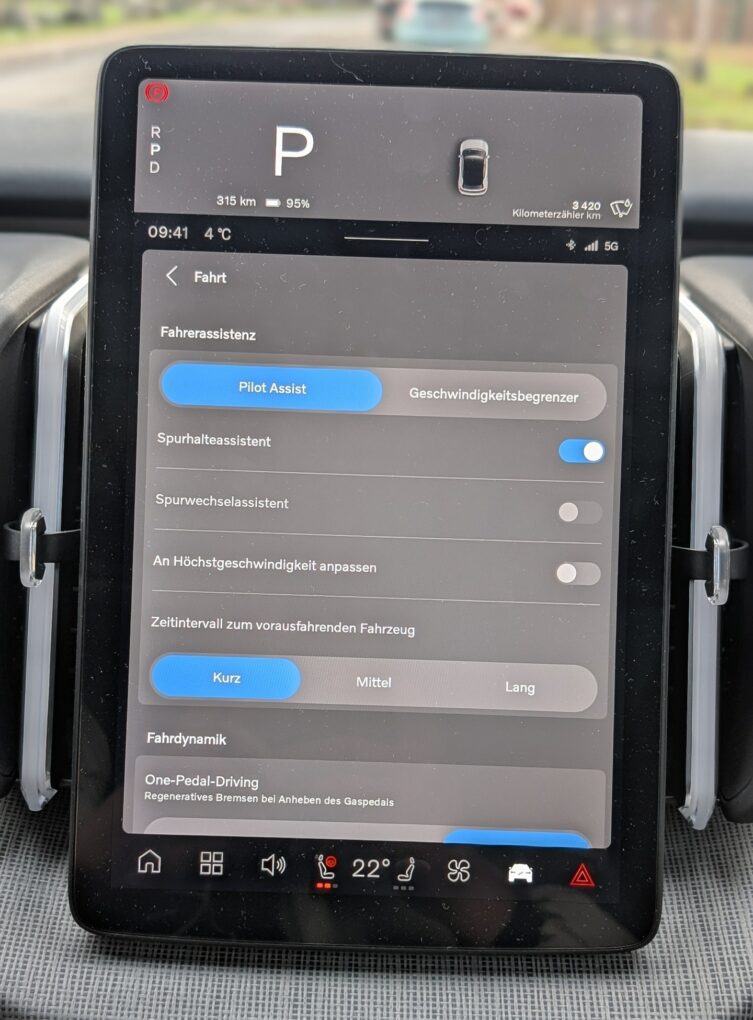
Full autonomous driving in the sense of SAE Level 4 or 5 The Volvo EX30 doesn't yet offer full autopilot, which isn't surprising given the current state of technology, as this technology isn't even available in significantly more expensive vehicles. However, the Volvo EX30 does have a well-functioning Level 2 system that can relieve the driver of a considerable amount of driving work without taking over complete responsibility. The combination of adaptive cruise control and lane keeping assist, which Volvo calls "Pilot Assist," enables semi-autonomous driving on highways and well-developed country roads. The system reliably maintains the lane, adjusts the speed to the traffic ahead, and brakes to a complete stop. After a few seconds, it prompts the driver to resume driving with a slight touch of the accelerator pedal or a nudge on the steering wheel. The steering assistance operates smoothly and naturally, without creating the feeling of having to fight against the system.
Important: The driver must continue to hold the steering wheel and actively monitor the traffic situation. A steering wheel torque sensor detects whether the driver's hands are on the wheel. If the driver repeatedly ignores the visual and audible signals, the system initiates controlled deceleration, brings the vehicle to a standstill, and activates the hazard warning lights. However, the system reaches its limits in tight curves or with unclear lane markings and returns control to the driver. Lane changes can be performed automatically when the function is activated, but must be initiated manually. The system monitors the blind spot and warns of vehicles in the adjacent lane. Overall, the Volvo EX30 offers a modern, semi-autonomous driving system that enhances comfort on longer journeys. Both the Single Motor Plus and Cross Country variants feature the same technology in this area.
-

- Image: Volvo

-

- Image: Volvo

Safety: Volvo's flagship discipline
The Euro NCAP crash test certified the Volvo EX30 as Maximum rating of five stars – a result that is hardly surprising given its extensive safety features. A robust passenger cell made of high-strength steels, strategically placed crumple zones, and a total of ten airbags ensure comprehensive passive occupant protection. The assistance systems already described form the backbone of the active safety technology and aim to prevent accidents from occurring in the first place. The City Safety emergency braking system with pedestrian, cyclist, and large animal detection is a particularly important component – especially in urban environments. The collision warning system with distance control prevents vehicles from following too closely.
Occupant protection was rated 88 percent in the Euro NCAP test – a good result. The ratings for child protection (85 percent), vulnerable road users (79 percent), and safety assistance systems (80 percent) are also good. The robust structure effectively protects occupants even in side impacts and rollovers. Child safety is also ensured: Isofix anchor points on the outer rear seats allow for the secure installation of child car seats. Top tether anchors provide additional stability. Child safety locks on the rear doors and an electric window lock prevent unintentional opening.
The seatbelt system is equipped with pretensioners and force limiters that function optimally in the event of a collision. Volvo paid particular attention to the high-voltage battery in the EX30. It is protected by a robust structure in the underbody and additionally surrounded by crumple zones. In the event of an accident, the high-voltage system is automatically deactivated to minimize the risk of electric shock for rescue workers and occupants. A robust underbody also protects the battery against damage from impacts.
-

- Image: Volvo

-
- Image: Volvo
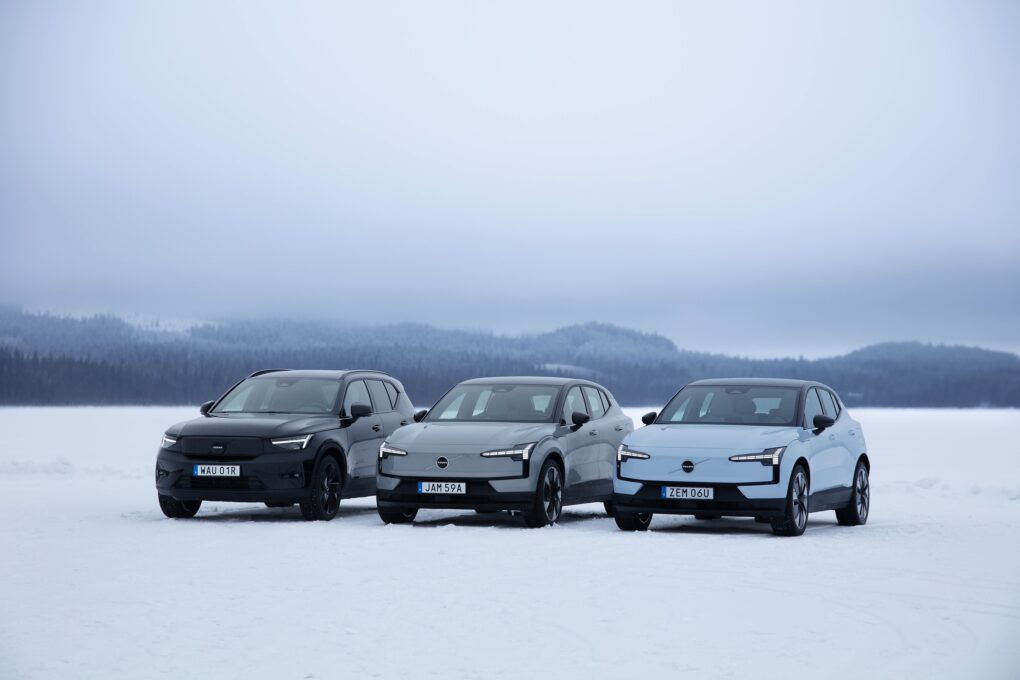
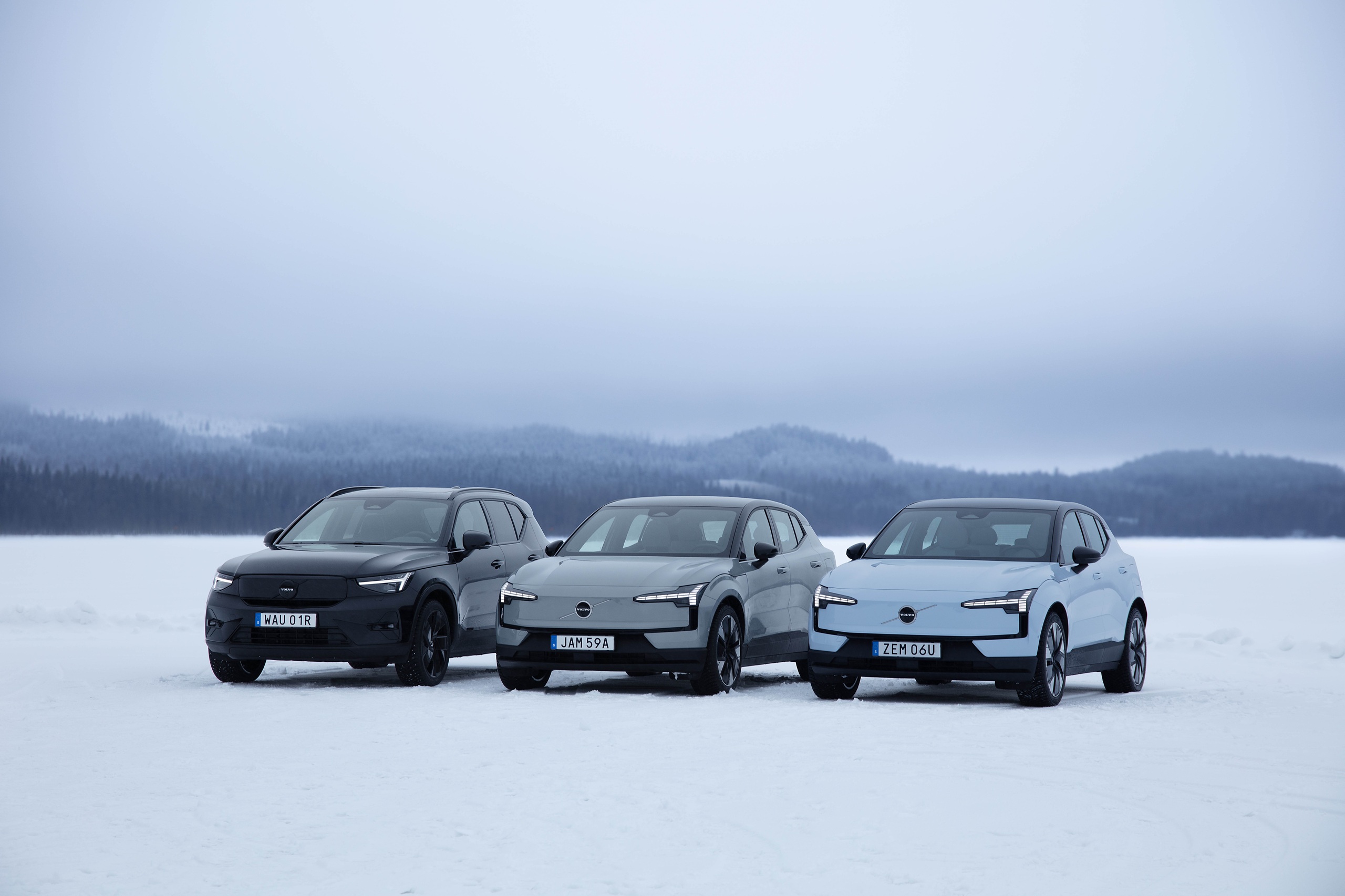
Rear-wheel drive vs. all-wheel drive: Comparison of the drive systems of the Volvo EX30
The Volvo EX30 Single Motor Plus is equipped with a single electric motor on the rear axle. This motor delivers 200 kW (272 hp) and achieves a maximum torque of 343 Nm. While these figures may sound modest, the powertrain offers more than enough performance for everyday driving. The sprint from zero to 100 km/h takes 5,7 seconds, which is a very good figure for a vehicle in this class and price range. The top speed is electronically limited to 180 km/h. The rear-wheel drive provides a sportier driving experience, as the rear end pushes out slightly under hard acceleration, but never in an unpleasant or uncontrolled manner.
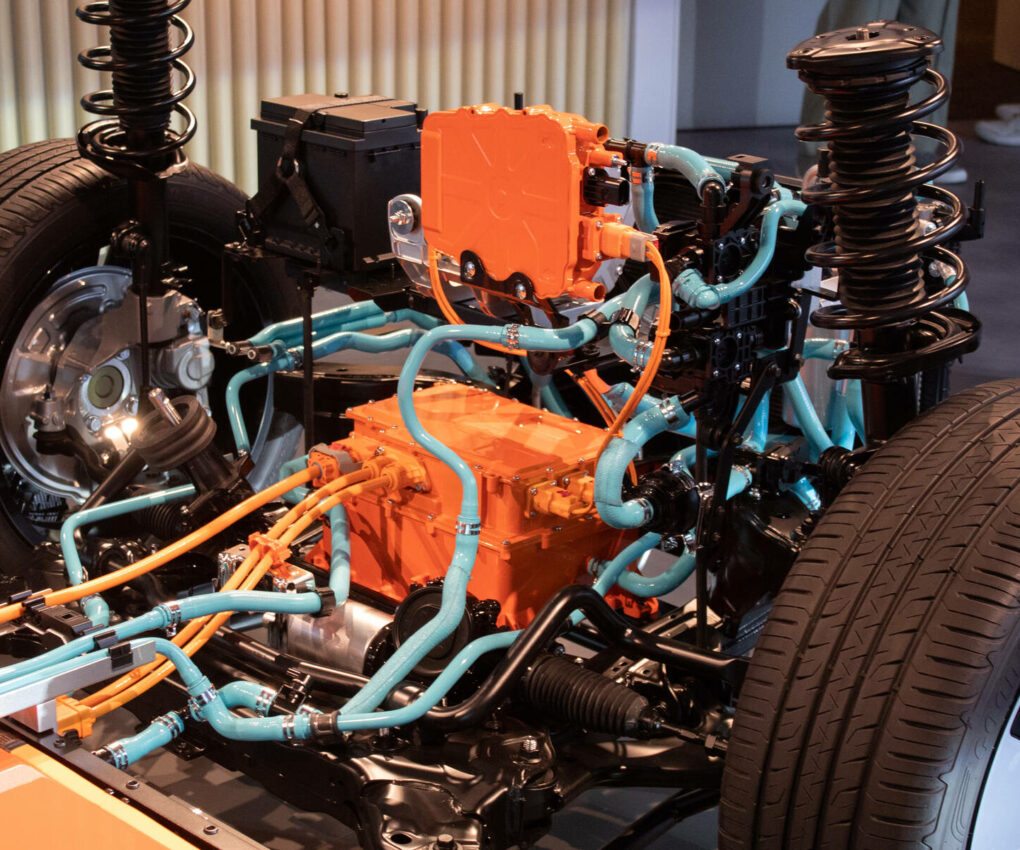
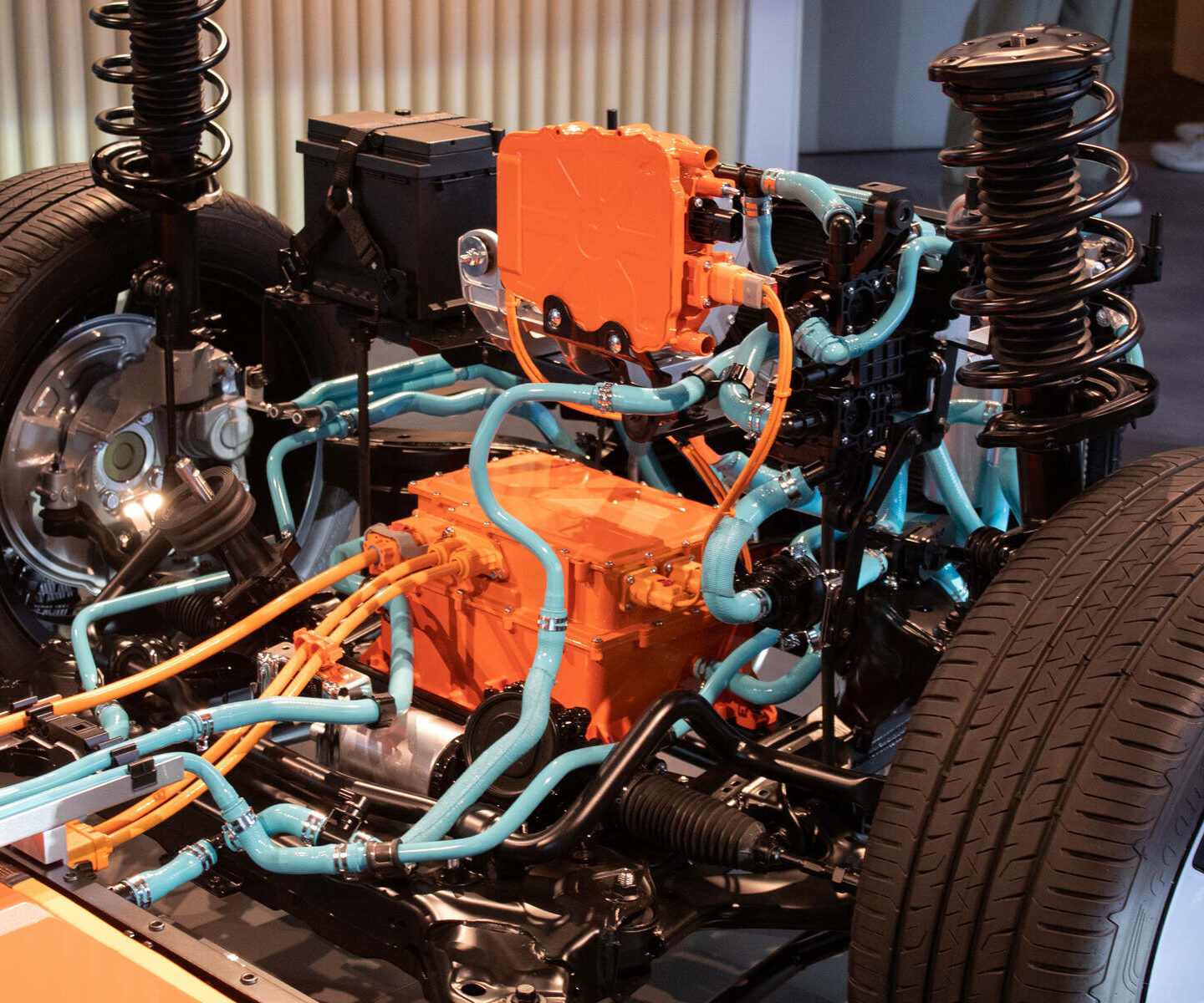
The Volvo EX30 Cross Country, on the other hand, relies on a dual-motor all-wheel-drive system with a total output of 315 kW (428 hp) and a maximum torque of 543 Nm. The additional motor on the front axle makes a noticeable difference. The sprint to 100 km/h is achieved in an impressive 3,6 seconds – a figure that borders on sports car performance. The acceleration is brutal and noticeably pushes you into the seats. The top speed is limited to 180 km/h. Power is transmitted to all four wheels, which provides significantly more traction, especially on low-friction surfaces.
The Cross Country's all-wheel drive system operates intelligently, distributing power between the front and rear axles as needed. Under normal driving conditions on dry roads, power is primarily transmitted to the rear axle. In the event of wheel slip or hard acceleration, the front axle is engaged. This process is completely imperceptible and ensures maximum traction in every situation. Off-road or in winter conditions, the advantage of all-wheel drive becomes clearly noticeable.
-
- Image: Volvo
-
- Image: Volvo
Drive: One pedal driving at its best
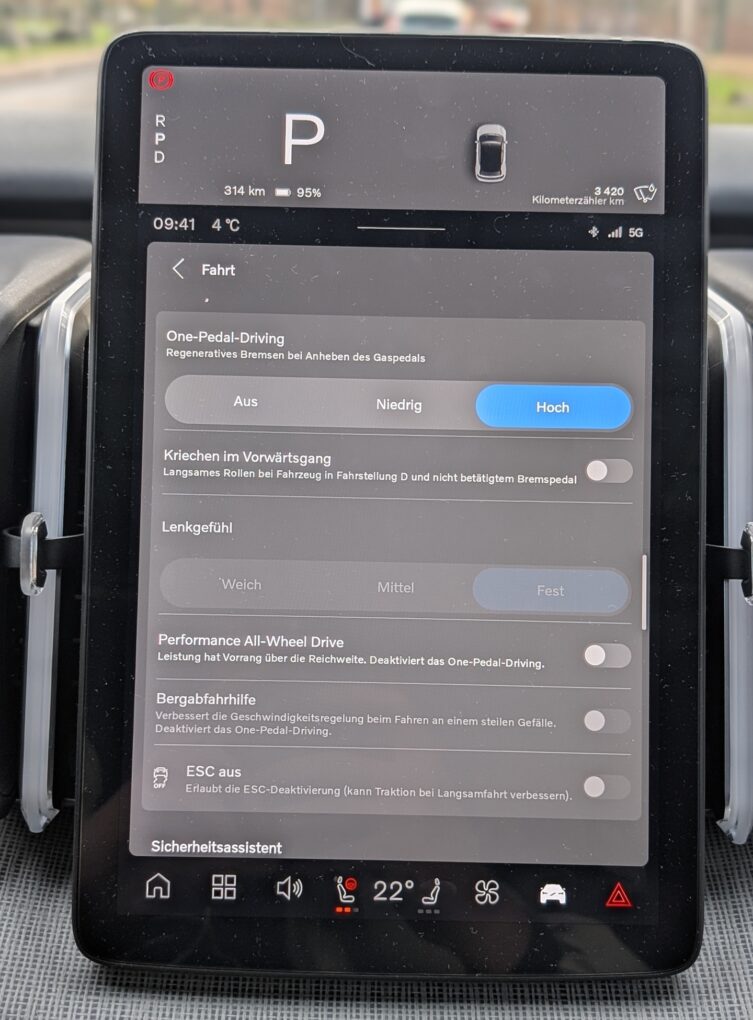
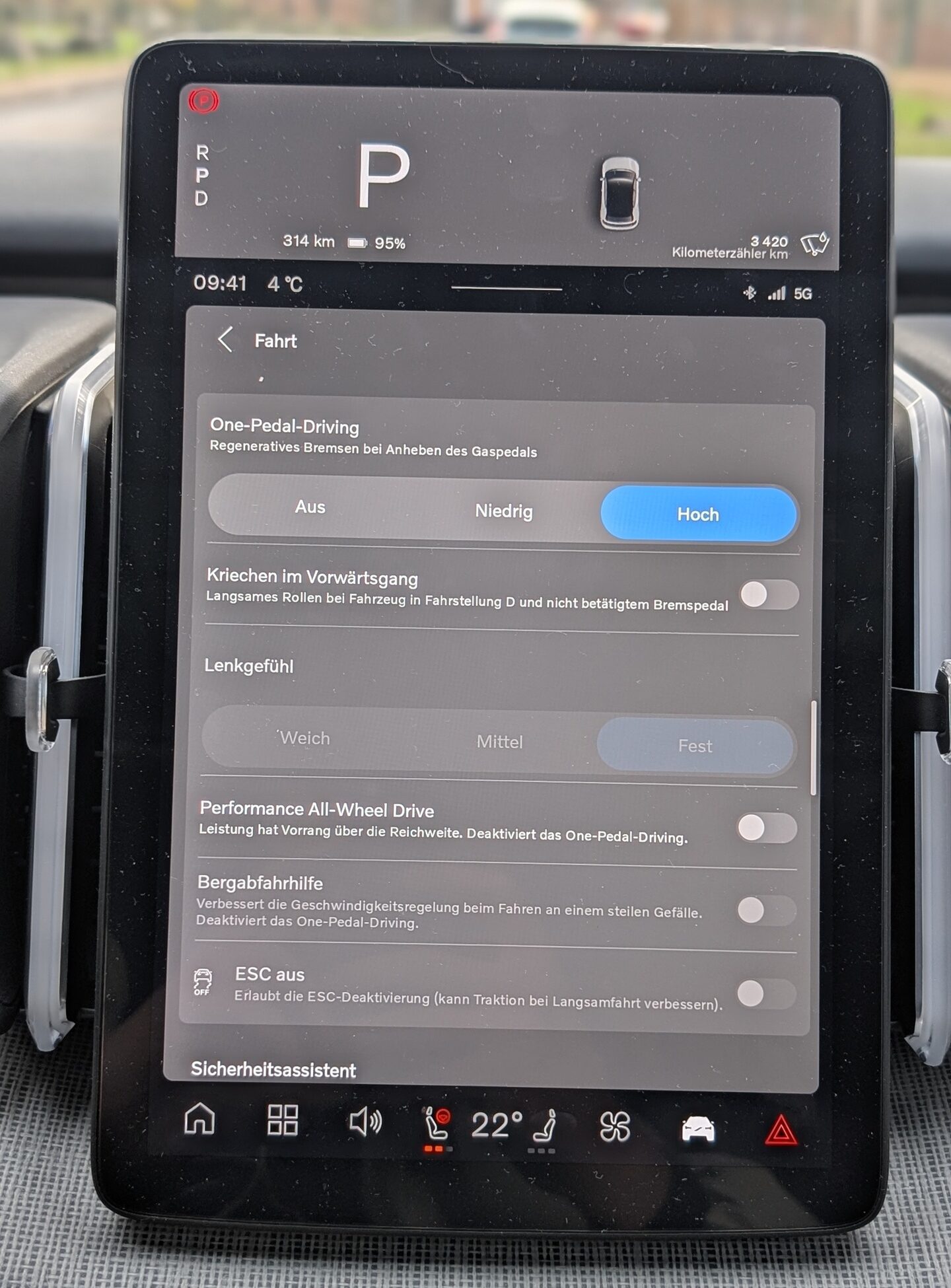
The engine noise is minimal. A quiet whirring sound is audible during acceleration, but we didn't find it bothersome. Regenerative braking, or energy recovery during deceleration, can be adjusted to several levels: from very gentle recuperation, where the vehicle coasts much like a combustion engine vehicle, to strong recuperation for one-pedal driving. In this mode, releasing the accelerator results in significant deceleration, so the mechanical brakes are rarely needed. One-pedal driving effectively allows for driving with just one pedal in most situations.
Both the front-wheel-drive and all-wheel-drive versions impress with the typical electric vehicle characteristics, including spontaneous throttle response and linear torque delivery. Starting off is smooth and predictable, yet full power is available when needed. Power delivery is consistent across the entire rev range and doesn't diminish at higher speeds. Overall, both drive variants offer compelling performance. The Single Motor Plus provides more than enough power for most everyday situations and offers a good balance of performance and efficiency. The Cross Country, with its dual-motor all-wheel drive, is the right choice for those who want maximum performance, traction in challenging conditions, and impressive acceleration. However, this comes at the expense of fuel consumption and efficiency.
-
- Image: Rodas & Motores
-
- Picture:TechnikNews
Battery: It's better to choose the 69 kWh NMC battery.
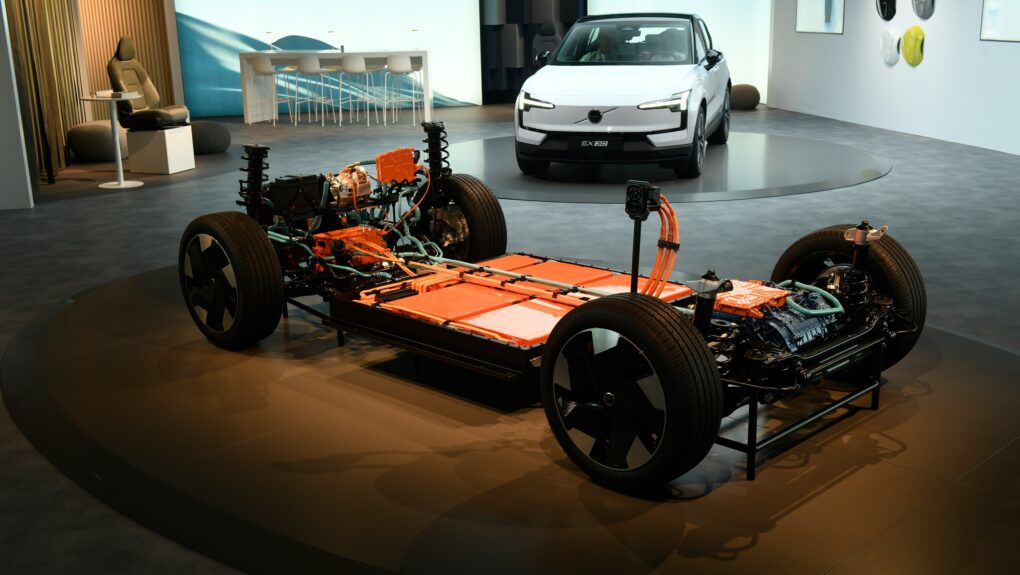
The Volvo EX30 Cross Country is equipped with a 69 kWh battery (65 kWh net). It is installed in the vehicle's underbody, thus ensuring a low center of gravity. NMC technology (nickel-cobalt-manganese) Although it has a higher energy density, it is less durable and safer than NMC batteries.
The Volvo EX30 Single Motor Plus, on the other hand, has a lithium iron phosphate battery with a gross capacity of 51 kWh or a net capacity of 49 kWh. LFP technology (lithium iron phosphate) The battery cell offers advantages in terms of longevity and safety, but has a slightly lower energy density than NMC cells.
With a battery capacity of 69 kWh, the Volvo EX30 Cross Country is in the middle of its class. Larger SUVs sometimes offer 80 kWh or more, while smaller electric cars manage with 50 to 60 kWh. The chosen size seems well-balanced for the Volvo EX30, as it offers sufficient range for everyday use and longer journeys without making the vehicle unnecessarily heavy and expensive. The battery weighs around 440 kilograms, resulting in a curb weight of approximately 1.840 kilograms (single motor) or 2.030 kilograms (Cross Country). The charge level can be checked at any time via the central display or the smartphone app. The remaining range is calculated based on current consumption and is generally quite accurate. The system takes into account topography, outside temperature, and driving style.
The battery is actively cooled via a liquid cooling system. This ensures consistent charging speeds even during multiple consecutive fast-charging sessions. Battery preconditioning, which brings the cells to an optimal charging temperature, is automatically activated as soon as a fast-charging station is entered as the destination in the navigation system. In our test, this ensured consistently optimal charging speeds upon arrival at the station. In extreme ambient temperatures, the system automatically reduces the available power to protect the battery. Furthermore, the range is reduced in very cold temperatures because more energy is required for heating and the cell chemistry operates less efficiently.
-
- Image: Volvo
-

- Image: Volvo

Driving dynamics of the Volvo EX30: Sports car performance in sheep's clothing
The driving dynamics of the Volvo EX30 are surprisingly good. Despite its weight of nearly two tons, the compact electric vehicle feels agile and nimble. The low center of gravity, achieved by the battery being mounted in the underbody, contributes significantly to driving stability. Body roll in corners is effectively suppressed, and the vehicle feels planted and neutral on the road. The steering is direct and precise, but could offer a bit more feedback. The speed-sensitive power steering works well, but could be a touch firmer for sporty driving.
The single-engine Plus with rear-wheel drive exhibits a slightly rear-biased handling characteristic, which provides a sporty feel during dynamic cornering. Under hard acceleration out of tight corners, the rear end tends to break away slightly, but remains controllable at all times. The ESP intervenes quickly and precisely when needed, without being intrusive. Traction on dry roads is good. However, on wet surfaces or with fallen leaves, one must be a bit more careful with rear-wheel drive, as the rear axle spins more easily than in front-wheel-drive vehicles.
The Cross Country with all-wheel drive offers significantly more traction and driving safety, especially in challenging conditions. Power distribution between the front and rear axles is intelligent, ensuring optimal propulsion at all times. When driven sportily on dry roads, the Cross Country feels slightly less agile than the Single Motor Plus due to its higher weight. However, it offers considerably more safety in rain, snow, or mud. The increased ground clearance of an additional 19 millimeters has only a minimal impact on road handling.
-

- Image: Volvo

-

- Image: Volvo

Handling: Well-tuned chassis
The brakes on both versions offer good deceleration and operate reliably. Modulation is good, although the pedal feels somewhat synthetic in the upper range, where recuperation is primarily active – a typical phenomenon in electric vehicles with a regenerative braking system. Under harder braking, the mechanical disc brakes engage and provide powerful deceleration without fading. As mentioned, the Volvo EX30's suspension is firmly tuned. This benefits driving dynamics but slightly compromises comfort on poor roads. The dampers are well-tuned and prevent excessive body roll. The Volvo EX30 reacts agilely and precisely to rapid changes of direction, and load transfer reactions are easily controlled. The compact exterior dimensions prove advantageous in city traffic and on narrow country roads. Overall, the Volvo EX30 is very maneuverable and can be positioned with precision.
The Cross Country handles slightly differently than the Single Motor Plus due to its stiffer suspension and higher ground clearance, but the differences are minor. The optional off-road tires for the Cross Country negatively impact handling on asphalt, as they offer less grip than road tires and are more prone to slipping in wet conditions. A combination of these tires is necessary here.proYou might want to consider some modifications if you want to improve off-road capability. Overall, the Volvo EX30 offers convincing driving dynamics that are both safe and fun. The tuning is well done and provides good comfort.proIt's a balancing act between comfort and sportiness. The Single Motor Plus is the more agile, nimble choice for the road, while the Cross Country with all-wheel drive offers greater safety in adverse conditions.
-
- Image: Volvo
-
- Image: Volvo
Fuel consumption of the Volvo EX30: Not an efficiency marvel, but solid.
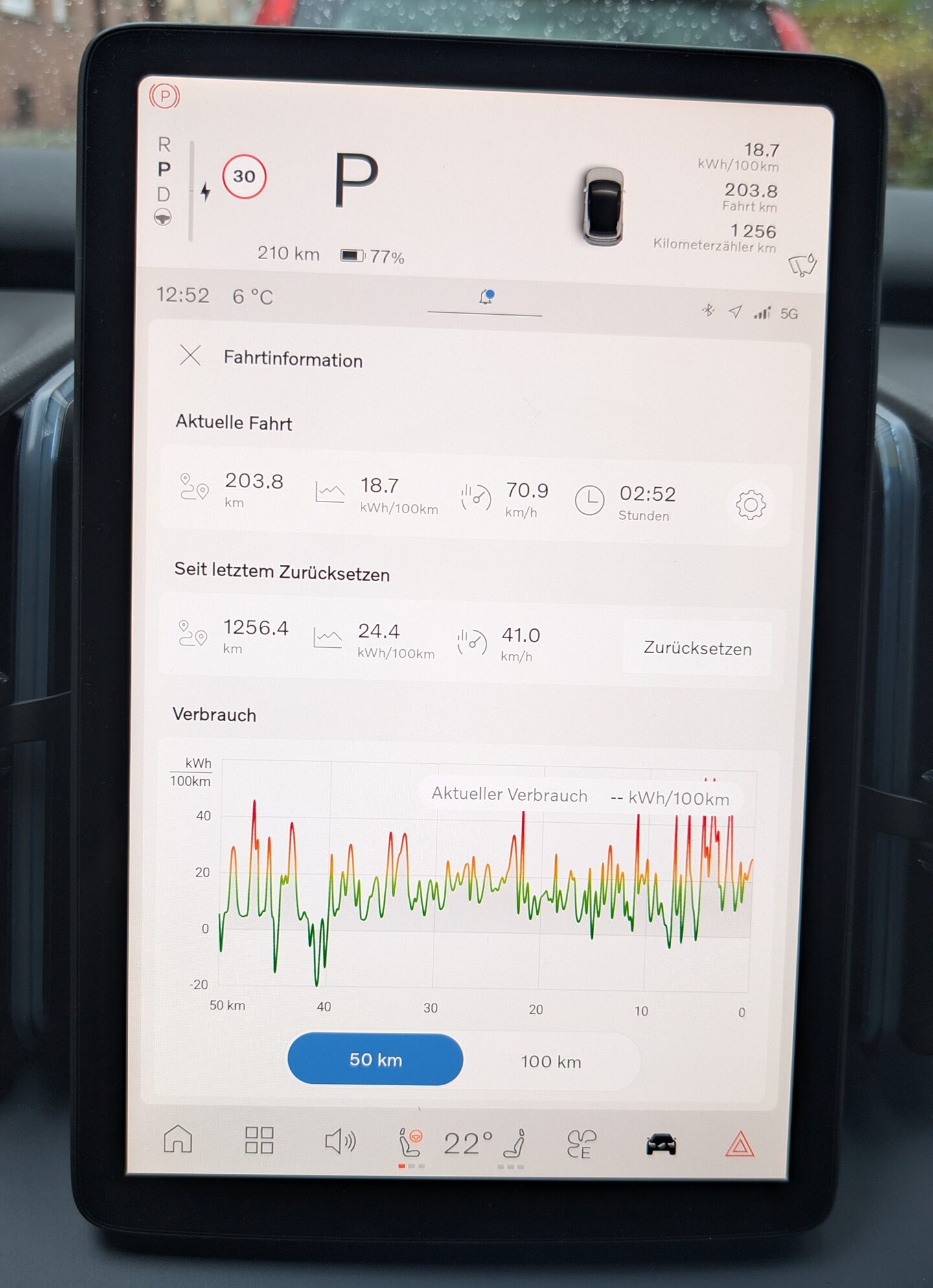
The Single Motor Plus proved to be significantly more efficient review. In mixed driving conditions, consisting of city driving, country roads, and highway sections, we achieved an average consumption of approximately 18 kWh. pro 100 kilometers. This value is slightly above the WLTP standard figure of 17,2 kWh. pro 100 km is quite respectable for a vehicle of this size and performance. In pure city driving, consumption dropped to approximately 14,5 kWh. pro 100 kilometers. This is due to effective recuperation and low speeds. During constant highway driving at 120 km/h, consumption rose to approximately 20 kWh. pro 100 kilometers and at 130 km/h approximately 22 kWh pro 100 kilometers.
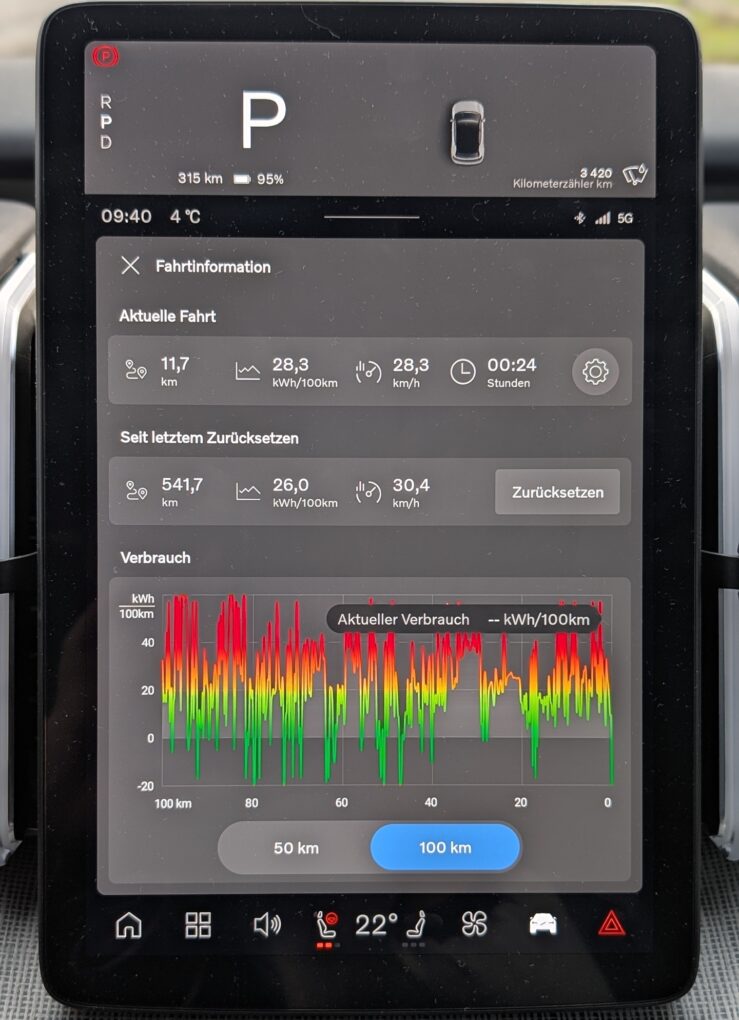
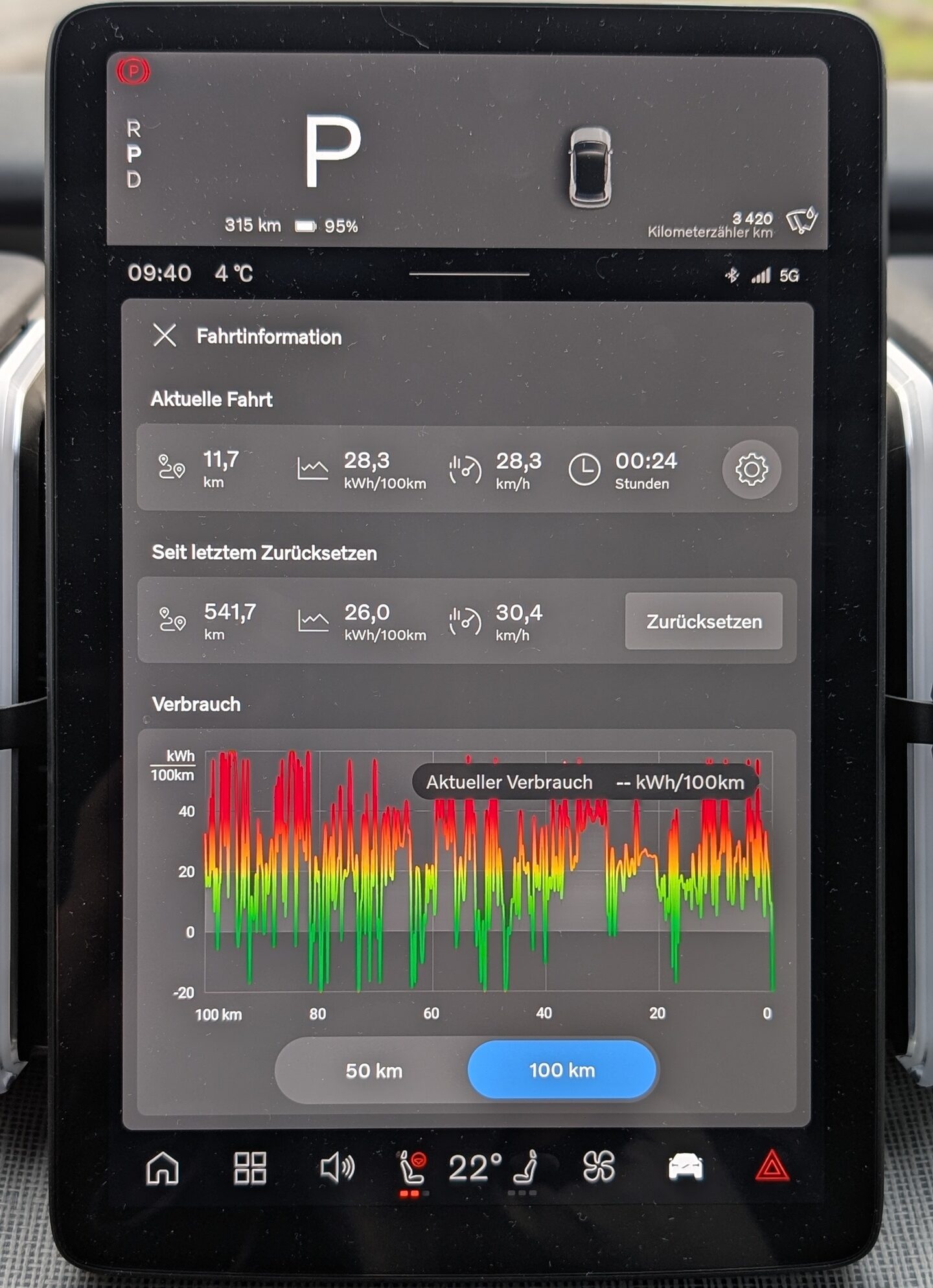
The Cross Country, with its all-wheel drive and significantly higher performance, naturally consumes more energy. In mixed driving conditions, we recorded an average consumption of approximately 20,5 kWh. pro The range reached 100 kilometers. This corresponds to an increased consumption of approximately 16 percent. The WLTP standard figure is 18,3 kWh. pro 100 km. In city traffic, the difference was 16,9 kWh. pro The range was 100 km lower. On the motorway at higher speeds, the difference increased. At 120 km/h, consumption was around 22 kWh. pro 100 km and at 130 km/h at approximately 24,5 kWh pro 100 km. The additional weight of approximately 200 kilograms and the second electric motor take their toll. The optional off-road tires for the Cross Country further increase fuel consumption by about 5 percent compared to the road tires, due to their higher rolling resistance. This difference is even more noticeable on the highway.
As expected, the outside temperature has a significant impact on fuel consumption. In winter temperatures around freezing, consumption increased by about 20 percent for both variants, as more energy is needed for heating and the battery operates less efficiently. The standard heat pump helps to limit the increased consumption in winter, but cannot prevent it entirely. Regenerative braking works effectively and can recover a considerable portion of the consumed energy, depending on driving style. In the strongest recuperation setting and with anticipatory driving, up to 25 percent of the energy can be recovered. One-pedal driving is not only comfortable but also increases the vehicle's range. The Single Motor Plus is the clear recommendation for those who value efficiency, while the Cross Country trades the comfort and safety of all-wheel drive for a noticeable increase in fuel consumption.
-
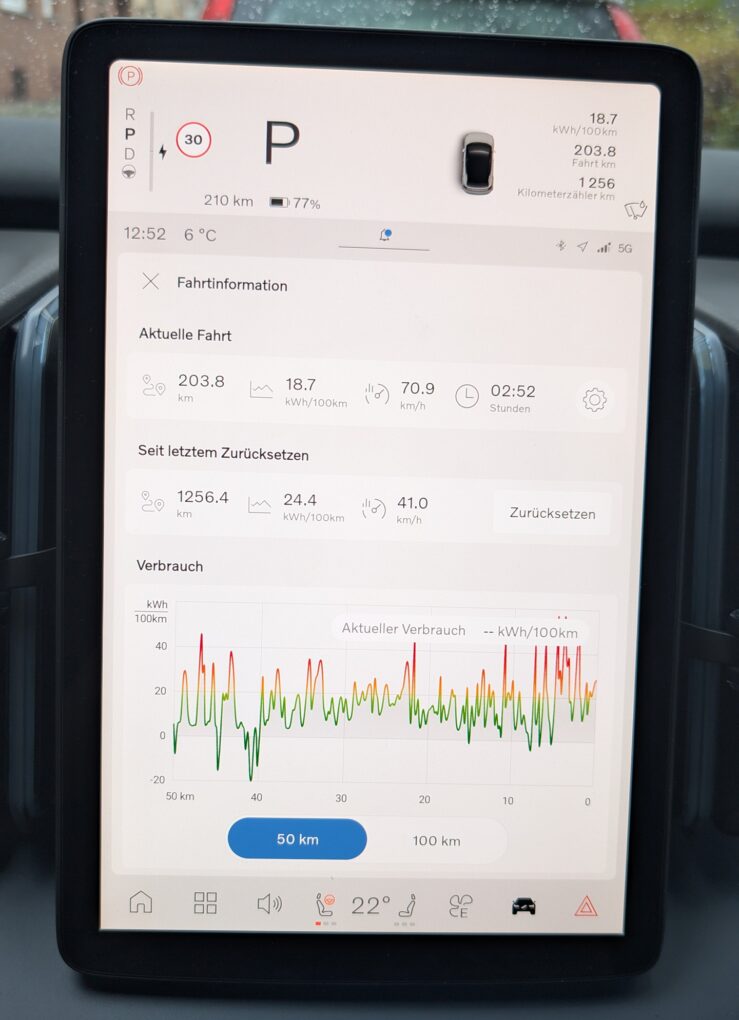
- Volvo EX30 single engine fuel consumption in winter – Image: TechnikNews
-
- Volvo EX30 Cross Country fuel consumption in winter – Image: TechnikNews
Range of the Volvo EX30: Sufficient for everyday use
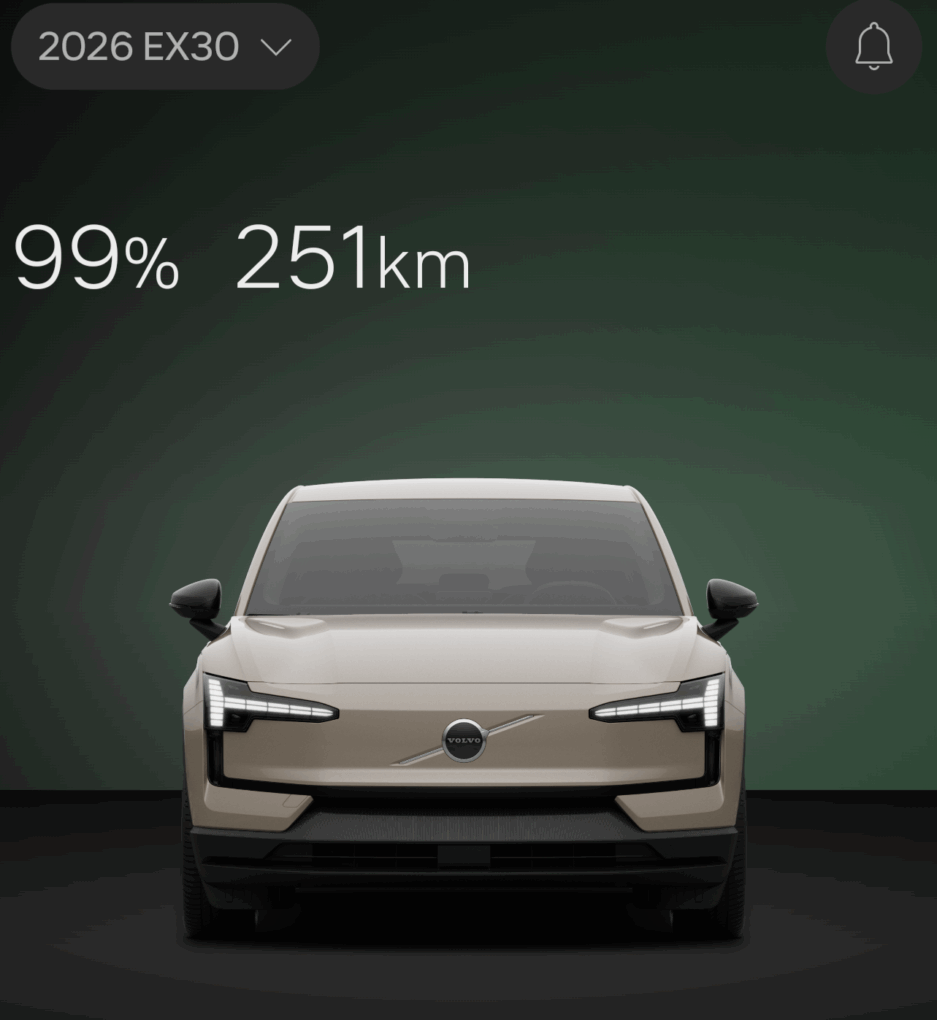
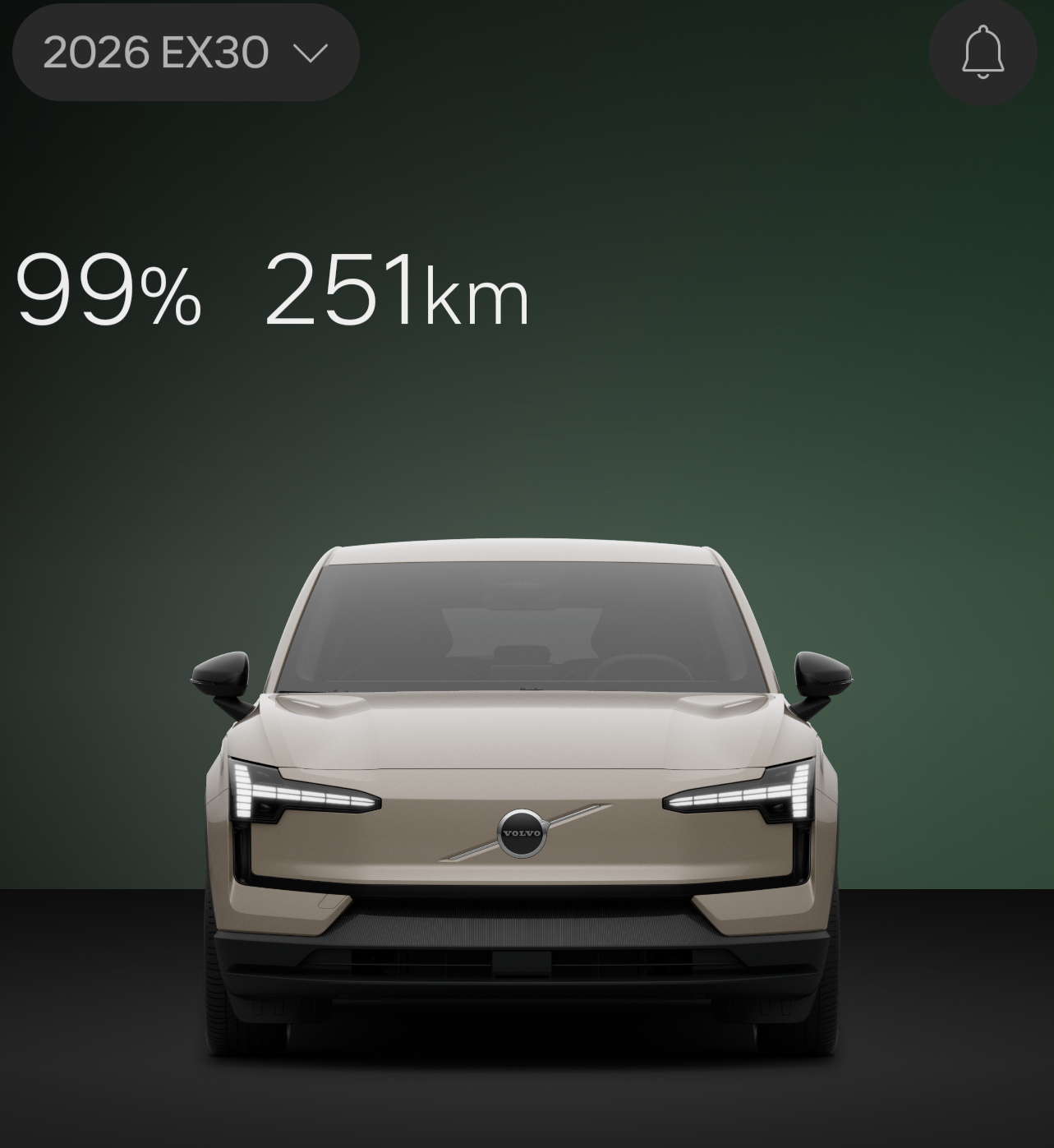
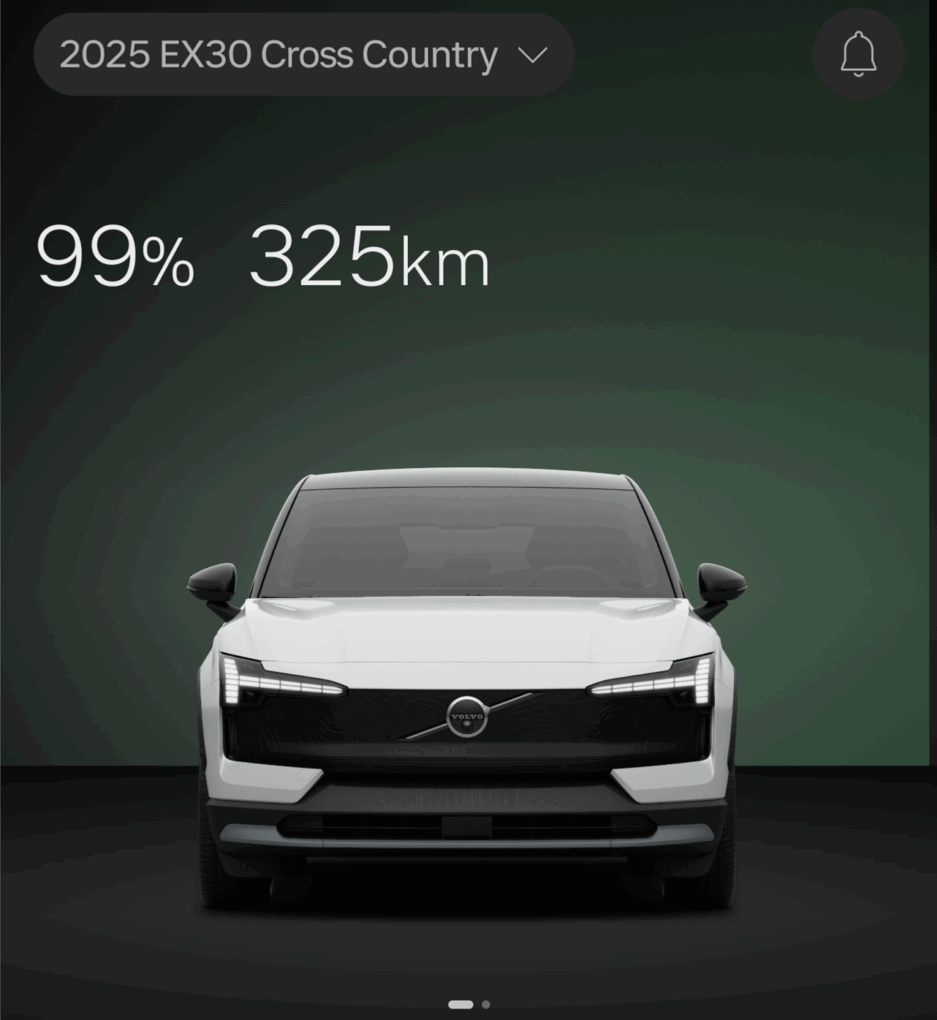
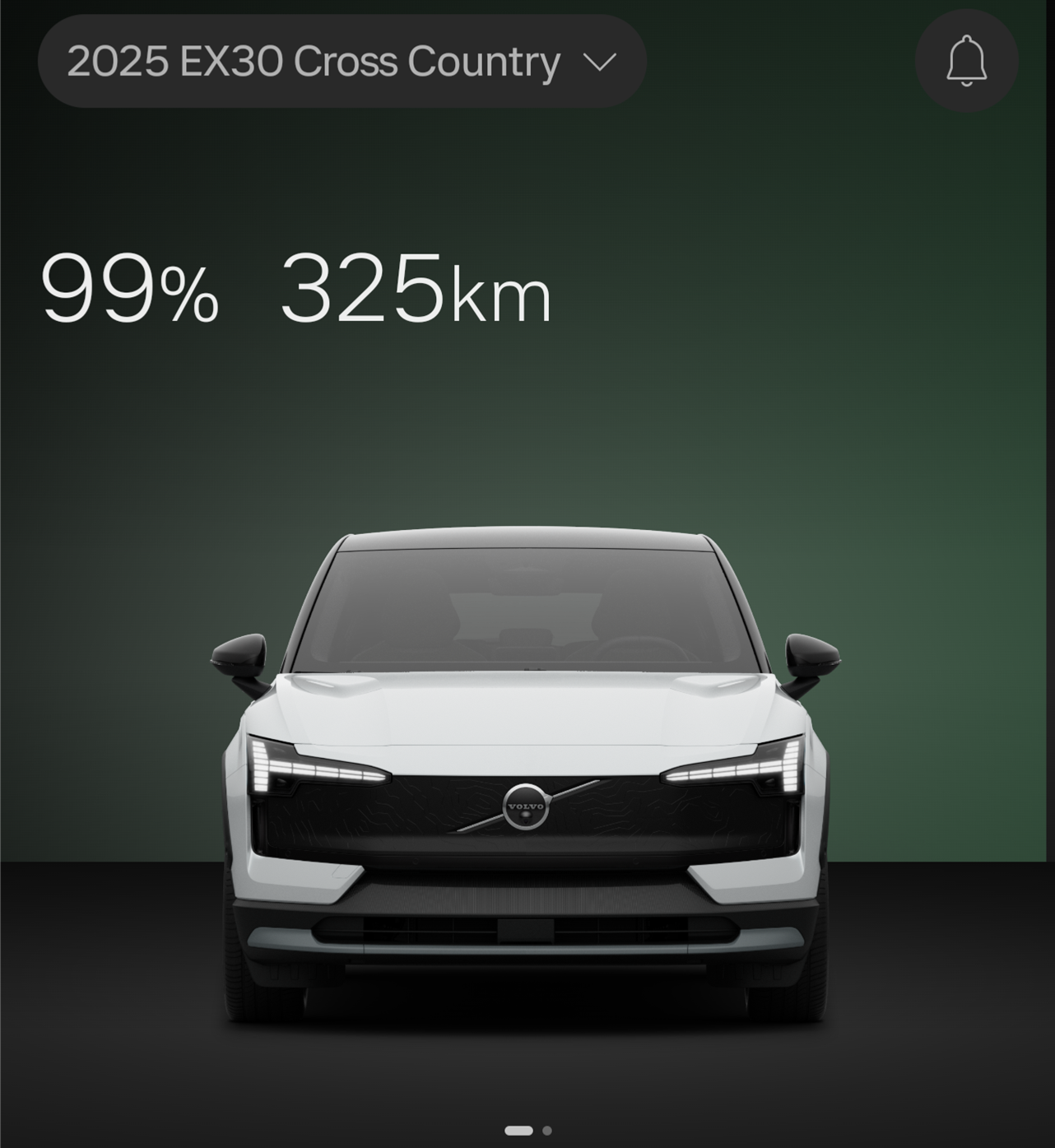
There are significant differences in range between the two test vehicles. The Cross Country achieves a range of 436 kilometers according to the WLTP standard. In practice, with mixed driving conditions and temperatures up to 13 °C, we achieved approximately 290 to 325 kilometers. Around 360 kilometers is realistic in city traffic, about 240 kilometers on the highway at 120 km/h, and around 210 kilometers at 130 km/h. With the optional off-road tires, the range decreases by another five percent.
The Single Motor Plus achieves a range of up to 337 kilometers according to the WLTP standard. In practice, we were able to achieve approximately 230 to 255 kilometers at temperatures up to 13 °C and with mixed driving conditions. With purely urban use at low speeds, even 310 kilometers are possible. On the highway, the range decreases to about 220 kilometers at a constant 120 km/h and to around 200 kilometers at 130 km/h.
The Single Motor Plus is also available with the 69 kWh battery from the Cross Country. With this battery upgrade, it offers 16 WLTP kilometers more range than the Cross Country. Thus, the Single Engine Extended Range With its larger battery, the Volvo EX30 offers the greatest range and is the more sensible choice for most users when it comes to maximum everyday driving range. However, all variants experience significant range reductions in winter. At temperatures around freezing and with the heating activated, the range in our test dropped by about 20 percent. Thus, the 400 kilometers achieved in summer became roughly 260 to 300 kilometers in winter. The vehicle's range indicator is precise and continuously adapts to the driving style. The "guess-o-meter" issue that occurs with some electric vehicles is not pronounced in the Volvo EX30. The displayed remaining range is largely reliable. The smartphone app also shows the current charge level and the estimated range, which simplifies route planning.
-
- Picture: TechnikNews
-
- Picture: TechnikNews
Charging with the Volvo EX30: 22 kW AC charging as a key advantage
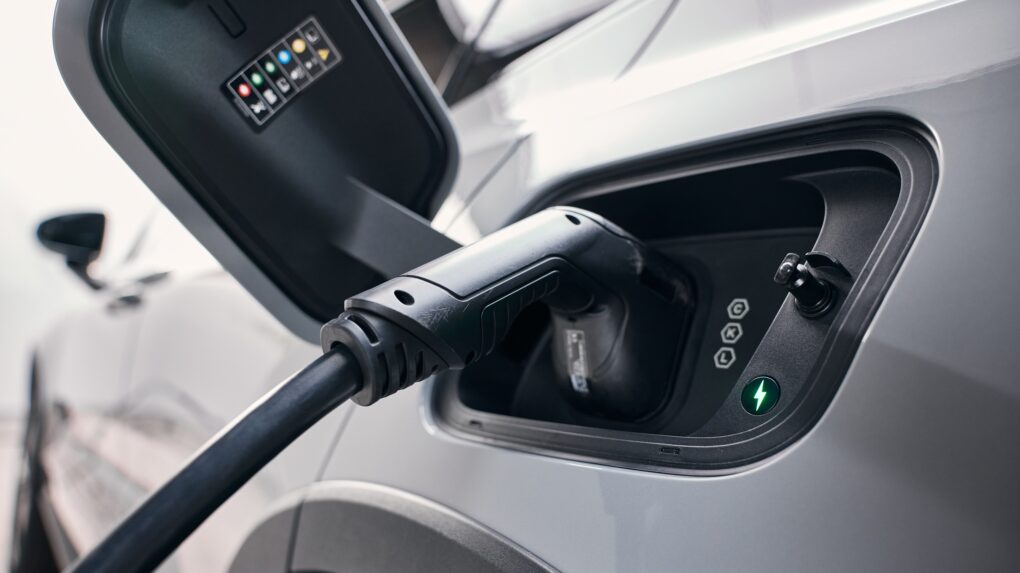
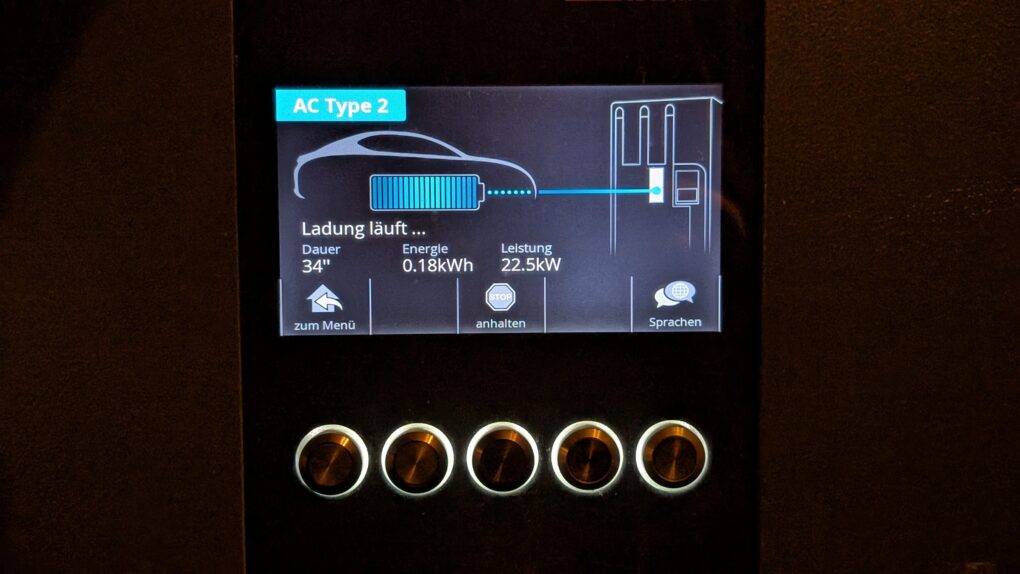
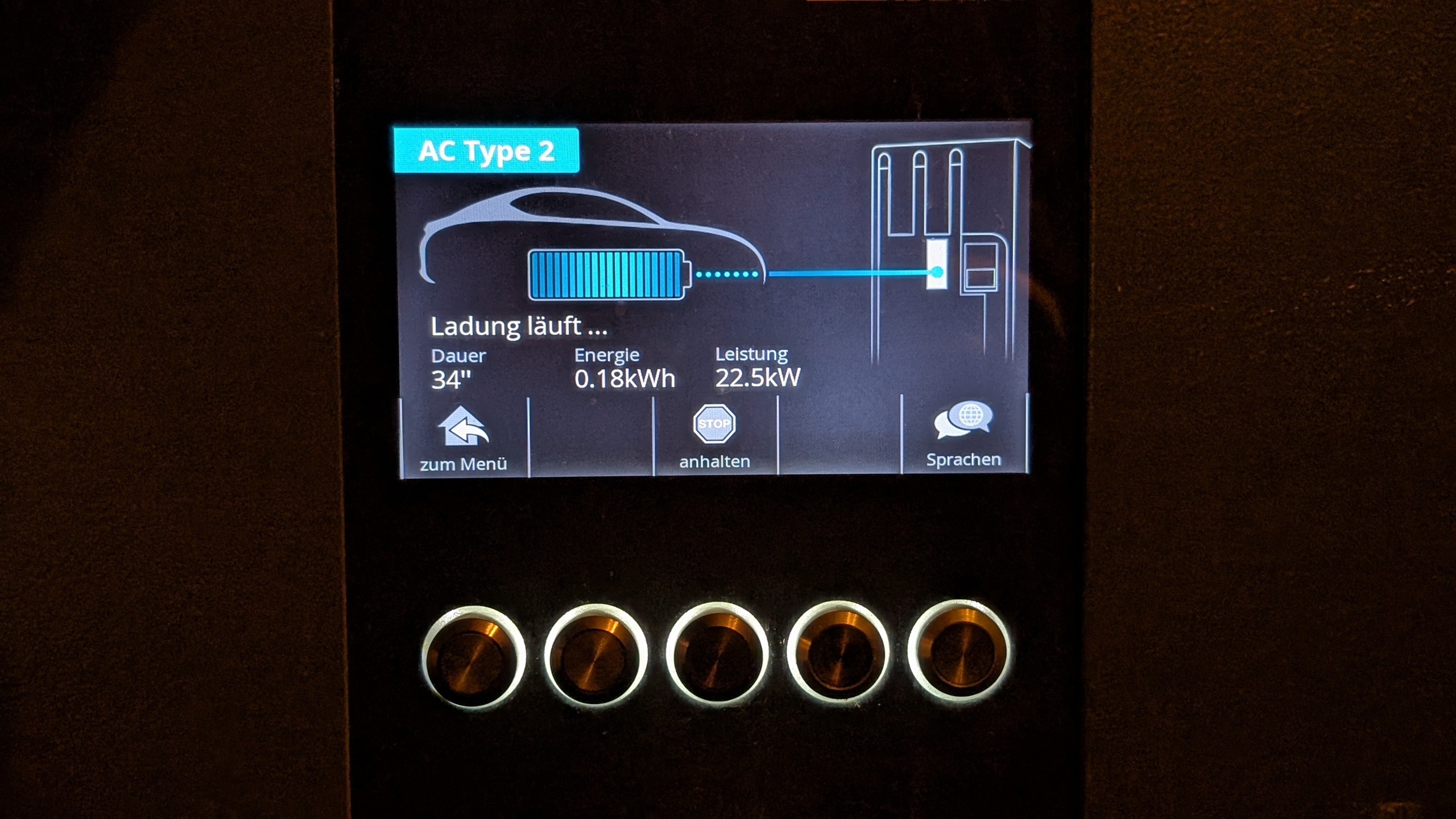
Besides range, charging behavior is the second crucial factor for the everyday usability of an electric vehicle. The Volvo EX30 impresses with solid charging performance at both AC and DC charging stations. At a home wallbox or public AC charging stations, it charges at a maximum of 11 kW. This is standard for a modern electric vehicle and perfectly adequate in practice. A full charge from 0 to 100 percent therefore takes about 8 hours for the larger battery and about 6 hours for the smaller one. This means the vehicle is fully charged overnight. proFully charged without any problems. A 22 kW onboard charger is available as an option, but only for the variant with the larger 69 kWh battery. It comes standard in the Cross Country model.
At DC fast charging stations, the Volvo EX30 isn't the fastest, but it performs in the middle of the pack. With a maximum charging capacity of 150 kW (Single Motor Plus with the smaller battery) or 175 kW (Cross Country and variants with the larger battery), the 69 kWh battery charges slightly faster than the smaller 51 kWh battery. Under optimal conditions, both batteries took approximately 25 to 27 minutes to charge from 10 to 80 percent in our test. The well-tuned charging curve maintains the high charging capacity for a relatively long time before it reduces in the upper charging range to protect the battery. The maximum charging capacity is reached between 10 and 50 percent charge and then decreases continuously.
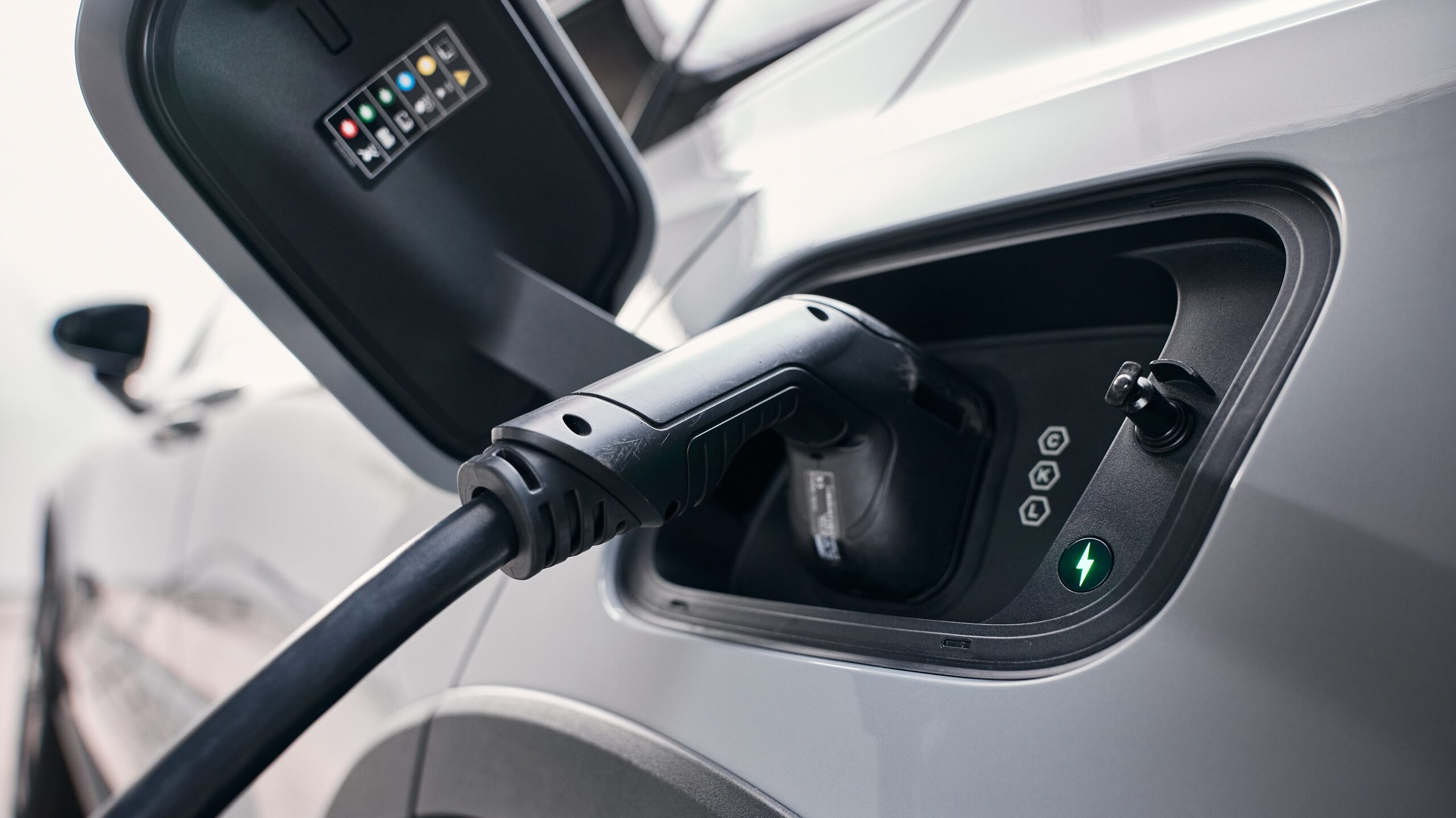
The battery preconditioning, which activates as soon as a fast charging station is entered as the destination in the navigation system, works well. It ensures that the battery is at the optimal temperature upon arrival at the charging station. This maximizes the charging speed and reduces the charging time. The charging port is located on the driver's side at the rear. Charging progress can be monitored via the central display in the vehicle or the smartphone app.
-
- Image: Volvo
-
- Picture: TechnikNews
Price of the Volvo EX30: The price-performance ratio is right.
The Volvo EX30 is positioned in the lower premium segment and undercuts many established competitors. The starting price for the "Single Motor Essential" variant is approximately... Euro 38.490. This puts Volvo significantly below models like the Audi Q4 e-tron or the BMW iX1Standard features include LED headlights, automatic climate control, a 12,3-inch touchscreen with Android Automotive, comprehensive driver assistance systems, and smartphone integration. The higher "Plus" and "Ultra" trim levels and the optional all-wheel drive increase the price to up to €55.290, but also offer more comfort and design features such as better seats, a Harman Kardon sound system, and special color combinations.
The cross-country race starts at approximately EUR 57.290 This puts it almost €20.000 above the single-engine Essential. In return, you get all-wheel drive, increased ground clearance, a more rugged look with underbody protection and plastic cladding, and significantly higher system output of 428 hp. The optional "Cross Country Experience" package, including roof rack and roof basket as well as 18-inch all-terrain tires, is available for an additional €2.990 and drives the price up even further. Fully equipped, the Cross Country then costs €62.180.
The depreciation of electric vehicles is currently difficult to estimate, as the used car market is still relatively new. Generally speaking, however, Volvo enjoys a good reputation for quality and reliability, which should have a positive impact on resale value. The high demand for compact electric SUVs and their solid build quality suggest stable resale values. However, electromobility is developing rapidly, so new models with improved technology could quickly make older vehicles look outdated. (All prices in this article are as of December 2025 and include 19% VAT.)
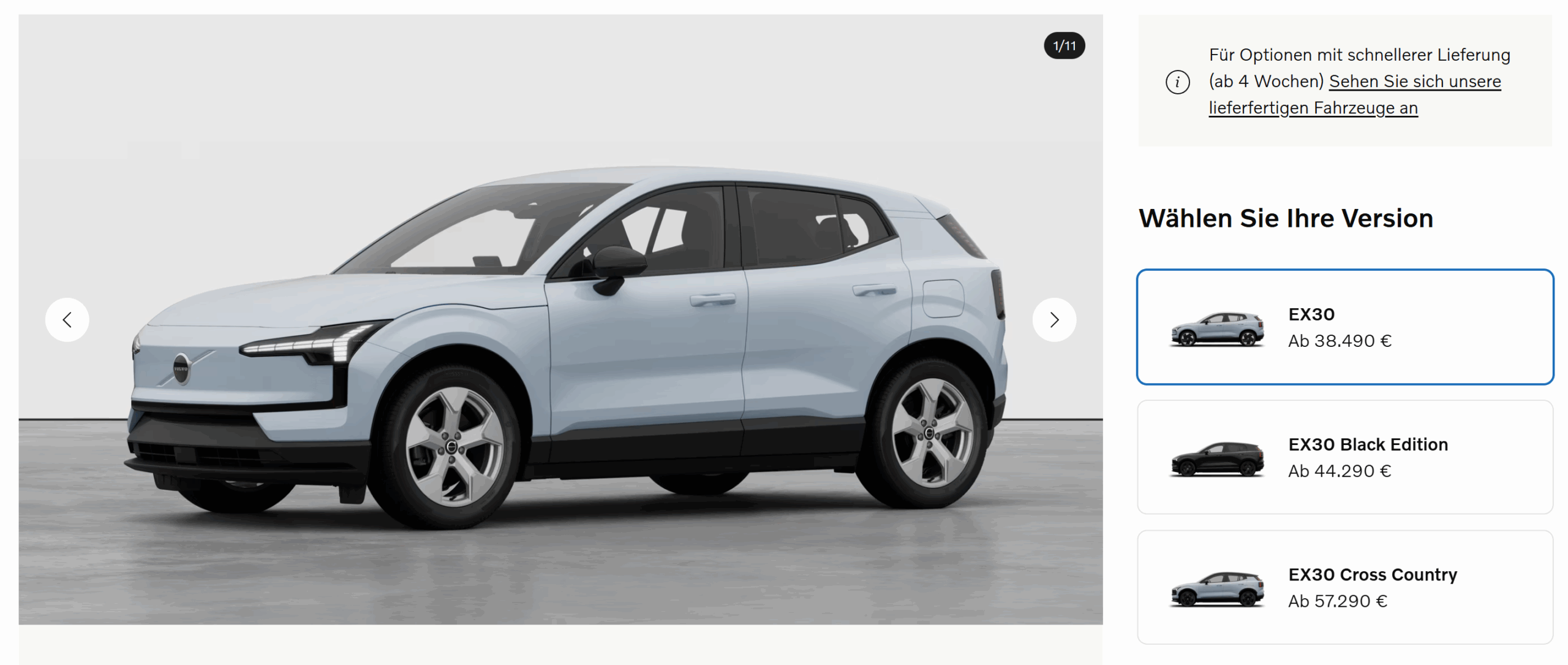
Image: Volvo Configurator
Volvo EX30 warranty: Only industry average
The warranty These are in line with industry standards. Volvo offers a vehicle warranty of three years or 100.000 kilometers. While this is less than some Korean manufacturers offer, who provide seven years, it meets the standard in the European premium segment. The paint warranty is also three years, and the anti-corrosion warranty is twelve years. For electric vehicles, the warranty for the high-voltage battery is particularly important: it is eight years or 160.000 kilometers, during which time at least 70 percent of the original capacity should be retained. This corresponds to the industry standard and gives buyers peace of mind regarding the most expensive component of the vehicle.
In summary, the Volvo EX30 Single Motor Plus offers excellent value for money in a premium electric SUV. You get a lot of vehicle, modern technology, and typical Volvo quality at a fair price. The Cross Country is a niche option for those who want the extra power, all-wheel drive, and off-road look and are willing to pay a significant premium for them. For most buyers, the Single Motor Plus with the larger battery is likely to be the more sensible and economical choice.
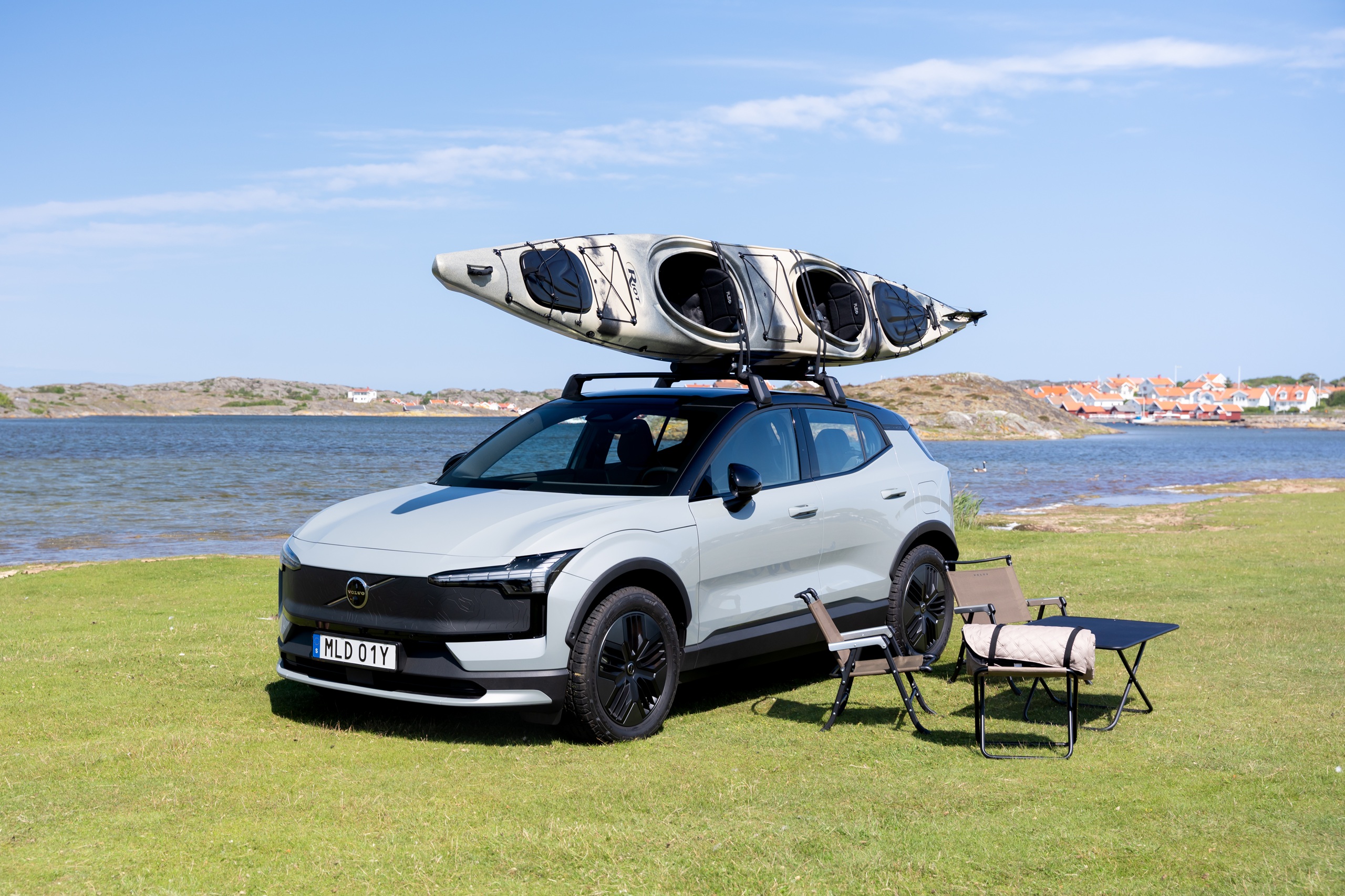
Image: Volvo